Home Blog Page 634

Updated: SFSS announces cancellation of 2018 Fall Kickoff concert, replacement barbeque

4
(Image assets courtesy of Simon Fraser Student Society and UAW Local 2322, art by Chris Ho/The Peak)
By: Amneet Mann, News Editor


This story has been updated as of July 20 to reflect the comments of the vice-provost students and international Nancy Johnston on behalf of SFU, and AMS.


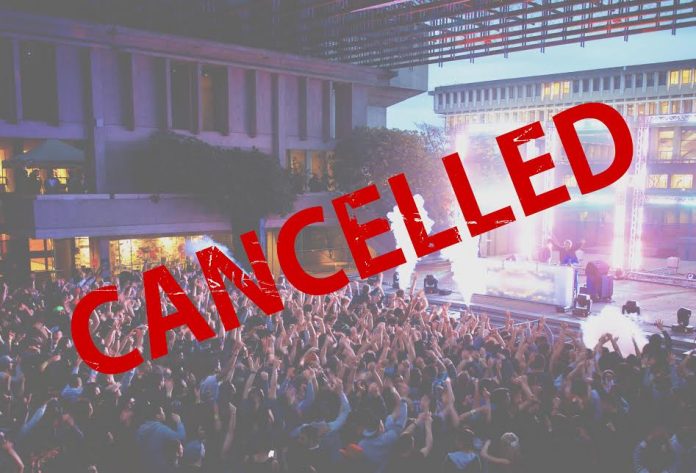
The Simon Fraser Student Society (SFSS) has announced that the annual Fall Kickoff concert will not be held on Burnaby campus this upcoming fall.

     In a press release, the SFSS board of directors reported that the student society “ran into considerable challenges in our conversations with SFU” which revolved around determining the date that the concert would be held.

     The SFSS originally requested the date of Friday, September 21 to hold the concert in Convocation Mall. After this request was made on June 7, the board was reportedly “given notice that our request for the date of the concert – Friday, September 21st – had been ‘pencilled in’.” However, they were informed on July 9 by SFU that the university had already booked the space for another event.

     “We sincerely hope that the event that SFU has planned on September 21st that ‘conflicts’ with the concert brings the same type of student engagement that we know the concert would have provided,” reads the student society’s statement.

     The SFSS followed up, asking to hold the concert on Friday, September 29, but SFU reportedly denied them that date as well. SFU offered two alternative dates: Friday, September 14, and Thursday, September 20. However, these dates were not deemed suitable by the SFSS, ultimately resulting in the event’s cancellation.


The board of directors discusses negotiations leading up to the decision

A discussion regarding the state of negotiations between SFU and the SFSS over the concert date took place during the board meeting held on July 6.

     As previously reported by The Peak, the board of directors expressed concerns over holding the concert on September 14, as UBC was reportedly holding their annual fall concert on the same date.

     Holding the concert on Thursday was also ruled out as a viable option due to the possibility of lower attendance, which would lead to a greater deficit than the SFSS had originally anticipated.

     According to vice-president university relations Jackson Freedman at the Board meeting, holding the event on either September 14 or September 20 would “cost too much money to the student society.” Vice-president student life Tawanda Masawi agreed with Freedman, stating that “the thing we need to focus on is that if we look at the Events Committee Budget, we won’t be able to host any other events throughout the year if we assume this deficit.”

     Masawi reported that, in a meeting held between the SFSS and SFU on June 7, the SFSS was notified that there was another event SFU had booked for the September 21 date. “The problem there is that when we checked the booking schedule, the only event that’s going on now is a job fair,” said Masawi. “So based on that — I haven’t confirmed it — but I think the only event they’re afraid of us colliding at the same time with are a job fair. [sic]”

     Masawi supported the SFSS taking a strong stance when negotiating with SFU, where the SFSS would move to “push SFU and send them an ultimatum telling them that, ‘Hey, we want the event on the 21st. We booked this date, you guys owe us this date. We told you this date and you decided to book an event knowing that we’re going to host Fall Kick-off. We’ve hosted it for the last four years.”

     “We have to be prepared to walk away,” cautioned Masawi in the event that SFU did not agree to the September 21 date.


SFU comments on event cancellation

“SFU was very supportive of the 2018 fall concert and specifically hired the previous fall concert coordinator to work with the SFSS to ensure a successful event for all students,” said vice provost students and international Nancy Johnston in an interview with The Peak.

     “We were very disappointed to learn that the first choice date was not possible — and by we I mean the people at the student services that are working with the SFSS — and later we were disappointed that none of the alternate dates for Convo Mall were deemed acceptable by the SFSS who then chose to move the event off campus.”

     According to Johnston, the original “pencilling-in” of the September 21 date that the SFSS press release referred to was prior to an official proposal being submitted on behalf of the SFSS. “That’s completely separate to the process of approving a large-scale event,” said Johnston. “There are many things that get considered when you’re doing these large scale events: one is whether the venue is available, another is whether something else is going on at the same time, the simple availability of certain services at the time.

     “That process of looking at the larger picture doesn’t start until you get the proposal and you look at what’s proposed.”

     While the exact details of the nature of the event that has been booked on the 21 in unknown to Johnston, she was able to confirm that the conflicting event was an independent Meeting, Events, and Conference Services (MECS) event being held adjacent to Convocation Mall.

     “I know that the MECS event is not happening at Convo Mall. That’s why it would not have shown up when they opened up the MECS planner. It didn’t get known until the consultation process started,” said Johnston.

     As far as Johnston is aware, it was MECS and Safety and Risk Services that made the assessment that the large Fall Kickoff event would not be possible to host at the same time as the MECS event.

     Johnston mentioned that SFU had also offered a couple of Saturdays for hosting the Fall Kickoff, but the SFSS had expressed that they did not feel enough students would attend the event if it were held on a Saturday.

     Johnston commented that this experience could be taken as a learning opportunity the next SFSS board. “If you know you want [an event] for the third Friday of September, then [the previous board] should pencil it in and make sure the next board knows that, ‘hey, plan one is to sit with the event planning folks and get that going April and not June or early July.’”

     She acknowledged that “it is a difficult thing to plan a fall event when the new board just starts and just only gets its feet wet [. . .] but that would probably be one kind of learning we could take away so the next board is not in the same position.”

     A change.org petition titled “Bring Back Fall Kickoff 2018” has been started by SFU student Junho Kim and addressed to SFU and the SFSS. At the time of publication, the petition had garnered 163 signatures.


SFSS partners with AMS Events for Welcome Back BBQ

Following the announcement of the Fall Kickoff cancellation, the SFSS made public a second press release announcing that the student society is planning to partner with the Alma Mater Society (AMS) of UBC to host AMS’s Welcome Back BBQ.

     The barbecue will be held on September 14 at the AMS Nest Plaza on UBC’s Vancouver campus.

     The statement acknowledged that, while “this event is not the same as the concert experience we could provide here on Burnaby campus, this partnership was the best alternative for our members given the circumstances.”

     In an interview with The Ubyssey, UBC’s student newspaper, AMS programming and events manager Asad Ali has stated that UBC “will still manage pretty much the whole event itself. It’s just a partnership collaborating [. . .] bringing more people out to the event.”

     The new development will result in an increased number of tickets being sold for the Welcome Back BBQ, with the original ticket cap of 5,000 being increased to 6,500 and some tickets being reserved for SFU students.  

     The ticket price for SFU students is expected to be higher than the price for their UBC counterparts, which is subsidized by AMS Events. Prices are still being negotiated, but Ali estimates tickets for SFU students will be sold at $37 for general tier and $45 for final tier.

     Ali stated that he views this collaboration between the student unions as first step to “an overarching goal if we ever want to do a Block Party or Welcome Back for 10,000 people.”

     “This is a great example and the first push to ensure that we can make something like that [sic] happens,” he said.

     The SFSS echoed this positive outlook on the collaboration in their statement, reading that “we look forward to this great opportunity to work with AMS Events and are excited that we can still offer a fantastic concert experience to students this coming fall.”
The top five courses SFU really should offer

0
Illustrated by Reslus

Written by: Jennifer Low

It’s that hectic time of year again, when you struggle through the seemingly endless lists of courses at SFU trying to pick your poison. You bombard academic advisors with question after question as you slowly spiral into an existential crisis: there are about a hundred other courses you’d rather be taking than the ones in your course cart, and none of them you are taking will actually provide you with any relevant skills for the real world. So without further ado, here are the top five courses SFU should really offer.

SHOP 101: Introduction to Groceries
You thought you had the hang of it. You followed your mom around Costco enough to believe you had grocery shopping down. But the moment you’re out on your own, you suddenly start drowning in the various brands of milk and assorted kinds of potatoes you didn’t know existed. You glance to your right and there’s a guy spanking a watermelon — to your left, a woman combing through identical packages of spaghetti. A course helping you to navigate this terrifying minefield would really be more useful than calculus at this point.

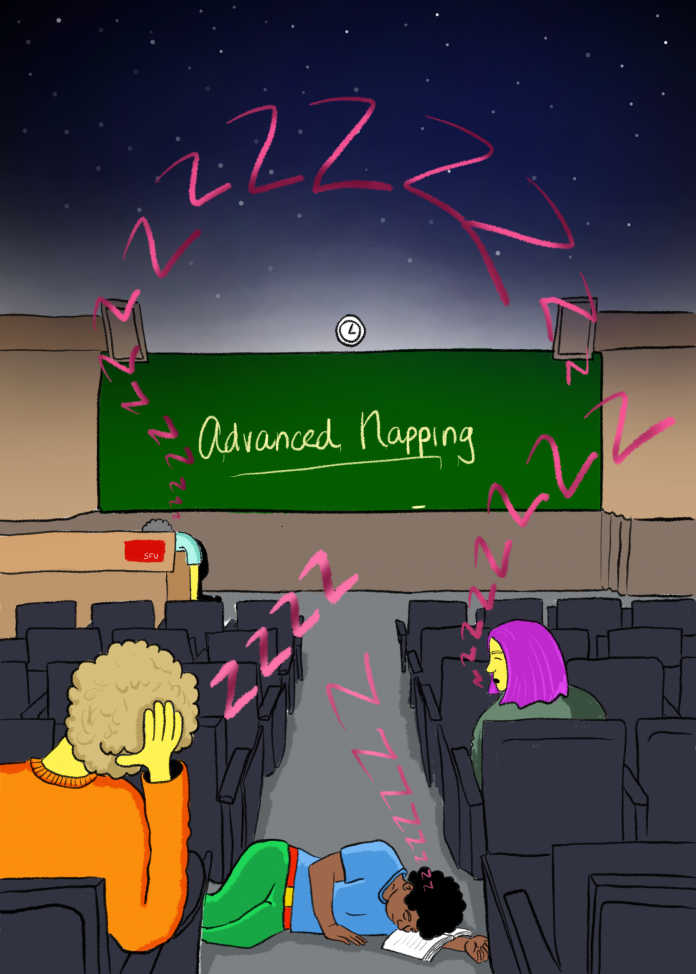
NAPP 322: Advanced Napping
Ah, to finally have a course where falling asleep to the monotonous sounds of your prof lecturing would earn you an “A” rather than an embarrassing introduction to the rest of the class . . . Students have busy schedules and pulling all-nighters doesn’t really help us get the recommended eight hours of sleep. Having a course where sleep is encouraged would be an absolute dream. Besides, getting enough sleep is linked to longer lifespans, mental and physical health, and improved learning and creative capacities. So, it’s technically still educationally significant . . . right?  

SCTY 267: Socializing in the modern world
In the Victorian era, people used instruction manuals for advice on the proper rules of conduct in society. While it was complex before, it has become almost impossible to figure out now! Are handshakes still a thing? Is “sup?” still an appropriate greeting or have we transitioned to using memes to begin conversations? With all the new rules of social media, dating apps and the growing divide between the political right and left, it feels terrifying to speak to anyone lest you insult them, scare them or turn the entire situation into a cringe-worthy moment that will haunt you every time you close your eyes . . . in other words, I’d feel a lot better if this course existed.  

MON 425: Taxes and Money Management
Taxes, finances, T-4’s, student loans . . . it’s enough to give anyone a headache. No one’s ever really taught you what they are, but everyone pretends to know what’s happening in April when you’re desperately Googling every other word you see on the government forms . . .

BASC 118: Survival Skills
I’m not saying that I’m ungrateful for my knowledge of balancing chemical equations and understanding how to use the quadratic formula. But if I were stranded on a desert island, I don’t think those skills would be as handy as knowing how to start a fire or maybe build a shelter. We, students, subsist off a diet of instant noodles and coffee, so unless there is a tree that grows pumpkin spice lattes and ramen, we may not survive.


VAR in the 2018 World Cup has its pros and cons

0
Photo courtesy of Reuters

Written by: Melissa Campos, Multimedia Assistant

The FIFA World Cup this year has been filled with many unexpected turns. From Germany failing to advance from the group stages to Russia unexpectedly making it all the way to the quarter-finals, I can safely say that this is the most unpredictable international tournament that I have ever watched. But another one of the most interesting inclusions that makes this world cup different from its predecessors is the debut of video assistant referees (VAR).

          The International Football Association Board in Zurich approved the use of technology in the World Cup in Russia to assist referees in reviewing calls through the incorporation of video assistant referees (VAR). However, this technology is something that officials, players, and fans are not used to, and therefore it was bound to spark a controversial debate regarding its usage.

           Let’s start by explaining what exactly VAR technology is. Think of VAR as an instant replay service looking closely at each play in real time throughout the game. The VAR team is made up of 4 FIFA match officials at a given time, with one being dubbed the video assistant referee (VAR) and the other three assistant video assistant referees (AVARs). The team works in a booth that has access to 33 broadcast cameras which include slow motion, super slow motion, and offside cameras.

The job of the VAR team is to watch the game closely and assist the match referee in making calls that he may not have had a clear view of. The video assistant referee communicates with the match referee on the field through an earpiece, letting him know if there is a possible call that should be reviewed. The match referee then decides whether or not to review the call on a screen located on field and possibly retract his initial decision.

What’s important to note here is that the match referee makes all the final decisions. The VAR team simply assists him, but has no final say in the call.  

Since VAR reviews take time out of the game, the technology only serves to review a select amount of substantial calls. These calls include goals and offences leading up to a goal, penalty decisions (not to be confused with fouls – these are penalties awarded specifically inside the penalty area), direct red card incidents, and mistaken identity of players.

Before VAR, calls within matches relied solely on the referee and his assistants on the field; if the referee didn’t see it, play continued and the infraction went unnoticed. VAR technology has changed the game of soccer, with teams now becoming more afraid to commit fouls within the penalty areas or cheat their way to a win, as everything that players do is now recorded and being watched from multiple angles.

With the incorporation of VAR in the current tournament, it has been reported that teams have committed less fouls, been given fewer red cards, and scored more goals in the final minutes of a game in the group stage during this world cup than those before it. No one can argue that this technology hasn’t improved the accuracy of calls, and personally, I have enjoyed the lack of bullshit from players trying to sneak their way to the top that I’ve seen in previous tournaments.

However, the incorporation of VAR technology also comes with its negatives. A large complaint surrounding VAR is the disruption of gameplay that it presents, as it can take minutes for a referee to review a call. But this isn’t my biggest problem with it.

I love the concept of VAR. Other sports, like hockey and American football, have already been using instant replay technology, and it was about time that soccer did too. I was sick of all the penalties that were being missed and all the goals that shouldn’t have counted being awarded because the referee didn’t have a clear view of the play. Teams shouldn’t have the advantage or disadvantage of playing to the referees’ eyes; the game should be played according to its rules and VAR helps to enforce that.

However, the problem with this new technology right now is that it’s very inconsistent. Too much is still left to the discretion of the referee on the field, even though the officials in the VAR booth have the best view of the game.

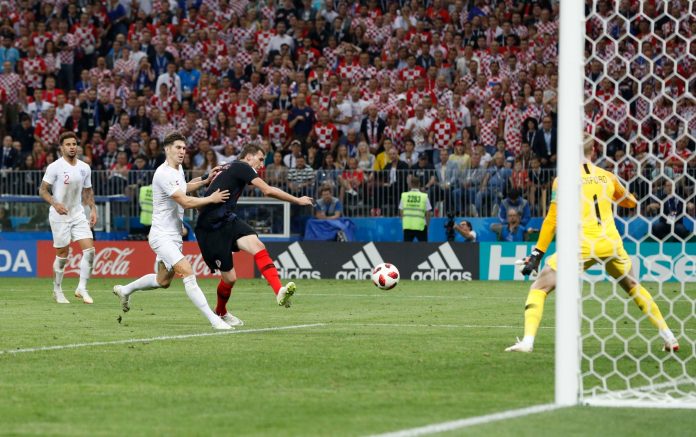
The biggest example of inconsistency I can think of was in the penalty reviews in the Portugal versus Iran and Nigeria versus Argentina games in the group stage. After VAR review, Iran was given a penalty shot for what was arguably a very unintentional graze from the arm to the ball in the penalty area from Portugal. Similarly, a clear handball in the box from Argentina was reviewed, but the penalty was not awarded because the foul was deemed unintentional. Both cases presented very similar circumstances, yet the calls remained different even with VAR.

Maybe I hold a bias towards my team, Portugal, but these instances showcased that too much power is still given to the match referees who arguably do not have the best view of the game. VAR decisions should be more regulated and more final. The whole system is excellent, and I’m glad FIFA is finally using technology to review calls, but I believe referees should be overruled when VAR reviews are used.

Referees may hold bias, and like any other human being, they may also feel pride towards their abilities on field. But this should not be allowed to interfere with the game.

As for the interference of play, I think that VAR is handling that well in that the technology is only used to review significant decisions. Extra time is always added at the end of the half, and time wasted in reviews can always be made up then. I believe in fair play, and VAR is just the next step in improving accuracy and fairness within this sport that I love so much. While it has its issues, I believe we’ll soon be seeing this technology improved and changing the way that soccer is played for the better.

Movie versus movie: Camp Rock and High School Musical

0
Image courtesy of Disney Channel

Written by: Gabrielle McLaren, Features Editor

Camp Rock (2008)

Camp Rock is here to remind us that Demi Lovato once had bangs and that the Jonas Brothers were real. It follows Mitchie, a girl who dreams of stardom, but can only attend the prestigious summer camp for budding teen musicians when her mother is hired as a caterer.

     Mitchie’s story is centred on self-love. She makes important friendships with other campers, learns to be confident in her own voice, and stops hiding her family’s status — hence Disney’s role in introducing tweens to classism, whether they knew it or not.

     On top of that, the set and filming locations for the camp are beautiful and its setting is fairly unique. It’s also nice to show talented people working to improve their talents or studying for school, instead of becoming talented through miasmas or pure luck or whatnot.

Image courtesy of Disney Channel

High School Musical (2006)

Let’s be real: all of your true bops are from this film, and your first ideas of what the true meaning of love was were based on Troy and Gabriella’s love story.

     You were probably a tween when this movie came out, so you also thought that high school was going to be a lot more stratified and intense than it actually was because of this film. You probably thought you’d look taller, fitter, and cooler, and that you wouldn’t have acne. You were disappointed, because you were not Zac Efron by the age of 14.

     Still, the movie had a wide range of characters (though they were mostly caricatures themselves) and a couple of intermingling storylines to keep things interesting. Bonus: the sequel movies to High School Musical were subpar disappointments, but what even happened in Camp Rock 2? (Oh yeah, there was a Camp Rock sequel. You didn’t know?) Exactly.   

Verdict

It’s going to have to go to High School Musical, and not just because of the ensemble finale number. Sure, it has its issues: it wildly misrepresents what high school is actually like and what high schoolers look and act like. Then again, what Disney product doesn’t?

     This movie has a bit of an edge in the realm of Disney-Channel-made-for-TV-musical movies because its soundtrack is more intelligently used. Put simply, the songs advance the plot and build up the storyworld instead of simply creating an ambiance or telling you how the character’s doing.

     Also, let’s face it, they are so catchy that the second you hear them again, every word comes pouring out of your mouth. They make for some great karaoke tunes. If you’re going to be a musical, be a musical.

Hundreds of international scientists call for urgent action to protect B.C’s rainforests

0
(Photo courtesy of Protect BC)
By: Srijani Datta, Assistant News Editor


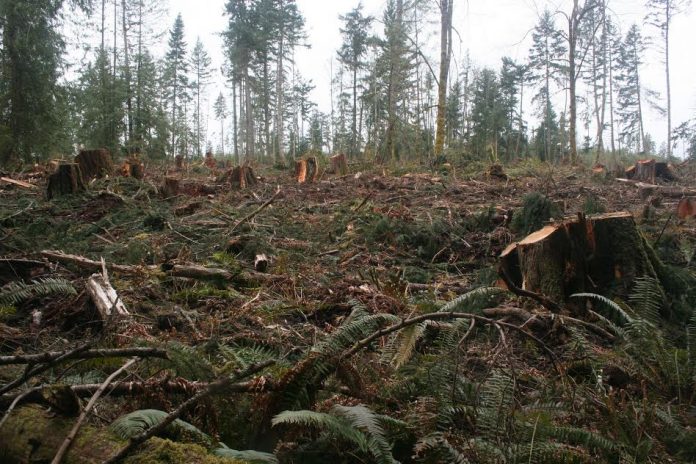
On June 28, 223 international scientists called on the British Columbia government to stop the incessant logging of temperate rainforests in the province. The scientists addressed their concerns in a letter titled “International Scientists’ Call for Action to Protect Endangered Temperate Rainforests of British Columbia, Canada.”

     The letter was organized by Dr. Dominick DellaSala, chief scientist at the Geos Institute in Ashland, Oregon. In a press release announcing the release of the letter, DellaSala highlighted the significance of BC’s forests and discussed how rare they are.

     DellaSala stated, “BC’s temperate rainforests are globally rare, they offer habitat for many imperiled species and globally the vast majority of these unique rainforests has already [sic] been logged.” He further explained that B.C’s coastal rainforests and rainforests further inland are unlike anywhere else on Earth and play a significant part in the protection of biodiversity and resisting climate change.

    DellaSala said, “Conservation of remaining intact tracts of these carbon-rich, climate saving forests is a global responsibility and can help Canada to contribute to the 2020 UN biodiversity targets and the Paris Climate Agreement.”

     BC forest ecologist and adjunct professor in SFU’s environmental and resource management department Andy MacKinnon remarked on conservation solutions in Haida Gwaii and the Great Bear Rainforest stating that “the province should take similar action to safeguard what remains of these globally outstanding ancient forests in other parts of the province.”

     The Peak contacted Julie Nielsen, forest ecologist and PhD candidate at SFU, for her comments on the issue. Nielsen is currently researching in collaboration with six First Nations whose traditional territories cover eastern portions of Vancouver Island and the adjacent islands and mainland of the Great Bear Rainforest.

     “This Call for Action is a catalyst for the Province — a ‘wake-up call’ to show BC that industrial logging continuing as ‘business-as-usual’, is a grave concern of not just ENGOs and the citizens of BC who support the protection of endangered ecosystems, but of several international scientists and experts,” wrote Nielsen.

     She added, “I applaud Dominick DellaSala and the scientists behind this Call for Action letter, who have taken the initiative to bring the issue of unsustainable harvesting of old-growth temperate rainforests in BC to the attention of the Province and people world-wide.”

     Referring to government inaction, Nielsen stated, “It appears the BC Provincial Government will only make changes to legislation governing harvesting operations when pressured by various stakeholders (including the public, scientific experts, First Nations, forest licensees and [environmental non-governmental organizations]), as evidenced by the Clayoquot Sound, Haida Gwaii and Great Bear Rainforest proceedings.”

     Nielsen continued, “This Call for Action, perhaps along with global public pressure (or, dare I say, a global boycott of old-growth wood products), First Nations’ support and a substantial increase to monitoring and enforcement efforts from the BC Forest Practices Board, may just be the steps required on the pathway to improving the management of second and third-growth forests and protecting the remnants of old-growth rainforest left in BC.”

     Nielsen highlighted the significance of the issue: “Once contiguous tracts of old-growth forest are harvested, the biodiversity, biomass, cultural values and ecosystem services that these landscapes possess, to name but just a few attributes that contribute to their global significance, will be gone forever.

“The benefits of protecting these forests reach far beyond this human generation, but the economic cost of preserving these now scarce, forested ecosystems are left for this generation (and this government) to bear.” – Julie Nielsen, SFU PhD candidate

     Nielsen commented that “It seems the only avenue available to scientists, academics, and experts alike to break the cycle of old-growth liquidation, is to inform and urge the Government of BC through a Call to Action.” She continued “I have hope the Provincial Government will take an evidence-based scientific approach to begin the steps required to conserve the remaining tracts of old-growth forest in BC.”


With files from Forest Legacies and CBC News

McFogg the Dog leaves position of mascot, but not our hearts

0
Illustrated by Cora Fu

Written by: Winona Young

BREAKING NEWS: Earlier this week, SFU released a statement explaining how McFogg the Dog will no longer be SFU’s official mascot. The statement did not clarify whether McFogg quit or was fired. This bombshell has forced SFU to begin its search for a new mascot.

The speculation on how McFogg lost his status as mascot continued until a document from SFU officials was leaked to the Facebook page SFU Confessions. The document outlined the grievances that resulted in McFogg’s leaving the role of mascot.

This document is considered proof by many of McFogg’s firing. SFU student, Ms. Vanjie, provided The Peak with a possible reason as to why McFogg is gone. “Yeah he acted super pissy to the SFU officials and was like super angry at all of them,” Vanjie explained. “You know it’s bad when the mascot won’t even fuck with your school.”

Vanjie’s comments are further corroborated by the head of SFU’s Recreation Office, Youbee Seesux. “In my opinion, it’s no surprise McFogg is gone,” she said. “The admin wanted him gone since he started acting out.”

Seesux was referring to the series of controversial incidents that happened following McFogg the Dog’s semester in dialogue with the first years in the Barbara Rae dorms. According to Seesux and several other sources, McFogg the Dog’s behaviour seemed out of character and more whiny, and he was more inclined to binge The Office and Instagram his avocado toast — in other words, more “millennial.”

There was much speculation surrounding McFogg’s employment after butting heads with SFU administration.

His many bones to pick with the school include, but are not limited to, the low turnout rate for sports games, the $10 cover charge for the dining hall, and the inadequacy of the room-booking system he hoped to use for his new club, D&D (Dogs and Drankz). The most striking of his grievances was aired through a series of derogatory remarks about the new Student Union Building and his thoughts on where they could build it instead.

Apparently McFogg was so inspired by students that he was seen protesting alongside them about the tuition fees here at SFU. He was spotted holding a sign that read: “Broke bitches like me need lower tuition fees.” This was not the last of McFogg’s streak of protesting. The mascot apparently started his own online gofundme to pay for a gondola for SFU, complaining that “the school needs to get off its ass already and get it done.”

The leaked document reported that SFU officials were livid at McFogg for the multiple photos and videos that were found on a student’s Snapchat story. The content showed McFogg mounted on the shoulders of the Terry Fox statue as well as being caught in an amorous position at the Avocado late Friday night.

Both SFU officials and McFogg refused to provide The Peak any comment about McFogg’s dismissal.

With McFogg gone, SFU is still on its search for a new mascot. SFU initially called for its students to comment mascot ideas under a Facebook post two days ago, but the post was later deleted due to the massive amount of suggestions. Such suggestions included: Bongwater the Bullfrog, Vinny E. the Existential Void, Simon Fraser the Simon, Balthazar the Biblical Banshee, and “anime.”

Since then, SFU has placed an ad in the local Craigslist for new mascots.

A closer look at classic pop punk

0
Image courtesy of New Found Glory

Written by: Eva Zhu

Pop punk is exactly what the name suggests: catchy pop melodies and lyrics about adolescent romance, mixed with distorted guitar and power chords. Who says you can’t headbang to punk rock guitar riffs while singing along to lyrics about a girl who’s out of your league?

     Although pop punk originated in the late 1970s with the Ramones, Buzzcocks, and the Undertones, a significant piece of the story starts in 1986 when Billie Joe Armstrong (vocals and guitar) and Mike Dirnt (bass) formed a band called Sweet Children, later adding drummer Tré Cool and rebranding as Green Day. From the start, there was something irresistible about Armstrong’s slightly nasally vocals, Dirnt’s punchy bass lines, and Cool’s bright drumming.

     Their distinct sound broke into the mainstream with their third album Dookie in 1994, with MTV playing back songs such as “Longview,” “When I Come Around,” and “Basket Case.” As of 2014, Dookie had sold more than 20 million copies. By now, most people who only have the vaguest sense of who Green Day is have heard “Basket Case” and “Welcome to Paradise.”

     Before Green Day hit the mainstream, teenagers Mark Hoppus, Tom DeLonge, and Scott Raynor formed a band in August of 1992. While the band went through many names, it eventually settled on Blink-182. They quickly became known for their catchy riffs, relatable lyrics, and immature humour. Among their early releases was the iconic Dude Ranch, released in 1997 and certified gold by 1998. Its upbeat, sad-boy, teenager anthem “Dammit” was played on rock radio stations and MTV, and peaked at #11 on the US charts.

     However, it wasn’t until 1999 that Blink would become the superstars of pop punk they are known as today. After Raynor’s departure, Hoppus and DeLonge enlisted the help of drummer friend Travis Barker and released their biggest and most influential release, Enema of the State, in 1999. Containing fan favourites “All the Small Things,” “Adam’s Song,” and “What’s My Age Again?” the poppy and slickly-produced album cemented Blink’s place in pop punk history.

     While Blink brought the pop and Green Day brought the punk, the Arizona boys of Jimmy Eat World brought the emotion. Though their 1999 album Clarity went overlooked by almost everybody at the time, it went on to inspire many emo and pop punk bands from the 2000s onwards.

     The influence of Jimmy Eat World only grew with their 2001 album Bleed American. While the album name might not ring a bell in your head, the catchy tune and lyrics of “The Middle” certainly will. The song peaked on charts all over the world, becoming an anthem and template for pop punk everywhere.

     Bands such as Green Day and Blink pioneered the ‘90s pop punk sound that laid the groundwork for pop punk’s stardom. However, New Found Glory’s self-titled album from 2000 worked with Jimmy’s Bleed American sound to refine pop punk into the mainstream powerhouse it would become in the early 2000s. With Jordan Pundik’s whiny, angsty vocals and Chad Gilbert’s jangly guitars, the band quickly rose to mainstream fame in 2002 with their album Sticks and Stones.

     The lyrics to the lead single “My Friends Over You” are still embedded in the brains of 2000s kids everywhere. The album is so influential that it consistently ranks highly on Top 10 pop punk album lists, and two future pop punk bands would both take their names from the album’s catchy lyrics.

     While each of these four bands brought a slightly different approach to the genre, they all have something in common: they defined the sound of pop punk for the next decade. Stay tuned for an article that delves into the pop punk bands of the mid-to-late 2000s!

POLITICAL CORNER: The government needs to do something about Greyhound’s service cuts

0
Photo courtesy of Huffington Post

Written by: Eva Zhu (Opinions Editor) and Liam Wilson (Peak Associate)

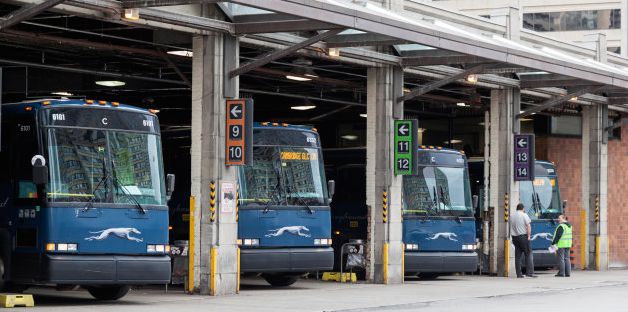
Starting October 31, Greyhound Canada will cut passenger and shipping delivery services in British Columbia, the Prairies, and Northern Ontario, citing a decline in ridership and competition from other transit options. The sole route remaining in BC will run from Vancouver to Seattle and be operated by Greyhound’s American counterpart.

The problem? This will impact about two million people, cutting off affordable transport to Indigenous people, and thoopinionsse living in small, rural, and/or lower-income communities. In many cases, this will leave them with no other transport options. Jagmeet Singh, leader of the federal NDP, has probably been the biggest voice to speak out about this issue, noting that lack of bus service may encourage vulnerable people with little money to use Craigslist or hitchhike in order to get a ride, increasing their risk of being murdered or going missing, especially along BC’s infamous Highway of Tears.

We need to get the government to sit up and listen on this one. Frustratingly, Greyhound has said that both provincial and federal governments have known about its problems for years, but haven’t done anything about it. Now, there are people facing the prospect of being disconnected from their jobs, their families, and public services. Singh has it right: the federal government (or at least the provincial governments) need to step in with a funding plan to prevent these service cancellations. If they don’t, they’re putting their citizens in danger.

Greyhound shouldn’t have to operate a loss, but people shouldn’t have to be stranded either, especially when our modern age relies so much on people being connected. Under our constitution, we have freedom of movement, but how can the movement of people be considered free when they are suddenly deprived of safe transportation? Hopefully, questions such as these will spur our government to do the right thing in the weeks to come.

SFU startup uses data to analyze and predict World Cup results

0
(Photo illustration by Chris Ho/The Peak)
By: Nathaniel Tok, Peak Associate


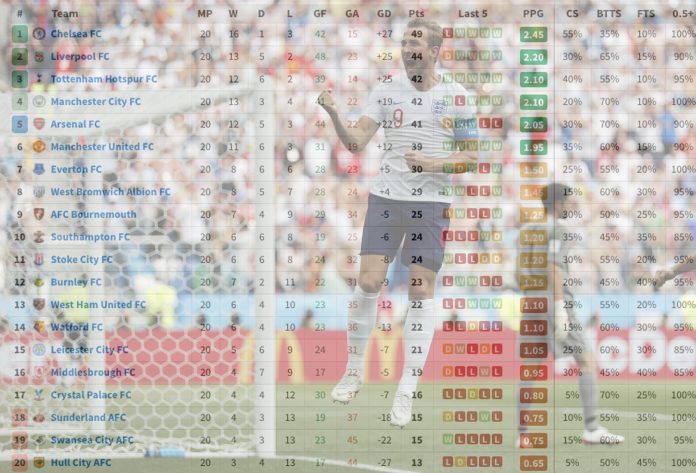
Jamie Tatsubana is an SFU SIAT alumnus who created FootyStats, a soccer analytics website startup which uses data to help fans and fantasy soccer players analyze games and predict results.

     The website was founded two years ago after Tatsubana finished an internship at Electronic Arts (EA Games). In an interview with The Peak, Tatsubana said that at EA he “got really into soccer and [. . .] really felt the passion.”

     He channeled that passion into the startup. FootyStats provides a range of soccer data, from clear sheet percentages to the number of red cards a team may have.

     The site gets millions of views each month from fans in 200 countries, with the site covering 320 leagues from 100 countries. The site is also a resource for Oracle, a multinational database and cloud computing company, which uses FootyStats’ data to make data visualizations. Sport.ru, a popular sporting website in Russia, uses FootyStats’ data to analyze Russian league teams.

     FootyStats has been busy during this World Cup. During the tournament, Tatsubana’s website showed how each national team played in their last 10 matches. Based on this, FootyStats assigned each team a performance number, which helped predict matches and, according to Tatsubana, “many of the matches during the World Cup turned out to be correctly predicted.”

     When The Peak asked for FootyStats’ prediction for the World Cup champions this year, Tatsubana replied, “Based on our stats. It’s a good tie between Belgium and Brazil.”

     “Brazil defences very well. [sic] Belgium is more volatile, Belgium scores more and concedes more goals. If Brazil can keep their defence up then Brazil is the bigger favourite here. I think it’s one of those teams.”

     When asked why prominent teams such as Spain and Germany were eliminated so quickly from this year’s World Cup tournament, Tatsubana replied that, according to his analysis,  “Spain actually didn’t have a very good run of games before the world cup. It’s draw win draw win draw win.

     “Same for Germany, they were doing poorly before the world cup. If could be compliancy, it could be aging squad. It could be a number of reasons.”

     FootyStats began with Tatsubana working from home by himself. “It takes a lot of time to start getting traction,” said Tatsubana. “I could easily have given up before [FootyStats] became a viable business.”

     Shortly after beginning his project, Tatsubana got in touch with SFU’s Coast Capital Savings Venture Connection which gave him space to work on his company. Dave Thomas, a mentor from the SFU’s Venture Connection, also worked with Tatsubana and advised him on how to run a startup.

     Tatsubana also notes that while he taught himself programming and design, much of it was inspired by work done by his colleagues at EA and Namco.

     Tatsubana believes that using data to analyze soccer is essential.

“There’s a lot of pundits, a lot of social media influence saying this saying that. You should filter those out and look at the data which is hard reality and come up with your own individual thought. [sic]” – Jamie Tatsubana, founder of FootyStats

     FootyStats thus allows fans to focus on the objective data and to come up with their own ideas rather than listening to someone’s opinion.

     Tatsubana eventually hopes the website will feature new languages, including Swedish, Brazilian Portuguese, German, and French. According to Tatsubana, those regions “are a big source of visitors for [FootyStats] so we want to serve them better.”

     Tatsubana also wants his site to have Chinese and Japanese languages to reflect his upbringing in China and Japan. This reflects Tatsubana’s principles of listening to his customers and “providing good value to them.” Tatsubana is also looking into expanding into basketball and tennis stats in the future.

     For now, Tatsubana wants to enjoy the World Cup and the success of FootyStats. “I started FootyStats at 24, I’m 26 now and I’m very happy [with] where it is now.”


Comedic Poetry: IKEA at midnight

0
Illustrated by Cora Fu

Written by: Larissa Melville

Forty minutes: The fuck is going on?

All parts strewn, laid out like jigsaw pieces
and captured in the tired eye of the moon,
peeking through my window,
peaked,
leaving soon, leaving soon.
I shake a fist, curse,
nudge the contraption with a toe.
Nothing changes, no.
The moon sighs, casting me
a sidelong look; blankets the room
in earthly glow.
The lights have broke. Broken since long ago —
the last tenants would know.
Eyes squinted, I pick up a metal bar,
examine at the window.
Is this…
I think hard
…supposed to be here?
Suddenly, the bar goes down, and I alongside:
A captain and his ship-
Holding tight against the rolling tide.

An hour and fifteen: I swear, I can do this.

Been a while since the moon rose.
I grasp the instructions once again,
tentative, pensive,
force the words to my nose.
Inhale, breathe. Don’t panic.
But I’m too tired to read;
I let the page fall on my face.
And, I’m struck so close with the stickman’s pose.
Wait, that’s it!
Pictures show how this bullshit goes.
Page 1: screwdriver, screws, Allen key, bar and brace
The puzzle — I’ll make it fit.
And against the moon I race.

Three hours…?: I give up.

My objects of greed:
blanket and bed,
tumble endlessly in my head.
Maybe I’ll move — go elsewhere.
Scrolling infinitely through Craigslist,
pre-furnished is the word from a blessing;
meaning, my mother won’t need
to hide her disappointment
and keep me guessing.
Or maybe I’ll become a wanderer—
A traveller who uses a
backpack as a pillow, and the ground
as a cot, carrying all I’ve got,
and the domed stars my only
company aside from thought.

Three minutes later: Never too dramatic.

I think maybe the captain has drowned.
And on the moon’s brow:
a crown, and
a smugness across the lips. As it sinks and slips
outside the window.
I fall to my knees. Embrace the
phantasmagoric light. Arms spread wide —
I . . . I can’t go on.
The divine message intends to
take me for a fool; and
just like this, I think, I’ll die a tool.
Die as a piece of puzzle from this
godforsaken bed,
with unholy amounts of sea
in my head.

The morning: Alive?

On the floor, I yawn,
failed, unfinished,
and the bright moon gone.

About time I left
this shit to someone else, so
the captain can rest.

Finally.