Home Blog Page 43

Need to Know, Need to Go: May Events

0
an illustrated calender that says "Need to Know, Need to Go"
ILLUSTRATION: Courtesy of The Peak

By: Osna Hadef, SFU Student

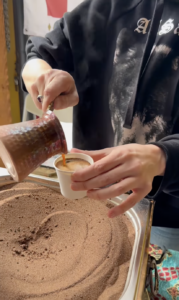
Soumak Boutique’s Turkish Coffee
PHOTO: Screenshot courtesy of @soumakboutique / Instagram

Turkish/Syrian Coffee on Hot Sand & Boardgames
Kids Market, 1496 Cartwright Street, Vancouver
May 17, 11:00 a.m.–3:00 p.m.
Free registration via Eventbrite 

Soumak Boutique’s Turkish Coffee on Hot Sand pop-up is happening on May 17, bringing the traditional art of coffee brewing to Vancouver for all coffee lovers! With just $5.50 for Turkish coffee or $2.50 for Turkish tea, you can sip your coffee, soak in the atmosphere filled with Middle Eastern music and tradition, all while enjoying a complimentary piece of Turkish delight! While you’re there, make sure to try your hand at a handmade Syrian mosaic board game, and don’t forget to browse the boutique’s collection of handmade ornaments, wall decor, kaftans, Turkish towels, and more.

view of a cottage at Deer Lake Park, Burnaby
PHOTO: Emily Le / The Peak

London Drugs Photo Walk with Fujifilm
Shadbolt Centre For The Arts, 6450 Deer Lake Ave, Burnaby
May 17, 11:30 a.m.–2:30 p.m.
Free registration via Eventbrite

Explore the Century Gardens of Shadbolt Centre at Deer Lake through your film camera lens with London Drugs and Fujifilm. While enthusiasts are encouraged to bring their gear to capture awesome photos of the garden on film, it is also an opportunity for everyone to test-run a good selection of Fujifilm camera gear and their latest offerings. A reminder to bring a piece of government-issued ID and a credit card, and geek away at your favourite film photography gadgets! Passion for film photography is all it takes to participate — no pro skills needed! 

poster for the dead pony comedy event
PHOTO: Courtesy of @cant.fox.this / Instagram

Stand-Up by Dead Pony Comedy
1181 Davie Street, Vancouver
May 22, 8:00 p.m.–9:30 p.m.
Tickets: $11.98 and $17.31 via Eventbrite

Start your semester on a joyful note with real laughs, not the stressed-out kind. Featuring a hilarious lineup including Aryn Mott, Nora Vision, Conor Meadows, PIOTR, Anaheed, Anna K, Eden Kaminski, and Gabriel Vill, Stand-Up is sure to be a show of non-stop fun and positive energy before you dive back into your laptops and textbooks! 

close up of a microphone at an event
PHOTO: Kane Reinholdtsen / Unsplash

Public Speaking In-Person Practices
1055 West Georgia Street, Vancouver
Every Wednesday, 6:00 p.m.–8:00 p.m.

Burrard Toastmasters has been one of Vancouver’s leading public speaking clubs, helping individuals develop their communication and leadership skills in a supportive environment since 1958. The club meets every Wednesday for a two-hour session, where members practice public speaking, present their speech on any topic of their choice, and receive constructive feedback from the club’s speech evaluators. This is the place for you if you’re looking to boost your self-confidence and public speaking, as well as if you are keen on expanding your network. And the best part? You can drop in sessions for FREE, as many times as you’d like as a guest!

Can news platforms build trust in a fractured world?

0
A person standing on a sidewalk at night, facing a storefront with multiple TV screens displaying a mixture of news outlets.
ILLUSTRATION: Angelina Tran / The Peak

By: Ashima Shukla, Staff Writer

We find ourselves in a world where news media thrives on crises. Headlines are designed to scare, intimidate, divide, and most of all, keep us clicking. Across the world and he political spectrum, people are quick to claim “the other side” is full of lies. In this post-truth reality where even objectivity feels slippery, what is our responsibility as journalists? What might it mean to “speak truth to power,” when that act might get you detained or even killed? And how can journalism help rebuild trust, especially with people who disagree? 

When I was 12, I joined a summer school journalism program. One of the first things I learned is that journalism isn’t only about reporting facts, it’s also a business. An interesting lead often took priority over the dull yet important work. At the time, this lesson was painful and disappointing; it deterred me from a career in journalism. Today, it’s what drives my writing — to critique, not just in theory but also in practice, how political and economic forces shape, and are shaped by technologies that produce information. 

In a way, the task for journalists today is a Sisyphean endeavour. In Greek mythology, Sisyphus was a man punished by the gods to roll a huge boulder up the hill, only for it to roll back down every time. An eternity spent trying. Finding, let alone telling, the truth today is like pushing that boulder uphill. With each issue, we might think we’ve clarified something previously overlooked. But, with each moment after publication, new storms emerge and undo the work we’ve done. Yet, we persist. Why? Because, if journalism is to be a tool for solidarity, we must gladly spend eternity trying. 

Why we stopped trusting the news 

Amid the ideals of democracy, journalism has been called the “fourth estate” by Burke when referring to the division of power between the three estates of the British parliament. Journalism, a powerful watchdog holding the government accountable. It was meant to foster an informed citizenry — one equipped to participate in democracy — by providing citizens access to factual information; an always imperfect ideal. After all, who determines these facts? Who has been allowed to be a voice of knowledge? Whose stories get centred, and who is expected to provide the pain? The spectacle? The statistics? Whose version of truth gets published, and whose gets edited, mistranslated, silenced, erased? 

News organizations don’t work alone — they are embedded within broader systems that include governments, corporations, social norms, and societal structures. Prominent scholars, from Michel Foucault on the entanglement of power and knowledge to Noam Chomsky’s Still Manufacturing Consent, have shown how the media often supports those in power, even when disguised in “neutrality” or “objectivity.” Now, more than ever, this hollow ideal of journalistic objectivity is exposing the cracks in the foundations of the field. They remind us that truth isn’t neutral, it has a history tied to power. However, I don’t think this is something to lament. Perhaps it is only when we move beyond this performance of objectivity, which ultimately serves those in power, that we may begin to rebuild trust across political lines. If we want to rebuild journalism to serve democracy, we must begin by asking: democracy for whom? 

By giving people access to facts, it was meant to foster an informed citizenry, so people could be better equipped to participate in democracy.

A journalism of care 

In envisioning this journalism of care, I wonder, what might it look like if we replaced breaking news with slowing down, sensationalism with listening deeply, commodification of people’s stories with empathy and respect for lived experiences? Perhaps this is what real democratic accountability looks like: a journalism of care that acknowledges biases, that recognizes truth can look different depending on where one is standing. 

The journalism we need today must confront epistemic injustices, a concept coined by Miranda Fricker to describe the ways in which people are wronged in their capacity as knowers. In many newsrooms, this plays out as the repeated erasure or tokenization of Indigenous communities, racialized immigrants, 2SLGBTQIA+ individuals, and others whose voices have been historically silenced — what postcolonial theorist Chakravorty Spivak calls the subaltern. When journalism speaks for rather than speaking with people, it reproduces the very silence it claims to challenge. In her seminal essay, Spivak famously asked, “Can the subaltern speak? — a challenge to how dominant institutions can represent the oppressed without reinforcing their marginalization. To answer yes, journalism must begin with listening — not for quick quotes but for context, history, and power. It means treating community knowledge like oral traditions, lived experiences, and collective wisdom not as “human interest” stories but as legitimate forms of expertise rooted in ways of knowing that have often been dismissed. 

In doing so, transparency and reflexivity become vital. Transparency to explain how stories are sourced, whose voices are centred, and the editorial choices made behind the scenes. Reflexivity to turn the lens back on the journalist and their positionality: to ask how our identities, assumptions, and institutional ties shape the stories we tell. As scholar Linda Martín Alcoff wrote for The New York Times, truth is better reached through “a receptivity that holds back on disagreement long enough to try out the new ideas on offer,” rather than through adversarial arguments. This kind of openness is what builds trust, not by claiming authority but by inviting accountability. 

In contrast to corporate media cycles that chase immediacy, journalism of care resists the pressure to produce viral content at the expense of depth. This is the kind of work we see in independent outlets like IndigiNews in Canada or People’s Archive of Rural India. This kind of slow journalism is often rooted in the community. It is relational and cumulative. It might not “break” the news, but it does build understanding over time. In building trust as a news platform, it is vital we learn to sit with sorrow, and resist the capitalist drive to turn human suffering into headlines to be forgotten by the next news cycle. 

This is why I imagine this journalism of care as co-created and participatory. When done ethically, citizen journalism and community media offer a model of participatory storytelling that builds trust from the ground up. In India, for instance, Khabar Lahariya, a rural women-led news outlet trains local women to report on issues affecting their own communities. From covering caste-based violence to the lack of rural infrastructures, these journalists are not “parachuting in” but are already embedded in these struggles. It is only when journalism can thus redistribute power, by insisting that people are agents of knowledge, that we can foster solidarity. 

The culture of distrust and distortion in today’s media is a cry for help, a demand for better. Readers are looking for news publications to move beyond rage into understanding. They want stories that challenge injustice but also help them make sense of a world in crisis. Journalism of care is not soft or sentimental. Instead, it confronts injustice with clarity, compassion, and care. It recognizes that even though there isn’t a neutral truth, examining and unpacking it still matters. The boulder is heavy, and the hill is steep. But in inviting the community to support and co-create with us, we might just push it uphill a little easier, a little further. 

The attack on woke is an attack on education

0
PHOTO: Jason W / Unsplash

By: Yildiz Subuk, Staff Writer

Throughout their federal election campaign, the Conservative party has been promoting an “anti-woke” agenda. It draws similarities to US Republican politics, especially regarding education. They provide no definition of what constitutes “woke” or any real acknowledgement of where the term originates from — instead, the term is prompted as a faceless threat. While the Conservatives lost the election, falling 26 seats behind the Liberals, it is concerning that they are attacking education through divisive rhetoric in the sphere of mainstream politics. The attack on “woke” is an attack on free thinking, as the term itself has to do with the process of becoming educated.

The term woke originates from the civil rights movement and first alluded to becoming “woke” to the injustices that surround us. It is literally the past tense of “wake up,” referring to the notion that we were previously unaware of an unjust reality (“asleep”). In a contemporary context, the term is still used to highlight the importance of addressing societal issues. However, the term has been painted as negative by far-right groups who associate it with institutional control. In an interview with PBS, economist Jessica Riedl from the Manhattan Institute described Trump’s proposed budget cuts as a clear reflection of his “governing philosophy.” It is essentially a “war on woke.” In the budget report the term is mentioned 12 times and is used pejoratively. 

The cuts proposed by the Republican party have to do with slashing funds to underrepresented areas within STEM, such as environmental research and work around economic equity. Nearly $12 billion is proposed to be cut from the Education Department, and $1.8 billion has already been cut from the National Institute of Health (NIH). Before the cuts, NIH was a thoroughly peer-reviewed and reliable source for health related information and provided accessible knowledge for many, yet it was described as “too big and unfocused” by Trump.

In Canada, Conservative leader Pierre Poilievre has vowed to end “woke” ideology. In their costed platform, the party stated their intention to “put an end to the imposition of the woke ideology in the federal public service and in the allocation of federal funds for university research.” This plan is eerily similar to Trump’s rhetoric. Poilievre claims in an interview that the term woke “divides people into these different groups.” The framing of the word woke by the party leader is troubling as it completely distorts what the word means. He has deliberately created misinformation around the term as a way to strike resentment towards progressives and create distrust in academia. During a time where inequality grows, the Conservatives’ pledge to cut research funding is a step backwards. 

While the Conservatives will not be in power, it is important that they work on their messaging. With more than 8 million of the population’s vote, the party still has strong support in Canada — especially with 57% of Canadians disagreeing with equity and inclusion initiatives, which aim to lessen barriers for marginalized people by providing better access to jobs and education. The attack on education, especially that which addresses important topics around inequality, should not exist within the party’s platform. Weaponizing the word woke as something dangerous is the true divisive messaging. If the party does not want to be seen as “far-right” or aligned with American Republicans, they need to stop co-opting their approaches. 

UBC professors file academic freedom lawsuit over land acknowledgements

0
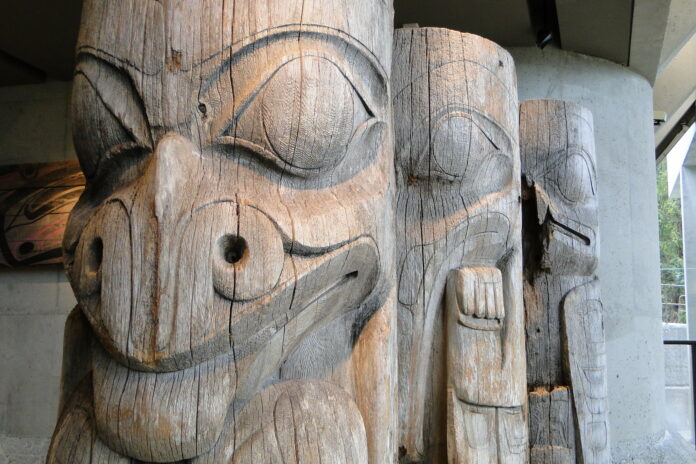
This is a photo of three totems at UBC, one at the forefront and the others stacked behind the first one.
PHOTO: Adam Jones / Flickr

By: Lucaiah Smith-Miodownik, News Writer

Land acknowledgements have become commonplace in Canadian institutions, and universities are no exception. Recently, a group of UBC community members made headlines for critiquing the practice. In early April, professors Brad Epperly, Andrew Irvine, Christopher Kam, Michael Treschow, and PhD graduate student Nathan Cockram took to the BC Supreme Court to petition UBC over the language used in the university’s land acknowledgements.

They cite the University Act, which says “a university must be non-sectarian and non-political in principle.” The petition asks for “an order prohibiting and restraining UBC from declaring or acknowledging that UBC is on unceded Indigenous land.” The claimants also request the court to bar “UBC from requiring or encouraging other persons to declare or acknowledge that UBC is on unceded Indigenous land.” 

The request to remove “unceded” from the UBC lexicon is part of a larger appeal to “protect the academic freedom” of UBC community members, as Irvine told The Peak. Land acknowledgements “have been abused, encouraging and often requiring faculty to accept and promote one political position rather than another,” he said. 

Those backing the lawsuit argue recognizing unceded territory inhibits the right to claim “that the xʷməθkʷəy̓əm (Musqueam) and/or Syilx Okanagan people effectively ceded their lands” or “fully or partially extinguished” their rights. Unceded territory “means that First Nations people never ceded or legally signed away their lands to the Crown or Canada,” thus making the land stolen by the government. The government of BC cites “95% of BC is on First Nations land that never had a treaty agreement.” 

The petition cites the landmark case Delgamuukw v. British Columbia, which found that “any title the Gitxsan and Wet’suwet’en may have had was extinguished.” While the original ruling resulted in this conclusion, an appeal in 1997 resulted in a rejection of the findings. The Supreme Court ruled “that the provincial government had no right to extinguish the Indigenous peoples’ rights to their ancestral territories” and failed to consider Indigenous oral histories, among other reasons. 

To avoid compromising academic freedom, the claimants argue there can be no “administrative interference.” Doing so would “effectively erase the distinction between academic work and political advocacy within the university.”

It is clear to us that their claims veiled under the banner of ‘academic freedom’ are, in fact, a thinly disguised attempt to perpetuate harmful rhetoric rooted in racism, bigotry, and historical denialism.” — tqłəníw̓t/tqaʔtkʷɬniwt (Westbank) First Nation

For Syilx Okanagan Nation Chiefs, the recognition of unceded lands “is not a political maneuver,” but “an acknowledgement of historical truths and legal realities.” The Peak reached out to Chief Robert Louie of the tqłəníw̓t/tqaʔtkʷɬniwt (Westbank) First Nation and the Union of BC Indian Chiefs but did not receive a response by the publication deadline.

In a press release from the Syilx Okanagan Nation Alliance, Chief Louie asserted that “academic educational institutions have a duty to foster environments of truth and reconciliation.” The release also writes that “such acknowledgements align with the 2015 Truth and Reconciliation Commission’s 94 Calls to Action, urging educational institutions to integrate First Nations knowledge and perspectives.” UBC’s approach also aligns with the federal and provincial government’s commitments to the United Nations Declaration on the Rights of Indigenous Peoples, including “recognizing the rights of First Nations to their lands, territories, and resources, and affirming the necessity of free, prior, and informed consent in decisions that affect them.”

“It is clear to us that their claims veiled under the banner of ‘academic freedom’ are, in fact, a thinly disguised attempt to perpetuate harmful rhetoric rooted in racism, bigotry, and historical denialism,” the tqłəníw̓t/tqaʔtkʷɬniwt Nation wrote in an open letter responding to the lawsuit. “Too often, in the current political and media climate, individuals who resist the most basic principles of reconciliation and human rights attempt to cloak their actions under the guise of free speech.”

Irvine defended the claimants’ petition in an article for the right-leaning publication National Post, writing that those who criticize the lawsuit in this manner “misunderstand our position.” The petitioners “take no position on land acknowledgements, other than that they are political in nature.” Irvine argued that the “case in no way attempts to override or diminish Indigenous rights.” 

Also requested by the claimants is “an order prohibiting and restraining UBC from making statements or declarations of support or condemnation of Israel or Palestine,” as well as another order barring the university “from requiring expressions of agreement with, fidelity to or loyalty to diversity, equity, and inclusion doctrines.”

At the time this article was written, UBC has not yet filed a response to the lawsuit.

A Mothers’ Day gift guide

0
Illustration of a mother embracing children
ILLUSTRATION: Cliff Ebora / The Peak

By: Zainab Salam,Staff Writer

Mothers’ Day is on its way and for those who are indecisive about gifts, or just looking for a way out of routine surprises, here’s a personal guide — let’s say a manifesto — for celebrating Mothers’ Day.

When I was a wee child, I had a brilliant idea to buy my mom a bottle of perfume. Armed with seven dollars and a dream, I had convinced my older brother to take me to the corner store so I could put it into action. Surprise, surprise, those seven dollars couldn’t afford me much. So, I settled for a budget-friendly alternative: a body spray and a pack of gum. She loved it! I was incredibly proud of myself for years to come. 

Now that I am older and wiser, I think it’s time to step up the game. Decades ago, Gary Chapman theorized that people tend to give and receive love in five primary love languages: words of affirmation, acts of service, receiving gifts, quality time, and physical touch. Even though the idea is proven to be unscientific, why limit ourselves to facts in doing something for a person who’s so important to our lives? So let us venture into the realm of the five love languages and explore how to show our moms that we appreciate them. 

Words of affirmation: A handwritten letter expressing your gratitude, and love can be far more powerful than any store-bought card. You can even go for a “Reasons I Love You” jar filled with individual notes. To make it even nicer, let other family members chip in with their own notes! 

Acts of service: Consider giving her a much-deserved break. You can plan a “Mom’s Day Off,” taking over chores, and preparing her favourite meal, so she can relax. You can also create a playlist of her favourite artists, organize an activity that fits with her hobbies, or even help with scheduling important appointments for her. Even simple gestures, such as making her morning coffee, can communicate your love and appreciation. Personally, my mom is never the one to ask for much, but I’ve learned over the years that she appears more relaxed when her day is made easier. For Mothers’ Day this year, I plan on heeding my own advice. I am going all out with breakfast in bed — with coffee, of course! Then, while she is distracted by a carefully-crafted “day-out” plan, my brother and I are going to tackle house chores, like there is no tomorrow! 

Receiving gifts: I personally find that focusing on meaningful, personalized items is a lot more meaningful than going for expensive surprises. A custom piece of jewelry, a thoughtfully curated photo book, or a handmade craft can be lasting keepsakes. Maybe a locket with a personal message inside it, or even a charm bracelet, where each charm represents an important memory. And for those who struggle with crafts, Vancouver offers many local boutiques who will bring your vision to reality — the key here is to show that care and intention went into the gift!

Quality time: Prioritize spending time with your mom. Plan an activity that she enjoys — that can be a walk in the park, an afternoon baking together, or a cozy movie night with her favourite snacks. Maybe you can even level it up by taking her to the annual Vancouver Improv Centre Comedy Shows and share a laugh, or visit Vancouver’s many plays and operas for a classical night out. You can plan these activities to her hobbies, but remember — what matters the most is you enjoying time with her! 

Physical touch: Go for gifts that offer comfort and closeness. A comfy bathrobe, a heated blanket, or even a gift card for a professional massage will bring her joy. Speaking as someone who wouldn’t part with their heated blanket, trust me — they are the best possible gift out there.

What makes the love language approach so meaningful is its emphasis on personalization. At the end of the day, it’s not about how much you spend; it’s about showing that you know her and love her in the language that she feels most profoundly. 

Happy Mothers’ Day to all the incredible mothers out there! You deserve more than just one day of celebration. 

Who killed McFogg?

0
A magnifying glass pressed against a blue background.
PHOTO: Markus Winkler / Unsplash

By: Thievius Raccoonus

The search for McFogg has finally ended. After years of wondering what happened to our beloved Scottish mascot, the dog has finally turned up back at SFU . . . but not in the way anyone wanted him to. McFogg was found floating in the reflection pond holding an onion, with syllabi for economics courses floating around him. Five suspects have been apprehended for their possible involvement in McFogg’s demise — who do you think killed our beloved pookie?  

Avocado Anthony

ILLUSTRATION: Yan Ting Leung / The Pawn

While he doesn’t have quite the history with murder, Avo-Tony (a nickname bestowed on him by the locals) has a history of doinking in the avocado near the pond. No one has actually seen Avo-Tony — he is a bit of a myth — but they feel his presence when they come close to the stony object. 

He may have been the closest to the crime scene, but Avo-Tony, despite his oddities, has never been known to be a killer. He keeps to himself, wears a green hat shaped like a cracked avocado, and enjoys making love to anything that reciprocates his affection. It is rumoured that Avo-Tony may have been dating McFogg before his untimely demise, however the relationship was one of tender love and transformation for both.

The Images Theatre Troll 

ILLUSTRATION: Yan Ting Leung / The Pawn

The Troll has a history of being violent. Sure, it hasn’t killed anyone before, but it could definitely be capable of it. This creature will lash out at you if you decide to put any remotely fun movie on your Letterboxd top-four. The Troll once knocked out a first-year student after stalking his Letterboxd and noticing all his favourite films were comedies directed by Judd Apatow. If you don’t have some obscure four-hour European film from the ‘60s on yours, you’d best hide. 

McFogg was a cinema nerd himself. His top-four on Letterboxd included Seven Samurai, Solaris, , and Bicycle Thieves. Do you think this list would satisfy the troll?

The Quadrangle Reaper

ILLUSTRATION: Yan Ting Leung / The Pawn

The Reaper appears during times of unfathomable crashout. When the mundane, soulless qualities of the 5000 level of the AQ finally take a toll, the reaper comes for one’s soul. The goal of the reaper is not to kill, but to sedate the victims of monotony. 

McFogg, surprisingly, was a joyful soul, so it is unlikely The Reaper would visit him. However, it has been reported that even his joy could not handle the soulless look of the 5000 level.

Monsieur Mackenzie Oui Oui 

ILLUSTRATION: Yan Ting Leung / The Pawn

Out of all the suspects on the list, the one who has committed the most heinous of crimes is definitely Monsieur Mackenzie . . . The crime of being FRENCH!

Mackenzie may not have a history of murder, but his track record is sinister. To be so French is a cause of concern. If you speak to him in English he will act as if he doesn’t understand you, despite being fluent in the language. He also doesn’t consider Quebec to be authentically French. He claims Quebec is a parody of France, which didn’t sit too well with McFogg . . .

After a heated debate once, Mackenzie exclaimed to McFogg, Mêle-toi de tes oignons!,” which translates to “mind your onions.” McFogg was confused by if this was a common French saying or a sinister threat. 

Dr. Milton NotSoFreedman 

ILLUSTRATION: Yan Ting Leung / The Pawn

McFogg was an advocate for lowering tuition for students. Professor of economics, Dr. Milton NotSoFreedman, was not. Deriving his name from an infamous economist who favours the free market, the economics professor believes that increasing tuition actually increases productivity, as it inspires the student to work harder.

McFogg was actually the one making the threats in this scenario, often stating, “I hope Luigi gets your ass.”

SFUtile Facts

0

By: C Icart, Humour Editor and Kaja Antic, Sports Writer

Questions

  1. What did staff find in the SFU Reflecting Pond when they cleaned it out in 2008?
  2. What was SFU’s first mascot?
  3. According to Wikipedia, what was the 22nd busiest airport in Canada by passenger traffic in 2024?
  4. What is former Canadian soccer team coach John Herdman’s signature coaching move?
  5. What is the one deadly thing you can take out of the Bennett Library
  6. In 2012, Ljudmila Petrovic and David Dyck wrote about stuff they hated for The Peak. What were the two things they named?
  7. What Metro Vancouver golf course is the former site of a popular racetrack?
  8. What is the name of the song the following lyrics belong to? “Payless is where you start / you pass a bench where old men fart / just walk inside and take a chance / there’s five stores there for plus sized pants.”
  9. Also in 2012 (don’t ask, just get on the throwback express bus I’m driving right now), the BC Liberals launched an ad campaign that oozed “stop buying avocado toast if you want to buy a home” energy. What was their slogan?


Answers

  1. They foundtwo pairs of glasses, three hockey pucks, a hearing aid, a ‘really boring’ diary, two cellphones, a five-pin bowling ball, some liquor bottles and a sodden copy of the Thomas Hardy novel Tess Of The D’Urbervilles with an inscription that read: ‘She should have kicked him in the strawberries.’”
  2. The SFU gorilla. This unaffiliated mascot hyped up fans of the Clan for over a decade before McFogg hit the scene. 
  3. Comox Valley. 
  4. Using drones to spy on opponents. 
  5. Asbestos.
  6. Drinking out of glass jars and people with two last names. 
  7. Westwood Plateau. The Westwood Motorsport Park was Canada’s “first permanent, purpose-built road racing facility” and was open from 1959–90.
  8. Kingsgate Mall Tribute. A banger. 
  9. Hipster is not a real job.” 

Pictionary with Stix the Burnt-Out Candle

0

By: Yildiz Subuk, Staff Writer

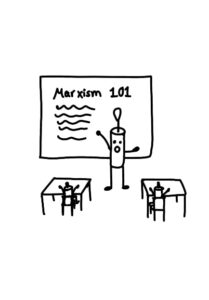
In his free time, to decompress for the capitalist machine, our favourite comic protagonist Stix the Burnt Out Candle likes to play a version of pictionary where he draws pictures, and has his friends guess the hidden messages. Can you guess what Stix is doing in these self portraits?

Answers

  1. Radicalizing the young 
  2. Dreaming about a revolution 
  3. Admiring his rake
  4. Writing a manifesto
  5. Raging against the machine
  6. Cutting a disappointing birthday cake


Trump loses historic match of geopolitical chess

0
This is an illustration of a chess board where each of the chess pieces (except the pawns) features the faces of political figures mentioned in this piece. The white pieces are featured at the top, with the black pieces on the bottom.
ILLUSTRATION: Cliff Ebora / The Pawn

By: Phone Min Thant, Staff Writer

Editor’s note: This article is rated “CIR” for Chess and International Relations enthusiasts. May contain references to your favourite or most disliked world leader. Knowledge of chessboard coordinates is encouraged. Reader discretion is advised. 

Welcome to the White House Situation Room, the historical command center of US presidents and the brain behind their security agenda. Kennedy first used it during the Cuban Missile Crisis. Then Bush Jr. used it in 2003 when America decided to attack Iraq. Obama and his cabinet members used the room to watch the assassination of bin Laden

Today, all the cabinet members have been called to an emergency meeting. No, it isn’t a nuclear armageddon or the bullying of some unfortunate nation. No such rational use of this important office today; instead, Donald Trump wanted to play chess in the Situation Room. “Not just any chess,” the ambitious president said, “but geopolitical chess.” A few decades ago, when he was an unassuming capitalist tycoon, he had claimed, “If I studied chess for a year or two, I would become a grandmaster.” No one believed him. Now that he’s the president, he’s back to prove this point. On Trump’s side stood his besties, the authoritarian strongmen (and Giorgia Meloni): Viktor Orbán, Narendra Modi, Vladimir Putin, Benjamin Netanyahu, Javier Milei, Kim Jong-Un — and Trump himself as the king piece. On the other side are those with whom he’s had a bone to pick since January 20. This so-called opposition ranged from Mexico’s President Claudia Sheinbaum to President Volodymyr Zelensky. Invited all the way from Ottawa, Prime Minister Mark Carney took charge of this side.

After Trump was promptly reminded he can’t move the king piece anywhere he likes, the match began. “Pawn to d6,” Trump opened. “Pawn to c3,” Carney responded. After much mindless pawn-moving, without much results, Trump called “bishop to e6.” Out came Putin, swerving pawns left and right, but instead of stopping at e6, he overreached into f5, poised to strike Zelensky — Carney’s knight piece. Macron, the queen piece, countered, moving to g4. “Bishop to g4,” Trump exclaimed. Fixated by the possibility of capturing Zelensky, Putin refused to move, urging Trump to move his queen piece, Netanyahu, to d6, but was unable to stop the expansionist man from capturing an unassuming pawn in d5. 

“If I studied chess for a year or two, I would become a grandmaster,” said an unassuming capitalist tycoon a few decades before his foray into American politics. No one believed him. Now that he’s the president, he’s back to prove this point.

Out goes Putin, swiftly captured by Macron the queen. Trump, visibly shaken by the loss of his “genius,” wasted his turn threatening to impose tariffs on Carney and Sheinbaum. “Knight (Zelensky) to c3.” Before Trump could analyze the situation, Netanyahu’s queen piece had taken the slip to eliminate another innocent pawn in d4. Carney then moved his bishop — Ursula von der Leyen — to f4, a precautionary move without an intention to fight. Netanyahu, controlled by greed, occupied the empty queen spot in d1, attempting to check Carney’s king piece, a move immediately counteracted by its demise from Carney’s king. 

In a matter of a few moves, Trump has lost his bishop and a queen. His cabinet got to work immediately, blaming Diversity, Equity, and Inclusion (DEI) for plaguing the chessboard industry, wasting yet another crucial turn. Carney then set his sights on Modi’s knight — still remaining unmoving at b8 — by moving his own rook piece to a now-empty b1. In this turn, Trump notices one of his knights missing — Kim Jong-Un has lost interest in the game and has apparently gone back to test some new nuclear missiles back home. 

Trump then abruptly stopped the game, not accepting defeat. “My chess skills are the best in the world — better than anyone in North America,” the president is reported to have said before storming out of the Situation Room. Netanyahu claimed victory after capturing two pawns in the match.

The next morning, Elon Musk posted on X that DOGE will be “dismantling and defunding” the US Chess Federation, and banning chess as a sport altogether. White House press secretary Karoline Leavitt announced that the US government will be expanding the tariffs on Canada and Mexico. The secretary of state Marco Rubio has refused to provide a statement to The Pawn regarding the applicability of Trump’s chess abilities to American foreign policy.

Introducing SFU faculty Pokémon cards

0
A set of cards with different animal-like illustrations representing different faculties: A raccoon wearing a suit and tie, holding a phone A raccoon standing on its hind legs, to its right a stack of books. A dolphin with markings on its skin, floating in front of a laptop. A panda in a lab coat holding test tubes An elephant holding a paintbrush and a phone. A rodent-like creature with a nurse's hat and a face mask, holding a syringe. A creature with purple skin and green hair pointing towards a blackboard. A tiger with a leaf instead of a tail and a blue cap.
ILLUSTRATION: Bithi Sutradhar / The Pawn

By: Phone Min Thant, Staff Writer

Did you know, raccoons aren’t the only critters roaming campus? Here are some of the Pokémon you will face as you wander the concrete halls of the mountain fortress — each belonging to one of SFU’s faculties. 

Networkat
Beedie School of Business: Always dressed in a stylish suit and tie, the main ability of Networkat is obviously networking. Thriving not in combat but in talking with others, handing in resumes, and posting on LinkedIn, the Beedie Pokémon’s your greatest companion when you’ve a group presentation. Don’t be fooled by their Colorless type — it’s adept at cherry picking personalities from other Pokémon during networking. Their HP are relatively low, but if you train your Networkat enough, it can evolve into an accountant, a consultant, or a banker!

Scribrain
Faculty of arts and social sciences: Scribrain uses WRITING! It’s super effective — but it also takes away a huge chunk of their HP. Some say “the pen is mightier than the sword,” and Scribrain is a testament to this cliché, but with a lot of brain power drained in the process. The FASS Pokémon remains typeless — the faculty is just too huge for one classification! Their evolutionary future is uncertain, ranging from government workers to therapists, so choose your training-arc path well. Most of the time though, Scribrain can’t escape the multitude of training centers and battles — they fight a lot better with a Masters’, a PhD, and a lot of time and Pokémon Dollars spent. 

Laborynth
Faculty of applied sciences: Laborynth is a tired Pokémon, probably the most trained and battle-weary on this list. After going to a few lower-division courses that take the entirety of its weekday schedule, our applied science Pokemon just needs rest and nourishment — be kind to them. While Laborynth possesses many abilities that will awe other Pokémon, their main ability is pulling all-nighters. It’s not a coincidence that they are Dark-type Pokémon; they need their caffeine for max HP to fight more battles, and to train and evolve. Due to repeated exposure to lab work, they are also immune to poisons. Train them well, collect all of them, and they will make good companions in your search for a new technology or a novel chemical compound.

Digispark
Faculty of communications, arts, and technology: Evermore reliant on a fast internet connection and constant power, Digispark is an Electric-type Pokemon. This type of Pokémon is weak against fellow electric and grass types, perhaps an ironic reminder that in their drive to understand mass media, they forget to connect with the natural world. Digispark boasts a huge range of abilities and evolutionary paths — it all depends on the sub-types they choose to evolve into, ranging from arts to digital media. But of course, they’ll have to leave Surrey campus and see some greenery in Burnaby first.

Healix
Faculty of health sciences: Like all Psychic-type Pokémon, Healix was initially thought to be overpowered — not only can you get a bachelor’s degree in both arts and science, just look at the huge range of evolutionary opportunities available post-grad! Healix is effective against Dark-type Pokémon like those from the applied sciences. You know what they say, training a health science Pokemon every day keeps the medical students away!

Acadimyrtle
Faculty of education: Acadimyrtle is built on the foundation of striving for a better collective future in an increasingly strained environment. A typical Water-type Pokemon, Acadimyrtle is patient, kind, and most importantly, rarer than any other type. Not only that, their HP is the second strongest in the Pokémon universe, a necessary asset for any evolutionary pathway involving teaching or tutoring. Their main ability is patience, not only in battle, but also as they level up and evolve — the education evolutionary path is not for the weak.

Protecterra
Faculty of environment: Is it a rock? Is it a tree? No, it’s Protecterra, the Pokémon from the Environment faculty. A Fighting-type Pokémon, it uses its black belt powers to fight climate change. While Ground-type Pokémon use abilities like Sand Force to destroy their opponents, SFU’s Protecterra uses their innate knowledge of environmental issues — and their main ability of reconstruction — to help deal with natural and manmade (or I suppose, Pokémon-made) disasters. To be fair, Environment Pokémon might also question the ethics of using Pokémon to fight human trainers’ battles. 

Codegrass
Computing science: I know, I know. Computing science is not a faculty. I’m only writing a separate section on the Computer science Pokémon to reveal the fact that they are Grass-type. Why? In a twist of fate, by identifying Codegrass as a Grass-type, I have decided to advocate for the years-long cliché that Comp sci students need to touch some grass. OK, I’m satisfied.

I hope this Pokédex provides a useful summary to SFU’s wide variety of faculties (and computer science). Now that you know them — and because they are limited edition — you gotta catch ‘em all! Don’t have enough Poké Balls? Don’t worry, I heard SFU will soon convert all UmbraCity rentals to Poké Ball vending machines.