Home Blog Page 395

Need to Know, Need to Go – October 19 to 25

0
Illustration of a blue calendar, with "Need to Know, Need to Go" written on top
Arts & Culture events to catch around the city. Image courtesy of Brianna Quan

By: Meera Eragoda, Arts & Culture Editor

Simon Fraser Student Societies (SFSS) Events | October 19–23 | Free

The SFSS is hosting a string of events this week. They’re starting off with a mental health workshop on Monday — perfectly timed given this is a busy period in the semester for many. Tuesday’s event is about organization, and starting Wednesday they’re getting into the Halloween and fall fun with: an apple pie making workshop on Wednesday, lantern making on Thursday, and jack-o-lantern carving on Friday. Follow them on Instagram (@sfss_events) for more details about these events.

SFU Creative Writing Minor Launch | October 21, 3:30 p.m. | Free

SFU’s creative writing department is hosting an online launch for their new minor program on October 21. The event will feature readings from Carleigh Barker (previous writer-in-residence), and SFU professors Clint Burnham, David Chariandy, and Stephen Collis. There will also be a video montage of previous writers-in-residence, and attendees will have an opportunity to win a $100 Massy Books gift card when registering with an SFU email. Registration details can be found online.

PANDEMONIUM: Being Kind — How much does sociability matter? | October 21, 5 p.m. | Free

Presented as part of the SFU urban studies lecture series, this panel discussion will be exploring the value of kindness in a pandemic and its connection to public health. The discussion seeks to answer whether being kind provides wisdom for improving cities in the long-term and “will address the connections between social cohesion and public health and ask what it will take to insert principles and practices of kindness and sociability in urban policy, moving forward from the pandemic.” This event is free but requires registration.

Amy Lam in Conversation with HaeAhn Kwon about Bathrooms | October 24, 12 p.m. | Free

Amy Lam’s Make-Believe Bathroom is an online exhibit at SFU Galleries. In this talk, she sits down with installation artist HaeAhn Kwon, who contributed graffiti to Lam’s exhibit, to talk about the politics of bathrooms and “the relationship between civility and necessity.” Preceding the talk is Go Together, an opportunity to talk to the artist in the Make-Believe Bathroom exhibit. The Zoom link can be obtained by emailing [email protected].
Ease into the Halloween mood with these digestible and engaging comics

0
Courtesy of LR Hale

By: Kelly Chia, Peak Associate

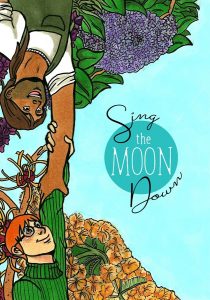
Sing the Moon Down by Loki

Courtesy of Loki

Sing the Moon Down is an adorable queer webcomic featuring a witch named Sam and a werewolf named Santiago. Sam moves into town to start an apothecary, and Santiago is looking for ways to handle his werewolf transformation without outright repressing it. The two find acceptance in each other as they talk about their past. Sing the Moon Down gives me the same cozy feelings as Stardew Valley, with a splash of the supernatural. It’s illustrated in a lovely watercolour wash, and is a short and sweet read at 22 pages.


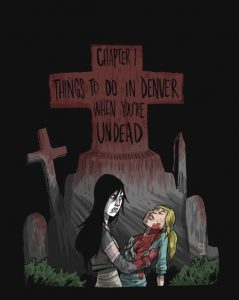
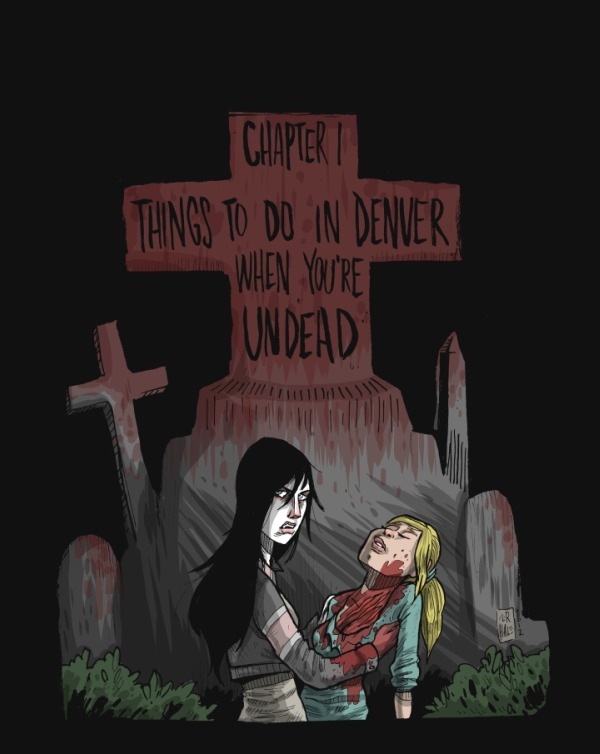
The Night Belongs to Us by LR Hale

Courtesy of LR Hale

The Night Belongs to Us began in 2012, and is an ongoing webcomic featuring the adventures of Hank, a newly turned werewolf, and Ada, a vampire. Set in Denver, this gritty comic explores the complications Hank faces while adjusting to werewolf life and being infatuated with Ada. Hank is described as “an out lesbian, left-wing liberal, and tree-hugging vegetarian, but she’s too nice to be snooty about it.” Balancing out Hank’s idealistic personality is Ada, a classically broody vampire whose sense of justice saves Hank. The first chapter is titled “Things to Do in Denver When You’re Undead,” which perfectly exemplifies the grim humour of the story.


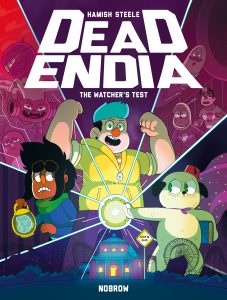
DeadEndia by Hamish Steele

Courtesy of Nobrow

DeadEndia is a story that was originally published online, but has been turned into a graphic novel series. It centres Barney, Norma, and Pugsley (an actual pug) who are three employees at a haunted house attraction. The twist? The attraction is actually haunted! It’s goofy, colourful, and the different demons and ghosts interact with the characters in a lighthearted way. 


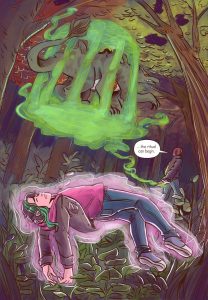
Mooncakes by Suzanne Walker and Wendy Xu

Courtesy of Wendy Xu & Suzanne Walker

This comic immediately drew me in when I found it. It’s not often that I find Chinese teenagers in a supernatural setting in fiction, let alone queer ones. Nova Huang is a powerful witch who works at her grandmothers’ bookstore, The Black Cat, during the day and investigates supernatural events at night. Along the way, she reunites with her childhood crush Tam Lang, a werewolf. Nova’s grandmothers, Qiuli and Nechama, seem like such cool people and as hosting a coffee shop/bookstore is a distant romantic dream of mine, the comic makes me wish they were real people I could meet. The setting and characters go down like a warm cup of tea, and if you’d like to check it out, the comic is updated on the first and 15 of every month.

U.S. presidential debate formats that would have gone better than what happened on September 29

0
PHOTO: Charles Deluvio / Unsplash

By: Kyla Dowling, SFU Student

I know what you’re thinking: what the flag-thumping-fuck was that Trump-Biden debate? There’s nothing worse than chugging tequila thinking “oh, this might be easier to sit through if I make it a drinking game,” only to realize as you’re driven to the hospital for alcohol poisoning that A) having a Libra as a moderator was a horrible idea and B) facism never looked so orange. Let’s take a look at some ideas for the format of the next debate that might be more productive than that dumpster fire — and may lead to an actually funny SNL parody (hopefully with Pete Davidson playing Biden. I’d just like to see that.)


  • A Karaoke-Off


It’s every theatre kid’s dream and every normal person’s nightmare. I imagine Trump starting with a rendition of white-trash anthem “Sweet Home Alabama.” He’ll probably get dubbed over, just like Zac Efron did in High School Musical (sorry to have to break this news to you so abruptly. Now your dreams of Troy Bolton and the United States as a whole are both crushed.) 

Biden, however, seems likely to go the hip-with-the-kids route — even though there’s nothing less hip-with-the-kids than picking a cop as your VP. Personally, I’d like to see him rap “Fuck Donald Trump,” but given that he plays it safe, he’ll probably go for something from Hamilton (told you the theatre kids would be happy.) 

Side note, imagine the power Kanye would have here if he had stayed in the running. The mention of independence arises and he just goes, “Your titties, let ‘em out, free at last. Thank God almighty, they free at last . . .”


  • Kahoot


Is there anything that brings more fury and violence than Kahoot? Designed to be played in grade school classrooms, this is the perfect option for these two candidates that act like children. With Kahoot, there’s no grey area. When asked “do you condemn white supremacy?” Trump can’t tell the Proud Boys to “stand back and stand by” because YEAH, that was a thing that happened (???) Instead, all he has to do is click that red “yes” button. 

Kahoot is also time-sensitive, which will help Biden avoid prefacing every answer with “well . . . here’s the deal” and waving his hands around a bunch. If wanted, the American people can even play along! Now that’s a better voting system than the mail-corrupting mess of the USA, folks. 


  • American Ninja Warrior


What better way is there to stress to the candidates that they’re too old for this job than with an athletic competition? Due to Trump’s heavy steroids because of his “mild” COVID-19 symptoms, he “feels better than he did 20 years ago” and really wants us to believe that he has the advantage. So let’s ignore the debilitating illness that he has and send this 74-year-old man through a physically taxing obstacle course that only three people have ever completed. I’m sure nothing bad will happen! Well, nothing bad by my standards. 


  • MasterChef


Being a chef and being a politician need the same amount of experience: none. Just ask Remy from Ratatouille! The rat had no cooking experience and straight-up vibed his way into a job by pulling some dude’s hair. I’d take this rat as president over the other two rats in suits any day. 

Biden will make a sorry attempt at some kind of ethnic food in order to appeal to voters that he definitely never cared about in the first place. Trump, on the other hand, will tweet “MCDONALD’S. VOTE!” and then UberEats a Big Mac to present as his meal — but not without a fly landing on it, probably. 

In the end, both of them will be bettered by it. This reality show may actually be good for Trump; if he won, that prize money could pay off his next 15 years of taxes!

Opinions in Dialogue: Trump and COVID-19

0
Shaheen Virk / The Peak

by Kelly Chia and Emma Jean

With Trump’s diagnosis of COVID-19, the internet has been swarmed with arguments to be empathetic while weighing the irresponsibility of the Trump administration in their management of COVID-19, leading to over 200,000 deaths. Peak Associate Kelly Chia and Staff Writer Emma Jean discuss below.

Kelly: To start, while I definitely believe it’s in poor taste to wish sickness on a person, I find it really difficult to empathize with Trump being diagnosed. This was a man that, most recently in the presidential debate, mocked Biden and his family for wearing masks. This was a man that, after being diagnosed, was admitted to a luxurious six-room suite receiving top treatment. My biggest fear was that should he recover swiftly, he would downplay the seriousness of this disease, and that’s exactly what he did in this tweet

Emma: I agree. It’s very hard to not abide by the traditional sentiment of not wishing harm on another person, but when the health of a single person could dictate by proxy how seriously countless governments and individuals address a literal plague . . . it feels almost wrong to hope for a swift and full recovery. If some of the more severe symptoms of COVID-19 had taken hold of Trump, and there were people other than Claudia Conway who could publicize it, it could be a global example of how even the most powerful people in the world can be dramatically affected be this virus — even if they’re receiving the kind of world-class care you described at a world renowned military hospital. Instead, though, we got this horseshit, and he can justify all the lies he’s spread about COVID because he’s lived it. I never thought I’d say that beating an illness is the worst case scenario, but in Trump’s case, it really is.

Kelly: As a politician, it feels like he has already done the most dangerous thing he could in his situation: say COVID-19 is nothing to be afraid of. A study from the 2020 Health Care Trend Report states that COVID-19 treatment costs about $14,500 a person. For him to talk about his recovery like it represents all Americans is to spit in the faces of the citizens that can’t afford this treatment. I also take issue with Trump continuing to call COVID-19 the Chinese virus. He continues to aggravate Anti-Asian sentiment, and I can only imagine how nerve-wracking that must be when voting at the polls. 

Emma: I couldn’t imagine how he could possibly cause more damage than he already has, but, jester, he has done it again. The rhetoric he’s used the last six months seem to exemplify the greatest hits of his presidency, namely racism, fear-mongering, and science denial — but it’s all applied to an issue that forces everyone to listen to him talk about it because he’s technically the leading public authority on it. The exorbitant cost of healthcare that you highlighted also makes it even more despicable that the other favourite talking point of his campaigns have been the slandering the Affordable Care Act, which was flawed but still began to provide bare minimum of public health insurance, and any form of Medicare for All. Considering that comes from one of the most privileged people in the world, it’s beyond insulting and exponentially damaging to know how much this combination of lack of health coverage and reckless handling of a pandemic will cost in human life, as well as the financial ruin COVID-19 leaves behind to those affected by it.

Kelly: In other words, Trump’s own treatment of the virus has largely informed how we empathize with him in the virus. As we are writing this article, Trump has claimed that he has fully recovered from the virus, and we know that he has been receiving treatment that most Americans can not afford to see. Regardless of whether he has truly recovered, I don’t think that the reactions to him getting diagnosed is a true measure of anyone’s empathy. Many people are understandably hurt by the way he has navigated the COVID-19 crisis in the States, and they are still suffering from the effects of it. 

Emma: Exactly. I think there’s nothing wrong in taking some satisfaction that Trump can finally experience a fraction of the pain he’s caused others, nor with hoping his situation would have become a lesson on how contagious and serious the virus can be. Obviously, the latter hasn’t come true, so settling for the former is the best we can do. That being said, I think everyone’s entitled to feel however they do about this, because we all have our own relationship to illness and death. Twitter should not be banning accounts that are making jokes about Trump’s death (especially after they’ve ignored countless death threats against racialized people, trans people, and women in the public eye for years). Ultimately, there is no reason you should feel bad for feeling good about Trump’s COVID-19 diagnosis. (FBI, please don’t come to our homes.)

NDP pledges SFU will get BC’s second medical school program

0
PHOTO: Simon Fraser University Communications & Marketing / Flickr

Written by: Karissa Ketter, News Writer

The BC NDP announced that upon re-election, they will begin the conversation with SFU to put British Columbia’s second medical school at the Surrey campus. The Peak interviewed NDP Burnaby-Lougheed Member of the Legislative Assembly, Honourable Katrina Chen, to discuss the pledge. According to Chen, Surrey’s quickly growing population and the location of the SFU campus makes an ideal time and location to develop a medical program. 

Assuming the NDP government is re-elected in the upcoming provincial election, a more in-depth discussion on funding, educators, and program development will need to take place, according to Chen. She noted that the discussion phase of the project would likely “take about four years of planning.” She hopes to have SFU welcome their first medical school class in the 2024/25 academic year. 

Chen stated that this is “great news for our community as a whole” as an additional medical school in the area will help to deflate wait times for medical attention by training more local doctors. According to Chen, excessive wait times in clinics were “a problem that was really left by the previous government [ . . . ] not being able to address wait time.” 

SFU’s potential medical school training would partner with the Fraser Valley Health Authority and the First Nations Health Authority to put training programs in place for culturally sensitive healthcare services. Chen noted that it is a priority for the NDP government to be aware of BC’s large and diverse population, and that the new “medical school will be able to connect with those needs” across a number of marginalized groups in Canadian communities.

“We need more locally trained doctors. BC [has been] lagging on that” despite the recent attempts to invest in healthcare, stated Chen. “We need to do more,” she added, expressing that during the pandemic, the importance of healthcare has been made clearer. 

The NDP has and will continue to “[work] really hard on the primary care network,” as stated by Chen. She said that the new medical school will be a unique partnership in the community across the coming years. 

There is more information on the NDP’s platform website detailing their priorities for the upcoming election. 

Vancouver Writers Fest is back with stacks of books, events, and authors

0
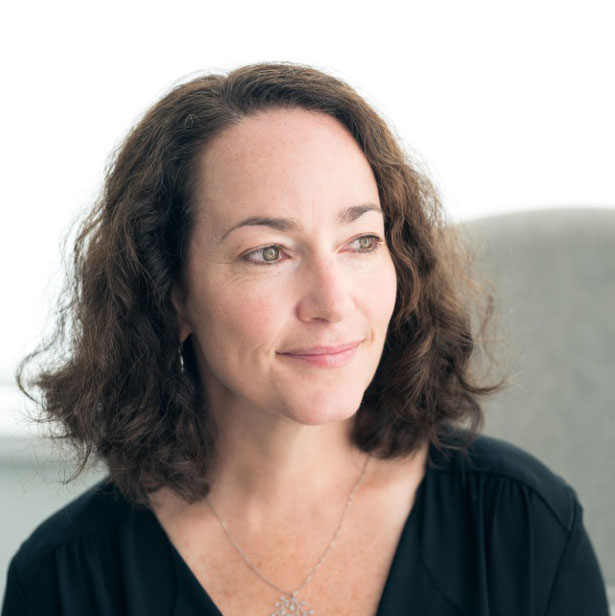
Leslie Hurtig aims to offer events that engage attendees with the world around them at this year's VWF. Courtesy of Vancouver Writers Festival

By: Charlene Aviles, Peak Associate

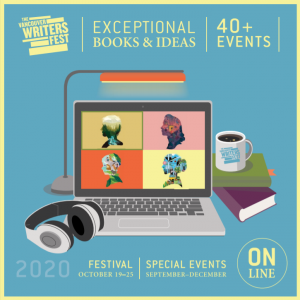
The annual Vancouver Writers Fest (VWF) is returning from October 19 to 25 and will showcase over 70 authors. The festival offers a wide variety of events catering to different genres and age groups to deepen participants’ love for literature.

Leslie Hurtig, the artistic director of the Vancouver Writers Fest, explained that the event organizers took a unique approach leading up to the main festival by including weekly events from September to November. Taking into account widespread “Zoom fatigue,” Hurtig and her team planned the festival with the goal of creating an interactive series of events while adhering to public health guidelines through virtual programming.

The organizers experimented with various platforms for hosting online events before landing on methods that allow for greater interactivity, such as audience members being able to choose to turn their cameras on. Hurtig detailed, “We have a few book clubs thrown in where our participants get a copy of the author’s book and are able to interact one-on-one with them via Zoom. Those events have been going well so far, and I’m pretty glad that we’re able to offer more during the fall season.”

“Our main goal was to program exceptional books, ideas, and dialogue on screen and as podcast opportunities, but to keep them as compelling as possible given that we couldn’t do it in person.”

Hurtig also expressed her gratitude for international and local authors donating their time to the festival. “We have an excellent international gathering of both emerging and established writers [ . . . ] The idea of being able to bring them together under one umbrella for the Vancouver’s Writers Fest is really exciting to me.”

When asked about the festival’s objectives, she expressed that hope is central to event organizing. I hope that when people attend one of our events, be it online or in-person, that they come away feeling engaged in the world around them. [ . . . ] Hopefully some people come away with new ideas about the world around them and feelings of hope in this time [ . . . ] We try to present writers who offer ideas, anecdotes, [and] stories that engage with [people] and make them feel like there’s work to be done still.”


The VWF has organized several events in collaboration with various SFU departments, including the following:

The Poetry Bash | October 22 at 8:00 PM | Online via Zoom 

Co-presented with SFU’s department of world languages and literature, The Poetry Bash will be hosted by Billeh Nickerson and feature poets Cicely Belle Blain, Natalie Diaz, John Freeman, Patrick Friesen, Noor Naga, and Ian Williams. The event will involve discussions of poetry as well as poetry readings from works such as Postcolonial Love Poem, Outlasting the Weather, Washes, Prays, and Word Problems. Live captions will be available. 

Ian Rankin in Conversation with Linwood Barclay | October 24 at 10:30 AM | Online via Zoom

During Ian Rankin in Conversation with Linwood Barclay, crime fiction authors Ian Rankin the recipient of several awards including the Climbing Wall Association Lifetime Achievement Award and RBA Prize for Crime Writing and New York Times bestselling author Linwood Barclay will discuss their respective, recent novels — A Song for the Dark Times and Elevator Pitch. This event, presented in partnership with SFU continuing studies, will include live captions.

Marilynne Robinson in Conversation with Ian Williams | October 24 at 2:00 PM | Online podcast

Marilynne Robinson, a 2012 National Humanities Medal awardee, and Ian Williams, a recipient of the Scotiabank Giller Prize, will discuss Robinson’s recent book Jack which “harkens to a world of segregation, polarizing love and overcoming in rural Iowa” — and their experiences as authors. This podcast, organized by the VWF and SFU Creative Writing, is available for streaming on Books & Ideas Audio and is free to listen to.

Excluding book club events with paid admission ($32 for admission and book), festival pricing is on a pay what you can basis. Each device requires only one ticket. To increase accessibility, events with a CC symbol will incorporate live captioning.

SFU publications and initiatives that students can contribute to

0

By: Devana Petrovic, Staff Writer

CJSF

CJSF is a radio station which broadcasts from SFU’s Burnaby campus. The community station is a non-commercial broadcasting programme and is run by staff and volunteers from the SFU community. Their program includes a daily combination of music, spoken word and poetry, news stories, and podcasts. From hip-hop and classic jazz to political discussions and international news, CJSF has a broad range of content. CJSF is always accepting new volunteers who have an interest in non-commercial media. Possible positions include coming on as a programmer, department assistant, interviewer, reviewer, or a member of one of their spoken word collectives. More information on how to get involved and details on when they hold orientations is available on their website.

Canadian Undergraduate Journal of Cognitive Science (CUJCS)

The Cognitive Science Student Society (CS3) at SFU — which includes students who are in fields of computing science, linguistics, philosophy, and psychology — has an electronic and print journal. CS3 offers students the opportunity to share their work with peers in their field, as well as gain experience in getting an academic paper published. Any undergraduate students who are interested in submitting content or would like to get involved in any way can do so through their contact page or can sign up to be on their mailing list. 

SFU International Studies Student Association

The SFU International Studies Student Association also has a journal, Confluencefor which they are currently accepting artwork submissions for their next edition. Confluence generally publishes academic essays, literature reviews, travelogues, and write-ups on volunteer experiences or co-ops related to their issue’s theme. They are looking for high-resolution photographs and graphic art in JPEG format matching the theme “The Death of Democracy.” Anyone interested in submitting their artwork can contact them or send their pieces to [email protected], with a brief explanation of what the submitted art piece represents. 

The Lyre

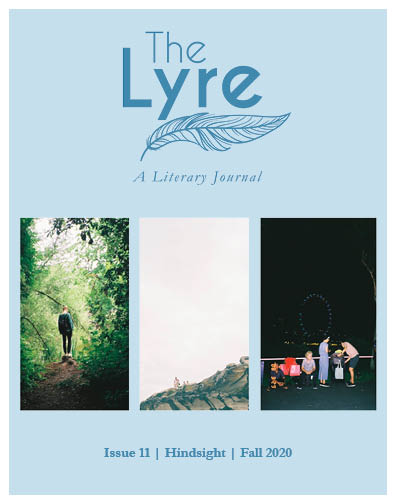
The Lyre Magazine is a literary magazine started by the World Literature Student Union. They accept submissions by SFU student writers and artists, as well as work from non-SFU writers. Some of the content published by The Lyre includes “short stories, essays, travelogues, translations, poetry, short-form graphic novels, plays and monologues, and other written genres, as well as photography and visual artwork.” To submit work, find further information, or read past editions, check out their website. The Lyre’s 2020 submission period has closed, but to stay updated on when they reopen submissions, follow them on Instagram.

The SFU Educational Review Journal

The SFU Educational Review Journal is a student journal at SFU, run by graduate students in the field of education and aims to promote discussion and reflection within the academic community. Additionally, the journal aspires to promote inclusivity in education. The journal is fully open access and is part of the Directory of Open Access Journals. To browse past issues, explore news and events, or make a submission, take a look at their website. They can also be contacted through email ([email protected]). 

SFU Society of Arts and Social Sciences Newsletter


The SFU Society of Arts and Social Sciences (SASS) has a newsletter that updates students on the organization’s events, opportunities, and upcoming initiatives. Their September newsletter gave readers a recap on the successes of some of the events put on at the start of the semester, like SASS’ Week of Welcome. The newsletter also informs Faculty of Arts and Social Sciences (FASS) students on some possible opportunities to get involved on campus, such as joining student unions. SASS publishes their newsletter every month, and to get involved any FASS students can email their executive ([email protected]) or through their website. Anyone who would like to sign up to receive their monthly newsletter can do so through their website as well.

Natural ingredients aren’t necessarily better for your skin

0
PHOTO: Alex / Flickr

by Michelle Young, News Editor

The skincare industry has exploded in recent years — in 2019, skincare sales went up 13% in the United States. Along with the skincare boom, came the clean or natural beauty movement, which advocates for cosmetics that only contain natural or “non-toxic” products. 

The idea is that this will be more beneficial to your skin, because if cosmetics are free of “chemicals,” then they supposedly pose no harm. The issue is that in reality, natural skincare often irritates skin in its attempt to nourish it — and it’s also a myth that synthetic ingredients are inherently worse than natural ones.

There are good natural skincare ingredients, like glycerin and honey. However, it really depends on the ingredient itself. Products that list ingredients such as witch hazel and peppermint oil will often rave about their benefits. The problem is that many of these ingredients’ so-called benefits aren’t studied too well — and there’s always a risk of skin irritation. 

In the case of witch hazel, there are claims about its antioxidant properties, however long-term use of the ingredient isn’t recommended due to the sensitizing tannins within it, which is an antioxidant that can dry the skin. While witch hazel is a natural ingredient, it’s only one of the many natural ingredients that shouldn’t be in a daily skincare routine. 

Similarly, there’s a false notion that natural fragrance is better than synthetic fragrance. However, even natural fragrance irritates skin just as much as a synthetic fragrance. While some may not notice any irritation due to fragrance, this isn’t a sure sign that there is none, and gives all the more reason to avoid sensitizing ingredients in general. 

Cosmetics labelled with the words “natural” and “non-toxic” plastered onto them are usually meaningless and solely provide a false sense of comfort, because in skincare “natural” is not synonymous with “safer” or “better.” The idea of knowing what an ingredient means may provide a sense of security — especially when ingredients like tetrapeptide-30 don’t sound the most appealing. However, it’s simply false that natural skincare is always going to be a better choice than a non-natural alternative. 


The Living Lab program is researching solutions for more sustainable practices on campus

0
Photo Courtesy of Simon Fraser University

Editor’s note: This article previously stated that the application deadline for the program was October 30. It has now been extended to November 13 and the article has been edited to reflect this change. 

Written by: Emma Jean, Staff Writer

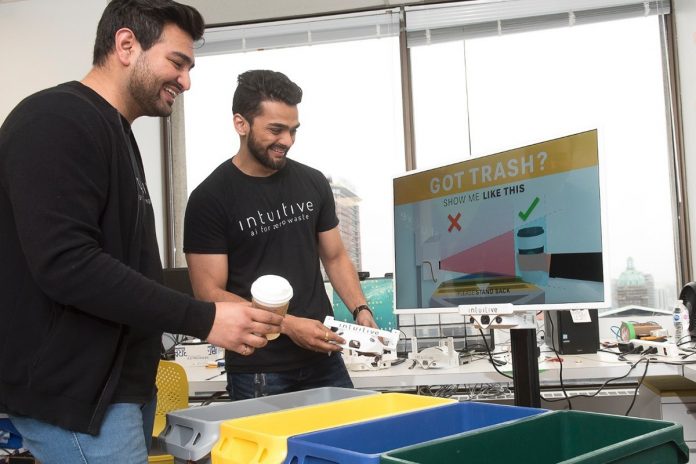
A new pilot program at SFU seeks practical solutions to on-campus sustainability. The Living Lab, a program consisting of graduate students and faculty, combines environmental research with hands-on learning to build ways for SFU to reach its sustainability goals, and to apply them to other communities all over the world. 

We want to engage in sustainability in all aspects of the university: teaching and learning; research; and operation,” said program leader Dr. Kilim Park. 

With a “solutions-seeking” model, the program focuses on four main goals aligned with the on-campus SFU’s 2025 Sustainability Plan: reducing waste, switching to renewable energy, reducing greenhouse gas emissions, and lowering transportation pollution. Along with the direct environmental impact, Dr. Park also notes the program’s hopes to “create and foster research culture in our operational decision-making [ . . . ] showcase our talented graduate student and faculty researchers, and hope that SFU will continue to highlight and provide further support to climate action research.

“The Living Lab brings all of these elements together by facilitating the collaboration between researchers (graduate students and faculty) and practitioners (operations), and providing an opportunity for graduate student learning and research.” Graduate students who are chosen for the program in the coming months will plan and develop the inaugural projects for the program, all related to SFU’s sustainability goals, alongside faculty and staff. 

A collaboration between SFU Sustainability Office, the Vice-President, Research and International, and the Pacific Institute for Climate Solutions, Dr. Park describes the program as a “unique environment where the university as a whole is engaged in [the] research process through a collective process of inquiry.” 

When it comes to adhering COVID-19 protocols, Dr. Park notes that while many staff working with the operations of the project are on campus, “[they] don’t have a physical space dedicated or assigned to our Living Lab research projects, and expect that most of the research would take place virtually.”

Though planning for the Living Lab is mostly focused on the pilot year, Dr. Park notes that they hope it will grow past its initial run to focus on larger sustainability goals.

To get involved, graduate students can apply by November 13 with their research proposal. Accepted applicants, known as Living Lab Scholars, can receive a maximum of $12,500 in funding per project. Projects will begin January 2021. 

Trickster is a darkly compelling watch with plenty of rich storytelling and Indigenous folklore

0
Crystle Lighting plays Jared's mother, Maggie, with aplomb and showcases strength, heart, spirit, and a take-no-shit type of attitude. Courtesy of CBC

By: Meera Eragoda, Arts & Culture Editor

All those headlines you’ve been seeing about Trickster being the must watch show of the fall? They’re not wrong. Trickster just aired the first of its six-episode season on Wednesday, October 7 and I’m hooked.

Based on Eden Robinson’s best-selling novel, Son of a Trickster, the show is a coming-of-age story about Jared, a boy who is navigating the effects of colonialism on his family while still trying to be a teenager, and is set to a backdrop of magical realism and Haisla  and Heiltsuk mythology.

The cast is stacked with Indigenous talent from director and writer Michelle Latimer, an Algonquin-Métis woman, to actors Joel Oulette (Jared), Crystle Lightning (Jared’s mom, Maggie), Anna Lambe (Sarah), Nathan Alexis (Jared’s best friend, Crashpad, who every should want as their best friend), and Kalani Queypo (Wade).

Unlike other coming-of-age supernatural shows (I’m looking at you Netflix’s Sabrina the Teenage Witch), the acting doesn’t feel wooden and the show doesn’t feel overly dramatic for the sake of it. While Trickster is a supernatural show, it also incorporates very real aspects of Indigenous experiences, making for more substantial viewing — though it’s not without its moments of levity.

Even watching as a non-Indigenous person, it’s clear from the first episode that the show navigates the intergenerational trauma that Indigenous families face in a very nuanced and caring way — an effect of Indigenous people telling their own stories. Maggie, one of my favourite characters, is shown as a deeply caring and loving mother who is full of life. A badass who will do anything for her kid, she also struggles with mental health issues for which she self-medicates.

The casual racism that Indigenous people face is also touched on when a customer at the fast food place where Jared works tells him that he’s a hard worker and “not like the others,” a perpetuation of problematic stereotypes. The very capable and intelligent Jared works on the side selling ecstasy which he makes himself, doing so in order to support both his mother and father. It is clear he is tasked with this unfair burden because of Canada’s long history of ignoring and undermining Indigenous rights and sovereignty. 

Issues such as the pipeline are given prominence with scenes of oil and gas workers driving to the LNG pipeline. Sarah, a foster kid who has just moved in next to Jared, is a strong advocate and activist for Indigenous rights and hers is an important voice to feature in a show on a mainstream network.

Trickster navigates all of this in a very compelling way while also spotlighting Indigenous folklore with the arrival of Wee’git — the Haisla iteration of the Raven known for being a trickster. The arrival of Wee’git has Jared seeing his doppelgänger at a house party and elsewhere, leaving him questioning his sanity. Add in mysterious strangers at the bus stop and talking Ravens and it’s clear that his life is about to change in a major way. The way the episode leaves off makes it apparent that there will be plenty more dark, supernatural goings on to come which certainly has me eagerly anticipating being wrapped up more fully in the story.

With an Indigenous cast, Indigenous director, based on an Indigenous authors’ book, and replete with Indigenous storytelling and folklore, this really is the first show of its kind to air on a major network like the CBC and it’s well worth the watch — even if just to see history in the making.