Home Blog Page 396

NDP pledges SFU will get BC’s second medical school program

0
PHOTO: Simon Fraser University Communications & Marketing / Flickr

Written by: Karissa Ketter, News Writer

The BC NDP announced that upon re-election, they will begin the conversation with SFU to put British Columbia’s second medical school at the Surrey campus. The Peak interviewed NDP Burnaby-Lougheed Member of the Legislative Assembly, Honourable Katrina Chen, to discuss the pledge. According to Chen, Surrey’s quickly growing population and the location of the SFU campus makes an ideal time and location to develop a medical program. 

Assuming the NDP government is re-elected in the upcoming provincial election, a more in-depth discussion on funding, educators, and program development will need to take place, according to Chen. She noted that the discussion phase of the project would likely “take about four years of planning.” She hopes to have SFU welcome their first medical school class in the 2024/25 academic year. 

Chen stated that this is “great news for our community as a whole” as an additional medical school in the area will help to deflate wait times for medical attention by training more local doctors. According to Chen, excessive wait times in clinics were “a problem that was really left by the previous government [ . . . ] not being able to address wait time.” 

SFU’s potential medical school training would partner with the Fraser Valley Health Authority and the First Nations Health Authority to put training programs in place for culturally sensitive healthcare services. Chen noted that it is a priority for the NDP government to be aware of BC’s large and diverse population, and that the new “medical school will be able to connect with those needs” across a number of marginalized groups in Canadian communities.

“We need more locally trained doctors. BC [has been] lagging on that” despite the recent attempts to invest in healthcare, stated Chen. “We need to do more,” she added, expressing that during the pandemic, the importance of healthcare has been made clearer. 

The NDP has and will continue to “[work] really hard on the primary care network,” as stated by Chen. She said that the new medical school will be a unique partnership in the community across the coming years. 

There is more information on the NDP’s platform website detailing their priorities for the upcoming election. 

Vancouver Writers Fest is back with stacks of books, events, and authors

0
Leslie Hurtig aims to offer events that engage attendees with the world around them at this year's VWF. Courtesy of Vancouver Writers Festival

By: Charlene Aviles, Peak Associate

The annual Vancouver Writers Fest (VWF) is returning from October 19 to 25 and will showcase over 70 authors. The festival offers a wide variety of events catering to different genres and age groups to deepen participants’ love for literature.

Leslie Hurtig, the artistic director of the Vancouver Writers Fest, explained that the event organizers took a unique approach leading up to the main festival by including weekly events from September to November. Taking into account widespread “Zoom fatigue,” Hurtig and her team planned the festival with the goal of creating an interactive series of events while adhering to public health guidelines through virtual programming.

The organizers experimented with various platforms for hosting online events before landing on methods that allow for greater interactivity, such as audience members being able to choose to turn their cameras on. Hurtig detailed, “We have a few book clubs thrown in where our participants get a copy of the author’s book and are able to interact one-on-one with them via Zoom. Those events have been going well so far, and I’m pretty glad that we’re able to offer more during the fall season.”

“Our main goal was to program exceptional books, ideas, and dialogue on screen and as podcast opportunities, but to keep them as compelling as possible given that we couldn’t do it in person.”

Hurtig also expressed her gratitude for international and local authors donating their time to the festival. “We have an excellent international gathering of both emerging and established writers [ . . . ] The idea of being able to bring them together under one umbrella for the Vancouver’s Writers Fest is really exciting to me.”

When asked about the festival’s objectives, she expressed that hope is central to event organizing. I hope that when people attend one of our events, be it online or in-person, that they come away feeling engaged in the world around them. [ . . . ] Hopefully some people come away with new ideas about the world around them and feelings of hope in this time [ . . . ] We try to present writers who offer ideas, anecdotes, [and] stories that engage with [people] and make them feel like there’s work to be done still.”


The VWF has organized several events in collaboration with various SFU departments, including the following:

The Poetry Bash | October 22 at 8:00 PM | Online via Zoom 

Co-presented with SFU’s department of world languages and literature, The Poetry Bash will be hosted by Billeh Nickerson and feature poets Cicely Belle Blain, Natalie Diaz, John Freeman, Patrick Friesen, Noor Naga, and Ian Williams. The event will involve discussions of poetry as well as poetry readings from works such as Postcolonial Love Poem, Outlasting the Weather, Washes, Prays, and Word Problems. Live captions will be available. 

Ian Rankin in Conversation with Linwood Barclay | October 24 at 10:30 AM | Online via Zoom

During Ian Rankin in Conversation with Linwood Barclay, crime fiction authors Ian Rankin the recipient of several awards including the Climbing Wall Association Lifetime Achievement Award and RBA Prize for Crime Writing and New York Times bestselling author Linwood Barclay will discuss their respective, recent novels — A Song for the Dark Times and Elevator Pitch. This event, presented in partnership with SFU continuing studies, will include live captions.

Marilynne Robinson in Conversation with Ian Williams | October 24 at 2:00 PM | Online podcast

Marilynne Robinson, a 2012 National Humanities Medal awardee, and Ian Williams, a recipient of the Scotiabank Giller Prize, will discuss Robinson’s recent book Jack which “harkens to a world of segregation, polarizing love and overcoming in rural Iowa” — and their experiences as authors. This podcast, organized by the VWF and SFU Creative Writing, is available for streaming on Books & Ideas Audio and is free to listen to.

Excluding book club events with paid admission ($32 for admission and book), festival pricing is on a pay what you can basis. Each device requires only one ticket. To increase accessibility, events with a CC symbol will incorporate live captioning.

SFU publications and initiatives that students can contribute to

0

By: Devana Petrovic, Staff Writer

CJSF

CJSF is a radio station which broadcasts from SFU’s Burnaby campus. The community station is a non-commercial broadcasting programme and is run by staff and volunteers from the SFU community. Their program includes a daily combination of music, spoken word and poetry, news stories, and podcasts. From hip-hop and classic jazz to political discussions and international news, CJSF has a broad range of content. CJSF is always accepting new volunteers who have an interest in non-commercial media. Possible positions include coming on as a programmer, department assistant, interviewer, reviewer, or a member of one of their spoken word collectives. More information on how to get involved and details on when they hold orientations is available on their website.

Canadian Undergraduate Journal of Cognitive Science (CUJCS)

The Cognitive Science Student Society (CS3) at SFU — which includes students who are in fields of computing science, linguistics, philosophy, and psychology — has an electronic and print journal. CS3 offers students the opportunity to share their work with peers in their field, as well as gain experience in getting an academic paper published. Any undergraduate students who are interested in submitting content or would like to get involved in any way can do so through their contact page or can sign up to be on their mailing list. 

SFU International Studies Student Association

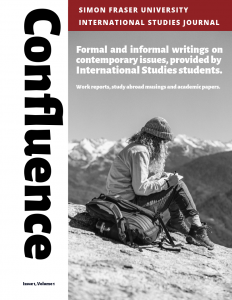
The SFU International Studies Student Association also has a journal, Confluencefor which they are currently accepting artwork submissions for their next edition. Confluence generally publishes academic essays, literature reviews, travelogues, and write-ups on volunteer experiences or co-ops related to their issue’s theme. They are looking for high-resolution photographs and graphic art in JPEG format matching the theme “The Death of Democracy.” Anyone interested in submitting their artwork can contact them or send their pieces to [email protected], with a brief explanation of what the submitted art piece represents. 

The Lyre

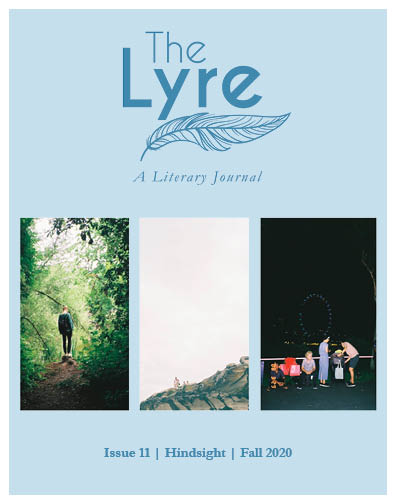
The Lyre Magazine is a literary magazine started by the World Literature Student Union. They accept submissions by SFU student writers and artists, as well as work from non-SFU writers. Some of the content published by The Lyre includes “short stories, essays, travelogues, translations, poetry, short-form graphic novels, plays and monologues, and other written genres, as well as photography and visual artwork.” To submit work, find further information, or read past editions, check out their website. The Lyre’s 2020 submission period has closed, but to stay updated on when they reopen submissions, follow them on Instagram.

The SFU Educational Review Journal

The SFU Educational Review Journal is a student journal at SFU, run by graduate students in the field of education and aims to promote discussion and reflection within the academic community. Additionally, the journal aspires to promote inclusivity in education. The journal is fully open access and is part of the Directory of Open Access Journals. To browse past issues, explore news and events, or make a submission, take a look at their website. They can also be contacted through email ([email protected]). 

SFU Society of Arts and Social Sciences Newsletter


The SFU Society of Arts and Social Sciences (SASS) has a newsletter that updates students on the organization’s events, opportunities, and upcoming initiatives. Their September newsletter gave readers a recap on the successes of some of the events put on at the start of the semester, like SASS’ Week of Welcome. The newsletter also informs Faculty of Arts and Social Sciences (FASS) students on some possible opportunities to get involved on campus, such as joining student unions. SASS publishes their newsletter every month, and to get involved any FASS students can email their executive ([email protected]) or through their website. Anyone who would like to sign up to receive their monthly newsletter can do so through their website as well.

Natural ingredients aren’t necessarily better for your skin

0
PHOTO: Alex / Flickr

by Michelle Young, News Editor

The skincare industry has exploded in recent years — in 2019, skincare sales went up 13% in the United States. Along with the skincare boom, came the clean or natural beauty movement, which advocates for cosmetics that only contain natural or “non-toxic” products. 

The idea is that this will be more beneficial to your skin, because if cosmetics are free of “chemicals,” then they supposedly pose no harm. The issue is that in reality, natural skincare often irritates skin in its attempt to nourish it — and it’s also a myth that synthetic ingredients are inherently worse than natural ones.

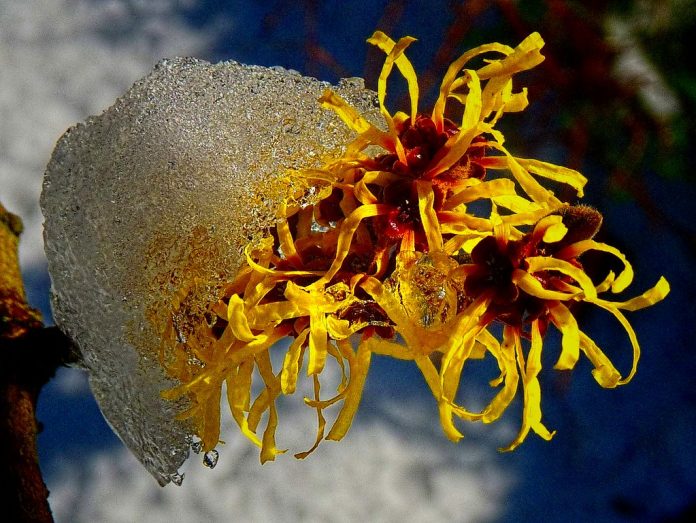
There are good natural skincare ingredients, like glycerin and honey. However, it really depends on the ingredient itself. Products that list ingredients such as witch hazel and peppermint oil will often rave about their benefits. The problem is that many of these ingredients’ so-called benefits aren’t studied too well — and there’s always a risk of skin irritation. 

In the case of witch hazel, there are claims about its antioxidant properties, however long-term use of the ingredient isn’t recommended due to the sensitizing tannins within it, which is an antioxidant that can dry the skin. While witch hazel is a natural ingredient, it’s only one of the many natural ingredients that shouldn’t be in a daily skincare routine. 

Similarly, there’s a false notion that natural fragrance is better than synthetic fragrance. However, even natural fragrance irritates skin just as much as a synthetic fragrance. While some may not notice any irritation due to fragrance, this isn’t a sure sign that there is none, and gives all the more reason to avoid sensitizing ingredients in general. 

Cosmetics labelled with the words “natural” and “non-toxic” plastered onto them are usually meaningless and solely provide a false sense of comfort, because in skincare “natural” is not synonymous with “safer” or “better.” The idea of knowing what an ingredient means may provide a sense of security — especially when ingredients like tetrapeptide-30 don’t sound the most appealing. However, it’s simply false that natural skincare is always going to be a better choice than a non-natural alternative. 


The Living Lab program is researching solutions for more sustainable practices on campus

0
Photo Courtesy of Simon Fraser University

Editor’s note: This article previously stated that the application deadline for the program was October 30. It has now been extended to November 13 and the article has been edited to reflect this change. 

Written by: Emma Jean, Staff Writer

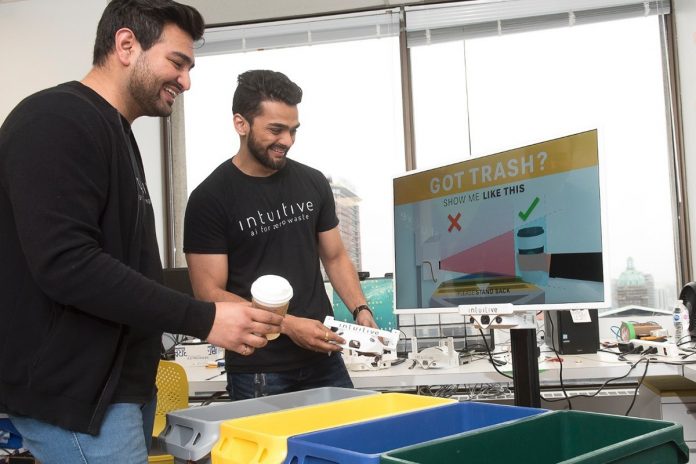
A new pilot program at SFU seeks practical solutions to on-campus sustainability. The Living Lab, a program consisting of graduate students and faculty, combines environmental research with hands-on learning to build ways for SFU to reach its sustainability goals, and to apply them to other communities all over the world. 

We want to engage in sustainability in all aspects of the university: teaching and learning; research; and operation,” said program leader Dr. Kilim Park. 

With a “solutions-seeking” model, the program focuses on four main goals aligned with the on-campus SFU’s 2025 Sustainability Plan: reducing waste, switching to renewable energy, reducing greenhouse gas emissions, and lowering transportation pollution. Along with the direct environmental impact, Dr. Park also notes the program’s hopes to “create and foster research culture in our operational decision-making [ . . . ] showcase our talented graduate student and faculty researchers, and hope that SFU will continue to highlight and provide further support to climate action research.

“The Living Lab brings all of these elements together by facilitating the collaboration between researchers (graduate students and faculty) and practitioners (operations), and providing an opportunity for graduate student learning and research.” Graduate students who are chosen for the program in the coming months will plan and develop the inaugural projects for the program, all related to SFU’s sustainability goals, alongside faculty and staff. 

A collaboration between SFU Sustainability Office, the Vice-President, Research and International, and the Pacific Institute for Climate Solutions, Dr. Park describes the program as a “unique environment where the university as a whole is engaged in [the] research process through a collective process of inquiry.” 

When it comes to adhering COVID-19 protocols, Dr. Park notes that while many staff working with the operations of the project are on campus, “[they] don’t have a physical space dedicated or assigned to our Living Lab research projects, and expect that most of the research would take place virtually.”

Though planning for the Living Lab is mostly focused on the pilot year, Dr. Park notes that they hope it will grow past its initial run to focus on larger sustainability goals.

To get involved, graduate students can apply by November 13 with their research proposal. Accepted applicants, known as Living Lab Scholars, can receive a maximum of $12,500 in funding per project. Projects will begin January 2021. 

Trickster is a darkly compelling watch with plenty of rich storytelling and Indigenous folklore

0
Crystle Lighting plays Jared's mother, Maggie, with aplomb and showcases strength, heart, spirit, and a take-no-shit type of attitude. Courtesy of CBC

By: Meera Eragoda, Arts & Culture Editor

All those headlines you’ve been seeing about Trickster being the must watch show of the fall? They’re not wrong. Trickster just aired the first of its six-episode season on Wednesday, October 7 and I’m hooked.

Based on Eden Robinson’s best-selling novel, Son of a Trickster, the show is a coming-of-age story about Jared, a boy who is navigating the effects of colonialism on his family while still trying to be a teenager, and is set to a backdrop of magical realism and Haisla  and Heiltsuk mythology.

The cast is stacked with Indigenous talent from director and writer Michelle Latimer, an Algonquin-Métis woman, to actors Joel Oulette (Jared), Crystle Lightning (Jared’s mom, Maggie), Anna Lambe (Sarah), Nathan Alexis (Jared’s best friend, Crashpad, who every should want as their best friend), and Kalani Queypo (Wade).

Unlike other coming-of-age supernatural shows (I’m looking at you Netflix’s Sabrina the Teenage Witch), the acting doesn’t feel wooden and the show doesn’t feel overly dramatic for the sake of it. While Trickster is a supernatural show, it also incorporates very real aspects of Indigenous experiences, making for more substantial viewing — though it’s not without its moments of levity.

Even watching as a non-Indigenous person, it’s clear from the first episode that the show navigates the intergenerational trauma that Indigenous families face in a very nuanced and caring way — an effect of Indigenous people telling their own stories. Maggie, one of my favourite characters, is shown as a deeply caring and loving mother who is full of life. A badass who will do anything for her kid, she also struggles with mental health issues for which she self-medicates.

The casual racism that Indigenous people face is also touched on when a customer at the fast food place where Jared works tells him that he’s a hard worker and “not like the others,” a perpetuation of problematic stereotypes. The very capable and intelligent Jared works on the side selling ecstasy which he makes himself, doing so in order to support both his mother and father. It is clear he is tasked with this unfair burden because of Canada’s long history of ignoring and undermining Indigenous rights and sovereignty. 

Issues such as the pipeline are given prominence with scenes of oil and gas workers driving to the LNG pipeline. Sarah, a foster kid who has just moved in next to Jared, is a strong advocate and activist for Indigenous rights and hers is an important voice to feature in a show on a mainstream network.

Trickster navigates all of this in a very compelling way while also spotlighting Indigenous folklore with the arrival of Wee’git — the Haisla iteration of the Raven known for being a trickster. The arrival of Wee’git has Jared seeing his doppelgänger at a house party and elsewhere, leaving him questioning his sanity. Add in mysterious strangers at the bus stop and talking Ravens and it’s clear that his life is about to change in a major way. The way the episode leaves off makes it apparent that there will be plenty more dark, supernatural goings on to come which certainly has me eagerly anticipating being wrapped up more fully in the story.

With an Indigenous cast, Indigenous director, based on an Indigenous authors’ book, and replete with Indigenous storytelling and folklore, this really is the first show of its kind to air on a major network like the CBC and it’s well worth the watch — even if just to see history in the making.

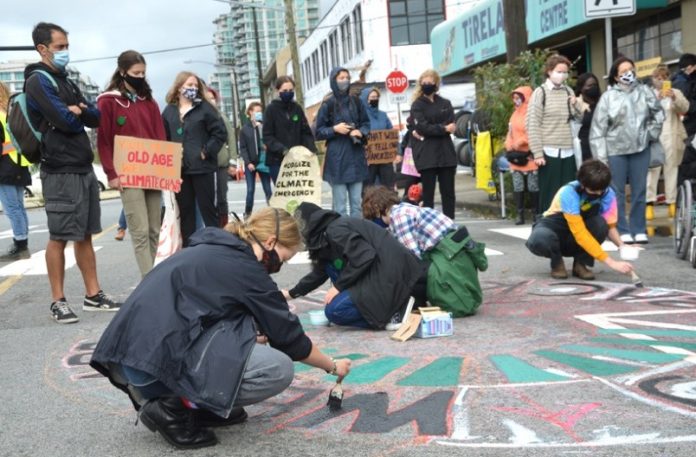
#NotGoingBack Climate Strike

0
Photo by Brent Richter, North Shore News.

By Charlene Aviles, Peak Associate

Sustainabiliteens, Climate Strike Canada, and Our Time planned four Metro Vancouver #NotGoingBack climate strikes on September 25. This initiative supported Friday for Future’s Global Day of Climate Action. In response to Prime Minister Justin Trudeau’s throne speech, the event organizers demanded for economic, racial, and climate justice.

Over 3,500 towns and cities in 154 countries participated in the Global Day of Climate Action. The We Are Not Going Back movement’s objective was to initiate a “transformation of our society and the/our economy to build a more equitable and resilient future.”

Due to the provincial health guidelines on public gatherings, the organizers divided their annual climate strike into four smaller climate strikes at Holland Park in Surrey, outside a MP’s office in Vancouver, outside Liberal MP Terry Beech’s office in Burnaby, and outside Minister of Environment and Climate Change Jonathan Wilkinson’s office in North Vancouver, which was the central action. 

Guest speakers included Will George from the Tsleil-Waututh Nation, Ella from Black in BC, SFU Health Sciences Professor Dr. Tim Takaro from Burnaby Residents Opposing Kinder-Morgan Expansion (BROKE), and Sustainabiliteens members Natasha Ivkov, Viduni Kankanamge, Naisha Khan, Ria Laura, and Sonja Schutte.

Sustainabiliteens also implemented COVID-19 safety measures such as mandatory face masks, hand sanitizers, and RSVP forms to assist with contact tracing. Due to health concerns, some supporters may not have been able to attend a climate strike, so Sustainabiliteens live streamed each climate strike via Instagram. Supporters could also participate through sharing Sustainabiliteens social media campaigns, utilizing the toolkits, and wearing felt green circles, which resembled Climate Strike Canada’s logo.

According to Tavie Johnson, the North Shore Sustainabiliteens coordinator and spokesperson, “The three principles of Not Going Back was [to] dismantle racism and colonialism, treat the climate crisis like an emergency, and invest in people and not corporations.” 

“What we called normal — what we used to do before COVID hit — was not working for so many different people. It was just adequate in every sense of the word,” claimed Johnson.

Johnson and her colleague Kiran Niet, the Sustainabiliteens regional coordinator for Burnaby, New-West, and the Tri-Cities, noted that the pandemic not only highlighted but also exacerbated several concerns ranging from racism, wealth inequality, homelessness, and the opioid crisis. 

These climate strikes are a platform for people to voice their concerns. Stewardship of the land is an integral component of Indigenous culture, so Sustainabiliteens consulted with and invited the Musqueam/xʷməθkʷəy̓əm, Squamish/Sḵwx̱wú7mesh, and Tsleil-Waututh/sel̓íl̓witulh Nation’s to participate in the event. At the North Vancouver Climate Strike, guest speaker Will George from the Tsleil-Waututh Nation started off the event. George showed his appreciation for these youth advocating for justice.

“This fight is not only an Indigenous problem, this is everybody’s problem, and quite often these fights are put on the backs of Indigenous folks, and we’re spread so thin with how many other fights we have,” emphasized George.

He expressed his concerns regarding the Trans Mountain pipeline’s construction by explaining the importance of protecting sockeye salmon’s spawning grounds.

“It’s a keynote species, and we all know what it does. It feeds the bears. It feeds the forest. It feeds the people  [ . . . ] [There are] sockeye bones in Vancouver Island that are 4 million years old. And then th[e construction] can destroy it in a matter of one season and not [allow the salmon] to respawn.”

During the interview with Niet, she also expressed similar concerns regarding Indigenous and environmental justice.

Niet insisted, “We can’t have climate justice without no recognition of Indigenous sovereignty [ . . . ] They’re inseparable, because colonialism in a lot of ways is the root of the climate crisis.”

Niet admitted that environmental justice is intersectional in nature, because members of marginalized communities disproportionately endure the consequences of climate change. Johnson also shared similar sentiments on the importance of including marginalized voices in the event planning process

Johnson responded, “When we’re choosing spokespeople or speakers within Sustainabiliteens, we also try to have at least one Indigenous, one Black, [and] one LGBTQ2+ person, so that we have as many different lived experiences and points of views made possible. We always partner with different organizations like Vancouver Allies, Our Time, Black in BC, for example, and then [the] Tsleil-Waututh Nation, Squamish Nation, Musqueam Nation, because we’re on their unceded traditional territories, so it’s really important that wherever we’re holding an action on their land we have to include them in what we’re doing.

“Racial justice is climate justice.”

At the Burnaby Climate Strike, Dr. Takaro protested against Kinder-Morgan’s Trans Mountain Pipeline expansion and proposed alternatives to the pipeline. He suggested, “Instead of laying a pipeline, let’s lay a high voltage direct current line. Let’s move renewable energy from East to West.”

SFU Wildlife Conservation Club’s Creative Director Zain Haq also attended the Burnaby #NotGoingBack Climate Strike.

According to Haq, “I think the message other participants might want to take away is that these demonstrations outside the offices are excellent in putting pressure, and a good way to have consciousness raising [ . . . ] If we want to put real pressure on those in power, we need to take part in non-violent civil disobedience.”

Similarly, Johnson advises activists to continue fighting against inequality after the climate strike.

“We have so many things that are unfair for the vast majority of people, and people need to realize that there is a better future possible. It doesn’t have to be this way, so we need to first pressure our government to take action and to change the way things are done so that we can achieve climate justice and social justice and Indigenous justice. And we’re also trying to encourage participants to raise their voice every day.”

Johnson believes that advocacy requires commitment beyond the climate strike.

“A climate strike is one day a year. The other 364 days you have to be fighting and taking action in your own lives,” urged Johnson.

SFU student clubs are still trying to create community online

0
Illustration courtesy of SFSS.

By Winona Young, Peak Associate

Following the trend of these unprecedented times, the SFSS launched its first online-exclusive Clubs Day on September 15–17. The event being moved to online follows SFU’s decision to make classes and planned gatherings remote in accordance with COVID-19 health and safety regulations.

As a campus with over 90 student clubs and several Student Unions overseen by the SFSS, what can an online semester mean for the student life on campus? How are clubs continuing to operate during this time? To investigate this further, The Peak interviewed executives via email from a few of SFU’s largest student clubs: Pearl Tran from K.STORM (Korean Storm), Rolin Liu from SFUTA (Taiwan Association — SFU), and Justin Yu from the SFU Anime Club. At the time of writing this, SFU SOCA and SFU Surge have not provided statements. 

When K. STORM, a Korean culture enthusiasts club, and their president Pearl Tran heard there would be a Clubs Day this fall, they were relieved.

“Of course, we were a bit disappointed to hear that it would be online,” she wrote, “but we knew that was inevitable due to SFU remaining online for health and safety reasons. We were a bit curious to see how the format would be, since all we were familiar with at the moment was Zoom and BB Collaborate for video-calling.”

Rolin Liu, VP of SFUTA, one of SFU’s oldest clubs being established since 1989, similarly found the Clubs Day online format intriguing, but he and his team also had reservations.

“We were [sic] nervous that it might not attracted [sic] as many people as in person but it was better than nothing,” he remarked.

Justin Yu, the social media coordinator of the SFU Anime Club, found that the SFSS holding the event online “[set] a good example” for the rest of the overall SFU club community. And unlike most clubs, SFU Anime has been holding online events since quarantine even began.

“Since the start of self-isolation in March, SFU Anime Club has actually been holding several online events for our community,” Yu wrote. “[This includes] a Mental Health Week, our Summer Icebreaker, and SFU Gamefest (a collaboration event with SFU E-Sports), and we’ve seen great success with these events, often times having event attendance nearly equivalent to that of our in person events.

“We were very confident in our abilities to adapt to an online Clubs Day successfully,” Yu stated. 

According to the SFSS, approximately 2,000 students attended the event itself that was hosted on the video conferencing platform, Hopin. Liu and Yu agreed that the online Clubs Day was the best effort by the SFSS. 

However, the virtual Clubs Day was not without its shortcomings. For instance, lagging video feeds were an issue, as well as the inability for club executives to see which people were currently in one’s Hopin booth.

At first, it was a bit awkward talking to students while we were on video while they were mainly speaking through the chat box,” Tran wrote. “One of my execs mentioned she understands what her [P]rofessors mean when they say that they feel like they are talking to no one.”

Yu of SFU Anime Club also shared this sentiment. 

“Sometimes it felt like talking to an empty audience,” he wrote, but also expressed it still felt like him and his club execs could hold one-on-one conversations with those in the Hopin chat box. 

Yu added, “The platform seemed to be moderately active throughout the three days, although more advertising during events like Welcome Day might have helped make it more successful.”

Concerns regarding Clubs Days did not stop there. K.STORM and SFUTA club executives expressed concern about recruitment for the online semester. Not only did Liu write about the lack of engagement that may come from disinterested students during an online semester, he also wrote about the issue of being international.

“Many of our club execs are not in Vancouver so it will be harder to host events,” Liu expressed. “We are planning events in Taiwan [ . . . ] [execs are] helping with the planning of online events in Vancouver, through making event posters, posting on social media, creating proposals and connecting with sponsors online.” 

Another worry for club executives like Tran for K.STORM is how their club will survive financially.

“Our club offers two kinds of memberships; regular and VIP,” Tran said. While regular members do not need to pay fees to be part of the club, VIP members not only purchase a membership, but enjoy perks like free entry to all events, discounts from club sponsors, and extra swag. 

“However, since we cannot host our in-person events that tend to have higher costs so we can charge a ticket fee, we must rely on hosting free admission online events,” she wrote. “Therefore, we may have a lower cash flow even though we are continuing to spend money for events.”

But despite these concerns, all three clubs are getting creative on how they can engage other students online. For instance, Yu mentioned how SFU Anime Club utilizes its Discord server that holds over 1,200 members which has been especially useful during this semester.

“The Discord server has really become an essential part of the club,” he remarked, “It really helped us adapt well to the online nature of current activities [ . . . ] The result of this work has led to our club being more active than ever, and we’ve had a growth of over 400+ members interacting in our community since self isolation began in March.”

In terms of the first events held by clubs for the semester, SFUTA hosted their workshop of making at-home bubble tea virtually which, according to Liu, garnered over 20 students in an online room. 

It was different and a little nerve [w]racking that we might have technical difficulties but we made it work,” Liu wrote, “It feels a lot different than in person as you don’t have the same type of interaction. I think the more we do it the better we will become.”

The combined efforts of SFU Anime Club, K.STORM, SFUTA, and the other 90 or so SFU student clubs prove you can still be social in a socially-distanced semester.

Are you ready for a quarantine pet?

1
Courtesy of Film Daily

by Serena Bains, Staff Writer

Since the onset of the COVID-19 pandemic, shelters have been struggling to keep up with the demand for pet adoptions. This increase in demand is great for the shelters and animals in the short-term, but there are negative effects as well. The most significant of these are pets experiencing separation anxiety and shelters bracing for an influx of surrendered pets because of this. While adopting pets is immediately beneficial to all parties involved, there needs to be an understanding of best practices, what adopting a pet entails, and possible alternatives.

Now that COVID-19 restrictions are becoming less strict, many pets are experiencing separation anxiety. The animals become accustomed to people constantly being in their presence and caring for them, that the sudden change to being alone for significant amounts of time can cause separation anxiety and associated behavioural changes. Behavioural changes can include: panic, pacing, destroying items, vocalizing, etc. 

Behavioural problems are the most common reason for why people surrender their pets, which is why some shelters are anticipating a “surrender boom” once individuals revert to their old routines. There is also concern amongst shelters that the longer people are unemployed, the more financial hardship they will face. Thus, people will no longer be able to afford caring for their pets, resulting in more pets being surrendered.

To avoid having to contemplate surrendering a pet one should have an understanding of the best practices and alternatives to adopting available to them. First, determine whether you can afford having a pet if the situation you are currently in continues. Consider the costs of grooming, vaccinations, annual appointments, pet insurance, food, supplies, etc. Second, prepare your pet for increased time alone. This can include crate training, leaving the pet alone for a few hours at a time and investing in professional training. Lastly, if you have any doubts about adopting a pet, foster. Fostering pets can be a great way to determine if you are ready for the commitment and to have the opportunity to provide the pet with greater love and socialization.

I understand that in the pandemic, most of us are spending more time alone at home than ever before. The impulse to adopt a pet to share all of this extra time with is a natural progression. I adopted a dog, Lena, a couple years ago for the same reason, but I had no idea what I was getting myself into. The costs associated with grooming, specialized diets, kidney failure, being denied pet insurance due to a pre-existing condition, training, etc. seemed insurmountable. Although, I could never imagine surrendering her I’m not sure what I would’ve done if I was dealing with behavioural issues on top of the extreme financial stress I was facing. Let this serve as a caution, do your research, be prepared to train your pet for when you go back to work and have an understanding of the commitment adopting a pet is. Only after taking all this information into consideration, make a decision regarding whether or not to adopt a pet.


SFU fails to properly consult Indigenous students (again) and peoples regarding new First Peoples’ Gathering House (again)

1
Joy Johnson speaks at the First Peoples' Gathering House ceremony with attendees following physical distancing recommendations. Image courtesy of Joy Johnson's Twitter, @drjoyjohnson.

By Harvin Bhathal, Features Editor

On Orange Shirt Day, SFU held a ground awakening ceremony for the First Peoples Gathering House (FPGH), which will open in 2023.

The FPGH will be a space on the Burnaby campus that is meant to create a “safe, welcoming[,] and supportive environment for Indigenous students, staff, faculty, and community members,” according to the Office of Aboriginal Peoples. 

But to accomplish that, wouldn’t input from Indigenous students, staff, and faculty, and Host Nations, be required to create a culturally appropriate space? First Nations Student Association (FNSA) and its members certainly believe so.

“[SFU] definitely need[s] to be focusing more on getting proper representation of Indigenous student voices, because that’s something they’ve been lacking there,” said Kali (she/her/hers), treasurer of the FNSA, in an interview with The Peak

“There was no proper outreach to hearing indigenous student voices and [ . . . ] a lack of representation at their meetings of Indigenous students [ . . . ] [T]hey need to be hearing what is proper protocol within the Host Nations, especially when it comes to creating a ceremonial space. That’s a part of our recommendations,” continued Kali, referring to the association’s statement released on October 1, 2020.

The statement outlines a list of recommendations for SFU to follow in regards to the building of the FPGH.

  • “Proper and ongoing consultation with Host Nations[, including] but is not limited to protocol around ceremonial spaces, consultation to key community members from Host Nations, this includes Chief and Council, Elders, Matriarchs, Knowledge Keepers.
  • Proper and ongoing consultation with key pillar community members, such as Indigenous Student Centre and First Nations Student Association[.]
  • Indigenous student outreach to ensure Indigenous student voices are heard[.]
  • Ongoing updates about the First Peoples[‘] Gathering House process that are public and accessible[.]
  • More student involvement and seats on the Aboriginal Reconciliation Council[.]
  • Meaningful consultation with SFU and the ARC Report.”

Joy Johnson did not respond to an interview request but Ron Johnston, Director of the Office for Aboriginal Peoples (OAP), responded on behalf of SFU to requests from The Peak regarding the FPGH.

 “SFU has carried out an extensive consultation process regarding the First Peoples’ Gathering House and that process is ongoing. Consultations began in September 2016 through the work of the Aboriginal Reconciliation Council (ARC), in which the need for a ceremonial hall/longhouse was identified, “stated Johnson. 

“ARC engaged a board range of groups over a year of consultations comprising open forums and information sessions, and the committee included student representation. Consultations continued in 2019 to choose the site for the facility, to define the project vision and site program spaces.

“On November 5, 2019, a vision workshop was held with the Indigenous Student Centre (ISC) staff and students. In January 2020, a site-focused workshop was held at the ISC and an online survey was made available for students who couldn’t attend.”

In an interview with The Peak, Zachery (he/him/his), an FNSA Representative, added that “the conduct of building our ceremonial space is very important too [ . . . ] [W]hen you’re building a ceremonial space, a lot of things that people, settler architects, don’t know about [is] that they need to verify with Host Nations.”

Urban Arts Architecture Inc. (UAI) is being tasked with building the FPGH. The OAP shared a detailed report from UAI with The Peak regarding their vision, program, and site selection for the FPGH, which includes information about the project and their engagement process. 

However, when the FNSA were asked if they had seen this report before, Kali responded, “No, this is new to us[,]” which speaks to their concerns about the lack of proper consultation with Indigenous students at SFU. 

Lead architects Jake Chakasim, Shelley Craig, and Ouri Scott were at the ceremony and blanketed to honour them. Two of the lead architects are Indigenous: Scott, a Tłı̨chǫ Dene architect from the Northwest Territories, and Chakism, a Cree intern architect from the Mushkegowuk Territory in Northern Ontario, both of whom live in Vancouver.

These nations have different protocols for gathering houses, so while Scott and Chakism currently reside in Vancouver, it will be important for them to consider the protocols of the unceded territories of the Musqueam/xʷməθkʷəy̓əm, Squamish/Sḵwx̱wú7mesh, and Tsleil-Waututh/sel̓íl̓witulh Nations.

But Craig’s role as a white person and founder of Urban Arts Architecture is critical to ensure the voices of these nations are heard. Matthew Provost (he/him/his), SFSS’ VP of Student Services, said in a statement released from his Instagram, “The onus should not be on Indigenous [peoples] to take up the emotional labour and explanation on why we need to be present in these discussions.” 

Craig’s privilege in being white and in a position of power has to be used solely for the benefit of Indigenous students, and Indigenous peoples from these Host Nations. Fortunately, she has a background in advocating for Indigenous peoples as she recently been working to Master Plan the University of Victoria’s Law expansion to accommodate the first Indigenous Law program in Canada.

Zachery continued, “[The] [b]uilding of ceremonial buildings [is] sacred and they need knowledge keepers, they need matriarchs, they need elders [ . . . ] they need people to come in and guide them through it. 

“Otherwise, what they’re building can’t in good name be called a ceremonial space, because it’s not made of that good medicine,” a term used by Indigenous peoples, which Kali describes as “something that is good for you mentally, spiritually, physically, and emotionally, and is done with good intent.”

Despite Johnston’s statement on behalf of SFU, the FNSA believe that the good intent is missing with the lack of Indigenous consultation, specifically amongst students from SFU. Provost echoed these sentiments in a statement released on Instagram, “Spaces that are intended for Indigenous students and Indigenous communities without their input or experiential knowledge are not spaces for them.”

While SFU has consulted with Indigenous community members such as Chief Leah George Wilson of the Tsleil-Waututh Nation (lead speaker at the ceremony), and Eldon Yellowhorn, an SFU alumnus and member of the Aboriginal Reconciliation Council, it is not enough.

Johnston continued, “Twelve workshops, tours, presentations and open houses have been held so far, which included participation from Squamish, Tsleil-Waututh, and Kwikwetlem First Nations; the Squamish Nation Education, Employment and Training Committee and Language & Cultural Affairs, First Nations Student Association, the SFU Indigenous Student Centre and the SFU community at large.

“If SFU truly believes that hand picking folks to represent a whole community during the reconciliation process is adequate enough to check a box, we are here to tell you there is more that needs to be done,” expressed Provost.

“We’re hoping our letter gets the kind of critical attention needed to kind of spur change,” said Zachery. “We’re hoping that this letter is kind of like the end all to that because it’s happened so many times in the past. We just don’t want to see it happening again,” referring to the SFU Atrium built 20 years ago.

“The Atrium was supposed to be built as a space for Indigenous students, as that’s what Indigenous students and the FNSA were advocating for at the time. The FSNA even campaigned to have money allocated towards building/designing the space. In the consultation process for the space, SFU did not listen to the Indigenous students,” said Kali.

“Once the space was opened, they made it into a public space as it is used now. Even today, Indigenous groups at SFU do not even have priority to book the space if we would like to use it. This is just another example of how SFU does not prioritize Indigenous students when doing Indigenous projects, as this space was supposed to be for Indigenous students and now we are not even able to use it.” 

Still, Kali and Zachery feel hopeful “that SFU will do this in a good way [ . . . ] [T]he letter we felt was necessary to show our concerns as the [FNSA], representative of the Indigenous student body.”

But Provost stated, “I am tired of seeing the onus being put on [us] to fix the problems these institutions created. Indigenous students’ voices are [ . . . ] central to reconciliation, decolonizing, and Indigenizing institutions. Reconciliation in an academic setting [cannot] occur unless you include Indigenous students.”

“Like the saying goes, nothing about us without us, and that should be at the forefront of their mind when it comes to Indigenous-related building [and] projects,” declared Kali.

“I stand in solidarity with the First Nations Student Association’s letter and recommendations that have been towards SFU and the [ARC]. I will do my best to support whatever you need,” 

Provost concluded with a message to the university, “SFU[,] I promise to hold you accountable because Indigenous students are tried. It is time to support your Indigenous students SFU, it’s time to do better. 

“Prove to us reconciliation isn’t dead.”

Johnston ended his statement, “[The OAP] will be reaching out to the FNSA to discuss their concerns and look forward to continuing to work with them, and others, on this important project.