Home Blog Page 394

The Bright-er Side: I would have never become a plant dad if it weren’t for quarantine

0
ILLUSTRATION: Siloam Yeung / The Peak

by Marco Ovies, Editor-in-Chief

When we shut everything down my work at The Peak quickly moved online. In addition, my part-time barista job at Starbucks had shut down as well. All of a sudden I was going from interacting with hundreds of people a day to just my mom, dad, and cat (who just so happened to be the most talkative of the bunch). 

That was when I discovered the joy of plants. With all of this free time on my hands I felt like it was the perfect opportunity to buy one and live out my cottagecore dreams. One plant quickly became five, and now I am the happy owner of 30 different plants that occupy nearly any open surface in my room. 

If it hadn’t been for quarantine, I don’t think I would have ever started taking care of plants. So while this pandemic has many downsides, this is one of the few things that have come of it. Now the next battle is just to make sure my cat stops eating them.

Board Shorts — October 2, 2020

0
Image: Irene Lo

Written by Karissa Ketter, News Writer

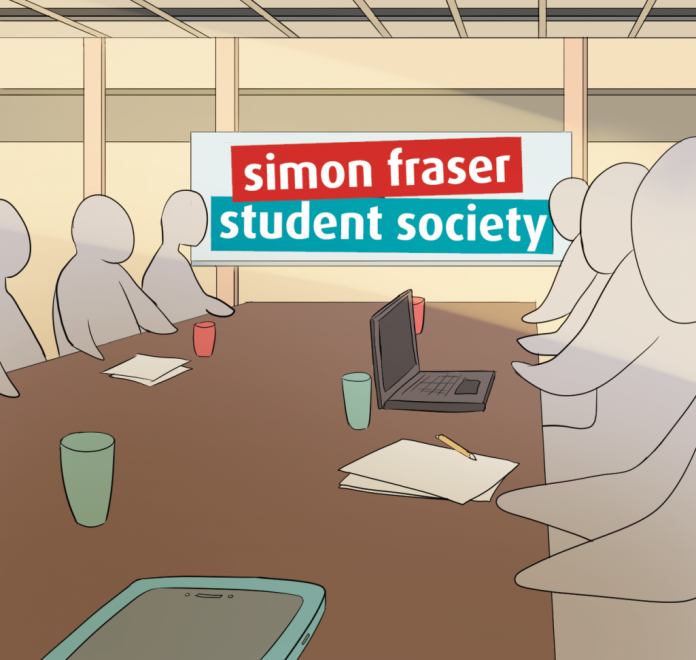
The Board discusses support of The First Nations Student Association (FNSA) after exclusion from Orange Shirt Day

A ceremony for the new First Peoples’ Gathering House was held on Orange Shirt Day, which aims to recognize “an ongoing commitment to reconciliation.” However, the FNSA was “not invited to this gathering,” according to SFSS At-Large Representative Balqees Jama. The FNSA responded by stating that this was “something disturbing.” 

The Board expressed their disappointments that on a day dedicated to the “spirit of reconciliation and hope, SFU chose to overlook Indigenous student leadership.” 

Furthermore, a statement released by the FNSA noted that on October 1 they “attended a consultative ‘workshop’ for the First Peoples Gathering House,” however, they did not receive an invitation for this event, either. The FNSA explained that they “feel [they] are not being consulted in a way that properly recognizes [their] place at SFU,” as the meeting discussed problematic subjects.

The FNSA expressed that without proper consultation, no matter how good the intentions of staff or students, SFU is still “working backwards” which “completely negates the purpose of the Gathering House.” SFSS president Osob Mohamed voiced that in the past, SFU has continued to  “[commit] this kind of [ . . . ] systemic exclusion of Indigenous students” and she finds it “particularly heinous” for this to happen on a day meant to encourage growth.  VP University Relations Gabe Liosis noted that SFU President Joy Johnson has discussed reconciliation, but stated that SFU is “truly lacking in any real actionable items.” 

The FNSA noted that if proper consultation had been conducted during the planning of the Gathering House, then it would have been clear that “putting the Gathering House in a public place is inconsiderate” because ceremonies are not meant to “be displayed for the curiosity of settlers.”

The Board expressed that this is “incredibly disappointing but not surprising coming from SFU,” according to Mohamed.

The FNSA statement concluded with a list of recommendations and the SFSS Board discussed what they can do to support the FNSA. The SFSS considered reaching out to administrators to ensure awareness of their errors in judgement as well as contacting the FNSA to ask how they can appropriately offer their support. 

Jama concluded by saying that she has high expectations for Johnson to have “serious commitment to serious action” in listening to Black and Indigenous students. She noted her thanks to the FNSA “for their constant advocacy and service and leadership within the community.”

The Board appointed new FNSA representative to the SFSS BIPOC Committee

FNSA representative Kianna James was appointed to the SFSS BIPOC Committee to fill the seat for the First Nations Student Association. 

Mohamed expressed that she is “looking forward to working with her in the near future.”

The Board agrees to allow clubs the option of creating their own constitutions

Previously, clubs at SFU followed a generic constitution. At-Large Representative Phum Luckkid approached the Governance Committee regarding his “concern around why clubs didn’t have the ability to create their own clubs constitutions or additional rules,” as expressed by Liosis.

Luckkid noted that this decision was made by the Member Services Advisory Committee (MSAC) to avoid the “bureaucratic hell” of having dozens of individual constitutions. Despite the lack of control clubs have had over their own operations, terms of references were still adopted. Clubs are required to ensure that their rules don’t conflict with the rules originally set by MSACs constitution or the SFSS mandate. 

Faculty of Science Representative WeiChun Kua, noted that he is “happy to see this change.”

Fiancés upset they can’t hold big wedding that would have ended in divorce six months later

0
PHOTO: Mulugeta Wold / Unsplash

By: Paige Riding, Humour Editor

SURREY, BC — After moving out from the rock they were living under, a couple is devastated to learn that a pandemic would be preventing them from hosting their planned 500-person wedding this fall.

In a Zoom interview with The Peak, partners Lisa Valice and Samuel Collier explained how devastating this news was for their relationship.

“I don’t think people understand how much we were putting into this wedding,” began Lisa. “Being legally tied together really means so much to us. It’s—”

“It’s everything,” Samuel piped in, causing Lisa to glare out the side of her eye at him.

“Yeah, that’s exactly what I was just about to say. Anyway, I was going to have my third cousins living in Peru come and visit for the wedding. I haven’t met them, if you can believe that.” She then continued to list the distant relatives and friends from middle school she had on the list on her phone, pausing every once in a while as she tried putting faces to names. Her repeated failure to do so resulted in shrugs and sighs about “if she could just see them in person, the memories would come flooding back.”

Samuel spoke up. “We were really holding out for this moment. Despite our bickering, despite our screaming at each other, despite that one time I accidentally locked my fiancée out of the house after she went to get the newspaper and told me she’d be right back and saying to ‘not lock this fucking door I swear to God I will break your kneecaps,’ despite me absolutely despising her mother, despite her hating all of my friends with a burning passion, despite—”

“Despite all that,” Lisa cut in, veins popping out on her neck in a gracious act of self-restraint, “we thought this wedding would remind us why we started going out in the first place all those months ago.”

The two started dating after Samuel watched Lisa trip up the Saywell stairs back in February and laughed instead of helping her when her elbow split open and blood got everywhere.

Samuel then noted that they planned to book the same place where a Spirit Halloween is currently set up in Surrey, but were shocked to find out they were not allowed.

“At first we thought it was because it would take a while for them to move out the $600 anamatronics from It and Trick ’r Treat — I’d be scared to move those too — but apparently the pandemic ‘doesn’t allow large gatherings.’ Sounds kinda stupid to me; I see huge parties in my . . . our neighbourhood, Guildford, all the time,” he noted with a frown.

When asked if they would have an intimate wedding, perhaps with some close friends and family, Lisa immediately shook her head fervently.

“No. No, we can’t do that. For one, the thought of Samuel inviting his best friend Jarin — ugh, what a name. God, I hate that guy — and me not having a 300-person buffer between him and me is unthinkable. Two, I need this moment to be big. Spectacular. The cake, my dress, the decorations . . . If it isn’t grand, it won’t do its job of bringing our families together.”

At this point, Samuel had zoned out and was scrolling through Instagram. We could see him liking other women’s posts through the reflection in his glasses. Lisa turned to him to grab his leg in support, noticed what he was doing, and turned back to the monitor like a robot about to self-destruct. It appeared she was not the only thing about to self-destruct.

“Anyway, we’re done.”

Samuel looked up, blinking a couple times in confusion. “What?”

“. . . The interview. We’re done here.”

Adobe Creative Cloud removes remote access for post-secondary students

0

Written by: Emma Jean, Staff Writer

Adobe Creative Cloud Suite programs can no longer be downloaded for free as of September 29 due to an end in licensing. While the latest versions of Adobe Creative Cloud programs are not accessible, students can remotely use an older version of the Creative Cloud Suite programs, like Photoshop, Illustrator, and InDesign, through SFU Library’s remote online computer lab services. 

If students wish to access the current models of Creative Cloud Suite, they can either commute to any of SFU’s campuses to use in-person computer labs or pay a student fee of $26 a month for remote access. 

Due to the COVID-19 pandemic, Adobe had granted “temporary free student licensing” for remote students and faculty in March. SFU IT Communications Officer Courtney Pederson explained, “Originally Adobe wanted these temporary licenses to expire on May 31, 2020 but extended the date to July 6, 2020, due to popular global demand. 

“At this point, SFU negotiated with Adobe to extend the deadline to match the end of our summer semester, so classes would have time to conclude. Adobe agreed, and our licenses remained for August.” 

Pederson notes that SFU Library had hoped to offer students the 2020 Adobe Creative Cloud Suite through the online computer lab program, but due to the Adobe licensing contract, they were only allowed to grant students remote access to the 2018 version. 

Some students are finding it difficult to work within the new Adobe set-up. Communication and psychology student Hilary Tsui, who uses Creative Cloud Suite for co-op, found the compromise unsatisfactory. 

“While the remote access is an option, everything that is done via remote access isn’t even saved on the computer, and sending large files to yourself via email takes up a lot [of storage] in the Google Drive,” she noted. 

Tsui explained a dichotomy of choosing between her health and work, as the access cut forced her to stop halfway through: “I need to finish [my video] but I can’t really do that unless I go to campus and finish it there. I would rather limit my time on SFU as [ . . . ] I don’t want to expose myself [to COVID-19] too much.” While she was frustrated with the lack of notice she received about the access rescinding, she said she puts the blame on Adobe, not SFU. 

School of Interactive Arts & Technology student Pooria Arab said on Facebook that the change disrupted his course work. “I was about to miss deadlines and, even when I bought the subscription, it still didn’t work because of some bug that prevents me from using Photoshop,” he stated in a comment.

In regards to the future of remote Adobe licensing, it is unclear whether Adobe will be making changes. The Peak reached out to Adobe Canada, but they did not respond for comment. 

SFU IT has compiled a list of options for students, as well as non-Adobe software alternatives for students, on their website. 

WGOG: Why are we being mean to women in politics

0
Courtesy of The Province of British Columbia

by Manisha Sharma, SFU Student

The pandemic has not only taken an economic, emotional, and mental toll on all of us, but has also increased the inequalities in our society. Inequalities like poverty, homelessness, racism, and, of course, misogyny. Many women are now working from home and are having to manage their personal and professional lives. All of this creates a lot of stress on oneself. Now imagine being a health official in a time where uncertainty is at its prime and then being insulted and terrorized. 

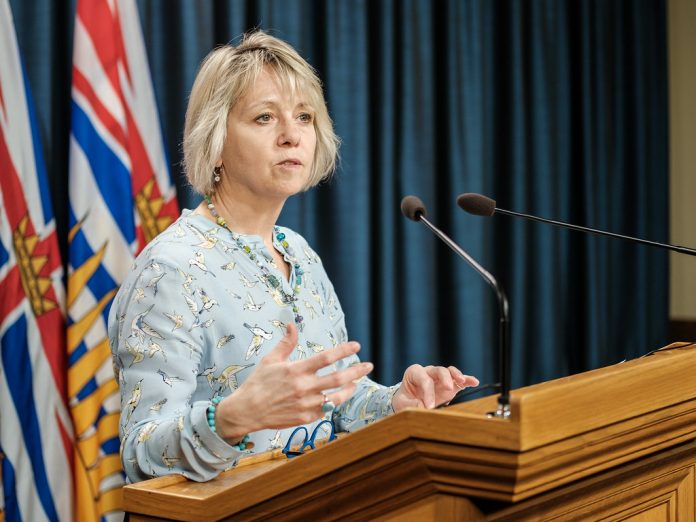
Dr. Bonnie Henry has been experiencing exactly that. It’s the 21st century and women have been considered persons in Senate for over 90 years in Canada. Yet women still face more abuse than men often at the hands of men. This situation with Dr. Bonnie Henry is no different.

Dr. Henry reported receiving death threats and other various forms of harassment to her own safety late last month, forcing her to require security around her house. Other colleagues had also received forms of abuse, but none to the degree of that she had received. Dr. Henry alluded to the abuse she received having to do with her being a woman in politics, a field usually dominated by males. Other female officials have also received threats and have been harassed. 

One research article finds evidence that female public figures/politicians face more uncivilized messages than their male counterparts. Males in these same positions also experience verbal abuse — but not based on their gender. The notion that women are incapable of being political leaders, government officials, and so on is an old and completely false belief. Dr. Bonnie Henry is one great example of a compassionate, intelligent woman who is completely capable of being a public health official. She has spread awareness of how to keep ourselves safe in the midst of this pandemic and done so in a calm and kind manner. 

A need for more diversity, more women in politics and government positions is needed to help establish the capability of women in official positions. Moreover this demand ensures that women are held to a standard that their male counterparts are held to. Abuse and harassment will not be tolerated and accepted towards any public health official. 

Monday Music: Songs to turn the cautious into risk takers

0
"Monday Music" in giant yellow block letters with a red background
Monday Music: your weekly themed playlist. Image courtesy of The Peak.

By: Dilpreet Tatla, SFU Student

As a cautious and anxious person, music has allowed me the confidence and adrenaline to take risks in different aspects of my life. If you’re like me and seek music to pump you up, here are a few tracks to replace your worried thoughts with an adrenaline high. Maybe one of these songs will finally get you to go bungee jumping or to text your crush. 

“The Fear” – The Score 

Courtesy of Republic Records

This is the type of alternative rock song that is played in a movie during a montage scene when the protagonist is rising after being knocked down. Forceful lyrics like, “It’s time to stand up, stand up / Show me what you’re made of,” accompanied by loud drums, will cause you to feel invincible. Truly, this is a song to make you feel like the protagonist in a movie. So look at that bucket list of yours, pick something you’ve always wanted to do but feared, and play this song — before you know it, you will be able to say you went skydiving.  


“Every Kind of Way” – H.E.R. 

Courtesy of RCA Records

R&B singer H.E.R. is known for her soulful and soft, angelic voice. Accompanied by slow tempos, her voice can help soothe anxious thoughts that have you second-guessing yourself in romantic situations. The lyrics will convince you to take a risk in putting yourself out there and making the first move. H.E.R. sings, “I want you off my mind and on me” — a sentiment many of us have likely been able to relate to at some point in time. So why wait? Send that first text. 


“Doubt” – Mary J. Blige 

Courtesy of Capitol Records, LLC

We sometimes think that betting on ourselves is a risk, so instead, we stay in our comfort zone. Contemporary R&B singer Mary J. Blige speaks to this by singing about how there may be losses, but there are also wins when you believe in yourself. These lyrics, along with her powerful voice, reassure listeners and give them a boost of confidence. The change from a slow to moderate tempo in the song allows for listeners to feel the build up of an adrenaline rush, causing nervous feelings to slip away. This is a song to be played prior to any situation you feel you need to take a risk, whether it be at school, work, or somewhere else.

If you liked those you should also check out: 

Renaissance Coffee reopens at SFU Burnaby

1
PHOTO: Ahmed Ali / The Peak

Written by: Dev Petrovic, Staff Writer

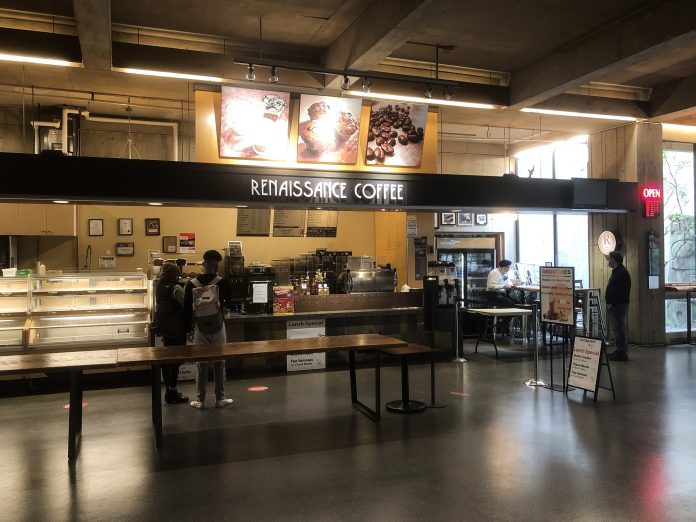
Local vendor and coffee chain Renaissance Coffee reopened on September 28 after closure due to COVID-19. The Peak spoke with owner Parminder Parhar about the business’ integrated protocols, as well as some of the challenges that have come with SFU’s decision to remain primarily remote. 

“We have followed all the protocols from the Simon Fraser Safety Department. We have shields for the safety of workers and customers, elevated training, sanitizer for the customers, no more self-serve, and everything is packaged,” Parhar said.  

Due to remote classes, Renaissance Coffee has experienced a significant decrease in customers and has changed some of its product offerings. Parhar explained that they’re currently not offering their full menu, only coffee and baked goods.

“The main difficulty was that the business went down to zero,” stated Parhar, explaining that the cafe had nearly seven months of no business. “We depend on this,” he continued, “[it is] how we are able to provide for our family. We had our share of challenges, but we are not alone in this. Everybody is going through the same challenges.” He added that the worst is behind them, and that they are now looking forward.

“I think we have to start somewhere,” he said, “we can’t be sitting at home forever. We all have to do our part, we have to restart, we have to get going [ . . . ] Going forward there may not be classes next semester, so we have taken this bold step that we’re going to be open,” Parhar explained.

When asked about the possibility of extending their hours of operation, Parhar noted that “it will all depend on when [SFU is] going to reopen the campus and when there is going to be more people on campus. As soon as that happens, [they] will extend [their hours].

“We have been a part of this campus for almost 23 years and we have never experienced this situation before. We are in a situation where there is [ . . . ] very little business, so I just want to make an appeal to the community [to] please help us out. We’ve been a very intricate part of this campus, this community, so this is a time when we are really asking for this community’s help to get us going,” he concluded.

The Renaissance Coffee in the AQ is currently operating Monday through Friday from 7 a.m. to 3 p.m., and is closed on holidays. The SFU community can find updates on SFU Food.

My first sexual awakening

0
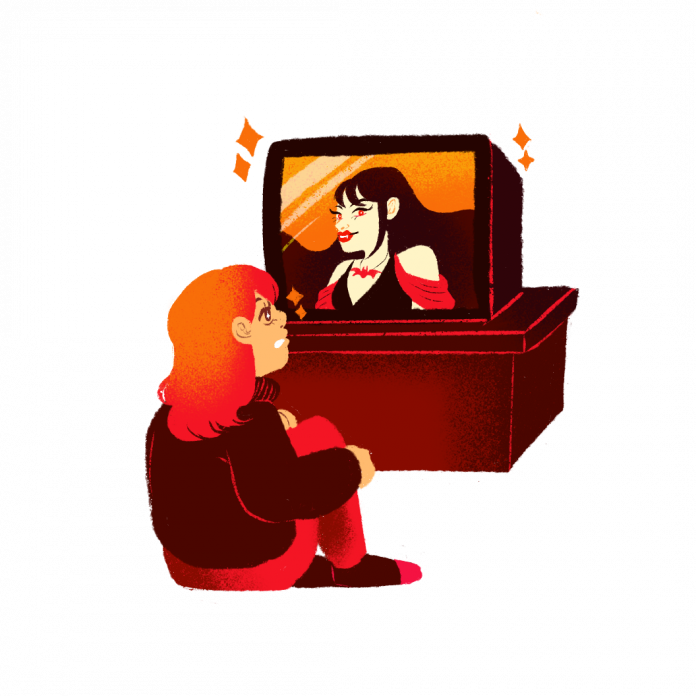
ILLUSTRATION: Tiffany Chan / The Peak

By: Going Through Ch-Ch-Ch-Ch-Changes, One Hexed Girl, and Parawhore

David Bowie (by Going Through Ch-Ch-Ch-Ch-Changes)

While most know David Bowie as the lightning bolt face guy or “singing something about an alien named Tom or whatever the hell,” his role in the entertaining yet fucking weird film Labyrinth was unforgettable. At around age 13, David Bowie was just about the coolest person in the world to me and, well, Jareth the Goblin King was his face that I knew best. 

His incredibly tight leggings in the movie showed off his body in ways that I didn’t quite understand at the time. I knew that there was something attractive about the glitter-covered man surrounded by puppet henchmen. As he fondled his smooth (crystal) balls in the sexiest but most sinister way, the movie left me thinking that this androgynous icon was magic in more ways than one. 

As the Goblin King stole Sarah’s baby brother, I wished he would steal me into his maze of mischief too. When he brandished his magic rod, all I wanted was to see his other magic rod that was painfully obvious in every scene . . . and maybe learn why he carried a riding crop. As he said goodbye to Sarah, I was nowhere near ready to say goodbye to that half-unbuttoned shirt of his. Labyrinth definitely showed off Davie Bowie’s talents and body, making him the “Babe with the Power” that really awoke something in 13-year-old me.

The Hex Girls (by One Hexed Girl)

My brother was obsessed with Scooby-Doo — for whatever reason, children were obsessed with unmasking old men dressed as werewolves. Me? I was obsessed with it because of the Hex Girls. I will never forget watching their introduction when Scooby and Shaggy took time away from smoking bowls and discovered these potential witches in the woods. Those two may have been afraid, but what sparked in me was a different response — a response that would soon be suppressed by my Catholicism until the eighth grade when I realized that my best friend was way cuter than guys who sported DC shoes. That Scooby-Doo film was the first time I ever related to boring preppy Fred as he ogled over those three. 

Thorn singing “I’m gonna cast a spell on you / You’re gonna do what I want you to” was formative to my identity. It made me queer. It made me a bottom. It made me always long for a goth girlfriend, despite me currently having the antithesis of that: a gamer boyfriend. 

And most importantly, the Hex Girls made me eco-conscious. Whenever I use a plastic straw, I think of how disappointed they would be in me, and then I think of how they might punish me, and then I think thoughts not suitable for The Peak.

Hayley Williams (by Parawhore)

Hayley Williams has it all: she’s hot, she’s talented, she’s an entrepreneur, and again, she’s hot.

I’ve had “That’s What You Get” stuck in my head since 2009 and that woman living rent-free in my heart for longer. What I’ve always admired most about her is how bold she is. The only thing bolder I can think of is when I had that dream where she kicked me square in the nose when I was front row at a concert. To this day, I’ve never washed my nose. 

The orange hair, her fun outfits . . . she blew my mind and I was never coming back from it. As a regular Twitter user, I’ve found out this is somewhat of a universal experience. Every emo reject questioning their sexuality back then remembers the women of Warped Tour. I’m talking Jenna McDougall, Lynn Gunn, Ash Costello . . . if you know, you know. But Hayley, that woman has been my phone wallpaper for like five years. I still don’t know if I want to be her or if I want to be pegged by her.

My first impressions of skateboarding as a WOC

0
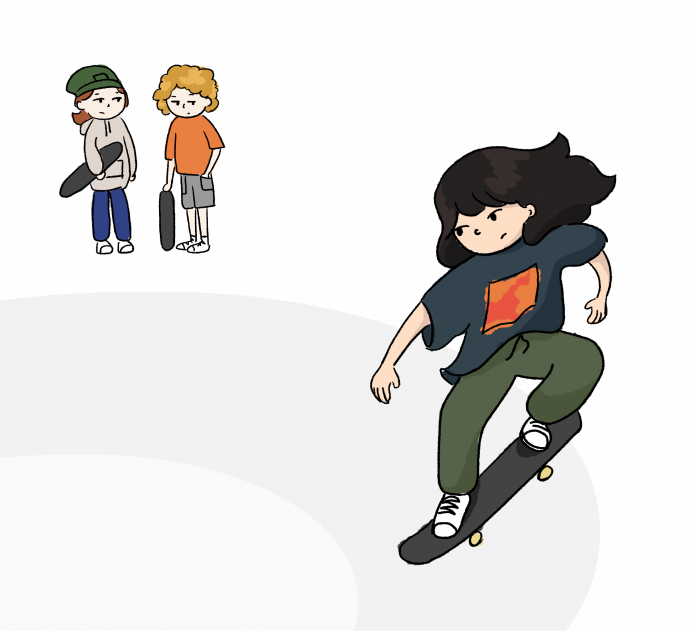
Illustration by Maple Sukontasukkul.

By Winona Young, Peak Associate

The first time I went to a skatepark with my board and helmet, I remember feeling excited. I chose to go on a BC holiday — which would turn out to be a big mistake — and opted for the park that was closest to my neighbourhood, which was nestled in a little suburban area. The park itself was small but versatile; it featured two bowls, a rail to slide on, and little hills that featured colourful graffiti against smooth, sleet-coloured concrete. 

It was a little past 11 a.m. with the sun full-frontal in the sky, which already had me sweating by the time I got to the park. As soon as I entered the green fence, however, my confidence dropped. I chose to come alone, thinking I’d have time to skate around an empty park, but instead, I found myself in a buzzing hive of white boys (baggy shirts, jeans, and all) ranging from kids to grown men, blasting past on their scooters and skateboards.

I was the only woman (and for that matter, only person of colour) there, in a sea of skaters who were younger and more talented than me. I gulped, my body suddenly tense, and my hands more than ready to text my mom to pick me up. 

I decided to start skating several months ago. It was a move that surprised not only my family, but me too. But in hindsight, it really shouldn’t have. 

I grew up in a Catholic Filipino household. Being the youngest of three daughters, I always noticed I was deviated from my parent’s expectations of being a proper Filipina girl. When I was eight, I often opted for baggier t-shirts, hated the colour pink, and listened to my dad’s Queen CDs. It wasn’t until I turned 12 my mother outright told me that video games were for boys and began dressing me in more pastels that I quietly closed the door on being a tomboy.

From that age, I would explore my femininity for a very long time. This past year, at the age of 23, I saw my partner ride his skateboard and felt electrified just seeing someone cruise down concrete.. Wide-eyed in my pink skirt and tight ponytail, I thought about how cool it was to be the girlfriend of a Sk8er Boi, á la Avril Lavigne style. But as soon as he let me ride his skateboard, I thought to myself: oh wait, I can be the cool Sk8er Boi. 

I began looking up skate tutorial videos on YouTube, excited to dive into something new — but then, I was painfully reminded of the fact that there was a standardized Sk8er Boi look that I didn’t fit. Namely, a white male in a baggy t-shirt. So whenever I walked the streets with my skateboard, or moreover, saw a white dude with his board skate past, I would feel immediately defensive. I felt paranoid if others, especially men, would immediately see that I was a beginner and would call me a poser like we were in a generically mediocre 90s TV show. 

However, I understood that it made sense for skateboarding to be populated by white males because it was founded in California during the 60s by Caucasian beach-blond boys who wanted to surf on the sidewalk. 

This isn’t to say that there were only white skaters; men of colour, especially Black men, were part of the skating scene. Skaters like Steve Caballero (pro skater and creator of the skate trick, the Caballerial), and Christian Hosoi (pro skater and past rival of Tony Hawk) were also big names that are integral to the history of skateboarding. 

But I still felt alone. I did, however, begin improving over the next few weeks. Every single time I rode my board, I felt this incredible urge to prove to others I was competent enough to ride. I kept trying to prove that to myself so I didn’t feel like an impostor. It’s not that the skate community, online and offline, wasn’t welcoming, but I found it hard believing myself that I was part of that community and I belonged there as a woman of colour. 

Then, enter Skate Kitchen. Skate Kitchen is an all-female skate collective based in New York City. Their members include Rachelle Vinberg, Dede Lovelace, and Moonbear, who are all women of colour and even actresses in the HBO series, Betty, wherein it showcases the lives of fictional characters based on themselves. 

When I first saw Vinberg and her all-female crew spill into a male skate park in the series, I remember feeling a surge of empowerment and the striking feeling of being found. Although I didn’t immediately feel less of an impostor, I definitely felt more safe.

After seeing Skate Kitchen, I began looking to my own community; I hit up a fellow female SFU student I met from Emo Nite Vancouver, and began asking her where to go in the big old skate world of Vancouver. She recommended that I follow @vancouverqueerskate, a pro LGBTQ2+ skate account based in BC, @latebloomersskateclub, an inclusive skate account that posted daily inspo-videos of (usually) women sharing their skate progress, and suggested I joined Chickflip, an all-female Facebook group of female skaters in BC. 

After months of looking inward and looking outward at skate videos online, I decided to get my skateboard at Skull Skates, Canada’s oldest skate shop downtown in Vancouver. So when I walked into the skate park, alone, with my new board, shaking in my pastel-coloured Converses, I did the only thing I (sort of) knew how to do. I skated — badly. 

I pushed around on my board, doing small turns around the hurdles and not so much stopping, but stumbling to a halt every time I circled the bowl. Guys did laps around me, getting air time, doing tricks, and out-racing their friends, but I kept pushing through the anxiety until all the other skaters left the bowl. 

I remember feeling my face erupt in the smallest smile meant only for myself because I knew, despite the fact I was the only woman of colour there, I was a skater, and nobody could tell me otherwise. 

Fast forward to the end of this summer and I was in Surrey, skating on a late afternoon day. There’s a road of fresh concrete that spans a block down at the block my partner lives. He and I were skating down that concrete after a board session at the park nearby. I followed behind him, my right sneaker pushing off the pavement hard, my left hand at my hip holding my bubble tea order as my eyes focused forward. The wind whipped past me and I stood up straight on my board, enjoying the sunlight. 

But as soon I cruised down the concrete, I saw a girl cruising towards us, her bangs in her face as she stared down at her board, arms flailing as she tried to steady herself on her board. I sped past her but stole a look as I was riding away. She looked like me, five months ago, struggling to skate in a parking lot while better skaters passed me. 

I thought more about her as I put away my helmet and board once I got home. I thought of how I wanted to tell her that it was OK to struggle, that all she’s gotta do is commit. But mostly, all I wanted to tell her was how good it was to see her, and how just like me, she belonged too.


SFSS 2020 AGM: Moving towards equity and democracy

0
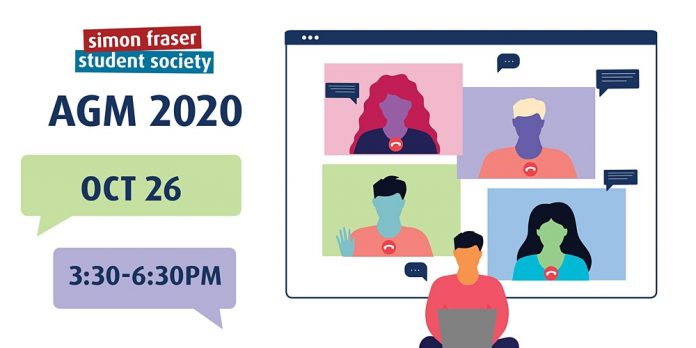
Illustration courtesy of SFSS.

By Balqees Jama, SFSS Board of Directors (At-Large Rep)

Recent SFU Student Activism

SFU has witnessed a wave of student activism over the last couple of years that was inspired in 2018 by an interconnected combination of movements on campus. This includes women’s rights advocacy sparked by the impeachment of the Simon Fraser Student Society (SFSS) president, calls for equity within our student society over the Rotunda Space issue, and the ongoing battle against yearly tuition increases. Student activists organized around issues, mobilizing to pressure both SFSS and SFU for equity and transparency in the way both organizations make decisions.

The highly politicized campus climate led to engaged student activists being elected as SFSS representatives with a mandate of building back student power. The SFSS is a student-led organization that represents and advocates for the rights and interests of the 25,000+ undergraduate students at SFU. It provides undergraduate events, services, and advocacy to SFU. The Society continues to advocate for anti-oppressive practices and structural support for students during COVID-19 advocacy.

SFSS has successfully lobbied for the construction of the Burnaby Mountain Gondola, mobilized students across North America to take action for climate justice and Indigenous rights, and supported the Don’t Forget Students campaign. 

Attacks on Student Democracy 

Currently, the SFSS consists of two governing bodies: the Board of Directors and the Council. The Board consists of 16 elected student representatives, including six Executive Officers that carry out the day-to-day responsibilities of the Society, and 10 Faculty and At-Large Representatives.

The Council is an advisory body to the Board and serves as a space for students across SFU to connect and bring their issues to the governance table. It represents every faculty and departmental student union at SFU, and equity-seeking constituency groups including the Women’s Centre, First Nations Students Association (FNSA), Disability and Neurodiversity Alliance (DNA), Out on Campus (OOC), and Students of Caribbean and African Ancestry (SOCA).

Unfortunately, there have been attacks on Council from the Board in recent years. In the spring of 2017, Councillors mobilized against by-law changes which diminished the Council’s role in the Society, removing its role in SFSS governance with the intention of eradicating Council. 

SFSS by-laws are governing rules and principles agreed upon by membership that define our governing structure. In Spring 201–20, Council held the Board accountable for their decision to go against providing equity-seeking groups space in the new SUB. The Board drafted by-laws in response that removed the Council’s governance powers, systemically writing Council out of existence. 

This year’s elected Board scrapped those drafts and worked with Council to create new by-law proposals for membership to vote on at the SFSS 2020 Annual General Meeting. When it comes to equity and representation, SFSS must ensure that Council’s powers are systemically ingrained into our governance structure so that student democracy is protected.

SFSS 2020 Annual General Meeting 

Moving Towards Equity and Democracy

To advance student advocacy efforts, the SFSS Board and Council have worked together to propose a new model for the Society that involves redistribution of governance power to a more diverse range of students at SFU. 

The SFSS Board proposes that Council become the new legal Board of Directors, as defined in the BC legislation we follow. The model aims to establish the new executive role of VP Equity and Sustainability within SFSS. 

As part of the anti-oppressive shift within the student body, the newly proposed model ensures that marginalized equity-seeking groups have a direct vote at the decision-making level of student governance. These would include the Women’s Centre, FNSA, DNA, OOC, and SOCA.

SFSS Condemnation Vote Against SFU Tuition Increases

After refusing to join students’ calls to lobby the BC government together for increased educational funding, SFU is raising tuition during the COVID-19 pandemic. A motion is being proposed at the AGM to condemn SFU tuition increases as a student body.

SFSS President Osob Mohamed’s briefing note on the tuition condemnation states the significance sending a unified message to the SFU institution:

“A formal, public group condemnation can be a powerful tool in the lead up to a bigger action, and to a direct concession from the University in the near future.

Why it’s Important to Vote at the SFSS AGM

Along with the regular procedural matters that the student society updates membership about, such as the financial status of the Society, students can actively participate in student democracy by vocalizing their thoughts and ideas.

It’s essential that membership votes in favour of adopting the structural changes proposed in the new bylaws; it would be the start of a new era for the SFSS. 

These systemic changes in our student union would advance student engagement and advocacy efforts, including fighting against tuition hikes, providing academic advocacy, advancing SFU’s role in racial and climate justice, and more. The new structure would be a move towards equity and democracy, as it systemically redistributes power to students to include representation of every faculty and departmental student union and marginalized group on campus.

How to Vote at the Oct 26 SFSS AGM

All undergraduate students are encouraged to attend and participate in the SFSS AGM on Oct 26 at 3:30 p.m. Cast your vote in formally condemning SFU tuition hikes as a student body and vote to build student power within the Society through equity and democracy. 

Quorum is reached at 250 members, the minimum number of members required to conduct AGM business. Changes to SFSS bylaws must pass by a 2/3 majority to be successful. All relevant AGM documents are available for download.

By attending the AGM, students will be automatically entered in the draw to win prizes ranging from Skip The Dishes gift cards to smart tablets, and more. There is also a prize for the student union that has the highest number of students to attend the AGM.

SFSS 2020 Annual General Meeting Details

Date: Monday, October 26, 2020

Time: 3:30 p.m.–6:30 p.m.

Register on the Eventbrite page.

See Relevant AGM Documents: bit.ly/SFSS2020AGM