Home Blog Page 371

The Bright-er Side: Hallmark movies are showing more diversity

0
ILLUSTRATION: Siloam Yeung / The Peak

by Sara Wong, Arts & Culture Editor

I usually refer to watching Hallmark movies as my guilty pleasure. Not because they’re super cheesy, but because of the network’s history of prioritizing white, cisgender, heterosexual, and overall normative stories. However, with the latest batch of Christmas movies, I’ve noticed a significant change in the amount of diversity shown. 

In less than a year, Hallmark’s LGBTQ2+ representation went from plausibly deniable (two men dancing close together at a final party scene) to front and centre with actors Jonathan Bennett and Brad Harder playing the first gay lead couple in a Hallmark flick. For anyone interested, the title is The Christmas House, and it was by far my favourite Christmas movie of 2020. 

Bennett and Harder were not the only ones to make Hallmark history. Indo-Canadian actress Nazneen Contractor, star of The Christmas Ring, was Hallmark’s first South Asian lead. Vancouver’s Antonio Cayonne also became one of Hallmark’s first BIPOC leads with his role in Christmas in Evergreen: Bells are Ringing

Hallmark’s Christmas 2020 lineup also included Jewish representation with the movie Love, Lights, Hanukkah!, and interracial couples in movies such as Jingle Bell Bride and The Christmas Bow. The latter featured Lucia Micarelli, an American musician and actress who is half Korean — a noteworthy detail because I have never seen anyone distinctly East Asian as a primary character in a Hallmark film. After years of watching these movies, expecting to see mostly white people on my screen, I didn’t think that having someone who looked more like myself represented would mean so much, but it did. 

Obviously, Hallmark still has a long way to go in terms of diverse representation. For instance, while The Christmas House did have a leading gay couple, it also featured two heterosexual couples as part of the main cast. I would love to see a Hallmark movie in the future where an LGBTQ2+ romance was given more focus than a heterosexual one. Also, while there have definitely been more primary and secondary BIPOC characters lately, I would say that three quarters of casts are still white.

While I am disappointed that it took this long for Hallmark to stop casting the same rotation of white actors and actresses in their movies, I’m happy to see them making a conscious effort now. It’s better late than never, and I can now say, without embarrassment, that I’m a Hallmark movie fan.

Need to Know, Need to Go: February 1–7

0
Illustration of a blue calendar, with "Need to Know, Need to Go" written on top
Arts & Culture events to catch around the city. Image courtesy of Brianna Quan

By: Gurleen Aujla, SFU Student

Global Talent Night 2021 | February 5, 8:30 p.m.–10:00p.m. | FREE with registration | Online

Discover and celebrate the unique, diverse talents of the SFU community. Hosted by SFU International Services for Students, Global Peers, and the Simon Fraser Student Society, the third annual Global Talent Night will showcase a wide range of acts in music, dance, comedy, and poetry. The event is open for all SFU and FIC students to attend. There will also be an opportunity for both performers and audience members to win prizes. To register and learn more, visit their Eventbrite page.  

Are We Still Together? Ghislain Brown-Kossi | Available until February 15 | FREE | PoMoArts online & In-Person

Based in Vancouver, French artist Ghislain Brown-Kossi works to examine social relationships and individuals’ interactions with others. He is particularly interested in exploring if our society will overcome the barriers between diverse communities and engage in real, authentic communication. Brown-Kossi attempts to craft art that addresses the feeling of disconnection within our community and hopes to inspire meaningful dialogue. The recording of his Artist Talk can be found on Facebook. This show is both a live exhibition in the Port Moody Arts Centre gallery and a digital exhibition

New Red Order: Give it Back | Now until March 6  | FREE | Audain Gallery

In partnership with Cineworks, DOXA, and the SFU School for Contemporary Arts, the New Red Order (NRO) presents Give it Back, a window exhibition viewable from Hastings Street that engages with the Land Back movement. Calling to “restore stolen Indigenous territories to Indigenous people,” this exhibition primarily uses videos to envision a forward-future for this movement and for Indigenous peoples. You can learn more about the exhibition on the Audain Gallery’s website. 

What Grinds Our Gears: Breakout rooms are the worst way to learn

0
Nothing ever happens in these grey-box-laden sessions anyway. IMAGE: Victor Tran / The Peak

by Marco Ovies, Editor-in-Chief 

Full disclosure: I think group work and discussions are the biggest waste of time. 

Breakout rooms are especially the worst. I thought that after a semester or two of online trials professors would have started to realize that. But nope, here I am being forced into a group of complete strangers to discuss a book none of us have even read, in a time period none of us have ever studied. Why am I paying premium prices for this nonsense when instead I can just go to GradeSaver or SparkNotes and get a more in-depth summary for absolutely free? 

Breakout rooms are a scam used by professors who are trying to fill up time because they don’t have enough content to lecture on. If there is less lecture content, let us out early so I can complete the 100 pages of readings that you need me to complete by next week. There are so many more productive things I could be doing instead than trying to start a conversation with three grey boxes on my screen. 

We are literally in a pandemic. Please professor, if you are reading this, throw me a bone. End break out rooms before I breakdown.

Asynchronous classes accommodate students’ unique circumstances

0
ILLUSTRATION: Cora Fu / The Peak

by Charlene Aviles, Peak Associate

Synchronous online learning offers virtual face-to-face interaction that has often been missed during the pandemic. However, in the context of online education, synchronous learning is prone to more technical issues than any benefits can override. Asynchronous online learning offers more flexibility to students, and should be utilized more frequently across all SFU courses.

Asynchronous classes give students the opportunity to access their classes on demand. For example, pre-recorded lectures give students time and space to replay and rewind lectures. In contrast, live lectures require a strong internet connection, and students’ internet connection can crash at any time. Only 36% of rural communities in British Columbia have access to high-speed internet. Even in urban areas, the internet can be unreliable. In early January, my telecommunications provider had to repair damaged equipment in the neighbourhood, which disconnected the Wi-Fi for two days. Downloadable video or audio recordings offset these consequences and allow leisurely access to material without internet access. 

Recordings also allow students to listen to lectures while they are doing other tasks, such as riding the bus, which helps them maximize their time. Additionally, students without strong internet connections are at a disadvantage for live course components with participation points. These students may not be able to easily participate because of potential audio or video failures. While the chat feature is an option, it delays students’ responses and tends to be cluttered.

Students living in areas hit hard by BC’s storms are particularly disadvantaged. According to BC Hydro, 220,000 customers on Vancouver Island, the Gulf Islands, and in the Lower Mainland and the Southern Interior lost power due to a storm in early January. These kinds of storms are not one-time occurrences either; it is safe to say that their frequency means that power outages will continue to happen. 

Pre-recorded lectures also accommodate international students in different time zones. While already struggling to get the recommended seven or more hours of sleep, students with time differences risk the consequences of sleep deprivation, which include lower grades and poor memory. Even students living in different Canadian time zones may not be able to adjust their sleep schedules over time. 

Asynchronous classes also take into account that students have different schedules and living situations. A survey conducted by the SFSS in April 2020 found that only 35.5% of respondents had access to a quiet study area. Yet, students have to either stay in their distracting environment or risk exposure to others at public study locations. Students with full-time responsibilities, such as with family members or employment, are also more susceptible to time conflicts and may face burnout from having to attend live classes. 

Because of these reasons, professors should strongly consider asynchronous teaching when planning their courses. Early in the semester, they should give their classes multiple choice surveys asking about factors like time zones and access to technology. With more information regarding students’ circumstances, professors can make informed decisions regarding asynchronous teaching.

As students face challenges including, but not limited to, unemployment, poor mental health, ineffective technology, and time differences, they require flexible course schedules that take into account their respective circumstances. Asynchronous learning demonstrates that adaptability must be mutual between educators and students to promote a flexible learning environment.

The secret radicalism of Netflix’s “Hilda”

0
Hilda’s soothing colours complement its radical spirit surprisingly well. Image courtesy of Netflix

By: Meera Eragoda, Copy Editor

It’s been a little over a month since Netflix released the second season of Hilda, a show about the blue-haired titular character’s adventures with friends and various fantastical beings, set to a soothing colour palette of muted, hazy blues, reds, and browns. The British-Canadian series was created by Luke Pearson, Stephanie Simpson, and Kurt Mueller, with the involvement of many Vancouverites. Based on a series of graphic novels by Pearson — who has also worked on Adventure Time — the animated fantasy show has a very charming, retro, autumnal vibe that continues to delight.

On the surface, Hilda’s escapades in the town of Trollberg with her trusty deer-fox sidekick Twig are exciting and the storylines engaging, but the power of Hilda goes beyond that. On closer examination, the show’s critiques of patriarchy and police become obvious, but remains enjoyable because they’re never preachy or over the top.

Hilda’s interpersonal relationships, as well, place an emphasis on positive portrayals without falling into overused tropes. Hilda lives with her single mother and that’s never questioned, commented on, or used to move the plot towards a nuclear family situation. Hilda’s mom finding happiness in her job and in her relationship with Hilda serves to normalize the representation of single parenthood and deemphasize the idea of romantic love as the most important kind.

In addition, her relationships with her friends, David and Frida, are portrayed as incredibly supportive. Season two opens with Hilda winning an essay and shows Frida, who also submitted an essay, congratulating Hilda on the win. To the show’s credit, both Frida and David are allowed to be complex characters and not flat sidekicks. Frida is allowed to be both Black and a bookworm who excels at school — a representation sadly lacking in mainstream depictions of Black girls  — and David is allowed to be a boy and scared.

Though David is portrayed as being incredibly loyal to his friends and being able to put his fears aside when he needs to, he is also allowed to express his reservations about going into dangerous situations. By showing Frida and Hilda as being understanding of David and not making fun of him or telling him to “grow a pair,” the show makes room for boys to feel a range of emotions outside of anger. It also sets up the expectation that these expressions will be met with empathy and kindness. While Hilda and Frida are repeatedly shown taking the lead on their adventures, the show also explores the value of not running headfirst into the unknown.

Hilda is technically the main character and much of season one focuses on her, but every episode in season two centers around a different character, highlighting their complexities, personalities, and skillsets. In one particularly important episode, Hilda wants to try something new, but is unsuccessful. It is later shown that Frida, aspiring for the same thing, is able to achieve her goal and learn something new about herself. When the revelation is made, Hilda expresses only happiness and support for her friend. The messaging is that Hilda does not need to win at everything or have everything, and allowing Frida to have this as part of her identity shows that Black girls don’t have to be sidelined and their wins are not losses for others.

The show’s pro-library stance, too, is evident in the frequent trips Hilda and her friends take to the library to find out more about the various creatures they encounter. The librarian, who is young and rocks purple ombre hair, always has the answers they’re looking for, along with a cool, mysterious vibe. The lasting assumption of librarians from their portrayal in shows is someone usually older, sometimes severe, and always shushing you — but Hilda is breaking that mould. With BC having implemented a funding freeze on public libraries since 2019, despite their importance to immigrants and others, the subtle push towards them was appreciated.

Hilda also has a minor anti-cop sentiment or at least, the anarchist in me chooses to read it that way. The Trollberg Safety Patrol is the equivalent of the town’s police force and is focused on punitive action. Hilda, on the other hand, demonstrates compassion and empathy towards the creatures she encounters, trying to understand the root cause of their problems, not just focusing on perceived mayhem. She usually figures out that there’s something more complex going on, while the Safety Patrol ignores it. In talking about one of the members of the Safety Patrol, Hilda says, “He acts like he wants to protect the city, but all he’s doing is causing more problems.” If that isn’t a perfect encapsulation of the police, I don’t know what is.

Though Frida and David are represented in a positive light, there are other representations that are missing. For example, there are no queer characters in the show and the one character in a hijab only has one speaking line and is otherwise largely sidelined. In addition, despite Frida being fairly well-developed, the main character is ultimately Hilda. But while it would be nice if the show increases its representation in the future, it’s worth noting that the representation it does have is done really well.

Hilda is worth watching for many reasons: storyline, supportive characters, an emphasis on adventure and understanding, and so much more. The radical spirit of the show, however, is what enhances it, making it a must-watch series.

SFU-inspired cocktails to drown your university-related sorrows

0
ILLUSTRATION: Siloam Yeung / The Peak

By: Kyla Dowling, Staff Writer

CW: Mentions of blood, mental health

The Midterm Season

An iced-coffee inspired cocktail that is basically a $9 Starbucks drink with pizazz AKA an illegal amount of caffeine

Ingredients: 

  • A handful of caffeine pills, crushed
  • Two handfuls of Brain Boost, which I’m pretty sure is just legal Adderall, crushed 
  • A cup of oat milk, you healthy student <3
  • Black coffee (but not from the SFU Dining Hall, I know you’re broke but that is Not Coffee) 
  • Whiskey. How much does your Canvas homepage tell you to put?
  • Ice, but the tasty cubed ice because you’ve earned it for reading two pages

Directions: 

  1. Put the crushed caffeine pills, crushed Brain Boost, oat milk, coffee, whiskey, and ice in a blender. 
  2. Blend for 30 seconds while fervently repeating mnemonic devices to yourself. 
  3. Pour into a cute Starbucks cup, so when you log into Zoom for that midterm you’ll have something aesthetically pleasing to distract from your eyebags and tears. 
  4. Consume. Congratulations. Is your heart rate just that high or can you smell the other people in your Zoom call from here?

The SFU Health & Counselling 

A play on the classically disgusting Bloody Mary, this drink is sure to leave a bitter taste

Ingredients: 

  • A cup of nap drool from your desk after another lecture on classical conditioning
  • Copious amounts of vodka to cope with the waiting time to get an appointment 
  • Three cups of the blood I hacked up in the residence sink when I had pneumonia and SFU Health & Counselling had no available appointment slots for me 
  • ½ of a Naked smoothie to make like Marina and get some Froot

Directions: 

  1. Rim your glass with your spit. This will give you a nice taste of salt, similar to the internal saltiness you feel when going to Health & Counselling. 
  2. Put the blood, smoothie, and vodka into a blender. Note: it will not be hard to find the blood as I did not get the chance to clean it up, given that I nearly passed out and had to go to the hospital.
  3. Dissociate as you blend it. Has it been three minutes or three hours? SFU doesn’t really care, so why should you!
  4. Drink while on hold with Health & Counselling as they offer you an appointment for October 17, 2023. 

The Student Athlete 

You might be chasing the prize, but you’ll need a chase for this strong cocktail. 

Ingredients: 

  • Six cups of protein powder
  • Creatine, whatever the fuck that is 
  • EIGHT CUPS OF WATER. REFUEL. RECHARGE. GLUG GLUG
  • This is a cocktail, so there has to be alcohol, so add 2oz of rum. But be careful bro, I heard from Hunter that we’re gonna get drug-tested on Tuesday and you don’t wanna be put on second string, bro
  • A raw egg, because that’s good for you, apparently
  • A red backpack. No, it’s not going to be in the drink, but are you really a student athlete if you don’t obnoxiously have it hanging visibly in your Zoom background?

Directions: 

  1. Grind that creatine just like you rise and grind every day.
  2. Mix the creatine and protein powder into the water. 
  3. Mix the egg and the rum separately. No whisk, no reward.
  4. Combine the two mixtures, just like how you combine your cardio and your weight-training in practice.
  5. Put on the red backpack. Look in the mirror and repeat: “I am a beast. I stay hustling. ‘You miss 100% of the shots you don’t take. -Wayne Gretzky. -Michael Scott. -Andrew Petter.’”
  6. Chug 10 minutes before The Big Game. 

The 95 B-Line

The only reason we get blackout drunk anyway is to forget it’s called the R5 now, so . . .

Ingredients: 

  • Mint leaves, to replicate the smell of the people vaping at the bus stop 
  • A full bottle of rosé. Remember pregaming on the bus before going to Fortune? Wow, that made me sad to write . . .
  • A shot of gasoline. You’re not riding the 95 B-Line. You are the 95 B-Line

Directions: 

  1. Put on your favourite outfit.
  2. Put in your headphones.
  3. Take the 95 B-Line with no direction or end in mind.
  4. Begin taking careful yet dramatic sips out of your flask. 
  5. Press your head against the window as the rain drips down it. 
  6. Gaze longingly and mysteriously out at the night sky.
  7. Catch the eye of the entrancing stranger sitting across from you. Romanticize them. Create a life together in your head in which you get married, adopt dogs together, and they make you breakfast in a sunlit kitchen on a Sunday morning. 
  8. “And I need you, and I miss you . . .” 

The EDI 

Equity, Diversity, and Inclusion who? 

Ingredients: 

  • “E” is for egg whites, a cocktail ingredient about as appealing as going to an SFU Senate meeting
  • “D” is for dark rum. Remember to include at least six shots of it. Yeah, you’ll be hungover, but it won’t be as bad as the headaches you get from receiving yet another EDI email
  • “I” is for Irish cream liqueur, which is actually what SFU administration has in their coffee every morning! Our tuition has to go somewhere . . .

Directions: 

  1. As you stir in the egg whites, chant: “We are an open, inclusive university whose foundation is intellectual and academic freedom.” 
  2. When mixing in the dark rum, whisper: “Our scholarship unites teaching and research: we celebrate discovery, diversity, and dialogue.” 
  3. Finally, when adding the Irish cream liqueur, howl to the moon: “We are a university where risks can be taken and bold initiatives embraced.”
  4. Maybe then you’ll believe those things are true.
  5. Keep drinking. It’ll happen if you just keep drinking.

Jeremy Stone: “‘Buy Local’ isn’t just for Christmas!”

1
Illustration courtesy of MCA.

Written by: Saman Dara, SFU Student

Jeremy Stone, director of the community economic development (CED) program at SFU, uses the concept of ecological resilience as an analogy for economic resilience within communities. The former refers to the capacity of an ecosystem to respond and recover from disturbances such as natural disasters. The current ‘disturbance’ in relation to economic resilience within communities is the pandemic. After these disturbances, the hope is for things to go back to normal. However, “You can only adapt to the changes that have happened [ . . . ] You will never be able to recover perfectly,” explains Stone in the first President’s Faculty lecture of 2021, The Hidden Gifts of Retail: Resilience and Planning for Community Life hosted by SFU Public Square and Joy Johnson.

Stone has 20 years of experience in economic development and resilience, including planning business recoveries for disaster horror stories like Hurricane Katrina, the Deepwater Horizon oil spill, and the 9/11 attack. He received an MPA in international economic development from New York University and a BA in anthropology from Reed College. Currently, Stone is completing a PhD in community planning at UBC. Stone humbly acknowledged that the information being shared by him is from many group contributions within his career. 

In the past year, local retail businesses have experienced harsh impacts due to the COVID-19 pandemic and government regulations around it. These consequences include gentrification, inequity, environmental concerns, and so much more. Like a destroyed grove of trees, Stone suggests that “if we lose these stores, we start to lose critical functions for society.” 

In particular, we risk losing cultural creation and development within our communities. Stone showcased multiple businesses within Vancouver which are keystones for art and cultural development, including Rokko Sarees, an Indo-Canadian fabric store on Fraser Street. It’s a store that my mother frequents as she tailors traditional dresses for the South Asian community in Vancouver. As I realized how much my own family relied on these businesses to express our culture, I found myself agreeing with him that “retail businesses are really critical [to support art and culture] and we haven’t necessarily deemed them essential in these ways.” 

Stone isn’t suggesting that British Columbia’s health guidelines need to be challenged. However, he is suggesting that municipalities need to do more to support and help local businesses recover as retail “is essential to our cities and our culture.” A point he emphasized throughout the lecture is that we should all be buying local.

 Stone makes it clear that we need to view entrepreneurs as local problem solvers for our community well-being. Their economic performance cannot be assessed solely by sales figures, and that’s why the CED program prioritizes the “needs and values of the community and how those are being met,” explains Stone. Compared to multinational companies, our local entrepreneurs and their businesses produce eight times more jobs on a square foot basis, give 24 times more philanthropically back to our communities, and keep 63% of revenue (compared to 14% for multinationals) in B.C. These statistics help prove that our local businesses are sustainable, but this circulation of credit in the local economy as an investment is not necessarily considered by consumers.

To be fair, even with my three years of experience working in multinational and local retail stores, I was still unaware of the importance of local businesses. Stone’s lecture was refreshing considering that local businesses provide people with the ability to grow, learn skills, and experience successful mentorship, all the while serving different demographics, trades, and geographic communities. 

Stone makes it clear that there is a priority towards supporting specific communities, such as Chinatown in Vancouver, which continues to face a great deal of gentrification pressures. In case of any disaster, Stone explains that “traditionally marginalized communities always suffer [greater] impacts. They have less long-term resources in order to dig themselves out.” Oftentimes, local businesses may not only be struggling due to the COVID-19 pandemic. This is why where we shop is so important.

A 10% shift of consumer purchasing to local businesses would result in approximately 14,000 jobs, 25% more to local charities, and an additional $4.3 billion in B.C.’s economy. Furthermore, a shift would increase the chances of profits being reinvested in our own communities. The 10% shift to spending locally would be a good start to decreasing orders from Amazon or large online retailers. Alongside this consumer shift, Stone recommends that small businesses should increase business to business procurement and treat one another as vendors to ultimately increase the economic resilience of the community.

Stone also spoke about emergency management plans, referencing a ResilientVille program completed in San Francisco, in which municipalities map and identify keystone local businesses that provide critical functions for the surrounding community. He called for municipalities in B.C. to replicate this program as many cities in Canada — including Vancouver — are lacking an economic resilience plan in the case of a disaster. 

Stone’s recent collaboration with Community Futures Central Kootenay and the Applied Research and Innovation Centre (of Selkirk College) processed plans for economic resilience in the Kootenays with the inclusion of eight municipalities. Stone shared details from this plan, including  small business financing, technical assistance, and mental health support. It was surprising to hear that in Stone’s past experience, he’d found that governmental bodies were not responsible in the case of recovery from disturbances; instead, the responsibility was placed on bottom-up community initiatives.

Economic resilience is often ignored by municipalities within plans of economic development and emergency management. Conceivably, this is why there was so much disarray for local businesses during the first pandemic lockdown. Stone accounted for this disarray in the recent Vancouver Economic Resilience Study done by the CED and Local BC, which conducted focus groups with Business Improvement Areas and cross-city business surveys. 

Their findings documented shortcomings by the City of Vancouver as there was lack of communication, complications to receive support, a lack of mental health support, and “essential” was not clearly defined. Stone was adamant that mental health support be prioritized as small business owners suffer from “double losses”; they are in the position to experience personal and business tragedies due to the pandemic. 

As long as we support our local businesses, we are working towards economic resilience and we avoid losing critical functions in our community. In defending local businesses, he expressed, “‘Buy Local’ isn’t just for Christmas!” Stone stressed that “the City of Vancouver needs a plan for economic disruption” as we are still in the midst of the pandemic and prone to future disasters without an effective plan in place to support local businesses. 

Course repeat limitations are harmful to students

0
Why is SFU stopping us from learning? ILLUSTRATION: Siloam Yeung / The Peak

by Jacob Mattie, SFU Student

Currently, SFU maintains a punitive stance on course repeats, allowing one repeat per course and five in total. Exceptions can be made for students willing to go through the difficult task of seeking the permission of their faculty’s dean — but that may increase potential feelings of shame from failing a course. Regulating duplicate courses also limits students’ ability  to progress through education at their own discretion. These policies are ultimately restrictive and serve no purpose other than to add unnecessary stress to students’ studies.

Passed by the SFU Senate in 1982, this policy on course repeats was one of a series of highly controversial changes by then-Dean of Arts Robert C. Brown. The limitation on course duplicates was said to be a prevention method for students attempting to boost their GPAs. However, this notion was at best misguided, and at worst, willfully destructive. By implementing these changes, the university legitimized the notion that a GPA is a goal unto itself, and is more sought after than the education it is supposed to represent. At the same time, this limit made obtaining and maintaining a high GPA more difficult. This is incongruent with SFU’s role as a school, which should be to embrace the educational value of repetition and failure, not punish it. 

A student cannot take the time to properly question and absorb the material offered if they are studying to avoid failure. Rather than learning material out of pure interest, or desire for knowledge, a student under threat of failure can resort to tragic questions like, “Will we be tested on this?” This fixation on testing shows that priorities have moved away from self-guided learning, to simply being able to regurgitate needed information. This may be appropriate for an institution whose goal is producing degrees, but it’s not for one aiming to produce well-rounded students.

While it is possible that a student would retake a course a number of times to boost their GPA, is that not the entire purpose of education? That students practice material and repeat it to the point that they understand it? If a student deems it appropriate to submit another four months of their life to a course’s workload, we should applaud their commitment, not restrict them from it. 

SFU should encourage the idea of learning from failure, rather than enforcing the notion that anything but immediate success is a flaw that could jeopardize a student’s academic career. It is due time that we rekindle the debate around limitations on course repeats because it’s clear they’ve never been for the benefit of students.

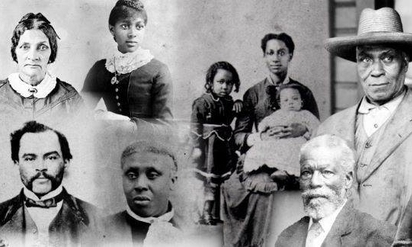
BC Black History Awareness Society presents immersive Black History Month events

0
Celebrate BC’s Black history with these free programs. Image courtesy of the BC Black History Awareness Society

By: Charlene Aviles, Peak Associate

Black History Month celebrates the Black community’s resilience and accomplishments; and honours those who continue to take risks in advocating for justice and equality. With this in mind, the BC Black History Awareness Society has created a series of interactive programs, which include a hip hop lesson, musical performances, and symposiums.

Putting Black British Columbia History to Work: Contemporary Implications of Historical Blackness | Zoom | February 7 from 2–3 p.m. | Free with registration

Guest speaker and UBC professor Handel Kashope Wright will be giving a talk on Black history in BC. Wright will focus specifically on Mifflin Gibbs, Sylvia Stark, and Sir James Douglas’ role in “racist erasure.” The talk will be followed by a 15-minute Q&A session. Participants must register online to receive the Zoom link to this virtual event.

Symposium on Black Migration and British Columbia | Zoom | February 17 from 2:30–4:15 p.m. | Free with registration

During this conference, Sherry Edmunds-Flett, a doctoral candidate in the history department at SFU, and a group of other scholars from Canada and the U.S. will delve into the past of Black migration to BC. Through a discussion on their recent research, the scholars will analyze reasons for immigration, modes of transportation used during migration, along with the significance of each. Register for the event through their website.

The Fifth Element | Zoom | February 20 from 1–3 p.m. | Free with registration

Immerse yourself in the world of hip hop and learn the elements of “Knowledge, Djing/Lyricism, Breakdancing/African dance, and Graffiti.” Hip Hop Hall of Fame member Ernie Paniccioli will be joining to discuss topics such as creativity and cultural identity for Black and Indigenous youth.

Ross Bay Cemetery Tour | Zoom | February 21 from 2–3 p.m. | Recommended donation of $5

This event, hosted by John Adams of the Old Cemeteries Society and Valin Marshall of the BC Black History Awareness Society, offers an in-depth tour of the Ross Bay Cemetery in Victoria, BC, where over 50 Black pioneers are buried. The event is free but the Old Cemeteries Society is accepting cheque donations by mail. Visit their website to receive the Zoom link and a donation address.

Pablo Càrdenas Plays Oscar Peterson | Live Stream | February 26 from 7–8:30 p.m. | By donation

For this one-time-only performance, pianist Pablo Càrdenas, bass player Rob Johnson, and drummer Curil Lojda will cover the classic jazz hits of eight-time Grammy award winner, Oscar Peterson. The event will be live streamed on the Hermann Jazz Club’s website, YouTube, Facebook, and Vimeo. They are requesting donations through their website or by mailing a cheque.

The BC Black History Awareness Society is a local organization that educates on the cultural and historical significance of Black British Columbians by facilitating conferences, workshops, and more. They also offer support to members of the community that are facing socioeconomic barriers. To donate to the BC Black History Awareness Society, visit their website.

UBC allegedly erases Dr. Amie Wolf’s reports of behaviour among teacher candidates reinforcing white supremacy

0
PHOTO: Gudrun Wai-Gunnarsson / The Peak.

Written by: Vincent Grewal

Dr. Amie Wolf is an adjunct professor at the University of British Columbia (UBC) teaching two sections of a required course in the teacher education program, EDUC 440 Indigenous Education in Canada. In a recent controversy, Dr. Wolf, an SFU alumni and a member of the Mi’kmaq First Nation, made public an allegation that UBC erased interim reports of 12 teacher candidates who were transferred out of her class last fall. In a press release published January 20, soon after the controversy, Dr. Wolf wrote a detailed account of the events from her perspective. 

In the release, she stated that she had “observed that the participants were not ready to teach Indigenous subject matter, citing their unwillingness to critically examine their own biases, attitudes, beliefs, and values to facilitate change, as stipulated in the BC Teacher’s Council, Professional Standards for BC Educators.”

The students were transferred out of the class because they had complaints about Dr. Wolf that they took to the course supervisor for EDUC 440, Dr. Shannon Leddy. On the reddit post regarding this issue, users have alleged that she “wanted to use her power as a UBC instructor to wield political power, shaping the education system according to her own whims” and that “she told her current students that students with conservative political views would fail her course.” The Peak could not get in touch with any of her former students. 

In an interview with The Peak on January 20, Dr. Wolf said that she was not told about these complaints until she went to Dr. Leddy in November of 2020 to discuss what was transpiring in her class. According to Dr. Wolf, after tensions in the class got worse and worse, the director of the Teacher Education Office, John Yamamoto, said, “Let’s just cut bait[,] [. . .] let’s just put them in another Indigenous education course and they can just finish the term.”

Dr. Wolf was then tasked by Yamamoto to write interim reports on the students. According to Matthew Ramsey, Director of University Affairs at UBC Media Relations, “[i]nterim reports are used for a variety of reasons, such as when student[s] move from one section to another, or when instructors have specific concerns pertaining to students enrolled in a pass/fail course. When these matters are addressed and the student has passed the course, the report is considered fulfilled and no longer applicable or part of the student’s file.” Additionally, the policies and guidelines of the teacher education program state that “copies of interim reports will be filed in the Teacher Education office.”

She said that Dr. Leddy, Yamamoto, and herself “all agreed what the report was, and all three of us signed it,” a claim that the university did not comment on. She told The Peak that she agreed to pass the students on the condition “that they continue to try to learn how to teach Indigenous education respectfully because [they’re] not there yet.” 

According to Dr. Wolf’s first press release, she was instructed by Dr. Marianne McTavish, the Associate Dean of the UBC department of educational studies, to delete the interim reports she had written for 12 teacher candidates from her course EDUC 440 — reports signed off by Yamamoto and Dr. Leddy. 

“The fact that they signed-off on my documentation of the students’ push back was meant to make me feel that I had been supported,” said Dr. Wolf. “The intention was to let me slide into quiet oblivion so that I would not resist, thereby helping them solve the Indian problem as conveniently as possible.”

She was told that this decision stemmed from a letter from an anonymous parent of one of the teacher candidates “expressing concern that the interim reports could negatively impact their adult-child’s employment opportunities.” 

The university did not confirm nor deny the existence of the letter.

On January 15, she made it clear that she would not delete the assessments. Five days later on January 20, she took this issue public with her first press release.

In a second press release dated January 24, Dr. Wolf stated that she received an email from the dean of UBC’s department of educational studies, Dr. Frank Blye. According to Dr. Wolf, the email noted that as a part of the Privacy Act included in her contract with UBC, she was “not entitled to speak about identifiable individuals with third parties or the press” and that doing so would expose the university and herself to liability under privacy legislation. In the second press release, Dr. Wolf stated, “[Blye] is pretty much telling me to shut up or I’ll be sued. It’s a threat.”

In 2016, Dr. Wolf was employed by the UBC Sauder School of Business and her first press release alleges her contract was terminated after she stated to the CBC that “a course requirement on First Nations rights and title is needed, campus-wide.”

“I know that speaking out will probably cost me again,” she expressed.

On January 25, Dr. Wolf was placed on administrative leave by Dr. Blye, meaning the remainder of her contract will be paid out but she will have no teaching duties.

Lynnne Tomlinson, Assistant Dean, pro tem, of Professional Development and Community Engagement in the faculty of education, a non-Indigenous person, has now taken over instruction of EDUC 440.

Dr. Wolf calls for the resignation or dismissal of Dr. Leddy, Yamamoto, and Dr. Blye (among others), citing the hire of non-Indigenous person to teach her Indigenous Education course, “citing corruption and incompetence.”

She added, “I did not have the chance to say good-bye to my classes nor was a reason for my disappearance provided to them. My students told me the class without me didn’t pick up from where we left off. I feel terrible for how this situation has impacted them, and I am helpless to make things different. This is everything that should not happen in Indigenous education, which emphasizes relationships of trust and healthy community engagement that is safe for everyone.”

Interim Reports

The nature of the concerns outlined by Dr. Wolf against the teacher candidates included participation, communication, classroom climate, and intolerance. She confirmed that all 12 interim reports were identical, highlighting the same concerns for the 12 students as they had formed a “clique [that] was behaving in ways that created an intimidating classroom environment, [. . . ] compromising [her] instruction and the culture of the classroom in general.”

Regarding communication, the students “demonstrated an unwillingness to communicate openly with [her] and with their peers.” Dr. Wolf stated she made attempts to communicate with them, sharing her cell phone number and encouraging students to contact her. “The choices to avoid speaking with me in good faith, with an intention to resolve issues amicably, appears to be reactive and short-sighted behaviour unbecoming of a teacher candidate.”

The interim reports for the students stated, “At best, choosing to leave [the] class, rather than making an effort to understand what [she is] actually teaching and why, reveals an intolerance for ‘otherness.’ At worst, it points to the possibility of unconscious and unacceptable biases, the reinforcement of white supremacy, and/or Indigenous specific racism and misogyny. This intolerance shows a lack of compassion and thoughtfulness that will not serve Indigenous students in a classroom setting.”

On the reddit post regarding this issue, the comments were riddled with questions of her inclusion of the term white supremacy in the interim reports.

“I talked about the reinforcement of white supremacy,” Dr. Wolf said, placing emphasis on reinforcement. “I was never calling anybody a white supremacist [ . . . ] Our colonial institutions are all white supremacist institutions [ . . . ],” expressed Dr. Wolf.

She did add however that, “I did see white supremacy in spades in their participation and assignments. This is just the biased belief that Euro-centric culture is more true/real [sic] than Indigenous culture. It is a widespread and common attitude in Canada.”

She cited one comment from a student to a class discussion board question, “What are the realities for Indigenous students in the public education system today?”. The student allegedly commented, “How should I know, I’m white?”

“I was one hundred per cent right in my assessments of these students,” stated Dr. Wolf. These are not the kind of people who are going to support the success of Indigenous students in a classroom setting.”

White Supremacy

To understand Dr. Wolf’s comments about the reinforcement of white supremacy, they must be situated in the broader meaning of what white supremacy really is. According to Frances Lee Ansley, a critical-race-theory scholar, “By ‘white supremacy’ I do not mean to allude only to the self-conscious racism of white supremacist hate groups. I refer instead to a political, economic and cultural system in which whites overwhelmingly control power and material resources, conscious and unconscious ideas of white superiority and entitlement are widespread, and relations of white dominance and non-white subordination are daily reenacted across a broad array of institutions and social settings.”

Indigenous Education

“I don’t think that Indigenous pedagogical approaches to education [in a university context] have ever existed. Indigenous cosmology, [ . . . ] the way that our families are, [our] governance, economics, spirituality, relationships, [and our] teaching [ . . . ] [I don’t think] could ever be integrated into a Western mainstream education system,” expressed Dr. Wolf.

If it were to be integrated, however, she mentioned three levels to adapting Western frameworks of education to be more inclusive to Indigenous peoples: system restructuring, the integration of soft content, and the integration of hard content.

“[System restructuring], which is the integration of restrictions, [means] that the Federal government will finally do what it is obligated to do under the United Nations Declaration on the Rights of Indigenous Peoples [UNDRIP] [ . . . ] [and ensure] we have the money to have and run our own schools that are taught in our languages, emphasize our histories and the holidays that are important to us, [helping] us with our goals of self-determination and self-governance,” stated Dr. Wolf. She also mentioned how Indigenous educators should be given “opulent salaries[,] [ . . . ] benefit packages, and [the] status of being teachers.”

Regarding the integration of soft content and hard content, she explained that soft content includes “cultural inclusion, [ . . . ] food, dances, [and] traditions,” while hard content includes, “studying legislation like [UNDRIP] that translates into policies and procedures for restructuring a nation to nation relationship between Indigenous peoples and the state.”

“[Soft] content keeps us in a position of assimilation, [hard content] is about empowerment, self-determination, resource flows, land use, and sovereignty.”

In an email to her students about this conflict, she stated that, “What has happened to me directly relates to the course learning outcomes [and] exactly [ . . . ] where we’re at in the course, which is [the] theme [that] indigenous peoples have distinct ways of seeing and doing things that don’t fit into the institutions of Canada. And one of the sub questions under that is, what are the current educational frameworks in Canada? And how [do] those barriers [ . . . ] make it difficult [for the Indigenous teaching of Indigenous knowledge]? This case is a direct example.”

In her second press release, Dr. Wolf expressed, “The push back I am receiving from the highest levels of the UBC administration is indicative of a problem at all levels of education in the Province of BC. Incompetent administrators are giving lip service to promoting Indigenous [e]ducation while suppressing our voices. They get away with it because there is no accountability and because Indigenous people are usually disempowered, scared, and lacking in supports for recourse. Future classroom teachers will be dealing with this problem as they try to teach Indigenous [e]ducation. I want to prepare them for the real world.”

According to Dr. Wolf, she is no longer residing at her home address because “she and her chosen family fear for her safety.”

System Change at UBC

By talking to The Peak and other news media outlets about this story, Dr. Wolf is hoping that “systemic change will be spurred to actualize at UBC.”

In the 2020 UBC Indigenous Strategic plan, UBC President Dr. Santa Ono, wrote that UBC “can produce system change [ . . . ] by developing and implementing innovative and path-breaking research, teaching, and engagement with Indigenous communities.” However, Dr. Wolf understands these statements to have a different meaning.

“Indigenous people[s] are experts in seeing lip-service. We know when promises like this are put down on paper, they don’t mean anything in terms of how our lives change for the better. It’s the same battle, different piece of paper. We are the one who are stuck with doing all the work, and we meet the same barriers every time. People say they are committed to equity, diversity, and inclusion, but they want to keep their privilege at the same time. It doesn’t work.”

She noted in her third press release that her “greatest wish” is for “resourced bodies [to] be established throughout the university to ensure that the UBC Indigenous Strategic Plan, which focuses entirely on fulfilling the legislation laid out in the UNDRIP, [is] established this year.” She added, “I never want another person, Indigenous or otherwise, to endure the discrimination for teaching the facts about the UNDRIP.”

“In every colonial system in Canada, there are no established policies or procedures to protect Indigenous people[s] from white supremacy. When we are eliminated for trying to create change, the institution can just spit [us] out; there are no avenues within the institutions for recourse or for accountability.” She added, “Indigenous professors who are willing to assimilate are the only one[s] left in all levels of the B.C. education systems.”

According to Dr. Wolf, her personal email has been flooded with support from people around the world.

“People are appalled and outraged by UBC’s attempt to erase me, and they promise that they will not allow me to become a Missing Indigenous Woman. Their activism is glorious. I know change will happen.”

“My goal right now is just to not disappear,” she voiced. “My message matters, and my student assessments are correct. I’m an Indigenous scholar and leader, and I deserve to be paid fairly for what I do and to be protected and helped as I make the changes the President of UBC says it supports. Policies, procedures, and monetary provision to implement these must be adopted at the highest levels of all Canadian institutions.

To stay informed on the current situation, subscribe to Dr. Wolf’s newsletter on her website, www.perceptionwork.com, or follow her on Twitter.