Home Blog Page 370

Keep MMIWG in your hearts this Valentine’s Day

0
The annual Valentine’s Day march is in its 30th year. Photo courtesy of Maggie McPherson via CBC

by Saman Dara, SFU Student

Indigenous women are leaders, community developers, Knowledge Keepers, negotiators, and life givers; they are the heart of their Nations. In order to fulfill these roles, Indigenous women require space, health, and safety, all of which are increasingly difficult to find under the intersecting forces of gender-based violence, poverty, and racism. The federal government has shown lackluster effort in implementing an action plan to protect Indigenous women and girls from these inequities. This is failing communities, and missing and murdered Indigenous women and girls (MMIWG) across Canada, and there should be greater recognition of that.

The Women’s Memorial March was started by Indigenous women in Vancouver’s Downtown Eastside (unceded Coast Salish territory) in 1992, and is held every Valentine’s Day to honour MMIWG affected by continuing injustice. The March seeks to bring attention to the disproportionate loss of Indigenous women from the Downtown Eastside. 

These issues have received more wide-spread attention since the 2015 announcement of an official inquiry into MMIWG. Indigenous women and girls are 12 times more likely to be murdered or go missing compared to all other women in Canada. The 2019 National Inquiry’s Final Report on MMIWG acknowledges this truth through survivor and family member testimonies. The report also cites systemic, oppressive structures, such as “specific colonial and patriarchal policies” and “intergenerational trauma and marginalization,” as causes. 

In adherence with this report, the federal government affirmed to carry out a National Action Plan by June 2020. COVID-19 restrictions have hindered this plan, but they have also been making it more difficult for Indigenous women and girls to receive support. The Downtown Eastside’s means of support (including housing) are decreasing, leaving Indigenous women and girls at most risk of gender-based violence. It is more than apparent that the Canadian government needs to take action to protect Indigenous women and their right to thrive.

Repeatedly, Canada’s many levels of government wait for a tragedy to occur before they appear to take Indigenous peoples’ concerns seriously. Indigenous leaders were forced to make their demands for an action plan clear once again following the racial abuse and death of Joyce Echaquan at a Quebec hospital, and the downgraded charge for Barbara Kentner’s murderer. Ontario Regional Chief RoseAnne Archibald recently called on “both levels of government to develop a strong joint action plan with First Nations” to protect Indigenous women. The Chair of the First Nations Women’s Caucus, Anna Betty Achneepineskum, also advocated for the government to “address the patriarchal systems, policies, laws, and attitudes that contribute to systemic racism, discrimination, and injustices.” Clearly, the government is not prioritizing the effective collaboration needed to support Indigenous leaders and their communities.

 It is disheartening that reconciliation efforts by the Canadian government continue to be neglectful of true action.

Investigating and addressing the “the causes of, and remedies for, the disproportionate victimization” of Indigenous women and girls is one of the 94 Calls to Action made by the Truth and Reconciliation Commission (TRC) of Canada. The TRC was initially founded to acknowledge and document the injustices caused by the legacy of residential schools. Ultimately, the TRC is a means to educate Canadians and work towards reconciliation, and their calls to action have been active since 2015. In December 2020, three former commissioners of the TRC expressed concerns that implementation of these goals by the government seem to be “slow and uneven.” It is disheartening that reconciliation efforts by the Canadian government continue to be neglectful of true action. 

The Women’s Memorial March, in its 30th year, continues to be an opportunity for Indigenous families, communities, and organizers to grieve lost ones. It commemorates where these women were last seen or found. The March is largely led by Indigenous women, who should always be the leading voices in this arena. For non-Indigenous allies, the March should implore us to commit to raising awareness, support, and resources in the hopes that those affected or who have lost a loved one can heal. We should keep missing and murdered Indigenous women and girls in our hearts this Valentine’s Day, as it doesn’t seem like the Canadian government will. 

All genders are welcome to support Indigenous women and girls in the march which begins at noon on Hastings and Main Street. Social distancing and masks are required to participate in-person. RSVP to [email protected] to join the SFSS Women’s Centre’s company. Donations to the Downtown Eastside Women’s Centre help to fund the march.

Celebrating Chinese New Year with nian gao, the auspicious rice cake

0
You can have your cake and eat it too with this lucky dish. PHOTO: What to Cook Today

By: Nancy La, SFU Student

As January comes to a close and February unfolds, my family and I get ready to celebrate the beginning of the Lunar New Year. While others are buying chocolates for their loved ones in preparation for Valentine’s Day, I am busy helping my mother clean the house (the under-the-couch and into-the-kitchen-cabinets kind of cleaning) for our New Year’s dinner. Even more importantly, I assist in preparing the rice cake dishes. Rice cake, or nian gao, is one of the most important traditions of Chinese New Year celebrations, second only to the symbolic red envelopes of good luck. The relationship between nian gao and the Chinese New Year is a mysterious and intricate one; nobody knows how or why nian gao became an integral part of the holiday, but it must be done because that is the cultural norm. 

In an attempt to unravel this mysterious tradition, I turn to the most comprehensive source of Chinese cultural knowledge: my parents. The reason why Chinese people consume nian gao, according to my father, is because of a pun. The word “nian gao” is the homophone for “year high” in Mandarin and Cantonese, and it correlates to the verse “nian nian gao sheng,” meaning “higher every year.” Keep in mind, the verse does not dictate what should be higher than last year — you get a free-for-all good luck charm that applies to everything. Money? Check. Grades? Check. Health and prosperity? Triple check. I don’t know about you, but if consuming rice cakes will bring my GPA up higher than last year’s, count me in. 

Preparation for rice cake dishes depends on the route one would like to take. For those with a sweet tooth, there is the red sugar rice cake (hong tang nian gao). With its subtle hint of sweetness, it makes for a wonderful dessert on its own. However, my family likes to kick it up a notch by dipping slices of the sweet rice cake into a beaten egg and frying them up for an extra deluxe treat. The richness of the egg perfectly balances out the sweetness of the rice cake, and when combined with a good cup of Pu’erh tea? Perfection

Because rice cakes are just plain canvases ready to absorb any sort of flavour around them, taking the savoury route also yields spectacular results. My mom likes to toss some plain rice cakes with thin strips of pork and sliced cabbage in a wok, along with seasonings like soy sauce, sesame oil, and black vinegar. The end result is an umami-charged powerhouse with crunchy napa cabbage to balance out the chewy texture of the rice cakes. It’s a dish that’s perfectly filling on its own or as an accompaniment to some warm soup and dumplings. Either way, it’s a satisfying beginning to a prosperous New Year. 

With COVID-19 restrictions in place, the tradition of having a full family dinner will not be happening this year in my household. Yet, despite the distance between me and my family, there remains a powerful link that connects us all, no matter where we are: the sticky rice cake that unites our hearts and taste buds. 

Upcoming Black History Month events that address civic education, spiritual activism, and more

3
Left to right: Kriss Munya, Selam Debs, Rachel Ricketts. IMAGE: Sara Wong / The Peak

By: Gurleen Aujla, SFU Student

Kriss Munsya: The Eraser | Available until February 26  | FREE  | Pendulum Gallery & Online 

Local artist Kriss Munsya, born in the Democratic Republic of Congo and raised in Brussels, has utilized a series of photographs to depict his experiences of being a Black man in a predominantly white society. Sponsored by the Downtown Vancouver BIA and HCMA Architecture + Design, The Eraser delves into the intersections between race, trauma, and internalized supremacy. Munsya combines his experience in photography, graphic design, and filmmaking to produce a critical analysis that juxtaposes the past with his aspirations for the future. This exhibition is available at the Pendulum Gallery and digitally on the artist’s website

The Anti-Black Racism Workshop with Selam Debs | February 10, 3:00 p.m.–4:30 p.m.  | FREE  | Online

Selam Debs was born in Amman, Jordan and grew up in Regent Park and Scarborough in Ontario. She is most passionate about her work in advocating for the BIPOC community, which centres around educating others on social justice, anti-racism, and equity. Combining her personal experiences as a Black Ethiopian Womxn with her academic studies on critical race theory and the structures of privilege and oppression, Debs will be hosting an honest and raw workshop on race in Canada. The discussion will facilitate meaningful conversations surrounding the question of what it means to be living in an anti-Black society. This event is being hosted online by the Guelph Black Heritage Society (GBHS). Registration is required through Eventbrite, where you will also have the option to donate to GBHS. 

Spiritual Activism for Fighting and Healing from White Supremacy | February 18, 6:30 p.m.–7:45 p.m. | FREE with registration | Online

Racial justice leader, speaker, and writer Rachel Ricketts will be having a conversation with Stanford University’s A-Ian Holt on what it means to “dismantle white supremacy on a personal and collective level.” As a queer and multi-racial Black woman, Ricketts has centred her work around amplifying Black and Indigenous women. This conversation aims to address the conscious and unconscious emotional violence that sustains white supremacy. Providing spiritual advice on how to attain racial justice, this event alludes to elements of Ricketts’ new book, Do Better. The event is free, though attendees must register through Eventbrite. For accessibility accommodations, please email [email protected] at least one week prior to the event. 

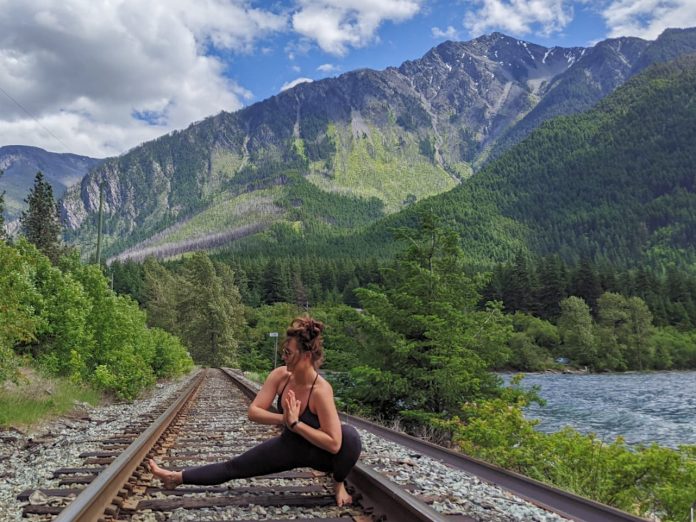
Toxicity in online yoga communities and how my Master’s degree helped me break free

2
Photo courtesy of Charlotte Gravert.

Written by: Charlotte Gravert, SFU Student

I vividly remember the first time I went to a yoga class — the kind of yoga that contemporary pop culture treats as the image of youth, answer to good health, and the quick fix for all kinds of humanitarian ailments. Picture skin-tight leggings on slender flexible white women under 40 popping into downward dogs in their lunch breaks from their corporate jobs. I only learned deep into my yoga journey that yoga can be much more. 

The studio was conveniently located in downtown Toronto, had a small coffee shop in the front, and a shiny washroom with product placements in the back. I was awkwardly sitting on my yoga mat in the midst of girls warming up their splits, regretting I didn’t show up earlier to catch a spot in the back. Going through the poses, all I could think about was my sweat dripping on the mat. It turned my already gripless mat into a water slide that I feared wouldn’t be a soft landing for my face when my hands decided to fly off the edge. To make things worse, not a single mat around me showed the same scattered sweat stains. 

Despite the fact that I hated being in this first class, I kept coming back. Locked in by the imminent promise of achieving what the other girls had and armed with an overpriced yoga mat, a new outfit, and a safe spot in the back, I pushed through sun salutation after sun salutation. On the surface, I was getting stronger and more comfortable but beneath, I felt as if I was continuously falling short. 

Thanks to the yoga community I had immersed myself in, I was never short on new products and practices to fix myself with. In the yoga studio, as well as online, I had teachers and fellow students who were never short of recommendations. With each purchase, I was getting a little closer to the promised yogaland, a place where everyone is beautiful and healthy! With each investment into my future self, I was becoming a more authentic version of myself. 

Or that’s what I thought. It took me years to realize that wasn’t necessarily the case. 

My toxic on-off relationship with yoga became habitual. Whenever I didn’t practice for a while, whenever I didn’t make it all the way through the 30 Day Challenges, I always found a new thing to buy myself new credibility with. The mantras of the classes fueled my self-obsession: “Thank yourself for showing up on your mat today, for making this time for yourself.”

It wasn’t until one lucky day in the midst of lockdown, that the stars of academia, life, and yoga aligned.

I never had the money to spend on a full yoga teacher training (we’re talking at least $2,000) but I always had an eye on it — the ultimate self-investment. During the lockdown,  Yoga Alliance allowed for yoga teacher training to be held online, and many of them were much cheaper than the in-person retreats. I looked for about a month before deciding on a training that felt authentic, despite the site design looking a bit rough. Honestly though,  I couldn’t argue with the $300 price tag. 

At the same time, I was doing a directed study about the culture of neoliberalism to complete my MA coursework. While reading into the sociological effects of late stage capitalism — in particular how we turn ourselves into enterprises in constant competition with one another and are stuck in a never-ending pursuit of becoming better, faster, and stronger — something clicked. I wasn’t practicing yoga at all. I was practicing neoliberal self-discipline, using yoga as a vehicle for the ideology that is currently destroying our planet

It was through my Master’s degree that I finally found a yoga practice that truly served me, and in some way, my environment too. Creating a practice that wasn’t only about myself, but one that shifted to focus on a better together.  I was no longer faking a good conscience through acts of consumer activism, but instead taking up the work to protest the things brands falsely made me believe were being fixed through my purchases. The way I practice yoga now differs immensely from the workouts I previously put myself through. Now, when I practice yoga, I practice listening — listening more carefully and moving more intently.

Yoga is a diverse practice with its philosophical roots dating back 1000s of years to India. But yoga’s multivalent forms are currently under attack by one dominant neoliberal ideology. Yoga is commercialised, stripped of all cultural heritages, and utilised as a tool for people to cope rather than react to late capitalism. Whatever kind of yoga you practice, it is important to check your alignment, not just physically, but also ideologically. For me, this meant taking my practice and yoga teacher training not as an opportunity for personal gain, but as an opportunity for education. Education as a tool for true empowerment, breaking free from the fake positivity and toxicity sold under the “yoga” label. 

Not falling for the toxicity in today’s yoga culture means not supporting the blunt ableism, ageism, racism, and sexism. It means creating a yoga culture where teachers are paid living wages and the practice is accessible. Where BIPOC and LGTBQ+ practitioners are heard and have the same platform as heteronormative white yogis. Yoga has become a site of gentrification and gatekeeping, and it is up to all of us, to practice what we preach and hold space for one another in a system that is largely failing us. 

One step at a time. Today, this might look like listening to the amazing podcast by Tejal Patel and Jesal Parikh Yoga is Dead. Or choosing your next YouTube yoga class from a BIPOC teacher.

Moving Towards a More Equitable Housing System reimagines the rights and lives of renters

0

Written by: Emma Jean, Staff Writer

A group of statisticians, advocates, urban planners, real estate developers and a journalist walk into a Zoom meeting and ask each other what’s wrong with the housing market. Turns out, a whole lot. 

Moving Towards a More Equitable Housing System: Is Vancouver a City for Renters? featured a head-spinning web of insight with a panel of experts on various aspects of the housing system. The event was designed not only to inform participants on housing policy, but also for the City of Vancouver to hear what their experiences have been as renters, and what they would like to see put in policy as a result. 

The event was moderated by director of SFU’s urban studies program Meg Holden and Globe and Mail journalist Kerry Gold, both of whom had plenty to offer to the discussion.

The baseline of the discussion was promptly given by Andy Yan, the director of the City Program at SFU and described as a “fixture” in the Vancouver housing discourse. He opened the event with a statistical deep-dive into the Vancouver housing market. He described Vancouver as a city of renters, with at least half the city being occupied by renters since 1971. 

Even more damning were the statistics comparing the percentage of income levels in Vancouver households  to what income brackets were for the housing units approved in 2017 by the City. Housing units were significantly disproportionately developed for those earning over $80,000, compared to the amount of housing units developed for those earning minimum wage. 

According to Leilani Farha, the UN’s former special rapporteur on the right to housing and global director of housing non-profit The Shift, it’s the treatment of something that should be a right as a commodity. The main concern she sees in Vancouver, she said, is one that she’s seen all over the world in her work: the financialization of residential real estate. 

“Financialization is a very particular phenomenon, at least with the work that I do on it and my concerns,” she described. “It really is where housing is viewed as an uber-commodity. I’m not talking about the individual who buys a house and is chuffed when their property value goes up. I’m talking about institutional investors, the private equity firms, the asset management firms that have millions of dollars invested in residential real estate.” 

Farha explained that when multinational corporations scoop up real estate,  they evict the current tenants to do surface-level renovations and pass along the cost to the tenant to pay for with a higher rent. All of these factors make housing increasingly unaffordable and companies all the more profitable. 

William Azaroff, the CEO of Brightside Community Homes Foundation, is engaging in the kind of flipping activities Farha describes, but in an non-profit, well-intentioned way. His Vancouver-based non-profit flips apartment buildings to make them more densely populated and more accessible for different kinds of support, like seniors, people with disabilities, or those fighting addictions. The developments are also designed to be “deeply affordable” with different payment plans depending on the renter’s circumstance. Azaroff emphasized that housing is “not one-size-fits-all” and that there should be diversity beyond single bedroom walk-ups.

The housing-as-rights perspective was echoed by a fellow activist Barbara Steenbergan, a member of the Executive Committee of the International Union of Tenants, who joined the call with an ecstatic presence from Brussels, Belgium. She was in Brussels for a reason: the European Parliament just adopted a hard-fought resolution that legislates EU countries to recognize housing as a human right. After hearing statements from renters in both the chat and in the form of video messages, she opined that Vancouver should adopt similar policies to protect renters, like social rent policy which protects renters and often makes it a preferable option to owning.

According to Steenbergan, Vancouver is “at the beginning of that wave” in regards to these policies. Furthermore, it’s more than just policy making. She encouraged those in the audience to add their voice in advocating for change. “This must come from the ground up [ . . . ] from the organized crowd, from the tenant’s union, from all these people fighting for more affordable housing. [Only] then [will] you have the chance to fight for more affordable legislation,” she said.

Putting into action a similar belief from a different standpoint was Squamish Nation councillor Khelsilem, who has been involved in the Nation’s development of housing. “We continue to press all levels of government to repatriate and return land to the nations in the spirit of, as article 27 speaks to specifically, the repatriation of Indigenous lands that have been confiscated or taken, or to be compensated for our lands that have been confiscated.”

Khelsilem continued, “We are choosing to enter into the real estate area because so much of our natural lands [and resources] have been alienated from us. Our lands have been completely obliterated for the city to exist. [We] see [entering into the real estate area] as an opportunity to not just succeed in our territories but also give back to our city. We believe that the delivery of a significant amount of housing is what we need in our city.” 

Khelsilem was also quick to note that while the City of Vancouver clearly needs to invest more in affordable housing and reduce the zoning barriers for non-profit housing, the federal and provincial government also need to chip in. 

“One of the things that’s challenging about that [income-housing equivalent] graph [referenced earlier] is that anyone with an income of under $50,000 or below, the amount of subsidies that are required to pay of mortgages for financing or the costs of construction and new, affordable housing, the subsidies to ensure that those rates are required for those incomes, require huge amounts of subsidies form other levels of government to pay for that.” 

He pointed out that while the onus is on the City of Vancouver, it does not rest solely on their shoulders. “The reality is that federal and provincial governments need to step in to be able to increase the amount of housing at those levels.” 

Gold also mentioned that the BC provincial NDP are funding social housing at the same rates they were in the 1990s, without accounting for how underfunded they became during BC Liberal rule and the measures needed to restore their ability to operate.

When it comes to the perspective of investors, however, these approaches to the market are seen differently. That became evident in the perspective of Evan Siddal, president and CEO of Canada Mortgage and Housing Corporation. He argued the important role of investors, as he essentially acts as Canada’s highest authority on what federal housing is and isn’t funded.

Keen to “stick his neck out there to give people something to shoot at,” he laid out what the federal government is doing to create a “massive supply of housing.” Through its $22.7 billion Canada Housing Benefit, which partially subsidizes rent, and the Rapid Housing Initiative, the federal government  aims to provide shelter for unhoused people in major cities and was oversubscribed by 200%. Sounds effective, right? The other panelists had questions.

“I know I have a question,” said Gold. “So the low-interest rate construction program, from what I understand is that they only have to provide affordable housing for ten years. What happens after that? Does it convert to market rate after they choose to?” 

“It can,” responded Siddal, “The minimum threshold is ten years but we’re receiving significantly more competition through this money.” 

Gold’s concern, echoed next by Farha, was that these developments would soon convert to unaffordable rates as soon as the threshold expires, and that the housing may be temporarily affordable but not secure in the long-term. After all, the “any supply is good supply” approach offered hasn’t historically worked in Vancouver when the supply isn’t affordable. As Farha put it, these affordable units aren’t truly affordable and sustainable until they are protected from private investors. The success of the Squamish Nation contradicts Gold’s claim about the approach never working in Vancouver before. Squamish’s latest developments provided affordable, high-density housing.

After some terse moments of debate, Vancouver City Councillor Sarah Kirby-Yung was finally able to connect her video to the call to offer thanks for the opinions expressed. In a closing message, she talked about how they need to integrate all these different approaches into how they develop their housing plan. Kirby-Yung told the audience that she prefers to think of Vancouver, not as a city for renters, but as “a city for people.” This seemed to negate the urgency of establishing better tenant rights and access to affordable housing in favour of a message of vague unity — not unlike the disproportionate funding of upper-class housing units that occurred in 2017. 

The majority of the event, watching as an outsider felt like being a kid sitting at the adult dinner table for the first time. The specific issues to which the panelists spoke felt familiar and resonated, yet the concepts and policy quibbles felt levels above common knowledge. However, the talk emphasized how housing is one of the most crucial issues of our time and understanding how rights-based approaches, the roles of outside money and the zoning laws that get in affordable development’s way is key for any citizen to make a housing system that works for everyone. 

The event was hosted by the City of Vancouver, SFU Public Square, SFU Urban Studies, SFU Vancity Office of Engagement, and the SFU City program

The Best Croissants in Metro Vancouver

0
These three croissants are must-try items! IMAGE: Sara Wong / The Peak

By: Meera Eragoda, Copy Editor and Sara Wong, Arts & Culture Editor

  1. Le Marché St. George butter croissant  $2.90
Le Marché St. George croissant. Screenshot courtesy of Sara Wong via Instagram

If I had a dollar for everytime I was at Le Marché St. George and heard the question, “Are you out of the croissants?” . . . well, I wouldn’t be rich but I’d probably have about $100 — yes, I’ve been to Marché a lot. Sometimes I’ve been the one asking the question and at other times, I’ve been lucky enough to be happily munching on a croissant while overhearing someone else. 

Marché has a couple of different croissants but the question is always in relation to their butter croissants. They’ve perfected the ratio of flaky and crispy on the outside to soft and buttery on the inside. Unlike other places where sometimes the croissant is a little more burnt, or sometimes too soft, they manage to always stay consistent. And seriously, the butter really makes it. They also offer a vegan croissant, which doesn’t taste as good to me because I’m a butter fiend, but even I can acknowledge that the texture is accurate to a croissant. 

While there are a variety of delicious, creative, unique croissant offerings all over Vancouver, Marché is getting the basics right and ultimately, that’s the foundation of any good croissant. The only critique I have is that they don’t make more. If you’re there after 10 a.m., you’re really rolling the dice on your chances of snagging one. — ME

2. Chez Christophe double baked almond croissant – $5.45

Chez Christophe almond croissants. Screenshot courtesy of Sara Wong via Instagram

I know this croissant is expensive, but hear me out. The double baked almond croissant is special because it’s extra crunchy on the outside, thanks to a flaky dough and toasted shaved almonds, and the inside is stuffed with a rich, nutty, slightly sweet almond cream. As a finishing touch, the pastry is dusted with powdered sugar. It’s larger and definitely more filling than a regular croissant, which makes it worth splurging on. 

I once had a double baked almond croissant that was fresh out of the oven, and it was even more phenomenal that way, so if you go to Chez Christophe and order this, I highly recommend asking your server if they can warm it up for you. Chez Christophe used to only make this on special occasions, but they’ve come to their senses and now serve it on the regular menu.

For the record, all of their other croissants are really good too. I love the double baked almond because of its textural variety, but their classic butter croissant is textbook perfect. You can also try something new and innovative with their croissant cubes, which rotate flavours daily. Honestly, you can’t go wrong with your selection here. — SW

3. Nemesis Dope Bakehouse tiramisu croissant – $7.00

Nemesis tiramisu croissant. Screenshot courtesy of Sara Wong via Instagram

If you’re feeling boujee, then a Nemesis croissant is the way to go. The team here consistently nails both presentation and flavour. I’ve had a handful of their croissant offerings, but this tiramisu one takes the cake (so to speak). The croissant was stuffed with an espresso cream and topped with mascarpone chiboust, a dusting of cocoa powder, and a thin piece of chocolate. It was a masterpiece.

What made this croissant really taste like tiramisu was the espresso cream. It was light and airy, and you could detect the coffee without it becoming overpowering. Speaking of not taking over my palate, I was pleasantly surprised that the cocoa powder acted more as an accent flavour. A little goes a long way with this topping, and the Nemesis bakers thankfully understood that. 

I liked the mascarpone chiboust, though I don’t have anything more memorable about it to add. The piece of chocolate was also a nice finishing touch, but not what I focused on most. Ultimately, it was the pastry that was the biggest star — it was buttery, flaky, and had the right amount of salt. I emphasize the latter because there were some bites where I just got pastry and none of the other components, and those bites were full of flavour too. — SW

Middleditch and Schwartz is an improv must-see

0
Ben Schwartz (left) and Thomas Middleditch (right) are a dynamic improv duo. Image courtesy of Art&Seek

By: Dev Petrovic, Staff Writer

Sitting at home all day, there are several things I miss engaging with: concerts, festivals, open mics, and above all, live improv shows. The spontaneity and ridiculousness of improv are simply not replaceable by Netflix stand-up comedy features. However, I was excited to come across the newly released comedy special on Netflix, Middleditch and Schwartz. This show had the upbeat and engaging energy of a live improv show because that’s exactly what it was! Middleditch and Schwartz is a collection of the duo’s performances on tour, which was recorded pre-COVID, and it is the funniest comedy special I have seen in a very long time. 

This completely original Netflix special features comedians Thomas Middleditch and Ben Schwartz, who perform an hour of long-form improv, entirely unscripted, every episode. For those unfamiliar with the logistics of an improv show, the performers engage with the audience for a storyline prompt (e.g. setting and characters) and then the rest is, well . . . improvised. Usually, however, such shows are not long-form nor recorded to be put on Netflix, which is what makes this comedy special so impressive. 

I have seen both Middleditch and Schwartz excel with scripted comedy — Middleditch in Silicon Valley and Schwartz in Parks and Recreation but I wasn’t sure what to expect seeing them tackle such a difficult comedy act. Improv, especially, can be a hit or miss. But, from the very beginning of the first episode, I was captivated and already laughing. It was evident to me that the comedy duo had the perfect amount of chemistry to work well together, constantly bouncing off of each other, as well as maintaining the high energy necessary for an improv show to be a success. 

I’ve delved a little into improv myself (before COVID, of course), which only makes me more appreciative of the high level of skill and technicality that Middleditch and Schwartz have shown. Improv in its basic form already requires a lot of vulnerability and precise comedic timing. I cannot begin to imagine how much expertise it must take to be able to formulate an hour-long show with a whole storyline and multiple characters, while also performing in front of hundreds of people. 

However, I think the best part of Middleditch and Schwartz is the comedic brilliance that still comes through in their improvisation. I’ve seen several improv shows where the performers start to lose a bit of their energy and gravitate towards more unoriginal characters or storylines — this was absolutely not the case. The two performers played multiple characters interchangeably — there must have been at least five or six characters in every show — and each one was completely original, believable, and creative. 

So if you’re looking to piss yourself laughing or just escape from the grim reality of our new normal, I highly recommend Middleditch and Schwartz as your next Netflix night-in. You can thank me later. 

SFU heroically lowers their own bar even further with P/CR/NR grading for electives

0
PHOTO: Gudrun Wai-Gunnarsson / The Peak

By: Nancy La, SFU Student

After almost a full year of online classes, SFU finally wakes up from its slumber and decides that yes, students do deserve some help with their grades during a pandemic, but not too much help. 

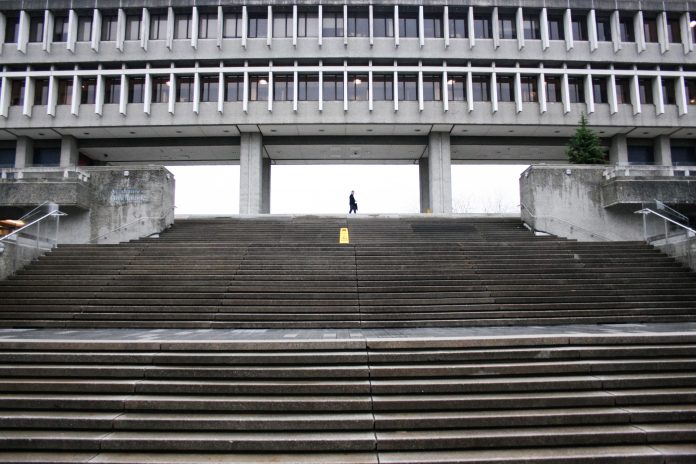
On January 14, SFU students received a mass email sent out by Student Services with the subject line: “Approval of temporary pilot P/CR/NC undergraduate grading system.” Truly putting the “brutal” in “brutalist architecture,” the university’s administration approved the comprehensive grading scheme . . . but only for elective courses. 

This was not the first time that SFU took students’ hearts on an emotional roller coaster ride, hinting at some sort of salvation only to unbuckle the safety belt and throw them out of the upside-down carriage. The legacy continues of students pushing the giant boulder of the Tuition Freeze movement up the hill only for SFU to increase the incline of that hill and the tuition. This hurdled boulder of a tuition hike was all in the name of the “overall health of the university.” In the end, all students were left with trust issues and a fear of the Indiana Jones movies.

How does the pass/credit/no credit system work for Zoom-fatigued students? Well, if you are among the fortunate ones who receive C- or higher, then congratulations! You get a P grade! If you are in the group of students who, due to a global health crisis, could not get a grade of C- or higher, you receive a CR grade. Imagine, your grades slipping? Surely not! This is the same level of education, after all. Just ask the four unopened emails to my TA about an assignment due in two hours. Last, but of course not least, the NC grade for those who did not pass the course(s) ensures no decreased GPA and no increased morale for next semester at all.

Keep in mind that these grades only apply for electives, and that P/CR/NC grades cannot be used for, say, scholarships and financial aid purposes. Fear not, the university’s gatekeeping bursaries are here to the rescue! But not for you, or you, or you . . .

At this point, this program is so full of holes it cannot be called a band-aid for suffering students since that would be derogatory towards band-aids around the world. 

With this program, students will now enjoy the privilege granted by the Senate to have 12 elective credits that will not affect their grades. Already taken your electives? Well, here’s a box of tissues — wait, sorry. You have to pay for those.

With this monumental decision from SFU, the school has proved itself to be empathetic for students’ struggles and is willing to reform, as long as those reforms are approved by the Senate and aligns with the interests of the university, of course. SFU’s astonishing ability to do absolutely nothing for its students is so prevalent that for the sake of efficiency, writers at The Peak are brainstorming for an automated response for every time SFU passes a new policy that does nothing for students while giving themselves a pat on the back. Suggestions welcome.

Celebrities are not our friends

0
The Kardashian-Jenners’s power to pandemic party shouldn’t be defended. Screenshot courtesy of @kimkardashian via Instagram

by Emma Jean, Staff Writer

It’s easy to feel like we know celebrities. We see them through our screens more often than some relatives, receive constant digital updates on their existence, and can access details of their lives fairly easily. All of this exposure can lead to shock and defensiveness when these people aren’t as they appear. 

Dua Lipa and the Kardashian-Jenners attend pandemic party after party, the Woody Harrelsons of the world spread conspiracy theories, and predators like Chris D’Elia harass minors from verified accounts, to name a few façade-breaking acts. Waves of fans inevitably arrive online to defend each one of these celebrities because they truly believe they know these people, and that the rest of us just don’t get it. The truth is, the public doesn’t know celebrities at all, and it’s time that we stop pretending we do.

Any glimpse of their life is filtered through layers of expensive publicists and lawyers until the audience sees exactly what these professionals want. Even when it seems otherwise, like in the case of these pictured COVID-19 parties, it still reflects a larger carelessness. So what if it gets leaked? Fines mean nothing to the rich. Worst-case scenario, sponsorship deals fall away for a few months until publicists and brands collectively decide their clients can make money again. 

The problem isn’t that the punishments aren’t harsh enough, it’s that the world has agreed celebrities are immune to practicing decency. The public has decided that maintaining celebrities’ status as modern gods is better than making sure they don’t cause harm. That doesn’t just mean elevation in the public eye; it’s elevation in every way. Even if one of these stars gets COVID-19, they’ll likely receive the best healthcare money can buy while the workers maintaining their lives aren’t afforded that luxury. This is the case on film sets, particularly in the COVID-19 epicentre of Los Angeles, where low-level workers are forced to risk contact with the virus in order to keep making a living. 

This isn’t to say that having some sort of parasocial relationship with celebrities is always bad. Having someone to be happy for without dealing with the complexity of a relationship can be comforting. It’s just wise to be aware that what we see is part of a carefully constructed image, often tied to the profitability of commercial brands and production deals. If celebrities are less savoury than who they pretend to be, their fans or the public don’t have a duty to defend them. With no truthful transparency to draw from, what is there to defend?

That being said, emotionally cutting ties with public figures can sting. For example, one of the most public reckonings from the pandemic involved Ellen DeGeneres. Her non-existent communication to existing staff during COVID-19 swept a workplace culture of sexual harassment and intimidation into the public eye. Growing up, I watched The Ellen DeGeneres Show every morning before school. I credit her presence as an out lesbian as a big part of my own self-acceptance and realization of my own feelings towards women. Knowing that the person who gave me that freedom had harmed so many people hurt. But it felt better to acknowledge who she really was than to hold onto a false belief in her crafted persona. Though I already knew Ellen wasn’t the warm, sunny person she portrayed herself to be, it still felt like a blow.

However, with great power, comes great privilege. Ellen spent her career telling people to be kind while doing the exact opposite behind the scenes, but it doesn’t always have to be that way. Celebrities have used their immense privilege to fund projects that amplify underrepresented voices without any press motivation, taken risky and bold public stances in the name of justice that resulted in career ruin, and called out the entertainment industry itself to make it better for those who come after them. If that public privilege can be used to make a dignified entertainment industry, the system can move beyond idolatry into a more equitable, humane form of mindless fun. 

Powerful and wealthy celebrities are ultimately not the public’s friends. It’s part of their job to make it feel like they are, and the most well-known ones are the best at it. Those same people, however, get to live by a completely different set of rules than anyone else as long as they keep up that charade. The harm that comes from this power means that they’re not worth our screen time.

Four things that would’ve protected the Capitol better than their security

0
PHOTO: Louis Velazquez / Unsplash

By: Alex Masse, Staff Writer

Okay, so, the whole Capitol coup happened, right? And the officers supposedly protecting the place kind of . . . didn’t. They did take some selfies with the largely unmasked hoarde and let the place get destroyed with little action, though. I feel safer already!

With that terror residing in the back of your mind, here are five alternatives that most certainly would have done a better job defending this governmental building.

  1. The Chihuahua Next Door 

My neighbours have a chihuahua and it means business

How do I know this? Well, I hear it every time I walk past their house. It’s come at me a few times. Someone leaves the gate open, and it careens out into the street, screaming at the top of its tiny lungs, because barking isn’t enough. It’s also broken into our yard. Twice. We have to coax it out, which is easier said than done, because it’s a chihuahua. 

All it knows is rage. You can run at it, it’ll keep barking. It lives for the thrill. No one will ever get past it.

“No” isn’t a word it knows. “Stop” isn’t a word it knows. “Please dammit if I have to watch you get hit by a car I’ll never forgive myself” isn’t a phrase it even somewhat registers. And sure, it doesn’t know a lot about American politics, but that doesn’t seem to be a prerequisite for being in or near the Capitol any time, anyway.

2. My Long-Dead Tamagotchi 

Tamagotchis. If you were cool, you had one. If you were really cool, you had several. If you’re super cool(?) but also super nostalgic and have a hard time letting go of material possessions, you probably still have one kicking around. Anyways, mine has pink stripes. 

What if I told you it could be a tool for fighting Trump supporters? 

I mean, think about it. The Tamagotchi is a symbol of everything these people hate: it was created outside of America, it’s from after 1995, and to win you have to care about a living creature besides yourself. Simply by existing within their proximity, it’s going to send these wannabe revolutionaries spiralling. 

And if all else fails, it makes a kickass projectile. 

3. Literally Any Girl With A Selfie Stick 

This one’s great, because it’s more about the aftermath. 

In the moment, nothing attracts these violent people more than potential attention. I mean, look at them. They were streaming, they were taking selfies, they were updating their stories left and right. So, like, they’ll take a selfie opportunity. Of course they will. 

So, here’s the kicker: share your selfies and start asking if anyone knows their faces. It shouldn’t be that hard, because it’s not like any of them are wearing masks. The Venn diagram between Capitol Trumpies and COVID-19 deniers is basically a circle at this point — specifically the circle in the centre of the biohazard symbol. 

4. Jack Dorsey, CEO of Twitter 

I know what you’re thinking: “Buddy, that’s a guy who can’t even get his website to ban Nazis.” 

And, sure, Twitter is home to folks who fit barrels of vitriol into 280 characters at most. If there was some sort of a Nobel Unrest Prize for someone who innovated new ways to sow chaos, Jack Dorsey would get it for unleashing Twitter upon the world. Just look at K-pop stans.

But also, they did ban the guy that many bigots worship. Big Boy Bigot. King Bigot, if you will. Dorsey more or less exiled the former President of the United States from his digital kingdom. You know, the then-president of the country he lives in. His platform did that. 

Do I still think most people could grab him by his scraggly quarantine beard and throw him a good few feet? Yeah, I do. But I also know that Trump supporters see this man as the slayer of their god. Put him in front of the Capitol and nobody’s getting through. They’ll stop to scream profanities at him and get tired.