Home Blog Page 366

Top Ten things at the SFU Burnaby campus with the highest sex appeal

0
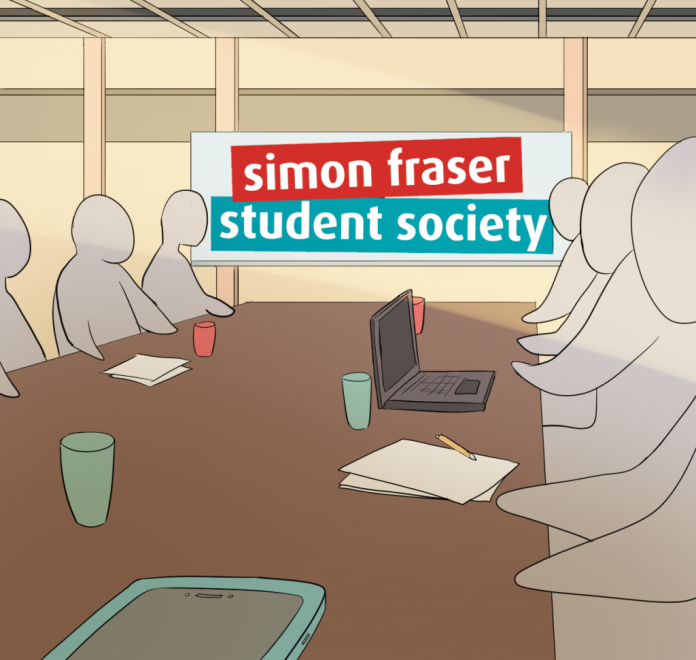
Very calm, very cool. Nothing wrong here. Illustration: Siloam Yeung / The Peak

By: Juztin Bello, SFU Alumnus

  1. The Saywell staircase

He’s tall. He’s solid. And he’ll have you sweating and panting in seconds. You may hate him because of the strain he puts on your body, but just remember that he puts you through this because he knows he can help you reach new heights and get you from A to B. A guy who puts your body through it (in public, of all places!) but is also there to support you on your journey? Hello, husband material much?

2. Bagpipe players

Next time you’re sitting in class complaining about hearing bagpipes again, remember this: lung capacity and consistently practiced blowing skills. Need I say more? 

3. The Cornerstone Starbucks

While I’m not one to ever call a money grabbing corporation sexy, there’s something about this particular Starbucks that serves up sex in a Starbucks-branded paper bag — fresh from the oven. If you can put your disdain for capitalism aside, just think about this: Starbucks has money. Uh, caution: extremely hot. (And if you’re the hot barista who can never understand my friend through her mask [because she’s too busy trying not to Venti Nitro Cold Brew With Sweet Cream herself] and you’re reading this . . . hi sir.)

4. The 143

Of all the buses you come across, there’s just something about this one in particular that really gets you . . . going. Riding him is short but oh so sweet. He’ll let you tap anytime you need it (with no strings attached). And don’t even get me started on how he has you tugging on him to stop as he takes you to your destination.

5. SFU Health & Counselling

Taking care of your mental health is sexy, yes. But you know what’s sexy in like, a “bad boy mistreating you” kind of way? Someone who neglects you, doesn’t listen to you, lies to you, and only gives you attention when it’s convenient to them. Now that’s that playing hard-to-get sex appeal you can only find here, babes.

6. When the busiest bathrooms in the AQ are closed for cleaning during the busiest hours

For people who are into some S&M, the best place to seek some torture and humiliation is around 1:30 p.m. to 2:30 p.m. when the AQ bathrooms by Renaissance are closed for cleaning — the exact timeframe where you’re rushing across campus and are ready to burst your jeans. Except with the tension between you and the custodian as they usher you away, you’ll be bursting for more than one reason. Don’t worry about getting too riled up and releasing your insides: they definitely have a “slippery when wet” sign on hand.

7. Robert C. Brown Hall

Of all the lecture halls, RCB is definitely the sexiest. I mean, just look at him: he’s got that older, mature vibe to him, he’s big (in all the right ways), and have you seen how many people he can fit inside of him? When classes go back to in person, hopefully you’ll be lucky enough to explore his insides firsthand. Bring some friends, too.

8. You and your TA when you only show up to the first and last tutorial

Between you and your TA, from the moment you lock eyes ‘til the last, there’s something there. And then, like a fleeting moment, it’s gone — just like you will be for the next 11 weeks until the last tutorial before the final. They’ll probably be upset that you abandoned them and returned out of nowhere. But can they blame you? You aren’t tied down to one TA. When you show up to that last tutorial, though, you’ll finally be able to cut that sexual tension with a knife. Well, you could either cut it with a knife, or with the poor review you give them on their TA assessment sheet for giving you a low participation grade. The fuck was up with that?

9. The AQ elevators

Why waste your time (and your sexual prowess) going up the AQ stairs when you can get hot and sweaty in these steamy elevators? They’re so tight and intimate you can practically feel someone touch your uvula from the opposite side (if you’re lucky). And don’t even get me started on the elevator itself. I mean who knows, if you’re lucky this clunky bad boy may just go down on you.

10. The mirrors in the AQ

Do you know why this one is on the list? Because no matter how many times you look at these mirrors, there’s always something sexy looking back.

Opinions in Dialogue: Should teens be sexualized on TV?

0
A teenage character played by an adult-aged actor in a strip club in Riverdale. Screenshot courtesy of Warner Bros. Television

by Madeleine Chan, Brianna Condilenios, Kyla Dowling

Countless teenage melodramas, like Riverdale, have littered our television networks and streaming services over the years, and their popularity doesn’t seem to be waning. However, this has only amplified existing concerns of how teenage sex and sexuality is portrayed on these shows. Students Brianna and Kyla discuss the complexities of this growing discourse.

Kyla: To start us off, I’m of the opinion that sexualizing teens is absolutely harmful. Some networks, such as the CW, attempt to skirt around this issue by having adult actors portray teen characters. But this casting doesn’t change anything because even if the actors don’t look like teenagers, the characters they play are teenagers. These are characters that teens are meant to relate to, despite the inaccurate casting. I suppose it’s good that these shows don’t cast teen actors so they aren’t sexualizing actual minors, but that’s about the only benefit of these castings. 

Brianna: I think inaccurate casting is largely for the purpose of avoiding media backlash —  and perhaps legal repercussions — than it is of genuine consideration for how the content impacts teenagers. Casting minors in roles where they have to engage in sexual contact with one another may violate laws around sexual activity, depending on where the content is being filmed.

But as you discussed, teenagers watching these characters can still be influenced by their actions. Teenagers who do not feel comfortable with the idea of sex yet, or have not had sex yet, may feel inferior and self-conscious from constantly seeing sexualized depictions of people their own age. I would also argue that frequent depictions in media of sexualized teens feed the toxic idea of it being a race to lose your virginity.  

Kyla: You’re absolutely right that TV impacts how teenagers feel about their own sexuality. I knew someone in high school who was adamant about losing his virginity before graduating, mainly because he saw that two teen characters on Riverdale had sex. However, as much as it puts pressure on teenagers who are not ready for sex, when done properly, it can also accurately depict teenage life. The fact of the matter is that teens are having sex. When it comes to teen-focused shows that don’t market themselves as sultry semi-soap operas, it’s important to have these discussions.

Degrassi, over the course of many years, has done an exceptional job of having teenage actors play teenage characters, and not ignoring the realities of teen life. The actors are never shown in a sexual manner and there’s discussion of sexuality, ranging from consent to frank conversation about whether couples are ready to have sex. There are both benefits and drawbacks to portraying teenage sexuality in the media, but the most important point is that it has to be done well. 

Brianna: However, it is important that the topic of sex is not labeled as completely taboo as this can lead to unsafe methods of sexual exploration, such as not wearing protection or meeting up in risky places to have sex in order to avoid parents. Media can help to open this topic up so teens do not have to feel embarrassed to learn safe sexual practices and engage in conversations with trusted adults. 

This makes it all the more important for entertainment media to avoid sending the message that sexualizing yourself is the way to gain popularity and respect among your peers. There is nothing wrong with sexualizing yourself to engage in sex for your own enjoyment, but that is entirely different than doing it for social status. I think the key word here is balance

Kyla: I agree that balance is important here. There’s a fine line between sexualizing teenagers and accurately depicting teenage sexuality. What you said about obtaining popularity through sexuality reminds me of the Beautiful All Along trope, where the nerdy girl gets a makeover at the climax of the movie and is revealed to be “hot” and “sexy” underneath her glasses and frizzy hair. This transformation often comes with more revealing clothing — such as when Cady Heron in Mean Girls went from wearing an oversized borrowed shirt to dangerously short miniskirts. 

Now, there’s nothing wrong with revealing clothing, but as a miniskirt aficionado in high school, I was dress-coded many times. Not only are crop tops and short skirts unrealistic in a high school setting, these transformations promote the wearing of “sexy” clothes in order to gain popularity and respect, like you said. When wearing non-revealing clothing is portrayed as “uncool” in media and “provocative” clothing is paraded as popular, it encourages teenagers to portray themselves in a way that they may not be comfortable with just for status. I think it’s clear that this issue stems beyond discussion and portrayal of teenage sexuality. 

Brianna: I’ve always found the Beautiful All Along trope incredibly problematic. Teenagers do not need elaborate makeup, hair styles, and a new wardrobe to be their real selves. There seems to be a conflation with materialism and true beauty. For example in Clueless, Cher feels entitled as the pretty, popular girl to give Tai, the rugged, skater girl, a makeover — thus feeding this ridiculous obsession with self-image. Again, if someone wants to dress up in plaid mini skirts and spend an hour on makeup every morning, they should go for it. But this endeavour should not be for social currency. 

Going back to the main question, teenagers in entertainment media can own and explore their sexuality but it has to be clear it is something they want to do — not something that is forced upon them through peer pressure. Engaging in several forms of intimacy can be a source of great excitement, growth, and self-confidence, but only if one is genuinely comfortable doing so. 

Kyla: I think that teenage characters, like actual teenagers, absolutely have the sexual agency to do as they choose. What matters is how the writers of the TV show handle this agency. In Degrassi, the characters made choices accurate to their personalities and actively decided whether or not the timing was right for them. However in Riverdale, sex is just a marketing scheme and part of the show’s brand. The only reason the teenage characters choose to engage in sex is because of the pervasive notion that teen shows need to be filled with sex and high-stakes drama. Riverdale recently announced their upcoming season will have a seven year time jump but, to be honest, half of these teen dramas would benefit from starting in a university setting so there’s no need for these drastic plot changes. Not to mention it would also get rid of the teenage sexualization issue entirely. 

Brianna: I hope teenagers are looking beyond entertainment media to things like educational resources when it comes to making choices that impact their sexual health. If proper information about this is known, teenagers can explore their sexualities in a way they are comfortable with, without any unnecessary pressures from media.

Senate Report: February 1, 2021

0
Photo from Peak archives

by Karissa Ketter, News Writer

Updates to the P/CR/NC grading scheme

Last Senate meeting, the pilot of P/CR/NC grading scheme was approved for undergraduate elective courses. After feedback from the Senate Committee on Undergraduate Studies (SCUS) and Faculty Undergraduate Curriculum Committees (UCC), senator Parkhouse noted that “edits are being made” to the grading scheme. According to Parkhouse, the updated pilot system was sent back to SCUS for approval that week. 

Parkhouse commented that they are currently working with a newly appointed project lead, SFU’s IT department, faculties and registrar office, to create a more detailed implementation plan for P/CR/NC. This is an addition to a communication plan that will include website resources and training for faculty and staff to aid in a smoother integration for the new grading system. 

Parkhouse also noted that the “intention is to relax the documentation requirements” for withdrawals under extenuating circumstances for COVID-19 related reasons. 


SFU reconciliation with local Nations

SFU President and Senate Chair Joy Johnson provided an update on her commitment to SFU reconciliation. “I continue to meet with external Indigenous councils and Chiefs on whose territories SFU campuses reside,” said Johnson. 

Johnson commented on her most recent meeting with “Chief Wayne Sparrow of the Musqueam Nnation, as well as representatives of the Kwantlen First Nations, to discuss pathways to reconciliation and ways that we might partner with their communities.”

“I’m really pleased to see those productive discussions moving forward,” said Johnson.


2020 Annual Report of Senate Graduate Studies Committee (SGSC)

SGSC has finalized their 2020 annual report and Senator Derkson provided some key findings. 

“I would like to highlight the increase in number of applications that SFU has been receiving at the graduate level, steadily over the number of years.”

He also noted that this report found there to be a “small drop in acceptances” for graduate studies programs. Derkson credits this as an effect of the COVID-19 pandemic strain on students. 


Board Shorts — January 29, 2021

0
Image: Irene Lo

by Jaymee Salisi, News Writer

Social justice campaign support fund

As student-led social justice campaigns have increased in recent years at SFU, the Simon Fraser Student Society (SFSS) discussed plans to set aside money each year to fund student initiatives. The support would come in the form of a grant, specifically for social justice campaigns. The funding will be included in the 2021-22 budget and will require students to go through an application process to access support, which is yet to be finalized.

“As a student who has tried to organize campaigns on their own, it’s not easy,” Vice President of Finance Corbett Gildersleve explained as he brought this motion to the Board. He added that executing a successful campaign can be costly to students, so implementing a support fund would remove the financial barrier for those who want to campaign for change. 

At-Large Representative Balqees Jama noted that this funding would especially support students from marginalized communities as they contribute a great deal to campaign organization. Because this initiative “systemically ingrains funding,” she added that it would be beneficial during times when the SFSS might not be at capacity to support students. 

All members showed support for this initiative as it represents advocacy and “facilitating collective action.” 


Spring 2021 emergency funding

Remote learning and holding all events virtually has left the SFSS with a financial surplus. They plan to redistribute the extra money to support international and domestic students. The Board emphasized that they are glad to have the capacity to “make [their] financial support available to all students.” 

$400,000 will be spread over the Spring and Summer 2021 terms during which 400 students per semester could benefit from this model, with $500 provided to each student. It was recommended that the funding would be split 40/60 in favour of international students as domestic students have access to provincial and federal grant applications. 

The SFSS would have preferred to collaborate with the university, but according to Gildersleve, “it wouldn’t be viable.” He explained that SFU prefers to support students through bursaries, which requires the student to be assessed for financial need by the university, maintain a minimum 2.00 GPA, and a nine-credit course load. This could exclude students not meeting eligibility requirements who may still need financial support. 

According to Gildersleve, even if the university reduces their limits, funding wouldn’t be implemented and beneficial until this time next year — which would be too long to wait. The Board aims to distribute funds by April 2021, and again in the Summer term. 

This motion was carried unanimously. Details regarding the application process and distribution have yet to be discussed.


Possibility of making the CARES program an approved quarantine location

SFSS President Osob Mohamed raised concerns regarding the recent announcement of a mandatory hotel quarantine that may affect international students as they return to Canada after the vaccine roll-out. Travellers would be responsible for the associated costs of the quarantine such as their hotel room, food, and security. The Board is aiming to push the government to recognize the SFU CARES program as an approved quarantine location to provide safety and reduce hotel costs for students. “Even in this small way, we can support them and it will be key,” Mohamed stated. 

Science Representative WeiChun Kua added that the CARES program would provide safety for students by avoiding the required RCMP health check-ups in hotels. He emphasized that “health check-ups by law enforcement [ . . . ] is never really safe, especially for Indigenous people,” so validating this program would be a better option for students.


What Grinds Our Gears: Not reciprocating head

0
I'm waiting.

by a real sucker

Cisgender men on the receiving end of oral sex really need to return the favour, for both parties’ sake.

Let me preface, this complaint is based on one miserable hookup — conveniently, the last one I partook in before Miss Rona decided to cockblock me. Now I’m left here with an all too bitter taste in my mouth almost a year later and no more experiences to cleanse my palette.

Of course, if a guy does not consent to any part of sex at all, the last thing I want is to pressure them. This guy, though? His reason for immediately shifting to the most underwhelming missionary sex I’ve ever had is the most cowardly response I’ve heard. And as a straight woman, I’ve heard quite a few.

He told me, “I had a bad experience with a girl not washing down there well enough.”

Alright, so you’re telling me that after one unpleasant experience, you’re going to generalize every cis woman’s genitals? I’d use the excuse of “having a bad experience” to avoid using Chicago style in another history class, not for something like this. Imagine refusing to please your partner like that indefinitely.

It’s even worse when guys don’t make the effort to ask. Are you that determined to get right to penetrative sex that you don’t set the mood or try foreplay? Can you light a candle or something first? If I just loved having something cylindrical shoved in with no preface, my period and tampons wouldn’t be so fucking bad.

There’s more to this whole sex thing, buddy. When I have drool crusting on the sides of my mouth and my jaw feels like it could clamp up permanently, it really wouldn’t hurt for a little reciprocated effort.

How your sex drive changes based on what year you’re in

0
ILLUSTRATION: Maple Sukontasukkul / The Peak

By: Sarah Russo, SFU Student

You thought going through Strand Hall, awkwardly making eye contact with a baddie walking towards your shared lecture while you headed away was a rush last year? Well, now you’re older and spending half of your time getting fucked by previously unknown assignments on Canvas and the other half just . . . not getting fucked. Damn, that’s rough. At least you’re close to graduating, right . . . ? Uh, here’s a breakdown of how university sucked your finances, creativity, and general joy right out of you while you were wishing something else was getting sucked on, instead.

First-year

  • Those models on pamphlets in the Health & Counselling room could use your eager expression for its “Let’s Talk About Sex!” campaign
  • Enough condoms in your sock drawer that you’re known by your roommates as the “Rubber Plug” for more reasons than one
  • “If McFogg the Dog or COVID doesn’t take you out, can I?”

Second-year

  • Strong jaw muscles, stronger will to try partaking in socially-distanced dates, but they just end in you two fucking, anyway. Shame on you
  • You watched that TikTok that tells you to record yourself like you’re topping and you’ve never been the same ever again
  • Beastars isn’t that bad, is it?

Third-year

  • Incognito can only hide so much. You know what you’ve done
  • A Tinder message asking you to hang out sets off your fight or flight response
  • Wait, was that match you just blocked your TA? . . . Can you undo that unmatch?

Fourth-year (you think?)

  • All those busts in the shower makes it the new Peanut Gallery
  • Did that classmate smile at you in lecture? Is that churning in your stomach excitement or indigestion from the bit of food you’re about 23% sure was food on your laptop’s trackpad?
  • Did you ever use your SFU hoodie as a cum rag or are you not a FASS student?

[redacted]-year (help)

  • Enough previously used cum socks in your sock drawer that there’s no room for all of first-year’s condoms
  • You tried using the “Grad 2018” lanyard you got in first-year to tie up your partner in bed but it made you cry instead
  • Oh, Peanut Gallery! Haha, I get it now. You kids. Anyways, remember when the old SFSS president got impeached?

Wake Up Rally cancelled after Compass agrees to negotiate contract with SFU food services workers

0
Photo courtesy of Unite Here! Local 40

Written by: Karissa Ketter, News Writer

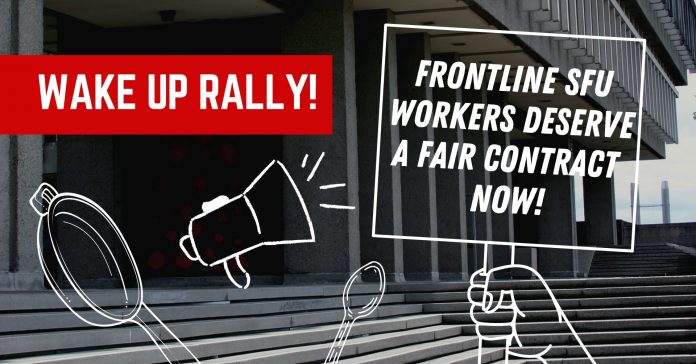
SFU cafeteria workers had planned a delegation on February 4, 2021 in protest of unfair wages. In an email to The Peak, organizer Fipe Wong noted that “Food Services haven’t gotten a raise in three years” despite working throughout the COVID-19 pandemic. With heightened safety risks — such as the risk of exposure to COVID-19 — they felt that compensation should be required. 

The food service workers currently have a contract with a sector of Compass Group Canada: Chartwells Canada. SFU’s website reports that in 2019, Chartwells was Canada’s leading food services supplier with “over 25,000 associates working in more than 2,200 location throughout the country.”

Wong noted the workers had planned a march from SFU Burnaby’s West Mall Centre to the SFU president’s office because “Compass [had] not responded to negotiations.” As noted on their Facebook page, they had planned to target President Joy Johnson directly in hope that she would support their initiative.

“We’re wanting to extend our contract now even for a short term,” said Wong. 

On February 3, 2021 — the night before the scheduled rally — Wong informed The Peak that Compass had agreed to negotiate. Negotiations took place that day and the rally was cancelled as a result. They’re in the process of finalizing an agreement regarding their contract, added Wong. 

The SFU food service workers had organized their event in partnership with UNITE HERE! Local 40, a branch of the BC Union for Hotel and Hospitality workers. 

This is not the first time that SFU food services has partnered with UNITE HERE! Local 40. The event comes after a series of protests in 2017 after workers were fighting for job security with then President Andrew Petter. 

At the time, the previous contract SFU with Chartwells was ending and SFU was taking the highest bid from competitors leaving 160 food services workers at SFU uncertain over the status of their jobs.

The Wake Up Rally Facebook page noted that more information will be released in regards to their decision. They encourage workers to connect with their respective union representatives for more information.

AccessBC advocates for no-cost prescription contraception

0
Photo Courtesy of AccessBC

by Jaymee Salisi, News Writer

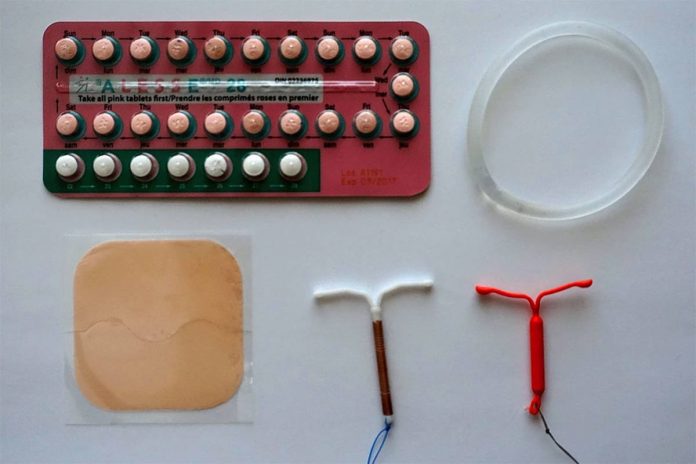
AccessBC is pushing for various types of contraception (such as the contraceptive patch, implant, and oral pill) to be available to all BC residents at no cost. “Access to contraception in BC is recognized as a basic human right, but unfortunately many people in BC can’t access this right,” they stated.

The Peak interviewed Dr. Teale Phelps Bondaroff, chair and co-founder of AccessBC, Dr. Ruth Habte, resident physician at UBC gynecology, and SFU alumni and UBC medical student, Samuel Kirk, to find out more about the group’s campaign. 

The AccessBC committee believes their policy aligns with the fundamental principles of the Canada Health Act, which are “public administration, accessibility, comprehensiveness, universality, and portability.” According to these standards, the advocacy group concluded that making no-cost prescription contraception available to all residents of BC is the ideal plan, but “if [Parliament] wants to make a slightly less than ideal plan, that’s on them.” 

Dr. Habte noted that people often do not seek prescription contraception because they cannot afford it and “might be reluctant to talk to [a doctor] about it.” Additionally, they may not be aware of their options due to the taboo surrounding conversations about sex. Dr. Habte explained that the lack of sex education increases the risk of unintended pregnancies. She stated that removing cost barriers might open up discussion and allow more people access to information about reproductive health. 

The group explained that the cost of universal prescription contraception is lower than the expenses associated with unintended pregnancies, such as abortion and child care subsidies. AccessBC claims their policy recommendations could save the government $95 million annually by taking preventative care of patients. They estimate that the assistance a young person would need to raise a child for 18 years could cost the government $167,000. A 2010 study showed that the average woman spends less than $4,000 over the course of 30 years on contraceptive products. 

When asked why no-cost prescription contraception doesn’t already exist Dr. Phelps Bondaroff said, “We see a lot of sexism inherited in a wide range of policies.” He cited an example of Canada previously taxing menstrual products until 2015. He also noted that the pink tax, which upcharges products aimed toward those with uteruses, contributes to sexism.  Studies have found that items marketed to women cost at least 30 cents more than the same products marketed to men. The group claims that taboos surrounding conversation about sex have also prevented policies aimed at improving women’s reproductive health from being implemented in the past.

Contraceptives for people with testicles and penises, such as vasectomies and condoms, “are widely available and free for the most part,” Dr. Habte added. As a result, she assumes that the government does not recognize the inaccessibility experienced by people with uteruses “as an important issue in some respects and I think a lot of that has to do with sexism.”

The COVID-19 pandemic has introduced greater financial and health disadvantages to prescription contraception due to loss of employment and the risk of going to clinics, Dr. Phelps Bondaroff added. He said that the issue is “central to people’s lives, to their health, and to equity and equality. And it’s something we need in this province as we move forward out of the pandemic,” he emphasized.

The Peak reached out to Member of Legislative Assembly (MLA) Grace Lore, but did not receive a response by the publication deadline.

Some cities have endorsed the AccessBC Campaign, including Victoria, Burnaby, and Vancouver. The committee encourages anyone who supports their policy to write the Premier to include universal no-cost prescription contraception in BC’s 2021 budget.


Dear cis people…

0
PHOTO: Joanna Kosinska / Unsplash

By: Madeleine Chan, Carter Hemion, and Dev Petrovic

By Madeleine

Dear cis people,

I think we need to have a talk. I’m so glad that you’re comfortable enough in your gender identity that you have the desire to express its normativity to the universe, but I think it’s gone too far. 

We get it, there’s always a gender for you to select in drop-down menus, you don’t get gender dysphoria, and SFU doesn’t fucking invalidate your identity by welcoming a noted transphobe to your school. And we know you only know how to identify people that have long and short hair with either she/her or he/him pronouns. 

Speaking of pronouns, you have to stop going out of your way to say “he or she” instead of the much simpler and more inclusive “they.” Everytime I hear this, I stare into the lens of an imaginary camera, falling victim to the most tired trope of an incredibly overrated TV show. And then I remember John Krasinski joined the CIA in that Jack Ryan show that licked boots so hard toes were popping out, and my eyes can’t stare any harder. Maybe I should just call you “Pronoun Pams” from now on. 

Just stick to proudly walking into public bathrooms like they’re runway entrances and not worrying about getting harassed on the street.

Not-lovingly, 

A concerned non-cis citizen

By Carter

Dear cis people,

Stop asking weird invasive questions out of nowhere. Just stop. How would you feel if I asked random questions unrelated to our conversation all the time?

“How did you know what gender you are?” Uhh, how did you know which bank to get a credit card with? I thought about it, then figured out what was right after weighing the options. End of story.

“How do you remember all this new gender terminology?” I just see it when I’m reading and sometimes it comes up talking to people I trust. What are all those numbers on your credit card for when you buy things? 

“What was your name before?” Dude, what’s the cheeky little three-digit number on the back of your card?

“Are you getting the surgery?” None of your business. Also, which fucking surgery? There’s so many! Anyway, when are you gonna confirm that innocent verification code on your phone?

“How do you have sex?” How would you feel with a muzzle over your mouth for just $14.99? It will arrive in three-to-five business days.

Please send me your answers. It’s for research, I swear. Unless you’re the next person to call me “a they/them” or “m’theydy.”

Love,

Someone who will smack the next cis person to start our first conversation with an anecdote about their unnamed trans cousin

By Dev

Dear cis people,

We need to talk about the fact that you exist within a fake social construct (boring!), and that you constantly forget that anything alternative to your “lifestyle” even exists. Couldn’t be me. No binaries are so much sexier. Thought you should know, I am much sexier than you. 

To the cis people who identify as allies, you’re alright — sometimes. Did you know that if you ask for my pronouns, though . . . I expect you to use them? It’s not just polite to ask. The bar was on the ground, and you took out a shovel and started digging deeper and deeper.

You should know that we see your efforts to do damage control in situations where it’s completely unnecessary and it’s hilarious. Please don’t call me brave for being open about my identity. That’s just fucking weird.

We face your bullshit every day, my loves. You really don’t have to condemn the world on our behalf to make us feel better. Trust me, your hero complexes are laughable enough to keep us going. 

I get it. I really do. It’s just SOOO hard for you to stay away from gendered language and generalizations. What an obstacle in your life that must be, having to refer to me as my correct gender. Oh, you don’t get misgendered on the daily? But you have the oh-so difficult task of refraining from referring to me as a woman? Tragic. Being accepted and shit. Boohoo, cry me a river will ya.  

Sincerely,

A hopelessly cynical she/they

Disabled sexuality is more than what’s on our screens

0
Everything’s Gonna Be Okay is one of few proper representations of disability in the media. Screenshot courtesy of Freeform

by Alex Masse, Staff Writer

It’s an understatement to say that disabled people and sex have a long, complicated history. In the past, we were victims of eugenics and sterilized against our will. In the present, we’re subjects of ridicule, pity, infantilization, and desexualization, particularly in media. I grimace every time I think about Sia’s new film Music and the “purity” she claims to see in disabled people, and cringe at the idea of yet another film where we’re infantilized by people who don’t care. 

While there’s no single way to be disabled, and not all of us are interested in sex, plenty of us are. Despite what the media portrays, disabled sexuality is a real, tangible reality that can look any number of ways, just like those of us who express it.

For example, I’m autistic. Believe it or not, I’ve been in multiple relationships. I experience sexual desire, and people have sexually desired me. Partially because they don’t know I’m disabled when we first meet, though that just proves my point: we don’t all look a certain way and we can be desirable to abled people. That said, as a neurodivergent person, I’ve faced loads of ableism, especially in the dating scene. I’ve had people outright reject me when I opened up about my mental health, despite us getting along just fine up until that moment. A lot of this distaste has to do with the portrayal of disabled people many grow up seeing on screen, as entertainment media has the power to affect people’s perception of the world. 

In particular, when it comes to how autistic sexuality is portrayed in entertainment media, there’s very little positive representation. The Good Doctor was celebrated for having its titular autistic surgeon admit to watching pornography — we’re so used to being desexualized that this was a big deal. There’s also the other extreme such as in Atypical where the autistic protagonist is shown accidentally hitting a woman during sex. This representation of a man who, through not knowing what he’s doing, harms the woman he’s intimate with isn’t exactly how we want to be seen. 

Honestly, the only times I’ve seen autistic romance and sexuality handled even somewhat maturely are when autistic individuals were involved in the process. For example, the TV show Everything’s Gonna Be Okay features an autistic character played by an autistic actress, and features an entire conversation about autistic people and consent. The character then eventually gets a girlfriend, which as an autistic lesbian made me tear up a bit, especially because of how many of us identify as queer

Even somewhat older shows like Community do a better job of portraying autistic sexuality than some of today’s media. The character of Abed Nadir was allowed to date and have girlfriends, and his story helped Dan Harmon, the show’s creator, realize he was autistic. It wasn’t a perfect show, but it definitely was a huge win for autistic representation. 

Whether people like it or not, disabled folks don’t always look or act how they expect, especially not in the world of sexuality. Anyone can be attracted to a disabled person, whether they were a previous partner, some charming stranger on the bus, or maybe even a celebrity. Daydreaming or falling in love with a disabled person shouldn’t be scary, taboo, or made foreign through the media, the possibility should be a simple fact of life. We’re everywhere, and we’re hot as fuck.