Home Blog Page 350

Spring semester confessionals

0
Illustration of a closed envelope, with the text, “Confessionals”
ILLUSTRATION: Marissa Ouyang /The Peak

By: Nancy La, Alex Masse, and Jacob Mattie

Attention, adulation, and validation

By: Alex Masse

The mortifying ordeal of being known, am I right? And through a shoddy, washed-out webcam by a bunch of strangers all at once? Yeah, really not my scene. I got tired of people I’ll probably never meet in-person seeing me mid-quarantine around the end of last semester. I do not want to be perceived in my pyjamas.

But, see, I had a dilemma: I love attention, adulation, and validation. 

It’s probably because I’m a Leo. I mean, I can’t help that the stars made me the way they did. 

Anyway, I made a little compromise with myself: I only turn my camera on when I know I’m right about something or have a good, insightful question to ask. Why am I like this? I don’t know, but if people are going to see me, they’re going to see me being productive. And hey, in recorded lectures, I’ll be immortalized as someone who vaguely knew what they were talking about.

Zoom class gives “on fire” a new meaning

By: Nancy La

The ability to focus on a task without getting distracted was something I had to learn in a snap as we all moved to online learning last year. Yet one day, I found out that my ability to focus has already reached the level of a Yoda master. I sailed through an in-class writing assignment while I evacuated from my apartment complex that was on fire. 

The key to such laser-sharp focus? Noise-cancelling headphones, and a very strong desire to pass your Q-course.

I am online learning’s unstoppable force and immovable object. I proved I can churn out a paper on the various functions of logarithms in my daily life while my home is in danger of being burnt down. The fire alarm’s incessant blaring did not phase me. Nothing will ever phase me again.

From that day onwards, I am known to the neighbours as “the one kid who went to class while her building was on fire” and to be honest, that’s a badge I will wear with honour.

Loneliness is a pet peeve

By: Jacob Mattie

This semester has been rough. 

Lockdown has been going on for a year, and combined with the cold isolation of winter, I’ve found myself with a need for companionship that challenges even the comforting presence of Celestial Seasonings Sleepytime Tea bear.

Now, I don’t have any pets, and I’m not sure that I’m at a place in life where I’m even able to adopt one in good faith. But every so often, late at night, my eyes grow heavy and I find myself once again researching low-maintenance pets. While I have yet to cave to the temptation, there seems to be an endless list of increasingly odd things I could adopt without much trouble.

Did you know that quail make great pets? Not only are they easy to take care of, but are curious, tame, and also lay eggs that would surely step up my breakfast game — I hadn’t realized I wanted to eat a 15-egg omelette, but life is often full of surprises.

Or perhaps a giant isopod. With the right water pressure, they only need feeding once every couple years. Velvet worms! Snakes! Hermit crabs! 

In my lowest of lows, I even thought about an ant farm. Thank goodness that one passed.

New Horizons, Old habits

By: Alex Masse

Yes, almost a year later, I’m still playing Animal Crossing: New Horizons like my life depends on it. I have almost all of my favourite villagers, my town has hit five stars, and I’m just paying off the last loans on my house. Be jealous. 

Hey, imagine if I was saying that last part in real life. Imagine a university student being able to afford a house. Haha. Imagine.

I played a little bit of Animal Crossing while watching movies for film studies. I needed something for my idle hands. It was either that or sewing, and you can only stab yourself with a needle so many goddamn times before realizing, “hey, I can either sew or watch subtitled films, but probably not both.” 

But the one class where I actually paid attention, computer studies, I bombed. I spent hours doing homework with help from TAs, watched and rewatched lectures, and then when the practice midterm came along, I came out with a shiny 20. Not 20 marks. 20%.

I wonder if the powers that be know they can’t strike me down in arts classes where I did play, so they decided to hit me where it hurts. All I know now is Animal Crossing gardening studies are more my style than computer studies. Also, I probably shouldn’t play during class.
Kiran Bhumber and Nancy Lee’s post-apocalyptic UNION is grounded in current world issues

0
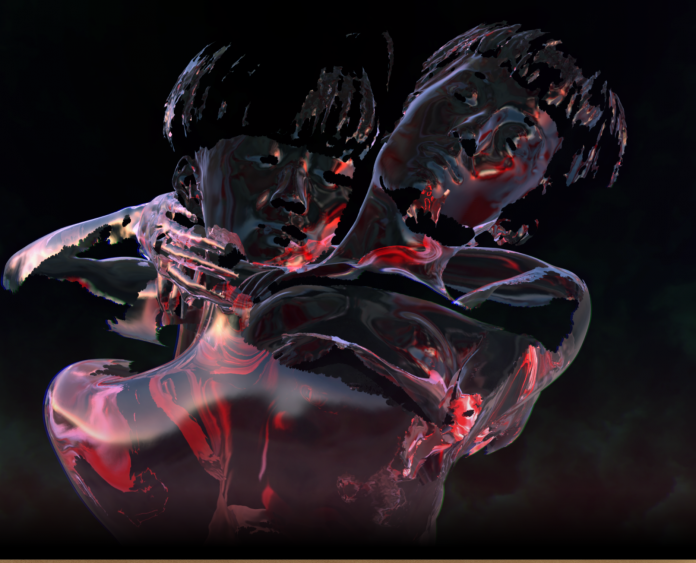
The exhibit has a significant theme of searching for connections. Screenshot courtesy of UNION

By: Gurleen Aujla, Peak Associate

The year is 3000. You’re in a post-apocalyptic universe, where cultural memories have been eradicated and humans live in physical isolation, connected only through a new cyberworld. That is the story of UNION, the headline exhibit of Cinevolution’s Digital Carnival Z.  

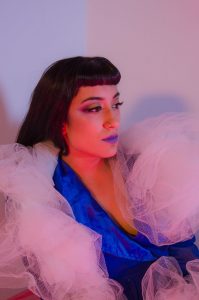
The Peak had the opportunity to sit down with the exhibit’s co-creators Kiran Bhumber ਕਿਰਨਦੀਪ ਕੌਰ ਭੰਬਰ and Nancy Lee 李南屏,  to explore the narrative and intentions behind their creation. 

Both Bhumber and Lee are interdisciplinary media artists. They met at one of Lee’s electronic music events, where Lee saw Bhumber swinging on one of the outdoor swing sets. Bhumber was interested in advancing the art piece by adding an interactive projection piece and from there, their relationship flourished. 

Bhumber, an Indo-Canadian artist, focuses her work on the linkage between activating memories and the use of interactive technologies. Her art installations have utilized elements of projection, sound, performance, and touch. Lee is a Taiwanese-Canadian artist that centres their work around the inescapable interconnectedness we have with our surroundings. They are an award-winning filmmaker, curator, and WebVR instructor, working in the DIY underground music community and utilizing choreography and a range of technologies in their work. 

Kiran Bhumber. Photo courtesy of Ashley Sandu
Nancy Lee. Photo courtesy of Chris Reed

The dystopian world of UNION is structured so that, in order to succeed and live life to the fullest in this world, humans must give up their memories and information — the more they relinquish, the more currency they earn. Cultural memories are only retrievable when “accessed through [the] sacred ritual of spiritual union, such as weddings, and physical intimacy,” but touch is forbidden. The exhibit follows “two beings discovering their ancestral memories through the longing for touch, and rituals practiced in their post-apocalyptic wedding ceremony.” 

UNION is a deeply personal work for Bhumber and Lee, specifically regarding the role of wedding dresses in our society. As self-proclaimed “queer diasporic subjects,” they understand the impacts of homophobia and sexism on wedding rituals and the rite of passage that comes from them. 

In addition to the focus on weddings and cultural performativity, Lee wanted to explore the manifestation of queerness in our society and understand the deeply embedded influence of patriarchal systems that continue to this day. Weddings with queer people still occur under the guise of a patriarchal structure that “gives permission for these wedding [and] cultural rituals [to happen].” For them, and for so many others, the wedding dress goes beyond being just a garment and instead is yet another tool for the perpetuation of patriarchal ideals, combined with harmful capitalistic practices and xenophobia. In an artist statement, they explain that the wedding dress “compels compliance with oppressive gender norms and social expectations.”

Another element was the commentary on environmental degradation and “what a world 1000 years from now would look like [ . . . ] where air is no longer something that is bountiful,” said Lee.

Bhumber wanted to look into “cultural longing and cultural loss when it relates to the memory and the practice of tradition.” She explained, “Every time a tradition is performed, with the bodies that it is performed with, we see a transition of that fixed tradition.” UNION considers what the tradition of getting married really means for a culture and how diasporic and queer people fit into that. 

Bhumber and Lee began working on the exhibit in late 2018 and were hit with the impacts of the COVID-19 pandemic, both on their artistic processes and having to “reimagine the way the story [would] take form.” Attendees will now engage in a series of experiences — from 3D printed sculptures, two futuristic wedding dresses, propaganda messages, and a 16-channel interactive sound and projection map that operates through tracking the movements of attendees.

The themes they focus on were heightened by the pandemic and led to an increased “awareness and connection.” They felt “even more grounded in the structure and story of UNION

“We’re living through this extraordinary time [and] the current world we live in puts an indent on our work; the work looks the way it does because the process is what archived this moment in time,” they said.

When working on UNION, Bhumber and Lee consulted with elders on cultural heritage and were focused on figuring out a respectful and “proper” way to include queerness and diaspora into their work. However, they were faced with the question, “Why are you so worried about the respect of your culture when your culture has never respected you?” 

This was an empowering moment for them and created a fundamental shift in their artwork. They realized that they couldn’t “keep subscribing to the norms that are in place” in an attempt to feel a connection to their culture when there is already such a disconnect. They understood that they “had the agency to change the meaning of [their] culture.”

UNION encompasses the role of mass-mediated technology, surveillance capitalism, and the “perceived agency” that individuals have, as well as the commodification of an individual’s identity and experience in the digital landscape. 

Digital Carnival Z is running as a hybrid festival, where UNION will be showcased at the Richmond Art Gallery while seven other exhibits will be available for viewing online. This event runs from April 21 to June 5 and is free for all.

What Grinds Our Gears: Email formalities

0
We really don’t need to bother with all of this bullshit. ILLUSTRATION: Kitty Cheung / The Peak

by Nancy La, Peak Associate

To Whom It May Concern,

I hope this email finds you well. I am writing to propose the elimination of formalities in everyday correspondence via electronic mail. 

Allow me to preface this argument by acknowledging that email formalities have their own benefits, such as creating an atmosphere of professionalism and a general feeling of respect for the recipient. My proposal pertains to the perversion of incredibly trivial email etiquette. Formalities to the point where I am triple proof-reading an email with a peer and editing said email to death. Or, contemplating whether I should place an exclamation point to show that I am, in fact, a cheery human being and not an emotionless robot! But would the other person think that I am too cheery and therefore think that I am intellectually inferior? 

The only solution seems to be spacing out my exclamation every two sentences so that I do not come off too strong. This entire process takes approximately 1520 minutes, not including the peer editing part! 

So what would be a better alternative to such an exhausting procedure? I suggest the removal of the expectation that every single email must have all the grammar, formatting, and vocabulary of a stuffy academic in their 60s. Maybe we can even sprinkle in an emoji or two. A picture is worth a thousand words and ultimately we are trying to save time here, people. 

Thank you for your time!

Regards,

Nancy La

Dear Peakie: Toddlers, takeout, and terrible fates

0
PHOTO: Kyla Dowling / The Peak

By: Kyla Dowling, Staff Writer

Dear Peakie,

This pandemic has allowed me to really embrace my introvertedness. Not having to interact with anyone outside of my house most days has been very comfortable but I’m worried my social skills are irreparably damaged. Do you have any advice on how to slowly wade back into the world of socialization?

Sincerely,

Lonli Bitchell

Dear Lonli Bitchell, 

The best advice I can give you is this: take baby steps. And I mean literal baby steps. Find your way to your nearest daycare and, in the least-creepy way, have a conversation with some six-month-olds. You’ll find that their vocabulary of “hungry!” and “waaaah” is eerily similar to your speaking style during quarantine. 

Once you’ve struck up a good conversation there, move onto toddlers. They can fully form sentences and there’s no better socialization practice than playing “Mommy and Baby” in which you are Baby and they are Mommy and they forcibly shove you into a corner while they snort Pixy Stix. This will prepare you for anything. I mean anything.

Love, Peakie

~

Dear Peakie, 

How do you get out of bed in the morning?

 – Snooz Dogg

Dear Snooz Dogg, 

Of course! As an extraordinary advice-giver at The Peak and a bonafide influencer™ (yes I have 50 followers on Twitter, no I will not be signing autographs), I know a lot about staying motivated and productive. Your first step, of course, is to own a bed. Your next step is to get all comfy in said bed, so you have something to look forward to after you rise and grind. Then, you’re going to want to master meal prep like me to start your day right. I UberEats whenever I need food. And no, I don’t get out of bed to get the food. 

That’s right! I’m this successful despite never moving from bed. I simply seduce the UberEats drivers into hand-delivering my six chicken McNuggets every evening. One of them, Cecil, has actually stuck around for a few days now. He’s like a cat, if a cat sleeps in the bathtub and throws out your empty takeout containers in exchange for the year-old peanut butter jar in your pantry. So yeah. Don’t get out of bed. I’m sure Cecil has a friend I can set you up with.

Love, 

Peakie 

~

Dear Peakie,

I’m becoming increasingly overwhelmed with this main character role I’ve been assigned. I feel exhausted with all of these character development arcs and general sexiness of which I am in charge. Please help. 

Sincerely yours, Protagonist-chan

Dear Protagonist-chan, 

Wait— protagonist-chan? Am I speaking to a weeb? Of course I am— what else do SFU students do besides watch decades-old anime via Discord and cry? 

Anyways, let’s look at your allegedly sexy main character-ness through an anime lens. According to my research, the vast majority of anime protagonists lead miserable lives (that has to be true for you, given that you go to this school) in which they lose things such as their families, their powers, and sometimes their memories in a weird Riverdale-ish twist. (At least they don’t talk about the epic highs and lows of high school football). Additionally, anime protagonists tend to die in the end. So don’t worry a bit! You’ll either ask a class of children to kill you or you’ll go on a murder spree because you think you’re God and then suffer the consequences. Either way, there’s no character development after you kick the bucket . . .  unless you’re the protagonist of Angel Beats. Have fun in perpetual afterlife SFU. 

Love,

Peakie

BC alters legislations to recognize gender diversity

0
PHOTO: Delia Giandeini / Unsplash

Written by: Karissa Ketter, News Writer

The BC provincial government reported on March 10, 2021 that 600 instances of gendered language across 15 ministries had been rewritten to “ensure that all British Columbians have equal access to government services no matter their sexual orientation, gender identity, race, or cultural beliefs.” 

Provincial minister of jobs, economic recovery, and innovation Hon. Ravi Kahlon told The Peak in an interview, “Government leads. If the government is not taking action, if we are not reflecting that change, then how can we expect society to do so? We have a responsibility in government to [ . . . ] make sure that everything we do is open and accessible.”

Examples such as “sister” and “brother” have been changed to “sibling,” Kahlon reported to The Tyee. Similarly, “husband” and “wife” have been rewritten to “spouse.” There are also instances of “man made” which have become “human made.”

He understands “we’re the first government to do something like this in Canada.” Kahlon hopes the federal government and other provinces will follow because “as a country we have a lot to do, we have a long way to go.”

Part of Kahlon’s focus is understanding how gendered language affects government and economic recovery through the COVID-19 pandemic. He said, “We put a gendered lens on all policies we bring in to see the impacts.” This includes budget reports, legislation, and policies. 

“There’s a lot more work to be done — this looked at all regulations but we know that there’s still going to be more legislations or laws that maybe go further back [ . . . ] so we’re going to continue that work,” said Kahlon.

In 2017, Kahlon was asked by premier John Horgan to report on human rights commissions in BC. Through this process, Kahlon heard stories from British Columbians about the importance of how we are asked to identify on passports and driver’s licenses. He heard it disenfranchised people’s identity. At that point, Kahlon began this project. 

“If you’ve ever faced discrimination, then you understand why this is important,” said Kahlon. “If you haven’t, perhaps you don’t know because your privileges don’t allow you to see that — for us this is front and center. Human rights is critically important.

“Anyone that can find criticism in efforts to make government more accessible to everybody in BC is missing the value of what government means.” 

A Beedie fashion scramble

0
PHOTO: Gudrun Wai-Gunnarson / The Peak

By: Emma Jean and Paige Riding

“STACIA! Get in here!! Shut the door, will you?”

“Yes, ma’am.”

“Listen. Something really, really bad happened, but you can’t tell anyone.”

“Of course not, ma’am.” 

“Good. Now, Stacia, you know the Spring Beedie School of Business collection pitch meeting is in 45 minutes. I may or may not have dropped my list of ideas in the shredder along with some . . . less than savoury company tax records I was trying to get rid of, but that’s irrelevant. What is relevant is that I need to brainstorm fashion ideas for our merchandise catalogue STAT.”

“Understood, ma’am. Have you considered Beedie laptop covers made with recycled materials? It will allow students to feel a sense of identity as they head back to in-person classes after a great time spent alone.”

“God, no. Stacia, can you please get realistic here? Ok, think. Kids love dual monitors on their computers. They also love those God-awful fanny packs. I’ve seen so many pleather ones my eyes water when I drive on West Campus Road. Why don’t we make dual fanny packs? Two pockets. Less complaints from those brats and their fake pocket jeans. As you know, Stacia—”

“Fake pockets are to encourage the purchase of a really, really cute bag. Yes, I know ma’am. You put that in your intro to Introductory Fundamental Fashion Fundamentals Volume II.”

“Exactly. See, there is a reason we keep you around, Stacia, since it sure isn’t your merchandise ideas. God. Alright, we slap an SFU Beedie logo on the fanny packs. Charge the bargain price and we’ll sell out within a few days. What’s the bargain price again, Stacia? $450? No, that’s outrageous. Charge $600 at least.”

“Yes, ma’am.”

Okay, what else can we do. Stacia, you’re one of the Gen Z, aren’t you? How old are you again? You know what they like.”

“I’m actually 37, but if we considered that the average income of Canadian part-time workers is about $1,544 a month, and that a gross income before living expenses, we may wish to find a more realistic price—”

“Oh, I’ve got it! College kids hate skinny jeans now, apparently. That’s a real problem for us knowing how cheap that fabric is and how quickly people have to buy new pairs as they keep falling apart. Why don’t we start selling them ironically, like an ugly t-shirt that becomes cool, and bribe a bunch of TikTok teens to wear them as a Y2K throwback while they dance to the hits of Taio Cruz? That’s $300 at least. Would writing ‘Beedie’ on the bum be too Juicy Couture 2003? Wait, that’s actually brilliant.”

“Writing this down now, ma’am.”

“I hope you’re getting this down, Stacia. I’m not going to remember this on my own. I also haven’t touched a keyboard since 1992 and I don’t intend on starting now.”

“Yes, writing this down now, ma’am.”

“Ultimately, it doesn’t matter what we throw in that catalogue. Those snobbish clowns will print whatever the hell we decide in their Spring issue like we invented the unpaid internship. Also, if you tell anyone about this, you’ll never work in this industry again. Okay, bye, Stacia!”

It’s time to start using content warnings for course material

0
Distressing course content should be communicated to students before they take the class. PHOTO: Gudrun Wai-Gunnarsson / The Peak

by Kyla Dowling, Staff Writer

Whether it’s the content warning that displays in the left corner of a Netflix screen, or a giant “TW” at the beginning of a TikTok video, content and trigger warnings are being used more frequently. These warnings caution viewers that sensitive content lies ahead, and allows them the option of not engaging with the material or to mentally steel themselves before engaging. So then, why aren’t our professors using trigger warnings when it comes to sensitive course content? 

Trigger warnings are a controversial topic in academia, with some believing they are akin to censorship, or that they act as a barrier between students and learning. As someone who has been impacted by a traumatic experience, I find it absurd that something intended to be helpful is seen as contentious. A study from 2019 suggests that trigger warnings are unnecessary and, at worst, do more harm than good. While this may be true for the participants in that study, no two people will ever experience trauma in the same way. The overuse of content warnings could potentially distract or diminish the effect of more vital trauma-related warnings, but that does not mean they should not be used. By prefacing content with a warning, people are given the option to protect their mental health and not expose themselves to something that could induce a traumatic reaction. 

Recently, in one of my English courses, I ran into this issue. My professor had given us a trigger warning for one of our assigned readings; however, they only stated the chapter in which the explicitly triggering content occurred. There was no warning about the uncomfortable foreshadowing or that the triggering content was the inciting incident in the story, and would thus be a prominent theme throughout the entire book. I felt trapped. I could skip over the chapter and suffer through reading the next 200 pages detailing the traumatic ramifications on the main character, or I could try to communicate with my professor. The latter option wasn’t a fair one either. Why should I have to reveal my trauma to a stranger in order to be accommodated? Either way, the damage was done — the six chapters I’d already read were triggering enough to harm my already fragile mental health.

This experience could have been avoided, and so could many others, if professors would put informative content warnings on course materials. Cautioning the class that one chapter discusses a traumatic event does nothing when the plot of the entire novel revolves around it. Alternatively, professors could stop choosing course material in which women are abused, assaulted, and murdered. In every English course I have taken so far in my undergraduate career, there has been at least one required reading centering around the dehumanization of women. It’s important to note that this is only what is triggering to me and different people will be affected by different content.

Professors need to warn students about potentially triggering material, not just the week the readings are assigned, but in their course outlines. I would never have chosen to take this course if I had known how triggering the readings would be. Throughout the entire pandemic, students have been urging SFU to take mental health more seriously. The school needs to make sure that we are able to take classes without fearing for our mental health because no one thought to include a trigger warning. At the very least, they should be explaining why such traumatic material is integral to our learning.

SFU needs to level the playing field for refugee students

0
The WUSC office on Burnaby campus needs more support. PHOTO: Gudrun Wai-Gunnarsson / The Peak

by Dev Petrovic, Staff Writer

SFU Student Services recently announced they are increasing their efforts around admission inclusion and accessibility for refugee students. While the initiative is still in its early stages, concerns around the difficulty of the current admission process and lack of situation-specific accommodations still remain. For SFU to truly consider how to be more inclusive of refugee students, there need to be more specific adjustments in how the admission process is conducted, as well as increased monetary involvement. 

As mentioned in the statement, the current admissions process is academically focused and does not consider external factors — such as socio-economic status and previous learning environments — that may impact an applicant’s formal academic achievements. Wafaa Zaqout, coordinator for the Refugee and Newcomers program, explained that refugee students “are often driven and passionate, but need to focus their energy in places outside of school.” For example, having to work several jobs and take care of family members, among other obstacles, may deter them from being able to fully commit to the expectations of a post-secondary environment. For this reason, adapting admission requirements — as offered as a potential solution in the statement — is certainly something that SFU needs to focus on first and foremost.

While this is a great first step, SFU also needs to consider their role in partnering with sponsorship programs. Currently, SFU offers the World University Services of Canada (WUSC) Student Refugee Program, which is a sponsorship program funded by a portion of the Student Activity fee. Through this program, refugee students are fully supported through sponsored tuition, textbook fees, and some living costs. The problem is that this program is created to be a highly competitive and rigorous process, requiring academic achievement evaluations, language proficiency tests, several interviews with partner organizations and sponsors, medical and security tests, as well as an evaluation of their ability to resettle in Canada. On top of that, only 80 students are accepted every year. 

Not only is this process incredibly daunting, but also rejects a large portion of the hundreds of students who apply every year, regardless of their academic ability. Not to mention that a process this long and exhausting neglects the consideration of applicants who may not have the support or resources to even go through with it. It also takes on a relatively classist and Anglocentric approach. Every applicant’s secondary school circumstances are not consistent with SFU’s educational expectations, and refugee students may not have access to this standard. A student’s initial English and French proficiency should not entirely discount them from being a successful candidate at a post-secondary institution.

All of these evaluations are not equitable expectations from applicants with a refugee background. After all, the process is not anything even remotely comparable to the application process for both domestic and international students. I understand that the WUSC sponsorship program is partnered with SFU, not run by them, and that these aren’t necessarily requirements that the school implements. However, SFU also has the power to make adjustments, as well as create alternative programs that can ensure the application process is equitable. 

The sponsorship program may have its limitations, but this does not mean there aren’t other actions that SFU can take to increase its educational accessibility for refugee students. As already mentioned, the regular application process needs to change. To supplement this, SFU could renegotiate with its sponsors (WUSC) to increase the number of accepted students, partner with a different program, or create its own program altogether. Whatever the action, there are realistic approaches for SFU to take

Another option could be re-locating funding to prioritize the refugee student program. In last year’s SFSS referendum, a WUSC student fee increase was approved, yet the number of sponsored refugee students has not changed very much. This is a minor solution for a much greater issue. Small fee increases can only do so much when what is really needed are concrete, systemic changes to the admissions system. Altogether, it may be a minor price that the SFU community may pay, but certainly should not be a monetary issue for SFU considering there always seems to be funding for various expensive, consistently delayed construction projects. 

After this statement from SFU’s Student Services, I do hope that refugee students are given the attention and support from SFU that they deserve. It’s a start to have disparities in the admission process acknowledged. But there is much more work to be done to adequately support refugee students wanting to join the SFU community. Engaging the world means engaging all students, including the unique experiences of those who come from a refugee background.

Local band Black Pontiac discusses the creative process behind their new music video and upcoming album

0
Black Pontiac’s latest single “Soda Pop Rock” is climbing the charts! Photo courtesy of Black Pontiac

By: Kimia Mansouri, SFU Student

Editor’s note: Answers have been edited for length and clarity.

Following a recent online performance at The Roxy on March 19, the members of Black Pontiac — lead singer Matty Mclaren, guitarist Mack Riddell, drummer Sam Riddell, and bassist Avery John Shoesmith — are gearing up to release a new album, From Bad to Worse (And Back Again). The up-and-coming band recently debuted a music video for one of their songs, “Soda Pop Rock.” In an interview with The Peak, Black Pontiac discussed the experience of creating their first music video, the inspiration behind their art, and more.

The Peak: How was working with a green screen in the “Soda Pop Rock” music video? Would you do something like that in the future? 

Matty: We made a whole day out of it and the whole studio was basically just a big green room and I think the point was to make it as cheesy as possible. I’m hoping people got that vibe or picked up on that irony. I think if we were to do it again, we’d want to make it worse, so to speak. I think we want to make it seem more low budget and more ironic. 

Mack: We all think that we’re the bosses, and then Avery just comes out like, “You’re over here, can we get somebody over there— 

Matty: We need the camera from this angle right here, we need a little bit more emotion!

Avery: Yeah, all the ideas came from Sam for that.

Mack: Actually Sam got it from Community

Avery (deadpanning): So we’re not original at all pretty much is what we’re getting at. 

Matty: But what is art if we’re not stealing from someone else?

Avery: It’s like that book Steal Like An Artist

P: Tell us about working with director Alberto Marenco Saenz. How was the experience for you?

Mack: It’s really awesome that he wanted to work with us on the dumb ideas we had. I thought he did a good job and he was just really professional the whole time. It was really great to work with somebody so professional. 

P: What other forms of media inspire your music?

Mack: I think a good test to see if a song is good and timeless is to think about whether it could be an intro song to a movie or the cut-to-credits song of a movie. Because they always use the freaking coolest songs in movies to cut to the end credits, like the “Misirlou” intro in Pulp Fiction. It’s a cool test to have for some types of songs to see if they would fit into a movie, and what type of movie they would fit into. 

P: Ponyboy and “Soda Pop.” Are these names perhaps inspired by the movie The Outsiders? And if that wasn’t the inspiration, then what was?

Matty: Yes, that is exactly what was going on. My initial idea for the album was The Outsiders but I’m thankful that everyone talked me out of it because that’d be pushing it too far. First off,  people are always going to associate the album name with the movie, and second off, people are going to be like, “Oh they should just name their next album, ‘Stay Gold.’” It’s okay to take influence, but people have to be able to see your work as its own thing as opposed to just a derivative of something else, and I think there’s a fine line there. 

P: The covers for your singles and EP Ponyboy all have a psychedelic look to them. Who is the artist behind these covers? And why did you choose this theme? 

Matty: That was a guy I know, Adam Rashid. He’s an artist from Vancouver and was recommended to me by a friend who knew him through the music scene. I had been looking at his Instagram profile, and I just felt like this is the guy that we needed for our cover art. Good cover art is so important because, even if it’s a good song, if I don’t like the cover art, I can get turned off it immediately. When I reached out to him, I said, “I think you have this really cool style, and I think it would really work for the sometimes bizarre aesthetic that we hold up.” The cover art really pops and captures people’s attention really well. 

P: How’s the new album coming? What is your creative process? 

Matty: The album is basically done. We’ve finished tracking and everything. It just needs to be mixed and mastered now and that’s all on our producer, Matt Di Pomponio. Then probably one or two more singles and we’re hoping to put it out this summer. 

At the very start, we all get together and somebody has an idea and I think a lot of it starts with a feeling. We start with the groove, the rhythm, the feeling, and everyone’s playing their instrumentals, and then I’m there to facilitate the melody, the lyrics, and the story I want to tell. What is it that I want to talk about, and it depends on how I’m feeling or if I had just thought of something or if it comes to me in the moment. And then from there, when we go to the studio. I think a lot of the creative decisions that happen are meant to facilitate that feeling. How can we accentuate that feeling that we started with? Like a song like “Island Honey” that’s going to be on the album. It’s about summer, freedom, being young and wild, and having hope for the future.

Mack: All of us liked “Island Honey” at first, but we didn’t want to put it on the album, and then Sam was like, “his could be a hit,” and I think Avery thought so too. I wasn’t crazy about it. It was a good song, but it wasn’t as developed as the other songs. And then we go to the studio, and the synth part comes on and it just freaking changed everything. It totally adds another feeling to it. There’s a feeling there, and it’s weird, the synth part just changed the whole freaking song. 

Matty: The synth really brought that feeling to another level. You can start with a great song, but if you lose that feeling, then it’s not the same and you’re not going to be happy with it. 

P: Do you have any plans post-pandemic with your new album dropping?

Matty: We would like to go on tour; world domination. That’s the plan. I think that we just got to get ourselves out there.

Mack: I think up until this point, our strongest asset has been playing live, and now that we’ve made this album, I think it’s right in line with what we’ve been doing live. It might even be better. I think it’s just really exciting to have that kind of lining up with the vaccines coming, and the signs that COVID-19 is ending. To tour with that material is just really exciting. Whatever happens, I’m just glad we have this material coming out.

Check out Black Pontiac on all streaming platforms, and stay tuned for their new album  From Bad to Worse (And Back Again)

Need to Know, Need to Go: April 5–11

0
Illustration of a blue calendar, with "Need to Know, Need to Go" written on top
Arts & Culture events to catch around the city. Image courtesy of Brianna Quan

By: Gurleen Aujla, Peak Associate

Indigenous History in Colour | Wed–Sun from 11:00 a.m.–5:00 p.m., now until May 9 | $8 with valid student ID, FREE for Indigenous peoples | Bill Reid Gallery of Northwest Coast Art

In this contemporary exhibit, Luke Parnell, an artist of Wilp Laxgiik Nisga’a and Haida heritage, explores the transformations of Indigenous art through time. Indigenous History in Colour delves into the relationship between Northwest Coast Indigenous oral histories and conceptual forms of art. The “playful juxtapositions and bold commentary” of the exhibit are inspired by the artist and activist Bill Reid. Parnell’s exhibit features eight paintings, a short film, and more. Tickets can be purchased online through the gallery’s website. 

President’s Dream Colloquium: Dana Claxton | April 8, 4:00 p.m.–5:00 p.m. PST | FREE | Online

Dana Claxton, former Ruth Wynn Woodward Endowed Chair at SFU, is a multi-disciplinary artist whose work has travelled the world. She has been showcased in the Metropolitan Museum of Art (NYC), Sundance Film Festival, Vancouver Art Gallery, and the National Gallery of Canada, among other notable places. Claxton’s talk will address “Indigenous beauty, the body, the socio-political, and the spiritual.” Tickets can be reserved online via SFU Graduate and Postdoctoral Studies’ website. 

CreativeMornings Vancouver: Sirish Rao | April 9, 8:30 a.m.–10:00 a.m. PST | FREE | Online

Born in Bangalore, India, Sirish Rao is the co-founder and artistic director of Vancouver’s Indian Summer Festival, which showcases art through a South Asian lens. Rao has also authored 16 books. He is a leading artist in contemporary Indian storytelling. This event aims to celebrate the creative talent in Vancouver and provide a space for people to connect. Tickets can be reserved online through SFU Woodward’s Cultural Programs’ website.