Home Blog Page 343

How to set yourself up for a successful semester

0
Procrastinating? Not anymore. ILLUSTRATION: Tia Young / The Peak

by Maya Beninteso, SFU student

Tip #1: Ease into a regular sleep routine

I’m sure you have all heard some variation of this tip before, and remote learning does not lend itself to a perfect sleep schedule. However, it would be a good idea to start training your body to sleep earlier and earlier as the semester goes on. According to Statistics Canada, adults aged 18–64 require 7–9 hours of sleep each night. 

It is likely that some of you have not been receiving that amount of sleep, especially when it comes close to finals season. Although, a major culprit (and I hate to admit it) is our digital devices. Trust me, I am not immune to the allure of technological devices. I have often fallen victim to the common lie: “I am only going to scroll for another 10 minutes” — only to be on my phone for hours. Make it a point to try and stay off your devices as soon as you begin preparing for bed, or even better, an hour or so prior. Too much all at once? Try weening off your phone by starting with 10 minutes of device-free time and gradually increasing the time as the week goes on.


Tip #2: Do not overlook the syllabus

Syllabus week, by far, is the most overlooked week in the semester. Who wants to shift back into studying after a relaxing break? Nonetheless, this week is pivotal in determining your semester success. As soon as you acquire this sacred document, download it and note the key dates. If your professor has been kind enough to detail major assignments/test weeks, write. them. down. Whether that be on a physical calendar, a digital calendar, or both, just make sure you have it noted somewhere. Some other key elements of the syllabus to note are office hours, late policies, and grade weighting.

Another expert tip: if on the first week of classes you are not overly busy, try and get ahead. This will lessen your load as the semester progresses and will naturally give you more time to relax. Since the first week is mostly syllabus revision, what else is there to do? 


Tip #3: Schedule EVERYTHING

I know what you are thinking and, yes, this is extremely tedious. While it may seem over the top, scheduling: studying time, food/mind breaks, exercise, and time with friends will make the semester all the more bearable. For those who prefer a physical copy of their schedule, invest in a day planner. Conversely, for those who prefer a digital space to organize your day, utilize Google Calendars or other calendar/planning-oriented applications. 


SAMPLE SATURDAY (Tasks Only)

10:00 a.m.–11:00 a.m. Exercise (gym, running, biking, hiking, etc.)

11:30 a.m.–1:50 a.m. Snack

12:00 p.m.–1:00 p.m. Review Course #1 

1:00p.m.–1:30 p.m. Lunch

1:30 p.m.–2:30 p.m. Review Course #2

2:30 p.m. –2:50 p.m. Break

2:50 p.m.–3:50 p.m. Review Course #3

3:50 p.m.–4:10 p.m. Break

4:10 p.m.–5:10 p.m. Review Course #4

5:10 p.m.–6:30 p.m. Free Time 


Sound intimidating? Try scheduling the biggest things first and then getting more specific from there. Your planner should be there to help you organize your life, not stress you out even more.


Tip #4: Review cumulative course material once every two to three weeks

This tip is crucial in reducing cramming in the weeks (or, let’s be honest, days) leading up to finals season. Constantly reviewing cumulative course material allows your brain to retain the information, encoding it into your long-term memory for later retrieval instead of just your short-term memory. This may even include creative techniques, such as making a catchy TikTok video about your course content. Try and have fun with your studying strategies; it may make it a bit more enjoyable. 

About three weeks before finals, start to review weekly or once every few days. This will ensure that you are sufficiently prepared for the final exam. The same rule applies for any papers you have to write; reviewing and planning well in advance sets you up for success. Following this tip will consequently reduce stress and eliminate all-nighters spent cramming. 

Still think cramming is effective? Read this informative BBC article. You may still opt to cram, but reviewing material in manageable chunks will serve you better in the long run. 


Tip #5: Prioritize your mental and physical well-being

The reality is, post-secondary can be mentally and physically draining; and the pandemic has not made it any easier. While I have received numerous emails from various professors detailing the respective supports offered by SFU, they are simply not enough. Your mental health is the basis of your overall health and once your mental well-being begins to deteriorate, your physical wellness will soon follow. In fact, the Canadian Mental Health Association asserts that physical and mental health go hand-in-hand. They state poor mental health places you at risk for chronic physical conditions, and vice-versa. With that said, ensuring you are exercising and getting outside (safely) is equally beneficial to your mental health as it is for your physical health. Exercising is even known to alleviate some symptoms of depression. A good way to get some physical activity is to go for a walk around your neighbourhood.

Take extra special care of yourself during your exam period. Students tend to neglect eating, or really anything other than studying during this time. Make sure you are setting yourself up to succeed in your exams. That includes taking time to rest and nourish your body. Another way to take care of your mental well-being is accessing counselling. While SFU’s Health & Counselling Department offers free counselling, there are external alternatives. Foundry BC has free virtual counselling for youth ages 12–24 and various mental health-related resources available online.

At the end of the day, everyone learns differently and has their own studying techniques. So use these tips and modify them in a way that best helps you. And of course, be sure to prioritize yourself and your own mental/physical health. Take breaks and do the things you enjoy. You’re going to school during a pandemic. Cut yourself some slack.


Monday Music: The five stages of getting ghosted by group project members

0
"Monday Music" in giant yellow block letters with a red background
Monday Music: your weekly themed playlist. Image courtesy of The Peak.

By: Jennifer Chou, SFU Student

Content warning: if you choose to search up the songs and read the lyrics, some of them reference death and violence.

Have you ever wanted to scream in anger and frustration because of a group project? If you have, these are the songs for you — they scream so you don’t have to ruin your vocal cords. A lot of these songs are on the angsty side, but with a little imagination, they can be surprisingly applicable to group project settings.

While listening to these songs can be cathartic, it is important to be mindful of others’ circumstances. Your group project members may be dealing with things you don’t know about, so whenever you feel like screaming at them, listen to these recommendations instead! 

Warning: turn the volume down before listening unless you’re really angry.

Denial: “Let’s Bury The Hatchet . . . In Your Head” by Ice Nine Kills

Image courtesy of Fearless Records

Despite the violent title, this song represents denial to me. No one can argue that there is clearly a lot of anger here — you can hear it in the way the vocalist screams “I’m f****** done with you” four times in a row. However, unlike the other songs on this list, there is hope “to find a better way” repeated in the chorus, which is lighter than the rest of the song. Whether that “better way” is getting through to your group project members or having a chat with your professor, you believe that there is still a chance to salvage the project. 

Anger: “Hypocrisy” by Sworn In

Image courtesy of Razor & Tie Recordings

You can hear the anger right from the beginning. This song is perfect for when you have no patience for unreliability; having no trust is a recurring line screamed by the vocalist. If you’re looking for a song that is heavy all the way through, listen to this one — it’s as heavy as the workload on your shoulders.

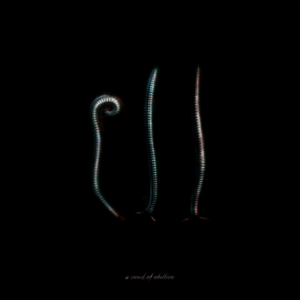
Depression: “Raccoon Dead” by a crowd of rebellion

Image courtesy of Warner Music Japan Inc.

Raccoons are beloved on SFU’s Burnaby campus, but there is a reason why you are supposed to stay away from them. This song explores these reasons and how to “survive in the world of raccoons.” It starts off by saying “life isn’t easy,” and themes of being lost and trapped are repeated throughout the rest of the lyrics. Heavy parts of the song are mixed with a lighter, melodic chorus, reflecting the duality of someone carrying the weight of a group project: angry and frustrated within, but trying to be understanding of others on the outside.

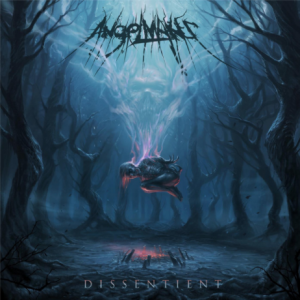
Bargaining: “Leech” by AngelMaker

Image courtesy of AngelMaker

Right off the bat, the title is very apt for a group project setting. The song starts off heavy, screaming about “coward[s who] . . . suck the life out of [you].” Despite there being themes of injustice, there are hopeful elements scattered throughout the song: you’re sure you will “learn” and “grow” after completing the group project. This song reflects your struggle to find meaning through the pain of your workload. Hopefully your group project grades can help the anger fade away.

Acceptance: “If You’re Looking for Your Knife . . . I Think My Back Found It” by Zebrahead

Image courtesy of MFZB Records

Despite the title, the song has a more cheerful beat with less screaming. At this stage of the group project, you’ve just accepted all the work you need to do: you claim “[you’re] doing fine” and tell others to just “give it to [you]” when there is uncompleted work no one is willing to do. Despite the song opening with “I want to burn it down,” you’ve accepted that you have to do what must be done to complete the project — there’s nothing “left to gain” and you’re ready to say your “last goodbye.”

Need to Know, Need to Go: May 17–23

0
Illustration of a blue calendar, with "Need to Know, Need to Go" written on top
Arts & Culture events to catch around the city. Image courtesy of Brianna Quan

By: Carter Hemion, Staff Writer

Locked Upside Down | May 21–23 | $12–30 (Sliding Scale) | Online

Locked Upside Down is the product of three Vancouver-based circus artists. On film, Leyna Bella, Kasha Konaka, and Stephanie VanDyck express their experiences as performance artists during the COVID-19 pandemic. They use contortion and balance to “explore the possibilities and obstacles of being locked within the confined spaces of their homes.” Buy tickets on TicketLeap to access the event from Friday to Sunday evening.  

VIDF: Yvonne Ng | May 20–21, 7 p.m. and May 22, 4 p.m. | FREE | Online

The Vancouver International Dance Festival (VIDF), running virtually this year, presents Yvonne Ng’s performances of In Search of Holy Chop Suey & Weave . . . part one. Ng is a choreographer, presenter, arts director, arts educator, and the founder of princess productions. In her performances, she draws from contemporary dance, kung fu, and her personal history. In the first performance, she presents “a life of creation and imitation in movement”; in her second, she performs a piece inspired by her and her mother’s experiences as Peranakan Chinese women. Tickets can be reserved through VIDF’s website. 

Parāśakti: The Flame Within | Now–May 31 | $0–20 (Sliding Scale) | Online

Vancouver-based dance artist Arno Kamolika and vocalist Akhil Jobanputra, alongside three instrumentalists, tell the story of Hindu goddess Parāśakti. This new production uses Indian music and dance to explore the Goddess’ narratives and human experiences on a path to enlightenment. Reserve tickets through the Chan Centre for the Performing Arts’ website.

Your weekly SFU Horoscopes: Pokémon edition

1
An illustration of a girl with long flowing hair. Astrological signs and stars shine around her.
ILLUSTRATION: Marissa Ouyang / The Peak

By: Marco Ovies, Features Editor

ARIES: Your fiery spirit will give you the motivation to light a flame this week, just like a Darmanitan going into its Zen Mode. With Jupiter’s planetary ingress into Pisces, you will be full of inspiration. Make sure to take a breather, though. This will help you discover your passion (and Psychic type).

TAURUS: The New Moon on May 11 has dropped you a Moon Stone and you have evolved from Nidorina into a majestic Nidoqueen. The new addition of your Ground typing with Poison will make you a valuable party asset. Just don’t let your ego get in the way. Remember, you don’t learn any new moves once you evolve.

GEMINI: After a long wait, you’re starting to see abundance entering your life. Just like the smol Budew, you took your time building friendships and it is now time for you to flower into the beautiful Roselia. Start manifesting that Gym Badge, that elusive Shiny Stone, or even a social life. The sky’s the limit.

CANCER: Magikarp is seen as weak (like you) and appears to be perpetually screaming (like you). Unlike Magikarp, it’s time for you to stop splashing around. Try finally hitting level 20 and becoming the glorious Gyarados you were meant to be. It’s not that hard — grab your Experience Share and make others do the work for you.

LEO: You are Snorunt: cold, forgettable, and kind of terrifying to look at. You can either wait to evolve into the pure Ice-type Glalie or decide to go Ghost like Danny Phantom and become Froslass. I recommend Glalie — it consumes frozen Pokémon with a ferocity that resembles yours when no one compliments your hair.

VIRGO: It’s time for you to open up to new possibilities and outlooks in life, which is why you are the perfect Eevee. You have so many options for your aesthetic. Fulfil your cottage-core dreams and evolve into Leafeon, or become cold and distant like your ex and choose Glaceon. The world is your Cloyster.

LIBRA: When the going gets rough, don’t let it get you down, Rockruff. You may look like the smallest and cutest dog, but you’ve got a rock-hard attitude. You have the resilience (and Defense stat) to take on any challenge that will come your way this week.

SCORPIO: When you were an Eevee, your trainer played with you and fed you Poffins 24/7. But once you evolved into Sylveon, you were abandoned into the Pokémon Box System beside all the other Eeveelutions. That’s right, you were a pawn in a ploy to complete the National Pokédex.

SAGITTARIUS: This week, you may feel like you are not receiving enough love, and that is why you’re Shedinja. Despite having the amazing Wonder Guard ability, your measly one HP and poor base Speed make you inferior to your counterpart, Ninjask. Keep your chin up and pray to Arceus that you won’t be hit by a Flying-type move.

CAPRICORN: With Gemini season fast approaching on May 21, now is the time to start pursuing artistic endeavours, which makes you the perfect Smeargle. You have the ability to learn any move possible. Maybe consider learning Pay Day to get some extra cash for all those Potions you’ll need for working too hard.

AQUARIUS: Love is in the air with the sun entering Gemini this week. Luckily, you spend all of your time in the air as a Woobat. Use this extra affection to evolve into Swoobat (and finally get a pair of eyes). Heck, you might even want to use Attract if a special ‘mon catches your eye.

PISCES: You thought you were going to get a Water type because you’re a Pisces? You’re wrong. You’re getting a Water type because you will be emotionally exhausted this week, just like Sobble. The New Moon will be in Taurus, meaning you are going to be a mess, just like our sad lizard. No, don’t give me that Tearful Look.

The SFSS approves pay raise to align with living wage model

0

Written by: Kelly Chia, Staff Writer 

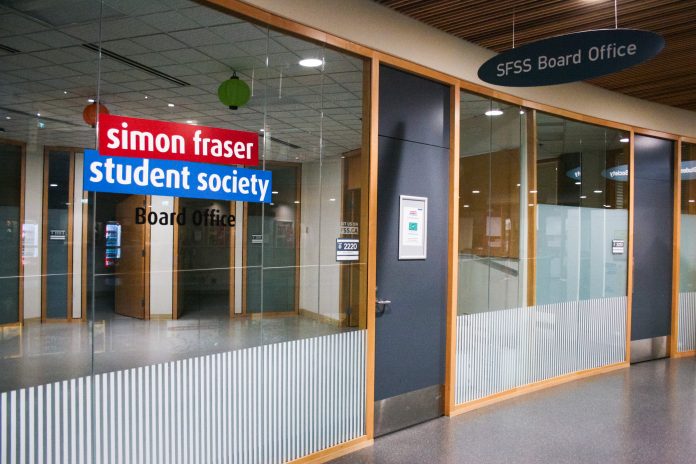
As of May 2021, the Simon Fraser Student Society (SFSS) Board of Directors and Council merged to form one governing body. They also approved a pay raise for the SFSS members. The Peak spoke to vice president internal and organizational development Corbett Gildersleve on the changes.

He explained that by merging Council and Board together, Council can be more directly involved in the decision-making process. With the new model, alongside traditional responsibilities, some Board members have additional executive responsibilities, like approving the annual budget and long-term contracts and administrative work.

With the new model comes an increase in pay. Last semester, Gildersleve looked at how much money SFSS councillors receive for their work. He discovered their pay hadn’t been changed since 2008. Biweekly stipends amounted to roughly $14.50 per hour which put councillors below the minimum wage for 2021.

The SFSS “has historically been a living wage employer with exceptions for some student staff,” Gildersleve explained. He constructed stipends based on the living wage model and found that they should go up to $17.96 an hour, and then $19.50 in 2022/23. The motion for the raise was approved in April 2021.

Gildersleve said the motion to merge the two bodies started with a review of their administrative and governance structures. 

The previous model was intended to separate the Board of Directors from tasks that could be done by the other SFSS administrative staff while the Board focused on governance work, like reviewing plans and the work of the executive director. 

However, by focusing on governance work, Gildersleve observed that each year, Board members learned less. While “people tend to be on Board because they have passion for the work and want to be able to use their skills to benefit the Society,” the previous model presented limitations to those skills.

The Board wanted to restructure their model so that Board members would still do governance work, but also be more directly involved with student life. “A lot of Board members wanted to be directly involved in planning events, or helping change some rules to help clubs to get grants.”

As the Board began to work on a new model, they worked with Council to ensure they were involved in the consultation process. 

Gildersleve said that up until that point, Council was an advisory body, indicating that they had less say in the decision-making process. While Council had an advisory role — the Board was not required to follow their advice. This resulted in clashes between the two governing bodies. 

“What came out of the discussions with Council was the idea of merging the two together so that Council would have much more of a direct oversight role,” said Gildersleve.   

The Peak reached out to Council for more information, but they did not respond by the publication deadline.

Your new pandemic best friend: the raccoon

0
ILLUSTRATION: Shaheen Virk / The Peak

By: Kelly Chia, Staff Writer 

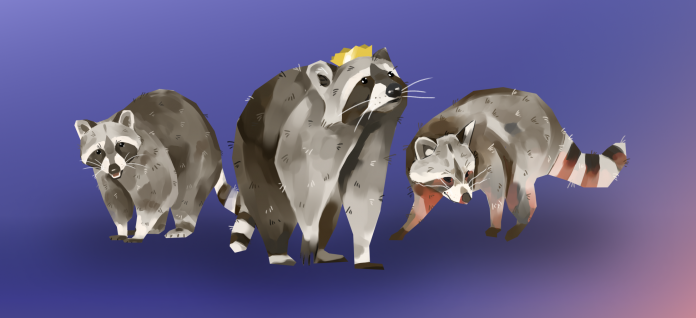
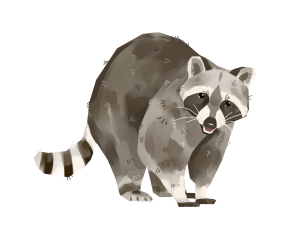
Are you looking for some raccoon therapy? Imagining a domesticated life with our residential furry friends? Well, we’ve made some observations of our most popular raccoons, and we think they’re ready to help you through the new term. 

Trent “Tom Nook” Grubs

ILLUSTRATION: Shaheen Virk / The Peak

Trent is part two-year-old raccoon and part real estate agent. He has a fluffy coat and a wide grin that is often mistaken for a suspicious-looking grimace. He assesses every newcomer based on three things: their ability to give him food, their ability to give him shelter, and overall swag. Trent has been dubbed our resident “Tom Nook” because he seems to have an amicable relationship with the other raccoons, finding them new homes before rubbing his little paws together greedily. He enjoys affection and a good scratch on his head, but his favourite activity is nestling into discarded print issues of The Peak.

You know how Tom Nook leases homes on endless mortgaging? Trent will also lease your food, and your heart, if you let him. 

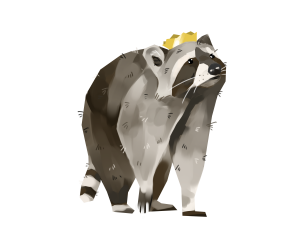
Her Majesty, the Auspicious and Beautiful Marcella XXXIII 

ILLUSTRATION: Shaheen Virk / The Peak

If you look into Marcella’s beady little eyes for too long, you will be swept into the vortex of her stare. There, you’ll find meaning in the quiet and dignified life of our resident princess. Marcella is the most graceful thing you will ever have the privilege of witnessing. She has short claws, but that has not stopped her from her royal duties of being the most good-looking masked creature on campus. She is also our only hoarder. Marcella is all about using crystals to manifest her dream life, and has accumulated an impressive collection of smooth pebbles that she washes. In fact, she washes everything she touches like the pandemic queen she is. Marcella is often spotted taking her snacks and dipping them into the nearby pond to clean them. 

Marcella is eight years young, with a healthy round tummy that suggests she has only ever indulged in the world’s finest recycled goods. She will make a good friend for the student who enjoys just a bit of indulgence.

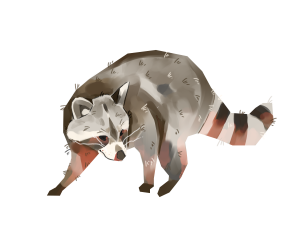
“Curious” George

ILLUSTRATION: Shaheen Virk / The Peak

George is a problem. A menace. We love him dearly. 

You see, George is the sneakiest raccoon you will ever see. All he ever wants to do is steal, and by the time you see his glowing eyes in the dark, it is much too late. 

He will purr. Yes, we did not know raccoons could purr before George here. He will walk up to you, tail swaying from side to side to enchant you. Then, he will take every sandwich meat that you have ever loved before you can even say the word “thief.” 

We often spot him tripping over his own paws as he runs excitedly to greet you, hoping that you have brought him an offering — whether intentional or not.

Yet, despite his thievery, he also seems to be a loyal guy. George tends to shadow you, somehow concealing his skittering, and before you know it, you have a raccoon that is staring at you as though you are the love of his life or a particularly delicious pastry. He will be more loyal and consistent than Canvas maintenance, and would make an excellent pal with whom you can share your time (and snacks).

SFUnexplained: Images Theatre is definitely haunted

0
ILLUSTRATION: Danielle Ragas / The Peak

By: Carter Hemion, Staff Writer

Have you ever wondered why time passes differently in Images Theatre? Have you felt a strange breeze when all the doors were closed, maybe with an unusual smell? (And no, the smell from your classmate’s apple-cinnamon-gasoline-flavoured vape doesn’t count). Have you noticed how the temperature seems different from outside corridors? If you answered yes to any of these questions, you will be glad to know there’s a perfectly logical reason for these phenomena: ghosts.

This lecture hall, with a capacity of 440 living people, is never unoccupied. It holds resentful spirits, likely angered by the constant campus renovations. Ghosts can be awakened by construction, and these university dwellers are no exception to this. 

I recall my first experience with an Images ghost vividly . . . The raccoons were especially distant, not trying to steal my lunch that day, as though they sensed something was off. At first, I thought it was odd there was an extra shadow behind my professor. I figured the lights were broken, just like every vending machine in the AQ. Then it happened. About 10 minutes into the lecture, a pale figure in a black suit slammed the door open, seemed to float down the aisle, and sat in the front row. It was the spitting image of a Beedie student — an overachiever in formalwear — but its eyes weren’t vacant enough to truly be an SFU student. After the break in that lecture, I never saw the figure again. Nobody else seems to remember or recognize the apparition, but I will never forget that gaunt face as long as I live.

If you don’t believe me, put together the evidence yourself. 

Students frequently lose their things in Images Theatre, never to be found again. Every time we leave the theatre, pathways across campus seem to change, with staircases leading nowhere and ladders pointing to nothing. Unusual stains appear, looking like blood but smelling like there was a sale on White Claws at Cornerstone. Pay attention: this is no coincidence.

When walking through the AQ late at night, it always seems relatively quiet . . . except for Images Theatre. Listen closely and you may hear the piano playing “Bring Me To Life” by Evanescence in a botched minor key, or what sounds like students’ voices yelling and watching movies; if you’re lucky, you might even hear faint voices singing old ABBA songs. Since SFU started the pandemic, construction has continued disturbing the spirits. It’s so severe the theatre is completely locked up to contain them. 

If you stand in or near Images Theatre in quiet hours, listen for the unnaturally loud buzz of the lights. If you take lectures there, notice how often your professor struggles with the projector and other technology. It is a comprehensive, respected post-secondary institution staffed with highly educated individuals with decades of experience in education. Therefore, it can only be the ghosts. This is Canada’s engaged university. It easily renovates every building constantly. Its budget grows with every tuition spike. These occurrences cannot be explained naturally. 

The worst part of it all? SFU has never tried to hide the hauntings. It’s called “Images Theatre” after the images of the dead, seen so frequently that even faculty cannot deny it.

Incoming SFSS president Gabe Liosis discusses plans for the upcoming year

0

Written by: Jaymee Salisi, News Writer

With a focus on equity and amplifying marginalized voices, Gabe Liosis has begun his term as president of the Simon Fraser Student Society (SFSS). Liosis spoke with The Peak about his goals for the 2021/22 year. 

Students deserve a student society that embraces student unionism and activism,” he said. “I [have] a unique knowledge of how the SFSS is structured, how it works, and what is needed to make this new governance system thrive.”

He said he is prepared to provide new councillors with efficient training and support to serve under the new governance structure where Council is “the top decision-making body in the SFSS.” 

Liosis chose to get involved with the SFSS after he observed the 2019/20 Board “intentionally disregarding the impact” of on-campus space for marginalized communities. Because of this, he served as Council chair from January 2020 to April 2020 and continued as vice president university relations in 2020/21.

During his time with the SFSS, Liosis advocated for the Pass/Credit/No Credit grading system, the development of the Burnaby Mountain Gondola, and the end of SFU’s pilot  exam proctoring during remote learning. 

 “By the end of this year, I really hope that we will have built an organization that will perpetually foster advocacy and activism”

“By the end of this year, I really hope that we will have built an organization that will perpetually foster advocacy and activism,” Liosis said. 

Using his knowledge of the SFU bureaucracy, he hopes to make bursaries more accessible, implement a tuition freeze, and distribute emergency funding to support students amidst the COVID-19 pandemic. 

With the consultation of marginalized communities, he also aims to focus on working with SFU to change its policing and safety practices on campus.

As the university plans to reopen for in-person classes, one of Liosis’ priorities is to ensure the return to campus is a safe and positive experience. To do this, he aims to develop a detailed safety plan with the university and province for the Fall 2021 Student Union Building reopening. 

Through his experience as vice president university relations, Liosis said he learned to build solidarity with students, and pushed SFU to support BIPOC community members.

“Mobilizing undergraduate students around fundamental systemic issues is critical,” he said. “The best that you can do in terms of advocating for students is speaking truth to power.”

Liosis aims to contribute to the development of the new Black Student Support Centre and Student Advocacy Office “to further strengthen the SFSS’s advocacy capacity.” The Student Advocacy Office will represent and advocate for students who are in a dispute with the university. 

“When making decisions, I always want to be making them from an equity lens, ensuring that the voices of folks who are most marginalized are being heard.” Leading decisions centred around equity, Liosis said the SFSS needs “bold, radical, and progressive voices” to drive systemic change within the SFU community. 

I hope that the principles of fighting for BIPOC communities who suffer the most from systemic disadvantages are never lost [ . . . ] We need to be very intentional about the spaces we are creating, and how we treat people in those spaces.”

“The Hafu It” podcast educates others on the experiences of mixed-race Japanese Canadians

0
Kiyoko Sugimoto and Sakura Yoshida celebrate Japanese identity both on and off the air. Image courtesy of @hafuit via Instagram

By: Charlene Aviles, Peak Associate

This May, Vancouver is celebrating Asian Heritage Month with a full list of cultural programming. Running until June 10, the 25th annual explorASIAN Festival features museum and art exhibitions, podcasts, performances, and more. One of these special events is a collaboration between The Hafu It podcast hosts, Kiyoko Sugimoto and Sakura Yoshida, and the Vancouver Japanese Language School and Japanese Hall (VJLSJH) — VJLSJH x The Hafu It: A Homemade Pilgrimage

During my childhood, mainstream media had few BIPOC and mixed-race protagonists. What drew me in the most about The Hafu It podcast is that the hosts amplify mixed-race people’s voices. Hafu translates to “half” in English and refers to people who are half-Japanese. In it, Sugimoto and Yoshida detail their experiences of rediscovering their Japanese heritage as mixed-race Japanese Canadians. At the same time, they educate the audience on Japanese culture and history. Although I am not Japanese, I found the experiences described by Sugimoto and Yoshida reminiscent of my own as a Eurasian woman. 

The first episode, “Our Issei,” explains the history of Japanese immigration to Canada, as well as each hosts’ family histories and their experiences with racial impostor syndrome.

Sugimoto and Yoshida begin by recounting the history of Japanese immigration to Vancouver. The first wave of immigrants travelled by boat and built a community concentrated around Powell Street. They gave birth to the Issei, which Sugimoto defines as the “first generation of [Japanese] people to be born in Canada.” But in Vancouver, they faced discrimination and oppression, as reflected by the 1907 anti-Asian riots, limited job prospects, and internment camps. Sugimoto and Yoshida also describe how experiences of “internalized shame” and the desire for assimilation accompanied anti-Japanese racism. 

Determined to teach their culture to their children, internment camp survivors returned to the VJLSJH building in 1949 and re-established cultural and language programs. The VJLSJH continues to grow, and it became a national historic site in 2019. After World War II, several memorials were established addressing the Japanese Canadian internment camps, including the Nikkei Internment Memorial Centre, the Japanese Canadian War Memorial, and the Tashme Historical Project.

Reflecting on fond memories with their grandparents, Sugimoto and Yoshida explained that Japanese culture promotes respect for elders and described their grandparents as sources of wisdom. As they shared their grandparents’ life stories, the hosts highlighted the importance of Japanese Canadians staying connected to their community. Sugimoto and Yoshida explained how, growing up, their passion for learning more about their heritage inspired their elders. “[They realized] life was too short to keep those stories to themselves,” Sugimoto said.

“We’re finally at a time in our community’s history where we can be that for them, we can be the safe place that they entrust their stories to, so that we can hopefully inspire a better future for all of them and for our future generations,” she continued.

The hosts’ experiences of learning their culture through their elders reminded me of the importance of passing on cultural knowledge from one generation to the next. While researching my ancestry for an essay, I realized that I still have a lot to learn about my heritage, as I am still a beginner in my native languages. One of my main motivations to learn these languages is to communicate better with my elders. The hosts’ stories of reconnecting with their grandparents encouraged me to continue learning.

While discussing Japanese culture, Sugimoto and Yoshida also explained how racial imposter syndrome affected them. Racial impostor syndrome describes the self-doubt one feels after having to disprove others’ beliefs about their ethnicity. The Hafu It hosts noted that other people who were made aware of their mixed ancestry often reacted with disbelief. Subsequently, Sugimoto and Yoshida expressed not feeling fully accepted by the Japanese community. Reflecting on this experience, Sugimoto and Yoshida emphasized that, regardless of how much Japanese heritage one has, all should be welcomed. 

Recognition and acceptance of the diversity among Asian cultures and identities is worth celebrating all year round. Asian Heritage Month is simply the beginning. Solidarity for Asian-Canadians requires ongoing activism against anti-Asian racism, and listening to members of the community like Sugimoto and Yoshida is a good place to begin.

For more episodes of VJLSJH x The Hafu It: A Homemade Pilgrimage, visit Buzzsprout every Wednesday until May 26.

COVID-19 could mean the end of the ride for Vancouver’s PNE

0
The PNE has survived world wars and the Great Depression. Can it make it through the pandemic? Photo courtesy of Vancity Credit Union

By: Sara Wong, Arts & Culture Editor

For many Vancouverites, the Pacific National Exhibition (PNE) is synonymous with summer. However, due to the pandemic, the annual fair has been cancelled for the second year in a row. And there’s more than mini doughnuts at stake. 

Currently, the PNE is $8 million in debt, and their projections indicate that the number could increase to $15 million by the end of 2021. Because of its unique governance structure (it operates as a non-profit, but is owned by the City of Vancouver), the PNE has been excluded from any of the existing COVID-19 emergency benefits. 

“[COVID-19] is unprecedented and the PNE needs our help now [ . . . ] To be frank, we risk losing it,” Vancouver Mayor Kennedy Stewart said in an April 30 news conference. “Now we’re asking for the province to step up.”

The PNE permanently closing would be devastating to our city’s arts and culture scene. As a multi-use venue for concerts, festivals, sporting events, and more, this Vancouver landmark holds significance to many people. For me, the PNE represents a place of personal growth. Its Agrodome is where I spent 12 years training as a competitive figure skater and ice dancer. And the proximity to the Hastings Park Farmer’s Market and trade shows like Make It ignited my passion for supporting local businesses. 

While my memories of the PNE are fond ones, I recognize that its 111 year history is not all pleasant. In 1942, the area was transformed into a Japanese internment camp. As detailed by the historical website Hastings Park 1942, the Canadian government detained thousands of Japanese Canadians in PNE facilities, including the livestock buildings. Families were separated, personal possessions were stolen, and many infectious diseases within the camps were left untreated. None of these gross human rights violations were recognized until decades after World War II. 

With Bloomberg recently naming Vancouver the anti-Asian hate crime capital of North America, standing in solidarity with racialized communities is all the more imperative. Today, Hastings Park is transparent about its dark past. Aside from the information on its website, there are plaques around the PNE that explain the conditions of the internment camps, and they include firsthand accounts from the camp’s survivors. If the PNE were to close, we stand to lose this avenue of educating the public on anti-Asian racism.

Another loss would be to our local job market, especially for young adults, seeing as the PNE is BC’s largest employer of youth. In a Global News article, CUPE 1004 labour union president Andrew Ledger said “thousands [ . . . ] depend on the fair to pay for post-secondary education or support their families.”

Recently, the provincial government unveiled a $100 million emergency fund to support “anchor attractions” in BC’s tourism industry. Hopefully, the PNE receives some of this financial aid. Otherwise, Vancouver really will become No Fun City.