Home Blog Page 31

A Screening of The Encampments

0
This is an illustration of the Gaza Solidarity encampments at Columbia University with the university’s library in the background
ILLUSTRATION: Cassandra Nguyen / The Peak

By: Noeka Nimmervoll, Staff Writer

Content warning: descriptions and mentions of genocide, ethnic cleansing, inhumane conditions, violence, police brutality.

On Thursday, June 26, SFU’s Centre for Comparative Muslim Studies hosted a screening of The Encampments: Inside America’s Student Uprising at the SFU Goldcorp Centre for the Arts. In the opening remarks, associate professor Adel Iskandar acknowledged the Sḵwx̱wú7mesh (Squamish), xʷməθkʷəy̓əm (Musqueam), and səlilwətaɬ (Tsleil-Waututh) lands on which the theatre exists. He added, “If we can think about freedom and justice on Coast Salish territories, we cannot divorce that from the same freedom struggle for Palestinians and other Indigenous communities around the world,” recognizing the view that all struggles for liberation are connected. 

Directed by Kei Pritsker and Michael T. Workman, the documentary centers around the Gaza Solidarity Encampment, a sweeping political movement in the US that began at Columbia University in New York on April 17, 2024. I was excited to see the film as a pro-Palestinian activist who engages in marches, actively learns about the ongoing genocide, and boycotts brands, and a university student who had observed encampments but had not been a part of any. 

Iskandar paid tribute to the risks at play for all those who contributed to the film: individuals at the encampments, filmmakers, producers, directors, and distributing companies. For me, watching the film contained this duality: amazement at the bravery of all the students who risked their education to stand up for Palestine, and the horrific reality of the genocide, against the brutality of the university’s response to the students. The film displayed the massive power struggle between the unrelenting status quo and the unaccepting voices of the future. These activists show us that genocide, a horrifying reality, is one never to accept or concede to. The grander ideas — humanity, community, and education — were woven into the fabric of the film’s excellence. 

The documentary highlighted the connection between Palestinians and Columbia students. Palestinians are subject to ongoing, indiscriminate bombing by the Israeli army that is funded by US dollars. Columbia University, just like SFU, invests money from corporations that has ties with the Israeli government and companies like Lockheed Martin that profit off of the genocide. The Columbia students pitched tents for the focused goal of insisting that the university divests from Israel and US arms dealers. More than a hundred campuses across the US followed suit. So far, neither Columbia nor SFU has divested from their ties to Israel.

The film contained clips from Gaza: bombed concrete and debris dominating the land as Palestinians went about their days. The film’s visuals were alarming, especially in a segment showing Gazan universities being targeted by the Israeli military. It was unsurprising to see the inhumane conditions Palestinians suffer through as they experience ethnic cleansing. The documentary showed a starkly different reality at Columbia; its beautiful and well-preserved lawns and buildings mirroring the manicured minds of the students who study to be the future of America. This massive privilege gap is impossible to ignore, and was the motivation for the organized activists at Columbia. The destruction of all of Gaza, including their universities, serves to drive the will of the students at Columbia as they face arrest and brute force from the NYPD, threats of the National Guard interventions, and suspension or expulsion from university. 

As the film played out, the message that I saw became clear. The students at Columbia were afraid of the university’s actions, but they were more afraid of their inaction — of the fact that their tuition dollars funding the genocide of Palestinians. Above all else, they were driven by their humanity. The solidarity of Columbia’s activists was not borne from anything smaller than empathy for fellow humans in Palestine that are still experiencing tremendous suffering at the hands of a violent regime. The encampments were sites of community and respite, with open Jewish and Islamic practices that brought knowledge and kinship to all who were interested. 

After the film, there was a group Q&A with the organizers and audience members, discussing encampments that have occupied the local scene. This provided the opportunity for audience members to speak: several members had been part of encampments that occurred in BC, such as those that took place in UBC and UVic. One member was a recent graduate of Columbia University. They talked about similar experiences in the encampments: support from local businesses supplying food, sharing of culture and resources within the camps, and the feeling of safety that the camps provided. The inaction of the university administration, the empty promises, all echoed Columbia’s experience. I saw a real connection between each audience member, a feeling of shared humanity that did not leave the room even when the film was over. 

The Encampments is a powerful reminder that the Palestinian genocide is ongoing. The intertwined nature of these protests, the community they created and continue to create, the theatre where we watched the documentary, all came together as a testament to the fact that the cause for Palestine remains strong and unified in our collective hearts. 

Watch The Encampments at Watermelon Pictures.

Reconciliation goes beyond economic solutions

0
an illustration of mosaic art that depicts a handshake on top of art that is in the shape of a turtle.
ILLUSTRATION: Angela Shen / The Peak

By: Noeka Nimmervoll, Staff Writer

The federal Liberal party is busy. Claiming to strengthen our nation’s economy amidst the tariff war, which threatens Canada’s sovereignty and economic power. The current government was elected, in no small part, because Prime Minister Mark Carney positioned himself as the safeguard behind Trump’s dream of making Canada the 51st state. With the election over and a mission of building a stronger economy, we are left with a consequential question: How will Carney strengthen our efforts of reconciliation with Indigenous Peoples? 

It seems that Carney’s reconciliation plan only acts on economic solutions. The Liberal party has promised to double the Indigenous Loan Guarantee Program’s budget from $5 billion to $10 billion. The program is robust, with a loan eligibility, self-assessment, and an application guide. Additionally, the party states their intent to move forward with the implementation of the United Nations Declaration on the Rights of Indigenous Peoples (UNDRIP) Act and the Action Plan. The UNDRIP is a framework that affirms the rights of Indigenous Peoples and guides governments in respecting those rights. 

UNDRIP’s plan is hefty, containing 181 measures, including the proper disposal of waste to maintain the environment of First Nations reserves. Despite the specificity of these measures, the Liberal party provides no details on which measures will be acted upon. With their plans so vaguely outlined, it is hard to believe they are taking these matters with the urgency they require. 

Notably, the financial program allows Indigenous Peoples to acquire loans by putting the federal government as the guarantor, when previously, colonial laws created blockades for Indigenous groups to acquire loans. Although this is important work, there is so much more to be done. 

Reconciliation is vital. Don’t make it the next government’s job, Carney. Start here, start now.

One notable matter to focus efforts on is providing Indigenous women and girls with protection and justice. At the release of the National Inquiry into Missing and Murdered Indigenous Women and Girls (MMIWG) report in 2019, there had been 231 Calls for Justice. These are specific implementations in all levels of government that address systemic violence. Since then, only two calls have been implemented to completion. To meaningfully address this, the government must move beyond symbolic gestures. This can include operationalizing the National Action Plan to End Gender Based Violence with clear timelines and accountability. As Marion Buller told The Tyee, the government can create a national database of MMIWG for a better analysis of their complex situation.

Furthermore, Indigenous communities have expressed a want to steward their land alongside the economic opportunities from the government. We need to see systemic change that is equal in effort and complexity to the development and maintenance of colonial violence that has been ongoing for generations. The steps to redirect Indigenous futures must work with four facets outlined in the Calls for Justice: historical and perpetual trauma, marginalization from social and economic systems, a lack of action from institutions, and indifference towards Indigenous women, girls, and 2SLGBTQIA+ people. 

In a speech, Carney remarks that reconciliation is a long process and they’re taking the initial steps. Yet, the initial steps have already been taken, in the form of these action plans. Carney’s administration communicates a lack of urgency and commitment towards true reconciliation efforts. After the trade war, there will be something else. There is always another problem for the government to get busy with. All the while, MMIWG, pipelines running through reserve land, and over representation in prison are problems that are ongoing, and require immediate action. We must begin with prioritizing Indigenous voices in policymaking, fully implementing the Calls for Justice from the MMIWG report, and addressing systemic racism in policing and the justice system through meaningful reform and Indigenous-led alternatives. Additionally, Canada can allocate resources to support Indigenous-led policing efforts. 

If the Liberals are focused on economics, they should know that they will likely save so much money in the long run by solving the deep rooted issues of colonization. Take the exploitative nature of colonial extraction from land: the long term result is the imminent ruin due to climate change that threatens our present and future. Solving climate change issues with Indigenous perspectives would lead to a sustainable relationship with the Earth and its resources. It is in Canada’s best interest to take actionable steps for Indigenous rights. Reconciliation is vital. Don’t make it the next government’s job, Carney. Start here, start now.

Tenise Marie’s upcoming album Off The Record contains multitudes

0
This is a photo of a music studio with the mic at the centre and a keyboard at its base
PHOTO: Caught In Joy / Unsplash

By: Ashima Shukla, Staff Writer

Tenise Marie, a BC singer-songwriter of Assyrian, French, and British descent, is set to release her newest album, Off the Record, on July 11. I listened to an advance recording of her songs and found myself on an unexpected journey of belonging, grief, and adventure. 

Marie’s album chronicles her full self, in all its multitudes and contradictions, and subverts expectations. With a soulful voice that brought to mind the first time I fell in love with Joan Baez, Off The Record is primarily acoustic folk with elements of pop, soul, country, and punk. It travels across time and space, combining beautifully layered harmonies and the richness of Middle Eastern musical traditions

In this deeply personal offering to the world, the album is added a degree of depth and unpredictability due to Marie’s references to her background. These included living in the tight-knit Quaker community of Argenta, BC, and her soul-searching travels from Modesto, California, to her Assyrian homeland in Iraq. “I wanted this album to capture this entire chapter of my life,” Marie said, “it embraces the complexity of my humanity.” 

I have spent much of my life moving — from the soft chaos of New Delhi to the humid rain of Dhaka, tai-chi mornings in Shanghai, the hurried rhythm of Hong Kong, and now find myself under the gentle clouds of Burnaby. Each place has mattered in the becoming of me. Tenise’s album holds this feeling of liminality with care. It is about all that has mattered in the becoming of her: the places and her experiences there, her desires and sorrows, the musical influences she was exposed to. 

“Ashoureta,” for example, means “Assyrian woman,” and was written after she returned home from a transformative journey to her maternal homeland. Following the Assyrian lyrics from “Mother,” Marie sings of Ramadan, “Chai and Fairuz,” and a “Lamassu at the market.” In these echoes of lives and voices, she both takes us to Assyria with her and brings it to us. 

But track four, “Aegean Sea” was what left me completely undone. Inspired by the short film Dear Mother, it is an epitaph for Huda Hussein Anda, a fictional Somali woman seeking asylum in Greece. It captures her fear of being pushed back by the authorities, but also her prayer for salvation to the sounds of the oud. By the end, it pictures the final resting place of an olive grove, evoking the ongoing genocide in the occupied territories of Palestine. 

And just when you think you’ve understood the theme of this album, it shifts into stories of heartbreak and wildfires in Argenta, road trips in BC and California, and a lasting longing for adventure. Hidden in these personal stories are deep themes: the suffering of refugees, the grief and loss of the climate crisis, a nostalgia and hope for better futures. 

Although she plays with divergent genres and instruments, Marie maintains a consistent style throughout the album. The songs flow smoothly from one to another, moving between places and stories. Like looking into a mirror, it offers solace to all of us who have a home everywhere and nowhere. Listening to Marie’s tender but powerful voice, I felt at once weightless and deeply rooted. 

Off the Record doesn’t offer a resolution. There is no final arrival. And that is its beauty. Like the memories and feelings we carry with us, this album becomes a kind of home. Not fixed, but held close. Not permanent, but beloved. It is a reminder that belonging doesn’t have to be about staying still. Like a quiet late night conversation with oneself, Tenise’s vulnerability in this album is so deeply human. In the ache of in-betweeness, it offers companionship to those wandering, with gentle encouragement to find solace in the journey.

Gossip Peakie: The messiah, not-so-hot frat bros, and squirrels

0
Three pictures. (1) of a student with rays emitting from his body. Students are bowing down at his feet. (2) of three DKE frat bros getting into a brawl with each other. (3) of an upside down squirrel doing yoga.
ILLUSTRATION: Yan Ting Leung / The Peak

By: Gossip Peakie

Hey Burnaby Mountain dwellers. Gossip Peakie here, your one and only source for all the hot goss you’re trying to shove off the edge of this mountain. Did you really think one blog was enough to expose the skeletons in your closet? Please. Messy lives like yours deserve a weekly feature.

Before we move on, let’s take a moment to appreciate how bold you all have become, despite my first blog post. Secrets whispered on the sixth floor of the library, a ménage à trois in the avocado, and even digging in the water fountain basins for toonies. You’re broke and pathetic. 

You can try to hide your tea. Please, really do. It’ll be super cute. But I’ve got eyes sharper than your psych class curve. Enjoy some public humiliation, besties. 


A picture of a student with rays emitting from his body. Students are bowing down at his feet.
ILLUSTRATION: Yan Ting Leung / The Peak

Spotted: A first-year student walking around the AQ wearing a tinfoil hat, screaming: “I’M THE WI-FI SIGNAL NOW!” Loser students gathered around the student as if he were a messiah, believing that better Wi-Fi would solve their procrastination problem and Candy Crush addiction. 

Word on the street? This wasn’t a breakdown. It was a breakthrough. The tinfoil hat was an in-class assessment done by a certain computer science professor, trying to prove that eduroam is part of a Marxist agenda attempting to take us back to the days of dial-up. Instead, he encourages students to emit their own aura to act as Wi-Fi. Trust him; he’s a comp sci prof.


three DKE frat bros getting into a brawl with each other.
ILLUSTRATION: Yan Ting Leung / The Peak

Spotted: DKE frat bros fighting over who can get the most pledges for frosh week. Wait, we have a frat on campus? Who knew? Anyways, the day consisted of three very drunk DKE members walking around Maggie Benston, begging touring high schoolers to consider rushing. Isn’t frosh week in September? Yes. But these guys are desperate and long-term planners. 

“I don’t know what’s happening, bro. We have like zero pledges. So everyone gets accepted, I guess,” commented one frat brother, according to my source. 

Spoiler alert: they convinced no one. The day ended with a few punches being thrown while the custodian swept them away with the trash. 


illustration of an upside down squirrel doing yoga.
ILLUSTRATION: Yan Ting Leung / The Peak

Spotted: A squirrel doing yoga next to the koi pond. Witnesses say that she did a seamless transition from a handstand scorpion to downward dog within a matter of seconds. Even while you dorks tried to snap some pics for BeReal, she remained grounded and focused. Who knows — maybe she’s a reincarnation of a past SFU student. If she’s found the way to live a peaceful life, y’all should pay for her MasterClass. Oh, what’s that? You want to know if you could pull off those moves, bestie? Be so for real. Maybe 10 years ago.

What does the international student cap mean for SFU and Canada?

0
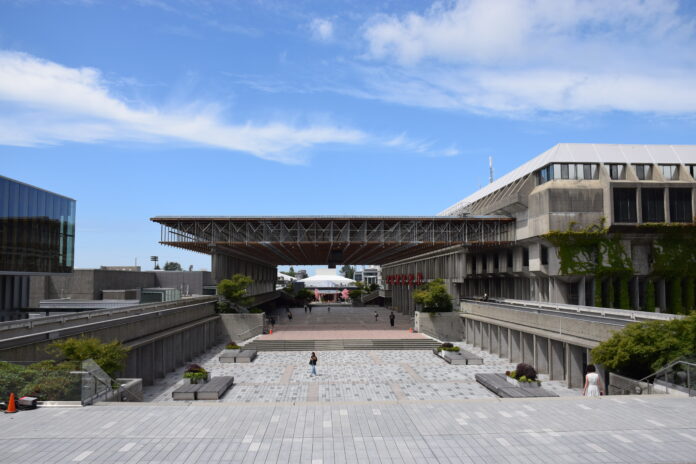
This is a wide photo of Convocation Mall facing westward. The photo is taken on a bright, sunny day, and also features the library and Student Union Building.
PHOTO: Audrey Safikhani / The Peak

By: Lucaiah Smith-Miodownik, News Writer

On June 17, SFU president Joy Johnson announced that more layoffs are likely in the university’s future, largely attributing these cuts to the Canadian government’s cap on international students. This news comes after the university already laid off close to 100 staff last summer — a tally that has only grown since. “Just this week [of June 23] alone, five APSA members have lost their jobs,” Ben Boyle, Administrative and Professional Staff Association (APSA) president, told The Peak.

The Peak also corresponded with SFU and Migrant Students United Vancouver (MSUV) to learn more about how these government policies will affect SFU and the broader national landscape. 

2024 saw a 35% reduction in study permits allocated nationally. This national policy “contributed to an operating budget shortfall of $18 million for [SFU’s] 2025–2026 budget,” SFU stated. “Approximately 85% of that deficit was linked to a drop in international students.” 

Despite help from a $22 million fossil fuel divestment gain, the past year also involved “budget cuts for administrative units” and an ongoing staff hiring freeze for the school. These trends may continue, SFU said, as the university considers “not backfilling staff vacancies or potential layoffs.”

International Student Dependancy

 “It is disappointing that our members learnt about the likelihood of further layoffs not directly from the SFU president, but through a media interview,” Boyle said

“While we acknowledge that abrupt shifts in government policy have made it more difficult to recruit from abroad, there also has to be accountability from the university for their longstanding overreliance on, and commodification of, international students as a primary revenue source,” Boyle said.

“We are calling on the university to implement a layoff freeze — or, at the very least, establish a firm deadline by which units must make such decisions — in order to provide much-needed respite for staff.” — Ben Boyle, Administrative & Professional Staff Association president

MSUV, an organization that advocates for migrant students’ rights “at the university, provincial, and national level,” expressed a similar sentiment, asserting that “universities across Canada, like SFU, have grown dependent on international students as cash cows.

“This landscape was made possible by irresponsible leadership relying too heavily on international students rather than continuing to push for increased public funding for post-secondary education, something student unions and faculty associations have been demanding for decades,” the organization said. “As spending on police and military budgets went up, funding for education went down, creating a dependency on increased tuition rates that even domestic students can’t keep up with.” In 2020, the average debt owed upon graduating with a bachelor’s degree in Canada was $30,600.

Boyle echoed these statements, saying, “This has created a vicious cycle of financial dependency and institutional vulnerability — one that we’re now seeing play out across the sector.” 

Last year, CBC linked to a report which noted that “students from India alone will provide Ontario colleges with $2 billion in operating revenue for the 2023–2024 school year.” They noted, “That’s slightly more than those colleges receive from the provincial government.” The article also said “the surge in international students has coincided with reports of some recruiters misleading those students about the education they’ll receive and the real cost of living in Canada.” 

Calls to Action

In her recent interview with CBC, Johnson recognized SFU has “not been able to balance our budget and have relied on international students to make up that shortfall.” The Peak reached out for an interview, but she was unavailable before the publication deadline.

“Whilst it may be convenient for the university to attribute layoffs fundamentally on the international student cap, broader strategic decisions must also be scrutinized,” Boyle said. “APSA has yet to receive an explanation for why the draft SFU Academic Plan 2025–2030 includes a commitment to increase continuing faculty numbers by 5% over the next five years — despite projected declines in both domestic and international enrolment,” he added. 

“Migrants are not the problem. We have more in common with each other as working-class people than you do with billionaires and corporations. Don’t let them divide and distract us.” — Migrant Students United Vancouver

“We are calling on the university to implement a layoff freeze — or, at the very least, establish a firm deadline by which units must make such decisions — in order to provide much-needed respite for staff.”  

For MSUV, Canada’s revised immigration policy extends beyond its post-secondary implications. “This cap signals to us the long-standing xenophobic narrative, similar to ‘immigrants are stealing our jobs,’ that migrants are the cause of unaffordability that intensifies in times of economic crisis.

“Migrants have always been the most convenient group of people for the government to put a target on our backs to deflect from their failure to enact policies that put people over corporate profits,” they expressed.

“Canadians need to think more critically about the xenophobic narrative that is being sold to them. Migrants are not the problem. We have more in common with each other as working-class people than you do with billionaires and corporations. Don’t let them divide and distract us. Money for jobs and education, not war and police.”

Vancouver Police’s Task Force Barrage draws controversy from the community

0
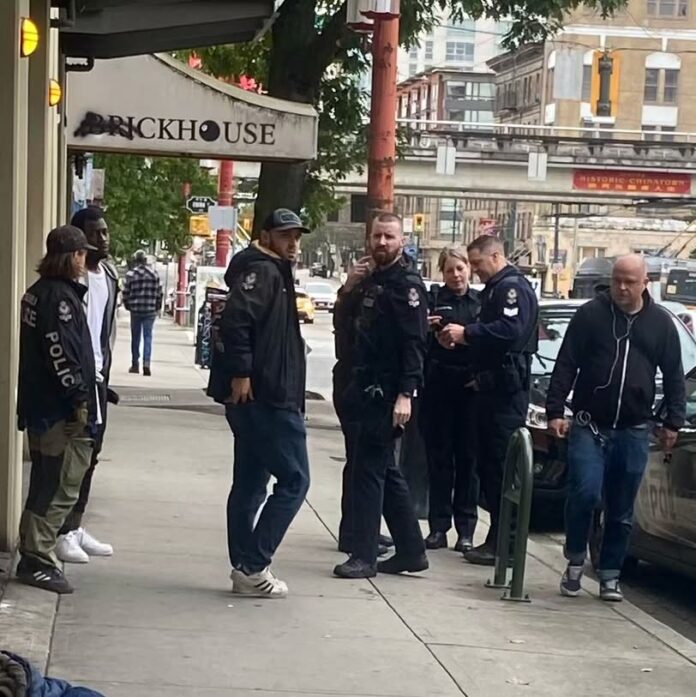
This is a photo of several police officers gathered together in a group in Vancouver’s Chinatown.
PHOTO: Courtesy of @vancouverpigs / Instagram

By: Lucaiah Smith-Miodownik, News Writer

A new initiative aimed at stopping crime on the Downtown Eastside (DTES) adds another layer to conversations about the Vancouver Police Department’s (VPD) purpose and policy. In February, the VPD and Vancouver mayor Ken Sim publicized Task Force Barrage, a “long-term operation to dismantle organized crime networks and target predatory criminals in the DTES.” Some community organizations have expressed concern over the initiative, including Police Oversight with Evidence and Research (POWER). The Peak corresponded with Tyson Singh Kelsall, researcher-member and PhD candidate in SFU’s faculty of health sciences, and Molly Beatrice, organizer-member and research assistant in the faculty of health sciences.

POWER “is a community-based research project formed in July 2024 as a collaboration between researchers in SFU’s faculty of health sciences, members of Western Aboriginal Harm Reduction Society, and the Vancouver Area Network of Drug Users.”

Task Force Barrage is the newest link “in a chain of law enforcement initiatives aimed at criminalizing people who rely on public space during what seem like endless housing and toxic drug supply crises,” Singh Kelsall told The Peak. This “does nothing to reduce the violence of these twinned crises, and, in fact, pushes people already struggling into more desperate situations that are difficult or impossible to survive.

“Under Barrage, we have seen an increase in police officers harassing people on the sidewalk, and an increase in police officers riding horseback through the neighbourhood,” he added. “Every dollar used on Barrage could be used instead on providing safety and inclusion through shelter, rent subsidies, respite for people experiencing gendered violence in the face of provincial cutbacks, overdose prevention services, and meaningful, low-barrier civic employment programs in the community.”

The Task Force comes with a price tag of $5 million, though the Vancouver Police Board was unaware the project was green-lit until it was announced to the media. The order of events also raised questions for some regarding who is behind the task force. While the VPD originally labelled it a “joint initiative” between the force and the mayor, Sim claimed it to be solely VPD-led, contributing to confusion and concern.

“This is colonial violence in the name of ‘public safety.’” — Molly Beatrice, POWER organizer, SFU research assistant

Concern regarding the Task Force has allegedly come from within the VPD as well. In April, POWER reported that a source identifying themself as a VPD officer emailed the office of the police complaint commissioner with claims that the VPD was setting quotas of “2–3 drug arrests and charges a day” in the DTES. The email also alleged that inspector Gary Hiar, a leader of the Task Force, “openly lied to get promoted to staff sergeant.” The VPD told The Peak “the allegation is untrue.”

In response to the whistleblower, the VPD conducted an internal investigation, which yielded “no evidence of arrest quotas in Task Force Barrage.” Matt Harty, a superintendent with the VPD who investigated the claims, classified the numbers as “performance measures,” according to the Vancouver Sun. Such a response did not appease all concerns. “Performance measures and quotas are essentially the same thing in policing,” said former VPD superintendent Kash Heed.

“Quota or no quota, VPD sees expanded budgets to meet every type of crisis with further criminalization,” Beatrice told The Peak. She spoke to both police and government criminalization of people “sheltering in public space, [relying] on a toxic drug supply, [relying] on inadequate payments of income assistance, disability support, and seniors’ pay,” noting that in all cases, “Indigenous, Black, and racialized communities” are excessively targeted. “This is colonial violence in the name of ‘public safety,’” Beatrice said.

The VPD maintains a different narrative. The Peak reached out for a statement, and the VPD directed us to a May press release where staff sergeant Gary Hiar stated, “While we’re making life harder for violent offenders and organized criminals, we’re also working with the community to improve safety and build relationships. This work will require a sustained effort and there’s still a long road ahead.” The statement included Task Force metrics from February 13 to May 13, including weapons and guns (real and replica) seized. The Peak could not independently verify this information.

“The real fight for truth, justice, and change is coming from the survivors of police violence and families of those we’ve lost to police violence, like Justice for Jared and mothers,” said Beatrice.

Streamlining infrastructure sidelines Indigenous rights

0
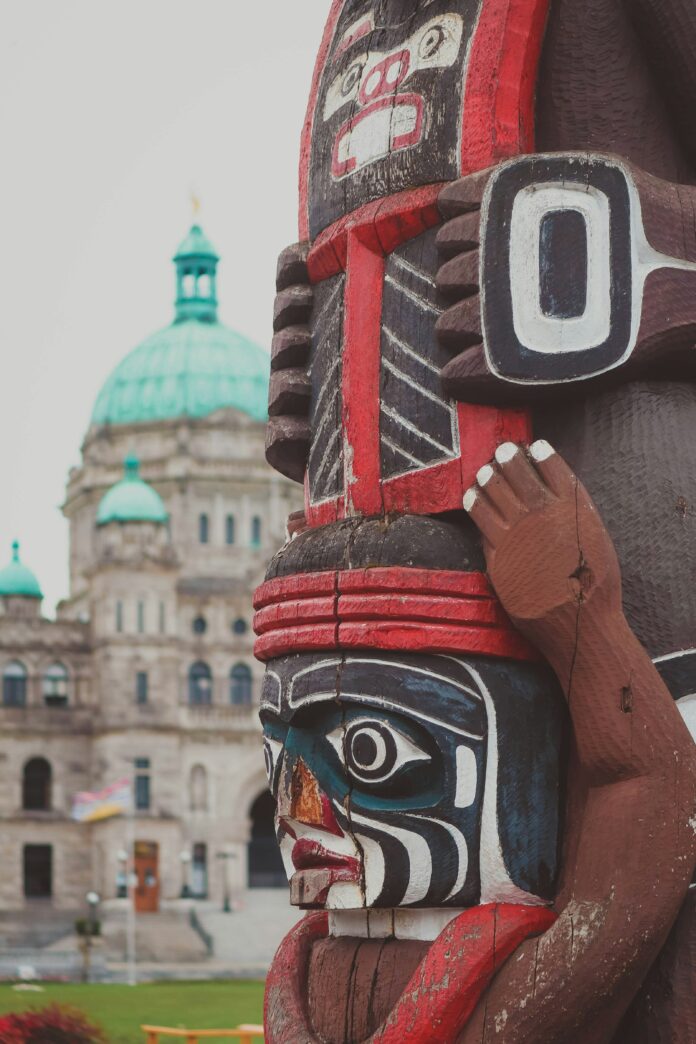
a photo of a Totem pole in Victoria, B.C., with the Legislative Assembly of British Columbia building in the background.
PHOTO: Julian Gentile / Unsplash

By: Corbett Gildersleve, News Writer

On May 28, the provincial government passed The Renewable Energy Projects Act (Bill 14) and The Infrastructure Projects Act (Bill 15), much to the dismay of many First Nations and municipalities. The stated goal of these acts was to streamline the approval process to speed up infrastructure and renewable projects. The two BC bills raised alarm bells with their significant concentration of power, with ministers and the government able to sideline Indigenous rights, municipal rights, and environmental regulation. These hastily written bills empower the government to dictate which projects can ignore environmental regulations and First Nations’ sovereignty. 

Bill 14 designates multiple existing projects to be streamlined, though it’s not clear what that means. These include the North Coast Transmission Line project and nine wind energy projects that were selected by the BC Hydro and Power Authority in 2025 and 2024, respectively. It also allows for the government to declare a project to be streamlined under this Act. The Act lays out three levels of projects but does not describe what each means. This lack of transparency highlights the nature of the harm that the bills bring forth.

“This bill gives cabinet the authority to override permitting and environmental assessments for projects they deem a priority. There are no clear limits. No binding safeguards. No commitment to co-governance with rights holders.” — Don Tom, Tsartlip Chief

Bill 15 brings concerns with the significant concentration of power given to the ministers and the government. Tsartlip Chief Don Tom aptly explains the harms of the bill: “This bill gives cabinet the authority to override permitting and environmental assessments for projects they deem a priority. There are no clear limits. No binding safeguards. No commitment to co-governance with rights holders.” Section 20 of Bill 15 makes it so the Act can’t ignore the Declaration on the Rights of Indigenous Peoples Act (DRIPA). This simply indicates that Indigenous Peoples have a right to traditionally occupied lands and its resources, and the state shall give legal recognition of that. However, through the passing of the bills, the government communicates that it does not actually view BC as the traditional unceded lands of Indigenous Peoples. This is fundamentally colonial thinking. Bill 14 and 15 essentially give the government the right to not consult with Indigenous communities which isn’t compatible with reconciliation. 

Under this Bill 15, if an infrastructure project has what the legislation calls a “constraint,” then a facilitator can be brought on to develop a solution. The solution is then reviewed and possibly approved to replace this constraint. If a solution can’t be reached through the consultation process, then the minister can create a solution and use that, or recommend the government use it. In some ways, this makes sense if the constraint is, for instance, that a hospital needs an expensive upgrade to their HVAC system. Then having the government expedite their needs is good. However, the definition of constraint is too broad, and the powers given to the government to push things through are ripe for abuse. A prolonged protest, such as those conducted by land defenders against fossil fuel pipelines, or a hospital strike would definitely impact the operations of a hospital.

Every land acknowledgement that I’ve heard recognizes that we’re on the unceded traditional lands of different Indigenous nations. As such, pretty much every infrastructure project in the province would fall under section 20 of Bill 15. These Acts, when viewed in the wider context of similar bills being passed in the federal government demonstrate that regardless of what work has been done towards truth and reconciliation, at the end of the day, only Canada’s interests matter.

Designing parks for social connection

0
Illustration of a park filled with young adults engaged in various activities. A stone amphitheater, an exercise area, and a rock wall can be seen in the background.
ILLUSTRATION: Abigail Streifel / The Peak

By: Noeka Nimmervoll, Staff Writer

One brutal awakening many young adults go through is the realization that leisure time is not a guaranteed part of the adult schedule. To me, it seems we are all busy with work, school, planning for the future, hoping to be happy, and filling in the gaps with entertainment. We’re told to enjoy our youth, but where are we supposed to do that? Vancouver is undoubtedly an expensive city, one where paying for rent alone can suck up half your income — a reality for 27% of renters, according to a report by LePage. With the remainder of income balanced on other living expenses such as utilities, groceries, and transportation, it leaves the wallet to wonder: where’s the budget for leisure? 

Thankfully, Vancouver is ripe with 250 parks open to the public, all year round. Although the city’s parks are designed for a variety of community needs, many parks — like Queen Elizabeth, Riley, and Hastings parks — are not ideal for young adults to congregate due to their lack of shelter, child-centered playground design, and general lack of appeal. Imagine a park, a playground, an outdoor community space — a place designed with young adults at the forefront. Imagine how glorious it could be. Perhaps this new era of park development in Vancouver is the perfect opportunity for the city to design one park with young adults as the target demographic. 

Enjoying activities you once loved as a child is a fulfilling and nourishing practice for any adult. Leisure time is incredibly beneficial to adults, improving creativity and problem-solving skills and promoting emotional well-being. Third places are described as spaces that aren’t living or working environments, and instead foster spending time with friends. However, many third places are businesses that place spending money at the forefront. Still, third places areimportant for bits of connection. Young adults need a hub — more than that, young adults need a fun place where problems are paused and not centred around consumption. 

“Imagine, for a second, that the government invested in its youth like it invests in the status quo. What could we make happen?”

Parks are the perfect environment to play outside, at no cost. However, playgrounds are predominantly built with children ages  5–12 in mind. Adults looking for spaces to use in parks are usually limited to exercise equipment and courts for different sports if they’re lucky enough. While great for promoting physical activity and some degree of social interactions, not everyone is looking for a sports gathering. In places like Charleston Park, benches and green spaces are available for adults, but the equipment doesn’t provide protection from the rain and there’s little else that would facilitate engaging in any other activity. For young working adults, it’s frustrating to constantly feel like we are not enjoying the benefits we pay for with our taxes. 

Imagine a playground for adults with a zipline, fireman’s pole, and climbing wall for adults to have their cheap thrills. A fireplace, to facilitate much-needed conversation between young people in an open and relaxed setting. A large undercover picnic area that allows you the option to venture outside in all months of Vancouver weather. An amphitheater, for local performances and art initiatives to host live outdoor shows, interactive events, and theatre like Victory Square. Places like Ambleside in West Vancouver achieve that on many points, by hosting events like the Harmony Arts Festival, weekly farmer’s markets, and having ample green space and parks for all ages to enjoy. Sθәqәlxenәm ts’exwts’áxwi7 (Rainbow Park) is another good example — in the heart of downtown on Smithe and Richards, it boasts an open walkway, lush greenery, a café plaza, and a kid’s water park. This vibrant space is exactly the type of community that can be used as a model when designing or remodeling parks suited specifically for young adults — parks that go beyond green spaces, but serve as community gathering spots. 

Creating more communities for young adults, where they can socialize and host events, would provide so much wealth to the lives of young people in a tumultuous and hard-to-navigate world. It would provide opportunity for those looking for creative outlets in a community space. Imagine, for a second, that the government invested in its youth like it invests in the status quo. What could we make happen?

FNMISA builds space for Indigenous students

0
a photo of FNMISA's space in SFU. Room 1440 in the Student Union Building
PHOTO: Daniel Salcedo / The Peak

By: Yildiz Subuk, Staff Writer

Room 1440 of the Student Union Building (SUB) is home to the First Nations, Métis and Inuit Student Association (FNMISA), a group that provides a space for Indigenous students to lounge, study, and create community. 

This wasn’t always the case. Before having this space, FNMISA was one of the original rotunda groups alongside Simon Fraser Public Interest Research Group (SFPIRG), CJSF 90.1 FM, the Women’s Centre, Out on Campus, and SFU Students of Caribbean and African Ancestry. For multiple years, alongside the rest of the rotunda groups, FNMISA fought for a space in the SUB and fair treatment by the SFSS — they won their current space in 2020. 

In November 2021, FNSA officially changed their name to FNMISA to ensure Métis and Inuit students knew they were also represented by the group. Today, FNMISA hosts plenty of events throughout the year focused on educating through cultural practices. The association also engages in advocacy, such as holding SFU accountable for its commitments to reconciliation. For example, FNMISA has repeatedly pronounced themselves against SFU’s lack of proper consultation with Indigenous students prior to the construction of SFU’s First Peoples Gathering House. 

Events and Socials

FNMISA has and continues to be a source of social events, activities, and activism for the community. FNMISA hosts the annual Indigenous Day events at SFU. “We have a really big community of Indigenous students here and we want to embrace [that] all Indigenous people are different,” said Matthew Provost, an event organizer during 2017’s annual Indigenous Day event at SFU. 2017’s Indigenous Day was intentionally meant to highlight women’s voices, with all headliners for the event being Indigenous women. 

During 2023, FNMISA organized the first inter-tribal Powwow at SFU. It was attended by 1,000 guests and had 40 vendors displaying Indigenous artworks. Powwows are a great way to engage with the Indigenous community as it is a celebration of culture. Those who attend Powwows choose to wear traditional handcrafted clothing, including beaded apparel. While this year’s Powwow event has already passed, there is always next year. Powwows are also open to the public, making them an ideal event to learn and experience Indigenous culture. The term “Powwow” originates from Algonquin tribes (whose traditional territory extends across so-called Quebec and Ontario), and fittingly refers to a healing ceremony. Powwows also have their roots in resistance, as many Indigenous gatherings were banned in Canada from 1884 to 1951. This was done to force assimilation onto Indigenous communities, yet many would still partake in the ceremonies. Powwows today signify reclamation of culture, a celebration of life and a collective engagement in spirituality.

Beyond major events, FNMISA regularly hosts other social gatherings such as, hosting a games night every other week from 6:30 p.m. to 10:00 p.m. in FNMISA’s room, dinner is also provided — the next event will take place on July 7. Other activities include “FNMISA Movie Nights,” movie viewing gathering at FNMISA’s room every other Friday, with pizza and snacks provided. FNMISA also promotes events such as the annual Skoden Indigenous Film Festival, which, this year coincided with FNMISA’s own third annual “Honouring Indigenous Students” Powwow. Apart from their regularly scheduled events, FNMISA also organizes beach days, camping trips, and other activities.

Bursaries, scholarships, and student support

Beyond social events, FNMISA assists students in learning and navigating through the many scholarships offered to Indigenous students. The BC Scholarship Society offers funding up to $5,000 per year, for any Indigenous student pursuing any form of education, whether it’s trades, a diploma, or a degree. The Ch’nook scholarships program, which contain $2,000 in funding, is catered to those studying business and anyone can apply and receive the award. These are just two of the many examples of financial aid listed on FNMISA’s website.

Another useful aspect to consider is the peer cousins mentorship program, which links newer students to older, more experienced students. Through this program Indigenous students not only get introduced to members of the community but also have a support system when it comes to navigating the daunting new space they enter for education. SFU can be confusing to navigate, but having someone else who is familiar can help ease new students into this environment. 

For those looking for financial aid, it is best to first consult with financial aid advising, which has both a remote and in-person option. Drop in appointments slots are available on Thursdays 1:00 p.m.–2:00 p.m. and Fridays 1:30 p.m.–2:30 p.m. Appointments can also be booked by contacting [email protected]

To join FMISA there are two requirements. You must first self-identify as Indigenous. This means students must indicate on their application that they are of Indigenous ethnicity, while also filling out a supplemental application. This application will also require a reference to verify. The second requirement is enrollment. You must be enrolled in a semester, or will be the following term they are granted access to FNMISA. Students who were enrolled a semester previously may also join, but no earlier than that. FNMISA is an important part of the SFU community, as it provides a safe space for many Indigenous students. It is a way in which many can get involved in cultural practices, and the organization offers a variety of engaging events all focused on the importance of community, while also providing Indigenous students the opportunity to have a comfortable transition into university life.

Monday Music: Songs for moving forward, healing, and letting go

0
This is an illustration of a young adult walking towards the abyss along a deserted road with their car doors open
ILLUSTRATION: Stella Laurino / The Peak

By: Lucaiah Smith-Miodownik, News Writer

19 by La Reezy

I told my older self to let me go.” With infectiously uplifting beats and vocals, La Reezy raps on what it means to become the person you want to be. Layered over a sample from Willie Hutch’s “I Choose You,” the artist flips Hutch’s melodic voice to the introspective, choosing himself. Doing so often requires confronting what ails us most, and La Reezy does exactly that. “To be the man I am, me and my demons they had to tussle.” Listen to this track, and you might just find yourself plotting your own come up. Just don’t forget where to start, that is, with “the man in the mirror.”

Healing by Rahill

Rahill’s voice doesn’t demand. Instead, it gently beckons your ears to listen. With comforting vocals and a cascading soundtrack, this song sounds almost familiar even to the first-time listener. Perhaps it’s because it reminds you of an old memory — a nostalgia — and you are seamlessly whisked back to a time of peace. “Healing” is a reminder that when you’re in the middle of moving forward, it can be hard to stop and look at how far you’ve come. Only when the lyrics give way to an interlude of dialogue, perhaps between mother and child, is your attention drawn back to the here and now.

Victory Lap by Valley Palace

I’m not in the backseat, now, I’m riding in the driver’s place.” Woven into Valley Palace’s lyrics is the sentiment of growth, of moving forward with both mind and body. The artist’s vocals offer a sound of serenity, but the message is clear: “I don’t need you chasing me around.” “Victory Lap” is a reminder that sometimes climbing to the front and taking position behind the wheel in life means showing others the car door, and that is OK. 

King Konquer by VNDRE

VNDRE is as much of a storyteller as he is an artist. His words, exuding confidence, flow straight off the tongue and into the listener’s veins. “I am worth more than any word that you’re speaking bout me,” he tells all. “King Konquer” emphasizes that if you’re sure of your path, then letting go of what others may think of you is the best thing you can do. “Don’t extend hands, germs be in the palms of those who can’t stand me, at least you could cough up truth.” VNDRE knows who he is, and in the face of doubt, that’s what matters most. At times, we could all use some self-conviction. Listen to this song when you need to borrow a little.