Home Blog Page 305

SFUnexplained: SHOCKING STINKY TRUTHS in the sixth floor AQ

0
The SFU AQ looking creepy
Canada’s most engaged university in secrets. ILLUSTRATION: Gudrun Wai-Gunnarsson / The Peak

By: Kelly Chia, Staff Writer

My name is Dr. Gregory “Sniffers” Martin (57 at the time of writing) and I’m here with SHOCKING news about SFU that will change your perception of reality forever. Do you think you’re safe to just wander around the campus aimlessly? You think former SFU president Andrew Petter is puppeteering your grades behind the scene? I’m here to provide a voice for your concerns. And boy, did SFU step in it this time. 

Reportedly, there’s a gas leak in the sixth floor of the Academic Quadrangle (suspiciously referred to as the “AQ”) And as usual, this news is being stuffed right under your noses. You deserve to know better. And today, Sniffers will give you the truth. 

“Uh, there is no situation,” lied suspicious facilities manager “Roger” (a pseudonym I thought best suited his . . . character.) “This was honestly a good old fashioned gas joke between faculty members — we had a burrito lunch day.” When I attempted to probe Roger further, he refused to talk to me, citing that he had “better things to do.” As the kids say, that sounds pretty sussy

According to “Rogér” SFU’s Chief Safety Officer, “There have never been any suspicious gas leaks at SFU, Greg.” He finally admitted “students would know immediately if there was anything dangerous on campus that could hurt them — three months after it’s relevant.”

That’s when Sniffers knew there was something more to this story. Three months? This is breaking stuff, people. 

You see, this is really just a classic aversion tactic used by large suspicious entities (LSE’s) called “secret codes.” I think “burrito” is actually SFU’s secret code for a BIG scandal they are trying to hide. 

When digging further, I discovered that burrito is actually an anagram for orbit. Don’t worry about that extra “r,” what matters is intent. And what’s more shocking — but not surprising of a sneaky LSE — on the day that Roger was “joking around,” an SFU faculty member was seen chewing Orbit gum . . . ! This of course can only mean one thing: The reason for the hidden gas leak was because SFU is sinking massive amounts of dough into sending space rockets into orbit. What better place to hide a BIG secret than in outer space? 

But this doesn’t trace back to president Joy Johnson (despite her suspicious alliterative name). No, this goes all the way to the (former) top. The sneakmeister himself. Andrew Petter. Who, lucky for us, made one fatal slip up in an almost perfect conspiracy. On this alleged “burrito lunch” day, Petter was spotted in a mint green shirt carrying some papers. Nail. In. The. Proverbial. Coffin. Folks, everyone knows that mint green is a trademark alien colour, ok? Burritos? More like burr-ying a massive secret. 

It’s clearly obvious Andrew Petter has spent his time out of president limelight to dedicate his nefarious energy into sending students by rocket to his alien family for nutrience . . . but there’s only one way to confirm this theory — I will go to the sixth floor of the “AQ” and sniff for my self.
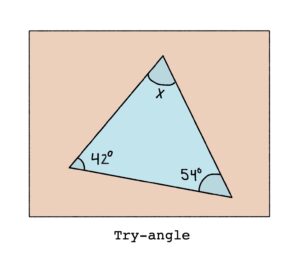
Comic

0

STOP COVID! app aims to increase youth vaccination rates

0
two hands holding a phone as if texting
PHOTO: Priscilla Du Preez / Unsplash

By: Karissa Ketter, News Writer

A team of researchers are developing an app they hope will increase youth vaccination rates in BC. Led by health science professor Scott Lear, The STOPCOVID! app targets 18–29 year olds and is rooted in behavioural change theories. These theories ask questions about why individuals behave the way they do. Different theories hypothesize that different environmental, psychological, and biological factors can affect behaviour.

In an email statement to The Peak, research manager Rochelle Nocos said, “Our young adult advisory group gave us great insight into what youth today like and dislike in terms of games, social media, and where they would access the app.” They found that since mobile games are a common source of entertainment for young adults, they are using “gaming strategy and tailored content [to] connect more with this age group.”

Nocos did not elaborate on how they plan to tackle vaccine hesitancy with gaming.

The Government of Canada reports only 83% of people ages 18–29 are fully vaccinated whereas people ages 40–49 are 89% and people ages 50–59 are 90% fully vaccinated.   

Nocos noted “not much is known about [young adult’s] reasons for vaccine confidence.” They hope the use of this app will give them the data they need to “better understand factors related to COVID-19 vaccine uptake, hesitancy, and confidence” in youth. 

They are also analyzing factors including gender, age, ethnicity, and education. 

Nocos said they hope to launch the app in Spring 2022 across BC, and will advertise at restaurants, cafes, SkyTrains, buses, and social media. Recently, they completed pilot testing and reported it went well.

They are predicting the data they collect through STOP COVID! can be used “as a tool for other vaccination and health behaviour interventions,” according to Nocos.

Can we please stop using the fucking imperial system

0

A guy is looking at a ruler as if they are both tired and unimpressed. They are sitting at a desk.
Measuring tools would be a lot more approachable if we only had to keep track of one measuring system. PHOTO: Amirul Anirban / The Peak

By Amirul Anirban, Peak Associate; Jacob Mattie, Opinions Editor

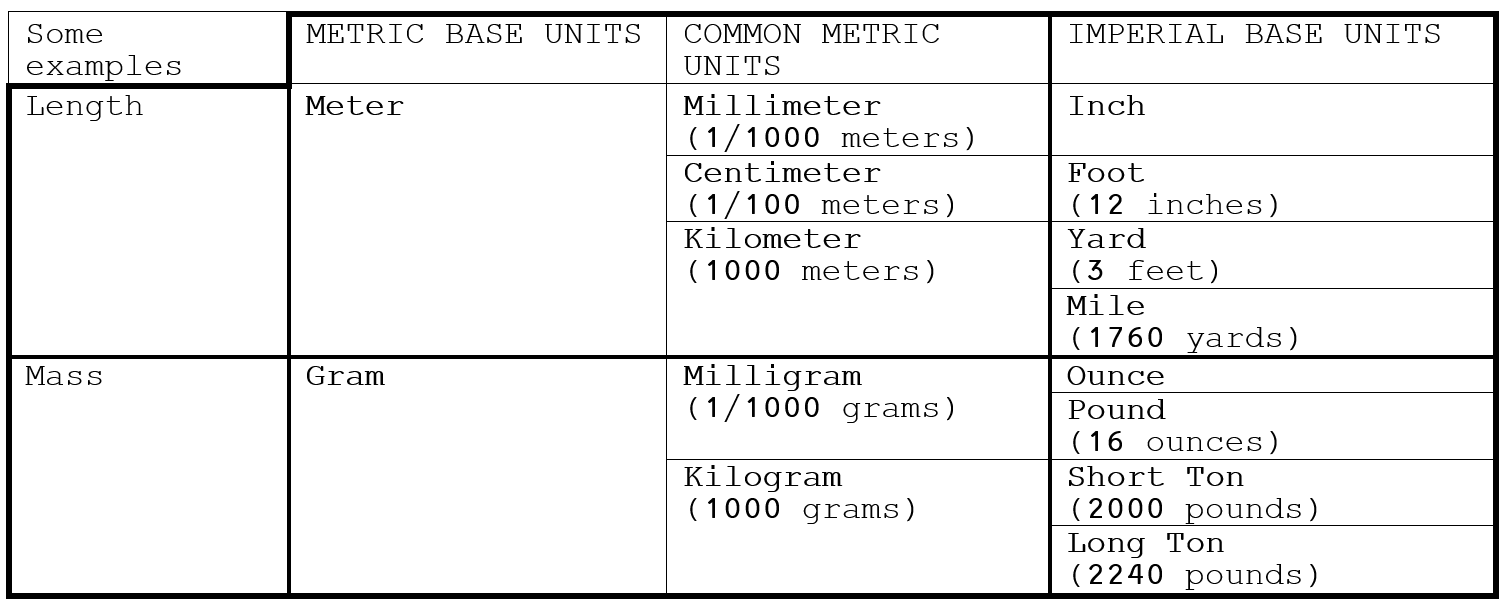
One pound is sixteen ounces, and one ounce is sixteen drams. Two thousand pounds makes a short ton, but 2,240 pounds makes . . . a long ton? The above convoluted measures are the mass units of the imperial system, and to convert between them is tedious at best. There’s plenty of room for blunders, and it’s well past time we scrap the system entirely.

The metric system, in contrast, is much easier — all commensurable units are separated by a factor of 10, and have standardized prefixes. Grams to kilograms? Easy — divide by 1,000. Liters to milliliters? Also easy — multiply by 1,000! Inches to miles, on the other hand? Uh. Give me a moment. Not only does the imperial system require you to juggle equations, but you also need to keep track of the irregular unit conversions. We’re not even addressing the imperial system’s abhorrent approach to volumes — while metric uses tidy units like cubic lengths (cubic centimeter), imperial volumes come in arbitrary sizes like fluid ounces (not to be confused with regular ounces) and gallons.

A chart comparing the regularity of units in the metric and imperial systems. Highlights are in distance and mass. The metric system features meters, grams, whereas the imperial sysem feaures such units as inches, feet, yards, miles, ounces, pounds.
PHOTO: Jacob Mattie / The Peak

In an interview with CBC regarding trade with the US, University of Toronto economist Harry Krashinsky described the continued presence of the imperial system as an annoyance. Most nations have had the good sense to adopt the metric system, but here in Canada we use a mix — pounds, inches, and gallons are used alongside their metric counterparts of kilograms, meters, and liters. We’ll check the weather in Celsius (metric), but measure our oven temperatures in Fahrenheit (imperial).

It took until 1974 for government-sanctioned conversions to begin in Canada. The metric system was made compulsory by the federal government under former Prime Minister Pierre Elliott Trudeau, who said “the metric system is worldwide” and called the people who refuse to convert “dinosaurs.” Incidentally, Canada is home to the world’s richest dinosaur fossil beds, and we continue to hold a stubborn grasp on the imperial system.

In principle, every sector of Canada was converted to the metric system, but this isn’t quite the case in practice: our construction industry — which comprises roughly 7% of the workforce — relies on the materials we produce for the larger US market, and continues to work in imperial units.

We are left in an odd situation — in terms of global trade, the US, Liberia, and Myanmar are the only remaining countries that use the imperial system. Having to constantly route much of our trade through unit conversions creates at best puzzling situations. Foreign sales are given yet another layer of complexity, and unit conversion (or their lack) can cause disasters — take, for example, NASA’s $125 million dollar crash. A Mars orbiter’s navigation was set in metric, but its propulsion was measured in imperial units. The The ensuing discrepancy caused the spacecraft to skim too close to the planet and disintegrate in Mars’ atmosphere.

By now, it’s likely that the US is going to stick with imperial. But as international trade grows, we can do more than build ourselves around our southern neighbours. The rest of the world is in metric — let’s see how we measure up.

Emojis should be used in formal correspondence

0
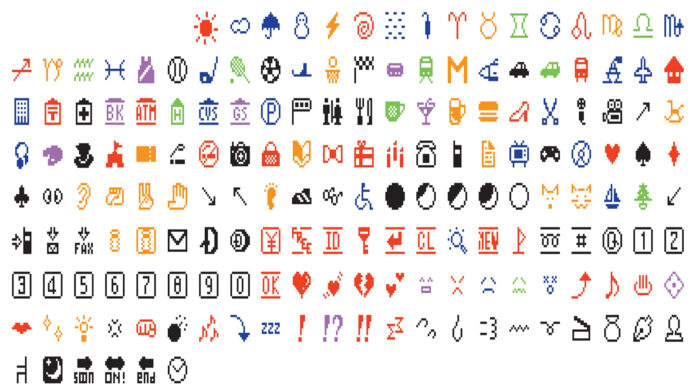
A collection of pixelated images. Many are recognizable as the emojis we have today, including some like the astrological symbols, road signs, and a few food items.
These 176 symbols are the first emojis. PHOTO: Shigetaka Kurita

By: Jacob Mattie, Opinions Editor

The Spring 2022 semester is in full swing, and though the in-person/online classes debate continues, it’s likely we’ll be interacting with one another mainly through emails and Zoom calls. While Zoom preserves some of the social cues of conversation like facial expression and tone of voice, much is lost in emails. This can lead to the agonizing stretches of rereading your email to your professor, trying to express that you really need the extension on that assignment, but don’t want to come off as too forceful or bootlickey. If only there were some way to express emotion through text!

Well, I have great news for you — there is. 🙂

Emojis and their ilk serve to fill the void between talking and texting. They’re a great way to replace the visual part of communication that is so often lost in the transmission of text. 

Sure, there is some stigma around the usage of emojis 🤔. It could be argued they’re a shortcut around proper usage of language. It’s true that a well thought-out phrase can convey as much depth of emotion as you can care to imagine. Many times, I’ve read books where the focus was not on the story as much as the language it was written in. But crafting an email is not the same as writing a novel, and we should not treat them as the same (emojis in literature? That’s the topic of a different piece). Books are a one-sided exchange, while in emails we would hope the person we are contacting will reply to us. It’s then necessary to carry a more personal, approachable tone.

Sure, we could send emails without emojis, but why? Outdated perceptions on how we should structure our online correspondences? Emails have only been around for a few decades, and the world since then has changed dramatically. Emojis didn’t even exist until 1999! Usage of emojis in communications may be seen by some as unprofessional, with the implication that professionalism is equivalent to callous detachment. As any business student could tell you, the key to a successful business is in good relations. In short, the key is a friendly approachability — exactly what emojis were designed to convey 🤠.

Throughout history, the language that people use to communicate has relied heavily on the resources available. Now, we’ve developed an efficient way of adding personality to our correspondence, so let’s actually use it. If we’ve learned anything over these past few years, it’s that no one really enjoys isolation. As we’re stuck conversing through text anyways, the least we can do is try to make it human.

Connect the Lingo

0
Illustration of a character connecting the words “connect the” and “lingo” with a pencil.
ILLUSTRATION: Alyssa Umbal / The Peak

By: Isabella Urbani, Sports Editor

  1. A ____________ is worth 6 points      
  2. 32 points, 12 rebounds, 12 assists 
  3. When a player enters an opponent’s blue line before the puck does   
  4. NFL Championship Trophy
  5. Its rules are thought to have originated in Montreal
  6. Five players on the starting 
  7. Consists of two 40-minute halves  
  8. When a player records a goal, assist, and a fight in a game
  9. The shortstop is situated between two players in this game                                                                
  10. When a home run brings four runners home
  11. A tricky left-handed hitter
  12. A _______ is worth 2 points 

Word Bank 

  • Gordie Howe Hat Trick     
  • safety
  • Vince Lombardi
  • baseball
  • slapper
  • rugby 
  • basketball    
  • Grand Slam
  • hockey
  • touchdown 
  • offside
  • Triple-Double 


Answer Key 

  1. Touchdown; 2) Triple-Double; 3) Offside; 4) Vince Lombardi; 5) Hockey; 6) Basketball; 7) Rugby; 8) Gordie Howe; 9) Baseball; 10) Grand Slam; 11) Slapper; 12) Safety

The ups and downs of my figure skating experience

0
A photo of a figure skater posing on the ice during a figure skating performance.
The hardest part of skating is competing with yourself. PHOTO: Peter Wong

By: Sara Wong, Arts & Culture Editor

I started figure skating when I was six years old. At first, I didn’t want to attend lessons, but I was easily bribed with sweets. Once I got on the ice, I no longer needed the promise of hot chocolate to stay. 

By the end of my first lesson, I went from stumbling and falling to gliding on my own. The pride and joy I felt in that moment was profound. I relished in the fact that the accomplishment was all mine, and the ease of movement skating gave me was blissful. I craved more.

It wasn’t just an on ice connection that made me fall in love with skating. The sport gave me a whole new community to bond with, especially once I joined the Vancouver Skating Club later that year. Through the club, I worked with coaches whose encouragement made learning new tricks feel dauntless. Once I mastered enough, I got to participate in competitions. I was surrounded by friends and fellow skaters who were always uplifting. In an individual sport like figure skating — where there’s nowhere to hide flaws — having that support system was invaluable. 

But everything changed when I turned 10 and it came time to land a single axel.

An axel is a type of jump where you take off one-footed on an outside edge, do a full rotation in the air, and land on the opposite foot, gliding backwards. It took me two and a half years to nail this jump. During that time, my progress came to a screeching halt. Without an axel, I couldn’t compete at a higher level. And my friends, who had more success with their jumps, moved to an elite practice group. I felt isolated.   

No matter what I did, the result was the same: I either fell or landed on two feet instead of one. Somewhere around the year and a half mark, I nearly reached my breaking point. I was tired of repeating the same exercises, of gathering hundreds of bubble wrap sheets (that’s the kind of padding you get in figure skating) and still bruising my tailbone. Most of all, I couldn’t shake the despair that I was wasting my parent’s time and hard-earned money, despite their reassurances that everything was okay. The cost of skating no longer seemed worth it.

I gave myself one more year. With that, I committed to more practice sessions (five days a week) and extra off-ice training (to the point where I could attach a jump harness with my eyes closed). I began mentally preparing myself to walk away when I reached the 11 month mark of my one year ultimatum. Days before my 13th birthday, I finally landed an axel. The feeling when my right foot touched down and I heard the precise hiss of my blade catching the back outside edge was pure joy. That moment remains one of the best, most rewarding experiences of my life. 

I wish I could say everything after that was easy. What followed was another year and a half of failed attempts before I started landing double jumps. But having an axel allowed me to compete again, which brought back the freedom and creativity of skating I had missed. And I happened to place on the podium every time, which helped bring my confidence back.

As happy as I was, I couldn’t help anticipating the next rough patch. Every time I landed a jump, all I felt was relief. My last day wasn’t planned, but it had been an extremely good practice session. The tricks I executed weren’t perfect, but I felt prouder of myself than I had in a while. I wanted it to stay that way. Although the decision was agonizing (and involved a particularly embarrassing breakdown at a Cactus Club), I chose to leave the competitive skating world.

I can’t do as many professional moves during a public skate session now, but the thrill of being on the ice remains. Figure skating will always be a part of my life, and I’m grateful for it. 

At the end of the day, your happiness should never be sacrificed. Knowing when to step away and give it one last hurrah is the difference between creating good memories or forgettable ones. It is important to take your time, and never feel shame or guilt about stepping away — when you can always return.

Top Ten worst movies of all time

0
A crowd of people in a movie theatre
People about to be disappointed due to a misleading title. ILLUSTRATION: Erik Witsoe / Unsplash

By: Tamanna T., Staff Writer

1. Licorice Pizza

A movie revolving around a couple that has nothing to do with licorice or pizza is bound to be a flop. The title is so distracting that I could barely focus on the plot of the film (which I still don’t fully understand) because I was trying to figure out the meaning behind the title. If a movie’s theme isn’t the protagonist professing his love for the love interest by making a unique recipe that involves licorice on pizza, is it really worth it?


2. F9: The Fast Saga

If the saga is stretching to nine films to explain a family plotline, then maybe it shouldn’t be called The Fast Saga. Never again will I give my money to this saga to make another Dom Toretto film. If I hear “family is everything” one more time, I will personally go to Hollywood and tear up the script. 


3. The Tomorrow War

If the war is tomorrow, why are we trying to fight it today? I have so many questions for this film, all starting with why Chris Pratt has to confront his past in order to save the future (isn’t that yesterday?). If I was a character in this film I would not let Mr. Starlord-who-couldn’t-control-his-emotions-and-let-Thanos-win save my world. 


4. The Notebook 

As much as I am a sucker for a good romantic film, the title has to be at least a tad bit relatable to the story. They wrote letters in the movie, the “notebook” doesn’t even come up! This movie would have been much more popular if the title was The Letters


5. Trolls World Tour 

They had to be trolling us with the title. They’re goblins. 0/10.


6. Birdman or (The Unexpected Virtue of Ignorance) 

The first part of the title makes complete sense. A man attains flying powers and beats the bad birds up. My problem is with the latter half of the title. What’s up with The Unexpected Virtue of Ignorance? Why add that to the title? Who does it benefit? Who is ignored and who is the ignorer? I have so many questions. 


7. Man Bites Dog

The only reason I put this movie on was to see a man bite a dog, instead, I was sorely disappointed (but not surprised, dogs are superior). There was no dog-biting, only human-killing, and I was not happy about it. 


8. Twilight (Bonus edition: Breaking Dawn)

When I first watched Twilight as a tweenager, I dreamed of a story with beautiful sunsets and sparkly vampires. But alas, there were no spectacular twilights nor dipping sunsets. My innocent mind was tricked by what I can only imagine was the random title generator Stephanie Meyers used. How else would you explain breaking the dawn in a vampire flick?


9. 50 Shades of Grey

This is a badly written fanfiction of Twilight and it shows — Christian Grey is as single dimensional as a 2015 billionaire with mommy issues could be. I only spotted two shades of grey instead of the promised 50. Honestly, it was hard to focus on any shades at all — these naked bodies kept getting in the way of my colour analysis. 


10. Mission Impossible

From the first film in this series, I’ve been waiting patiently for Tom Cruise to die. But it seems each movie is worse than the one before. The only thing that’s impossible in this series is the studio’s ability to explain how these missions are impossible.

Comics

0

Do you know who this professional athlete is?

0
A photo of a question mark on a chalkboard.
Do you have the athletic gusto to guess our athlete of the week? ILLUSTRATION: Pixabay / Pexels

By: Greg Makarov, Sports Writer

Welcome to the most challenging and intricate game you’ve ever played. This will test your intelligence, wit, and of course, your ability to use Google search. Will you be able to guess this athlete based on our clues? 

    1. They are fluent in French, despite hailing from Michigan
    2.  They started a clothing line named S
    3.  Their favorite song to play during workouts is David Bowie’s Fame 
    4. They had a cameo in the movie Oceans 8, and Beyonce’s music video for Sorry” 
    5. In their sport, two to four people can play at once 
    6. They won their first major trophy at 17 years old 
    7. They have competed at four Olympics (2000, 2008, 2012, 2016) 
    8. They were Sports Illustrated Sportsperson of the Year in 2015
    9. Their older sibling plays the same sport as them 
    10. They won 23 Grand Slam titles 

Did you figure it out? 

I’d say this sounds like Serena Williams, wait, hold on, let me check my notes, yup, it sure is!