Home Blog Page 288

SFU brings Ontario mask recycling program to campuses

0
tall white cardboard box in the foreground
Recycled masks are repurposed into disposable isolation gowns and surgical equipment. PHOTO: Krystal Chan / The Peak

By: Yelin Gemma Lee, News Writer

SFU Facilities introduced a single-use mask recycling program to all three SFU campuses in February. According to SFU News, in an effort to reduce waste from single-use masks, 12 cardboard receptacles are available at all main entrances: 

SFU Burnaby: 3000 levels of the Bennett Library and the Maggie Benston Centre, AQ near the Saywell Hall atrium, and Blusson Hall at the bus loop

SFU Surrey: main entrances to campus buildings and Fraser Library

SFU Vancouver: each of the main buildings (Harbour Centre, Segal Building, Morris J. Wosk Centre for Dialogue, and Goldcorp Centre for the Arts)

The initiative is operated by LifeCycle Revive, a personal protective equipmenft (PPE) waste collection and recycling program operating out of Brantford, Ontario. They aim to form a circular lifecycle of PPE by making sterilized PPE waste into pellets. 

These pellets will then be used to “create non-woven textile for masks and disposable isolation gowns, and injection-molded items used in healthcare,” such as beakers or surgical equipment. The PPE created from the pellets is also recyclable, facilitating a circular product lifecycle to previously single-use products.

The Peak reached out to Facilities Services and SFU Sustainability but did not receive a response by publication deadline.

SFU Facilities adopted this program based on a discussion in Fall 2021 between leadership from all three campuses. Although the program has only seen a “moderate uptake” so far, SFU News reported Facilities is hopeful more masks will be recycled as more students return to campus. 

“The diversion of these products from landfill and the fact that they can be recycled into many other materials is a win for the campus and the environment,” said SFU Surrey facilities associate director Mike Devolin to SFU News. 

Science Daily reported about 129 billion face masks are discarded each month globally which is about three million per minute. As most single-use masks are made of plastic microfibres, this has become an increased concern of environmental scientists throughout COVID-19. Annually, LifeCycle Revive reduces 6.556 tons of CO2 and diverts over 12 million pounds of single-use plastic from landfills.

“Until we have PPE materials made of biodegradable materials, this is the very best alternative,” SFU Sustainability executive director Candace Le Roy told SFU News. “Recycling and upcycling not only reduces waste but decreases the energy and materials required for new products which also reduces our impact on climate change contributing to our net-zero goals.”


Oscar Watch 2022

0
A full movie theatre watching a blank projection
ILLUSTRATION: Jake Hills / Unsplash

By: Sara Brinkac, Humour Editor

Oscar night is approaching and glamour is in the air! While it may be an exciting time for film buffs and movie lovers alike, you may feel a little lost on which films to check out and root for. So, here’s a quick guide to this season’s hottest contenders who we’re sure will clean up come Oscar night!


The Escapist
Stars: Dwayne Johnson, Rachel Weisz, Olivia Colman, and Timotheé Chalamet
Director: Steven Spielberg

You’ve never seen Dwayne Johnson quite like this. Gaining multiple award nominations, the tough action hero shows his tender side in this three-and-a-half hour drama/action/adventure/comedy. With $50 million sets, state of the art CGI, and musical numbers, this is the ultimate summer blockbuster Steven Spielberg has been working towards his entire career. While the Academy has been known to make outlandish nominations in the past, it’s reassuring to see a film of substance finally get the nominations it deserves. 


Meeting Maria
Stars: Sandra Bullock, Cameron Diaz, Jennifer Lopez, and Timotheé Chalamet
Director: Patty Jenkins

According to the Academy, this is “a film contemplating the identity of women and the roles they are expected to play in society,” as demonstrated by the main role of Maria being played in separate scenes by Bullock, Diaz, and Lopez respectively. Typically, this would not be one of our Oscar picks because this is a perfect example of confusing, artsy Hollywood, too busy “experimenting” rather than telling an actually cohesive story. However, what we believe really makes this film empowering is that Maria is a hired assassin who isn’t your typical femme fatale but an older woman without make-up. It’s so refreshing to be told that women still have use when they aren’t young or pretty, they can even be action heroes! You go girls!


Citizen Kane (2022)
Stars: Timotheé Chalamet, Leonardo DiCaprio, Zendaya, and Tom Holland
Director: Adam McKay

With two best picture nominations this season (the other being Don’t Look Up) the king of satire himself has taken on one of the most daringly bold film projects to date: a remake of Citizen Kane. Often described as the one of the best films ever made due to its technical, theatrical, and narrative achievements, McKay says “it could be better” and wholly believes he’s the man smart enough to correct what Orson Welles missed. Well, we couldn’t agree more. What was once a dull black-and-white film, McKay has turned into a stylized spectacle with added storylines that turns this film into a three hour, scathingly satirical epic. For readers unaware of the plot of Citizen Kane, it is a commentary on capitalist corruption of the human soul and condemns the creation of celebrity, a message McKay believes the world is in dire need of. He couldn’t be more right, and this star studded celebrity cast delivers the film’s message with all the emotional appeal and grandeur that was frankly lacking in the original.

Comics

0

SFU Student Updates March 21–25

0
"Student Updates" text in SFU red
You’ve already made it farther through the article than 97% of the student population. ILLUSTRATION: Siloam Yeung / The Peak

By: Luke Faulks, Staff Writer

Key Updates

SFU Board celebrates [placeholder]’s student activism in recent policy shift
SFU has a proud history of student activism going back nearly 60 years. Sometimes that activism is a direct challenge to the university to do better. We’re proud to announce that we’re going to [produce/change/insert] much [less/more/the same, but different colour] [harmful agent] in our [classes/meal plan/ventilation] starting [end of our term]. The credit for this shift goes out to our brave students, particularly [name of group], who pushed the Board to do better. We look forward to meaningfully engaging with them on future issues.


Announcements:


We’ve heard your concerns about SFU being a commuter campus, so we’re turning it into a tourist trap
The Gondola is coming! With just a $210 million investment, we’ll be able to shave up to five minutes off your commute to campus. SFU has been inspired by student support for the project, so we’re leaning in to tackle the most pernicious of rumours about SFU — that it’s a commuter campus. In 2024, students can look forward to guided tours of slow-walking picture-takers, “I went to SFU and all I got was mesothelioma” T-shirts, and more raccoon merch than you can shake a selfie stick at!


If you’re reading this message, that means you won!
For the last decade, we’ve included a giveaway in the body of these messages. Each week, we add any previously unclaimed rewards up, thereby increasing the reward. For your diligence, we’d like to award you a free ride for your undergraduate and graduate career, the option to not have any speakers at your graduation service, and $10 million! Congratulations!


Artona is going to photoshop students’ grad photos.
We know that people don’t like taking grad photos. You’re not going to frame them and proudly display your weary faces, nor will you be using them on LinkedIn or Farmers Only. No, you get grad photos because your relatives pressure you into getting them. Well, no more. Artona has announced a “selective introvert” program, where they’ll take any photo of you and edit it into a cap and gown. They’ll even add under-arm sweat stains for summer semester graduands. This way, your photos can still be appreciated by your relatives, that is, before being shoved into a box full of other items that will be passed down from generation to generation.


The irregular musings of SFU’s Student Services emailer:

[email protected] is tired of not being noticed

I know, it’s a big joke. No one reads the Student Services announcements. Ha ha. I hear you laughing. But just for once, I’d like someone to engage with the stuff that I exhaustively assemble and send out. It’s not a joke. We try and try to put together stuff for students to enjoy, from puppy days to raising tuition to more puppy days, and you people never write back. I’m not asking for anything big, just a question, comment, or even just a straight-up, “How’s your day going, James?” Just once. Come on.

Top Ten ways to recover from a fall

0
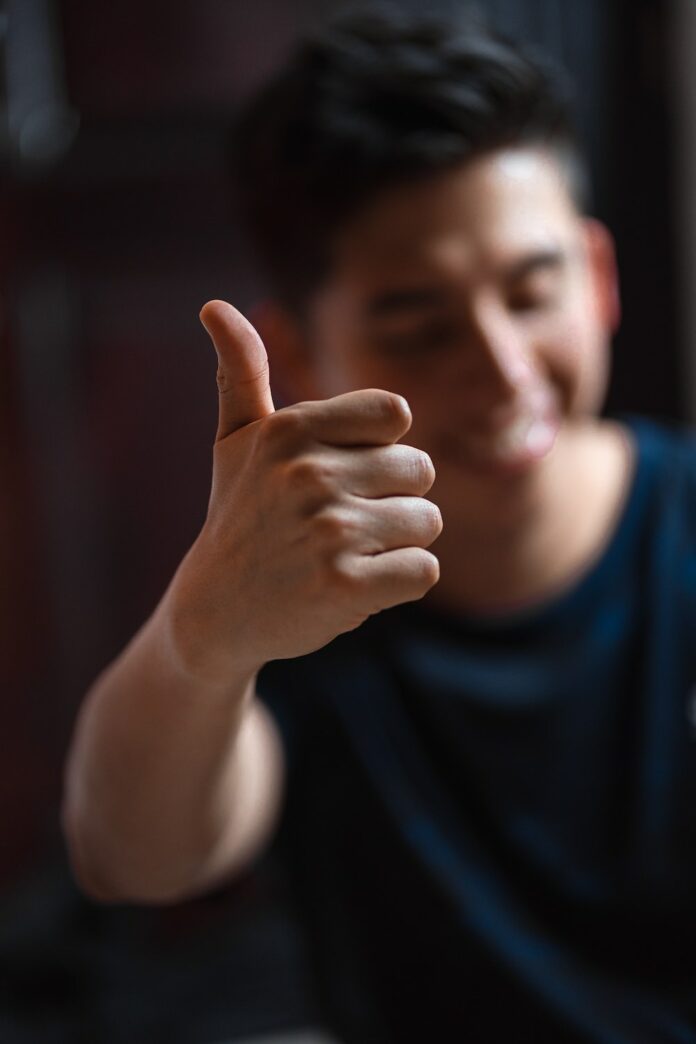
a big thumbs up
A solid thumbs up after your great recovery. PHOTO: Johan Godínez/Unsplash

By: Charlene Aviles, Staff Writer

1. Pretend to propose

Since you’re on the ground already, you might as well just stay on your knees and start proposing to the person in front of you. Say they got you so excited you decided to wait and buy the ring later. The awkwardness of the moment may prompt a yes. Will they take it back later? Probably. But for now, congratulations you two!

2. Pick up lines

If you trip in front of your crush, save the day with an “I’m falling for you” type of pick-up line. Why wait to slide into their DMs when you have the opportunity to stumble into them right now? 

3. Push-ups

Everyone loves a fitness buff. Pretend you planned to get in position to start your workout routine and no one will question the dedication of your athleticism. Throw in a couple phrases like “Go big or go home!” or “Make the city your gym,” and you’re sure to get applause. 

4. Blame the slippery floor

If there’s a wet floor sign, this works out perfectly. But if there isn’t one, there’s probably one somewhere, right? I’m sure you and your lawyer can come up with something.

5. Freestyle 

People might say you fell, but no one can say there’s a right or wrong way to dance. Just pretend the fall was part of your choreography routine! No one will ever know — they’ll be too busy being moved to tears by your wonderful performance. 

6. Stay hidden

Bushes are great because you can hide from people as well as your own clumsiness. So, find a nearby bush and wait until everyone passes before you stand up. If you so choose, this also gives you a chance to plan out how to prank the people passing by.


7. Take a nap

Since you’re already down, get comfortable and take a nap. Everyone’s tired, they’ll get it. 


8. Stretch

Did you know no one can tell the difference between someone falling and someone trying to touch their toes? After sitting in class all day, your muscles start to feel stiff anyway, might as well get some deep relaxation while you’re down!


9. Somersault

When you fall, amaze your audience by doing a rad somersault. Be sure to yell “HARDCORE PARKOUR!” too if you want to really show them you’re a professional. 


10. Own it

Smile when you pick yourself up off the floor. Hold your head high. Everyone falls every now and then. It’s OK!

Little Red Warrior and His Lawyer take on the courts in this satirical play

0
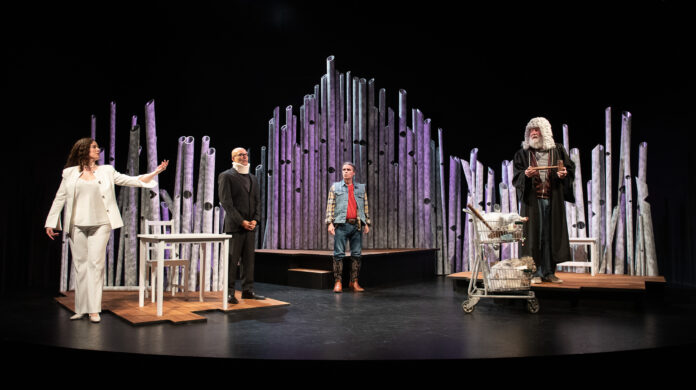
A curved stage featuring a dead forest set design in the background. In the spotlight, from stage right: a woman in a white power suit, a bald man with a neck brace, the Little Red Warrior dressed like a lumberjack, and a judge
Little Red Warrior at The Cultch’s York Theatre. PHOTO: Emily Cooper

By: Meera Eragoda, Editor-in-Chief

Content warning: mention of sexual harassment in the fourth to last paragraph.

Full of dance offs, wit, slo-mo, and a never ending commentary on land claims, Little Red Warrior and His Lawyer is a satire that brings out the deep absurdity of the colonial legal system. 

Little Red Warrior is the last of the Little Red Warrior First Nation. Played by Sam Bob (traditional name Tulkweemult) of Snaw-Naw-As First Nation, Little Red becomes enraged when he discovers industry on his lands. Uttering the words “Little Red smash,” he hits an engineer in the back of the head and ends up in jail. Court-appointed lawyer, Larry (Shekhar Paleja) realizes Little Red might have a land claim and capitalizes on the opportunity, inviting Little Red to stay with him. 

Written and directed by Kevin Loring of the Nlaka’pamux Nation, the play is based on Nlaka’pamux story traditions. Specifically, that of Trickster snk̓ y̓ép or Coyote. In the director’s note, Loring explains in Nlaka’pamux culture, the Coyote “embodies the worst of human character.

“Yet no character in this play is named Coyote or snk̓ y̓ép; rather, the Trickster is the universe of this play. Transformation is possible, nothing is certain, and everyone is suspect. In Trickster Stories, no one walks away unscathed.”

Little Red Warrior is indeed imbued with characters with shifting morals and plot points where moments of hope and revelation are twisted. Larry starts out as a greedy lawyer, turning environmentalist by the end of the play and fighting hardest against Indigenous-led industry efforts. And Larry’s wife, Desdemona (Luisa Jojic), is the perfect encapsulation of a problematic white woman, complete with appropriation and fetishization. 

Meanwhile Little Red, initially fighting for his land, sells out to oil companies, much to the chagrin of his ancestors. The play points out the hypocrisy inherent in all these characters, commenting on land claims and the problems with convenient allyship and white environmentalism, among others.

Little Red’s court case is punted through different levels, decided through dance offs, references to status-quo-upholding precedents, and a special appearance by a pole dancing Queen Elizabeth II. The whole thing seems like a farce because it is. The humour — which may not be for everyone — is at times witty, crass (I could have done without the prison rape jokes), slapstick, and very dramatized. Life imitates art, and this play showcases the ineffectiveness of long court cases, lawyers exploiting land claims through money, and Indigenous peoples needing to reveal trauma to settlers in the court system and beyond.

As Loring states in the director’s note, “The Trickster behaves in ways counter to the Customs and Beliefs of the people.” But rather than simply antagonizing him, this story encourages individuals not to follow the Trickster. Instead, Loring encourages the audience “to enjoy and understand his faults in relation to their Values and Laws.” The moral is clear: no one should be aspiring to become these characters.

Though Little Red Warrior and His Lawyer has wrapped up its Vancouver dates, Loring has published Little Red Warrior and His Lawyer: A Trickster Land Claim Fable, available through Talonbooks. Additionally, The Cultch has a number of other plays to check out through the end of March.

Monday Music: Smooth sounds for late night cruising

0
"Monday Music" in giant yellow block letters with a red background
Monday Music: your weekly themed playlist. Image courtesy of The Peak.

By: Emma Jean, Peak Associate

Picture it: the sun went down hours ago, you’re passing streetlights as you move through the lanes, and the calmness of the night washes over you. There’s nothing like a late night drive, and some songs were made to accompany them. Whether your drive takes place in a car, bus, train, or on a bicycle, these songs will set the mood just right. 


“Tried to Tell You” by The Weather Station

Image credit: Fat Possum Records


This folk trio has gone electronic on their latest release, and the results are perfect for a contemplative soundtrack. While the lyrics traffic mostly in the cryptic, there’s plenty of food for thought in phrases like, “I feel as useless as a tree in a city park / standing as a symbol of what we have blown apart.” The blend of foundational beats, soaring strings, and Joni Mitchell-esque vocals of frontwoman and songwriter Tamara Lindeman make this track ripe for late night thinking. 


“Overslept” by Faye Webster feat. Mei Ehara

Image credit: Secretly Canadian


The queens of mellow alt-folk have joined forces on this appropriately sleepy track. While the softly lit landscape passes you by, let the relaxed rhythm of the drums and guitars take you into the night, as Webster and Ehara confide their 3:00 a.m. ponderings in both English and Japanese. An understated layer of the song is its ambient keyboards, which build and back the feeling of intimacy in the lyrics. After coming home from a lovely night out, “Overslept” captures the warm, pleasant tiredness that follows. 


“Bucciarati” by Open Mike Eagle feat. Kari Faux

Image credit: Auto Reverse


If catharsis is on your mind, this effortlessly smooth track is for you. Off Eagle’s latest release, Anime, Trauma, and Divorce, this track lyrically continues the titular themes as the art rapper surveys the aftermath of an ended marriage. The unique, irregular rhythm of the percussion and the simmering horns bring the frustration of the song to the surface. Faux’s smooth staccato on the chorus and third verse round out the song, elevating it with another perspective of the turmoil. All of these elements make “Bucciarati” perfect for late night release.


“Baker Street” by Gerry Rafferty

Image credit: Parlophone Records Ltd.


Ride into hell with a smile on your face with “Baker Street” (a dramatic statement, sure, but this song is about as dramatic as it gets). If you truly want to feel like you’re bursting off a cinema screen, play this and let the incomparable saxophone solo carry you into the night. The mix of 1970s singer-songwriter brooding from Rafferty (most famous for “Stuck in the Middle with You”) in the verses and the searing horn and guitar solo choruses make this song unique. It’s perfect for a night of devastation and/or head-banging. 


“Why Don’t You” by Cleo Sol

Image credit: Forever Living Originals


Closing out your journey home, this final track is a modern classic. Sol’s self-reflection and advice carry over a steady piano drum beat. Stunning woodwind flourish fills, an agile bass line, and Sol and company’s ethereal vocals accent the track. The sparse instrumentation leaves plenty of room for the gorgeous guidance of the lyrics. By the time the song reaches its chanted outro, the overall feeling is one of renewal and calm. With that headspace in mind, your night out can meet an ideal end.

The intimacy of The Living Room at Centre A

0
A comfy Ikea armchair against a white wall with framed art prints. To the right side, a storage unit with plants and bottles of sake. To the left, a floor lamp turned on.
Let your guard down in this familial space. PHOTO: Gudrun Wai-Gunnarsson / The Peak

By: Kelly Chia, Staff Writer

When the art world so often feels unapproachable, Henry Heng Lu and Hau Yu Wong envisioned an exhibit where visitors can feel like they’re at home. By making the space more intimate, Lu and Wong hope to “challenge the oftentimes inaccessible, highly curatorial nature of a contemporary art gallery.”

Located in Centre A in Sun Wah Centre, The Living Room is displayed alongside Revisiting the Asianadian. This is where issues of The Asianadian magazine are available for patrons to read. They are also available in Centre A’s library. Both exhibitions are free to attend. 

My friend and I decided to check out the Asianadian exhibit first. From 1979–1985, this Toronto magazine featured Asian Canadian — primarily East and Southeast — cultural perspectives. It offered a “counterpoint to the predominantly stereotypical representations of them in the mainstream media.” For example, Dawn Kiyoye Ono wrote about the horrifying experience of hearing older white men discuss, with academic rhetoric, the subservience of Asian women. Her experiences, which consider how media stereotypes affect public perceptions of Asian women, resonated deeply.

Another intriguing article was written by Dr. Bach-Tuyet Dang, where he talked about being a Vietnamese doctor. Dang wrote, “If they tell me about a ghost in their bowels, I accept this belief.” These were some of the cultural beliefs of his patients, which Dang wrote about respectfully. This was the first time I saw a doctor discussing these beliefs on health in Western media without judgement and, instead, with empathy. 

Asianadian felt like it provided a palpable voice to the Asian Canadian community, allowing authors a space to voice their thoughts without reservation. 

Next, we headed to The Living Room. Films are set up for showings on a television in a dimly lit, but comfortable space consisting of two couches and cushions on a floor mat nudged in front of the television. The floral pattern on one of the couches and mooncake container in the room made me smile because these had been in my family’s homes. 

Lu and Wong designed the space so visitors would want to sit down. The films selected for the exhibit’s first program were chosen to represent “reconnection, lineage, and exile.” These themes were shown using a variety of styles, from a silent film on East Asian immigration history (The Yellow Pages by Ho Tam) to a short about a gay Lebanese couple (Mondial 2010 by Roy Dib). 

Settling into soft couch cushions, my friend and I talked through Nang by Nang by Richard Fung. This was a film centring Nang, Fung’s first cousin. We were intrigued by her courage and resilience. We watched as she discussed her life experiences, like leaving the first of five husbands when he cheated and going to university in her 40s. 

Because the rest of the gallery was empty, my friend and I talked easily about our busy lives. It felt appropriate for the makeshift living room and the opportunity the organisers saw for connection “after almost two years of isolation.” I had never considered a gallery a communal space before, but this is what The Living Room aims to change. Alongside snapshots of countercultural Asian Canadian media with Asianadian, it felt like the space was made with the love of community and connection in mind. 

Both exhibitions run until May 2022. Lu and Wong hope to feature movie nights, COVID-safe food events, and reading groups at Centre A. They also invite filmmakers and artists to submit their films to be considered for screenings. Collectives and other community members are also encouraged to submit their works to be considered for display. Interested parties can email [email protected] to discuss submission details.

The Journey Here delves into the behind-the-scenes work of advocacy

0
Collage with portrait photo of Kue, a Karen woman, on the left and an illustration of SFU Surrey campus on the right
Kue K’nyawmupoe shares her lived experiences as a refugee. PHOTO: Courtesy of The Journey Here

By: Charlene Aviles, Staff Writer

Hosted by Steve Dooley, the executive director of SFU’s Surrey campus, The Journey Here is “a podcast that profiles the stories of community builders from all walks of life.” From students sparking social change to professors igniting grassroots leadership, Dooley’s interviewees share whow each of their stories has impacted their lives and work.

What drew me to The Journey Here was the in-depth life stories of its guests. Of the eight episodes that have been released so far, episode two resonated with me most. In it, Kue K’nyawmupoe describes her upbringing in a refugee camp in Thailand and what it was like moving to Canada.

At the beginning of the episode, K’nyawmupoe explains how in Thailand, her family survived by gathering natural resources. “You had to make everything with your hands,” she said. It came as a culture shock when, in Canada, “you wake up and you go to the kitchen. You turn the knob on and you get a fire.”

Her family felt unsure about moving at first, especially since they didn’t know how they would adapt to living in a new place. But eventually, after encouragement from their peers in the camp, K’nyawmupoe’s mom applied for refugee status. 

Before arriving in Canada at 15 years old, her family had only two days to familarize themselves with Canada before moving. Considering they’d be spending the rest of their lives abroad, I can imagine how stressed they must have felt during this time — saying goodbye to the community they’ve lived with for years is difficult in itself. 

In December 2019, K’nyawmupoe revisited her cousins and uncles who were still living in the refugee camp. She also wanted to give back to her mom’s hometown. I found it inspiring that K’nyawmupoe wanted to stay connected to her roots after living in Canada for so long. 

But during her visit, she often had to explain the reality of living in Canada. “It’s funny. When they see you, they think just because you come back from a country like Canada or USA, you have money and you have resources, but what they don’t understand is that you really have to work hard,” said K’nyawmupoe

Contrary to her family’s belief that life in Canada was perfect, they struggled to pay the bills when they first arrived. K’nyawmupoe’s mom worked long hours in order to pay their rent. 

“Where I get resilience from is my mom. She’s a strong woman,” said K’nyawmupoe.

Wanting to pay it forward, K’nyawmupoe became a research assistant on a project about recent refugees. Since she experienced what it was like as a refugee, she felt a stronger connection to the research participants. Her work demonstrates the importance of a support network.

“It was an eye-opening experience for me, because I realized how important it is to receive the services and resources available in the community,” said K’nyawmupoe.

The Journey Here can be streamed on Apple Podcasts, Google Podcasts, and Spotify.

BC Public Health will not keep us safe from COVID-19

0
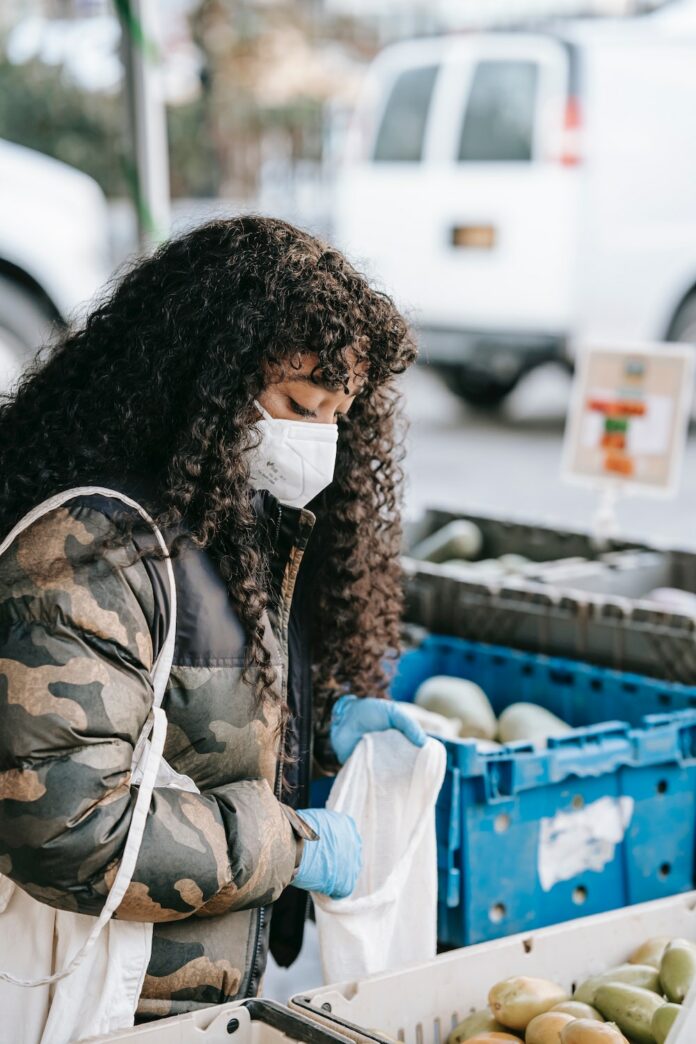
A woman is wearing a camo-patterned jacket, and a face mask. She is outdoors, buying fruits.
Just because we don’t have to wear masks, it doesn’t mean we should stop. PHOTO: Uriel Mont / Pexels

By: Charlie Ruiz, SFU Student

After the worst COVID-19 outbreak this province has seen, cases are finally falling. This is the result of months of COVID-19 precautions — yet, we are once again beginning to lift restrictions. Most recently, BC has decided to drop mandatory masking, despite this being a key precaution in slowing disease spread. This new policy ignores the reality of COVID-19 and further pushes those who are already at-risk into higher risk. 

As I would hope we all know by now, COVID-19 is airborne. This means COVID-19 floats in the air, sometimes for hours, and can easily be transmitted in public areas — unless people are wearing masks. We have years of evidence supporting the benefits of masking — and Dr. Bonnie Henry herself has stated, “We still need this tool.” In a recent interview, she added, while masking may not be currently mandated, it’s still important. 

Why then did Dr. Henry lift mask mandates with barely a day’s notice? She explained she doesn’t believe we need a policy to ensure people wear masks. Well, only a few days after this mandate was lifted, that’s not what’s happening. It’s evident that BC Public Health is misjudging the province’s responses to the health crisis; harming us all. 

SFU has followed public health in lifting the mask mandate, and as a result people will become infected. Students didn’t sign up for courses expecting mask mandates would be dropped at a moment’s notice. Frankly, SFU’s constant claims of being an equitable university are laughable when they so blatantly exclude the concerns of disabled communities when reconsidering masking requirements. As a university, they are not bound to mimic provincial guidelines, as demonstrated by UBC’s continued support of indoor mask mandates. 

Public Health and various other sources recognize the importance of masking to prevent COVID-19, yet they have not done their job in implementing these measures to keep the community safe. Moreover, mask wearing is most effective when everyone wears them, so these new policies effectively decrease their value. Sure, we have high vaccination rates in BC — but variants running amok decrease the amount of protections vaccines can provide. Worse yet, we’ve already lived through this chapter of history: in the summer of 2021, mask mandates were lifted, only to be implemented a few weeks later due to high levels of transmission. The nature of viruses is that new variants will arise and there is evidence they can become stronger.

To those who claim we should “move on,” I would like to ask: what part of wearing a mask has any real effect on your life? You are still going to school, restaurants are open, and you can travel

But what are immunocompromised people supposed to do? The idea that those who are not OK with lifting these precautions should just lock themselves up at home is inequitable, especially when such a small measure effectively decreases transmission. 

At-risk people cannot simply protect themselves on an individual scale. Rather than forcing people into isolation wherever possible, we should be creating policies that invite them to participate with us safely.

There has been an emphasis on “kindness” towards personal choice on masking. I acknowledge there are valid reasons to not wear one, but not being bothered to protect those around me is a choice I struggle to accept with kindness.

We will never get out of this pandemic unless there is coordination with guidelines, and not the flip-flopping between precautions every month. BC and SFU have made clear their priorities — get back to “normal” regardless of the cost. BC dropped reporting COVID-19 active cases, and this obscures the data we have on the pandemic. Just because we’ve stopped tracking the data, doesn’t mean it’s not there. This far into COVID-19, I’m tired of begging institutions to do the bare minimum to protect those in the community.