Home Blog Page 273

It’s not very girlboss of Omicron to ruin my Spring, tbh

0
A woman standing with her arms crossed looking smug
Me — ready to debate COVID-19 to a pulp. PHOTO: Allyson Klassen / The Peak

By: Kelly Chia, Staff Writer

Hey everyone . . . 

So I have you all gathered here on my Instagram Live today because I think it’s obvious we all want change. There’s been anticipation in the air recently and tonight I believe I can be a vehicle for this momentous shift. 


What do I mean, @user10293869? Well, I think we all know what’s been causing a big stink the last two years. That’s right. COVID-19. 

No, no, guys, don’t worry. I think it’s real. It’s a serious problem for sure. And that’s exactly why, today, I’m arguing we unite to fight against it.

Today, I’m standing up for what’s right. It’s time we finally say, “NO!” to COVID-19. I’m taking a collective breath with everyone, and together, we can eject COVID-19 from our space. It’s going to be super easy.

Hey @skepticalparrot, I see your comment and I don’t think you quite understand what I’m getting at here. I’m perfectly fine with wearing masks and everything, I totally get that part. Honestly, the look will probably be Covidcore-chic in a few years. But all of this right now? So not aesthetically pleasing, and so not the vibe . . . It just feels so extra to have to think about COVID-19 every day. It’s ridiculous. 

The only way we can hope to have a positive world is if we are constantly growing together and right now — I’m not growing. Guys, we can stop this if we try. All we have to do is use the skills we learned in school and put COVID-19 in its place with our rock solid theses. 

I’ve listened to what Kant, Aristotle, and all those other Greek dudes had to say about sublimity and all that stuff, and I totally — like — get it. But just so you guys are clear, a good example of sublimity is how I dream of the sublimity of me having the flirtiest non-COVID-19 spring — ever. And, frankly, COVID-19 is the only thing standing in the way of that dream. This act of preventing my sublimity is  extremely anti-feminist behaviour from COVID-19 and exactly why the virus is manspreading across the planet right now. 

So here’s my argument: in order to stop the toxic male gaze of Zoom, we’re analysing COVID-19 with our word. I think this will compel COVID-19 that its presence is no good for anyone’s personal growth, and we can all achieve a better world together. 

In PHIL 101 I learned that in order to convince someone you have a good argument, it’s useful to use logical fallacies.

Well, here’s fallacy #1, COVID-19: you’re what I’d call a slippery slope argument. I mean, it’s in your name. 19. Like, 2019? And yet, you exploded in 2020 and continue to devastate millions today? Hello? It’s 2022. Talk about making false promises, honestly.

. . . Anyways — that’s all the fallacies I remember, but that should be a good enough start. 

Yep, @candiceiscool, I’m perfectly serious. 

Guys, understand we can verbally battle this woman-hating virus back into an atom. Together, we can convince WHO, CDC, and all those organisations to lobby together to plead COVID-19 to let us have a hot girl summer! 

Like it’s been two years of us constantly wondering when enough is enough. you know? And, tonight I’ve finally decided, I’ve had enough. The world has had enough. I mean, aren’t you getting a bit old, COVID-19? Do you really think morphing and growing as a virus is positive behaviour?

What? Why are you reporting my Live? This is an obstruction of public speech, and I will not be silen—


Anti-coffee spokesperson caught chugging iced coffee

0
coffee beans
Maya Beninteso: a has-bean. PHOTO: Jarrod Winkler / Unsplash

By: Maya Beninteso, Peak Associate

According to recent reports, there is controversy brewing within anti-coffee activist groups this weekend.

The Anti-Coffee Federation (ACF) was floored today as shocking images of its spokesperson have been leaked. Images of anti-coffee spokesperson, Maya Beninteso, chugging a litre of iced coffee like spring water has been circulating popular social media platforms since 9:00 a.m yesterday. Beninteso, who had been previously described as the “light of the ACF” after dedicating her life to protesting the consumption of coffee, is now being iced out of her role as candidate. 

During Beninteso’s time as an anti-coffee advocate, she was single-handedly responsible for banning all coffee sales on post-secondary campuses and won several awards for her work. Recently, she published an article detailing the dangers of copious caffeine consumption, cautioning readers of the physiological, psychological, and environmental effects of coffee consumption. However — judging from the leaked images on the internet, withdrawal seems to be the last thing on Beninteso’s mind.  

This stimulating revelation of sheer hypocrisy has been met with mixed reactions. While the head of the ACF, Nobean, is “flabbergasted,” other sources claim they are “not surprised” by the leaked photos and recall Beninteso “incessantly [sniffing] the air upon detection of coffee’s aroma” on several occasions. 

Since the photos have surfaced, Beninteso’s attempts to cover her coffee addiction have been abysmal. Just hours after a public apology, she was once again seen double-fisting iced coffees in SFU’s avocado of shame — one smug witness stated the sight was “pitiful.”

While there exist supporters of Beninteso at this time, this enemies-to-lovers plotline has not been endorsed by the ACF. Many anti-coffee advocates across campuses are calling for the revocation of Beninteso’s anti-coffee advocacy awards citing that her actions have  “bean very bad.” Subsequently, the ACF released an official statement to The Peak, claiming to have “severed all ties” with Beninteso and they sincerely “hope she gets the help she needs.”

And, with that, it seems upon drinking a cup of Joe, Beninteso has become nothing more than a regular Joe.

Comics

0

Horoscopes: February 21–25

0
An illustration of a girl with long flowing hair. Astrological signs and stars shine around her.
ILLUSTRATION: Marissa Ouyang / The Peak

By: Charlene Aviles, Staff Writer and rom-com fan

ARIES: 

You’re constantly running late on dates. Although asking your Tinder match to order while waiting is a good idea, being one hour late is not. This will most likely result in you getting stuck with the bill. Better late than never though! . . . Rright?

TAURUS: 

You like to take risks. On the first date, you propose with a ring pop. While some may think this is a rushed decision, lucky for you, your date also came prepared with a candy necklace to seal the deal.

GEMINI: 

Your date’s food always looks better than yours. They offer you a bite, but you end up eating half the meal. If you split the bill, you might as well split the meal, right?

CANCER: 

As a big believer in destiny, you tend to wait for the perfect opportunity to fall into your lap. Instead of going to speed dating to meet people, you wait for others to approach you. Unfortunately, your crush has the same dating technique and has been waiting for you to ask them out.

LEO:

You expect your love life to be like Nicholas Sparks’ novels, so you spend hours writing long letters. Your long letters ramble on and on about every little detail of your day, and your partner rarely has the time to finish themit. Ever heard of voice messaging?

VIRGO: 

Every relationship needs compromise, except for when it comes to costume parties. You love to outshine your partner. Last week, you dressed up as Fiona from Shrek, but you gave your partner a Lord Farquaad costume. Next time, maybe let them pick the outfit?

LIBRA: 

After a week of back-to-back Tinder dates, you start mixing up everyone’s names. To avoid a Ross-Geller-altar situation, we suggest you and your significant other wear name tags up until your second child leaves for college at the very least.

SCORPIO:

You see every date as a competition. This is great for your win record but terrible for the hopeful hearts you’ve crushed along the way. Ask yourself on the next date if quickly finishing that tiramisu cake is really worth all those tears at the Spaghetti Factory.

SAGITTARIUS: 

You only text back your date when you’re half asleep. You usually get away with it too, until your conversation last night, where you asked to make it official. We’re sorry to say, but you texted the wrong person. There’s still time though! Just blame it on autocorrect!

CAPRICORN: 

You’re often so shy on the first date you decide to copy everything your date does. This would be fine, except you keep going on dates with people who order spicy food, and you can barely handle black pepper. 

AQUARIUS: 

You’re the kind of person who insists on having matching couple outfits with your significant other every day. This, unfortunately, led to a lot of laundry confusion and shirts being stretched out. Maybe consider taking at least one day off next week.

PISCES:

You’ve had your eye on your crush since the semester started. We suggest trying to make your crush jealous by sending yourself a bouquet of roses and acting overly surprised when it shows up. But be careful! Your acting has the potential of being so convincing your crush decides to date someone else.


Top Ten ways to tell a homie you love them

0
Two hands make a heart shape
You and your friend: completing each other. PHOTO: Tyler Nix / Unsplash

By: Sara Brinkac, Humour Editor

1. Send it with a carrier raven

Listen, I know what you’re thinking. “Don’t they mean carrier pigeon?” Get real, kid. Pigeons are so passé. The last thing you want to do is send your best friend a fucking carrier pigeon. You may be sending a note of love but the only message they’ll receive is a total lack of class, care, or attention to nuance. 

2. Announce it on the radio

Now for this one to work, your friend will actually need to listen to the radio. To ensure this happens, we recommend buying them a boombox and insisting they take it with them everywhere they go. Really convince them it’s crucial to their identity and that “we don’t see enough people with boomboxes anymore.” After about eight months of this, you’re good to call up the station.

3. Declare it in a song

Songs are a classic method of love expression and a great way to show your comrade you care. But it’s understandable if you are having trouble composing a love song for your friend. For help with this we suggest studying the work of the greatest love poet our generation has produced: Carly Rae Jepson. 

4. Post it on your story

You know the age old saying: “pics or it didn’t happen.” If you really care about your friend, your pal, your confidant, if you really want to thank them for being a friend, you’ll make it IG official. That means a minimum of five zany photos of you and your bestie with individual songs and careful text placement. 


5. Write it in the sky

Some may say it would be wise to hire a skywriter for this task. But if you really want to show your friend you care, you’ll do it yourself. Some may also say it would be wise to obtain a skywriting certification. But some people are wrong. What better way to express love than by breaking many laws and safety restrictions at once? 

6. Graffiti it on a bathroom stall

Everyone knows the most official declaration of all is that which is written on a bathroom stall. Fun fact: no notary is necessary for any bathroom stall statement and information on bathroom stalls are considered the most sound form of evidence in legal systems across the globe. So, really make it official with your bestie and carve your love onto a bathroom stall for all the defecators out there to see. 

7. Publish it in a student newspaper

I love you, Sofia.

8. Express it through an interpretive dance

The movement of the human form is beautiful and so is your love for your homie. Sit them down in a dim room, gently put on a song that expresses love in its purest form — ideally one by Carly Rae Jepson — and let your body be a vessel for the sweet melodies. Just you and them. Sharing space. Sharing fate.

9. Pass it through a note in class

You know what we’ve really let die in our modern society? The delicate art of note passing. It is strongly encouraged you use your love as a means to revive this system of communication. To really make this work, you need to sit the farthest possible distance away from your friend. Really make people in the class work to elude the professor and express your admiration. 

10. Text it to them right now

Go ahead, pick up your phone and send a loving message their way — it’s easy. You’ve got the spare time and it will absolutely brighten their day.

My uneducated opinion

0
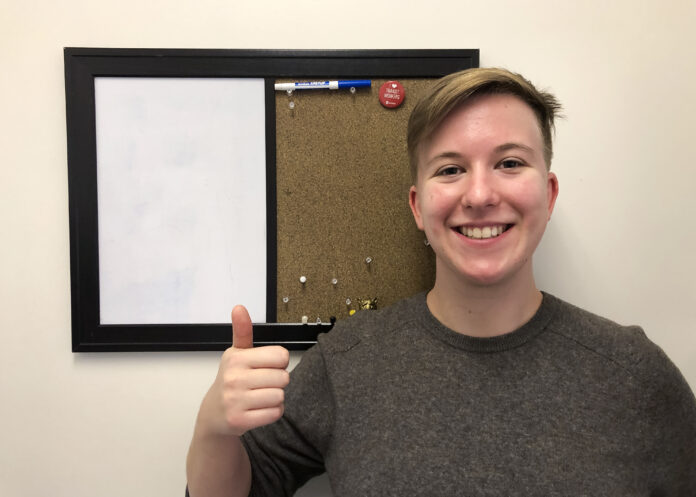
A person giving the thumbs up in front of a whiteboard
Math, Science, Philosophy — our tutor knows it all! Allyson Klassen / The Peak

By: Charlene Aviles, Staff Writer

Q: Define the following 1) what it means to have neutral financial distress and 2) capital structure. When is financial distress neutral with regard to capital structure? 

Neutral financial distress: When you’re stressing out about how much money you’re dropping on streaming services, but your coffee addiction neutralises the pain. 

Capital structure: The instance of using spare change as a means of creating an extravagant, large palace. While these tall towers of pennies are often complex, their total value approximately averages $5. 

Financial distress is neutral when building the palace of pennies calms you down long enough to watch Friends again.

Q: What is a mechanism of an anterior cruciate ligament (ACL) sprain?

The most common mechanism of an ACL sprain is when someone tries doing the YMCA dance at their cousin’s bar mitzvah but amidst the panic and confusion, end up doing the letters “ACL” instead. Out of embarrassment, they decide to fake a sprain on the dance floor and make their aunt Tracy drive them to the hospital. At least they got one letter correct . . . right?

Q: What is one of the reasons the sun does not keep “mean solar time?”

Are you kidding? The sun’s schedule is jam-packed. You can’t expect the sun to handle all of its solar obligations all the while keeping mean solar time too. And for what? Personal satisfaction? If you want to know the mean solar time so badly, try using shadows sometime or maybe even consider using this great new thing called a clock. Just leave the sun alone. Geez.

Q: Let T:ℝn→ℝm be a linear transformation.

Suppose the nullity of T is zero.

If {x1,x2,…,xk} is a linearly independent subset of ℝn, then show that {T(x1),T(x2),…,T(xk)} is a linearly independent subset of ℝm.

42

Q: What’s the difference between an anabolic enzyme and a catabolic enzyme?

An anabolic enzyme is an enzyme ants drink to get their super strength. Whereas a catabolic enzyme is an enzyme put in cat food to help your cat’s metabolism. Once your cat takes a bite out of its bowl, it transforms into a bodybuilder cat with ripped cat muscles. Who needs a guard dog when you can have a guard cat?

Have a class you need to pass? Send your homework to [email protected] today!

You can’t pour from an empty cup

0
It’s impossible to say yes to everything and have time to look after yourself. PHOTO: Annie Spratt / Unsplash

By: Maya Beninteso, Peak Associate

I had a friend — let’s call her Willow. This friendship progressed to the point where we confided in each other regarding difficult topics — like any other close friend. But, over time, I became less of a friend and morphed into her (100% unlicensed) therapist. Of course, I wanted to support her, but not to the extent she expected. I tried to rationalize my therapist-esque role in her life by telling myself she needed my support. But, there is a fine line between being supportive and full-on therapy sessions — that line is called a healthy boundary. 

The day I realized this friendship did not possess healthy boundaries also happened to be one of the most significant days of my life. Without going into too much detail, this was a day I needed Willow’s support the most. I went to her house and she, knowing I had just experienced a hard day, didn’t ask me how everything went and decided to use me for another “therapy session.” I tried telling her I was in no position to support her but she started venting anyway. When I reiterated that my mental state was pretty poor she instantly got aggressive and said I was being a bad friend. 

This is where I should have reasserted my boundary. Instead, I internalized her words and genuinely believed I was not living up to my mandate as her friend. Was I a bad friend? How could I have navigated the situation differently to make her feel more supported? My rumination was interrupted by a text apology from Willow and, without hesitation, I forgave her. 

I have since learned that apologies without change are manipulation, something I wish I knew before the following incident.

A few months later, I went over to her house again one evening. My mother and I have a ritual of watching reality TV shows together and I eventually decided to leave to do just that. As I got up to leave, Willow told me I couldn’t. I thought she was kidding and I laughed, but her face remained serious and I realized she wasn’t kidding. She physically blocked me from leaving her living room and it took me a solid 10 minutes to convince her to let me go. Then, like a mature adult, she proceeded to steal my shoes. 

After yet another five minutes, she gave me my shoes back. That meant that I could leave, right? Wrong. Willow stood in front of her front door, physically blocked me from leaving, and asked, “Are you not going to hug me before leaving?” For context, Willow and I never had a friendship that included physical touch and she knew I wasn’t comfortable with it. I said no and I had to ever-so-lightly slide her over to leave through her front door. 

I sprinted to my car, promptly left, and I never returned. 

During my reflective drive home, I had tears streamed down my face. I realized I was not valuing and asserting my own boundaries and had let Willow walk all over me, resulting in a toxic friendship. In the weeks following that experience, I struggled with asserting the final boundary of ending my friendship with her. After weeks of dry-texting Willow, and failing to respond enthusiastically, I finally conjured up the courage to send a lengthy text detailing how I felt. I expressed a lack of interest in continuing the friendship, especially considering the numerous incidents that appeared to escalate in nature. It was difficult, but I finally communicated this boundary and have consistently held it for the past year and a half. I do still see Willow occasionally, but I have remained firm on my decision to end the friendship.

I allowed Willow to drain me when I already felt empty. In hindsight, I should’ve heeded the warning that a former colleague and friend used to tell me. She would say, “You can’t pour from an empty cup.” I would shrug it off as if my cup wasn’t experiencing a full-on drought due to my lack of boundaries. I just never knew a person who I considered a close friend would be the one to stretch me paper-thin. 

Shortly after resolving my situation (and attending numerous therapy sessions), I had an epiphany. I was always checking in with others, but I never had the self-compassion to check in with the most permanent person in my life: me.

I started journaling as an opportunity to check in with myself and I started communicating my boundaries to loved ones. You cannot expect others to read your mind — you need to take charge of your boundaries and communicate your needs. I found this to be quite challenging but, nonetheless, I needed to take care of myself first. 

If you need to cancel plans with a friend because you need the day to yourself, that’s completely valid. Just try your best not to do this last minute. Take the time to regroup and rest. This will likely feel daunting — I know it did for me — but what’s the harm in placing boundaries? If someone doesn’t respect the boundaries you place, then they are not someone you want to be associated with. You deserve to have your boundaries honoured. I didn’t lose Willow. I let her go.

While my experiences were difficult, they further provided me with perspective and a sense of empathy. Before venting to my friends, I always ask if they are in a good, safe mental state to be on the listening end of a rant. And, at the end of my rants, I always end on some sort of positive note. 

And, on that note. . .

My dear readers, here’s to setting healthy boundaries and filling our cups.

Eternity Martis is SFU’s 2022 Non-Fiction Writer in Residence

0
exterior of W.A.C. Bennett library
The event featured readings from both speakers’ books and their insight on non-fiction and activism. PHOTO: Gudrun Wai-Gunnarsson / The Peak

By: Gurleen Aujla, Peak Associate

On January 20, 2022, the SFU Library and SFU Public Square hosted a virtual reading and Q&A event with award-winning authors and journalists, Eternity Martis and Kamal Al-Solaylee, to launch the non-fiction Writer-In-Residence program. 

The program began last year and aims to celebrate and emphasize “the power of non-fiction writing to share knowledge beyond academia.” 

The event began with Martis and Al-Solaylee doing short readings from their books. “Writing in itself is radical resistance,” Martis said. “It is a triumph. People can try to stop you from speaking your truth but no one can take your words away from you.”

When asked about navigating vulnerability when sharing your own story, Martis said, “Writing about yourself is really scary because you’re putting your heart, soul, your tears [into it].” She added, “Putting that into your book and living in the world that we live in where people can tear it apart so easily, that scared me a lot.” 

Martis connects non-fiction writing to different resistance movements and its importance in enacting change. 

“If we think about slavery, if we think about Jim Crow, if we think about residential schools, that has come from a lot of non-fiction,” Martis explained. She added the importance of non-fiction stems from documentation of these events so that we don’t replicate them. “I think it plays a massive role in resistance movements,” she added. “We get people reading, consuming, and then being so outraged, so touched, or so anything that they go out and act.” 

She recalled being told in her early writing days, “You don’t know whose hands your work is going to end up in.” Her work has been read in institutions and by police forces, lawyers, politicians, and decision-makers. “They get to make that change. The change comes from everywhere and resistance starts with words.”

When writing her memoir, Martis combined sharing her personal experiences with statistics on the commonality of issues surrounding race, gender, and gender-based violence on university campuses. 

Martis questioned how she could make the issue so visible that people could not look away. She said writing about her lived experiences as a Black student at Western University navigating predominately white spaces was a tool to show that such systemic issues are not isolated, but are very common. 

“When we look at the political [and cultural] climate that you’re in today, personal writing and sharing our stories has never been more important.”

Al-Solaylee added non-fiction writing is a bridge between fiction and journalism. Its writers bring in fictional elements, such as scene-setting and storytelling, and journalistic style.

This year’s Non-Fiction Writer-in-Residence program will feature a series of workshops on topics including non-fiction book proposals, memoir and personal essay writing, and how to write about trauma.

Martis’ work has been featured in The Huffington Post, CBC, and Maclean’s, among others. Her best-selling debut memoir, They Said This Would Be Fun: Race, Campus Life, and Growing Up, describes “what it’s like to be a student of colour on a predominantly white campus.” 

Al-Solaylee is the director of the UBC School of Journalism, Writing, and Media. He authored the best-selling memoir, Intolerable: A Memoir of Extremes, and is a two-time finalist for the National Magazine Awards. 

For more information on the non-fiction Writer-In-Residence program and the event recording, visit the SFU Library’s website.

Dr. June Francis speaks on anti-Black racism in Canadian schools and universities

0
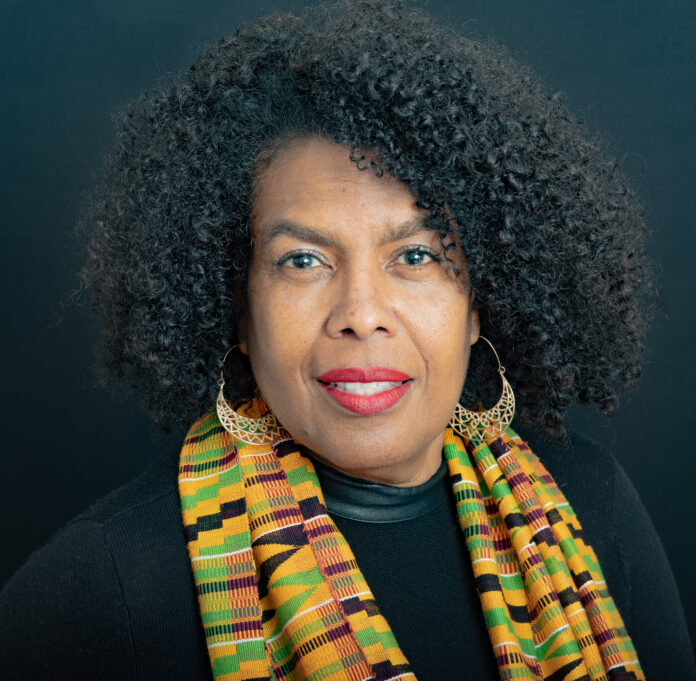
portrait of Dr. June Francis
PHOTO: Waltraud Greif

By: Yelin Gemma Lee, News Writer

BC Black History Awareness Society hosted Dr. June Francis, associate professor at the Beedie School of Business, for their Black History Month opening event. Her lecture, “History of Anti-Black Racism in Schools and Universities,” focused on historical and current case-study examples of institutional anti-Black racism in Canadian education. 

“We were intentionally erased from the history of this country in the same way that we have been erased from the history of the world in many areas because it was an intentional part of the colonial strategy,” said Francis. “From the time that we were liberated and before, we know slaves fought for the right to be educated. So this fight is not a new one, but it continues.”

Francis explained how the myth of white superiority shaped colonial education logic. She said the narrative of an advanced and enlightened Europe was made possible by ideologies of white superiority by scholars such as Voltaire and David Hume.  

“Anti-Black and anti-Indigenous racism were intentionally there to support colonization. It was there to promote ideologies to dispossess Indigenous communities globally [ . . . ] and to justify Black subjugation and slavery,” said Francis. 

She emphasized Canadian curriculum at all levels of education needs to stop teaching Black inferiority, which is “not only done by exclusion, by who tells the story, but by how we tell a story.” Francis explained she was not taught the historical significance of Black success. “When I grew up, I thought William Wilberforce was who ended slavery. That was the narrative I was taught,” she said. Francis explained she later learned about Sam Sharpe, who “led one of the major slave rebellions globally.” 

She called for stories of Black heroes, resistance, and excellence to be embedded into education. “When I look at these beautiful young children seeing [Sharpe] as their hero, it just makes my heart glow.” 

Francis also noted key names who are a part of Canadian history such as Leonard Braithwaite, Canada’s first Black member of provincial parliament who moved the motion to end segregated schools in Ontario. 

She reminded the audience that the last segregated schools in Nova Scotia closed in 1983, only 39 years ago, and still exists today in the form of de facto segregation. She explained de facto segregation takes place when there is a high concentration of white and wealthy students in certain areas. Francis called for an examination of what these schools teach such as offering ballet versus African dance.

Francis also noted contemporary news stories of racism experienced and condoned in schools. She cited the fight to have the Cecil Rhodes sign removed from a Vancouver elementary school yard and said, “What’s missing behind these stories is the work and advocacy that still primarily rests on the backs of the Black community.” Cecil Rhodes was a 19th century politician and businessman in Southern Africa whose white supremacist beliefs and policies gave him the title “architect of apartheid.” 

She brought to attention the field of marketing and its history of racism in the form of advertisements that promote racism to a mass audience. 

“I entered a field of marketing and realized my own education did not address the ways in which advertising promoted racism as part of the foundation of the very discipline I was a part of,” said Francis. “I collected this work myself because I wanted my students to understand that when you see racism in advertising, it’s because it was foundational to its intellectual origin.”

Francis said the Scarborough Charter is a source of hope and opportunity as “it calls on universities and colleges to commit to promoting intersectional Black flourishing.” Some of the commitments include collecting “race disaggregated data,” supporting Black research, Black representation across all university levels including senior administration positions, and support for Black caucuses and student organizations. On November 21, 2021, SFU signed onto this Charter.

“We need to go up a steep hill because we have a long way to go and a short time to get there. Let’s make this as steep an incline as we can. We must go on and build on the work and remember the work that has been going on for decades in this province,” said Francis.

The recording of this event can be viewed on the BC Black History Awareness Society’s Youtube. For more information and upcoming events by BC Black History Awareness Society, visit their website.

Joy Johnson discusses rapid testing availability on February Senate meeting

0
AQ building and pond with people in background
PHOTO: Allyson Klassen / The Peak

By: Yelin Gemma Lee, News Writer

President Joy Johnson announces SFU will be receiving shipments of rapid tests

SFU president Joy Johnson emphasized SFU values community perspectives and is working closely with public health to ensure a safe return to campus. In response to concerns of rising cases on campus and poor communication, Johnson said although there have been positive cases on campus, they “have not heard any reports about large clusters of infections.”

Johnson reported SFU will soon have limited access to rapid tests. Due to the current limited supply, they will be following public health guidance which means these tests will only be given to symptomatic individuals. 

“Based on the guidance from the BC Centre for Disease Control, we’re going to be allocating the first shipment of rapid tests to priority groups. These groups are students living in residence and housing, Indigenous students, and faculty and staff working in-person on our campuses including front-line food service, janitorial, and security contractors,” said Johnson.  

Johnson said as more shipments of rapid tests arrive, they will be looking into wider distribution and access. 


Senate discuss concerns about course deadline extension

Former SFSS president Gabe Liosis said UBC Vancouver Senate had recently approved an extension of course drop deadlines “to extend a compassionate and flexible approach to students during the unusual start to the Spring semester.” 

According to Liosis, the Senate committee of undergraduate studies (SCUS) had discussions of implementing similar measures but ultimately decided against it. 

Liosis asked for a “thorough overview” of the committee’s argument for and against the measure, and the committee’s reason for not implementing these measures.   

Elizabeth Elle, vice-provost and associate vice-president learning and teaching responded. Elle said the question of whether or not to extend course drop deadlines was mainly due to the concerns of students not knowing what to expect of their courses within the first two weeks of online learning. 

“Course expectations, the assessment mode, the content, and even information about the instructor would have been clear during the first two weeks of term,” said Elle. “The student members of SCUS helped the committee understand that a major concern they were hearing from other students was the uncertainty regarding how the term would unfold.” 

Elle said to address this uncertainty, SFU sent out an announcement on January 11 of a definite return to campus on January 24. The in-person return to campus was met with resistance from students, staff, and faculty. A walkout took place on the first day of in-person classes, and multiple petitions and student groups called for remote options for the Spring semester.

She explained another reason to keep the current course drop deadlines was an issue of fairness for many students being put on waitlists for courses — keeping the current deadline would allow these students to add themselves to classes should others drop the course within the start of the semester. 


Senate approve motion for Master of Science in Professional Cyber Security  

Vice-president academic and provost Catherine Dauvergne moved the motion for Senate to recommend the proposal for Master of Science in Professional Cyber Security in the School of Computing Science to the Board of Governors for approval. Senator Eugene Fiume seconded the motion.

Senator Colin Percival raised his concerns on the motion.

“Although I think this is a wonderful program, I am slightly concerned by the fact that it seems to be taught entirely by people on the academic and theoretical side of the field,” said Percival. “I think it would be very advantageous to the students going through this program if they had some contact with people actually working out there in the field.”

School of Computing Science professor Uwe Glässer clarified the program is training and application-oriented, featuring two six-credit lab courses in collaboration with industry partners. 

The motion was passed and the program is expected to take effect in Spring 2023 or later.