Home Blog Page 267

SFU researcher publishes first study on climate change’s effects on mental health

0
An orange sunset
PHOTO: James Day / Unsplash

By: Nathaniel Tok, Peak Associate

SFU health science assistant professor Kiffer Card and a team of health and psychology researchers from the Mental Health and Climate Change Alliance recently concluded a study outlining the effects of climate change on British Columbians’ mental health.The research is the first of its kind in BC to examine how climate change, especially the heat dome in 2021, contributed to the increase of worry, anxiety, and distress among British Columbians. 

The Peak reached out to Card to find out more. 

“Our study is among the first to study these worries using a natural experiment and validated scientific measures of anxiety,” Card stated. “We see peoples’ mental health is being directly impacted by changing natural landscapes and environments.”

In 2021, the research team posted an online questionnaire for British Columbians over the age of 16. 850 participants filled out the questionnaire before and after the heat dome so researchers could see how the heat dome affected their perceptions around climate change.

“Most British Columbians were impacted by the 2021 heat dome, most agreed that the heat dome made them more worried about climate change,” Card said. “The average level of climate anxiety across British Columbia increased by approximately 13%.”

Card believes this research helps verify the idea that planetary health and personal health are related. On the other hand, it is concerning as to whether the mental health system can support the increasing number of British Columbians experiencing climate anxiety.

He points out anxiety from climate change can affect people’s livelihoods. “Worries about climate change are influencing where people want to live, what jobs and industries they work in, whether they want to have kids, and how they are going to take care of their loved ones.” 

The research team continues to monitor other climate events to see how they affect people in different regions in BC and whether a cumulative and lasting effect on mental health is present.

Researchers hope their work will raise awareness of climate change and that it is a current and important determinant of health, rather than something to be put off for the future. Card believes further investment into mental health support and into work to mitigate and adapt to the effects of climate change is needed.

“We’ve heard for years that climate change is the most pressing public health crisis facing us today.” Card concludes. “Cities, provinces, and the government should be investing in mental health care. They should be looking for ways to address the worries and concerns that their citizens have about climate change.”

For those interested in finding out more, Card’s research is published in the Journal of Climate Change and Health.

SFSS election results reveals new executive committee

0
SFSS office inside the SUB
This year’s voter turnout increased drastically from the previous year. PHOTO: Amirul Anirban / The Peak

By: Karissa Ketter, News Writer

Editor’s Note: This article was updated on March 3, 2023 to correct the spelling of Abhishek Parmar and Vaibhav Arora’s names.

The SFSS voting period, which ran from February 15 to 17, has closed. The results reveal the newest executive committee and two referendum votes. 

Newly Elected Executive Committee

Election seats are won when students receive the majority of the votes cast in favour. 

There were a total of six candidates for the new SFSS president. The presidency was won by Helen Sofia Pahou with 35% of the vote. Pahou is a political science major at SFU who ran with the Stronger Together Party (STP). 

Results for vice-president seats are as follow:

  • Vice-president internal and organizational development: Judit Nagy (STP) with 53% of the vote. 
  • Vice-president finance and services: Abhishek Parmar (STP) with 45% of the vote. 
  • Vice-president university and academic affairs: Nicole Kirigin (STP) with 53% of the vote. 
  • Vice-president external and community affair: Eshana Baran (SFU Progressive), uncontested.
  • Vice president equity and sustainability: Rea Chatterjee (SFU Progressive), uncontested.
  • Vice-president events and student affairs: Vaibhav Arora with 59% of the vote. 

Chatterjee and Baran both ran with the SFU Progressives party. The Progressives platform notes they “support building and training community activists and progressive student organisers to create, raise, and maintain political presence on campus.”

Pahou, Nagy, Parmar, Kirigin ran with the STP. Their party notes they are “proudly politically diverse.”

There were students running as individuals as well as through organised party platforms.

This election had far greater turnout than the previous year’s election. The 2022 election saw over 2,300 voters for the presidential vote while the 2021 SFSS elections had roughly 500 to 900 voters for each candidate.

Referendum Results

The SFSS election included five referendum votes. For each referendum vote to pass they require 50% of the votes. 

The first asked students if they support increasing semester student fees by $0.75 for full time students and by $0.38 for part time students to fund the SFU First Nations, Métis, and Inuit Student Association. This fund would be used for support services and raising cultural awareness. 

The SFSS found only 9.8% of Indigenous peoples have Bachelor’s degrees whereas 27% of the general Canadian population obtains a degree. 

This referendum was passed with 60% of the votes. 

The next referendum vote asked students if they support creating and funding two funds — the Students of Caribbean and African Ancestry (SOCA) Black Student Support Fund and the DNA Disabled and Neurodivergent Student Support Fund. These funds are also being used for support services, cultural awareness, and community building. This would increase semesterly student fees by $1.00 for full time students and by $0.50 for part time students per fund. 

The SFSS recognized only 14% of adults with disabilities have a Bachelor’s degree. This is opposed to the 27% of non-disabled Canadians, according to a 2012 study. They also found “only 51% of Black men and 33% of Black women attained a post-secondary diploma or degree, compared to 62% of non-Black men and 41% of non-Black women.”

This referendum was passed with 53% of the vote. 

Two referendum questions centred on SFSS’ health and dental plan. The SFSS stated they have been covering cost deficits from health and dental plans due to rising health care costs. The first question asked for an increase of $39 for both the Basic and Enhanced plan, and the second question asked for a renewal of the Council’s ability to adjust health and dental plan fees by ±5%. Both questions failed to pass. 

The election also asked students for feedback on their preference for the SFSS’s future projects. They asked whether the SFSS should research the feasibility of a SUB in Surrey, a subsidised student housing project, both options, or none. Students were able to pick between these four options to give the SFSS their direct feedback. 

The option for both Surrey SUB and subsidized housing received the most votes with 789 in favour. 

The Peak reached out to Helen Sofia Pahou for an interview but did not receive a response by publication deadline. 

The tough love sport of Roller Derby

0
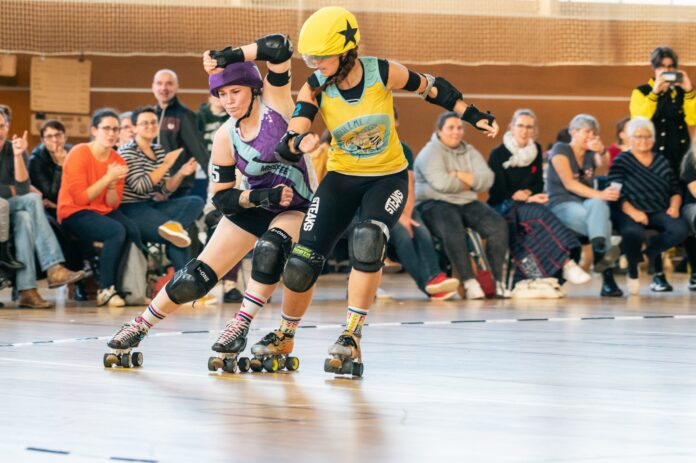
Photo of two roller derby women leaning in to hit each other on the track.
Once comparable to wrestling on wheels, roller derby combines the thrill of racing around a track and throwing a hit. Bastien Plu / Unsplash

By: Greg Makarov, Sports Writer 

Roller derby creator Leo Seltzer described his attempt to draw in crowds of people during the Great Depression as a sport full of “noise, color, and body contact.” This was in comparison to the subdued walkathons he previously ran that weren’t nearly as profitable. The change from walkathon to roller derby was inspired by Seltzer reading that 90% of Americans had previously tried roller skating.

For its first two years, roller derby still operated similar to a marathon. Teams of two, traditionally made up of  of a man and a woman, would “skate 57,000 laps around a flat track,” lasting weeks at a time. But by 1937, on the advice of sportswriter Damon Runyon, Seltzer added the most prominent quality of the sport: physicality. Players were free to put each other in headlocks, even going as far as engaging in fist fights. 

Before long, roller derby was gaining traction and people got a glimpse of the grit with which players handled themselves. Some of the sport’s appeal also came in its ability to not be for the faint of heart. Players required sheer resilience to put their bodies on the line time and time again for the benefit of their team, while the tradition of nicknames allowed participants full freedom to get creative. 

The popularity and buzz surrounding roller derby came from it being one of the only contact sports for women during the mid 1930s. However, the sport faded from popularity for nearly 30 years until it was resurfaced in the early 2000s. Molly Stenzel, the president of the current official governing body, the Women’s Flat Track Derby Association (WFTDA) reiterated the need for roller derby. “There are very few spaces in the world where women, transgender, and gender-nonconforming folks get to use their bodies freely and unapologetically.” Further, as a “response to the clear racial imbalance” in the sport, some women created Team Indigenous. As of 2018, it remained “one of the few teams that are not mostly white.”

Among some colorful traditions grown out of the sports recent revival were accessories like makeup, glitter, and fishnets, which were inspired by the punk and drag scenes in Austin, Texas. More practical changes included reduced physical contact like punching and kicking, and increased protection with the introduction of helmets, padding, and mouth guards.

Almost anyone can pick up roller derby — whether professional or community bound. Leagues exist on every continent with the exception of Antartica. Vancouver has their very own WFTDA team, Terminal City Roller Derby, and the only men’s roller derby team, The Vancouver Murder. Terminal City “is open to all female/gender expansive skaters” and takes on first time to experienced skaters. All they ask is for new skaters to complete six sessions before joining the team. Roller derby only demands a person’s ability to push their bodies to the limit, dish out a hit, and be able to pick themselves and their teammates off the ground for another go around. 

If you are interested in giving roller derby a spin, Terminal City can be found at the following website, and the Vancouver Murder can be found on Facebook.


The Rundown

0
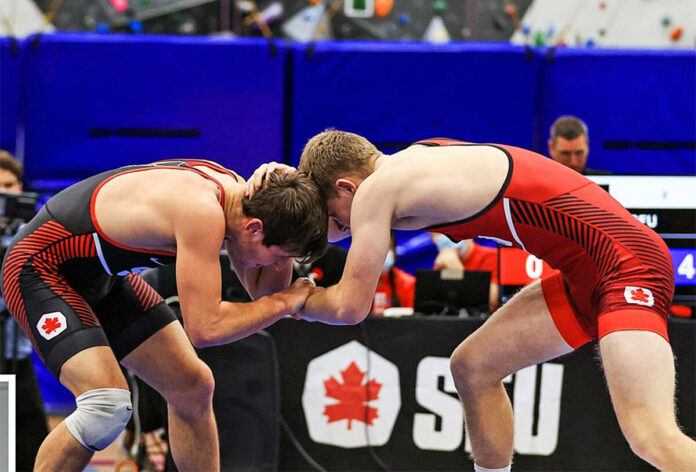
Two wrestlers engage in a headlock on the mat.
SFU swimming and wrestling continue their quest for dominance. Image courtesy of SFU Athletics.

By: Isabella Urbani, Sports Editor 

Another record falls: junior swimmer Kennedy Loewen breaks the 200 individual medley school record set back in 2017. 

Date: February 18, 2022 

Breakthrough: the men’s (basketball emoji) team get back in the win column against the Montana Billings, putting an end to their three game losing streak. SFU’s David Penney scored 25 points, while the team recorded a season high of 12 three pointers.

Date: February 19, 2022

Coming in (fire emoji): Junior guard/forward Sophie Klassen drops 18 points after coming off the bench for an 83–58 women’s basketball win. 

Date: February 19, 2022

SFU’s relays impress: the women’s and men’s 200 medley relay teams break school records set in 2014 and 2003, respectively. The Peak’s February player of the month, Isabelle Roth, was among the competitors. 

Date: February 19, 2022 

NCAA bound? The new record set by the women’s 400 freestyle relay team is under the time required for the 2021 NCAA Championship. Will it be enough for this year?

Date: February 20, 2022 

Champions (exclamation emoji): the women’s wrestling team win their first NCAA Regional Championship. 11 of their 13 team entries have qualified to compete at the NCAA Championship from March 4–5. 

Date: February 20, 2022 

Men’s basketball drop their second to last game before the GNAC Championship after senior Josiah Mastandrea scored 25 points. Senior guard/forward Jordan Lyons has been heating up in his last few (eye emoji). 

Date: February 22, 2022

(alarm emoji) Buzzer beater (alarm emoji): the women’s basketball team lose in the dying seconds after an Alaska Fairbanks shot sealed the game 80–78. 

Date: February 22, 2022

Make room for the freshman! SFU golfer Ryan Hodgins ties for second place at the Division I meet at The Joust in California. The men’s team finished 13th overall. 

Date: February 22, 2022

SFU football to host five Lone Star Conference games at home next season after changing conferences back in November. They will play the likes of Texas, New Mexico, and Oregon. 

Date: February 23, 2022

Women’s softball lose all three of their games against California State Marcos, finishing their roadtrip with three wins and five losses in eight games. 

Date: February 23, 2022

What Grinds Our Gears: SFU Burnaby being one big design flaw

0
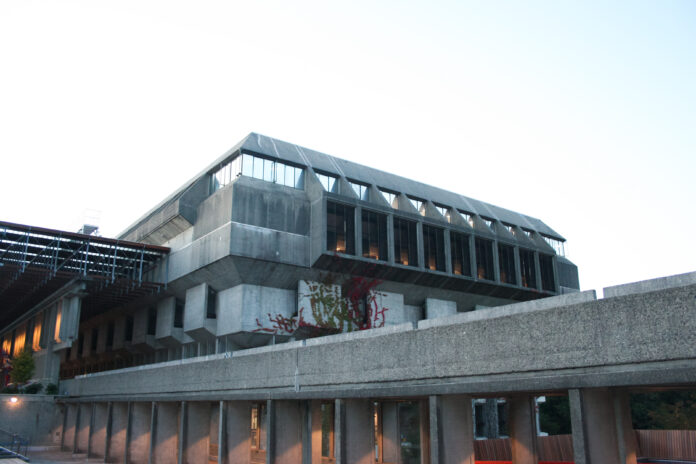
A photo of the WAC Bennett library, taken from the stairs leading to the AQ. The day is overcast, accenting the gray of the concrete. SFU’s architecture is brutalist, and the image accents this incredibly well.
Surely a campus doesn’t need to look as depressing as this? PHOTO: Gudrun Wai-Gunnarsson / The Peak

By: Hannah Kazemi, SFU Student

Burnaby campus is ugly.

The buildings are glum, the hallways are dark, and the overall vibes suck so bad. Walking through the AQ at 4:00 p.m. in November feels like I’m dragging my feet through a wasteland where happiness goes to die. It’s got as much character as the protagonist in a YA novel and if I spend too much time in one spot, I start to feel sad.

Whenever SFU sends out one of those surveys where they ask if I’m “thriving as an SFU student” and for feedback on my SFU experience, I always say that SFU needs to up their interior design standards and buy some fucking houseplants or something. Yes, academia is a brutal contrast to the surrounding world, but at least the infrastructure could pretend otherwise. Give me more art! Give me greenery! Give me something other than a grey slab of concrete to stare at while I’m contemplating all my life choices!

I would DIE for some funky new indoor-outdoor study spaces. Imagine studying on colourful suede couches (or even better, bean bag chairs!). We could be learning while surrounded by plants and art and mood lighting (oh my!); all the while watching the sunset through floor-to-ceiling windows. The SUB is a good start, but let’s not stop there. Anything to change the campus’ vibes. Please, just no more concrete. I can’t take it anymore.

My experience as an athlete with anxiety

0
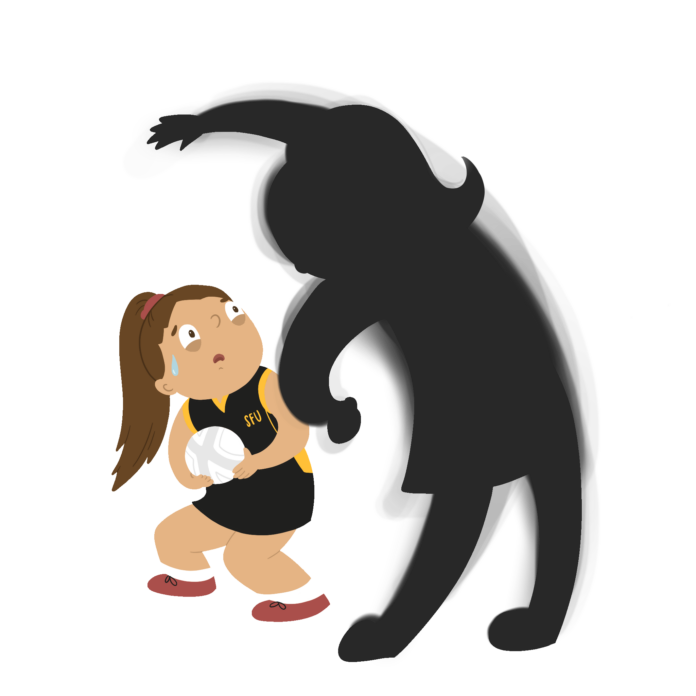
Illustration of a frightened girl holding a ball and a shadowy figure looming over her.
Learning to put happiness ahead of success is a necessary growing pain. Maple Sukontasukkul / The Peak

By: Maya Beninteso, Peak Associate

For the last five years, I’ve dedicated my life to the sport I fell in love with: netball. I literally stumbled upon the sport on crutches. After sustaining an injury from basketball, I needed to go down to the athletic office to get some ice for my ankle. When I saw the team playing, I left my plastic bag of ice, and crutched my way into the gymnasium. It was similar enough to basketball but instead of dribbling, players had three seconds to move the ball up the court.

The coaches laughed me off when I told them I wanted to play — largely because I was on crutches. But, when I returned not a week later, they were shocked that the girl who had previously stumbled in had a knack for scoring. A mere four months later, I made the provincial team and was thriving; however, like shooting stars, I burned out quickly.

When you’re passionate about a sport, it takes over your entire life. You spend every waking moment thinking about training, getting better, and being on the court. My passion quickly became an obsession. More often than not, I would leave practice crying about whatever tiny mistake I made that day. The reality of the matter was I was experiencing anxiety regarding my sport. 

I was engaging in all or nothing thinking. When you think in absolutes, you convince yourself that if you don’t give your absolute all to accomplish your goal, you’ll never achieve anything. This thinking allows no room for this grey area called “maybe.” Perhaps the reason this manifestation of anxiety is so common among athletes is due to the cutthroat nature of competition. The truth is, there is always someone who is looking to take your spot and that makes it easy to feel expendable. I would often find myself looking at my teammates and thinking, “I will never be as fast as them,” or “I will never make the national team.” 

This anxiety plagued my ability to play, and my joy of playing netball. Practice gradually became something I would dread. The court used to be my happy place — the place where I felt most at home — and to see it slowly become a place that lacked happiness and self-compassion was difficult. 

When the pandemic hit, I honestly thought about quitting for good. It would’ve been easy to quit considering the restrictions didn’t allow for sports to continue anyway. I took the time away to start running and lifting for pleasure, while attending therapy. I was in a great place mentally, and had even noticed a decrease in my anxiety. However, a year and a half later when netball started up again, I was presented with a choice: do I go back, or do I leave it behind? 

I decided to go for one session, with the sole purpose of having fun, and then re-evaluated how I felt. When I shifted my focus to having fun, not only was I smiling the entire time, my performance was even better than before. I was finally getting back to the player I used to be, the player who, without a shadow of a doubt, was in love with her sport.

It won’t work out like this for everyone. I didn’t force myself to get back on the horse right away. Instead, I took the time to get to the root of my anxiety and shift my frame of mind. No one should ever have to feel anxiety when doing something they love. Never be afraid to confront these feelings and take a step back to evaluate what you need to do to try to turn things around. 

Today, I’m still playing netball competitively, but with the mindset of the girl who stumbled in on her first netball practice on crutches: I am here and ready to play. And no one can take that joy away. 

A letter from the back of your ears

0
an ink pen and piece of paper
A letter from a disgruntled mastoid. The reason: you.

By: Craig Allan, Peak Associate

Dear Rest of Body,

We need to talk.

I think you can agree I’ve been pretty good to you over the course of our lifetime. I’ve held up your glasses, kept your mask in place, and have literally kept your ears attached to your head. However, I feel you have not been taking care of me as well as I have been taking care of you. It’s time you hear me out.

I’ve decided to outline a list of demands below and would like your complete co-operation if you expect us to continue living in harmony.  It’s time you start thinking about my needs and making an effort in this relationship — consider it a repayment for all the countless things I have done for you over these years . . . Jerk.

  1. I want you to start washing me. Regularly. You never consider how I can get dirty too and it’s time you start committing an extra 10 seconds in the shower to me. I don’t want a half-assed job like your back and shoulders either. I expect a good effort, with fancy soap, an exfoliant scrub, and a nice towel down after — the whole deal. 
  2. Start getting more regular hair cuts. Your hair’s way too long and your nasty split-ends keep itching my crevices. I want to feel the cool breeze caress me again — like when we first were together and you had that bald, baby smelling head. Not that hairy dry conditioner soaked mop you keep on your head now.
  3. Please. Stop putting your gum in me. It’s honestly ridiculous I even have to ask this. I know you like having fresh smelling breath for when you want to get down to the sexy business, but putting your gum in me is irrational, counterintuitive, and wildly disrespectful. The only advantage it serves is that sometimes I get to watch it get stuck in your friggin mop hair but that honestly doesn’t make the experience worth it.
  4. Massages. At least five times per week. Day after day we are consistently burdened with these tight masks that keep pulling us down and it is becoming a real strain. The next time we hear hands coming near us they better be with the intent of relaxation or else

Go ahead, picture a life without us. Picture all of those grocery stores you won’t get into during the pandemic or headphones that won’t stay on your head, and remember — you need us. 

If you don’t meet our demands within one week, we will fight back. Up until this point we have been more than reasonable, but do not attempt to play any games. We are the ears at the back of your head. 

Sincerely yours,

The mastoids

Isabelle Roth puts her name in the record book at SFU

0
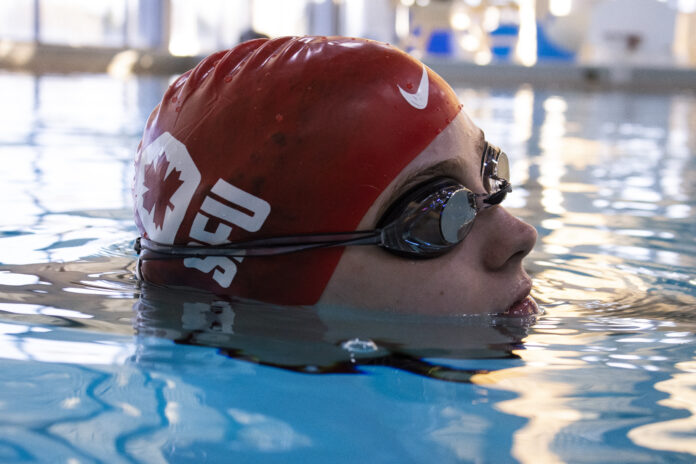
Photo of Isabelle Roth with half of her head raised above the water.
COVID-19 has not slowed down the short distance swimmer in the slightest. Krystal Chan / The Peak

By: Isabella Urbani, Sports Editor 

Freshman swimmer Isabelle Roth receives honours as The Peak’s February player of the month after toppling a 20-year SFU 100m breaststroke record with a time of one minute and nine seconds — under a second faster than Kathleen Stoody’s record set in 2002. 

The Calgary player joins SFU from Western Canada High. Roth won her first national medal in 2019 with her family by her side: a memory she believes sticks out from the rest. 

She was a member of two of SFU’s nine winning women’s events at the first meet of the season back in October. She clocked in during the final leg of the Women’s 3×100 Yard Medley Relay with a time of three minutes and six seconds, and the second leg of the Women’s 3×100 Yard Breaststroke Relay. 

Since then, Roth has yet to take her foot off the gas. In an interview with The Peak, she gushed about the opportunity to be back in the pool, and the relief of settling back into things without skipping a beat.

It is extremely refreshing to be swimming fast again! It was a little nerve wracking to [see how] my times would compare to pre COVID-19, but to my surprise I have improved a lot.” 

Roth’s bread and butter is the 200m breaststroke, despite setting the record in the 100m. She prides herself as being a 200m swimmer and acknowledges the “many different approaches and race plans” necessary to compete in such an event. “Being able to strategize a plan, and execute it is super technical and fun,” she added, giving the example of making the decision to lead the pack or save your energy for a late push. Being given the opportunity to compete in a relay with her team members is also always a joy, she said. 

Roth normally sees action in the second and third legs of a team race. She expressed the importance of all positions for a team’s success, but specified what makes the second leg so challenging is the “pressure of keeping up the pace of the backstroke.”

Roth’s record breaking meet on February 12 at the West Coast Collegiate came six days before the trio of preliminary competition meets to qualify for the NCAA Championship in North Carolina from March 9–12

Focused on the task at hand, Roth didn’t know of her record breaking accomplishment last month. “My dad actually texted me and told me I broke it! My dad has always been my biggest swim fan and knows my times better than I do!”

SFU’s new 100m holder hasn’t had much time to relish in her early swimming success, with her focus locked on the championship ahead of her and what she needs to do to be at her ultimate best come race day. “Before NCAA I definitely need to work on cleaning up the details of my breaststroke (pullouts, finishing my kick, etc).” 

Roth’s freshman campaign will come to an end with the team in North Carolina this month. This will be her final chance to earn some more wins and accolades before next season. We wish her and the swim team all the best!

This week at SFU

0
Photo of the SFU logo next to "SFU" in all caps
The women’s wrestling team will look to wrap up the season with a national championship. Image courtesy of SFU Athletics

By: Isabella Urbani, Sports Editor 

Away Games 

Monday, February 28: women’s golf at the CSU East Bay Tim Tierney Pioneer Shootout in Alameda, California (all day) 

  • Day one of two 
  • First meet since October 27, 2021 in Hawaii

Tuesday, March 1: women’s golf at the CSU East Bay Tim Tierney Pioneer Shootout in Alameda, California (all day) 

  • Day two of two 

Wednesday, March 2: men’s basketball GNAC Championship in Lacey, Washington 

  • Day one of four
  • Trying to advance to the NCAA West Regional 

Wednesday, March 2: women’s basketball GNAC Championship in Lacey, Washington

  • Day one of four  
  • Trying to advance to the NCAA West Regional 

Thursday, March 3: men’s basketball GNAC Championship in Lacey, Washington 

  • Day two of four

Thursday, March 3: women’s basketball GNAC Championship in Lacey, Washington 

  • Day two of four 

Friday, March 4: men’s basketball GNAC Championship in Lacey, Washington 

  • Day three of four 

Friday, March 4: women’s basketball GNAC Championship in Lacey, Washington 

  • Day three of four

Friday, March 4: women’s wrestling NCAA Championships in Adrian, Michigan (7:00 a.m.) 

  • Day one of two 
  • Won the NCAA Regional Championship on February 20 

Saturday, March 5: men’s basketball GNAC Championship in Lacey, Washington 

  • Day four of four 

Saturday, March 5: women’s basketball GNAC Championship in Lacey, Washington 

  • Day four of four 

Saturday, March 5: women’s softball vs Montana State Billings in Billings, Montana (12:00 p.m.)

  • Game one of doubleheader 
  • Team went 3–2 in five games in Arizona 

Saturday, March 5: women’s softball vs Montana State Billings in Billings, Montana (2:00 p.m.)

  • Game two of doubleheader 

Saturday: March 5: women’s wrestling NCAA Championships in Adrian, Michigan (7:00 a.m.) 

  • Day two of two 

Sunday, March 6: women’s softball vs Montana State Billings in Billings, Montana (11:00 a.m.)

  • Game one of doubleheader 

Sunday, March 6: women’s softball vs Montana State Billings in Billings, Montana (1:00 p.m.)

  • Game two of doubleheader

Climate action is hard, but becomes harder the longer we put it off

0
A power generation facility. Electric lines fill the photo, and pillars of something cloudy comprise the background. The day looks hazy, hot, and pervasively dirty.
If we don’t change, the environment will. PHOTO: Pixabay / Pexels

By: Luke Faulks, Staff Writer

Who hasn’t bemoaned change? From a new job to a new home to a change in a family dynamic, humans are made to fear change. We associate change with uncertainty. However, when issues arise, change becomes necessary. Avoiding that change allows the problem to fester. Our response to climate change shows delaying action is making the crisis worse, and making necessary change increasingly overwhelming. 

The late 19th century identified the greenhouse gas effect (the trapping of gases in the Earth’s atmosphere). Over the next three decades, a scientific consensus was reached: anthropogenic (human-caused) climate change exists and presents an existential threat to life on earth.

Since then, deliberate actions have been taken to reduce planet-warming emissions: the emergence of meat substitutes, tax credits for renewable energies, and regulations on industry emissions. However, these advances have been slow to catch on. The change necessary for effective climate action has been consistently delayed, resisted, or ignored

Addressing climate change necessitates a radical change by consumers as well as producers. A general reduction in meat consumption could cut into the 14.5% of annual global emissions produced by the production of livestock. High-speed rail would curb emissions from air travel, and more solar and wind farms would displace fossil fuels from the energy mix. Driving an internal combustion engine really does need to be a thing of the past. Some, or all, of these steps may represent a scary, but necessary, change. 

As it stands, the world has fewer than eight years to halve emissions to prevent “catastrophic climate change.” A 2018 report by the Intergovernmental Panel on Climate Change said as much, in no uncertain terms. 

In 2021, a report by the International Energy Agency was released. A series of strategies were proposed that would result in a 50% reduction of emissions by 2030, and net zero by mid-century. The longer we wait to implement these changes, the more drastic — and the more challenging — our response will need to be. 

Now is the time for policy-makers to increase their climate ambition and follow one of the many plans for change that have been presented to them. 

Change, while scary, becomes scarier the more radical that change needs to be. Learning on the fly from our species’ experience with climate change can help us move forward with a healthier set of habits.