Home Blog Page 249

An autistic person’s review of “Extraordinary Attorney Woo”

1
Jun-ho and Attorney Woo reading notes
IMAGE: AStory, KT Studio Genie, and Nangman Crew

By: Olivia Visser, Opinions Editor

Netflix K-drama Extraordinary Attorney Woo follows the life of a young autistic attorney, Woo Young Woo, who lives in Seoul with her father. The series is dramatic and charming, while respectfully addressing serious social issues like mental health, labour rights, and sexism. Many western media outlets have attempted to represent autism on screen with little success. I was pleasantly surprised to find that Extraordinary Attorney Woo effectively captures the many challenges of adjusting to adulthood as an autistic person who just wants to fit in. I could really connect with this sense of isolation depicted on screen. 

It was emotional to see a show articulate the social aspects of disability so well. Many series pathologize autism by using tropes that focus on “symptoms” or treatment rather than the autistic experience. Shows like Atypical and The Good Doctor medicalize autism by frequently showing their autistic characters in therapy. Autism is more than just a disability — it comes with considerable social stigma and isolation. Fitting in at work and even just engaging in simple conversation is a challenge for Young Woo, and she works through this with her friends and family instead of therapy — everyone’s different.

Part of what made the show more authentic for me was its honest portrayal of autism. Young Woo is far from perfect — she has a lot of difficulty with interpersonal relationships. She often finds herself hyper-focused on particular topics like whales and law, and ends up overlooking how other people feel when she has a goal in mind. Like everyone, autistic people have flaws. This series portrays Young Woo’s flaws as natural instead of demonizing her. At the same time, it celebrates her quirks and mannerisms as differences that can make life more enjoyable. 

The problem with autism’s media representation is that it’s targeted towards neurotypical people, who see autistic people’s behaviour but lack an understanding of what goes on inside our heads. TV shows like The Good Doctor and The Big Bang Theory try their best to make autistic people seem aloof, unreasonable, and unrelatable. Because of this, I rarely find myself enjoying shows with autistic characters. Extraordinary Attorney Woo was enjoyable to watch because it often reminded me of myself. Young Woo’s introspective remarks about feeling unfit for society were tear jerking at times.

Genuinely relating to a character is something you nearly never experience as an autistic media consumer, since you have limited and poor representation. Young Woo’s relationship with Lee Jun-ho was familiar and touching to watch, and I appreciated that this show highlights some of the difficulties of navigating relationships as an autistic person. Young Woo repeatedly finds herself more interested in discussing law than her relationship, which hurts Jun-ho’s feelings. She forgets that many people like to be asked about themselves at times, while Jun-ho doesn’t understand that info dumping can be its own love language. It particularly stood out to me when Young Woo expressed frustration with the restrictive nature of her thoughts: “All my thoughts tend to centre around me, so I make people close to me lonely. I don’t know when or why I do that. And I don’t know what I can do to stop it.”

Extraordinary Attorney Woo has its own flaws, despite being one of the more tasteful shows with an autistic character. I had to overlook some blatant clichés like Young Woo having a high IQ and photographic memory. You don’t need to portray autistic people as hyper-intelligent for a show to be interesting! It also has a few content warnings to watch out for: ableism, abuse, suicide, and sexual assault. The most significant criticism comes from those who say Young Woo should be played by an autistic actor. This argument is important. Media representation should start with the hiring process, not with the fictional character we see on the screen. Multiple autistic actors auditioned for Atypical, but a neurotypical lead was hired. Extraordinary Attorney Woo doesn’t have any known autistic cast members, which is a shame. 

That being said, I don’t think we should write the show off as unwatchable. It’s important we continue making strides to expand our neurodivergent representation, even if that means we fail at times. I would love to see Extraordinary Attorney Woo return for its second season with an autistic actor, but more importantly, I hope neurodivergence becomes a normality in television rather than being an exaggerated trope.


How can scientific communication evolve for the average reader?

0
It’s 2022 and somehow, we still need to protest in favour of scientific trust. Alt-text: People holding signs with various messages in a pro-scientific trust protest.

We live in the era of sharing articles after only reading the title (hopefully, you, dear readers of The Peak, don’t follow this trend). How many of us have received a link from loved ones that either seems too unrealistic, comes from a sketchy page, or is outright just a bunch of lies? It’s pretty obvious you didn’t even open the article, Auntie Grace.

Back in 2016, the Science Post, a satirical news publication, published a piece titled “70% of Facebook users only read the headline of science stories before commenting.” This article was shared by nearly 46,000 people, but ironically, the Science Post team only wrote an opening paragraph and the rest was just a “Loren lipsum” placeholder. Later that same year, the Columbia University Data Science Institute found that 59% of links shared on social media were never actually clicked. Who would have thought that in the age of “alternative facts” and fake news, most articles are shared completely unread? I know, shocking.

The sad news doesn’t end there. First, I recommend you to search and read Farad Manjoo’s incredibly witty article “You Won’t Finish This Article,” for The Slate, where he explains common reading behaviours of people — like how much time they spent in specific sections of a webpage or how long they keep their window open. He discovered that even when people open articles, not everyone gets all the way to the end: only between 2040% of readers finish an article. Although this is bound to change and depends on each media outlet and the content they publish, the trend skews toward articles not being paid much attention to. We are sharing so much data without knowing a lot about it!

So what does all this mean for scientific communications to the general public? The result isn’t good. We’ve seen what mistrust in scientific knowledge can do — anti-vaccine movements have caused outbreaks of easily avoidable diseases like measles, whooping cough, and chicken pox to resurface. Some of the most outrageous conspiracy theories have broken public trust in health institutions and knowledge. This is a complex problem that’s bound to have very complex roots, but something we can do is try to bridge the gap between accurate scientific communications and the general public. We can start by writing about science in a way that is easily comprehensible and compelling.

While I don’t have a concrete answer on how to make a scientific story compelling, I will gladly talk about captivating ways scientists have gone beyond the traditional methods of research dissemination.


Social Media

Let’s start with TikTok, one of the most successful approaches to reach the most people, especially younger audiences:

  • Do you like human anatomy? Then here’s an account for you: @instituteofhumananatomy. Be aware though, graphic images of the human body can be seen in this account.
  • Do you like Astronomy and all things space? Then enjoy @astroathens content!
  • Do you want to learn more about chemistry and ecology? Here you go: @coolchemistryguy.

I could keep going on like this for the rest of the article and meet my word quota by just including the usernames of STEM TikTok creators, but I’ll end it there. The point is even celebrities like Bill Nye have very successful, informative, accounts! While it’s true that a lot of fake and troublesome content can be found on social media platforms, there are tons of creators that actually use these platforms to explain and demonstrate complex scientific topics. Last week I spent close to an hour watching TikToks about astrophysics from an actual NASA engineer! TikTok and other similar social media platforms have the potential to teach us about science without us even noticing (I swear that hour only felt like 15 minutes).


Podcasts

Let’s move now towards podcasts. To be honest, I don’t listen to podcasts much besides Crime and Forensics, but my lack of experience with them is not a reflection of this platform’s accomplishments. Hearing scientists talk about science with their peers or non-experts in a more informal scenario makes it so much easier to actually understand what is happening. Many scientists have the ability to present and talk about very technical data in a way that is easy to digest. Now, imagine if these same scientists were to be in a podcast, talking about their research, I’m certain scientific knowledge would reach far more people and could even potentially renew an interest in STEM for those who are interested in pursuing it. Although podcasts can also be extremely technical and even intimidating, it all depends on the creator and their intentions. I’m almost certain that for every extremely technical podcast, there are at least three others that are far more approachable — they are podcasts, they just keep coming!


Books

Let’s finish with the most traditional one of the list: books. Let me start by asking if you would read a book that is a bit over 300 pages long and that manages to have over 300 citations? Yeah I know, it sounds like a ton of work, but this example is actually the very opposite of it. First, I would like to clarify that when I talk about books as a way to communicate scientific research, I don’t mean your 3,000 page McGraw Hill technical book that will cost you half your monthly rent. I mean books authored directly by scientists that feel closer to non-fiction stories rather than technical books. A couple of weeks ago I finished reading The Genome Odyssey by Dr. Euan Angus Ashley. It talks about how our own individual genetic information has been used in recent years to diagnose and even treat diseases: the most impressive part of it is how easy it is to make a connection and understand the importance of very complex scientific themes. When Dr. Ashley talks about his patients over the years, he talks about how their conditions affect their lifestyles, how his team began the quest to find a diagnosis, and the novelty of their approach towards treating them. It makes you feel like you are not reading about genomics (a word most of us don’t use in our day-to-day vocabulary) but about people’s life stories. By the end of it, you somehow know a lot about the use of genomic data science for medical diagnosis, the definition and expectancy of precision medicine and how it will completely change the medical landscape in the next couple of decades.

When reading and talking about scientific research, sometimes a feeling of dread might come to us as grasping “the big picture” of sometimes very technical subjects can be mentally exhausting. If it’s hard for scientists to understand, just imagine how hard it’s going to be for the general public! There’s a common thread among all of these channels of scientific communication: they’re easy, they’re relatable, and they’re impactful. The way we communicate and interact with day-to-day news has evolved with our usage of communication platforms, but somehow scientific research has been kept behind traditional approaches like peer-reviewed journals which don’t work for the average reader. We should learn from the community of scientific content creators, podcastors, and writers that have taken more modern and creative approaches if we are to break the barriers that limit the spread of scientific knowledge.

Top ten ways to ensure everyone knows you’re a calm and collected person

0
Very calm, very cool. Nothing wrong here. Illustration: Siloam Yeung / The Peak

By: Maya Beninteso, Peak Associate

1. Cry with every minor inconvenience 

Haven’t you heard? Only calm and collected people cry when their pencil drops for the fourth time in thirty minutes. I don’t know about you but, by that definition, I surely have you all beat in the calmness category (sorry, not all of us can be winners).

2. Talk with the goal of efficiency

Be a time management queen and talk as fast as you possibly can, with as little words as you can. If no one can understand you, that’s on them! Concision. Speed. Success.

3. Always reach your destination at a sprint

This is your sign to dash down the halls of the AQ. Live out your Home Alone rushing to the airport scene (but don’t forget Kevin). Nothing says “I’m cool as a cucumber” like sweating profusely as you sprint your way to your third lecture of the day.

4. Bring your life’s supply of stationery to lecture

Your classic ballpoint pens and mechanical pencils. Your wax seal set. Your standard pencil that is, like you, one sharpening away from its wit’s end. Bring absolutely every piece of stationery that you own (yes, even the lingering bits of crayons from when your biggest worry was colouring inside the lines). Use this tip and you’ll secure the coveted title of #thecalmestperson

5. Ask questions

No question is a bad question! Ask them all! When the professor starts lecture and introduces themself, ask about the origins of their name, the reason why they chose a life in academia, and their life story. Bonus points for frantically taking notes after they answer . . .with a gnawed crayon.

6. Master your courses before they start

You heard me. Finish the syllabus before it finishes you. Study with the intention of schooling your professor. In the event they slip up, your calm and collected self will demolish them with your knowledge, subtly mocking their lack thereof. After all, Type A and toxically competitive people are well known for their ability to be calm.

7. Wear a “I am a calm and collected person” t-shirt

Work smarter, not harder.

8. Drink all the caffeine

Wake up? It’s time for two iced coffees. On your way to campus? It’s time for contemplating your life choices RedBull. Studying in the library? It’s for some highly caffeinated tea, followed by another two iced coffees. With all the empty cups surrounding your very productive workspace, everyone will know how calm you are. Bonus points if you consume caffeine to the point where you get the shakes

9. Narrate your every move aloud 

[insert your name] paces back and forth near the koi ponds, wishing they could drop out, trading school for becoming a part of the school of fish below. Their reflection in the water reflects their moment of self-reflectio—


Meanwhile, dozens of students have stopped, watching you and your not-so-quiet moment of introspection. Surely, indubitably, without a shadow of a doubt, they’re all silently thinking just how calm and collected you are . . .

10. Be yourself

If you’re reading this piece about how to let everyone know you’re a calm and collected person, chances are that you’re already calm and collected — and that you likely follow at least one of these tips (tip one hits close to home, huh).


NFL star Christian Covington returns home to host annual free football camp

0
This is a close up photo of Christian Covington on the football field.
PHOTO: Pranjali J Mann / The Peak

By: Isabella Urbani, Staff Writer

Christian Covington, defensive tackle for the Los Angeles Chargers in the National Football League (NFL), hosted his fourth annual football camp on June 26 at O’Hagan Field in Vancouver. The camp ran from 10:00 a.m.–2:00 p.m. and included a Q&A session with Covington and a few of his NFL friends, including Emmanuel Ellerbee, Whitney Mercilus, and current teammate Joe Gaziano

“I mentioned free camp for kids and a free trip, and they were like ‘sign me up,’” joked Covington about recruiting his friends. “I only bring guys that I know are going to encompass everything I stand for and everything my family stands for.”

Nearly 70 kids from ages 8–15 came out to the event to participate in a day full of football drills, repping a Chargers shirt with Covington’s number 95 on the front, before ending the day with a complimentary lunch and swagbag with snacks and custom mouthguards from the event’s sponsors. 

While the kids took to the field, spectators had an opportunity to visit the silent auction tent to bid on a variety of gifts ranging from a Nintendo gaming system equipped with two games to Nike shoes. All the gifts were either donated directly to the event or were purchased by Covington himself with all proceeds going to KidSport BC and Sunshine Kids, whom Covington works with in the States.

Although the day was full of football, the camp was open to participants of all skill levels. “I just want kids to be around professionals,” explained Covington. “This is not a day for skill development, this is not a day where you’re going to get recruited [ . . . ] no matter what you want to be, it starts with work ethic, commitment, and sacrifice. Whether it leads to football — great. Whether they want to become lawyers, doctors, it doesn’t matter, let these kids have fun.”

Running a camp has been something Covington has wanted to do since he was five years old. Growing up, Covington was no stranger to practicing with professionals. His father, Grover Covington, is a Canadian Football League Hall of Famer for the Hamilton Tiger Cats and still holds the league record for most sacks — tackling a quarterback before they can throw the ball. For Covington, it wasn’t a matter of when he would host his own camp, it was making sure that when he did, it would be “accessible to everyone in the area” no matter the cost. Although most participants signed up for the camp online, Covington specifically reserved spots for children in low-income communities in Surrey and Vancouver, who might not be exposed to football at all. But when the pandemic began, Covington had no choice but to put his plans for his next camp on hold. Nearly three years later, when restrictions started lifting in BC, Covington knew he had to seize the opportunity and return home.

“It’s been difficult,” said Covington about organizing the camp around the pandemic. “At the end of the day, I am just thankful and blessed that we were able to do something on such short notice. We didn’t really know if we were going to be able to pull this camp off.” Normally, preparations for the event would take place a year in advance. 

Entering his eighth year in the NFL and hosting his first camp since the pandemic, Covington is thankful for the opportunity to come full circle at this stage in his career. “I spent 13 years of my life here. I was at Vancouver College from Kindergarten to Grade 12. It’s very nostalgic to walk around the halls for the first time in a couple years [ . . . ] it’s humbling: knowing where I started, where I came from, and what I had to do to get to this level. I’m eternally grateful for the journey and everybody who was rooting for me.”

The event was packed with close family, friends, teammates, and current Vancouver College varsity football players who helped run stations. Among those special people in his life were his mom and dad who Covington referred to as his “prime examples.” 

His mother Natasha Covington and father Grover are most proud of their son’s kind character, particularly his “willingness to want to come back and help [his] country, province, and community with the kids,” they told The Peak. His teammate and cousin echoed the same sentiment. 

“You can tell that he means a lot to the community,” replied college teammate Ellerbee. “When you’ve reached the NFL, and you come back to your hometown to do this for the kids for free and bring other professional athletes back here, it’s phenomenal,” shared Covington’s cousin Vincent Johansson. 

With the camp behind him, Covington is already optimistic about next year’s turnout. Although 70 kids is an impressive showing, Covington hopes to expand next year’s camp to 200 kids, which the camp drew in before the pandemic. Even with a full NFL season ahead and his own personal foundation in the works, Covington will always make time to help the youth of his community.

Monday Music: Songs to say good-bye to summer to

0
“Monday Music” in orange block text on a yellow rectangular background with rounded corners and an orange border.
Monday Music: your weekly themed playlist. Image courtesy of The Peak.

By: Michelle Young, Editor-in-Chief

Autumn comes with purple skies, early sunsets, and a crisp wind. To me, fall means oversized hoodies and introspection while the trees shed their leaves. Growing up Latina, listening to Spanish makes me feel comforted: it warms me up like café con leche. To match the melancholic weather, I put together a few cozy songs to listen to on a cool evening drive or chilly September morning. 

“Descifrar” by maye 

Starting off with a smooth beat, maye’s gentle voice compliments the mellow guitar chords in the background. She coos about wanting to find her own happiness, and “sail in other seas” to heal herself. Vocals blur together in harmony to conclude the pensive track, a perfect complement to self-examination and new beginnings. 

“Un Millón” by The Marías  

For a groovy, synth-heavy track, and enchanting vocals, look no further. Lead singer María Zardoya, begins sweetly, singing about a great romance and dancing skin-to-skin. The song builds itself up with upbeat ambience and clear electronics for an atmospheric song to pair with autumn evenings.

“Decir Adios” by CUCO 

Piano chords blend together for this reflective track as CUCO remembers a past relationship. He sings about how “there’s no easy way to say good-bye.” Slowly, strings and percussion are introduced, and hymns of harmonies lead into “the days when the sky cries and tears flood the city.” The song asks for the heavens to guide his partner’s heart, breaking into a fierce guitar solo. 

“LA MEMORIA” by Jessie Reyez

This passionate track embodies the pain of trying to forget a toxic partner. Reyez reminisces as she cries, “You need to lose a war, you need to find a twin, who breaks your heart, who leaves you in sorrow.” The background vocals are haunting, layered neatly behind Reyez’ outspoken narration of being unable to forget. 

“BUEN DIA” by Becky G.

Beginning with upbeat piano, strong vocals, and complemented by brass — this song is about getting back on your feet. “They also broke my heart, they talked about me without reason, I don’t care,” is sung fearlessly, blended into the beat. Filled with empowerment, take on the new season with the “desire to eat the world.” 

SFU Dining Commons: New look, same culinary experience

0
Photo of buffet-style dining hall with wooden accents
PHOTO: Roshi Chadha / The Peak

By: C Icart, Staff Writer

The Dining Commons is finally open! It boasts 28,000 square ft, 500 seats, and took $26 million to construct. But does it live up to the hype? Not really. I had already moved out of my room on Burnaby Mountain. But since SFU opened what looked like a state-of-the-art dining hall right after I left, I hopped on the R5 to see if it would become my new after-class lunch spot. 

As I entered the area, I was impressed with how spacious it was and the gorgeous light fixtures. There was a lot of dramatic statement lighting. The choices were bold and combined with the floor-to-ceiling windows, they made the space very bright and inviting. I paid $14.49, the lunch door rate. It is cheaper if you get a value pack or a meal plan, which I would recommend if you plan on eating there regularly. I ran into my friend, which was great because two mouths are better than one, considering there are over ten culinary stations to choose from. 

I picked up something from The Hot Plate. It’s a station where you can watch your meal grilled Teppanyaki-style and “choose your protein, veggies, and sauce.” It is a similar concept to Bok Choy inside the Mackenzie Café. I chose rice as a base, tofu, and all the vegetables except carrots. I wouldn’t recommend this option if you are in a hurry as it is made fresh to order, and it took me about 20 minutes to receive my bowl. 

My friend opted to make herself a plate with some of the ready-made options at the global cuisine station and a station advertising Asian fusion. Overall, the food was just okay. The rice in my bowl was slightly undercooked, and the seasonings in both dishes weren’t fantastic. The rice in her dish was a bit too salty and the teriyaki sauce was a little sweet for my taste. I was able to offset it a little bit by adding chili flakes to it to make it sweet and spicy. 

As a vegan, I was happy to see the variety of clearly labelled vegan and vegetarian options. One of them is Sprout, a new station that serves plant-forward dishes. However, there were no vegan desserts and the ice cream machine was out of order. My friend said to pass on the pudding as the texture was a little bit off but recommends the banana bread, as it was moist and comforting. 

So, is the food worth the hype? No. I can’t say it’s much better than what you would expect from what is essentially a school cafeteria. However, the increased variety of foods and expanded seating are a welcomed improvement. Dishes are returned to the dishwashing station as the Dining Commons only offers reusable dishware to eliminate single-use containers. No need to take your food to another study spot on campus because ample outlets and Wi-Fi are available. The Dining Commons is open 24/7 and is a great spot to get affordable food, get work done, socialize, and recharge! 

Bajo la corteza: the unifying fragility of the environment and humankind

0
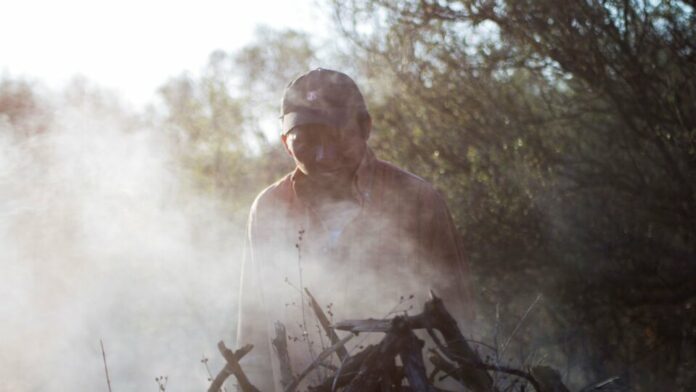
Man in a smokey forest
PHOTO: Martín Heredia Troncoso

By: Clarence Ndabahwerize, Staff Writer 

Part of the Vancouver Latin American Film Festival, Martín Heredia Troncoso’s Bajo la corteza (Under Bark) begins with a raging forest fire in the Argentine province of Córdoba. We meet César, a humble man out of work, moving rapidly to join the efforts to assist in its extinguishment. The sirens are ever present as a reminder of the danger the fires pose to the community around him. 

Land acquisition, from the beginning of time, has been a matter of contention and frustration. Troncoso’s film presents us with a perspective not commonly portrayed; someone willing to get their hands dirty for, in their view, noble reasons. César’s sister Mabel, struggles with an illness that will leave her out of work, and serves as the reason César goes down a dark path. The family’s economic situation, coupled with this curveball, is the straw that breaks the camel’s back. Fragility is key here: César’s economic fragility, and the fragility of his sister’s health. 

After seeking employment at a job placement centre, César finds Héctor, a real estate developer, seeking to extend his frontier into protected land. César works with his nephew to clear and fence Héctor’s land, showing him the ropes of how to properly burn incendiary twigs. At a gathering, Héctor is accused of land grabbing. He defends his employer, showing he’s willing to get physical on his behalf.

Towards the end of Bajo la corteza, we see César start a forest fire at Héctor’s behest. The costs of his actions are revealed through radio snippets featuring community members lamenting the loss of their homes, and clips of the destruction the blaze wreaks upon the landscape. The film’s debut on local and international stages followed the 2022 Corrientes wildfires in Argentina.

César himself revisits the charred land he set fire to. Perpetrators are smart to avoid returning to the scene of their crime, but César isn’t a criminal and clearly has a conscience. His actions put him at great odds with himself, and later with Mabel, who pieces together what he has done. She rejects the money he brings to her. The final act of the film is a lesson in teaching the art of deduction as this chain of events is more implicit than explicit. 

Local film buffs are familiar with The Cinematheque and it delivered a brilliant experience, as should be expected of the venue. Troncoso’s film was in good hands and lived up to the expectations set by many other great motion pictures that graced that screen. With its long takes, neorealist characteristics and pertinent storyline, Bajo la corteza is a reminder that the most unexpected situations and people can have a profound effect on our environment and communities. 

A strongly worded letter to my gut biome as a 23-year-old student

0
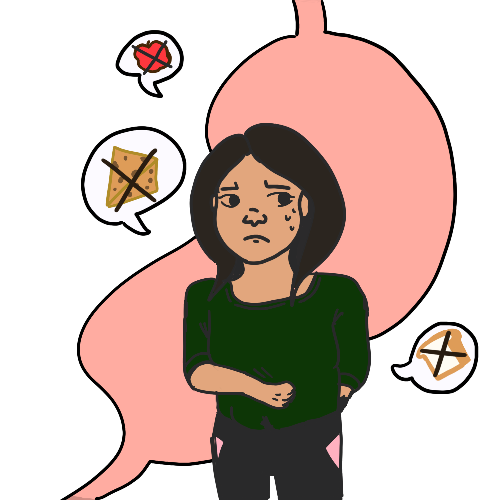
An illustration of a student looking angrily at their stomach.
ILLUSTRATION: Kelly Chia / The Peak

By: Olivia Visser, Opinions Editor

Dear digestive system,

It’s me again. I know you think I’m constantly complaining, but I could really use a break here. You’ve got way too much power in this relationship, and it’s getting kinda toxic.

I’ll be honest — I don’t like you. I think you’re aware. You’re far too stubborn to get along with over any long-term period. You expect your needs to dictate my entire life! You’re toxic and you don’t handle toxins well. I try so hard to tolerate you while you expand your list of intolerances daily. Just once, I would like to enjoy a tub of cream cheese icing without being destroyed for three hours. Why do you need to humble me?

I wouldn’t normally call someone high-maintenance, but you? WHAT MORE DO YOU WANT FROM ME? Endless doctors appointments and tests, multiple medications . . . I cut out caffeine and alcohol, and even took up special anti-inflammatory diets. I made all of these sacrifices for you. And what do I get? Nothing. You’re simply determined to hate me.

Dairy? Nope. Gluten? Nah. Vegetables? Nuh-uh. I’m still trying to figure out your taste preferences, but so far I’ve got: nothing. Yeah, that’s right. You’re pretty much impossible to satisfy. Sometimes on our good days I forget how one-sided our relationship actually is. I long for those moments where you’ll allow me to enjoy a slice of pizza or iced coffee, but shouldn’t that be the norm? The standards are on the floor, and you are sub-basement.

I wish I could say it’s time we part ways, but it simply doesn’t work like that. This isn’t just your life. Think about it — we’re in this together. We need each other. Communication is a two-way street, y’know, all that important stuff? At some point you’re going to have to grow up, because I’m LITERALLY sick of you.

Please don’t take this the wrong way (you tend to do that a lot) but listen to my perspective. If you were a little more open about your needs, we could work together. Compromise, perhaps. Just tell me what you like, and maybe we even have something in common. Heck, I’ll eat whatever bland concoction you desire if once in a while you let me have an apple or something.

If not, I don’t even know what my options are. Something’s got to change. I can’t let you walk all over me forever. If you’re so determined to be miserable then maybe I’ll just join you. Misery loves company, right?


Signed,


An emotionally gutless human stomach owner

SFU professor conducts study on men who experience domestic violence

0
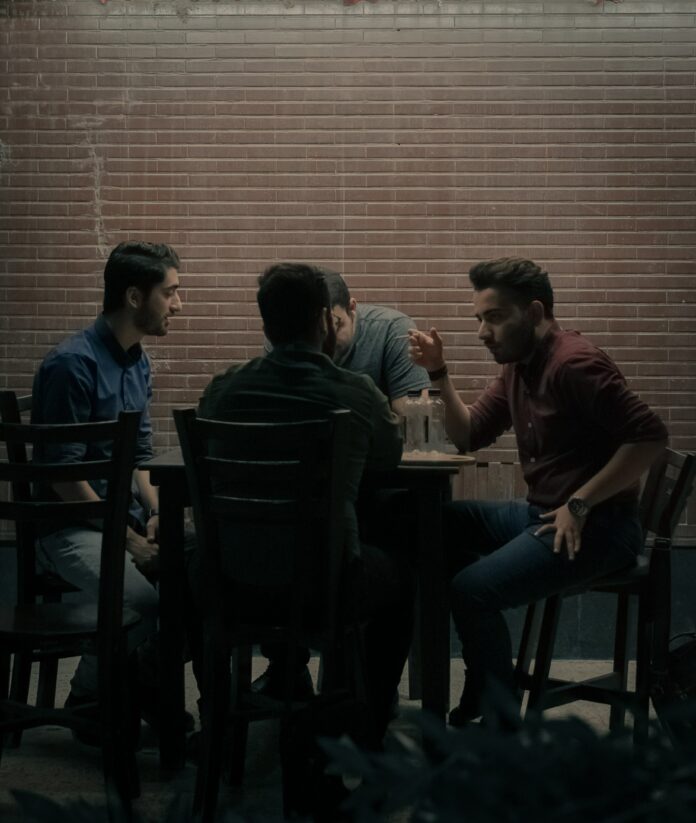
The photo is of four men sitting around a table. They are chatting together in a darkened corner.
Lysova pointed to the necessity of safe spaces for men. PHOTO: Ashkan Forouzani / Unsplash

By: C Icart, Staff Writer

Dr. Alexandra Lysova is the 2022 recipient of the Nora and Ted Sterling Prize in Support of Controversy. The associate professor in the SFU School of Criminology earned this prize for her research on intimate partner violence and family violence against men and boys. 

Since 1993, the Sterling Prize has been “committed to recognizing work that provokes and contributes to the understanding of controversy.” Lysova understands her work could be considered controversial because it goes against gender stereotypes. When men are often portrayed as perpetrators of family violence, it reinforces the idea they cannot be victims of abuse, she explained.

Lysova aims to challenge assumptions in society and within the research area of domestic violence. She recognizes “family violence is a relatively new topic in criminology,” and explained this area of research was previously referred to as “violence against women.” She focuses on paying attention to the violence that is ignored and obscured. “We do not hear voices of men who are abused.”

Lysova began studying family dynamics when she first became interested in psychology as an undergraduate student in Russia. She wanted to understand family violence as she said she comes from a supportive family. As she dove deeper into the topic, she found “the more you study this, the more questions you have. And then you realize how important this topic is, how many people suffer, and how much you want to prevent it in the families.” 

According to Lysova, violence against women “is a very important issue to discuss, but it’s only part of the problem.” Acknowledging that men can be abuse victims will make us “better at preventing violence, at treating victims and treating perpetrators, and reducing the weight of violence in our families.” This starts by recognizing and addressing the barriers men victims face when seeking care. Lysova has found that some men “reject the entire idea that they are being abused.” It can be challenging for men to find spaces like shelters. 

When Lysova spoke to men through her research, she found some knew they were victims but didn’t know how to reach out. 

For her, intimate partner violence and intimate partner homicide is a complex issue that requires a solution more comprehensive than teaching dominant men to not control women. Many factors beyond dominance can create this dynamic. Lysova noted situational factors, including financial burden and violence from women are also important to consider in treatment of partner violence and domestic homicide. 

This is a conversation Lysova will be continuing to have during her lecture on October 19 at the Wosk Center for Dialogue in Vancouver. Registration is free and the event will also be streamed virtually with closed captioning. 

To register for the event visit SFU’s eventbrite and to learn more about this study visit SFU News

How are athletes and coaches managing high expectations for the upcoming season?

0
Photo of soccer player Ali Zohar kicking a ball in a game.
Regardless of the rankings, both squads are looking to spring off the back of last year’s performances. PHOTO: Paul Yates / SFU Athletics

By: Simran Sarai, Sports Writer

The start of the fall season always brings excitement to campuses across the league, with teams preparing for long months of competition, all striving to be the best of the best. Three SFU sports teams have earned recognition from coaches across their leagues. Men’s soccer and the men’s and women’s cross country teams were each ranked first in their respective Great Northwest Athletic Conference (GNAC) Preseason Coaches Poll.

With high expectations set at the beginning of the season, The Peak reached out to athletes and coaches to learn about how the teams were managing their expectations, responsibilities, and workloads for the upcoming season.

Men’s Soccer

The men won nine of their 16 games during the 2021 season, and have only dropped one game this season to previous NCAA Division II champions, California State Los Angeles. We spoke with head coach Clint Schneider about his thoughts on the ranking and the season ahead. Schneider spoke on how he felt about the first-place ranking: “It really means absolutely nothing.

“The goal here is to win a national championship, and that’s it. Anything short of that isn’t good enough.”

Teammates and midfielders Ali Zohar and Conrad Cheng spoke about their expectations for the season ahead after a strong season last year by both players. Zohar played every game for SFU and earned Second Team All-Conference honours, while Cheng was named GNAC Newcomer of the Year and earned First Team All-Conference honours.

Speaking to The Peak, Zohar, who will be competing in his second season for SFU, laid out his plan for managing the high expectations that he, the team, and coaching staff have for the 2022 season. His key to success include “putting the work in on the field, having a good mindset, having a good work ethic on and off the field, [and] leading by example for everyone.”

With more responsibilities as a returning player, Zohar spoke about how he manages disappointment while also hoping to set examples for newer players in the 2022 season. “You just have to be mentally strong [ . . . ] Even if you do lose this game, you have to be ready to play the next one. Stay motivated no matter what, knowing that we’re working towards something bigger than just one game.

Cheng highlighted the difference in team atmosphere from last season to this season. “Last year we were really struggling, we never really clicked on the field, so we were just scrambling for wins [ . . . ] This year, there’s a massive mentality change. 

“Coming into this season, everyone is on the same wave-length. It’s super positive in the dressing room right now, everyone is super hungry. You can see it in practice, you can see it in games [ . . . ]  We’re so far ahead of where we were last year.”

Cheng credits the team-first attitude that has been prevalent already this season as one way the team’s expectations have changed from last season. “This year, it’s 100% team oriented. All that matters to everyone right now is just winning. I really don’t care about how we win games or how we get to the win, it’s just all about getting the win.”

Men’s and Women’s Cross Country

Both teams had a historic 2021 season, winning the GNAC Championships, and the women advancing all the way to the NCAA Championships. The Peak spoke to sophomores Kate Cameron and Charlie Dannatt on how they’re managing their expectations after a record-breaking season.

Cameron spoke about handling personal expectations after a breakout freshman season to the national championships with her teammates. Her biggest difference from last year to this year is not feeling intimidated to put herself at the front of races. “I have a bit more confidence in the first few races than I did last year. I put myself at the back, thinking that was my place as a freshman.” 

Conversely, Dannatt was measured in his excitement for the ranking. “We just need to prove that we are number one throughout the season and actually run up to what we should be running, and make nationals hopefully.”

In terms of managing expectations, Dannatt spoke about lessons learned from last season. “We got to the end of the season last year, a few of us were burnt out, and had probably raced too hard too early [ . . . ] This year we’re going to try and keep things in perspective and really make sure we’re hitting the end of the season the hardest.”

Dannatt also shared his thoughts on managing a bad result in a team sport that has a significant individual aspect. “Not everyday is going to be your day. You just have to look at the training that you’ve had and the consistency that you’ve had, and remind yourself that you are not just the value of the results that you had on that day. You’re the value of all the training you’ve put together up to that point so far, and all the hard work you’ve put in.”

Head coach Brit Townsend was flattered by the ranking, but realistic about the level of preparedness needed by the women’s team this season with a smaller, younger team. “I think the women’s team, it will be challenging to live up to the rankings, but I said that last year and we ended up at nationals.”

Speaking on the men’s cross country team, Townsend said, “I think we have more depth than ever. I think our team could actually be better than last year, even though we were very very good last year.”