Home Blog Page 239

Books and belonging: Vancouver Black Library opens its doors

0
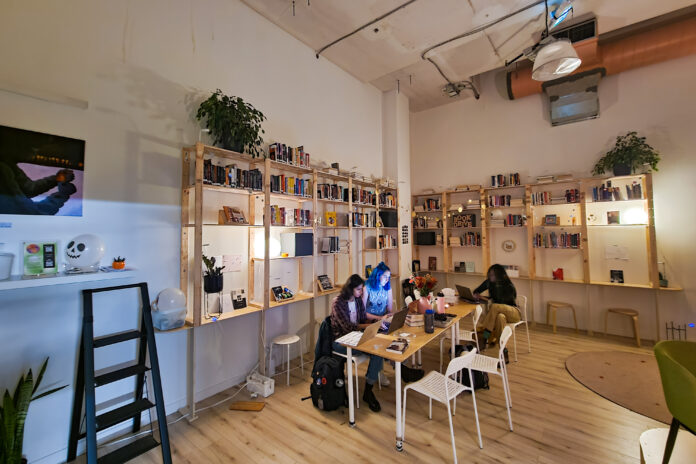
the interior of Vancouver Black Library: People working with their laptops on a table in the middle of a lofty room with book shelves against the walls, plants, and cozy lighting
Founder Maya Preshyon wants VBL to be a space to learn. PHOTO: Amirul Anirban / The Peak

By: Saije Rusimovici, SFU Student

For Vancouver’s cultural communities, community spaces help preserve culture and offer a sense of belonging. As a hub for both educational resources and interpersonal connection, newly-opened Vancouver Black Library (VBL) is the comfortable space that does just that.

Close by to where the historic Black cultural hub, Hogan’s Alley once stood, VBL is a lofty, cozy space, complete with hand-crafted bookshelves, a movie projector, and several spots to read or study. Located in the basement level of the Sun Wah Centre on Keefer Street, it’s the ideal workspace for any college student. The minimalist decor offers a welcoming space for not only members of the BIPOC community, but anyone looking for a place to study and learn from Black perspectives.

Founder Maya Preshyon, a 21-year-old student at the University of British Columbia, wants people to feel at home in the space she describes as “a boujee community centre.” As a driven advocate for the Black community, Preshyon’s idea for the space stemmed from a desire not only to connect people to a source of information, but also to each other. As urban development has displaced much of Vancouver’s Black population, the purpose of VBL is to bring a sense of community back to the area.

“I wrote for my school’s magazine and was involved with the radio station [ . . . ] and I thought through that I could find a space that I felt like I was welcome or represented, but that wasn’t always the case,” Preshyon said. She noted there were structural barriers that made it difficult for her to find support within that environment. Inspired by the International Gallery for Contemporary Asian Art (also located in the Sun Wah Centre), she made it her goal to recreate a space with a similar concept for the Black community.

The library construction began as an almost entirely crowd-funded project, built to make people feel like “they were in a space made with intention and care, elevating the idea of a community space,” Preshyon said. 

The library contains a collection of books by Black authors, as well as familiar favourites, with an additional 1,500 books in storage waiting to be catalogued in VBL’s unique system. Their goal is to create an inclusive, decolonial, anti-racist process of cataloguing, assisted by volunteer Nola Boasberg. The books are catalogued to highlight narratives and perspectives told by the BIPOC community, as well as allowing space for new and diverse voices.

“There are a lot of ways that categories can isolate people,” Preshyon said. “Community input and the advice of librarians has been super integral in making it good, and we’re constantly trying to make it better.”

VBL is accepting monetary donations through their GoFundMe page and are currently accepting books as well. “If you have a favourite and want to pass it on, we’d love to have it.”

Visit the Vancouver Black Library to learn more about the history of Vancouver’s Black culture, meet new people, and keep the culture alive. 

French immersion perpetuates inequality

0
illustration of a high school with a French flag standing in front
“Streaming” separates students based on perceived academic ability. ILLUSTRATION: Youngin Cho / The Peak

By: C Icart, Staff Writer

I am one of over a million Francophones in Canada who live outside Québec. A common response I get when Anglophones hear this is to tell me they did French immersion as a kid. I’m not quite sure why this happens, since they almost never try to have a conversation with me in French afterwards — probably because almost none of them are fluent in the language. 

When people tell me they did French immersion, what I’m hearing is, “My parents wanted me to get the benefits of French immersion.” A good amount of students who don’t finish grade 12 enroll in French immersion. Of those who don’t transfer out, CBC reports, “only 10 per cent finished Grade 12 with an ‘advanced’ or better level of French.” But if the benefits aren’t fluency in French, what are they? 

In practice, these programs are often elitist, perpetuate inequalities, and cause what some call a “two-tier school system,” which is a system where one group has more advantages than the other. Another way parents have described it is a “private school within the public system.” According to Caroline Alphonso from The Globe and Mail, this happens because French immersion programs have more students with “parents with a very high socio-economic status, a university-level education, and who were both born in Canada.” This contributes to a vicious cycle since outside Québec, English-French bilingualism can lead to more work opportunities and better pay.

Students from low-income families, immigrant families, and students with lower grades, disabilities, or behavioural problems are often overrepresented in English-program schools. It’s time to acknowledge the truth: this enrollment in French immersion is a form of  “streaming.” 

Streaming isthe process of dividing students into differentiated groups based on their perceived academic ability and/or prior achievement.” It’s common in schools across Ontario and in French immersion schools. Studies have shown this results in worse academic outcomes for students placed in “lower-level” courses. This is a self-fulfilling prophecy because of the stigma and perceptions teachers and students develop about supposed academic potential.  

It’s natural for parents to want to enroll their children in what they perceive as the best school programs. In fact, some parents have gone as far as camping overnight to secure a French immersion spot for their child. However, children with learning disabilities are often encouraged to leave French immersion schools and allophone (one whose first language is neither French or English) students are generally discouraged from enrolling in the first place. These are some of the ways that systemic inequalities manifest themselves in French immersion programs. 

As enrollment in French immersion increases across the country, the number of Canadians who are fluently bilingual in English and French is going down outside of Québec. It’s time to recognize that French immersion is separating students in ways that perpetuate inequalities. The idea that these programs actually produce bilingual adults is a myth. Single-track French immersion is not the only way to teach French. In fact, that may hinder some students as they are discouraged from asking questions in English. We need an approach to education that takes all students into account instead of being tailored to a certain type of student while the others are pushed out. 

SFU researcher publishes paper on combating online child exploitation

0
This photo is of a laptop sitting on a desk. The laptop screen has coding programming on it.
The process is automated so new sites are identified and taken down quickly. PHOTO: Christopher Gower / Unsplash

By: Hannah Kazemi, Staff Writer

Richard Frank, SFU researcher and associate professor for the School of Criminology, recently conducted a study to identify strategies to combat online child exploitation. The Peak sat down with Frank to learn more about his research and its implications.

Research into automating a process to combat online child exploitation started over a decade ago, in collaboration with a graduate student at the time. Frank described the method and process, indicating it involves using digital fingerprints of images given to them by the RCMP. “Once we download some of these images and fingerprint it and compare it to a database that the RCMP gave us, that is how we would identify a known child exploitation website,” Frank explained. 

This process is automated so that it uses software to identify child exploitation websites, thus initiating a continuous loop of identifying websites. “The idea behind the paper is that these websites have links to each other. If a person is looking for child exploitation images, they would go to a website, look around, find a link [ . . . ] follow it into another website [and so on]. So they can discover multiple websites this way.”

The automation of the destruction of exploitative websites is simple: “We wanted to map this network out and identify websites which, if you were to remove it from the network, would cause the biggest disruption to the network. So an offender or person interested in this content wouldn’t be able to discover other websites.” 

Frank told The Peak that through their research, they found online child exploitation is a much more severe problem than originally thought. He said they were “surprised by just how easily discoverable [child exploitation] was. But looking at statistics, a lot of statistics show that the problem is much more severe than the networks that we had built up.” 

These networks continue to evolve; Frank said that over time, some websites are removed from the network “possibly by law enforcement, possibly by good samaritans. People who have the ability to hack into these websites will take them out, because no one likes that kind of content on the internet. So it is a fine target for a lot of ethical hackers.”

Frank said before starting this project, he approached the RCMP to work out the legal aspects of conducting this specific research and mapping online activity, and learned that the RCMP has also attempted to tackle this issue. However, due to how quickly the internet changes and the way websites pop up and disappear, Frank said the RCMP was “completely overwhelmed. Given the resources they have, they can only look after the worst of the worst of the worst offenders. So we wanted to see how we could help in that process.”

This study into combating online child exploitation is the predecessor to other research and work done by Frank; he has created a tool called The Dark Crawler. It is a data collection tool Frank developed in order to search for and identify both online child exploitation, and online extremist activity.

When asked about what’s next on the path to research methods of combating online child exploitation, Frank said he can’t do it on his own. “Much of my research is student-driven [ . . . ] If a student approached me saying, ‘I’m really interested in mapping out child exploitation networks, or try to identify other ways of combating this problem,’ I would happily take them on and continue this work. I can’t do it myself, unfortunately. So if help is available, I’m very happy to continue.”

For more information on The Dark Crawler project, visit their website.

Wearing a mask is an equity issue

0
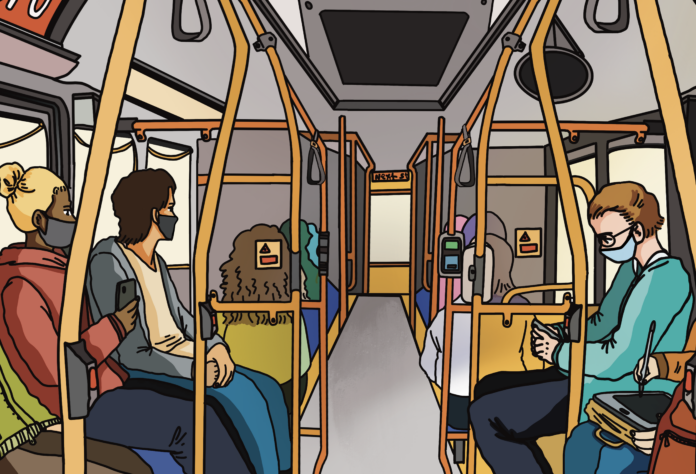
illustration of a bus full of people wearing masks
People shouldn’t need laws to care about others, but they do. ILLUSTRATION: Andrea Choi / The Peak

By: Michelle Young, Editor-in-Chief

Since March 2022, masks are no longer mandatory in public spaces. Not only is this a huge public health and human rights failure, but it’s evidence that this province and country cares more about the façade of moving forward than protecting the lives of its citizens. 

Before I get hit with the “COVID-19 is mild and we have the tools” rhetoric, I’d like to preface this piece with a reminder that COVID-19 is still killing large amounts of people, disabling many others, and public health failures are leaking into our healthcare system. Directly or indirectly, this affects all of us. 

After two years of pandemic precautions, and pleading with people to do the bare minimum, I’m exhausted. I can talk about all the studies, news pieces, and evidence that backs universal masking, but as long as it isn’t “required,” lots of people don’t care. But wearing a mask is more than a simple requirement — it’s an equity issue. 

Back in 2020, many spoke on how COVID-19 disproportionality affects disabled people, low-income individuals, and people of colour. These groups are still being affected by COVID-19. It should go without saying that these lives are worth protecting. However, virtual events are no longer as widespread, public spaces are still widely inaccessible, and many leftists protesting human rights are forgetting about disability solidarity. 

The same people who gladly wore a mask when required have peeled back their “commitment to equity.” Organizations who champion themselves as equitable and accessible are cleaning their hands of any responsibility. On an individual level, wearing a mask will help curb infections, protecting yourself and those around you. On a larger scale, event organizers and institutions should be keeping in mind how they can create COVID-19 safe spaces for everyone. Anything less than that is exclusionary. 

You cannot claim you care about equity, accessibility, or disabled people if you aren’t helping to create safe spaces for everyone — this includes the basic practice of masking. When mandated, this wasn’t an issue for the majority of people, and polls show that most are willing to mask.

If you’re someone who cares about human rights, or even just the well-being of others, you should wear a mask. It shows you’re not just following BCCDC “guidelines” without question, since their recommendations and information have been all over the place — often lacking data and precautionary principles to back themselves. The Canadian government is not known to have progressive policies on climate change, racial equality, or disability rights to begin with, despite what many believe. We must critically think about how these guidelines disproportionately affect the same groups we claim to care about. 

If you can help make public spaces safer for everyone, why wouldn’t you? Wearing a mask should not be a personal choice — but by government guidelines, it now is. Make the right one.

Cryptid Spotlight: It’s Never Toi-late to Find THE Toilet!

0
A stock photo of a clean bathroom toilet.
The bathroom of truth! PHOTO: Pexel / Jean van der Meulen

By: Suraj Raj, SFU Student

Today’s exploration in Cryptid Spotlight takes a turn toward the sewers. Isn’t it difficult being a student with an 8:00 a.m. class? You have no time to eat breakfast. Now you have to leave for class and a thought plagues your mind. What if I need to take a dump in the university toilets?

SFU has a wealth of toilets at your disposal. Every corner you turn on your way to class is a constant reminder you need to release the beast. Your stomach churns and grunts as you try to go to your happy place but the intensifying pain prevents you from doing so. You’re already late to class, what can you possibly do to keep it in? Now, what if I told you that an exquisite bathroom on campus could really exist? This SFU bathroom will make all your poop-relieving dreams come true.

The legend goes, every day, this mysterious marvel of a bathroom appears in a different area around campus. It’s spotless, with the scent of lemon lysol and lavender. A toilet with a seat so comfortable it’s like you’re sitting on a cushion with toilet paper as smooth as silk. The crystal clear water running from the taps is an indescribably perfect temperature. However, only few have ever seen it, and even fewer have had the privilege of using it.

We found one alleged user of the legendary bathroom, Harry Potty, and immediately chased them for answers. They claim the bathroom must CHOOSE to appear in front of you. In other words, you must be worthy of it.

“I was just walking down the halls when the poop shaped scar on my stomach started burning intensely. That’s when I saw it. It was incredible. I felt like I was transported into a magical world. I came out of it a completely different person!” they exclaimed.

Potty also added that to prove yourself worthy, you must first do a trial. Something unthinkable. One must sit on the toilet seat of a regular public SFU washroom, without placing rolls of toilet paper on the seat.

“One day, long before I was blessed with the magical washroom, I was dying. I mean, I literally felt like it was going to explode down there,” Potty reminisced.

“There was no time to think. I rushed into one of the 3rd floor AQ bathrooms. It was super crowded too. Man, that brings back some horrible memories,” a disheartened Potty said.

“However, I made sure I cleaned up after myself. With my all-purpose gloves and homemade cleaning solution I carry with me every time I come on to campus, I left the area spotless. So while I made the ultimate sacrifice, I did not intend on passing that on to the next toilet user,” they said proudly.

Potty also believes that to be worthy of the magical bathroom, one must prove they never leave a stinking mess behind. After all, even the phantom bathroom won’t clean itself.

So there you go! SFU may in fact have the most perfect bathroom known to human existence. But even if you struggle to find yourself to be worthy, there is no reason the regular SFU bathrooms won’t do the trick. If it is scrubbed, swept, mopped, and immaculately cleansed, there is no reason one can’t drop a deuce without a worry in the world about which bathroom on campus is the cleanest one.

Signed,

Suraj Raj, Toilet Expert

Eight things brewing in your barista’s brain

0
Stock photo of latte art.
Your barista is one customer-tantrum away from jumping the counter. PHOTO: Pexel

By: Gem Yelin Lee, Copy Editor

There are things customers who have never worked in a café will probably not know. Among these include the ability to act like a decent human being with bare minimum manners, and the daily mantra, “cops get decaf.” Especially the ones who wear the white supremacist blue lives matter patch. Here’s a small, miniscule, condensed list of things that make me seeth behind my mask:

  • If you order something and I correct you so you know how to order it properly next time, that is not an invitation to fight. But if you want to fight, I’m telling you right now, you’re going to lose. You asked for a cappuccino with very light foam: that’s a latte. Like, universally. If a barista tells you that, don’t start screaming at them about it like a big baby. Suck it up and order a latte next time — or don’t complain if you don’t get what you want. Accept you are wrong. Who’s behind the counter again?
  • I know it sucks to be sold-out of exactly what you wanted. Trust me, there’s no one more upset about being shafted by our distributor than we are. Especially because we deal with dozens of complaints whenever we are out of anything. But I had one lady literally accuse me of hiding gift card holders and lying about our stock. Girly pop, what the fuck do you think I’m doing with those gift card holders? It’s been months and I still wrack my brain over this because I just want to know what you think my motivation is. Did you sin against me? Are we . . . enemies? 
  • I don’t care who you are or how good of a person you are. If you see that we are closed in exactly three minutes and 42 seconds, and come in with an order for your entire extended family reunion . . . I just want to ask why you chose violence today. Walking in saying, “Oh my god, you’re almost closed? I feel so bad, oh my god,” and still proceeding to order 15 frappuccinos? You don’t feel bad enough. 
  • If a table has crumbs on it and you want it to be cleaned, ask nicely instead of passive-aggressively snarling, “Is there a reason this table isn’t cleaned?” Yeah, Steve. It’s because I don’t want people like you sharing my airspace for more than our two-minute transaction. You don’t care about the real reason, which is that we’re understaffed and fighting for our lives back here through a pandemic. You just want to throw a tantrum about the table not being in pristine condition when you get there, even though you’ve never wiped a table in your entire life. 
  • There are such things as foolish questions. And if you ask them, I don’t really care but I’m going to give you a very simplified answer. If you ask me if we sell coffee, I’m going to say yes. If you ask me why your latte tastes like milk, I’m going to give you a scientific breakdown of how a latte is 90% milk. I don’t know what more you want from me???
  • I don’t know how you are doing that to our bathrooms. But I need you to stop. I don’t want to know the details, but I know I don’t get paid enough. I have literally seen shit I can’t unsee. 
  • If you snap, “Can you make it quick, I’m in a rush,” I will continue to make the drinks in the appropriate order. Actually, depending on how bad your tone was, I might personally go over to the bar and move your drink further down the line. It’s not my fault if you’re late to your stupid little office job you obtained with white privilege, Joe. 
  • If you have a cup with a fairly hefty amount of liquid in it, don’t just throw it out. Ask the barista to dump out the liquid for you first. Do you think that liquid just disappears? I’m gay, not a magician. When I take out that garbage later, I better not find your disgusting TikTok drink sloshing into my shoes, Jenny. I’m watching you. 

You should be nice to your barista. Your barista is always right. Because you never know if the one time you started screaming obscenities over a thawed pastry (no, we don’t bake these in the back) is the time your barista rips off their apron and jumps the counter.

Dr. Viktor Jirsa discusses his work on The Virtual Brain

0
This photo is of a plastic model brain sitting on a table.
Jirsa is the lead scientist on The Virtual Brain. PHOTO: Robina Weermeijer / Unsplash

By: Nercya Kalino, Staff Writer

The Institute of Neuroscience and Neurotechnology hosted a conversation with Dr. Viktor Jirsa, facilitated by professor of biomedical, physiology, and kinesiology, Dr. Stephen Robinovitch. Jirsa is director of the neuroscience institute in Marseille and a theoretical physicist. Currently, Jirsa is involved as the lead scientist in both the Human Brain Project and The Virtual Brain.

Robinovitch started the dialogue by asking about the significance of The Virtual Brain for both basic science and medical perspectives. The Virtual Brain model is a project that Jirsa has worked on for the past 20 years. “This model is an open source software package for exploring network mechanisms of brain function in health and disease,” explained Robinovitch. 

Robinovitch noted Jirsa’s work is referred to as data augmentation. He asked Jirsa how his work can be considered in contexts such as epilepsy. Jirsa answered this question by explaining the specific use for clinicians and research. 

“One particularity of the virtual brain is that it is not just a simulating source activity. But it’s also mapping the sources,” said Jirsa. Further noting in terms of medicine, the situation of a patient’s illness will vary from patient to patient. The Virtual Brain will be able to tailor healthcare decisions for each patient, based on the data derived from the Virtual Brain model.

Jirsa noted it is important to study brain dynamics in the resting stage. He underlined a major focus of this work is to study the model with neural dynamics in the resting stage, in order for models to be built from standard neuroimaging data.

“The resting state is not just a simple, idle state where not much is happening [ . . . ] What is happening at rest is that there is exploration, a large repertoire of different networks,” explained Jirsa. “And so there are large dynamics, complex dynamics, ongoing.” 

Jirsa also touched on the philosophical aspect of the work. “I went back to Germany to study philosophy, because the answer was linked to cognition consciousness. How does a mind merge from a collection of neurons?” 

He explained his interest in philosophy stems from wanting to understand how something as complex as human behaviour and cognition can emerge from brain matter. To do this, he “sought out a leading mathematician working on the field of self-organization.” 

The theory of self-organization is a way of understanding how humans organize community behaviour and global order. Human behaviour is “not just a movement time, or a reaction time, behaviour is very complex,” said Jirsa. “That’s the reason why the theory of self organization, the initial motivation, has never left me. It’s still here.”

To learn more about The Virtual Brain Model, visit their website.

Netflix releasing Dahmer was a sickening act

0
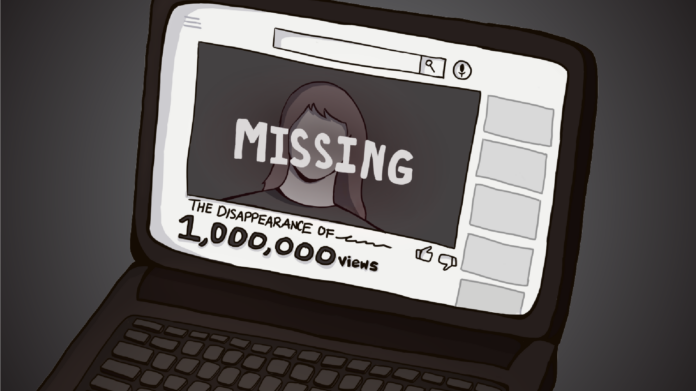
laptop with a youtube page open to a true crime disappearance video
Film companies profit off trauma for true crime content. ILLUSTRATION: Stella Laurino / The Peak

By: Nercya Kalino, Staff Writer

Content warning: discussions of homicide, mentions of racism

There’s a cruel level of insensitivity embedded into the new true crime series titled Dahmer. Currently, Netflix seems to be riding out its influence in the streaming entertainment industry by producing shows monetizing killers’ stories at the cost of victims and their families. It’s no surprise such a platform would easily overlook the impact this show has on those who are deeply wounded by Dahmer’s violent actions. It’s also no surprise that audiences are now often separated by those who care and those who display nonsensical fetishization for killers. 

The current story circulating about Dahmer is that families of the victims were never once contacted, nor made aware by Netflix that their stories were to be profited from. This is revolting on many levels. We could argue if this were the case, cast members shouldn’t have made the decision to participate in the show. This lack of transparency is one of many questions that complicate the discussion of ethics in true crime. As an audience, we’re offered a story that families of the deceased might not want to share. Such a violation of consent amidst total awareness of the oversight makes this series appear like nothing more than a money making scheme. 

True crime films and documentaries should uphold proper ethics towards victims and their loved ones. As viewers exposing ourselves to the tragedies of others, we need to question whether they consented to this and how much of it is true. These shows normally recount horrors to the extent that it reignites painful and gruesome memories for victims and their families who live to remember them. There are several considerations that true crime documentaries need to take before and after production, such as sticking to the truth at the expense of story. Frequent dialogue about ethics is essential. Netflix, as a $100 billion dollar corporation, needed to respect and uphold that, but they didn’t.

Issues with the show’s production were also highlighted in concerns raised by a worker behind the scenes. More specifically, among two Black women, one worker was faced with an exhaustive environment where everyone else seemed to confuse her with the other Black coworker. Another finding currently under the radar is that a journalist who worked on the original criminal case said the narrative sold to audiences is inaccurate. 

Unfortunately, that’s Netflix: overlooking the negative harms they brought onto families of the victims through marketing, producing, and releasing the show. The multi-billion dollar entertainment company shows no consideration of what ethics are regarding true crime, or whether they ought to practice them at all. Netflix needs to respond by removing the series indefinitely. It’s done no good for its audience, nor the most important people: victims and their families. It’s vile that this is where the entertainment industry is at with representing true crime on screen.

SFU hands Western Washington their first loss

0
photo of SFU forward Devin O’Hea protecting the ball from a defender.
Job not done yet: the men’s soccer team are focused on making a playoff push. PHOTO: Wilson Wong / SFU Athletics

By: Simran Sarai, Sports Writer

SFU men’s soccer team is picking up steam as they head towards the end of their regular season, and compete for a playoff spot. On October 6, they took down the Western Washington University (WWU) Vikings  2–1, ending WWU’s unbeaten streak. At the time, the Vikings were ranked 20th in the United Soccer Coaches Top 25 National Collegiate Athletic Association (NCAA) DII poll. Although the Red Leafs haven’t cracked the top 25 yet, they’re gaining recognition. Their win against WWU puts them in an even better position to make the list. 

SFU senior midfielder Mark Talisuna opened the scoring with a penalty kick marker, less than a minute and a half after the first whistle. However, the Vikings made quick work of the Red Leafs lead, scoring the equalizer just minutes later. The game remained tied until junior forward Devin O’Hea notched a goal in the 72nd minute to seal the victory for SFU. 

The Peak reached out to goal scorers Talisuna and O’Hea for a recap of the game, and what this win means for the remainder of their season.

SFU started the game with pressure early, infiltrating their opponents’ line of defense, and forcing the Vikings to take a penalty. Talisuna doesn’t have a specific move reserved for penalty kicks. He prefers to wait to see what the goalkeeper does before making his first move. “I usually just start to step right before I take it, so I can kind of catch the goalkeeper leaning, and then I just put it the other way,” he revealed. “That’s what I’ve done my last couple of penalties and it seems to be working for me.” 

Penalty kick drills also aren’t something Talisuna and his teammates devote too much time to during practice. Talisuna believes it’s something players hone into when the moment comes. “The coaching staff trusts me to kind of go out there and execute when I’m put in those situations, so, that’s that,” he explained.

Although the Red Leafs held an early lead, the Vikings quickly rebounded to halt the momentum from Talisuna’s early goal. “When you score early, you’re kind of expected to build on from that,” said Talisuna. “The fact that they scored so quickly after us was kind of like a gut punch, but you just got to react as a team, and see if you can get back to doing the good things.”

While it can feel frustrating for players to start back at square one, Talisuna understands that it’s all a part of the game. “That’s what soccer is sometimes. It’s [a] game of momentum, and that’s how stuff plays out.”

O’Hea would restore the momentum with his second half goal. “I can remember it pretty vividly,” said O’Hea. “It was a corner kick from the left side. Our left back Niko [Papakyriakopoulos] crossed it in, and I ran near [the] post and headed the ball in.” 

When asked how it felt to score the game winning goal, O’Hea talked about the relief of a little adding insurance. “We were tied 1–1. Getting that last goal really seals it off, and puts everyone head over heels, just knowing that we can win the game.” O’Hea says it was knowing the team had the ability to outperform the higher-ranked WWU team that kept them going late in the game. 

While handing WWU its first loss of the season was an impressive feat for the team, both Talisuna and O’Hea are focused on booking their ticket to the postseason, with O’Hea hoping to do so against a familiar opponent in Seattle Pacific University. “They beat us last time at home 1–0,” said O’Hea about the extra stakes at play. “That’s a big game. We got to come up and be prepared to prove ourselves for that game, because they beat us at home. That leaves a sting, so we want revenge for that game for sure.”

Board game café opening near Harbour Centre

0
Stack of board games, with Code Names at the top, with a Mugshare mug on top filled with coffee. The board games are on a blue Hawaiian chair cushion behind a brick wall.
PHOTO: Leah Katz, Turquoise Goat

By: Jocelyn Wong, SFU Student

Joey Kudish and Leah Katz are partners in life and business. They’re the owners of a unique board game café set to open on November 5. Located less than a block away from SFU Woodward’s building, the cafe is in the HiVe Vancouver Coworking community space. The Peak had the opportunity to speak with the pair about their grand plans for Turquoise Goat. 

Walking into the newly-renovated space, I was struck immediately by its vibrancy and nostalgic feel. “Gastown is missing a bit of a queer and colorful presence,” Kudish said.

With Katz’s culinary experience, and Kudish’s history in web development, the pair knew they were equipped to make something special.

Their $10 stay-in-place fee for visitors (reduced to $7 during initial operation and $5 for students on Wednesdays) will offer multiple hours of access to thousands of games. Folks will also have unlimited access to a game steward who’ll get to know you, find out a little bit about your previous board game history, and help you craft the perfect gaming experience. “There are always new games coming out, so we’re getting the latest and greatest, as well as some of the classics you may have had in childhood.”

Although they’re still building their selection, the pair talked about their plans to provide games in many languages, as well as games that are accessible to people who are blind, deaf, hard of hearing, or have low vision. “We’re going to have music, but it won’t be overpowering. So someone who might find loud spaces overwhelming can also find themselves welcome here.

“We’re also trying to intentionally build space in between our tables,” said Kudish. “So if you use a wheelchair [or another piece of mobility equipment], you can feel welcome, too. And all of those pieces are not going to be perfect. We’re just figuring it out and always have room to learn.”

Katz and Kudish also spoke on providing their staff with living wages. “For Metro Vancouver, this year [the liveable wage] was calculated at $20.52, so we rounded that up to $21 an hour.”

Turquoise Goat promises to offer an ever growing and evolving menu for various lifestyles and dietary needs. Whether you’re vegan, vegetarian, or gluten free, you’ll have the chance to enjoy what Katz calls an “elevated café-style menu.” Gourmet grilled cheeses, from-scratch soups and salads, custom charcuterie boards, gourmet popcorn, and more will be offered. And all until late night! 

For those feeling a bit boozy, the team’s working on a craft cocktail menu that’ll pair well with creative dishes like Katz’s dreamy galaxy pancakes. 

Turquoise Goat follows provincial COVID-19 guidelines set by the provincial health authority, with paid sick leave being provided to staff. 

Follow Turquoise Goat on Instagram or Twitter to learn more about their opening celebrations.