Home Blog Page 238

Horror should be scary, not discriminatory

0
close up view of a pumpkin on a fence
There are many horror films with good representation. PHOTO: Gudrun Wai-Gunnarsson / The Peak

By: Olivia Visser, Opinions Editor

Content warning: mentions of violence, anti-Black racism, and ableism 

People like horror for different reasons. Some enjoy the genre’s focus on dark topics and pressing social issues, while others watch for creative villains that push expectations. Whatever your reasoning is for enjoying horror, discriminatory media representation is something creators and viewers must take seriously. Disturbing racist tropes and ableist villain designs are age-old problems with the genre. Artists have already proven that horror doesn’t need bigoted tropes to be creepy. It’s time we uplift ethical creators instead of supporting those who cause harm and division. 

Black representation in many modern horror movies is often seen with flat characters that are killed off early. The Shining is a particularly famous instance of this: Dick Hallorann, the head chef at the Overlook Hotel, is first to go. Likewise, in Scream 2, Omar Epps is killed before the title even rolls. There are countless examples of this tired trope being played out in horror films. Not only does it suggest writers didn’t want to put effort into creating diverse and realistic characters — it’s also just blatantly racist. While Hollywood frequently uses Black characters to drive empty plot-lines, Black horror has existed for over eighty years.

One of the most significant shifts in modern horror is the popularization of Black horror. The first Black horror movie, meaning a “Black-made” horror movie, came out in 1940. Son of Ingagi followed a Black woman who was a scientist caring for an ape-like creature. It was described by writer Robin R. Means Coleman as being unique, since it was the first movie representation of Black women in STEM and it realistically showcased “the Black middle class.” Horror Noire: A History of Black Horror, adapts Coleman’s book into a documentary exploring the genre’s development as a means of resistance and expression. Coleman describes early racist depictions of Black men as being predatory towards white women. This narrative was common in early horror movies, and was bolstered by president Woodrow Wilson’s public support for the KKK.

Since the genre took off, Black horror has been an effective medium for reclaiming representation and challenging racist tropes. Jordan Peele’s 2017 film Get Out is renowned for popularizing Black horror. The movie highlights the anxiety and discrimination experienced by Black people in white-centric societies. Get Out is one of the most popular Black horror films, but it’s only one of many. Other noteworthy films include Black Box, Us, and Bones. Get Out’s massive success may be a hopeful sign that horror is shifting in a positive direction, but we’ve still got a long way to go. 

Horror is also frequently criticized for its reliance on ableist stereotypes. Those who still remember the M. Night Shyamalan movie, Split, might understand where I’m coming from when I say it’s a terrible “representation” of dissociative identity disorder (DID). The film follows a man with DID who kidnaps and torments three girls. The villain frequently changes his outfits while undergoing dramatic personality shifts that become progressively more violent as the film goes on. There’s no association between DID and crime, other than the fact that people with DID are more likely to be victims of abuse. That doesn’t stop producers from continually suggesting we should be afraid of neurodivergent people. Split is simply one of many movies that poorly relies on mental illness to drive its plot. Shutter Island did the same with its representation of schizophrenia, as did Psycho with psychosis. Beyond being unoriginal, these films contribute to the negative social stigma that people with mental illness already experience

Accurately representing disability is crucial in media. The film Don’t Breathe did a disservice to disabled people by depicting a blind man defending himself from a robbery as terrifying. The man, played by a seeing actor, is arguably a victim. His blindness is used as a “plot device,” and the film controversially ends with his likely death. A Quiet Place is one example of a horror film that doesn’t use disability as a trope for its villains. Instead, the monsters are entirely inhuman, explaining their advantage of ultra-sensitive hearing. One of the main characters, Regan, is deaf and she’s played by deaf actress Millicent Simmonds. Many praised the movie for its positive representation of disability. Having a disabled lead in a horror film is a step forward for media representation, despite criticism that A Quiet Place still relies somewhat on disability as a plot device. Others found it troubling that there were subtitles for American Sign Language (ASL) scenes, but not for speaking portions. As is often the case in film, disability representation frequently falls short in one way or another.

Historically and presently, creators in the horror genre have gotten away with twisting the concept of fear to fit prejudicial social standards. Boycotting problematic movies lets filmmakers know where viewers stand on important issues. It’s past time we reapproach our favourite horror movies, and focus on supporting creators that put effort into making original and diverse films.
The United Nations has some trouble putting out fires on their Security Council

0
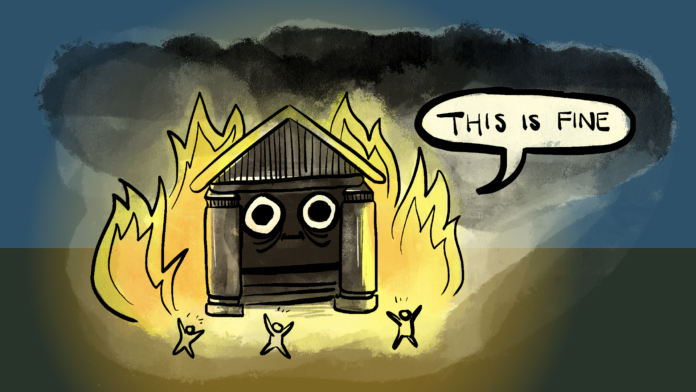
A fireign affair! ILLUSTRATION: Angela Shen / The Peak

By: Clarence Ndabahwerize, Staff Writer

NEW YORK —The Dag Hammarskjöld Library at the United Nations burnt to the ground after it caught fire. Extraordinarily, no one was hurt, but the loss was immense. While observers thought some kind of jurisdictional issue had prevented firefighters from getting to the scene, it turned out some diplomats had decided to negotiate with the fire. As it turns out, the fiery element was sentient after consuming much of the knowledge held within the confines of the library, finding it full of “moral loopholes.” Security council resolutions were heard loudly being chanted from the building, to the bemusement of evacuating bureaucrats.

Unfortunately, the spotlight wasn’t on the tragic loss of knowledge, but on how diplomats and firefighters alike were stunned into inaction by the fire. Everyone seemed concerned with the fire’s violence from afar, but made no attempts of stopping it in its path, even though this fire was literally in the United Nations’ jurisdiction.

“Why did someone think a sentient fire could be negotiated with?” asked one reporter on the scene. Another questioned why despite many of the organization’s failings with handling similar fires especially at the beginning of this year, they would continue to have jurisdiction in the face of extraordinary peril. According to an unnamed official who could not go on record, the fire had found a way to veto everything the diplomats threw at it. UN diplomats waltzed with the fire while it violated international humanitarian law. By the time all hope was lost, the measly fire extinguisher they tried on it had no chance and they had the audacity to be shocked!

In an exclusive interview with a major news network, the fire was bullish about its prospects given its appointed and incredibly uncontested position on the Security Council. “With my permanent seat, I can be sure that I’ll leave my scorch . . . um, mark on the world.” 

“To be honest, by the time I’m done, I expect to be the most tremendous fire of all time. I mean, nothing can stop me,” proclaimed the fire, while winking at the out-of-frame Secretary General. Spokespersons had no comments as to why the fire was still on the council given its destructive ambitions. Instead, they moved to release statements on social media declaring the UN’s condemnation while the fire quite literally burnt on. Onlookers watched in horror. “Can’t they do something?” The UN quipped that it was making calls for peace.

Intelligence agencies are reportedly watching the fire with great interest, and homeowners’ associations are making moves to keep it out of their neighbourhoods for obvious reasons. Since this fire seems to have a keen eye for high profile fire hazards, security has been beefed up at all liquor factories, and government agencies, because you know . . . paperwork. Theres no metaphor at all!

Monday Music: Halloween tunes to get you in the ‘treating mood

0
ILLUSTRATION: Raissa Sourabh / The Peak

By: Olivia Visser, Opinions Editor

Let’s be honest — Christmas steals all the attention when it comes to holiday music, but why!? It’s time to give Halloween some love. Whether partying or cramming for midterms, this spooky list will make you wish you were heading door to door in your favourite costume. 

“Lust for a Vampyr” by I Monster
Photo credit: Twins of Evil

I Monster is an electronic duo that creates unique music with gothic motifs. “Lust for a Vampyr” comes from the perspective of someone falling for a vampire, struggling with “getting older” while their lover “stays young.” It’s quite a different sound from this group’s other albums, with a moody vocal lead and catchy guitars. 

“My Body is a Cage” by Arcade Fire
Photo credit: Sony Music CG

While not quite a Halloween song, this one still deserves a mention. One of Arcade Fire’s older hits, this is a haunting song about feeling trapped in your own body. With emotive vocals and eerie pipe organs, I could see this one playing in the background of some dramatic horror flick. 

“No One Lives Forever” by Oingo Boingo
Photo credit: Geffen

This song has some serious retro vibes that are characteristic of all our favourite ‘80s Halloween tunes. It features a sharp new wave rock beat with low spoken vocals, funky brass lines, and playful lyrics. You can’t have a Halloween playlist without at least one ‘80s song! 

“Heads Will Roll” by Yeah Yeah Yeahs
Photo credit: Interscope

Yeah, yeah, yeah — given the title I know it’s kind of predictable, but you can’t seriously think I would ignore this one, could you? “Heads Will Roll” is an unbelievably catchy bop that just screams Halloween. “Off with your head, dance till you’re dead,” will echo through every Halloween party at some point throughout the night. 

“Shallow Then Halo” by Cocteau Twins
Photo credit: 4AD

Another ‘80s band — Cocteau Twins produces a lot of spooky, ambient, new wave music. This song is no exception, with a spectral vocal lead that contrasts against the raunchy baseline. If you’re looking for some ghostly music to enjoy this fall, look no further than Cocteau Twins.

Food For Thought: ghormeh sabzi

0
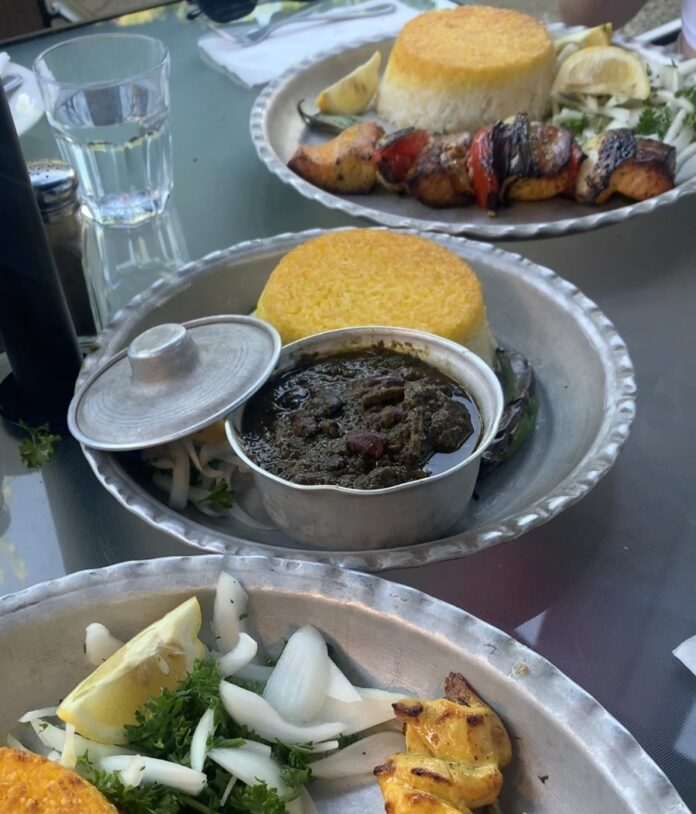
Ghormeh sabzi on a silver plate served with saffron rice with a side of lemons and onion.
“It has this incredible savoury, herbaceous flavour, and smells like rich herbs and dried lime. Paired with fluffy, aromatic saffron rice, it’s simply the most delicious dish I have ever eaten.” PHOTO: Hannah Kazemi, Staff Writer

By: Hannah Kazemi, Staff Writer

I come from a Persian and Italian background, but my upbringing was more focused on the Italian side. No matter what percentage Italian you are, this usually seems to be the case. Italian culture revolves entirely around food and famiglia, which means family meals are held sacred. When I was a teenager I became increasingly curious about my Persian heritage, especially the food. I had tasted Persian food occasionally at rare family gatherings, but that was the extent of my experience. Because of this, I didn’t feel “Persian enough,” whatever that means.

For my 16th birthday, I asked my dad to take me to a Persian restaurant instead of giving me a gift. We went to Cazba, what was soon to become one of my favourite restaurants ever. I crave their food. We ordered a bunch of appetizers and mains — something I don’t often do, but I wanted to try as many new things as possible. The dish I’ve dreamt of the most since then is ghormeh sabzi.

Ghormeh sabzi is a traditional stew made with tons of herbs and kidney beans, and chunks of the most tender, delicious cubes of beef or lamb. When cooked right, the meat falls apart as soon as it touches the spoon. I haven’t dared try to replicate it at home in fear of ruining my love for it forever.

At a restaurant like Cazba, they serve ghormeh sabzi with a massive plate of saffron rice. Eating ghormeh sabzi feels like a warm hug. I never thought I’d say this, but it makes me love kidney beans (in the right context). It has this incredible savoury, herbaceous flavour, and smells like rich herbs and dried lime. Paired with fluffy, aromatic saffron rice, it’s simply the most delicious dish I have ever eaten. 

I was actually a bit afraid to try it for the first time at the restaurant with my dad; while it smells amazing, its appearance leaves much to be desired. It’s green with hints of red and brown from the kidney beans and meat, which doesn’t appeal to someone trying a new food for the first time. But don’t be fooled — once you try it, you’ll be hooked. It definitely piqued my interest in Persian food and encouraged me to try new dishes.

If you find yourself at Cazba or another Persian restaurant someday (hopefully soon!), here’s what my dad and I typically order:

Persian food isn’t typically what people go for when they’re craving take-out, but it’s quickly become my favourite cuisine. I feel more connected to my culture now, having tried (and loved) much of its cuisine.

BC needs better backcountry education

0
wide angle photo of North Shore mountains
We must have important discussions about logistics before attending group hikes. PHOTO: Manmeet Sagri / The Peak

By: Olivia Visser, Opinions Editor

Outdoor recreation is steadily growing in popularity. Due to business closures and social distancing restrictions during COVID-19, BC’s regional parks saw a 61% increase in use in 2020. More people enjoying outdoor spaces is arguably a positive change, so long as everyone does their part to protect themselves, their travel partners, and the land they walk on. This isn’t always the case, and sometimes miscommunication ends in conflict or danger.

Group hiking continues to be the first choice among many outdoor enthusiasts. Hiking clubs, like the few at SFU and the many casual groups on Facebook, are home to thousands of members. While these groups are an excellent opportunity for new hikers, care must be taken from all sides to ensure everyone knows their capabilities and feels prepared. 

Last week, a BC woman joined a hike in Mt. Baker-Snoqualmie National Forest organized through a local Facebook group. She told CityNews that group members left her behind while she struggled to keep up, and she ended up continuing by herself. The woman said she left feeling as though the group was “very elitist” while admitting she wasn’t an avid hiker and should have done more research on the trail beforehand. 

The article covering the situation was updated shortly after publication to include the trip organizer’s response. Apparently, the organizer said they “waited for everyone to catch up” at the endpoint and “took multiple breaks.” They said the woman was told she could stop at any point and they would catch up with her on the way down, but she insisted on continuing the ascent alone after they had finished. 

Whether due to true elitism or poor communication, group conflict is surprisingly common. Hiking deep into the backcountry with strangers is not something to be taken lightly. Every group should have a thorough discussion of each person’s comfort and abilities beforehand, and what to do should anyone find themselves unable to continue. Hikers who overstate their comfort levels must understand the danger this may put on the entire team. Likewise, those who don’t properly assess members’ experience levels are creating unnecessary risk. Search and rescue (SAR) incidents in the backcountry are a daily occurrence in BC. 2021 saw nearly 2,000 rescues conducted across the province.

These scenarios highlight a need for better backcountry education in BC. Seeing as SAR teams are breaking rescue records each year, there seems to be a disconnect between people’s knowledge about safe outdoor recreation and their desire to explore the backcountry. BC AdventureSmart, an organization started by the BC SAR Association, made a recent Facebook post about group dynamics. They highlighted the need for pre-trip discussions about topics such as “what ifs,” expectations, and gear familiarity. They also suggested hiring a guide or joining an established hiking club if you’re unsure about your ability to navigate a specific trail. 

We shouldn’t prioritize completing trails at the expense of our companions’ well-being. We also shouldn’t rush into dangerous situations that may be beyond our experience levels. Everyone starts somewhere, and many local organizations, such as BC AdventureSmart and BC Mountaineering Club, aim to support those new to hiking, climbing, and winter sports. Guide companies like Vancouver Mountain Guides and Mountain Skills Academy also offer professional training for those wanting to expand their skill sets.

Comics

0
ILLUSTRATION: Sara Brinkac / The Peak

By: Angela Shen

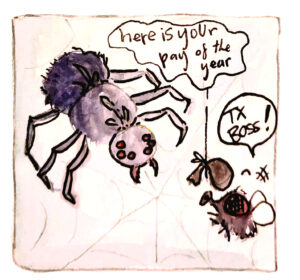
Illustration of a spider lowering a small bag toward a fly. Spider tells the fly, 'Here's your pay of the year!' The fly responds, 'Tks boss!'

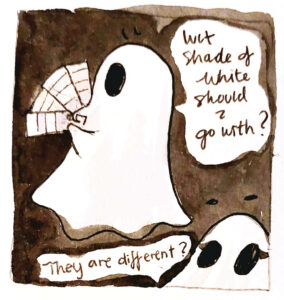
Illustration for a ghost asking its friend, 'wut shade of white should I go with?' Its friend responds, 'They are different?'

Whistler invaded by emus

0
A photo of an emu staring at the camera.
A great bird-tastrophe! PHOTO: Pixabay

By: Clarence Ndabahwerize, Staff Writer

WHISTLER — A Kiwi tourist was in for a nasty surprise when she woke up at one of Whistler’s renowned lodges and found an emu staring right at her. After screaming for 15 minutes, the tourist activated an alarm which resonated throughout the resort municipality. It was then discovered that this was not merely a one emu situation: in fact, it would prove to be an emu-tionally charged night at Whistler.

Ah, the humble emu. Birds native to Australia, these tourists seemed to be enjoying a holiday vacation as they flooded eateries and ski hills with fluffy scarves (for the blustery Canadian cold, of course!) The scenes were incredible as the RCMP’s Emergency Response Team and Canadian Armed Forces were called into action. Some residents had taken to marooning themselves in the middle of Alta, Nita, and Lost lakes, and aptly had to be airlifted to safety. 

“Bro! It’s the only way to escape those silly flightless birds,” said a Subaru driving character who was wearing plaid.

A meeting at the town hall revealed that a homesick tourist had in fact managed to sneak in a couple of emu eggs. The eggy culprit was nowhere to be found. Additionally, it seemed that many people, while terrified of the birds, found them rather sweet. Some thought they were a part of a tourism event, and embraced the birds’ presence with glee to the authorities’ chagrin. Other tourists, from Medellín, Colombia watched in terror. They knew how dangerous an invasive species could be given the situation with Pablo’s infamous hippos. They elected not to say anything.

A visit by the Premier and Prime Minister to ascertain the situation ended up a disaster as the birds seemingly got more rattled and began to herd the residents out of Whistler. The victorious emus championed their victory, chasing the downtrodden townspeople up Highway 99 on foot defiantly saying, “Allez! We shall return.” 

Unfortunately, the emus unexpectedly did well for themselves and have been granted autonomous territory within BC with provincial and federal representation within both the Commons and Senate. It seems that yet again, the emus have come out on top of a fight with the humans. Legislators have said it will take some getting used to “having these giant birds around,” and translators have reportedly made good progress with emus for the Senators and members of the houses.

Hidden Gems: Black-owned restaurants

0
PHOTO: Harambe_Restaurant on Instagram

By: Nercya Kalino, Staff Writer

Harambe Ethiopian Restaurant
2149 Commercial Dr., Vancouver / $8–$30 per plate (small and large portions)

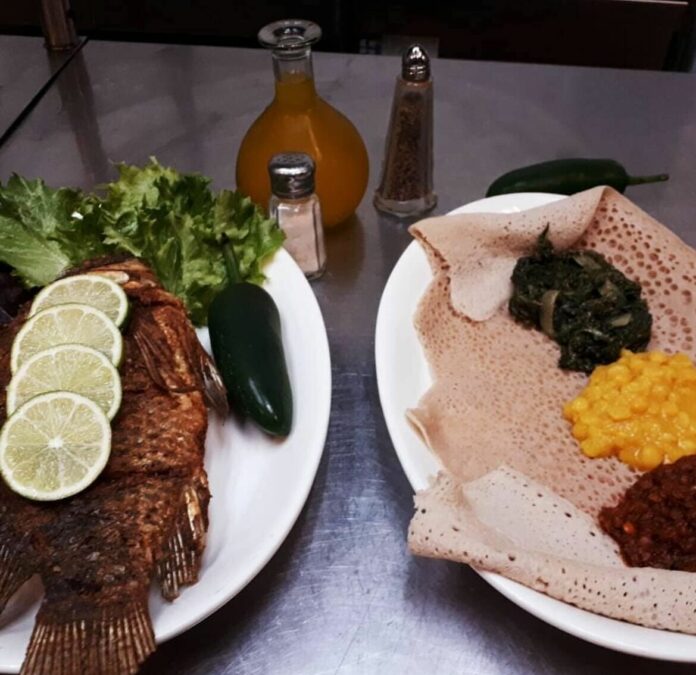
Harambe is a great place to experience Ethiopian culture and food at once. The restaurant has a beautiful, inviting interior with cultural art on display. Once you have some food on your table, you’re in for an unforgettable experience. They have vegetarian, beef, chicken, lamb, and fish options; an advanced selection of tasty experiences to choose from. For appetizers, I recommend miser wot, which is red split lentils cooked with onions, and berbere and harambe organic spices. I find that lamb plates are not common in many cuisines; this would be a great place to try it out. Yebeg wot, which is a lamb stew served with injera (Ethiopian flatbread), comes with three vegetable dishes. This dish is the epitome of Ethiopian cuisine, from the flavour and the plating to the way you eat it. Unlike western cultures, where most foods are eaten with cutlery, Ethiopian food, among other African-originated cuisines, tastes better with your hands. Take out is available.

Di Reggae Cafe 
13593 King George Blvd, Surrey / $13–$22 per plate (small and large portions)

From the outside, this spot might seem like an average restaurant, but that couldn’t be further from the truth. This place has plenty of top-tier, comforting meals to choose from. You should start with a tummy-filling appetizer, such as their Jamaican patty, which is a savory pastry with three choices: spicy beef, chicken, or veggie. Or you could go for a sweet appetizer, like slices of ripe fried plantain. For their main meals, they have meat, chicken, vegetarian, seafood, and roti options. There’s something for everyone. My personal favorite is the oxtail stew, which is more tender than you could imagine, simmered with potatoes, carrots, and sweet peppers. It’s mildly spicy and served with rice and kidney beans. For their chicken plates, you might want to jump right into the jerk chicken, which is by-far the most satisfactory plate. You’ll definitely want a take-away portion for later.

Kilimanjaro Snack House 
789 Kingsway, Vancouver / snacks $3–$15, meals $15–$27

This restaurant is named after the highest mountain in Africa, which is located in Tanzania. They offer a large variety of snacks that are enjoyed as part of Swahili culture, such as mogo, vegetable pakora, kachori, as well as sweets snacks such as gulab jamun. They also serve meals, including vegetable curry with rice or roti, kheema curry, coconut daal and rice, muthiya, biryani, and mishkaki. One of the best ways to experience this East African cuisine is by bringing friends or ordering takeout with them. With their exciting menu, it would be hard to choose where to start, but with friends, it would be easier to try more dishes by sharing. It’s a great way to  share a memory with your friends, without emptying your pockets.

Opinions in Garbage: Reginald the III and Stinks the Raccoon discuss

0
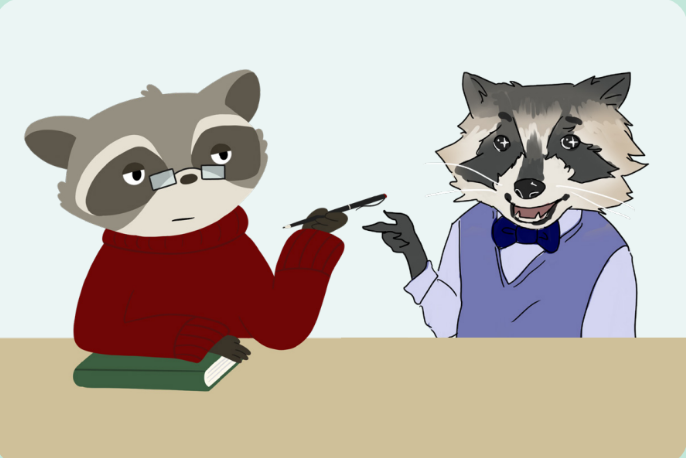
Illustration of two smug raccoons smiling at each other, depicting raccoon personalities Reginald the III and Stinks the Raccoon.
In this chapter . . . do dormitory bins reign superior to the student commons’ bins? ILLUSTRATION: Maple Sukontasukkul and Erika Hance

By: Kelly Chia, Humour Editor and Nercya Kalino, Staff Writer

The Peak has had the incredible opportunity to gather two of SFU Burnaby’s most coveted raccoon starlets: resident food critic Reginald the III himself and Stinks the Raccoon, TV personality extraordinaire! These grubby little paws possess knowledge of every corner on campus, and we are blessed to have them with us today.

In this new segment that totally doesn’t parody our own Opinions section, we have “Opinions in Garbage!” Watch these two starlets tackle SFU’s biggest questions, like why logging into your email or Canvas actually boots you to the log out screen, or whether SFU Burnaby’s bathrooms could ever compare to Surrey or Vancouver! 

This time, we’re making them tackle something close to home. What do you two think of the garbage cans around campus?

Reginald the III: First of all, I’m honoured to have a space on your human periodical, fellow SFU dwellers. But I have to say, I think this is a rather droll question to direct to me and my fellow raccoon. There is obviously one correct answer, right, Stinks?

Stinks the Raccoon : Certainly, but your grace, don’t forget our work is much more enticing compared to SFU students’ work. They might find our dialogue redundant, but they’ll tune in. Regardless, the garbage cans as a topic is subjective, Reginald the III would know. Sounds like someone needs to do some research. 

Reginald the III: That’s right, a better question more well suited for serious news in the raccoon community is how we feel about garbage infighting! Now, that’s a hotly debated topic. Just imagine our youngest raccoons, munching on old Tim Horton’s wrappers instead of the juiciest pears rolling behind the Nester’s Market! I just can’t imagine it, Stinks. It is so important to have sustainable scavenging practices for our young’ins. You know my humble opinion of the Burnaby campus’ greatest, obviously, I have a soft spot for the Surrey campus. What do you think of the garbage options at SFU, if I could have a penny (or a half-eaten orange) for your thoughts?

Stinks the Raccoon : Now that’s a question! Well, let me tell you something. Garbage riots make for good content. Do I condemn it? Certainly, but whenever it happens, you know where I will be with my camera. And of course as the younger generation, we have a level of entitlement especially with the dining expansion! Some raccoon s will be losing their paws I tell you. So far, I think I am still learning which garbage bins benefit me best. I am not a picky eater but if we need to be honest, the Burnaby Residence garbage sucks! There are just low quality items there. So I have to agree with you on this one Reginald. I guess my question would have to be what is the weirdest human encounter you’ve had when dumpster diving?

Reginald the III: What a wonderful question! I must agree with you, Stinks, even for a budget or comfortable option for your regular raccoon, the Burnaby Residence garbage is simply sub-par. There is so much soggy spinach from the humans’ intent to eat healthy produce, and it is boring! I wish they would try . . . some apples, or some dragonfruit. Some diversity would really brighten up that dump. As you know, yours truly prefers to dine alone. So I would say the most interesting encounter was when I made eye contact with what the humans call Mc . . . Dog? Anyways, there I was, and this furry imposter was staring straight at me as I tried to settle for my dinner! It was so upsetting. Have you encountered anything like that, Stinks?

Stinks the Raccoon : McDog, what a name . . . I’m sorry for your encounter and I do hear you on the lone dining. As for me, what I am about to tell you dies here in this article. As usual, I brought my camera with me for a small vlogging trip down at the Burnaby residence, behind the graduate resident building. I approached the bins, mind you, this was just after sunset. I heard some grunting and rustles inside the bins. So I thought maybe it was just some raccoon s playing around. No! There was a human inside. Rummaging through the trash. What a sight! I was recording the whole thing live. I must say, that was my highest rated video.  

Reginald the III: Well! I surmise we have inspired the humans, and that is cause for celebration. I remember watching that video myself, and it gave me a good old chortle. Now, I think we’re overdue for a meal together, old friend. What do you say we ditch this intrepid underground office together?

Stinks the Raccoon : Well, of course! A dinner with you is the highlight of my day. I know your followers will surely be jealous of me, your grace. 

Reginald the III: And mine yours, dear friend! Let’s ditch this interview.