Home Blog Page 231

Provincial funding for clean technology development at SFU

0
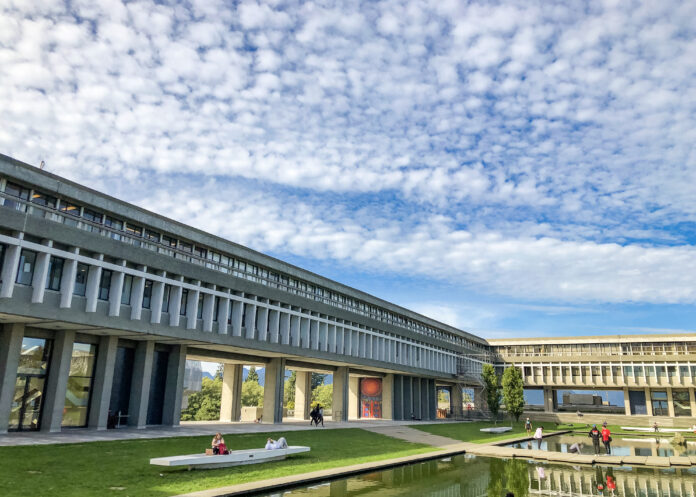
This is a photo of the academic quadrangle at the SFU Burnaby campus. In front of the building is students sitting on the green grass.
PHOTO: Allyson Klassen / The Peak

By: Pranjali J Mann, News Writer

SFU’s 4D LABS and Big Data Hub are set to receive a research investment of $2.6 million. The investment will provide new equipment and facility upgrades to support research in “clean technologies late-stage testing.” This comes from the Government of Canada’s agency, PacifiCan, situated in BC to improve innovation and growth in the province’s economy. 

Under the Regional Innovation Ecosystem program, the funding prioritizes “innovation and inclusive growth.” This means the project will provide specific support to “hiring and training of under-represented groups, including Indigenous peoples, women, and youth.” The announcement ceremony saw in attendance minister of international development, Harjit Sajjan, and member of parliament and parliamentary secretary minister of finance, Terry Beech.  

As outlined in the SFU News, a sum of $600,000 will go towards core facility building, increasing the “capacity of the university’s Supercomputer Cedar, including 12 high-performance computers for its computing lab.” Cedar is one of Canada’s largest advanced research infrastructure for data-intensive research and data mining

This investment will work to enable more employment and help “small and medium sized BC businesses increase productivity and remain competitive.” Sajjan said, “Universities, like Simon Fraser University, are often the birthplace of ideas, such as innovations that leverage the power of clean technology. The government’s support for the Centre for Environmental and Food Analysis will support the local clean technology ecosystem and help municipalities and Indigenous communities adopt green technologies.” 

Beech, an SFU alumni, also appreciated this announcement and noted its long-term positive community impacts. He stated, “Supporting environmentally friendly initiatives will build our economy while creating high-skilled, well paying jobs. The government is committed to making Canada a world leader in sustainable innovation, science, and technology.” 

The 4D LABS will use the investment to establish the Centre for Environmental and Food Analysis. In combined efforts between local municipalities and Indigenous communities, the Centre for Environmental and Food Analysis will work in commercialization and utilization of clean and green technologies. The idea is to innovate technologies provincially, with the possibility of expanding into global markets. 

SFU’s vice-president, research and international, Dugan O’Neil welcomed the investment. “The new Centre for Environmental and Food Analysis will train researchers with valuable skills for the agritech, clean tech, and clean resources sectors, while expansion of our big data capacities will serve the growing Canadian research community.” 

Structural issues causing moral distress for women in the health care industry

0
This is a photo of a woman working in a health care room. The woman appears to be doing a surgical procedure based on her clothes, but no patient is shown in the photo.
PHOTO: Artur Tumasjan / Unsplash

By: Pranjali J Mann, News Writer

A recent study conducted by SFU health sciences assistant professor, Julia Smith, found women in health care experienced increased moral distress during the pandemic. 

During COVID-19, staffing shortages and a lack of access to necessary equipment — like personal protective equipment (PPE) kits and masks — was found to increase moral distress in 2020 and 2021. The study also indicated that “at home, women experienced moral constraints related to inability to support children’s education and well-being.” 

Moral distress, a central theme of the research, pointed to a situation “when you know the ethically correct action to take, but you are constrained from taking it.” According to the study, women in the healthcare industry were constrained in their ability to provide quality care to COVID-19 patients due to existing flaws in the health care system like worker shortage and “increasing privatization and marketization of health care.” These factors left them feeling distressed with the inability to cope with crises.  

The researchers mapped out four forms of participant challenges “related to moral events which were categorized as constraints, conflicts, dilemmas, or uncertainties.” The study data was gathered through individual and focus group interviews among 88 health care providers in British Columbia. The research was published last month in Nursing Ethics

The study implements framework analysis methodology. This qualitative research method is used in public and health policy research where research findings from interviews are categorized into a “corresponding participant and theme.” Through the interviews, Smith and the research associates found that women health care providers feel “double distress.” This dilemma comes from the many responsibilities women in health care face — they often also provide care for their families at home, in addition to the their care-oriented professions. 

To find out more about this research, The Peak interviewed Smith. She underlined the importance of studying the case of women health care workers in the pandemic. 

Smith said, “We focused on women because the majority of healthcare workers identify as women and also we recognize that women in Canada tend to do more unpaid care work.” Women healthcare workers simultaneously provided a workforce and cared for families, thus doing “two to three times more unpaid care work than men.”  

She also identified a lack of research in this field — understanding moral distress, constraints, and unpaid labour provided by women health care providers. Unpaid labor includes “work required to maintain the household — from chores such as grocery shopping, cooking and cleaning, to taking care of the children, sick, and elderly within the family.” This kind of work is usually not compensated by wages and often expected to be performed by women. 

She illustrated the participants felt moral distress because they were required to work overtime in COVID-19 related shortages. This resulted in less family time for child care, mental burnout, and physical exhaustion. “It’s the multiple burdens that have this dramatic effect,” said Smith. 

According to SFU News, “supervisors or managers were too distanced from the realities of care work” and were not flexible for working conditions as childcare closures occurred at the height of the pandemic. Uncertainty was also key during this time as correct ways to care for the patients was unclear. 

Smith called for systemic changes to increase investment in health care as a whole, along with other industries like childcare. She suggested some individual coping strategies as well. She said, “Not all the healthcare workers we spoke to had access to counselling, had the resources to pay for counselling, for example. So I think what we need to see in terms of broader changes would be policies to ensure adequate staffing including increased pay raises, better conditions of work in order to attract people to these sectors.” 

To learn more about Smith’s study, visit the Nursing Ethics journal.

Our current pandemic response doesn’t add up

0
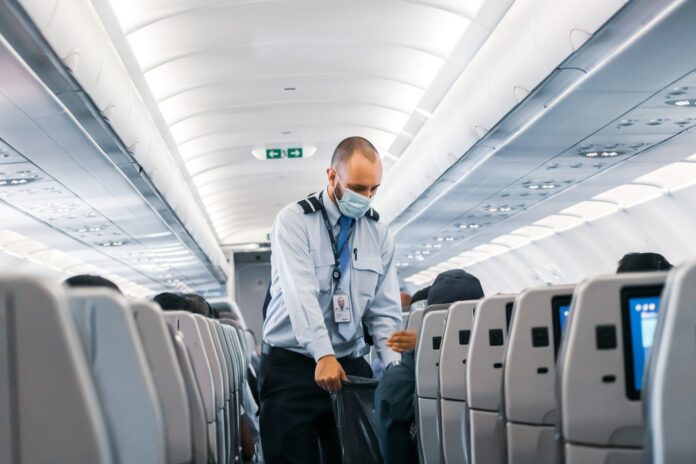
Man in a blue shirt and wearing a blue mask in an airplane

By Hana Hoffman, SFU Student

Do the new COVID-19 measures make sense?

There are many different sources that provide the country with information on COVID-19. In some cases, announcements about COVID-19 from different officials and politicians contradict each other. Theresa Tam, Chief Public Health Officer, is talking about bivalent vaccines and staying up to date with booster shots. Meanwhile, the government dropped COVID-19 border requirements for anyone entering Canada. On one end, the message is to stay vigilant. On the other hand, it appears Canada is dropping their guard against COVID-19. How is the population supposed to stay informed when the government and public health officials are taking two very different approaches?

On September 26, the Government of Canada announced they would drop multiple COVID-19 measures related to the border, masks, and vaccines on October 1st. However, hospitalizations this year are largely higher than 2020 or 2021. New variants that are better at evading immunity make us question the abandoned precautions. Canada is in a new phase of the ongoing pandemic, but many have asked why we are lifting restrictions on social media in light of the evolving situation. Twitter’s “#BringBackMasks” hashtag speaks on why mask-wearing and booster shots are still necessary for personal and public safety, especially as we shift into the flu season.

Health Officer Dr. Bonnie Henry and Health Minister Adrian Dix discussed their strategy to keep COVID-19 cases and hospitalizations as low as possible through the flu season. But isn’t this contradictory? They’re saying they need to prepare for a rise in cases while not providing preventative principles to do so. If they had determined it was safe to stop COVID-19 precautions, why should there be concern for the rising cases? This summer already saw BC’s emergency rooms struggle with staff shortages and closures.  This is causing confusion.

It was recently reported that Dr. Henry knowingly downplayed the threat of COVID-19 transmission in schools. So how are we supposed to trust the current guidelines are in the best interest of our health?

Since the pandemic began, the Government of Canada has gone from requiring proof of a negative COVID-19 test and a two-week quarantine to requiring travellers to use the ArriveCan app prior to entry. This app was originally used to compile data from travellers entering Canada, to verify their vaccination status.

Now, they have dropped all restrictions to allow people to cross the border without the ArriveCan health declaration, proof of vaccination, random testing, and quarantine or isolation. In addition, health checks and masks are no longer mandatory on trains, flights, and cruises. In March 2020, the idea of isolation to help slow down the spread of the virus and make COVID-19 tracing much easier was introduced to the public — we now know isolation and mass testing are proven strategies to reduce transmission.

Throughout the past year, the Omicron variant dominated the majority of infections. As COVID-19 mutated, vaccines became less effective against this new variant. Measures like reinstating the requirement for negative PCR results for travellers, as well as almost doubling on-arrival testing were taken. This constant back and forth, switching from semi-lockdowns to calms, has caused those affected the most by the pandemic to lose trust in the public health officers and compromised the ability for the general population to stay informed.

The House of Commons health committee is preparing for a possible mutant that could dodge all current vaccines. Transmission and infection is one of the dangers of a constantly mutating virus, as current COVID-19 vaccines do not grant sterilizing immunity, therefore we can still transmit and be infected with COVID-19.

The consequences don’t end at a COVID-19 infection. Those who didn’t present any symptoms while infected might still develop long COVID — which causes long-term symptoms experienced weeks or even months after first getting sick. This causes a different set of issues than the flu-like symptoms of COVID-19. Long COVID can affect the organs and the immune system long-term. It is capable of affecting people of all ages, regardless of previous health and vaccination status. CTV News interviewed Adriana Patino, someone who has suffered from lung damage, heart damage, and fatigue after her infection. Even as a former 37-year-old competitive swimmer with a healthy lifestyle, she still needs treatments and therapy.

Canada’s public health services state there is no cure for long COVID at the moment, and Statistics Canada has counted almost one and a half million adults in Canada experiencing this. Plus, it is predicted that out of everyone who has gotten the virus, between 10–20%  of them are prone to acquire long-term conditions, according to the World Health Organization.

Whether or not Canadians are aware of how likely it is to suffer from long COVID, the government should consider informing them — and easing restrictions would do the opposite of trying to prevent it.

Why did the government suddenly drop all of these precautions and make it seem like we are now safe from the virus? Especially when at the same time, other health officials are warning us about possible new waves and variants. How do they expect the population to listen to their advice and recommendations? This causes continuing confusion and mixed feelings for the public. Many are tired of having to follow restrictions after being in this situation for almost three years, and it doesn’t help if the government isn’t clear or transparent about the pandemic. Canada needs to prioritize a strategy that includes clear communication, information to the public, and measures to truly protect the public.

Dear SFU: Please make safety a priority this winter season

0
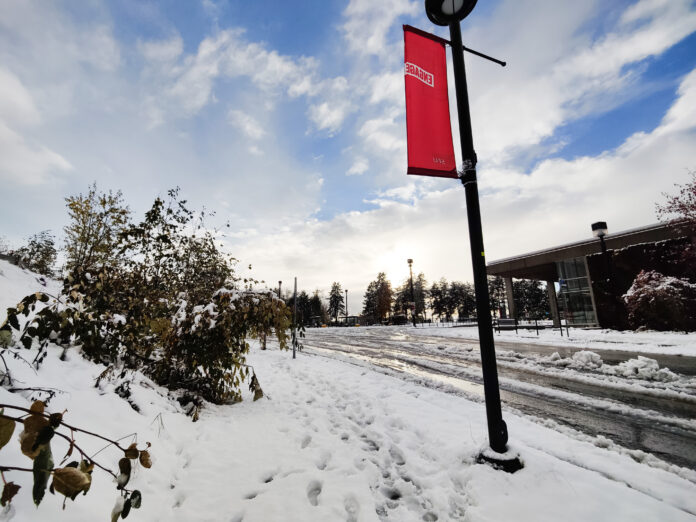
snow covered sidewalk at SFU Burnaby
PHOTO: Kriti Monga / The Peak

By: Olivia Visser, Opinions Editor

While our campus boasts beautiful mountain views and great sunset-watching spots, it stands no chance against the snowstorms we see every couple of years in BC. Winter can be incredibly dangerous in this province, no matter where you are. Few people want to, or even can, commute up a mountain in a blizzard. Many students without commuter horror stories can remember an accident or near-miss on Burnaby Mountain during the winter months. SFU needs to keep safety a priority for students this upcoming season. 

Burnaby Mountain has an elevation of 370 metres. That might not sound very high compared to other mountains, but it’s enough to significantly lower the average temperature. This means Burnaby Mountain sees more snow than the surrounding areas, and the snow sticks around for longer periods. 

For commuters, heavy snow brings forth a multitude of challenges. Traveling by foot takes longer, and poses safety hazards. Many disabled people simply can’t safely navigate the ice and snow due to blocked ramps, entryways, and ice-covered sidewalks. Buses also face delays, and even suspend their service for safety concerns. This affected students most recently in 2020 and 2021, when commuters were stuck on the mountain with no way home after classes were cancelled too late. That same morning, SFU insisted “operations and classes are proceeding as normal.” It seems to be a yearly occurrence, as the university consistently fails to prepare for the weather and prioritize student safety. These situations can force people to walk their way down the mountain, unless you’re as lucky as I was in 2020 to find a ride with a friend. I remember watching him push a smaller car out of its snow-covered parking spot, with a line of vehicles behind waiting for their chance. It took us over three hours to get home, after a two hour commute to class.

Other students have posted in SFU-related social media groups about their injuries. One person said they “wiped out twice” on campus and their friend sprained their ankle. Some commenters suggested filing a report to facilities services, while others said they allegedly got an insufficient response, or no response, from the university when they tried. 

These types of winter complications are a big part of what led to the Burnaby Mountain gondola project. Hopefully the gondola will increase accessibility and reduce some of the risks associated with winter travel. However, the project was proposed as one of TransLink’s “Transport 2050: 10 Year Priorities” plan, meaning we still have years of waiting before we can use the gondola. In the meantime, there are steps the university can take to protect students’ safety.

On November 8, SFU made a Facebook post about safe walking in snowy conditions. They said to “keep your arms and hands free and steady,” and “take small steps,” among other instructions. This advice certainly helps, especially for those commuting from even worse weather conditions. However, if walkspaces aren’t safe enough on campus — shouldn’t the school be closed until they are? 

I know it was just a pre-emptive post intended to help us, but the university still needs to prioritize student safety in their decision-making heading into December. It takes a lot of work to keep the entire campus cleared and salted during heavy snow, which is why classes should be cancelled or moved online when safe conditions can’t be maintained. While this is technically already the school’s policy, it hasn’t been followed effectively in the past. Let’s stop repeating the same mistakes. Please, SFU: I want to be inside for the next Snowmageddon — not braving the storm.

SFU Archives curates beer archives

0
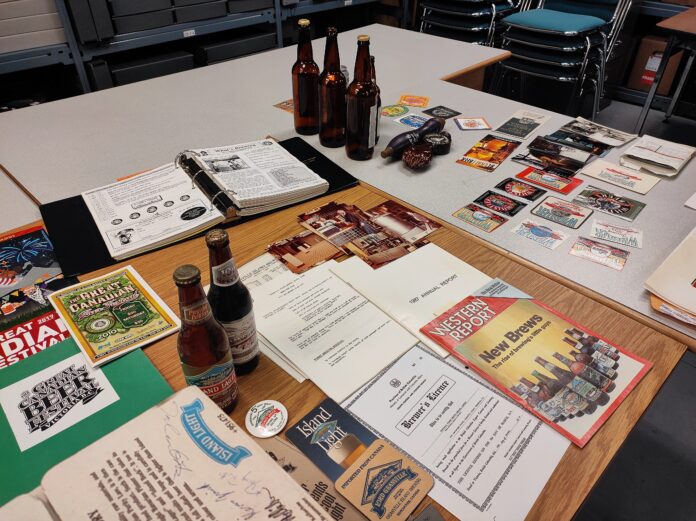
This is a photo of part of the SFU beer archives collection. Various beer memorabilia and artifacts are shown.
PHOTO: Pranjali J Mann / The Peak

By: Pranjali J Mann, News Writer

SFU Archives and Record Management is beginning a beer collection to trace the history of breweries in the province. The collections will include records of various local breweries and their documentation, breweriana, and advertising material.

The information and archives include over 160 years of brewing history in BC. As stated by What’s Brewing, SFU will be creating this collection alongside its existing rich collections of “women’s history, social activism, social justice, and politics.” SFU Archives is looking to acquire some “external materials and records from the public,” as well. 

To learn more about the collection, The Peak interviewed Melanie Hardbattle, SFU Archives’ acquisitions and outreach activist. Hardbattle noted community engagement for brewing history led her to this idea of creating a beer archive at SFU. 

Pointing to the shifts in brewing industry over the years, she said, “There’s been a lot of ebbs and flows over the years so we wanted to capture them. We noticed that nobody else, no other institutions, were acquiring material to document this, so we thought it was a good niche for us to get into.” Their collection comes from individual donors and organizations around BC.

The collection has been an ongoing effort which comes in time of the four decade anniversary of the first prominent brewery on mainland BC — Horseshoe Bay Brewing, which opened in 1982. 

As SFU News outlines, we are in the “golden age” of brewing in the province with many options for the consumers. In the 1900s, the brewing industry was monopolized in the hands of the “Big 3:” Molson, Labatt, and Carling-O’Keefe. In 1982, John Mitchell and Frank Appleton opened the microbrewery in Horseshoe Bay, which led to 220 breweries in BC. Microbreweries manufacture limited-production special beers. 

In reference to some beer labels from Whistler Brewery, Hardbattle mentioned, “Back in 1989, that’s one of the earliest craft breweries. It’s still going, but it’s changed ownership.” Hardbattle visited the brewery earlier this year. Appreciating its architecture in the manufacturing unit, she noted it was first equipped with German technology. SFU Archives managed to secure some initial hand-drawn marketing materials, logos, first opening invitations, and construction photos from Whistler Brewery.  

Hardbattle described packaging from “the first case of Granville Island Light that was produced. Everybody that was working on it, signed their names and dated it. So it’s a really cool piece of history.” 

Hardbattle collaborated with Campaign for Real Ale Society of British Columbia (CAMRA) in Victoria. One of the central collections of CAMRA is Greg Evans, a BC beer historian. Some of Evans’ collections will now be available at SFU. Older central craft brewery collections from Michael James Jackson, Charles Finkel, Ed McNally, among others are also in the current archives. 

CAMRA was also home to related publications such as What’s Brewing, which are now part of SFU’s collection. What’s Brewing was one of the first newsletters for craft breweries, and served as a foundation for the SFU collection. There is also a simultaneous effort to digitize these records for research purposes. Currently, the SFU Archives team is working to make the collection available for student research projects and viewings.

Food for Thought: Hallacas tell a story of Venezuela

0
Hallacas wrapped in banana leaves and strings on a plate.

By: Michelle Young, Editor-in-Chief

Christmas smells like banana leaves. That’s because it’s a key ingredient in my family’s holiday meals, frequently consisting of pan de jamón, panettone, and hallacas. Every hallaca is different depending on the family who makes it. They primarily consist of some form of protein (mine are made of chicken, beef, and pork) stuffed into harina pan and wrapped into banana leaves. 

The guiso (filling) can vary depending on the spices used and whether you add olives, peppers, capers, or raisins. There are many ways to mix and match, and it is hardly a uniform recipe. While the origins of the name are unclear, some speculate it comes “from the union of the words ‘allá’ and ‘acá,’ which means ‘here’ and ‘there.’” Others say it came from the “Guarani language, stemming from the verb ‘ayua’ or ‘ayuar,’ meaning ‘to mix or blend.’” It’s also been reported that hallaca “means ‘package’ in the Indigenous Tupi-Guarani languages.” While it remains debated, each theory successfully captures a core aspect of the hallaca. 

There are a few different ideas around how hallacas came to be, but the most common I’ve heard is that those enslaved by the Spanish took food leftovers to create the unique mixture of hallacas. Conversely, today hallacas would be very difficult to find in Venezuela due to food shortages. It is hard to create even basic meals. The amount of ingredients — typically over 20 — required to make the guiso make it a luxury to enjoy an hallaca for Christmas. Even as a kid, I remember my mom going to a variety of different stores to collect the ingredients: hopping between T&T, Superstore, and Fruiticana. When my grandmother came to Canada to visit in 2019, she cried after seeing grocery stores stocked with food. She hadn’t had hallacas in many years. 

Of course, with my grandmother visiting, my mom and aunt set out to make hallacas with her. My grandmother sat at the kitchen table, meticulously cleaning the banana leaves, as my mom worked on the guiso. Typically, making hallacas requires all your aunts and uncles due to its long and strenuous process — in my experience, it takes around two days to make them, but this can also depend on how you prepare them and how many people you have in your family. You start by hand washing the banana leaves, trimming them, letting them dry, creating the guiso and letting it cook for a number of hours, slice a trillion vegetables, prepare the masa, put it all together, and neatly tie it up like a little present. 

Tying the hallacas themselves is a skill in itself — getting the tie pattern correctly and making sure it’s not too loose or too tight is an artform. This is so important, it birthed the phrase, “una hallaca mal amarrada” (a poorly-tied hallaca) to mean something that looks ugly or out-of-place. 

My grandmother watched carefully to see how the family recipe was recreated. When I came home that evening, I found my mom and grandmother fuming over the hallacas. My mom had a giant pot of guiso ready, and my grandmother had been demanding she pick out the olives one-by-one to slice them, as she hadn’t done so before putting them in the pot. As difficult as hallacas are, each family has details that make the recipe their own. 

Once they’re ready, you can freeze them for the rest of December and take them out to boil when you want to eat one. There’s nothing like a hot steaming hallaca plopped onto your plate during the holidays. You untie the strings, unwrap the banana leaves, and you will find a plump masa with all the spices, veggies, and meat you could imagine. 

Hallacas use “elements from the three major groups that were brought together as a result of Spanish colonization and the slave trade.” This included corn flour from the Americas, “a baroque stew which includes olives, capers, almonds and raisins from Spain, and plantain leaves” that came from Europeans who had previously colonized Africa. 

Hallacas, like many Venezuelans, have migrated to neighbouring countries, the US, and Canada. They serve as a cultural connection, and making hallacas is a cultural experience in itself. Now found in the homes of Venezuelan diaspora, the iconic food reflects the diversity of Venezuelans and their history showcases the changing nature of the Venezuelan economy and identity. 

SFU Presents: SFU On Ice

0
Illustrations of a student skating up the bus loop like a slip-and-side, a student using a garbage bag as a toboggan to go down the snowy steps of WMC to the lower bus loop, and students walking like a penguin.
ILLUSTRATION: Hayeon Gil / The Peak

By: Hannah Kazemi, Staff Writer

SFU is pleased to announce a new construction project coming to campus this winter . . . You could even call it our special production. We’ve heard your calls for enhanced safety measures on Burnaby Mountain when snow and ice creates unsafe and precarious conditions — that’s why we’re introducing three NEW updates to campus infrastructure that will bridge the gap between students and the snow. We’re turning foes into friends!

SFU will be hosting LIVE safety demonstrations whenever we feel like it, using beloved professors as demo subjects to show you how awesome these updates are. We will be adding a very low mandatory $69 fee to each student’s account so as to cover for any damages (and legal fees) that may be incurred during these live demos. We will also be filming footage of each live demo so that they can be stored for people to watch after future snowstorms in lieu of providing feedback forms about how we have dealt with snow this semester. You (yes, you!) will be PAYING to watch your peers slip and slide all over campus! Filming will take place at three high-risk — or high-fun! — locations across campus.

LOCATION #1: Upper Bus Loop
DEMO: Ice Block Treadmills

That’s right! Instead of salting the walk from the bus loop to Blusson like a reasonable institution who cares about their students would, we will be smoothing out the layers of ice and innovatively turn a dangerous situation into exercise. Icicles will be added to any handrails to add to the winter wonderland aesthetic. Why walk normally when you could build up that core strength and glide your way into the building instead!

LOCATION #2: Stairs from West Mall down to the Lower Bus Loop
DEMO: Garbage Bag Toboggans

We will be smoothing out snow that collects on the stairs so that instead of walking down icy steps, students can pretend they’re skiing down the side of a mountain. Snow will be transferred to the stairs from other areas of campus so that we can fill in any gaps and create a fuller ski mountain experience. Parking lots won’t be cleared for this though — they’ll actually be the last areas of campus to be cleared of snow because who cares. Plastic garbage bags (climate change who?) will be kept at the top of the stairs for students to sit on and slide down. We’re all about bringing more fun to campus! No broken legs or twisted ankles over here!

LOCATION #3: Convocation Mall
DEMO: Penguin Walking 101

The best and most effective method of avoiding injury when walking on snow and ice is actually learning how to walk like a penguin! We thought it’d be super fun and cool to demonstrate how to walk like a penguin instead of doing the work to remove the snow and salt walkways ourselves because this is obviously how resources are best used. Join us on Wednesday at 11:41 a.m. for a FREE and LIVE demo from SFU’s very own Joy Johnson showing you how to walk like a penguin on snow and ice! You’ll all look really funny doing it, which is great for our social media. Join JJ in your best SFU merch or dressed like a penguin for the demo of the year!

Advice For My 14-Year-Old Self

0
Photo of a small book with the legend "Things I wanted to say but never did" written in the cover

by Hannah Kazemi, Staff Writer

Dear me,

As of writing this letter, I’m 21 (22 in January. What the hell happened to the time?!) and every single day I mourn you, 14-year-old self. Sometimes when I’m laying in bed at night stressing about school, my body, or all of my life choices, I think about what I wish I had known about being an adult before it happened. I think about how I would have acted differently, what kind of person I wanted to be, and things I’m proud of or regretful towards. I write notes on my phone about all of these things. I think past me would have benefitted from hearing these things, had I been around to tell them to her. So here they are, all in one place.

#1 Shut up and move on.

You have a problem with getting hung up on things that are out of your control and kicking yourself for it until you don’t have the strength to kick straight anymore. You’re spending so much of your teenage years stressing about things that don’t matter anymore — your haircut, a bad grade, or something ridiculous you said in class. Shit happens. Sometimes bad or frustrating things come up that push all of your plans right out the window. It’s fine, you’ll get over it. You should cry first, though. Crying always makes you feel better.

But don’t always move on right away. You are allowed to express yourself and hold grudges and be angry. You are allowed to be unreasonable and mad at the world and think that everything sucks because sometimes . . . everything does suck. I wish someone told me this years ago. If they did, maybe you wouldn’t have developed anxiety by the time you turned 18. You just have to remember that when the tears run out, so does the energy you’re giving to the situation. That’s the point where you should think about moving forward.

#2 Stop over-planning.

Speaking of pushing things out of the window, your tendency to over-schedule your life and plan everything to a tee is going to kill you. For real. If there’s one thing I’ve learned about anything, it’s that nothing is guaranteed.

You can do all of the planning in the world, down to the minute, and still, something will go wrong.

You wanted to go out of province for the university to get the “full experience” and ended up going to SFU. You still live at home. In Surrey.

You wanted to study abroad in England in the second semester of your third year. COVID-19 hit during the first year. You visited England in the summer instead.

You hated English in high school. It made you cry and you swore to never take it in university. You’re graduating in April with an English minor and you write for the freaking student newspaper. Your writing has won awards.

Long story short, nothing ever goes to plan. At most, it goes kind of to plan. Write down your feelings and goals instead, I don’t know, just stop over-planning every moment of your life. Use that time to go out and actually enjoy being a teenager.

#3 Go to therapy!

This is probably my most important piece of advice. You’re hurting so badly inside and you don’t even know it yet. It isn’t until you turn 18 that you realize how badly you need to let the hurt out. Every relationship in your life will be better for it, and you’ll benefit from hearing someone else tell you that the way you’re feeling is valid. It is allowed. You’ll hate it at first because talking to strangers makes you anxious sometimes, but it’ll be worth it.

#4 Live a little!

Being scared of not being “perfect” or whatever in high school really hindered your ability to have fun as an adult. You get FOMO when you see your friends out without you, dancing the night away while you’re at home writing papers and reading books. I mean, it’s not bad to work hard and read — don’t ever be ashamed of being a “nerd” — but please, for my sake, accept going out more often. Stay out later than you normally would on a weekend (like, past 9:00 p.m.). Listen to music really loud and hang out with your friends more. DON’T WAIT FOR THEM TO ASK. I have to actively think of socializing now. I can’t be spontaneous at all, I have to rehearse in advance. Do you know what spontaneous means?? I shouldn’t have to rehearse it!! At the age of 21 (almost 22), I’m finally at a place where I actually crave going out and hanging out in crowds of people and dancing until my feet hurt.

#5 Your body will never satisfy you, so stop trying to make it change.

This piece of advice is one that I constantly need to hear but that never seems to stick around long. So I’m putting it on paper to exist in perpetuity.

The way your body looks does not define who you are or what you are worth.

Your. Body. Does. Not. Define. You.

Read that over and over and over again until it’s burned inside your damn mind because I swear if I have to watch you look in the mirror and poke at your belly or your thighs one more time, I’m going to scream. No amount of hoping and praying is going to remove your stomach fat. You can’t just cut it off. Little did you know at the age of 14 that your difficulty losing weight isn’t your fault at all; it’s the fault of your genetics.

Stop going to the gym and comparing yourself to the other girls there. Start going for long walks instead — I promise you will grow to love them. And you will grow to love your body. Well, sometimes. Sometimes you still hate it. But the times you hate it seem to decrease the less you occupy your mind with the way your body looks. Nobody notices but you, but your dysmorphia clouds that. Try not to let it. And fuck off with that “body positivity” bullshit. We now align with “body neutrality,” it means we accept this is our body, this is how we look like and who we are. We do what we can, when we can to stay healthy and not to change how our body looks. Learn to appreciate your body and take care of it as you would a small child. Give it what it needs to stay alive, entertain only some of its tantrums, don’t deprive it of all indulgences, and love it for its imperfections.

That’s all I’ve got for now, me. Believe it or not, you don’t know everything yet. You know a lot of things, and you certainly know more than you did when you were 14, but you have so much to learn. You learn new things every day about yourself and about what you wish you did or who you wished you’d be by the time you were 21, but trust me when I say that I don’t think anybody has the slightest idea of who they really are — especially when they’re 14, and even more so when they’re 21.

Tell your friends you love them. Hug your mom sometimes. I love you the most and I hope you take care of yourself.

Peace, love, and estathé,

Hannah xoxo

Vancouverite’s totes necessary guide to preparing for snow

0
Illustration of a student looking innocent and hopeful as they witness the first snow fall of the season
ILLUSTRATION: Youngin Cho / The Peak

By: C Icart, Staff Writer

Have you seen the forecast? The temperature has been dropping. I’m running out of time. For what? To prepare for my favourite Vancouverite winter hobby: pretending it never snows in the Lower Mainland! Here are my steps for getting ready! It’s so exciting!

Prepare my shocked face

It NEVER snows. So I need to spend extra time in front of the mirror practicing my Home Alone face. I’ll need to use it when I see the forecast, and it announces snow when people tell me it will snow, and most importantly when I see the snow (which I won’t because it NEVER snows).

Clear my camera roll 

I refuse to pay for iCloud, so I need to get my phone storage sorted out so I can take an absurd amount of photos IF it ever snows. Because that would be a miracle because it NEVER does, I’ll need to immortalize the moment.  

Buy earplugs

Sometimes covering my ear with my hands while someone tells me that it snows at least once every year in Vancouver is tedious. So I’ll need some earplugs for comfortable hands-free denial this winter. No one can stampede my Vancouverite Elsa dreams. 

Not buy winter tires

Are winter tires mandatory on most BC highways? Perhaps . . .  Will I be engaging in the practice of purchasing said tires even though I know I should and its safer to do so? I have all seasons, so perhaps not . . . wink.

Buy my Arcteryx jacket 

Vancouver winters are so mild, I don’t know how I would survive without a $400 jacket. 

Prepare my excited text

Must save a draft in my notes app, so I’m ready to go when (I mean IF) it inexplicably snows, and I need to show the entire world (so, like all my group chats and my social media). NO ONE has windows in this city.

Work on reflexes 

The second the impossible happens, I’ll need to run outside immediately. So I need to be READY. My Vessi’s need to be laced up at all times, so I can feel nature’s sprinkles on my face immediately. The wildest part is that the snowflakes are clearly laced with some sort of amnesia-inducing drug that will immediately make me forget the entire experience. So I MUST treasure it.

Horoscopes November 28th – December 3rd

0
An illustration of a girl with long flowing hair. Astrological signs and stars shine around her.
ILLUSTRATION: Marissa Ouyang / The Peak

By: Hana Hoffman, SFU Student

Aries

Look into the sky tonight when the whole town has their lights off and the ambience is cold, silent, and peaceful. Count how many stars you see with your vision, then make a wish for each one. Why do this? Because every one of those wishes will come true next year.

Taurus

Think back on all the nights of 2022 so far. Do you think your average hours of sleep per night was above or below seven hours? Whatever it may be, try to get a slightly higher average next year. Or maybe you’ll hibernate this December and make your daily sleep average shoot up into the sky to make it unbeatable next year . . .

Gemini

For you, Gemini, 2023 is going to be a year for clearing off everything on your to-do list. Want to take that vacation to LA? Still trying to convince yourself to learn how to play guitar? Go for it! 

Cancer

Cancer, you are invited to participate in the writing challenge! Get a notebook, decorate it any way you’d like, and write a quick little something every day about anything that’s on your mind. It’ll be cool to read later, so you won’t regret it! 

Leo

You’re gonna open up a little more next year and find some opportunities to participate in, whether it’s joining a club or getting involved in the community. As a result, you’ll make lots of new friends!

Virgo

You may have had a good year, a bad year, or something in between. Whatever it was, just know that 2023 is going to be better. Maybe you’ll win the lottery, get straight A’s, book a vacation, or adopt a pet. Something great will happen next year and it’s something to be excited for!

Libra

Black Friday just passed and you went shopping, feeling certain that you checked every single thing off your December shopping list. But wait . . . Oh no, you forgot to buy the chocolate countdown calendar! Sorry to break it to you, but now you’ll have to buy it in full price :’(

Scorpio

No matter how many L’s you took this year, we’re gonna leave that in 2022 and only take our Ws to 2023 so we can continue to water, nourish and grow them into BIG W’s. 2023 is gonna be your year, I know it 😉

Sagittarius

What a wild year it’s been! You’ve worked so hard this year and you should treat yourself this New Year’s. Some ideas could be buying a new laptop, new clothes, or getting a new hairstyle done. After all, it’s, “New year, new me!” 

Capricorn

How many days of 2022 did you spend thinking too much about the past or future? For the next year, I challenge you to live in the moment and focus mainly on the present; it’s something we often take for granted. Have fun! 

Aquarius

Are you really ready to step into a brand new year soon? Or do you want to stay in this year forever? If you want to stop time and be stuck in 2022, I wish you the best of luck in finding Peter Pan so he can take you to Neverland. 

Pisces

Pisces, you need to save more memories. I’m serious! Start taking more pictures and videos of your daily life so you can live the moments again later. Go and make 2023 unforgettable 🙂