Home Blog Page 213

A plea from your web manager for basic competency

0
A photo of a man, looking frustrated, at his laptop.
PHOTO: Pixahive

By: Subaig Bindra, Web Manager

Imagine going to your job — in this case, in my room and at my desk. Pretty convenient, eh!? What’s not convenient is me having to ask people, colleagues, great writers, and generally amazing humans, to finish their part of the job so I can do mine. 

Dear section editors: it is my sincere request (and injunction) that you provide all the info required to publish an article on our website! Y’all do such a great job overall to get content out to the community. Let’s try to get a wee bit closer to utopia by never missing alt-texts, credits, scheduling info, tags, and whatever the hell I might add to this list when one of you leaves it out for the first time.

You see, I simply hate having to text each of you individually, and ask nicely for the part you’ve failed to provide me. I would be down to talk about anything but this. We can talk about emo music or discuss concepts that we think are cool. We can even talk about the meaning of life and be existentialists. Just don’t make me beg you (nicely) to add fucking alt-texts (and besides, we intend to be accessible, right?!) 

There are other things that grind my gears too, like when the R5 bus gets away from me, in front of my eyes, while I’m standing across the road waiting to cross the intersection (fuck the traffic light). Or, when everyone in the house incidentally has to do laundry on the same day. I guess that’s just entropy playing tricks on me, or Murphy’s law. Who KNOWS.

Finding peace with fitness beyond the scale

0
photo of someone walking through a park.
PHOTO: Emma Simpson / Unsplash

By: Hannah Kazemi, Staff Writer

Content warning: mentions of disordered eating

Physical education was far from my favourite class in high school. I played on various soccer, basketball, and volleyball teams growing up. But I’ve always been a little bit “bigger,” and dealt with varying degrees of disordered eating, body dysmorphia, and self-esteem issues. 

I wanted so badly to be skinny that I started going to the gym — except I had no idea what I was doing. When a few months passed and I hadn’t noticed any changes in the way my body looked, I became frustrated. I swore off the gym after deciding that achieving my “dream body” was not worth the toll it was taking on my mental health. 

Since then, I’ve been experimenting with different ways of being active that don’t come with the huge expectations that encompass working out in a traditional gym setting. One of the biggest hurdles I’ve had to overcome is understanding that the way I work out and stay active can change over time.

I signed up for the Sun Run once because I wanted to challenge myself. My mom was extremely surprised at my decision because I had never expressed interest in running before. But I trained for a few months and completed the race. I wasn’t fast nor was I very fit at the time, but I did it and was proud of myself for it. I fell out of the habit of running after that and started taking classes at my neighbourhood recreation centre to try out different types of core and strength training. That phase lasted a little longer than my first running stint, but it didn’t stick after I, once again, wasn’t seeing physical changes in my body.

It wasn’t until I was diagnosed with Polycystic Ovary Syndrome (PCOS) that my workout habits changed. I realized that my intentions surrounding working out and staying active shouldn’t actually be about becoming thin, but should rather be focused on moving my body in ways that feel good to me and get my heart rate up. Shifting my mindset in this way helped remove the nervousness, social pressure, and negative emotions that I previously associated with working out. I started doing it for me and nobody else.

I began going on really long walks around my neighbourhood, which then evolved into jogging whenever I wanted an extra challenge. Now, I feel adrenaline instead of anxiety when I think about going out for a walk or a run. YouTube has also exposed me to so many videos customized for varying skill levels and physical abilities. I’ve really been enjoying at-home Zumba workouts that include early 2000s music. It feels more like dancing to Rihanna in my bedroom than exercising, which has done wonders for my mental and physical health and has made being active much more approachable and enjoyable for me.

While exercise is a crucial part of a healthy lifestyle, it should never be something that you despise. That’s what held me back from enjoying being active for so long. You have to find your comfort space, whatever that may look like. It might be the gym, or it may be on a mat on your bedroom floor. There is no unconventional space to work out, as long as it’s done in a safe manner. Working out away from a gym doesn’t make what you’re doing any less beneficial.

Most importantly, find an activity you crave. It may be hard at first, and it may take a while to feel like you’re in your element. But it should be something that makes you feel just a little bit better at the end of the day. You might not feel this with the first activity you pick up. Even when you do find something you enjoy, you’re not stuck with that same exercise for the rest of your fitness journey. I’ve learned to have fun, take it a day and a time, and enjoy the endless possibilities.

Learning to take the good from my tennis experience

0
photo of a player walking across a tennis court.
PHOTO: John Fornander / Unsplash

By: Jeeya Parasbhai Khavadia, SFU Student

I dreamed of becoming a professional tennis player when I was young. And no, I’m not a professional at this age, nor do I still compete at that level. But if I could go back and make a different decision that may have changed that outcome, I would. I started out at a tennis academy when I was six after my father, who was a tennis enthusiast, convinced me to give it a shot. There were three levels at the academy: beginner, intermediate, and advanced. I was assigned to the beginner rank, where I met my best friend from school. 

It wasn’t long before I developed an infatuation with the sport. I’m not sure why — it could have been the coach, my teammates, or my best friend from school. Whatever it was, it made me attend every class without fail. The more I went, the more matches I won, and the faster my coach took notice. 

After a few years, I had become good enough that my coach thought I was ready to compete in the advanced category, completely skipping the intermediate competition. That’s when things began to change. I was 10-years-old at the time, and everyone in the advanced level was at least five years my senior. They had their own group of friends with people their age. I began to feel a little lonely. I had lost all of my academy friends. Everyone I had become close with was still at the beginner level, and my best friend from school dropped the sport altogether. 

I felt so lonely that I stopped going to tennis classes on a regular basis. Without as many practices, I began to lose my grip and knowledge of the sport I had been playing for four years. When I did attend sessions, I had been away for too long and I couldn’t keep up with the more advanced players, missing shots that came my way.

From then on, I began to lose interest in the game. I was no longer the emphatic tennis player who participated in every match and couldn’t wait to attend classes. Back then, I thought my situation would never change: that I would feel this way about tennis for the rest of my life. Back then, I was a little girl who had lost all hope, sobbed uncontrollably, and eventually left the sport.

Now that I’m older and can reflect back on my experience, I realize it was a mistake to walk away from tennis. I can’t help but think that I would have been a professional by now. While I can’t change the past, I didn’t let my disappointment of not reaching professional status stop me from returning to the sport I still love. I’ve joined a new tennis academy, and I attend it daily. It’s become my favourite part of the day.

It’s so important to remember that setbacks and difficulties are a normal part of the journey. When faced with obstacles and difficulties, it’s easy to become discouraged. But it’s critical to view mistakes as opportunities for growth and learning, as every end marks a new beginning. 

This can be made easier by a support system of friends or family who can help you see things from a different angle, and offer support when the challenge feels too big. If you don’t have that support in place, you do have yourself. In those times, I like to think of the same girl who quit tennis. I think of what she needed, and I become that for myself. Instilling myself with the confidence, bravery, and encouragement she never had.

The history of the Coloured Hockey League

0
photo of two players taking a faceoff.
PHOTO: Markus Spiske / Unsplash

By: Simran Sarai, Sports Writer

There’s hardly a Canadian who hasn’t heard of the National Hockey League (NHL) at least once in their life. Hockey, the official winter sport of Canada, has been popular across the country since its inception in the late 1800’s.

As sports do, the early rise of hockey brought communities and movements together. Perhaps one of the most important of these hockey movements was the Coloured Hockey League (CHL) — an all-Black hockey league founded by four Nova Scotian men in 1895. Despite its popularity and importance in the pursuit of equality for Black Canadians, many current-day Canadians might know little about the league and its significance. 

In 1895, in Halifax, Nova Scotia, Pastor James Borden, James A.R. Kinney, James Robinson, and Henry Sylvester Williams founded the CHL. The group of four men were not just athletes or hockey players. They were some of the first Black academics in Nova Scotia. They were pathfinders.

When the CHL first started, teams could only play games between the end of January and the beginning of March. This was because Black players were not allowed to access the arena rinks until players on white teams had completed their season. There were no formal rules introduced to the game: just what was written in the Bible. This lack of “structured” play established CHL players to be talented, fast, and hard-hitting. They were the innovators of moves, like the slapshot, that would later be replicated by other professional hockey teams.

The CHL initially started as three teams. However, it grew fast, and quickly added teams from across the province. By the early 1900’s, the league was composed of 12+ teams with thousands of community members attending championship games. However, the league would face near extinction in the 1910’s, after conflict between government officials in Nova Scotia and families from Africville erupted when the government attempted to take over land in Africville. Africville was a vibrant African-Canadian community near Halifax, Nova Scotia, that would end up being razed by Halifax’s municipal government in the 1960’s. 

The CHL would make one final comeback in the 1920’s, but with a smaller number of teams competing, and a largely new makeup of players. The league would face significant challenges, including a lack of media coverage as the NHL gained notoriety, and constant turnover in players and leagues. The arrival of the Second World War would ultimately bring the league to a close. However, Black community members across Canada continued their push for equality across the nation, and the storied legacy of the CHL and contributing communities like Africville would be immortalized.

Thanks to the work of four Black men, a plethora of Black athletes have staked their claim in the NHL. Including Willie O’Ree, the first Black NHL player, and Grant Fuhr, the first Black player to be introduced into the Hockey Hall of Fame. As we reflect on the accomplishments and contributions of the trailblazers of the CHL, let’s not forget that the path towards meaningful inclusion and support in athletics is still long ahead. Honouring the work done by the founders and players of the CHL to break down social and racial injustice in Canada is just the first stepping stone in the continued pursuit of equity for all.

Toxic hockey culture starts young

0
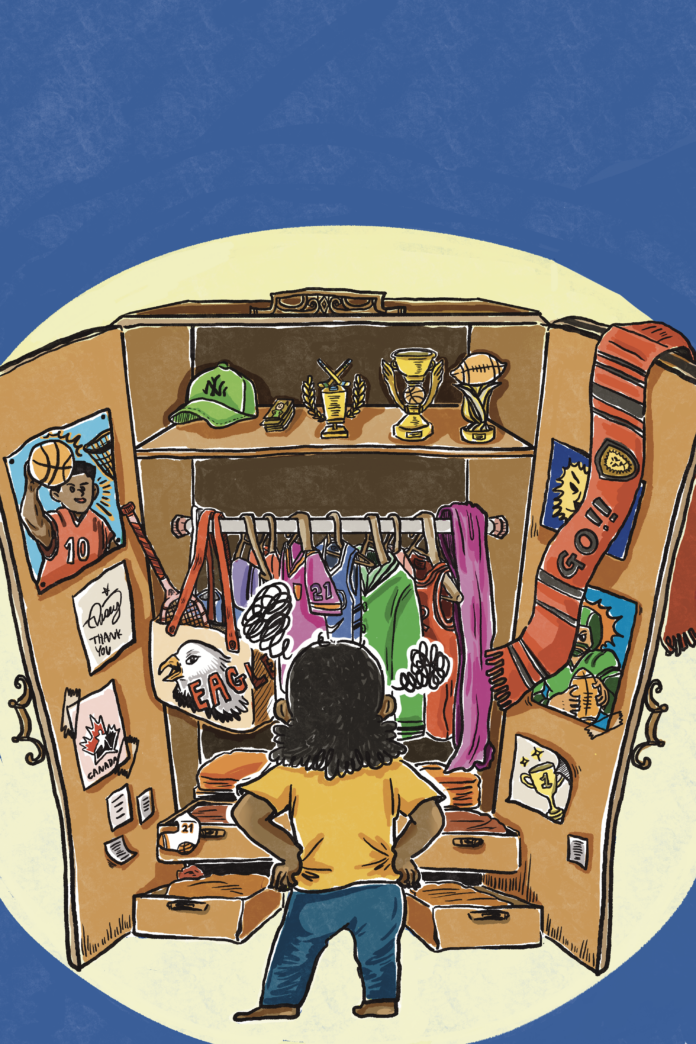
illustration of a sports fan opening a closet full of sports jerseys.
ILLUSTRATION: Andrea Choi / The Peak

By: Isabella Urbani, Sports Editor

In the last few years, it’s become progressively harder to call myself a hockey fan. My love for the game hasn’t faltered. If anything, it’s becoming a more significant part of my life. Checking statistics of National Hockey League (NHL) players went from something I did for fun to something I made a career out of.

Deep down, I’ve always known that hockey culture wasn’t as flawless as the rose-tinted glass it was portrayed through. I heard the distressing stories my brothers would tell about what goes on in the locker room, behind closed doors. Stealing gear and defacing it; hazing younger players; and appointing a team “bitch” to take the brunt of team duties. Everyone knows what’s going on — organizations, coaches, players — but no one says anything. 

From the moment you play hockey, you’re told that your team is your family. Through thick and thin, you stick by the family. No matter how bad it gets. If that means looking the other way, so be it. It’s “do or die,” just like the USA Hockey chant. 

Growing up, this is what hockey players hear. I’ve seen it firsthand. Some of the worst people on a hockey team are the best players. All their life, they’ve been told they’re the “man.” They aren’t told no. Their skill gives them a free pass to do whatever they want, and they’re told the team will take care of the rest. This is the foundation on which hockey culture lies. 

The true problems with hockey culture didn’t really start to get peeled back until last season when years upon years of secrets, buried accusations, and player testimonials were revealed. Hockey Canada, the same organization that supplied my earliest childhood memories of some of the best Canadian hockey players, had taken out a separate fund to silence sexual assault survivors from speaking out for years

Kyle Beach, a former NHL player for the Chicago Blackhawks, sued the Blackhawks in 2021 after he was sexually assaulted by the team’s former assistant coach during his time with the organization in 2010. Multiple players on the team knew, according to Beach. One of them being captain Jonathan Toews. Toews said he thought the firing of the assistant coach was how the organization was dealing with the situation. He had heard of rumours about what had transpired, but didn’t intervene at the time.

As players put on fronts, so do organizations. The NHL prides itself on being inclusive for all, establishing the tagline, “Hockey is for Everyone.” This would be the case if “everyone” was a straight, cisgender white man. The NHL is homophobic. Ivan Provorov, a hockey player for the Philadelphia Flyers hockey team, skipped the team’s warm-up skate just last month to avoid wearing the team’s pride jerseys. He cited his religious beliefs as a Russian Orthodox Christian for refusing to put on the sweater. A day later, the NHL released a statement that said “Players are free to decide which initiatives to support.” 

Being a member or ally of the LGBTQIA2S+ community isn’t an agenda you can subscribe to. Discerning sexual orientation as an initiative, much like religion, is incredibly belittling. What message does this send Luke Prokop who became the first openly gay professional NHL athlete just two years ago? Prokop took to social media to voice his displeasure about the situation saying, “There is a place for every [LGBTQIA2S+] athlete, fan, coach, [and] team staff member in sports, as well as hockey. We shall continue to break barriers and show hockey is truly for everyone. I can’t wait to see what our community and allies are capable of in the future.” 

Knowing what I know, seeing what I’ve seen, how can I take the bitter with the sweet? I can’t help but be reminded of the toxicity embedded in hockey as I tell people about the sport I love the most in the world. 

How can I support the young athletes chosen by Hockey Canada without supporting the organization? It’s something I’ve thought long and hard about. I decided to draw a line in the sand.

 The NHL has hardly backed up their words with meaningful actions. They’ll say that hockey is inclusive, but make sure to cater to homophobic athletes and fans to keep their revenue moving. I, however, can decide not to support them. In the grand scheme of things, it won’t do much. But the more people refuse to let the NHL get away with it, the more the culture will have to change. Hockey Canada’s board of directors only resigned once some of the organization’s biggest sponsors pulled out, including Bell Media

While the actions of companies may pressure teams to make changes faster, the real change needs to come from the type of culture encouraged in locker rooms. Fredrik Backman, who wrote a book about how a small Swedish City relies on its junior hockey team, says that “culture is as much about what we encourage as what we actually permit.

“It takes a culture of silence to foster a culture of winning.” 

Change the narrative. Stop putting athletes on a pedestal and letting what they bring to the ice justify the way they behave in their private lives. 

Celebrity biopics are exploitative

0
dimly lit shot of a large movie camera
PHOTO: Jeremy Yap / Unsplash

By: Petra Chase, Arts & Culture Editor

Content warning: mentions of death and substance use.

You don’t need to look too far to notice the recent rise in biopics about dead celebrities. A biopic is a film that portrays the life of a real person, usually a famous person. From Bohemian Rhapsody (2018) to Elvis (2022), and Blonde (2022), films that dramatize the tragic lives and deaths of famous icons are appearing at the box office one after another. It makes sense why these films are so popular; there’s a sense of nostalgia and mysticism attached to cultural icons who died young in the public eye. Biopics offer a glimpse into the “darker” parts of their lives, satisfying our curiosity. But is there a way to dramatize someone’s tragedy without turning them into a spectacle? And is it right to tell someone else’s story when they’re not around anymore?

Entertainment media exploits celebrities by scrutinizing them relentlessly and portraying them in a patronizing light to the public. The media especially tends to target women, creating a narrative that blames them for being objectified. Britney Spears, a well-known example, endured constant harassment from paparazzi determined to provoke her mental state. Photos taken of her in private moments were broadcast to the world without her consent. Images of her shaving her head in defiance became a defining viral pop-culture moment in tabloids — one she never consented to share publicly. 

When I heard about the planned Amy Winehouse biopic, Back to Black, I was livid. Similar to Spears, Winehouse was aggressively bullied by the press throughout her career. She struggled with addiction and substance use throughout her life. As writer Bailey Agbai pointed out, the media used this to their advantage by deliberately publicizing “unflattering pictures and sensationalized stories” of Winehouse to tarnish her image through a misogynistic lens. Making a biopic about her life would mean that her tragedies, which were captured without her consent, will be broadcast to a large audience once again.

There’s a fine line between portraying someone’s life on film for educational purposes and the sensationalization of their story for the sole purpose of entertainment. Biopics tend to cross that line. Blonde’s depiction of Marilyn Monroe was criticized for fetishizing her and reducing her experiences to the trauma she endured. Whoopi Goldberg is setting an example by legally preventing a biopic of her life from ever happening. I wonder if Winehouse or Monroe would’ve done the same if they were given the chance. 

No one should tell someone else’s life story when their motive involves box office returns and film awards. Consent is crucial in this process. For example, the 1997 Selena biopic was released two years after the death of Tejano singer Selena Quintanilla Pérez, and was produced in “close collaboration” with her family. The film genuinely immortalized her legacy in a way that few biopics have managed to achieve. 

When looking at how celebrities have no control over their own representation in the media while they’re alive, it isn’t a far stretch to say that there’s little difference when they’re no longer here. Winehouse died of alcohol poisoning in 2011 at 27 years old. While we can’t say the media is to blame for her death, the way that she was constantly treated like a public spectacle to gawk at undoubtedly contributed to her difficult life. 

Others might argue that biopics have the potential to re-tell someone’s story in a more positive fashion than was portrayed during that person’s life. This is what Back to Black is claiming to set out to do. But even though the director claims to be determined to portray “what Amy saw,” I think there comes a point when a celebrity’s story should rest in peace with them. Winehouse made it clear she didn’t want to be in the public eye. “If I could give it all back just to walk down the street with no hassle, I would,” she said in one of her final conversations. Her legacy lives in her music; her words and her voice carries her truth. Maybe it’s time to take a step back from biopics. We need to respect the lives and deaths of influential people. 

Fitness should be fueled by the desire for health, not beauty standards

0
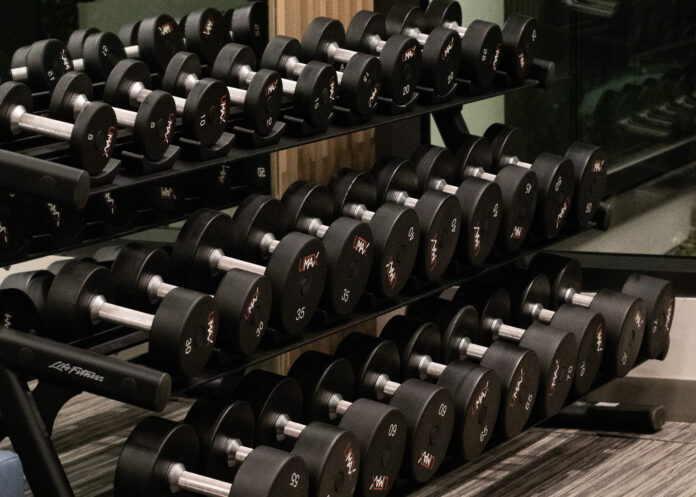
a rack of large dumbbells in a gym
PHOTO: Aria Amirmoini / The Peak

By: Sangwoong Choi, SFU Student

Content warning: mentions of eating disorders.

On Instagram and TikTok, workout videos are uploaded countless times a day. If you watch enough of them, you’ll likely feel guilty about your body image. It’s almost as if countless influencers are looking at you through the screen saying, “Hey, you there! How long are you going to sit there on your phone without exercising?” Many of these posts advance a narrow set of standards our bodies should supposedly meet to be accepted in society. This is damaging, and it prevents us from accepting our individuality.

With the recent rise of discussions about self-care and well-being, exercise has become a piece of content for views. Workout videos have turned into a means of being validated by others for your appearance. Displaying your so-called “perfect” body online is a common yet superficial way of being recognized. Ironically, the purpose of the self-care movement, which began with the genuine purpose of living well and accepting yourself, gradually shifted into a means of satisfying the desire to be admired.

People on social media make posts reflect the ever-changing standards held by countless users. If you build your body according to this set manual, your posts will be promoted on social media. In many fitness spaces, it doesn’t matter whether or not you are truly healthy. There’s this idea that it’s okay to wear yourself down as long as others view you as beautiful. The meaning of health has been extinguished, and it’s been replaced with showmanship and competition. Furthermore, a problematic belief is rising that says someone with a socially acceptable body is hardworking and diligent, while others are “unmotivated.” 

This phenomenon explains why social media’s diet culture has fallen into an obsession with fitness. People preoccupy their minds with attempts to meet other people’s standards, and as a result often suffer from eating disorders. Studies have found a relationship between too much high-intensity exercise and poor health: the stress of excessive exercise can harm one’s body and lead to serious health complications. You can see how dangerous the results of fitness obsession can be when an activity that should be health-oriented turns into an act to please others, rather than yourself. Fitness culture often overlooks the fact that everyone’s body is different, regardless of how often they may work out. 

It’s natural for us humans, who use digital technology daily, to participate in society and engage in exchanges through social media. After all, adapting to a new environment is an important part of human survival. However, the idea that we need to accept body standards that exclude or bring down members of society puts our health and well-beings at risk. We need to reconsider what the goals of exercise should be. Mental and physical health should be what drives our desire to be active, not superficial concepts of beauty.

Only you can define yourself — not others. Our lives are not meant to be lived according to other people’s body standards. Life is a long process of getting to know yourself. When you look in the mirror, you must have a conversation with yourself to find the true “you,” which others can’t discover on your behalf. Instagram is not a mirror. Starting today, rather than looking at others, why not find your true beauty that is different from others through conversation with yourself?

SFU alum named Top 25 Environmentalists Under 25

0
This is a photo of a trail on Burnaby Mountain. The trail is a dirt path with think forest on either side
PHOTO: Amirul Anirban / The Peak

By: Nathaniel Tok, SFU Student

Mireta Strandberg-Salmon, a recent graduate of SFU’s resource and environmental management and dialogue program was recently awarded as a Top 25 Environmentalists under 25. The Peak reached out to Strandberg-Salmon to discuss her time at SFU and what the award means to her.

Strandberg-Salmon began her environmental work in high school working to stop the sales of single-use plastic water bottles from vending machines. She continued her initiative at SFU while leading the Ban the Bottle campaign. The group successfully helped to set up 168 water bottle refill stations across the SFU campuses and campaigned for the phasing out of bottled drinks and single-use plastic in 2021. This prevents the sale of roughly 260,000 plastic bottles at SFU each year.

“Pursuing environmental studies and an environmental career didn’t necessarily feel like a choice to me, given the state of the planet,” said Strandberg-Salmon. However, she noted the work “hasn’t felt like a burden. I love working with others to develop and implement creative solutions for a healthy, just, and resilient future for all.”

Strandberg-Salmon said, “My proudest environmental accomplishment to date is the role I played in catalysing a grassroots campaign to scale up my original Ban the Bottle campaign.” Her Ban the Bottle campaign has now expanded to 12 highschools in Greater Vancouver and in the United States. 

Today, Strandberg-Salmon works in the environment sector both personally and professionally. As a policy analyst in the circular economy team at Environment and Climate Change Canada within the Canadian federal government, she does research and policy analysis to advance the circular economy in Canada. A circular economy is described by the Canadian government as an economy where nothing becomes waste by reusing, refurbishing, and recycling the goods we consume.

As a board director with the Society Promoting Environmental Conservation, she works to create climate justice and environmental protection at both the local and national scale through behaviour change and community cohesion. Strandberg-Salmon said being involved in both national and local contexts excites her the most. She is able to learn about implementing change at different scales. 

Mireta credits her education at SFU with shaping her into the activist she is today. She said, “My education gave me the confidence and belief that I can, and should, challenge the status quo.” She noted she is learning “the facilitation skills necessary to bring people together to build a better future.

“The key to being successful is really to find a network of support [ . . . ] People want to get involved, they want to help, and they will be drawn into your vision for a better future.”

For her, winning the Top 25 award is a reminder to celebrate the small wins because every step forward can lead to a big future impact. “It’s easy to feel like your work is just a drop in the bucket, but this type of recognition is really important, validating, and encouraging for youth.”

Ultimately, Strandberg-Salmon believes activism is for everyone. As Strandberg-Salmon said, everyone can create their own impact with their “3 Vs: voice, voting, and volunteer.” She added, “Your voice is one of the most powerful tools you have to make a difference, so use it as much as you can in whatever form speaks to you.”

This week at SFU

0
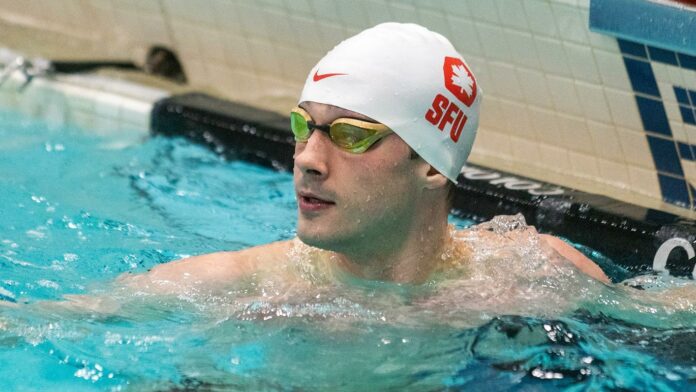
photo of an SFU swimmer in the water.
PHOTO: Wilson Wong / SFU Athletics

By: Isabella Urbani, Sports Editor

Home Games 

Thursday, February 9: men’s basketball vs Alaska Anchorage at 7:00 p.m. (West Gym)

  • 0–1 against Alaska Anchorage this season

Saturday, February 11: men’s basketball vs Alaska Fairbanks at 7:00 p.m. (West Gym)

  • Senior Night
  • Last home game of the season 

Saturday, February 11: hockey vs Okanagan Lakers at 3:45 p.m. (Bill Copeland Sports Centre)

  • Won last game 7–0 against the Logan Lake Miners 
  • Forward Nick Wicks leads the team with 35 points (13G, 22A) in 14 games

Away Games

Thursday, February 9: women’s basketball vs Saint Martin’s (Wash.) at 5:15 p.m. 

Friday, February 10 until Saturday, February 11: track and field at the David Hemery Valentine Invitational at 8:00 a.m. and 7:00 a.m. respectively 

  • Second meet this season at Boston University

Friday, February 10 until Saturday, February 11: track and field at Husky Invitational (all day)

  • Third trip to the University of Washington this season

Saturday, February 11: women’s basketball vs Western Oregon at 2:00 p.m. 

  • Won 70–44 against Western Oregon earlier this season 
  • SFU guard Grace Killins racked up a game-high 20 points, while going 6–8 at the three-point line

Saturday, February 11 until Sunday, February 12: swimming at UVIC for the BC Tri-meet (all day)

  • Last meet ahead of the NCAA Division II Championships 

Sunday, February 12: women’s wrestling at Menlo Open (all day)

  • Final competition before championships

Sports quiz: Weird Olympic facts

0
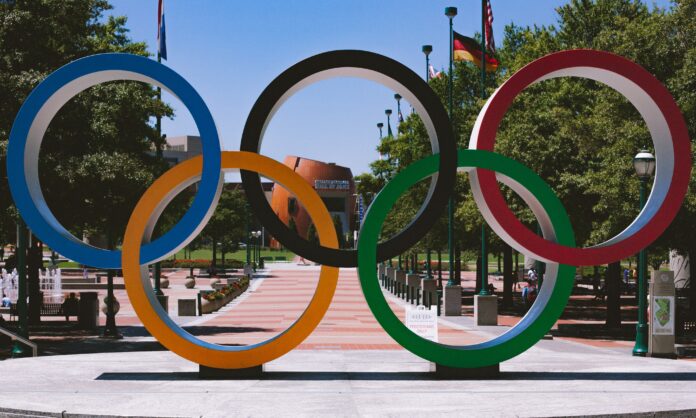
photo of the Olympic rings.
PHOTO: Bryan Turner / The Peak

By: Simran Sarai, Sports Writer

1.) True or false: The Tokyo 2020 Men’s High Jump competition had two winners take home gold medals instead of one. 

Answer: True. Qatar’s Mutaz Essa Barshim and Italy’s Gianmarco Tamberi both took home gold medals after completing matching jumps of 2.37 m. 

2.) What do the Olympic rings symbolize?

  1. A rainbow
  2. They’re just colourful circles
  3. Unity, peace, and the never-ending spirit of competition
  4. Five continents

Answer: d. Five continents. No, you’re not the only one who’s scratching their head. While there are now seven continents, the five rings symbolize what was considered the five continents in 1912: Africa, Asia, Europe, Oceania, and the Americas. 

3.) Which Olympic games were the first to ensure women could compete in all sports, and had a woman competitor representing each nation? 

  1. 1956
  2. 2012
  3. 1998
  4. 2004

Answer: b. 2012. Only 11 years ago!

4.) What happened to Olympians who broke rules in ancient Greece? 

  1. They had to undertake corporal punishment 
  2. They were exiled from their homes 
  3. Bending the rules was encouraged and demonstrated intelligence 
  4. There were no rules to break

Answer: a. Corporal punishment. The ancient Greeks appointed “Alytes,” who were in charge of catching cheating athletes and giving out their punishments. Fines were even given out to competitors who withdrew from competitions.

5.) True or false: During the 2000 Olympics in Australia, 450,000 condoms were ordered for athletes.

Answer: False. 450,000 condoms is actually the number ordered by Brazilian officials for the 2016 Olympics in Rio de Janeiro. In comparison, the Australians ordered a tame 90,000 condoms 16 years earlier.

6.) How much water is there in an Olympic-sized swimming pool? (Measured in bathtubs).

  1. 50,000 bathtubs
  2. 8,200 bathtubs
  3. 500 bathtubs
  4. 15,547 bathtubs

Answer: b. 8,200 bathtubs. Where would you even put 8,200 bathtubs?!

7.) True or false: McDonald’s ran out of hamburger buns during the 1984 LA Olympics after offering free meals each time a US athlete made the podium. 

Answer: True. This is probably the single most likely reason why the price of a McDonald’s Big Mac has increased 40% over the years. 

8.) Which of these items was adopted as a marketing scheme after being introduced during the 1996 Olympics in Atlanta, Georgia? 

  1. Mascots 
  2. Slogans 
  3. Inflatables 
  4. Spokespeople 

Answer: c. Inflatables. Yes, the same inflatables at car dealerships first appeared at the 1996 Olympics, and were inspired by the “loose” dancing style of the inventors’ country, Trinidad and Tobago.