Home Blog Page 212

My sexual awakening: the Fire Nation siblings

0
A photo of a woman writing in a diary.
PHOTO: Pexels

By: Cynthia Piña, SFU Student

Readers, what I am about to tell you are the true chronicles of my heart-pounding love story. I was 13-years-old, and when season two Zuko (or Lee, from the tea shop) started growing his hair out, it made me feel something. The pouting, the angst, the peeks inside his inner humanity. I mean, who doesn’t love an edgy boi with a soft heart? His amber-coloured eyes made me melt

But you know who else made me melt? Azula. Her flirting was awful and adorable, and her hair and makeup were always on-point. Yes, maybe she would have eventually murdered me, but she just needed a little bit of love and I was burning to give it to her! I’m sure her mommy issues could have been aided with a strong and nurturing relationship! Just like how she smashed a pitiful volleyball into the ground, she smashed into my heart. I mean, who doesn’t love a girl who can speak her mind? No, I do not have “I can fix her” disease! Her beauty burned brightly, the apple of my eye — which has now made me deeply conflicted about my feelings towards Zuko. 

A banished prince comes with all kinds of spicy and forbidden love. His scar gives off mystery and his tragic backstory only paves the way for more character development in the future — I can see his potential to be my twin flame. He literally risked his whole identity for a girl, what’s more romantic than that? But if I had to live with Uncle Iroh . . . kind of a dealbreaker, ‘cause that man has probably committed war crimes. He may be a “sweet old man” now (I know, I know, “character development” or whatever), but don’t forget the Dragon of the West once tried to conquer Ba Sing Se!

Azula on the other hand, she has a sharp tongue and her nails are even sharper! She is the walking embodiment of gaslight, gatekeep, girlboss. Where will I ever find such a feisty partner? OK, maybe I am ignoring some red flags . . . but, my 13-year-old self, maybe you are allowed to overly idealize your fictional animated crushes! Why would I spend my time looking at immature tweens when I could be planning my date with the banished prince of the Fire Nation? After all, that’s the entire premise of fanfiction, and unrealistic 13-year-olds have sustained AO3 (or, if you were truly depraved, fanfiction.com) since 2008! #zuko x reader #angst #drama #uncle iroh moves out

The secret life of (sex) toys

0
A photo of sex toys, with googly eyes doodled on top.
PHOTO: Chris Ho, illustration added by Kelly Chia / The Peak

By: Hannah Banana Hammock, Staff Writer

Have you ever thought about what the world would be like if sex toys could talk? Well luckily for you, I did the cursed imagining for you! The Peak kindly requests that Hannah’s mom doesn’t find this piece and if she does, to close her eyes immediately.

SOME COLLEGE TOWN IN MIDDLE AMERICA

Four roommates, ALEX (21), CHELSEA (23), KIERA (19), and MADISON (21). RYAN (22), boyfriend of MADISON, also pretty much lives there except he doesn’t pay rent. He just never leaves. The Secret Life of (Sex)Toys follows the favourite sex toys of each roommate. In this episode, the toys tell all and spill their dirtiest secrets on the ladies (and RYAN).

8-inch Rainbow Thrust

ALEX’s toy of choice

(voiceover)

ALEX is so fun! They play with all the settings and knows exactly how to make the most of every inch. I like to go “bzzzz bzzzz bzzzz bz bz bz bz bzzzz” until their hearing goes and their vision is blurry. But I do get (sexually) frustrated when they wait too long in between rounds. Vibes have needs, too!!

Magic Wand

CHELSEA’s toy of choice

(voiceover)

I know you like to have fun, but CHELSEA, girl! REMEMBER TO WASH YOUR VIBRATORS! I have nightmares . . .

The toys laugh. MAGIC WAND shivers, looking wanly at the soap suds in the sink. 

Lipstick Bullet Vibe

KIERA’s toy of choice

(voiceover)

KIERA bought me, like, forever ago but was too nervous to use me, so I sat suffocated in her closet for two years. Two years! That’s cruel and unusual punishment if you ask me. She’s started leaving me out in her room. I blend in with the rest of her makeup. Slayyy for being bold! KIERA gets a little nervy sometimes, which is fine, but I personally feel uncomfy when she uses me while wearing the pj’s her mom got her for Christmas six years ago. They have butterflies on them and the butterflies don’t want to see KIERA like that. 

Vibrating Cock Ring & Couple’s Long Distance Vibe

MADISON’s toy of choice

(voiceover)

MADDIE and RYAN aren’t long distance, but WOW, do they love to have a good time! We had a dream about them once. They went for Mexican for margs and brought us with them, and let’s just say . . . things got spicy pretty fast. We do have to say, though, they tend to favour us, the couple’s vibe, more than the cock ring. That’s no fun. Cock rings need love, too.🥰

As COCK RING and COUPLE’S LONG DISTANCE VIBE were wrapping up their interview, we heard the door to the apartment start to open. All the toys instantly stopped buzzing and went limp on the floor, awaiting the next moment of fun.

Stay tuned for the next episode of where we meet the butt plugs of the group!

How love is celebrated around the world

0
The first red flag is not having chemistry with your partner. PHOTO: Jayesh Jalodara / Unsplash

By: Jeeya Parasbhai Khavadia, SFU student

Victor-Marie Hugo, considered one of the most important French romantics, was a poet, novelist, and dramatist, internationally known for Les Misérable. He once said, “Life is a flower of which love is the honey.” Love is an essential part of our lives. For me, love is a natural feeling of attachment and affection towards someone or something. It is an emotion that we feel either for a person, animal, thing, or even a special event. Love knows no boundaries and thus transcends age, gender, religion, and race. 

There are numerous types of love that can be expressed in an infinite number of ways. The Greek considered four main types of love: Eros, the love found in romantic relationships, containing passion and intimacy, not to be confused for lust. Philia is the love of strong friendships, where affection, support, and equality are the pillars that sustain it. Storge, or familial love, is governed by empathy, affection, and compassion. Agape, the most important one for long-term relationships, is selfless and unconditional love.

For the Hindu, there are five stages to love: Kama, meaning “craving for sense objects,” is considered as physical or even sexual desire. Shringara is the enthusiasm for intimacy or romance. Maitri, compassion in love, is also associated with motherly love due to being the least selfish. Bhakti, impersonal devotion, is often associated with the love of God, yet it can also be directed towards one’s ideals like kindness, truth, or social justice. Atma-Prema refers to self-love. 

As we grow up, our families and environment help us develop and learn what we will consider important, what our values will be, and so much more. We develop a strong bond with them through the type of love the Greeks would call “storge.” It is a powerful feeling, though, just as with any other relationship, one should not be obliged to love those who have been abusers or who have not shown equal respect towards you. Family love can take many forms, from the love between a parent and their child, to the love between siblings, and love towards extended family members. Indian society favors collectivism over the individualistic notion of western society. Therefore, it is quite normalized to care for family members when they are ill, and they function as a sort of therapeautic support systemalthough this can have some negative effects.

In Latin America, Dia de los Muertos is a holiday for honouring loved ones who passed away, usually, family members. People decorate ofrendas with cempasuchil, candles, food, and photos of their loved ones. They also visit their graves to pay their respect and show love. In the family we hope to find support, a sense of security, confidence, and most importantly, comfort. It is an important aspect of mental and emotional well-being as it helps us feel valued and connected. Family bonds are an important part of development as they help us develop emotional and language skills. Dysfunctional family dynamics can have a detrimental impact on child development, from social isolation to even suffering from depression, anxiety, and addictive behaviors.

Romantic love, or eros according to the Greek, has been the subject of inspiration for many. As enjoyable and appealing as it appears on the surface, it is accompanied by commitment, loyalty, intimacy, and transparency. This type of love, for some, brings the possibility of a sense of fulfillment and has the potential to bring great happiness and shape long-term life plans. Romantic love can strike when you least expect it — you’re never too old for falling in love. Around the world, every culture and every community has their own way to express love towards a romantic partner.

The Wodaabe people in West Africa have The Gerewol Festival in Chad. This is often described as a beauty pageant, where men compete by donning headdresses and makeup, and dance in front of women who act as judges and may later choose them as partners.

In Japan, on the other hand, it’s more common to express love through actions and kind gestures. On Valentine’s day, the women are the ones expected to gift “lots and lots of chocolate” to not only their romantic partner, but to any men in their lives with whom they have a significant relationship. But, the men are expected to reciprocate during White Day, March 14, with gifts up two or three times the value of the ones they received on Valentine’s.

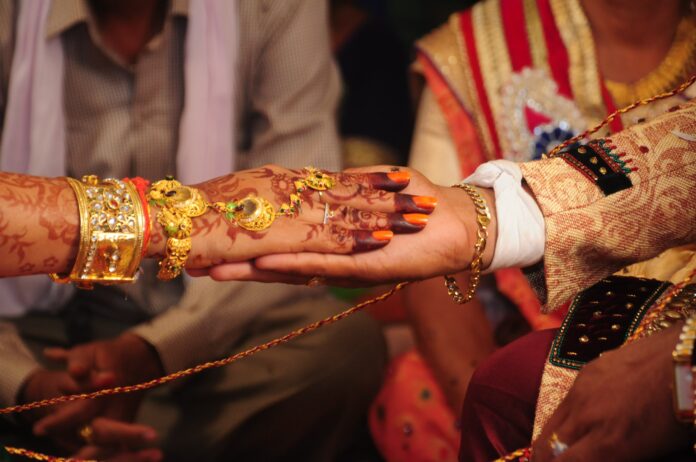
In India, the belief that love develops over time has shaped the way relationships develop; it is common practice for a person’s parents to find a suitable partner for their child. Some women in India might value respecting their parent’s approval over marrying their partner of years. This, in a way, might reflect the importance of family love over romantic love in Indian society. One of the most well-known demonstrations of love comes in the form of a historic monument, the Taj Mahal, located in Agra, India. It was built by the Mughal emperor Shah Jahān, in remembrance of his beloved wife who died while giving birth to their 14th child. It is one of the wonders of the world and is profound for its backstory. 

In Germany, during Valentine’s day, gifting chocolate pigs is a tradition as they symbolize luck. The Philippines celebrate Valentine’s day with mass weddings sponsored by the government for couples that can’t easily afford celebrations

The Qixi festival is a traditional Chinese festival and is a day for expressing love between couples. It originates from the legend of Niulang and Zhinü. According to legend, the couple was separated by a river of stars and were only allowed to meet once a year, on the day Qixi festival is celebrated. Typically, women dress up in hanfu, a traditional Chinese dress, and spend the day preparing offerings of tea, wine, flowers, and various fruits to pray to Zhinü for wisdom, a good husband, or a happy life.

Love traditions differ greatly from culture to culture and community to community. From grand romantic gestures to small acts of kindness, each tradition reflects distinct values and customs. These traditions attest to the universality of love and its ability to bring people together and aid in our growth and well-being. To embrace love in all of its forms and expressions we must first strive to truly understand love in the eyes of others. Learning about other cultures’ traditions and ways of expressing affection and love will undoubtedly help build a world of compassion.


Learn more about sexual health resources on the SFU campus

0
This is a photo of tampon boxes on the shelf at a store.
PHOTO: Amirul Anirban / The Peak

By: Aditi Dwivedi, News Writer

The week of February 14–18 marks the annual Sexual and Reproductive Health Awareness Week in Canada. A survey designed by the Sex Information and Education Council of Canada was conducted by the Canadian Journal of Human Sexuality in January 2021. They found there has been a decline in access to sexual health resources, especially during the COVID-19 pandemic.

The survey noted the need for increased public health messaging regarding sexual behaviour, investment in sexual health services, and support tailored to the needs of women, LGBTQIA2S+ individuals, and people of colour.

SFU Health and Counselling services, and various student-run community groups like the Women’s Centre, Out on Campus, and Health Peer Educators Sexual Health Team offer a variety of sexual health services. Their aim is to help destigmatize the topics surrounding sexual health, to provide on-campus services, and to make the transition to university life a safe and positive experience.

SFU Health and Counselling 

SFU Health and Counselling offers in-person and virtual appointments with a nurse or physician. They also offer sexually transmitted infection (STI) tests, urinary tract infection (UTI) tests, pregnancy tests, and pap smear tests. They can provide vaccines for Hepatitis A/B/HPV, and fill PrEP prescriptions — which reduces the chance of getting HIV through sex or drug use. These are available to eligible students for free. To determine your eligibility, visit SFU Health and Counselling.

According to Barb Chick, a registered nurse at SFU Health and Counselling, their services can provide referrals for transgender students seeking top or bottom surgery. They provide support and referrals for those considering therapeutic termination of pregnancies. They can also help students who have experienced sexual violence connect with the Sexual Violence Support and Prevention Office.

Women’s Centre

Student-run community groups like Women’s Centre and Out on Campus, which are departments of the Simon Fraser Student Society, also provide a variety of resources for students. The Women’s Centre engages with students by connecting those who require urgent crisis intervention to therapists, counsellors, and reproductive health clinics both on and off-campus.

In an interview with The Peak, Simmi Dhaliwal, Women’s Centre coordinator, spoke about how the Women’s Centre “reflects the needs and wants of students.” The Women’s Centre provides sexual health supplies like pregnancy tests, condoms, lube, and menstrual supplies to students of all gender-identities. These supplies are available to all SFU students and can be obtained physically at the Women’s Centre on SFU Burnaby. They can also be mailed to your address with free shipping and delivery in Canada by filling the order mailing form available on the Women’s Centre Instagram profile.

Dhaliwal noted they don’t have access to emergency contraceptive pills such as Plan B but they can “give out Plan B options. We have gift cards from Nesters that we give out to students so they don’t have to pay out of pocket.”

According to Dhaliwal, the Women’s Centre functions as a link to SFU Health and Counselling and various other student-run community groups like Disability and Neurodiversity Alliance (DNA), SFU Students of Caribbean and African Ancestry (SOCA), and the First Nations, Métis, & Inuit Student Association (FNMISA). “We collaboratively work together to service all community members within those pockets.”

The Women’s Centre aims to make the “academic life of students as easy as possible.” Dhaliwal commented on the difficulties of student-life and how the constant worry of financial instability should not affect their access to sexual health resources. “A student shouldn’t have to worry about a pad, or a tampon, or access to pregnancy tests, Plan B options, or getting the help that they need in a physical and mental way.”

Out on Campus 

Out on Campus provides “a safe and inclusive space for LGBTQIA2S+ students and their allies” at the SFU Burnaby campus. They provide safe sex resources, menstrual products, razors, and refreshments. 

They curate an Out on Campus library that is located in the Student Union Building. All SFU students are eligible to borrow these resources. Out on Campus said they are providing opportunities for the SFU community to learn more about LGBTQIA2S+ “culture, history, and issues, and help you grow as an advocate.” 

Find out more information on the sexual health services provided by SFU Health and Counselling, Women’s Centre, and Out on Campus by visiting their websites or visiting them on the SFU Burnaby campus.

Horoscopes February 13–19

0
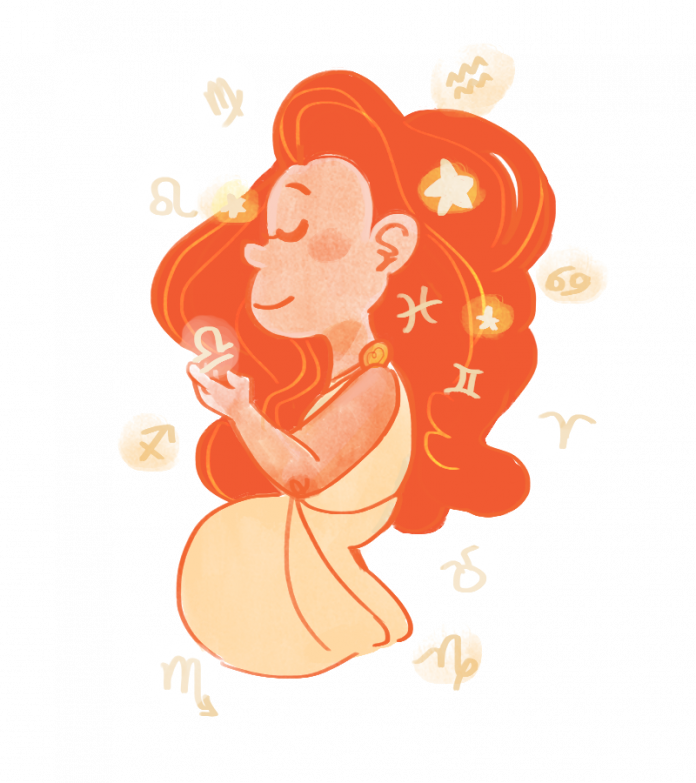
An illustration of a girl with long flowing hair. Astrological signs and stars shine around her.
ILLUSTRATION: Marissa Ouyang / The Peak

By: Kelly Chia, Humour Editor

Aries

You’re known for firin’ things up, my dear Aries. I know, therefore, your adolescent heart could only belong to the equally fiery Koga from InuYasha. You’re loyal, like the Wolf-Demon warrior, and rooted for him to be with Kagome the whole show. Guess you love an underdog? Time to cheer for the Canucks.

Taurus

A stable, grounded heart like you deserves an equally grounded partner. You want someone to solve puzzles with you, and maybe drink some tea doing it! That’s right, the Stars have divined none other than the beady-eyed puzzle solver, Professor Layton. The Stars see many of your future days devoted to poking the screen of a Nintendo DS before giving up and looking for a walkthrough!

Gemini

Gemini, you need someone who can keep up with you. The Stars think it’s not so much that you wanted a person, but you idealized the musical Hamilton. You reblogged several different gifs of Angelica Schuyler’s verse in Hamilton as a wee 13-year-old goblin. In fact, we’ll bet that rap is still stuck in your head. We think you should go to karaoke and cut loose

Cancer

Cancer, you keep your heart very safe. But you probably opened it up to some Shoujo love interests and their unconditional ventures to love their protagonists. Knowing you, you probably have a taste for comfort . . . so I think your heart belongs to Kyo Sohma. You seek a love you feel safe in! Wrap up in blankets and put that show on, maybe you need a good cry this week.

Leo

The Stars think that you’re the only friend you need. Awwww. And also, suck it, for bullying Sagittarius that one time.*

*The Stars are definitely not Sagittarius this week.

Virgo

Okay, Virgo, we see you. You watched Atlantis: The Lost Empire one time, and fell in love with all the characters. All of them. You can’t decide, and the Stars CAN’T blame you. You love kind intellectuals who respect what they don’t understand. You loved Lieutenant Helga because she exposed you to the fine world of the femme fatale! Consider visiting the aquarium this week! Hook, line, and sink her.

Libra

Again, like our lovely Virgo, you had a hard time deciding whether you liked the incredible spy, Kim Possible, or her stunning archnemesis, Shego more. In fact, you still find yourself contesting the two to this day. And who can blame you? This week, go on your own spy mission by practicing your handstands and flips in a black turtleneck. You’ll feel great, I promise. 

Scorpio

Oh, Scorpio. We know you’re embarrassed about your Superwholock phase but you don’t have to be. It’s an integral part of who you are, just like how ANY character Jensen Ackles plays is worthy of your attention. Embrace your inner awkward teen. 

Sagittarius

Sagittarius to Sagittarius, you have a penchant for falling in love with the childhood best friend. The love interest you feel the protagonist has more fun with. It’s why you got so excited about Seiya Kou from Sailor Moon, ‘cause at least they weren’t, like, parenting her!

 . . . This Sagittarius gets very passionate. The Stars suggest you all take a break from social media for a bit to reduce your hot takes.

Capricorn

The 2000’s and their trend of creating vampire media did not escape you, dear Capricorn. You think that dark academia learned to run off of copious amounts of editing The Vampire Diaries to Paramore, and you’re so valid. What can you say? You learned who you would become at the ripe age of watching Buffy. It’s time to indulge in those Windows Movie Maker AMVs, Capricorn. 

Aquarius

The ‘90s and their penchant for creating crushes out of Simba and Kovu made you the proverbial Warrior Cat you are today. Forgive us, we know this all sends you back to the fourth grade. Why don’t you make a scrapbook of that iconic era this weekend? Maybe it’ll be fun!

Pisces

Pisces, let’s be honest. The Hunger Games was never about Gale vs. Peeta for you — there was no contest (and literally those books were not about a love triangle, you were pissed at the movie adaptations.) Your beloved ideal partner bakes bread and plays privileged folks into keeping him and his childhood love interest alive. DREAMY!

The Café takes people-watching to another level

0
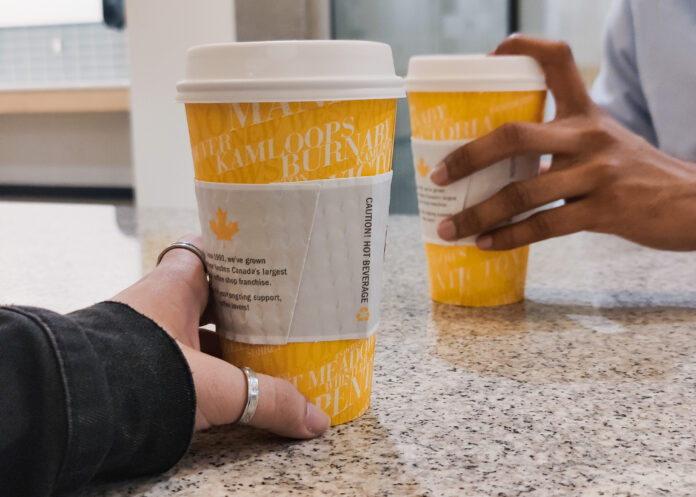
Two paper coffee cups being held by two individuals facing each other.
PHOTO: Kriti Monga, The Peak

By: C Icart, staff writer

The Café is a play with a unique concept that appeals to those of us that like people-watching. The event took place last week as part of this year’s PuSh International Performing Arts Festival. Directed by Fay Nass and Chelsea Haberlin, it was not only set in a coffee shop, but performed in a coffee shop. Mimicking a real café experience, multiple plays took place simultaneously at different tables. The audience was invited to grab a drink and wander the café, deciding what conversations to listen in on, each of which consists of a mini-play. This means everyone experienced the café differently based on the order in which they explored the seven acts.

Fay Nass thought about the concept of The Café when they were completing their MFA in interdisciplinary arts at SFU. They were spending a lot of time in coffee shops while writing their thesis and they thought: “What if there are plays happening in the coffeeshop simultaneously, but this time the audience are given the permission to get close, to eavesdrop, and be voyeurs?”

On top of the in-person immersive performances, where masks were required, there were also digital immersive performances. This was a great COVID-19 safe option, especially given the limited capacity in the coffee shop. I saw The Café virtually. 

Each of the seven plays explores a different kind of relationship between two people. It was set inside of a Kafka’s café in East Van. In the digital version, audiences were able to wander the space and click on characters to listen to their conversation like a choose your own adventure experience. It felt a bit like a first-person video game. I watched all seven pieces one after the other.

Initially, I thought the digital experience would undoubtedly feel less immersive than the live performance. There are some aspects of experiencing a play like this in-person which cannot be recreated. However, I was pleasantly surprised to see characters from the different plays interacting with each other. For instance, when there was a loud argument at one table, the other characters in the café turned their attention towards them.

The stories highlight how multicultural Vancouver is. All seven plays included, The Café features lines in English, French, Spanish, Polish, and Japanese. No translation is provided, so knowing the language gives you slightly more insight, reflecting the real world. I definitely felt pretty cool when I could understand what the francophone father was saying to his anglophone son as they were having their first conversation in years in Father’s Day. 

Another play, Submission, also relied on a language barrier between two women who were clearly interviewing each other about two very different things. Some stories are more lighthearted and others dive into serious topics. The line that stuck out to me the most was in Przyjaciółki, a piece where a Canadian woman comes to terms with the fact that her Polish partner will likely never come out of the closet. She says: “There will never be an archive of us. Not openly.” 

According to the directors’ notes, “The Café is about our relationship to each other.” And while the actors did not break the fourth wall and I wasn’t even in the same room as them, I still felt very connected to the diverse stories and the diversity of emotions in The Café. This experience will likely change the way I view my next coffee shop study session. As Nass points out: “There are so many neutral spaces, that they don’t pretend to be political spaces but often hold so much diversity and they contain so many stories.”

The Café was produced by Aphotic Theatre and ITSAZOO Productions in partnership with RE/PLAY, The Cultch’s Digital Playground.

Dr. Carman Fung discusses the transformation of tomboy identities

0
This is a photo of two people kissing.
PHOTO: RODNAE Productions / Pexels

By: C Icart, Staff Writer

Dr. Carman Fung is a lecturer in the department of gender, sexuality, and women’s studies at SFU. They “study the lesbian secondary gender, ‘tomboy,’ across the transnational Sinophone world encompassing contemporary China, Taiwan, and Hong Kong.” This is the topic of their upcoming research article “The L Word as a Tomboy Text: Transnational Viewership in Sinophone Lesbian Communities.” The L Word was a 2004 American TV series that centred the lives of a group of lesbians living in LA.

Fung highlighted that across Asia, the term “tomboy” is used by queer women to refer to masculine lesbian expressions. Through their study, Fung followed queer Asian women who “make the transition from identifying as a tomboy, to sort of embracing a newer lesbian subjectivity.” What they found was “a lot of them have gone from wearing very masculine clothing, so kind of like butch lesbian, and going from that, to the exact opposite side — so like wearing their hair long, wearing makeup, wearing dresses.” 

More specifically, Fung analyzed the original run of The L Word. They found many of the women they spoke to engaged with the show and “informed their decision to embrace a different kind of gender presentation.” 

At first glance, there wasn’t a clear link between a show of white, American lesbians from the early 2000’s and the lives of contemporary, Asian, queer women in the Sinophone world, explained Fung.

“There’s really no lesbian masculinity whatsoever in the majority portion of the show.” This led to a lightbulb moment that became the basis of their upcoming work. “In writing that thesis, it then occurred to me that that was the point. It was that there’s no tomboy on The L Word and that’s why it created this alternative kind of lesbian representation that the people that I was talking to were not familiar with.” For these women, watching the show represented “this moment in their lives where they were like, ‘Oh actually you can be a lesbian without being a tomboy.’”

In fact, it’s a connection they stumbled upon accidentally when interviewing women for their PhD thesis. At the time, they were looking “exclusively at how Asian tomboy representations inform Chinese-speaking women’s identification with the word tomboy. But then when I was doing the actual interviews, everyone just started talking about The L Word.

Fung also identifies as a part of the Asian lesbian community they are studying. “I’m very much writing from the perspective of an insider. So I know for a fact that people do draw on available queer representation, queer media representations to articulate how they think about tomboys and other kinds of lesbian identities.”

They highlighted, “It’s not just [that] we have particular identities that get reflected on screen. It’s very much the other way around as well.” Identities portrayed in media can play a role in the language, gender, and sexual expressions adopted by individuals in the real world. This is an idea that they explore with their students in the Queer Fandoms course they are currently teaching at SFU.

Fung warned this does not give any weight to the argument that one becomes queer or trans because they saw it on television. Instead, “We have personal experiences when it comes to gender and sexuality that we need to make sense of.” Fung added, “I think media actually plays a much bigger role than what is often assumed,” when interpreting our identities. Queer media representations can provide language and showcase alternatives that can be helpful to queer individuals in understanding themselves. 

For more information on Dr. Fung’s work visit their bio on the SFU website. Their article is a forthcoming publication but Fung’s thesis can be found in the University of Melbourne library.

Trauma-dumping on complete strangers

0
Three people talking by lake
PHOTO: Priscilla Du Preez / Unsplash

By: Nercya Kalino

It’s good to be an open person. It’s good to share what’s on your mind. It’s good to be vulnerable. Those are part of what makes a healthy human. But what’s absolutely unacceptable is being overly vulnerable with a total stranger. Making the leap from small talk to trauma dumping — oversharing about sensitive topics — is a mortal sin, and a major conversational faux-pas. 

Listen, I get it. The thing about strangers is that, sometimes, it’s easier to be vulnerable around them. We think to ourselves, “Why should we worry about being judged if our paths will never cross again?” Surely, for that stranger, the encounter will simply be revisited as a memory or a funny story at a party. Except there’s no way to know how that stranger will interpret your sharing. Will it be a charming interaction, or will they remember it as them being bothered by some jerk on the street?

I’ve been guilty of this before to some degree. I’ve talked to people by genuinely complimenting other ladies in a club bathroom because of the adrenaline rush I get from it. But I’ve also been on the receiving end. I’ve had people corner me on transit and share intimate personal details with me. No thank you, I do not want to hear about your last procedure. No, I don’t want to hear about your kids. It’s late, and I’ve had a long day. Just let me sit in silence, rather than sit in the stew of your personal life. 

These “pleasant” interactions are atrocities when they’re not well-timed. And when you’re a stranger, there’s often no way to determine whether it’s a good moment to share a story about your personal life. There’s something unsettling about people who talk to you with the intention of using that dialogue as an outlet for finding themselves. Let’s observe boundaries, people. You don’t have to feel guilty for telling a stranger you’re not interested in their story. Likewise, if you need to talk about something deeply concerning your mental health — use the right channels and get help, whether that looks like seeking counseling or speaking with friends (and asking if they have the capacity to listen). This is a bus, sir, not a therapist’s office.

Canada’s cosmetic testing ban isn’t enough

0
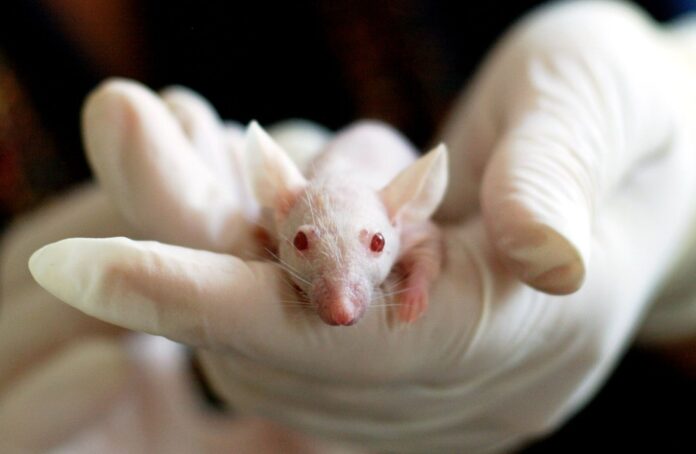
Baby white mouse in gloved hands
PHOTO: Pixabay / Pexels

By: Victor Tran

Content warning: mentions of animal abuse.

Did you know that animal testing is still legal in Canada? Across the country, millions of live animals — from dogs to cats to mice — are used to develop “cosmetics, household products, pesticides, drugs, and other substances.” What’s worse is that there is no limit on the testing, which can result in high levels of pain for the animals. Canada lags behind regions like the EU, which banned the practice all the way back in 2004. On January 20, 2023, however, the country took a step into modernity by announcing the development of a ban on the use of animals for cosmetic testing. It’s much too late, and nowhere near enough. 

In 2020, 5,067,778 animals were used as test subjects in Canada, according to the Canadian Council on Animal Care. The same report found that almost a million animals suffered from experiments that cause moderate to severe distress or discomfort, while nearly 100 thousand animals suffered from procedures that cause severe pain near, at, or above the pain tolerance threshold of unanesthetized, conscious animals. This is a clear violation of animals’ bodily autonomy. These animals are being tortured, and for virtually nothing. 

So in light of the terrible practice of Canadian animal testing, let’s evaluate the Canadian government’s lurch into the 21st century. According to The Globe and Mail, a new rule by the federal government is set to prevent the testing of a “range of products, including make-up, perfume, body lotion, hair-styling products, shaving foam, and nail polish” on animals. That’s a wonderful step forward, and it’ll save animals’ lives. But other forms of animal testing, including for chemical and drug toxicity, remained unbanned. The best the government can do, according to the article, is to incentivize organizations to “reduce reliance” on the practice. That’s shameful, disgusting, and born of a lie. 

Our assumptions about animal testing’s necessity is partly the result of exaggerations in published research. One study found that, among a randomly-selected group of releases “about animal or laboratory studies, most (64 of 87) explicitly claimed relevance to human health, yet 90% lacked caveats about extrapolating results to people.” In short, scientific studies overstated the findings from animal testing and their ability to repeat the results of an experience in humans. The same study found that press releases about animal studies were far more likely to contain exaggerations than studies on humans. 

And it’s not like we don’t have effective alternatives to animal testing. Among other methods, Organs-on-chips mimics the structure and function of human organs and cells. This method has been adopted by the FDA in the US to develop vaccines for COVID-19. There’s also the Epiderm Tissue Model — a 3-D, human-cell-derived model that provides superior indicators of how drugs react with human skin. The model can reliably replace testing on rabbits, which could save tens of thousands of rabbits each year.

Despite the availability of cutting-edge, effective means of displacing animal testing, experimenters continue to torture countless animals. The Canadian government needs to realize that animal testing is unnecessary and unethical by universally banning the practice. 

No more tiptoeing around the issue. Canada needs to take a world-leading stance in favor of animals’ rights.

Need to Know, Need to Go: SOCA’s Black History Month events

0
Illustration of a blue calendar, with "Need to Know, Need to Go" written on top
Arts & Culture events to catch around the city. Image courtesy of Brianna Quan

By: Vee Babbar & Petra Chase

Students of Caribbean and African Ancestry (SOCA), a student-run group representing SFU’s Black community, has packed the month with events for Black History Month. The Peak interviewed events coordinator Mugasha Rutega to get an inside scoop about what’s in store. 

Rutega said Black History Month is “a celebration of Black culture” and “it’s a time for Black people to express their culture and educate people on their culture.” Rutega stressed the importance of listening and trying to learn. 

Here’s SOCA’s itinerary, all taking place in the Student Union Building on Burnaby campus. While the events are geared towards SOCA community members, all students and faculty are welcome to participate.

Black History Month Opening Ceremony
When: February 1, 3:00 p.m.–5:00 p.m.
Where: Student Union Building, 3rd floor, Social Stage
To kick off the month, this event features a presentation from SOCA’s president and vice- president about the history of SOCA followed by speeches from special guests, including SFU faculty and a representative from the Somali Student Association. “We wanted to put it at the ballroom so that people can be aware and see that Black History Month has started: we are here,” said Rutega. He stressed the importance of recognizing the diversity within the Black community rather than “a single story about Black people.

Games & Movie Night
When: February 10, 6:00 p.m.–10:00 p.m.
Where: Student Union Building, Room 14310 (Floor 1)
SOCA members have voted to screen Judas and the Black Messiah. Set in the 1960’s, this is a “biographical crime drama film” about Fred Hampton, deputy chairman of the Black Panther Party, and the betrayal by an FBI informant. Follow their Instagram for more details and ticket information to be announced.

Afrodance workshop
When: February 14, 5:00 p.m.–6:30 p.m.
Where: Student Union Building, Dance room (Floor 2)
Whether you’re a beginner or an experienced dancer, this group workshop is open to all skill levels. With the expert guidance of Izo Dreamchaser, a dance instructor at Afrobeats Van, learn new moves, and groove to catchy melodies and energetic rhythms. Spots are limited so please ensure you can attend if you register. Register here.

Black art: A Mode of Expression Disrupting Systemic Structures (Panel Discussion) 
When: February 15, 3:00 p.m.–5:00 p.m.
Where: SFU Multipurpose Room East Towers Building
This discussion on Black art history is moderated by Tiara Cash, a PhD psychology student at SFU. Joining the discussion are artists from a range of artistic disciplines, including SFU students and faculty: David Chariandy, Nya Lewis Williams, Palesa Koitsioe, Fegor Obuwoma, and Edward Sembatya. The event will conclude with a reception with light food and refreshments.

Cultural Night
When: February 24, 5:00 p.m.–9:30 p.m.
Where: Student Union Building, 5th floor, Ballroom
This red-carpet event features a DJ set, a 360 photo booth, dances, and musical performances. There will also be a “buffet of unique and delicious West, East African, and Caribbean cuisines.”

 “I’m personally excited for Cultural Night,” said Rutega. “It’s going to be our biggest event.” Tickets are $12 and can be purchased via Eventbrite.

SOCA x TUNJI Comedy Night
When: February 25, 7:00p.m.8:30p.m.
Where: SFU Burnaby (location not yet confirmed)
Cap off the month by laughing your heart out at SOCA’s stand-up comedy show. The special guest is Tunji, a Vancouver comedian who has garnered over 170,000 followers on TikTok with his hilarious commentary. The event will showcase SFU’s African, Caribbean, and Black comedians, as well as poets and singers. If you would like to participate, they are accepting applications until February 5 at 11:59 p.m. As a performer, you will get seven minutes on stage, free snacks, a free ticket to the show, and $50 compensation. Sign up via the Google form in their Instagram bio.

 Follow SOCA on Instagram, at @sfusoca, for event registration links and updates.

 View the full list of SOCA’s Black History Month events at thepeak.ca