Home Blog Page 191

SFU films to watch at the Vancouver Short Film Festival

0
A collage of a photo stills from each of the short films.
PHOTOS: Courtesy of Anastasia Itkina, Catherine Huynh, and Sean Brennan

By: Isabella Urbani, Staff Writer

Content Warning: mentions of pet death  

Cathy Huynh, Sean Brennan, and Anastasia Itkina were some of the SFU film graduates selected from over 250 submissions to be featured in the 13th annual Vancouver Short Film Festival from June 2–11. The event, which can be enjoyed online or in-person at the Vancity Theatre for the first two days, consists of 57 short films. By purchasing a ticket — which is $12 for students — attendees will be able to watch all the short films that are featured for that day’s screening. More SFU graduates’ work can be viewed online. 

The Peak had a chance to interview Huynh and Brennan about the inspiration for their films, the directorial process, and the months of preparation that went into their end products. 

Cathy Huynh, Adrift (2022)

Huynh began writing the script for the film in fall 2021. The thesis film debuted in May of last year alongside her SFU classmates, which included Itkina

The film, titled Adrift, tells the story of two best friends reconnecting after one of them returns home from school. Now in completely different places from where they were before college started, the duo try to rekindle their friendship by attending some of their favourite hang-out spots. As the night draws to a close, viewers come to see that the former friends have more in common than they once believed. 

Huynh said the film is both a personal ode to the “female friendships” in her life and a reminder of the “sad, yet normal, by-product of growing up, which unfortunately includes drifting apart from your friends.” She said it was her love for storytelling that led her to pursue filmmaking. She took inspiration from the Vancouver area for the film and was able to shoot scenes at Roundel Café and Fantacity, which the friends visit on their list of nostalgic comfort spots. 

Huynh’s favourite scene to film was done at Fantacity, a karaoke bar downtown. “Our team breaking out into song with “I Want It That Way” was definitely a set highlight! I’m super proud of this scene in particular, since it was one of those fulfilling moments where you get to see something you’ve been visualizing in your head for so long actually come to life.”

Huynh hopes viewers will be “affirmed” by watching the two leads in the film come to terms with how their lives have panned out. “It’s more than okay to not have your whole life figured out,” said Huynh. “Feeling like youre stuck in limbo is a collective experience that almost everyone experiences as a young adult.” 

As someone who has watched a best friend turn into a stranger in a matter of months, Huynh perfectly captures the silent battle between wanting to salvage a friendship and leaving things best unsaid. One of the more moving scenes in the film happens when the two main characters meet up for the first time at dinner and can barely hold a conversation, when just moments ago, in a memory sequence, they were planning their future together. 

Adrift will be a part of the final day of in-person screenings on June 4 at 4:15 p.m. More information about Huynh, including her 2021 film Caleidoscope, which appears on the CineAsian Films website, can be found online.

Sean Brennan, Holly (2019)

Brennan’s film Holly also taps into the intrinsic human experience: losing a loved one. The film, completely shot in black and white in 2019, begins with Holly’s owner, Olga, reminiscing about her pet’s life as she goes about her morning routine without her animal companion. To cope with the loss, Olga visits a therapist named Arlo, who goes to unconventional lengths to keep Holy’s memory alive, in more ways than one. When Olga comes to, she turns to a new coping method with the help of a newfound friend. 

Although Brennan began making films with his sister when he was 10 years old, and continued to do so with friends during high school, he originally was a sociology major at UVIC. Brennan says the loneliness and desperation Olga feels when her pet Holly passes away mirrors how he felt when he first moved to Vancouver to attend SFU. “That kind of isolating experience can make people more okay with maintaining toxic relationships,” said Brennan. 

He also shared how the inception of the film took twice as long to come up with than the filming itself. “What you don’t see when you watch this project are the endless notebooks filled with rejected ideas.” He explained the feeling of wanting to do something special, and being frustrated while thinking of ideas. “Eventually, I had to pick a project and ‘Holly’ had a script that got a really good response from readers.”

Shot in downtown Vancouver, the film has a montage of actual dog walkers Brennan saw on the street and asked to be included in the movie. Not only is it super endearing, but it illustrates the unique character of each dog, its owner, and the bond they share. As sweet as this moment is, Brennan’s film touches on the unsettling nature of the stages of grief, particularly focusing on denial, demonstrating just how blissful ignorance can be. 

Holly will be a part of the “After Dark” screenings on Saturday, June 3 at 8:15 p.m. All films featured in this screening will include unsettling themes that may be triggering, and or stories with dark elements and horror. You can learn more about Brennan and his projects through his Instagram, @hellothisissean.

Anastasia Itkina, A Week to Rosh Hashanah (2022)

The longest of the trio of films is Itkina’s A Week To Rosh Hashanah. Leading up to Rosh Hashanah, “the calendrical New Year” of the Jewish religion, David, the film’s main character, “develops an unusual disorder and becomes determined to put an end to it.” 

The Peak reached out to Itkina for an interview but did not receive a response in time for publication. 

A Week To Rosh Hashanah will be a part of the 5:30 p.m. screening on Saturday, June 3. More information about Itkina and her extensive producing projects, including Huynh’s film Adrift, can be found online.


Top 10 tips to be happy in Vancouver

0
Woman holding a cup and making a peace sign with her hand beside a red car
PHOTO: Bii Photography / Pexels

By: Saije Rusimovici, Staff Writer

  1. Don’t root for the Vancouver Canucks 

I get it your grandfather’s grandfather was a fan. You spent your childhood looking up to FIN, watching the playoff games in the background during dinner (though those days are long gone). You can’t help but feel the itch to wear the team’s merchandise even though the jersey you have in the back of your closet is from 1991 (oh, how we miss dear Pavel). I think we all feel inclined to want to root for our home team (or maybe we just want something somewhat interesting to do on a Saturday night). Still, the continuous letdowns make it difficult to continue to do so — wait, was 2011 really over 10 years ago? 

2. Get comfortable in the 1,000 sq ft apartment you’ll be renting out for the rest of your life 

Housing costs in Vancouver are outrageous. So, prepare yourself to still live in the apartment you thought you would temporarily rent while you finish your graduate degree long after you’ve baby-proofed things. I suggest looking up video tutorials like: “Maximize use of your small space,” and, “how to keep your small home organized.” Unless, of course, you plan on moving to Abbotsford (AKA Abbots-FAR) . . . 

3. Don’t live in Abbotsford  

Unless you’re making frequent US trips, there’s absolutely no reason one would want to go there. Aside from visiting the pumpkin patch every fall, there isn’t much to see. You’ll spend the entire drive there asking are we there yet? And the whole ride back, asking, why did we go there? You might even get torticollis from craning your neck out the window for any signs of modern civilization: a Cactus Club, a Starbucks drive-through, give me something! Don’t plan any trips to downtown Vancouver unless you feel like making it a staycation. 

4. Gas cards are the new currency 

Ah, inflation. Filling up my little FIAT 500 for nearly $70 leaves a bitter taste in my mouth. One of the main reasons I bought this car was to save a little money on gas. If you find someone who gifts you gas instead of flowers, that’s how you’ll know they’re the one. I’m adding gas cards to my wedding registry, my baby registry, my Monday, Tuesday, and Wednesday registries . . . and you should too. Still, I don’t think I’m driving out to any pumpkin patches any time soon . . . 

5. Dress for the weather 

As cliché as it may sound, an essential part of living in Vancouver is dealing with the constant rain. And spontaneous heat waves. And frosty snowstorms (is it really the holidays if the entire city hasn’t been shut down due to road conditions?) So make sure you have at least one waterproof jacket in your wardrobe (make it a SuperPuff if you really want to fit in) and a pair of clothes that are easy to change into in the back of your car. That way, you’ll be prepared if the forecast says it will be cold and windy, but half of the city has gone out to tan in the afternoon heat. 

6. Don’t apply to UBC 

There’s no need to go here. Seriously. I know, I know it’s a top research facility, or something or other. They have their own hospital there. They throw a few good parties. But hear me out. I know people who go to UBC who don’t even like their school. You practically have to drive across campus to get from one class to another. Not to mention that attending this school becomes your only personality trait.

7. Go to as many lakes as you can this summer (there’s nothing else to do) 

Since happy hour prices are what regular-priced items used to be two years ago, spend this summer by a lake of your choice: Cultus, White Pine, Buntzen — we’ve got them all, and the ocean too. This is a cheaper alternative to sipping a spicy margarita at an overpriced and overhyped restaurant. This is BC, after all. It’s time to explore the great outdoors (also, it’s the cheapest activity you’ll find in this city). 

8. Make friends with the wildlife 

There’s nothing like stopping at a red light on Burnaby Mountain and coming face-to-face with a deer (I swear they try to make eye contact just to freak me out even more). I’m all for embracing nature, but I have to admit, Bambi got a little too close for comfort there. Vancouver has so many wild creatures running around that it shouldn’t be too unexpected. My suggestion is to befriend as many animals as you can — leave some nuts for the squirrel circling your porch, offer a polite wave at the black bear sifting through your garbage, and take some time to introduce the family pet to the raccoon family that seems to have made up its lodging in your yard. What, did I take being friendly to your neighbours too far?

9. Grow your own produce (groceries are so expensive)

Want to start a herb box this summer? You’re going about this the wrong way. Herbs are relatively inexpensive to get at the store. What you really need to do is figure out how to maintain some strawberry plants (but do they even grow here??), or you’ll have more debt from grocery shopping than your post-grad education. Some fruit trees would probably be a good idea too . . . maybe you could consider farming life. I hear there are some great properties available in Abbotsford . . .

10. Wear a glass helmet like Sandy from SpongeBob

Not only will this offer protection from the wildfire smoke and the virus that shall not be named, but it’s also a stylish alternative to a mask! No more smudged makeup. PRO TIP: the helmet can double as a container when you inevitably forget to bring reusable bags to the grocery store and as a mug when you want to avoid the cup fee at cafés still charging it (sneaky, sneaky). 

CONFESSIONALS: I’ve been reading the same book for over two years

0
Pensive girl reading book in cafe holding a lollipop
PHOTO: Hải Nguyễn / Pexels

By: C Icart, Humour Editor

Hey! Don’t look at me like that. Yeah, that’s right, I can feel you judging me like my ex judged me, and my previous ex, and my previous ex . . . damn, I’ve been reading this book for a while. Listen, the book is good, and I refuse to DNF (meaning, Did Not Finish, if you’re not a pro reader, like me). I have simply been booked and busy. And by booked and busy, I mean the rise of short-form content has decimated my attention span. That does not mean I don’t remember what I’ve read. I do, at least I think I do; I’m not flipping the pages back to go check . . . 

Sure, the Queen was still alive when I started the book, and people still used vaccine cards. Sure, I started and completed a master’s degree since I first began reading the book. Suuure, Biden had recently been inaugurated when I started. Now he’s preparing to run again (Alexa, play Biden by Bo Burnham). But still, I read. 

All I have to do is open the book and read one word at a time. Rome was not built in a day, people! What’s the rush? I like to think I’m really getting to know the characters, soaking in all that world-building. How do you think authors feel when they pour their heart and soul into a manuscript for months, sometimes years, and you little overachievers read it in an afternoon and then harass them for a sequel? 

Yes, that’s right! Not only am I refusing to be shamed for my reading pace, but I’m also going to start shaming all of you little book-ish nerds. Oh, how the turntables! You don’t get a cookie when you read the book really fast! The author doesn’t give you a high five at the end when you finish an 800-page brick without closing your eyes a single time. 

Anyways, speeding is dangerous. Think about how many paper cuts I’ve avoided by taking my time. Don’t quote me on this, but I’m sure there’s a Harvard study out there confirming it’s a lot. And if there isn’t, maybe I should go to Harvard and do the study myself. What? Like it’s hard? The point is, I’m right. 

Hear me out. Some people have been reading the Bible their whole lives and still haven’t finished, so . . . everything happens in time. The sun is out, and the air quality is sometimes okay, so I will sit outside this summer and work on this page-turner. It’s true, I’m going to — fuck it, let me get the audiobook. 

Immigrants don’t need to “assimilate”

0
Two older women of colour laughing, while sitting on a park bench.
PHOTO: Dario Valenzuela / Unsplash

By: Michelle Young, Opinions Editor 

Content warning: mentions of colonialism

As far back as I can remember, I pushed down my Spanish. Whenever my mom picked me up from school in first grade and spoke Spanish, I quickly looked around to make sure no one was listening. Then, embarrassed, I would respond in English. I’m angry that I ever felt this way. When my aunt and uncle immigrated here years later, I understood what they were saying but could barely communicate with them. I had forgotten everything and I only learned to speak once again with years of practice. I felt sad I could barely speak to my own family, and it didn’t feel right to make them speak English to me. In the years I made an effort to relearn Spanish among my friends and family, I became increasingly frustrated with conversations around “assimilation.” 

Overhearing other people talk about immigrant groups and how they “don’t try hard enough” to merge into so-called “Canadian” society never fails to make me think of all the other hardships immigrants face here. People who have often uprooted their entire lives to come to Canada for an ounce of opportunity don’t need to earn the approval of those born here. There are many reasons immigrants come to Canada: it could be as a refugee, coming to Canada for a better quality of life, or simply looking for different work or opportunities. 

Something I would like to note is the politics around how we define immigrants, refugees, and undocumented people. The refugee and immigration process can take years, as the state judges whether someone is valuable or in crisis enough to “legally” migrate. These labels and definitions are often based on technicalities and shouldn’t be used to moralize anyone who is moving from their home. In this piece, I use “immigrant” as an umbrella term, but don’t want to discount the various experiences and reasons someone might come to Canada.

I’ve heard Canadian-born people point their fingers at groups of ethnic grandmas and grandpas, international students, or large families and complain about how speaking their native language is somehow exclusionary. Even in my own high school, speaking Spanish among my friends made people desks away, turn their heads and shame us about how we are excluding them and “should speak English.” I’m sorry, but if you’re not even sitting with me, you weren’t a part of the conversation to begin with. What’s the eavesdropping about? Why are you assuming I care enough to gossip about you in Spanish? 

There is a poor conception that immigrants have certain obligations to seamlessly blend into Canadian society. Stories in media and pop culture around immigration often revolve around hardworking immigrants who are struggling to make ends meet — and how that’s not fair because they were educated in their home country and since they are hard workers, Canada should welcome them with open arms. Part of this struggle often includes immigrants trying their best to learn English and fit in with “the culture” they are immigrating to. There are many things to dissect in how we view immigration, but the first thing I would like to examine is — what culture? 

According to Statistics Canada, “Vancouver had the second-largest proportion of immigrants, at 41.8%. Within the large urban centre of Vancouver, immigrants accounted for three-fifths (60.3%) of the population of Richmond and half (50.4%) of Burnaby’s population.” Some would argue Canadian culture is defined by influences of the British and French — but how can that be entirely accurate when Indigenous peoples, all who have different languages and traditions, were forcefully displaced? Culture changes over time, and that’s largely due to how people and populations change over time. We ourselves are currently changing the landscape of Canadian culture, and that’s a good thing. 

Despite the evident changes in demographics over time, there is a clinging to the idea that immigrants do not automatically “deserve” to come to Canada, but rather, have to work hard to come here and find their place in society. I would like to ask any settlers who hold this belief — why do you “deserve” to be here? Because you were lucky enough to be born into a country where your ancestors killed so many people they were able to establish themselves centuries ago? Indigenous families have been arbitrarily separated and split due to colonial borders and they are the only people who have a genuine right to this land. Yet, their culture was violently ripped away from them to “assimilate” into “Canada” too. 

Though it hasn’t been thoroughly studied, existing research shows Indigenous perspectives in opposition to Westphalian sovereignty, which “refers to the governance of bounded territory over which the nation state has supreme authority.” As immigrants, we are not bound to assimilation — but we do have a responsibility to learn about reconciliation and engage in Indigenous knowledge and learning. 

A person’s value is not equivalent to how hard they work or how much they could potentially contribute to society. The points system — which ranks someone’s education and skills — likes to pretend otherwise, but settlers are no more entitled to life in Canada than immigrants are. Immigrants typically need to work hard out of necessity, but their value shouldn’t be defined by that. Immigrants are inherently valuable, as people. Society holds immigrants to a standard of whiteness and capitalism which doesn’t acknowledge the colonial history behind this country. 

Immigrants shouldn’t need to abandon their entire language and culture to thrive here. If you’ve ever been to Richmond or Chinatown, these are wonderful examples of immigrant communities building spaces for themselves here. For me, watching other immigrant kids speak in their home language with their family was so much more comforting than watching white kids speak English. Doesn’t being “integrated” in society imply comfort in the people around you? That can’t happen if we are forcing people to whitewash themselves. We shouldn’t be pressuring immigrants to forget all the different aspects of their culture. Theres nothing wrong with holding onto traditions, customs, and languages and trying to find a space for that in your new home. Immigrants connecting with one another should be celebrated — not looked down upon. 

Little-known library resources at your fingertips

0
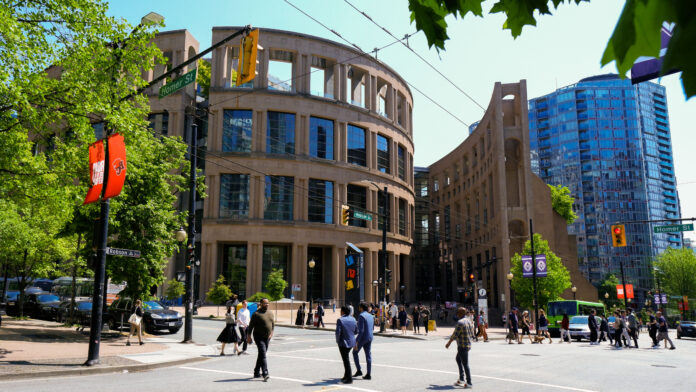
Photo of the exterior of Vancouver Public Library on Homer street on a sunny day with many pedestrians outside. The building’s architecture is a brown “rectangular box surrounded by a free-standing, elliptical, colonnaded wall.”
PHOTO: Manmeet Sagri / The Peak

By: Izzy Cheung, Staff Writer

Books, articles, and study spaces are the things that come to mind when saying the word “library.” However, the libraries around us have many more resources that often get buried beneath the piles of books. From board games to courses on Adobe programs, our local libraries have a wide plethora of resources ready for anyone to use, both online and in-person.

Vancouver Public Library 

Signing up for a Vancouver Public Library (VPL) card is as simple as can be: either register online for a temporary card, or go in-person to sign up for a full membership. A temporary card will give you access to books and digital media, while a full membership opens you up to additional resources, such as creation spaces, musical instruments, and internet and computer access. 

Inspiration Lab — a place to bring out your inner content creator  

Did you know that the VPL is home to the Inspiration Lab, a space dedicated to media creation? Here, you’ll be able to record, digitize, and create any sorts of media or content you wish. Along with the bookable sound booths, you can also borrow from their musical instrument collection, from acoustic bass guitars to glockenspiels. Perfect for budding musicians!

The VPL’s resource supply for digital media doesn’t stop there. Their Creation Stations provide users with access to animation and VFX programs, such as Adobe Creative Cloud, audio software like REAPER, graphic design and photoshop, self-publishing tools, and video editing programs. There’s simply too many to count! If you’re a newcomer to these programs, VPL also has online courses to help you learn the ins-and-outs of the programs. 

Picture-perfect publishing 

Looking to self-publish? No problem — the VPL can help you out. From their collection of websites to help you familiarize yourself with manuscript submission, to their publishing and self-publishing events, VPL leaves no page unflipped. Their publishing resources make it possible for anyone’s writing to end up on their shelves. 

A guide on guides 

Finally, the VPL’s guide on — well, guides — hosts an array of resources for various topics. Here, you’ll find information on Asian Canadian, British Columbian, and Indigenous history. They also have career and job searching information and sample citizenship tests to use for practice. The library provides  guides for book clubs, starting and running a small business, and a collection of resources to support displaced Ukrainian newcomers to BC. I could list the rest of the guides, but I recommend that you take a look instead at vpl.ca/guides

SFU Library 

As a student, I can’t tell you the number of times I’ve tried looking up articles to help with my research papers and gotten ones that don’t help at all. I tend to have problems finding the perfect route for my scholastic endeavors  — but after reaching out to SFU library for advice, I no longer have to!

Who better to consult for academic resources than the people who compile them? 

As students, we’re lucky to have free access to SFU’s vast stock of information and technology. However, physical appliances aren’t the only valuable tools included with library access. “The people who work at the library are such a huge resource,” Chloe Riley, SFU library’s communications officer told The Peak. “I always encourage students to come to the library (whether physically or virtually) for help with finding resources, doing research, citing, writing, and study strategies. We know some students feel intimidated or like they should ‘already know’ how to use the library — so I want to emphasize that we are not here to judge your level of knowledge or experience.” 

SFU library also has liaison librarians who cater towards specific faculties or departments, such as computing science or molecular biology and biochemistry. “They have deep knowledge and expertise with your discipline,” said Riley. “So you can reach out to them with your subject-specific research questions.” 

You can borrow anything

Being a student provides you with access to rent various equipment to suit your needs, including  phone and laptop chargers

The Fraser Library at the Surrey campus has a large collection of video games and board games that are available for a 21-day loan. 

The Media and Maker Commons at Burnaby campus “offers folks the opportunity to try out technology such as 3D printers, laser-cutter[s], podcasting and video studios, and embroidery machines.” Other equipment available for loan include laptops and hard drives, cameras and their accessories, tablets and game consoles, and even hand tools. Next time you feel the urge to help finish building the new residences on Burnaby Mountain, you know where to go for tools! 

Anti-procrastination research tools 

SFU library also has a wide variety of research tools to help you complete assignments. The assignment calculator lets you plan out the steps of completing assignments through an intensive, date-based research schedule. You can conduct research using the extensive list of research softwares, all of which you can download for free. Python tutorials and instructions on how to install it are also offered, as well as a citation finder to make compiling reference lists so much easier. 

Be a student — watch n’ learn!    

Using the curated programs provided by the library is a great way to improve your writing skills and learn more about your academic discipline. Workshops and consultations on academic disciplines such as writing, studying, and learning are a great asset provided by the Student Learning Commons. Additionally, the library’s Research Help team is always available to help you find resources, cite sources, or answer any questions you may have about the library itself. 

Finally, the library’s Criterion on Demand provides access to a variety of films from studios like Paramount Pictures, DreamWorks SKG, Sony Pictures Classics, and Warner Brothers. The next time you want to stream a movie, chances are that Criterion on Demand has it. 

“In the library, we are often the link between people and the information they need,” said Riley. “Finding useful and accurate information can be challenging in a world where the amount of information keeps growing and when there is such a huge amount of dangerous and misleading misinformation. A critical part of our work is to enable and empower students and researchers to be able to find information, to critically assess and engage with that information, and to create and share their own work — I feel really strongly about how important that is.” 

SFU celebrates 11-year anniversary as Canada’s leading fair trade campus

0
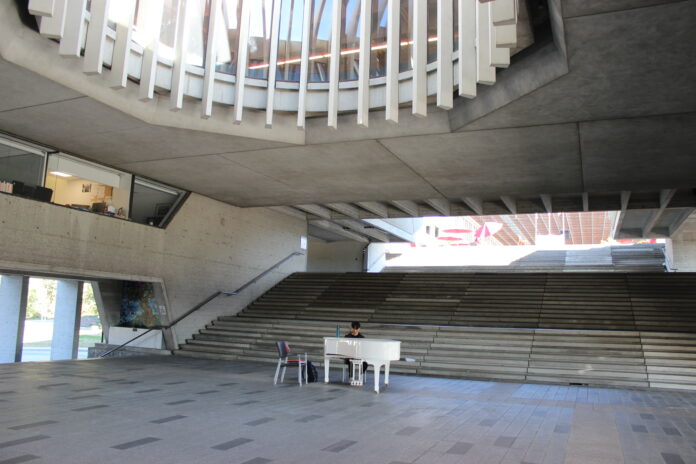
This is a photo of the SFU Burnaby campus. The staircase leading up to the convocation mall is shown where a piano sits. A student sits at the piano.
PHOTO: Gudrun Wai-Gunnarsson / The Peak

By: Eden Chipperfield, News Writer

SFU is the only public university in Canada to achieve Fairtrade Gold Status recognized by Fairtrade Canada and Canadian Fairtrade Network. A partnership between an educational institution and fair trade means having a liaison between farmers and consumers to facilitate dialogue, transparency, and respect between the SFU community and the farmers. 

The Peak interviewed chief commercial services officer Mark McLaughlin to learn more about being a fair trade campus. Being fair trade “requires that all your coffee shops on campus have fair trade products.” The first fair trade coffee shop on campus was Higher Grounds, an SFSS café, which inspired the first conversations regarding fair trade coffee being available on campus. 

However, the following challenges, including getting Starbucks on board, was a lengthy and challenging task: “It took many months. Two representatives from the university had to go down to Seattle a couple of times. And it was a long process. We needed to be more confident. And we said, ‘Look, we drew the line.’ We said, ‘To come on our campus, you have to serve fair trade coffee,’” McLaughlin expressed. 

Finally, in October 2012, Starbucks agreed to serve fair trade coffee on SFU campuses. McLaughlin accredits this thanks to the persistence of the commercial services team and SFU students on social media. 

“Fair trade [Starbucks] now is on all Canadian campuses.” McLaughlin declared this a win for the fair trade initiative and for the SFU community. Today, coffee shops on campus that serve fair trade coffee include Starbucks, Renaissance Coffee, and Blenz. 

According to McLaughlin, Tim Hortons, with one location operated by SFU Burnaby, is not certified Fairtrade. SFU commercial services have been in frequent conversation with the chain regarding how to make the switch. McLaughlin expressed how it is disappointing that Tim Hortons hasn’t transitioned to fair trade. He noted how “they’re trying to put on a front that they hold these Canadian values, [but] Canadian values are about the farmers, and equity with employees, and equity at the firm level.” The hope for these conversations is to continue with Tim Hortons and move forward with introducing fair trade coffee and tea on campuses. 

To achieve Gold Status, a university must meet baseline criteria, including standards for product availability, visibility, and education. McLaughlin expressed how the students involved in the Fairtrade Ambassador Program have wrought a ton of outreach to encourage coffee providers to switch or offer fair trade coffee. 

Recently, the ambassadors visited Highlands Elementary School and talked to students about the importance of fair trade products, farming, and farmers in the southern hemisphere. 

The Peak inquired how students become more aware of their consumption habits and purchases to include more fair trade products in shopping. He suggested keeping an eye out for the Fairtrade logo. “You’re actually making an impact for those farmers,” McLaughlin said. “Make an impact in your shop by looking for that fair trade.”

Who is exploited under the development of AI?

0
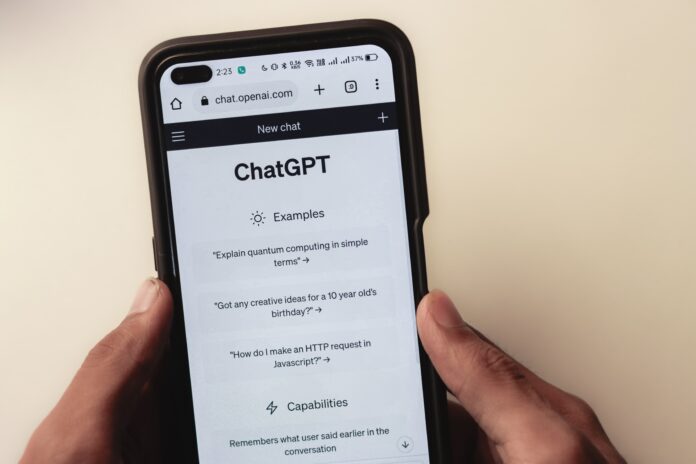
A screen with ChatGPT open.
PHOTO: Sanket Mishra / Unsplah

By: Kelly Chia, Editor-in-Chief

Content warning: mentions of sexual exploitation of women and children, revenge pornography, racism

What infuriates me about conversations revolving around artificial intelligence (AI) is how content we are with how much it costs us. The ethical risks associated with AI are treated far too casually. There are plenty of cases where artificial intelligence can expedite research, and overall improve our society. Sure. For example, The Peak previously reported on AI projects which help protect wildlife habitats. However, this technology’s lack of legislation and regulation makes it incredibly easy for bad actors to exploit, and there are plenty of bad actors. 

Too many AI enthusiasts treat these exploitations as an inevitability — and it’s not. It’s a consequence of loose regulations. Tech companies brush the costs under their carpets, hoping we’ll simply be content with admiring what AI can do. So, before we start fussing about dismissing this new technology as though it’s some Promethean miracle, we need to pay attention to the problems AI are currently causing with no legal barriers.

First, these machines aren’t sentient — however, they have faces and corporations behind them. These corporations can be held accountable. They develop AI by exploiting millions of underpaid workers, who are often recruited out of impoverished populations and paid as little as $1.46/hour after tax,” compared to “AI researchers” who are paid up to six figures. 

These workers are paid menial wages while undertaking tedious tasks, like combing through thousands of pages of data and labelling them. They have no job protections. Content moderators on Facebook from Sama cite being surveilled, and having to make decisions on graphic and disturbing content that are uploaded onto the platform in 50 seconds, or risk being fired. Similar stories exist across big tech companies like Amazon, where data labelers reportedly make less than a dollar an hour. These corporations purposely hire “refugees, incarcerated people, and others with few job options.” AI networks can grow at the rate they do because of this unimpeded exploitation. 

There are also environmental consequences unaddressed by the fast development of training AI. MIT reports that to train just one AI model would produce the equivalent of “more than 626,000 pounds of carbon dioxide,” and the cloud services storing that environmentally costly data now “has a larger carbon footprint than the entire airline industry.” In addition, oil companies like Shell are working with tech companies using AI to dramatically boost fossil fuel productions and profits by extracting gas and oil at a higher rate, even deposits previously considered too dangerous. 

In 2018, David Dao, a PhD candidate researching AI, alongside a cohort of contributors, started creating a list on how AI is being exploited. His list is expansive, and finds companies using AI to surveil, discriminate, and spread disinformation. 

Consider the program, Lensa. You may have seen it go viral last year for creating fairy-like avatars based on the users’ submissions of their likenesses. While that seems innocuous, the app proved to steal art, and has a tendency to sexualize and undress women — particularly racialized women. Lensa is trained and built using a large, openly accessible data set that scrapes images from the internet. This allows Lensa to indiscriminately steal art without permission, as even copyrighted images are legal to scrape in the UK and US. It also consequently means that, Lensa, and other AI models trained like it, inherit a dataset filled with descriptions and images of sexual assault, racist and ethnic slurs, and more.

Alarmingly, journalist Melissa Heikkilä, who is of Asian heritage, noted the app created far more sexualized avatars for her than her white counterparts. Further, it picked up on her racial features and hypersexualized them, even producing avatars that “appeared to be crying.” Heikkilä’s Chinese colleague also reported finding “reams and reams of pornified avatars.” This means anyone can generate non-consensual nude images of women and children with practically no obstacle. These explicit images can easily be weaponized and held against victims without their knowledge, harming their careers, personal lives, and welfare. 

These networks are both sophisticated and accessible enough that there are already thousands of examples and cases. In 2020, a cybersecurity company investigating manipulated media, found that an app had targeted and stripped the clothing of “at least 100,000 women, the majority of whom likely had no idea” and reported that many of these girls were likely underage. 

Let me reiterate: although some laws against revenge pornography and defamation could protect the victims, there’s no clear legislation punishing anyone from creating deepfakeblending your facial features with another body — pornography without your consent. 

Alongside this, there is a privacy risk for facial recognition apps to collect your stored data and sell it to third-parties. ExpressVPN remarks that Prisma Labs, the developers of Lensa, don’t specify what they do with user data. This means they could “share user data with advertisers, log file information, and register user information to gather data.” We should be wary of empowering such exploitative technology, especially when it’s marketed as a fun tool. Younger people are especially vulnerable to using, and being exploited by facial recognition apps. 

Dao notes that law enforcement makes frequent use of risk assessment AI technology, like this neural network learning to infer criminality using facial images. Although criminality based on facial features has been proven to be an ineffective tool that only aggravates racial discrimination, this technology still runs rampant. 

While this particular network is a university project, it’s not difficult to imagine how risk assessment technology could create a feedback loop where overpoliced people of colour are identified as criminals. In Wisconsin, Correctional Offender Management Profiling for Alternative Sanctions is a risk assessment computer program. It’s used by legal courts to determine the rate of recidivism based on a private algorithm. Notably, Black people were “77% more likely to be pegged as criminals,” even with no previous criminal history. 

You may notice how I’ve drawn attention to the hidden costs of AI development that hurt marginalized peoples the most. This is no coincidence. The utopia of AI may seem promising, but it’s currently being exploited by corporations on the backbone of millions of underpaid workers, to profit off of databases built on human biases. It’s unconscionable to let these details be incidental, folded under the false flag of human progress. 

It might feel helpless to fight against this, but remember our enemies aren’t amorphous, sentient computers. It’s corporations that can and should be held to legal scrutiny, and they are. 

In Europe, the EU Artificial Intelligence Act is being legislated into law after an open letter calling for pauses in AI development. This comes after Italy banned ChatGPT for a month, requesting actions like user data controls being more visible, opt-out options, a transparent privacy policy, and more, before lifting the ban. In the US, OpenAI CEO Sam Altman cautions that without regulation, the development of these technologies can easily impede on and compromise elections. Tri Ta R-Westminster, an assembly member in Sacramento, California, is pushing forward legislation to criminalize the use of AI to make and share pornography “using someone’s likeness” without consent. Writers in the US are striking to protect their livelihoods, and one of the things they are pushing is regulating AI to maintain their careers. Artists also recently took a class action lawsuit against artificial intelligence companies. 

Here in Canada, a man was sentenced for creating child pornography using AI technology in April 2023, a case which paves a precedent on which we can punish wrongdoers. We’re currently waiting for Bill C-27 to pass. Introduced in June 2022, this bill promises to regulate AI systems by surveying and enacting risk assessments of the technology. Although it has been criticised for being vague because it doesn’t provide specific guidelines on how to govern AI, this is not a bill that can wait until 2025 to be enacted into law. Still, we have the ability as citizens to pressure our Senators and Members of Parliament to bring the issue of artificial intelligence and Bill C-27 to Parliament. 

This is an ongoing fight, and that fight underscores the ethics we need AI to be grounded in to proceed. While there’s so much good AI could accomplish, we must be diligent in preventing the harm it can inflict, too. I also recommend going through lists like Dao; this technology is unimpeded in the harm it can cause, partly because people don’t understand the extent of what it can do. Education empowers more people to stand in solidarity against these corporations. 

Dialogue series highlights diversity among BC youth

0
This illustration is of a group of diverse cartoon people standing in a semicircle, talking to one another.
ILLUSTRATION: Hailey Gil / The Peak

By: Petra Chase, Arts & Culture Editor

Editor’s note: Jocelyn Wong, who was interviewed for this piece, has previously contributed to The Peak. The Peak acknowledges and has taken steps to prevent conflicts of interest or potential bias from influencing the article.

On May 6, Alice Mũrage wrapped up an online dialogue series for youth titled “identity and belonging in multicultural BC.” The three-part series was held in collaboration with BC Black History Awareness Society, Dr. Maureen Kihika, and SFU’s Morris J. Wosk Centre for Dialogue. The event featured Indigenous storytelling, poetry,and breakout dialogue sessions, along with other activities. 

In 2020, Mũrage began research on BC’s Black population: she published the African Ancestry Project’s findings, highlighting the nuances among people of African ancestry in BC. This was especially crucial for the health sciences field, where Mũrage is pursuing her PhD at SFU. She emphasized Black people often get viewed as a “monolith” in data collection. The project snowballed to the development of World Within, a report detailing the personal stories of project participants.

Regarding World Within, “We realized there is a group of people we are missing: the youth,” said Mũrage at the event. While the limitations to consent barred them from including minors in their research, she explained this dialogue series was a way to include this demographic in the conversation. They opened the series up to Indigenous and racialized youth, as the theme of the event was relatable to a plethora of racialized identities. “They shared how great it was to have a space where they felt understood and could speak freely about their experiences.”

The Peak reached out to Jocelyn Wong, administration and research coordinator at Morris J. Wosk Centre for Dialogue and co-host of the event, to learn more about how the report inspired the dialogue series. 

“As young people actively develop their ideals and values, they need safe and inclusive spaces to reflect and engage in conversations about the diversity of Black people in BC and Canada’s multicultural values,” said Wong.

This concluding three-hour session was the first in the series that was open to the public “in hopes that educators would also attend, witness, and implement the recommendations shared by youth.” The participants consisted of 40 youth, between the ages of 1519. 20 Black youth and 20 from “Indigenous, Asian, and other racialized backgrounds.”

“Young people, especially those in high school level, are often left out of important conversations at a time [when] they are trying to understand who they are and their place in society,” said Mũrage. “While schools are important avenues to guide young people in this process of reflection, many things are left out of classrooms and they are left to navigate many life issues on their own.”

The panel discussion opened the floor to youth to speak on their lived experiences, like the “bicultural dilemma” where a bicultural person feels they don’t belong in one culture or another. Hypervisibility, the experience of feeling “overly visible because of one’s race or ethnicity” was also discussed, in addition to many other topics. 

They also suggested potential solutions to improve the experiences of racialized students in public schools. While the Toronto District School Board recently voted to introduce an anti-Islamophobia strategy in schools, BC has introduced an “anti-racism action plan.” Wong summarized some of the additional measures for equity in public schools that were discussed, such as “proper trauma-informed training for teachers and staff on issues of diversity” and “recognizing bias.”

“This series really highlighted that dialogue is critical for supporting youth in three key ways: building community and belonging, fostering empathy and understanding, and empowering youth to create positive change,” said Wong. “Youth have a lot to teach us about the world, and by listening to their experiences and insights, we can learn and grow as individuals and as a society.”

Mũrage also shared her thoughts with The Peak: “The project has, in a way, built on a sense of community; many people appreciated knowing ‘I am not alone.’ 

“I hope that the Worlds Within report inspires thoughtful dialogue and action on various themes highlighted in the Worlds Within report, and particularly on addressing racism and on nurturing spaces where everyone belongs.”

SFU football loses injunction

0
This is a photo of a football sitting in the middle of an empty football field.
PHOTO: Dave Adamson / Unsplash

By: Isabella Urbani, Staff Writer 

On May 11, the BC Supreme Court denied an injunction made by five SFU football players to reinstate the school’s varsity program. SFU announced the termination of its 57-year football program on April 4. This came as a result of the school failing to find a new conference after its previous one elected to not renew their agreement. 

The injunction would’ve allowed players to temporarily stop SFU from cancelling of the program, at least until the case’s verdict. The grounds of the injunction argued SFU hadn’t provided its players with enough notice about the closure of the team’s program, thus, causing a breach of contract. 

Prior to the injunction’s filing, SFU announced they were hiring a special advisor to look into alternative ways football could operate at the school on a “varsity or non-varsity level.” A month later, immediately following the court’s ruling, SFU hired Bob Copeland of McLaren Global Sports Solutions to make a recommendation for the program’s future. Copeland’s report is set to be released this September

TSN sports broadcaster and SFU alum Farhan Lalji explained to The Peak that without the lawsuit, SFU might not have ever “legitimized” how they would go about determining the feasibility of the program. 

“When [SFU] first released the idea of a special advisor, I think we all understood that it was there to deflect attention from the university and the administration to delay things until December, when there was, essentially, nothing left to save,” said Lalji.

Since Copeland’s hiring, SFU president Joy Johnson, has referred to the school as having “no place to play in NCAA football.” Previously, when she announced the end of the football program in April, she noted they have no place to play at all. Lalji said this shift in language, although small, is indicative that the program may have started considering non-NCAA options, which was originally thought to be too much of a challenge

“In the beginning, it was, ‘There’s no solution. There’s nothing left for us to do,’” said Lalji.  “Whereas now, [SFU has] pivoted and said the NCAA history of the program is over.” 

This change in language appeared in SFU’s latest video statement, released the same day the injunction verdict was announced. In the video, Johnson explained SFU had remained silent throughout the injunction because it would have been “inappropriate” for the school to make a comment while the trial was being held. 

“It was a choice to choose not to speak publically at all,” said Lalji. He is  less interested in what SFU decides to say, and more interested in whether or not the school “engage[s] meaningfully” with players and SFU alumni, like himself, going forward.

“The unfortunate part of it all is, the delay that got us to this point has created a lot of uncertainty for the athletes. A lot of them are gonna have to make decisions to leave, and they don’t want to do that.” 

In spite of the injunction being denied, SFU football players were able to regain access to their locker room during the trial, which had been previously inaccessible.

“I think the players needed something concrete,” said Lalji, who believes the reopening of the dressing room will act as an “olive branch” from the school to the players. 

This gives [players] a little bit of short-term hope. There are some other targets we’ll put out in front of the administration, and hopefully, as the adviser gets deeper into this process, the university will move forward on some other action items also.” 

As for the program’s reinstatement, Lalji is hoping the door to exhibition games, or low-stakes practice games, is still open. “I don’t believe [players] would get a full schedule of games. I think the university is very reluctant to fully reinstate the program until they’ve gone through their process, and a full schedule of games would indicate reinstatement.” 

By at least playing exhibition games during 2023, while the special advisor sees if the program can run competitively the following season, the football team will be able to “capitalize on momentum,” said Lalji. President of the SFU Football Alumni Society, Mark Bailey, has said an independent exhibition schedule has been crafted by alumni and is currently awaiting approval.

While the cancellation of the program most readily affects football students, Lalji wouldn’t be surprised if the impact extends to both the remainder of the athletic department and the students themselves. He explained it wouldn’t necessarily be a bad thing. 

“I think right now you should be considering, even if you’re not a student-athlete, if you want to go to this university, given everything I’ve heard and what their process looks like. 

“In the end, I think the athletic department and the school itself will be better off for it, because it might change processes going forward altogether.”

Daily Viagra user votes in favour of anti-trans legislation

0
A woman in a red blazer and skirt standing near a news van
PHOTO: cottonbro studio / Pexels

By: C Icart, Humour Editor

News anchor: Breaking news — a local cisgender man who does gender-affirming things all the time is adamant when it comes to preventing trans individuals from doing the same. I, your local reporter, had the opportunity to interview Mr. Big Bigot and hear more about this frankly confusing affair. Take a look at the footage. 

Clip of Mr. Bigot waving a transphobic sign riddled with spelling errors in the street because he has nothing better to do.

News anchor: What are you trying to achieve here today?

Mr. Bigot: I want to stop the drag queens from reading to school children. 

News anchor: Why?

Mr. Bigot: Because if anyone had ever read to me growing up, I wouldn’t be the man I am today! 

News anchor: Fascinating . . . Would you say you’re jealous of the drag queens?

Mr. Bigot: I would prefer not to answer that. 

News anchor: But Drag Queen Storytime is not the only thing you’re against.

Mr. Bigot: No, I’m against all of it! Drag queens, transgender, cisgender . . .

News anchor: Aren’t you cisgender?

Mr. Bigot: Absolutely not! I’m not cisgender. Being cisgender would require me to know what that word means, and I like to stay away from big words; they scare me. 

News anchor: So, you’re afraid of the LGBTQIA2S+ acronym because the number of letters intimidates you? 

Mr. Bigot: Next question. 

News anchor: Would you be able to tell our viewers at home what exactly gender-affirming healthcare is? 

Mr. Bigot: I would not.

News anchor: But you are voting to ban it. 

Mr. Bigot: Correct.

News anchor:  Why is it important to you

Mr. Bigot: It’s not. I saw a man on TV once get really worked up about what the M&M’s have been wearing these days, and I decided to get worked up, too, because I don’t like to be left behind. Normal people don’t have to affirm their gender. 

News anchor: Is this why you’re letting your toupée slowly slip off your head? Is this part of your bold stance against gender affirmation? 

A strong gust of wind blows off Mr. Bigot’s toupée. He runs after it, cursing. The camera cuts back to the news anchor in the newsroom. 

News anchor: Wow. Well, you heard it here first, folks. If you’d like to share your thoughts on Mr. Bigot’s big “it’s cool when I do it, it’s a problem when they do it” energy, use #LiteracyIsGay on all social media platforms. Until next time and remember, reading is what? FUNDAMENTAL. That’s right, take care.