Home Blog Page 185

Horoscopes June 26 – July 2

0
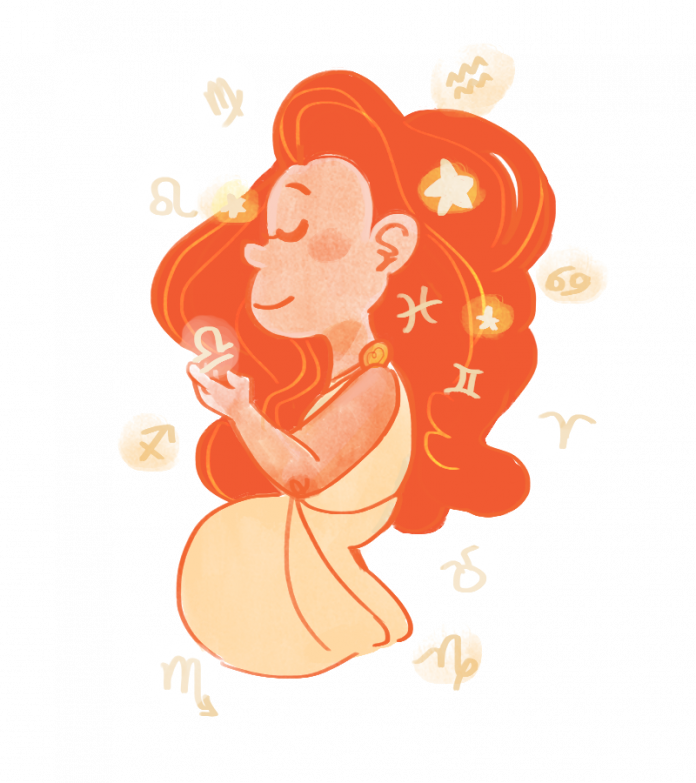
An illustration of a girl with long flowing hair. Astrological signs and stars shine around her.
ILLUSTRATION: Marissa Ouyang / The Peak

By: Hana Hoffman, Peak Associate

Aries

To all of y’all Aries who get onto buses from the Transportation Centre near the stairs and piano, y’all really need to start taking advantage of the Transit Exchange near Blusson Hall so you can get first dibs on seats! What’s worse than cramming yourself into a bus that’s already full? Not even being able to get on and having to wait for the next one, hoping that one won’t be full either. Seriously, always go from the Transit Exchange!

Taurus

Ever thought about learning to play an instrument? If you already do, that’s great! But if not, you should consider getting into guitar, then you can become a guiTAURUSt! The piano also has a beautiful sound. It’s just that it’s not an easy instrument to pick up. But if you try to and you drop it, don’t fret! Getting in treble sometimes is okay because that’s how you learn. Go up an octave and get some more playtime in.

Gemini 

Hey, I see you’ve been trying to find that missing piece of your puzzle, But I don’t think it’s a man or woman you need . . . What you really need is a walkman (or walkwoman). You can take them wherever you go, and they’ll always have entertaining things to say or sing to you. You’ll never be lonely again, and they’ll never leave you as long as you buy them a new battery once in a while!

Cancer

Oh, Cancer, you’re so busy with school and all that. You barely have enough time to read The Peak newspapers! Well, I know exactly why. It’s because I heard you always match the socks you’re wearing . . . is that true? Same brand, same colour, same length — no, no. No more of that, please. It takes so much time and effort! Just put all your single socks in the drawer and pick out 2 random ones. Don’t even think; wearing unmatched socks is the new trend here.

Leo

Leo, I choose you to slingshot us back to the past. Remember those days when silly bands were in style? Well, where are they now? It’s silly how no one wears those dual-purpose, fashionable, one size fits all elastic bracelets anymore. You can use them to keep containers closed, build a collection, relieve stress, trade, flex, slingshot at targets, tie up hair . . . the list goes on. So, let’s start using silly bands again, encourage others to do the same, and change the world.

Virgo

It’s nice you’ve been getting out there this summer and enjoying the natural weather. But, summertime shouldn’t just be all about beaches, picnics and hikes. We should bring back winter activities during this time of year so we’ll never miss the cool season! Go indoor skiing, ice skating, and snowman building behind the ice rink, where the Zamboni makes free piles of snow for us. And it’s always a great day to book a flight to Antarctica to relive your childhood after Club Penguin got shut down. :’)

Libra

Hey Libra, since you’re a real one, I want to ensure everything you do is always relevant and true to yourself. I feel like all I see these days are people wearing Harvard merch without being a Harvard student, wearing Air Jordans without being a basketball player, or wearing Nirvana shirts without being able to name three of their songs. Popular fashion doesn’t make sense sometimes, but we’re good as long as there are at least a few non-liars in this society!

Scorpio

Y’all really need to stop using the default ringtone sound and change it to something less annoying such as “I’m On A Boat” by The Lonely Island ft. T-Pain. What’s worse than repeatedly hearing the same song on the radio is hearing the same ringtone from people’s phones at work, school, and in public. What I want you to do, Scorpio, is spread the word and make sure everyone you know has their ringtone set to anything but the ringtones their phones come with. One suggestion I have is any song from Drake’s album, Scorpion. Thank you. Have a nice day.

Sagittarius

Hey Sagittarius, I don’t know where you’re at with your vehicle status. However, when you buy one, you NEED to break the traditional cycle of buying the same coloured cars. 90% of cars I see are just similar shades of gray! I’m sure many of us are tired of losing our cars in big underground parking lots because they ALL look the SAME. What made humans avoid awesome colours like pink, yellow, green, and orange on their cars? That question does not matter because we will get the most brilliant coloured cars and show people how much better the world would be with all colours of cars.

Capricorn

Listening to music is a great way to escape reality and go to dreamland. But if you’re ever going through your dad’s old CD shelf, stop using the CD player for them! Use your PlayStation console; it’s so much better, trust me. The audio quality, the satisfying clicks of the controller when changing music, and just being in that PlayStation atmosphere is way more exciting than spinnin’ your CDs on boring out-of-style CD players.

Aquarius

You work so hard, and you’re always on your heels. Why not buy yourself a pair of Heelys? You can rock n’ roll to every place you need to go! Save your energy and time, improve balancing skills, and be cooler than everyone who doesn’t wear Heelys (sad to say that I am one of them. Not proud of it! Don’t be me). 

Pisces

You know how some people attempt to memorize the periodic table or a hundred digits of pi? It’s quite boring, and Pisces, I don’t want you to do the same. Instead, a much more unique and interesting talent would be to have all the names in SFU’s raccoon community memorized. You’ll probably break the Guinness World Record for the largest number of raccoons’ names memorized! If you appear in their next book, I’m buying it.


Monday Music: Songs in solidarity

0
A black and white photo of a crowd of protestors with their fists in the air on the street taken from above.
PHOTO: Gayatri-Malhotra / Unsplash

By: C Icart, Humour Editor

On June 15, the Teaching Support Staff Union (TSSU) escalated strike actions and began picketing around campus. As a reminder, the TSSU is “fighting for better compensation and cost of living adjustments, better health benefits and pensions for instructors.” You can stand in solidarity with them by not crossing the picket line and talking to fellow students and community members about the strike and its importance. Strike songs and protest songs have a long history. Around the world, workers and their supporters have used music to denounce their working conditions and demand fair treatment. In light of that, here’s a playlist of songs that support workers and the union movement.  

“Hold The Line” by Tom Morello ft. grandson
Photo credit: Boonn and Zakk Cervini

If you watch one music video today, make it the Union Strong edit of this song. The mighty alt-rock song is interspersed with clips from various strike actions and workers talking about the importance of unions. In an interview, grandson explained, “‘Hold the line’ is a phrase that traces back to trench warfare and has become a union rally cry for anyone experiencing backlash for standing their ground.” This song is perfect for headbanging when you’re running out of steam. When SFU does everything to cause delays, TSSU holds the line. 

“We Are the Union” by Jaywalk, Grim, & Shatoya Thomas-Flemmings
Photo credit: Communication Workers of America

This one isn’t on Spotify, but the trip to YouTube is worth it. This rap song is about “Brooklyn Cablevision workers [who] saw through the corporate lies, organized to join the Communications Workers of America, and immortalized the experience in this amazing song.” The first verse starts with “Union busting is so disgusting,” and I must say — no lies are told in the entire song. Shatoya Thomas-Flemmings’ vocals on the chorus are so uplifting and inspiring. 

“More Than a Paycheck” by Sweet Honey in the Rock
Photo credit: Evelyn Maria Harris

Sweet Honey in the Rock is an African-American music collective that’s been around for 50 years. Over the years, more than 20 artists have been a part of the collective, making music that “challenges its listeners with songs on topics including motherhood, spirituality, freedom, civil liberties, domestic violence, and racism.” “More Than a Paycheck” calls out poor working conditions as the a cappella group sings soulfully about how their job is not just sending them home with money but also a myriad of diseases, including asbestosis, silicosis, and stress-related illness. As a reminder, you have a right to refuse unsafe work. Check out the TSSU website for more details on when and how to do so. 

“9 to 5” by Dolly Parton
Photo credit: Gregg Perry

You probably know this one, but when was the last time you really thought about the lyrics? It was initially written for the 9 to 5 movie: a comedy based on the 9 to 5 movement that “united women across race, class, and age divides, won millions of dollars in back pay and raises from corporate titans, [and] formed a women-led union affiliated with the Service Employees International Union.” The song, bursting with anti-capitalist sentiment, soared to the top of country and pop charts. You go, comrade Dolly!

“On Strike” by Gmac Cash
Photo credit: Gerald Devon Craft-Allen

Listen, I can appreciate a folk strike song from the 20th century. However, some of these top “union song lists” online will have you believe the only existing labour rights songs are old and written by white folks. So here’s another picket line rap song. Gmac Cash, a former Chrysler worker, released this song “in solidarity with [General Motors] strikers.” It’s incredibly catchy. Listen to it once, and I can guarantee you will be singing: “We goin’ on strike / We goin’ on strike / We goin’ on strike / Till they get this shit right” all week.

Honourable mention: “Bitch Better Have My Money” by Rihanna

This song’s not about workers’ rights, but the version I sing in my head is. Hear me out: “Pay us what you owe us, don’t act like you forgot / SFU better have our money.” If you think about how “TAs, TMs, SIs, and ELC/ITP Instructors do approximately 50% of all in-person teaching at SFU, while earning less than 5% of the University’s annual budget,” it’s super clear that TSSU isn’t asking for hand-outs, but simply a fair cut of the money they generate for the university. Remember: “The University works because [the TSSU does].”

Listen to the full playlist on The Peak’s Spotify profile.

A brief history of Indigenous Literature in Canada

0
PHOTO: Amirul Anirban / The Peak

By: Izzy Cheung, staff writer

We’re all familiar with ‘classic’ literary moguls like Shakespeare and Jane Austen. For those like me who have endured at least a few English classes in so-called Canadian institutions, we’re taught all about the significance of the green light in F. Scott Fitzgerald’s The Great Gatsby (1925), or the way Edgar Allan Poe characterizes true fear in The Tell-Tale Heart. However, the literature that Canadian education systems tend to spotlight in our classes often puts an emphasis on authors from Europe and other locations instead of those who know the land we live on. An accomplished author in her own right, E. Pauline Johnson (also known by her Mohawk name, Tekahionwake), was the first Indigenous creative writer to enter mainstream European literary circles — but, in all the English courses I’ve taken, I’ve only studied her works once. I’d like to disclose that I am not of Indigenous descent, but would like to bring attention to the injustices committed toward Indigenous communities by settler-colonialism, as well as showcase some brilliant authors.

I would say most students know a shocking amount about authors who resided on the other side of the world, while simultaneously knowing shockingly little about those who have and continue to shepherd these lands. As a settler residing on unceded territory, this article attempts to make a conscious effort to learn more about those who lived here before colonization — who still endure its effects. The stories they share allow us to understand and appreciate the cultural diversity and history embedded in the land that we call home. 

While physical books tend to come to mind when thinking of storytelling, Indigenous storytelling began long before the emergence of paperbacks. Storytelling means more than just writing a book and getting it published; sharing tales is an important part of preserving cultures. Indigenous legends such as The Creation of Haida Gwaii have no specific origin point, being passed down orally through generations. 

Canada’s forced assimilation beginning in the 19th century caused a decline in practiced languages and traditions, making oral storytelling harder for Indigenous communities. At this time, George Copway (Kahgegagahbowh)’s The life, history, and travels of Kah-ge-ga-gah-bowh (1847) and George Henry (Maungwudaus)’s An Account of the Chippewa Indians, who have been travelling among the Whites, in the United States, England, Ireland, Scotland, France and Belgium (1848), significantly contributed in paving the way for other Indigenous authors. 

These works were followed shortly after by those of E. Pauline Johnson. Being of Mohawk and European descent, her parents’ marriage was heavily criticized. However, as her father was an interpreter and cultural negotiator between the Mohawk and the government of Canada, they maintained a high social standing. Some of her best-known works are The White Wampum (1895), Canadian Born (1903), Flint and Feather (1912), and Legends of Vancouver (1911). 

An influx of Indigenous literature came to fruition after protests against the 1969 White Paper policy. This policy would ensure that any legal documents regarding Indigenous communities could be destroyed, and encouraged their assimilation into the Canadian “state” by enforcing decisions over land and private property as well as eliminating “Indian status.” Markoosie Patsauq’s Harpoon of the Hunter (1970) was released in Inuktitut (an Indigenous language often spoken in the Canadian Arctic) that same year. Patsauq was a residential school survivor who was instrumental in the move to make the federal government apologize for the High Arctic relocations

Halfbreed (1973) by Maria Campbell, and Thrasher . . . Skid Row Eskimo (1976) by Anthony Apapark Thrasher both depict personal experiences with colonization. Halfbreed dives into topics like poverty, racism, and addiction — it details her experiences enduring all of these at the age of 33. Thrasher . . . Skid Row Eskimo is narrated by a voice writing from a Calgary jail while awaiting trial for murder

One of the first Indigenous works published in Canada, Bobbi Lee: Indian Rebel (1975, 1990), was written by Lee Maracle. This autobiographical novel, Maracle’s first book, discusses oppression and political consciousness during the ‘60s and ‘70s. She also writes about womanhood, culture, tradition, spirituality, and political authority in I Am Woman: A Native Perspective on Sociology and Feminism (1996). Her novel, Ravensong (1993), also touches on femininity and the feminine body as a symbol for cultural boundaries between colonizers and the colonized. 

The year 1989 saw the establishment of the En’owkin School of International Writing, founded in part by Jeannette Armstrong. This was the first program operated by and for Indigenous communities, allowing for post secondary credit accumulation through creative writing. Four years prior, Armstrong published her novel, Slash (1985). This book comments on the divides between Indigenous peoples and the Americas through a man’s journey across Canada and the United States in the 1950s and ‘60s. 

Despite being born in California, much of Thomas King’s work was written in Canada. Medicine River (1989), his first book, was runner-up for the 1991 Commonwealth Writers’ Prize. Another novel of his — Green Grass, Running Water (1993) — was the first book written by an Indigenous author to be nominated for the Governor General’s Award in Fiction. King was also the first person of Indigenous descent to deliver a CBC Massey Lecture

Richard Wagamese, an Anishinaabe (Ojibwe) novelist, journalist, mentor, and multi-award winner, began his writing career as a reporter with The New Breed, an Indigenous newspaper in Regina. He published his first novel, The Keeper’n Me, in 1994, which won him the Writer’s Guild of Alberta award for best novel. One of his most popular novels, Indian Horse (2012), tells the story of a gifted hockey player and residential school survivor. 

In 2000, Eden Robinson’s Monkey Beach was nominated for the Governor General’s Award as well as The Giller Prize. Monkey Beach follows the story of a young girl who tries to regain her footing and reconnect with her Haisla culture after various tragedies impact her life. Robinson’s writing repertoire also includes Blood Sports (2006), a suspenseful horror novel, and Son of a Trickster (2017), the first book in a trilogy that weaves together current affairs, Indigenous culture, and the impact of colonialism. 

Indigenous stories have a rich history that extends past the confines of this short article. There is so much more to the world than what is described in our textbooks and on the internet. It’s likely that there are legends still being told to this day — ones that have been preserved through oral storytelling rather than paper and ink. I’ve recapped a few Indigenous authors, but there are still so many more who deserve to have their works celebrated. 

If you’re looking to study more Indigenous literature, check out the following courses offered by SFU: ENGL 202 (The Environmental Imagination), ENGL 209 (Race, Borders, Empire), ENGL 355 (Canadian Literatures), ENGL 360 (Popular Writing by Indigenous Authors), ENGL 431W (Seminar in Indigenous Literatures). 

NDP proposes new housing plan to lower rent and stop renovictions

0
a white apartment under construction with a crane in the foreground.
PHOTO: Aria Amirmoini / The Peak

By: Isabella Urbani, Staff Writer

On May 26, the New Democratic Party (NDP) announced their latest housing plan, which focuses on lowering rent and ending renovictions across Canada. Approximately 30% of rental homes are owned by corporate landlords in Canada, who use the guise of renovations to evict renters and subsequently increase rent, so tenants can no longer afford to live there. “Undervalued” homes, which are typically rented by marginalized communities, are the main target for these renovations because tenants often can’t meet new rent increases due to being on fixed incomes or  working low income jobs.

The NDP’s last housing plan was in 2021. Then, NDP leader Jagmeet Singh said the party would construct 500,000 affordable homes over the next 10 years and would reduce “big money investors” by introducing a 20% tax to home purchasers who weren’t permanent residents or Canadian citizens. 

“We’re saying it quite simply now: we need to stop the corporate actors from treating housing as a commodity. Housing is a basic human right. It’s not a commodity and it should not be used as such,” said NDP housing critic and Member of Parliament for Vancouver East, Jenny Kwan, during an interview with The Peak.

As a housing critic, Kwan is responsible for providing feedback to housing plans, and proposing ideas on how to end the housing crisis in Canada, which she said has been going on since the ‘90s. 

The Conservative government and the Liberal government successively began to cut funding for the National Housing Program in Canada — and in [1994], the Liberal government cancelled it altogether. As a result, Canada lost more than half a million units of social housing or co-op housing that would otherwise have been built,” she explained. 

Another reason the housing crisis has been an issue in Canada for so long has been real estate investment trusts. Under this protection, real estate agents aren’t paying the corporate tax because “they return all their profit to the investor.” This means people can invest into property without having to “manage” the property. They then make profit on their investment through dividends: a returned portion of the money.

Kwan said, “By not paying the corporate tax rate, Canada lost more than $1.5 billion in taxes that we should have actually collected. And going forward, the parliamentary budget officer also issued a report to say that Canada will lose another $300 million in taxes over the next four years.”

Alongside the NDP’s moratorium — otherwise known as a ban — on corporate landlords renovicting tenants, the party is requesting that the government establishes an “acquisition fund for the non-profit sector.” This would allow non-profits to buy “undervalued” houses that go on sale before they’re bought by corporate landlords. Kwan said the current stock of real estate is so bad that “for every unit of housing built, we lose 15.” Having non-profits in control of these properties would also lower renting prices, which jumped 28% this year alone for one-bedroom apartments in London, Ontario. 

Kwan said there’s no legislation outright prohibiting rental evictions. According to Kwan, while rules vary depending on the province or territory, in BC, landlords are allowed to increase rent as inflation rises. This, however, doesn’t stop landlords from hiking the prices on properties that were priced lower than inflation rates, she said. 

Singh has been extremely critical of both the Liberal and Conservative party since announcing his party’s latest housing efforts. In the initial news release, Singh called Conservative party leader Pierre Poilievre’s so-called housing plan” a way to make “super-rich investors and big developers even richer.” Singh also criticized Trudeau’s “silence” on the matter on Twitter. 

The housing crisis is much more complicated than it seems, Kwan said, “It’s not just about building more [housing] — it’s about building the kind of housing that meets the needs of the community at the affordability level. That’s what we need to do.”

Which SFU Campus are you most like?

0
SFU Burnaby campus in the fall.
PHOTO: Vlad D / Unsplash

By: Saije Rusimovici, Staff Writer

We’ve all spent at least one sleepless night hopelessly scrolling through Buzzfeed quizzes until 2:00 a.m., but I bet none of you know what SFU Campus you’re most like. Now is the time to find out. 

  1. Choose a word to describe yourself
    1. Busy 
    2. Sociable
    3. Quiet 

2. What is your dream home aesthetic? 

    1. Modern and minimalist — furnishing a home? In this economy?
    2. Classic and cozy — AC optional
    3. Eclectic and unique 

3. Choose a TV show to binge-watch instead of study

    1. Suits — fantasizing about my corner office
    2. Gilmore Girls — because romanticizing studying is the best part
    3. Riverdale — the scene where the whole town “perform[s] a ritual human sacrifice on Archie” always hits

4. You have a break between classes. Where are you grabbing lunch on campus? 

    1. Does Breka count? 
    2. Gawon Express (the kimchi fried rice, though!) 
    3. Steve’s Poke (it’s in the mall now?!)

5. With which animal do you resonate the most? 

    1. A playful pigeon 
    2. A darling deer
    3. A mindful mouse 

6. Choose an after-school activity 

    1. Grabbing drinks with friends
    2. Doing homework — who else is going to keep Lofi Girl company?
    3. Shopping — is it still consumerism if it was on sale?

7. What do you plan to do after graduation? 

    1. Move into my corner office in downtown Vancouver
    2. Move back in with my parents — Just kidding, I never left
    3. Move to a new campus for grad school 

8. Add something to your bucket list

    1. Publish a novel 
    2. Vacation cabin in the mountains
    3. Stop taking transit, ever 

9. Pick your dream vacation destination 

    1. New York City 
    2. The Swiss Alps 
    3. A place nobody has ever heard of — #NotLikeOtherTravellers

10. What song is playing on your morning commute?

    1. “Empire State of Mind” – Jay-Z, Alicia Keys 
    2. “Ain’t No Mountain High Enough” – Marvin Gaye, Tammi Terrell
    3. “Just Keep Driving” – Harry Styles 


If you answered mostly As: You’re SFU Harbour Centre

You’re the center of attention, yet you keep things minimal and modern. You never fail to show up in a trendy, perfectly put-together outfit. People like you keep SFU looking classy and up-to-date.

Everyone likes you because you’re not impossible to reach. I think we can all agree that a trip to Harbour Centre where classes aren’t a twenty-minute walk apart is a nice change from the long and winding halls of Burnaby Campus. There’s practically no chance of getting lost (unless you forget what floor your tutorial is on . . . ).

You like to transit more than you’d admit, staring longingly out the window listening to a podcast and pretending your life is a movie. You don’t even mind the 5:00 p.m. rush on the SkyTrain because it’s all just a part of the hustle and bustle of the city. 

If you answered mostly Bs: You’re SFU Burnaby 

So, you kind of miss high school more than you’d like to admit. You revel in the social aspect of university life and don’t mind running around as if you’re part of a scavenger hunt looking for your classes in a packed hallway. You run into at least three people you know every day and never fail to say hello to any of them. You know all the good study spots (hint hint, bottom floor Blusson) and never fail to partake in a customary s’more roasting sesh. Even though you may spend half the morning circling around the parking lot in an attempt to find a free spot, it’s better than waiting around for the bus at Production Way-University. 

If you answered mostly Cs: You’re SFU Surrey 

Ah, the underdog. You’re completely underrated, and only a few people know the real you. You’re new on the scene and can’t help feeling a little intimidated. But sliding under the radar is just your style. You have so much to offer and you’re passionate about innovation and technology (hello SIAT courses). As the ultimate foodie, you surround yourself with all the best restaurants (including the culinary wonderland that is the Central City food court). People might have to leave their comfort zone in order to reach you, but when they do, it’s always worth it!

Chocolate cheesecake fudge squares

0
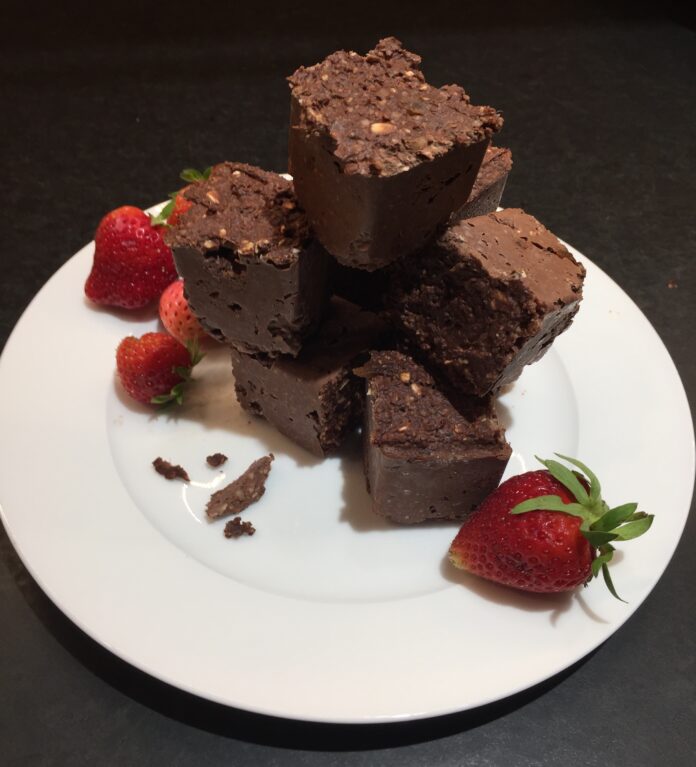
Brownie squares piled on top of each other tall on top of a white plate with strawberries on the side.
PHOTO: Hailey Miller, SFU Student

By: Hailey Miller, SFU Student

As a health-conscious individual with an appreciation for tasteful dessert, I create my own recipes from scratch by experimenting with nutritious ingredients that are satisfying and full of flavour. My delectable chocolate cheesecake fudge squares are sure to be a hit among any crowd. I conjured up this recipe myself, which includes fibrous oats, nourishing fats from nuts and seeds, and a kick of natural sweetness from Medjool dates. These quick-and-easy squares are perfect for all the fellow foodies out there!

Prep Time: 20 mins
Set Time: 3 hrs
Total Time: 3 hrs 20 mins
Yields: 15 cubes or slices

Ingredients

  • 1½ cup of raw, uncooked oats (quick, whole, or rolled)
  • 12 whole, pitted Medjool dates* (or any type of dates)
  • ½ (250g) block of cream cheese
  • ¼ cup of cocoa powder
  • ¼ cup of chia or hemp seeds
  • approx. ¾ cup of water
  • ¼ cup of walnuts or unsweetened, shredded coconut (optional)
  • pinch of salt, to taste
  • *Medjool dates are best for this recipe, as they house a natural caramel-like flavour and texture

Equipment Needed

  • food processor or multipurpose blender (such as a VitaMix)
  • silicone ice cube trays (or a baking tin)
  • spatula

Directions

  1. Place 12 pitted Medjool dates in a bowl of warm water; soak for about 20 minutes. Take cream cheese out of refrigerator, allowing time to soften — also about 20 minutes.

  2. Place oats in food processor or high-speed blender. Blend until a flour-like consistency has formed. Keep in food processor.

  3. Add cocoa powder, chia or hemp seeds, walnuts or shredded coconut (if desired), a pinch of salt, and about ¾ cup of water to food processor. Feel free to use the water from the bowl of soaked dates. Gently pulse on low until ingredients have blended together. Keep ingredients in food processor.

  4. Remove Medjool dates from the bowl of water and add to food processor, along with the cream cheese. The dates should now be softened — and a little less sticky. It’s okay if some water remains in the dates when transferred to the food processor (a little extra liquid helps with the consistency). The cream cheese should also be soft to blend easily.

  5. With all ingredients added to the food processor, gently blend on low — or pulse — until a runny, yet slightly sticky consistency has formed. If consistency is still too thick, increase water as needed.

  6. Scoop mixture into silicone ice cube trays, just below the surface of the moulds. This recipe typically yields a small-sized silicone cube tray of 15 squares. Alternatively, if you don’t have silicone moulds, you can use a shallow baking tin or loaf pan (typically an 8 x 4 rectangular pan). If using this method, make sure the pan is freezer-safe. Scoop mixture into the pan until the pan is covered — again, just below the surface.

  7. Place in freezer until fully frozen (about 3 hours). Then, pop out of silicone moulds. Alternatively, if removing from baking tin, slice into squares, then remove carefully. Enjoy immediately, or save for later. Store in freezer.

Substitutions

  • Make it vegan: omit cream cheese, or use a vegan cream cheese substitute
  • Make it gluten-free: use certified gluten-free oats (most oats have this certification on their packaging)
  • Make it allergy-friendly: omit nuts and/or seeds, and replace with unsweetened, shredded coconut

My spice tolerance is embarrassing

0
Black pepper shaker with a “no” sign.
ILLUSTRATION: Alyssa Umbal / The Peak

By: Isabella Urbani, Staff Writer

Have you had the miserable experience of dealing with someone who can’t take a hint? Can’t take no for an answer? And somehow thinks sweet chilli chips (I’m talking about the Doritos version) are spicy. Two out of three? Good enough. Then you’ll know how I feel as I try to sneak out, I’m not kidding, to grab a bite without my spice tolerance getting in the way. This is my story:

“And where do you think you’re going, all dolled up, Isabella?” Spice asks. 

Shit. I knew I should have kept the door closed. 

“Oh hey, Spice.” Fuck it. Just rip the band-aid off. “Actually, I’m going to try the new restaurant that opened a few minutes away with

“Perfect! Just give me a minute to put on a jacket, and we’ll—”

“Um, Spice. It’s a Thai restaurant.” You’ve got to be kidding me. Why is she looking at me confused? “And um . . . You aren’t really the best with ahem spicy foods.” 

“Oh . . . okay.” 

That’s it? She’s actually fine with that? “Thanks for understanding because I don’t want things to become awk—”

“I just won’t eat any spicy food.” 

Well, there’s only one thing for me to do now: warn my friend Kiana about the extra guest.

The El Daddyablos (yes, that’s the name of our chat)

IceSpice2.0 (yes, that’s me): SOS: Spice is coming tonight. I’m sorry! I thought she would understand, but apparently not. She says she isn’t going to eat any spicy food, though. 

KiaYUH Pepper (yes, that’s Kiana): Are u JOE-KING? U said you had everything sorted out. Just tell her we cancelled and sneak out later. 

IceSpice2.0: I can’t. We just arrived. Just play nice. She promised not to eat anything spicy. 

So, we’re walking into the Thai restaurant and— 

“Hey, hey! Who’s ready to eat a crapton of spicy food?” Spice exclaims. “Ha ha, just kiddingggg! Party pooper over here says I can’t eat anything spicy.” 

Whew.

Kiana also seems relieved as she says, “It’s probably for the best, Spice. You know what happened last time.” 

Spice wasn’t having any of it. “Oh pah-lease Kiana, don’t act as if your spice tolerance was any better.” 

“Funny you say that since you weren’t invited!” Kiana retorts. 

That’s right folks, we couldn’t even keep the peace long enough to get appetizers. Spice is devastated. 

“What is she talking about, Isabella?” 

“I think we should really talk about this privately and not—” 

“No. Let’s do this here. Was I or was I not invited?” 

Maybe if I just excuse myself to the bathroom . . . 

“Take a hint, Spice! She obviously didn’t invite you because you can’t handle your spice!” 

Damn it, Kiana is one feisty pepper . . .

“YOU TAKE THAT BACK! I can, too, hold my spice, right, Isabella?” The silence is loud. “Fine. If I couldn’t handle my spice, would I do this?” 

Oh shit, Spice just used the plant as a spit bucket. I grab my bestie, my spice tolerance, and what’s left of my dignity, and we blow this popsicle stand. Soon enough, I’m home alone with Spice. 

“I can’t believe we got banned from another restaurant!”

“In MY defence, Kiana started it. I wouldn’t have eaten anything unless they said something,” Spice whines.

“You had one bite of a Hot Cheeto. Why do you always keep HOT Cheetos on you if they’re too spicy, anyway?” 

“DUH, ‘cause they’re good. Just because I can’t handle spice, you think I don’t deserve flavour? Here, I just opened a new bag. Try one!” 

“That doesn’t make any sens— Wait, what did you say?” 

In case you were wondering, my new monstera was not safe. 

Chinatown residents concerned over rising gentrification

0
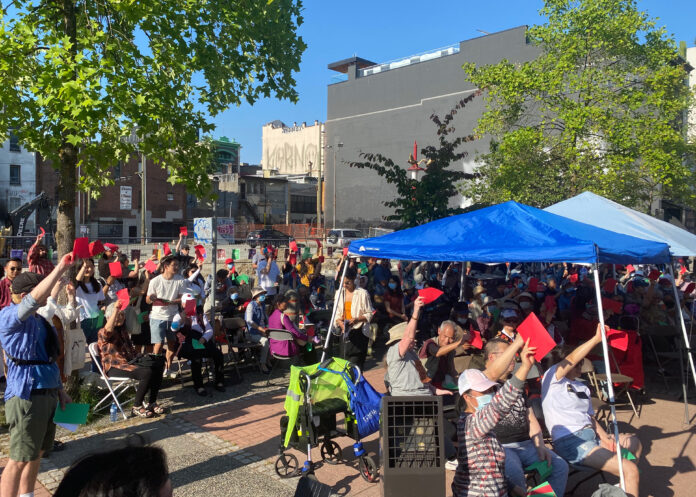
Multiple citizens are gathered, holding up signs and cards under a blue tent at 105 Keefer to rally against the Beedie development proposal.
PHOTO: Gudrun Wai-Gunnarsson / The Peak

By: Olivia Sherman, News Writer

The City of Vancouver is reconsidering its controversial development proposal in the heart of Chinatown. The proposal from Beedie Holding Ltd. had been rejected five times before, between 2012 and 2017. A rally was held outside Vancouver city hall on May 29, with over 70 speakers and activists. Another rally occurred outside Vancouver City Hall on Monday, June 12. No decision on the proposal had been made as of the time of publication. 

The first rally’s large turnout “was a huge victory, not just for the community, but it really [was] a symbol for the rest of Vancouver to say, ‘hey, when we come together, people power is powerful. Collective power does work,” said Jade Ho, in an interview with The Peak

Ho is a member of the Vancouver Tenants Union and a PhD candidate with the SFU department of education. She explained the significance of Chinatown and how detrimental gentrification is to its survival. “The history of Chinatown is that of anti-Asian racism [ . . . ] they were basically relegated to this one area.” Ho explained how Chinese immigrants were not permitted to hold certain jobs such as lawyers or doctors because of economical segregation. “Even though it was born out of anti-Asian racism, the residents turned it into a place of safety [ . . . ] a place of survival.” 

Beedie’s proposal is to build a 9-storey, multi-purpose condo at 105 Keefer Street, which is currently an empty lot. 

As well as ventures in capital, industrial construction, and residential building, Beedie Holding Ltd. is known for its Beedie Luminaries scholarship program and SFU’s Beedie School of Business. After a $22-million donation from Ryan Beedie, the company’s president, and the late Keith Beedie, founder of Beedie Holding Ltd., the SFU business program was named after them in 2011. 

Despite Beedie’s five failed attempts to get the condo built, BC Supreme Court Justice Jan Brongers recently ordered a rehearing for its development. Many have expressed concerns over the increased gentrification of Chinatown, and the Keefer Street proposal is no exception.

Gentrification is the changing of a neighbourhood into a more wealthy value and culture,” Ho explained. This creates a drastic rise in costs for housing and groceries, which is detrimental to low-income residents, many of whom are senior citizens. “Landlords will start raising rents because they can make more profit,” leading to “a replacement of more wealthy tenants,” Ho said. 

“We are in a really dire situation,” they stressed. “This is about people’s lives.” 

Despite backlash from residents, seven major organizations in Chinatown, such as the Dr. Sun Yat-Sen Classical Chinese Garden Society and the Vancouver Chinatown Foundation, have come forward in support of the Beedie proposal. Ho considered this support as going against the wishes of Chinatown’s majority, stating, “I just don’t think they represent the voices of the Chinese community anymore,” and that the Keefer Street development is another example of “housing that’s being positioned as investments, positioned as profit-making.” 

Ho argued for increased social housing for those in need: “One way to solve housing issues is to house people. But we’re not doing that. Instead, we’re allowing more and more luxury condos to be built. 

“I don’t think our city needs more luxury condos [ . . . ] none of those are going to be affordable.

Ho further encourages an inclusive vision for the city’s housing proposals: “‘Who do you want to include in this city? What do we want our city to look like?’” They want a city where “everyone’s well-being is being prioritized, and not just the people who have the access [ . . . ] I want everyone to be housed, I want everyone to have food. That’s not a radical idea.” 

For more information on the Vancouver Tenants Union’s petition, visit their website

Graphic novel combats racism in the publishing industry with humour

0
An illustration from the graphic novel of 3 South east asian women reading books. Two of them are sitting on a yellow couch, and one is sprawled on the floor. They are surrounded by books, and a sage green background, with a plant and a lamp beside them. They’re dressed in colourful, business casual clothes, including a striped shirt, deep blue tights under an orange pencil skirt, and a black blazer.
PHOTO: Courtesy of Plume

By: Saije Rusimovici, Staff Writer

A Career in Books: A Novel about Friends, Money, and the Occasional Duck Bun by Kate Gavino exemplifies all the reasons a writer and book-lover might strive to work in the world of publishing — while pointing out how this career path presents challenges, especially for women of colour. Everyone who wants to work in publishing must read this book. Gavino published her first graphic novel, Last Night’s Reading: Illustrated Encounters with Extraordinary Authors, in 2015. A Career in Books, her third book, is the only book I rated five-stars this year (and I’ve read a lot of books).

Meet Sylvia, Shirin, and Nina  — recent college graduates navigating their first jobs in publishing. From the low-paying, exasperating tasks of editorial work to the challenges of being a Southeast Asian woman in a white-dominated industry, the women begin to realize establishing a career in the publishing industry comes with unique obstacles. Shirin’s boss wrongly assumes she speaks Cantonese, Sylvia’s supervisor is condescending and treats her like “the office custodian,” and Nina struggles with her bosses and boyfriend not taking her career seriously. The three twenty-something roommates rely on their tightly-woven friendships to navigate these challenges and encourage each other to achieve their greatest aspirations — no matter what it takes.  

The story truly begins when they accidentally meet their elderly Vietnamese-American neighbour, Veronica Vo, a Booker Prize winner whose work has long gone out of print. Gavino told Publisher’s Weekly she “always wanted an author like her to exist.” Publishers were more interested in Veronica’s “stories from her homeland, Vietnam, which she feels distanced from” than the content she actually wanted to write about. Sylvia, Shirin, and Nina are captivated by her “books about Asian ladies doing shit that has nothing to do with tea ceremonies or honourable ancestors.” Veronica humbly dismisses the girls’ praise with a wave of her hand, but they don’t take no for an answer; together, they work to figure out a way to reissue Veronica’s books for a modern audience. 

In an interview with Asian/Pacific American Librarians Association, Gavino stated most of her work “addresses some aspect of growing up or living as a Filipino American since, like a lot of second generation kids, I was often torn between pride and shame for my family’s culture.” Having worked under “pushy” white women assuming she is quiet and willing to work late, Gavino narrates some of her personal work experience using witty and relatable characters. Realistic and laugh-out-loud hilarious, the book tackles systemic racism in the publishing industry by pointing out the prevalence of microaggressions from higher-ups.

Gavino’s illustrations are one of my favourite aspects of this book. Having a visual representation of the characters helped bring their personalities to life. You get inside the character’s heads with screenshots of their group chat, a peek into their decorated apartment, and a sense of each woman’s personal fashion sense. The illustrations are in black and white, so it still leaves some room for imagination. Each chapter opens with a large illustration, paired with snappy titles like The Dangers of Soju, Anthropology Money, and Wicker Furniture, which kept me guessing. I haven’t read a graphic novel since high school, but Gavino makes me ask myself why I haven’t been reading them all this time. 

Through their friendship, the characters have epiphanies about themselves, translating Veronica’s experience in the ‘70s into action in their own lives. One of my favourite things about this book is the relationship between Veronica and the three women, and how their determination to stake their claim in the publishing industry is further ignited by Veronica.

All of Gavino’s books can be purchased in select stores or online. For more information on the author, visit her website.

My guide to travelling alone

0

By: Hannah Kazemi, Staff Writer

The first time I travelled alone was in August 2021, when I flew to Montreal and spent a week exploring the city. It was one of the most liberating weeks of my life, and lit a fire in me to do it again. I’ve gone on a few more solo trips to Europe since then, and learned some valuable lessons along the way. I’m very privileged to have had the means to travel. If you can’t afford to travel right now, you can still experience a solo adventure in your own city. Here are some things to keep in mind.

Being your own entertainment

I had never gone out for a meal alone before, but travelling solo requires it. Walking up to a restaurant and asking for a table for one is intimidating. It can feel lonely to not have someone to talk to. The same goes for sightseeing and being a tourist. If you Google, “what to do in Montreal,” I did all of it. It can be difficult to keep yourself busy if you’ve done everything you wanted for the day, but still have a bit of sunlight left. There are a lot of hours in a day, and when you’re travelling solo, it can feel like a lot of alone time. Sitting in a plaza eating ice cream by myself while watching people around me became my favourite thing to do.

Making friends while travelling solo

I’m naturally a social and extroverted person, so being alone forced me to embrace the silence a little bit more. It was uncomfortable at first, and I almost felt embarrassed doing things alone in public. While I learned to enjoy my own company, I also talked to strangers. It’s not too hard to find other solo travellers and do stuff with them. I had dinner with a tourist from Germany and drank at the hostel bar with travellers from Japan, India, Australia, and England. I walked up Mont Royal then ate poutine at Montreal’s most famous poutine place with someone from Mexico. I made an effort to socialize back at the hostel when I could and ended up making friends. All I had to do was start talking! It was so cool to experience a new place with people who are also experiencing it for the first time.

Planning and budgeting

When booking a trip, keep track of everything. I make a note of exactly how many nights I’m going to be in each city and set a budget for each day. I also list the sites I want to see and things I want to do. Keeping track of this helps me visualize how much free time I’ll have. The costs of travelling add up so quickly it’s hard to keep track; you have to take so many things into account, especially when you’re travelling alone and don’t have someone else to split costs with. What I lack in dollars by the end of a trip, I make up for in extraordinary experiences and memories that will be with me forever. Be strategic and spend your money on what matters most for you; I tend to splurge on a flight with a better layover, or accommodation in a safer neighbourhood and save where I can on meals or transportation costs.

Safety

Travelling solo, especially as a woman, made me nervous. I stayed in a hostel in Montreal, but booked a private room instead of a shared dorm because it was my first time going away by myself. I feel comfortable staying in a shared dorm now, but at that time I didn’t know what to expect and also wanted privacy. Hostels are excellent options, especially considering cost and the social aspect of them, but you have to do ample research and read reviews. Also, don’t engage with people who try to hand you flowers or bracelets or other knick-knack souvenirs when you’re in plazas or major tourist attractions — they’re usually trying to get you to pay for it. Don’t hang around metro stations late at night. Make sure your room locks. Bring a padlock with you always, especially if staying in a hostel — you’ll likely need it.

After my trip to Montreal, I felt so confident in my ability to be alone and exist as an independent adult. Choosing how I spent my time felt so freeing, and my anxiety talking to strangers has decreased significantly. I’m more outgoing and willing to do things that make me nervous. I now embrace that nervous-excited feeling of arriving in a new place and itching to explore it.