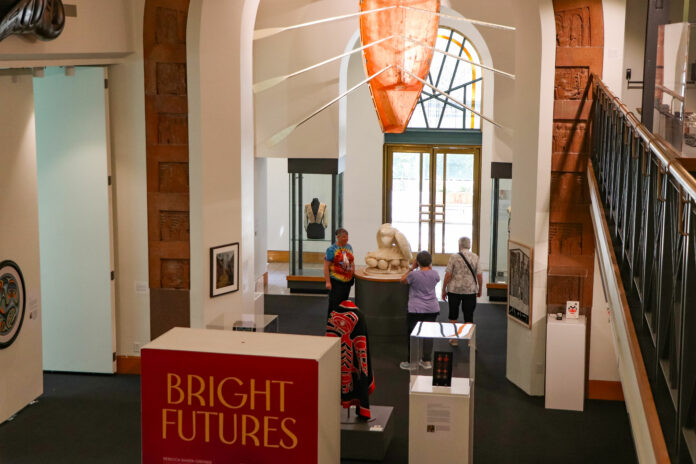
Home Blog Page 183

Events and services at SFU Burnaby’s PolyCan Health Centre

0
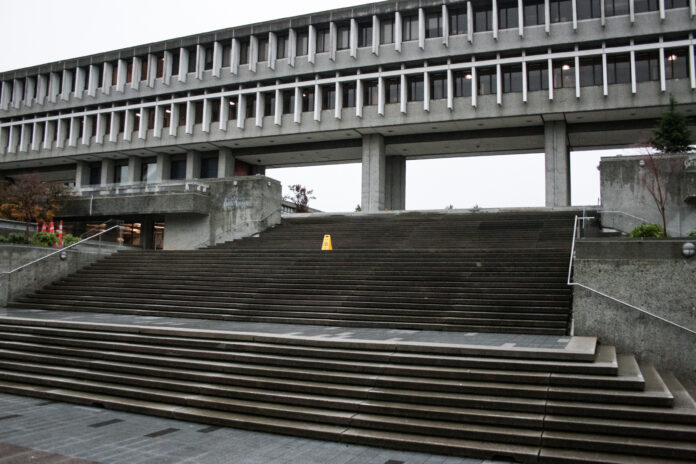
The exterior of the PolyCan clinic at SFU Burnaby is photographed here.
PHOTO: Afsaneh Keivanshekouh / The Peak

By: Izzy Cheung, staff writer

PolyCan Health Centre is a multi-disciplinary health clinic located in SFU Burnaby’s UniverCity. On June 17, they hosted puppy therapy and a community BBQ that was open for anyone to attend. This event took place in partnership with various charities such as the Heart Tattoo Society

PolyCan opened in 2020 on Burnaby Mountain. The clinic’s services are all covered by SFU student insurance. 

To learn more about the clinic and their upcoming events, The Peak sat down with Lylan Phan, PolyCan’s director of aesthetics, and Viktoria Abanos, PolyCan’s assistant marketing and project manager. 

PolyCan offers services such as physiotherapy, acupuncture, registered massage therapy, medical aesthetics, mental health services, and shockwave therapy. Booking an appointment for any of their services can be completed either in-person or online

“It’s on campus, close by, students just need to walk in or they can book online,” Phan said. “For people who are not great at booking appointments for themselves [ . . . ] online booking [is] super easy and non-judgmental.” 

PolyCan also offers wellness services for Indigenous communities such as annual assessments, pain management, acupuncture, and personal training. Their online booking site allows Indigenous people to book appointments immediately.  

“We have a very rapid booking system for Indigenous peoples,” Abanos said. “They can pretty much immediately make an appointment to come see whatever type of specialist they’d like [ . . . ] all of their services are covered by insurance so they don’t have to pay a dime.”     

Abanos and Phan were both very excited when discussing how the idea for the community BBQ event came to fruition. 

“Dogs are cute and everyone loves dogs — myself and Lylan included, of course,” Abanos said. “We were trying to find a community event that would be kind of fun for everyone involved. 

“[We] definitely want to give back to the student community we serve, so dogs are a great way to have an inclusive event,” Phan added. 

The event also included “a variety of raffles” as well as a food drive. Proceeds from the event will go to the Heart Tattoo Society, who “[focuses] on feeding the vulnerable and homeless in the Vancouver area.”  

In line with their ideas of giving back to the student community, PolyCan is also offering free facials to anyone who comes in before July 1. 

“It’s very convenient and it’s super important for students to take care of their health, especially during stressful times,” Abanos said. “A lot of students often don’t have the time to be going and getting appointments elsewhere so this is absolutely a great opportunity for students to take care of themselves, and also look great while doing it.”  

Visit PolyCan Health Centre at 9055 University High St 102, #205, or book an appointment on their website

My mind and I are not friends

0

By: Isabella Urbani, Staff Writer

Dear friends,

It’s been one of those weeks. Writing feels harder than it should be. I’m either sleeping too little or too much. The load of laundry I said I was going to fold when I “felt” better has been rotting away in the corner of my room, and because that detail is out of place, I have an excuse to let the rest of my room go up in flames. I’m a person of extremes.

When I was in middle school, I had a horrible compulsion with placing my backpack in a particular way against the wall leading to the garage. But what made the backup perfectly placed was arbitrary — it changed every time. I would be glued to the spot, sometimes for 20 minutes, until it felt right.

I refused to dress up in high school because I convinced myself that’s what people who get good grades do. They simply can’t look the part, and be the part. Even now, part of me doesn’t see anything wrong with that.

I didn’t start taking medication until I was 18. That summer, I began to dissociate and experience depersonalization. I told my doctor it felt like I was living in The Sims, and I was a character being controlled by someone else.

I had no concept of time. I would think something happened two weeks ago when it actually happened that same day. I would move something, not realizing I did so, and then freak out when I found it in a different place mere seconds later. I didn’t think life was real. I didn’t believe my brother was my brother.

Before that, I used to be known for being dependable, doing it all, and doing it well. Now, it feels like my body is allergic to routine.

I don’t like the feeling that comes with accomplishing tasks because my brain forbids me from taking in the moment, and instead, focuses on the next big task.

I can’t watch the news anymore because it scares me, and I don’t like that I live on a big ball in the middle of space. I constantly remind myself: “Humans have been living on Earth for centuries taking up time, space, and creating waste.” Even though the notion that life will probably continue long after I’m gone calms me down enough to quell my panic, I soon remember that AI is taking over the planet, there are wars across the globe, and the amount of information on the Internet makes me deeply uncomfortable.

If I begin a task, I can’t stop until it’s finished. But didn’t I just interrupt myself and start an entirely new conversation? Yes. That’s what my mind is like — a wasteland of half-acknowledged thoughts. And being the heart-on-my-sleeve type, you can see it in my face when my thoughts are running a mile per second. I can’t remember the last time I had a conversation with someone where I didn’t have to stop and ask them what I was saying, or had to apologize because I started staring off into my surroundings.

I’m obsessed with appearing to be the picture of intelligence. I ramble, and as Michael Scott says, hope I find the sentence along the way. One summer, my entire Notes app and tabs were full of words I wanted to include in my vocabulary. Every time I had a typing error, I thought I had somehow forgotten how to spell.

I make the most mundane tasks, like putting cans in the garbage, a challenge for me to excel at. Sometimes the energy I force myself to put into these tasks makes me avoid them altogether. But once I actually do them, the only thing I can think of is why I didn’t do them sooner — just like I did when I put off writing this piece.

I once told my parents I can’t describe what I do because I don’t agree with my actions either. I told my doctor it’s like my brain and mind are disconnected. My brain doesn’t act on my behalf. I don’t know who that is. It tells me what to do, and sometimes I do it, like getting off the bus at a random stop.

Maybe if I didn’t overthink, I wouldn’t fear things I never did before. I would be able to turn on the shower for more than a few minutes because no, my brain is wrong, I’m not going to cause the world to run out of water.

 Why do you need to know this information? 

When my depression started getting really bad, nothing gave me more comfort than knowing that other people are suffering as well, despite how twisted that sounds. It still surprises me when people tell me that they take medication as well. Because, well, I thought that was just a me thing. I wished I could see the world as other people did. I wish I could be so unaffected by things I couldn’t control as my brother does, and those a whole group of people who know how that feels. To feel seen. Because that exact thing is what gets me through the day. Baby steps.

I’ve thought about scrapping this article many times. I used to restart projects, no matter how far into them I was, if there was a crease or a smudge that irked me.

When people ask me how I’m doing, I genuinely don’t know. I don’t know myself very well, because I feel like a visitor in my own body. I miss being young. I have an infatuation with pictures of myself growing up because I can’t remember what it felt like. I grew up fast.

I keep birthday cards my parents wrote for me as a little girl on my table. I have a tattoo on my bicep that reads, “If I’m not for me, she’ll be,” to acknowledge that no matter how much I feel like nothing, I’m still that little girl.

I have a rock on my side table that reads “one day or day one” to motivate myself to stop putting off tasks and just start the journey. I’m petrified of my age. I never liked my birthdays. I feel like time is running out for me while subsequently thinking I have too much time left.

I love music and car rides. I hate airplanes, although I’m not afraid of heights. I never used to cry as a kid because I was the only girl in a family of five brothers, but now, I cry far too often for my liking. I don’t like silence. I listen to music while I read, write, and even go to sleep. I’m terrified of having children, especially a little girl. I don’t like driving because I’m too focused on what other drivers are doing. I can’t cross the street even if it’s clear until I look both ways enough times. And it feels damn good to write that all out.

I notice the trees. I’m grateful for waking up to a new start. I rejoice that the things that brought me stress a year ago, I no longer fixate about. I do everything in my conscious power to bring myself happiness because that’s when I feel the best, and I’m sick and tired of feeling sick and tired. If depression is going to make my life feel like hell, then I’m dragging it all the way with me. I may lose the battle, but I will refuse to lose the fight.

FNMISA hosts first inter-tribal powwow at SFU

0
Photograph of two of the dancers in formal regalia at the powwow event on April 8, 2022.
PHOTO: Courtesy of FNMISA

By: Isabella Urbani, Staff Writer

On April 22, SFU’s First Nations, Métis, & Inuit Students Association (FNMISA) hosted their first inter-tribal powwow in SFU Burnaby’s West Gym, which resides on the unceded Traditional Coast Salish Lands of the Tsleil-Waututh (səl̓ilw̓ətaʔɬ), Kwikwetlem (kʷikʷəƛ̓əm), Squamish (Sḵwx̱wú7mesh Úxwumixw) and Musqueam (xʷməθkʷəy̓əm) Nations.

As an association, FNMISA represents all Indigenous students. Sisters Kali and Raven King Stierle, who are Cree and Métis from Treaty 4 territory in south Saskatchewan, make up two of the 11 executive board members who organized the event. 

Kali has been FNMISA’s treasurer for three years and is the current longest-reigning board member. She told The Peak “creating a space for Indigenous students on campus,” in the form of a powwow, has been a priority of FNMISA for as long as she’s been a member. Raven has been FNMISA’s special events coordinator since Fall 2022. 

Raven explained that powwows originate from the plains, where her family is from. These differ from potlatches, which are a “West Coast tradition.” Kali added that potlatches are integral to local economies, and are conducted in longhouses or other spaces as “forms of governance” to redistribute wealth, as each person both gives and receives a gift. While powwows are also conducted on the West Coast, Raven explained they’re unique from powwows in the plains. 

“[We had to] respect and acknowledge that we’re not on our own territory — we’re on Coast Salish territory, and acknowledging that it’s their land we are hosting this event on,” said Raven.

Powwows can be either competitive or traditional. A traditional powwow, which was the type FNMISA held, does not judge dancers for “the way they carry their regalia, their dance style, and the way that they perform,” which is typical for a competitive powwow, said Raven. However, it’s not uncommon for dancers to be awarded first, second, and third place in traditional powwows.

While the powwow was stuck in the ideation phase for three years, it took FMISA members just four months to coordinate and organize the event, from December 2022–April 2023. The powwow was held between 10:00 a.m.–10:00 p.m. and was attended by 1,000 guests. They provided dinner for nearly 700 people and had 40 vendor tables displaying Indigenous artwork.

Kali said the process of coordinating the powwow reminded her of an Indigenous saying called “walking in two worlds,” whereby “Indigenous people walk through [colonial] spaces, carrying [their] traditional knowledge, teachings, and Indigenous identity. 

“It was very much a lot of organizing in terms of logistics: booking the space, getting the food, permits and licenses. And then it was also organizing in terms of consulting with our elders [and] community,” said Kali.

The powwow was also inter-tribal. Inter-tribal, as Kali explained, “is a gathering of all nations. So that’s Cree, Ojibwe, Saulteaux, Squamish, and then also European.” As a gathering of all nations, the powwow was open to all ages and ethnicities, including the SFU and Burnaby communities. 

“There are so many different aspects of Indigeneity that we wanted to share with everyone, because we are proud of our culture, and we want people to see that and get to know who we are as Indigenous students. So, really, our main focus was a celebration for everyone,” said Kali. 

Kali described the powwow as “an amazing day of vibrancy, celebration, dancing, drumming, singing, vendors, and food.” And while the celebration was for both Indigenous and non-Indigenous observers, the powwow, called “Honouring Indigenous Students,” made sure to feature Indigenous artisans, SFU alumni, and current students as head lady and man dancers, which Raven acknowledged as a “very honorary position.”

With the first annual powwow complete, the board is already brainstorming what can be done to make the event even better next April. 

“It’s going to be a tradition for FNMISA, and it’s going to be a big tradition for Burnaby campus,” said Raven, reiterating that “everybody’s invited.”

Exclusive fight scene from Greta Gerwig’s BARBIE

0
Young person playing with three BARBIE dolls
ILLUSTRATION: Hailey Gil / The Peak

By: Izzy Cheung, Staff Writer

Content warning: Mentions of graphic violence.

As media members at The Peak, we’re lucky to have premium access to all sorts of events. In fact, we’re feeling so thankful that we want to share an exclusive with you. Below is a confirmed scene from Greta Gerwig’s BARBIE, set to hit theatres on July 21

INT. BALLROOM — AFTERNOON 

BARBIE stands in the middle of the ballroom. KEN is lying on the floor in a pool of glittery pink blood. He wears bright yellow rollerblades on his feet, now stained with blood. A man with a big nose, who we know as ROTHBART (played by Dwayne “The Rock” Johnson), stands over the fallen KEN. Beside him is a man with a funky hairdo named PREMINGER (played by Kevin Hart). There is a little blue creature with pink hair floating behind BARBIE

KEN 
(crying) 
BARBIE, my rollerblades are ruined! 

BARBIE 
KEN, you’re bleeding! 

KEN 
(continues crying)
Bleeding onto my rollerblades! 

PREMINGER uses his foot to kick KEN away. KEN slides across the room and leaves behind a trail of pink blood. KEN attempts to get the pink blood off his rollerblades.  

PREMINGER
(cackling) 
Face it, BARBIE, you’re all alone now! No one is coming to save you. 

ROTHBART 
You should have thought twice before wandering into the real world! 

BARBIE is about to respond but is interrupted by KEN crying on the other side of the room. 

KEN 
(still crying) 
It’s not coming off!

BARBIE ignores him and steps forward. 

BARBIE 
Enough! I know I used up the world’s supply of pink — but that 
doesn’t mean we should be so hurtful. Let’s celebrate each other. 

BARBIE grabs ROTHBART and PREMINGER’s hands and begins singing. 

BARBIE 
I’m just like you — 

ROTHBART 
You are? 

BARBIE 
You’re just like me — 

PREMINGER 
(fuming) 
Enough! 

PREMINGER snatches a rollerblade from KEN and throws it at BARBIE. BARBIE holds her arms up to defend herself, but a small blue creature behind her flies out and intercepts the rollerblade. 

BARBIE 
(shocked) 
BIBBLE, no! 

BIBBLE is hit by the rollerblade and dramatically falls onto the floor. The rollerblade clatters back over to KEN’s side. BARBIE and KEN, respectively, dive towards BIBBLE and the rollerblade. 

BARBIE 
BIBBLE

KEN 
My rollerblade! 

BARBIE gathers BIBBLE in her arms and begins crying. One of BIBBLE’s eyes is missing. 

BARBIE 
(glares at KEN
KEN, give me your rollerblade. 

KEN 
No?! 

BARBIE rips the rollerblade from KEN’s hands. She pulls one of the wheels from the rollerblade and puts it where BIBBLE’s eye used to be. 

BARBIE 
There. Are you feeling better, BIBBLE

BIBBLE 
Yes, thank you, BARBIE

KEN 
(sniffling) 
And KEN. 

ROTHBART elbows PREMINGER and gestures toward BARBIE. Both have regretful expressions on their faces. 

ROTHBART 
She’s everything, huh? 

PREMINGER 
And he’s just KEN. 

The scene ends with BIBBLE turning into a Scottish-looking dog with a particularly prim moustache and running through the ballroom. 

COVID conscious activities for a safer summer

0
An illustration of two people with brown skin and brown hair sitting on an orange picnic blanket, each with bubble tea, and snacks between them. They are both wearing masks.
ILLUSTRATION: Andrea Choi / The Peak

By: Michelle Young, Opinions Editor

COVID-19 is still in the air, and indoor dining is not where it’s at. With more students looking to socialize, it’s important to keep a layered approach to pandemic precautions so everyone can avoid severe illness and long-term complications. While these suggestions are generally safer than most indoor events, they are also not entirely risk free — respect people’s boundaries if they don’t want to meet in a group or in-person. 

Twilight Drive-In Movie Theatre 

For a household, a date, or a few close friends, the drive-in movie theatre in Langley is a great alternative to a traditional indoor theatre. Larger groups can separate themselves between cars and eat in the comfort of their own space, or you can roll down the windows and watch a movie from the same vehicle. I find this much more comfortable because no one is speaking loudly beside you or kicking your seat, and you can wrap yourself up in a blanket! You can either watch the first showing of the night or go for a double feature. Twilight Theatre is cheaper than going to an indoor theatre when traveling with a group, they also have deals on Tuesdays and Thursdays. Stay safe and save a buck at the same time! 

Takeout picnic 

The perfect replacement for indoor dining in the summer — get a meal, find a scenic area to eat outside, and enjoy the view. I personally enjoy going to the various beaches around BC, and during cherry blossom season, finding a nice tree to sit under. Of course, this can also be done without the food and with masks to add an additional layer of protection, but if you really want a snack and that extra layer — the SIP Mask Valve has an airtight hole for a straw to attach to your mask and provide a good seal against airborne particles. Enjoy some smooth bubble tea and retain a high level of filtration. 

Online Pride 

Not everyone will be able to meet in-person, which is why online events are still an important aspect of community. Available to enjoy from the comfort of your home, The Bi Pan Library is hosting a range of online events throughout June for those who are “disabled, sick, isolated, and closeted.” Upcoming events include a Sick and Disabled Zine & Craft Fair, International Queer Women of Color Film Festival, Gathering of Black/African Bisexual+ Men, and so much more! You can sign up by yourself to meet other members of the community, or arrange to sign up with a friend. 

General tips

  • While some people may be comfortable socializing outdoors, this is not the case for everyone. Don’t force people to gather solely because it’s outside, but instead, ask how an event can be made more accessible to them. 
  • Though all outdoor gatherings will carry a level of risk, depending on a variety of circumstances, a layered approach is best. The mixture of high-quality, well-fitted masks, testing, up-to-date vaccines (three shots or more), and good ventilation is the safest way to gather against airborne illness. For those who cannot access high-quality masks, Donate A Mask “ships free N95 equivalent respirator masks to anyone in Canada who requests them.” Masks4EastVan also delivers free N95s and rapid antigen tests to those in East Van or remote areas in BC. 
  • Be transparent with others if you recently went to a large gathering with little to no precautions (such a party, concert, bar, etc.) so everyone is well-informed prior. Some people may want to reschedule, and that’s OK. 

Many folks are still isolating entirely, so consider Zoom calls, FaceTime calls, and online games to socialise and connect with them. I like to prepare myself some tea, snacks, and comfy pjs for these gatherings to make it cozy for myself!

English is a ridiculous language

0
An index page
PHOTO: Nothing Ahead / Pexels

By: Daniel Salcedo Rubio, Features Editor

English is an absurd language. There, I said it. For me, it was relatively easy to reach a conversational level, but English has some random pronunciation rules which . . . don’t make sense? 

A week ago, in one of The Peak’s pitch meetings, I had an ESL (English as a second language) moment. All my life I’ve been pronouncing “minestrone soup” as mine-strown, you know, like how you would pronounce “Minecraft” (mine-kraft). Apparently, it’s pronounced mi-nuh-strow-nee — how on earth is my Latino ass supposed to know that? I know, don’t even begin, minestrone soup is of Italian origin and foreign words don’t follow the same pronunciation rules . . . yes, I admit fault in this case. 

Well, you know what? To the surprise of no one but myself, my roommate let me know today that I’m also pronouncing “spinach” wrong. I’ve been pronouncing it as you would pronounce character or Christmas, with the keh sound at the end — apparently it’s supposed to be spi-nuhch, kinda like choices or chances, with that very pronounced ch sound. All I have to say is why? Why am I subjected to feeling ignorant every other week due to arbitrary rules that have the enforceability of very thin glass? To quote Gloria Delgado-Pritchett, “Do you even know how smart I am in Spanish?” (Spoiler alert, not very).

Well, I no longer have any form of respect for this language’s rules. Yes, that’s right, spinach pushed me over the edge. This is my second time living in a country where I have to speak English in order to communicate, and you know what? I’ve never had a real problem getting my point across. I’m even doing a Master’s degree in my second language and somehow I’m also the features editor for this publication! There’s really no reason for anyone to feel lesser due to pronunciation nuances that don’t affect their ability to communicate wants and needs. Pronunciation doesn’t equal fluency. Actually, be proud of your thick accent because it means you know how to speak another language, a feat most people who make fun of your mispronunciations probably can’t claim themselves. If you’re going to call me a Latino with an accent, just make sure you add bilingual before it.

My only rule for pronunciation moving forward is to always respect a person’s name or any words that have a sociocultural meaning (yes, even Worcestershire sauce). Why? Because that’s not language, that’s someone’s identity and culture, and thus should be respected (you win this time, minestrone soup). Language’s main purpose is to communicate your thoughts to others, and if you’re doing that — nothing else really matters.

SFU Black Caucus and SOCA celebrate 2nd Black Brilliance Graduation

0
Photographed are the 2023 Black student graduates at the Black Brilliance Graduation Ceremony, depicted with their Kente stoles.
PHOTO: Courtesy of June N.P. Francis

By: Eden Chipperfield, News Writer

On June 5, the SFU Black Caucus and Students of Caribbean and African Ancestry (SOCA) held their second Black Brilliance Graduation Celebration. The convocation ceremony honoured and recognized Black students’ achievements from the 2023 graduating class and celebrated the presence of Black students on campus. 

To learn more about the ceremony’s significance, The Peak connected with SOCA president, Lauretta Umukoro, Black Caucus member and graduate student Shauna-Kaye Brown, and SFU director of equity, diversity, and inclusion for student services, Jennifer Kandjii

“SFU Black Brilliance Graduation Ceremony, also known as the Kente Graduation Celebration (Sankofa Ceremony), is a celebration of Black excellence and an atmosphere to honour Black graduates,” Kandjii explained. 

The celebration is a “recognition of the triumphant spirit and perseverance of Black students,” Kandjii said, before noting how Black students “overcome hurdles of systemic racism and endeavour to break barriers.”

The graduation ceremony was conceptualised by the SFU Black Caucus in 2022 to create space for Black graduates to celebrate their success and collective work within the Black community. Brown explained, “This year’s event was produced by a threefold effort between SFU, the SFU Black Caucus, and SOCA, who worked assiduously to expand the Caucus’ vision for the event.” 

During the ceremony, each graduate is presented with a Kente stole. This is a practice commemorated by universities globally to celebrate graduating students of colour, according to Umukoro. The significance of the Kente cloth is a “display in honour of their ancestral heritage or as the symbol of overcoming the struggles of displacement,” said Umukoro. The pattern and design of the Kente cloth is also notable as it holds meaning to the designer of the Kente. Black represents the colour of Kente and shows “spiritual strength and maturity.” Red is the symbol of “blood, political passion, and strength. Blue is for “peace, love, and harmony.” Gold or yellow shows “wealth and royalty.” Green represents “growth, harvest and renewal” and lastly, white represents “purity, cleansing rites, and festive occasions.” 

The event’s itinerary included a variety of speeches from faculty members, including vice president of people, equity and inclusion, Dr. Yabome Gilpin-Jackson, as well as Dr. June Francis, “one of the pioneers of the Black Caucus and establishing a strong black community at SFU,” said Umukoro.

There were also speeches from the president and vice president of SOCA. Alongside the speeches were performances, including cultural dance, poetry reading, and music. A member of the graduating class recited a speech which was followed by the stole ceremony and a dinner with various cultural cuisines. 

“The goal of this event is to create an opportunity for the Black community to congregate and celebrate in the success of our graduates,” said Brown. “Black students can feel isolated during different points of their journey [ . . . ] the event is to remind students and the community at large that they are not alone and they belong at SFU”. 

Another significant part of holding the ceremonies is “to remind the Black community that we are here to support them throughout their journey and celebrate their wins,” concluded Brown. 

Umukoro stressed the importance of “having a space and a moment to solely celebrate you and your achievements with people that look like you, understand where you are coming from, share in your struggles and plight, and seeing that they were able to defy the odds and come out successful at the top.”

The Peak would like to extend their sincere congratulations to the members of the Black Brilliance Graduation. 

Humble Beginnings

0
A conceptual illustration of two hands making a dumpling (Har Gow) slightly submerged in water. At the top of the hands a city skyline at night can be seen, while at the bottom an illustration of a young woman is visible.

By: Izzy Cheung, Staff Writer

Documenting recipes is important because it allows future generations, such as you and I, to learn a bit about those who came before us. As a Chinese Canadian, I sometimes find that I have no real connection to the place I “come from,” as I was born in Vancouver and have lived here my entire life. This Asian Heritage Month, I tried to strengthen my roots by learning my grandma’s Har Gow recipe.

One of the more popular traditional Chinese dishes, Har Gow are shrimp dumplings typically eaten during Dim Sum, but can be enjoyed at any occasion. Like other dishes, Har Gow are best made at home with the guidance of loved ones. This recipe consists of a crystalline wrapper, a filling of shrimp and water chestnut, and the story of a Chinese immigrant who learned to call Canada home.

THE WRAPPER / STRONG FOUNDATIONS

Boil water and pour into some wheat starch. Use a chopstick to combine the starch and hot water.

Water sources in Macau allowed my grandma and her siblings to catch their own shrimp. As children, they’d make a net out of a cloth and bamboo, put bait in the middle of the trap, and drop it into the water to lure in the shrimp.

Once the wheat starch and water are combined, add tapioca starch and cornstarch, and begin kneading the dough. If the dough sticks to your hands, it’s too soft — add more wheat starch if it’s too soft, or more water if it’s too thick. 

Thick mud provided entertainment to them when toys weren’t available. Playtime consisted of making pots, stoves, dolls — you name it — out of mud from the fields. Things were different there, but not in all aspects. Schooling took place in a big building, similar to here, and was grouped in classrooms sorted by grade. Sometimes, teachers took them to see movies, but getting to the theatres required a long walk.

Form a ball with the dough and break it into pieces around the size of a fist. Roll each ball into a rope. The thickness of the rope will dictate the size of the dumpling you make — the usual thickness is one inch, per my grandma’s instruction.

Instruction came easy for my grandma, being the eldest child in her family. With her mom hard at work in the rice fields and her father helping to generate electricity for the city, she cooked for the entire family and brought water home from the well using large buckets placed on her shoulders. That was the way things worked — the younger siblings would take on the smaller duties, such as washing the dishes, while the eldest shouldered the brunt of the heavy work.

Cut the rope into one inch pieces and roll them into a ball. Later, you’ll roll the rest of the fist-sized dough balls into ropes.  

Ropes were used to help get food from street vendors. Living on the fifth floor of their building meant going to grab food from the street vendors would require heading down to street level, then coming back up to eat. Instead of wasting time, they would call out to the street vendors to see what food they had. If they liked it, they would place their order and lower a basket down to the street with money in it. In turn, the vendors would take the money and put the food in the basket. For a city as big as Macau, food-based screaming matches such as these were typical — practically tradition.

Using a tortilla press or the side of a cleaver, press the ball into a one-millimetre-thick disk-form, shaping it with utmost care.

Caring and respecting those who came before us was central to the typical Chinese household. They would burn incense every day as a tribute to the ancestors — which was an activity that everybody participated in.

Tip: doing all the wrappers at once will dry out the dough — make one rope and fill one fist-sized ball worth of dough with filling before making the others. 

FILLING THE DUMPLINGS / ARRIVING SOMEWHERE NEW

You can either use a whole shrimp or cut it into pieces. To make things easier, take five to six separate shrimp and chop them into a paste. This will allow the other ingredients to stick together. 

Sticking together was important for grandma’s family, but she understood what she had to do in order to create a better life for the next generation. She found out about my grandfather through a mutual friend, took one look at his photo, saw that he was already in Canada, and agreed to marry him. Six months worth of letters later, she immigrated to Yorkton, Saskatchewan, to start their life together.

Mince the water chestnut and add it to the shrimp and shrimp paste. Add salt, sugar, sesame oil, and MSG (optional). Mix until combined. 

Combining her Chinese culture with the small-town life of Yorkton was tough. Macau was bigger, had more things to do, and of course, was home to her family. Working with my grandpa at their bakery took over her life. The language barrier made interacting with the rest of the community difficult, so it was hard to make friends. However, as time went on, bigger occasions like Chinese New Year resulted in groups getting together to play mahjong and have dim sum.

Take one heaping teaspoon of filling and put it into the middle of the disk-shaped wrapper (measurement not rigid, gauge based on the size of the wrapper — there should be enough wrapper to fold over the filling). 

Filling the stomachs of her and her husband required some experimentation. The Chinese community in Yorkton was small, so there was  a lack of diverse food options. Since there were no restaurants that served the food she was used to, she begun developing her own recipes in order to eat the food she knew from home.

COMBINING THE TWO

For aesthetics — cup your left hand and hold the dumpling in your palm. Use your right-hand thumb and pointer finger to pinch the end closest to you. With your left thumb on the inside, push the filling against the sealed end. Pleating the dough with your left pointer finger, pinch the edges closed with your right fingers. Continue until you have three to four pleats. Pinch the left-side end of the dumpling to seal it. 

For efficiency — fold the dough so it covers the filling and pinch the edges so it’s sealed inside. 

Inside and outside, grandma was ecstatic about moving to Vancouver. After all, she was born in Macau — a big, busy city — so coming to Vancouver from a small town was a welcome change. Here, transportation is more convenient, and there are  more things to do. More opportunities to share culture, more places to try Har Gow, and more people to play mahjong with. Grandma loves to gamble — but only when she’s winning.

Fill a pot with hot water. Depending on the size of your pot, place the dumplings on a steamer basket with holes OR an oiled plate/bowl. Put the basket/plate/bowl over the boiling water and let it steam for 5-6 minutes. 

Minutes turn to months, and months turn to new millennia. Time wears away at memories, eating away at them like faded photographs kept at the bottom of a box. Throughout the years, the message stays the same. She moved to Canada in search of a better life. Now, everybody is here, in North America, and the homeliness that she once associated with memories of Macau have become exactly that — memories.

“Right now,” she tells me, “Vancouver feels like home.”

The TSSU Strike Vote: A Timeline of Events

0
A photo of convocation mall at SFU Burnaby Campus, Ribbons hanging from the walls can be seen.

By: Anthony Houston, SFU student

As is the case with any Canadian union, SFU’s Teaching Support Staff Union (TSSU) has the right to strike in accordance with the British Columbia Labour Relations Board (LRB). Strikes are a type of job action that pressure an employer whenever an impasse has been reached during bargaining — actions within a strike include “the cessation of work” or “a refusal to work,” among other things. It’s true that strikes can be disruptive actions affecting third parties beyond an employer and its employees, but strikes are sometimes the only way to change the power balance of a relationship, ensuring workers get fair compensation, rights, and benefits. The Peak has investigated these factors below, reviewing over two years of events that led to the TSSU strike.

March 23, 2021–August 11, 2021

TSSU and SFU begin bargaining negotiations to reach a formal “Collective Agreement for Research Assistants and Grant Employees (RAs)” on March 23. TSSU’s eleven page proposal requested: a broad definition of research work, transparency, protection against inequities, fair wages, and rights and benefits for RAs. This first bargaining session came after a 10 month delay, in which SFU presented “a two page document which lacked detail,” and mostly focused on narrowing down the definition of research workers in the university.

During the second session of negotiations on April 8, SFU responded to TSSU’s proposal, leaving them with the impression that “SFU Administration is trying to rewrite the Voluntary Recognition Agreement” (VRA). One of the clauses of this agreement, signed November 15, 2019, was to recognize TSSU as the bargaining agent for the “included persons,” defined in this same agreement as:

  • Individuals who receive compensation from grants as scholarships and/or stipends
  • Holders of NSERC USRA and equivalents funded by SFU
  • Work-study student employees

The agreement explicitly excludes post-doctoral fellows, and university research associates. According to TSSU, SFU faculties and departments circulated a document that contradicts the definition of RA set in the VRA. On the third session of negotiations, on April 15, SFU accepted the common clause list proposed by TSSU on March 23, meaning some of the articles included in the TSSU/SFU Collective Agreement would be applicable to RAs once a complete agreement has been reached and voted for by union members. Subsequent meetings in May were met with “some progress, although key differences remain.” According to TSSU, SFU focused on having a flexible definition of RAs, and suggesting that “faculty would be receiving little or no support as PIs from SFU Administration.” Bargaining sessions from May 14 to August 11, according to TSSU, were cancelled by SFU in order to delay bargaining — it’s unknown how many sessions were cancelled.

August 12, 2021–September 23, 2021

SFU appointed a new negotiator who, according to TSSU, back-tracked on the previous proposal from August 18. SFU requested the removal of “number of hours of work, schedule of work, and work location” from the letter of employment on the basis of it being “administratively burdensome.” In response, TSSU left the negotiations and only came back after SFU reverted to their previous proposal. Additionally, TSSU presented a monetary overview for RAs and Grant Employees at SFU, which included: “paid sick leave, vacation pay, fair compensation and wage increases, employer-paid MSP/International Student Health Fee, extended health and dental, EFAP access, and maternity and paternity leave, and more.”

During the September bargaining sessions, TSSU claimed SFU was unprepared and “unwilling to make any concrete statements” on monetary items. According to TSSU, SFU claimed “paying RAs a living wage would hurt the institution,” and “there are RAs who would end up being paid $25 per hour ‘to clean beakers.’” After the last bargaining session of the month, RAs rallied outside Strand Hall in a demonstration of their frustrations, demanding all RAs be included as members of TSSU, and provided with basic employment protections and benefits.

November 10, 2021–January 17, 2022

On November 10, SFU presented their monetary proposal, setting a “competitive minimum hourly rate” for RAs. SFU stated their proposal took into consideration the compensation model of various universities, the diverse types of work conducted by RAs, and the constraints of grant funding received by principal investigators (PI) as to “not negatively impact the ability to carry out research.” Additionally, SFU mentions their proposal included “extended health plan and dental plan benefits for individuals not covered by an SFSS or GSS health and dental plan.”

In their official statement, TSSU mentions SFU’s proposal included: minimum wage of $17/hr (minimum wage in BC as of November 2021 was $15.20; $16.75 as of June 1, 2023), no benefits for student RAs, and a “bare-bones benefits package of extended health, dental, paltry sick leave, and vacation” for select non-student RAs. Negotiations in the month of December, according to TSSU, worsened. Not only did the minimum wage remain the same, but TSSU observed that the language included could allow the unwarranted termination of RAs by maintaining them as “at-will employees,” and the sick leave policy would be below an upcoming provincial sick leave legislation.

January 18, 2022–October 25, 2022

From January 18 to August 19, 2022, TSSU and SFU entered into arbitration for the dispute over the inclusion of RAs and Grant Employees as stated by the VRA. During this period of time, on July 19, SFU announced it would begin to take steps to becoming a Living Wage Employer, meaning they would need to ensure wages meet true costs of living for employees and major contractors. The living wage in Metro Vancouver as of the writing of this article is $24.08.

On September 13, the Arbitration Decision was reached. SFU breached clauses one, two, four, and eight, and the appendix of the VRA, some of which entail:

  • Recognizing TSSU as the bargaining agent, determination of included positions, as well as establishing terms and conditions of employment for them.
  • Individuals receiving compensation from grants as scholarships and/or stipends who are employees of a PI are to become employees of SFU and included in the bargaining unit as included persons.

On their official statement, SFU admitted to failing to meet all the terms of the VRA for lacking a proper process to “determine who is an employee of the university in regards to individuals on scholarships/stipends.” SFU began the process of defining “scholarship” to differentiate graduate students that should be considered employees and those who are receiving scholarships.

October 26, 2022January 18, 2023

Following the arbitration decision, SFU presented an updated proposal on October 26. According to TSSU, wage revision only mentioned it would be consistent with SFU’s Living Wage Employer pursuit, which included a clause where “they reserve the right to go backwards on their proposals.” Additionally, the proposal included an updated interpretation for graduate student RAs, which, according to TSSU, contradicted the determinations of arbitration. — “there are characteristics of both employment and educational relationship in a research university, the dependency and protective need of the weaker student party favours a determination that the relationship is employment.” SFU’s official statement, released November 10, mentioned that graduate students could be barred from certain academic pursuits such as lab or field work without an employment contract. According to SFU, interpreting these activities as “learning opportunities” rather than employment is based on ensuring graduate students can partake in all available opportunities.

After a November meeting with the arbitrator, SFU released a statement on December 12, stating: “The arbitrator [. . .] confirmed SFU’s interpretation: some graduate students who receive compensation from grants as scholarship and/or stipend are in an employment relationship, and some are in an educational relationship.” In response, SFU surveyed PIs to determine whether their graduate students are in an employment or educational relationship.

January 19, 2023March 09, 2023

After 1,155 days without a contract for RAs, SFU presented a new proposal with minor language changes and the removal of a numerical wage for RAs, as outlined by TSSU’s official statement: “Of course, this ridiculously low wage is a public embarrassment, particularly when SFU is touting itself as being the first living wage campus, but the reason to withdraw it should be because it was a travesty in the first place, not because Senior Administration wants to save face.” The next negotiation meeting on January 24 was cancelled by SFU due to weather delays, and TSSU outlined this is not a first — previous meetings had been cancelled by similar situations.

The meetings in early February showed little progress. TSSU’s official statement remarks on SFU’s refusal to address the gradCOLA (Cost of Living Adjustment) coalition, outright condemning it as union busting effort.

March 10, 2023Jun 08, 2023

During the first week of March, TSSU’s membership unanimously voted to cancel the remaining March sessions and call for a strike vote — 94% of TSSU member’s (982) voted in favor of the strike. SFU expressed surprise and disappointment at TSSU’s decision to halt negotiations and stated that “there are over 200 outstanding items still to be discussed.” SFU applied for mediation at the LRB in order to mitigate TSSU’s job action and invited them back to negotiations in April. On their official statement from March 29, TSSU outlined that in addition to mediation at the LRB, SFU also “obstructed implementation of Essential Services,” and “sent a legal declaration claiming that our strike vote is void,” which are legal ways to stop TSSU’s job action. Mediation dates were set through April 27.

On March 30, TSSU, gradCOLA, Contract Worker Justice, and allies protested the Board of Governors meeting. SFU’s official minutes draft highlights the university’s challenges and priorities: increased inflation and volatile markets, student affordability, living wage, tuition increases of 2% for domestic students and 4% for international students, and the financial health of the institution. During their April 12 statement, SFU reiterated their disappointment over TSSU’s refusal to table any new proposals and counterproposals, or discuss previously presented proposals — this would constitute the third time TSSU suspended negotiations since bargaining began on November 2, 2022.

TSSU stated that the first two mediation meetings were met with close to no progress. According to them, the first meeting had SFU reiterating their “objectively absurd” points. In the second meeting some progress was made in the form of proposals being tabled and some of the cuts withdrawn. Despite that, TSSU considered it pointless to continue with the mediation meeting and requested the LRB to “report out.” During the third meeting, SFU questioned the legitimacy of TSSU’s strike vote on the basis that the inclusion of RAs’ issues “sway[ed] people’s votes.” As a concession, TSSU withdrew their strike vote and SFU withdrew their application challenging the legitimacy of the strike vote — both TSSU and SFU agreed to expedite bargaining until May 19, with SFU requiring to table monetary proposals for RAs by April 24, and all other bargaining issues by April 28.

According to TSSU, SFU met the wage proposal deadlines but once again “doubled down on their position that graduate students cannot also be workers, in clear and direct defiance of Jim Dorsey’s arbitration decision.” SFU’s statement on the RA monetary proposal of April 24 is that “any RA employed by the university will earn a living wage.” From their last statements, both institutions were unable to reach an agreement on the issues tabled, thus TSSU called for a second strike vote that took place on May 23 and 24, and had a 91% mandate in favour of the strike. Additionally, RAs have organized to sign union cards, with over 500 being signed as of May 29. TSSU hopes to reach 1,000 cards signed during the summer; if over 55% of RAs sign union cards, SFU will be forced by the LRB to bargain with TSSU.

Fighting for RA rights seems like it has been a never ending task for TSSU — it’s been almost four years since the VRA was signed and yet their fight seems far from over. When it comes to fighting for the rights of the people whose work has built SFU to what it is, workers that have helped place SFU as the top comprehensive university in Canada for 14 consecutive years — the fight is not only justifiable, but entirely necessary. This piece was built from official statements released by both TSSU and SFU, and while the intention is to present the timeline of events in an unbiased manner, by the end of this piece, it’s impossible to ignore the glaring issues in SFU’s behaviour. Denying RAs rights and fair wages is not only a blatant form of disrespect to them and their hard work, but also, to what SFU is supposed to stand for in first place.

Creative Corner: Sculpting reminds me art is about impulse and process

0
ILLUSTRATION: Aliya Nourlan / The Peak

By: Kelly Chia, Editor-in-Chief

I’m sure many people, like me, see creativity as a luxury they can rarely indulge in during adulthood. I can’t count how many unfinished projects pile up in my brain, waiting for the day I declare I finally have time to honour them. So one day, I decided to try following my impulse into a Michaels store after seeing a number of adorable baked-clay projects on YouTube. I daydreamed of making figurines, like YouTube creator Squash Clay, who makes adorable Pokémon figurines, one thin strip of clay at a time. It just brought me so much joy to imagine making a tiny town for my plushies and figures to take photos in. These are the things I tried in the process of learning how to sculpt!

Materials

To begin, I bought a package of white oven-baked Sculpey III clay ($14.99), a three-piece set of sculpting tools ($16.99), and a small package of white air-dry clay ($6.99). The toolset is helpful, and I love using its ends to carve or roll out my clay. In hindsight, though, household items like toothpicks, knives, or the ends of chopsticks could probably achieve similar results, albeit with less precision, so I didn’t need to buy the set outright. 

Next, I thought it’d be easier and cheaper to paint the finished result with acrylic paint than to buy multiple packages of different colours, which is why I decided to stick with a white base. This would make it easier to prime — which means applying a primer to create a stable base for acrylic paint to stick.

As for why I picked up two different types of clay: oven-baked clay and air-dry clay have different densities, and different purposes. Oven-baked clay, like its namesake implies, is finished in the oven. It can be used for small planters, as it’s waterproof and quite durable. When you first work with it, you’ll have to cut it into small pieces and warm it with your hands so it becomes flexible and workable. Air-dry clay, on the other hand, is much more malleable and feels spongy in your hands, like PlayDoh. If you’re satisfied with what you’ve made, you can leave it alone for a few days, and it will harden! However, it’s more fragile than its oven-baked counterpart, so it’s best used for making small, decorative pieces. I wanted to try using the air-dry clay to make some cosplay accessories, and the oven-baked clay to make planters for presents.

A hoot of a project

I decided to make an owl planter for my mom — we’ve both always loved how round they are. Plus, I figured I’d only need to really carve patterns into a round, bowl-like figure, so it’d be an easy project. I took out some aluminum foil and rolled it into a ball, so it could safely bake in the oven. I rolled my clay out and draped it on top of the aluminum foil ball so that it would form a planter shape. Then, I promptly added a plucky tail to its butt! I cut thin lines to create tail-feathers. I then pinched the top of the planter with my fingers to create little hairs. Watching it slowly come to life out of a brick-like block of white was delightful. I thought of my mom’s expression as I placed a little bow on the owl’s chest, and rolled out wings that tucked into the planter’s sides. 

A row of sculpted owls made from white clay.
PHOTO: Kelly Chia, Editor-in-Chief

This owl was far from perfect, and in fact, closely resembled a beady-eyed fish. But it still brought me joy to think of new things to add to its face, or imagining what colours I would use to paint it. Every new line etched, every scallop added to its chest, was proof of my handiwork. And really, even though there were imperfections, this reminded me that art is sometimes best enjoyed in its process, not in its results. The time that you take to buff out details, riding out every mess and mistake along the way, is what makes your art unmistakably yours. It felt so nourishing to let myself experiment with different shapes, poking and prodding to see what came out, without feeling guilty that I could be doing something else. And if you find yourself suppressing those impulses because you’re too busy, I highly suggest you try something creative that you’ve always been curious about! It might be more rewarding than you expect.