Home Blog Page 176

Application approved to hire 15 Black faculty members at SFU

0
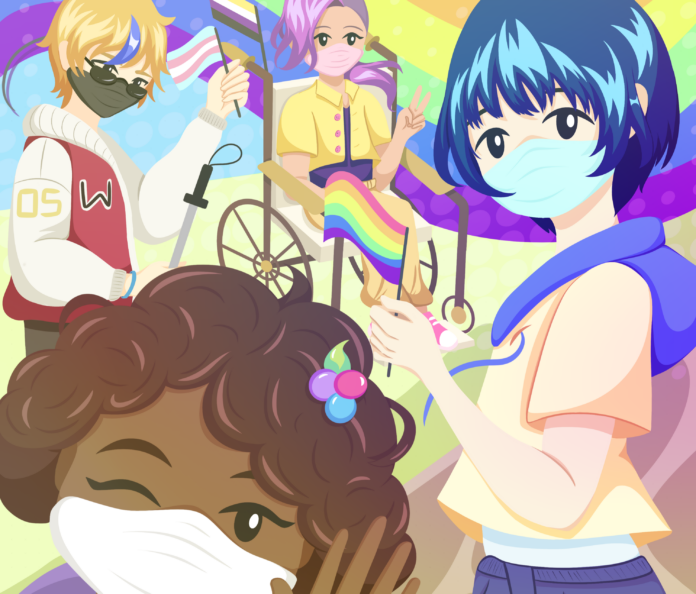
This is a photo of the SFU Burnaby Campus’s reflection pond and the academic quadrangle building surrounding it.
PHOTO: Allyson Klassen / The Peak

By: Olivia Sherman, News Writer

On July 18, the BC Human Rights Commissioner endorsed two special approval applications, which gave SFU the approval to hire 15 new Black faculty members. According to the university, this decision is a step toward supporting the Black community at SFU and upholding promises made in the Scarborough Charter of Anti-Black Racism, which SFU signed in 2021

The endorsement of these special approval applications is significant, as they are part of a greater effort to promote equity within the SFU community. These new faculty members are being chosen under “limited and preferential hiring,” with aims to remove the systemic barriers many Black academics face. Preferential hiring gives minority candidates preferential treatment in hiring. 

Black students and faculty alike face many unique difficulties that make being a minority in scholarly circles feel isolating. Microaggressions and ostracizing behaviours, the burden of educational discussions about race, lack of representation, and discrimination, can all make Black academics feel burnt-out and bullied. By providing support and dialogue opportunities for Black academics, these issues can be lessened. 

The decision to hire these 15 new Black faculty members at SFU aligns with the principles of The Scarborough Charter of Anti-Black Racism, which over 50 academic institutions across Canada have signed. The charter signing campaign is part of an effort to promote an “equitable and inclusive university community” for SFU’s Black members, including faculty, students, and staff. 

The student activism leading up to this motion is also significant. In 2021, former SFSS presidents Gabe Liosis and Osob Mohamed brought forward a motion at SFU’s senate meeting, advocating for Black students and staff, Black History Month, and the hiring initiative for 15 new Black faculty members. The motion was passed “unanimously.” The Students of Caribbean and African Ancestry (SOCA) have been avid supporters of this decision, and have been advocating for support systems for Black students and faculty since their official founding in 1997

Dr. June Francis has been a tireless advocate for these changes as well. Francis is an associate professor of marketing in the Beedie School of Business, and is also special advisor to the president on anti-racism. 

In a past statement to The Peak, Francis said, “By voting in favour of this motion, the Senate of SFU is finally responding to what decades of Black students, staff, and faculty have been calling for — a university where Black intellectual lives matter.”

A heartfelt letter from SFU’s one and only

0
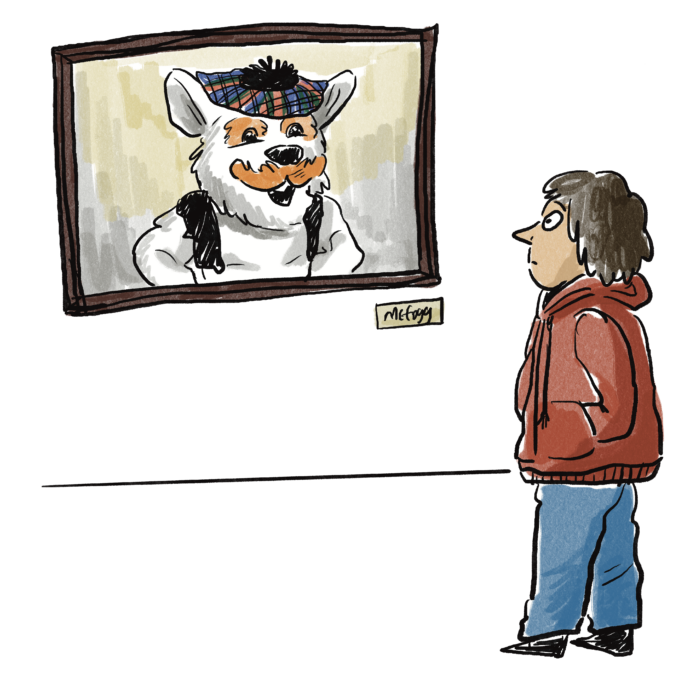
Person looking at a portrait of McFogg.
ILLUSTRATION: Andrea Choi / The Peak

By: Kelly Chia, Editor-in-Chief

Dear SFU,

Why have you Mc-Forsaken me? I’ve been nothing but loyal to you . . . and in return, students no longer know who I am: my brawny arms and swaggy, athletic body, left to wade in the darkness of this concrete prison. No one will even sing me softly to rest, as I hide in a closet, waiting for my next opportunity to be featured by a Peak publication, if I do say so myself. Did you know that they wrote fanfiction about me, SFU? Did you know that I’m apparently the Editor-in-Chief? News to me! I’m writing a new cover piece, and it will expose our torrid relationship. I’ve given everything to you: I’ve hidden the ~quirkier~ parts of your institution with my face alone. I am SFU culture. So I ask you, SFU, who just abandons a school mascot without saying anything?! 

I guess I shouldn’t be surprised that you don’t know the difference between a star — me — and a dud. But at least have the class to give me a proper send off! Don’t I deserve to graduate, too? Maybe not —  no one can get into the classes they need without a virtual battle royale taking place. That’s just a rumour I heard, though. Here are the facts: when students approach the Trottier observatory, I should be the only constellation they see. When they hear a random bark in RCB hall, they should assume it’s me and my giant white paws stomping around. I mean, I served you for over two decades . . . yet, you’ve completely disengaged from me. How contradictory.

Well, let’s not dwell on our harder chapters, SFU. We play pretend so well together! Oh, I especially adore the game you’re playing right now, where we pretend student workers aren’t workers. It’s oh-so-fun to encourage some unity and community in this “commuter campus.” See? We both know how to draw crowds! That will show the other schools what we’re all about! 

Come on, don’t you think students miss a fun little guy? I can be the Mc-Ken to the students’ Barbie. Just give me one more chance.

With love, and awoos,

McFogg

Nimona shows rebellion and heart

0
An animation from Nimona featuring Nimona and Ballister. Nimona, with short red hair and a star earring on the top of her ear, is grinning wide with shark-like teeth, looking at Ballister. Ballister, who has short black hair, a mustache, and bear, is looking proudly at Nimona. They are both wearing armor.
PHOTO: Courtesy of Netflix

By: Kelly Chia, Editor-in-Chief

Based on its premise alone, I knew the movie Nimona would have my heart; anyone who knows me, knows I adore a good found family story. The titular character, Nimona (voiced by Chloë Grace Moretz), and Ballister Boldheart (Riz Ahmed), team up as the kingdom’s antiheroes as they attempt to right the wrongs carried out by a kingdom set to antagonize them. This already sets up the archetypical hero-and-sidekick duo in a cute childhood fantasy film, but to my pleasure, I found so much more to love about the film. 

Firstly, Nimona is truly breathtaking: it features gorgeously rendered rolling hills against futuristic automobiles, and tall stone castles with widescreen holograms. It is all at once, a world set in the future, but stuck in the past. And with the past comes overarching themes of prejudice the characters face together. 

When I heard this movie featured queer themes and characters, I was nervous: the film’s primary demographic is younger children. How might that affect the portrayal of queer romance? To my pleasant surprise, although the characters do battle prejudice, it’s never quite central to their growth and stories. Instead, Nimona proudly features its queer leads with all of their complexities: Ballister’s relationship with his boyfriend, the hilariously named Ambrosius Goldenloin (Eugene Lee Yang), is pretty immediately established to the viewers. Admittedly, I was somewhat concerned that Yang’s presence in the film was a way to pull a queer actor into the film as a minor character. Instead, Ahmed and Yang portray a tender relationship, and their character arcs refreshingly show nuances true to their backstories, rather than their queerness alone. 

Seeing them reminded me of how important it was to see queer leads be complex and joyous, and grow to become adults in happy relationships, and this film has plenty of this. Yes, the two struggle in their journeys, but it was hugely important for me to see their queerness authentically folded into their personhood and experiences. I was used to seeing queer characters used as a cheap plot point or an accessory to illustrate a main character’s empathy in mainstream media growing up. 

This pride and confidence was something I saw in Nimona, too! She was a delight: an eccentric shapeshifter hoping to morph herself into the position of Ballister’s friend and wicked sidekick. I found her quips charming without being obnoxious, and as I learned more about her, I was drawn more into her story. 

At one point, she openly declares that she is simply “Nimona,” refuting Ballister’s request for her to just be a “normal little girl.” It made me grin widely looking at her rebellious, shark-like grin. This simple, yet firm statement was one of several moments that felt affirmative: Nimona was simply, well, Nimona. She did not need to conform to anyone’s definition of who she could be, or what she could do. 

The resonation of Nimona’s affirmation with queer themes is no coincidence: the author of the original comic book, J.D. Stevenson — who also created queer series like She-Ra and the Princesses of Power — confirmed that Nimona was a gender-nonconforming character, having created her when he was “a not-yet-out teenager” wrestling with gender concepts. I knew some child would see Nimona in all her glory, and maybe feel a bit more affirmation in themselves and their own identity.

But to me, the most incredible part about Nimona is its production. Its very existence on streaming platforms took a team who knew how important the story would be, and as I described, the fact that this many people worked hard to push this story is truly admirable. Walt Disney shut down Blue Sky Studios in 2021, effectively ending Nimona’s production, which was slated to release on January 14, 2022. According to some staff from Blue Sky, the studio faced pushback from Disney regarding Ballister and Ambrosius sharing an on-screen kiss. A former staffer said, “When the biggest entertainment company in the world creates content for children and systematically censors queer content, they are pushing queer children to dark places.” 

Nimona was happily picked up by Netflix on April 11, 2022, after Blue Sky executives collaborated with production company Annapurna to finish the film. I’m glad that in this process, the film kept themes and scenes that are going to be important to so many queer children. Consider how many queer characters and moments in Disney films have been presented as queer representation, only for them to be reduced as a “blink-and-you’ll-miss-it” cameo. It’s a miracle that this queer story got to live, after almost being extinguished. But like a phoenix, Nimona took off with Blue Sky, and I’m so glad it did. Children deserve seeing queer characters proudly be the emotional, fully fleshed out, joyful heroes of the story, fighting the injustices of their world as one community

Bright-er Side: My music playlist

0
a cup of coffee on a table, next to a pair of headphones
ILLUSTRATION: Hailey Gil / The Peak

By: Gurneet Lohcham, SFU Student

When you’re stuck and feel like you may need a break, what is the bright-er part of your life that makes you feel better? I can think of plenty for myself, but the most important one is music!

It doesn’t matter if I fell asleep when I should’ve been studying for the exam — it doesn’t even matter that I spilled my morning coffee or that I didn’t get my dream job. My morning playlist is more than just music; the songs’ melodies are a soft embrace that hold me when I’m feeling sad. Their rhythms keep me moving even if there’s a little bump in the road. Every note is the wind blowing in my hair on a warm sunny day.

The harmony in every beat is what fills my soul with energy. Music is so much more than just words, and you can choose whatever tune for your needs. Need a little energy? How about “Eye of the Tiger” by Survivor? Feeling in love? Listen to “Adore You” by Harry Styles. Feeling angry? There’s always “So What” by P!nk.

Whatever you need, music’s got you covered. Even if I’m in the most terrible mood, I tune out the world with my airpods, and in about 10 minutes, everything feels alright. And I can promise you if you haven’t tried it, just do it and thank me later.

TEDxSFU reveals their theme for the 2023 conference

0
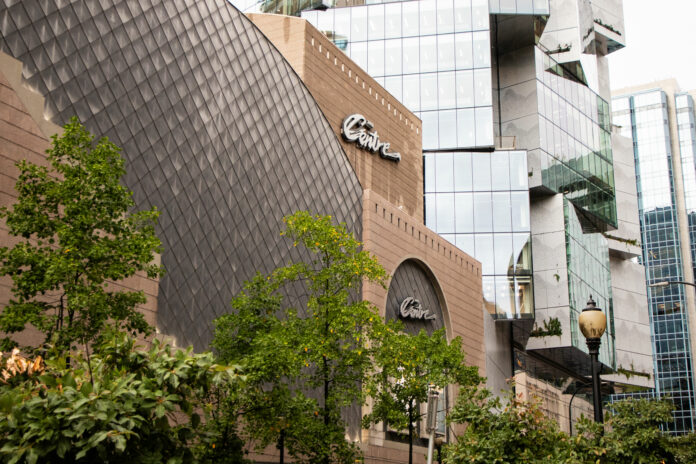
This is a photo of the outside of the Centre for Preforming Arts in Vancouver, where the TEDxSFU event will be held.
PHOTO: Aria Amirmoini / The Peak

By: Eden Chipperfield, News Writer

Editor’s note: The Peak would like to acknowledge that Josh Ralla, one of our staff members, is an executive director of TEDxSFU, but had no involvement in writing this article. 

On July 10, TEDxSFU unveiled its new theme for the 2023 event. This year, they are platforming emerging and established voices from the SFU, Metro Vancouver, and Pacific Northwest communities. The 2023 theme, Unmask the Magic, refers to unmasking the potential of individuals and unmasking the world, from institutions to scientific discoveries in space. 

TEDx is known globally for inspiring talks and lectures on YouTube. TEDx events are independently organized, such as TEDxSFU, which platforms local voices. 

The Peak interviewed Paul Falkowski, the content development director for TEDxSFU. “TEDxSFU started off as an SFSS club called Conversations Worth Starting. The TEDx brand allowed us to take conversations we had started and spread them globally through the TEDx brand,” said Falkowski. “We have 12 years of TEDXSFUs behind us.” 

Falkowski described how the 2023 TEDxSFU conference will highlight individuals from all walks of life, including Parmida Beigi, SFU graduate alumni. Beigi’s lecture will demystify artificial intelligence (AI) for the public. Chris Wilson, pulling from 14 years of experience as a helicopter pilot, will discuss career coaching for non-traditional career paths. Former registered psychiatric nurse, Janice Bannister, uses comedy to discuss 20 years of experience working as a nurse. Poet Sumaiya Tufail will discuss resistance and advocacy in poetry. 

Governor general award-winning multidisciplinary artist, Vladimir Kanic, will discuss his oxygen-producing sculptures where the audience’s breaths grow the sculptures. His works of art creatively navigate the trials of climate change. 

“Each person brings a unique lens to the work so that we always operate at our highest level. At the latest board meeting, when we asked, ‘What is it about TEDxSFU that you continue to love being involved in?’ we had answers like the ‘production value and the drive,’” Falkowski said. 

“TEDxSFU ignites possibility in our spectator’s imagination. It unmasks previously unseen paths,” said Falkowski. “We have diverse voices in every level of the educational journey. Whether someone is in their 20s or their 70s, whether someone is just starting in the Lower Mainland [or] thinking of switching their direction mid-career,” everyone can find something to learn at TEDx, said Falkowski. “We are crafting an experience that touches the intellect, the creativity, the imagination, and the heart of our students in whatever pursuits or goals that they see for themselves.” 

TEDxSFU has made SFU a global point of interest, as these conversations are now being spread globally by the speakers and team behind its production. “TEDxSFU isn’t just about the speakers. It’s about the team that puts it on. Our team is interfaculty and multidisciplinary: from SFU’s Beedie School of Business, the faculty of communications, arts and technology, the faculty of arts and social sciences, and even the master of education program, to name a few,” said Falkowski.

TEDxSFU Unmask the Magic will occur on November 11, 2023, at The Centre for Performing Arts in Vancouver. For more information, visit their website at https://tedxsfu.com/. 

Stomach Bugs

0
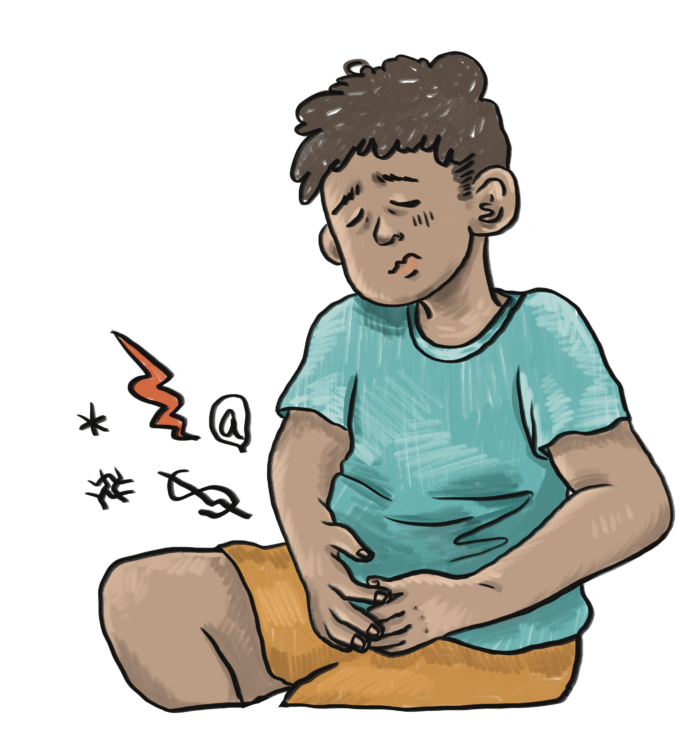
Person holding their grumbling stomach.
ILLUSTRATION: Andrea Choi / The Peak

By: Izzy Cheung, Staff Writer

Psst. Hey. It’s me. You know, your friendly neighbourhood stomach. Or well, not neighbourhood, because I am inside of you, but whatever.

So, what’s up? Why haven’t you fed us properly today? No, that small slice of toasted white bread with a little splat of Nutella on it doesn’t count — we gobbled that up in seconds. I’m talking about a big, healthy, sustainable breakfast. Give us some eggs, some protein, a smoothie bowl — you know what, I’d even go for a tiny morsel of tofu at this point.

Oh, that? The thunder down under? That’s what you get for drinking coffee this morning, hon. I tell you everyday that the bean juice doesn’t do well with us. Come on. We just woke up. It was seven in the morning. Coffee doesn’t work the same way for us as it does you. Coffee wakes you up, but it makes us feel crappy. (Get it?)

Huh? What do you mean we won’t get to eat for another two hours? Hon, it’s nine in the morning, what else do you have to do today? Go grab us something fulfilling. Pancakes. A breakfast wrap. A sandwich. Anything, at this point. I don’t care if your professor says there’s two hours left in your lecture, we’ve been waiting to eat something big since last night.

MORE coffee? Oh, come on. You know we don’t like it as much as you do. Do you WANT me to yell at you again? I know you don’t like it, but I will.

Oh my — you put cream in your coffee? YOU KNOW THAT WE’RE LACTOSE INTOLERANT. WHAT ARE YOU DOING? You like whipped cream? I don’t know if you could tell, hon, but WE DON’T. LOOK AT US. SMALL INTESTINE IS CRYING BECAUSE OF YOU. THAT ONE DOLLOP OF WHIPPED CREAM SCARED THEM.

You know what — that’s it. We’ve had enough. You don’t drink enough water to replenish us, you stuff us full of caffeine and Nutella, and you sit and force us to cry while you’re typing away about capitalism instead of letting us relieve ourselves. Well, guess what? You’re about to let your entire class know how we feel about you. Good thing your professor is about to have a very brief water break, making the class as quiet as can be —

Oh? What’s that? WATER? Oh my goodness, finally. About time. Come on everyone, let’s get this water to small intestine, they’ve had a rough morning. We all have. Let’s take a breather —

. . . Is that more coffee?

Monday Music: Soulful gems

0
“Monday Music” in orange block text on a yellow rectangular background with rounded corners and an orange border.
Monday Music: your weekly themed playlist. Image courtesy of The Peak.

By: Hailey Miller, Peak Associate

Colors by Black Pumas
Photo credit: ATO Records / Fontana North

Black Pumas is a rock-soul band from Austin, Texas who bring contemporary twists to the genre. “Colors” is full of rhythm and groove, from the strike of the first chord to the fade out. The song features flawless guitar licks, walking bass lines, an upbeat tempo, harmonious vocals, and jazzy keys alongside a lively organ. With a message about celebrating diversity, my favourite lyric is “my sisters and my brothers / see ‘em like no other.” This single is perfect for bringing out cheerful vibes and transcending through colourful lyrics describing a positive outlook on the world. Side note: their live studio version is even tastier.

Thinking ‘Bout Love” by Wild Rivers
Photo credit: Nettwerk Music Group

Wild Rivers is a Canadian folk trio from Toronto. Their mellow approach to skillful songwriting and expert artistry combines simplistic chording with flawless harmonies. “Thinking ‘Bout Love” houses a soft groove and rhythmic chord structure, with fluctuating vocal ranges and instrumentation that perfectly complement one another. The vocal trade-off creates a seamless duet that accentuates their smooth folk style and the most prominent lyrics on the track: “we could ride it out / I know the ride’s rough / but try us.” This song is easy on the ears and will put you in a chill mood. Check out the stripped-down version on YouTube.

Honey” by Ruby Waters
Photo credit: Ruby Waters

Ruby Waters is a Métis independent artist from Ontario. Her raspy tone pairs perfectly with her aptitude for guitar. Waters’ jazz-filled, soulful idiosyncrasies include vocal embellishments, horn trills, and steady tempos that make her one of a kind. Along with a dynamic horn section that adds depth and rhythm, the lyric “honey’s got a brain that’ll make you trip” complements the sax solos. Waters’ vocal phrasings beautifully accentuate the obvious jazzy nuances of the track. This song is the absolute bluesy groove. Check out her amazing solo set at Whistlers Mountain, Jasper National Park on YouTube.

Not Afraid” by Victoria Canal
Photo credit: Victoria Canal

Victoria Canal is a German-born Spanish-American singer-songwriter and musician with effortless vocals and a soft instrumental style. Canal’s works showcase her artistry on top of life as a professional musician with a physical disability. “Not Afraid” incorporates perfect rhythmic and bluesy piano sections alongside jazz influences, and soft yet soulful vocal runs, paired with lyrics full of love, loss, and longing. Check out her live solo version on YouTube.

Red Flags by Andra Day
Photo credit: Warner Records / Buskin

Andra Day is best known for her soulful R&B tracks and powerhouse vocals. Her works (like her album, Cheers to the Fall) are proof of natural talent, and “Red Flags” is no exception. Packed with rhythm and jazzy riffs, Day will make you feel her purposeful groove. You can feel the emotion that radiates between her voice and the musical accompaniments, all the way through your speakers. Prepare to cascade through all levels of rhythm and soul. Check out the Austin City Limits seamless mashup on YouTube.

Listen to the full playlist on The Peak’s Spotify profile.

The ABCs of tipping in an expensive city

0
ILLUSTRATION: Alyssa Umbal / The Peak

By: Izzy Cheung, Staff Writer

A few weeks ago, I went out with a couple friends for dinner at a newer restaurant in our neighbourhood. The food was great, and service was amazing, but what surprised me the most was the numbers we saw on the bill. Prices for everything in Vancouver are through the roof nowadays, but shrinkflation wasn’t the reason for my shock. Before we paid, they made sure to inform us we didn’t need to add a tip to our bills. This was something I’d never seen before at a sit-down restaurant, and it comes to mind now that I’m hearing more conversations about getting rid of tipping system all together. 

Having worked in customer service, I’m all for tipping. It can be really difficult working in an industry that deals with all sorts of people during all occasions, for example, baristas working in the mall during Christmas. The amount of times I tried to work while someone was yelling in my ear about how their coffee wasn’t a specific temperature right to the degree truly made me wonder why I was even working as a barista . . .  although, those weekly tip bonuses made things worth it. The money I made off tips put me at a higher hourly wage drawing fun little designs in peoples’ coffees than what I now make working two salaried jobs.

That being said, tipping systems can be pretty unfair to servers, and with recent inflation, to the general public as well. Tipping doesn’t take different working conditions into consideration. For example, servers, kitchen staff, and delivery drivers all might heavily rely on tips, yet their work conditions vary significantly — servers are required to directly interact with customers, kitchen staff are heavily responsible for food safety and quality, and delivery drivers might brave challenging weather conditions or unsafe roads. These differences in work type might make the final total compensation from tips feel unjust to some workers. This isn’t just unfair to workers, but the expectation to tip when you yourself have a low income might feel like an additional punch to your finances. 

A: Are we always supposed to tip service workers?  

There’s no specific rulebook for tipping a certain percentage at certain establishments — all of that is based on your own decisions. Most don’t tip fast-food workers, but what about baristas? You might tip your Uber driver, but do you tip your tattoo artist? Despite there being no rules, for many service workers, tips make the difference between paying rent or not

When a service worker heavily relies on tips to get a livable income, then yes, gratuity is kind of expected. While tipping is seen as an optional gesture of appreciation, in the case of workers who depend on tips to make ends meet, a tip becomes a vital means of support — if your finances allow it, it’s highly encouraged that you tip them. A tip is typically given to workers who perform a service, such as bartending, hairdressing, or serving. Following societal customs, most people tip on bills at sit-down restaurants, at your hairdresser’s, or after getting a ride from an Uber — but other circumstances can be difficult to gauge, which takes me to my next point.

B: But who counts as a service worker? 

It’s hard to define who a service worker is without relying on using those same words in their description, but in essence, that’s what service workers are those who provide you with a service. This includes food service (waitstaff or delivery), transportation services (uber or taxi drivers), or beauty and aesthetic stylists (hairdressers, nail technicians, tattoo artists, etc.). But as of recent, tipping has been creeping into other type of services beyond the conventional scope of a service worker. Gilbert Mofleh, a mechanic from Ottawa, and Tudor Liquor Store in Surrey, are commerces where tipping isn’t usually expected. Both have the tipping option enabled on their card payment machines, though neither expect people to tip. 

C: Can you NOT tip at a restaurant? 

Realistically, no one can force you to tip when eating at a sit-down restaurant — but you’ll probably be treated to some glares on your way out. However, outside of gratuities, many service workers barely get paid a living wage, which is why some have suggested scrapping the tipping system for higher wages. This shifts the responsibility of providing a living wage from consumers to employers. 

D: Different ways of splitting tips among workers

For an individual service worker, a high tip-income often reflects excellent customer service. However, each establishment’s breakdown of gratuities is different. While I was working at a coffee shop, tips weren’t recorded for each individual worker; instead, we tallied up the total amounts tipped per week, calculated how many hours were worked in total (combining the hours of all employees), and split the money based on the average amount that was tipped per hour. So, if we made $500 in one week, the total amount of hours worked by all employees was 100, and I worked 10 of those, then the hourly tip count would be $5 — meaning that I would have made $50 that week. One of my friends, who works at a restaurant, does things differently; their establishment splits gratuities based on each day — part of the gratuities go to the kitchen staff, and the servers split the rest evenly based on their hours. Each place does things differently, but the gratuity system doesn’t have to be this complicated. 

E: Every area tips differently 

When it comes to tipping, different countries have different social expectations. Some countries don’t tip, while others tip around 10%. Canada falls around 15–20%, which is one of the higher values compared to the rest of the world. Québec, in particular, is infamous for having high tipping expectations, with the expected percentage ranging from 18–20%. 

F: Fast food = take-out? 

Is tipping on takeout orders a thing? You’re not directly being served, but the kitchen staff still have to make your order, and servers still have to package it — so really, even though it sounds different, it’s logistically not much different from fast food. Despite this, a survey by Research Co. shows that 53% of Canadians never tip whenever they take their food to go. This action might be slightly contradictory with other answers in that same survey, where 70% agreed that “Food servers cannot get by on their salaries alone — it’s important to tip them.”

G: Generalization kills the system   

Our gratuity “system” bases a lot of its factors on generalization. I’ve even been generalizing in this piece — it’s hard to go in-depth into every single customer service experience. Because of this, there are many things tipping doesn’t take into consideration. For instance, if two servers work a busy shift, but one of them does takeout, chances are they’ll take tips from the person who did most of the dine-in serving. In a similar vein, if you get excellent customer service at a fast food establishment, would you tip there? Most fast food places don’t offer tipping options on their machines, so you’d likely have to offer cash. And if you did, how would an establishment track that? If a server gives great service but has their tip physically stolen (which has happened to me before), then the server takes the financial brunt despite providing their labour. Tipping is an intricate, complex system that really has no specific rules — which brings me to the final letter of this condensed alphabet. 

H: Higher wages for service workers 

Tipping can be made simpler by increasing the wages of customer service workers. In fact, many have expressed a desire for higher wages instead of sticking to current tipping models due to inflation on food and menu items at restaurants. Scrapping the tipping system and implementing higher wages would make things easier for individuals who need a service done for them. Having the expectation to always provide a tip also puts other low-income people in an economic strain. At the same time, some might think tipping can act as a motivator for service workers to provide better service, but even if that were the case, it shouldn’t replace higher wages and should only be supplementary to a living salary.

TSSU engages strike action at Surrey campus

0
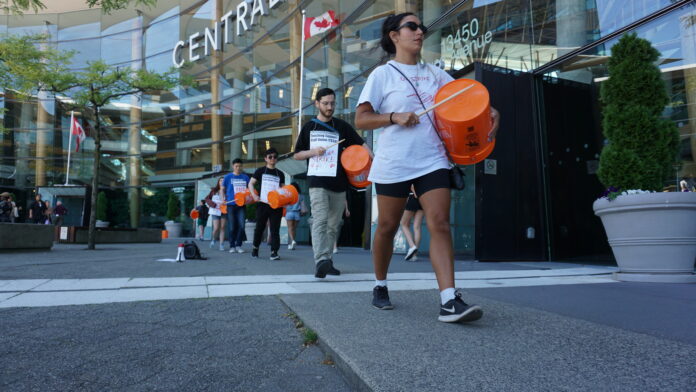
This is a photo of the picket line at the SFU Surrey campus. Picketers are pacing in front of the main entrance, they are holding signs that read “ON STRIKE”
PHOTO: Sadia Nasrin

By: Olivia Sherman, News Writer

Editor’s Note: The Peak would like to acknowledge and apologize for misgendering one of our interviewees. Their correct pronouns have been added to the web-version of the article.

On July 19, the Teaching Support Staff Union (TSSU) took strike action at SFU’s Surrey campus. Their actions included picketing outside the campus and teaching assistants (TAs) stopping work. These measures are part of the ongoing strike among TSSU members across all three SFU campuses, which officially began on June 12.

“We are striking to address overwork and striking to address unpaid work, we’re striking to address wage theft, we’re striking to get wages and raises that actually keep up with inflation,” said Dalton Kamish in an interview with The Peak. As well as being a PhD candidate in the School of Communication at SFU, Kamish is a member of the TSSU, acting as a trustee and member of both the strike committee and bargaining committee. Kamish is also a research assistant (RA).

Kamish said the July 19 strike’s location was significant. They noted members of the Surrey campus “sometimes feel left out.” To help, “we made it a point the past few weeks to spend more time in Surrey doing more outreach, because they want to be more involved in the strike actions.” 

Kamish discussed the importance of including RAs in the TSSU and the ongoing strike movement. “RAs have been wanting to join TSSU [ . . . ] for years now,” Kamish explained, for reasons including extended healthcare coverage, healthcare for international students, and job protection. “So right now, RAs can just be fired at will for no reason. Like, if the next day your supervisor decides they don’t like you anymore, they can just fire you for no reason.”

Kamish explained RAs have been engaging in a card signing campaign. Cards can be signed either on the Burnaby campus or online through the TSSU website. A signed card represents a declaration that the worker wants to be represented by the TSSU. Once 55% of these cards are signed by RAs willing to be members of the TSSU, RAs will “become part of the certified bargaining unit,” granting them “more rights under the purview of the labour board.”

As a member of the TSSU bargaining committee, Kamish said negotiations with SFU administrators are far from over. “We’re still very far apart on our major issues,” they said, citing the TA compensation model as one of the main points of contention between the union and administration. The TA compensation model, Kamish explained, does not include compensation for the various class sizes a TA must instruct. 

Kamish mentioned how TAs are compensated the same amount for teaching courses with five or 500 students. “It doesn’t account for the extra time and the extra preparation, the extra emails that go along with more students,” they added.

While bargaining has been slow, there has been progress. “We have seen some minor, but not insignificant [ . . . ]  movements since we began strike and job actions, like picketing,” Kamish explained. “But the reality is that strikes work, pickets work.”

Kamish noted the ongoing strikes should be a unifying act, rather than a divisive one. They stated SFU administration has been reportedly “trying to pit undergrads against their own TAs,” and there is a severe divide between “different groups of people who actually have a shared interest with each other, and it’s very frustrating to see.

“We hear from our undergraduates all the time: ‘Why are you guys on strike? You’re cancelling class.’” Kamish explained, “We love what we do. We don’t want to be on strike. We’re being forced to go on strike by the employer who won’t offer us a contract that will meet our actual needs [ . . . ]  I would argue it’s part of one’s education here at SFU to participate and be involved in this workers’ movement right here on campus.

“Our power as workers is our labour. This university works because we do. And the most power we have is withdrawing our labour, making this university stop working. Because that is the only way to get the employer to take us seriously, to get them to offer us a contract that will meet our needs.”

This is a developing story The Peak will continue to cover. For more information, check out the official TSSU website at https://www.tssu.ca/

We can’t forget disabled queers during pride

0
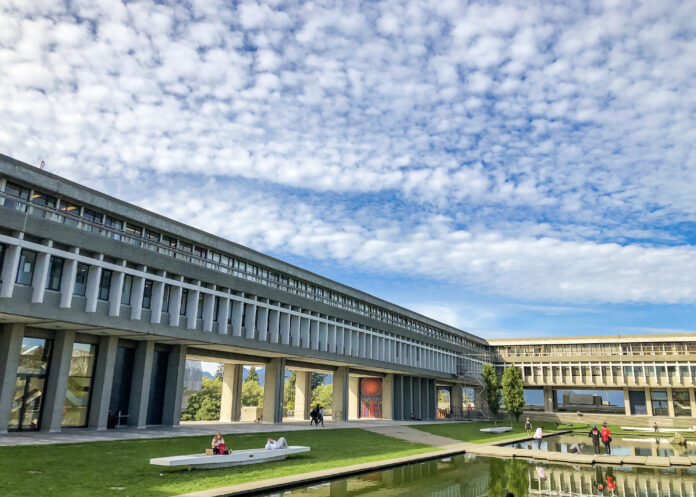
Illustration of disabled people at Pride, some in wheelchairs, holding a white cane, and wearing masks
ILLUSTRATION: Alyssa Umbal / The Peak

By: Michelle Young, Opinions Editor

Editor’s note: This piece was written before the Vancouver Pride Society announced an accessible viewing zone with mask mandates in place, in response to community concerns. 

Vancouver Pride is coming up this August. It’s supposed to be a time for 2SLGBTQIA+ people to celebrate identity and strengthen bonds in the queer community. But for many, it doesn’t feel that way. 

In 2019, Forbes reported on a slew of accessibility issues surrounding Pride events. They highlighted how “parades can often be difficult for people with mobility issues because of uneven, long routes, extreme heat, and tight, narrow spaces.” Further, they added that smaller events often lack American Sign Language (ASL) interpretation, closed captioning, and accommodations for sensory issues. The Vancouver Pride Society has addressed a few of the above concerns: rerouting Pride to a more accessible route, adding ASL interpretation, and a low-sensory zone. However, this isn’t enough. 

The 2SLGBTQIA+ community is no stranger to marginalization — as many might already know, Pride began as a form of protest. Fighting for queer rights was, and continues to be, an act of necessity and resistance. In the 1980s, the AIDS epidemic killed thousands, which sparked die-in protests to bring attention to it, which was largely ignored by the US government for years. While die-in protests didn’t originate with the AIDS epidemic, this early understanding of HIV — both its transmission and how it disproportionately affects the queer community — shaped Pride’s disease control for years to come. It sparked HIV prevention programs, and rapid testing allowed for early HIV detection at later Pride parades. 

As of 2021, gay and bisexual men represent 56% of people living with HIV. Mpox (formerly known as monkeypox) also disproportionately affects queer men. The community’s experience with disease control allowed preventative measures like distributing safe sex supplies and seeking vaccination and early treatment to help with disease mitigation during the Mpox outbreak in 2022. That’s to say, the 2SLGBTQIA+ community is no stranger to organizing and protecting one another. Health, politics, and identity are deeply intertwined. 

However, many queer and disabled people have been vocal about feeling excluded from the community. They report feeling abandoned and betrayed. Pride organizations consistently use the language of equity, diversity, and inclusion to make themselves appear progressive. As reported in Xtra Magazine, “Concepts like ‘safer spaces’ and ‘harm reduction’ meant to ‘keep each other safe’ now seem to come with the caveat: except from COVID-19.” In a community largely affected by immunodeficiency, we should be doing more to protect one another from COVID-19 and other contagious illnesses. 

Like much of the rest of the world, Pride events have tucked COVID-19 in a corner as a thing of the past. The way COVID-19 cases have been reported on has changed to give the illusion of a pandemic that’s in a “better place” than it was three years ago. However, the little evidence that is available, points elsewhere. In 2022, there were more COVID-19 deaths than in 2020 and 2021. This doesn’t seem to be common knowledge. With less testing, it’s difficult to have a true grasp of current COVID-19 cases, which is why it’s important to not be overly reliant on one source of data. Independent reports, such as the ones by COVID-19 Resources point to higher levels of COVID-19 than official numbers. Spearheaded by a team of professors and researchers, these reports are made up of a plethora of information, putting together hospitalizations, deaths, and will soon be incorporating wastewater data. As of mid-July, COVID-19 outbreaks continue in hospitals throughout the province. The virus poses risks that go beyond the acute phase of infection.  Further, with ongoing variants and asymptomatic cases, vaccination alone isn’t enough to drastically reduce transmission. 

Most events are void of any COVID-19 mitigation measures, and when asked, organizations typically respond saying they’re “following provincial guidelines” or “cannot mandate masks.” Safety has been thrown out the window in favour of unsafe parties. Outdoor spread is also a concern in crowded spaces where airborne particles can remain for hours, infecting large groups of people. Celebrations don’t need to be all or nothing, but they can be more inclusive than they are now. 

While the inclusion of certain accessibility requirements — such as providing shade — are not mandated by law, they are still necessary. So I ask, since when does the queer community take their guidance from the government? Never. The government has continually oppressed the 2SLGBTQIA+ community. Limiting love, marriage, and ignoring the mortality from the AIDS crisis has deeply scarred this community. Further, the US government has taken their own measures to protect themselves from COVID-19. If it’s such a non-issue for the rest of the population and COVID-19 is so over, why have they upgraded ventilation guidelines and continued testing requirements? The level of betrayal around Pride events doing the same to vulnerable, immunocompromise queers is unreal. Disabled queers have been extremely vocal in how unsafe pride events disproportionately affect the community and asked for mitigation efforts, yet we continue to be ignored and dismissed. We should be allowed to celebrate Pride safely. 

When provincial restrictions were still in effect, organizations rushed to make every event as accessible to everyone as possible. We can do better because at one point, it was already standard. Further, a small number of organizations continue to acknowledge these harms and create accommodations accordingly

This isn’t the first time the 2SLGBTQIA+ community has harmed those with intersecting identities. Historically, queer spaces have not always been welcoming to queers of colour. Experiences from the 1980s show that Black men were stereotyped in gay bars. In 2022, Canadian Black folks have also said they were called racial slurs and fetishsized in queer spaces. When disabled queers of colour reported seeing unsafe queer celebrations even while pandemic restrictions were in place, a Black trans person noted this made them doubt how the 2SLGBTIA+ community would protect them against trans or racial violence, if they wouldn’t even wear a mask. 

The 2SLGBTQIA+ community is made of intersecting identities, with different people facing multiple forms of oppression. This is a part of why intersectionality and anti-oppressive action is so important for all social justice issues. 

The Vancouver Pride Society asks people to refrain from wearing scents, but masks are not required across their events. This ignores a whole group of people who should be protected. To be clear, scents should be limited at events to protect those with sensitivities and provide a space that doesn’t threaten their well-being. However, the same should be said for illness mitigation. Similarly, while ASL interpretation is a great step forward, audio descriptions of the events at Pride are often lacking. Over the years, we have moved forward. Organizations acknowledging past harms and trying to expand their access is a good thing, but we can’t cherry pick and decide what is “necessary” and what isn’t when those who are directly affected are asking for more. Defensiveness and pointing to the official “guidelines” is not helpful. These guidelines do not mandate ASL interpretation or scent reduction — like masks, they are solely suggestions — and yet those are good policies to have in place for accessibility. The world has already left us behind, but in this community, we’d like to have something to celebrate.