Home Blog Page 157

TSSU members discuss the end of the strike

0
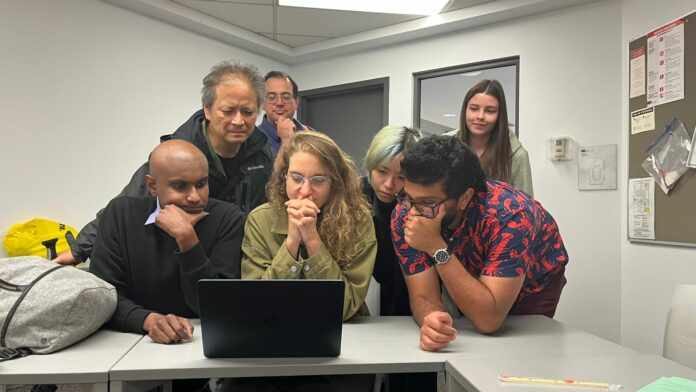
This image is of a small group of TSSU members. They are all leaning over a laptop, and appear deep in thought while looking at the screen.
PHOTO: Courtesy of Reese Muntean

By: Olivia Sherman, News Writer

The Teaching Support Staff Union (TSSU) announced their weeks-long work stoppage has ceased after a tentative agreement was reached with SFU in the early hours of October 19. The work stoppage started on September 28. It was an escalation of the larger strike that started in June, and saw teaching assistants (TA) stopping all work and picketing outside all three SFU campuses. Despite the work stoppage ending, there are still loose ends to tie up, such as SFU’s controversial hiring of a private investigation service to surveil students and staff. The Peak reached out to TSSU organizer, Kelvin Gawley, and TSSU media spokesperson and bargaining committee member, Dalton Kamish, to learn more. 

A tentative agreement occurs when the employer and the union have settled on an agreement, but it has not yet been approved by union leaders. As the tentative agreement with SFU is still being approved, the details of the agreement remain confidential. In a statement on October 19, the day of the tentative agreement, the TSSU said the collective agreement for 2022 through 2025 would be renewed, and more details would arrive as they develop. Kamish told CBC News the agreement was “monumental.” 

The Peak received a media statement from SFU regarding the tentative agreement, thanking “the entire university community for their patience and understanding during this time.

“The tentative agreement supports TSSU members with a wage increase, and other compensation and benefit enhancements, while delivering on the Province’s 2022 Shared Recovery Mandate,” which promises to offer inflation protection. 

Lions Gate Risk Management (LGRM) is a private investigation service located in the Lower Mainland. Through eyewitness reports at all three SFU campuses, picketers reported unnamed persons “following [them] around, taking pictures of [them], watching [them], following [them] from campus to campus,” Gawley said. “We started noticing them pretty much right away.” 

According to witnesses, there were at least three confirmed LGRM employees present at the pickets. Kamish confirmed LGRM employees were present at all pickets on all three SFU campuses, spanning September 28–October 10, and “were working at least 12-hour days recording TSSU members and others on the picket line.” 

With these numbers, The Peak confirmed SFU paid LGRM up to $35,000 to surveil students and staff for the 10 confirmed days they were employed by the university. SFU did not comment on this inquiry. 

After severe backlash, the university retracted their contract with LGRM on October 11. In a statement that day, SFU said they hired LGRM to “help [them] to monitor picket line activity,” and the company was hired solely to record protesters in case of “behaviour escalation at the picket line that could constitute bullying or harassment or physical safety or assault.” The university said they “will reassess how [they] support safety on [their] picket lines going forward.” Kamish also described a “revolving door” of employment between SFU and LGRM. Andrea Ringrose, SFU’s Senior Director of Campus Public Safety, was formerly the Director of Security Intelligence at LGRM. Mark Lalonde was the Chief Safety and Risk Officer at SFU and currently acts as the senior vice-president of strategic initiatives at LGRM. 

Gawley said it’s “absolutely galling,” and “so concerning to know this is who SFU chooses to bring onto our campus to surveil us and to watch us.” 

Despite SFU saying LGRM did not engage with or approach picketers on campus, Gawley said this isn’t true. He described one man, later identified as an employee of LGRM, who “just kind of [inserted] himself into a conversation with some people on the picket, and didn’t identify himself” to ask questions about the protestors. 

“We don’t know beyond the very obvious what these people were doing on behalf of the school, who they were giving information to, and what information they were collecting on us,” Gawley said. “Those are questions we still don’t have answers to [ . . . ] this is how they choose to treat members of their own community, who have the audacity to demand a fair contract. I don’t think that’s something any of us will ever forget.”

Logging company Teal-Jones hired LGRM to surveil environmental activists at Fairy Creek, Vancouver Island, where LGRM employee Ram Sandhu reported information on protestors back to the RCMP. The Indigenous studies faculty, the SFU Black Caucus, and the SFU faculty association (SFUFA) all wrote letters of condemnation against SFU’s choice to hire LGRM, now known for its work infiltrating peaceful protests and surveilling activists. 

“SFU’s engagement of private security to surveil students, employees, and community members should cause all of us to question how the administration in fact sees us,” said SFUFA’s executive committee in their letter of condemnation. 

SFU’s Black Caucus wrote an open letter to the university over concerns regarding this surveillance: “This action creates a risk for all picketers but especially for racialized people, given the known disproportionate impact of surveillance and policing on Black, Indigenous and racialized individuals, including within the SFU community [ . . . ] It is important that the university not only acknowledges the harm that was produced by utilizing surveillance tactics, but also reconciles these harms.” 

Toward the end of the strike, SFU and TSSU agreed on a private mediator, Ken Saunders. Kamish explained both parties can agree on a mediator. While there is generally a split between the cost for the mediator from each party, Kamish said SFU is “footing the bill, in this case,” which TSSU took as a sign of good faith and a willingness to bargain meaningfully. “As soon as we started the mediation process, we saw that this was not the case.” Kamish recounts more acts of time wasting and nitpicking minute details, wasting the time of both TSSU and the mediator.

SFU also hired a retired lawyer, Steve Gorham, a human resources consultant located in Victoria. Despite being retired from his previous job at the University of Victoria, and his employment status being “self employed,” Gorham was hired to consult SFU starting January 2023, and Kamish noted, “They’re paying him a ton of money to do it.” According to an FOI obtained from TSSU, SFU paid Gorham $192,000 in expenses alone, such as plane flights and ferry tickets from Victoria to Vancouver, food, and hotel rooms. “He’s been helping the employer waste our time by slowing down the bargaining process to a grinding halt.” 

Kamish explained TSSU and SFU both had much to lose by delaying bargaining, but “Gorham, as an external contractor, has nothing at stake. He’s already in retirement [ . . . ] He has no incentive to get us to a deal. He gets paid more the longer this goes on.” 

Many student bodies and student unions declared their solidarity with TSSU over the course of the stoppage. TSSU’s picket at the Burnaby campus on October 13 saw workers from unions across Vancouver, such as the Canadian Union of Public Employees (CUPE) and the International Longshore and Warehouse Union (ILWU), showing solidarity and picketing alongside TSSU. At a picket at SFU’s Vancouver campus, Toronto Raptors player and National Basketball Players Association (NBPA) vice-president, Garrett Temple, spoke on behalf of Canada’s only National Basketball Association team (NBA) in support of the strike. Temple announced the NBPA was donating $10,000 to TSSU’s strike fund. 

In recognition of academic difficulties undergraduate and graduate students faced over the work stoppage, including GPAs being affected, SFU recently approved the motion to allow students to use a new grading system after viewing their final grades at the end of the semester. Students can decide to keep their final course letter grade, or accept a pass, credit, or no credit grade. A “pass” will be substituted for grades equivalent to a C- or higher. A “credit” grade is offered for grades equivalent to D. A “no credit” is offered for grades equivalent to a fail. However, none of the options in this grading system will impact the student’s GPA. 

There is also an ongoing petition amongst undergraduates for tuition reimbursement. The petition, created by Undergraduate Strike Solidarity (USS) stated, “SFU’s administration has not only failed to address the entirely valid and necessary demands of TSSU, but has also recklessly jeopardized the educational experiences and financial stability of SFU students.” USS noted the 42 bargaining sessions were proof the university is unable to “prioritize the educational well-being of its students,” adding “education should not be held hostage to the failures of the university’s administration in addressing the needs of their workers and their disregard for our academic pursuits.” Despite SFU’s policy against tuition refunds for uncontrollable circumstances, the petition has gained 2,712 signatures at the time of writing

The Peak recaps: Red Leafs vs. Okanagan Lakers

0
photo of the SFU Hockey Team
PHOTO: Maurice DT / Unsplash

By: Izzy Cheung, Staff Writer

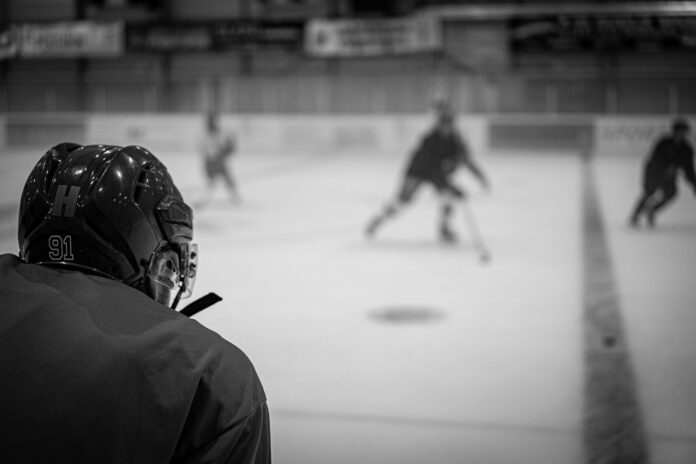
Green lights streaking from the inside of the player’s tunnel flash across the rink as the sound of skates slash against the ice. Red jerseys square off against black and orange, battling for the puck against the boards. Fans cheer from the stands as goals are scored back and forth. Family, friends, and students alike have all gathered for one reason — to watch the SFU Red Leafs take on the Okanagan Lakers

The Red Leafs have two hockey rosters: the roster that plays against the rest of the teams within the British Columbia Intercollegiate Hockey League (BCIHL), and the non-conference roster that travels to take on National Collegiate Athletic Association teams. Previously, the non-conference team made stops at the University of Michigan and Colorado College to play the Wolverines and the Tigers.  

Coming off a 4–2 win against the Lakers on the road, the BCHIL Red Leafs returned to Bill Copeland Sports Centre to hold their regular-season home opener against the Lakers on October 14.

For a university hockey game, there were quite a few young kids. Most of the crowd was made up of groups of students, who can get into any SFU games for free with a school ID. A few families brought homemade signs and stood by the tunnel, waiting to get high-fives from players as they walked out to start their season at home. 

In traditional opening game fashion, SFU players were introduced one-by-one, emerging on the ice to the cheers of fans welcoming a new season. As the Canadian national anthem began to play, fans and players stood looking toward the banners hanging from the rafters. Another championship this year would make it the third-straight title for SFU.

The puck dropped, and the game began. Okanagan opened the scoring with a goal five minutes into the period and one with 21 seconds left, making the score 2–0 before the end of the first period. Fans left during the first intermission to grab snacks from the concession stand on the lower level, but came back when a girls minor team took to the ice. The girls played a small scrimmage game for about five minutes, with the crowd cheering each team on after they scored against one another. 

A slew of goals and penalties took place in the second period. SFU started the middle frame with a goal by forward Nick Wagner, 30 seconds into the period. However, the two-goal deficit was quickly re-established when the Lakers scored off of a power play caused by a tripping penalty. The Red Leafs scored again with three minutes left in the period to bring the score to 3–2 for the second intermission. 

12-minutes into the final period, Red Leafs forward Max Lightfoot scored, tying the game up at three apiece. Sweet Caroline— a hockey game karaoke classic — blared throughout the rink as the team eagerly tried to finish their opening-night comeback. But after peppering goaltender Cooper Giesbrecht with a grand total of 44 shots throughout the game, the Lakers scored to make it 4–3 with eight minutes left in the period. 

The final few minutes were intense as SFU attempted to claw back and tie the game yet again. However, the siren signalling the end of the game came too soon, and the Red Leafs finished the game with a 5–3 loss after the Lakers scored a goal with seconds left to seal the deal. Despite the score, the players showed grit and determination — two traits that any fan can rally around. 

The Red Leafs BCIHL roster is 1–1 to start the year. They’ll take on the UVIC Vikes in game one of a two-game road trip on Friday, October 27. 

This week at SFU

0
photo of SFU women's soccer game
PHOTO: Wilson Wong / SFU Athletics

By: Isabella Urbani, Sports Editor

Home Games

Thursday, October 26: men’s soccer vs. Seattle Pacific at 4:30 p.m. 

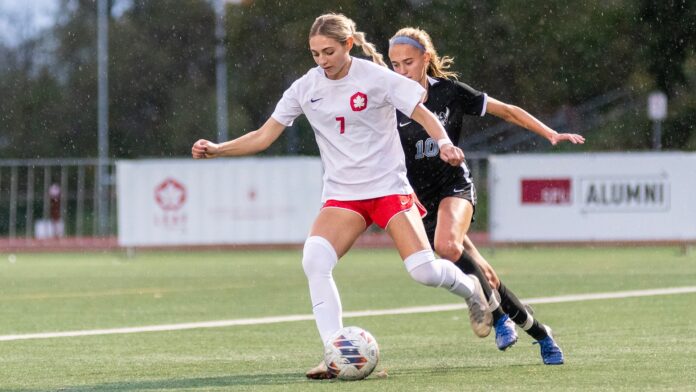
  • SFU currently holds a 7–2–2 record and a three game win streak. The men’s soccer team has scored three goals in each of their last three matches while only giving up two goals. SFU’s last loss was on September 9. 

Thursday, October 26: women’s soccer vs. Saint Martin’s at Terry Fox Field at 7:00 p.m. 

  • The women’s team are 4–4–2 this season and have lost their last two games. Their game against Saint Martin’s marks the beginning of a three-game homestand. 

Saturday, Oct 28: women’s basketball vs. Langara (BC) at the West Gym at 9:00 a.m. 

  • Final exhibition game before the regular season. The women’s team was 10–13 last year.

Saturday, October 28: women’s soccer vs. Western Oregon at Terry Fox Field at 1:00 p.m. 

  • The women’s team was 1–0–1 against Western Oregon last season. 

Away Games

Monday, October 23–Tuesday, October 24: women’s golf at Hawaiʻi Pacific Shark Shootout 

  • Day two and three of the invitational. The women’s team finished third out of seven teams at their last competition. Freshman Dana Smith’s third place finish was SFU’s best performance. 

Thursday, October 26–Saturday, October 28: women’s golf at Dennis Rose Intercollegiate in Hawaiʻi 

  • Final invitational of the season until the divisional championships in April

Saturday, October 28: men’s basketball vs. Idaho State at 5:00 p.m. 

  • First game of the season. The men’s team was 6–22 last year. 

Saturday, October 28: volleyball vs. Western Washington at 7:00 p.m. 

  • The volleyball team was swept in three sets earlier this season against Western Washington. 

Vancouver Whitecaps FC advance to the playoffs

0
A photo of the Vancouver WhiteCaps game
PHOTO: Emilio Garcia / Unsplash

By: Kaja Antic, Sports Writer

Vancouver’s highest level of soccer has reached a new height this season, as the Vancouver Whitecaps FC have secured a playoff berth for the second time under head coach, Vanni Sartini.

The last time the team reached the playoffs was following a Cinderella run after Sartini was named interim head coach in 2021. The Whitecaps concluded the season with seven wins, five draws, and two losses: far better than what the team was anticipated to do. Vancouver eventually lost to Sporting Kansas City in the first round of the playoffs.

While the Whitecaps did not qualify for the playoffs during the 2022 Major League Soccer (MLS) campaign, they were victorious at the 2022 Canadian Championship, beating out Toronto FC in penalty kicks during their fourth and final game to win the Voyageurs Cup.

The Whitecaps were once again awarded the highest prize in Canadian soccer, after beating CF Montreal 21 on June 7 at BC Place to win back-to-back Canadian Championships.

Adding to this collection of trophies, the Whitecaps won the 2023 Cascadia Cup, an exclusively Pacific Northwest trophy, after securing two wins against Portland, one win against Seattle, and benefiting from a draw between both teams.

The game that allowed them to clinch the coveted playoff spot this season was an October 4 win against St. Louis City SC, with goals coming from striker Brian White, midfielder Sebastian Berhalter, and the first as a Whitecap from wingback, Richie Laryea

It hasn’t yet been confirmed who the Whitecaps will be playing in the MLS Cup playoffs, but the team has gained entry to the first round, which will be played in a best-of-3 format — a new feature for the MLS postseason. The Whitecaps’ opponent for the postseason will likely be revealed when the final whistle for the 2023 MLS regular season blows. 

The ‘Caps faced a formidable opponent in the reigning MLS champions, Los Angeles Football Club for “Decision Daylast week. A win would give Vancouver a top-four spot in the league’s Western Conference and home-field advantage for the first round. If not in the top-four, the Whitecaps will be playing their first playoff game since 2021 away from Vancouver, but would return to BC Place for the second game in the best-of-three.

As the MLS regular season comes to a close in the coming weeks, the focus turns toward the MLS Cup playoffs. With recent FIFA World Cup champion, Lionel Messi, and Inter Miami CF mathematically eliminated from the post-season, active MLS fans will have to turn their attention to other clubs still in contention for the MLS Cup. The Whitecaps should definitely be a team to watch with the outstanding scoring duo of Ryan Gauld and Brian White, and young players like Ali Ahmed and Simon Becher

After a remarkable season from the Vancouver Whitecaps, the team now looks to add another trophy to their collection for 2023, with more success seemingly in the future for the young Canadian club.

NHL pride tape ban politicizes 2SLGBTQIA+ allyship

0
PHOTO: Mark Landman / Unsplash

By: Kaja Antic, Sports Writer

The week before the 2023–24 National Hockey League (NHL) regular season was set to begin, commissioner Gary Bettman banned specialty warm-up jerseys, explaining how pride jerseys had become a “distraction” last season. Hours before the first puck was even dropped, the NHL doubled down in corrections, updating restrictions to include any alterations to players’ gear or uniforms on the ice.

This ban included the use of pride tape, a specialty rainbow sports tape used to represent 2SLGBTQIA+ inclusion in sports. The tape had previously been used by teams across the NHL for the different organizations’ Pride Nights, which will most likely disappear from team calendars going forward.

I, along with many other 2SLGBTQIA+ hockey fans, am disappointed but not surprised.

When multiple players refused to wear team pride jerseys during the 2022–23 season, many people defended it, justifying the decision to not wear a piece of clothing with a rainbow for 20 minutes during the warmup as a showing of “personal beliefs.” 

As a result, the league decided to protect the bigoted actions of their players, rather than protect the queer fans who help pay their bills. Specialty jerseys were cut, but not only for team Pride Nights. This ban includes other themed nights such as Hockey Fights Cancer and Lunar New Year.

This ban obviously exists largely because of Pride Nights. Without the controversy stemming from grown men not willing to wear a rainbow jersey, this ban on literal tape would not be happening.

The NHL will hide behind their shameful actions, bowing to kiss the boots of bigotry rather than fight for the basic human rights to exist. Instead of growing the game, the NHL has once again turned its back on a massive group of prospective fans searching for acceptance in an already not-so-friendly sporting environment

I grew up a hockey fan, and I will someday die a hockey fan, but it’s so hard to love a sport that very obviously does not love me back. The NHL can say they are just prematurely avoiding the bad press, yet this is causing much more of an uproar. They still stay silent while the bigotry they enabled takes aim at the 2SLGBTQIA+ fans speaking out.

Hockey is not for everyone, and the league has made that abundantly clear. Teams bowing to these new rules are not free from criticism either, with newly-appointed Canucks captain, Quinn Hughes, saying the team will support “off the ice,” while the team’s general manager, Patrik Allvin, deflected any responsibility, hiding under the outdated guise of following league rules.

Until there is actual pushback and use of the forbidden pride tape from players within the league, these words of support “off the ice” are meaningless. You can say you support the 2SLGBTQIA+ community all you want, yet by following the archaic “rules” of this outdated league, you’re still pushing aside the concerns of the community, which is especially worrying considering the current attack on 2SLGBTQIA+ rights in Canada and the United States. 

For a league that pales in comparison to other professional sports and is desperate for growth, the NHL sure is keen to keep the same viewer base year after year until rendered obsolete. We can only hope they realize the error of their ways, but the league doesn’t seem interested in supporting marginalized communities — only suppressing them. 

Miss Planet Earth is on fire

0
Earth wearing a sash that reads “Miss Planet Earth.” She has long eyelashes and purple eyeshadow and she’s wearing red high heeled shoes.
ILLUSTRATION: Ananya Singh / The Peak

By: Hailey Miller, Staff Writer

This year, Miss Planet Earth has reached new heights by setting her own personal best for the hottest summer on record. What an achievement! She’s really got a thing for outdoing herself. From sizzling hot sidewalks to fiery forests, she’s a force to be reckoned with, so you’d better watch out. Miss Planet Earth is all the rage right now, and she’s getting more attention than the moon’s highly anticipated astrological updates. What a diva: taking over her friend’s spotlight and burning bright into the night. A rivalry is clearly underway. The tabloids simply can’t keep up with her blazing tactics.

This woman literally owns an entire planet empire, and she acts like she’s got the whole world wrapped around her little finger. She gets more action in a day than anyone else would in an entire lifetime — if we ever make it that far, thanks to Miss Planet Earth’s outrageously hot body temperature melting away every last remnant of climate romance. She finds particular satisfaction in leaving her mark wherever she goes. 

Fleeing without a trace has no place for Miss Planet Earth. This diva really gets around, and she makes it known. Lately, she’s been spotted burning up forests and asphalt alike, melting ice sheets, and creating sweatboxes like never before. One minute, she’s steaming hot in the desert, and the next, she’s gallivanting around the Arctic, causing a heated debate among the glaciers. She stakes out residence in the tropics, then throws a curveball on the other side of her not-so-glorious tilting globe to fire up the cold polar sphere. 

This woman is so contradictive, she changes her mind faster than the weather itself. She’s more stealthy than Nancy Drew and Sherlock combined — appearing and vanishing out of thick, smoggy air and causing environmental mood swings faster than you can say “Climate Diva.” Miss Planet Earth loves nothing more than to bathe in the fossil-fuel-filled sizzling spa that is her melting core and pretend like her entire world isn’t completely on fire.

Don’t even think about getting Mother Nature started on her feud with her ex-bestie, because you know Miss Planet Earth is already heated enough as is. One raging comment between those two and the whole globe will tilt upside down. The people of the planet have spoken, and they can no longer take the heat! If you thought Miss Planet Earth was a diva, you haven’t seen climate activists protesting against the fact that their dear nemesis is firing up a storm. Miss Planet Earth really needs to have a word with the big, bad corporations of the world, and get them on her fiery side. 

Rumour has it Miss Planet Earth is slated to make an appearance on this year’s World Records of Things that Shouldn’t Be World Records awards show. Surely, she’ll be sizzling up the red carpet faster than you can strike a match. Someone better call the fire department because she’ll be hotter than the annual firefighters’ calendar. I’m sure as she’s reading this fiery little tabloid, she’s hiding out, kicked back while enjoying a nice cup of smoldering asphalt as she fires up her latest plan of letting it all burn to the ground. Trouble’s coming, so get out — oh wait, I don’t think you can!

Three thought-provoking short films by SFU students

0
PHOTO: Courtesy of Yousif Kairee

By: Hailey Miller, Staff Writer

Genesis is an archive collection of 11 short films from students in the Film Student Union at SFU’s School for the Contemporary Arts (SCA). All films are available for screening online on the SCA’s website. Some students in other majors among the SCA were also involved in these short films for contributions in composing scores, acting, and assisting in production. Below is a review of three that stood out to me.

A grainy photo of a gray sky with a group of crows flying.
PHOTO: Courtesy of Colleen Bayati

Birds I View (2023)
Directed by Colleen Bayati

This short by Bayati, a third-year year film student, features a bird’s-eye view of settings and objects up close with a comedic background narrative about the narrator’s hatred of birds — voiced by six individuals and accompanied by differing camera angles. Everyday settings such as city streets, landscapes, skylines, and stairwells are filtered by a dreary atmosphere and a grainy, shaking camera effect. Bayati’s use of camera angles achieves what she describes as “an experimental hybrid film.” Although the perspective of the birds is mundane and comical throughout, the portrayal of these creatures reminded me of the wonder of birds in their natural habitat. The soundscape, which includes both audible dialogue and buzzing insect sounds, adds dynamic to the piece. The different camera angles and cuts between scenes lets the audience experience how a bird — or an insect — would typically observe their world. This approach creates a seamless effect of varying points of view from short clips compiled together. 

A record player displaying Bossa Nova and Iron Maiden album covers.
PHOTO: Courtesy of Mimi Huszti and Carlo Marchet

Breaking the Silence (2022)
Directed by Mimi Huszti and Carlo Marchet 

Both first-year film students, Huszti and Marchet’s work features the everyday sounds of a person’s morning routine. They become more disturbed by these mundane noises as the morning progresses. Huszti and Marchet’s audio techniques heighten the experience of discomfort — I felt as though I was living vicariously through the main character’s emotions. The directors focus on minute sounds: a boiling kettle, a ticking clock, and a train whistle in the distance. The sounds and instrumental components, like orchestral and synth music, become more chaotic and fast-paced as the character’s unsettled behaviour rises. Huszti and Marchet shed a new light of curiosity onto what would otherwise be a mundane morning.

PHOTO: Courtesy of Yousif Kairee

Marigold (2023)
Directed by Yousif Kairee 

This short by a first-year film student features the protagonist’s internal dialogue being narrated and spoken aloud as she combs through memories of past events. She begins with optimism about her dreams to attain fame, before spiralling toward self doubt as she questions her worth and success, recalling an argument with a friend. Sound and audio effects, like distorted background noise as the main character narrates her thoughts, heighten her internal contradictions. It felt as if I were experiencing them alongside her, and as though I was placed in the same atmosphere as her thoughts. Camera angles and settings vary as the person shifts from self-confidence to disappointment, and questions her worth. Kairee’s approach to filmmaking is realistic yet experimental at the same time. 

Consent Beyond Binaries encourages conversations around consent

0
This is a photo of a couple hugging, while lying down on their bed. They are wrapped in eachothers arms closely.
PHOTO: Becca Tapert / Unsplash

By: Eden Chipperfield, News Writer

On September 19, The Peak attended a workshop organized by SFU’s Sexual Violence and Prevention Support Office (SVSPO), discussing the importance of “Consent Beyond Binaries.” The discussion was led by two prominent leaders on the topic: non-binary and queer author, Kali Boehle-Silva, and “somatic educator, award-winning speaker, author, restorative justice advocate, and lesbian Jewish feminist,” Marlee Liss

The discussion aimed to encourage a conversation about consent that goes beyond the binary of yes and no. Both speakers noted there are great “complexities and limitations of the yes and no.” Boehle-Silvia explained how consent is sometimes more complex than a simple yes or no. Sometimes the answer may elicit further conversation from all parties. Discussions about intimacy should not involve convincing someone to violate their boundaries, but allow parties to speak about comfort levels.

The message from Boehle-Silvia is that consent looks different at every changing moment. Some intimate activities may be a yes, others may be a no, and there are also instances where someone may not consent to one activity, but be open to another. In other words, this gray area is a place where more conversation should take place before taking action. 

Liss elaborated that viewing intimacy as a spectrum of yes and no creates room for discussions or “negotiating desire.” Negotiating desire refers to allowing more thought and “more space for us to make adjustments, to address limitations, and to get creative and potentially playful as well, really opening the door for so many different possibilities.” 

During the conversation, Liss was reminded about queer experiences she had at a younger age, including the mixed emotions of excitement and enthusiasm, but also the feelings of internalized homophobia. Liss discussed how navigating consent and boundaries by speaking them out loud improved her journey of the queer intimate experience. 

“Before it gets too hot, having conversations about boundaries and desires beforehand is really important, talking about aftercare.” An example of some conversations to have before intimate activites include,  “What do you want to do afterwards in order to care for one another? Short term [answers] could be cuddling, getting a snack, anything’s valid! Long term could be, ‘How do we want to interact with each other in class for the next week in order to make sure it doesn’t feel icky for either of us?’” said Liss. 

The last question for the event revolved around building more consensual connections and exploring how individuals can begin practicing consent beyond the binary. “I don’t know is a powerful statement in between yes and no,” said Boehle-Silvia. “The phrase is a helpful reminder that we are always learning and growing and that we can change, and that just because we don’t know something right now doesn’t mean that I’m not going to know forever.” Holding that phrase can be an important step in encouraging more conversation to happen between all parties, before anything takes place. 

The SVSPO is currently holding its 2023 campaign, Tell Us Why Consent Matters, where individuals can create a sign answering SVSPO prompts. The signs will be shared on their social media channels. 

To find out more about the SVSPO and to access their resources, visit their website at www.sfu.ca/sexual-violence. 

iPads should have calculators

0
Woman wearing an off-the-shoulder purple sweater looking at an iPad
PHOTO: Anna Shvets / Pexels

By: C Icart, Humour Editor

I think it’s time we all came together and called on whoever is in charge of Apple (no, I will not look it up) to put a calculator on their wannabe PearPads. It is absolutely ridiculous that when I want to calculate how much money my upcoming TA paycheque will be, I need to Google 0 x 0 instead of being able to do it directly on my iPad. 

Apple, some of us can’t count, or have moral and ethical objections against the practice. We need to have quick access to a calculator directly on our devices. This isn’t rocket science! I mean, even if it was, I couldn’t do it because I’m pretty sure you need a calculator for that. 

Apple will create bulky goggles no one asked for before giving us the calculator we are allll asking for. I don’t want to see “a tight integration of hardware and software” that would allow me to look so incredibly uncool (or like I’m perpetually ready to scuba dive). I want y’all to “integrate” a calculator into the iPad, thank you. 

When I was looking up the list of basic human rights in the Universal Declaration of Human Rights, I noticed that the “right to have a calculator specifically on your iPad” was not listed. That is a grave oversight. Because often, when someone is saying something to me and the math is not mathing . . . Are you still following? Let me give you examples. 

For instance, when a fuckboi is engaging in advanced and nonsensical boy math calculations in order to justify their misogyny or weaponize their incompetence, I could bust out my iPad calculator and be like, “the numbers don’t lie. The odds of you seeing me again are 0%.” OR when an employer who is generating a surplus every year “cannot afford to pay their employees,” I think having a calculator on hand to offer to them would greatly reduce these issues. 

Anyway, that was too much math for me today. Thank you for bearing with me while I was in my STEM era. Let’s all keep up the good fight and one day we will get that iPad calculator. 

In solidarity, 

Bestie

Roaming accurately portrays the messy and exciting navigation of young adulthood

0
An illustration of two comic blocks featuring two characters in Roaming in a purple and peach color scheme. A character with a buzz cut is wearing a backpack and touching their head, and a character with long hair is smiling while taking a photo with a camera.
ILLUSTRATION: Courtesy of Drawn & Quarterly

By: Alex Ileto, Peak Associate

As a fourth-year university student, I still hesitate when referring to myself as an adult. All my peers and I appear to be at drastically different phases of lives, even though we’re the same age. This is the age when you’re either taking your first driving lessons, backpacking across Europe, or getting married and having two kids — it’s a confusing time, to say the least. For the longest time, I felt like a teenager trapped in the body of a young adult, and thought I was the only one who felt this way. 

Roaming, by Jillian Tamaki and Mariko Tamaki let me know I’m not alone in that sentiment. Released this September, Roaming is a graphic novel about three college freshmen embarking on a girls’ trip to New York, where they must navigate through the brazen city and their own journeys of self-discovery. Zoe, Dani, and Fiona are naïve, confused, curious, and have extremely varied levels of self-confidence — a perfect description of what it’s like to be at this stage in life. 

The three girls are easy to relate to and empathize with. From their highs to their lows, Zoe and Dani represent high school friendships that somehow manage to stand the test of time in post-secondary. Although initially comfortable and excited to be around each other, the two girls must confront how their individual self-growth has impacted their friendship and how they must move forward with these new personalities in play. The dialogue seems so natural, it’s as if you’re in the room with them when each scene plays out. 

Alongside the captivating story are the visuals, which are detailed, refined, and beautiful. The Tamakis allow New York City to breathe through and jump off the pages. Everything from the Museum of Modern Art to Central Park is wonderfully illustrated and makes the city come to life across 400 pages, adorned in pretty peach and lovely lilac colouring. 

After finishing in one sitting, I sat for a good hour and processed a bag of emotions that suddenly overcame me — warmth, heartbreak, and a yearning for adventure. Roaming is the type of story that makes you pause, take a deep breath, and admire the people you love. It’s the book you reach out to when you’re feeling a little lost, just to know you’re not alone. An ode to lasting friendships and the messy but exciting journey of self-discovery we all must endure as young adults, Roaming is the perfect book for university students.

Get a copy of Roaming at Massy Books online or in-store.