Home Blog Page 155

Dear Peakie: Where Are They Now?

0
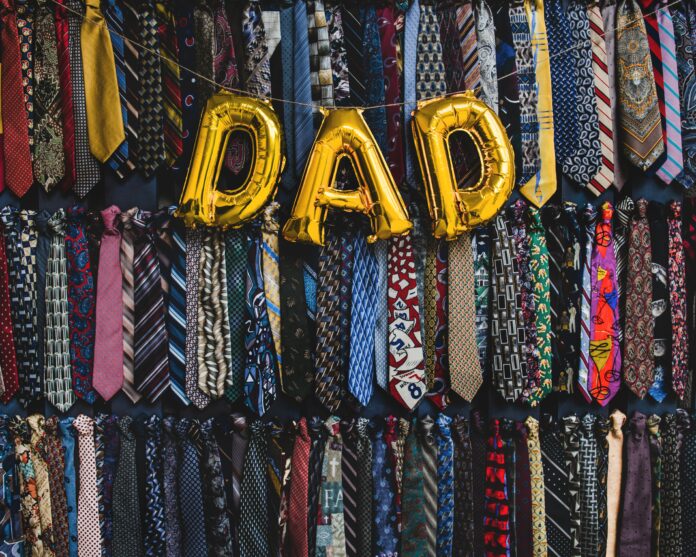
Gold balloons spelling “dad” in front of a wall of ties.
PHOTO: Tim Mossholder / Unsplash

By: Sonya Janeshewski, SFU Student and Olivia Visser, Copy Editor

Dear Peakie, 

Last time we spoke, you gave me advice on how to perfect my dad-sona. After much introspection, I found that I’m less of a punny dad and more of a socks with sandals kind of dad. My newfound confidence in my dad-entity helped me meet my wife! I met Roxannica at a barbeque. She kept saying she liked my tan cargo pants, so to seal the deal, I whispered, “I always blast videos at full volume.” I should’ve worn my shants for easier access, but they didn’t stay on too long anyway. Unfortunately, dad-sona rizz is not a solid enough foundation for a marriage. As I write this, my wife, Roxannica, is fighting for custody of our oven but, that’s a story for a different Dear Peakie letter. 

Sincerely,
Dream (and soon-to-be divorced) Daddy

Dear Dream (and soon-to-be divorced) Daddy,

This is most unfortunate, indeed. While I cannot offer advice for your impending divorce, I may be able to assist in your future romantic endeavours. First of all, might I introduce you to the concept of a red flag? Yes, dad-sonas are all the rage these days, but there is a fine line between zany and creepy — let’s be real. You say you discovered that you’re less of a “punny” dad and instead a “socks-with-sandals” kind of dad. Yet, is one really complete without the other? I hate to break it to you, but your beloved Roxannica was likely overwhelmed by your overbearing, socks-and-sandals-wearing, un-punny self — not your dad-sona, if you ever had one. My advice? Throw the word “rizz” out of your vocabulary, pick up some dad jokes, and lower the volume on your videos. I told you to be whimsically mundane the last time we spoke, not insufferable. I bet you wish you had a dad joke to get you out of this situation!

You’ll get there some day (probably),
Peakie

Dear Peakie,

I’m graduating this year, so, when it comes to following your advice about getting as engaged as SFU, I knew it was now or never. I started off by hitting on my classmate because we had a quiz I was NOT ready for, but on the second date he asked for three of my fingernails for an experiment to try and clone me, so I made a plausible excuse and dropped the class. Later, I tried spilling my books on the ground and thankfully this dude who was NOT my type picked them up. I asked him out because it takes real courage to wear something on campus that isn’t a grey hoodie or a black jacket. But I guess a lot of people fell for that, because his dorm room looked like a New York subway station. So, in economics class I complained about not understanding The Wolf of Wall Street, which got me Bradwick Stinebergson’s number. He said he had to get married by age 19 before his youth dries up, so he proposed within a week with a gold ring, which was bent from all the times the size had been adjusted. But, we were playing Monopoly with his cousin one day, and I accidentally asked him to go print more money. That set him off so much he broke off our engagement, so looks like I’ll have to transfer after all. 

Sincerely,
#1 Most Single University Student (still not engaged)

Dear #1 Most Single University Student (still not engaged),

Woah, woah, woah. I do not remember telling you to use your lack of academic and cinematic knowledge to land a man. No, my advice was to open up with information about your life goals: “I suggest sitting next to the cute, edgy guy in your seminar class and introducing yourself by telling him all about your dream wedding.” Relationships are built on trust and honesty. Honesty is being upfront about your ideal 4-carat engagement ring and $150,000 wedding goals. How are these boys supposed to know your intentions when you deceive them so? I told you to be an open book, not to lower your standards. While your time may be running out, I would suggest trying once more, and this time following my original advice to a T. 

Put a ring on it (seriously, like, soon),
Peakie

Dear Peakie,

How silly I was to take your advice. I did what you said about removing layers throughout the day as it gets warmer, and now I’m banned from most public places. 

Sincerely,
Not So Sunny

Dear Not So Sunny,

Oh, my. I struggle to find any instance where I ever suggested de-layering in warm weather. Nay, I specifically told you to LAYER in COLD WEATHER: “If it’s six degrees on Burnaby Mountain, it’s three degrees inside the AQ. Leave the house in crocs, jeans, and a light sweater, but bring a jacket and thick socks in case your toesies get cold.” I’ll say it once — both for your sake and for our readers’ sake — I am not responsible for any misconstruction of my advice, and I won’t stand for this type of accusation. Ever heard of defamation? No? Yeah, clearly not, but I have. Consider this a warning, or your days will really start to feel Not So Sunny. 

Watch yourself,
Peakie

Student updates: Spring 2024

0
Graphic that reads “Student updates.”
ILLUSTRATION: Courtesy of The Peak

By: Hailey Miller, Staff Writer

Welcome back, students! Here’s to all that 2024 has in store.

IN-PERSON CLASSES FORECASTED DURING SNOWSTORMS 

No matter how much snow tops the mountain, rest assured, classes will not be cancelled! Campuses will remain open and classes will continue as usual on days with heavy snow and fluff-filled precipitation. The buses will get stuck on the hill and dreaded delays are here to stay! Forget driving because your car will spin out before you even ascend to the highlands. The option of a “snow grade” will be available for those affected by mandatory in-person snow day classes.

CAMPUS ICE RINK CONTEST – SUBMIT ENTRIES TODAY

Have you Slip N’ Slided around campus? Are you convinced that all walkways are an ice rink? No amount of salt will be a match for the slick cement slabs. Nominate the most slippery spot on campus today! From glistening walkways to black ice-covered hills, so many contenders are up for grabs! Will the AQ Pond take first place again this year? Submissions are open now through the end of the semester. 

DRESS APPROPRIATELY FOR ALL WEATHER CONDITIONS 

Be sure to wear a parka and an SFU sweatshirt — the one that’s two sizes too big that you got on sale, but was still more expensive than your semesterly parking pass. A toque will suffice, but the pompom will blow off in the blustery winds. Be sure to wear a pair of boots with next-to-no traction when it comes to the slippery sidewalks and cement slabs around campus that give skating rinks a run for their money. Don’t forget your sunglasses because the glaring sun will be blazing brighter than your future when you look over the horizon on the way to a class you didn’t sign up for.

COUNTDOWN TO READING BREAK

Are the start-of-semester blues already hitting you? Fear not! Reading break is just around the corner, and by that, we mean you have to get through the entirety of January and the majority of February first! Nothing says “return from holiday” like kicking back into the study grind with the longest semester of the year. Every day, from now until February 16, the university will be holding a reading break countdown full of pet therapy, stress-reliever yoga classes that will fill up too quick to get a spot, horror movie marathons to live through your nightmare, and a shortage of snacks that not even one student will get their hands on. 

NEW COURSE SCHEDULING CONFLICTS HAVE ARRIVED!

Book your appointment with goSFU today to get a first-hand look at the red X that denotes unsuccessfully adding a course to your highly conflicting schedule. If you thought you were going to hash out a full five-course semester, you’re out of luck. Thought this was your last semester and you’re graduating in June? Just kidding! That last remaining course required for your degree won’t be offered for at least another two semesters. So much for planning accordingly. More conflicts will arise as one class that was scheduled for a certain campus will now be moved to another campus, making it utterly impossible for you to move heaven and earth to make it to your back-to-back classes on time. Better luck next time!

It’s time to use Indigenous names for places

0
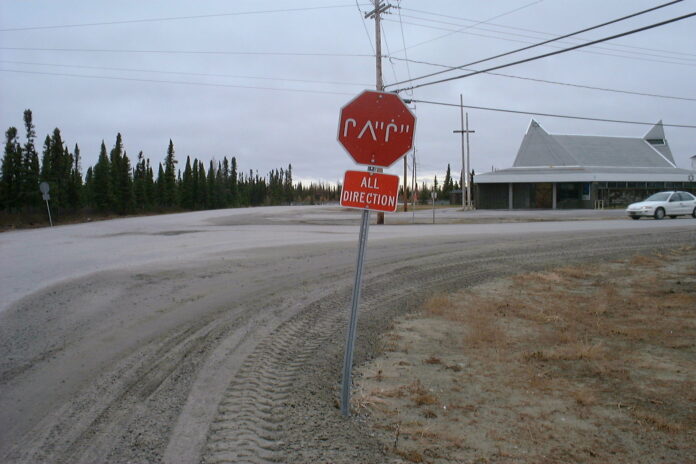
A stop sign in Cree
PHOTO: LHOON / Flickr

By: Hailey Miller, Staff Writer and Olivia Visser, Copy Editor 

Content warning: mentions of colonial genocide.

Respecting Indigenous place names is not a matter of Canada’s reputation. It’s an absolutely necessary component of decolonization. Today, so-called Canada resides on unceded, traditional territories of over 634 First Nations. Unceded, traditional territories means these lands were never surrendered or handed over to either the provincial or federal governments, but rather stolen. Many geographical locations in Canada have traditional names extending back thousands of years. Recognizing and actively using these names is a fundamental step in confronting centuries of colonial language and cultural suppression.

Canada’s history of colonization is long and violent. Current colonial names for cities, provinces, and other regions across the country have been in use for far too long. Many colonial place names are honoured for the wrong reasons. For instance, Fort Langley was named after Hudson’s Bay Company director Thomas Langley, despite the area being inhabited by Stó꞉lō nations. So-called BC was also named by Simon Fraser, a trader and colonizer who harboured anti-Indigenous sentiment and even stole from Indigenous people. Now, Simon Fraser University still bears his namesake. The use of Indigenous place names helps educate people on the importance of acknowledging Indigenous histories, traditions, and cultures. We need to deconstruct the colonial narratives of history that overlook Indigenous experiences and sovereignty.

Prior to colonization, Indigenous Peoples rightfully had full governance and authority of their lands. The implementation of the Indian Act in 1876 “displaced Indigenous Peoples’ own governance systems” and took away their rights. The Act was a form of governance that offered some benefits to those considered “Indian,” which excluded Métis and Inuit people. Until 1985, Indigenous women also lost their Status if they married a non-Indigenous partner. While many provisions have been amended to this day, consequences of the Indian Act, such as poverty and marginalization, extend into the present. 

BC’s Lower Mainland consists of lands from the Coast Salish Territories of the xʷməθkʷəy̓əm (Musqueam), Səl̓ílwətaʔ/Selilwitulh (Tsleil-Waututh), Kwikwitlem (Coquitlam), Kwantlen, Katzie, Semiahmoo, Skwxwú7mesh (Squamish) Peoples, and more. The digital interactive map Native Land shows the traditional names of Indigenous places all over the world. It helps viewers visualize the boundaries of one Indigenous territory to another and understand decolonial borders. As individuals, it’s important to differentiate between the various languages and cultures of the land we reside on.

Indigenous place names hold great meaning within their respective cultures. Stories created by Indigenous communities recall connections to land, accounts of history, and ongoing traditions. In order to keep this information alive, Indigenous languages are passed down orally from generation to generation. Mohawk poet E. Pauline Johnson documented some of the legends told by Chief Joe Capilano, including Siwash Rock in Stanley Park and The Two Sisters in North Vancouver.

Indigenous names need to be acknowledged out of respect to cultural identities that hold deep historical significance. Following the recommendation from the Truth and Reconciliation Commission, the use of traditional names on official documents is now allowed in Canada. This comes after many Indigenous people “were forced to have their names changed as a result of residential schools or other federal policies.” Traditional names were changed in favour of English and Christian names. Language is an important part of identity, and while this is only one step forward in decolonization, it’s an essential one. 

Non-Indigenous people need to recognize the history behind the land they live on, and respect the vast variety of cultures, languages, and ways of living that Indigenous Peoples have practiced for millenia. Their cultures should have never been suppressed, and now it’s our collective responsibility to respect and revitalize what has been colonized. We must implement change in order to further these steps toward reconciliation. 

What Grinds Our Gears: Potlucks

0
A group of dishes on a table
PHOTO: Derek McKinney / Unsplash

By: Cam Darting, Peak Associate

Who doesn’t love getting invited to parties? Drinking, catching up with friends, what isn’t there to love? I’ll tell you: when the invite says “potluck.” It may seem dramatic but this one requisite can alter your view of going out forever.

How do you know what to bring? You wanna bring something safe — not so safe it’s basic — but safe enough that everyone will eat it. You also wanna bring something in the same price range as everyone else. Imagine the awkwardness when you pull up to a party and you see sushi, pasta, and baked chicken, and you realize all you brought was some potato chips . . . 

How much of a dish do you bring? You never want to bring too little because then you just look cheap. If we look at the other side, you never wanna bring too much of a dish because what if nobody even touches it? Nothing is more embarrassing than bringing something and leaving the party with the same amount of food you brought. Speaking of this, nobody tells you the anxiety you’ll have watching everyone eat all the dishes clean, except yours. It’s a similar feeling to being picked last in gym class, and you don’t wanna relive that, do you?

The moral of the story is if an invite says “potluck,” stay home.

Canadian non-binary youth in sports reports lack of inclusion

0
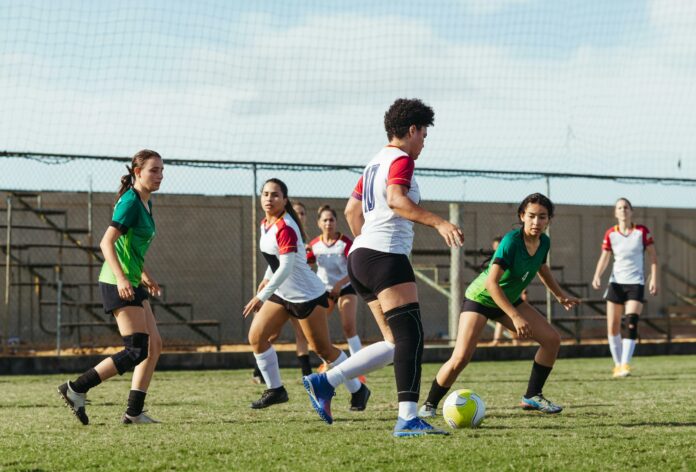
This is a photo of teenagers playing soccer on an outdoor field.
PHOTO: Jonathan Borba / Pexels

By: Izzy Cheung, staff writer

Compiled by SFU Master of Science graduate Martha Gumprich and Trans Connect’s Nicola Hare, The Canadian Non-Binary Youth in Sport Report details the lack of non-binary youth within organized sports. One of the report’s main conclusions was that “only 11% of non-binary youth in Canada currently participate in an organized team sport.” This is in comparison to the 67% of overall Canadian youth who are enrolled in one or more organized sports. Gumprich and Hare noted that 66% of non-binary youth who have avoided joining an organized sport have done so due to the ways that sports divide their teams: by gender. 

While we are starting to see more visibility of non-binary people in Canada, we know that non-binary youth feel uncertain about the degree to which they are welcomed and safe in gendered spaces, like team sports,” Gumprich said in an interview with The Peak. “There has been some previous research on transgender participation in sports, but no research on participation rates and experiences of non-binary youth in organized team sports in Canada. In order to make sport a safer place for all participants, we must first listen to those both participating in and avoiding sports to see where changes need to be made.” 

To conduct this study, Gumprich and Hare held youth group sessions with 20 queer, non-binary, and trans youth whose ages ranged from 14–26 years old. These sessions were held in Nelson, Castlegar, and online. Their report begins with a definition of non-binary, which they describe as meaning “someone’s gender does not fall exclusively into the categories of man or woman.” 

Sports fields, courts, or locker rooms are typically thought of as a place where teammates can be safe with one another, but Gumprich and Hare’s report reveals this isn’t always the case. The report’s many findings determined that four out of five non-binary youth in Canada who have avoided joining organized sports have done so because of “changeroom/locker room layouts,” in which players may not get the privacy they need when changing. Moreover, one out of two non-binary youth have cited teammates and coaches as a reason for avoiding sports. They “have witnessed discriminatory comments,” and more than one in six have witnessed someone being “physically harassed because of their gender.” 

The reasons non-binary youth are avoiding sport are very interesting because nearly all of them can be addressed through education and policy changes that can happen immediately,” Gumprich added. “If we act now and put in place proactive and protective policies, these youth may join and stay in sport which we know leads to many mental and physical health benefits.” 

“Some of these solutions include allowing non-binary athletes to choose the gendered team they wish to play on, have co-ed teams, create gender neutral changing areas with single stalls, using people’s pronouns and preferred name, and better education on diverse genders and sexualities,” Gumprich mentioned. “With better understanding comes a reduction in fear and an increase in acceptance.”   

This report is not the only study conducted by Gumprich on non-binary youth in sports. Their master’s thesis used data collected from the UnACoRN (Understanding Affirming Community, Relationships and Networks) Study in order to learn more about these experiences. This data was collected through an online survey taken by youth aged 15–29 across Canada. In future studies, Gumprich hopes to move into “the policy, action-based side of sport, and help organizations implement [their] solutions.” 

To learn more, The Canadian Non-Binary Youth in Sport Report can be read in full at ankorstransconnect.com/wp-content/uploads/2023/10/non-binary-youth-in-sport-report.pdf

Four science-driven women are making waves as they row across the Atlantic

0
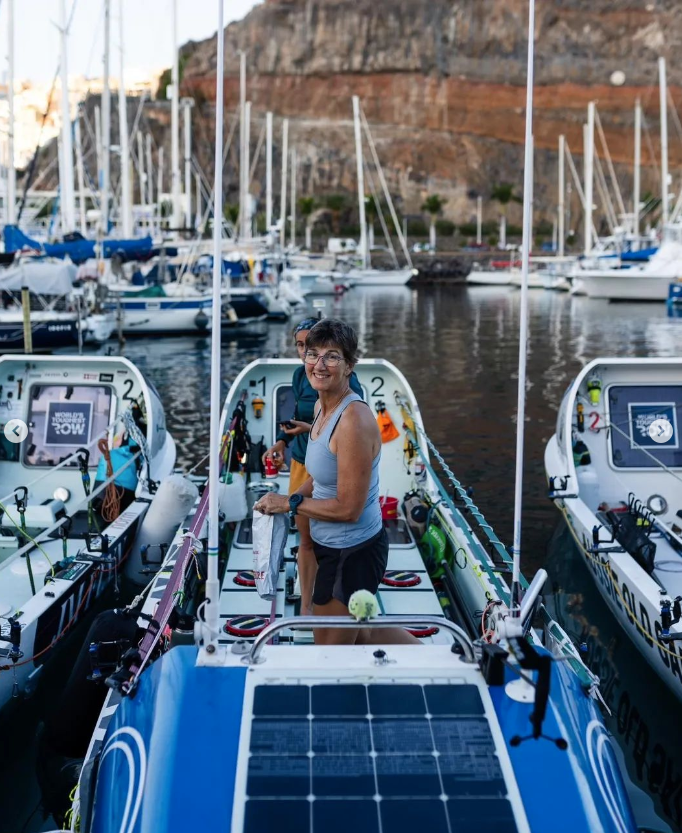
This is a photo of the rowers on their boat in the harbour. The large rowing boat has oars, personal effects, and two rowers standing in the centre.
PHOTO: Salty Science Rowing / Instagram

By: Eden Chipperfield, News Writer

Setting sail with a quest to raise $500,000 USD toward marine sciences and conservation across the Atlantic is the “Salty Science” crew. This rowing team is composed of four women, one of whom is an SFU biological sciences professor, Isabelle Côté

The women are competing in the Atlantic 2023 race, which has been dubbed the “World’s Toughest Row.” It involves competitors rowing 3,000 miles across the Atlantic ocean, from San Sebastián de la Gomera in Spain to Nelson’s Dockyard in Antigua. Teams are estimated to take 1.5 million oar strokes as a group throughout the journey. Participants battle various obstacles including sleep deprivation, physical endurance, and sores caused by the ocean’s salty waves. 

The fastest team to row the Atlantic was the Four Oarsmen, who completed the challenge in 29 days, 14 hours, and 34 minutes. 

“We are four women, four marine biologists, three academic generations, and we are very aware that we are acting as role models,” expressed Côté in an interview with SFU News. “We want girls who are interested in marine biology to know that anything is possible.”

Joining professor Côté is Chantale Bégin, a professor at the University of South Florida, Lauren Shea, a UBC master’s student focusing on Oceans and Fisheries, and Noelle Helder, who works for the University of Alaska Fairbanks. The team aims to raise $500,000 USD in funds distributed to three corporations focusing on marine conservation and science: GreenWave, Shellback Expeditions, and Bamfield Marine Science Centre. 

The team will be equipped with various tools in case of capsizing, a hurdle that the four women know will occur at one point in their journey. They are also prepared with satellite phones, a first aid kit, radios, and emergency signals. Personal belongings on the boat are limited, as each member can only carry a 40-litre dry bag because most of the boat will be packed with necessary food items for the long journey. 

“We’re feeling ready. While there are a lot of nerves and buildup, we had a good time this summer training every day in Florida for two months. We have been prepping for nearly three years,” said Shea. 

At the time of writing, the Salty Science team was in 7th place and had 662.8 nautical miles left in their journey.  

To keep updated on the Salty Science team’s progress, visit their Instagram @saltysciencerowing. 

A Year of Blessings brings Lunar New Year nostalgia

0
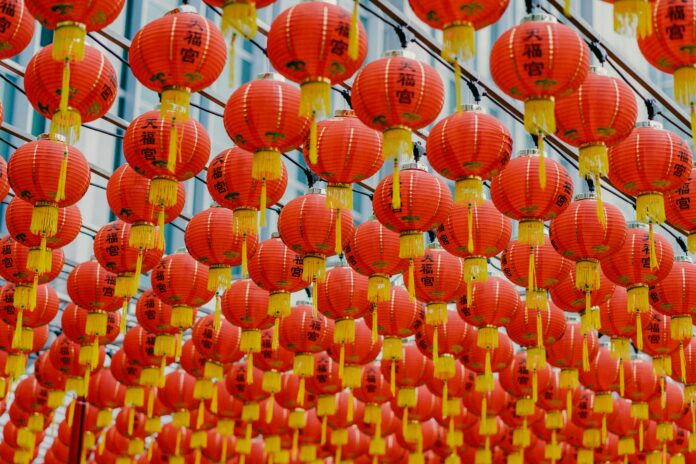
A row of red Chinese Lunar New Year lanterns
PHOTO: bady abbas, Unsplash

By: Izzy Cheung, Staff Writer

Despite now living in Canada and celebrating many traditionally western holidays, my family and I always partake in some Lunar New Year celebrations. For us, Lunar New Year is an occasion to gather around my grandmother’s wooden dining table and eat our way through dishes like xiaolongbao (soup dumplings), har gow (shrimp dumplings), and chow mein (pan-fried noodles). This year, the changing of the Lunar calendar occurs on February 10. To help adults and children get in the festive spirit, Five Blessings Collective and Richmond’s Gateway Theatre have partnered to put on A Year of Blessings. This six-episode audio play series delves into Chinese traditions and festivities while conjuring childhood experiences of Lunar New Year celebrations. 

The first episode, “Bun Fun New Year,” begins with a cute opening song introducing the Bao family, a household of bunnies who are tasked with hosting this year’s Lunar New Year dinner. Bunnifer and Bunnithy Bao, the twin bunnies of the Bao house, verbally roll their eyes as Ba Ba (father) Bao retells the origin story of the Chinese zodiac — a story they’ve heard every year. In this legend, twelve animals race, and their placement at the end determines the order of the Lunar calendar. As Gung Gung (grandpa) Rabbit tells this tale, listeners can hear the hustle and bustle of various servers frantically squirming around a dim sum (Chinese brunch) restaurant trying to serve up har gow, shumai (steamed dumplings), and char sui bao (pork buns). Plates patter, uncles and aunts chatter, and chopsticks clatter as the Bao family vow to make their Lunar New Year dinner the best one yet. This particular scene drew parallels to my first time being told this story by my dad, in which we were sitting at my grandmother’s dining table while eating a home-cooked meal. 

For the Bao family, hosting Lunar New Year dinner comes with added pressure, as the hosting household from the year before, the Tigers, pulled out all the stops. As they stress over being unbeatable hosts, the Bao family deciphers menus and schedules that they hope will make the day go as perfectly as possible. The preparation of dishes is accompanied by the sound of knives slicing through stalks of green onion and the plip-plip-plip of sauces being dispensed through the spouts of bottles — sounds that made my mouth water

Celebrations and gatherings aren’t complete without a little fun competition, and the dinner at the Bao household is no exception. A staple in Chinese households, mahjong is a four-person game that’s kind of similar to the card game rummy. The rustling of the mahjong tiles slices its way through the frantic frenzy that becomes the Bao household as guests begin to filter into the home. The sound brings the smooth, cold feeling of marble tiles into my hands, and the beacon-like laughter of my grandparents as they win even more of my parents’ money.  

At the end of the day, for both the Bao household and those that celebrate Lunar New Year, the purpose of these festivities is to come together as a family. Any pressure that arises out of preparing the perfect dish is meaningless when enjoyed with loved ones. For us, celebrating Lunar New Year isn’t just about preserving culture — it’s about keeping the memories of loved ones alive, present or not. Whether you’re enjoying a tray of Hong Kong egg tarts around a dim sum table or gathering under a soft, honeyed light that illuminates the dishes you grew up enjoying, cCultural celebrations are about showing your appreciation to those who came before you, and those who surround you. 

SFSS Council’s Quest for a Rights-Free Utopia

0
Grey sign that reads “Welcome to Neutralityville.”
ILLUSTRATION: Sonya Janeshewski / The Peak

By: Sude Guvendik, Staff Writer

Greetings, fellow students of wit, wisdom, and occasionally questionable decision-making! Let’s turn to another page of SFSS council drama, where on today’s episode, the SFSS Council, led by the daring president Liam Feng, contemplates the groundbreaking notion that equality is best achieved when no one has equal rights.

Picture this: a January 3 SFSS Council meeting, where president Feng unveils a motion that could put Avengers’ disagreements to shame. The proposal? To repeal all Issues Policies, including policies supporting reproductive rights, tuition affordability, and a free Palestine. Because who needs specific policies when you can have an all-you-can-equal buffet?

In a move that can only be described as avant-garde democracy, our protagonist, president Feng, spearheads this motion without consulting the people who worked tirelessly to establish these policies. It’s like planning a surprise party for someone but “forgetting” to invite the birthday person because you did not get them their well-deserved birthday present. Surprise! Or maybe not.

Hidden in this proposal is another shocking proposition: displacing the entire student body to a town called Neutralityville, where everyone is determined to be as neutral as a Switzerland-shaped pancake. The mayor of this town is named Nelly the Neutralist. Nelly, bless her heart, wants to be so neutral that even her morning coffee can’t decide if it’s black or white.

There is no need for the students to worry because they will be greeted by a carnival-sized injustice party. Undergraduate students love parties. Especially ones where we compromise on basic human rights so we can all pretend to be friends! Once students move to Neutralityville, they will never want to leave. After all, true justice lies in remaining impartial in the face of inequality. If no one has rights, no one can complain, right? It’s the ultimate form of democracy — a democracy where nobody is happy, but at least it’s fair!

But fear not, dear readers, for there is a glimmer of hope. 

They’re like shields, strong defences for the underprivileged and marginalized made to fight unfairness. These shields, called Issues Policies, are the tools that protect hard-earned rights. 

Over the years, BIPOC communities, fearless student leaders, and passionate advocates forged the Issues Policies from tears and blood. Now, can you believe there’s talk of shattering these shields into pieces? It’s like asking our heroes to surrender their hard-won victories.

A group of brave souls is rallying behind a motion to call for a ceasefire and defend Palestinian liberation because nothing says “justice for all” like standing up against undemocratic attempts to repeal hard-fought policies.

In the end, our protagonist’s attempt to redefine equality as the absence of rights leaves the audience scratching their heads. Perhaps the true humour lies in the absurdity of his proposal.

MENA Film Festival is a cinematic journey of Middle East and North African narratives

0
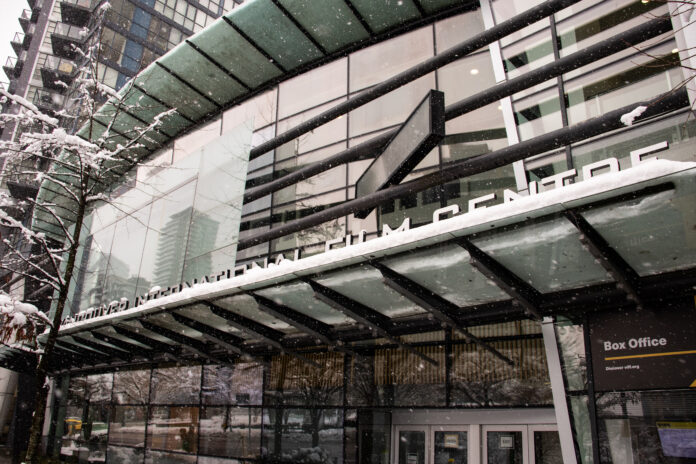
A snowy exterior shot of the VIFF Centre.
PHOTO: Coen Devlin / The Peak

By: Sude Guvendik, Staff Writer

Content warning: mentions of war and genocide.

The awaited 2024 Middle Eastern and North Africa (MENA) Film Festival is set to captivate audiences from January 27–February 1 at the VIFF Centre. The fifth annual selection boasts 42 feature and short films hailing from 25 countries from the MENA/SWANA (Southwest Asia and North Africa) region and its diaspora, standing out as one of the most diverse MENA festivals to date.

Arman Kazemi, festival director at MENA, emphasized the deliberate choice of naming the festival “MENA Film Festival in Vancouver” rather than the “Vancouver MENA Film Festival.” “We never consider ourselves to be geographically bound by municipal Vancouver. We very much see this as a global festival that represents a particularly Canadian voice from our perspective,” Arman explained. “We want to be very cosmopolitan in our vision.” 

Kazemi co-founded MENA in response to a “lack of Iranian and other minority representation in Vancouver film culture specifically.” Film festivals in North America, whether Arab or not, “can tend to be a little bit silo or domestic,” he told The Peak. An Iranian Canadian filmmaker and journalist, he’s seen tremendous growth over the past five years with a hardworking team, a dedicated audience, and “competitive and challenging” films both locally and from around the world.

This year’s festival program delves deeply into the intricate relationship between bodies and their surroundings, exploring various temporal dimensions that span the past, present, and future. Sarah Trad, a Lebanese American artist and curator, and director of programming at MENA, provided insight into the evolution of the theme. She highlighted the films’ profound reflections on how bodies and minds serve as vessels for daily life. Divided into bundles under sub-themes, the films all shed light on the ways systems of power seek to control natural movements through space.

Initially grappling with the extensive implications of last year’s theme, “land”, the organizers encountered challenges following it up, as there are “so many different ways the SWANA region is affected by land […] in terms of heritage and diaspora.” After an open call and more submissions than anticipated, Trad was able to link the content under the thread of body, a topic she also happened to be exploring in her curatorial practice.

This was relevant especially in the context of ongoing atrocities facing these communities, such as the genocide in Palestine. Trad said that MENA’s goal is to “juxtapose the links that might be drawn from mainstream misrepresentations,” which tend to dominate perceptions of SWANA communities. The hope is to foster empathy and “politically engage with how SWANA bodies are being represented in news journals, for example.”

Trad’s vision is evident as each film becomes a brushstroke, contributing to a larger portrait of SWANA culture, where bodies “carry the weight” of heritage. She hopes that audiences “see the really intricate ways that people in SWANA culture relate to their bodies.”

Noteworthy debuts
While there’s no shortage of impressive films across that experiment and push boundaries, here are a few that are making a debut.

Vibrations from Gaza
Director: Rehab Nazzal
Palestine
Language: Sign language

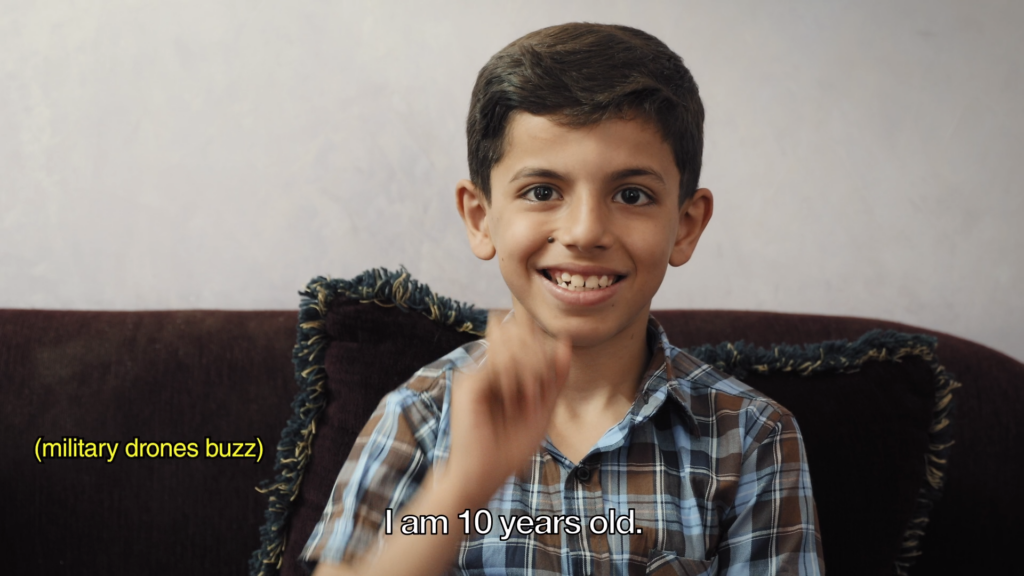
Directed by a Montreal-based Palestinian Canadian artist and educator, this short documentary centres Amani, Musa, and Israa, three deaf children who have endured “several rounds of sieges” under Israeli occupation. Courageously sharing their “encounters with bombings and the ever-present drones hovering in their skies,” Trad emphasized how the children portray their disabilities as an asset and how impressed she was by how they narrated their experiences so eloquently as children. The film is important because children are “the most directly affected by what’s happening in Gaza right now,” and it highlights disability activism and rights under unfathomable circumstances.

A film still of Vibrations from Gaza. A smiling young boy from Palestine being interviews has his hand up using sign language and caption reads “I am 10 years old.” on the side, text reads “military drones buzzing.”
PHOTO: Courtesy of Rehab Nazzal

Hair
Director: Sara Jade Alfaro-Dehghani
Iran
Language: English and Farsi

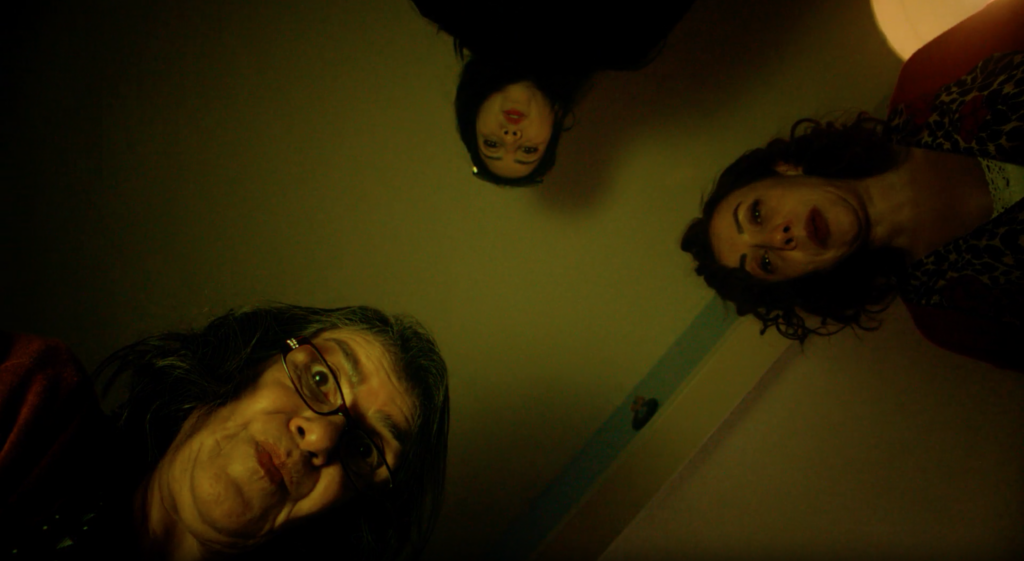
Through Ontario-based director’s “whimsical and dramatic lens,” this short film embarks on a journey of three Persian immigrant sisters as they gather for their “regular tea and hair removal rituals.” This intimate tradition passed down through generations unravels layers of family drama alongside layers of clothing. As they “wax, thread, and epilate,” Nora, transitioning into womanhood, must learn the art of threading to “prove her chops” in the three witches’ coven. Informed by her upbringing with an Iranian mother, Hair is a tender exploration of family bonds, cultural heritage, and the intersection of rituals and womanhood.

A film still of Hair. A dark, out of focus whimsical shot from below as 3 woman look down at the camera.
PHOTO: Courtesy of Sara Jade Alfaro-Dehghani

Heroic Bodies
Director: Sara Suliman
Sudan
Language: Arabic

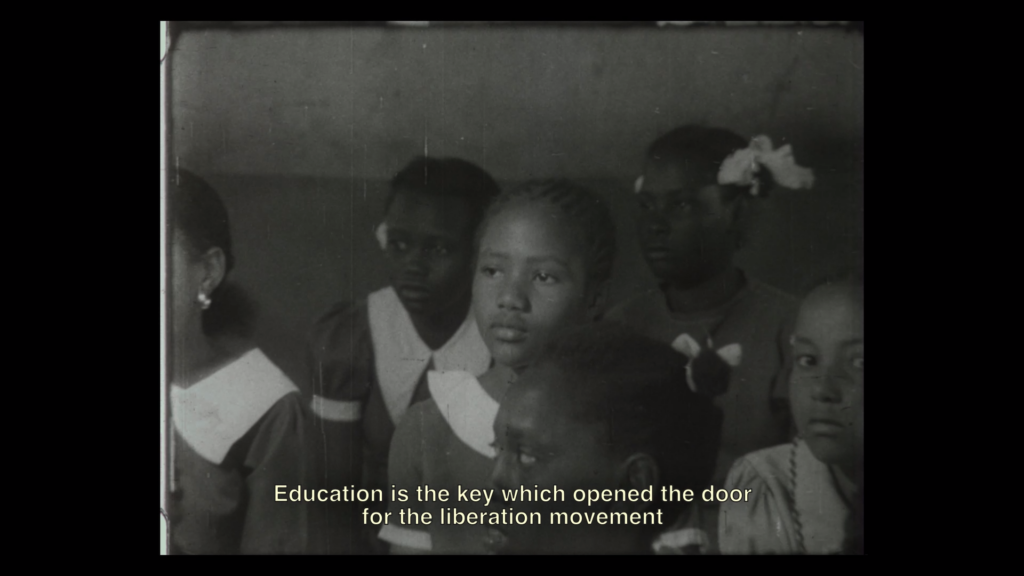
Heroic Bodies delves into the tumultuous history of Sudanese women who have endured centuries of “oppression, abuse, and violations” of their basic rights. The feature documentary artfully portrays the multifaceted struggle and resistance of Sudanese women in reclaiming ownership of their bodies, fighting for the right to education, and advocating for accessible public health. The film also explores the matriarchal religion known as the “Zar cult” and how it challenges social norms. Suliman’s narrative skillfully weaves together tales of resilience, courage, and the unyielding spirit of Sudanese women in their quest for autonomy. “It’s really relevant for people right now to be learning about Sudan,” Trad said, referring to the current humanitarian crisis and ethnic cleansing.

A black and white film still from Heroic Bodies. A young Sudanese girl in a school uniform looks off into the distance. The caption reads “Education is the key which opened the door for the liberation movement.”
PHOTO: Courtesy of Sara Suliman

Get Involved!
The festival recently launched a volunteer call-out. Arman encouraged everyone interested to explore their website for their range of volunteer opportunities, including “venue liaising, merch table, audio and tech.” Volunteers get access to events, food and refreshments, and an afterparty with the vibrant MENA community. Beyond the festival’s core events, he revealed plans for a special free Armenian Evening at UBC on January 31 at 6:00 p.m., featuring screenings of two Armenian films and a Q&A with the filmmakers.

The theme of bodies in space and time serves as a rallying cry for a more inclusive and nuanced understanding of SWANA cultures. Through the lens of the body, the festival endeavors to foster empathy, challenge preconceptions, and contribute to a richer and more authentic representation of Middle Eastern and North African narratives in the global cinematic landscape.

Tickets range from $8$15 and are free for self-identifying Indigenous individuals. Screenings are available both online and in-person. Find more information on their website, menafilmfestival.com.

Eclectic experiences at Moodswing Coffee + Bar

0
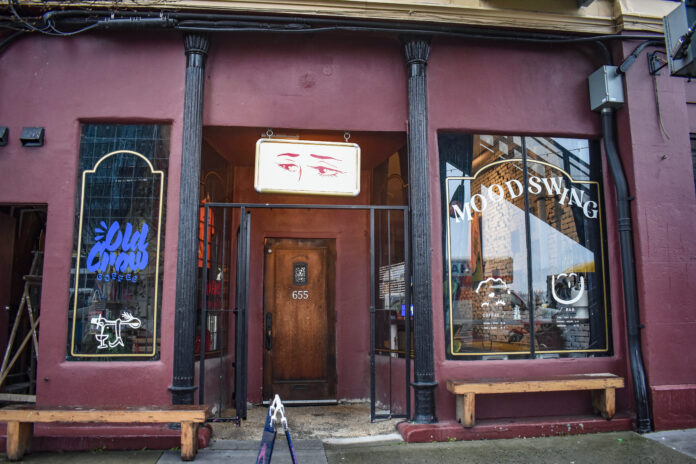
A photo of the exterior of the Moodswing cafe building. The building has an antique appearance with decorative black pillars on either side of the door, carmine and chesnut paint, and two big windows with the words “moodswing cafe” pasted on one and “old crow coffee on another.” Above the door is a poster of a drawing of a set of seductive eyes in maroon ink.
PHOTO: Amrit Kamaal / The Peak

By: Izzy Cheung, staff writer 

On the hunt for a new study spot or a place to bring friends during a night out? Look no further than downtown New Westminster’s Moodswing Coffee + Bar, an eclectic café that turns into a bar at night. It’s nestled inside a small, antique building coloured a cute combination of carmine and chestnut, only a 10-minute walk away from the New West SkyTrain station. Under a sign above the door, sultry eyes beckon passersby to stop inside for a pastry or two. But how did the idea for a café and bar come to fruition? 

Formerly known as Old Crow Coffee, Moodswing initially hosted activities such as open mic nights, live music, and the like. The café obtained an event license for these nights that allowed them to serve beer as well as their usual products. 

“We had regulars chatting with staff about where their favourite evening watering hole was in New West, and the consensus was often that options were limited,” Liam, Ricky, and Steph from the Moodswing management team told The Peak. “This grew into a project that some of the original staff of Old Crow called Incantations, which were a series of cocktail and dinner popups around 2018 that were a big hit. [ . . . ] Moodswing started up as an offsales program to help diversify income for the business, which really helped during the early years of the pandemic, and we opened for dinner service February 2022 and changed our name fully to Moodswing Coffee + Bar a year later.” 


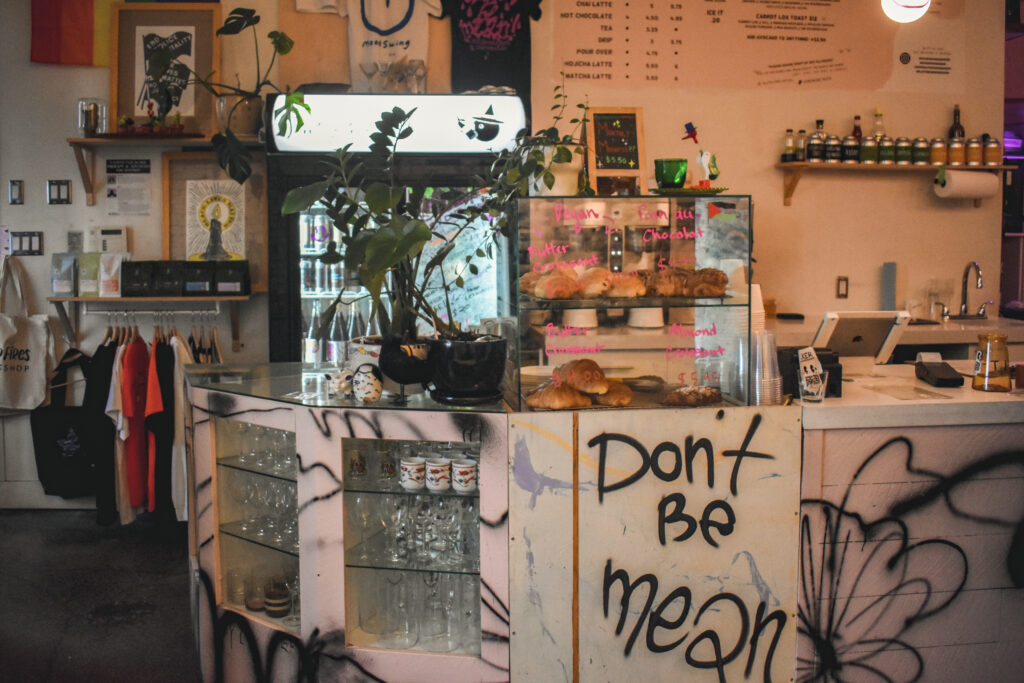
An ordering counter inside moodswing cafe. Behind it are shirts and tote bags on a rack. There is a plant and pastries on display. The front of the counter is a light pink and has graffiti on it and the words “Don’t be mean” are written.
PHOTO: Amrit Kamaal / The Peak

I stopped by Moodswing on a crisp Saturday afternoon that felt like the perfect occasion for a warm drink. Bundled up in a jacket, I wandered over to the café in search of a yummy beverage and a sweet treat to go along with it. 

The space itself looked bigger than what I’d imagined. Every nook and cranny in Moodswing was used productively, with the two corners at the windows hosting bar-styled seating and a small bookstore. Little gaps in the white brick walls housed small figurines, adding a homely touch to the atmosphere. Further into the café were some booths and tables for further socializing, though all the spaces at the back were taken up. 

Chitter chatter bounced off the walls, combined with the whirling sound of espresso beans being ground into a portafilter. Baristas sent cheerful salutations to those who came and went, their voices cutting through the bustling energy of the busy coffee shop. Splashes of peachy pink, pistachio green, and honeyed orange decorated the canvases of various sizes that were hung up on the walls — they reminded me a bit of Cage the Elephant’s Melophobia album cover. 

Looking around the café, it’s clear that Moodswing tries their hardest to make themselves as accessible and welcoming to as many people as possible. Their bakery items, provided by Leavenly Goods, are set aside and sold at a lesser price when they aren’t bought the day before. There’s plenty of space in seating areas for individuals who require wheelchairs, and a designated accessible parking space. 

Everyone is important and has different needs and our goal is to do our best to take care of each other,” the Moodswing management team said. “We’re all always learning — be it lessons in how to make a great coffee or cocktails, or how to hold space for grief in the workplace or joy in hard times, since there are plenty of those right now. [ . . . ] We want to show the neighbourhood that it is possible to run a business compassionately and transparently. That everyone should have access to the warmth of a good coffee, or the soft magic of a thoughtful cocktail.” 

I ended up getting an oat chai latte and a couple of chocolate croissants. Having brought my family along with me, we got some different drinks and snacks so we could try a variety of things. My brother enjoyed his cinnamon bun, and my mom liked her americano. Each cup came with a cartoonish design of a dipping bird, as well as a thick paper lid. Tiny details like these conveyed the ideals of a local, homegrown café near and dear to its community. 

“It’s hard to pin down our favourite thing about running a café [ . . . ] but the one real constant is people,” Moodswing’s team informed. “Whether it’s our staff, who are some of the most amazing humans we know, or our collaborators like Wildfire’s Bookshop, Leavenly Goods, or Another Beer Co., to name a small handful. Our regulars are our friends, and the relationships that have emerged from running this café are what make everything worth it.” 

Try some of Moodswing’s cocktails like their vanilla bean-infused akvavit “Comet’s Tail” or their tangy and lemony “Tall Grass” for yourself! Be sure to stop by for their “Clicks and Cuts” (ambient electronic vinyl) and “Quality Time” (call and response vinyl collaboration) events in February. You can find them at 655 Front street in downtown New Westminster and follow them on Instagram at @moodswingbar.