Home Blog Page 155

We shouldn’t punish calls for ceasefires

0
A pro-Palestine protest, where a sign reads “ceasefire”
PHOTO: Gayatri Malhotra / Unsplash

By: Kelly Chia, Editor-in-Chief

Content warning: mentions of bombings, genocide, racism.

On October 24, member of provincial parliament (MPP) Sarah Jama was censured. This means Jama will not be recognized by the Speaker of the House. She made a statement on October 7 calling for de-escalation from the Israeli government and ceasefire in occupied Palestine. Her statement was criticized for not condemning Hamas’ attacks on Israel, though she condemned “Hamas’ terrorism on thousands of Israeli citizens” in a later apology. Jama’s defense of civilian Palestinian lives isn’t equivalent to condoning violence toward Israeli and Jewish civilians, and it should have never been portrayed as such. 

Ontario New Democratic Party (ONDP) leader, Marit Stiles, had the gall to censure Jama for advocating for peace in Palestine before reiterating her statement for a ceasefire days later. She is calling for the same thing Jama did — she just waited until it was politically acceptable. If there were any heart to Stiles’ call, she would reinstate Jama and apologize. Jama did what our government continues to shy away from: speaking up on behalf of over 9,000 people, at least 3,195 of whom are children and have been killed in the bombardments.

Jama’s censure for speaking up for Palestinians came at a time when they were met with little sympathy from western media and governments. This is an unjust punishment toward an MPP who is advocating for the humanity of Palestinians. However, punishment for speaking on behalf of Palestine seems to be in line with western sentiment

Many critics seem to interpret calls for freeing Palestine — which at its heart is a call to end the decades of Israeli occupation on Palestinian land — as dismissive of Hamas’ attacks on October 7. In reality, the Israeli military have not just attacked in retaliation, but have escalated their decades-long occupation. International law condemns the Israeli occupation on the Gaza strip and West Bank as apartheid — referring to systemic segregation toward Palestinians — among many other violent atrocities. This has been ongoing for the past 75 years. It’s far from the only time Israeli military forces have attacked Palestine, but now they have the western world’s approval and unconditional sympathy. 

Though left-leaning parties like the NDP have recently made lukewarm calls for a ceasefire, showing solidarity with Palestine has put many at risk of their careers. Numerous people, expressing only solidarity with Palestine, have been let go from publications, government bodies, and more. In the last month, the NDP, like many political parties in Canada, insinuated that Palestinian rallies and Palestinian solidarity is antisemitic. However, the idea that supporting Palestine is antisemitic equates criticisms of the Israeli nation state with criticisms of Judaism and Jewish people. Former NDP MP and Toronto mayor Olivia Chow, for example, characterized a pro-Palestine rally as a glorification of Hamas attacks. As Israeli journalist Abraham Gutman writes, this “conflates a diverse religion with the politics and policies of a single country.” As antisemitic incidents rise, it’s important to remember calls for ceasefire and condemnation of Israel’s actions are not calls to endanger Jewish people, or dismiss those who lost their lives as a result of the conflict. Many Jewish organizations have gathered at Palestine rallies to show their support for ending Israel’s occupation.  

Jama is an ONDP MPP who has always advocated for marginalized people. She has openly spoken on accessibility in medical care and ending boil water advisories in Indigenous communities. At the time she was removed, Jama said her team was cut off from documents and data that would have assisted community members in navigating the Ontario Disability Support Program. ONDP leader Marit Stiles claimed in a statement on Jama’s censure that she had “contributed to unsafe work environments for staff.” Stiles perpetuates the racist belief of Black women being aggressive just for speaking up. Jama’s expulsion from caucus shows how afraid a supposed left-leaning party is of actual progressive ideals. Jama is a Black and disabled MPP, identities that intersect in her work. If progressiveness is what the ONDP claims as one of its principles, why haven’t they accounted for the people who need a MPP like Jama? The ONDP may flaunt its progressiveness, but their abandonment of Jama is insidious. 

As the Toronto-St. Paul’s NDP wrote in a statement, Jama “echoed positions held by the United Nations, International Court of Justice, and numerous human rights organizations whose only goals are toward peace.” Her censure reflects the hypocrisy toward calls to support peace in Palestine, which are treated not only punitively, but with much more scrutiny than calls for peace in Israel. Attacks on civilians should be unequivocally condemned. But there are double standards in our governments’ and media corporations’ attitudes towards Israel’s “self-defense.” This self-defense has extended to genocidal violence toward Palestinians. Despite the increasing death toll and horrific footage coming from Gaza, calling for peace and ceasefire suddenly becomes “complicated” when discussing the rights of Palestinians. Where is that same immediate condemnation of violence now? 

What I’d like to ask all these critics is how much they truly believe removing clean water, fuel, and electricity from millions of people could constitute self-defense. So many media networks categorize Israel’s attacks, which largely impact Palestinian citizens, as a war against Hamas. How could this be a war against Hamas when the attacks target millions of Palestinian civilians in the Gaza strip? Israel drones have striked the West Bank, which aren’t governed by Hamas. They have also striked Lebanon and Syria, committing serious international crimes. Where have the calls for justice been for them?

The safe zones Palestinians are told to flee to have also been bombed, and they have nowhere else to go. Hospitals in Gaza continue to receive bomb threats while half of the 2.2 million Palestinian citizens have been displaced by strikes destroying their homes. Do critics truly believe every life matters, or do they just not care that nearly 50 families — entire generations — have been wiped from registries as a result of these attacks? 

It is not difficult to name what we are witnessing as a genocide, which develops in multiple steps. We have already gone through classification, discrimination, and so much more. As there have been reports of mass killings using internationally outlawed white phosphorus on civilians in Gaza, we are rapidly approaching the end stages of genocide. Yet, we continue to punish politicians like Jama for calling on Canada to intervene.

On October 27, 120 countries passed a motion for a ceasefire in Palestine. It is notably a motion that Canada abstained from. The silence in the face of this much violence is palpable, and severely disappointing. 

Calls for ceasefire and peace should not be punished. It should not be controversial to call for the immediate restoration of water, electricity, fuel — basic human needs — for Palestine. It is only recently that western sentiment has shifted, as more and more MPs call on Trudeau to advocate for a ceasefire.

In the face of so much grief, horror, and despair, Palestinians continue to protest against their oppressors in the West Bank. Jewish communities are gathering all over the world, chanting, “not in our name,” in solidarity. Even as they risk legal punishment, activists in Israel are standing on behalf of Palestine. Hundreds and thousands of people protest around the world, like Sarah Jama, despite institutional suppression from their universities and their jobs, standing up for Palestine’s liberation and freedom. 

Palestinians have experienced decades of military attacks and an oppressive regime. Media was so quick to condemn Hamas’ violent attack, but where was that condemnation when Palestinians have been killed for decades? We need to be more wary of the narrative that this is “complicated,” because making the choice to not learn more at this critical time means being complicit in watching a genocide unfold. This is why it’s also important for us to continue to call out our institutions when they are punishing their workers for speaking up. They are not wrong for calling on our governments to intervene. By speaking up, we empower our MPs to demand an end to Israel’s persecution of Palestine.  

E-4949 is a petition to the Prime Minister calling to demand a ceasefire. To learn more about Palestinian history and the Israeli occupation, visit Decolonize Palestine. They are an independent website run by two Palestinians, curating resources, reading lists, and historical timelines. B’Tselem, the Israeli Information Center for Human Rights in the Occupied Territories, is an Israeli organization dedicated to documenting and collecting statistics on the Israeli occupation and human rights violations on their website. 

The Walrus panellists discuss Canada’s housing crisis

0
This is a photo of the suburbs in Burnaby, Canada. This is a large aerial shot, where suburbian houses and trees spread as far as can be seen.
PHOTO: Roshan Raj / Unsplash

By: Olivia Sherman

Content warning: brief mention of colonial violence. 

On October 26, Canadian magazine The Walrus hosted a series of speakers, ranging from experts to activists, to discuss equitable housing. The seven speakers each had seven minutes to present a different angle on Canada’s housing crisis. The Peak attended the event to hear more about the diverse problems facing Vancouver’s housing markets. 

Kishone Roy: 
Kishone Roy is an author and the executive director of the Federation of Community Social Services of BC. “Housing, for the first time I can remember, is the number one issue in the nation,” they said. Although Pacific Canada’s housing rates have always been high, Roy noted this issue is not limited to the West Coast anymore and has become a nationwide issue. “Not one province, city, First Nation, or regional district can solve this alone.” They theorize younger generations are being bought out of the towns and cities they grew up in and no longer own their own homes, due to sheer unavailability in the housing market. Young people “look around, and there are no affordable housing options for them [ . . . ] most of what has been built over the past 30 years are mansions and penthouses.” Roy refers to this as “generational gentrification.” Gentrification is the process of rapidly changing an urban area into a wealthier one by attracting people of a higher socioeconomic class with new buildings and businesses, usually leaving the original inhabitants displaced and underrepresented. Generational gentrification then occurs when young people are forced to move out of their home communities when looking for housing as their neighborhoods have increased in value over time.

Djaka Blais: 
Djaka Blais is the executive director of the Hogan’s Alley Society, a Vancouver non-profit aiming to revive and support Vancouver’s Black population. “Our mission is to improve the lives of Black people through inclusive housing, cultural programs, and community spaces.” Blais announced the society is launching a community-based, Black-led land trust in Vancouver. Throughout the 1900s, Hogan’s Alley was a cultural hub for Vancouver’s largest Black community and neighbourhood. Through destructive city planning in the 1970s and the building of the Georgia and Dunsmuir viaducts, Hogan’s Alley and its once vibrant population were displaced, and “the heart of the Black community was lost,” Blais explained. “Our mission is to make sure that Black communities are not only remembered, but also provided with the spaces and housing we need to foster a more inclusive and equitable city.” 

Samantha Eby: 
Samantha Eby is a Toronto-based architect, researcher, and educator. Eby’s research with ReHousing focuses on how people can convert single-family homes into multi-purpose housings. She concluded that the people who build and plan housing significantly affect the way we live today. She uses professional development services as an example: housing development companies often have “investors in mind, rather than users,” which leads to a “housing stock that increasingly does not reflect the needs of our communities.” Eby’s research suggests users and owners should have more leverage over how their homes are designed. Citizen-designers have a variety of needs they can work toward addressing such as those wanting to age-in-place, multi-generational households, and community land trust. “With the right tools and knowledge, we believe these citizen-developers can take on their own projects and start to diversify both who is building and the type of housing within our cities.” 

Lisa Rupert: 
Lisa Rupert is the vice-president of housing and violence protection at the Young Women’s Christian Association (YWCA), an organization aiming to support women, mothers, families, Two-Spirit, and gender-diverse people during tumultuous times. Rupert explained the gendered aspect of houselessness, and cited escaping abusive relationships as a common cause of houselessness. She said rates of gender-based violence and homicides have increased alongside rental costs, as more and more women are “economically forced to return to their abuser.” The YWCA advocates for affordable housing, especially for women leaving abusive households. They also campaign for a “national definition of homelessness that reflects the unique causes, conditions, and experiences of homelessness for women and gender-diverse peoples. You can’t fix a problem if you don’t name it and properly understand it.” 

Stephanie Allen: 
Non-profit real estate developer and corporate strategist, Stephanie Allen, has a different take on the housing crisis. “After decades in this work and having in-depth conversations with people who range from policy-makers and CEOs to disability justice experts and homeless people, and engaging with leading equity theorists, it’s occurred to me that the most important solution we haven’t fully tried yet, is love.” Allen said we must make policies and decisions based around compassion, care, community, and mutuality. She calls on society to believe in the “inherent dignity of all people, and in sharing our global village equitably and sustainably.” She said we must “fully interrogate” the belief that “we can only be safe and secure if we have more than the next person.” 

Tim Richter: 
Homelessness is “our choice to solve it or not,” said Tim Richter, the CEO and president of the Canadian Alliance Against Homelessness. “Homelessness is a housing problem. It is caused by high rent and low vacancy. It is not, I repeat, it is not, caused by mental illness, addiction, poverty, poor choices, or any other personal fault or failing,” he stated. He compared the housing market to a game of musical chairs: the stronger or faster the child, the more likely they are to gain a chair. It isn’t the fault of the child with a sprained ankle that they were unable to get a chair at the end of the round. “At the end, a fast, big, confident boy sits victorious in the last available seat. Now, the kids who lost: did they lose because of a disability? Because of a lack of physical strength? Did they make poor choices in the game? Or were there not enough chairs?” Richter noted that all 77,000 displaced victims of the 2013 Calgary flooding and the 75,000 evacuated people from Fort McMurray’s wildfires were able to get housing. “But in most cities, when we’re responding to the unnatural disaster that is homelessness [ . . . ] we put little to no focus on housing.”  

Sxwixwtn (Wilson Williams): 
Sxwixwtn, elected councillor and Spokesperson for the Sḵwx̱wú7mesh Úxwumixw (Squamish Nation) discussed the upcoming units of affordable housing on Sen̓áḵw lands, now known as Kits Point in Kitsilano. Before colonization, the area was a central hub for many residing Indigenous communities for trading, commerce, social relations, and cultural practices. In the early 1900s, the BC government forced them to surrender the village before burning it down, sending an exodus of people from Sen̓áḵw to what is now North Vancouver. In 2003, the Federal government returned a portion of the land back to the Sḵwx̱wú7mesh Úxwumixw. “Sen̓áḵw has the potential to partially right historic injustice,” noted Sxwixwtn. The development will be the largest First Nations land development in Canadian history, with 6,000 rental units. They will be able to house up to 9,000 people, with 20% of these units designated for affordable housing. “One of our main goals, at the Sḵwx̱wú7mesh Úxwumixw, is to help address the housing crisis.”

Teach-in event at SFU sheds light on Gaza crisis

0
This is a photo of a man standing above a city in Palestine, on a large hill. He is waving a Palestinian flag, red green, and black.
PHOTO: Ahmed Abu Hameeda / Unsplash

By: Sude Guvendik, Staff Writer

Content warning: mentions of violence and genocide.

In an effort to provide historical, legal, and humanitarian context to the ongoing crisis in Gaza, the Centre for Comparative Muslim Studies (CCMS) at SFU co-organized an online Teach-In event titled “Decolonise Palestine Teach-In: The Legalities and Illegalities of the Occupation of Palestine.” 

The event was co-hosted by the Third World Approaches to International Law Review, Racialized Academics & Advocates Centering Equity and Solidarity, and the Social Justice Centre at Kwantlen Polytechnic University. It featured a panel of world-leading experts on Palestine, like Nimmi Gowrinathan, the founder and director of sexual violence initiative for the Colin Powell Center for Global and Civic Leadership, and Dania Majid, the co-founder and president of the Arab-Canadian Lawyers Association. Together, the panellists delved into the complexities of the situation.

Maya Mikdashi cautioned against viewing the crisis from a settler timeframe. “One of the challenges when adhering to a settler notion of time is deciding where to commence. Anyone who starts their analysis on October 7 is inevitably operating within the settler epistemology of time and temporality,” she said. 

Noura Erakat began by scrutinizing the legal frameworks used to justify land dispossession and the seizure of Palestinian property. Laws like the Absentees Property Law and Man Acquisition Law, enacted in the early 1950s, played pivotal roles in merging vast areas of land under Israeli control, undermining the right of return for Palestinian refugees. 

The Nakba, which translates to “catastrophe” in Arabic, was a pivotal event in Palestinian history that resulted in the widespread displacement and dispossession of Palestinians. The Nakba occurred primarily due to the founding of Israel and the actions taken to secure a Jewish-majority state. 

Between 1947 and 1949, a staggering 750,000 Palestinians, from their population of 1.9 million, were forcibly uprooted from their homes and pushed beyond the borders of the newly formed state of Israel. This involved confiscating over 78% of historic Palestinian land, the systematic destruction of around 530 Palestinian cities, and over 70 massacres creating a loss of over 15,000 Palestinian lives. The Nakba was a complex outcome of historical, political, and social forces that shaped the region. It left a deep and enduring mark on the Palestinian people, defining their ongoing struggle for justice and the right to return to their homeland.

The systematic application of these laws resulted in an overwhelming 93% of land in Israel coming under their state Jewish national ownership, a vital aspect of the broader strategy of achieving Israeli territorial domination.

Rana Barakat highlighted the continued influence of Zionist organizations, which have been deeply involved in colonizing Palestine since well before the establishment of the state of “Israel.” These organizations, acting as semi-governmental units, continue to shape settlement policies and maintain a system of segregation between Israelis and Palestinians. 

Various administrative mechanisms, laws, and frameworks were identified as instrumental in perpetuating this division. Local authorities and towns in Israel, primarily categorized as either Jewish or Palestinian, were effectively preserving the separation. The Teach-In emphasized the need to engage with these complex historical and legal aspects to understand the ongoing crisis in Gaza and the apartheid regime. Adel Iskander from SFU CCMS highlighted the media’s obsession with presentism. “The frame keeps shifting to another present or future present, so the temporalities of the present are shifting, depending on who happens to be seen conveniently as the victim.”

During the event, presenters made thought-provoking comments that highlighted similarities between Israel’s land policies and the international legal framework that deals with apartheid. The Convention for the Prohibition of Apartheid was referenced to highlight that one of the severe violations under this convention is the denial of the right to nationality and entry to one’s own land. The convention defines apartheid as a crime against humanity and outlines various acts, including land-related policies, that can constitute apartheid when they are committed with the intent of maintaining ethnic domination. 

The Teach-In also discussed the 2018 “Marches of Return” in Gaza, describing them as non-violent demonstrations aimed at asserting the right to return and lifting the Gaza siege. These marches represented a form of civil disobedience. The “Israeli” land regime, where 93% of lands are controlled by the Israeli state and quasi-governmental Jewish institutions, effectively excludes Palestinian citizens of Israel from accessing these lands.

The event also touched on how the Israeli land regime restricts Palestinian movement. Israeli legislation excludes the Indigenous Palestinian population from settlers’ land, including areas in the West Bank and Gaza, but it does not prevent settlers from encroaching upon the remaining 7% of land owned by Palestinians inside Israel.

One panellist ended the conversation by noting, “I think there is some really urgent kind of conversation that has to be had about the nature of the complicity of the Palestinian authority with the Israeli apartheid regime. How there’s a layer of a capitalist class that is incorporated into that.” 

Community legal assistance society offers free legal services for sexual violence

0
This is a photo of a lawyer and client looking at paperwork together. Only their hands are shown, as they write on legal documents.
PHOTO: Romain Dancre / Unsplash

By: Eden Chipperfield, News Writer

Content warning: mentions of sexual assault.  

According to Statistics Canada, there were 34,242 reported cases of sexual assault in 2021, a jarring 18% increase from 2020. However, it is commonly known that most sexual assault cases are not reported due to mistrust of police, fear of victim-blaming, and concerns around retaliation. 

The Community Legal Assistance Society (CLAS) was established as a non-profit law firm in 1971 for marginalized or discriminated British Columbians to seek out legal advice. The society offers lawyers trained through the Mental Health Law Program and the SHARP Workplaces Legal Clinic. They also guide people in representing themselves if they have knowledge of individuals’ legal rights. 

The Community Legal Assistance Society (CLAS) launched a momentous service in October that “provides free legal advice to anyone who has experienced sexual assault in BC.” The Stand Informed program will provide up to three hours of “free, confidential legal advice to clients regardless of age, gender, income, whether they have reported the assault to the police, or if they are uncertain what they experienced is sexual assault.” 

To discuss the Stand Informed initiative, The Peak interviewed CLAS supervising lawyer, Jennifer Khor, on the principles of the program. Khor explained that sexual assaults are often not reported due to fears of not being believed, distrust in police, and the concern that the Canadian legal system will not bring justice to the perpetrator of the assault. 

“Many of these concerns are heightened for people who identify as Indigenous, 2SLGBTQIA+, racialized, or other communities that experience discrimination and marginalization in society,” added Khor. Statistics Canada reported in 2020 that trans individuals are more likely to “experience violent victimization and unwanted sexual behaviors.” Moreover, in 2022 they disclosed that around “4 in 10 Indigenous people (41%) were sexually or physically assaulted by an adult before age 15.” 

Khor explained that the goal of Stand Informed is for individuals to know they are safe when contacting CLAS; they will be provided resources and tools to choose the next direction for themselves. The Stand Informed program uses a trauma-informed approach, which is significant for survivors of sexual assault. “A trauma-informed approach means that we understand the impact that trauma has on someone and try to ensure our clients feel safe and are not re-traumatized,” explained Khor. “For example, retelling details of the assault may be triggering for the client, so on our intake calls you don’t have to share too many details to be able to access services. We support you to make the best decision for yourself, even if that is not pursuing a legal option. It’s your decision.”

Stand Informed is funded through the government of Canada and the BC ministry of public safety and solicitor general. The Peak asked how the government plans to support awareness around sexual assault in BC. “With Stand Informed, we hope to be able to reach out throughout the province to provide our free, confidential legal advice services to anyone who has experienced sexual assault.Khor added that the government providing funding for initiatives like Stand Informed is the first step in addressing ongoing sexual violence in the province. She referred to “sexual violence as a system issue” and a “gender and power issue,” so it is essential for legal systems to better understand the needs of sexual assault victims and how to adequately address them. 

“By providing information and increasing awareness about sexual assault, we really hope to empower people who experienced sexual assault with knowledge to make the best decision for themselves. We want people to understand that it isn’t their fault that this happened to them. By discussing sexual assault more, we hope to remove some of the stigma people who experience sexual assault feel and reduce the victim-blaming that often happens,” said Khor. “It is important for people to know that there is no time limit to make a criminal complaint, or pursue a civil claim for sexual assault in BC. We encourage people to take advantage of our free, confidential legal advice service.”

To contact Stand Informed, email [email protected] or call 604-673-3143. Find out more information at https://clasbc.net/get-legal-help/stand-informed-legal-advice-services/.

East Side Story sheds a new light on the PNE

0
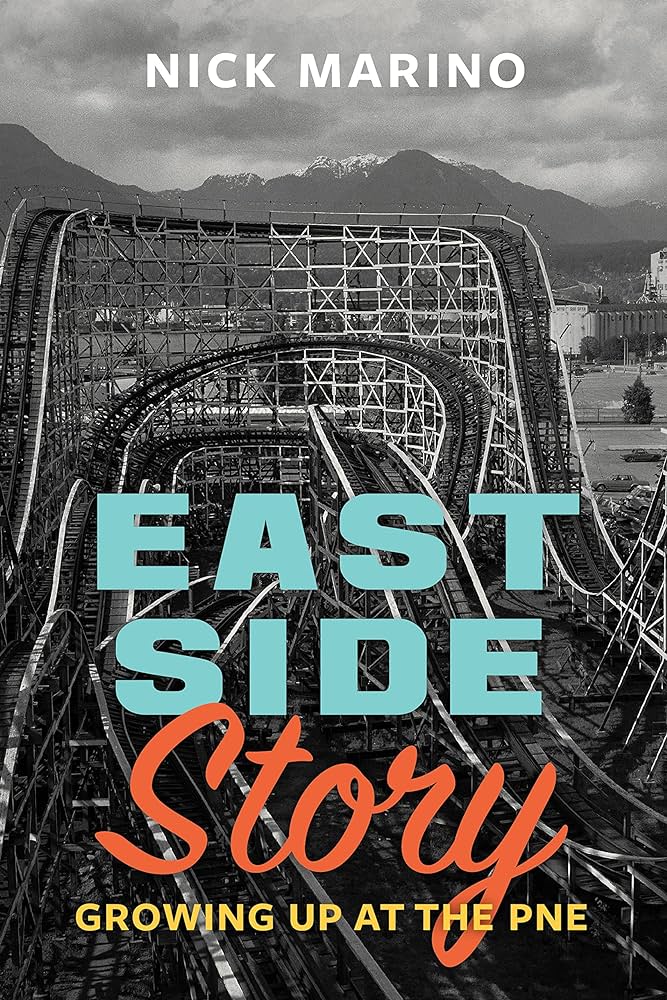
Book cover of East Side Story featuring a black and white photo of a roller coaster and a colourful font for the title.
PHOTO: Courtesy of Arsenal Pulp Press

By: Alex Ileto, Peak Associate

Content warning: mention of Japanese internment camps.

Founded in 1910, the Pacific National Exhibition (PNE) nestled in Hastings Park in East Vancouver is considered a hallmark of Vancouver by many. For over 113 years (and counting), the PNE has managed to maintain its status as an entertainment hub for Vancouverites. The 600,000 attendees at this summer’s fair goes to show how much people love the PNE. 

Every summer, my friends and I visit the PNE to feast on food doused in grease, scream on the wooden roller coaster, and vibe to the summer night concerts with headliners that peaked in the ‘90s. As I got older, visiting the PNE became less of a tradition and more of a hassle. Trying to find parking was a nightmare. Standing in an endless line for food made me debate whether I should give up. Having to take an Advil after every ride was a pain. For years, I was unable to view the PNE as anything more than a money grab. That opinion has shifted after reading East Side Story by East Vancouver-raised Nick Marino. Published this year, East Side Story is Marino’s first book. Aside from writing, Marino is also a stand-up comedian and elementary school teacher based in Vancouver. 

East Side Story manages to make the PNE cool again. Marino does an outstanding job bringing to light the local history and impact of the PNE — an aspect of the fairgrounds that’s often overlooked by visitors nowadays. He tells the stories of PNE employees, pageant queens, and kids who just came out to play. From sneaking into the fairgrounds to sleeping above the arcade, Marino has an expansive list of wonderful stories. 

Although I myself have not experienced what it’s like to be an East Vancouver teen in the ‘70s, Marino’s fond retelling of unbelievable stories makes it easy to empathize with each anecdote. For instance, Marino dedicates a chapter to the Pacific Coliseum, a once-hot commodity in the music industry with world-renowned musicians such as Jimi Hendrix, Queen, and Elvis each having their turn on the stage. Marino highlighted the Elvis show in particular, describing the wildness of the crowd and the failed attempts to tame it. His vivid depiction of the audience made it feel like I was right there in the crowd with the thousands of other raving fans, pushing past gates and clawing my way to the king of rock and roll. Marino perfectly captures the excitement of going to the PNE. 

In addition to the historical recollection, at the heart of the book is a story about family. Marino’s family has their own myriad of bizarre anecdotes, but the love and support they have for each other is unmistakable and relatable for many. At times, East Side Story reads like a memoir, which grounds the book well.

Most of the stories highlight the fun of the PNE, but Marino also acknowledges the dark past of the fair. Most importantly, he highlights the park’s conversion to a Japanese internment camp in 1942. As described in the book, after Canada declared war on Japan, more than 8,000 Japanese people were taken from their homes and forced to live in stables on Hastings Park. Of those 8,000 in the camps, 77% of them were Canadian-born and/or Canadian citizens. The internment site was maintained from March to September of 1942, but left a wound of mistrust between the Japanese community and the Canadian government that is continuing to heal to this day. I appreciate Marino’s acknowledgement of this history as it allows space for the reader to learn about and reflect on such immense tragedies.

I enjoyed East Side Story and could not think of anyone better to narrate the history of the PNE besides Marino. His comedic charm rings throughout each chapter and it’s evident that his teenage spirit still shines bright within him. East Side Story also serves as a wake-up call to those unfamiliar with the internment of the Japanese in 1942. Although I still believe that the PNE is overpriced for what it is, East Side Story has motivated me to overlook the ticket price, give the PNE a second chance and embrace my inner child. 

Reusables takes on eliminating single use packaging at SFU’s Mackenzie Café

0
This is a photo of the Reusables container return bin, found in Mackenzie Cafe on SFU Burnaby Mountain.
PHOTO: Prerita Garg / The Peak

By: Eden Chipperfield, News Writer

On October 2, SFU welcomed a new program headquartered at MacKenzie Café. Reusables is a Vancouver-based company that started during the pandemic to tackle the single-use plastic epidemic. Reusables aims to eliminate takeout waste with their stainless steel containers. 

The Peak connected with the co-founder of Reusables, Jason Hawkins, to discuss sustainability and bringing Reusables to the SFU Burnaby Campus. “Students can get food in Reusables’s stainless steel containers at MacKenzie Café. It’s free to borrow containers for up to three days,” said Hawkins. “You can borrow with a physical debit/credit card or your phone numbers.” After finishing with their takeout containers, students return the Reusables by dropping them off at one of the five Smart Return Bins around the Academic Quadrangle. Hawkins noted, “Students can keep containers for longer but will be charged a refundable deposit of $20 on each container after three days.” The $20 deposit is “100% refundable for up to 30 days.” The containers will be washed at the SFU Dining Commons through the “existing commercial dishwashing infrastructure partnership.” 

Hawkins explained this partnership further helps environmental targets by reducing greenhouse gas (GHG) emissions as there is no need to transport packing from different locations. Often, the transportation of goods and services can lead to an increase in GHG emissions. The partnership with the Dining Commons will help to eliminate that, as containers will not need to travel far to be cleaned. Single use plastics are a major pollutant in Canada. In 2022, 3 million tons of single use plastic products were thrown away. Reusable is a step toward reducing this number by offsetting GHG emissions from transportation and single-use pollutants. 

Reusables is currently backed by separate powerhouses such as Bunzl, Disney, Doordash, Uber Eats, and IGA. All of these companies use single-use containers — Reusables wanted to change their approach. The cooperation between Resuables and Disney began in 2022 on the television set of Death and Other Details. The crew on the stage “understood the problems with compostable packaging; that being it is still single-use and most of the time ends up in landfills due to a lack of commerical composting infrastrcture in BC.” Reusables soon became part of the production team as their containers were used daily and helped Disney work toward completing their Environmental Production Policies. Crafty and catering from the set were also excited to participate in the program. According to Resuables, over the four-month filming schedule, they were able to “divert close to five tons of packaging waste” from entering the landfills, equivalent to almost 20 tons of carbon emissions. “That is a huge impact,” said Hawkins.

Now, Reusables is making its big debut at SFU, starting with its launch at Mackenzie Café. In 2022, the company ran a test pilot at the SFU Dining Commons. During the pilot program they had a successful container return rate of 100%, compared to their average rate of 98.7%. “Maintaining a return rate above 90% is crucial for the overall environmental impact,” stated Hawkins. 

Mackenzie Café is one of many stops for the Reusables train, as their big picture is to expand to other areas of SFU. Hawkins also discussed the hope they could partner with SFU environmental groups such as Embark Sustainability and create a Reusables ambassador program to help spread the message of climate technology and eliminate single-use plastic. “We are focused on Mackenzie Café and ensuring the solution is flawless for students and staff. Once that is complete, then we will focus on expanding to other areas of SFU!” expressed Hawkins. He noted they are “really excited to make SFU the first campus in Canada to have a campus-wide reuse system!”

Reusables is looking for feedback regarding the container program, as well as ambassadors for Reusables at SFU. If interested, find the details at reusables.com/pages/sfu-landing-page

This week at SFU

0
PHOTO: Wilson Wong / SFU Athletics

By: Isabella Urbani, Sports Editor

Home Games

Thursday, November 2: women’s soccer vs. Montana State Billings at Terry Fox Field at 6:00 p.m.

  • Beat Montana 1–0 on the road earlier in the season with freshman Kiera Scott’s first goal as a Red Leaf. 
  • Last home game of the season. 

Thursday, November 2: volleyball vs. Seattle Pacific at West Gym at 7:00 p.m. 

  • Swept in three sets against No. 21 Seattle Pacific earlier this season on the road.
  • First game of a two-game homestand. 

Friday, November 3: men’s and women’s wrestling vs. Linfield (Oregon) at West Gym at 7:00 p.m. 

  • First meet of the season. 
  • Men’s team finished 11th at the NCAA Super Region 6 Tournament last season, preventing them from advancing to the wrestling championships. 
  • Women’s team advanced to the wrestling championships but placed sixth

Friday, November 3–Sunday, November 5: men’s basketball hosting the Canadian Tip-Off Classic in Langley, BC.

  • First tournament of the season.
  • Opponents include Hawaiʻi Hilo at 7:30 p.m. on the third, Daemen (N.Y.) at 7:00 p.m. on the fourth, and St. Edward’s (Texas) at 5:15 p.m on the fifth.

Friday, November 3–Sunday, November 5: women’s basketball hosting the Canadian Tip-Off Classic in Langley, BC.

  • First games of the season.
  • Opponents include Texas-Tyler at 10:30 a.m. on the third, Colorado Mesa at 4:45 p.m. on the fourth, and Texas A&M International at 3:00 p.m on the fifth

Saturday, November 4: volleyball vs. Montana State Billings at West Gym at 7:00 p.m. 

  • Won all three sets against Montana earlier this season on the road. 

Saturday, November 4: men’s and women’s wrestling hosting the SFU Open at West Gym (all day).

  • Men’s team looking to replicate their first-place finish at the SFU open last season. Women’s team looking to better their third-place performance. 

Away Games 

Thursday, November 2: men’s soccer vs. Northwest Nazarene (Idaho) at 1:00 p.m. 

  • 1–1 against Northwest Nazarene last season. 
  • First game of a three-game road trip.

Saturday, November 4: cross country at the NCAA West Regional Championship in Oregon. 

  • Men’s team finished third and the women’s team finished fourth at the conference championships on October 21. SFU’s highest finishers were sophomore Rachael Watkins in 17th for the women, and senior Sebastian Brinkman in fourth for the men. 

Saturday, November 4: men’s soccer vs. Western Washington at 7:00 p.m. 

Saturday, November 4: women’s soccer vs. Seattle Pacific at 5:00 p.m.

  • Lost 2–1 against Seattle Pacific, who were ranked 24th at the time, at home earlier in the season. 
  • Final game of the season.

Saturday, November 4: swimming vs. Seattle.

  • Both the men’s and women’s teams resoundingly won their last meet vs. Puget Sound (Washington) on October 21, by a score of 220 (men) and 222 (women) to 40. SFU won every event except for the men’s 50 yard freestyle. 
  • Last meet before a three-day invitational in California next month. 

Four strength training myths that need to go

0
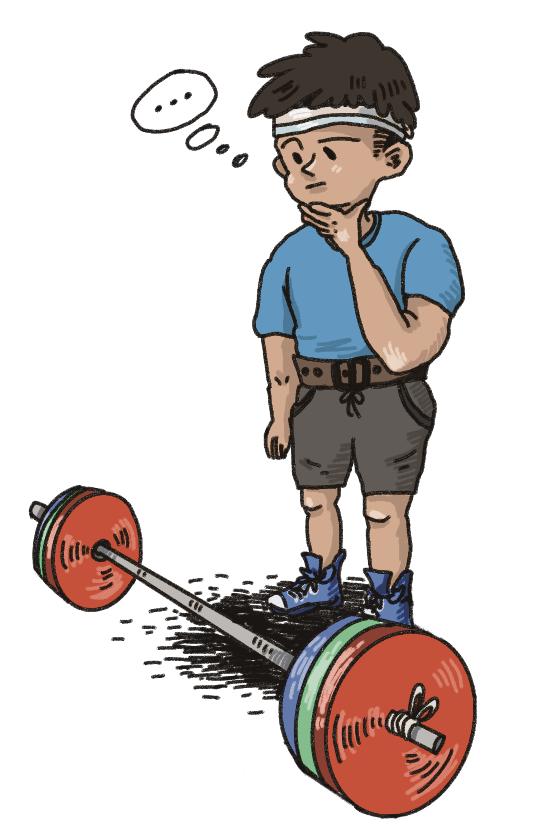
ILLUSTRATION: Andrea Choi / The Peak

By: Olivia Visser, Copy Editor

Content warning: mentions of size and body dysmorphia.

Sometimes it seems like every other influencer in 2023 promotes some form of strength training. Hobbies like weightlifting, crossfit, and pilates are all over social media, but with an increasing array of fitness content comes a new wave of misinformation. Fitness looks different for everyone, and many strength training “facts” don’t ring true for the general population. What does strength training really mean, and why do people do it? 

Myth: You can’t see results from strength training unless you go to a gym.

Reality: People strength train for different reasons, so this assumption is far from true. Simply put, strength training involves any activity that improves muscular strength or endurance. This can be done using bodyweight exercises, free weights, machines, or other forms of resistance such as exercise bands. Everyone has different physical abilities and a different baseline for exercise. I originally began strength training with resistance bands to improve joint stability and reduce ligament weakness associated with a medical condition. Other people may want to strengthen their hands and arms to help with daily tasks. Or, some may simply enjoy the feeling of being (or looking) noticeably stronger. Focus on your individual goals and toss out the belief that there is one singular approach to strength training.

The idea that you need to go to a gym is really dependent on your goals. If you work out at home and your goal is bodybuilding — intentionally growing your muscles to achieve a certain form — you’ll probably find improvement difficult past a point, unless you have a home gym with heavy equipment. That doesn’t mean you need to start in a gym if you’re new to strength training, nor does it mean that others won’t be satisfied with home workouts. 

Myth: Strength training isn’t as important as cardio.

Cardiovascular activity, or cardio for short, refers to any task that increases your heart rate for an extended period of time — such as walking, running, swimming, and cycling. It could even include weightlifting if your heart rate stays up throughout the workout. Cardio exercises are important to strengthen blood vessels so your heart doesn’t need to beat as hard during physical activity. 

Everyone is different, but strength training can certainly be as valuable as cardio. Strength training can enhance your quality of life by improving your ability to do daily living tasks, protecting against joint injury, and protecting against muscle loss associated with age. Many doctors agree that cardio and strength training are different yet equally important activities. 

You don’t need to suffer through painful or excessive workouts to reap the benefits of physical activity, either. Move your body in a way that’s fun and accessible to you — whether that means going for a walk, dancing, moving your arms around, or roller skating. Anything above your baseline level of activity should yield benefits. 

Myth: If you want to see visible results, you need to lift heavy, and constantly increase the weight.

Reality: Challenging yourself doesn’t need to be excruciating, and it should match your current abilities. Essentially, any strength exercise that tires your muscles out will lead to improvement. The Globe and Mail reported that in 15 studies, there was no major difference in muscle growth between people who lifted until failure (i.e. until total exhaustion) and those who didn’t. Researcher James Steele told the publication that “a reasonably high degree of effort” and “consistent and long-term [training] are the most important factors” when it comes to results. 

Progressive overload refers to the practice of gradually and continually pushing your body’s limits to maximize performance. It’s essentially the idea that improvement requires some level of difficulty, and that metric of difficulty continuously changes as your body grows stronger. This may be relevant for people who want to grow their muscles as big as physically possible, or train for competitions. For the general population, this isn’t significant at all. Your strength and muscular definition will still grow regardless of the weight you lift, as long as you’re relatively consistent about your routine. 

If you’re brand new to strength training and don’t know where to start, the SFU Burnaby gym has personal trainers that can answer questions about form and routine. Fitness influencers can have helpful content too, but do your research beforehand to ensure you’re getting quality information from trustworthy sources. Take it slow and only push yourself as much as you’re comfortable with. As always, consult a medical professional if you have any medical conditions that make you feel unsure about strength training. 

Myth: If you start strength training, you’ll get “too” bulky.

Reality: It’s actually quite a difficult and tedious process for most people to see significant muscle “gains.” Muscle cells visibly grow through a process called hypertrophy: the combination of heavy lifting and an increased protein intake. If you don’t consistently increase your protein intake or frequently push your body during workouts, you’re unlikely to look “bulky” from strength training. That doesn’t mean you won’t notice differences in your strength or appearance, but you likely won’t see the huge size increases some people worry about. 

Regardless of your goals, you still shouldn’t let size be your main motivator. What would be so bad about gaining a size or two from working out? On the flip side, studies have found over 50% of men who bodybuild have body dysmorphia — seeing and treating themselves with a distorted physical perception, usually that their muscles are “too small.” It’s important to avoid working out for your physique if you experience significant body dysmorphia symptoms. It helps to learn to accept your body at all stages, before and during your workout journey. If you do decide to strength train: have fun, take pride in your increasing strength and endurance as it comes, and remember that improvement isn’t a linear process.

The diary of a Muslim

0
Illustration of a Muslim young woman wearing a purple hijab praying while holding beads on a matt.
ILLUSTRATION: Andrea Choi / The Peak

By: Sude Guvendik, Staff Writer

Salam, we mumble, as we see one another,
May peace heal us, the hearts and the minds,
All of the earth is a sacred space,
As you can pray and seek Allah’s grace,

From the dawns first blush till the dusk,
Five times we prostrate, our souls to recharge, 
The Athan’s call, invitation for the humanity,
A divine moment when the soul transcends time.

And, the world slides behind our back, all the noise subsides,
In the stillness, the soul’s yearning resides,
For in this moment, the heart does know,
The essence of what it means to truly love,

In prostration, we humbly bow,
The self and pride, we wave off,
A whispered prayer, a silent plea,
In this form, our spirits are set free.

It’s not just rituals or prayers we recite,
But a journey of surrender,
To submit to the most loving, the most compassionate,
In Sujood’s shadow, we answer the call,

To release the grip of anxiety,
To submit to the Almighty’s plan, to understand that,
Submission is freedom, anxiety’s nemesis,
Located right in the center of the oasis.

In the storm’s outrage or the wind’s delight,
At times, we heal in the gloomiest sight
In a world where chaos takes its toll,
Having faith is like holding onto a burning coal,

Fragile hearts, so vulnerable, yet invisible,
The safest space, closer to the Creator,
The one we fear and love the most,
Because you fear the one you love most,

In the depths of prayer we find safety,
The fragrance of earth and the tears we shed,
As we supplicate, our souls are fed,
To be a Muslim is to plant a seed,
Hope and love to all in need.

Bright-er Side: Cozy duvets and their covers

0
A grey duvet
PHOTO: ready made / Pexels

By: Michelle Young, Opinions Editor

There is too much duvet discourse. As our Editor-in-Chief famously once said, “duvets don’t need clothes.” Sure, duvets are just large blankets, and maybe they don’t need clothes, however, it’s much better when they do have clothes. Duvet covers are a joy, and despite the ordeal in putting duvets inside duvet covers, there are countless reasons to appreciate the concept of the duvet and their covers

First, duvets are very difficult to wash. Not only are they huge and take up space in the washing machine, but if you wash them wrong, they become lumpy. If you use a duvet cover, you neither need to worry about lumps nor doing multiple loads of laundry to clean your bedding — because most of the time, you just need to wash the cover. A duvet cover and sheets can fit into one laundry load, keep your duvet clean, and is less of a hassle. 

Secondly, having a duvet and separate covers actually saves space if you want to change the way your bed looks. Imagine having multiple thick blankets, comforters, or quilts shoved into your linen closet. With a duvet, you only need one or two, for summer/spring and winter/fall. At most, you keep one duvet in a closet, with thinner accompanying covers you can change and wash more frequently. Not only can you change the colours and patterns, but you can even have a variety of textures and fabrics!

Duvets are cozy and fluffy like nothing else. You can buy them based on how warm you want to be. The covers are cheaper and more versatile. Otherwise, you are buying a giant blanket with a pattern you might grow out of. Sure, you can keep using naked duvets or comforters that get dirtier faster and take multiple loads in the dryer to dry, however, I would advocate to embrace the duvet — and its cover.