Home Blog Page 153

BC islands to explore

0
PHOTO: Victoria Xi / The Peak

We can already feel the warmth of the summer days ahead of us, and while the climate of the Pacific Northwest might not be the tropical heat some want, we can still enjoy the summer. Whether you’re in pursuit of adventure, relaxation, or the chance to meet new people, BC’s islands are diverse and offer the perfect setting for a weekend escapade. Here are a few choices for island trips!

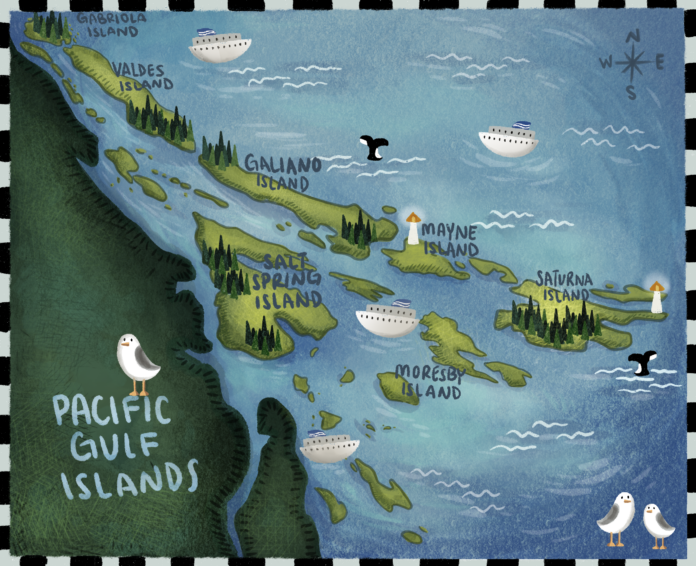
Salt Spring Island 

This island has been home to Coast Salish First Nations, the Saanich, and the Cowichan First Nations for generations, with the earliest human activity recorded from over 4,000 years ago. A small island located on the coast of the Southern Gulf islands, it’s only 185 square km and has a total population of roughly 12,000 people. As is the case with most of the islands on this list, you can get there via BC Ferries. There are plenty of ways to move within the island: biking is a common method, but there are also buses. Salt Spring Island has a couple of villages. The more popular are: Ganges, Fulford Harbour, and Tiny Vesuvius Bay. 

Ganges Village is the central hub of Salt Spring, hosting the majority of shops, markets, art galleries, and much more. There are two markets: the first one is a Saturday market featuring farmers, artists, and other small-owned island businesses ranging from seafood to jewelry. The second one is solely a farmer’s market which takes place on Tuesdays, but shopping is not all to be done here. Ganges hosts a wide variety of artistic, cultural, and physical activities — museums and art events, golf courses, hiking trails, camping grounds, and beaches. Beddis Beach is a popular spot to snorkel and relax. Related to the name, if you are looking for salt springs there are a total of 14. Most of them are in the Mineral Springs Resort, so you can enjoy the springs while you decompress from the day, but be sure to book now since they get filled up fast for the summer. To sum up, this island is best if you are looking to revitalize and unwind in nature.

Tofino

Located in Vancouver Island, Tofino is situated in the traditional territory of the Tla-o-qui-aht First Nation of the Nuu-chah-nulth peoples. Much like all of Vancouver, Tofino displays a diverse plethora of natural beauty, from sandy beaches to hot springs. The area is best known for physical activities like surfing, biking, kayaking, ziplining, and hiking, but there are plenty of options if you’re looking for a less active escapade; there are saunas, spas, meditation centers, and yoga studios for you to enjoy. If you’re looking for a weekend of nature, you can birdwatch or explore the marine life; after all, Tofino has over 200 “resident” gray whales that feed from March through October in the neighbouring waters — a bird or whale watching tour might be the perfect activity for the weekend! Tofino’s Village Green is the main center to meet people and during summertime, go to markets. 

While it’s best to book a trip from June to August to fully experience the beauty, you can still enjoy the town at any other time of the year. Storm watching is the most fun from Chesterman Beach where there is Wickaninnish Inn, which has amenities specifically to enjoy the storm season. The Himwitsa Gallery displays authentic carvings, jade jewelry, Cowichan knitting pieces, paintings, prints, and other gifts open for purchase. General art is displayed in the Mark Hobson Gallery, the Roy Henry Vickers Gallery, and the Tofino Gallery of Contemporary Art. One last stop in Tofino is the Ucluelet Aquarium, which showcases beautiful marine life. In short, this island is best if you are looking for a getaway to re-energize yourself.

Skidegate Village

Located on Graham Island and the farthest away island on our list, is primarily home to the Haida Nation, as it is located on Haida Gwaii. This is a small town of about 700 people. This village is perfect for harmonizing with nature, birdwatching, fishing, camping, boating, sailing, swimming, hiking, and wildlife touring, truly a one-stop place for the nature lover. Balance Rock, is a trail to enjoy the beach scenery and local fauna, watch the nearby waterfall, or take some photos with the titular rock. If you’re interested in seeing marine wildlife up close, you can rent a kayak or paddleboard to explore the Skidegate inlet — this area is amazing for finding a wide variety of fish, king salmon, coho, and halibut are very common here. 

There’s more than nature, the Haida Heritage Center in Ḵay ‘Llnagaay, offers cultural tours, including a weaving tour and canoe tour.

Mayne Island 

Another little hidden gem. Just a short ferry ride from the Tsawwassen ferry terminal, Mayne Island offers a tranquil environment to enjoy the beaches, trails, and local businesses. There are a couple of campgrounds, a cottage, and even a resort by the beach, all perfect options to have a little weekend getaway with friends or family, plus, you don’t even have to worry about dangerous encounters with the fauna, as this is a bear, cougar, and coyote-free island. Cycling around the island is a great way to move around, but you’ll also have the option to take a community bus, a donation-based bus that can take you anywhere within the island, though you’ll have to give them at least a 24-hour notice. 

If by this point you are a bit tired of nature, you’ll be glad to know that, while small, the Mayne Island community has events around the year. Finally, just as Salt Spring, Mayne alongside Galiano, Pender, and Saturna islands form the five Southern Gulf Islands, meaning they all host the annual Tour Des Iles, a two-day festival. This tour offers plenty of events and activities to take part in, all unique to each island’s attractions and culture; music, food, and outdoor activities, the Tour des Iles is a perfect opportunity for a weekend adventure.

Finally, one of The Peak’s honorary mentions go to San Josef Bay. Rated the best beach in BC, located on Vancouver Island, it has beautiful sandy shores, and scenic trails to enjoy. Our other mention goes to the Octopus Islands, part of the Discovery Islands nested in the north of the Salish Sea. This park offers beautiful landscapes, a great place to explore Quadra Island’s shoreline on a kayak, and even set camp in one of the campsites on one of the islets, just be respectful and careful of the local fauna.


It’s okay to cheer: let fans be fans

0
PHOTO: Josh Appel / Unsplash

The 2024 Stanley Cup Playoffs have just begun. For the first time in what feels like an eternity, the Vancouver Canucks have made it to the postseason. Blue car flags have been parading through the streets to celebrate this feat. But despite the Canucks’ stellar performance this past year, fans still can’t seem to catch a break when it comes to celebrating their favourite team. Although banter is common among NHL fans, the shame directed toward Canucks fans feels unique

In the 2020 National Hockey League (NHL) postseason, the Canucks beat the Minnesota Wild, and the reigning Stanley Cup winners, the St. Louis Blues, before their championship aspirations were dashed in the semifinals after losing to the Vegas Golden Knights in seven games. The team was written off by many across the league before the 2019–20 season even began, though the fans were excited about this run nonetheless.

Without any achievements worthy of hanging a banner in Rogers Arena, and notably without the Stanley Cup itself, it seemed like nothing to truly celebrate. Sure, the team had made the playoffs without being expected to in an equally unexpected season, but they had fallen short of the ultimate goal, meaning any celebrations were seen as premature and childish by the larger hockey sphere.

The Canucks are one of 11 teams that have never taken home the Stanley Cup, and it feels like the sports world is yet to move past memories of the 1994 and 2011 riots. While what happened is beyond inexcusable, the entire community of fans is not to blame and should not have to pay the price whenever their team celebrates a win. Still, social media users are quick to attack Canucks fans whenever their team sees success. Popular X accounts have made countless anti-Canucks posts, including one proclaiming “some cities just can’t handle the playoffs,” after the mayor of Vancouver said the city would exercise caution when planning future outdoor watch parties. 

It’s not a new concept to be shamed for celebrating a team’s achievement. In the 2021 Stanley Cup Playoffs, the Tampa Bay Lightning won the elusive trophy for the second consecutive year, defeating the Montreal Canadiens in game five of the best-of-seven series. Tampa had high expectations being the reigning champions, but the Canadiens had barely snuck into the playoffs — earning the last spot in the postseason for the all-Canadian North Division. 

Others have mocked Canucks fans for celebrating their game one win “like they won the Stanley Cup,” as if celebration should be reserved for the end of the playoffs. This running narrative that you’re only allowed to celebrate once you have the Stanley Cup is dismissive of the overall passion fans are supposed to have year-round. While the Canucks did earn the highest spot in their division before the 2024 Stanley Cup campaign, the previous years of chaos make this run even more special.

Before the 2020 “bubble” playoffs, the last time the Canucks had hosted a playoff game inside their Rogers Arena home was on April 23, 2015, a 2–1 win to force a game six against the Calgary Flames, who would defeat and eliminate them in Calgary two days later. Canucks fans were disappointed in this result, though the ache would only grow throughout the years as the city suffered a nine-year hiatus for playoff hockey.

“Canucks fans are finally able to celebrate the success of their team, rather than stir in anguish over the team’s failures.”

When the Canucks roared into this past December holiday break at the top of the league, it was quite the achievement. Hockey in Vancouver was fun again, after years of disappointment, agony, and heartbreak. Canucks fans are finally able to celebrate the success of their team, rather than stir in anguish over the team’s failures. BC’s team led the NHL’s Pacific Division, set to play the Nashville Predators in the Stanley Cup quarterfinals. 

After a comeback 4–2 win in Game One — which saw two Canucks goals scored in a record-breaking twelve seconds — Canucks fans young and old were positively buzzing. Outside Rogers Arena, excited fans gathered around the statue of former Canucks head coach Roger Neilson — the man credited with the invention of “towel power” at playoff games after a 1982 show in which he waved a makeshift towel on a stick in defiance against game officials. 

Some especially excited fans climbed the statue, with one able to place a Canucks 2024 Stanley Cup Playoffs towel on top of the statue’s bronze towel. Videos of this celebration went viral in the hockey sphere, with NHL fans across the continent commenting on the spontaneous festivities. There were also fans parading through the intersection of Scott Road/120th Street and 72nd Avenue in Surrey, waving flags and one fan even carrying a creative replica of the Stanley Cup. 

Even though it was only the first game of the postseason for the Canucks, it was a monumental occasion for fans. The first playoff game in four years? The first playoff game at home for nine years? This was the moment fans had been waiting for for nearly a decade. They were going to celebrate hard.

Unfortunately, the rest of the hockey world did not take it as kindly. I woke up the next morning to find my X feed flooded with accounts making fun of the celebratory feeling spread throughout Metro Vancouver. “A guy is raising a replica Stanley Cup after winning game 1 of the first round. This is how you know these people are not used to witnessing playoff hockey,” echoed one of many posts. 

Most of the comments online were mocking the fact that Canucks fans were this passionate after only winning one game, with numerous jokes from other fanbases about the Stanley Cup riots. The vast majority of us just want to celebrate in peace, and don’t want to be associated with a loud minority. Many of these social media cynics were also dismissive of the years leading up to this season’s playoff appearance, and pointed out that the Canucks had to win many more games to claim the city’s first Stanley Cup since the Vancouver Millionaires won it in 1915 — before the NHL existed. 

Yes, the Canucks need to win more than just one game to win the Stanley Cup. Yes, they don’t have the playoff successes of most other teams in the 2024 postseason. Yes, the celebrations can be eccentric. But that’s the point. Being a passionate Canucks fan has been hard for so many in this past decade of darkness. It’s okay to cheer, celebrate, and revel in the team’s first postseason win in years. It’s the Stanley Cup Playoffs. Enjoy the ride.

SFU study highlights need for Long COVID awareness

0
A closeup of a person standing outside wearing a blue N-95 mask covering their nose and mouth.
PHOTO: Gudrun Wai-Gunnarsson / The Peak

A report published in April by SFU’s newly-founded Pacific Institute on Pathogens, Pandemics and Society (PIPPS) emphasizes the need for broader awareness and understanding of Long COVID among healthcare professionals and the general public in Canada. 

Long COVID, as defined by the Government of Canada, represents a range of symptoms that can last months after the initial COVID-19 infection. These symptoms can vary widely but commonly include severe fatigue, brain fog, body weakness, persistent cough, and breathlessness. The condition can also impact the cardiovascular and neurological systems, leading to heart palpitations, chest pain, memory loss, and tinnitus. 

The report underscores the importance of recognizing and addressing persistent health issues following COVID-19, to support affected individuals in managing their symptoms. The report consolidates findings from focus groups that included unpaid caregivers, healthcare providers, and individuals experiencing Long COVID. It highlights the prevailing stigma and disbelief surrounding the condition. Kayli Jamieson, who has had Long COVID symptoms since 2021, co-led the focus groups and shared her experiences with SFU News, noting the societal and medical oversight of the condition. “It’s an invisible and new condition,” she said, adding that “many people don’t believe that Long COVID is real or exists.” 

Long COVID also affects healthy and vaccinated individuals, and the risk of Long COVID rises with each infection. The condition disproportionately affects women, racialized people, people with disabilities, and the 2SLGBTQIAS+ community. Jamieson spoke on the report at a panel host by SFU and said, “I implore you to examine your principles of community care and how this virus disproportoinately impacts those most marginalized. This is a feminist issue, this is a queer issue, this is a race, class, and disability justice issue.”

Statistics Canada reports that over 3.5 million Canadians have experienced Long COVID symptoms, with significant challenges in accessing necessary healthcare. Despite numerous studies, no definitive treatments have been recognized, leaving many to face symptoms without adequate care. The PIPPS report notes “existing symptom management tools for similar chronic illnesses like ME/CFS are under-utilized and could be leveraged for Long COVID care and diagnosis.”

“It’s an invisible condition that many still don’t believe exists, affecting every aspect of our society.” — Kayli Jamieson, study co-leader

It also recommends several actions to improve care and support for those affected by Long COVID. These include enhancing public and professional recognition of the condition as a legitimate health issue and integrating comprehensive care approaches that address both physical and mental health aspects.  

This includes education on Long COVID, health system navigators to aid in acquiring help for COVID and Long COVID symptoms and treatment, and overall recognition of Long COVID. The report also emphasised a prevention-based approach to education, teaching safety and responsibility surrounding COVID-19 and Long COVID. This includes “mask-wearing, regular vaccinations, increasing paid sick days, or improving indoor air ventilation.”

Kaylee Byers, an assistant professor in SFU’s Faculty of Health Sciences and the principal investigator of the study, emphasized, that the condition challenges our healthcare systems and highlights the need for stronger supports, not just for individuals but for entire communities affected by it. 

2024 provincial university budget not cutting it, says CUFA BC

0
BC Parliament building
PHOTO: Michal Klajban / Wikimedia Commons

The Confederation of University Faculty Associations of British Columbia (CUFA BC) released a statement regarding the 2024/25 provincial budget and its impact on students, universities, and their resources. The Peak spoke to Annabree Fairweather, executive director of CUFA BC, about the issues brought forward by the confines of this year’s budget and ways to overcome them.

The budget allocated $3.89 billion to post-secondary institutions. According to Fairweather, this isn’t enough. She said CUFA BC “had hoped for more money to come into the sector,” to account for the growth and needs of university students in BC. 

Fairweather explained that “the post-secondary budget does not take into consideration the implications from the international student cap that was announced from the federal government, ”which will put a limit on the amount of international students coming to Canada. She said they need to work to “soften the blow of what will be a change in that revenue stream.” The decision will reduce the intake of international students by 35% for the next two years, with variations between provinces. 

CUFA BC is an association that represents faculty members at universities across the province. They aim to inform the public of post-secondary education, advocate for students and faculty, and promote interests in the intersection between education and government-related matters. In their statement, they noted international students “are more than an economic commodity.” They added, “There are people’s livelihoods at stake, and these changes erode the credibility of our universities to attract and retain students.” 

She mentioned the need to address the province’s “job skills deficit,” which occurs when there is a shortage of employees who have the required skills for a job. Despite this, she said the budget is upholding the “status quo,” noting she is still “grateful that it’s not an austerity budget,” which is when a budget stays steady while providing minimal funding to support students and university needs.

While Fairweather said CUFA BC “welcomes the certainty of stable, reliable income,” she maintains the budget doesn’t anticipate that student enrolment has grown while faculty numbers remain stagnant. 

 “International students [ . . . ] are more than an economic commodity.” — Confederation of University Faculty Associations of British Columbia 

She also said the government needs to build a strategy to address financial shortfall across institutions. “It can’t just be throwing money at the system,” she noted. “There is a lot of need for resources to spread around in all sectors of our province.”

Fairweather stressed the importance of institutions providing support for students, such as accessibility services and accommodations, mental health supports, and any tools required to support students’ needs in full capacity. “This is an area that’s going to have a huge collapse within our sector that’s going to deter students from continuing or finishing their studies,” she stated.

Fairweather said the province is working with the federal government “to minimize the impact of the budget and to figure out the next steps,” but she doesn’t “know what that looks like.” The question of “how will the government support institutions?” and whether or not the provincial government will provide compensation during a financial deficit remains.

In order to provide adequate resources and work around the challenges of the budget now and in the future, Fairweather emphasized the importance of vocalizing students’ needs and concerns so the budget can shift to reflect a more supportive environment.

To read more about the CUFA BC’s statement visit their website at cufa.bc.ca/cufabc-statement-provincial-budget-2024/. 

Relentless reasons to (not) love spring

0
Dandelion seeds flying in the wind.
PHOTO: Nita / Pexels

Editor’s note: a previous version of this article referenced the song “Cotton Eye Joe.” It has come to our attention that this song has racist connotations. We apologize for referencing a piece of work that has caused historical harm and negatively references enslaved people. The reference has now been removed. 

Ah, do you smell that? Spring is in the air. Achoo! What’s not to love about the downpour of endless showers and a blossom-budding, bug-infested season? All the pollen, creepy-crawlies, and hay fever really put a spring in your step. 

There’s this spider in my house and he acts like he owns the place. The dude thinks this is his luxurious lair. The least he can do is contribute to paying his taxes since it is tax season after all. You know how expensive it is to keep this place afloat? Never mind the unneeded expense of uninvited guests giving me the unwanted chills. Not to scare him from his slumber of a chilly winter, but, either pay up and leave me alone, or get out and gallop around the garden where you belong.

Why is it that spiders assume they have the automatic right to reside in my residence even when hibernation season is over? C’mon, there’s a million places Sir Spidey could go, a million gardens he could roam, and he chooses to chill on my wall, my ceiling, dangling a web in plain sight? I mean, I am flattered, but really, he gives me the ick. He could be outside chillin’ with all the bees pollinating the flowers and buzzin’ about the trees, but he would rather stare at a wall all day. While I’m over here living a nightmare and trying to move heaven and earth to avoid him at all costs, curating a high-class Home Alone escape plan, he couldn’t be more unfazed. Isn’t there anything more exciting for him than watching paint dry and giving me a heart attack every time our paths cross? Watch me literally paint a wall just to get him out of the way. 

Don’t even get me started on the fact that he probably has a bestie roaming around. You can’t tell me he’s in one room, and then I go a few rooms over, and there’s the same spider again. There’s no way. Is he Spider-Man? Buddy boy simply cannot move that fast. He has clearly been keeping Sir Spidey a secret. The two are probably making out in a web somewhere, having a spring fling, and all their spidey children will suddenly appear — one for each square inch of my house. Oh, what a joy! It gives me shivers.

As if mustering up the courage to make eye contact with him and somehow manage not to touch him while I put him out in the garden isn’t bad enough, I now have to contend with the matter of sneeze-inducing pollen that will immediately activate all the hay fever in the land. Let’s just hope his spidey spouse is an illusion, and I won’t have to do the same with Sir Spidey, too.

Don’t tell me I’m the only one who scrambles to shut the door faster than a lightning bolt from the downpour of spring showers every time I go outside, just to eliminate the risk of more stealthy spiders taking up residence in my unwanted-bug-infested basement. It ain’t spring unless you keep watch like a hawk. You’ve got to scout out all the creepy-crawlies like a detective while sneezing up a storm at every speck of pollen, questioning whether every edge of a spider web is a hallucination (it’s probably not).

Just channel the good energy of the cherry blossoms and you’ll get through spring just in time for the humid, sticky, wild-fire blazen, climate change crisis of summer. But until then, happy April showers, and may they bring you May flowers — and even more bugs to boot! Buzz, are those the mosquitos already? 

Rooster: a virtual portal to ancient China

0
A rooster, a man and woman dressed in traditional Chinese clothing, and a dragon all drawn in brushstrokes. They are surrounded by a pagoda strung up with lanterns, a gray mountain, and wispy clouds.
PHOTO: Sticky Brain Studios

A parchment-like scroll is laid out on a flat surface. Perfectly imperfect splotches of watercolour red, gray, and green bleed onto the pages as they shift under your command. Black brushstrokes line up the scenes you are about to experience — paper lanterns, busy markets, and ornate pagodas. This is the world of Rooster, a “single-player point-and-click” video game that explores the culture of ancient China. 

Created by the Toronto-based Sticky Brain Studios, Rooster is set to launch early in 2025. While it may be a bit of a wait to play Rooster itself, you can test out some of Sticky Brain Studios’ other phone-downloadable games like Loki’s Castle, an underwater puzzle-solving app with the cutest little player creature, and Kimono, a dress-up game that spans various settings and seasons. The things that stand out to me most about this studio’s games are the clean, cute, and charming art styles. 

I’m not a huge video game aficionado, but I do like to play when a plotline intrigues me. I wasn’t sure what to expect from this game, but the soft, delicate art style of Chinese brush painting that danced across the screen was a surprise to me. 

From the beginning, it was clear to me that this game’s art style would be one of its defining features. Watching the titular character Rooster run across the setting of an ancient Chinese kingdom reminded me of the paintings you’d see on old scrolls with browned, frayed edges locked behind an art gallery’s glass display window. The colours of the kingdom were muted in a way that made it look faded, as if they had been worn away by time.     

A melodic, flowy soundtrack reminiscent of windchimes accompanied my journey as Rooster, a member of the Chinese zodiac who is sent back in time to learn some important life lessons. To make it back to their own time period, Rooster encounters a series of mini-games, with one game representing each member of the Chinese zodiac. The games are simple — but the designs are not. Lush, elegantly-crafted backgrounds become the centerpiece of hide-and-seek games that leave the player searching for ingredients for the perfect gift. Each game ends with a member of the zodiac awarding Rooster with an important item for later on in the story. 

“From the beginning, it was clear to me that this game’s art style would be one of its defining features.” 

This captivatingly crafty game provides more than just pretty graphics and stress relief. Pop-up question marks adorned like paper lanterns give players small tidbits about ancient Chinese culture. There were facts embedded within the game that I wasn’t even aware of — but I won’t spoil those for you. At its core, Rooster is a time-transcending celebration of Chinese culture that is represented through the beautiful artwork displayed on screens. 

Add Rooster to your Steam wishlist. 

Sustainability means doing more than just recycling plastic

0
PHOTO: Prerita Garg / The Peak

The amount of plastic that occupies landfills isn’t talked about enough. Recycling plastic may seem like the best solution, but just because you recycle your plastics doesn’t mean they will be recycled properly — if even at all. Over 91% of plastics around the world aren’t recycled. Most are disposable and end up in landfills, and only 12% are incinerated. 

Many cities in the Lower Mainland have recycling initiatives, but this comes alongside limitations regarding what is allowed to be recycled, and what is considered trash. Recycling is made even more complicated when certain plastics are allowed to be recycled and other plastics aren’t. To add to that, 25% of all recycled material in Canada is deemed “non-recyclable by contamination,” according to CBC. Regardless of if or how we recycle our plastics, they stay on the earth; around 86% of plastics in Canada will ultimately end up in landfills. 

The first step in tackling plastic waste is transitioning away from unsustainable products — notably plastics — and this needs to be done at both a personal and global level. Our focus should be on reducing and reusing before recycling comes into play.

An impactful way to recycle is material being made into other products such as shoes, bags, cans, shoes, papers, and even household surfaces like countertops — yes, my kitchen countertop is made from hundreds of layers of recycled papers and plastics! On a personal level, using reusable water bottles, cutlery, and bags are easy ways to reuse already-existing materials. This reduces the energy that goes into making and disposing of new or single-use plastics. Don’t forget that the phrase “reduce, reuse, recycle” is in that order for a reason! When it comes to making sustainable personal choices, recycling should ultimately be the last step.  

“Our focus should be on reducing and reusing before recycling comes into play.”

To successfully reduce the creation and consumption of plastics, we need to completely eliminate them altogether, so that no more of these so-called recyclable materials continue to circulate landfills. This can only be done by transitioning away from plastics on a global scale and developing quality alternatives. Bioplastics are one alternative to standardized plastics, and include cellulose and hemp plastics that are slightly more sustainable. 

That said, it still takes years for these plant-based plastics to break down, and sometimes they cannot be composted properly, despite their claims. This is why governments must invest more in finding workable and accessible alternatives, and those who have the means to make conscious decisions regarding plastic use should do so. We have the ability to collectively reduce our need for recycling overall. Reducing plastic use will lead to a change for the better, but in order to make a long-lasting impact, plastics need to be eliminated once and for all.

Thrifting points to larger issues with our consumption habits

0
illustration of a trash bin with clothes in it
ILLUSTRATION: Den Kinanti / The Peak

Do you ever find yourself scrolling on Instagram, TikTok, or Pinterest and falling into a rabbit hole of thrift hauls? Dazed and envious of the stuff people find — the lot of it all. So, you go thrifting in an attempt to score big like the people you see online, thinking you see a cute shirt, only to find a Shein tag staring back at you. In these past few years, many of us have tried to make more sustainable choices to ease off our carbon footprint, and buying secondhand is one practice that has become popular on social media. But, just as fast fashion brands have negatively impacted the environment, garment workers, and consumers, it seems thrifting has also shifted in its influence. 

Consumerism has gripped modern society for ages now. To me, this rings to themes seen in movies like Fight Club or Trainspotting, denouncing the unquenchable thirst for unnecessary materials just for the sake of having them. Thoughtless overconsumption can creep back into thrifting despite its reputation of reversing the rising currents of fast fashion. When scrolling on my For You Page, why do I see haul after haul after haul of thrifted items that I know most people don’t need? The practice of thrifting itself is good when it takes away from the harmful impacts of buying new clothes, especially considering the excess of secondhand clothes. But when do we realize we’ve made overconsumption through thrifting a trend? 

That’s also not to mention the flood of low-quality clothing that has found its way into thrift stores, dumped by their owners after realizing the quality isn’t meant to last. Donating an item may give it more life, but it can’t offset the impact of purchasing fast fashion in the first place. Obviously, buying fast fashion is better if you’re doing it secondhand, and not everyone can afford ethically-made clothing. But, amid the resellers, “throwaway” low-quality clothing, and overconsumption through pointless thrift hauls, thrifting quality clothing has become incredibly difficult. This especially impacts those who might not have the funds to buy new or want to make an environmentally-conscious choice. 

So, what can we do? Don’t buy stuff you don’t need. According to Oliver Franklin-Wallis, author of the investigative environmental book Wasteland, “only between 10 and 30% of second-hand donations to charity shops are actually resold in store.” Because of the “onslaught of fast fashion, these donations are too often now another means of trash disposal — and the system can’t cope,” he told GQ. Ask yourself: “Will this last me a long time?” “Will I wear this, or is it going to sit complacent in the back of my closet till the next spring cleaning?”  

“Thrifting quality clothing has become incredibly difficult for those who might not have the funds or those who want to make an environmentally conscious choice.”

Fast fashion as a whole is detrimental to our society, but some brands are notably worse than others. Shein has mounting ethical concerns like labour violations, ecological damage, and copyright infringement. The long lines at their pop-up shop in Vancouver this past April only prove how large of a grasp fast fashion has on consumers. Researching the practices of a brand on sites like Good On You before purchasing can help you make as conscious a decision as possible. You don’t have to be perfect to make an effort; every small decision adds up.

Another option is to reuse items you already have, and consider repairs or alterations to extend their lifespans. You can also upcycle your clothes — that way you’re saving money and enhancing your hands-on skills! Bringing new life into an article of clothing you thought you didn’t need or know you had is magical. That long, awkward-looking T-shirt could be fitted and styled to your liking. For those jeans you don’t like, turn them into shorts, patchwork denim, or a denim skirt. That uncomfortable-looking sun dress that takes up space in the back of your closet is begging you to turn it into a flowy skirt you can actually wear. 

If you’re thrifting, avoid buying in excess and search for high-quality products where possible — not the remnants of fast fashion trends that have washed up on the shores of the thrift racks. Things that last you a long time and are good quality will prove to be much more lucrative than any trendy top that someone could resell for ten times the price. Don’t let consumerism consume you!

BC teachers lobby to teach Nakba in BC schools

0
A person waving a Palestine flag with the olive branch pattern of the keffiyeh on their shirt, standing on a hill overlooking a residential neighborhood.
PHOTO: Ahmed Abu Hameeda / Unsplash

In March, the British Columbia Teachers’ Federation (BCTF) voted in support of a motion to lobby the provincial government to include the Nakba in the BC curriculum. This was a result of the advocacy work of Parents for Palestine YVR,  a grassroots collective representing parents and families from various backgrounds and faiths advocating for a ceasefire and end to the siege in Gaza. The Peak spoke to Sama Ghnaim, a Palestinian mother and co-founder of Parents for Palestine alongside Tara Ehrcke, an educator of Jewish descent, who are leading this advocacy.

The Nakba, which translates to “catastrophe” in Arabic, describes the events from 1947–1949, during which over 700,000 Palestinians were forcibly displaced by Israeli militias amid the establishment of Israel. 

“My family lived it.” Ghnaim said. “My own grandfathers were displaced in 1948, and they ended up as refugees in Jordan. And so, to me, it’s not just history you read about in books,” she added. “It’s actually lived history, it’s lived experience.” 

Ehrcke explained, “Being of Jewish descent, I feel a sense of responsibility because many of the ways in which I think members of the Palestinian community have been harmed have often been done in the name of Jewish safety.”

 “I think, as a Palestinian first, and then as a mother, second, and as an educator, third, it is so important to learn about history in order for us to be able to move forward,” Ghnaim said. “We have generations of Palestinians that we are raising, and for us to have any sort of idea of what social justice looks like, or what advocacy looks like, or what equity looks like, you need to actually understand the history in order to be able to move forward and actually drive real change in the world.”

When approaching these topics to schools, Ghnaim received “feedback that was very clear,” which was that schools were “not equipped to handle anything that has to do with Palestine.” She added, “And do you know what that told me as a parent? It told me that history is repeating itself.” 

“To me, it’s not just history you read about in books,” she added. “It’s actually lived history, it’s lived experience.” — Sama Ghnaim, Parents for Palestine

Despite these obstacles, Ehrcke and Ghnaim remain hopeful about the impact of their work. They argue that by altering the educational blueprint to include comprehensive discussions of the Nakba, future generations of students will be better equipped to understand and engage with the world’s historical complexities. 

“We can start the change. We may not see the change come to fruition during our generation’s time, but I feel like including the Nakba in the curriculum is going to help our children learn their history in school side-by-side with all of their colleagues, and all of the students that’s going to affirm and validate how they feel and validate their cause,” stated Ghnaim. 

Ehrke and Ghnaim aim to ensure the Nakba is recognized not just as Palestinian history, but as a part of human history that deserves a place in educational narratives globally. “A lot of Palestinian history has been silenced, omitted. And the current moment is an opportunity for us to change that,” Ehrcke said. 

Reflecting on the global solidarity expressed towards Palestinian struggles, Ghnaim added, “There is a chant that we say in every protest that says, ‘in our millions, in our billions, we are all Palestinian.’”

Horoscopes May 6 – 12

0
An illustration of a girl, stars and astrological signs strewn in her hair.
ILLUSTRATION: Marissa Ouyang / The Peak

Aries
March 21–April 19 

Just delete all your social media. You do not have the self-control to prevent yourself from typing, “must be nice spending your parents money insert face blowing a kiss emoji here” under an aesthetic Amsterdam pic posted by a girl you haven’t talked to since 2017. Quit while you’re ahead. #SocialMediaCleanseNow

Taurus
April 20–May 20

You can be honest, it’s just us friends here. You’re not mad that the person who ghosted you all semester and still got the same mark as you on your group project is daily vlogging their backpacking trip. You’re mad because your best friend is in the vlogs with them. #CallTheBSOutSis

Gemini
May 21–June 20

You did not take that SIAT elective for nothing. You are posting daily about living your Parisian fantasy from your East Van basement unit. #ProficientInPhotoshop

Cancer
June 21–July 22

Plane tickets are expensive. Daydreaming is free. Writing fanfic is also free. Grab a notebook and a pen and finally write that story about how the Hannah Montana characters meet up with the Glee characters in Genovia and they all have to work together to help Remy create a recipe that will top his legendary ratatouille. #CrossoverOfTheCentury

Leo
July 23–August 22

Set your VPN to Monaco. It’ll feel the exact same as being there. Also, you keep rewatching the same shows and you need something new. Does this count as being a digital nomad? #StreamingSucks

Virgo
August 23–September 22

Go to the liquor store and buy a wine from a country you’ve never been to before (which is most of them). But don’t drink it, pour it in your bathwater. There are approximately zero studies that prove that this does anything beneficial for you, but when anyone asks, you can just look back at them condescendingly and say: “It’s vinothérapie” (it’s not). #WineMomSkincare 

Libra
September 23–October 22

Go stand in the smoking area at your favourite local venue. Sure, tons of people have switched to vaping these days and the air smelling of fruit salad doesn’t quite give sitting on a patio in Berlin energy. But some people are still keeping old school and if you sit next to them and close your eyes, it’s almost like you can see the Victory Column. #BewareOfTheSecondhandSmoke

Scorpio
October 23–November 21

The stars are telling me to tell you to download Duolingo. I, personally, have never used it, but I have been subjected to social media videos of their mascot. If I understand correctly, it will haunt you if you do not log in everyday to practice your Swedish. That’s something you want because getting terrorized by a bird seems like something that would happen to you in Sweden (I have never been there). #IKEAIsAlsoAnOption

Sagittarius
November 22–December 21

I know, I know . . . it’s not fair that your crush and their new lover have a YouTube channel dedicated to documenting their European vanlife adventure. How are they even doing that? Aren’t the roads too small? Anyways bestie you don’t even have a driver’s license. Go do that, mmmkay? #VroomVroom

Capricorn
December 22–January 19

Perogis. They will warm your heart, they will warm your soul, they can be found in the freezer aisle at the grocery store. When you get to the checkout after your grocery haul having paid pretty much the same price as a flight, it will complete your European fantasy. #BoycottLowblaws

Aquarius
January 20–February 18 

Just cry babes. It’s okay, let it out. If you’re wondering what you did wrong, maybe it was buying all the gear and supplies for four different new hobbies this year. Maybe it was not responding to that email a Nigerian prince sent you once. Either way, it’s your fault the only destination you’ll be hitting up this summer is Coquitlam Centre. #CryMeARiver

Pisces
February 19–March 20

Have you heard of lying? When someone asks you if you’ve travelled recently, just tell them you were one of the military horses that escaped in London. Not one of the injured ones though, you have to keep it believable. #IWantToBreakFree