Home Blog Page 146

Nutritious Nibbles: Easy chocolatey oat bars

0
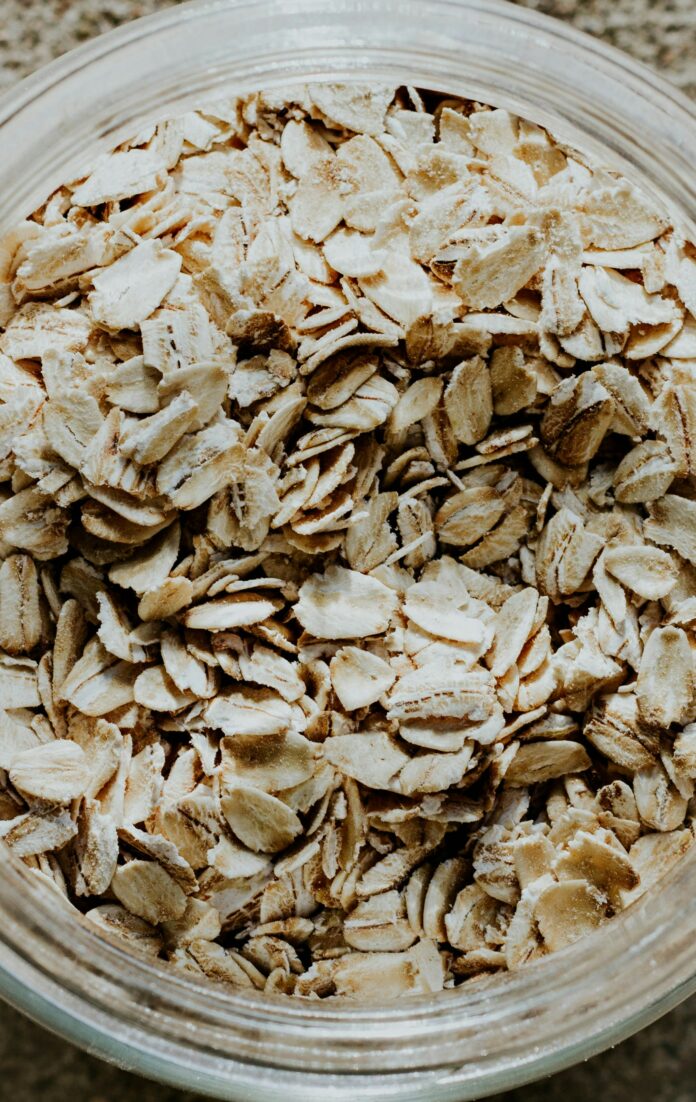
Close up of a clear plastic container filled with oats.
PHOTO: Andrea Tummons / Unsplash

By: Izzy Cheung, Staff Writer

I love getting a sweet treat from coffee shops on campus like Blenz or Renaissance, but after a few trips, I know my bank account starts to grumble. Keep your stomach and wallet happy by making your own sweet treats! These no-bake oat bars are quick to make, only take six ingredients, and taste great while you’re trying to decide whether to get an assignment done or take a nap after class. You can whip up a quick batch on a Sunday night to be ready for the week ahead. I use a recipe modified from one posted by a user on the collaborative recipe network allrecipes.com to include vegan alternatives, but it’s yummy either way!

Prep time: 20 minutes 
Additional time: 2–3 hours to chill in the fridge

Ingredients 

For the oat crust:  

1 cup butter or 1 cup coconut oil (vegan option)  

½ cup brown sugar or ½ cup turbinado sugar (vegan option) 

1 teaspoon vanilla extract 

3 cups quick cooking oats 

For the chocolate layer: 

1 tablespoon of butter or 1 tablespoon of coconut oil 

1 ½ cup semi-sweet chocolate chips or 1 ½ cup carob chips 

½ cup peanut butter or ½ cup almond butter (for those with peanut allergies) 

Directions 

  1. Line a baking pan with parchment paper — the pan’s measurements aren’t overly important, just as long as it’s at least 5 inches deep. Make sure you leave a little bit of a parchment paper wing at the top of the pan. 
  2. Melt your butter or coconut oil in a large saucepan over medium heat. Add the brown sugar or turbinado sugar, as well as the vanilla and oats. Turn the heat down to low and mix the ingredients until well-incorporated. 
  3. Press two-thirds of the oat mixture into the pan and set aside the rest of it. Make sure there are no holes in the mix and that you can’t see through to the bottom of the pan. 
  4. Put the chocolate or carob chips and the tablespoon of butter or coconut oil in a bowl and microwave it until the butter/oil is melted. Mix it until combined, then add the nut butter and mix. If the chocolate and nut butter aren’t mixing smoothly, add some more butter or coconut oil and microwave it again in 20-second increments. 
  5. Pour the chocolate mixture over the oat crust and into the pan. Using the back of a spoon, spread the chocolate evenly over the oat crust. Pour the remaining oat mixture over the chocolate layer. 
  6. Refrigerate the combined mixtures for 2–3 hours or overnight. After retrieving them, leave them out until they reach room temperature, then take it out by pulling on the wings of the parchment paper. 
  7. Cut the bars into however many sections you’d like and store them in containers or saran wrapped sections. Keep them in the fridge and take one out whenever you need a nice pick-me-up! 

Need to Know, Need to Go: Feb. 26 – Apr. 2024

0
an illustrated calender that says "Need to Know, Need to Go"
ILLUSTRATION: Courtesy of The Peak

By: Hailey Miller, Staff Writer

Song from the Uproar: The Lives and Deaths of Isabelle Eberhardt
When: Feb. 29 & Mar. 2 at 7:30 p.m., Mar. 3 at 2:00 p.m.
Where: York Theatre, 639 Commercial Dr., Vancouver

Content warning: mention of death.

City Opera Vancouver presents the Canadian premiere of this contemporary opera based on the true story of the life of Isabelle Eberhardt (1877–1904), an anti-colonial feminist defying societal norms. After she leaves Switzerland for Algeria at 20 years old, she falls in love with a soldier, converts to Islam, and dies in a flash flood seven years later. Written by Brooklyn composer Missy Mazzoli and Canadian writer Royce Vavrek, the premiere is sure to be a hit with Kwagiulth and Stó:lō First Nations’ Marion Newman’s mezzo-soprano lead performance. 

Prices range from $25–$68. Further details can be found on City Opera Vancouver’s website.

Coastal Dance Festival 
When: Mar. 1–3, various event times
Where: Anvil Centre, 777 Columbia St., New Westminster

The 17th annual Coastal Dance Festival is coming to New Westminster for three days of dance and celebration. Featuring artists such as Laura Grizzlypaws, Chesha7 iy lha mens, the Chinook SongCatchers, Dakhká Khwáan Dancers, and Turongo Collective, there’s lots to look forward to. Each year, the festival comes together to take pride in honouring and celebrating the artistic disciplines of dance, song, and storytelling among Indigenous communities across BC. This year, a special feature work by Dancers of Damelahamid, Raven Mother, pays tribute to their late Elder and co-founder, Margaret Harris (19312020).

Students pay $30.50, plus a $4 fee. More info about the festival can be found at damelahamid.ca.

Father Tartuffe: An Indigenous Misadventure
When: Feb. 22–Mar. 24, Evenings: Tue–Thu, 7:30 p.m.; Fri & Sat, 8 p.m. / Matinees: Wed, 1:30 p.m.; Sat & Sun, 2 p.m.
Where: Granville Island Stage, Arts Club Theatre Co, 1585 Johnston St., Vancouver

The Arts Club Theatre Company presents a new production of a “timeless comedy.” The plot follows the financial stability of protagonist Orin (Sam Bob) following Expo ‘67 in Montréal and the 100th anniversary of the Canadian Confederation. Life is good for Orin and his family living on their reservation, until a con artist, Father Tartuffe (Aidan Correia), ruins the good times. Orin and his relatives band together to expose the imposterous Tartuffe without falling victim to his delusions. Anishinaabe playwright Herbie Barnes states the comical play “reflects that [when] being who you are is not enough, you do just about anything to be more.”

Tickets start at $29. Showtimes and more info available on the Arts Club’s website.

Made in Italy 
When: Feb. 21–Apr. 2, various showtimes
Where: Various cities across BC

Edmonton-based Farren Timoteo’s production of Made in Italy is hitting the road on tour. Presented by the Arts Club Theatre Company, the play follows the life of a second-generation Italian teenager, Francesco Mantini, as he struggles to find his place in Jasper, Alberta. In search of inspiration, Mantini idolizes actor John Travolta and fictional character Rocky Balboa as he sets out on a quest to reinvent himself as a crooner, going by the name of Frank Martin. The play is as “bubbly as a glass of prosecco,” celebrating Italian food, family, and music. With rave reviews, the play is sure to be a comedic, coming-of-age hit among audiences.

Prices range from $25$52. More info and showtimes available on the Arts Club’s website.

Opinions in Dialogue: Intersectionality in leftist spaces

0
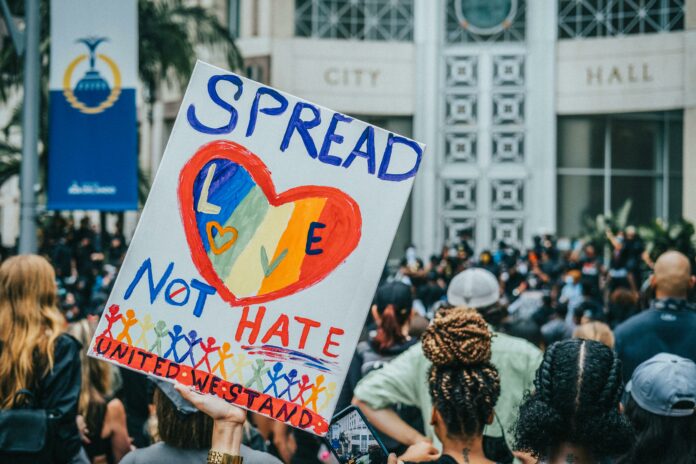
Protester holding a sign that reads Spread Love Not Hate
PHOTO: Altered Snaps / Pexels

By: Olivia Visser, Copy Editor and Michelle Young, Opinions Editor 

Intersectionality, a concept coined by Kimberlé Crenshaw, notes “that all oppression is linked.” It is “the acknowledgement that everyone has their own unique experiences of discrimination and oppression and we must consider everything and anything that can marginalize people — gender, race, class, sexual orientation, physical ability, etc.” However, in many supposed progressive spaces, there seems to be a complete disregard for intersectionality. 

Michelle: I have many intersecting identities, yet it feels like they’re always fighting with one another in community spaces due to a lack of understanding of intersectionality. There might be anti-immigrant or racist rhetoric in one space, but ableism in another. I’ve written about this in the past, but something that has always surprised me is the dismissal of accessible spaces for pride events. In a community disproportionately affected by AIDS, Mpox, and adverse medical outcomes, I’ve felt that queer folks should know to protect the vulnerable. This is the community who hung a “CDC Kills” banner from the roof of the Center for Disease Control in the ‘90s. The CDC is still killing with their incorrect guidance about COVID-19 isolation guidelines. However, sometimes the 2SLGBTQIA+ community doesn’t want to listen about how they are making spaces inaccessible. The lack of action is especially disappointing when it comes from people who are trying to champion human rights, but are entirely comfortable being prejudiced against another group. This is why intersectionality is so important.

Olivia: I think some people get caught up in only advocating for causes they feel closely connected to, which I can’t entirely blame them for. But at the same time, intersectionality is foundational to advocacy. We can’t solve injustices by only focusing on a fraction of a problem. For instance, people of colour can be left out of conversations in disabled spaces, which can be dominated by white people. From my time in online spaces, I’ve learned that Black disabled people in particular are disproportionately impacted by medical discrimination, yet some white folks are uncomfortable speaking out about this because it doesn’t impact them directly. The experience of being overlooked or mistreated by medical professionals is amplified for disabled folks, but even more so for those with intersecting identities.

Michelle: It’s important to understand that because everything is connected, our causes tend to overlap. When fighting racism and police brutality, we can’t forget that Black disabled people also face higher rates of police violence. While I don’t believe advocacy and community care should be transactional — meaning we shouldn’t advocate for one cause only to expect the same in return — it’s hard for me to believe someone truly cares about progress if they are blocking out certain aspects like disability justice, racism, or queerphobia. Feminism, for example, needs to be intersectional. We cannot automatically assume that certain feminist ideas will serve us all equally without considering that BIPOC, queer and trans, lower income, and disabled women experience unique barriers. Violence against women tends to disproportionately affect these groups, yet sometimes white cisgender women will act racist and homophobic — harming the women they claim to stand up for. I feel that sometimes, we do not listen to one another, and prefer to justify behaviours and argue that they aren’t really bad or harmful — when they are. 

Olivia: I get concerned when I see people quietly claw back values that they previously upheld, particularly at the start of the pandemic. I understand that everyone has different comfort levels and circumstances when it comes to COVID-19, but forward momentum is essential. If we want to truly adapt to COVID-19 — rather than convincing ourselves it’s suddenly safe now — we need to practice selflessness and remember who we’re advocating for. There are people who believe that since they had mild infections with no lingering side-effects, that this would be the case for everyone — let alone for themselves the next time around. Since when did activism only entail causes that impact you personally? Shouldn’t those with the privilege and capacity to use their voice do so? And it’s not just our voices that matter. Time and time again, the pandemic has shown us that actions matter more than words. We don’t have to be perfect, but we shouldn’t let ourselves become complacent. Wearing a mask in public spaces, staying home from work or events when you’re unwell, and avoiding large gatherings can and does make a substantial difference. It may be challenging to make these decisions if you feel like you can’t visibly see their impact in real-time, but think about those with autoimmune diseases, cancer, or other chronic illnesses, who can’t afford to get sick. They deserve to feel like they belong in leftist spaces — or any space, for that matter. There are people who have hardly left their homes in years because they don’t feel protected by their peers and supposed allies.

Michelle: I can’t help but be frustrated when I hear “there is more than just COVID-19” to advocate for and that COVID-19 precautions are supposedly rooted in self-preservation. It is rooted in community care, and I don’t think anyone would disagree with that if we were in 2020. Obviously, there are more problems than COVID-19, but COVID-19 is impacting so many groups — women, people of colour, 2SLGBTQIA+ folks disproportionately, and it feels like pulling teeth to have most people take basic precautions, even when they are so vocal on other causes. Recently, I’ve noticed a large push toward in-person protests as the “bare minimum” for change and advocacy. Protests are important, and if people can attend, then go for it. Though we shouldn’t be shaming people for staying home when there has been little effort to make these events accessible. However, I have noticed a large effort to include intersectional principles in liberation movements for Palestine. #AltTextPalestine is an initiative to help keep information accessible to people who use screen readers. Jane Shi, Leah Lakshmi Piepzna-Samarasinha, and Alice Wong — all prominent disability justice advocates — have collectively raised nearly $300,000 for their eSims for Gaza campaign. There are also actions that can be done from home like signing petitions and calling MLAs. National Students for Justice in Palestine have also emphasized why wearing masks at protests is important because “our liberation is connected” — this is really important.  

Olivia: Activism has no bare minimum when every individual has different circumstances. We should leave room for grace and recognize that not everyone can attend protests, has the financial means to donate, or uses social media. We can only really do what we have the capacity for, but that also means we should do what we have the capacity for. Those who are financially privileged, able-bodied, or otherwise have the means to donate their time or resources, should consider doing so. And that’s not to say people should feel guilty for being less politically active than others. However, change will never truly happen if our beliefs don’t translate into actions. You don’t need to relate to a cause to use your voice — and your voice does hold weight. 

Reginald the III vs. Bobby Sleigh: Part 1

0
An illustration of a prim looking bipedal raccoon, donning spectacles and wearing a smug expression on his face.
ILLUSTRATION: Maple Sukontasukkul / The Peak

By: Kelly Chia, Editor-in-Chief

My precious literate raccoons,

Did you miss my smooth voice narrating the most succulent meals found on the campus floors? I did, too. I had to take a sabbatical from my important work reviewing foods for raccoons all over. If you have to ask, I think my taste was . . . tarnished by the poor scraps of lettuce and tortilla chips. Cruel, I know. It can happen to any raccoon — even me. 

For those not in the know, I have taste buds descended from the Raccoon God himself: Guy Racoonieri. I’ve used my powers to responsibly discern the most refined dishes any raccoon can find on city floors, for a dime of your dollar. So when I, culinary connoisseur Reginald the III, was asked to challenge the reindeer chef, Bobby Sleigh on his show, Beat Bobby Sleigh, I hesitated. I’m not known in my social circles (filled with only the most sophisticated of paws) for my cooking. But Bobby had a manner to him that irked me to my core. Why did I, Reginald the III, have to beat other contestants for the opportunity to fight him?! It behooved me to find out. Incidentally, Bobby’s hooves frighten me.

And so, this regal raccoon found himself once more on the cold, cold floors of Simon Fraser University. Bobby had chosen a venue for our battle that most inspired dread. As I looked out into that foggy sky, I knew this wasn’t only a duel. He came to my territory. Bobby and I fight for our reputation here on the illustrious concrete campus. It’s me or the reindeer.

Then, he appeared before me: Mr. Bobby Sleigh. To my dismay, he started waving his spatula at me, and McFogg, the other contestant of his show. “It’s me, Bobby Sleigh!” he yelled. “Today, these two persnickety contestants will have the opportunity to beat me, Bobby Sleigh!” I rolled my eyes, sniffed at the table wine they offered us, and turned my nose. I would not be so easily impressed by IGA! They refused my offer to sponsor them, after all. It’s too bad they don’t know taste.

Then, my eyes settled on my fellow contestant. He was tall, scruffy, and had a certain Scottish charm to him. No . . . it couldn’t be. 

 “I’m here to show my skills!” A production assistant blitzed by with a sign, confirming the Scottish dog mascot’s identity: McFogg. A true hero to the SFU scene, left relegated to SFU’s forgotten mascot costumes. So we’re both here to polish up our reputations. I gave him a firm pawshake. “To Hell and back, old friend.” I told him. 

We nodded solemnly as we gazed up at Bobby Sleigh, who had now found a podium tall enough to look down at the both of us. “My little, fragile, talentless chefs,” he began. Okay, rude. “I think you should have a little treat. A dog treat.”

McFogg wagged his tail.

“Your ingredients for this challenge are: this stunning dog treat from our sponsor, GoodPaws,” he winked at the camera as he held up the treat. It smelled like preserved dreams. “A pack of instant noodles from the IGA,” he held up a pack of Mr. Poodles. “And a singular grape!” I gasped. Was he trying to kill McFogg?? Dogs are famously allergic to grapes!

They don’t sit well in my tummy either, but as we established, I am a raccoon of taste. I gritted my teeth at this impossible challenge. How would I conquer it?

Find out next time on: Reginald the III: Sleighing My Enemies!

From the Desks of Bobby Sleigh: Bobby’s Lament

0
A man wearing a knit sweater furrows his brows, typing furiously on a typewriter.
PHOTO: Pexels

By: Kelly Chia, Editor-in-Chief and Dutiful Archivist

The following work has been lovingly archived under, “Genius Art Before Their Time,” a pre-humous (we find post-humous too trendy) archive dedicated to appreciating divine poetry as we see it. Written by MasterChef title-holder Bobby Sleigh, this reindeer artist is known to “sleigh” the day. We find that the parenthesis in the poem adds a special flair. Please enjoy.

My name is Bobby and I Sleigh  
I work my fluffy butt off everyday (That’s a rhyme)
When I get to cookin’
My foes are RIPin’ (Ay, another rhyme, I can make a sonnet)
My culinary genius saves the day
But not everyone appreciates the Sleigh (tragic)

I slap some ingredients down onto the table
My art so rich, it’s unpredictable
I don’t understand iambic pentameter
I wish someone would explain poetry to me-ter

I’m not out here trying to be the next Master Chef, I flay all the rest
To beat me is the ultimate test (Wait, is that copyrighted?) 
I tire of writing genius poetry, I take a rest
Too bad for you, my cooking stays chicken abreast 

This week at SFU

0
An SFU softball player at bat.
PHOTO: Wilson Wong / SFU Athletics

By: Isabella Urbani, Sports Editor

Away Games

Monday, February 26–Tuesday, February 27: women’s golf at the California State East Bay Tim Tierney Shootout 

  • First meet of the spring season. SFU hasn’t competed since October, where they finished seventh at that competition
  • Finished seventh at this shootout last year  

Thursday, February 29: conference hockey team vs. Logan Lake Miners at 7:30 p.m. 

  • Winner advances to the quarterfinals on Friday, March 1 at 3:00 p.m. to take on the Okangan Lakers
  • SFU lost once to Logan Lake in a shootout in the five games they’ve played each other this season

Saturday, March 2: lacrosse vs. Oregon State at 3:00 p.m. 

  • SFU will get a two-week break before heading to Boise, Idaho to take on three teams (Utah, Brigham Young, and Boise State) in as many days 
  • SFU beat Oregon State 23–7 at home when they played each other last year 

Saturday, March 2: softball vs. Western Washington at 11:00 a.m. 

  • Finished 1–1 against their last opponent, Stanislaus State (California), following a 9–0 win and a 8–2 loss
  • Game one of the double header 

Saturday, March 2: softball vs. Western Washington at 1:00 p.m. 

  • Game two of the double header 
  • 1–4 against Western Washington last season 

Saturday, March 2: men’s wrestling at the NCAA Division II Super Regional VI in Pueblo, Colorado

  • SFU finished sixth at the tournament last season, failing to send the team to the wrestling championships
  • Then-junior Taniela Feliciano-Takafua was able to send himself to the championship by placing third in the 285-pound weight class 

Sunday, March 3: softball vs. Western Washington at 11:00 a.m. 

  • Game one of the second consecutive double header 
  • Following this series, SFU will play two doubleheaders each against Northwest Nazarene (Idaho) and Saint Martin’s (Washington)

Sunday, March 3: softball vs. Western Washington at 1:00 p.m. 

  • Game two of the last double header against Western Washington 
  • This is SFU’s last meeting against a non-conference opponent this year, excluding tournaments

Creative Corner: Automata

0
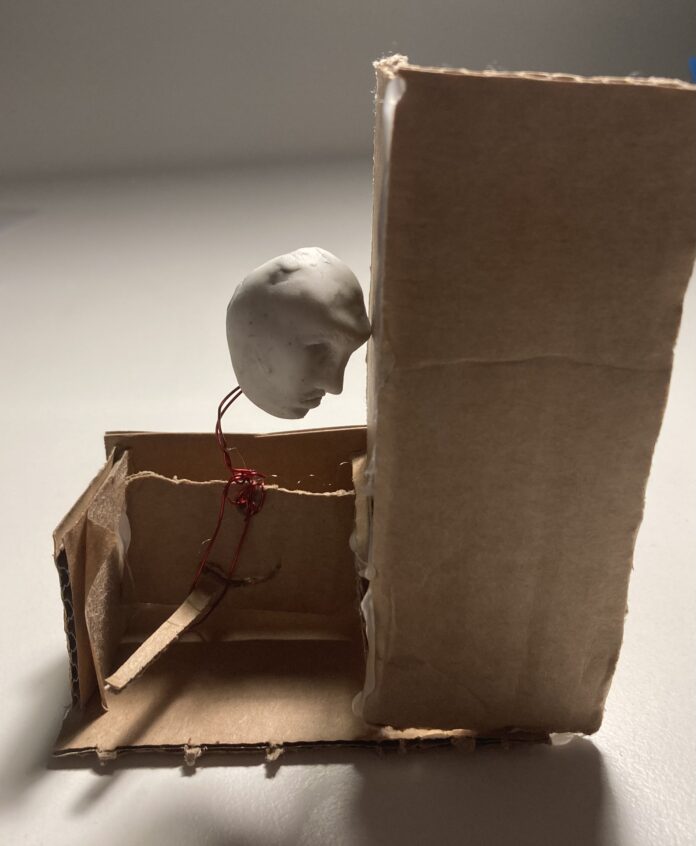
An automata of a white sculpted head, wired to a cardboard handle, banging against a wall.
PHOTO: Zobia Khalid / The Peak

By: Zobia Khalid, SFU Student

As an art student, I used to be consumed by fear. It followed me around like a putrid, burdensome shadow wrapping its arms around my neck, leaving me unable to think or breathe. I was afraid to make art, as the idea of it being perceived haunted me. If my piece was a sacrifice to the endless void of creative landfill, I would never get started. So, I would not begin my work until I simply had to in order to pass my courses. The results were dire; all-nighters produced images that were simply not good enough. And every 3 a.m. thought led me to the same conclusion: if I’m going to do badly anyway, why not just get it over with earlier? If my only talent is recreating ideas that have previously been articulated by someone far better, is it really something I should be pursuing?

Then I realized, I was not effectively procrastinating — I was passively consuming media, without a single thought in mind. So, I decided to delve into the thought processes of past visionaries. I looked into well-known enlightenment-age practices, like woodwork, but I needed something more. I needed something to fill my ravenous thirst to relinquish my curiosity, my inspiration to truly think. Something that made me wonder how the piece was even created, not how many years of hard work and talent it encapsulated. 

Then, I ran into a video titled “Sand Powered Automata.” The video introduced an acrobat continuously spinning around an axis inside a wooden box. It delved into the mechanics of the system: a simple wheel with segments to hold the rice and a funnel that led the sand inside. The user rotates the box in a complete circle to move the Acrobat. This led me down a rabbit hole about automata, which is the perfect hybrid of art and mechanical thinking. It is a very old art form that originated in France, similar to animation but manifesting in the physical world. 

The practice is still prevalent in French communities. At first, I wanted to recreate this mechanism. However, I did not have substantial material, so I decided to search Pinterest for inspiration. Alas, I found a design of a head hitting a wall. I thought it would be funny as a desk toy. It was a motor-powered version of the design I admired, so it forced me to think about the physics behind the task of hitting the head against the wall. At first, I wanted to use a weighted lever controlled by a handle using the same logic of the mechanism above, having rice move to one side and gravity influence the head to tilt. However, this was too complex. I then simplified the design to a pin slot which connects to a handle and a curve leading the head to the wall.

While I did copy an exact design, the process forced me to ponder the way I valued my artwork. Initially, I contemplated laying it down gently in my trash can, but I realized perhaps this was art to me. Only I know that I sculpted that head by hand, choosing to leave the eyes hollow and that I considered using rice instead of sand. The iterative process for me to translate emotion into motion artistically is meaningful to me. I love my art in a way no one else can. It encapsulates my own emotions and the action I wanted to take — to bang my head against a hollow cardboard wall that represents the empty void of my mind. 

The idea I’m trying to get at is we should all procrastinate more by spending time exploring things that interest us. Mindlessly consuming media will never allow us to confront our fears and inner judgement. Scrutiny and the failures of art not aligning with the exact replica of what we want are a given. But through this, we regain our sense of self and humility. We fail, but we pick ourselves back up eventually. It may feel like a waste of time, but it builds courage and strength.

David Suzuki and Tara Cullis take the stage for the world’s greatest love story

0
Miriam Fernandes, David Suzuki, Tara Cullis, and Sturla Alvsvaag sit around a dinner table scattered with scripts and food. They raise their wine glasses to the centre in cheers. Underneath is the play’s logo, “What You Won’t Do For Love” in white cursive surrounded by green leaves and pink flowers.
PHOTO: Vancouver Civic Theatres

By: Karissa Ketter, News Editor

With ever-increasing concern for our planet, longtime Canadian environmental activist duo David Suzuki and Tara Cullis are trying a new way to get people’s attention. They hit the stage February 13–17 to star in What You Won’t Do For Love alongside actors and theatre-makers, Miriam Fernandes and Sturla Alvsvaag

What You Won’t Do For Love is a love story where humans are “not the centre of the story [ . . . ] Nature is,” as Fernandes said in the show. In this play, these four folks gather around a cozy kitchen table to share stories about the love they share for each other and planet Earth. 

The show is based on a real experience these two couples experienced together. When Fernandes originally approached Suzuki to act in the play over six years ago, Suzuki was wary about acting. Under the guidance of artistic director Ravi Jain, Fernandes and Alvsvaag decided to sit down with Suzuki and Cullis to write a play about their own life stories. 

Amid the group’s light-hearted and humorous banter, the show is divided into seven distinct scenes that each explore a key theme of Suzuki and Cullis’ ethos on environmentalism. In their conversation on Suzuki’s time as a young student studying genetics, he proclaimed it was “the sense of wonder” that made him fall in love with science. However, throughout his career as a scientist, that sense of wonder was restricted: “If I write a paper that is full of that wonder [ . . . ] it would never get published,” or be taken seriously in academia. For Suzuki, this is one of the great failings in the field. “Science is presented as an objective exercise, so we scrub the emotion out of it, yet it’s that emotion and the joy of discovering nature that attracts us to science in the first place,” said Suzuki. 

Fernandes, a long-time actor and director, agreed, “For me, art is a way of making visible what is invisible. In the same way you do, David, when you look into a microscope.” This scene was a way to make clear that to understand science, we need a balance between our right and left brains — the logical and imaginative. Suzuki concluded, “The environmental crisis is not just a scientific, logical issue we’re confronting. We’ve got to touch people’s hearts.”

The four agreed the lack of emotional love we have for our planet is often why environmental movements ultimately fail. Together, Suzuki and Cullis share a story of their activism from the 1990s: together with a Kayapó Chief, they attempted to stop a hydroelectric dam from being built in the Amazon Rainforest and subsequently flooding Indigenous Kayapó territory in Brazil. Yet, 30 years after their hard-earned success, the dam was built

The Peak was able to sit down with Suzuki and Cullis to learn more about the show. Cullis noted getting a stage was a real step from their usual environmental action. While Suzuki has often written books, been on TV, or given lectures, Cullis noted, “We haven’t really achieved a turnaround in society with those. So, it seemed to me it would be sensible to try the arts to use the other side of our brains and see if we could communicate better that way.” 

For Suzuki, the theme of love resonated with him because his “message all along is that we have to love nature — we have to love the world that makes us possible.” He described the potential love we could share for Mother Earth as a “powerful force that makes us act the right way.”

Throughout the interview and the show, it was clear Suzuki’s love for Cullis is what kept him going throughout his long career as a scientist and activist. “When you go to the play, you’ll see that Tara is really the star of this whole thing,” said Suzuki. “I am who I am because of her.” Cullis added, “David and I are different, we’re very different. That’s, I think, what makes us strong, we’re like two sides of an arch that couldn’t stand alone.” 

In the show, Suzuki and Cullis retell their first meeting to Fernandes and Alvsvaag. At a graduate party at Carleton University, Suzuki approached Cullis, asking her to dance, “and then he took off” without hearing her response, according to Cullis. After a hearty audience laugh, Suzuki and Cullis stand up to slow-dance on the stage. In the interview with Cullis, she recalls this is her favourite part of the show. “It’s just a very romantic moment [which is] the last thing you’d expect: being intimate when you’re standing in front of 200 people. That, for me, was my favourite part.”

Suzuki concluded the interview with a message for university students. The “importance of young people [is] they don’t have a vested interest in that status quo,” said Suzuki. “They can see that their future is really at stake, and they don’t have to go on protecting the institutions that already exist.”

The transcript of What You Won’t Do For Love: A Conversation is available for purchase at Massy Books

Celebrities aren’t exempt from criticism

0
Photo of a private jet
PHOTO: Ramon Kagie / Unsplash

By: Kelly Chia, Editor-in-Chief

Content warning: mentions of non-consensual pornography.

21-year-old Jack Sweeney has tracked private jet flights of celebrities since 2022. Sweeney’s list found that from January–July 2022, Taylor Swift’s flights produced an estimated “total flight emissions of 8,293.54 tonnes of carbon.” According to a study done by Yard, this is a whopping 1,184.8 times more than an average person’s emissions. Swifties, I can see you reading this and immediately thinking, “Oh, well, she quite literally boosted the US economy by $4.6 billion with the Eras tour. Of course she flies a lot!” I need you to know I am not, in fact, a hater. I have a Speak Now vinyl, and lord knows how many times I have stared at the wall listening to Evermore. The call is coming from inside the house: yes, Swift is an icon. She is also silent on the things that should matter.

Since July 2022, Swift has continued to use her private jets recklessly to visit Travis Kelce, including flying out from Tokyo to the Superbowl. That’s an estimated output of 200,000 lbs of carbon emissions, according to Gregory Koeleian, co-director of the Center for Sustainable Systems at the University of Michigan. It’s clear Swift is contributing constant and significant damage to the environment, yet, Swifties are content to hate on Sweeney after her team issued a cease and desist, claiming he is stalking her. Be serious: Sweeney tracks many celebrities with his bots, including Swift. He has provided statistics that are public information, showing how celebrities are massively impacting the environment. Why are we going so hard for a 34-year-old billionaire?!?

Did you know Swift’s post announcing her newest album gained 13 million likes in a day? This crushing number would make a significant impact on climate change if she used her platform to speak on it. If it’s unrealistic for Swift to fly commercial, she has the ability to use her massive platform to enact change in other ways, like voicing her support for climate-saving policies in Congress. An Instagram post from Swift prompting followers to vote has caused voter registration to spike by 32,000. That’s how powerful she is, and why we should expect better from her.

Fans are begging artists like Swift and Beyoncé to speak up on Palestine — a simple repost would push fans so far. The official BDS National Committee has asked them to publicly “distance themselves from Israel’s genocide.” They have notably stayed silent on the issue since, despite the government of Israel using their images to fuel propaganda and misinformation. Their voices drive massive political influence. When Swift had AI pornography made of her, the White House spoke out against it, prompting lawmakers to push the Disrupt Explicit Forced Images and Non-Consensual Edits Act, which gives non-consensual deepfake victims legislative protection. I want to be clear: Swift did not deserve to be violated. But it is telling when many other victims have spoken out against AI deepfake technology, only to be ignored

The most common response from fans when they hear a “controversy” about their idols is to tune it out. I’ve heard every variety of, “Separate the art from the artist,” to “They’re not an activist,” to “They don’t know!” We shouldn’t jump to assume celebrities act in their best interest, which protects their image in our hearts. They’re ignoring controversy until it impacts them, and that’s very worthy of critique. Shutting down any criticism of them just because you like these idols is very petty. Let’s take off these rose-coloured lenses, and expect better from them. 

Films should centre Black joy, resilience, and culture

0
Two Black women, laughing together
PHOTO: Ketut Subiyanto / Pexels

By: Saije Rusimovici, Staff Writer

Content warning: brief mentions of colonialism, slavery, and violence against Black people.

Hollywood movies like The Help, The Colour Purple, and 12 Years a Slave, place much of the focus surrounding the Black experience on aspects of intergenerational trauma. These films have an important role in bringing awareness to the historical ramifications of segregation and slavery, particularly in the American South, where they take place. However, it is essential to recognize that Black experiences go far beyond trauma. Film is a place where Black joy should be showcased, not repressed. 

Black joy is a term popularized by Black scholars and often used to describe “making space for joy and positive experiences apart from and in opposition to the trauma, tragedy, and struggles perpetuated by the anti-Black racism and oppression of white supremacy.” With that being said, the historical implications and systemic racism that perpetuate violence and atrocities against Black people shouldn’t be forgotten. However, the normalization of Black pain can also contribute to the desensitization of violent experiences.

Black joy signals “strength and humanity in the face of a history and culture” that was built to oppress Black people. For decades, Black representation in film has been reduced to narrow tropes such as “the angry Black woman” or “the Black best friend.” These tropes do not centre Black experiences or joy, and they tend to be observed solely in side characters. Writer Hadiya Roderique describes Black joy as “the unabashed enjoyment of Black culture without apology, hesitancy or shame.” Roderique noted that it is still quite rare to see Black joy in mainstream media. 

Often, depictions of Black joy are often “met with scepticism, pushback, and resistance.” Why? Roderique describes how white people often diminish Black joy to take away from people’s achievements or experiences when “they just don’t get things” — for example, the idea of reverse racism, which white people might cite when Black folks “create spaces for themselves . . . that white people aren’t a part of.” The idea of reverse racism can be rather oppressive, which is why Roderique emphasizes the importance of celebrating Black joy as a way of protecting against anti-Blackness. “[Black joy] is dissonant,” Roderique added, “pushing back against an overwhelming and limited narrative.”

Films that celebrate Black joy include movies like Black Panther, Soul, Queen of Katwe, and The Incredible Jessica James. Not only do these films feature a predominantly if not entirely Black cast, but they focus on narratives outside trauma and hardship. In these films, Black actors are celebrated for outstanding performances that depict strong, unapologetic Black characters as superheroes, in coming-of-age films, and in joyful comedies. 

Films should be a platform to uplift Black stories and portray aspects of Black life and culture that are often overshadowed, such as love, healthy family life, and community care. It is not only up to Black people to share and create this joy. The media and artistic communities must make a conscious effort to promote and share that joy through informative articles, film recommendations, and conversations about why it is important to celebrate Black joy.