Home Blog Page 145

Horoscopes January 29 – February 2

0
An illustration of a girl, stars and astrological signs strewn in her hair.
ILLUSTRATION: Marissa Ouyang / The Peak

By: Cam Darting, SFU Student

Aries
March 21–April 19 

The heavens have chosen. Aries is represented by Sikowitz. Just like the eccentric drama teacher, Arieses have no filter and are quite forgetful. This may land you in a sour situation, like drinking milk from an old coconut. I urge you to walk barefoot outside and really reflect on whether you must always say what’s in your head.

Taurus
April 20–May 20

The heavens have chosen. André’s grandma represents Taurus. Like her, Tauruses are very set in their ways. They never want to change their beliefs and aren’t fond of authority. This means whatever they believe goes. If a Taurus says there’s a helicopter in their living room, you’d better go with it. Because of this, Tauruses must work on being more flexible and cooperative. 

Gemini
May 21–June 20

The heavens have chosen. Cat Valentine represents Gemini. Just like the easily-distracted redhead, Geminis are playful and easily adapt to social situations. They’re the definition of a social butterfly. I urge Geminis to not be so trustworthy. Somewhere in their future, there will be betrayal because of their friendly nature.

Cancer
June 21–July 22

The heavens have chosen. Cancer is represented by Jade West. Just like the goth teenager, Cancers are very moody. They can go from zero to 100 in two seconds. I recommend they go out in nature at least once this week and allow the cold winds to calm them down. If all else fails, write a horrifying play about clowns . . . and how they don’t bounce. 

Leo
July 23–August 22

The heavens have chosen. Leo is represented by Trina Vega. Just like the spotlight-loving sister, Leos love being the center of attention. They are so confident in themselves no matter the circumstances. They can believe they are a good singer even if they aren’t. Keep doing you, Leos, and keep method acting. After all, how can you play a character with tuberculosis if you yourself don’t go out of your way to get tuberculosis?

Virgo
August 23–September 22

The heavens have chosen. Virgo is represented by André Harris. Just as the soft-spoken musician, Virgos are kind and patient. Be careful or else your helpful nature may cause you to get stuck in a pear costume! Anyways . . . Virgos, stop being pushovers.

Libra
September 23–October 22

The heavens have chosen. Libra is represented by Tori Vega. Just like the cheekboned quirky girl, Libras are very affectionate and honest. They go above and beyond for those they love. They might even write their sister a birthday song and perform it just for her to tell them it’s a bad gift. My advice for Libras is to buy a gift instead of making one.

Scorpio
October 23–November 21

The heavens have chosen. Scorpio is represented by Robbie Shapiro. Just like the awkward curly-headed outcast, Scorpios are secretive. They always have a secret agenda and want to be loved. However, I do not recommend starting a paparazzi club that exposes your best friends. 

Sagittarius
November 22–December 21

The heavens have chosen. Sagittarius is represented by Beck Oliver. Just as the handsome actor, Sagittariuses tend to be sweet talkers. They do the bare minimum and people will be fawning over them. They even have teachers complimenting how nice their hair is. BUT, this comes at a cost. They are constantly flirting, causing trouble in their relationships. Sagittarius, keep it in your pants and be loyal for once.

Capricorn
December 22–January 19

The heavens have chosen. Capricorn is represented by Helen Dubois. Just like the witty new principle, Capricorns are stubborn. They are perfectionists. They want nothing but the best. The last thing you want is to have a Capricorn be the judge of whether or not you get into a performing arts school because they are brutal. Capricorns, loosen up. It really is not that deep.

Aquarius
January 20–February 18 

The heavens have chosen. Aquarius is represented by Sinjin Van Cleef. Just as the bizarre side character, Aquariuses are technical. They are clever and innovative. Because of this, they may be part of a tech crew in charge of lights and sound. Though nice, this can lead them to be a nobody. Aquarius, step outside your tech world and try something physical for once.

Pisces
February 19–March 20

The heavens have chosen. Pisces is represented by Lane Alexander. Just like the guidance counsellor, Pisces are wise. They are helpful, friendly and mostly loved by everyone. Nothing bad to say. Keep up the good work Pisces!


Diwali is not just the Festival of Lights

0
A photo of many diyas (candle holders) lit, a sea of flames for Diwali festivities.
PHOTO: Udayaditya Barua / Pexels

By: Gurneet Lohcham, SFU Student

While many know Diwali as the Festival of Lights, there is so much more to it than just that. In Hindu and Sikh culture, Diwali celebrates the winning of good over evil. Being a Sikh, I celebrate Diwali based on the historical day called Bandi Chhor Divas. On this day in 1619, our sixth Guru, Guru Hargobind Sahib Ji, was freed from being held captive, along with many Hindu political prisoners. Every year on Diwali, which falls in November, we go to the temple, pay our respects, and express gratitude to God for the release of our Guru. The lighting of Diyas (light holders) and firework shows are a celebration of how good prevails amid darkness.

For me, Diwali consists of lots of sweets, good food, prayers, and time spent with family and friends. I love to spend time cooking special foods with my mom in the kitchen, and serving them for our visiting extended family members.

As a child, Diwali was a big event, and sometimes we would have parties and lots of guests to celebrate with. However, as we’ve gotten older, Diwali has become a more intimate family time about rejoicing in community. The community comes together as one to pray and light up the temples all around the world to celebrate together. During this time, we often donate food and supplies to our local temple for Langar, which is a communal, free meal prepared and offered at Gurudwaras (Sikh Temples). This has been a huge part of the Sikh community and religion since it was first introduced. 

Diwali is also celebrated in the Hindu religion, symbolizing the return of Rama, Laxman, and Sita after 14 years in exile. The story states that the people from their home lit their path with Diyas so they could find their home in the darkness. I love to think about how in both religions, Diwali is celebrated for different reasons, but the story always concludes with the winning of good over evil. Being brought up in Canada, Diwali has always been a very important festival for me because it allows me to think about the history of my religion and celebrate the successes we’ve had. It also gave me a chance to connect with my culture and have a good time with my family and friends. 

In Case You Missed It: The Wire shows how the American Dream fails

0
The Wire TV series cover featuring a man in a car with the window pulled down looking out the window with a scowl on his face. In the window reflection, a man is scowling back at him.
PHOTO: Courtesy of HBO

By: Yildiz Subuk, SFU Student

Content warning: mentions of death, drug use, and violence.

It is not often that a piece of television frames an important social issue from its first few lines of dialogue. The Wire is an HBO drama set in Baltimore that explores the interconnected lives of law enforcement, drug dealers, and residents, exposing the systemic issues that contribute to urban decay in American societies. Urban decay is the “decay and deterioration of an urban area due to neglect.” 

The opening scene introduces detective Jimmy McNulty talking to a witness, after a young man called Snot was killed for attempting to steal money from a dice game. The witness explains to McNulty how Snot has a habit of stealing from dice games, and usually when he gets caught, all he does is catch a beating. McNulty then asks, “If Snot always stole the money, why did you let him play?” The witness then answers his question with, “You gots to. This America man,” a statement that precisely conceptualizes what the show is trying to prove: the American dream — the notion that America gives everyone an equal opportunity to achieve success through hard work — fails.

A common misconception is that The Wire is a fictional documentation of the war on drugs, which can be traced to 1971. When then-president Richard Nixon launched a campaign stating that drug abuse is “public enemy number one,” what followed was the mass funding and establishment of the Drug Enforcement Administration in the US. While the war on drugs is a part of the show, it’s used to shed light on other issues, such as corruption within law enforcement and the criminal justice system, the frustrating bureaucracy relating to criminal prosecution, underfunded education systems, and the role of media representation. 

The editing’s intentional juxtapositions highlight how a city could be so divided and unequal: a small percentage of Baltimore is filled with high income neighborhoods and high-rises, which tend to be police buildings, while the rest of the city is essentially considered “the projects,” consisting of abandoned buildings where drug dealers and people with substance abuse disorders reside. There are also underfunded schools where the classrooms seem as if they have never been properly renovated. These are the results of a capitalist society that prioritizes the interests of the elite by funding law enforcement instead of investing in public institutions and social programs, which would benefit the neglected working class.

There are parallels with Vancouver’s opioid crisis, as social programs to address the housing crisis, houselessness, and substance use crisis are not a priority for the government. Vancouver’s image as a result is a city that looks glamorous and modern in many respects, while many parts of the Downtown Eastside, including the well-being and safety of individuals that reside there, have been neglected. There is a cyclical pattern of universal significance within the story of The Wire: anyone is free to participate in the American dream, but only the small minority of privileged characters ever see the benefits. While claiming to celebrate multiculturalism and freedom, Canada follows the same capitalist ideals of American society.

Despite its critical acclaim, The Wire did not gain high viewership. The truth is, it’s difficult to binge due to its length and slow pacing, while it also deals with dense subject matter that challenges the audience to engage critically. At first glance, there is a lack of attention-grabbing scenes (shootouts, intense interrogations, intriguing mysteries, etc.), but the show rewards the audience for sticking with it. The Wire refuses to overlook the smallest of details, while providing a nuanced look at the aftermath of disastrous capitalist societies.

Survey of 15,000 teenagers reveals half are experiencing mental health struggles

0
This is a photo of a young person sitting on the floor, leaning against the back of their couch. They look upset, with their head resting in their hands.
PHOTO: Joice Kelly / Unsplash

By: Eden Chipperfield, News Writer

Content warning: brief mentions of childhood abuse.

A report released by the Youth Advisory Council surveyed nearly 15,000 teenagers ages 15–17 in BC and revealed that half are experiencing struggles with mental health such as depression and anxiety. SFU PhD student and research coordinator Judy Wu says the spike is from unique stressors, including the pandemic, climate change, and the housing crisis. 

To understand more about the report and the Youth Discipline Instrument (YDI) creation, The Peak spoke with SFU health sciences assistant professor Dr. Hasina Samji.

“About half of the surveyed youth reported poor or fair mental health, nearly 40% of youth screened positive for depression or anxiety, and over 1 in 3 (36%) reported needing but not seeking mental healthcare in the six months before taking the survey,” said Samji. However, Samji explained there were good statistics; for example, “4 out of 5 youth who participate in physical activity at school, including team or individual sports, reported their involvement added to their well-being.” 

The report highlighted that teenagers do not seek support because they don’t know where to receive it and they feel ashamed asking for help, thinking they can handle it on their own. “These data highlight a need for a better system for connecting youth with relevant support,” said Samji. She noted how in recent years, and even more so during the pandemic, health systems saw increased investments in youth mental health supports. “However, we have not seen improvements in youth mental health outcomes over the three years we have implemented the YDI survey. We must address these gaps in medical care, whether it be greater outreach of existing resources and supports.”

When asked what immediate steps could be taken to address teenage mental health challenges, Samji suggested building positive mental health systems at individual, school, and community levels to promote an understanding of mental health. This could include spending time outdoors, which 69% of respondents reported helped manage stress, or child support systems where “at least two non-parent adults [ . . . ] genuinely care about them.” In terms of long-term solutions, Samji recommends that “early childhood experiences are highly influential for your mental health and well-being outcomes, as well as other health outcomes in adulthood.” 

The YDI found that early adverse experiences in childhood, such as divorce and abuse of all types, affect youth mental health later on. Further negative childhood experiences can also be related to marginalization, gender and sexual identities, and socio-economic status, meaning that long-term solutions focusing on reducing poverty and eliminating racial barriers are crucial steps for improving long-term mental health care. 

The report discusses the active collaboration between sectors, including education, health, and policy. Suggestions include implementing health clinics with schools during and after class hours, organized and run by health professionals. This move would work towards “decreasing the number of barriers that youth have [when] receiving health care.” 

The organizers of the YDI advocate that youth voices should be amplified, especially when it comes to decisions affecting their well-being. “The way that our political system is currently set up does not easily allow youth voices to come to the forefront. For instance, a large portion of those in the youth age category cannot vote. Thus, political parties and policymakers may be less likely to prioritize their needs.” 

Samji provided suggestions on how youth involvement can be implemented, including “social media campaigns, interactive websites, online forms, dedicated apps, and even in-person town halls or discussions that encourage youth to share their thoughts and ideas.”

The YDI report is available to read on CHART Lab’s website. Visit the web version of this article for a direct link.

Conservation scientist discovers changes in BC salmon

0
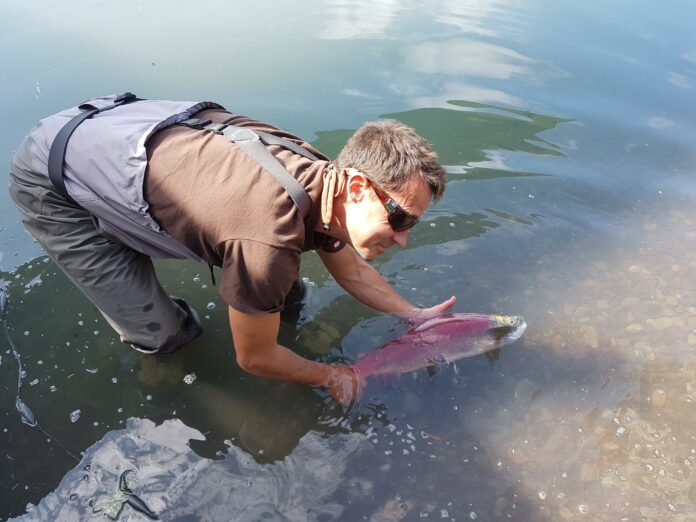
This is a photo of Michael Price, standing in a river. He is bent over with his hands in the river, holding a spawning salmon.
PHOTO: Walter Joseph / Wet’suwet’en Fisheries Manager

By: Olivia Sherman, News Writer

By looking at past salmon populations in the Skeena Watershed in northern BC, Michael Price, SFU postdoctoral fellow, can estimate what the future holds for salmon populations in BC. 

Through his research, Price discovered that salmon populations in the Skeena River watershed have increased over the past century. Price and his team examined a “rich collection of fish scales” dating back to 1913. These preserved scales tell “the literal life stories of each fish,” including the estimated size of the fish and what it may have encountered in its life. What Price has found is that the juvenile sockeye salmon population has been “growing more and more now in response to increasing temperatures and reduced competition.

“There are two large influences” that determine the rate of survival in salmon, especially in freshwater lakes where they hatch, rear, and grow. These influences are “temperature and competition.” Lake sizes can vary in temperature, elevation, depth, and size, and all these variables provide different outcomes for the populations within. Colder temperatures have lower “productivity,” meaning they produce less food. In colder areas, juvenile salmon tend to take two to three years to leave these habitats. However, warmer temperatures in freshwater lakes and rivers increase the metabolism of young salmon, providing more food, and helping them grow larger so they become strong enough to venture to the ocean sooner. 

The other factor is competition, which is “measured by the number of other little juvenile sockeyes that are rearing in that lake.” When there is not enough food or space available to tend to the salmon in these habitats, “growth tends to be lower.”

The main threat to salmon is largely due to negative human interaction with salmon populations and the surrounding habitats in which they reside. “They transcend freshwater and ocean environments, they rear in lakes and river systems [ . . . ] and in each of these locations there are a myriad of threats,” noted Price. Upcoming projects in BC, such as the liquified natural gas (LNG) pipeline and continuous logging projects, threaten the environment that is “endowed with a diversity of habitat.”

The future of salmon populations in BC varies depending on their location. The study concluded, “Such diverse responses of populations and their habitat to a changing climate form a dynamic portfolio that may endow salmon watersheds with resilience to future change.” However, the ongoing changing climate will ultimately create both “opportunities and constraints for salmon during freshwater rearing,” according to his research.

“At the end of the day, it’s really humans and our collective, everyday decisions that we make that aren’t in the best interest of salmon that continue to erode the abundance and diversity that salmon once held in British Columbia,” said Price. 

Fairlith Harvey – Artist Spotlight

0

Dear Peakie: Where Are They Now?

0
Gold balloons spelling “dad” in front of a wall of ties.
PHOTO: Tim Mossholder / Unsplash

By: Sonya Janeshewski, SFU Student and Olivia Visser, Copy Editor

Dear Peakie, 

Last time we spoke, you gave me advice on how to perfect my dad-sona. After much introspection, I found that I’m less of a punny dad and more of a socks with sandals kind of dad. My newfound confidence in my dad-entity helped me meet my wife! I met Roxannica at a barbeque. She kept saying she liked my tan cargo pants, so to seal the deal, I whispered, “I always blast videos at full volume.” I should’ve worn my shants for easier access, but they didn’t stay on too long anyway. Unfortunately, dad-sona rizz is not a solid enough foundation for a marriage. As I write this, my wife, Roxannica, is fighting for custody of our oven but, that’s a story for a different Dear Peakie letter. 

Sincerely,
Dream (and soon-to-be divorced) Daddy

Dear Dream (and soon-to-be divorced) Daddy,

This is most unfortunate, indeed. While I cannot offer advice for your impending divorce, I may be able to assist in your future romantic endeavours. First of all, might I introduce you to the concept of a red flag? Yes, dad-sonas are all the rage these days, but there is a fine line between zany and creepy — let’s be real. You say you discovered that you’re less of a “punny” dad and instead a “socks-with-sandals” kind of dad. Yet, is one really complete without the other? I hate to break it to you, but your beloved Roxannica was likely overwhelmed by your overbearing, socks-and-sandals-wearing, un-punny self — not your dad-sona, if you ever had one. My advice? Throw the word “rizz” out of your vocabulary, pick up some dad jokes, and lower the volume on your videos. I told you to be whimsically mundane the last time we spoke, not insufferable. I bet you wish you had a dad joke to get you out of this situation!

You’ll get there some day (probably),
Peakie

Dear Peakie,

I’m graduating this year, so, when it comes to following your advice about getting as engaged as SFU, I knew it was now or never. I started off by hitting on my classmate because we had a quiz I was NOT ready for, but on the second date he asked for three of my fingernails for an experiment to try and clone me, so I made a plausible excuse and dropped the class. Later, I tried spilling my books on the ground and thankfully this dude who was NOT my type picked them up. I asked him out because it takes real courage to wear something on campus that isn’t a grey hoodie or a black jacket. But I guess a lot of people fell for that, because his dorm room looked like a New York subway station. So, in economics class I complained about not understanding The Wolf of Wall Street, which got me Bradwick Stinebergson’s number. He said he had to get married by age 19 before his youth dries up, so he proposed within a week with a gold ring, which was bent from all the times the size had been adjusted. But, we were playing Monopoly with his cousin one day, and I accidentally asked him to go print more money. That set him off so much he broke off our engagement, so looks like I’ll have to transfer after all. 

Sincerely,
#1 Most Single University Student (still not engaged)

Dear #1 Most Single University Student (still not engaged),

Woah, woah, woah. I do not remember telling you to use your lack of academic and cinematic knowledge to land a man. No, my advice was to open up with information about your life goals: “I suggest sitting next to the cute, edgy guy in your seminar class and introducing yourself by telling him all about your dream wedding.” Relationships are built on trust and honesty. Honesty is being upfront about your ideal 4-carat engagement ring and $150,000 wedding goals. How are these boys supposed to know your intentions when you deceive them so? I told you to be an open book, not to lower your standards. While your time may be running out, I would suggest trying once more, and this time following my original advice to a T. 

Put a ring on it (seriously, like, soon),
Peakie

Dear Peakie,

How silly I was to take your advice. I did what you said about removing layers throughout the day as it gets warmer, and now I’m banned from most public places. 

Sincerely,
Not So Sunny

Dear Not So Sunny,

Oh, my. I struggle to find any instance where I ever suggested de-layering in warm weather. Nay, I specifically told you to LAYER in COLD WEATHER: “If it’s six degrees on Burnaby Mountain, it’s three degrees inside the AQ. Leave the house in crocs, jeans, and a light sweater, but bring a jacket and thick socks in case your toesies get cold.” I’ll say it once — both for your sake and for our readers’ sake — I am not responsible for any misconstruction of my advice, and I won’t stand for this type of accusation. Ever heard of defamation? No? Yeah, clearly not, but I have. Consider this a warning, or your days will really start to feel Not So Sunny. 

Watch yourself,
Peakie

Student updates: Spring 2024

0
Graphic that reads “Student updates.”
ILLUSTRATION: Courtesy of The Peak

By: Hailey Miller, Staff Writer

Welcome back, students! Here’s to all that 2024 has in store.

IN-PERSON CLASSES FORECASTED DURING SNOWSTORMS 

No matter how much snow tops the mountain, rest assured, classes will not be cancelled! Campuses will remain open and classes will continue as usual on days with heavy snow and fluff-filled precipitation. The buses will get stuck on the hill and dreaded delays are here to stay! Forget driving because your car will spin out before you even ascend to the highlands. The option of a “snow grade” will be available for those affected by mandatory in-person snow day classes.

CAMPUS ICE RINK CONTEST – SUBMIT ENTRIES TODAY

Have you Slip N’ Slided around campus? Are you convinced that all walkways are an ice rink? No amount of salt will be a match for the slick cement slabs. Nominate the most slippery spot on campus today! From glistening walkways to black ice-covered hills, so many contenders are up for grabs! Will the AQ Pond take first place again this year? Submissions are open now through the end of the semester. 

DRESS APPROPRIATELY FOR ALL WEATHER CONDITIONS 

Be sure to wear a parka and an SFU sweatshirt — the one that’s two sizes too big that you got on sale, but was still more expensive than your semesterly parking pass. A toque will suffice, but the pompom will blow off in the blustery winds. Be sure to wear a pair of boots with next-to-no traction when it comes to the slippery sidewalks and cement slabs around campus that give skating rinks a run for their money. Don’t forget your sunglasses because the glaring sun will be blazing brighter than your future when you look over the horizon on the way to a class you didn’t sign up for.

COUNTDOWN TO READING BREAK

Are the start-of-semester blues already hitting you? Fear not! Reading break is just around the corner, and by that, we mean you have to get through the entirety of January and the majority of February first! Nothing says “return from holiday” like kicking back into the study grind with the longest semester of the year. Every day, from now until February 16, the university will be holding a reading break countdown full of pet therapy, stress-reliever yoga classes that will fill up too quick to get a spot, horror movie marathons to live through your nightmare, and a shortage of snacks that not even one student will get their hands on. 

NEW COURSE SCHEDULING CONFLICTS HAVE ARRIVED!

Book your appointment with goSFU today to get a first-hand look at the red X that denotes unsuccessfully adding a course to your highly conflicting schedule. If you thought you were going to hash out a full five-course semester, you’re out of luck. Thought this was your last semester and you’re graduating in June? Just kidding! That last remaining course required for your degree won’t be offered for at least another two semesters. So much for planning accordingly. More conflicts will arise as one class that was scheduled for a certain campus will now be moved to another campus, making it utterly impossible for you to move heaven and earth to make it to your back-to-back classes on time. Better luck next time!

It’s time to use Indigenous names for places

0
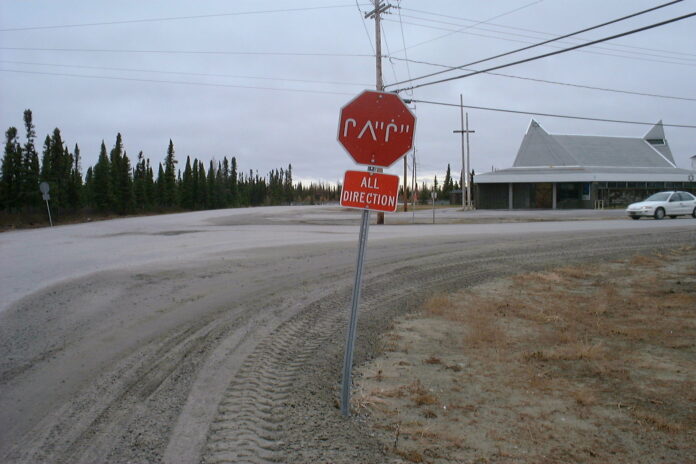
A stop sign in Cree
PHOTO: LHOON / Flickr

By: Hailey Miller, Staff Writer and Olivia Visser, Copy Editor 

Content warning: mentions of colonial genocide.

Respecting Indigenous place names is not a matter of Canada’s reputation. It’s an absolutely necessary component of decolonization. Today, so-called Canada resides on unceded, traditional territories of over 634 First Nations. Unceded, traditional territories means these lands were never surrendered or handed over to either the provincial or federal governments, but rather stolen. Many geographical locations in Canada have traditional names extending back thousands of years. Recognizing and actively using these names is a fundamental step in confronting centuries of colonial language and cultural suppression.

Canada’s history of colonization is long and violent. Current colonial names for cities, provinces, and other regions across the country have been in use for far too long. Many colonial place names are honoured for the wrong reasons. For instance, Fort Langley was named after Hudson’s Bay Company director Thomas Langley, despite the area being inhabited by Stó꞉lō nations. So-called BC was also named by Simon Fraser, a trader and colonizer who harboured anti-Indigenous sentiment and even stole from Indigenous people. Now, Simon Fraser University still bears his namesake. The use of Indigenous place names helps educate people on the importance of acknowledging Indigenous histories, traditions, and cultures. We need to deconstruct the colonial narratives of history that overlook Indigenous experiences and sovereignty.

Prior to colonization, Indigenous Peoples rightfully had full governance and authority of their lands. The implementation of the Indian Act in 1876 “displaced Indigenous Peoples’ own governance systems” and took away their rights. The Act was a form of governance that offered some benefits to those considered “Indian,” which excluded Métis and Inuit people. Until 1985, Indigenous women also lost their Status if they married a non-Indigenous partner. While many provisions have been amended to this day, consequences of the Indian Act, such as poverty and marginalization, extend into the present. 

BC’s Lower Mainland consists of lands from the Coast Salish Territories of the xʷməθkʷəy̓əm (Musqueam), Səl̓ílwətaʔ/Selilwitulh (Tsleil-Waututh), Kwikwitlem (Coquitlam), Kwantlen, Katzie, Semiahmoo, Skwxwú7mesh (Squamish) Peoples, and more. The digital interactive map Native Land shows the traditional names of Indigenous places all over the world. It helps viewers visualize the boundaries of one Indigenous territory to another and understand decolonial borders. As individuals, it’s important to differentiate between the various languages and cultures of the land we reside on.

Indigenous place names hold great meaning within their respective cultures. Stories created by Indigenous communities recall connections to land, accounts of history, and ongoing traditions. In order to keep this information alive, Indigenous languages are passed down orally from generation to generation. Mohawk poet E. Pauline Johnson documented some of the legends told by Chief Joe Capilano, including Siwash Rock in Stanley Park and The Two Sisters in North Vancouver.

Indigenous names need to be acknowledged out of respect to cultural identities that hold deep historical significance. Following the recommendation from the Truth and Reconciliation Commission, the use of traditional names on official documents is now allowed in Canada. This comes after many Indigenous people “were forced to have their names changed as a result of residential schools or other federal policies.” Traditional names were changed in favour of English and Christian names. Language is an important part of identity, and while this is only one step forward in decolonization, it’s an essential one. 

Non-Indigenous people need to recognize the history behind the land they live on, and respect the vast variety of cultures, languages, and ways of living that Indigenous Peoples have practiced for millenia. Their cultures should have never been suppressed, and now it’s our collective responsibility to respect and revitalize what has been colonized. We must implement change in order to further these steps toward reconciliation. 

What Grinds Our Gears: Potlucks

0
A group of dishes on a table
PHOTO: Derek McKinney / Unsplash

By: Cam Darting, Peak Associate

Who doesn’t love getting invited to parties? Drinking, catching up with friends, what isn’t there to love? I’ll tell you: when the invite says “potluck.” It may seem dramatic but this one requisite can alter your view of going out forever.

How do you know what to bring? You wanna bring something safe — not so safe it’s basic — but safe enough that everyone will eat it. You also wanna bring something in the same price range as everyone else. Imagine the awkwardness when you pull up to a party and you see sushi, pasta, and baked chicken, and you realize all you brought was some potato chips . . . 

How much of a dish do you bring? You never want to bring too little because then you just look cheap. If we look at the other side, you never wanna bring too much of a dish because what if nobody even touches it? Nothing is more embarrassing than bringing something and leaving the party with the same amount of food you brought. Speaking of this, nobody tells you the anxiety you’ll have watching everyone eat all the dishes clean, except yours. It’s a similar feeling to being picked last in gym class, and you don’t wanna relive that, do you?

The moral of the story is if an invite says “potluck,” stay home.