Home Blog Page 133

Clean Air 604 aims to create safer arts spaces

0
ILLUSTRATION of an intimate open mic event where people are wearing N-95 style masks covering their noses. Someone is speaking into a microphone and people are socially distanced from each other and having a good time. There is an air purifier in the background.
ILLUSTRATION: Sonya Janeshewski / The Peak

By: Michelle Young, Opinions Editor

Clean Air 604 is currently fundraising to make Vancouver venues safer by “providing events with free masks, air purifiers, and more” in response to the lack of COVID-19 precautions at arts and culture events. 

“The current state of accessibility for Vancouver arts and culture events is dismal,” said Hamzah Mansour, the founder and organizer of Clean Air 604. “Many people have been pushed out of spaces since the start of the pandemic, especially since COVID-19 protections were completely dismantled and abandoned starting in 2022. It is a central belief of mine that everyone deserves access to arts and culture in their communities, and disabled people are very often overlooked and left to either take on unreasonable and unfair risks or miss out entirely,” he added. 

Currently, Clean Air 604 has raised $350 of their $1,300 goal. On their website, the organization notes upcoming events and which precautions will be in place, such as whether masks are required and if air purifiers will be used. While Mansour noted that the organization cannot eliminate all risk of infection and that the responsibility to do so should fall on the government and public health, Clean Air 604 is “committed to doing anything we can to help our community.” He said, “We only exist as a reaction to their inaction.”

Their upcoming goals include expanding their library of materials, such as air purifiers, to lend at events and organizing events outside of the arts. “We want to keep having a stable inventory of masks to provide free of charge at events, with a variety of types and sizes to accommodate everyone,” Mansour explained. 

Clean Air 604 is not the first organization of its kind. “Clean Air initiatives have been starting around the world for over a year, with a notable example and main inspiration for our project being Clean Air Club based out of Chicago,” Mansour said. Clean Air Club also provides a map on their website noting where similar initiatives are based, such as Clean Air Ottawa.

“It’s already very hard being a musician in one of the most expensive cities in the world, and the lack of mitigations and protections in place at shows not only puts attendees at risk, but also puts artists themselves at greater risk, many of whom belong to marginalized groups. The artists that are most at risk of being pushed out of these spaces are among the most important voices to have at a time like this and are voices we can’t afford to lose,” Mansour added.

Upcoming events include Sorcery & Solidarity, a “BIPOC centered Magic and Healers market” that will sell “zines, candles, jewelry, ceramics,” and more. Past events listed on their website include Sumud صمود: Poetry for Palestine, a reading at the Vancouver Black Library, and Under The Table, an open mic for queer and disabled writers.  

“While I’m able-bodied and not immunocompromised, I still see the importance, from those around me and those speaking out, of ensuring disabled people are not forgotten or harmed,” Mansour said. “This is definitely something that anyone can help with, even just going to one of these events and being an advocate in that way. Wear your mask, bring some friends, and encourage them to wear theirs,” he added. Mansour also said that asking events and venues directly can encourage them to create safer spaces and protect against COVID-19. “Encourage masking at your workplace or in your labour unions, mention mask blocs and how high quality masks (N95s and similar) can be provided for free. Anything you do helps and it’s never too late to start taking precautions or add more layers of protection.” 

Sex workers need legal protection

0
Woman lying on a bed, wearing lingerie
PHOTO: Valeria Boltneva / Pexels

By: Hailey Miller, Staff Writer

Content warning: mentions of sex trafficking and sexual violence. 

Sex workers should be treated professionally, and are worthy of respect. Canadian legislation is very behind in properly recognizing sex workers. The criminalization of sex work endangers workers’ safety and rights. In Canada, sex workers are still not protected if they experience harassment, or need to seek legal assistance. Without legislation that protects sex workers, their jobs will continue to be stigmatized both socially and systematically.

Historically, sex work has been seen as a shameful occupation and is still frowned upon by many individuals today. The stigma surrounding sex work often revolves around the assumption that these jobs are a last resort for people who are desperate to make money. This is not necessarily the case. For many, their sex work careers allow them to express themselves creatively. Some sex workers are in the profession for the benefits of making extra money to cover things like everyday expenses and tuition costs, and others genuinely just enjoy their work.

The lack of regulation for sex work makes it easier for clients to harass them, putting them at risk of violence. Bill C-36 claims protect sex workers, yet criminalizes their work by declaring it “a form of sexual exploitation.” The supposed “safety legislation” of the Bill exposes sex workers to more risks, harassment, and potential arrests. For example, Bill C-36 makes it illegal to run bawdy houses, yet they are one of the safest ways to conduct sex work. The lack of access to such houses leads to increased isolation, posing risks for sex workers. 

Another example is how some sex workers have the ability to screen clients prior to engagement in their activities. Monitoring allows sex workers more safety by weeding out potentially dangerous clients, but not all sex workers have the luxury to choose their clients due to financial restraints. This shows a systemic issue with how some sex workers can afford better protections, while others can’t guarantee their safety.

Sex trafficking is another problem that results from little regulation. For these reasons, it’s extremely pertinent to have more regulations and labour rights put in place to differentiate between what is legal and consented, and what is not. Bill C-38, which is an Act to amend the Criminal Code, was passed to prevent exploitation and sex trafficking. Strengthening protection against sex trafficking enables safety for sex workers by reducing violence and discrimination.  

Perceptions and legislation surrounding sex work still have a long way to go regarding adequate protection and visibility, as sex workers are at an increased risk of violence — with up to 50% of them experiencing sexual violence. Not only is this true for the legal system, but when it comes to sex workers seeking support and treatment in medical care, the healthcare system can still be judgemental of the profession. Interactions with professionals outside of the sex work occupation shouldn’t come with bias. Sex workers still face discrimination today — especially minorities such as disabled, BIPOC, or 2SLGBTQIA+ folks, who face higher risks due to systemic vulnerabilities. 

Today, the lack of respect and understanding for sex workers is still a problem. The stereotypes that surround these jobs are problematic and harmful to workers’ confidence, safety, health, and rights. Recently, New Westminster’s city council passed a new protection policy to promote safety and security for sex workers, in collaboration with them. Proper regulations need to be implemented to facilitate the needs and rights of the workers. Insight from sex workers must be included so that a positive shift is made to garner safety and protection in the sex work occupation.  

The Bright-er Side: Back to School

0
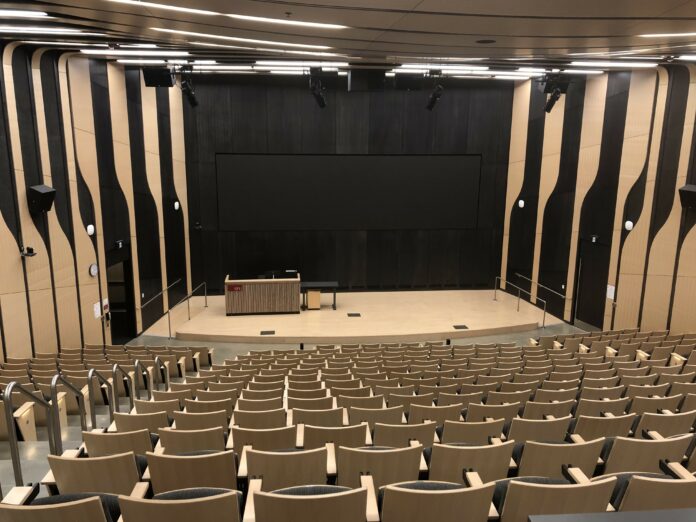
Photo of an empty SFU lecture hall
PHOTO: Jin Song / The Peak

By: Jin Song, SFU Student

It’s that time again! 

My alarm goes off before the sun is up. Bleary-eyed, I crawl out of bed to wait in the cold, dark morning for the bus that’s running late. At my lecture, I realized that I really should’ve studied more during reading week while frantically scribbling down the lecturer’s trigonometric integral solution.

It’s easy to take our careers as students for granted and forget that for most of history, most people were illiterate. Even today, education is out of reach for some 244 million children globally. That we can devote so much of our attention to learning new things and improving our skills is truly an honour. That’s not to say that formal education is the only path to happiness, but those who want the opportunity should be able to get it. 

Education is, at its core, a progression of the self. How glorious it is that we have access to it, alongside so many other passionate students and aided by professors who want to see us succeed?

But at the end of the day, when all else is said . . . reading breaks are nice exactly because we have the opportunity to go back to school. They wouldn’t be breaks at all without the more mundane, difficult, and academically rigorous weeks of the year.

SFU student surveys local beaches for microplastics

0
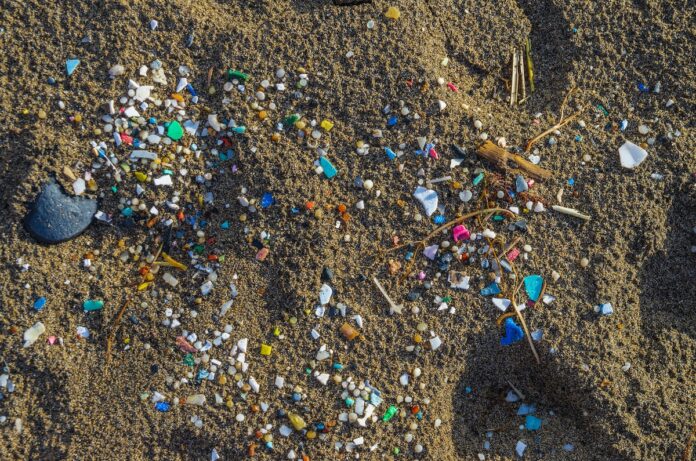
This is a photo of sand that contains multiple pieces of small colourful plastics.
PHOTO: GaiBru Photo / Inside Water

By: Olivia Sherman, News Writer

“Plastic is everywhere. We see, use, and integrate it into our lives every day,” said Helen Wong. Initially inspired by the lessons she learned from an environmental science studies class by Dr. Anna Hippmann, Wong became “inspired to do [her] own research, especially on microplastics which we don’t typically see at first glance, and learn more about their impacts on the world around us.”

Microplastics are defined as particles of plastic that can permeate through soil, water, and air, and can be caused by the breakdown of plastics in the environment, like cigarette butts, cosmetics, and polyester clothing. Over 460 million tonnes of plastic are produced every year, while less than 9% are properly recycled. According to the United Nations Environmental Programme (UNEP), microplastics can be absorbed through the skin, and have been found in placentas. 

Wong, a fourth-year environmental science student at SFU, is conducting a sample study of microplastics along beaches in the Lower Mainland, where she aims to “understand the relationships and correlations between microplastics on beaches, oceans, and coastlines.” The Peak reached out to Wong for more information on her studies. 

Wong’s surveys of these beaches require hours of collecting samples of sand, which “involves digging, sorting, and filtering” it to search for microplastics. These samples are then further sifted with a sieve to collect pieces of microplastics buried in the sand. “Any pieces [ . . . ]  larger than one millimetre could potentially be a microplastic,” Wong explained. “I squeeze, examine, and collect the pieces in glass vials to bring back to the laboratory to analyse afterwards.” 

These samples Wong collects aren’t necessarily microplastic, she said. “In the laboratory, I examine the pieces using a special microscope that will tell me their properties,” such as the size and colour of the material. These samples are then sent to a separate laboratory for a Fourier-transform infrared spectroscopy (FTIR) analysis. The FTIR machine uses infrared light to scan for organic or inorganic material, like plastics. “I’ll be able to determine if the pieces are plastic using FTIR and be able to quantify them from there.” 

Wong has plans for furthering her studies of microplastics, noting that she “only collected data over the span of four months from September to December.” She said these months may not be “representative of an entire year’s worth of data,” since the currents and tides of the shoreline change over a year. Wong is aiming to conduct a “literature review on research done during other times of the year, as well as winter, to get the bigger picture and understand how they relate or influence one another.” 

The samples of sand Wong collected are from Jericho Beach, Kitsilano Beach, Sunset Beach, Hadden Park, and Barnet Marine Park in 2023. She will use this data for her honour’s thesis. With plans to extend beyond her thesis project, Wong wants to “determine which beaches might be good candidates for a potential beach survey program.” After her program ends, she plans to continue her research in this field of environmental sciences. 

Council Chats: motion for SFSS petition for fall reading break passes

0
This is an illustration of a graphic that reads “Council Chats.” The image also has two text boxes to symbolise messages being sent.
ILLUSTRATION: Andrea Choi / The Peak

By: Eden Chipperfield, News Writer

On February 29, The Peak attended the Simon Fraser Student Society (SFSS) bi-weekly Council meeting via Zoom. The meeting consisted of topics including a motion proposing a petition to support the fall reading break and funding for the Software Systems Student Society’s (SSSS) System Hacks Hackathon event.

Fall Reading Break Motion Passes

Vice-president of equity and sustainability Priyanka Kaur Dhesa submitted a motion to start a petition calling for a fall reading break in the school calendar year. The motion read, “Mental health and well-being is a prominent concern among post-secondary students; whereas reading break helps alleviate stress faced by the student body during the semester.”

The motion put emphasis on how SFU is “currently one of the only post-secondary institutions in Canada to not offer some form of a fall reading break.” Other institutions such as UBC and UVic have three designated reading break days in the fall semester. The motion calls for the Council to collect support from students through a petition to advocate for a fall reading break. 

The motion declares that SFSS “call upon SFU and relevant bodies such as SFU Senate to implement a Fall Reading Break for the Fall 2024 semester as a pilot.” 

Geography councillor Jeffery Collinson said they supported the motion as long as “SFSS works with SFU, to make sure that it’s added responsibly.” Collinson noted concern that a possible fall reading break will push the winter semester break further back than intended. A vote was held to circulate the petition on behalf of the SFSS. No dissent was expressed, and the motion was passed. 

Funding for SSSS System Hacks Event
The Software Systems Student Society (SSSS) submitted a motion to the Council to request funding for the 2024 Systems Hacks event, which is set to take place on March 4 at the Surrey campus. The SSSS has held the Hackathon event since 2017. The theme for the 2024 Hackathon is “Chaos Hacks.” The event spans over 12 hours and is beginner-friendly to encourage participants to build creative projects. 

The proposal for a grant was presented by councillor Tal Zaloilov, requesting $6,000 for the event. The SSSS team had collectively fundraised $4,000 from funding and external sponsorships. With the additional funding from SFSS, the total ticket cost for one person would be $40, including breakfast, lunch, and dinner, a t-shirt, and prizes for attendees. Zaloilov added that the cost of the Hackathon has increased due to SFU’s budget cuts. They reported they have reduced expenses by hiring their A/V tech for the event. 

Councillor Sam Killawee expressed concern with the grant because the Council is moving toward the end of their term year. He questioned whether the grant was feasible within the current SFSS budget. Killawee clarified that he supported the Hackathon, but wanted to be sure the Council could “support this event without increasing the SFSS deficit.” Temporary operations organizer Sindhu Dharmarajah clarified, “We are well over our allocated budget line. This would come from our grants line item. By our funding guidelines, we did approve $4,159, and this is an annual event, a large event that does happen.” Dharmarajah reminded the Council that the Hackathon was pre-approved for over $4,000 and that if overspending does occur, the following year’s budget should reflect those numbers. 

A vote then occurred to provide SSSS with the grant of $6,000 for the System Hacks Event. Killawee abstained from voting, and the motion passed without dissent. 

Need to Know, Need to Go: March into this month’s events

0
an illustrated calender that says "Need to Know, Need to Go"
ILLUSTRATION: Courtesy of The Peak

By: Saije Rusimovici, Staff Writer Saije Rusimovici, Staff Writer

Jade Circle: a multidisciplinary performance by Jasmine Chen 
Where: Gateway Theatre, 6500 Gilbert Rd., Richmond 
When: March 6–17, see website as showtimes vary

Brought to audiences in association with Vancouver Asian Canadian Theatre, Jasmine Chen’s Jade Circle will “inspire you to rediscover and reclaim your mother tongue.” A “second-generation Taiwanese-Singaporean immigrant,” Chen crafts a beautiful story of reconnecting with her grandmother through language. In relearning Mandarin and learning more about her grandmother’s past through conversation with her mother, Chen “finds her place within the legacy of her matriarchs.” The performance, a combination of storytelling and captivating body movement, runs 45 minutes long. Following the performance, there will be an opportunity for the audience to ask questions. English subtitles will be offered for the Mandarin portion of the performance. General admission is $30, and student rush tickets can be purchased for $25 at the door or online on the day of the performance.

Writers for Readers 
Where: Richmond Public Library (Brighouse Branch), 7700 Minoru Gate #100, Richmond
When: Wednesday, March 13, 2:00 p.m.–7:00 p.m.

Join Richmond in their first-ever writers festival! The event will feature live book talks, with three local writers: bestselling mystery writer Iona Whishaw, true crime author Eve Lazarus, and the author of the memoir East Side Story, Nick Marino. Registration is required for the book talks so make sure you reserve your spot online as soon as possible! The event will also feature local Richmond authors including children’s book author Udayana Lugo, past writer-in-residence at Historic Joy Kogawa House Isabella Mori, and long-time Richmond resident Fred Pawluk. Visitors will have the chance to talk to local authors about their work and purchase copies of their books. 

SFU’s Printemps de la Francophonie: A month of free activities to celebrate the French language
Where: SFU campuses and across the Greater Vancouver area, see website for a full list
When: March 1–31

The month of March is dedicated worldwide to celebrating Francophonie (French-speaking) language and culture. This spring, the Office of Francophone and Francophile Affairs (OFFA) brings a variety of free cultural, academic, and professional events to the SFU community. Events include a movie night at Coquitlam Cineplex theatres presenting the Québécois film Ru. This film tells the story of a family’s journey emigrating from Vietnam to Québec. There will also be a Franco trivia night, writing workshops, and an expo for bilingual career opportunities among many other fun events. Check out the event webpage for more information and a full list of events. 

Lunch Poems poets present wise words on family connections

0
An illustration of a person sitting down in front of a mic and a red curtain backdrop on a stage in front of an audience.
ILLUSTRATION: Ananya Singh / The Peak

By: Aedan Smyth, SFU Student

On February 21, I attended a Lunch Poems event at SFU’s Harbour Centre campus. This recurring event happens online and in-person on the third Wednesday of every month, where two poets are invited to show off their work to an eager audience. Presented by SFU’s Continuing Studies program, this month’s poets were two award-winners making their communities proud.

Sneha Madhavan-Reese is a Detroit-born Ottawa-based poet whose emotive poetry books have been tethered to astronomy. She won Arc Poetry’s 2015 Diana Brebner Prize, which recognizes a “National Capital Region poet, who has not yet been published in book form.” Onjana Yawnghwe is a Shan Canadian poet based in Vancouver who’s written several poetry books, many of which create larger narratives. The Small Way, about a woman coming “to terms with a spouse’s transition” got her nominated for the Dorothy Livesay Poetry Prize. Her most recent book, which is 20 years in the making, is We Follow the River. Released March 1, it’s about a family’s escape from military violence in Myanmar, “sifting through family history and grief, and alighting across cultures and continents to find a home [in Canada].”

The reading’s theme was family and material connections, and each poet’s interpretation was unique. Yawnghwe began the reading with excerpts from her variety of books, including the two mentioned above. She spoke as if contemplating every word, articulating them clearly so every letter resounded within the audience. She also read from a book she collaborated on called Vancouver City Map. The reading brought to life minor details of the constant hum of Vancouver, like the trolley buses, which she said “throw minute sparks into a buffet of clouds.” The work also referenced “mountains nudging the city into the sea” — a nod to the natural beauty of the area and its North Shore mountains. In a poem from Fragments-Desire, she mentions a “museum of memories,” to reflect on life’s tempting choices, love, and past lost relationships.

Like Yawnghwe, Madhavan-Reese spoke with deep reflection, building the audience’s sense of her depth and detail sentence by sentence. She discussed the nature of the universe and connections to her father in her book, Elementary Particles. Based on the past, the book stems from thoughts about how matter makes up the building blocks of the universe. It’s dedicated to her connection with her late father, who had a big impact on her writing and life. His influence is evident in his featured poem in her book. She reminisced about how she helped him pronounce the names of students in his chemistry class and how he answered her universal questions about life and the galaxy. In her writing, Madhavan-Reese talks a lot about the importance of togetherness in maintaining family and close-knit circles. She also touched on ritualism and how even the simplest traditions can be inspirational. 

These poets left an impact on the crowd with their words as everyone left with smiles on their faces, and when each completed their readings, the audience erupted into thunderous applause. As a first-timer to Lunch Poems, it was an amazing experience to hear from two authors who created meaningful work using their own experiences and demonstrated the power of words. You can find both poets’ books at bookstores like Massy Books and Iron Dog Books, and keep an eye out for future poetry readings. Attend the next SFU Lunch Poems event online on March 20, where there will be more wordy wisdom to share from other poets. 

Bill S-510 has concerning implications for our privacy

0
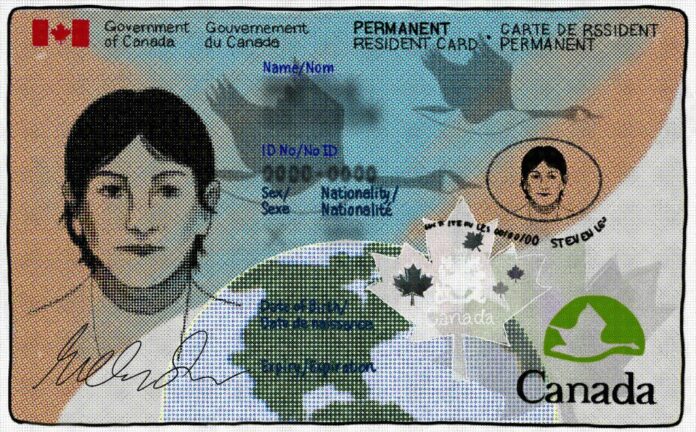
An illustration of government issued ID
ILLUSTRATION: Angela Shen / The Peak

By: Kelly Chia, Editor-in-Chief

On December 14, 2023, Bill S-210 passed its second reading through the House of Commons. Bill S-210 is an act that restricts “young persons’ online access to sexually explicit material.” However, the way it proposes to do this is troubling: it wants Canadians to verify their age while browsing. The Bill doesn’t specify how it wants Canadians to do this, but could include facial recognition technology or a system tracking our digital identification, making our private identities vulnerable. This Bill doesn’t only impact minors — it impacts the privacy of all Canadians browsing the internet. Asking for identification on websites considered to advertise or commercially sell adult material puts us all at a higher risk of having private information leaked. 

Independent Senator Julie Miville-Dechêne introduced this Bill, which was first read in Senate on November 24, 2021. The Bill recognizes that sexually explicit material is “made available on the internet for commercial purposes” and proposes to bring age-verification technology as a solution to prevent youth from accessing sexually explicit material. The Bill is well intentioned in protecting youths. The problem is that this Bill has a much wider impact on internet users as a whole than the youths they suggest it will protect.

Dr. Michael Geist, a law professor at the University of Ottawa and expert in internet and e-commerce law, argues Bill S-210 poses significant harm to not only internet users, but also to multiple websites. The Bill broadly condemns “any organization that, for commercial purposes, makes available sexually explicit material on the Internet to a young person.” Geist notes this means the Bill “applies to any site,” including social media websites and search engines, where anyone can upload explicit material. The Bill’s language around sexually explicit content is vague. It notes that “sexually explicit” could include “demeaning material” or anything with sexual content. But it doesn’t describe how much or what kind of sexually explicit content is available on the website for it to require age verification. Asking Canadians to provide identification for a tweet or a Google search is a draconian oversight of our internet usage.

Bill S-210 asserts that online age-verification technology “is increasingly sophisticated and can now effectively ascertain the age of users without breaching their privacy rights,” but does not make clear how it will protect these rights. The Australian government recently rejected online age verification in a similar bill, finding that no available age verification technology could “work reliably” and “balance privacy and security.” It’s this last point I’m especially concerned with as a citizen. It’s noted that the Governor in Council must consider if the method verifiably “destroys any personal information.” There are no penalties listed for websites that fail to do this. This isn’t protection — it leaves many vulnerable people at risk of data leaks. 

As with many bills that target internet use, these definitions are too broad to protect us. In fact, they hurt us from using the internet as intended. The task of determining which websites might qualify as “making available sexually explicit material” falls onto a designated “enforcement authority,” like a government agency. If this authority deems it necessary to “ensure that sexually explicit material is not made available,” it can prevent access to all materials, not just those that are sexually explicit. It will not just be young people who would be impacted. This seems like a slippery slope to full-on censorship. It makes me wary to think of how this could extend to conservative arguments about censoring 2SLGBTQIA+ educational material.

In Indiana, a similar bill is being passed through the Senate, to the dismay of many civil liberty unions. The American Civil Liberties Union (ACLU) of Indiana published a statement on February 22, 2024, expressing their concerns. As ACLU notes, “Without proper protections, bad actors — hackers or disgruntled employees — could use someone’s personal data for exploitation.” ACLU is also concerned that the determination of what is considered sexually explicit material could restrict valuable 2SLGBTQIA+ resources or sex education content from minors. 

Historically, when censorship laws are passed, 2SLGBTQIA+ communities feel the impact. ACLU notes there has already been a “systematic effort to censor access to LGBTQ+ literature in Indiana’s schools” because the legal phrase, “material harmful to minors,” has been used to target the 2SLGBTQIA+ community. 

This isn’t the first time this has happened. Here in BC, Little Sister’s Book & Art Emporium, a 2SLBGTQIA+ bookstore on Davie Street, found its shipments attacked based on a vague law where published materials were deemed “obscene” if they featured “the undue exploitation of sex.” Customs wouldn’t allow the materials to enter Canada based on this law, however, the judge found customs “had systematically targeted the store’s shipments, and wrongly prohibited their entry into Canada.” It took four years for the case to be heard — with the battle starting in 1987 and continuing in the early 2000s. This is how vague laws harm queer people and weaponize attempts at equity for further marginalization. Think about the length of time it would take to prove that educational material provides valuable resources for queer folks. Can you imagine if the safeguard for destroying their private information failed, and their information was outed as a result? 

As a teenager, I found queer resources and peers on social media websites that happen to share space with people who upload explicit material, or advertise on it. While it’s good to protect minors, there are much better ways to do it. Parents should already have the responsibility to monitor and protect their children online. The government can instead provide parents with software to better safeguard their children, rather than creating an extensive bill with vague parameters. This Bill absolutely cannot go any further. It’s shocking that it has gone through so many readings when there are so many glaring flaws in it. We must push our MPs to vote “nay” against this Bill when it goes through its third reading in the House of Commons. 

SFU FairTrade is leading the charge for ethical campus consumption

0
This is a photo of an assortment of vegetables on a table.
PHOTO: Ratul Ghosh / Unsplash

By: Lauren Ord, SFU Student

In today’s world, ethically sourced products are not the norm for most goods purchased in global markets. Most products are produced through poor labour conditions and lead to environmental degradation and equity disparities. This is the result of unfair trade that disproportionately benefits large corporations rather than individual workers providing hard labour. According to SFU FairTrade ambassador program coordinator, Kylee Pocrnich, “Education and raising awareness campaigns are some of the most important” components of combating unfair trade practices.

FairTrade is an organization that ensures products are produced ethically and sustainably by supporting farmers and producers in the developing countries through a set of FairTrade standards. The FairTrade standards guarantee fair wages and equitable revenue for products, despite global market fluctuations. The FairTrade premium is an additional sum of money that producers receive to spend anywhere within their communities, including schools, infrastructure, and family support. FairTrade producers are also granted increased autonomy to make meaningful decisions about their work.

The Peak spoke with Pocrnich to understand more about the program’s role in educating and raising awareness about FairTrade products for students. Pocrnich explained SFU’s FairTrade program “has made [them] a leader for fair trade on campus and in the entire FairTrade movement in Canada.” SFU is Canada’s first and only Gold certified FairTrade campus. This certification signifies an active FairTrade Ambassador program for students, participation in international FairTrade conferences, and the availability of numerous FairTrade products on campus.

Renaissance Cafe and Blenz at SFU both use FairTrade-certified coffee. “After years of having delicious fair trade coffee on campus from Renaissance and Blenz, for example, I hope students remember to pick up FairTrade coffee at their local grocery store.”

The SFU FairTrade Ambassador program prioritizes equity and sustainability. “The SFU community has proven time and time again that we are a group that is passionate about environmental justice and treating people fairly, and the SFU FairTrade program is just another way we can reach these goals,” said Pocrnich.   

According to Pocrnich, “The best part about the SFU FairTrade ambassador program is that it is whatever the current students want it to be.” The program’s purpose is to educate and raise awareness about fair trade, and students can choose how to achieve this through participating in one or multiple teams including events, research/survey, education, and social media. 

One of Pocrnich’s favourite teams is the education team. This team educates SFU and local elementary students about the FairTrade movement. “After every presentation, the kids ask the most insightful questions, and it warms my heart to see the impact we are having on these kids.” This experience has allowed Pocrnich to strengthen her presentation, public speaking, and organizational skills. Working with any of these teams provides amazing opportunities to learn new things and develop numerous transferable skills.

Additionally, the SFU FairTrade Ambassador program offers many travel opportunities through international conferences. This year, Pocrnich is heading to Montréal for the conference. The Ambassador program also allows students to travel to countries where fair trade programs are operating to gain perspective and understanding of fair trade production. This includes Peru, Ecuador, and Costa Rica. 

Students can support FairTrade with a variety of small actions that make a big difference in ethical and sustainable production, according to Pocrnich. “All it takes is swapping out their regular coffee, chocolate, fruit, sugar, tea, etc., for a FairTrade-certified brand to make a real difference in producers’ lives.”

FASS promotes anti-bullying with pink wall of kindness initiative

0
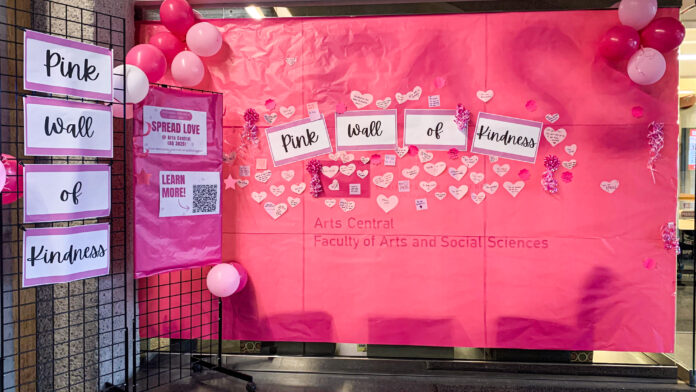
This is a photo of the SFU Pink Wall of Kindess — an event where students put pink post it notes on a large pink wall to share kind messages
PHOTO: Rastko Koprivica / The Peak

By: Eden Chipperfield, News Writer

Brian Fox, coordinator of student engagement for the Faculty of Arts and Social Sciences (FASS), wanted to spread messages of kindness and anti-bullying at SFU. He turned the focus of Pink Shirt Day into an interactive space with the introduction of the Pink Wall of Kindness. 

In 2007, Nova Scotia high school students David and Travis distributed pink shirts to stand up for a grade nine  boy being bullied for the colour of his clothing. Since then, Pink Shirt Day has been recognized for the last 16 years in elementary, high school, and post-secondary schools. Pink Shirt Day serves as a way to recognize and combat bullying in educational settings. 

The Pink Wall of Kindness was located outside the FASS office in the AQ on February 28. Students, staff, and faculty were encouraged to jot down messages that inspired kindness. The FASS team who volunteered also provided homemade buttons and popcorn to those who dropped by. 

“I started the Pink Wall Kindness at SFU in 2017. I used to collaborate with some of the folks in restorative justice like Brenda Morrison, who’s a professor there who did some neat stuff like healing circles in our space,” said Fox. “We want to build community and connect to our students and make them feel like this is a safe, welcoming place.”

Bullying is present in many forms in various environments, whether on campus, online, or in the workplace. “The actions of a bully can happen every single day and in small, subtle ways,” Dr. Hannah Scott, a University of Ontario Institute of Technology professor, told Global News. “It’s just something we don’t tend to talk about because it’s difficult to identify.” Black, Indigenous, and people of colour more often experience bullying due to intersectional barriers and cultural stigma. 2SLGBTQIA+ people are also vulnerable and experience the effects of bullying due to their sexual orientation or gender expression. 

Fox has made it his mission to ensure SFU students know there are people looking out for others on campus. As SFU is often dubbed a “commuter campus,” the effect of going to class and heading home can rob students of the experience of community, said Fox. “We have a high commuter population on campus that [is] challenged by the fact that it’s class and go home and not necessarily having any place or space on campus that allows them to feel that connection,” he explained. 

Many students in the FASS faculty are undeclared majors, which can also impact feelings of belonging. Fox is determined to ensure that first-years are aware of the programming FASS volunteers and peer mentors are facilitating through initiatives on Instagram. 

Fox emphasised community-building on campus and the importance of having student-guided initiatives to engage the student population. “It’s a huge part of what I’m trying to do with the opportunities out of our space: highlighting different resources and opportunities for students, whatever those opportunities are on campus, to find a fit, and find community.”