Home Blog Page 127

A look at two of the biggest strong people competitions

0
Gym goer outside lifting a rack.
PHOTO: Alora Griffiths / Unsplash

By: Saije Rusimovici, Staff Writer

World’s Strongest Man (WSM) 

WSM has been one of the most notable strength competitions since its introduction in 1977. Each year, 30 contestants are chosen based on their finishes at other strongman competitions, with the most recent winner, and past winners, generally receiving a reentry. Once selected, these athletes are broken up into one of five heats, composed of six people. Each heat will compete in six challenges with competitors earning points for where they finish. The winner picks up 10 points and the other competitors earn a point less for each place they finish behind first, with ties earning half points. At the end of the six events, the top two competitors of each heat will move onto the finals, where they’ll compete in six more events with the same point system, to be crowned the WSM.

The events at the competition are of epic proportions, making even the brawniest of competitors look small; from holding up the weight of a hollowed-out car to pulling a plane the length of a 100-foot course. Two-time WSM champion Bruce Whilem holds the record for the latter competition, which he set in 1977, finishing in 14 seconds. 

Other events include the Farmer’s Walk, where contestants navigate a course carrying two 160 kg logs; Power Stairs, where contestants run objects up to 273 kg up and down a staircase, and the Toss, where contestants throw kegs over a 4.42 m wall. Often, the winner of the overall competition is decided in the sixth and final event: Atlas Stones, where athletes place five 100–160 kg stones on top of high platforms.

Last year’s WSM winner and first Canadian winner, Mitchell Hooper, finished second in the Atlas Stones behind defending champion, American Tom Stoltman, but finished the competition 4.5 points ahead to end Stoltman’s two-year reign. The 47th WSM competition will take place in Myrtle Beach, South Carolina, from May 1–5.  

Arnold Strongwoman Classic 

Co-created by Arnold Schwarznegger, the Arnold Strongman Classic is an international competition that debuted in 2002 and expanded in 2017 to include strongwomen. Both competitions will be taking place between March 1–3 with prize money given to the top 10 finishers of the 11 men and 12 women competitors. This year’s events are the elephant ear deadlift (which has a longer bar, pushing the weights farther out and “decreasing the range of motion” of a traditional deadlift);frame carry (lifting and walking with a frame up an incline); Jeck stone carry for the women (144.5 kg) and the Dinnie stone carry for the men (188 kg) (walking for distance with the stone); monster dumbbell for the women (an overhead press with one arm) and the Apollon wheels for the men (overhead press with an “axle-type barbell” with both hands), and the stone medley, which is expected to be similar to Atlas Stones.Last year’s strongwoman champion was American Victoria Long with 40.5 points. Long entered into the second and final day of competition tied for sixth. She jumped into first aft

er sweeping first place in the remaining three events. This included her 651-pound co-world record elephant bar deadlift with fellow American Tamara Walcott. Hooper was the strongman champion with 41.5 points. He was the picture of consistency on both days, finishing second on day one and finishing in the top three of every event on day two to pull out the win. 
Please take the snow day

0
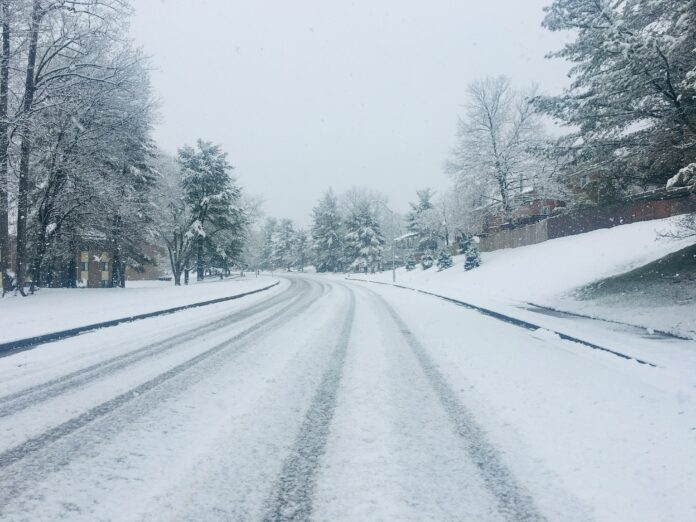
a snow covered road
PHOTO: Amit Godase / Unsplash

By: Saije Rusimovici, Staff Writer

Whether driving or taking public transit, icy road conditions can be detrimental to vehicles navigating the snowy, winding mountain terrain. Students’ safety must be prioritized when it snows. This means cancelling classes before students arrive on campus, preparing alternative class structures, and ensuring that snow ploughing, salting, and shovelling are done effectively and efficiently. 

While we did land a few snow days in the second week of the term, this is an exception for SFU. Unexpected weather conditions the week before sent many panicked students rushing to get off of campus. As I snailed down the already snow-covered hills in my little FIAT 500, I could feel how slippery the pavement had already become. Gripping the steering wheel tightly, I braced myself for the moment I would lose control of the car on a patch of black ice.

The three people driving their cars a few hundred metres in front of me were not so lucky. It appeared as though each driver lost control of their vehicles and slid into each other in a bumper-car like collision. From the looks of it, everyone seemed to be OK and the drivers were trying to figure out how to detangle their vehicles without doing more damage. As a driver, I was highly anxious and felt extremely unsafe in my vehicle, and was kicking myself for coming to school in the first place. Luckily for me, I was able to get down safely. 

The couple of lucky snow days we got came too late. We go to school on a mountain — it should be quite obvious that extra care needs to be taken in order to ensure that students, faculty, and staff are safe getting on and off campus. The campus is much higher than other locations in Burnaby, meaning traces of ice and snow which might have melted away in other areas may still be evident on campus. Not only does this pose a risk for drivers, but also for people walking to and from different buildings, getting back to their dorm, or catching a bus. 

Transit may be considered an alternative to driving in difficult conditions, however, transit services are not immune to the dangers of winter weather, either. Having both students and teaching assistants bus up the campus for a 50-minute tutorial that could easily be held over Zoom does not sound essential to me, especially with students concerned about black ice.

SFU Facility Services is responsible for “managing snow and ice from the intersection of Gaglardi Way and Burnaby Mountain Parkway throughout the Burnaby campus” whereas the City of Burnaby maintains “the roads leading up to the campus” and “UniverCity.” However, there is no guarantee that this process will be adequate or efficient in our unpredictable climate. 

Waiting until 6:00 a.m. on the day of is not the correct time to tell students whether they will have a snow day. It needs to happen at least the night before. Heavy snowfall can lead to delayed bus and skytrain services, overcrowding on platforms, and reduced space in buses and train cars. For SFU students, this could mean needlessly waking up earlier for a long commute or running late for classes that may end up getting cancelled anyways.

In the past, taking a “snow day” has been viewed as a last-resort for institutions. We need to realize that in many cases sending students of any age to school in the snow can do more harm than good. Keeping people at home on a snow day will not only keep them safe, but reduce risk of accidents and the build-up of traffic on the roads.

Ghosting people and healthier ways to end relationships

0
Illustration of a person looking at their phone against a dark-blue background, illuminated by the light. The person is wearing a ghost-like sheet over their body with two eye-holes, and has their chin propped up in their free hand. There are illustrative text and social media notifications projecting from the phone.
ILLUSTRATION: Aliya Nourlan / The Peak

By: Daniel Salcedo Rubio, Features Editor

I think it’s fair to assume we’ve all either been ghosted or have ghosted someone in our lives. Sometimes, it feels like ceasing any further communication with a particular person is the best way to move forward. Right now, for example, I’m being ghosted by my thesis supervisory committee whenever I try to schedule a meeting. While I’m not particularly fond of ghosting people, I definitely think it’s completely acceptable to not interact further with someone under certain circumstances, especially when their behaviour is coming at the cost of your mental well-being.

Ghosting, the action of cutting off all contact with someone without prior notice, is usually associated with romantic relationships, but it can be applied to pretty much anyone. We live in an era of unprecedented instantaneous availability. Smartphones, social media, email, and whatnot — we are reachable to anyone who has our contact information at any time. This new power of being able to reach out at any time has also brought an incorrect perception that being reachable implies the right to an immediate response. I knew a guy from mutual friends who I had to ghost and completely block out of my life due to unwanted advances and borderline harassing behaviour. It all started as any other normal interaction; we spoke maybe two or three times in person and then he started following me on my socials and reaching out through there. He was clearly interested in something more than a friendship, and I wasn’t. When I started shutting down conversations I wasn’t comfortable with or stopped replying to all his messages, he doubled down and pushed harder — I just blocked him from everywhere at this point. This might be a bit of an extreme example where harassment was involved, but it serves as an example of where ghosting someone can be justified. 

Where I think ghosting is usually unacceptable is when it comes to romantic relationships. Mind you, I’m not talking about that Tinder match you made six months ago and never replied back to. I’m talking about a romantic relationship where there’s some form of emotional investment; maybe you’ve gone on a couple of dates or started to develop some feelings for the other. Ghosting is an easy way to remove yourself from having to deal with those uncomfortable end-of-relationship feelings. In these cases, in all honesty, I think it can be one of the most cowardly things to do. Look, I understand there are certain emotions we would rather avoid feeling and causing to others, but by ceasing all communication you are not avoiding them, you are just avoiding dealing with them. 

Personally, I think it’s way better to be upfront about why you’re no longer interested in the relationship, even if it’s just after only a couple of dates. A year ago I went on a date with a guy I met on Tinder — it was clear to me I wasn’t pursuing it any further. When I got back home and opened Tinder to thank him for the date and say that we weren’t a good match, he had already unmatched me. While I wasn’t interested in him, all I could think at the time was what I might’ve done wrong — what was wrong with me to be so abruptly cut off. Even now, I still think about it whenever I pass by the restaurant we went to. Ghosting someone not only doesn’t magically remove those unwanted feelings, but it also adds uncertainty and anxiety to the ghosted. Being upfront, while perhaps more immediately uncomfortable, makes it clear that the reasoning behind ending it has nothing to do with you.

You can and should prioritize your well-being, but you should also be responsible for the way you communicate and interact with others. Attitudes like ghosting and breadcrumbing, the intentional or unintentional act of feigning interest, have proven detrimental effects on the mental well-being of those on the receiving end. A study from the University of Castilla-La Mancha reported that people who have experienced breadcrumbing and ghosting have a lower satisfaction with life, indistinct of gender, sexual orientation, or age. A study in the Journal of Social Psychology reported similar experiences by the ghosted — a threat to their “self-esteem, belongingness, and meaningful existence.” Ostracizing someone is an awful thing to do; us humans are social creatures and being excluded from social interactions may damage our well-being. If you want to cease communication with someone, and you aren’t under threat of danger or harassment, there are far better alternatives to ghosting. 

Some people are now referring to “caspering,” the practice of gradually ceasing communication, either by taking longer to reply back or responding with increasingly short answers. To me it sounds like ghosting with extra steps, but I can see how doing it gradually could ease some people into accepting the end of a relationship. Another option is to just be upfront — you don’t need to go into details or provide constructive criticism, just be honest and clear. If it was a first date, saying something like, “I didn’t feel a connection, but I wish you the best” would suffice. If you’ve been dating for a bit longer but aren’t interested in moving forward with a committed relationship or want a break from dating, just say so. These aren’t things that anyone should take personally. It might be easier to ghost than to explain, but the pain of being ghosted far outweighs the discomfort of facing the truth.

Remember, it’s your life and no one is entitled to your time or your persona. Someone being able to reach out to you doesn’t make them entitled to an answer, and being reachable is not a right but a privilege you can willfully take away from anyone. If you think going no contact with someone is the best course of action to take, by all means go ahead — especially when your safety is at risk — but don’t take these decisions lightly. Remember that the way we interact in and with society has impacts often unseen by other people, and while you are not responsible for everyone’s feelings, you should take some degree of accountability for how your actions make other people feel, especially when better alternatives are at hand.

The Rundown

0
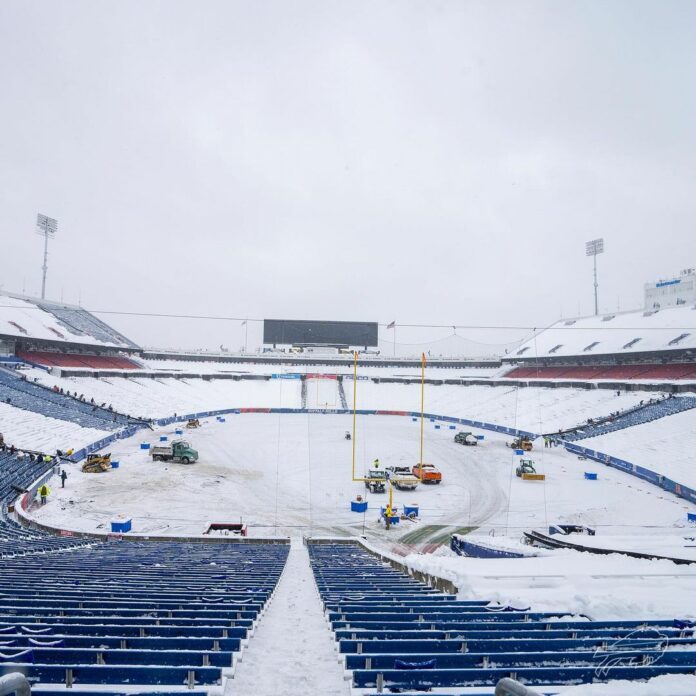
Photo of the snowy conditions of the Buffalo Bills Stadium prior to their wildcard matchup.
PHOTO: Buffalo Bills / Instagram

By: Kaja Antic, Sports Writer

January 13: Six Canucks headed to the 2024 NHL All-Star Game

After defenceman Quinn Hughes was named in the NHL All-Star roster selections on January 4, a fan vote to fill the remaining roster spots sent goaltender Thatcher Demko, forwards Brock Boeser, J.T. Miller, Elias Pettersson, and head coach Rick Tocchet to the All-Star Game in Toronto from February 1–3.

January 15: Bills mafia shovels snow from their stadium, win wild-card matchup 

After severe weather in the region caused the January 13 playoff wild-card game to be postponed between the Buffalo Bills and Pittsburgh Steelers, the Bills offered their fans $20 an hour on top of food for snow removal assistance. Hundreds arrived at Highmark Stadium, and after two days of shovelling snow, the Bills were ready to play — beating the Steelers 31–17.

January 16: McLaren first F1 team to reveal 2024 livery

With the first grand prix weekend of the 2024 F1 season scheduled from February 29–March 2 in Bahrain, McLaren released the look for their challenger: the MCL38. This new livery heavily features the colours papaya and anthracite, as well as small touches of chrome. It has also noticeably lost the streak of blue it was sporting last season to a lot of fans’ approval. 

January 17: Raptors trade Siakam to Pacers

On Wednesday, the Toronto Raptors traded two-time NBA All-Star and 2019 NBA Champion Pascal Siakam to the Indiana Pacers in return for Bruce Brown, Jordan Nwora, two 2024 first-round picks and one 2026 first-round pick. Also included in the trade was Kira Lewis, who the Pacers acquired from the New Orleans Pelican alongside a 2024 second-round pick; the Pacers sent Lewis to Toronto, keeping the second-round pick for themselves. 

January 20: BCHL agrees to terms with five Alberta-based teams, Alberta league responds

The British Columbia Hockey League (BCHL) has agreed to terms with five teams from the Alberta Junior Hockey League (AJHL) for next year’s season. These teams will also be splitting from the larger Hockey Canada association, as the BCHL, which currently operates 17 teams throughout the province, had separated from the organization the previous summer to go independent. In a statement, the AJHL shared they weren’t informed by the five teams of their departure, subsequently cancelling seven games all scheduled to be played by the departing teams: the Blackfalds Bulldogs, Brooks Bandits, Okotoks Oilers, Sherwood Park Crusaders, and Spruce Grove Saints. On January 25, the five teams were barred from playing games against any other teams staying in the league, and could only play against each other. In the latest development, all five “defecting” teams released a joint post stating that while an agreement has been reached with the BCHL, nothing has been signed. The news of the deal was also not supposed to be revealed until May 1. As a result of these conflicting statements, the AJHL is “calling on the BCHL and the clubs to provide immediate clarification.” 

January 20: Canada wins first World Cup medal in super team ski-jumping

Calgarians Alex Loutitt and Abigail Strate earned a podium placement for super team ski-jumping, receiving the first ski-jumping World Cup medal for this event in Canadian history. The duo received 709.7 points for the silver medal; Slovenia won gold with 722.2 points, and Austria took home bronze with 697.0 points.

January 20: Dricus du Plessis, the first South African UFC Champion

At UFC 297 in Toronto, Dricus du Plessis defeated reigning champion Sean Strickland to claim the middleweight championship belt. He is the first South African to become a UFC championship belt holder, having won the fight via split decision after five rounds. 

This week at SFU

0
photo of an SFU men’s basketball player at the free throw line.
PHOTO: Wilson Wong / SFU Athletics

By: Isabella Urbani, Sports Editor

Home Games 

Thursday, February 1: women’s basketball vs. Alaska Anchorage at West Gym at 7:00 p.m. 

  • At the time of writing, senior Jessica Wisotzki leads SFU in scoring with 352 points (30.8 points per game)
  • Last beat Alaska Anchorage in 2017, 80–70

Saturday, February 3: women’s basketball vs. Alaska at West Gym at 1:00 p.m. 

  • Last game of a four-game homestand. Previously played Montana State Billings, Seattle Pacific, and Alaska Anchorage 
  • 24–1 all-time against Alaska

Away Games 

Thursday, February 1: men’s basketball vs. Western Oregon at 7:00 p.m. 

  • At the time of writing, junior Elliot Dimaculangan leads SFU in scoring with 199 points (30.5 points per game)
  • Only beat Western Oregon twice in 25 meetings 

Friday, February 2: conference hockey team vs. the Logan Lake Miners at 7:00 p.m. 

  • At the time of writing, third-year forward Nick Wagner leads SFU in scoring, and is sixth league-wide, with 20 points (11 G, 9 A) in 11 games
  • 2–0 against Logan Lake this season 

Friday, February 2–Sunday, February 4: softball at the South Central Regional Challenge in New Mexico 

  • Playing six games in three days (two each day); opponents include Fort Lewis (Colorado) (11:30 a.m.), Colorado State Pueblo (4:30 p.m.), New Mexico Highlands (9:00 a.m.), Adams State Colorado (2:00 p.m.), Colorado at Colorado Springs (8:00 a.m.), and Western New Mexico (10:30 a.m.)
  • First tournament and games of the season. Team finished 2–4 at the tournament last year

Saturday, February 3: men’s basketball vs. Saint Martin’s (Washington) at 5:15 p.m. 

  • Last road game before a two-game homestand against Montana State Billings and Seattle Pacific 
  • Lost 74–68 to Saint Martin’s last month 

Saturday, February 3: men’s wrestling at the Menlo College Oaks Wrestling Open (all day) 

  • Lost last two meets 29–17 to Adams State (Colorado) and 39–10 to San Francisco State 
  • Last non-conference meet of the season 

Saturday, February 3: women’s wrestling at the Rocky Mountain Athletic Conference (RMAC) Women’s Wrestling Championships

  • Sophomore Victoria Seal was the RMAC’s women wrestler of the week on January 23
  • Team went 1–2 on their last three meets of the season, all occurring on the same day

I went to a game from each of the biggest professional leagues

0
PHOTO: Izzy Cheung / The Peak

By: Izzy Cheung, Staff Writer

In 2023, I got the opportunity to see a game from each of North America’s four major sports leagues —  Major League Baseball (MLB), the National Basketball Association (NBA), the National Hockey League (NHL), and the National Football League (NFL). I went to a game almost every four months. The year started with a trip south to sunny California, and ended with the NFL’s closest Canadian companion, the Seattle Seahawks. 

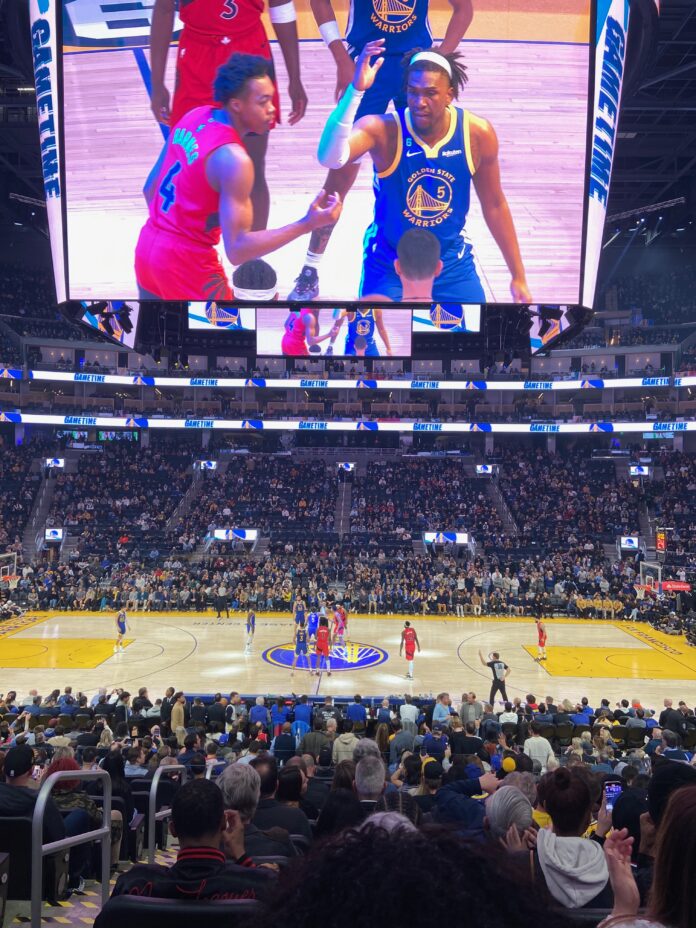
First quarter: the Toronto Raptors vs. the Golden State Warriors (NBA)

Standout players: Scottie Barnes (Toronto Raptors), Stephen Curry (Golden State Warriors) 

My favourite part: The vibrant energy of the music and crowd chants.

I got to see the Toronto Raptors play the Golden State Warriors near the end of January. This game didn’t carry as much urgency as some of the other games I went to see later in the year. The allure of the game came from the nonstop action and flashy moves that players like Steph Curry executed under the bright lights of Chase Center. Even when the game began to slip away from the Raptors in the fourth quarter, the booming chants for “defense” kept the audience’s focus on the spectacle of the game. 

Second quarter: the Seattle Kraken vs. the Colorado Avalanche (NHL)

Standout players: Matty Beniers (Seattle Kraken), Nathan Mackinnon (Colorado Avalanche) 

My favourite part: A Nathan Mackinnon goal that brought fans out of their seats.   

The next game I saw was game five of a seven-game playoff series between the Seattle Kraken and the Colorado Avalanche. Played at Ball Arena in Denver, Colorado, the event was lit ablaze with snow-like pom-poms that mimicked the appearance of a crushing avalanche when waved stadium-wide. Once the puck dropped, any pregame cheer and chatter quieted down as the audience focused intently on the speedy play, making loud bursts from goal-induced screams all the more powerful. With playoff intensity injected into it, and a narrow 3–2 score at the end, every second of this game mattered. 

Third quarter: the Boston Red Sox vs. the New York Yankees (MLB)

Standout players: Alex Verdugo (Boston Red Sox), Aaron Judge (New York Yankees) 

My favourite part: Two historic franchises battling each other in an equally historic stadium. 

A trip to New York in August brought me to Yankee Stadium, where I saw the Boston Red Sox take on the New York Yankees. As interesting as it was to be able to take in the sights and sounds of such an iconic stadium, the game itself was subpar. The first two innings saw the score swing 7–0 in Boston’s favour, making for a disappointed crowd that began to disperse partially through the third of nine innings. Unlike other sporting crowds, it was clear in this game that most of the home crowd’s excitement was generated in response to strategies paying off and well-executed plays rather than scoring. There were only three chances to cheer for that. 

Fourth quarter: the Pittsburgh Steelers vs. the Seattle Seahawks (NFL)

Standout players: T. J. Watt (Pittsburgh Steelers), DK Metcalf (Seattle Seahawks) 

My favourite part: High stakes for both teams and enthusiastic fanbases. 

I spent New Year’s Eve watching the Seahawks take on the Pittsburgh Steelers. This game saw both teams competing hard to finish the regular season in a playoff spot. The stands in Lumen Field were equally decorated with blue and green Seattle jerseys as they were with black and gold Pittsburgh ones. Steeler fans took advantage of the complimentary towels laid out on the seats ahead of the game by waving it any time the Steelers made a good play, much to the chagrin of hometown fans. Thunderous roars overtook the stadium as each fandom celebrated their team’s touchdown proudly in front of one another, making for great entertainment in addition to the game. 

Unpacking the mysterious closure of the SFU Climbing Wall

0
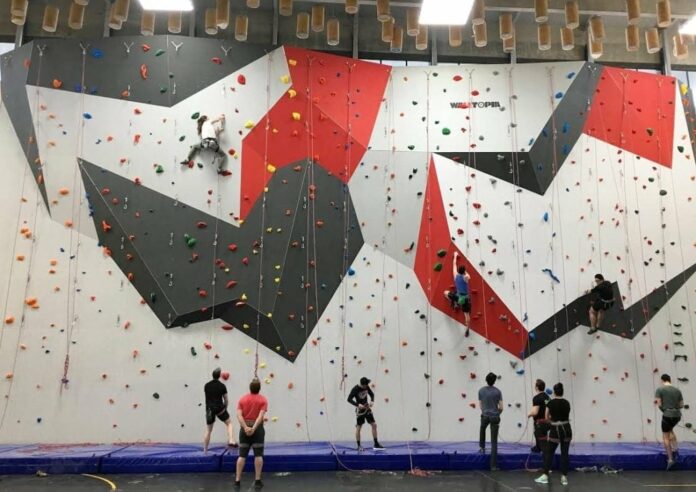
Photo of climbers using the SFU Climbing Wall.
PHOTO: SFU Athletics

By: Kaja Antic, Sports Writer

Located inside the Lorne Davies Complex (LDC) Central Gym, the SFU Climbing Wall has been closed since mid-December, and no one seems to know the reason why.

Chloe Hill, an ex-employee of the climbing wall, reached out to The Peak  prior to January 11 when SFU Recreation announced the wall’s closure, citing the ongoing LDC renewal project as the reason.

Work on this project began in March 2023, and is mainly focused on the East Gym, pool, and changerooms throughout the facility. There are also seismic, mechanical, and plumbing upgrades for the original 1960s-era structure, which includes both the East Gym and pool deck. 

Initially, on the LDC Renewal Project page created by SFU Athletics and Recreation, the climbing wall was noted as having limited access during construction. A question was posed in SFU Recreation’s climbing wall Facebook group that same month, asking how the “limited access” would affect the wall’s operation. SFU Recreation responded to this question, saying hours would not change much for the summer 2023 term and terms going forward. The comment also stated that, “In the event this changes due to construction, we will provide advanced notice to the climbing community.”

The climbing wall finished general operations for the Fall 2023 semester on December 8, and hosted a competition for Sport Climbing BC — a provincial non-profit climbing organization — on December 16. The day before the competition, Hill was informed by her supervisor that the climbing wall would not reopen for the Spring 2024 semester, as expected. 

By then, as a programmer for the climbing wall, Hill had already sent out an email asking staff about their availability for next semester.

“I had no idea that when I sent out this email and asked for all this information, it didn’t mean anything,” she said in an interview with The Peak.

After consistently working in the facility since 2017, Hill said she noticed some changes in the hiring process.

“I signed one contract at the beginning of my employment and then I didn’t sign another contract for many, many years after that. But recently, every semester, we’ve been filling out new contracts. So when our contracts did end [in December], we were expecting new ones.” These new contracts have not been offered at the time of publication, and the recreation department hasn’t moved these employees to other programs, leaving many unemployed as a result.

The competition ended up going along as planned, with regulars of the climbing wall volunteering as timekeepers and judges — many of whom being informed about the climbing wall’s closure that day. For many students, Hill’s Reddit post and petition were how they learned about the facility’s closure. It wasn’t until hours later that SFU Recreation released the January 11 update, which was their first official notice regarding the wall’s closure. 

“It didn’t seem like they were going to tell anybody at all what had happened,” Hill said on the timing of the post.

No listed reopening date or plan was mentioned in SFU’s January 11 update. Instead, two policies related to programs included in the Athletics and Recreation (A&R) student fees, which the climbing wall is not a part of, were stated as having priority during the renovations.

The two University policies are GP 36 — Use of University Space — and AD 1.17 — Control and Scheduling of Athletic Facilities. GP 36 references the general booking of university space, with no distinct mention of any recreational facilities. AD 1.17 Addendum 2 — dated July 31, 1979 — discusses the policies and procedures regarding a previous climbing wall at SFU. This means a demolished climbing wall from the ‘80s has more priority during construction than the current one. 

Hill said no attempts have been made to include the climbing wall in the A&R student fees. “It does really feel like this facility has never been valued by the department, and it has constantly been under threat,” she said.

The climbing wall operates as a separate department under SFU Recreation. While there are other pay-per-use fitness services offered by the institution, those programs are grouped under other departments, whereas the climbing wall stands alone. Due to this separation from the rest of A&R programming, the climbing department has had to provide evidence every semester to SFU, proving their profitability as a program. 

In the most recent statement issued by SFU Athletics and Recreation on January 19, the two policies were brought up again, with “space limitations” specified as the reason behind the temporary closure of the wall. An anticipated date of summer 2025 was also set for the wall’s reopening, which lines up with the estimated completion of the LDC Renewal Project. 

The statement goes on to say, “The SFU Climbing Wall is used by a small number of SFU students and is considered a non-core service and is not included in the Athletics and Recreation student fee. As recreation programs continue to be evaluated to ensure they meet our community’s needs, the temporary closure will allow time to assess and develop a model for the program’s long-term feasibility and sustainability.” 

There are still ongoing activities this semester in the Central Gym, including a majority of the A&R martial arts programming. At the time of publication, there have been no updates to the construction plan that includes the Central Gym in any capacity.

While the recreation team may be satisfied with the limited statements, climbing community members are not. Of the wall’s future, Hill said, “I want to believe that it’s a temporary closure. I want to believe that they are being honourable in their choices to do this, but none of the evidence supports that.

This feels like it’s not a temporary closure. It feels like they’re shuttering the facility and do not intend to reopen it.”

Despite being virtually unrelated to the construction in the renovation plan, the wall will remain closed for much of the LDC revitalization. Overall, the closure of the SFU Climbing Wall is questionable at best, and devastating at its worst. 

STORYTIME: THE SPIDER IN MY BATHROOM HAS A FINSTA

0
Woman with pink hair and orange headphones talking into a mic.
PHOTO: K​​arolina Grabowska / Pexels

By: C Icart, Humour Editor

Hi everyone! Welcome back to my channel! I’m sure everyone has been wondering where I’ve been because y’all are obsessed with me. And truthfully, I needed to take a little social media break. I know I have a videographer and an editor and barely do any work to keep this channel running, but being rich and pretty on the internet is hard work. 

Let me know in the comments what I missed while I was offline vacationing via private jet. I mean, other than Noah Schnapp’s half-baked damage control video. Like, I’m not going to lie; I’m out of touch, but even I know what genocide looks like. #FreePalestine 

Anywaysssss, today’s video is sponsored by some meal prep kit that you don’t need and that I don’t actually use! Why would you go to the grocery store to buy ingredients when you can get them delivered to your house in tiny portions wrapped in an atrocious amount of single-use plastic? The kit won’t keep you full, forcing you to still go to the grocery store to supplement, but that’s a small cost to pay to support a union-busting company with terrible working conditions! Okay, okay, my manager is saying I’m not allowed to write my own ads anymore . . . 

So anyways yeah! If you use my discount code BYESTALE it will still be expensive for you, but I will get paid. 

Oh my god! Let me get right into this juicy story! Y’all have been waiting long enough. So, I was in my apartment right? Cause I live there and I needed to pee right? Because #InfluencersAreHumanToo AND GUESS WHAT I SEE. The biggest spider I have ever seen in my life. Genuinely, I think it teleported to my house from Australia. Haters are going to say I’m exaggerating how big this spider was but it was soooooo gigantic like it was giving Maman in front of the National Gallery of Canada #IYKYK. 

So, at this point, I have to leave the bathroom. Duh! I called my manager and she said — get this — that it would be illegal for me to burn down my apartment. Isn’t that wild? Seriously, I don’t know what I would do without her, like how was I supposed to know I wasn’t allowed to do that? Like do they teach that in schools? Like if it’s my apartment and I want to burn it . . . 

Ugh, okay so my bestie Katie is texting me asking me if I’m almost there because apparently her wedding that I’m officiating started an hour ago . . . So, I’m going to go get ready and if you want to see my GRWM for that just check out my TikTok. Part two of this storytime will be up so soon and you have to click that bell to get notified because y’all are about to be gagged. Okay, like, comment, subscribe. Bye!

Council Chats: SFSS holds election for vacant MSA committee position

0
This is an illustration of a graphic that reads “Council Chats.” The image also has two text boxes to symbolise messages being sent.
ILLUSTRATION: Andrea Choi / The Peak

By: Eden Chipperfield, News Writer

On January 17, The Peak attended the bi-weekly Simon Fraser Student Society (SFSS) Council meeting via Zoom. The meeting’s agenda included an election for the open Member Services Advisory Committee seat and approval for subsisting the budget for the Residence Hall Association (RHA) trip to Whistler. 

Elections for open MSA committee seat
The business administration student society (BASS) councillor, Meha Sidhu, nominated herself for the vacant position on the Member Services Advisory Committee (MSA) for the remainder of the Council term. The MSA provides assistance and advice regarding SFSS member services, creates recommendations for the enactment of SFSS policies, and assists in the coordination of activities, departmental student union operations, and clubs. 

The vice-president of events and student affairs, Ayooluwa Adugiun, suggested postponing the election until the next Council meeting. Adugiun, who is on the MSA committee, explained, “Right now, there is an issue that we have to go through internally, which does require a previous information screen within a number of services.” The acting vice-president internal and organizational development, Ashley Flett, disagreed with the election being moved and noted, “I think it’d be a good idea to complete this election now, especially because [Sidhu] does not sit on a committee. There is some urgency to get her onto a committee [ . . . ] I want to ensure that she gets at least one committee per this Council policy.” If councillors fail to serve on a committee during their term, they are subject to a $50 stipend reduction

Sam Killawee, molecular biology and biochemistry councillor, agreed with Flett, saying that holding off on the election was not a good idea based on the number of back-to-back elections in September 2023. Adugiun said they understood the chair’s decision to proceed with the election and had nothing else to add. President Feng then asked for more nominations, which no one else provided, and then they moved to pass the motion and replace BASS councillor Sidhu on the committee for the rest of the Council term. 

Funding for the Whistler trip is voted through
Vice-president of the university and academic affairs, Thomas Leuth, made an amendment to the agenda to put through a motion regarding a trip to Whistler organized by the Residential Housing Association (RHA) at SFU. Students will take buses up to Whistler Village to enjoy the day then come home in the evening. The trip is open to all students. The amendment was to approve $5,000 to subsidize the pricing for students going on the trip. The Council agreed that the asking amount of $5,000 was appropriate as it incorporated many students and the cost of transportation. The Council then voted to fund the RHA trip without any dissent. 

SVSPO talks masculinity for sexual assault awareness month

0
This is a photo of the SFU Burnaby Campus. There is a small reflection pond in the middle of a concrete courtyard. There are buildings and trees surrounding the peaceful area.
PHOTO: Kriti Monga / The Peak

By: Eden Chipperfield, News Writer

Editor’s Note: This article was updated on January 31, 2024 to correct that Karsen and Quirós-Cruz are SVSPO staff members, and not executives. Also, to correct that the Black Student Support & Healing Space event is not hosted by SVSPO, but rather, hosted by Health & Counselling Services (HCS). HCS is one of SVSPO’s SAAM event partners.

Content warning: mentions of sexual assault.

January is acknowledged as Sexual Assault Awareness Month (SAAM). The SFU Sexual Violence Support and Prevention Office (SVSPO), alongside Fraser International College, collaborated this month to empower staff and students to learn about the importance of SAAM and discuss sexual violence. Their theme for 2024 is “Masculinities for Humanity.”

Paola Quirós-Cruz and Belinda Karsen from the SFU SVSPO office shared more insight on the goals of SAAM and SFU’s Active Bystander Network (ABN). 

According to Quirós-Cruz and Karsen, the theme “Masculinities for Humanity” reflects the hope to create safe spaces for all genders, including men and boys, to express themselves. As the two SVSPO staff members stated, “Women, girls, and 2SLGBTQIA+ people are disproportionally impacted by sexual violence.” However, they feel it is important to include everyone in discussions about how to end acts of sexual violence. Often, men are isolated and excluded from conversations regarding sexual violence. A new study from It’s On Us found that 90% of sexual assaults on university campuses are committed by 5% of the male student population, with the “majority being repeat offenders.” Yet, men “are still left out from sexual assault prevention programs.” Another study also found that many men experience a “reluctance to intervene,” due to “masculine norm socialization.”

Quirós-Cruz and Karsen noted, “The Active Bystander Network works to disrupt these assumptions by inviting the student body to look out for one another and to help create a culture of collective responsibility and care by encouraging the practice of active bystander intervention.” According to RAINN, an active bystander is “someone who interrupts a potentially harmful situation, especially when it comes to sexual violence. They may not be directly involved but they do have the choice and opportunity to speak up and intervene.” Strategies for active bystander intervention include creating a distraction, asking the at-risk individual directly, rallying others, and extending support. 

Cultural change has started to bring awareness to outdated “notions of masculinity and what it means to ‘be a man’ [which] are still prevalent and harming everyone, including men and boys.”

Quirós-Cruz and Karsen explained how the members of ABN, who are all volunteers, support students in building “meaningful connections with like-minded individuals.” ABN aids in creating a safer campus through the various campaigns they enact and by providing knowledge and support for students’ well-being. “Too frequently, the burden of consent and boundary violations is placed on the individuals who have been subjected to harm, that is, the harm is framed as an individual, interpersonal, or private problem,” said the two staff members. 

The ABN has been operating at SFU since 2016, with a mission to create safer campuses. They work to empower students through social media campaigns, outreach, and events. These events aim to start conversations about sexual violence prevention, boundaries, and care. The network was initiated through the development of SFU’s Sexual Violence and Misconduct Policy (GP 44). Quirós-Cruz and Karsen noted, “ABN members were a crucial part in helping the university engage students in the policy development process.” When the SVSPO opened in 2018, the ABN helped “raise awareness about the Office, active bystander intervention, safer partying, consent, and healthy relationships.” The ABN is providing the SVSPO with a look into student lives and what is needed to support all students who seek information about sexual violence. 

The SVSPO will be hosting a variety of events throughout January for SAAM, including a talk, “Let’s talk about Masculinities for Humanity,” at the SAAM activity fair on January 23. Health and Counselling Services (HCS), one of the SVSPO’s event partner’s for SAAM, will host a discussion on “Black Student Support and Healing Spaces” on January 26.

For more information about SAAM, check out www.sfu.ca/saam