Home Blog Page 121

Exploring Vancouver’s Latin American culture

0
A photo of the VLACC (address: 1885 Venables St, Vancouver,)
PHOTO: Amirul Anirban / The Peak

By: Michelle Young, Copy Editor

Though Latin Americans make up roughly 3% of Canada’s population, we are here. Latin Americans have come to Canada since at least the 1950s, with an influx of Chileans migrating to Vancouver following the Chilean coup in the ‘70s. This birthed the bilingual Vancouver-based publication Aquelarre: A Magazine for Latin American Women, which can be found in online archives or libraries. The magazine ran from the late ‘80s to mid ‘90s and featured feminist and anti-colonial essays, reviews, and poems. They published 23 issues

From 2021 to 2023, the Spanish-speaking Latin American population nearly doubled in Canada. In BC alone, the Latin American population increased almost 50% from 2016 to 2021. As we’ve grown, so has access to our various languages and cultures. Established in the early 2000s was the Vancouver Latin American Film Festival, while the Vancouver Latin American Cultural Centre (VLACC) was founded in the 2010s. 

They are both dedicated to celebrating Latin American heritage and feature programs that reflect Latin America’s diversity. In an interview with The Peak, Lili Vieira de Carvalho, the director of VLACC, spoke about engaging with Latin American culture by attending cultural events, exploring its cuisine, and using art as a form of immersion. Last year, the Vancouver Writers Fest held Latin Expressions in Three Conversations in partnership with VLACC, a panel on Latin American writers and the lives of women. Similar to the Writer’s Fest, the Vancouver Latin American Film Festival gears up in the fall and will feature a panel for Afro-Indigenous voices. Every year, they also showcase a collection of shorts that centres on queer Latin American identity. These are only a few of the local examples that show Latin American heritage is rich here, however our culinary culture also thrives. 

There are dedicated Latin American grocery stores in Vancouver, such as Mi Tierra Latina and Fresh is Best on Broadway. The latter is where I ask my mom to buy me my Cocosette fill (a Venezuelan coconut wafer), but you can also find classics like Abuelita Hot Chocolate and harina pan (corn flour). Mi Tierra Latina has additional locations in Burnaby and Coquitlam, and both grocery stores share aspects on Latin American culture online: Fresh is Best on Broadway features a blog and Mi Tierra Latina shares snippets of local Latin Americans on their Instagram and have ingredient lists for dishes on their website. 

 “Our local diaspora reflects this diversity, with individuals hailing from various countries and regions, each bringing their unique experiences and perspectives” — Lili Vieira de Carvalho, VLACC director

Carvalho said she’s “had many memorable experiences with the Latin American community in Vancouver, from joyful celebrations during music performances (audiences climbing on the stage at the end of a Puerto Rican concert) to thought-provoking discussions on issues affecting our communities,” adding, “one particular experience that stands out is the sense of solidarity and camaraderie among the members of the VLACC choir, Canto Vivo. This group of singers coming from many countries in Latin America and elsewhere really support each other.”

While Latin Americans are considered a panethnic group due to overlapping and shared cultural similarities, Latin Americans are very diverse. Carvalho explained, “Latin America encompasses a great variety of ethnicities and cultural traditions. Our local diaspora reflects this diversity, with individuals hailing from various countries and regions, each bringing their unique experiences and perspectives.” Something to keep in mind in the context of Latin American history is that “what we consider today as Latin America has been shaped by hundreds of years of European imperialist rule, battles for independence from colonial powers, civil and world wars, and both voluntary and involuntary migration,” as reported by the Getty arts organization.

Exploring cultural events can introduce folks to the wide range of Latin American diversity, in addition to providing Latin Americans with a resource to explore their own cultures, or neighbouring countries. Though there are uniting factors, each respective country has their own history and cultural differences. While bossa nova is quintessentially Brazilian, its gentle rhythms contrast Mexico’s brassy ranchera. Though I consider myself adequately fluent in Spanish, this is very specific to the Venezuelan accent, slang, and humour. While watching Argentinian comedy, The Magic Gloves, I had to turn on the subtitles. Though not the only two languages spoken in Latin America, the Vancouver Public Library features resources in Spanish and Portuguese. “It’s essential to recognize this diversity rather than resorting to stereotypes or generalizations,” Carvalho said. 

I want to thank The Peak for the opportunity to share insights into the cultures of our Latin American diaspora and the vital role it plays in making the cultural landscape of British Columbia richer and livelier. VLACC is on a mission to share a deeper understanding of Latin American arts and challenge stereotypes. We are ready to manage a new facility dedicated to Latin American arts and cultures right here in Vancouver. This dream gets closer every day.”


Opinions in Dialogue: Is social media helpful or harmful?

0
Illustration. Someone using their smartphone against a black background. The phone light illuminates their face, which displays an exhausted expression. Surrounding them are illustrative emojis and notifications.
ILLUSTRATION: Angela Shen / The Peak

By: Jin Song, Peak Associate and Michelle Young, Copy Editor

Social media use has skyrocketed in recent years. What once felt like a novelty is now commonplace, as it’s become increasingly rare to meet someone who doesn’t use any form of social media. Concerns have been mounting for years about social media’s impact on aspects like mental health, childhood development, and sociability. Some say social media is flat-out harmful, others argue it’s all about how you use it, and some say these claims are overblown and it can foster community. While the truth usually lies somewhere in between, why are more and more people choosing to take a step back from their phone?

Jin: The evidence suggests social media is harmful and helpful. To me, the fact that there is so much contention in this case is a good demonstration of this conclusion. Social media has affected different people in vastly different ways. The general consensus seems to be that social media negatively impacts mental health, but there are so many things we can do now with it that we couldn’t before — instant sharing of information to an uncountable amount of people, for instance.

Michelle: A lot of information is more easily accessible now. While misinformation remains a huge problem, the potential for learning and connecting with others online is very powerful. Throughout my life, I’ve always been more of a homebody, but the internet has been invaluable in connecting me with people I may not have met otherwise, and has provided long-lasting friendships. While I’ve been satisfied with my social media usage for most of my life, I noticed myself more often checking my email worried I would miss something important, refreshing X (Twitter) and Pinterest when I was bored, and spending more time online than I intended. I recently took a drastic measure in forfeiting my iPhone for most of the day, and have been using a second-hand flip phone on Wi-Fi only as an alternative to keep me away from distractions. It’s cut down the time I spend scrolling and has made me use my time with media and the internet more intentionally. 

Jin: I’ve done something similar, carrying around a smartwatch instead of my phone (yes, Mr. Jobs, it’s also an iPhone) for general use. Indeed, there has been sufficient evidence to suggest that our brains just aren’t made to handle the waterfall of information that is the internet. Anecdotally speaking, I find myself more exhausted and overwhelmed after a long stint of web surfing than if I had, say, just read one book. 

The internet contains not only positive or neutral information but so much negativity too. To quote a New York Times article, “Our online news feeds aggregate all of the world’s pain and cruelty, dragging our brains into a kind of learned helplessness.”

Michelle: There are a lot of negative things on the internet. However, the digitization of online materials through archives and libraries is an invaluable resource. Though this isn’t necessarily a unique aspect of social media, it’s an example of how we have agency in how we use the internet. I know it’s easier said than done, but making a conscious effort in what we consume over social media can drastically impact our experience. For example, while I use X as a form of news, I curate other forms of social media so that news doesn’t necessarily appear in my YouTube or Pinterest algorithm. While there are differences between how we consume information over different mediums, negativity is also found in film and books — though typically if we don’t want to consume that kind of content we wouldn’t watch or read that form of media. I need a certain amount of brain power to watch a documentary, for example. The same can apply to social media, where you can follow or unfollow whichever accounts you want. This isn’t to say that we should spend all our time on the computer or social media either, but rather that there is curation involved. 

Jin: It’s common sense that internet users can choose what they use it for. No one is forcing you to engage with a certain platform. I agree with your point about being intentional with what we consume. Personally, I’ve adopted a form of digital minimalism, which is about recognizing that “new communication technologies have the potential to massively improve your life” and that getting there takes practice. It involves recognizing which tools “add the most value to your life,” and “clearing away low-value digital noise.”

The main negatives of social media for me is the massive influx of information and negative content. I’ve discovered that digital minimalism, while imperfect, is a very effective solution. I say imperfect because most modern social media platforms use algorithms that operate much like slot machines. Our feeds intentionally give us content that we may or may not like . . . it’s a gamble, which the human brain loves. The longer we stay on social media platforms, the more money the big corporations make. Both we, the clients, and the companies can benefit from a relationship like this, but there is definitely a fine line. 

Michelle: There is a lot of content out there, but social media is also so much more than that. Social media has fostered spaces for many marginalized communities, and especially those who are continually isolated during the ongoing pandemic. Social media has provided spaces for organizing not only in-person but also online, sharing action items that can be done from home. It’s not necessarily social media that’s bad, but the potential for how it’s used. 

Jin: Too much of anything — be it good, bad, or somewhere in between — can be harmful. I think all social media users can benefit from taking a step back once in a while. It can be enlightening to use that time to experiment with other hobbies and focus on real-world things that bring you joy. Personally, limiting my social media usage has really helped me stay in the present, and not think about an abstract digital future or a past experience that’s only documented as a tiny fragment of what it actually had been.

Everyone hates the stairwell detour at Commercial-Broadway

0
Entrance to access the SkyTrain blocked by ten “STOP, DO NOT ENTER” signs.
ILLUSTRATION: Emily Xu / The Peak

By: Hailey Miller, Staff Writer

If you’re a regular SkyTrain-goer in Vancouver, chances are you’re no stranger to being outrageously inconvenienced. Now, TransLink wants us to use an out-of-the-way stairwell that’s narrower than the footing of a tightrope. It couldn’t be further off the beaten path, like you’re going down the rabbit hole of Alice in Wonderland just to get from one platform to another. 

Allow me to set the scene if you’re unfamiliar with the chaotic situation. Since the escalators at Commercial-Broadway have been out-of-order, SkyTrain personnel have attempted — and considerably failed — to only allow commuters to walk up the main staircase. It’s not like it’s the third busiest station in Vancouver or something. At this point, commuters are training for the Grouse Grind whether they like it or not. 

So, how exactly are you supposed to get down the stairs, you ask? Well, cue the tiniest, sketchiest, most inconvenient back stairwell you’ve ever stepped foot on. As if the hoards of commuters on any given day at the biggest SkyTrain transfer station isn’t bad enough, they’re now unsuccessfully directing people to some random stairwell — that’s smaller than the main staircase — with an obnoxious sign that screams “NO EXIT,” but everyone ignores it, myself included.

The SkyTrain personnel just stand there, in front of this makeshift barricade — that seems to be sentient, constantly growing and moving — like they’re the Royal Guards at Buckingham Palace. Do they really expect every single person is going to squeeze into a tiny stairwell or wait a literal eternity for some elevator that’s further out of the way then the back staircase of doom? Pff, unreal expectations! 

Why would I not casually sneak past the signs like I run the place? I literally make a run for it and book it down the regular stairs to beat the oncoming counterflow of passenger traffic. This illegal manoeuvre of going against the grain just so I don’t have to go down some alternate stairwell should really be an extreme sport. TransLink staff can’t stop me, I’ve been playing British Bulldog for years to train for this. 

Seriously, how long does it take to replace one single set of escalators? Are they making the materials from scratch? These are the kinds of questions I need answered on the TransLink podcast (not that I’m listening to it, but still!). But what do I know? I’m just a bus bitch who doesn’t have the time of day. Management will surely be hearing from me. A scathing email and a formal complaint are on the way to the higher-ups’ inbox as we speak. 

The wheels on the bus may go round and round, but the motors on the broken-down escalators that haven’t had a finger laid on them to even begin the repairs sure as hell aren’t. At this point, it would be more efficient to install a fire pole or a magic carpet slide — like those ones at kids’ carnivals — because the chaos of Commercial-Broadway is already a circus, with the latest bothersome transit acts rolling into a station near you! 

Create and Enter: Free summer opportunities in the arts

0
a red floppy disk with a white label near the middle
PHOTO: Courtesy of Fredy Jacob / Unsplash

By: Prerita Garg, SFU Student

The Small File Media Festival
Deadline: June 15, 2024
Entry fee: none
Website: https://smallfile.ca/ 

Film enthusiasts and creators can showcase their talent in The Small File Media Festival. Hosted by The Cinematheque (a partner of SFU’s School of Contemporary Arts), this contest requires participants to submit a small file movie of any length in any genre. However, the submission can not exceed the length of 1.44mb/min. The festival hopes to showcase that small files are “the sustainable cinematic avant-garde” by raising awareness about the large carbon footprint video streaming makes. It’s so much easier, and more convenient, to produce these smaller files — as the Small File team note, small files “reflect on the materiality, modernist style” of their infrastructure’s aesthetics. There are four formats you can submit under: MiniFlop (3​​5mins), Floppy (622 mins), MegaFloppy (2390 mins), and Floppies (multipart series with a total of 90 mins). Make sure you include the processing/compression time, and the file size and format with your submission. 

SFU CMA Journal Issue 14: Towards a Free Poetics
Submission deadline: June 25, 2024 
Entry fee: none
Website: https://www.sfu.ca/cmajournal.html 

This contest is hosted by SFU’s Comparative Media Arts Journal, and is open to “graduate students, postdoctoral students, recent graduates and early-career (1-10 years of established practice) professors, independent scholars, and artists.” Participants can submit any one of the following: scholarly papers, personal essays, manifestos, creative nonfiction, hybrid works, case studies, exhibition reviews, performance reviews, interviews, or visual art responses. The word count ranges from 500 to 5000 words. Make sure to take part in this opportunity to be published in the bi-annual CMA journal, which is a “lively inquiry into visual culture, cinema studies, performance studies, and new media arts.”

The 2025 Wildlife Art Competition
Registration deadline: August 25, 2024
Entry fee: none
Website: https://whc.org/ 

Wildlife Habitat Canada (WHC) presents a unique opportunity for artists passionate about wildlife conservation to submit stamp designs. All participants need to email [email protected] for permission to enter. Paintings are due to the WHC office by October 2024, and selected designs will be featured on the WHC’s stamp (which is set to launch on April 1, 2026). The first-place recipient will be awarded a cash prize of $5000, second-place will receive $2000, and the third-place entry will earn $1000. Designs must be laid out horizontally, crafted on a flat and sturdy surface, and must be suitable for display on an easel with minimal to no assistance.

Food for Thought: Unveiling stories of Kimchi

0
close-up of Kimchi served in a bowl
PHOTO: sasazawa / Adobe Stock

By: Sangwoong Choi, SFU Student

There are various types of kimchi with diverse flavours and forms, such as kkakdugi (cubed radish) and oi sobagi (cucumber), many typically refer to kimchi as a fermented red cabbage with chili peppers, garlic, and fermented fish sauce. As a probiotic, it contains live bacteria that’s beneficial for gut health.

Over time, kimchi has become an indispensable part of the Korean dining table, symbolizing the idea of Korean communities as eaters of spicy food — though it was not originally a spicy dish. Its long history and deep-rooted traditions have led to a cultural phenomenon known as Kimjang season, which happens in late autumn. During this time, people gather to make kimchi with their family or close friends. Kimchi is made by thoroughly seasoning slated cabbage with red pepper powder until the cabbage turns red. While some Koreans head to supermarkets annually to purchase pickled cabbage, this season is most significant to the culture when kimchi is made in the company of friends and family. 

“Taste does not define everything about food — it also contains unique stories of the people of that country.”

Kimjang has evolved beyond simply pickling kimchi for Koreans; it has become a culture of sharing time and affection among family members. Unlike monetary exchanges, the act of collectively preparing and sharing food during Kimjang involves heartfelt effort and fosters deep bonds among everyone involved. Gathering together, we would share stories we previously didn’t have time for and enjoyed the taste of kimchi. It was our family tradition to eat boiled meat after making kimchi. My family used to have a fun time betting on who could season each leaf more evenly. If someone did not do it well, they would have to wash the dishes as a “punishment.” These moments left a lasting impression on me, reminding me of the warmth of family. It is a beautiful testament to the power of food in nurturing relationships and creating lasting memories.

Kimchi can also be found here in Canada. While each person has their own unique culture, we also live in a globally connected world where these cultures are shared — Tako Vancouver blends Mexican and Korean cuisine, for example. As a result, we can happily enjoy delicious foods from various countries wherever we are. However, taste does not define everything about food — it also contains unique stories of the people of that country. By trying such food and hearing the stories behind it, we can understand the people who love that food. I hope people who read this story can try any food and find a piece of its culture within it. 

Masks should be mandatory in healthcare

0
Illustrated hospital waiting room. Sitting on a bench are four patients, only one of them wearing a mask while displaying a concerned facial expression and body language.
ILLUSTRATION: Cliff Ebora / The Peak

By: Yasmin Hassan, Staff Writer

As of April 8, 2024, masks are “no longer required in healthcare settings” in BC. This decision comes after data showing decreased COVID-19 levels in the province. However, COVID-19 hasn’t suddenly become less dangerous, nor has it disappeared. Data surrounding masks suggests the decision is questionable, if not dangerous. Healthcare settings have always been environments with increased pathogenic risk, which is why masks are so important.

Medical masks have been a thing long before COVID-19. Countries in Asia have worn masks for a variety of reasons “since at least the 1950s.” With the propagation of the SARS outbreak back in 2002, masks as a layer of protection have become a staple in many societies. Throughout the ongoing pandemic, and previous ones, they’ve been proven to be an efficient form of protection and prevention of airborne diseases. A wealth of studies have demonstrated masking’s effectiveness for both the wearer and those around them. One study showed masks were effective in “reducing symptomatic SARS-CoV-2 infections.” N95s are especially effective, with efficacy rates 48% higher than cloth masks. 

Back in October 2023, mask requirements in healthcare settings came back before retreating last month. While some say not all healthcare facilities should have to use masks, and could instead base their decisions on local metrics — that doesn’t account for the fact that people go to get treated when they’re not feeling well. This puts not only themselves at risk, but also leaves those around them at risk of contracting anything contagious. The Ministry of Health states that although the general public is “encouraged to wear masks in healthcare settings as appropriate,” healthcare workers will mask “in accordance with their point-of-care risk assessments.” However, there have been multiple documented instances of at-risk patients being refused this accommodation. Patient-based activity should be a top priority for mask mandates, because that’s direct care. Workers who come in close contact with patients are at a particularly high risk for contracting infectious diseases, and are therefore more likely to spread them.

This isn’t the first time we’ve attempted to remove masks from healthcare settings, but when we did, it definitely didn’t turn out so well.

If you’ve received a COVID-19 vaccine before, you may have recently gotten an invitation from the BC Ministry of Health stating there’s a spring vaccine available. While that is important, we shouldn’t rely solely on vaccines as our only source of protection. This isn’t the first time we’ve attempted to alleviate masks from healthcare settings, but when we did, it definitely didn’t turn out so well. Last time mask mandates were removed, Burnaby and Royal Columbian Hospital saw outbreaks almost immediately. The following August, COVID-19 and RSV cases rose exponentially across the province, leading to calls for reinstated mask mandates in healthcare. 

Given the fact that Long Covid disproportionately affects multiple marginalized groups such as disabled people, queer folks, and racialized communities, we shouldn’t be so lax about precautions. Independent public health groups like Protect Our Province BC and DoNoHarm BC support bringing mandatory masking back to healthcare. DoNoHarm BC has called attention to the many at-risk folks who are continually excluded from safe care due to the lack of precautions, or have gotten sick in healthcare environments.

We should reinstate mandatory masking in healthcare to reduce the risk of airborne pathogens. When you have no idea what viruses the patient next to you may carry (regardless of whether they seem sick), it’s better to mask up and have that necessary layer of protection. Putting on a mask for your hospital visit is one of the easiest preventative measures you can take to protect yourself and those around you. Yet, without mask requirements, there’s no guarantee people will make this decision on their own. Reinstating mask mandates in healthcare is the least the province can do to protect those most vulnerable.

Pierre Poilievre: he’s just not ready

0
cartoon of Pierre Poilievre
ILLUSTRATION: Alyssa Umbal / The Peak

By: Kaja Antic, Staff Writer

There’s still a significant amount of time before the next Canadian federal election in October 2025. However, conversations surrounding the nation’s future leadership have been heating up, specifically since the Conservative Party of Canada elected member of parliament Pierre Poilievre as their party leader in September 2022. With polls showing growing affinity for the Conservatives across the country, the ability of its party leader should be called into question. Next year’s election will have major implications for the future of climate action and 2SLGBTQIA+ rights. Preventing a Conservative majority government should be a priority for everyone capable of voting.

Poilievre has made national headlines throughout his term as official Opposition leader, with the most recent incident being his ejection from the House of Commons after calling Liberal Prime Minister Justin Trudeau a “wacko” during the question period on April 30. His propensity for playground insults outweighs any dedication to actual policy that benefits Canadians — which should make the population wonder if he is fit for any form of leadership at all. The Liberal Party is certainly not perfect. Trudeau’s term as Prime Minister has seen numerous flaws and scandals, yet Poilievre treats the potential of a national leadership position as if he’s a grade four student running for class president. He gets support across the nation as he feeds into their often bigoted and discriminatory “anti-wokeness” agendas, while leaning into Canadian patriotism that has had harmful ramifications for decades. But it’s not just his love for buzzwords that’s concerning; anyone who values concrete policies should take note of just how little Poilievre has promised to do for the country.

Despite his enthusiasm, Poilievre lacks effective policy plans regarding urgent concerns like climate change. He once commented that “Canada can do nothing by itself to solve” climate change “if greenhouse gases are a problem” — note the “if.” While the rest of the world rallies for solutions to one of humanity’s most pressing issues, the Conservative party shows no interest in even attempting to distance Canada from oil and gas. If you care about climate change at all, you should be wary of a leader that’s shown nothing but contempt for climate policies.

As the election season draws closer in Canada, it’s important to recognize we don’t need a career political whiner as the country’s leader for years to come. 

Poilievre also caters to the reactionary conservative market, a sector increasingly gaining popularity across the country. During his campaign for Conservative leadership, he took a stance against the World Economic Forum (WEF), adhering to the largely-debunked “Great Reset” conspiracy theory, which claims the WEF is creating various levels of social order — including “orchestrating the COVID-19 pandemic.” While the WEF has claimed it wants to use the pandemic as a starting point for creating a “more equitable capitalism,” conspiracists have taken this as an opportunity to target climate action and vaccines. His constant catering to right-wing reactionaries shows how little he cares about Canada as a whole — and how weak his policies actually are.

Poilievre has also been an open critic of 2SLGBTQIA+ activism and school inclusion. He wished Canada’s 2SLGBTQIA+ community a happy pride month last year, yet claims trans-inclusive measures in schools are imposing “radical gender ideology” and says trans women should be excluded from so-called “female spaces.” It’s time we move past transphobia and recognize that peer-reviewed literature has supported inclusive healthcare and education for decades. While his party approves policies looking to restrict gender-affirming healthcare, he claims the Prime Minister is trying to distract Canadians from the failings of the Liberal Party such as the housing crisis — a crisis the Conservatives have no concrete solution for, aside from unsurprisingly blaming Trudeau. Meanwhile, the Liberal Party has at least proposed new investments in affordable housing and increased residential property GST rebates. 

As the election season draws closer in Canada, it’s important to recognize we don’t need a career political whiner as the country’s leader for years to come. Whenever you may think a Poilievre headline seems well thought out, remember the petulant child blaming everything on his opponent, and feeding the mouths of far-right extremists. Do you really want someone who emboldens conspiracy theorists and shrugs off climate change running the country? Pierre Poilievre is just not ready to face any significant responsibility. If he can’t even alter his language slightly to adhere to parliamentary policy, what damage could he do as Canada’s leader? A recent poll has shown the Conservatives are in the lead at 41%, and might win if a vote were held today. Whether you consider yourself political or not, know that your vote matters. We need a leader who will fight for all Canadians, not just radical extremists.

United Way BC releases new resources for emergency preparedness

0
a birds’ eye view of of a forest shrouded by wildfire smoke
BC Forest Fire and Smoke over the mountain near Hope during a hot sunny summer day. British Columbia, Canada. Wildfire natural disaster

By: Yashita Dhillon, News Writer

As wildfire season approaches, United Way BC has released two emergency preparedness guidebooks, one targeted at seniors and the other at families. They provide detailed strategies to plan for potential natural disasters across BC’s varied regions, including checklists for emergency kits, detailed plans for evacuation scenarios, and tips on dealing with power outages and insurance matters.

The Emergency Preparedness Guide for Seniors, developed in collaboration with the Maple Ridge, Pitt Meadows, and Katzie Seniors Network, was funded by the Ministry of Health. The Extreme Weather Preparedness Guide for Individuals and Families is designed to help residents prepare for extreme weather conditions and is supported by the province’s Ministry of Emergency Management and Climate Readiness.

The Peak spoke with Tobias Jones, the emergency response manager for United Way BC, who highlighted the need and nature of the guidebooks. Jones explained they primarily aimed to have all emergency preparedness related information in one place. The guidebooks also include tailored training to account for “personal circumstances and doing a personal assessment,” and training that “outlines the difference in types of responses to emergencies.”

Both guidebooks contain information about preparing beforehand for a variety of natural disasters and weather, including earthquakes, floods, and wildfires. It also takes into consideration care for those with disabilities, items for hearing and mobility, and service animal accountability. Both books have blank pages for individuals to write contact information, keep checklists, and medical information. 

It’s about bringing people together. It could be a simple thing as a block party, but that’s about building community in the face of an impact.” — Tobias Jones, emergency response manager, United Way BC

The guidebooks were also written with the knowledge that much of the extreme weather being warned against in the books are induced by climate change. BC has seen a spike in wildfire activity due to warming weather, especially in the drier summer seasons. 

The creation of these guidebooks was driven by the need for easy-to-understand emergency information that was readily accessible, especially with regards to media literacy. “A lot of the information around emergency preparedness exists online,” Jones said. United Way BC is distributing physical copies around BC, leveraging their connections with other non-profits and agencies.

Looking ahead, they plan to update these resources based on feedback from community workshops and the evolving nature of emergency response. “We retrospect every response we do, both internally and externally, and through that process, new tools and new ways of engaging are identified,” Jones said.

He also highlighted the importance of community engagement in enhancing the effectiveness of the guidebooks. “We’re currently working in the Fraser Valley after the 2021 floods. We’re still there, three years later, working in places such as Princeton and Merritt, that were both impacted by floods and fires, and the Fraser Canyon, the community surrounding Litton which was devastated a couple of years ago.” He stressed that engagement from local residents is crucial not just for immediate preparedness but also for long-term recovery and resilience. 

Jones highlighted, “It’s about bringing people together. It could be a simple thing as a block party, but that’s about building community in the face of an impact such as flooding.” 

Canada Post stamps raise awareness for endangered frog species

0
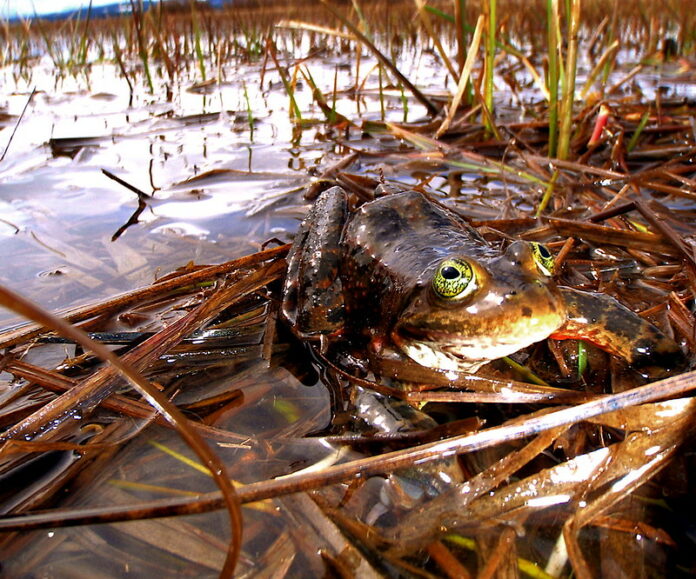
a close-up image of an Oregon spotted frog in marshland
PHOTO: Teal Waterstrat / Flickr

By: Hailey Miller, Staff Writer

Canada Post has released new stamps to help raise awareness for two endangered frog species in Canada, the Fowler’s toad and the Oregon spotted frog. The Peak spoke to Eli Yarhi, manager of stamp development at Canada Post, on raising awareness for endangered species and its impact on the environment. 

“The two endangered frogs featured on this stamp issue, they can tell us a lot about the changes that are occurring within the natural world,” Yarhi said. He noted “amphibians are resilient [and] it takes a considerable amount of environmental damage to reduce their populations.” Yarhi pointed to frogs being “indicators for environmental health.” According to Wildlife Preservation Canada, the rising and decline in frog population and health reflects the health of the ecosystem they reside in. 

Yarhi noted this isn’t the first time Canada Post has brought awareness to endangered species. The campaign to commemorate and raise awareness for at-risk species has spanned since 2006. In 2019, they issued stamps for endangered turtles, and did the same for whales in 2022

“Saving frog habitats means making our own habitats healthier.” — Manager of stamp development, Eli Yarhi, Canada Post

In Canada, the Fowler’s toad is only found in Ontario, off the northshore of Lake Erie. The Fowler’s toad has been on the endangered species list since 2008, due to degradation of their habitat. These toads struggle with breeding, burrowing, and hibernating because of land development and recreation. The Oregon spotted frog is only found in the Fraser Valley of BC, but originates from Oregon and Washington State. These spotted frogs are severely endangered with only a few hundred left. They also struggle with habitat loss due to development and extraction of resources. They both have brown, spotty colours and reside in areas of shallow waters. With their numbers dwindling, these two species are at severe risk.

“Saving frog habitats means making our own habitats healthier,” Yarhi explained, as both frog species featured on the stamps face threats and “habitat loss from human activity and invasive organisms and pollutants.” Yarhi stressed these frogs “need intervention as soon as possible.” 

The stamps were designed by Jocelyne Saulnier (Joce Creative), and illustrated by Emily S. Damstra. Yarhi explained “there is a competitive process for selecting design concepts, and therefore, designers.” This proceeds to the stamp advisory committee, where the winning design is chosen. Yarhi commended Damstra for illustrating the frog stamps in such detail that they “leap off the page.”

“We did work with experts in the field to really ensure that we were putting together illustrations that are anatomically correct right down to minute detail,” Yarhi said. The stamps have been available across Canada since April 15.

For more information, visit Canada Post’s website.

SFU labour studies seminar navigates oil and gas

0
a white and red oil rig on the ocean
PHOTO: Jan-Rune Smenes Reite / Pexels

By: Hannah Fraser, News Writer

On May 8, SFU held a labour studies seminar, “Shutting Down and Cleaning Up: The Labor Regimes of Oil and Gas Decommissioning.” Peder Østring from the University of Oslo in Norway led the discussion to explain challenges and possibilities “for a just transition” in oil and gas decommissioning, and what this means for the oil and gas workforce. The Peak attended the event for more information.

Oil and gas decommissioning is the “final stage of any oil or gas project and poses significant technical, economic, social and environmental risks.” Decommissioning is involved in the process of transitioning from fossil fuels to renewable energy. Responsible decommissioning is done so that the producing area is “left in a safe and environmentally acceptable condition.”

In the seminar, Østring explained there has been an “immense development in the last five decades of oceanic built environments,” like pipelines producing oil and gas in the North Sea. He asked what we must do to handle the “urbanization process of the ocean” to keep the climate crisis within the carbon target of two degrees celsius in accordance with the 2015 Paris Agreement. He added, “Norway and Canada have a lot in common as oil-producing states.”

“The process of cleaning up and shutting down is in no way unique to the North Sea,” he continued. $120 million was set aside in subsidies” to clean up abandoned oil wells in 2020 in BC.

“Shutting down this industry will lead to a society-wide calamity,” Østring said. “Norway was already a welfare state before finding oil in 1969.” This means, similar to Canada, there were more publicly-owned jobs before the monopolization of privatized oil and gas companies. With over 70,000 Norweigians currently employed in the oil and gas sector, he noted turning away from this aspect of the economy isn’t easy. 

 “Building [a] future society in a carbon-constrained world would have to entail making use of that physical infrastructure already inherited from fossil capital.”  Peder Østring, climate policy scholar

Østring discussed a high overlap in skills needed to work in the oil and gas industry, and the renewable energy industry, suggesting the transition of workers from one industry to another could be easy. “The scaling up of decommissioning would at least absorb some people working with the expansion of the oil and gas industry,” as the plugging and abandonment of oil rigs as part of decommissioning also provides jobs, he said.

Østring pointed out that the labour unions in Norway “generally are favourable to expanding the fossil fuel industry.” The country’s “oil tax break” of 2020 also created “huge incentives to start up new oil and gas projects,” posing more challenges for a shift away from these labour systems. While Canada plans to enact a “just transition” away from fossil fuels, advocates worry these targets are too vague in nature and don’t convey the specific steps necessary to achieve net-zero emissions

However, Østring said “the largest part of an oil platform is made of steel, but also contains a substantial amount of aluminum [and] copper,” which are materials that are “needed for the construction of wind turbines.” Research grappling with cutting emissions while “constructing a whole new landscape producing renewable energy” suggests that “building [a] future society in a carbon-constrained world would have to entail making use of that physical infrastructure already inherited from fossil capital.” 

But, “if the loss of unrestrained logic of capitalist value gets to dominate, the most likely outcome is that disused structures in the ocean” are shipped to the Global South such as areas of India, Bangladesh, and Pakistan. Once there, ships and machinery can be cheaply dismantled for scrap metal. However, this practice results in “both pollution and precarious labour conditions,” but “will secure the highest profits,” Østring explained.

Østring expressed how a local oil and gas union he visited during his PhD work felt positive about moving towards decommissioning, yet they still supported “continued national investments in oil and gas projects.” According to CBC News, union representatives for Unifor, a Canadian public sector union, “don’t object” to Canada’s transitions away from fossil fuels, but hope this shift doesn’t “leave workers behind.