Home Blog Page 106

I can’t keep my succulents alive for the life of me . . . or them

0
Someone sitting next to a dying succulent. They are reading a self-help book that’s called “How to be a good plant parent”
ILLUSTRATION: Cliff Ebora / The Peak

By: Hailey Miller, Staff Writer

The ultimate adulting is caring for a plant — and I don’t mean a fake fern to fill up space and contribute to the ambiance of your grown-up décor. This isn’t amateur hour . . . Plants make you seem like your life’s all put together whether you’re in your own place, or you’re still cramped in your parents’ basement. This new chapter of your life automatically grants permission for the most affluent, garden-growing extraordinaire you know (cough, cough, your mom) to give you your first precious plant child. Congratulations, it’s a succulent! 

Supposedly, succulent babies are easier to take care of, but I beg to differ. One minute it’s absolutely flourishing and you’re sitting in your one-plant garden oasis thinking, “hot damn, I’m a plant parent goddess, and I know my plant shit!” And by shit, you mean soil. While you ride your high horse into the garden, you suddenly find yourself discussing different types of soil and buying cute pots to plant, replant, and transplant. Wait, isn’t it all the same? Do you really know the different soils after all? Um, no. Before you know it, your firstborn succulent is withering away to pieces as its poor, little leaves crumble to the floor. Sound familiar? Succulent babies are just like raising a child, except they don’t cry out in the middle of the night. Instead, they grow into your worst moody teenage nightmare.

I named my succulent Little Succs, because he sucks at sucking up water to keep him alive. I’ve tried, I really have. I’ve given him light, space to grow, and water — but let’s not talk about the fact that I sometimes neglect him. Shh, I don’t want to be in the plant parent bad books. I’ve already had to have the sex talk with him since he seems to want to reproduce . . . miraculously, on his own. Don’t even get me started on how much he begs me for a haircut when he sheds his little succulent leaves every time I check in on him. Look, it’s as strenuous for me, as it is for him, OK? I know I’m not exactly going to win plant parent of the year, but I still love my Little Succs and will do everything to keep him alive . . . including returning him to my mom to take full-time guardianship.

In case you missed it: 2666 is a telling tale of unresolved violence

0
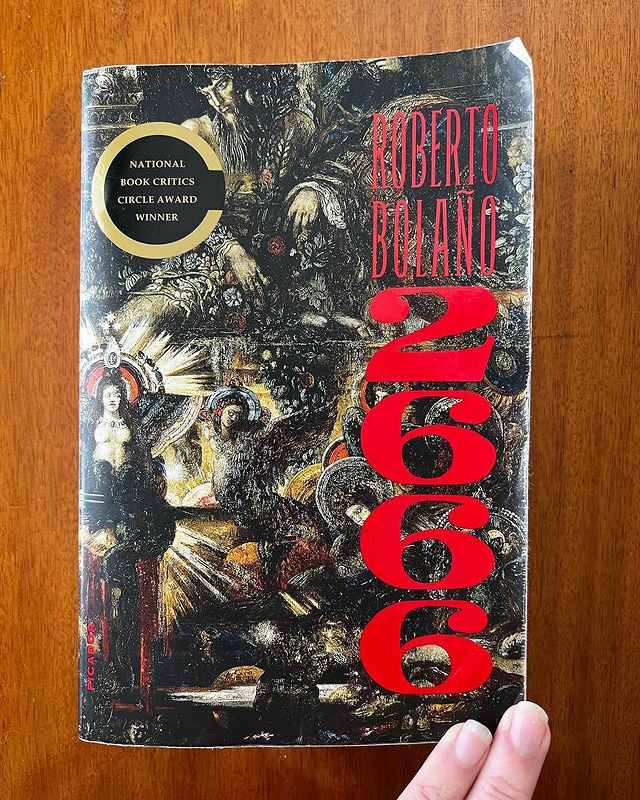
The cover of Bolaño’s 2666 (written on the cover in red), which features a renaissance-styled painting of a woman surrounded by faded hands and faces.
Photo courtesy of @dreesreads on Instagram

By: Yildiz Subuk, Staff Writer

Content warning: descriptions of femicide. 

Roberto Bolaño was a novelist, essayist, and poet who later proclaimed he should have been a detective instead. He was diagnosed with liver disease in 1992 and, knowing that his time was running out, began his final work. Despite his efforts, Bolaño passed away a year before the publication of this near-900-page novel, 2666

The writing in 2666 manages to keep the gripping qualities of a detective novel, from its ambiguous narrative to a sense of increasing dread. The truth is, however, that the novel is far from a detective story. 2666 transcends the crime thriller genre by taking certain qualities of it to instead tell a story resembling the overlooked and unresolved murders that took place in Ciudad Juárez and Chihuahua City, from 1993 to 2005. At this time, nearly 400 unresolved cases of femicide (misogynistically-driven murders of women) took place.

The novel starts with three literary critics who are trying to track down a reclusive author, eventually ending up in the town of Santa Teresa. As their world views change after being exposed to the crimes taking place around them, the story transitions into the next part, which provides accounts of a different set of characters. Each part is loosely connected, but the narrative focuses on letting various characters paint the picture of a town overruled by corruption, institutional failures, and senseless killings. As the novel progresses, the detective story most audiences are used to begins to fade, almost as if Bolaño piqued our interest with a premise as a way to later show us a horrifying reality. 

The narrative is split into five parts, the lengthiest and most brutal being “The part about the crimes.” This is what sets 2666 apart from most detective stories, as it doesn’t focus on specifically tracking down a serial killer or force behind the killings. Instead, it provides accounts of confused law enforcement, parents or friends of victims, journalists, and other characters who have been deeply affected by the murders taking place. 

2666 is not a who-dunnit, the answer is clear. Santa Teresa is a place rampant with inadequate law enforcement that fails to properly look into the murders. The town’s corrupt government does not address what’s happening, the media ignores the cases, and there are the inescapable threats of the cartel — the power of this group goes completely unchecked. The antagonist is more abstract than just a character, but a corrupt city driven by misogynistic violence with no regard for the safety of its people. Most importantly, the femicides that have occurred have been a problem for years. As one reviewer puts it, “The story doesn’t begin with the murders — it arrives at them.” The beginning of the novel has nothing to do with the murders, but are slowly exposed to their horrifying nature. 

The violence in 2666 is intentionally not universal, but specific. It’s not supposed to feel familiar or conventional, but much more gruesome than what most are accustomed to reading about and even difficult to understand. This makes 2666 a devastating read. Through this narrative choice, Bolaño exposes readers to something that has been overlooked without focusing on a few central victims, but a collective voice of people who have suffered from the unresolved cases of femicide. An extensive amount of detail is provided on the direct victims of the violence, and perspective is given to those who are indirectly affected. 2666 is a haunting exposure of the violence that Latina, Indigenous, and Black women face all over the world, which is rooted in a misogynistic society filled with unchecked power.

A beginner’s guide to SFU sports, written by a beginner

0
A group of girls huddle in a circle, each wearing a white uniform with red pinstripes and a red visor with a maple leaf on it.
PHOTO: Courtesy of Gordon Kalisch / Fasttracksports

By: Tam Nguyen, Staff Writer

I must admit, I’m not a dedicated sports fan. I don’t think I’ve ever watched any sports games before, except for the World Cup final in 2022 where Argentina scored two goals over France on penalties. Everything I know about tennis is from the movie Challengers. My knowledge of the Vancouver Canucks is that they play at Rogers Arena and their colours are blue and green. However, after hours of doing research and watching YouTube sports videos, I am ready to give you the best newbie-introduction to some of SFU’s sports teams.  

SFU’s athletics club, the Red Leafs, includes sports such as basketball, golf, and softball (women’s team only). The Red Leafs are the only Canadian member of the National Collegiate Athletics Association (NCAA), an organization that sponsors student-athletics programs for universities and colleges in North America. The NCAA has three divisions, with the Red Leafs currently competing in division two (NCAA-II). 

Now that we’ve gotten some of those details out of the way, here’s a little information on some Red Leafs teams. 

       1. Women’s basketball 

Two teams, with five members each on the court at a time, compete using one basketball. The goal of each team is to shoot the ball into the opposing team’s hoop while defending their own. Players use techniques like dribbling bouncing the ball while moving and passing to move the ball up and down the court. They also have various approaches to shooting the ball, with the most iconic being a slam dunk. Players have different positions and roles; one can be a guard or forward, or both. 

SFU’s women’s team has a total of 15 roster players and four members of the coaching staff, all led by head coach Bruce Langford. One of the team’s standout alum is Dani Langford, who was inducted into the Basketball BC Hall of Fame in 2023 with her “significant contributions to the sport over the course of her career.” She played as a point guard for the Red Leafs from 2000 to 2005 and is currently a physiotherapist for the NBA’s Golden State Warriors

       2. Softball 

A popular variation of baseball, softball is different in the way the pitcher is only allowed to pitch the ball underhand, requiring them to swing their arm in a circular motion. A game is made up of two teams, each consisting of nine players, who compete using gear such as gloves, bats, a helmet, and a ball. Matches are usually played on a big field where bases and pitching rubbers are set up. There are a total of four bases that create a diamond from within, and the pitching rubbers mark the position where the pitcher must serve. The team that scores more runs (touches all four bases) is the winner. 

The most familiar positions for softball are the pitcher (responsible for throwing the ball), batters (responsible for hitting the ball), and catchers (responsible for catching the ball). Other positions include basemen, left fielders, right fielders, and center fielders. 

SFU women’s softball team has 22 roster players who are led by coach Stacy Fournier. A current star on the team is Megan Duclos, a junior center fielder. She was named to the National Fastpitch Coaches Association’s (NFCA) All-West Region Second Team. 

       3. Women’s golf 

This sport immediately makes me think of millionaires dressed in white polo shirts and navy hats, bargaining their company liquidation while hitting a golf ball into holes using a golf club. Out of the three sports in this article, golf is the only non-team sport (in the sense that players compete against one-another individually). This sport can be played both inside (mini-golf, golf simulators) or outside (on a course, on a range). Players will need golf balls, golf clubs, golf bags (to carry clubs), and ball markers to start playing. The winner is the player who completes all the holes with the least amount of strokes — the movement of the club to strike a ball. 

SFU’s men’s and women’s golf teams are both led by Coach Krysta Schaus. A standout on the women’s team is Meera Minhas, a current Red Leafs golfer who was named Player of The Year at the 2024 Great Northwest Athletic Conference (GNAC) Women’s Golf All-Conference Team

Chinatown screenings bring communities together

0
A black hanging sign with a big “M” in the middle and the words “Massy Arts Society” written on the bottom.
PHOTO: Amirul Anirban / The Peak

By: Yasmin Hassan, Staff Writer

Dimmed neon signs, muted red lamp posts, the Millenium Gate, faded Chinese lettering on fenced panes of glass, and weathered buildings; these are all characteristics of a modern-day Chinatown. While the gnarled grips of gentrification have changed the physical pieces of Chinatown, part of this community’s rich culture remains buried under the rubble. Chinatown Today — an organization that aims to share Chinatown’s stories — is holding free movie nights on October 4 and November 8, showcasing films that provide opportunities for “building intercultural and intergenerational relationships.” These will be held at the Massy Arts Society, a quaint studio that hosts intimate nights of watching eye-opening and endearing films.

I got a chance to watch Julia Kwan’s Everything Will Be, which is a documentary-style film looking at denizens of Chinatown and exploring a moment in time when gentrification was beginning to plant its roots in the community. The film delves into the stories of people from all walks of life, young and old. From artists to business owners, to property developers and street vendors, Kwan takes a broad scope of the town’s society in all its complexity. For some, Chinatown is a home away from home, with many of its inhabitants coming from various parts of the Chinese diaspora. The film not only showcases the intricate and heartwarming culture of Chinatown, but also how new developments, gentrification, and neglect from the government has minimized the impact of a Chinatown that has met its full potential. 

Coincidentally, I met one of the people from the film: Ken Lum, an aspiring artist who aims to bring awareness and dialogue to Chinatown’s culture. The film shows Lum in his studio, with many of the area’s occupants coming to interact with his art. Whether it be neighbourhood kids or the trusted security guard, his work was and is an homage to the people and their stories. “My hope was to be able to bring dialogue and action in preserving and celebrating Chinatown heritage,” Lum told The Peak.

As many might say, what makes Chinatown Chinatown, is its rich culture, history, and cherished memories for those who frequent the abode. “Childhood memories of spending time with my family here, munching on the tasty food, pining over the cool exotic toys from Asia, and dodging the crowded streets on the weekend while my parents did their shopping,” Lum said on what makes Chinatown special for him. 

After the film, there was a short presentation by some of our very own SFU alumni. Firm Kongthong and Nick Cheung are working on a project they started during their studies, but are now able to fulfill to the fullest. Their project uses AI and predictive design to imagine a modern Chinatown in an idealized view. 

“The overarching purpose of the project will be to leverage the overall appeal of Vancouver’s Chinatown and its heritage by creating conversations within the community of Vancouver,” they said in their presentation. In a statement to The Peak, Cheung described their initial project and how they created an exhibition-style presentation showcasing the uncanny future of Chinatown’s gentrification. “The money within the red pockets would be replaced by eviction notices from the city of Vancouver to represent the growing cost of rent,” Cheung explained. “We both are trying to understand more about the Chinatown community from all age groups and their perspectives,” Kongthong mentioned as the project is in the research phase, transitioning from “a two-person perspective project into a community-based project created by two designers.” 

Avoiding gentrification and washing away rich culture is a keypoint for many, as it should be for most. “While I don’t think it’s entirely possible to bring back the same Chinatown as it was in the ‘80s when it was thriving, I think aiming for the communal hub essence should be a vital part when discussing the future of what Chinatown would or should be like,” Cheung said while discussing paths forward. Lum also urged everyone “to bring awareness to the value of preserving and celebrating Chinatown, and partnering with developers who share that same value.” 

Modernity will always clash with antiquity, but I believe that Chinatown will do just fine balancing both against all odds. Honouring the past, celebrating the present, and planning for an auspicious future is possible with the help of regular people and those in power working together to find a cohesive balance of then and now. 

Reserve a free ticket to see Chungking Express (1994) on October 4 and a short film showcase on November 4.


Tell us your favourite Month of Welcome event and we’ll determine what your Twitter account looks like

0
A September calendar with the dates of SFU Month of Welcome events circled.
ILLUSTRATION: Victoria Lo / The Peak

By: Amrit Kamaal, Peak Associate

SFUReady 

You made sure to attend each stall to scoop up all the freebies. You had to sweet-talk for some of them, but you’re not above that. Of course, that sweetness is a front. You run a stan account on Twitter for, in your words, “a very underrated artist,” and you will defend their honour on the platform with everything you’ve got. When you’re not having one-sided beef with your fave’s rival, you’re working on a new fancam. Maybe it’s time to take your own advice and touch some grass because your page has more stolen insults than a group chat full of tweens learning to cuss. 

Username: GucciFloraArtistName

Bio: Spreading love and positivity insert laughing cat emoji
       3x noticed by my queen
       insert random lyric about how many bitches hate you

SFU Welcome Day

You romanticize university life a bit too much, taking an exaggerated breath in to “soak it all in.” You commute over two hours daily to whichever campus furthest from you purely to “study,” pretending you’re Rory Gilmore walking around in the cold with your Blenz coffee. Of course, your Twitter consists of dimly lit pictures and a poem based on a quote from your PSYC 100 lecture talking about “we’re so similar but different.” Your captions and bios consist of the most random emoji combos just because you like the colour. Maybe if you actually attended your English lectures, your poems about your hallway crush might actually get some recognition. 

Username: BloomingLilliesInMySoul

Bio: Another person’s place
       “The place where flowers come to grow”
       emoji combo of a goose, a bathtub, a poodle, and a white heart

SFU Clubs Days

If you claim you weren’t a band kid, an anime kid, or even both, you are lying to yourself. This is your favourite event because you can unintentionally wreak as much havoc as possible, constantly repeating phrases you’ve heard on TikTok over a million times in an attempt to be “humorous” with club leaders. You definitely own a flop meme page, constantly tweeting and retweeting overdone memes remixed with loud screams and CupcakKe songs. Unfortunately, it also impacts your social interactions in person because asking to study abroad at “Ellie and Mason’s house” isn’t the move that you think it is.

Username: FlopTropica69

Bio: WhAt i dO insert purple heart
       Not me in my flop era I—,

Message from the president: An update on the official SFU mascot shortlist

0
Three small children stacked on top of each other in an oversized trench coat.
ILLUSTRATION: Emma Nash / The Peak

By: Petra Chase, Editor-in-Chief

Since McFogg the Dog was let go in 2018, the Board of Directors has been hard at work deciding who will replace him as SFU’s new official mascot. Finding a mascot worthy of representing our comprehensive university is a responsibility we do not take lightly. As a result, we’ve been way too swamped at our monthly meeting to get around to the calls to divest from war contractors. We’ve only just begun talking to the TSSU about a fair contract.

How’s this for accountability? Here is every mascot we’ve meticulously considered over the past year, and why we ultimately decided against them:

Three kids stacked on top of each other wearing a trenchcoat
A trenchcoat is a low-budget costume option, and that’s ultimately the reasoning behind this idea. At first, we thought this would simply be a guy in a trenchcoat. But then I came up with the brilliant idea that if we get a long enough coat, we could stack three kids on top of each other and make our mascot a mighty 12 ft. We were quite certain about this decision for several months. So much so that we made a casting call for local kids willing to drop out of school to fill the position. Ultimately, we realized this option posed practical challenges, as a trenchcoat is not always fit for the weather.

John Pork
I don’t normally answer unknown numbers, but when the call display for John Pork appeared on my phone with a photo of this handsome pig-human, I just had to hear him out. He introduced himself as a “pig who’s also a dude” just making some calls, looking for work. He seemed really chill and got on a video call to show off some of his dance moves. I was thoroughly impressed. Unfortunately, he backed out at the last minute, before we could seal the deal, saying he was moving to New York to pursue his dreams and be on Broadway. Just like that, it was back to the drawing board.

The spirit of demure #BratSummer 
No one cares about engaging the world anymore. All they care about is brat this, demure that. Honestly, we didn’t have any idea what this would look like as a mascot; all we knew was we had to hop on the trend before it stopped being cool (or I guess I could say brat or demure, both synonyms for cool, I’m pretty sure). But before we could hit send on this decision, I was informed someone called Charli XCX announced brat summer was officially over. Thanks for wasting our time, Charli.

A lousy raccoon
A petition made in 2018 to make a raccoon our next mascot was brought to my attention. Sure, some valid points were brought up, like, “Oh hell yeah,” and, “The campus raccoons are nicer than the students.” Unfortunately, the petition only had 252 signatures. Not nearly enough. Typically, we don’t even look at petitions from students and faculty unless they have at least 37,000 signatures. And besides, even though we have raccoons crawling our halls and the little bandits are adorable, I just want to stall this decision a little longer because, quite honestly, I’m avoiding making any decisions, and I’ll resort to anything.

Block party brings life into downtown Vancouver

0
Three individuals dancing while dressed in 70’s-styled clothing (flared pants, gold tights, bright colours).
ILLUSTRATION: Sonya Janeshewski / The Peak

By: Caitlin Kingsmill, News Writer

On Saturday, September 7, Public Disco Society hosted its Downtown Block Party, the final installment of this year’s summer series. The event was held from 2:00 p.m. to 10:00 p.m. at the Bentall Center’s Dunsmuir Patio, a multi-level outdoor seating area located in the heart of downtown. As someone who generally avoids downtown out of the belief that it has a soulless and bleak vibe, it was a treat to stumble upon an event like this, and I’m sure many other attendees felt the same. As we arrived around 6:00 p.m., my friend and I both thought the event felt like something you would find in Montréal, where pop-up music festivals are a big part of the city’s summer culture.

As we ascended the escalator at Burrard Station, we could hear the distant sound of mellow electronic music. Upon reaching street-level, the Dunsmuir Patio was vibrantly decorated with hanging string lights. The upper level of the patio was mostly made up of seating and vendor tents, while the lower level held the stage and DJ booth. We were greeted by a couple friendly staff members whose welcome booth was stocked with an assortment of complimentary items. 

They encouraged us to take whatever we wanted from the spread that included stickers, gum, hair elastics, types of condoms, and period products. Who doesn’t love receiving free items at a free event?

Once we finished stocking up on gum and condoms, we decided it was time for a beer. My friend felt inclined to figure out what type of beer she actually likes and the staff member was very pleasant and helpful with her recommendations. We determined that, much like myself, my friend enjoys a refreshing light lager (ideally served with a lime wedge). All of this friendly banter almost made up for the fact that a single can of Granville Island Brewing Lager cost $8.

We wandered around the vendor booths and observed the event while sipping on our respective lagers. The vendors sold a range of items including kids toys, locally-made clothing, and handmade soaps. From the upper level, you could peer down into the crowd for some good people watching, and from up there the music was quiet enough that you could easily make conversation. The event was open to all ages, with kids running around, families eating snacks, and young adults vibing to the music all in the same vicinity. There was an emphasis on safety with water stations and accessibility information available throughout. 

We ran into a couple of friends who said they have been attending these events since the first one in 2017. They, too, enjoyed the ambiance and appreciated that each year features a new mix of local underground electronic artists. This year’s lineup consisted of Vancouver-based The Ryze, Lerma, and Mother Mary, and Seattle-based APT E. The Ryze’s tracks were mellow yet funky at the same time, mixing electronically-synthetic tones with catchy beats. With a heavy, dropping bass and tone changes reminiscent of an ‘80s-style arcade game, Lerma had the crowd off their feet and showing off their best moves. 

As the sun set and we descended to the stage area, the mood began to shift. The music got louder and a handful of dancers dressed in neon clothes emerged. They stood on raised platforms and rhythmically moved to the music, encouraging the crowd to do the same. A dance circle formed off to the side. A bubble machine appeared in the middle of the crowd, as did a person wearing an Elmo costume and holding a sign saying “free hugs.” The night time crowd had officially arrived.

Needless to say, this downtown disco had begun to feel like a psychedelic fever dream of sorts. Tune in next summer to experience it for yourself!

Traditional medicine is health care

0
St. John’s wort plant in bloom.
PHOTO: john shortland / Flickr

By: Olivia Visser, Opinions Editor

Many people grow up believing that everything under the alternative medicine umbrella is false and misleading. However, this distrust can be particularly problematic when it carries over into traditional medicine. Evidence-based arguments fall short when considering the lack of funding for quality traditional medicine studies. But efficacy aside, you don’t need to practice a form of medicine to respect it. Western medicine often lacks a holistic approach that examines people’s body and mind as a whole system. These practices may not be for you, but it’s worth trying to understand why they’re important to so many people.

We must consider that what many of us now know as western medicine has roots in herbal medicine. Certain pain-relievers like morphine and codeine are still organically synthesized from opium poppies. Aspirin was originally derived from salicylic acid in willow tree bark. St. John’s wort has been found in multiple studies to alleviate mild depression. It’s dismissive to suggest that medicine is a recent invention. In reality, humans have been experimenting with plant-based treatments since time immemorial. 

As with most things in life, any sort of treatment should be cautiously examined before proceeding. Traditional medicine doesn’t generally promise miracle cures or aim to replace necessary medical treatments like chemotherapy or insulin. Rather, it’s intended to complement clinical medical practices. You should always consult your family doctor before starting any medicine, herbal or otherwise. Some substances can interact with medications or preexisting conditions.

Those who judge traditional medicine overlook the value of healing practices that prioritize person over patient. Many Indigenous Peoples consider “a person’s physical, spiritual, emotional and intellectual well-being,” and their “place in the community.” This sort of relational holistic care is preventative health care. The Centre for Disease Control reports that social connection has the ability to prevent certain physical and mental illnesses. Other studies have found that “Indigenous-led health partnerships can improve access to care, adherence to care plans and many health outcomes.” Access to traditional medicine practices is so important that it’s explicitly recognized in the Truth and Reconciliation Commission of Canada’s 94 Calls to Action. 

It may feel straightforward to suggest we should respect people’s cultural practices. However, this respect is still direly needed — traditional medicine is frequently regarded as a lesser form of treatment because it’s lumped under the larger alternative medicine umbrella. For many people, healing goes beyond their body alone and extends to meaningful connections with land and community. For example, traditional Chinese medicine proposes that an imbalance of positive and negative energy can have health effects. Clinical studies have also found notable links between stress and physical illness. But my argument isn’t even that traditional medicine is as effective as western medicine. It’s that finding a common ground between what you practice and what someone else practices is worthwhile. 

Recently, Kwantlen Polytechnic University announced the coming of Canada’s first traditional Chinese medicine bachelor’s degree. The decision has been met with both applause and criticism, as some feel traditional Chinese medicine is no more than a branch of pseudoscience. However, the degree is not a medical degree and is in no way designed to replace medical doctors. There are credible studies backing the use of acupuncture and certain traditional Chinese medicine herbs for minor ailments and chronic pain. At the same time, studies are still lacking regarding the safety and efficacy of many treatments. This is why we should welcome the program. Traditional medicine deserves education pathways that result in better regulations and standards of care. This must be done on a larger scale, but as individuals we can still reflect on our preconceptions and shift mainstream narratives.

Traditional medicine doesn’t necessarily assert that every illness has a natural cure, and it varies greatly between cultures and practices. My own prejudices surrounding traditional medicine kept me from exploring herbs that improved my mood and digestion. At the end of the day, we should be in favour of funding further studies about traditional medicine so we can practice it as safely and effectively as possible. Providing pathways within our communities for individuals to pursue these treatments could offset medical system strain and act as a powerful means of preventative care. 

Bright-er Side: Navigating the maze of Burnaby Mountain

0
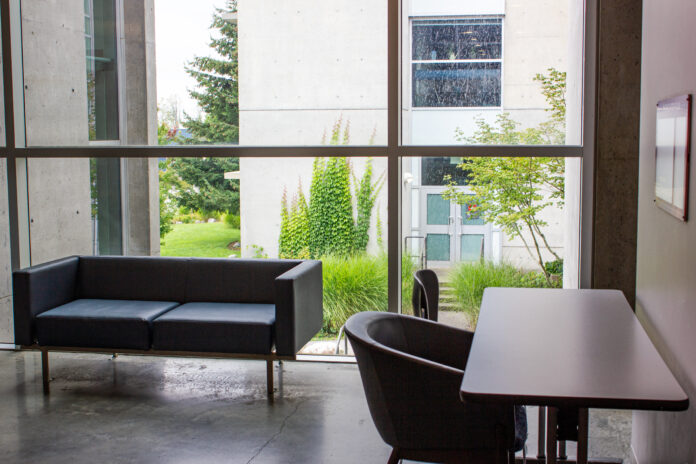
A small black couch and a chair with a desk in a quiet corner at SFU.
PHOTO: Jin Song / The Peak

By: Jin Song, Peak Associate

My first experience of SFU’s Burnaby campus was struggling to find TASC 9204 for an absurd amount of time. Even with the help of Google Maps, SFU Snap, the campus maps, and strangers (none of whom actually knew where the room was), first-year me decided that SFU was, indeed, a maze. 

Three years later, I still get lost . . . which is actually really exciting.

Maybe it’s not so fun when midterms are in two minutes, but when I’m not in a rush, stumbling upon unexplored parts of campus brings much-needed novelty to my day. It brings back memories of being a kid and having nothing better to do than explore. The Burnaby campus gets made fun of for looking like a prison, with the brutalist cement and whatnot, but I think it’s really grown on me. It looks like the backdrop of a science fiction epic, and it’s no surprise that tons of films and TV shows have used campus as a set.

There’s a bunch of science on why our brains are wired to love novelty, but I think it can be summed up like this: exploring mazes is fun.

Trudeau announces decision to limit temporary foreign workers and permanent residents

0
This is a photo of Justin Trudeau speaking in front of two Canada flags in a medium shot
PHOTO: taylor hartley / Flickr

By: Yildiz Subuk, Staff Writer

On August 26, Prime Minister Justin Trudeau announced he will “reduce the number of temporary foreign workers in Canada” by tightening the policy regarding temporary foreign workers (TFWs). This follows what some are calling a “historic surge” of temporary foreign workers in Canada, with nearly 184,000 TFW permits taking effect in 2023. When Canada faced a labour shortage, policies changed to allow more TFWs into the country to address it. 

Under the Immigration and Refugee Protection Regulations, TFWs enter Canada through work permits, which limit them to work for a single employer unless they get another permit. These permits allow individuals to work for 1–2 years before they have to renew their permit to stay in the country. 

Trudeau also announced plans to limit the amount of permanent residents in Canada. He stated that “high unemployment areas — places where the unemployment rate is 6% or higher — will not be able to hire low-wage TFWs.” This excludes food security, construction, and health care sectors where there are staffing shortages. We’ll be looking at unemployment rates and opportunities to make further adjustments over the course of this fall as we come forward with comprehensive level plans that will respond to the reality that Canada’s facing now and in years and decades to come,” said Trudeau.

The United Nations (UN) declared Canada’s TFW program to be “a breeding ground for contemporary slavery” in a recent report. Contemporary slavery in this context refers to the exploitation of workers that goes unreported due to some migrants’ fear of deportation. The UN stated that TFWs are subjected to multiple forms of abuse but are often unaware of their rights. These forms of abuse include being underpaid for work or feeling forced to pay immigration consultants large sums of money to get jobs. 

The Peak interviewed Syed Hussan, executive director of Migrant Workers Allegiance For Change, who noted that multiple changes regarding immigration have been made since June last year. These changes include capping study permits and permanent residency and “refusing to renew permits for graduated international students.” Hussan said Trudeau’s new decision could affect TFWs as they may not be able to renew their permits, forcing them to relocate to areas where there is lower unemployment. Other TFWs would become undocumented or feel forced to pay large sums of money to recruiters to locate work.

Though Trudeau stated he wants to limit TFWs and permanent residents in Canada due to the increase in unemployment, Hussan suggests another reason behind this decision. He explained the Liberals want to respond to speculators who link the lack of affordability crisis in Canada to immigrants: “The Liberals are working to show that they are in control of the immigration system, in an attempt to respond to growing xenophobia and racism.”

However, Hussan said Trudeau’s announcement affirms the beliefs that immigrants are linked to the affordability crisis, which will fan the flames of a growing xenophobic rhetoric within the country. “Blaming migrants, it serves as a distraction from holding the billionaires and corporations accountable for their profiteering and their impoverishment of working people,” stated Hussan. 

The Peak also interviewed Dr. Steven Weldon, an SFU political science professor. He explained that more Canadians may be against immigration as Canada is experiencing more difficult economic times due to high inflation and fewer job opportunities. Weldon said this creates a pullback around immigration.

Weldon also said that while the federal government controls the influx of immigration within the country, Trudeau’s decision could change. Trudeau stated that future changes will make it so “Canada remains a place that is positive in its support for immigration, but also responsible in the way we integrate and make sure there’s pathways to success for everyone who comes to Canada.”