Home Blog Page 101

Opposition to SOGI 123 isn’t just offensive, it’s based in lies

0
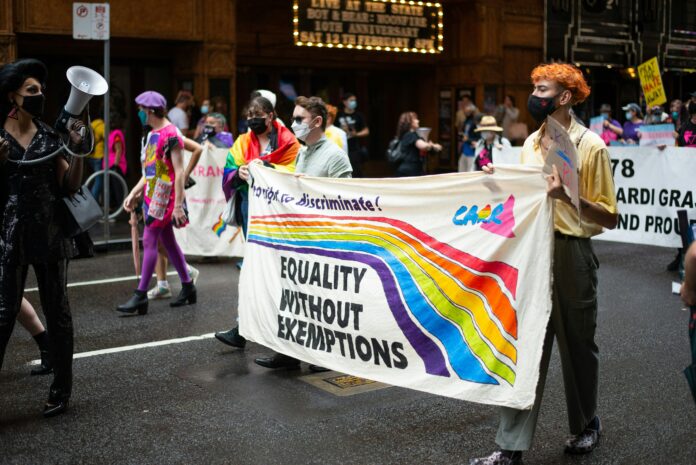
A group of masked protesters marching down a road. They are holding up a sign with a rainbow that says equality without exemptions.
PHOTO: Nikolas Gannon / Unsplash

By: Tam Nguyen, staff writer

There has been a growing number of protests against SOGI 123 (Sexual Orientation and Gender Identity) over the past few years. More recently, BC Conservative politician John Rustad promised to end the program, naming it “a failure” and “a distraction.” This opposition brings to light just how deep-rooted queerphobia is in our society, as well as how misinformed people are about the program. 

SOGI 123 is a resource that helps schools and teachers address the topics of sexuality and gender identity respectfully and inclusively. It is neither a stand-alone curriculum nor a subject like math or English, but a supplemental tool for students to learn about inclusivity. SOGI 123 is “at the discretion of individual school districts,” and all 60 school districts in BC have incorporated it into their curriculum. 

One popular argument is that SOGI 123 promotes pornography and sexual content to students. This is an outright lie. The program teaches students to create an inclusive environment for everyone. This can be as simple as talking about heteronormativity — the assumption that everyone is heterosexual — and discussing how some people use the word partner instead of gender-specific terms like boyfriend or girlfriend. Sex education and reproduction is a separate curriculum and is not part of SOGI 123, despite what critics may want you to think.

No proof has been found that suggests SOGI 123 “teaches kids to be queer” or to have gender-affirming surgeries, as people have claimed. The main principles of the program are anti-bullying and awareness — essentially just acknowledging that queer people exist. Avoiding discussions about gender and sexuality will not make us disappear. I grew up watching a bunch of cis, straight people kissing in movies and real life, and I still turned out to be a raging dyke. People are who they are.

SOGI 123 gives the students the language and a safe environment to discuss and explore themselves. When I first realized I liked girls, I didn’t even have the words to describe it. I pushed it to the back of my mind and didn’t think about it. It happened again with my gender identity, as I couldn’t put it into words the way I didn’t relate to a binary gender. The opposition of SOGI 123, from not just individuals but also the BC Conservatives, stems from queerphobia and political division. It’s 2024 — we as a society need to develop more understanding and critical thinking. Queer and gender-diverse people have always existed, and not talking about us won’t make us go away. 

Burnaby Task Force to address unhoused population

0
This is a photo of many trees and buildings in the distance in Burnaby.
PHOTO: Jeff Kingma / Unsplash

By: Yasmin Hassan, Staff Writer

In June 2023, the City of Burnaby launched the Mayor’s Task Force on Unsheltered Community Members. The team aims to respond to the unhoused population in Burnaby by taking an interdisciplinary approach to increasing shelter capacity and accessibility. The task force is made up of government representatives, non-profit organizations, healthcare professionals, and individuals from housing and public safety sectors. 

Several collective meetings were held from June 2023 to April 2024, with the task force submitting a final report on June 24. The report addresses the lived experience of unsheltered individuals by covering topics such as landlord discrimination, and a lack of affordable housing, community support, and safety in most shelters. The team’s targeted start date is set to be no later than October 31. 

Recommendations from the task force are split into four focus areas in their final report: creating additional shelter spaces, developing a range of housing types to meet a variety of needs, coordinating an interagency response to outreach, and providing support services to unsheltered community members. 

The BC Housing website for shelters in Burnaby shows that the only shelter in Burnaby is the Douglas Road location. However, with the closure of the Buller Avenue shelter and the expected closure of the Douglas Road shelter in 2025, the task force’s top priority is increasing overall shelter capacity and accessibility for “a mix of populations, including seniors, women, 2SLGBTQIA+, and families.”

According to the Point-in-Time Homeless Count in Metro Vancouver report, cited in the task force’s report, 209 people in Burnaby were unhoused in 2023 — a 69% increase from 2020. These two reports cited various factors to explain the rise in people without housing, such as having low income, a rise in housing prices, substance use disorders, and intimate partner violence.

“Certain populations such as Indigenous peoples, seniors, and people with a history of interactions with the child welfare system are overrepresented,” states the task force’s report. 

“Addressing these challenges in a meaningful way will require political will and response from all three levels of government,” said Maita Santiago, chair of the task force. Burnaby mayor and vice chair of the task force Mike Hurley added, “It is imperative that we move quickly to implement the short-term recommendations included in the report and work together as a community to support a long-term framework for addressing homelessness in Burnaby.” 

The task force’s report also includes a list of recommended practices including the Housing First approach, tiny homes, and coordinated response teams like the Homeless Encampment Action Response Team. The Housing First approach prioritizes “permanent, affordable housing as the first step in transitioning someone out of homelessness.” Another recommended practice mentioned is a By-Name-List, which is a record of those known to be unhoused, displaying vital demographic information.

The report also mentions an “over-reliance on enforcement,” like RCMP and bylaw/park officers, in approaching unhoused populations. This coincides with the sentiment of the advocate group StopTheSweeps, who state street sweeps are harmful to the unsheltered community as they can face “harassment, intimidation, and the theft of their property” from authority figures. The task force held consultation sessions with front-line staff working in local agencies. One of the comments in the report states, “this puts bylaw officers, park officers, and police officers in a bad position because they want to help the person but are pressured by other community members to ‘make it go away.’” 

For more information on the task force, refer to the final report from the city. 

Conservatives consider adding Indigenous rights to top 50 list of priorities within the next 60 years

0
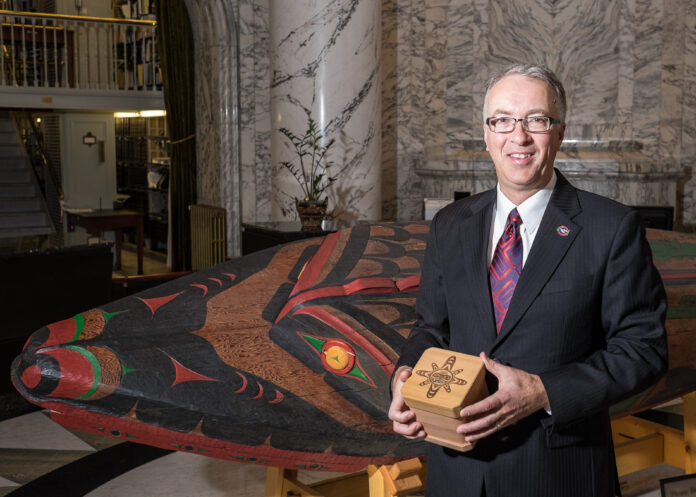
Picture of John Rustad from when he was Minister of Aboriginal Relations and Reconciliation in 2014.
PHOTO: BC Government

By:  Jordan PEEterson, Alt-Right Political Personality (swears he’s not racist)

The BC Conservatives are considering adding Indigenous rights to their list of priorities sometime within the next 60 years if it is profitable in some way. Of course, reconciliation and ensuring human rights are upheld isn’t as important as ensuring the rich get more land. In my humbly centrist and rational opinion, we shouldn’t be giving people handouts. Yes, my ancestors may have contributed to violent imperial pursuits that have long-lasting impacts, but is that really my fault? I have recently been feeling like my white privilege is under attack these days, and too much communist progressiveness may put a halt to benefiting our country’s wonderful elite. After interviewing BC Conservative party leader John Rustad, I see a new hope in the form of a beautiful white smurf.

Rustad, or as I call him “Papa John” because as the kids these days say, he is so “daddycore” started the interview by saying, “Look, I care about Indigenous people. I even wear the moose hide. But I am conservative; I believe in tradition. Conserving culture and ensuring things remain like they were in the sweet old days is important. We have been violating Indigenous rights for years; why should we now change our beloved Canadian tradition? Plus, is it really that big of an issue? I thought we solved racism back in 1988.”

While many are shocked by this statement, he does have a point. Women can vote, gay people can get married, what more do you want?

John’s Conservative Party wants to repeal laws regarding Indigenous land ownership. The Narwhal criticizes Rustad’s approach as he should be focused on “halting and reversing biodiversity loss by 2030 and to put nature on a path to recovery by 2050.” Rustad replies to this claim — “It’s not that deep. I myself am an environment expert, even though I got removed from the liberal party for my supposedly misinformed views on the matter (they are just haters). I saw a couple episodes of the Joe Rogan Podcast, and I can assure everyone the environment is fine. I went out the other day, and the grass was there, so I don’t know why we are so worried.”

Rustad also complains about how Indigenous rights and land rights are related. “Everyone can buy property; why should we prevent others from purchasing land, and just give it to the Indigenous communities? Sure we did technically steal the land a couple hundred years ago, but we kind of said sorry (not really). I even continued to wear my moose hide, even after an Indigenous leader said mean things about me like how I’m “a threat to Indigenous rights and a threat to reconciliation.” 

Rustad expresses deep sorrow as he just wants to make sure people get more opportunities to buy land (if their mommy and daddy are rich of course — it’s just how it is, I don’t make the rules). Even though the prices of housing have skyrocketed to the point where buying a house is fantasy for most Canadians, it is important to not actually lower the prices for land but just take other people’s land and allow them the opportunity to buy it (even if they can’t). 

This is an ongoing issue that The Rarely Wire will rarely cover. 

Horoscopes October 14 – 20

0
An illustration of a girl, stars and astrological signs strewn in her hair.
ILLUSTRATION: Marissa Ouyang / The Peak

By: Amrit Kamaal, Peak Associate

Aries
March 21–April 19
The second the clock strikes 12 on September 1, you never miss a beat to run to your local coffee shop for a pumpkin spice latte. Maybe it’s an obsession, but who cares? The stars can tell that even if your wallet disagrees, you’ve found your motivation to wake up, go to school, work, anything. But tone it down a bit; trying to find a temporary “rebound” winter flavour will be hard with your overpowering infatuation. 

Taurus
April 20–May 20
Your fall photoshoots are cute; they’re just missing the “it” factor. Try switching it up once in a while, maybe climb a tree or do some no-handed cartwheels. The stars predict you’ll be contacted by a modelling agency in no time. 

Gemini
May 21–June 20
You live and breathe Halloween, so you’re in prep mode for spooky season. After breaking the bank at the Spirit Halloween outside of Surrey Campus, you’ll spend autumn experimenting with multiple DIY costumes. Honestly, the stars give you their tens; just maybe hold off the skeleton makeup during 8:00 a.m. exams. Sleep-deprived students won’t react well to the cosplay of their sleep paralysis demon. 

Cancer
June 21–July 22
Since Instagram came about in 2010, your account has gone through all the aesthetic phases. Christian Girl Autumn is no exception. Your feed consists of daily pictures of pumpkins, lattes, and anything else that gives off autumn vibes. The stars urge you to look up from admiring your profile once in a while, especially when you’re driving. At least the orange “road closed ahead” sign matches your feed. 

Leo
July 23–August 22
The mention of anything fall-related around you is dangerous. You’re really into seasonal DIY in a Disney Adult way. Here are some future tips from the stars: not everything needs to taste like pumpkin, so throw those pumpkin spice sausages away. 

Virgo
August 23–September 22
Your nail game was always on fleek, coordinated to seasons or events, but lately, your sets have been getting too unoriginal for your liking. Try showing your devotion to Christian Girl Autumn by using real leaves and drops of chai cold foam under your clear acrylics. Sure, it may cause a lot of irritation, but the stars predict your head will be back in the game.  

Libra
September 23–October 22
You need to learn some patience, October only just started and you’re already reposting about how there’s only 80 days until Christmas. Your clock is three months in advance, seeing as you ordered mini pumpkins and spider webs in July. The stars recommend using this method for your lectures as well, you’d be on the President’s Honour Roll at this rate. 

Scorpio
October 23–November 21
Not everyone falls in love in October, so maybe it’s time to focus on those grades instead. It’s been three years of you reposting “October will be my month” to the point where the stars might personally find you someone. It’s written that your November might actually be your month, not sure if it’s 2024 though. 

Sagittarius
November 22–December 21
This is it, your time to be different from all the others. You act like Señorita Awesome, finding some way to complain about simple joys like pumpkin patches and fall photoshoots. The stars are straight up telling you to get your act together before Halloween because you’re no fun!!

Capricorn
December 22–January 19
Your favourite part of this season is throwing on pyjamas to school and calling it a fit, maybe even bringing along a plushy and blanket because why not. Coincidentally you might also have a bad sleep schedule, but at least you’re a coffee addict! Otherwise, the stars don’t clearly read you staying awake very long during midterms. 

Aquarius
January 20–February 18
You either need to stop giving Tinder dudes a chance or find a new spot, because the pumpkin patch is officially run through. Every year, you put in all the effort for a cute date at a pumpkin patch with matching outfits and a petting zoo, and the energy is almost never reciprocated. The stars predict a reaction by taking your next date to Fright Nights, it’s way more engaging when you’re screaming in terror — even if you’re screaming at the length of those neverending lineups!

Pisces
February 19–March 20
Hello Kitty girlies who are excited for the autumn vibes, a Winners would hate to see you coming. In your mind, all you can think of are the amount of people you can trample for some limited edition Hello Kitty blanket. Using your woollen scarf to slingshot to the back of the store to check every crack, crevice, and “coming back for it later” stash for any merch you can get your hands on. As long as you’re not a Depop reseller, your stash’s safety from the TikTok Sanrio girlies is guaranteed for this season.

Hidden Gems: Surrey campus’ secret snacks

0
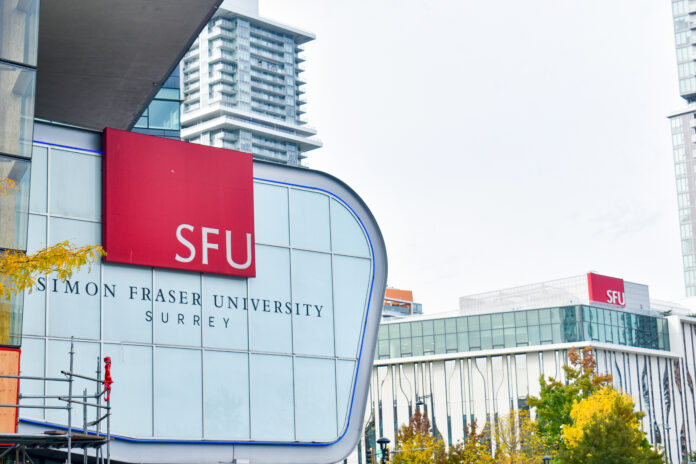
The side of a building holds a red sign reading ‘SFU’. Below it are the words “Simon Fraser University” and Surrey. The tops of tall condominiums are shown in the background.
PHOTO: Amrit Kamaal / The Peak

By: Amrit Kamaal, Peak Associate

Potato Corner
10153 King George Blvd. K101
$520 per serving

Rightfully known as “the world’s best flavoured fries,” this Filipino fry joint is my personal favourite for take-out lunch. What makes Potato Corner special is the amount of detail they put into their wide range of flavours such as sour cream and onion, cheese, and spicier options like BBQ Chili. The fun comes in choosing a shape, with options ranging from loopy, to shoestring, to waffle. It’s the ideal study snack — just select your flavours and shapes and you’ll get your shaken fries in no time. Although they specialize in fries, their menu also includes options like ube (purple yam) desserts, milkshakes, fry-flavoured chicken, and sandwiches. With two more locations in Aberdeen Centre and Burnaby, this chain is becoming a new BC staple. Additionally, they have been featured in many events with their food trucks and beloved mascot Poco the potato. 

Chaiiwala of London
10153 King George Blvd. Unit 452
$1020 per serving 

It’s common to have your mouth watering while watching videos on your feed about street dishes half-way across the world. Although studying abroad is an option, Chaiiwala has you covered with the most delicious, authentic Indian street foods. Chaiiwala is a South Asian café originating in the UK. Over the years, Chaiiwala has made its mark in Surrey especially, with multiple locations opening and expanding across BC. With the days getting shorter and colder, this aesthetic café is the best place to relax and enjoy some chai. The menu offers several meal options such as Indian desserts like gulab jamun (a sweet, spongy milk treat made with dough dipped in rose-scented syrup), street snacks such as pani puri (a deep-fried snack loaded with chickpeas, onions, potatoes, and a liquid made with various chutneys and sauces), and cold treats like falooda

Juice Spot
10115 Whalley Blvd.
$1020 per serving

Reason number 100 why Surrey Campus is the best: we have access to the best hidden gems in all of Metro-Vancouver. Juice Spot is a halal, family-owned business that offers a variety of delicious beverages, baked goods, and wraps. Their menu features cold drinks for study sessions such as their renowned cold-pressed juices, milkshakes, mocktails (if you’re feeling quirky), and more! You can also grab a quick bite along with your drink — grab a quesadilla, samosa, rice bowl, or calzone made with either beef or chicken.

Vancouver events for Latin American Heritage Month

0
A Día de los Muertos calavera (skull)
PHOTO: Brian Wegman / Unsplash

By: Michelle Young, Copy Editor and Hailey Miller, Staff Writer

October is Latin American Heritage Month, with a variety of events happening across Vancouver and throughout the mainland through October 15 to November 3. Latincouver and the Vancouver Latin American Cultural Centre have organized several events that will feature art exhibitions, conversations, and more. Here’s a feature of the many celebrations to engage in throughout Latin American Heritage Month, and immerse yourself in the cultures, creativity, and traditions!

Sing, Don’t Cry Exhibition
When: Oct. 17, 6:00–8:00 p.m.
Where: THIS Gallery, 268 Keefer St., Vancouver

An exhibit by Mexican visual artist Angie Quintanilla Coates and hosted by Miret Rodriguez, “this showcase explores the persistent optimism of Mexican life through bold geometric forms and vivid colours.” The exhibit, held by the Vancouver Latin American Cultural Centre, is inspired by the mantra “canta y no llores” (sing and don’t cry), which “reflects this spirit of persistent joyfulness.”

Across the Americas: Colombia
When: Oct. 21, 5:00 p.m.
Where: University Canada West

Hosted by Latincouver, this event showcases “Colombia’s most beautiful and culturally significant regions.” The journey is an interactive tour that will evoke the senses and engage audience members with the “warmth of Colombian hospitality,” “traditional flavors,” and “the rhythms” of Colombia. 

Traditional Altar Installation — “Día de los Muertos”
When: Oct. 15–Nov. 3, 11:00 a.m.–6:00 p.m.
Where: Ocean Art Works, Granville Island

This exhibition, hosted by Latincouver, “invites the community to honour loved ones with an altar curated by Mexican artist Paloma Morales” to celebrate the Day of the Dead. It will also feature “photos and tributes” as a part of the exhibit, and educational sessions that will explore the “rich heritage” of Día de los Muertos. 

Art Exhibition — “Color Calavera”
When: Oct. 15–Nov. 3, 11:00 a.m.–6:00 p.m.
Where: Latin Hub & Ocean Art Works, Granville Island

Artist Adrián Edgar’s paintings will be featured in this exhibit, which draws on inspiration from the Day of the Dead. Edgar incorporates visuals of skeletons and skulls (in Spanish, calacas and calaveras) in his works. The paintings are enriched with “his vibrant use of colour” as he showcases “the beauty of all aspects of life.”

Self-Portrait of Translation
When: Oct. 24 at 5:30 p.m.
Where: Third floor, The Nest, 1398 Cartwright St., Vancouver

In collaboration with the Vancouver Writers Fest, the Vancouver Latin American Cultural Centre is hosting a conversation between translators George McWhirter and Carmen Rodríguez. They will be discussing McWhirter’s recent translation of Self-Portrait in the Zone of Silence by Mexican author Homero Aridjis. Self-Portrait in the Zone of Silence is a collection of poems that explores “mythical animals, family ghosts, Mexico’s oppressed,” and “naked angels in the metro.”

Live Commemorative Mural — “Harmony” from El Salvador 
When: Nov. 2 and 3, 11:00 a.m.–6:00 p.m.
Where: Day of the Day Market, Granville Island

Engage in harmony alongside this live mural painting curated by graffiti artist Efrain Orellana. With help from the local Latincouver community, this exhibit will be made in harmony with anyone who engages in the mural painting process. The intention is to connect “Indigenous cultures across Latin America and Canada in four creative sessions.”

Eviction to Empowerment discusses lasting impact of student space campaigns at SFU

0
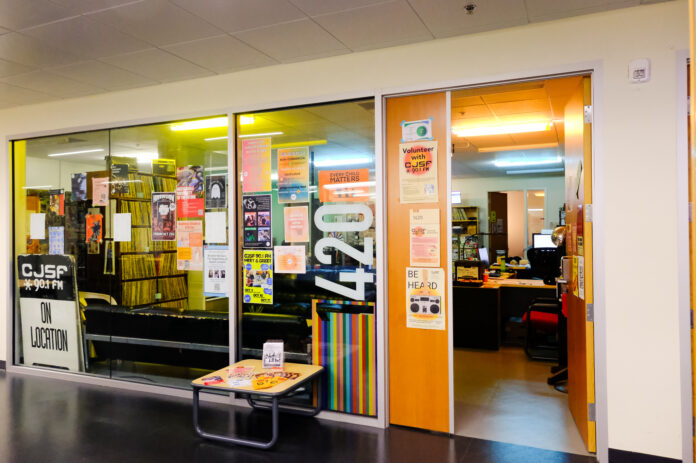
A photo of the CJSF station. Multiple posters and decorations are visible.
PHOTO: Emily Le / The Peak

By: Petra Chase, Editor-in-Chief

On September 18, student-run non-profit Embark Sustainability hosted Eviction to Empowerment, reflecting on a not-to-be-forgotten chapter in recent history at SFU: years of organizing gave independent student societies and equity groups the space they now have in the Student Union Building (SUB). In Embark’s studio at the bottom of the SUB, students packed the room as panelists recalled lessons of collective organizing and steadfast resistance. 

“I probably would’ve dropped out if it wasn’t for SOCA,” said SFU student Balqees Jama, who spoke first on the panel. Students of African and Caribbean Ancestry and its Black Student Centre used to be located at the Rotunda building above the Transportation Centre, when Jama came to SFU. They were housed there along with First Nations, Métis & Inuit Student Association (FNMISA), Out on Campus (OOC), Women’s Centre, SFU Public Interest Research Group (SFPIRG), and campus radio station CJSF. In winter 2018, four of these groups were handed eviction notices by the Simon Fraser Student Society (SFSS), who were their landlords. Jama, exec at-large of SOCA at the time, spearheaded the Black Space Matters campaign to resist eviction alongside then-SOCA president Giovanni HoSang. SOCA was the first group to “publically start resisting.”

FNMISA also put out a statement about the SFSS at the time, saying, “By withholding space in the new SUB, SFSS has denied Indigenous students a consistent, safe space to gather. This denial of space has compromised our ability to succeed academically and maintain our mental, physical, and spiritual health.”

The Save the Rotunda Community coalition kept up the pressure to get leases extended for the time being, and also helped usher six allied representatives onto the SFSS Board at the 2019 election. Hosang, SOCA’s president, became SFSS president. “Considering that [Hosang] wasn’t even one of the ‘insiders,’ the vote is a strong rebuke from the student body against the direction of current and previous several Boards,” the Save the Rotunda Facebook page wrote in response to the results.

But the Board members fighting for equity groups were still in the minority. The following November, with the SUB’s opening underway, the Board rejected a motion from Hosang to allocate space to SOCA, SFPIRG, CJSF, and Embark — four groups that had long-established presences on campus, now with no guaranteed space in the SUB.

The Board members holding the vote attempted compromises, none of which were adequate. They proposed to provide rooms for groups to share and use bookable space in the SUB. As they recalled this, the panelists described the absurdity of one suggestion to divide what’s now Embark’s cozy studio for three different groups to share.

“That Board vote was catastrophic,” explained SFU alum Annie Bhuiyan on the panel. She described SFPIRG as being a safe space for student groups to organize. That’s when some Rotunda groups joined forces to protest. 

The panel also included Magnus Thyvold, who has been station manager at CJSF for over thirteen years. He recalled the SFSS treated the groups like they weren’t valuable enough or had to compete for space in the SUB. 

  “When I met people at SOCA, something clicked. It was very soothing. You didn’t have to be put into a specific box.” — Balqees Jama, SFU student

Groups that operate under the SFSS, which aren’t clubs or student unions, can fit into two categories: constituency groups or societies. Constituency groups, or equity groups, provide support, resources, and community to students who experience systemic discrimination based on their identities. This includes SOCA, FNMISA, Disability and Neurodiversity Alliance (DNA), and OOC. Independent non-profits like Embark and SFPIRG, and media organizations like The Peak and campus radio station CJSF are societies, and provide students with services. For instance, independent media platforms student voices. Embark is a sustainability-driven group that hosts learning events like this one, and helps provide food security to students with programs like their community kitchen, food rescue, and sustainable garden.

These groups all receive funding from the SFSS fee (included in students’ tuition), though they operate independently. While equity groups represent the interests of the student body’s underrepresented groups, they didn’t gain seats on Council until 2020. The campaigns for space would lead to this.

The idea for the Student Union Building is almost as old as the university itself, but it took until the past few years for it to finally come to fruition. In The Peak’s Tartan magazine published in 2015, we reported that the first SUB committee was formed in 1966 to consult students on a space that would “house everything of interest to students.” The building plan was also designed with the intention of having significant space for student organizations, so it came as a shock that vital groups would be left out.

“Doctors and counsellors didn’t have the capacity to understand why this was so distressing for Black students to be kicked out of [their] one safe space in this city,” Jama said. This meant students couldn’t get doctor’s notes for academic concessions, which can be granted when unexpected circumstances bar a student from keeping up with a class. Jama described how SOCA, which has had space on campus since 1997, is vital for connecting Black students to community and resources. “When I met people at SOCA, something clicked. It was very soothing. You didn’t have to be put into a specific box.”

Bhuiyan recalled disrupting a pizza meet-n-greet where SFSS Board members were mingling with club presidents. They silently marched from the Rotunda to the event, displaying the names of the seven Board members who had either voted against or abstained from the motion to allocate sufficient space in the SUB for the Rotunda community. The point of the protest being silent, Bhuiyan explained, was to be non-disruptive, and show students, “These are the people, here are their names, they have evicted students. Make that message very clear that student leaders don’t evict students. 

“You could hear a pin drop,” she said.

Embark’s director of engagement Marie Haddad, who co-hosted the panel, pointed out the lack of transparency at the time. ” Bhuiyan added, consulting and engaging with the Board was like “operating in the shadow.”

With a multi-million dollar budget, denying resources to marginalized groups was “straight up oppression,” Jama said. One of the reasons why SOCA had a silent protest was because they were being called “aggressive,” which is a racist stereotype of Black people, and especially Black men, explained Jama. When HoSang confronted the Board about their “institutional racism,” at the time, a Board member accused him of being “unprofessional.” 

Haddad also spoke on how Jama advocated for Black counsellors on campus. She cited that Jama said, “I didn’t come here to be an organizer, I was just a student fighting for my space.”

What followed the silent protest was a series of public statements from the Board trying to justify their actions, while the coalition worked together to mobilize students and pressure the Board members, from more protests, to posters and flyers, to collecting signatures and talking to press. Four months later, in February 2020, the SFSS Board “begrudgingly” [Bhuiyan] passed a motion to allocate space for the Rotunda groups in the SUB, ahead of its grand opening, which finally happened in September 2021.

The momentum of that organizing didn’t only lead to these groups being neighbours in the bottom floors of the SUB, but major reform on the SFSS. 

The SFSS has progressive roots, but, like most governing bodies, has gone through many political phases. Thyvold explained that there was a rise in right-wing sentiments on campus around 2013 that led to a “centralization of power” on the Board. There was even a time when the President changed the title to CEO.

“They thought they had the vote and that’s that,” he said. Many Board members were interested in these roles to enhance their résumés. “When you get some folks like this involved, all of a sudden, we’re at their mercy, because it becomes more of a business relationship.” 

The campaigns for space coincided with the rise of other progressive movements and campaigns, like Tuition Freeze Now, research assistants unionizing, and the impeachment of a Board member. There was a realization that “we need to do things ourselves if anything is going to get done here,” Jama said. “People were outraged.” 

The SFSS Council, who previously acted only as an advisory group to the Board, were often at odds with the select few on the Board who had the power to make decisions. Council had condemned the Board’s decision not to house Rotunda groups 26–6.

A lot of work went into educating students and electing representatives who cared about equity and listened to the community. The student body voted to restructure the SFSS, so Council members had votes, including equity groups.

Haddad, commended “folks like Balqees” for inspiring her, and helping to make so many changes happen.

 “People don’t know that they have a voice. If there are things they would like to see happening, or shouldn’t be happening, you can speak up about it.” — Magnus Thyvold, CJSF radio station manager

HoSang, who couldn’t attend the panel, sent this reflective statement: “This was a very rough two years,” he said. “A great awakening of our team happened when we realized not everyone will fight for us when we don’t fight for ourselves and build solidarity.”

The panelists also took time to reflect on the connections and memories that were made during those tumultuous years, and how mutual aid helped “lighten the load for each other.”

“Build genuine connections and coalitions. Not in a transactional way,” Jama said. She referenced how the groups would often host casual skill-sharing workshops. She also stressed the importance of acknowledging peoples’ labour, and “allowing people room to grow.

“Call people in instead of calling them out. Especially if you know they’re well-intentioned. Everyone is doing their best.”

It’s been over four years since the spaces campaign, which means that not a lot of newer students know what things were like before. “Archive stuff. Send stuff to The Peak,” Jama said. Eviction to Empowerment is recorded is another example of archiving and reflecting on history.

“It seems to me that things are a lot more quiet on campus,” Thyvold said. “[Students] don’t have high expectations for what the student society, or even our groups, can and should be doing.

“People don’t know that they have a voice. If there are things they would like to see happening, or shouldn’t be happening, you can speak up about it,” he continued.

Two final tips from Jama: “Celebrate your wins” and “try to keep imagining things.”

To find out more about student groups on campus and how to get involved, visit sfss.ca/sub/spaces-and-services/.

Don’t let your climate anxiety breed inaction

0
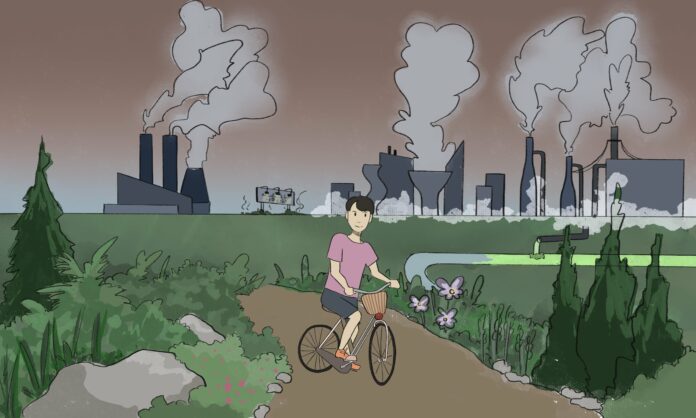
Illustration of a biker on a path. In the background is what appears to be an industrial plant releasing smoke into the skies.
ILLUSTRATION: Victoria Lo / The Peak

By: Emilia Kuznetsova, SFU Student

Climate change is a topic that’s increasingly part of mainstream news and public consciousness. With the effects of climate change being felt all over the world, from wildfires to flooding, there has been a steady rise in climate anxiety. For example, 66% of youth respondents in a Canadian climate survey reported feeling afraid of the future. The reality is that most emissions come from large corporations, with “100 companies responsible for 71% of global emissions.” This is beyond our control as individuals, and can understandably lead to feelings of defeat. But even with something as global and widespread as climate change, our individual choices still matter. 

There is an obvious argument to be made that we as individuals are part of a collective, and that is why our actions matter. As governments continue to develop laws and regulations to reduce greenhouse gases (GHG), individuals are also contributing to significant changes in the status quo. For example, attitudes toward transportation are beginning to shift as more people are adopting sustainable practices like cycling, carpooling, or transiting. According to TransLink, transit users “collectively save 1.3 million kgs of GHGs by choosing transit over driving a gasoline car each day.” It’s clear in this case that our individual choices do indeed add up, even if we don’t see the change in real-time. 

Governments are also significant contributors to climate change, with “China, India, the US and the European Union responsible for 83% of emissions in 2022.” Canada contributes just under 1.5%. However, this doesn’t mean that those living in countries with fewer emissions should sit back and continue with their consumption patterns. The Canadian government’s stated target for 2030 is a reduction of 40% compared to 2005 levels, but this goal is not expected to be met in full due to a lack of strict policies. Global politics and economics certainly complicate collective action, and we often have little say in these decisions. It’s understandable to feel like our choices make no difference — but there are still ways in which individual choices matter.

One of the largest concerns about climate change has been its impact on biodiversity. As species go extinct due to habitat loss or environmental changes, our entire ecosystem faces accelerated challenges. This ultimately impacts humans as well, through things ranging from infectious disease transmission to food scarcity from pollinator extinction. The good news is that even small lifestyle changes can significantly reduce CO2 emissions that amplify these issues. For example, going vegan for just one day a week can save almost 50 kg in CO2 emissions. Reducing our consumption of non-recyclable plastics and electronics can also make a big difference, considering that most yearly phone upgrades are not essential. That’s not to say solving the climate crisis should be solely our responsibility as individuals — but it’s not enough to wait for change when we have the power to make a difference now.

There’s no doubt that each of us is part of something much bigger when it comes to climate change. We make choices every day that positively or negatively impact our carbon footprint. And while climate anxiety is absolutely valid, it isn’t all hopeless — we must recognize that our actions do have an impact on the world around us. The reality is that we face many pressures when it comes to sustainability, and it’s easy to fall into cycles of inaction if we feel like our hard work goes unnoticed. But people need to remember that there are no insignificant actions. Small changes you make do add up and help shift the status quo. We don’t live in a vacuum and everyone has their part to play.

The Bright-er Side: SFU Burnaby in autumn

0
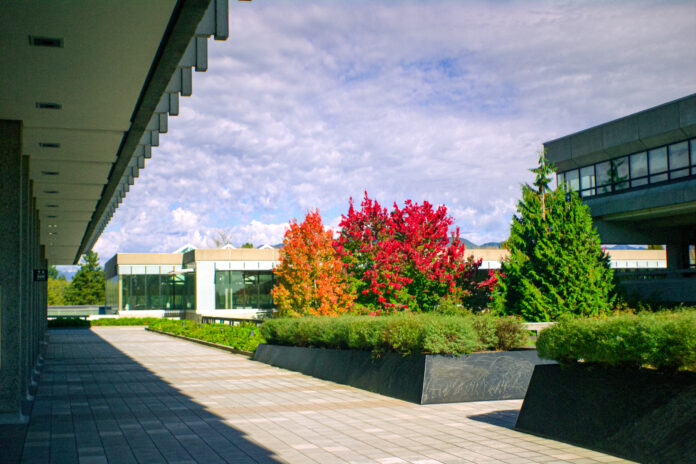
The outside of SFU’s academic quadrangle, with red and orange trees to the right of the walkway
PHOTO: Marshall Henderson / The Peak

By: Yasmin Hassan, Staff Writer

While many associate the colder months with seasonal depression, I couldn’t be happier about the dark and gloomy weather. I relish spending days indoors, in the many nooks and crannies of campus, in a knit sweater and warm boots, or drinking something hot to keep me warm. I even appreciate my commutes to SFU during this season!

I think fall being the harvest season is one of my favourite reasons for enjoying time at school. Having cinnamon and pumpkin flavoured treats and drinks makes studying for the most boring subjects just a little more bearable. My personal favourite would be Renaissance Cafe’s chai latte; it warms every inch of my body. 

Although the weather forces most people indoors, I love seeing the campus covered in fog, with grey misty skies, because it reminds me of a scene from Silent Hill. I think the majority of people enjoy hot sunny weather, but layering in colder weather just makes sense. The age-old proposition: you can’t just rip layers of skin off when you’re melting in 30 degree weather! And it’s true! So, don’t feel too gloomy even though the weather may convince you to. Throw on your favourite sweater, comfy boots, even a scarf, make or buy something hot, get yourself a sweet treat, and enjoy the transitional season in all its glory! 

Council Chats: Numerous by-elections to be held

0
This is an illustration of a graphic that reads “Council Chats.” The image also has two text boxes to symbolise messages being sent.
ILLUSTRATION: Andrea Choi / The Peak

By: Sofia Chassomeris, News Writer

Editor’s note: we recognize that The Peak has an interest in the fee increase discussed at this meeting. The coverage in this article was undertaken by a member of our editorial team who’s not involved or informed by the non-editorial activities of The Peak Publications Society. The Peak is committed to preventing conflict of interest in our ongoing reporting of this issue.

On October 2, The Peak attended the hybrid Simon Fraser Student Society (SFSS) meeting via Zoom. The meeting involved announcing by-elections that would soon be held for seats on several committees, discussion of items outside the agenda, and reports from the executive committee.

By-elections were called for the following committees:

The university and academic affairs (UAA) committee is responsible for communicating with students about university issues and issue-based campaigns while also working with SFU student senators and a Board of Governors Representative. The UAA committee has one vacant seat.

The human resources (HR) and personnel committee guides the president “in their role as the liaison between Council and staff” and ensures that collective agreements are upheld. The HR and personnel committee has one vacant seat.

Member services advisory committee (MSA) advises Council on the “coordination of society member services,” which includes assisting “coordinators on member services, clubs, and Departmental Student Union operations.” The MSA committee has one vacant seat.

The space oversight committee (SPOC) procures and oversees the maintenance of SFSS space, such as maintenance and “future space opportunities.” SFSS includes the Forum Chambers and Student Union Building. The SPOC has one vacant seat. 

The members meetings planning committee (MMPC) is also looking to fill two vacant seats.

Additional motions in the agenda

Following a brief mention that the SFSS and several other affiliate groups are working on fee campaigns, the SFSS passed a motion to form a fee referendum working group. The working group will be made up of “vice-president internal, vice-president equity, vice-president finance, one councillor from the constituency groups, one councillor from a faculty student union, and one additional councillor to be appointed in the motion, as well as representatives from Embark, SFPIRG, and The Peak.”

The SFSS then passed a motion to sign the Graduate Student Society’s joint letter to SFU administration, which calls for the university to “ensure an accessible learning environment for all students, transparency around procedures and policies, and increased student consultation.”

Reports from the executive committee

Chloё Arneson, vice-president equity and sustainability, briefly shared progress on a project involving the koi fish in the AQ pond. She also shared that Council will be finalizing the Steps Forward initiative brought forward by the accessibility committee last year. The accessibility committee is responsible for the society’s accessibility fund. The Steps Forward initiative supports “adults with developmental disabilities to be fully included in all aspects of a post-secondary student experience.” Arneson said further discussion on how the initiative will provide job experience for students with developmental disabilities will take place in the next Council meeting.

Simar Sahota, vice-president finance and services, updated Council on the preparation of the annual finance report for the Annual General Meeting (AGM) on October 30 and documented changes in the budget. The AGM is expected to give SFU students a chance to bring important issues to the SFSS’ attention. 

Sam Killawee, vice-president internal and organizational development, shared that his governance and MMPC committees have been reviewing bylaws, preparing for the AGM, and working on the fee campaigns. Killawee also noted that “between this Council and the last, we had Kickoff, which was really fun!”

Rishu Bagga, vice-president university and academic affairs, updated Council on the start of the SFSS’s food drive, which began on October 1: “It’s been a busy couple of weeks.” The food drive was a joint project with the SFU disability and neurodiversity alliance that collected non-perishable food items until October 11. Bagga said donation boxes were set up in residence and that Council was looking to put them at cornerstone and the Student Union Building as well.