Home Blog Page 994

How to deal with loss

0
Photo Credit: Phoebe Lim

We’ve all lost someone close to us. The reality of loss is that it is an uncontrollable force. Death is a hurricane that tears people and their surroundings apart, disorienting the course of their life. As devastating as it is, though, there is always hope for recovery and positivity.

What I believe to be the most important step in dealing with loss is to simply allow yourself to grieve. Bottling up your distress, pushing your support system away or avoiding the reality of what has happened are all harmful setbacks that could potentially turn a short-term grieving period into a long-term problem, like chronic anxiety or depression.

As a person who deals with mild anxiety, I noticed that it spiked uncontrollably after the recent passing of a dear friend. No one can prepare themselves for this sort of loss and its buckling effects. Even when you think you see it coming, it’s still a heartbreaking shock. That’s why it’s important to let yourself mourn — cry and cry some more, and make sure to watch your favorite Nicholas Sparks movie (A Walk to Remember being mine) in your giraffe onesie with a tub of Ben & Jerry’s.

No one can prepare themselves for significant loss and its buckling effects.

The second piece of advice I offer might make you roll your eyes, but it works: get active. Leave the bed you’ve been overthinking and sobbing in for the past week and a half and get your gym gear on. Depending on your stage of grief you could be in the mood for kickboxing, hot yoga, or a cool morning run.

Whatever the case, exercise is vital in keeping your body and mind producing endorphins, especially during times of loss. It’s important to choose something that you enjoy. Personally, I revel in tennis and morning runs. I find that when I stay active I feel more empowered, alive, and ready to conquer my day. It brings stability and clarity to my life even when it seems impossible.

The truth is that there is no simple solution or anecdote to relieve the pain of losing a loved one. At first, you may just need to take life one hour at a time, thinking of the ones you’ve lost, remembering them often. You’ll hear their voice fangirling over their favorite band on the radio, when you reach for the phone to call them with good news, or when the good memories that they have left behind wash over you.

Eventually, I guarantee that their memory will bring a smile to your face and warmth to your heart because they will always be with you, and will wish for you nothing but a beautiful, loving, and peaceful life.

University Briefs

0
Photo courtesy of The Gateway

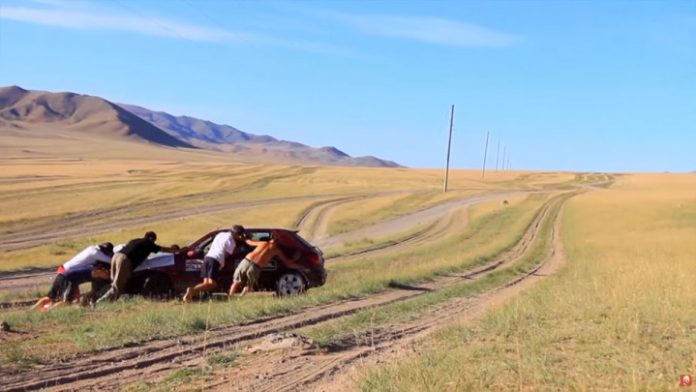
U of A alumni participates in Mongol Rally

A University of Alberta graduate is participating in a 10,000 mile trek through Europe this

summer as part of the Mongol Rally, travelling from England to Mongolia in what he describes as “the shittest rolling turd of a car you can find” while raising money for charity.

The organizers of the rally heavily limit the vehicle used to encourage a true sense of adventure, but have left the rest, including the time span and the route taken, up to the participants.

Michael Gutfreund, a business school graduate and accountant, will be joining five other friends to form a team called the Rocky Mountaineers, and will start the trip this coming July.

With files from The Gateway

Over 50 vehicles vandalized in U of S parking lot break-in

Vandals struck the University of Saskatchewan’s residence parking lot between the night of Friday, May 8 and the following morning, damaging and looting more than 50 vehicles.

The recent attack raised a large voice of concern among students and staff, citing both the frequency of these attacks over the past few years and the lack of action on the university’s part.

Although cameras are being installed and security increased, residents claim that on-campus vandals are one of the many problems that plague those living in residence, including the lack of maintenance and family facilities.

With files from The Sheaf

Cape Breton admin advocate for free tuition

Faculty, students, and administration at Cape Breton University (CBU) have called upon the federal and provincial government to provide free tuition, and have signed a letter asking for dialogue at the federal level.

CBU’s president David Wheeler recommends “the removal of student tuition altogether, funded by a system of progressive taxation at the federal level, and backed by needs-based living expense grants at the provincial level.”

While he does admit that education is a provincial responsibility, the fact that they are “struggling to keep their universities afloat” calls for increased funding from the federal government.

With files from The Chronicle Herald

BoG-gled

0
Photo courtesy of SFU News

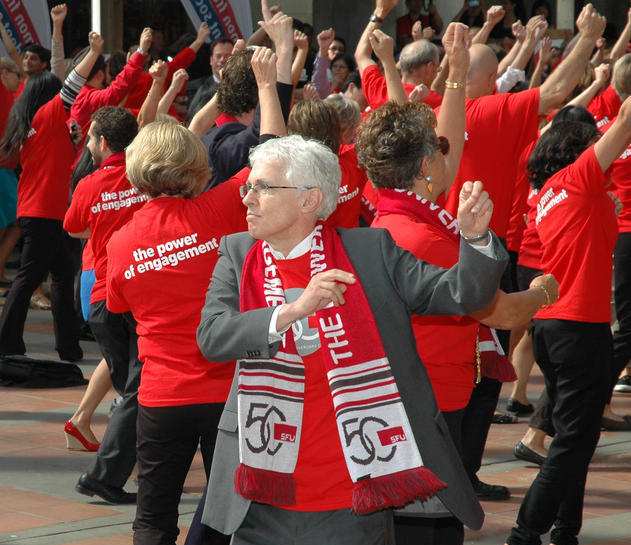
VP Academic and provost John Driver made a report to the SFU board of governors at their May 28 meeting on the current status of the closure of the Louis Riel House (LRH) residence.

Of the 211 units, only 120 remain occupied to date, with the remainder to be moved out by the end of the summer. All residents will be compensated the amount of one month’s rent to aid in the transition.

The university has promised to provide assistance to students who request it based on need. Those who remain eligible for LRH residency will be assisted until the time that their original lease would have expired.

For those that cannot or are not eligible to be placed in other accommodations on residence, for the remainder of their lease (which is valid up to four years maximum), the university will provide financial aid with consideration of the difference between LRH rent and average rental rates in off-campus areas. Students with families will be given priority to be placed in housing in UniverCity.

In response to concerns as to how to prevent a similar situation from occurring, Driver assured the board that nothing like this would happen again in the near future.

“We have a much better process in place now with the board of governors to actually set accommodation rates or rents that are appropriate to the kind of accommodation, that provide significant investment in the building, so that we don’t get into this situation we got into with Louis Riel House, where the revenues that we generate aren’t sufficient to maintain the building.”

Woohoo, Boohoo

0

Woohoo: The perfect pitch

Their eyes are bright and attentive like sugar-obsessed tots in a candy store. A choir of buzzing cell phones scream for attention but go unanswered in the dark void of lint-filled pockets. The crowd hangs on to every word you say enthralled like never before.

To say that this meeting for your pitch is going well would be an understatement; you, my friend, are killing it. Your pitch for the company is more addictive than Smurf-blue Heisenberg Meth. These people want a hit of it harder than a right-cross from Mike Tyson.

You’ve crafted a speech so ice cold, dry ice can’t touch it. If they nodded their heads any more than they already had, you’d swear they were listening to the guitar solo from “Bohemian Rhapsody” right behind your back. Dedication and hard work has led you to this beautiful culminating incident. You eat steak tonight, baby!

Boohoo: Pitch Perfect

Oh, for Pete’s sake, people. We just got rid of Glee. Three whole months have yet to go by. We haven’t had nearly enough time to celebrate that abomination’s cancellation. And now we have to be forcibly graced with another painstaking Pitch Perfect film.

This is why we can’t have nice things. Musicals were always terrible enough to experience (with the exception of Muppet Treasure Island; that shit ruled) but now a second shoe has dropped: a capella.

It’s like beatboxing’s crazy aunt who used to gargle with mercury. It’s the only type of singing that makes yodelling actually appealing to listen to. If I wanted to listen to a good cover of today’s Top 40 — I can’t believe I’m about to say this — I’d rather listen to Kidz Bop. Yes, Anna Kendrick is in the movie, but frankly that is just not enough to sway me. So count me out, pitches.

Sansa Stark is a knight in silent armour

0
Photo Credit: Janis McMath

[SPOILER ALERT: The following article discusses the events of Game of Thrones Season 5, Episode 6: “Unbowed, Unbent, Unbroken,” and includes spoilers for the rest of the series.]

The television show Game of Thrones brings about images of violence, gore, and abuse. The show is explicit and ruthless in depicting a power struggle for the iron throne of the seven kingdoms.

“Unbowed, Unbent, Unbroken,” a recent episode which aired May 17, details a tragic turn of events for Sansa Stark, who, after being married to the cruel and torturous Ramsay Bolton, is brutally raped by him on their wedding night, while her father’s former ward Theon Greyjoy is forced to watch.

The scene sparked an outcry among fans who claimed that the scene deviated from the book’s plotline; it was deemed by many as gratuitous and unnecessary. Many argued that Sansa, after having suffered so much in the series, was being set up for redemption and strength this season only to have that character development torn down.

However, while that scene may have been gratuitous, it definitely resonated with audiences. While it didn’t advance the narrative that had been built up for Sansa’s character, the scene was representative of the quiet endurance of women who are sexually assaulted all over the world.

Sansa’s strength lies in her ability to persevere and endure her misfortunes.

Sansa embodies the ideals of femininity — she is courteous, beautiful, well-mannered. She therefore seems somewhat out of place amongst the rest of the Game of Thrones characters — many of whom are skilled fighters or leaders who know how to defend themselves and stand up for what they believe in. Some viewers have even argued Sansa is a useless character because she doesn’t actually do anything to advance the series’ premise.

But Sansa is just as strong as the masculine fighters in the series; her strength lies in her ability to persevere and endure through her misfortunes. She is put into hopeless circumstances time and again, being continuously manipulated by others around her. She watched her father be beheaded, was betrothed to the ruthless King Joffrey, and is now in an equally dangerous marriage with Ramsay Bolton.

But each time she has suffered, she has silently processed her abuse and moved on. This is what so many women who suffer do, and it is a form of strength all on its own. Many victims of of sexual assault keep silent not only out of fear, but so they can survive.

So while Sansa does not brandish a shining sword to slay her enemies, her resolve and perseverance is ultimately what characterizes her. Her rape may have been tough to watch, as she has already gone through so much, but she is still a survivor.

The show’s depiction of sexual violence, while created for shock value, also serves as a sobering reminder of those who constantly endure abuse on a daily basis, and how their resolve may make them the strongest people of all.

Why can’t we eat like Europeans?

1
Photo Credit: Gabriel Yeung

This past May 23 marked the 3rd annual international march against the American biotech giant Monsanto. It was reported that over 400 cities around the world had supporters flood the streets to raise awareness for the ever increasing amount of GMOs and chemically enhanced products being introduced into our grocery stores, and consequently, our diets.

If you asked me a year ago how I felt about genetically modified foods, artificial colorings and flavors, artificial sweeteners or pesticides, I would have given you a mediocre response consisting of an abundance of ‘hems’ and ‘haws’ that would not have accumulated into a well-developed opinion.

However, the past year has opened my eyes to the health threats associated with these new age agricultural practices.

My crash course in GM food and artificial additives began last summer when I packed my bags and moved across the pond for what was going to be one of the most memorable experiences of my university life. I spent nine months living in a small community in the south of France, right on the Mediterranean Sea. Within my first few months of arrival, I lost 10 pounds.

At first I was quite baffled — what was behind this sudden weight loss?

None of my habits had changed. I was eating the same foods in the same quantity, and having never been too keen on exercise, that certainly didn’t change in France either. So why were all my pants so loose? What one of my European friends suggested absolutely shocked me.

They were all convinced it was because North America has forsaken fresh, quality produce. Europe has much stricter policy surrounding added dyes, flavours, and of course, genetically modified products. In fact, a lot of European Union states have even begun to outlaw Monsanto foods, one of the most recent being France’s ban on genetically modified corn.

Within my first few months of arrival to France, I’d lost 10 pounds.

And that’s when I started to notice something incredible about European societies — the percentage of obese and heavy individuals was astronomically low compared to Canada. After doing some research, I found that last year the Organization for Economic Co-operation and Development (OECD) reported that approximately 25.4 per cent of Canada’s adult population can be described as obese, but many European countries fall within the 10–15 per cent range.

If this doesn’t come as a wake-up call to Canadians about our health and habits, then we will certainly see the percentage continue to rise. And if we don’t address this we will end up in the same percentile as the USA, who according the OECD weighs in with a whopping 35.3 per cent of their adult population suffering from obesity.

I don’t know the exact details behind how I lost so much weight so fast, but I am not willing to discredit the idea that it was brought on by the removal of added dyes, artificial flavorings and sweeteners, pesticides, and GM food from my diet.

It’s the same uncertainty I feel that has led to demonstrations across the globe. Put simply, the average consumer no longer knows exactly what they are eating, and many of these consumers will not stand for it. Protesters rightfully took to the streets this May to demand that any GM food be labeled because to date, Health Canada does not require companies to properly inform the consumer about GMOs in their product.

When polled, over 80 per cent of Canadians were in favor of such labels, yet Health Canada has been reluctant to answer the call of the people it was asked to protect. I support these protestors in their call for fair labeling. After all, due to the fact that GMOs are so modern, the long-term health consequences are inconclusive.

Canada needs to embrace the European approach to agriculture — this means natural and organic first.

Canada needs to embrace the European approach to agriculture — this means natural and organic foods first. Supporters of GMOs, pesticides and additives often cite the growing population and the need for cheaper alternatives as a reason to support these modern agricultural practices.

But the argument for GM foods and artificial enhancers just don’t outweigh the need for fresh, safe produce. We consumers should explore alternatives before jumping on the bandwagon of chemically and genetically enhanced products.

Canada has prided itself on being a global ‘leader.’ This begs the question: why don’t we lead in the development of sustainable, organic agriculture? If Europe finds a way to avoid everything that’s wrong with our food, why can’t we?

Evidence suggests the multitude of potential risks associated with food dyes, including allergies, hyperactivity, learning impairment, irritability, and aggressiveness in children. If that wasn’t startling enough then there is also science to suggest that GM food can be linked to the development of non-GM food and soy allergies, liver disease, fertility and reproductive problems, and unpredictable cell mutation.

And that’s only the tip of the iceberg when it comes to additives in our foods. When considering all of these potential health risks, it is no stretch of the imagination to think that these new practices could also be linked to the obesity epidemic in North America.

Now that I’ve returned to Vancouver, I plan to try to avoid food dyes, added flavors and sugars, and certainly GM products, in an effort not to regain any of the weight I lost overseas; but considering how widespread these additives are, it may be more difficult than it sounds.

I understand that schedules can be busy, and that we may not all have time to consider what the story behind our favorite snack-time food is, but I implore you to educate yourselves on what is happening to our food and to our bodies. Spend some time researching the health implications associated with letting these foods occupy our shelves and our fridges.

After all, you are what you eat.

Men’s golf team wins first GNAC title

0
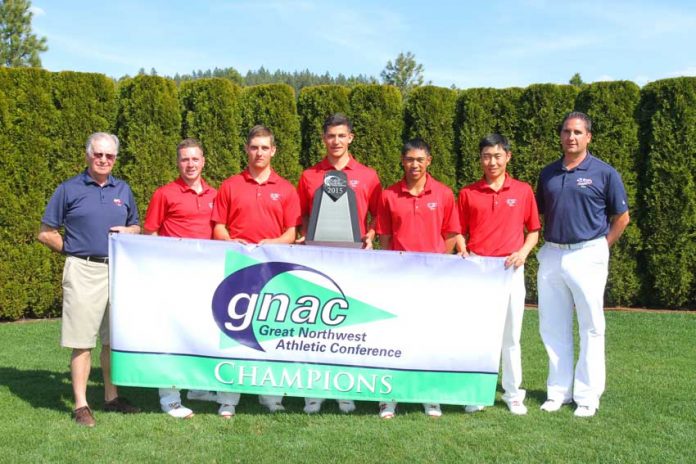
Left to right: Coach John Buchanan, Kevin Vigna, Bret Thompson, John Mlikotic, Chris Crisologo, Tony Ko, and associate coach Jared Boddy - GNAC Sports

The men’s golf team wrapped a historic season where they notched their first Great Northwest Athletic Conference (GNAC) title with a playoff loss at the NCAA Division National Championship in Conover, North Carolina.

Entering the tournament ranked sixth nationally, SFU placed fifth in the opening three days of stroke play, moving on to the match play round, which featured the top eight teams and ultimately decided the national champion.

The Clan opened the stroke play competition on Monday, May 18, shooting their worst round of the tournament with a combined score of 289 (+5). Sophomore Kevin Vigna and freshman Chris Crisologo led the team with an even par performance.

On both days two and three, the team shot shot 285 (+1), moving to fifth place, and thus securing a playoff spot. Crisologo led the team putting up a -2 over the three days, being tied for eighth individually and shooting the best round of any Clan golfer during the stroke play competition with a 69 (-2) on the second day.

Sophomore Alan Tolusso was one of the pleasant surprises of the stroke play round. The only member of the five who wasn’t part of the conference title-winning team, and having missed much of the regional championship due to illness, Tolusso was the second-best Clan golfer with +1, shooting even in the final two rounds.

SFU, the second GNAC team to ever make it to the top-eight playoff round, was paired up against Saint Leo University, who were ranked seventh going into the tournament, in the quarterfinal. Though St. Leo shot 290 (+6) on days one and three, a tournament best 278 (-6), put them a spot ahead of the Clan.

For the match play round, each of the five players were paired up against a player from St. Leo. In match play, a win nets the team a point, while a tie nets both teams half a point.

Though much of the rounds were close, Crisologo earned the Clan their only win, with the team finishing with one and a half points to St. Leo’s three and a half.

Senior John Mlikotic and Tolusso both lost their match by one stroke, while junior Bret Thompson lost by two strokes despite putting up the second best score for the Clan. Vigna earned the only tie of the round. Crisologo, the SFU victor of the round, won by a 13 stroke margin, putting up his best round with a 68 (-3).

“As a team we did solid. A couple of guys kind of held us in,” said Mlikotic. “I know there were some guys, myself included, that didn’t have our best stuff that week, but all said and done [. . .] we did well and can’t really complain about the performance there.”

Mlikotic struggled through the first day of stroke play, putting up a 78 (+7). However, he improved each day, scoring a 73 (-2) on Tuesday, and a 70 (-1) on day three, which moved him up 24 spots on the leaderboard.

For Mlikotic, the tournament marked his final round with SFU, having wrapped up his last year of NCAA eligibility.

“It was a little bittersweet. I would have liked to have keep moving on in the match play tournament but that being said, [. . .] I look back at it, it’s memories I will have for a lifetime.

Young, wild, and married

0
Photo Credit: Phoebe Lim

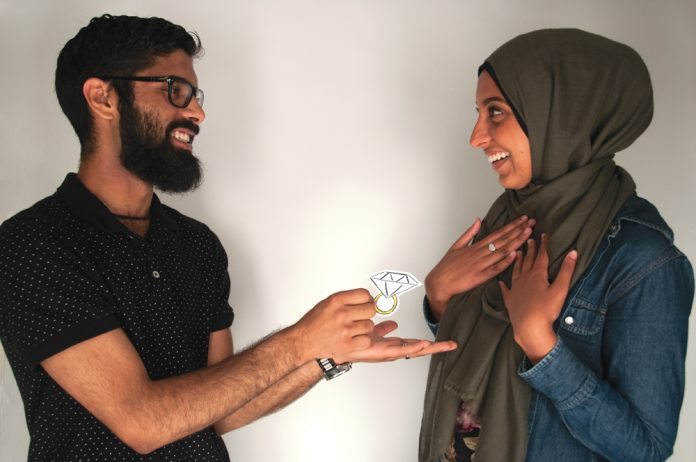
I started the first year of my undergraduate career in 2012, spreading my wings at this great university, and by Summer 2013, I was engaged — not just by SFU, but to an actual person.

While still undecided on whether I should add a minor to my joint-major, I had somehow figured out who I wanted to spend the rest of my life with. Nearly 10 months have flown by since our wedding, and I would be lying if I said it’s been all sunshine and roses. Getting married young has been far from easy.

The first challenge hit me months before the wedding. While most of our friends, family, and acquaintances seemed to be happy for us, there were lots of comments like, “I remember when you were just a baby!” and “Wait, you’re how old?” and straight up, “Wow, you’re so young!”

Their comments were justifiable, considering we were tying the knot 10 years earlier than the average Canadian, but it was difficult to hear such shock and doubt regarding arguably the most important decision I will have ever made.

I still remember having to send a few massive explanatory text messages, something along the lines of, “No, it’s not arranged. Yes, I know and actually love him. No, my parents are not forcing me into this!” Having to prove and explain that I was choosing to marry someone I loved seemed redundant, unsettling, and absolutely necessary all at once.

Post-wedding involved a major transition from living with two parents, three rambunctious younger siblings, and an ever-present extended family, to life in a cozy little suite for two. The peace and quiet has been wonderful for the most part, but dealing with all the new responsibilities of having my own home, a new family — while still making time for my own family — all on top of school and work, has certainly been a struggle.

Marriage continues to teach me incredible lessons about patience, forgiveness, and selflessness.

Yet all the anxiety, the tears, and the (very slightly) dropped GPA have been worth it. Becoming an adult is difficult, and though it doesn’t become easier when two people are growing up together, it’s an incredible feeling to know you don’t have to face life’s hardships on your own.

In a world where ‘living in the moment’ is a common mantra, marriage has allowed me to live in the future. Being able to dream about careers, life goals, travelling the world, and growing old, knowing that I have someone who has committed to hold my hand in hard times and laugh with me in good times, is incredible.

Marriage has and continues to teach me incredible lessons about patience, forgiveness, and selflessness. It has allowed me to face my greatest vices in a safe space where I can share my struggles and receive constructive criticism from someone who is invested in making me a better person.

Living with my best friend has been a gift in itself. I love having a midnight pizza buddy, an on-call paper editor, a human pillow, and a permanent opponent for debates on issues ranging from ethics and morality to how I should fold my clothes.

Getting married young is not for everyone, and although my choice can be perceived as a rash teenaged decision, I know it’s one I will not regret.

It’s also been really nice to have someone do my laundry (sometimes) and clean my bathroom (always), because even my mom stopped doing that a few years ago.

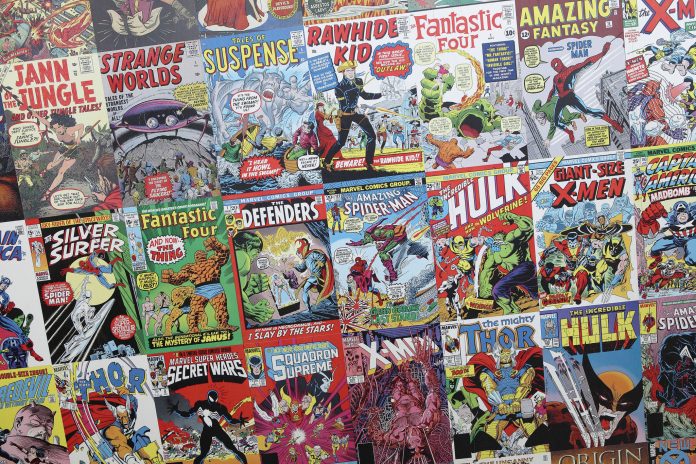
Geek culture has never been stronger

1
Photo Credit: Sam Howzit (Flickr)

In a recent interview, Simon Pegg — star of Spaced and Shaun of the Dead, and honourary patron saint of nerds everywhere — became yet another voice in a chorus of those lamenting the supposed decline of our society.

“Part of me looks at society as it is now and just thinks we’ve been infantilised [sic] by our own taste,” he told Radio Times in an interview last week. “Films used to be about challenging, emotional journeys [. . .] Now we’re walking out of the cinema really not thinking about anything, other than the fact that the Hulk just had a fight with a robot.”

It’s surprising that Pegg, someone who has sunk decades of his life into science fiction and general geekdom, has managed to miss the point of science fiction so entirely. His comments aren’t unprecedented — in fact, the complaint that science fiction and fantasy are somehow “childish” or regressive has about as long a history as the genres themselves.

It just hurts to hear it from someone I thought was on our side.

Admittedly, there’s a kernel of truth to Pegg’s complaints, which he further explained in a knee-jerk reactionary blog post on his unfortunately named website, Peggster. “The more spectacle becomes the driving creative priority, the less thoughtful or challenging the films can become,” he clarified, citing theory by the philosopher Jean Baudrillard which argues that we are compelled to retreat to the escapism of youthful passions to avoid the harsh realities of the world.

I get this. As a journalist, I spend a sizeable chunk of my time desperately trying to get people to care about complicated, sometimes depressing stuff, when I’d likely have an easier time writing listicles about what your favourite Avenger tells you about your love life. Most science fiction and fantasy is meant to make money, and it’s usually easier to get people to see your movie when it doesn’t remind you of ISIS, ebola, police brutality, or One Direction’s inevitable breakup.

These genres aren’t inherently limited in their capacity to tell stories that are morally, structurally, and ideologically complex.

But there’s a big difference between criticizing the shallowness of big-budget vehicles like Transformers, and criticizing entire genres. Though bad sci-fi and fantasy are certainly not unheard of, I’d argue that our growing fascination with stories about dungeons, dragons, space explorers, and time travel doesn’t signify any significant shift in our tastes. After all, we still pay to hear stories about people.

As the adage goes, great science fiction tells us more about our present than its future — look no further than films like Her or Eternal Sunshine of the Spotless Mind or Children of Men for examples of films that use fantastical premises to reflect our actual world, and to tell us more about it.

Even the film Avengers: Age of Ultron, which Pegg slyly references in his original interview as an example of Hollywood sci-fi excess, is deeper than it might seem. The film’s villain, a superintelligent cyborg, rises to power via the Internet and the surveillance it affords him, a commentary on our information-driven, NSA-dominated era. Its characters also boast arcs more complex than those of your average romantic comedy or thriller.

These genres aren’t inherently limited in their capacity to tell stories that are morally, structurally, and ideologically complex. Strip away the orcs and the supercomputers, and you’ll find that most sci-fi and fantasy are about what most fiction is generally about — namely, what it’s like to be alive, be it on Earth or in Middle-earth.

I don’t buy that the geekification of the Western world has somehow infantilized us or led us to avoid what’s really important. If anything, it’s a sign that we’ve become more willing to hear stories about the same key issues and ideas, but told in a new and unique way.

EMBA program engages Northwestern BC

0
The program will be based out of Prince Rupert, BC. - Bruce Schwierske

Right in line with SFU’s mandate to engage the world, the Beedie School of Business is extending its reach by introducing a new program: the Executive MBA Northwestern BC.

The new program, which will commence this fall and take place in Prince Rupert, is specifically tailored to providing the business and management skills needed for industries such as extractive resources, engineering, liquefied natural gas, and other related industries.

Mark Selman, the program director, stated that there is a high demand for business and management skills in Northwestern BC.

“The Executive MBA Northwestern BC program will focus on giving students extraordinary skills in business, logistics, and management — skills that are required for today’s competitive market. We also want our students to gain the entrepreneurial skills required for expanding BC’s industries and to provide economic development for First Nations,” said Selman.

The three-year program will take place at specific training institutions, colleges, and other various locations in Prince Rupert, Terrace, and Kitimat. However, students will also be able to attend lectures through virtual classrooms.

Selman explained, “Prince Rupert is the ideal location because its economy is one of the central points in global trade networks. It is a fast growing economy, and this is due to Prince Rupert’s port and how low its shipping costs are.

“There are also a lot of communities in Northwestern BC that need training in business and management,” he continued. “Workers and management often have experience in different areas such as mining, forestry, or hydroelectric power, but they’re lacking graduate-level business knowledge. We want to be able to provide this knowledge to people working so that we can see these emerging economies succeed in competitive markets.”

“We also want our students to gain the entrepreneurial skills required for expanding BC’s industries.”

Mark Selman,

program director

SFU’s Beedie School of Business has offered an MBA similar to this one in the Northern BC in previous years. “In the past, we have offered programs in Terrace and Kitimat. We want individuals to not only have experience in these industries, but to have proper training in business and management so they can meet the demands of new projects,” said Selman.

The courses included in this program are similar to other MBA programs, involving topics on accounting, marketing, economics, leadership, finance, policy, and governance. However, this program is primarily focused on applying these topics to BC’s northwestern industries and course work will include traditional learning, case studies, and simulations.

Courses will be taught by a team of SFU’s distinguished professors who specialize in business, marketing, finance, resource management, organization, and strategy.

While the program has had many applicants with backgrounds in science and engineering, the entry qualifications are not restricted to people who have studied those disciplines.

“There are a number of students with science and engineering backgrounds who’ve applied, but this doesn’t mean that prospective applicants require a degree in science or engineering,” emphasized Selman.

“Ideally, students will have an undergraduate degree, some professional experience, and a desire to further their skills.”