Home Blog Page 993

Board Shorts

0

50th anniversary engagement team

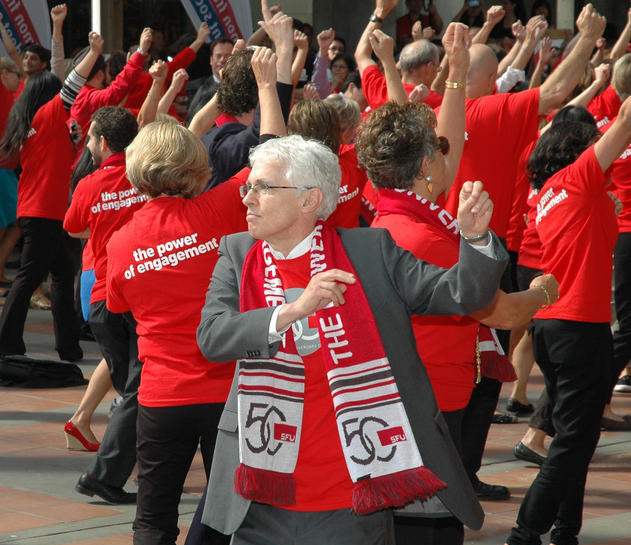
Associate project director of SFU’s 50th anniversary project, Adam Brayford, approached the board to discuss collaborating to increase student involvement in the university’s celebrations.

SFU is looking to form a group of 15 students to assist in engaging the student body in 50th anniversary activities.

The team of 10 undergraduate and five graduate students will work to promote celebratory events and will have the opportunity to bring their own ideas to the table for encouraging student involvement across multiple disciplines and all of SFU’s campuses.

Each of these students will be awarded a $750 honorarium for their participation. Brayford encouraged people looking to get involved to find more details on SFU’s “My Involvement” page.

Meet and greets are sweet

The board approved the concept of an “SFSS Meet and Greet” event to bring together SFU clubs.

The social event would be an opportunity for members of SFU’s myriad of student clubs to share ideas and get to know each other and the society. SFSS president Enoch Weng emphasized the importance of connecting with these groups and making the society more accessible to them.

Directors will now begin the planning process and start reaching out to different groups. Specific details for the event are to be announced.

SFU students tour BC to promote recycling

0
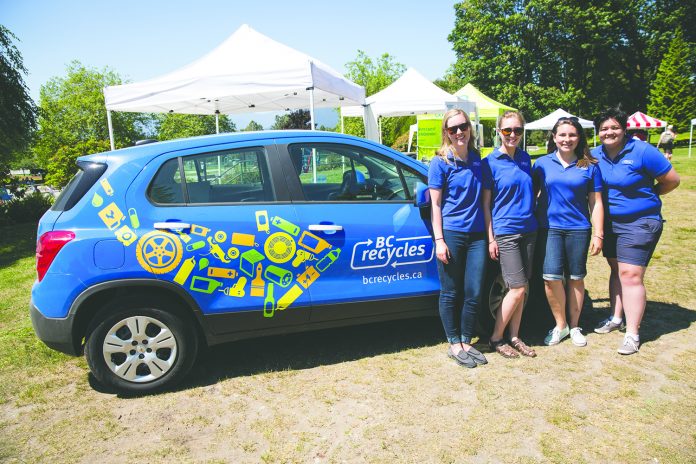
The SFU student ambassadors from left to right: Sarah Pratt, Kathleen Belton, Ali Russell, Courtenay Miller - Burnaby NewsLeader

Last weekend, Confederation Park in North Burnaby saw the kickoff celebration for the BC Recycles Summer Ambassador Program.

This year, the program will send four SFU co-op students on a whirlwind tour of British Columbia to promote recycling.

The program has been in existence for nine years prior under the banner of the BC Used Oil Management Association, but this year it has been rebranded as “BC Recycles” to represent the new union of product stewardships it represents.

The students, Courtenay Miller, Ali Russell, Sarah Pratt, and Kathleen Belton will be visiting various communities, including  Kamloops, Prince George, and Prince Rupert. They hail from a range of faculties and academic backgrounds, but came together through the co-op program.

Russell, a fourth year communications student, explained her motivation behind applying for the position: “The one thing that sparked my interest is that my family has always been very eco-friendly. [. . .] So when I heard about BC recycles, I thought, ‘Oh that’s awesome!’ I’m actually really curious about how BC does it.”

Belton, a student in the faculty of environment, said, “I really want to work in public education and awareness with the environment, so I found that it was a really good opportunity to get out there and get some practice.”

“One big problem is that people drop off oil outside of business hours. [. . .] That can spill and create a mess.”

Sarah Pratt,

SFU student

Miller, an English major, explained that the ambassadors intend to engage with local communities and ask them questions about their experience with recycling. She said, “It becomes a conversation, as opposed to me just saying ‘Hi. Here’s a website. Please use it.’”

The BC Recycles program represents 15 product stewardships, including Tire Stewardship BC, Electro Recycle, Canadian Battery Association, and the Health Products Stewardship Association.

These stewardships facilitate diverting used products away from landfills and towards being recycled responsibly. They are supported by the provincial government and each focuses on a unique set of products, such as tires, small electronics, medicine, batteries, and antifreeze.

The ambassadors also liaise with businesses under these stewardships to compile feedback about how the recycling program is working for them. Pratt gave an example:  “One big problem is that people drop off oil outside of business hours, and that can spill and create a mess [. . .] we’re trying to help business out with that.”

She continued, “[We’re] flagging which stores are having the biggest issue with that and seeing what we can do to address their concerns.”

This summer, the Ambassadors will be promoting the BC Recycles app, which uses GPS to find the location of the user’s nearest recycling centre for whichever recyclables they have.

Miller elaborated, “It’s so much more than just bottles and plastics now. Everything that’s outside of that blue bin that you feel guilty throwing away, almost, there is [a] place for it to have another life, and that’s what were really trying to promote.”

“All the stewardships are making sure that they’re expanding the locations that will actually accept these products. So I think that that is actually really key,” said Belton.

“The more places that can accept the products, the easier it is for people, and the more people are going to do it.”

Vancouver isn’t boring

2
Photo Credit: Phoebe Lim

A recent article published in The Economist describes Vancouver as “mind-numbingly boring.” The author, under the alias “Gulliver,” later states that the more “cities strive to become nicer places in which to live [. . . the] less interesting they become.”

Vancouver continues to score high on the Livability Index, creating a global image of Vancouver as a fantastic place to live. But has this livability come at the price of fun? The answer is that it depends on where in the city you travel — it could be argued that East Vancouver is a much more interesting area due to its economic and cultural diversity.

Firstly, Gulliver attempts to relate the diversity of individuals with an excitable urban environment. Though debatable, the connection is not to be ignored.

It is true that in the Vancouver’s downtown core, the residents of the area are among some of the wealthiest in the city, a homogenized class of business professionals making on average $10,000 more per household than the average Canadian one. This fact results from a highly controversial process: gentrification. As the rich move in to Vancouver, the less wealthy are forced to look elsewhere.

Downtown, one is bombarded with the same professional individual on their way to or from the office.

Gentrification is a global phenomenon. Those who can afford it — many of whom live a wealthy business culture frequently associated with a Western caucasian lifestyle — move into highly livable locations, and in the process create a living space where economic and cultural diversity wanes.

Due to this homogenization, these areas suffer from a lack of diversity and can be viewed as somewhat monotonous or boring. Look downtown on a Tuesday, for instance: one is bombarded with the same professional individuals on their way to or from the office, or on their way to one of the region’s high-end restaurants.

This pattern is true of many areas in Vancouver’s downtown core, and several other neighbourhoods throughout the West Side. However, as one travels elsewhere in Metro Vancouver, the vibrancy of the city’s diversity shows.

In East Vancouver, the range of cultures is astounding, and allows for many opportunities for residents. From enjoying a meal at a Jamaican restaurant, to celebrating an event at the Italian Cultural Centre, to enjoying a show at the Rickshaw Theatre, the experience created by the area’s diversity has resulted in a unique and entertaining area of the city.

Fortunately, Vancouver is touted as one of the most multicultural regions in Canada. Though due to increased gentrification, this diversity has been somewhat subdued in certain regions and exaggerated in others.

Vancouver is not “mind-numbingly boring.” The regional distinctiveness of its inhabitants makes it vibrant.

Think twice about posting your provocative Instagram photos

1
Photo Credit: Momo Lin

When you post a picture on Instagram, your main concerns are most likely how sweet it looks with the brand new filters, and whether or not it’ll be ‘liked’ a coveted 11 times or more. You aren’t typically concerned with the fact that people could take these Instagram photos — which don’t actually belong to you — and do whatever they’d like with them.

Most people do not recognize Instagram as an extension of the public sphere; it is, and it needs to be treated as such. Is an artist who takes a photo of you from Instagram really that different from a candid photo taken on the train? I would argue no. The image cultivated by a person on social media should not be any different than the image you create through one’s daily life.

If you wouldn’t be willing to walk down a street during rush hour in the same provocative position, maybe you shouldn’t be posting an image of it on Instagram.

Recently, artist Richard Prince caused a stir when he took Instagram screenshots, many of them sexually charged, and made slight changes to them, and sold them in a public gallery for around $90,000 each, all unbeknownst to the original owners of the images. Instagram’s Terms of Use states that “once you have shared user content or made it public, [it] may be re-shared by others” — a line that permits anyone to do things like this with your photos, no matter if you like or benefit from them.

I find the idea of artists appropriating our Instagram images to be less concerning than the lack of awareness on part of the people who originally posted the photos. The number of listicles that sites like BuzzFeed post containing public Instagram photos should be a dead giveaway that what goes on the Internet can be easily found, classified, and appropriated for a purpose other than what the original poster may have intended.

Hence, it may be best to keep well-mannered photos of yourself online, and ditch those that make it look like you’re about to ‘fool around.’ The adage that you shouldn’t post something you wouldn’t want your current or future employer to see doesn’t seem to resonate with people enough to deter them from posting these images.

I suggest a new adage: don’t post something that you wouldn’t be willing to send in the Christmas card to grandma. Having met numerous grandmothers in my life, I can attest to the fact that they are much more intimidating and capable of instilling guilt than any employer.

So when posting images to social media, remember two key points. First, if grandma saw this, would she write me out of her will,  or lecture me for hours on how I am a better person than this image would suggest? Second, would I get arrested for a criminal offence if I did this while walking down the street? If you answer ‘yes’ to either of these questions, turn off your phone, and don’t post.

Woohoo, Boohoo

1
Photo courtesy of Flickr

Woohoo: Public transportation

Buses are awesome! They take you everywhere you need to go. They could give you the chance to reconnect with a long lost friend, or your closest pals. The shared purpose to reach one’s destination is so infectious that bus riding builds a community out of total strangers. Conversations become connections; strangers turn into future house party buddies. There is a certain untraceable love for public transportation that transcends all its commuters.

And take the fabulous drivers! They love their jobs. Some are even  keen on making the bus ride a great experience for everyone. They might make goofy gimmicks like belting out a Gloria Gaynor hit on the PA system, or take pleasure in being a pilot by announcing road updates, making the passengers feel like they’re on a WestJet flight to Production Station.

I say buses are the greatest social-glue invention since shared sliced bread.

Boohoo: Late public transportation

Nothing gives you a slower emotional death than knowing that you did your best to arrive on schedule for the bus only to see seconds turn into minutes, and minutes into an eternity as you wait for the stupid bus to show up. You have exhausted all your patience and still can’t see any sign of those yellow neon lights.

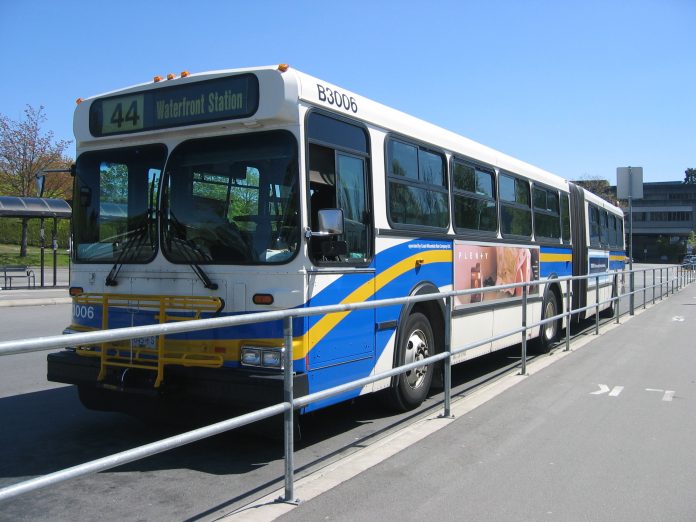
You show up seven minutes before the bus’ scheduled time on your TransLink app. Unfortunately, it takes an extra five minutes to roll up to the bus stop and when it does, it causes a further three-minute delay: some thick-skulled duck doesn’t have his UPass for the new month, but insists on riding. While the unforgiving bus driver angrily tells the student to walk, you scream in your head, calculating the prolonged commute that lays ahead of you.

Imagine the impatient person who’s been waiting an extra 10 minutes at the bus stop ahead. Keep waiting, loser!

The Bachelorette needs to stop slut-shaming women for no reason

0
Photo Credit: Saida Saetgareeva

This season’s Bachelorette is Vancouver-girl Kaitlyn Bristowe. She charmed viewers with her quick comebacks and laid-back West Coast style on last season’s The Bachelor, and now she’s vying for the attention of 25 men in the California mansion.    

The only problem is, unlike all the past singles looking for love, her promo video for the season doesn’t focus on the drama between the contestants, or the beautiful sights on their travel across the globe on extravagantly unrealistic dates.

Instead, it focuses on the fact that she chose to sleep with one of the men she was dating, before the allotted ‘time’ she is allowed to do so. On the popular reality show, contestants are ‘allowed’ to sleep with the Bachelorette in the fantasy suite, no cameras allowed, when there are only three left vying for her heart.

The promo highlights and overemphasizes the guilt that the bachelorette is expected to feel from sleeping with one of the men before she had permission.

Since when is entertainment value worth shaming a woman for sleeping with someone she hopes to marry?

The way the production studio purposefully edited the cuts for the promo highlighted the sexist attitudes within our entertainment industry. In one shot, Kaitlyn claims she should not feel bad for what she did, however, seconds later, she is seen crying and apologizing to the other men for her poor judgment and behavior. The men are then seen storming out, and questioning their own relationships with the upset bachelorette. They each act personally betrayed and disgusted that she acted in such a ‘promiscuous’ way.

The sad truth is, on other seasons with men in the lead role, the same thing has happened, and been either simply ignored or hinted at like it is not a big deal.

This is because it really isn’t.

Yet, when a woman consciously made the same choice as men before her have — to have consensual sex with someone she was in a relationship with, the summer-long television program had to focus on that one decision.

Since when is shaming a woman for sleeping with someone she is dating or even hoping to eventually marry considered entertainment? In 2015, do we really not understand that people have sex?

Because sex is a mere casual highlight during many other shows on the same network, I feel like ABC understands the birds and the bees. That being said, they should not have decided to slut-shame Kaitlyn for doing what so many others before and after her, will do.

Student judges award SFU Career Services for innovation

0
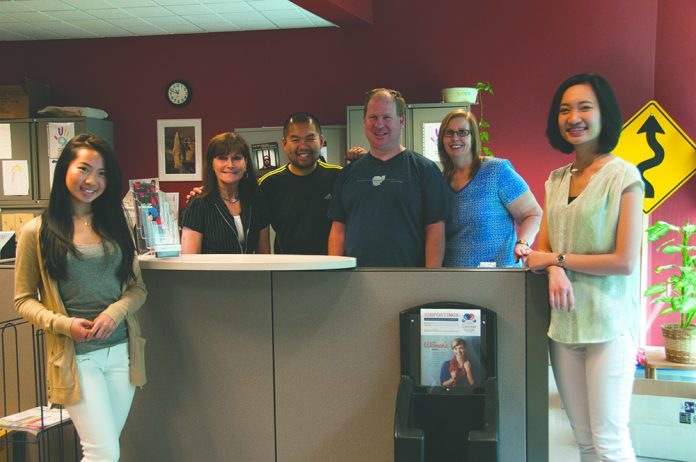
The career centre is located on the first floor of the Maggie Benston Centre. - Pheobe Lim

SFU’s Career Services has won the ‘Special Award for Innovation by a Career Centre’ from TalentEgg, one of Canada’s biggest online career resources.

The award was a part of the Campus Recruitment Awards, a national competition that surveys student services from campuses across the country, and has student judges pick their favourites.

Tony Botelho, director at SFU Career Services and Volunteer Services, stressed that in the pursuit of a career it is important for students to leverage their degree, knowledge, and skills and to utilize previous experiences and human networks. He added that the Career Services centre is open to help any student at SFU with concerns about their future.

Botelho said, “We want people to start thinking about life after university when they start. It’s not that students [need] a whole plan.”

One of the basic models that the Career Services focuses on is the acknowledgement that change is going to happen in the future. “By the time you graduate, the world is going to be different and you are going to be different,” explained Botelho.

Career Services helps students start thinking about the various possibilities that may interest them, and encourages them to take an “intentional approach,” using their time purposefully during university.

By pursuing co-op or volunteer positions, students become aware of possibilities they would otherwise not know about, Botelho explained. He believes those stepping stones open students to options that might motivate them to take on a different journey in the future.

“What we do is giving [students] a little structure in terms of how to frame these activities, and then also giving them the permission [. . .] to change their minds,” he added.

According to Botelho, SFU Career Services is one of the first career centres that fully embraces these unique approaches.

In addition to the centre’s focus on first-years or students early in their career, its promotional activities played a big role in securing the award. Performance installation ads are one of the unique promotional activities that the Career Services has undertaken in the past.

Recently, in 2011, Career Services booked a space in the AQ and set up a typical student’s living arrangement. On the set a person representing a student wore a green mask and displayed a sign with the message, “You can’t live here forever.” They also posted a video of another promotion online pranking students, which to date has had nearly 20,000 views on YouTube.

Earlier this year, the group held an interactive “Build Your Career” lego contest in which students were told to build a lego structure that represented their career possibilities. Submissions were posted to Instagram or Twitter along with the hashtag “#sfucareer.”

“There are resources available here, so please take an advantage of [them],” Botelho encourages students.

As a final message, he added that no one is alone in feeling anxious about what’s to come. “[You] are not the only one who’s worried about your future: it happens to everyone at some point.

“Not knowing what you want to do is okay, however, just not doing anything is not a great strategy. There are things you can do that will positively influence your circumstances.”

Board Gags

0
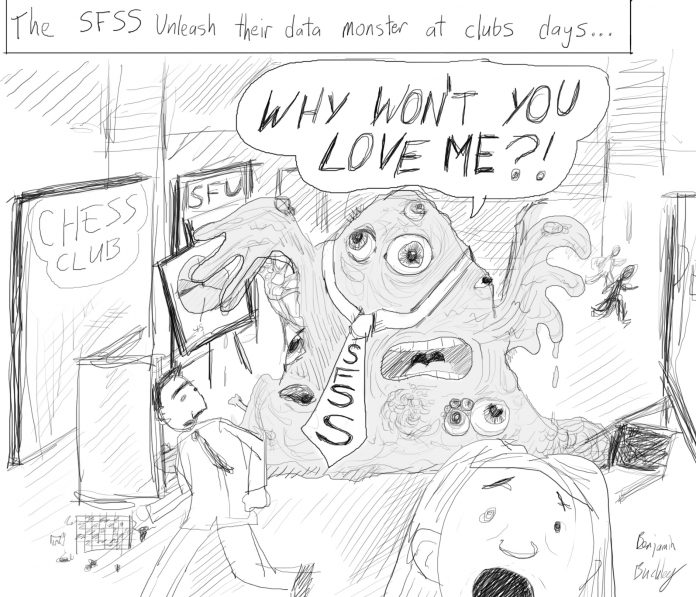
By Benjamin Buckley

The SFSS feel that information on student engagement at Clubs Days should be fostered through personal connections, rather than with clipboards, data, and statistics.

Louis Riel residents confront SFU admin

0
Photo courtesy of Erik Sagmoen

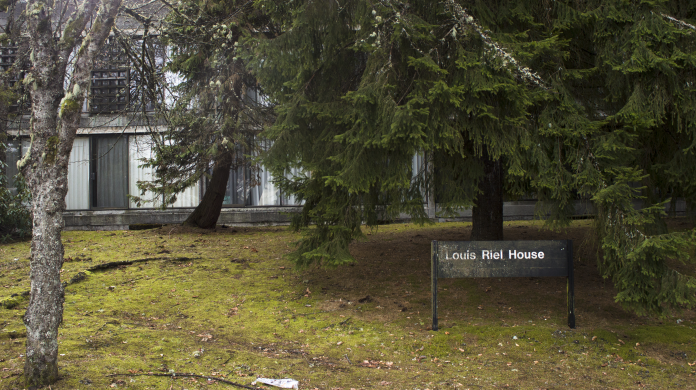
Residents of the soon-to-be closed Louis Riel House (LRH) residence building took to SFU administration’s office to express their discontent with the university’s response to their transition.

Representatives from the Louis Riel House Community Association met with associate VP of students Tim Rahilly twice last week. They articulated that they feel SFU has been unfair in its treatment of LRH residents, giving less support to non-heteronormative families and individuals.

SFU has committed to provide support for all residents who must move out of LRH by the end of the summer. The university has promised to provide priority for residents to be placed in alternative housing in SFU residence, reference letters for landlords upon request, financial assistance to mitigate the increased cost of off-campus housing, as well as moving supplies.

A report made by VP academic and provost Jon Driver to the SFU board of governors stated: “Students with children who currently use childcare or the elementary school on Burnaby Mountain will be provided with financial assistance that represents the difference between LRH rents and average rents in UniverCity housing.”

The Community Association feels that individuals and families that do not fit that description are being “left out in the cold,” as they have stated in a recent release. The release also says that there has been a breakdown in communication between SFU and LRH tenants, leading to their visitation of the administrators’ offices on Monday, June 1.

The statement released claims that “SFU has arbitrarily declared some students ineligible or less eligible for support,” and has made the following request: equal support for the specific needs of all residents on a case by case basis. They ask for the accommodation of those who have articulated a need for on-campus housing “for reasons of safety, avoiding housing discrimination, comfort related to mental or physical health, ability or mobility,” with particular reference to single residents, families without children, and queer couples.

They would also like SFU to support student residents who may not be leaseholders, but are roommates of leaseholders in LRH’s two bedroom units, and to charge them the same rent they paid in LRH for other residence dorm accommodation.

A statement by SFU assured, “It is SFU’s goal to help each resident make a successful transition from Louis Riel House to alternate accommodation.”

The residents will meet again with Rahilly next week to further resolve these issues.

Let’s talk about politics

0
Photo Credit: Phoebe Lim

There are a few taboo subjects that you’re not supposed to bring up unless you’re among very close friends; for some reason, politics is one of them. I’ve always thought that healthy political debates and discussions are some of the best, most stimulating conversations one can have — and that we’d be better off having a lot more of them.

I was recently inspired by Joel Bakan, author of The Corporation, and his speech during a SFU alumni appreciation event. He gave some advice for young people. He said, “get involved in large ‘P’ politics.” He also described his experience speaking at one of the Occupy Movement camps, where he said, “You shouldn’t just be occupying the streets; you should be occupying government [. . .]. We the people are supposed to occupy government.”

I strongly agree with his sentiment, and I think we need to realize that markets are not going to solve climate change, poverty, or unemployment — those things will have to be fixed by government regulations or new legislation that directly affects us as citizens. We need to actively participate in the democratic process to ensure that the policies and laws we end up with represent our opinions as much as possible.

But how will we ever hope to fix declining voter turnout and increase citizen engagement if we’re conditioned not to talk about the subject? It seems that we have a crisis on our hands when it comes to political involvement in our country, and I find it concerning that, as Mel Hurtig writes in The Arrogant Autocrat, 80 per cent of Canadian adults have never belonged to a political party, and less than 1 per cent of eligible donors made a donation to a political party in the 2011 federal election.

It’s not fair that a party with 39.6 per cent of the votes can win a majority government.

I’m sure more than one per cent of Canadians have political opinions and had something to say about the results of that election, so I think it’s time we start putting our money where our mouth is.

Only 61.1 per cent of eligible voters made their opinions count in our last federal election — there are more people who voted for no one than voted for the reigning party. With this many people not participating in our democratic process, we have no way of knowing if those elected actually represent the majority of Canadians.

Of course, people remain cynical towards politicians, and this is worsened by the fact that our electoral system is in great need of reform to proportional representation. It doesn’t seem fair that a party with 39.6 per cent of the votes can win a majority government, and a party with six per cent of the vote can elect nobody. It’s no wonder Canada was ranked 131st in the world for voter turnout in 2011.

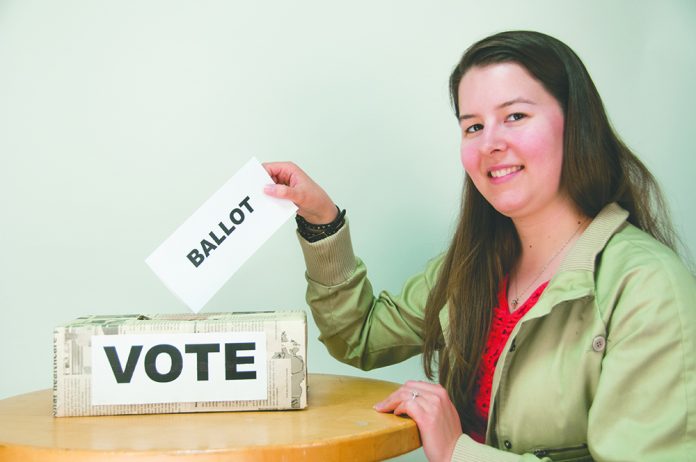
Until our electoral system undergoes much-needed reform, what are we to do? For starters, vote. If you’re keen to get more involved than that, I highly recommend you join a political party or interest group, volunteer for a cause you feel strongly about, and most importantly, share your opinions with others. It’s high time we start involving ourselves in politics.