Home Blog Page 92

Landlord looking for tenant who swears to never enter the unit under any circumstances

0
Evil looking landlord counting their money in front of a house. There is a “For Rent” sign in front of the house that reads “No laundry, No pets, No smoking, No kitchen, No guests.”
ILLUSTRATION: Aliya Nourlan / The Peak

By: C Icart, Humour Editor

After years of relying on their tenants to pay their mortgage, local landlord Gil T. Leech has finally reached a point where the money they get from renting out their mouldy basement is pure profit. 

“Everyone’s always thinking about tenant rights these days, but what about landlord rights?,” they asked in an interview with The Peak. “I should be allowed to have 15 tenants in a one-bedroom apartment. That’s covered under the First or Second Amendment, I’m pretty sure!” 

Instead of looking up the differences between Canadian and American legislation, Leech likes to spend their time inventing illegal residential tenancy clauses. “My last tenants contacted the Residential Tenancy Branch (RTB) for dispute resolution because I told them that the fact that I could hear them typing on their laptop when I pressed my ear against the floor above their unit was a noise violation. I’m sure the tenants bribed the RTB because they ruled in their favour, which is absolute bullshit because why were they in their apartment at 1:00 p.m. on a Tuesday? They told me they don’t work from home, so it should be illegal for them to be there.” (Normally, our publication avoids publishing quotes this long, but come on, you gotta admit this one was worth it). 

Leech is currently in the process of purchasing extra homes to turn into illegal Airbnbs. “It’s not my fault other people can’t find housing. It’s way more lucrative to charge an arm and a leg per night, and the Constitution says I can make as much money as I want.” 

Turns out that when you let people rant about their imaginary oppression, it’s hard to get them to shut up. Leech followed us down the street after our interview to say: “Another thing I’m mad about is that I can’t serve one-day eviction notices. Last week, some of my tenants called me IN THE MIDDLE OF THE NIGHT because a pipe burst in their unit. They were whining about ‘emergency repairs.’ What the fuck is that?! They have no respect for the person providing the roof above their head. Maybe if they were kinder to me and waited until a reasonable hour to contact me, I would’ve considered possibly supporting them by maybe Googling ‘plumber’ and sending them a screenshot of the results. But only if they tipped me, of course.”

Katie Tupper puts her own twist on smooth neo-soul and jazz

0
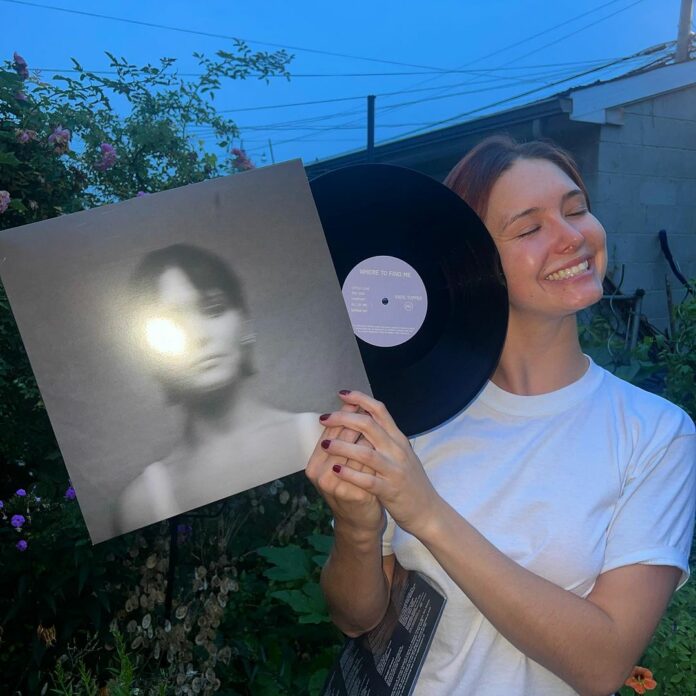
A girl with brown hair holding a vinyl next to her face. On the cover of the vinyl is a blurry gray photo of an individual with short hair.
PHOTO: @katietupper / Instagram

By: Hailey Miller, Staff Writer

Up-and-coming artist Katie Tupper’s effortless vocals and poetic songwriting present her as a force within the jazz and neo-soul scenes. Influenced by the likes of D’Angelo, Erykah Badu, Cleo Sol, and Norah Jones, Tupper found inspiration from the hip-hop and R&B imbued genre, neo-soul, when she was in high school. 

I had the pleasure of speaking with Tupper ahead of her upcoming slot at upcoming locals shows. “Growing up I didn’t really listen to a ton of neo-soul,” she told The Peak. “My parents would take me to jazz concerts and would play Norah Jones.” It was because of these musical experiences with the genre that Tupper eventually “fell in love with it.”

Whether it’s a specific tone for a snare drum, figuring out a harmony, or “picking out things tonally,” Tupper is inspired by key components that are “iconically neo-soul,” though she considers her music as more alternative with jazz and soul influences. One of her studio rituals is listening to these genres to find inspiration before she begins the songwriting process, from which the influences “bleed into new songs.” 

Tupper’s debut EP, Towards The End, was released in 2022. “When I put out my first EP, it was kind of like my first crack at it. I wasn’t really saying anything about myself,” she admitted. However, over time, Tupper noted she had “gotten a little bit braver with each project” by imbuing her music with more elements of herself. Her 2023 EP, Where to Find Me, garnered her a nomination for Traditional R&B/Soul Recording of the Year at this year’s 2024 Juno Awards. She said, “I spoke a lot more about myself” and wanted to “reveal a lot more of my personality.” 

Smooth like honey, Tupper’s songs are dripping with descriptive metaphors, effortless vocal runs, and melodies that perfectly complement her soulful tones and rhythmic beats. Her latest single, “Need Nothing,” is full of poetic lyrics such as “Shiny metal open up / Pour the water from my cup” and “All the ways we move around / Satellite and solid ground.” The track encompasses a groovy rhythm and soft, lilting vocals that pull you in from the first beat, followed by a catchy chorus.

“Smooth like honey, Tupper’s songs are dripping with descriptive metaphors, effortless vocal runs, and melodies that perfectly complement her soulful tones and rhythmic beats.” 

Tupper is currently recording an album and will be embarking on a summer tour across Canada. “I love playing Vancouver,” said Tupper. “It’s one of my favourite cities by far to play. Everyone’s so nice and receptive.” She looks forward to Vancouver Folk Fest, and playing the Orpheum for the first time. During our interview, it didn’t go unnoticed how grateful she is to be opening for the multi-faceted jazzy pop, country folk, and soul band Lake Street Dive.

On June 27 in Toronto, Tupper played Covers4Lovers: A Queer Cover Night alongside artists including The Beaches and Valley, to raise funds for Rainbow Railroad. She was excited to “be in a room full of community and be able to engage in pride” through the power of music.

“Everytime I get to be in a space and watch people that really know what they’re doing do something they’re passionate about, I’m trying to sponge and absorb,” Tupper said of seeing how other musicians sustain themselves. “I just feel really lucky to get to have so many cool friends that are working in this space.” She’s grateful for sharing the stage with friends and opening for artists she admires. 

“The reason why we’re doing this job is because it’s very impactful to our own humanity. That’s a very inspiring thing and just makes you want to keep making music so that you can continue to be a part of these spaces.” 

Follow @KatieTupper on Instagram to keep up with her music. Catch her at the Vancouver Folk Music Festival on July 21 from 9:40 p.m. to 10:40 p.m., or opening for Lake Street Dive on August 1.

SFYou: Ashley Jones’ art signifies connection and understanding

0
Photo of Ashley Jones and their art
PHOTO: Gudrun Wai-Gunnarsson / The Peak

By: Hailey Miller, Staff Writer

Ashley Jones is an Indigenous artist whose body organ paintings are an ode to her love for science, and her Haida and Cree Métis roots. The Peak interviewed Jones to know more about her artistic journey, the meaning behind her art, and perspectives to the future. Jones is predominantly a self-taught artist, aside from learning to make dreamcatchers from her aunt. She said she had no guidance on how to draw, and rather, “just picked it up one day.” Her family was a source of support and inspiration to begin her artistic endeavours. “I started drawing different animals and I kind of found my very own unique patterns,” Jones stated. Traditionally, Haida paintings use a technique called formline — “the continuous swelling and tapering lines that unite design units” — to draw the animal outline. However, Jones opted for using the animal itself as a base for the outline. 

Art has become a way for Jones to connect with her heritage: “I fell in love with my culture. I’ve learned how to do every other thing pretty much.” Besides weaving, Jones has also learned how to make rattles, traditionally used in dance rituals. Jones stated that learning these arts got her into “the Indigenous side” of her artwork and brought her back to her roots.

Talking about her painting “Heart of a Nation,” Jones recalls doing a supply run on Valentine’s Day where, after seeing various hearts, she was inspired and ran back home to get her new idea on paper. The painting carries a deep meaning, and she “did what felt right for the heart.” The painting has a wolf’s head and an orca’s tail, and the veins in it “represent the Tree of Life.” 

Since then, Jones has stayed fascinated with organs and expanded her painting portfolio. Her “Ovaries” painting was inspired by the Me Too movement. “It very much represents the birth, and creation, and the sacred feminine.” Jones explained that in many Indigenous cultures, women “were the ones that brought the information and they were regarded as sacred.” 

“No matter who we are, no matter what we look like, no matter what, we are all exactly the same on the inside and that is what is important.” — Ashley Jones

Jones’ artwork has touched individuals who have had heart transplants, hysterectomies, and infertility struggles. “I was bringing new artforms, new feelings out.” In her painting, “Eye,” the eyeball “represents the being able to see beauty and that we’re all the same, which is why the iris — the colour of the eye — is actually grey,” she said. “No matter who we are, no matter what we look like, no matter what, we are all exactly the same on the inside and that is what is important,” and that’s the message she hopes people get from her artwork. Jones wants her audience to look at the eye as if it represents their own, regardless of colour, or how we see the world. Her most recent piece, “The Breasts” is meant for awareness of breast cancer. She’s also done paintings of kidneys, eyeballs, lungs, the brain, and liver, among others.

It was during a Powwow where someone noticed her work was a form of Haida art. “I had no clue,” Jones said, learning more about her Indigenous roots. “It was at the Powwows where I really met my community,” she said. “I’ve never felt more connected to my culture.” Jones notes that everyone is welcomed “with open arms.” These events helped Jones reconnect with her community, since her grandmother was forced to hide to protect her family from residential schools. As a result they lost almost all of their family connections. Jones and her mother continue learning more about their cultural traditions, which ties into her artwork. Jones says it was her father who convinced her to take up art in the first place. 

At her first Powwow in 2018, she was invited to join SFU by a member of the Indigenous University Preparation Pathway program. She’s currently pursuing a degree in Indigenous Studies. Now, with about only five terms left, Jones said she fell in love with the program, which allowed her to connect with her community. She aims to apply the knowledge gained in medicine to advocate for Indigenous Peoples in healthcare. Jones mentioned how her mother, as well as other Indigenous Peoples, suffer from discrimination in the healthcare system. These experiences made her realise not only the need for doctors, but for allies in the system. “I do want to be a doctor once I graduate SFU,” having always been fascinated by medicine, she said, adding she hopes to create murals in hospitals one day.

Her art has influenced her love of science and medicine, and vice versa. “It’s really important that people see my art the way it is, and feel what it makes them feel,” she said. “I really would like to have my art in galleries, so I can have as many people see it as they want.

“If it brings even the smallest smile on a bad day, that gives me such joy that I was able to create that happiness.” 

Aside from her paintings, Jones sells her work as prints for $20.

Air purifiers should be more commonplace

0
A white air purifier on the floor.
PHOTO: 220 Selfmade studio / Adobe Stock

By: Yasmin Hassan, Staff Writer

Every year, summers in BC get hotter and hotter. Remember the heat dome back in 2021 and its aftermath? Events like these are only expected to worsen with the steady warming of global temperatures. Recently, the government has been putting more emphasis on preparedness for expected extreme heat conditions, which includes providing free portable air conditioners for low-income households. Temperature is important, but what about air quality? I know I’m not the only one who can smell the smog that comes from the summer wildfires, even when they’re not nearby. And it’s not just the smell that’s bothersome — wildfire smoke can impact air quality thousands of kilometres away from the source. Air purifiers are one of the easiest ways to improve indoor air quality, and they should be made more accessible. 

Prolonged exposure to harmful airborne pollutants, allergens, and particulate matter has been found to pose health risks. This is especially true for people who are already at risk of health complications, including disabled people, elderly people, and low-income folks. The US Environmental Protection Agency states that wildfire smoke can cause “eye and respiratory tract irritation” as well as “reduced lung function, exacerbation of asthma and heart failure, and premature death.” Low-income communities also face higher risks of health issues due to poor building infrastructure and limited healthcare access. Since the smoke isn’t going anywhere, neither are its consequences. 

What can be done to help? Air purifiers are one of the better ways to reduce adverse health effects from poor air quality. Purifiers draw the air in a room through a filter and circulate it back out, trapping irritants. One study found that a test group of adults with asthma had improved health outcomes with air purifiers as opposed to the control group that received no filter. Air purifiers have also become more popular since the COVID-19 pandemic began. Poor air ventilation is a common issue in public spaces, with schools being a major concern in BC. With the continuing risk of Long COVID that disproportionately impacts vulnerable groups, air purifiers should be valued as essential devices. They add a necessary layer of protection against pathogens and contaminants, and should be used as annual wildfires grow in size and frequency.

Since the smoke isn’t going anywhere, neither are its consequences. 

Purifiers usually come in three forms: filtered air, electrostatic, and UV light purifiers. There are generally seven kinds of filters, but the most common are high-efficiency particulate air (HEPA) filters. HEPA filters can “theoretically remove at least 99.97% of dust, pollen, mold, bacteria, and any airborne particles with a size of 0.3 microns.” One study found HEPA filters decrease particulate matter content by 29–53% in the presence of an external source (smoke). They’ve also been found to work well in reducing the spread of SARS-CoV-2 bioaerosols as long as they’re able to filter particles ranging from 0.1–1 microns. Be sure to check the rating of your HEPA filter before purchase, and opt for a higher grade like H13 or 14.

The main problem is that air purifiers aren’t cheap, often costing at least $200 for a high quality one. Filters also need to be replaced at least once a year, and can be pricey at up to $50 each. They’re also typically only strong enough for single rooms, so you’ll need multiple if you want to filter every room in your home. Many people can’t afford this equipment, which can lead to health complications. Having air purifiers in public spaces and people’s homes would greatly reduce the risk of exposure to airborne illnesses and pollutants, including smog from summer wildfires. While it’s amazing that BC is providing low-income folks with air conditioners, they should consider doing the same with air purifiers — especially for those most at risk.

Air purifiers are important for those who are vulnerable, but their use helps everyone. The government should subsidize those bad boys, listen to climate consultants, and offer more education on air quality — especially if it concerns our health! While Dr. Bonnie Henry called on us to “stay alert” and educate ourselves about weather conditions, health information regarding climate change should be readily available rather than seen as a self-study option. We should value our respiratory health as much as we value cool temperatures in the summer. Air purifiers are proven to work, and should become a staple in our societies.

The Vancouver Park Board must stay independent

0
A bench at a grassy park.
PHOTO: Victoria Lo / The Peak

By: Kaja Antic, Staff Writer

Surprise — Vancouver mayor Ken Sim has made yet another terrible decision. Last December, he decided his party holding the majority in City Council, the Park Board, and the School Board wasn’t enough control. Sim proposed an amendment to the Vancouver Charter that would dissolve the independent Park Board and put it under municipal control. Vancouver City Council then agreed to transition environmental control from the Park Board to a council seeking profits over ecological value. This has terrible implications for the city’s greenspaces and those who appreciate them.

Vancouver is the only city in Canada with an elected park board, and it’s had exclusive authority over community spaces in Vancouver since 1953. The distinction from City Council is still important today as community greenspaces are growing rare in major cities. While it may seem like an oddity, it’s an important asset when considering the value of greenspace. The Park Board is essential for prioritizing the needs of community members. Previous executive director Sarah Blyth-Gerszak remembers advocating for more youth skate parks when she was younger. During her time on the Board, she worked on projects like implementing electric vehicle chargers, gender-neutral bathrooms, and even “cellphone donations for seniors.” These were changes made without profit in mind, which is what the Board is for. 

Unsurprisingly, Sim’s position on the Park Board has not always been crystal clear. In June 2021, long before he was elected, Sim pledged to remove the Park Board if he gained the mayoral seat. A year later, the ABC Vancouver party introduced their Park Board candidates, which Sim claimed would help improve parks without needing a legislative change in Victoria. Less than 18 months later, Sim backtracked on this decision. We shouldn’t entrust the care of local parks to someone who was dishonest about their intentions.

“This has terrible implications for the city’s greenspaces and those who appreciate them.”

Along with the dissolution of the decades-old Park Board, Sim proposed another dystopian idea — to sell the naming rights of public city spaces to corporations. He claimed this decision could earn the city up to $100 million from “wealthy people and organizations” if they were able to sell the rights to name buildings, parks, and other city assets. Not only does that potentially limit the inclusion of Indigenous names in the future, but it also feels like a horrible consequence of late-stage capitalism. While I’m all for the renaming of Stanley Park, I’d rather not have the new name be “Galen Weston’s Super Loblaws Park.” 

Even though the Park Board is still technically active as the Vancouver Charter has not yet been amended, the Vancouver Police Department (VPD) is already acting on Sim’s wishes. Along with an increased budget, VPD officers are taking over beaches. Officers have been removing residents and tourists from the lands under Park Board jurisdiction, because apparently watching a beautiful sunset does not coincide with Sim’s “Vancouver is Fun” policy. Keep in mind that Sim was the former Chair of the VPD Board, and now he wants control over the city’s parks. This is an early example of what’s to come as the city encroaches on park jurisdiction, as the Board meant to resist this intrusion may soon cease to exist.

BC premier David Eby stated in March that the provincial government is committed to Sim’s transition plan — though a formal decision would have to wait until the next legislative session, after the October 19, 2024 election. The Vancouver Park Board is integral to the protection of Vancouver’s parks, beaches, and community spaces. Without the Board separating political interests from social and environmental ones, Sim’s controlling power trip could have drastic consequences for the natural spaces the city is known for.

SFU will build an $80 million upgraded supercomputing facility

0
This is a photo of the SFU supercomputer, Ceder. The computer takes up the entire room.
Photo Courtesy of SFU Research / X

By: Hailey Miller, Staff Writer

On June 3, SFU announced an $80 million supercomputer upgrade that will improve efficiency, data storage, and performance from its existing supercomputer, Cedar. The current supercomputing facility is one of the top 100 in the world and used for high-speed computations. It’s used by researchers across Canada and available for graduate students, faculty members, post-doctorate students, and undergraduate researchers at SFU — especially for their work in labs. The funds for this project were awarded to SFU by multiple donors, including the Digital Research Alliance of Canada and the BC Knowledge Development Fund through the Government of Canada.

“All of those researchers who currently use our existing supercomputer, Cedar, will suddenly have a lot more computing power,” said Dugan O’Neil, SFU vice-president of research and innovation in an interview with The Peak. 

Researchers who need to model their work will have access to a faster and more efficient system. For students involved in data collection, the capacity to process and analyze data will be faster. At this time, the computer is “not a tool that’s directly used in undergraduate teaching,” so it will not be available for undergraduate students to use in class. 

The new computer will be an upgrade to both Cedar’s hardware and software. The upgrades for hardware include traditional computing forms — CPU (central processing units) and GPU (graphics processing units) — and will also include optimal upgrades for “AI-based workflows.” O’Neil said the memory will be a huge improvement, along with more available storage, and overall efficiency. 

O’Neil explained that supercomputers “become obsolete” after a length of time, as technology is “constantly improving and changing.

“It really spans many different areas of knowledge,” he said. “The benefits are really broad-spread. So many people use computers of this type to analyze their data or to create new models right across all of the disciplines.” The computer can be used by many members of the science and research communities, including engineers, physicists, chemists, and those in both the social and health sciences.

 “It’s a big responsibility for the institution to provide that kind of capacity for the whole country.” — Dugan O’Neil, SFU vice-president of research and innovation

The computer will “take a while to build,” and won’t be available for at least another year. Once the time comes, users will “see their capacity to asking questions and solve problems go up, rather dramatically,” according to O’Neil.  

In order to initiate the upgrade process, a request for proposals has been implemented to “supply both the design and the components of the supercomputer.” From there, the computer will be “installed and tested.” O’Neil said they expect the computer should be “publically available” by next September and should last until at least 2030.

The site at SFU is “one of the largest data storage sites in any academic institution in the country.” The computing processor sites needed to process the data are also one of the largest in Canada, alongside the supercomputing facility being “one of only five” in the country.

With the new computer’s efficiency, the capacity for new ideas and data input to be analyzed and processed at much quicker speeds will allow for “a number of simultaneous users [ . . . ] to host a large number of people doing similar things.”

The overall power usage of supercomputing systems leads to a larger carbon footprint. However, since SFU is situated within a temperate climate, it allows for the system to “use less energy,” as hotter climates require more energy to cool down the computing systems.

O’Neil explained that SFU has “the most power-efficient data centre in the country.” This has granted the university a “highly-rated green data centre,” along with using BC Hydro’s renewable energy. Therefore, this allows for a smaller carbon footprint in comparison to other regions and climates.

“It’s a big responsibility for the institution to provide that kind of capacity for the whole country.”

To find out more about the computer, go to SFU’s website.

Peak Speaks Podcast: Queer history in Canada

0

When you can’t graduate on time because that one last course you need isn’t offered

0
Someone walking up stairs. A missing stair is preventing them from reaching their destination which is graduation.
ILLUSTRATION: Angela Shen / The Peak

By: Hailey Miller, Staff Writer

Nothing’s more exhilarating than knowing you’re one course away from graduation. Just one more semester, and you’ll finally have grown from a little caterpillar studying in a field most people haven’t heard of to a beautiful butterfly with snazzy credentials no one will even remotely understand. The sweet victory of getting a flimsy piece of paper to denote your degree is just a sweaty handshake and a stumbly step across the stage away, with an incorrect name pronunciation as the cherry on top.

You’ve mentally prepared and plotted the last pesky course you must take. All that remains of your degree requirements is one of the following: Graduation Station 400, Straight Outta SFU 400, Convocation Club 400, or Mastered It 800. You’re praying to registration that your computer screen doesn’t freeze.

Go, graduate, go! Course registration time has opened, and you’re more excited than a raccoon digging through an overflowing trash can in the AQ. Eagerly, you scroll past the useless courses you’ve already forgotten about. Did you even take Honour Roll Know-It-All 400? For graduate’s sake! Are they really going to make you pay fees that even a loan can’t cover for some useless last course? You’ll have to set up a GoFundMe just to submit your graduation application! 

Only one option is available on the list: Graduation Station 400. You smash your keyboard and chaotically click your mouse with greater pomp and circumstance than the graduation song itself.

Error: cannot register. This course is not available for the next three (3) semesters. Please try again next year.

Dread and dismay fill your day as you anxiously reload the page, hoping the issue will resolve itself. Suddenly, you can no longer smell course completion in the air. 

Please choose one of the following for when your graduation is a year late, and you can’t invite any guests because audiences are so passé:

Trips and Falls at Convo Mall 400, Wrong Regalia Wearer 500, Scraped By in the Blink of an Eye 500, or Barely Passed 800. 

Please note: Graduates must also enrol in Can’t Afford the Convocation Fee 400. Otherwise, their fashionably late, hot (graduation) date with bidding SFU adieu won’t go through.

You sigh in disbelief. You waited over four years for this crappy course selection to really tie it all together and put a big, ugly, colour-clashing bow on top of a degree you won’t get for at least another year? That is, if the whole program doesn’t get cut first. Might as well forget it all now. Drop everything and move on! Who needs a degree anyway? Honour Roll Know-It-Alls are so last convocation.

Prepare to care for the Fair in the Square

0
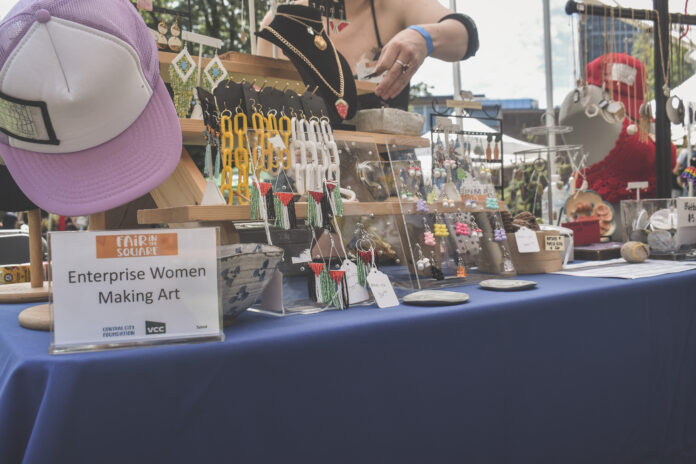
Delicate jewellery pieces are on display at a retail stall, including earrings of the Palestinian flag made with small beads.
PHOTO: Courtesy of Amrit Kamaal / The Peak

By: Amrit Kamaal, Peak Associate

On June 9, the Fair in the Square, kicked off. Best of all, it was absolutely free of charge! Visiting the event for the first time helped me re-experience the feeling of creating new connections — like I would in the children’s festival in my city. Although the fair has said goodbye for this summer, it’s never too late to add it to your bucket list for next year.

Located at Victory Square Park, Fair in the Square is hosted annually by the Central City Foundation and their partners at Vancouver Community College (VCC). This year, Collingwood Recreation Society paired up with them to co-host this event as a means of “connecting with our community, while celebrating the vibrancy and resilience of our inner city.” For nearly two decades, this community function has hosted over 3,000 attendees, inviting them in with free refreshments, activities, and the artisan market. The participants and volunteers all showed generosity to my friends and I by exchanging stories of their lives in Vancouver. As first-time fairgoers, this event radiated a sense of familiarity in me and drove me to learn about this event’s significance to other peoples’ childhoods. This year marked its 16th annual instalment, which was packed with live music from talented singers.

You could feel the alluring sense of community from a mile away, with loud, inviting party music and the savoury aroma of free BBQ. The lineup for food went around the block, with visitors making a mental note to come back for seconds. In the meantime, student volunteers flocked to each corner of the park, providing refreshments to beat the heat. People saved each other picnic tables and blankets, taking turns standing in line for food to share with one another. These wonderful eats were graciously prepared by the VCC Culinary Program!

“You could feel the vibrant sense of community from a mile away, luring people in with the loud, inviting party music and the savoury aroma of the free BBQ.” 

We sat in a big crowd in the middle of the park, where we saw hundreds of festivalgoers make connections with each other with big smiles. From our picnic blanket, we enjoyed live performances and musical shows that concluded in the audience begging for an encore. Local bands and singers that had the audience swaying along included alternative R&B artist Deocera; Wildflower, Women of Turtle Island Drum Group; and contemporary gospel hand-drummers, M’Girl. The energy that every performance had, although contrasting in sound and style, all gave off love for the craft and the audience. The communal atmosphere shone through, with people showing off their best dance moves! 

Many local businesses were present in the artisan market, displaying their talent and amazing products to the community. One of the vendors was the Enterprising Women Making Art, which features handmade pieces of art and jewellery. This business provides employment opportunities for all women, with the hope of “strengthening and fostering women’s full and equal participation in the community and economy.” My Sister’s Closet is another Vancouver fashion staple to check out, advocating for “zero-waste, eco-fashion, and the thrift movement.” This business offers deals on high quality clothing in an ecofriendly way, with their raised funds going to Battered Women’s Support Services

When I was a child, I used to love going to the children’s fairs held in my local playground before they shut down. Coming to this festival helped me reconnect with that lost part of my childhood again, allowing me to feel welcome in the community once more. 

Kings Ransom vs. Saving Sakic

0
Photo of the sign of Joe Sakic Way in Burnaby.
PHOTO: Amirul Anirban / The Peak

By: Kaja Antic, Staff Writer

As a documentary enjoyer and hockey enthusiast, I was intrigued by the ads I kept getting on my television about a new hockey-related documentary: Saving Sakic. Joe Sakic, former National Hockey League (NHL) legend and current president of hockey operations for the Colorado Avalanche was the subject — or his 1997 contract situation was.

Saving Sakic is not the only hockey documentary to focus on contractual obligations or executive office decisions, though it is a rarity in the already-scarce genre. Kings Ransom was an ESPN documentary made in 2009 that covered the impactful, game-changing trade, also known as a blockbuster trade, that sent Canadian hockey player Wayne Gretzky — from the Edmonton Oilers to the Los Angeles Kings. 

As both documentaries covered the business side of hockey, I thought it would only be fitting to review them together, comparing and contrasting both the situations and the execution of these stories.

Kings Ransom (2009)

The 2009 ESPN documentary covers the August 9, 1988 trade that sent Ontario-born, hockey’s “the Great One,” Wayne Gretzky, from the Edmonton Oilers to the Los Angeles Kings. In the NHL, teams can trade players for other players or draft picks. There are some nuances and restrictions to them, but it’s a common occurrence. The deal included two players being sent south of the border with Gretzky, while Los Angeles sent back two players and $15 million USD — a larger amount than any current NHL player’s annual salary

The film covers the success the Oilers had in the years leading up to the trade, where Gretzky had served as captain during their Stanley Cup wins in 1984, 1985, 1987, and 1988. Gretzky features heavily in it, along with former Oilers owner Peter Pocklington, former Kings owner Bruce McNall, and Gretzky’s wife, actress Janet Jones.

The trade was largely a business decision from Pocklington, who claims he was unable to afford a potential salary increase for Gretzky and continue to keep the team afloat in the small market of Edmonton. This film, however, focuses largely on the human effects of this transaction.

The Avalanche had an unlikely hero though — legendary actor Harrison Ford and the film Air Force One. 

Pocklington faced death threats for his decision — even though the Oilers would win the Stanley Cup again without Gretzky in 1990. His wife, Jones, was branded the “Yoko Ono of the Oilers” for her perceived involvement in influencing Gretzky’s departure, and many took the trade as Gretzky abandoning Edmonton, and Canada as a whole. 

Bringing Gretzky to Los Angeles turned a lot of attention to the often-forgotten American market, and paved the way for many southern teams in the future, including two more in California. Overall, I think the film provided a decent, in-depth look at the trade itself and the decision making surrounding it, though it left much to the imagination regarding the impact Gretzky’s arrival had on hockey in California, as aside from a short mention of the NHLers hailing from California today, there was no real analysis of the post-trade effects. The story ended in the 1988–89 season, but there is so more history to be explored. When it comes to blockbuster trades such as Gretzky’s, the trade itself and the context in which it happened is only part of the story, and this documentary lacks the legacy and rippling impact of the trade.

Saving Sakic (2024)

This recent documentary focuses on the 1997 offer sheet that almost sent Colorado’s Avalanche captain and Burnaby local, Joe Sakic, to the New York Rangers. The offer came only a year after the Avalanche had won the Stanley Cup — with Sakic earning the Conn Smythe Trophy for playoff MVP. 

The Rangers had just lost their captain Mark Messier — he was under no contract and decided to sign a controversial deal with the Vancouver Canucks — so the team decided to offer Sakic a $21 million contract, with an additional signing bonus of $15 million. Rangers executives knew that the cash-strapped Avalanche owners, COMSAT, would be unable to match the gargantuan offer in the seven day timeframe they had to match the eastern team’s offer. 

The Avalanche had an unlikely hero though — legendary actor Harrison Ford in the film Air Force One. Beacon Pictures, owned by COMSAT, partially produced the film, meaning some of the proceedings would go to the Avalanche ownership group. Air Force One was a box office success. With the film’s release predating the August 7 offer sheet, the Avalanche team obtained the funds to keep their captain and build a new arena for both the hockey team and the NBA’s Denver Nuggets. Sakic would go on to win the Stanley Cup with the Avalanche team in 2001 as a player, and in 2022 as an executive. 

Overall, I enjoyed the documentary, though I feel like it focused more on the production of Air Force One and the conflicts in building a new arena for the then-struggling Nuggets rather than on the supposed subject of the documentary. Sakic was hardly featured — I honestly think Ford had more screen time in the 48-minute film. The involvement of the more business-savvy side of hockey was interesting, though I feel like it brushed aside any meaningful discussion of hockey, outside of a summary of the Quebec Nordiques’ move to Colorado to become the Avalanche. It was a light-hearted documentary, and included Sakic’s career after 1997 — both on the ice and in the front office. I wish it had predominantly focused on the sport instead of the action film that may have aided it. 

Both documentaries offer a good picture of the context in which the Gretzky trade and the Sakic offer sheet occured, however, without focus on the bigger picture — it feels lacking. Gretzky’s trade is considered to have changed the landscape of hockey in the US, however, the documentary doesn’t really touch on the rippling effects. On the other hand, Saving Sakic overly-focuses on the financial and operational side of hockey and the involvment of Harrison Ford in keeping Sakic on the Avalanche team rather than talking on the importance of Joe Sakic to Colorado’s hockey scene.