Home Blog Page 914

Woohoo, Boohoo

0

Woohoo: Natural Selection

Ahh, natural selection — not just that unit of biology you slept through during high school, but so much more! I know it sounds like a boring nature-centric Songza playlist you’d hear at a shoddily-run YMCA yoga course, but really it’s the reason we live on such a diversely radiant planet filled with distinctive cultures of animals, plants, and people.

It’s because of natural selection that giraffes have freakishly long necks and we have platypuses to laugh at. It’s because of natural selection we are no longer defacing cave walls and flinging our crap at one another. And while the system isn’t flawless for rooting out the stupidity of some, just remind yourself the gene pool is just a generation or two away from being purged of your Uncle Mickey’s horrible toilet humour.

Boohoo: Class Selection

The seconds are winding down to the deadline and you are poised at your computer desk, ready to pounce. You finger floats atop the return key waiting for the moment to arrive. An antsy finger clicks frantically on the mousepad and refreshes the page at the pace of a discharging AK-47.

The time is just under 60 seconds — both dread and excitement bubble within you. Your chosen classes for the semester lay nestled in your interactive goSFU cart. They begin to call out to you like the song of the siren, exciting and enticing you to their low workloads and high participation percentages.

The analog numbers above your unused geography textbook hit their target. Index finger collides with the computer key! The enrollment gates are open: HIGH HO, SILVER! AWAY! Take what is yours, young undergraduate! The die is cast and these courses are — taken. Son of a . . .

Award-winning book about bees generates buzz

0
SFU professor Mark Winston writes in his book about how humans can learn from bees’ social nature. - Image by Janis McMath

SFU professor and renowned bee expert Mark Winston has just been awarded with the Governor General’s Literary Award for Nonfiction for his latest book, Bee Time: Lessons from the Hive.

Bee Time offers an insight into Winston’s work with bees over his lifetime, the issues that threaten bees in today’s world, and what we can learn from our buzzing insect friends about how we interact with nature and our own personal lives.

Winston has been at SFU for 35 years. After running a bee laboratory at the university and teaching in the SFU Biology Department for several years, he became the first director of SFU’s Centre for Dialogue and founded the ongoing Semester in Dialogue program in 2002.

Despite his long tenure spent at the Centre for Dialogue, Winston said, “I missed bees.” His ties to the beekeeping community and his own continued interest in the animal led him to author Bee Time, which was published in October 2014.

The bee-scholar expressed his desire to contribute something to the world of bees and to address the issues that wild bees and honey bees are facing today.

“Bees are facing kind of the perfect storm of human-induced problems,” he said, explaining this storm as “a complex mix of our policies around how we grow food.”

The current state of agriculture involves large acreages that only yield one type of crop. This lack of diversity leads to nutritional deficiency issues for bees, which Winston compared to “going into the supermarket and finding nothing but bananas.”

He added that bees are also suffering from the introduction of various disease carrying pests, as well as an exposure to “innumerable” pesticides. “All these things interact together to bring down both the wild bee and the honey bee populations,” explained Winston. “Really, it’s a very broadly-based issue about how we conduct agriculture.”

Bee Time delivers a multitude of lessons that Winston has learned from his time working with and studying bees — some environmental and some personal. He emphasized a need to reevaluate how we interact with nature and aim to strike a balance that doesn’t lead to what he sees as overmanagement. “We really need to back off the extent to which we’ve managed the world around us and learn to live in more harmony,” expressed Winston.

He also spoke to the sort of lessons to be learned from bees about how we carry out our day-to-day lives and interact with each other: “There’s a whole series of personal lessons where I talk about how we can learn from bees to be more present to the world around us, to focus better, to work collaboratively.”

On his blog, Winston posted about how he landed on “Bee Time: Lessons from the Hive” as title for the book. He explained, “‘Bee time’ refers to how time slows down in the apiary, alluding to that sense of presence and focus that beekeepers adopt when working their colonies.

“When we enter bee time, we find that bees are an extraordinary lens through which to view ourselves.”

A voracious reader and longtime follower of the Governor General’s literary awards, Winston was deeply moved to be recognized on a list of literary works he has appreciated for so long.

“To find myself on that list, to think that I’m contributing someway to the literary well-being of our country, it means a lot.”

Coho salmon research could lead to population revival

0
Image by Gabriel Yeung

The value of the West Coast’s commercial salmon fisheries has dropped from $263 million to $24 million since the 1990s. Research shows this is due to a decline in endangered populations of salmon.

Enhancing Production in Coho: Culture, Community, Catch (EPIC4), a new four-year research project co-led by SFU geneticist Willie Davidson, aims to answer some of the questions that surround the Coho salmon through genetics.

By understanding the genetics of the Coho, Davidson and his team aim to help reopen the commercial Coho salmon fishery that closed down in 1999 and revive aquaculture on Canada’s Pacific coast.

Currently, very little is known about the genetic makeup of the Coho salmon. One of the goals of the project is to establish the genome of the species. Along with establishing the Coho genome, the goal of the project is to look into how the Coho salmon compares with the Atlantic salmon, whose genome has already been established.

The researchers hope that comparing the two genomes will help them gain insight into what the foundational differences between the Coho and Atlantic salmon are. “Looking at Coho, we know there are many differences and yet many similarities between Coho and Atlantic salmon,” said Davidson. “Can we put genomic, genetic basis for that?”

Davidson’s focus on genetics could help shed light on what drives the salmon to behave in the manner that they do. Coho spend one year after birth in freshwater; they will then swim downstream to saltwater, stay there for one to two years, and finally return to the same stream in which they were born to spawn and then die.

There is no clear explanation of why the salmon follow this pattern, and by looking at the genes of the Coho, the researchers hope to establish if the species is better adapted to fresh or saltwater. This could lead to the establishment of a comprehensive conservation strategy.

Another reason to look at how genes relate to a Coho’s life history is to figure out how the salmon deal with stress in their upstream migration.

Coho salmon have spawning migrations of various lengths and as a result can travel up streams and rivers that have had very little human impact. However, some Coho migrate into the interior of the province through rivers that have been heavily dammed for hydroelectric power projects.

It isn’t yet understood how these migratory challenges affect the salmon, but if the study gains insight into how the Coho react to these stressors, there is hope that the stocks that migrate into the interior of the province can be improved.

When asked about what he would consider the most exciting potential outcome for the project, Davidson replied, “I think understanding the basic biology and understanding the marine survival would be the biggest kick that I could get out of it.”

Secular Starbucks cup controversy is baloney

0

[dropcap]T[/dropcap]he temperature might be dropping more quickly than the newest mixtape, but spirits are rising: The holiday season is upon us, and every shop worth their salt is already making changes to suit the soon-to-be festive air. Unfortunately, there’s no stopping people from getting a little salty over changes that offend their sensibilities.

Recently, Starbucks unveiled this year’s solid-red holiday cups; now, it looks like quite a few people are seeing red. The absence of obvious Christmas-themed imagery has sparked some serious accusations; namely, that the company is adding to America’s war on Christianity; or that it “hates Jesus,” as evangelist Joshua Feuerstein of Arizona so eloquently phrased it on Facebook.

Likeminded Starbucks customers have taken to boycotting the company in a multitude of ways. Some have chosen to stop buying their drinks entirely; others have been going out of their way to call themselves “Merry Christmas” when asked what name should be scrawled onto their cups, ‘tricking’ baristas into adorning the cups with Christmas cheer.

Feuerstein blames political correctness for the alleged heresy, claiming that “we [have] become so open-minded [that] our brains have literally fallen out of our head.”

Personally, I think the people in charge at Starbucks are smart to avoid intentionally feuding with Jesus; look, if he can turn water into wine, what’s stopping him from reducing every PSL to plain black coffee and destroying their profits? But I digress.

The war against political correctness is a war against being a respectful human being.

Say we do, in fact, interpret this year’s cups’ design as an attempt to be less obviously inclined towards one holiday and more inclusive in general. Why is that a bad thing? Are the naysayers so unwilling to tolerate the reality that other belief systems exist that they’re boycotting a coffee company over their cups?

This situation reflects what is a far more tangible war against ‘political correctness,’ in general, which, really, is mostly a war against being a respectful human being. ‘Politically correct’ is used as an insult. People use it to mock someone, policy, et cetera, for trying ‘too hard’ not to offend anyone, blame it for ‘censoring’ humour, and generally complain about it.

Yet with rising frequency, we paint a scarlet PC on anything, big or small, that challenges our comfort in belonging to a dominant demographic. Nobody likes to be in the wrong, so when criticized for being insensitive, the first response is often to claim that the other person is ‘taking things too seriously.’ Similarly, whenever somebody takes the initiative to change something to be more inclusive, they’re inevitably disparaged for “bending [their] knee to a vocal minority,” as Feuerstein put it.

It’s come to the point where people slam things for being ‘politically correct’ because actually taking other people’s feelings seriously is just too inconvenient for them — it’s much better to remain in a bubble of supremacy and assume that the world should bend to make you and you alone feel like society validates your particular set of values. And that’s disturbing.

Honestly, I’m not convinced that Starbucks was especially invested in trying to be socially progressive with their new design. I just think that the ensuing reaction to such a miniscule detail is very telling of just how zealously some people will fight to stay closed-minded and angry, and that should be everyone’s real concern.

If nothing else, at least Starbucks chose a pretty shade of red.

SFU strikes business partnership with Chinese firm

0
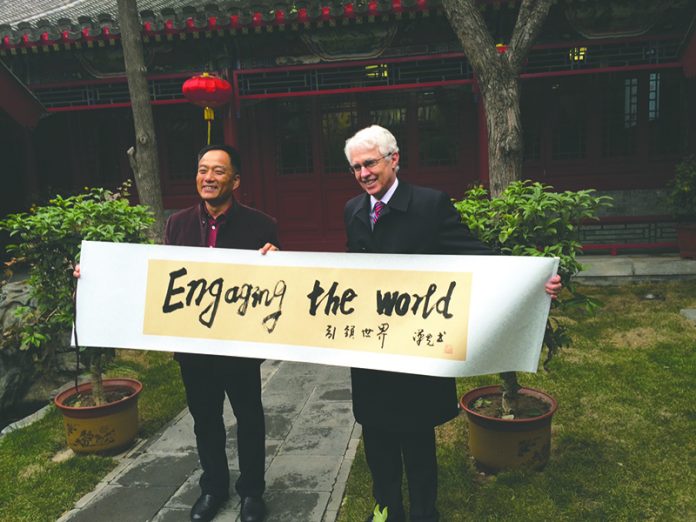
SFU President Andrew Petter (right) poses with Hanhai Chairman Wang Hanguang (left). - Photo courtesy of SFU University Communications

An international partnership took SFU President Andrew Petter and VP Research Joy Johnson to Beijing earlier this month. During the visit, a Memorandum of Agreement was signed between the university and Beijing-based Hanhai Zhiye Investment Management Group. The partnership is intent on helping Canadian and Chinese startups grow into successful businesses.

The agreement has led to SFU-Hanhai China-Canada Commercialization Acceleration Network (C2-CAN). The group Hanhai Zhiye, a partner with SFU, is a “high-tech conglomerate” with incubators in China, Silicon Valley, and Germany.

C2-CAN will allow Canadian startups at SFU VentureLabs to relocate for periods of time to Beijing, and will also allow startups in China to relocate to Vancouver. According to Johnson, C2-CAN could provide “an opportunity for a ‘soft landing,’ an opportunity for business to really find their feet, and to explore whether there might be opportunities for them to develop new markets” in the two corners of the globe.

Johnson described incubators such as C2-CAN as “an opportunity for any student to get a great business idea, and work with mentors, and develop them into a venture that might actually have some profitability. [. . .] We’ve had a number of students actually do that.”

The program will run through SFU but will be open to all Canadian startups, not just those associated with SFU faculty or students. The Beedie School of Business in particular has shown interest in incubators, and in business in Asia. However, said Johnson, “While there’s a lot of students in Beedie interested in [innovation and entrepreneurship], there’s a lot of students across the university also interested.”

A focus area for C2-CwAN will be sustainability and the development of clean technology. Johnson noted that China in particular faces environmental problems such as low air quality, and that SFU has “expertise in this area.” Despite a focus on clean technology, C2-CAN will be open to all types of ventures.

While Johnson could not provide an exact estimate as to the costs SFU would incur, she said, “Actually, right now it’s going to cost us very little.” She went on to say that the space that would be given to Hanhai in VentureLabs was already owned by the university and that the university would be offered similar space in Hanhai’s facilities in Beijing. She said that the university expects travel costs for this year to be under $50,000.

Both SFU and Hanhai might have opportunities to receive financial benefits from C2-CAN. Johnson explained that when businesses approach C2-CAN, agreements are entered into “about taking stake in that venture,” and in some circumstances the venture might pay back C2-CAN for services rendered, or pay back a portion of their profits.

“The idea is that ultimately we would move ourselves into a situation of sustainability,” said Johnson.“I’ll be clear. It’s not the job of the university to be ‘making a lot of money.’”

When asked whether Hanhai had any connection to the Chinese government, Johnson responded, “I cannot answer that, but all I can say about that is every company in China has relationships with the Chinese government.”

Hanhai Chairman Wang Hanguang is a Senior Expert in the Ministry of Science and Technology, and photographs on Hanhai’s website showing Hanhai representatives at a reception for the Communist Party point to potential ties with China’s ruling party. The California Life Sciences Association classifies Hanhai as a “sovereign wealth fund.”

Johnson commented on potential concerns in regards to working with a company possibly connected to the Chinese government: “At this point we haven’t had discussions specifically about it, in part because we haven’t really gotten into the meat of any specific agreements, but certainly all of those issues are going to have get sorted out over time.

“It’s an opportunity, but it is not an opportunity without risks as well, and I think we all recognize that.”

However, according to Johnson, the project has the potential to benefit not only SFU students and researchers, but also Vancouver as a whole. Hanhai’s incubators in China have so far been successful. Said Johnson of the incubators she and Petter visited in Beijing: “They are housing a number of companies and large companies now that have become very, very successful.”

Ultimately C2-CAN falls under SFU Innovates, the new university-wide innovation strategy that places emphasis on growing the existing incubators at SFU.

She expanded, “We are interested in this at SFU in part because we are committed to what gets referred to as ‘knowledge mobilization’: taking great ideas and doing something with them.”

SFU’s culture of confessions obscures mental health issues

0

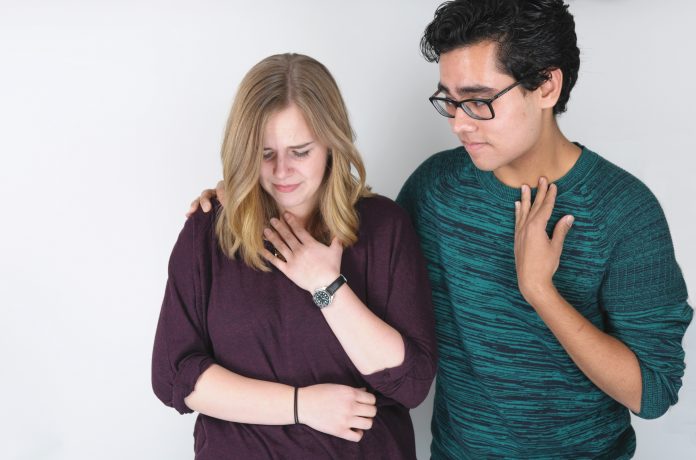
[dropcap]“[/dropcap][dropcap]N[/dropcap]ot sure what to do at this point, I’m very depressed.”

“For some reason, I feel much more comfortable knowing people don’t know how much I really suffer. They must think I’m some happy idiot when all I really want is to die.”

These are posts on SFU Confessions, a Facebook page that lets students submit anonymous confessions which range from humorous asides about transit etiquette violations to troubling stories of suicide attempts, depression, and anxiety.

At the time of publication, the page has 16,631 likes. For comparison, SFU has 26,494 students. Confessions pages have sprung up at university campuses across Canada and the USA. The appeal of such pages is clear: they appease our voyeuristic tendencies by offering an intimate glimpse into someone else’s life.

However, these pages also serve a much more worrisome purpose. When outlets like SFU Confessions become the default place for students to unload their feelings, meaningful dialogues about mental health are undermined.

There are two characteristics of these outlets that render them incapable of helping students deal with mental health issues. The first characteristic is anonymity. My generation in particular is quite attached to anonymity, assuming that when people can say what they want, they will say what they feel. However, when dealing with mental health, anonymity is problematic.

If individuals are encouraged to only share their struggles when they can fear no social repercussions, then instead of challenging the belief that talking about mental health is shameful or embarrassing, it perpetuates that stigma. Instead of being able to put a face to mental health issues, there remains a shroud of secrecy.

Expressing your feelings in an honest way is a crucial first step, but progress is difficult when subsequent communication is a one-way road. On most university confessions pages each post is often commented on by multiple individuals expressing banal statements of support or unspecific advice. That is the extent of the dialogue that can take place. Do commenters online know you personally? Can they offer a friendly ear to listen to your problems, or even a warm hug?

Opening up to someone and being vulnerable is daunting, but that’s what makes it meaningful.

I don’t mean to be cynical but I doubt all those who comment of confessions pages are altruistic; whenever social media is involved, even things that seem positive can become performative and stink of self-righteousness.

In no way do I oppose SFU Confessions or discourage individuals from sending messages to the page.  Rather, I think that its popularity should raise concerns among the student population about how we are coming to terms with mental health issues.

Instead, I encourage SFU students to seek out support from those around you, whether it be from friends, mentors, family, or mental health resources on campus. Have a face-to-face discussion with someone and be honest and genuine. The who isn’t important; it’s the how that matters.

Telling people how you feel is terrifying, and that’s the way it should be. Opening up to someone and being vulnerable is daunting but that’s what makes it meaningful. Reaching out to support systems or trying to create them is a positive step in coming to terms with how you’re feeling. Most importantly, it relies on genuine relationship-building and honest connections being formed.

Mental health is a pressing concern on our campus, and on campuses across the continent. A study from Psychology Today on US college students found that “50 per cent of students rated their mental health below average or poor” and “one in three students had reported prolonged periods of depression.” If the student population wants to change those numbers, we need more than a social media page that pays lip service to mental health issues without any real engagement. We need to work on the mental health resources available.

But the real change comes with a personal commitment to seek fulfillment — not in the digital space, but in real life. All it takes is a simple, “Hey, can I talk to you about something?”

SFU biologist discovers dangerous mosquito close to home

0
This particular species can transmit diseases like West Nile virus. - Image by Zach Chan

Getting a mosquito bite in the Metro Vancouver area just got more risky. Aedes japonicus, an invasive mosquito that can transmit several viral diseases, has been found for the first time in Western Canada, in Maple Ridge.

Peter Belton, a retired biologist at SFU, was one of the researchers who identified the Aedes japonicus mosquitos in BC’s Lower Mainland. They were found breeding in water in a backyard.

The species can transmit West Nile virus, three types of encephalitis, and Chikungunya, a disease prevalent in Asia that recently made appearances in the Caribbean and the southern United States.

This particular mosquito is an invasive species, originating in Asia but having spread around the world. In 2001, this species was found in King County Washington, and in 2008 specimens were collected in southern Washington and Oregon. The larvae are often found developing in rainwater in used car tires sitting stagnant for an extended period of time.

Belton discussed how the mosquito got introduced to these new environments: “This one arrived in the eastern US in 1998, probably as eggs in used car tires, imported from Japan or Korea for retreading. It probably got to Europe the same way in 2000.”

He continued, “It has spread to 33 adjacent eastern states and five Canadian provinces since then. We think humans are responsible for the long distances, but the mosquitoes can probably fly for shorter hops.”

The species has also been found 13 kilometers from Maple Ridge, in Mission. Researchers have since concluded that there are at least two populations in the Lower Mainland. The mosquito’s larvae were first identified in July 2014 in Maple Ridge, and since the beginning of 2015, more than 200 have been counted.

The Peak asked Belton whether the increase in the population of Aedes japonicus in North America increases the risk of disease transmission.

“Yes, obviously there is more chance of a female [mosquito] acquiring a virus from an infected (viraemic) bird or mammal. It is thought to be transmitting La Crosse virus in the southern Appalachians,” said Belton.

The mosquito could become a significant threat to both animal and human health if global warming continues to increase, as this will impact the distribution of the diseases the mosquito can carry.

“Higher temperatures increase the biting rates and activity of the mosquitoes, and also increase the development of viruses” said Belton.

Belton explained that “[W]e need to monitor with traps or by sampling containers (roadside catch basins are often used for this). If a virus appears, larvae can be controlled with specific bacteria.”

While there is no evidence so far that Aedes japonicus is transmitting disease, taking these precautions could prevent a public health risk.

Unveiling Canada’s Islamophobia

2

[dropcap]I[/dropcap]t’s late Monday evening. Two white men, one with a beard and one without, stand a few persons ahead of me in a Starbucks line on campus. Eyes flashing, lips curled into smirks, hushed voices speaking through stifled laughter.

“Dude, the Qur’an might, like, brainwash you into blowing up something.”

“Yeah, but explosions are cool, man!”

While the two guffawed, these were the words that graced my ears, and undoubtedly those of the other two bystanders in front of me. To the two men engaging in such thoughtful dialogue, you know who you are. Shame on you.

As most of you are aware, extremists from the Islamic State of Iraq and Syria (ISIS) claimed responsibility for the tragedy that befell Paris Friday, November 13, taking the lives of over 120 innocents. Since then, the French president has declared war upon the Islamic State, and has left the world stirring with discomfort at the prospects of further large-scale war of “Jihad vs McWorld” — especially with regards to what it could mean for their country’s future involvements.

A couple years ago, I lived with a Parisian roommate. Excessively proud of his country, I distinctly remember him boasting in the kitchen one evening that France was a country of peace.

“We protest over the stupidest things because there isn’t any controversy there. You never hear any news from France because nothing bad ever happens.” And I’ll admit, at the time, he was correct; up until the Charlie Hebdo shootings this past January, student protests were the only controversy I’d ever heard emanate from the French.

Though, as with most good things, they often come to an end, and the devastation that ransacked the country left my insides writhing in disbelief as I watched the terror on the television above me, while I safely sipped my privileged beer at a pub in our presumably untouchable haven of Canada.

Canadians, I’ll offer you three serious realities: racism, religious intolerance, and fully bloated ignorance.

How could such a peaceful, civilized country — a vacation station, a distinct cultural hub, and one of the most popular student exchange destinations — be torn apart by such religious hatred? As the body count unfolded, I certainly wasn’t the only one painfully confronted with the realities of war that night — that, yes, even the most content of countries could be subject to brutality, from whomever, whenever.

Sadly, it certainly doesn’t help that CBC and other prominent media outlets now constantly barrage the public with reminders that “soft targets are a jihadist fantasy” and that “Paris-style ISIS attacks could hit anywhere, including Canada.” While security experts and media outlets pull off their gloves from another day of hard work, their messages have evidently helped condemn our thought-processes to generalizations, and in most cases, ridiculous accusations toward Muslim communities.

Since the eruption in Paris, I’ve been disturbed by the headlines in Canada. A young Muslim woman wearing a hijab is given dirty looks and verbal criticisms in a grocery line-up. A mosque in Peterborough, Ontario has been deliberately set on fire. In Toronto, teenage Muslim girls are being cautioned not to go Islamic night school alone. A homeowner has placed a sign on his lawn asking Canadian Muslims if they’re “sorry for the slaughter of innocent people.” A man in a Joker mask films a YouTube video while holding a gun and threatening to kill Muslims in Quebec.

The fact is that the relentless attacks from the radical Islamic world have once again mired all Muslim communities in stereotypes that are truly unrepresentative of who they are. As the privileged among us quake in the terrified possibility that such an attack could penetrate our ‘peaceful’ native land, islamophobic Canadians thoughtlessly point an accusatory finger at our Muslim population at home — a piece of our diverse, harmless, proud, and patriotic cultural makeup.

To those who adamantly demand that Canada shut its borders to any immigrant Muslims, I’ll offer you three serious realities: racism, religious intolerance, and fully-bloated ignorance.

Canada’s increased anti-Muslim sentiments over the last few years have not only harmed our population, but have exposed Canada’s intolerant underpinnings. While Canadians may wear a badge of pride establishing that we’re from a country that beams inclusivity and acceptance, by continuously framing Muslims to be outsiders in their own country (as we have with our nation’s indigenous) then pelting them with acts of hatred and even violence, we’ve seriously contradicted the facade we wear.

The ideologies behind the monstrosity that transpired in Paris are simply not representative of the Muslim faith, and, in fact, left those at home just as shocked everyone else. A Muslim bakery owner claimed on CBC the other day, “This isn’t the Qur’an. This has nothing to do with the Qur’an.” Alas, there are many ‘evil’ Muslims, and there are millions more content and harmless people of the Muslim faith — just like there can be evil or decent people from any ethnicity, religion, or class.

I’m saddened that religious identification still plays the role in who the secular majority and other non-Muslims decide is ‘evil.’

Such ideologies have ignited a nation-wide ignorance that identifies Muslim people solely by their religion, and clumps them together into an intersectional abhorrence that needlessly positions them as outsiders. As a non-religious white male, I simply cannot understand how this has come to be in this day and age.

How are people, much less Canadians, so incredibly ignorant? The front page of the Metro this morning displays a large portrait of a Toronto Muslim reporter, and the headline reads: “Because I wear a hijab, I’m automatically the spokeswoman for every Muslim in the country.” I’m saddened that this is the case; that religious identification still plays the role in who the secular majority and other non-Muslims decide is ‘evil.’

How do we right these wrongs? Religious education is the solution, as Samaah Jaffer, my former colleague at The Peak, offered recently. She is an incredibly well-rounded, ambitious SFU World Literature and International Studies student who also happens to be a Canadian-born Muslim: “I believe the attacks that have transpired against members the Muslim community are due to a lack of understanding,” she tells me in an online message.

“The fact the ISIS acronym includes the word “Islamic” is incredibly misleading, since the group has absolutely no legitimate religious authority, and I believe education is key when it comes to decreasing prejudice. It’s up to individuals to take the time to learn about Islam, rather than relying on the extremist actions that are being covered in the media to inform their judgments.”

So, to Canadian Muslim communities, and those experiencing isolation or criticism in other parts of the world: do not apologize for the hatred that ransacked Paris on November 13. You were not involved. These terrorist actions do not reflect your religious beliefs, nor your qualities as a human being. As your fellow Canadian, I apologize for any unfounded prejudice you’ve had to endure as a result of our blatant intolerance.

And to the xenophobes I am ashamed to call my own race: perhaps you should take a moment to educate yourselves on religious diversity, and what it actually means to ‘be a terrorist.’ Perhaps you should recognize your racism as such, rather than blindly subscribing to profane, violent, and unfounded judgments.

We’re now living in the 21st century. Let’s actually practice what we preach and demonstrate the cultural ideals that we’ve wrongfully boasted about for ages.


Students’ peer education program pays off

0
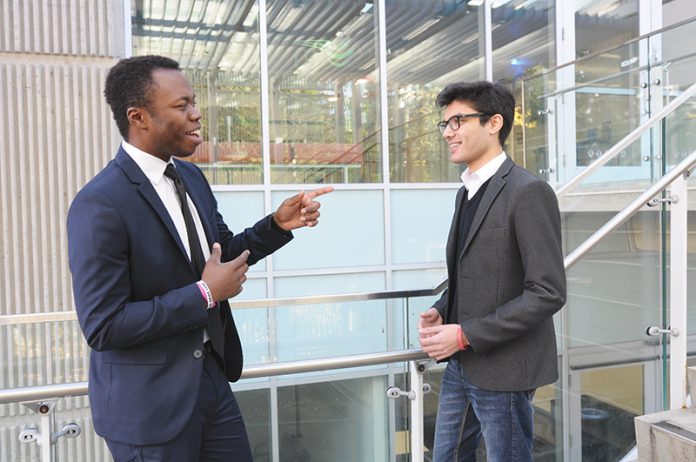
Mubanga Ngosa (left) and Danish Soomro (right) have been involved with the FIC Peer Education Program for two and a half years. - Photo by Lisa Dimyadi

Two SFU students are being recognized for their contribution to international education. Mubanga Ngosa and Danish Soomro, former Fraser International College (FIC) students, who are now studying at SFU, are being awarded the Elizabeth Paterson Award for international Student Leadership in International Education by Canadian Bureau of International Education.

The award is given to an international student or student group who contributes in a positive way to the internationalization of education. They were nominated by SFU’s FIC for their work co-managing the FIC Peer Education Program and will be traveling to Toronto to receive their award end of this month.

Ngosa is majoring in software systems, while Soomro is a business major. In an interview with The Peak, Mubanga spoke about the elements of their program and how they have come so far.

The Peak: How did the program gain recognition initially? 

Mubanga Ngosa: Initially, the peer education program won the award for best student led program for 2015, a few months ago. We went to Whistler to receive that award and from that I think they recognized that our work was actually doing something fundamental and thus, they awarded the program leaders for student leadership.

P: What is the program about?

MN: Our peer education program is very similar to the Student Learning Commons at SFU. It’s almost the same; they mirror each other to quite some extent. So with the program, what we do is we get students to come in who need academic help with a particular course.

The students who help the other students would have achieved at least an A- in the same course. So it’s just like a study together system. Mostly, we operate by a drop-in system, so students are always welcome. Well, the program has a lot of people. It can have anywhere from 20 to about 100 students volunteering for it in any given semester.

P: How long have you been associated with this program?

MN: We’ve been involved with the program for about two and half years. We were at FIC when we joined the program.

P: What are some other aspects of the program?

MN: The other things that we do a lot is basically trying to make other people comfortable with being intellectual, so as to speak.

You don’t always have to feel pressur[ed] into always constantly studying. It’s more of a fun environment where you can actually learn. One of our associates came up with the word “edutainment,” so it’s like education/entertainment. We try to centre somewhere around this.

P: Has there been any particular learning experience which stands out as a milestone?

MN: Well, the entire process is a learning experience since we are international students who have just come into a new country, settling into a new culture — and we are given this opportunity with responsibility and we are constantly trying to build on that.

To single out a particular event, we had to throw a Halloween themed event at FIC, which was not particularly related to academics, but it was large-scale and we had media coming into the school to cover the event — and that was sort of outside our comfort zone and it helped us to grow as a team.

P: Do you have any particular message for readers?

MN: Be yourself and be confident to stand out. Just have fun with your experiences and hopefully, you’ll get to your destination.

HUMOUR: Gatorade announced as the official beverage of the upcoming 2016 Hangover Games

0
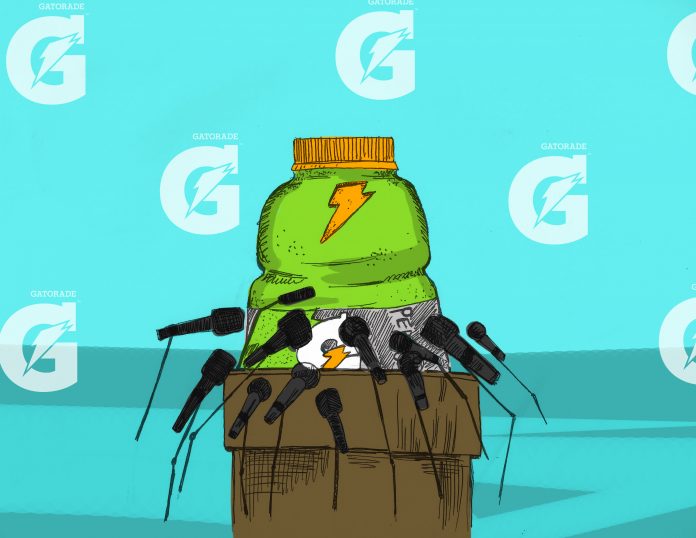
Illustration by Ariel Mitchell

Earlier this week, aspiring alcoholics and people who “just know how to have a really good time” everywhere were rejoiced to learn that popular sports drink Gatorade will be the official beverage for the upcoming 2016 Hangover Games this January.

The announcement came late last Sunday afternoon, just as most of the populace were emerging from their own headache and bleary-eyed deliriums.

“This is a very special day in the history of. . . oh god, I think I’m going to puke. . . nope, we’re good,” said Bradley Sherman, a spokesperson for the 2016 Hangover Games and the self-proclaimed “king” of Flip Cup. “My head is fucking killing me. Does anyone have some Advil or an Ambien or something? Man, those tequila shots last night were a one-way ticket to Hangover City. Seriously, no one has an Advil?”

After ingesting three Tim Horton’s bacon breakfast sandwiches and sweating profusely for several minutes, Sherman went on to describe how this partnership will ensure that no fun-loving individual will ever feel like they have to face their hangover alone — because Gatorade will have their back.

“No nightstand table will remain empty; no throbbing migraine will go unkempt. This is the future we always dreamed of living in and. . . oh god, does someone have a bucket? Maybe I shouldn’t have had that last breakie sandwich.”

Following the announcement, the official Hangover Games committee wasted no time in also confirming (after months after speculation) that tiger descendent Charlie Sheen would be the first professional partier to be endorsed by Gatorade.

“It’s really a match made in post-party heaven,” said Sheen during the press conference, who was able to FaceTime from a nearby bar. “If you’re like me, your partying can get pretty hardcore. That means your hangover should be equally hardcore.”

Gatorade joins an already-illustrious list of sponsors for the 2016 Hangover Games: poutine being the official snack, and closed blinds being the preferred choice of window coverings for most partiers.

But not everyone seems to be welcoming the partnership with open arms: critics argue that the Hangover Games have become so entrenched with corporate advertising that they’ve strayed too far from the roots, which traditionally revolved around staying in bed for most of the day and contemplating whether or not to look at one’s bank account balance after the previous night.

When asked if the Gatorade partnership will have any negative repercussions on the upcoming Hangover Games, Sherman responded by asking The Peak not talk so loud and if someone could maybe dim the lights a bit.