Home Blog Page 758

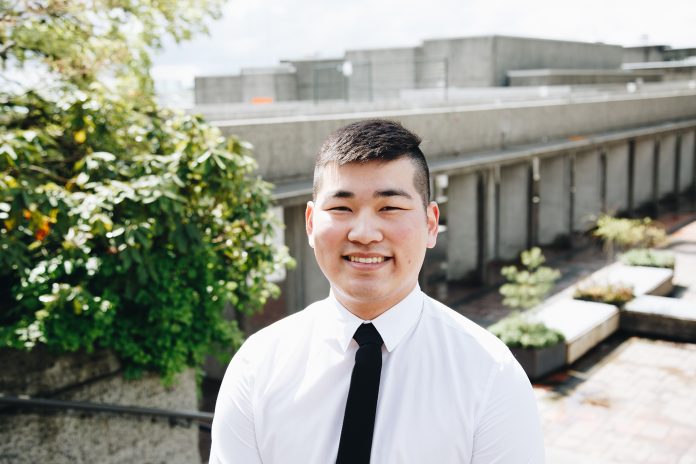
An interview with SFSS President Hangue Kim

0

It’s only the first week of the semester, but SFSS President Hangue Kim’s schedule is already packed.

Between fulfilling his board duties, coaching at the Enactus national competition, and taking classes, Kim still found time to sit down with The Peak to discuss the year ahead.

How are you feeling at the start of your term as SFSS president?

“I’m feeling really great. We just finished our first week in office working with the new board and transitioning them into their new roles.

“There’s been a shift, I think, with the new board. There’s a lot of energy and a lot of really good experience and diverse perspectives from the new board and I think there’s a lot more commitment to really engage with students, and I think that’s what we are going to make a priority this year.

“The shift in the culture of the student society — just seeing it in the past few weeks — it’s been really amazing and we’ve been more active just around the SFSS getting our staff involved, getting our student at-larges involved, and our board members as well […] and we just need to continue that throughout the year.”

How do you think your role as vice-president finance prepared you to be president?

“As VP [vice-president] finance I sat on the [executive] committee and had a really good opportunity to understand the finances of the organization and I think that’s really important, not only being president, but being a board member in general.

“I think just sitting on the executive committee and chairing the Finance and Audit committee, it gives me a really in-depth view of how the organization functions with their budgets, with their policies, with internal controls, and making sure that we are risk-averse. We don’t want to be spending money inappropriately or in ways that aren’t bettering the student experience here at SFU.”

What do you foresee being your biggest challenge this year?

“I think the biggest challenge for us this year [will] really be shifting the culture and building that trust with the students. I want [us] to be a student society that really represents and advocates on student interests [. . .] and not being that board that is sitting in their ivory tower that is really distant from their membership. I want to be on the ground.”

In your campaign, you emphasised that you would increase student support services, how do you plan to do that?

“So the biggest thing is we’ve received the results from the General Membership Survey and we’ve gotten a good response rate from that. Based on that, the question is how to increase the student support services. It is really prioritizing what the results are from [that] survey and developing our board work plan around that. [. . .] Just providing more staff support, more board support for these initiatives.

“One big thing is the food bank program. That’s one of the services that’s really widely used on campus. We’ve seen an increase in use of the program and in this upcoming year we see the cost of it exceeding the amount that we have budgeted. As a student society, we’re not […] going to cut that service, but we need to find other ways to fund it.”

You also indicated that you plan to increase opportunities for students to get involved, what will that look like?

“The biggest thing is — I push this onto my board all the time — I tell them to be leaders. I tell them to be innovative and work with students, so I think the biggest thing is getting them to really take the lead and take the initiative to lead other students and [provide] them the guidance and the support they need from the SFSS.

“[O]ne big thing that we shifted this year is even our committee placements. We [questioned] the reason for limiting the spots or the opportunities [for students] to sit on a committee. They want to be involved with the SFSS, and support us, and do events for SFU students. The biggest thing we changed is still including them as general volunteer members to help champion new ideas, new initiatives, and give them the opportunity to take the lead on these initiatives.”

What are your priorities for advocating on behalf of students this year?

“Based on the survey [. . .] a couple important things that students did advocate for [are] increased study space on campuses — like a space expansion plan whether or not it is our Surrey or Vancouver spaces. Longer library hours — that’s something that our previous board members did work on and we were successful in extending the hours [of the Fraser Library in Surrey]. So continuing initiatives like that, that mean a lot to students.

“We saw a lot of students asking for more campus events, we will be prioritizing that as well with our Events committee and also our Strategic Engagement committee. We increased the funding last year, so hopefully students will see more of a campus culture.”

You don’t have a lot of free time, but what do you do for fun?

“For fun? Oh man, I don’t know if I have any free time to have fun. I mean, I like going on hikes, that’s kind of my downtime. Either going on hikes or hanging out with my friends. I go to this place called Big Chicken Town sometimes on late nights when I’m really craving fried chicken. It’s honestly really good chicken.”

Which came first, the chicken or the egg?

“The chicken. I think the chicken came first because the chicken was a cell within the egg that developed a shell […] something like that.”

Responses have been edited for length.
Board Shorts

0
Irene Lo / The Peak

Members form new committees

The SFSS Board of Directors appointed its members to the committees that conduct the society’s business at the first meeting since the new board stepped into their roles this month. The board decided not to proceed with the Strategic Planning committee, nor the Teaching and Learning Centre Advisory committee this year, leaving 13 committees to establish policies and initiatives for the society. The SFSS has now opened nominations for at-large members to sit on the committees.

Board renews accessibility initiative

The board made the decision to include an Accessibility committee again this year that will seat four board members, including vice-president finance Jimmy Dhesa as chair. According to the SFSS website, the committee monitors the Student Society Accessibility Fund and oversee how accessibility issues are addressed by the society.

Student union building construction slowed last month

April was a slow month for the construction of the student union building (SUB), general manager of Build SFU Marc Fontaine told the board. Since the expenses totaled only $441,006, it did not meet the million-dollar threshold necessary to borrow funds through the society’s $44.3 million loan agreement with Scotiabank. Instead, the board approved a motion to borrow the funds internally from an SFSS bank account to be paid back in the coming months. So far, the SFSS has taken out $2.3 million in loans to cover the cost of construction of the SUB.

Movies you may have missed: A Quiet Passion

0

A Quiet Passion

Review by Josh Cabrita

Andre Bazin argued that photography fulfills the same desire that led the ancient Egyptians to embalm their pharaohs. That word, ‘embalm,’ and the role photography can play in preserving the dead, is particularly relevant in A Quiet Passion, Terence Davies’ biopic on the nineteenth-century American poet, Emily Dickinson. Photography, a recent invention of the time, appears at three critical moments of change and intersects between personal and cultural history, nineteenth-century values and how modern viewers may perceive Dickinson. Davies sees the poet as a proto-feminist living under stiff patriarchy and a quasi-existentialist at a time when puritanism reigned supreme, but needless to say, another time would picture her another way.

The first time a camera appears, it bridges Dickinson’s teenage years and the rest of her life as a heterodoxical spinster. Young Dickinson is seated for a portrait while the lens gradually approaches her face. The exposure lasts for decades, chronicling years of hardships through the taxing changes on her visage — the features of Emma Bell as young Dickinson, and Cynthia Nixon, playing the same character as an adult, are slowly superimposed over each other.

The second leap, indicated once again by the foregrounding of photography, breezes by with a gust of archival images from the Civil War. Rather than reflecting on its personal effects like during the portrait sequence, the connections between the film’s scenarios and incidents have been omitted: friends come and go, passions blaze and extinguish, Dickinson’s parents live and die.

Decay and the means by which we understand the past are Davies’ primary concerns. Similar to his other films (The Long Day Closes is highly recommended for an 80-minute introduction to Davies), A Quiet Passion embalms a lost era, signals its demise, and shows history and representations to be in constant flux. This is true of the third and final example: just like how young Dickinson and adult Dickinson melded together at the beginning, Cynthia Nixon fades into a daguerreotype of the historical Dickinson.

World News Beat

0

CHINA – Human rights lawyer admits to Western ‘brainwashing’

Chinese human rights attorney Xie Yang reportedly confessed during his trial by a Chinese court that he was ‘brainwashed’ to bring Western ideals to China. He was apprehended nearly two years ago on charges of inciting subversion. Yang’s trial lacked advanced warning to the public and occurred with very low transparency. The court transcripts containing Yang’s confession were unavailable to foreign journalists. Yang’s wife alleges that he was tortured while he was detained and other lawyers handling political cases in China have faced arrest and similar treatment.

With files from BBC News.

UNITED STATES – Fears Trump will withdraw from Paris climate agreement

Participants at the recent UN climate talks rejected the idea of changing the carbon targets of the Paris climate agreement to keep the Americans in the treaty. It has been speculated that President Donald Trump will withdraw from the agreement. The speculation increased after Trump’s advisors noted that the oil and gas reforms could be met with stronger legal battles from environmentalists if the US remained a part of the treaty. It was proposed that lessening the carbon target commitments might keep the US in the agreement.

With files from BBC News.

NIGERIA – 82 Chibok girls freed from Boko Haram

Eighty-two kidnapped Chibok girls in Nigeria were released by the militant group Boko Haram on May 6. Many parents were uncertain if their child was one of those freed. The girls’ liberation was the result of a trade deal between the Nigerian government and Boko Haram which saw the release of five suspects from the extremist group. The girls were brought to the capital Abuja for temporary refuge before being reunited with their parents. Their names were published by the government on Twitter, which posed difficulties for parents, since access to social media is not abundant in Chibok.

With files from BBC News.

COLOMBIA – Eight people abducted by rebel army

The National Liberation Army (ELN), a rebel group in Colombia, abducted eight people last week, according to the Colombian government. The ELN captured one woman and seven men in the jungle in the Chocó area. The government organized a military response, with an aggregate of over 6,000 troops already stationed in the area where the hostages were taken. The abduction disrupts peace talks started between the government and the ELN earlier this year.

With files from BBC News.

The summer student’s survival guide

0

By: Jessica Pickering, Courtney Miller, Alex Bloom, Matthew Fong, Cecile Favron, and Nathan Ross

Let’s face it: nobody wants to be in class during a beautiful summer day, but some of us have to be. Not to worry, there’s still a way to celebrate your summer while being in school. The Peak got together and wrote out their tops tips for making the most of summer semester.


Between-Classes Siesta

Yes, a nap between classes. Lots of warm locales encourage afternoon naps. With the sun high in the sky, a mere spackling of clouds against breezy blue, what could be better than closing your eyes? You can stop at the liquor store at Cornerstone and buy a refreshing cooler, or stop elsewhere for something non-alcoholic.

If you aren’t allergic to grass, find a nice and clean six-foot-square slice of green and lay out a jacket or blanket. Sip your drink. Settle on the ground. Sleep. You’ve earned it.

If you are allergic to grass, go to the roof above the transportation centre. No grass, just non-problematic, pollen-free rocks. There are usually chairs hanging out up there. Drag one over to the edge facing Vancouver. Take a seat, prop your feet up on the concrete edge, and let the view act as a lullaby. Take sips as desired. Cheers, to a summer well-spent.

-CM


Try Playing Paintball

Paintball can be a fantastic stress reliever. Plus, this summer we should be blessed with some gorgeous weather in which to play it. Whether you are taking classes, working, or both this semester, you should have time to try it. All you need is one day. It does truly take all day, though, as it is quite a journey to any paintball place.

Warning: it does hurt to get hit, so be aware of your pain tolerance before you play. It is well worth the risk of pain; it’s an intensely physical game involving tactics and skill. If you are a fan of Call of Duty, however, you may be disappointed by the inaccuracy of paintball markers (the guns), which lob rather than shoot paintballs. I recommend North Shore Paintball where rental and 200 paintballs costs around $50, go on half-price Thursday for $15 off admission if you can. While not a cheap game to try, it is worth playing at least once.

-AB


Catch Up on the Essentials

Sleep, eat, and poop. That’s what I usually do.

-MF


Spend Time on the Farm

Student life is not exactly defined by copious amounts of time out in the fresh air and healthy foods, but why not take a break from your cooped-up study routine and all-nighter snack choices this semester. There is no better time than summer to seek out fresh produce at the farmer’s market or line up a self-tour of a local farm.

The good news is, you don’t have to venture far either! There are lots of family farms and markets in the area, including the Langley, Maple Ridge, Pitt Meadows, and the North Shore. The commute is worth it for a bit of the country in the city.

-CF


Study at the Beach

It can be hard to set aside time for fun things when school stress starts getting to you, so why not combine what you have to do with what you want to do? Taking your textbooks to the beach allows you to get some much needed studying done.

The best part is, if you ever need a study break you can just put the books down and you’re in the perfect place to relax. Heck, even if you don’t end up actually studying, taking your school stuff along can help resolve any feelings of guilt you may have about procrastinating.

-JP


Get Out and Soak Up the Sun Somewhere Besides Simon Fraser University (Especially If You Live on the Mountain)

SFU is a dreary place in the fall and spring semesters, thanks to its brutalist architecture and Vancouver’s miserable weather. Thankfully in the summer . . . SFU still has brutalist architecture. Don’t be fooled into thinking that spending too much time on the mountain is good for you.

Sure, there are nice parts and that fresh mountain air, but you need to take a significant amount of time away from being a student, lest you burn out. Get off, go hiking, get down to the beach. Heck, even wandering through the walkways around Burnaby Mountain is a good start.

-NR


Day Drink in Class*

Mike’s Hard in a coffee cup. ‘Nuff said.

-CM

*Note: The Peak does not endorse drinking in classes, but do what you want, it’s your tuition money.

SFU students dominate Surrey Top 25 Under 25 awards

0
Surrey Board of Trade / Flickr

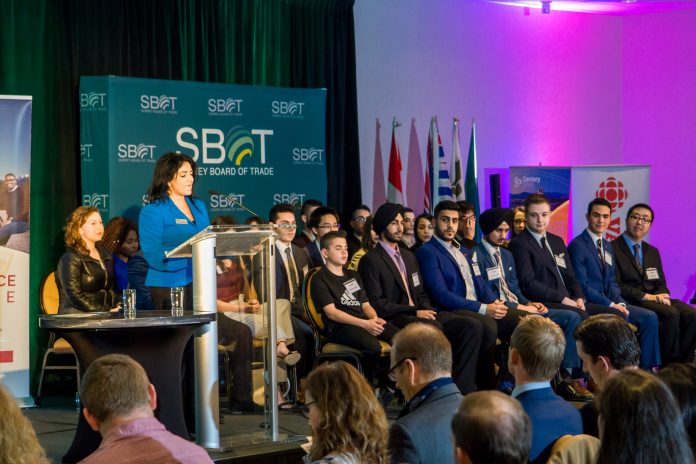
SFU students and alumni swept the majority of the Surrey Board of Trade Top 25 Under 25 awards last month. Eighteen of the youth recognized for business or community-related projects in Surrey are recent graduates or current students of the university.

Most of the students and alumni who received awards at the April 20 ceremony were from the Beedie School of Business. Many were involved with Enactus SFU, the local chapter of a national organization that facilitates social entrepreneurship among university students.

Janice Ng, one of the recipients, is a student in the School of Interactive Arts and Technology and a co-founder of Farmooo. In her own words, Farmooo is a “virtual reality farm simulation game that helps teenage cancer patients cope with pain during chemotherapy treatment.” Ng said that, along with co-founder Henry Lo, she hopes to further develop Farmooo and eventually implement it for patients in Surrey Memorial Hospital and BC Children’s Hospital.

Another of the recipients, Rajin Shokar, is the president of Enactus SFU and helped create two new projects this year: Coast Cards and the Enactus SFU Hackathon. Coast Cards recycles restaurant coasters and turns them into greeting cards. The Enactus Hackathon held earlier this year offered students a platform to learn from technology, health, and design experts, while working to create business solutions to relevant community problems.

When asked what the award meant to him, Shokar replied that he is “honoured to be selected” and the award “encapsulates the sacrifices [his] family has made and the support they have given [him] through [his] time at SFU.”

Calvin Cheng is a Beedie student and a part of Enactus SFU where he got the opportunity to lead the team in two environmental sustainability programs: Banner Bags and Refresh. Banner Bags, a project which also involved fellow award recipient Crystal Lin, encourages students to take “street banners that would otherwise go into the landfill and [bring] them into high school sewing classes to be turned into reusable shopping bags,” Cheng explained.

Refresh turns fruit that does not meet grocer standards into jam. Cheng noted that “the goal of this process is to offer work opportunities for refugees.”

Napassorn Limapichat, also a Beedie student, is the public relations manager at Soap for Hope, a social enterprise at Enactus SFU that gathers lightly used soap bars from hotels, turns them into liquid soap, and sells them to businesses and community members. Limapichat noted that all revenue goes towards the transitional work programs to provide a source of income to marginalized individuals.

A further 14 students were also recognized at the award ceremony, including Simrenjit Boyal, William Brenner, Joseph Fredrick, Yosof Hakimi, Crystal Lin, Henry Lo, Madeline Millsip, Alexandria Mitchell, Hassan Murad, Bukhosi Nkosi, Braeden Peterson, Robbie Sebullen, Emad Sholi, and Karamveer Virdi.

Shows to binge-watch this summer

0

As the summer term begins, many students may be finding themselves with too much time on their hands. The weather will likely be gorgeous, by Vancouver standards, but who are we kidding? None of us are actually going to go outside, right? To prepare you for your newfound free time, here is a list of the best shows to binge watch this summer:

The Last Kingdom

By Alex Bloom

        The Last Kingdom, based on the books by Bernard Cornwell, has quickly become one of my favourite shows. Set in late ninth century AD England during the struggle between Saxons and Danes to control the Isles, it tells the story of Uhtred of Bebbanburg (Alexander Dreymon), a Saxon raised by Danes. Even though he rejects his Saxon roots, Uhtred is able to move relatively freely between the two warring groups. Uhtred’s liminal position allows the audience to see the nuances of the conflict, which is not only a conflict between armies, but between faiths and cultures.


The Last Kingdom has high production values and this means stunning costumes and sets, not to mention climactic battle scenes. The show is action-packed, with at least one battle or skirmish occurring in almost every episode. For fans of action, The Last Kingdom does not disappoint. Every combat sequence is both realistic and well-choreographed. For those who don’t like violent shows, I don’t recommend it as it is quite visceral.

What could be a dour and boring historical narrative is made entertaining by the roguish personality of Uhtred, who never fails to find humour in a situation. If you liked Vikings or Game of Thrones or if you are simply interested in history, then The Last Kingdom is for you.  

The entire first season is available on Netflix and the second season is also available on Netflix as it is released.


Dark Matter

By Nathan Ross

It was very tempting to talk about Orphan Black as the show to watch, as Canadian sci-fi needs as much love as it can get. Yet, with Orphan Black being relatively well-known leading up to its final season this summer, I would encourage those looking for another great Canadian sci-fi to check out Dark Matter.

Dark Matter follows the adventures of six people on a ship called the Raza who wake up with their memories erased and with no idea who each other are or why they are together. Combined with the ship’s android (the delightfully aloof Zoie Palmer), they try and figure out who they are. It doesn’t take long, though, for the show’s first great twist to reveal itself, as very early on, our protagonists learn they’re the bad guys. At least, they were before their memory wipe.  

Learning everyone’s backstory is a great ride, and the show gives out a lot better writing than it ever needs to as a lower-budget Canadian show. It even has some big-name guest stars like Wil Wheaton and Ruby Rose that shows it loves to aim high.


The third season begins airing in June, which means you’ll have tons of time to get through the first two seasons until then. Happy binging!

Chewing Gum

By Edna Batengas

This British series is most definitely one of Netflix’s hidden gems. A 24-year-old virgin named Tracey, who lives in a London estate with her evangelical Christian family, is desperately and hilariously trying to lose her virginity. This is a quirky comedy about a young woman who isn’t particularly sure of what she wants. Chewing Gum most certainly holds nothing back from the imagination. It is fearless, uncensored, and rude, so if you are easily made uncomfortable, this show may not be your cup of tea.

It’s uplifting to watch a show with a black female protagonist as the main character. Tracey’s highly relatable in many aspects, as she knows that she isn’t perfect. She wants to leave her conservative and strict religious life behind and indulge in the endless possibilities of the world.

The themes of gender, race, religion, and social class repeatedly appear in the show. However, they are portrayed from unique viewpoints and not as the issues we might assume them to be. The show also tackles multiple insecurities that the main character is facing, such as worrying about whether her boobs are too saggy or not. Tracey often breaks the fourth wall, conferring with the audience about her true thoughts. Chewing Gum will have you laughing hysterically but it will also make you feel far less bad about yourself. There are two seasons with six episodes each and every episode is around 25 minutes long. Trust me, it is extremely binge-worthy.  


Better Call Saul

By Vincent Justin Mitra

Better Call Saul, whose first season aired in 2015, is the prequel series to the award-winning AMC television show Breaking Bad. Set a few years before Breaking Bad, the show follows Jimmy McGill (Bob Odenkirk) in his early days as a struggling lawyer before he fully adopts his Saul Goodman persona. The show also focuses on Mike Ehrmantraut (Jonathan Banks), the gruff and stoic enforcer from Breaking Bad.

Saul is great, both for returning fans of Breaking Bad and those who are watching for the first time. While there are repeated, subtle cameos by characters from the original show for fans to get excited about, these are done in a way that works well even when they aren’t recognized. Though a familiarity with Breaking Bad does add a level of context and dramatic irony to some events in the show, Saul is equally effective and compelling as a standalone show.

If Breaking Bad was a show about a good man trying to be a criminal, Better Call Saul could be described as being about a criminal trying to be good. Like its predecessor, it delivers excellent episodes that don’t talk down to the viewer while also managing to provide a bit more humour and levity, resulting in a very bingable show.

The first two seasons are available on Netflix; the third season is ongoing.


Bill Nye Saves the World

By Tessa Perkins

Amidst the chants of “Bill! Bill! Bill! Bill!” it’s clear that the science guy is back in business. He’s back with a bit of a political message this time, as well as a strong desire to debunk misinformation and pseudoscience. Millennials can bask in the nostalgia while remembering the glory days of Bill Nye the Science Guy and us SFU students can remember the glorious day he graced our convocation ceremony to receive an honorary degree. Now, he joins us on Netflix to remind us, with his brand of quirky humour and his ability to simplify complex scientific information, that science still rules and facts and evidence never go out of style.   

This time around, he also has a team of lively correspondents: model Karlie Kloss, YouTuber Derek Muller, comedian Nazeem Hussain, writer/comedian Joanna Hausmann, and TV host Emily Calandrelli. They go out into the field to report back on subjects like alternative medicine, how climate change is affecting our lives, GMOs, artificial intelligence, vaccines, and “Earth’s people problem.” With all of these serious topics, it’s no wonder Bill often “needs a minute” to rant about an injustice or wrong in our society. The tone may be heavier, but Bill still has his sense of humour, and with a little help from his friends — panelists, correspondents, and guest stars — he may just get us a bit closer to saving the world.  

Please Like Me

By Oscar Lira Sanchez


Created by the Australian comedian Josh Thomas as a loose adaptation of his life, Please Like Me stars Josh and follows his 20-year-old self as he comes of age, discovers his sexuality, and figures out how to cope with his mother’s suicide attempt. A mixture of comedy and dramatic television, I discovered Please Like Me through a Tumblr GIF set in 2014 (those were the days) and have since made everyone that’ll listen watch it with me.


Through the comedy, Please Like Me weaves a sincere, excruciating, and heart-warming focus that features racism, abortion, homophobia, the impacts of mental illness, and the volatility of chaotic, yet beautiful relationships. Each episode (named after food) opens with an upbeat gem of a theme song by Clairy Browne & The Bangin’ Rackettes that is set to everything from kitchen scenes, an elevator ride, and a drag show (or two). The half-hour episodes of Please Like Me move through so much so fast that you’ll spend the entire show alternating between wanting to hug the characters and wanting to throw something at them.


As we’ll never really know what Josh actually does for school or work, it’s a perfect summer television partner for contemplating where you are in life. This is a show I’ve cried over, where television conventions go out the window as everything ends, and characters get better only to later get worse. Like moving through all of the stages of a relationship in quick hormone-laden succession, binging Please Like Me is an intensely exhilarating experience, and I’ll recommend it every time.


Transparent

By Janis McMath, Humour Editor


This show is listed as a comedy, but it will never hesitate to break your fucking heart. If you’re in the mood for an emotional revolution, watch Transparent. The show follows the Pfefferman family, a dysfunctional group of people all trying to figure themselves out. Morton (Jeffrey Tambor) comes out to his three adult children as trans and all the secrets of the rest of the family follow.

This show works hard to truthfully represent the reality of the struggles of those in the LGBTQ+ community (specifically the trans community) and does well in this regard. Director Jill Soloway was inspired by her own father’s coming out in creating the series, and maybe that’s why it’s so honest and beautiful. I have no idea what magic was put into making this series, but I’m happy that such magic exists.  

What I really love about this show is its amazing ability to write characters that are so embarrassingly relatable. Similar to the characters in Six Feet Under — and unsurprisingly since Soloway also worked on Six Feet Under — the characters in Transparent grow on you quickly; you’ll both hate and love them for being such stupidly human fucks. Sometimes the Pfefferman family comes together and it’s wonderful and genuinely moving . . . and sometimes they all fuck everything up and burn it all to the ground. This show is amazing.

Transparent will fundamentally change you as a person. You need to binge watch its three seasons this summer so you can binge watch the fourth season when it comes out in the fall.

DOXA presents diverse line-up of documentary films

0

Doxa, a Greek word meaning popular opinion or well-known belief, is an apt name for the documentary film festival that aims to shed light on pressing issues and share new ideas and inspiring stories from around the world. DOXA’s 16th festival is happening from May 4–14 at various venues in Vancouver and offers a wide range of programming spanning the political to the pornographic. Of course, there isn’t time to take in every film at the festival, so I’ve compiled some highlights.

The opening film is Marie Clements’ documentary musical The Road Forward. Featuring Indigenous musicians, the film chronicles First Nations history in BC, their tradition of grassroots activism, and their strong sense of community. Another film featuring Indigenous musicians is RUMBLE: The Indians Who Rocked The World. The unacknowledged and extensive role of First Nations artists in the evolution and development of rock, blues, and funk is brought to light in this fascinating film by directors Catherine Bainbridge and Alfonso Maiorana.


RUMBLE is part of the Spotlight on Troublemakers series that brings together films about activists, revolutionaries, and change-makers who have shaped our world. Another notable film in this series is Heather White’s and Lynn Zhang’s Complicit, which reveals how the global electronic manufacturing industry in China really works. You may never look at your iPhone the same way again. Some troublemakers from closer to home are featured in The Caretakers, telling the story of the fight between anti-Kinder Morgan activists and the RCMP on Burnaby Mountain.


Political activism is a theme of so many of this year’s films, including a highly relevant series called Trumped! Now What? curated by The Tyee founder David Beers. He has selected three films that he feels are relevant to our current political climate: Ada for Mayor about housing activist Ada Colau who became the mayor of Barcelona, PACmen shows the inner workings of Dr. Ben Carson’s campaign, and Waking the Sleeping Giant shows the growing movement of activists, politicians, and citizens fighting to take back their democracy. Also notable is Vancouver: No Fixed Address, a timely film exploring our current housing crisis.

The Justice Forum series pairs each film with a panel of speakers and explores questions of justice and morality. Some of the films include Free Lunch Society, examining universal basic income; Pornocracy: The New Sex Multinationals, investigating the profit-driven porn industry; and You Are on Indian Land, documenting the Akwesasne Mohawk community’s blockade of the international bridge near Cornwall, Ontario in 1968 that aimed to raise awareness of treaty violations.

For the third year, DOXA presents their French French series that includes six films and a program work by filmmaker Chris Marker. One that stands out in this series is Être-Cheval (Horse-Being) which is an intimate look at the experience of Karen, a transgender ex-schoolteacher who trains in “Pony Play” to imitate horse behaviours. Vers la tendresse (Towards Tenderness) looks like a good pick if you want to be inspired by men in Seine-Saint-Denis discussing love, desire, sex, and race. 

Manifesto appropriately closes out the festival with a call to action, or many calls to action, as Cate Blanchett plays 13 different characters, sharing their words of wisdom from the great manifestos of the past century. No matter which film(s) you choose to take in at DOXA, it’s sure to provoke, inspire, and entertain.


Guy Ritchie’s King Arthur: The Legend of the Sword promises a fresh take on an old story

0
Djimon Hounsou (left) and Charlie Hunnam (right) on the set of King Arthur: The Legend Of The Sword

The legend of King Arthur is a tale that has been subject to countless retellings. Guy Ritchie’s take on the story, however, is bound to stand out. Ritchie’s vision as a director comes out through a mix of absurd comedy and visceral action sequences; he makes stories that could otherwise be tired or boring into highly entertaining films. The Peak was invited to a conference call with Charlie Hunnam (King Arthur) and Djimon Hounsou (Sir Bedivere). Here are some of their thoughts on working with Guy Ritchie and making King Arthur: The Legend of The Sword:

Christina Fuoco, College Times: . . .What was the most important thing you think you learned from Guy Ritchie?

Charlie Hunnam: Twofold. I mean, I think on the surface what he taught me was the importance of having fun when we work. I tend to be pretty serious about the work I do and go in with a lot of preparation and just set about quietly executing my game plan. And Guy said that’s all well and good but I don’t know what we’re going to be shooting, so you better come ready to be a little bit more light on your feet, you know. But he said the thing that you have to remember is that we want this film to be really, really fun. . .


Djimon Hounsou: And I think we can see that transpiring in his films. You do see the fun in his films.

Inge Koda, Western University: . . .What audience do you hope the film will attract?

DH: Well, it’s a story of all people. I think it’ll attract a lot of people and certainly most of us can relate to this king. . .

CH: I mean, I think the thing for me and that Guy and I discussed a lot was that Arthur has always historically been rendered as this very noble man who goes on a noble quest to become the noble king.  But it’s sort of quite elitist and it’s — in that rendering and what we wanted to really do was make Arthur an everyman. Just somebody that everybody could relate and that felt accessible. . .

Rachel Enton, Georgetown University: King Arthur is a myth that’s been very popular and told many times, and this movie is done with an iconoclastic take on it.  What do you think makes this film special or unique in it’s telling of the story?

CH: Well, I think that Guy Ritchie’s sensibility as a filmmaker is just so unique. I mean, it’s all with — what makes any story exciting is the vision of the director.  And ultimately — you know, we talk about the fact that King Arthur has been told many times, but ultimately King Arthur is one version of the telling of the hero’s journey, which is one of the archetypal stories, the three or four stories that we dress up different ways that we tell over and over and over again.

                          Because it’s — storytelling by nature or historically has been a way in which we understand the human journey.  And so it — having Guy Ritchie at the helm immediately makes this fresh and original and unique because there’s nobody out there that really has that vision that he has as a filmmaker.

                          I mean, immediately you know it’s going to be cheeky and irreverent and fresh and unexpected and original, so I just — I, for me at least, when I was told the four-word pitch, which was Guy Ritchie’s King Arthur, I said, ‘I’m in,’ you know? I would want to see that film in the cinema, so I want to be a part of the production.

DH: Same here. Same here.

Alex Bloom, The Peak: . . .Being a Guy Ritchie film, I know there’s going to be a lot of humour in it, but how much of the humour in the film is in the script and how much was left to you guys to add into the movie?

DH: Well, I did not see much humour in the script, I think the humour sort of came organically as we were interacting with Guy Ritchie as our director. I think most of it came from the [moment]. That’s what it was for me.

CH: Guy Ritchie’s not much of a . . .preparation man. He really has an extraordinary ability to work in real time. And so the script for Guy is really just a blueprint and the whole thing’s going to come alive on the day, which is why he’s very specific about the team he puts together because he wants some like-minded people that he feels have the ability to contribute to the process and that’s why it’s exciting for Djimon and I.

                          It’s a really rich collaboration, working with Guy, and like Djimon said, a lot of that humour came from us shooting the scene a couple of times as scripted and [him] saying well, we can do better. Let’s throw some jokes in and us starting to banter around . . . before you know it, the scene in real time has transformed.

Talking to Charlie Hunnam and Djimon Hounsou about the filmmaking process, it sounds like King Arthur: The Legend of the Sword was made in a creative way that allows more of the personality and the charm of the actors to show through. Guy Ritchie’s directing style seems to be fluid and, above all things, original. I don’t think other adaptations of the legend can say the same thing. Whether you’re a purist and hate to see changes made to original source material, or if you find it hard to relate to old stories, I think you’ll be able to agree that this version of the tale is a fresh new take.

SFU Aboriginal Reconciliation Council releases calls to action

2
Photo courtesy of the SFU Aboriginal Reconciliation Council

The SFU Aboriginal Reconciliation Council (ARC) released its calls to action last week which will guide the university in allocating the $9 million set aside to fund reconciliation efforts on campus. In an executive summary, the council outlined its priorities for the Aboriginal Strategic Initiative fund based on feedback from the community it collected over eight months of consultations.

The report was originally expected to be completed by February 2017, but the council will now submit the report to the Office of the President on June 15. A ceremony to mark the handing over of the report is scheduled for the fall. 

“In very overt ways, and also in very subtle ways, I think the process of engaging in this dialogue has started to shift the landscape here,” said ARC co-chair Kris Magnusson.

When the council was initiated in fall 2016, it expected the process of consultation to take only one semester. However, the volume of input meant that the deadline for releasing the report was extended twice over the course of the year.

“It became pretty clear that there was just a lot of material here, a lot of interest,” explained Magnusson. “If we were simply going to hear people, we had to have a bigger time frame.”

The executive summary contains 29 calls to action that include indigenizing spaces on campus, course curricula, and administrative policies, as well as building more community supports.  Magnusson said that the council made a strategic decision to present its report as calls to action, rather than recommendations.

“A call to action is much stronger, you have to either say yes, or explain why it’s no,” he explained.

Many of the calls to action also do not directly make recommendations for the allocation of the $9 million fund. Magnusson noted that much of what the council wanted to address was not specifically related to funding issues, but connected to policies and procedures.

“We need to rethink how Indigenous perspectives are represented and recognized across our different levels of leadership,” he said.

The council held open forums for members of the SFU Aboriginal and non-Aboriginal communities and hosted representatives from the broader Indigenous community, including the Musqueam, Squamish, and Tsleil-waututh nations, throughout the year.  

“They found this to be so powerful and so useful, so one of the calls to action [is] we cannot stop that process of dialogue,” explained Magnusson. He noted that the process of input and recommendations will not stop with the release of the report.

When the report is handed over, SFU administration will make the decisions on how to distribute the funding over a three-year timeline.

“Hopefully [the report] becomes a living document where the articulation of the principles and the directions of the calls to action become a sustaining part of the fabric of SFU,” Magnusson said.

“I am so proud of how this community has come together and I am so encouraged by what potential we have if we agree to join arms and walk through the problems that we are going to face.”