Home Blog Page 752

SFU professor finds drug criminalization hinders HIV/AIDS efforts

0

An unprecedented study by an SFU professor indicates that drug criminalization is a major driver in the HIV/AIDS epidemic and presents a barrier to eradicating the disease.

Kora DeBeck, an assistant professor in the SFU School of Public Policy and a research scientist at the BC Centre for Excellence in HIV/AIDS, along with research collaborators including Dr. Stefan Baral at Johns Hopkins Bloomberg School of Public Health, recently published a systematic review study on drug criminalization and HIV prevention.

The study found that “the evidence was overwhelmingly definitive that drug criminalization has a negative effect on HIV prevention and treatment,” said DeBeck.

DeBeck and her colleagues analyzed 106 studies published between 2006–14 in the first systematic assessment of the effect of laws criminalizing drug use on HIV prevention and treatment outcomes among people who use injection drugs.

“Health and social science researchers have been documenting the serious adverse impacts of the criminalization of drugs for decades now; however, no systematic review or synthesis in this area had ever been conducted, which was a significant gap in the evidence,” said DeBeck.

The study focused on incarceration, street-level policies, drug paraphernalia laws, and the effects of such criminalization. Drug criminalization endangers the health of people who use drugs in many ways, including limiting access to needle and syringe programs and HIV antiretroviral therapy, according to DeBeck.

Not only that, drug criminalization decreases the number of syringes available on the street, which induces people who use drugs into needle sharing. This increases the probability of acquiring and transmitting bloodborne diseases, primarily HIV/AIDS.

“Out of the 106 studies reviewed, 91 studies suggested that criminalization undermines HIV prevention while only six studies reported some type of beneficial effect with drug criminalization — but these benefits were minimal at best,” said DeBeck.                       

Another group of studies found that criminalization did not have a significant effect on HIV prevention and treatment, but DeBeck explained that these studies were looking for an overall reduction in the use of drugs. “For example, one study examined policing levels, with the expectation that there would be a reduction in substance use associated with increased policing. However, no measurable improvement or reduction in substance use was observed with increased policing. Similarly, one of the studies examined incarceration among people who use injection drugs and found that periods of incarceration were not effective in deterring subsequent substance use,” DeBeck noted.

Supervised injection facilities and heroin prescription can be conceptualized as reduced criminalization. These initiatives have demonstrated positive impacts on HIV prevention, including a significant reduction in syringe sharing — a driving factor in HIV transmission, she continued.

One concern with supervised injection facilities is that they may serve as a social hub for drug users — drawing people who use drugs from other communities, which could compromise the security of the surrounding neighbourhood. However, research from Vancouver’s supervised injection facility found that public order improved after the establishment of the facility.

Despite this encouraging evidence, “supervised injection facilities are a limited intervention and just one piece of the puzzle,” DeBeck claimed.

The federal government is currently developing an approach towards regulating cannabis which is a significant move away from drug criminalization. Some health advocates including DeBeck are hoping this model will be applied to other areas of substance use as well.

American War by Omar El Akkad: terribly topical fiction

0

By: Gabrielle McLaren

Published in April 2017, Omar El Akkad’s American War narrates the events of the second American Civil War of the 2070s as experienced by Sarat, a lovable girl from Mississippi who grows up in a torn country under a sky filled with AWOL drones.  

El Akkad’s experience as a journalist covering stories such as the NATO-led operations in the Middle East and Ferguson’s Black Lives Matter movement is apparent in his vivid, factual, and terrifying portrayals of social collapse and war, particularly its impact on civilians.  

One of this book’s definite strengths is its topicality. The war was caused by prohibitions regarding the use of fossil fuels. Tensions between a Democratic North and a Republican South tore the United States of America apart in El Akkad’s universe.  

And by now, who hasn’t seen images of refugees crossing oceans or struggling in overcrowded camps on the news? These images have become so common that we are becoming jaded. However, with this recontextualisation, some beautiful imagery of the American South, and one family’s case study, El Akkad evokes the reality and horror of what have become media buzzwords: radicalism, refugee camps, and destruction. American War is a thought experiment as much as it is an exercise in empathy.    

A professor once told me that books become classics because they strike a universal chord of some sort. One day, American War will be irrelevant, but for now I am not afraid of calling it a must-read.  

Album reviews

0

By: Neil MacAlister and Ivan Premovic

Teenage Emotions by Lil Yachty

Review by Neil MacAlister

Lil Yachty is a divisive figure in hip hop, a herald of the poorly-labelled ‘mumble rap’ trend, a threat to the old sensibilities of “real” rap. There’s no denying his influence on recent culture, however, and his debut project Lil Boat was something of a masterpiece, so hopes were high for his first official studio album. What he delivered, however, was a lengthy mixed bag. Tracks like “Lady in Yellow” and “No More” are practically unlistenable, the lyrics to “Priorities” are downright disturbing, and many more tracks were just simply mediocre. The content was consistently childish (which was probably the point, given the title), but what once made Yachty charmingly youthful has given way to sophomorically explicit and cringe-inducing punchlines. This album does, however, contain some of Yachty’s best work: “Say My Name” is relentlessly catchy, the Diplo-assisted “Forever Young” sounds ready for your high school graduation playlist, and the ‘80s revival in “Bring It Back” is Lil Yachty at his best. Teenage Emotions failed to live up to expectations, but Yachty’s always able to deliver a few wins among his losses.


United States of Horror by Ho99o9

Review by Ivan Premovic

New Jersey duo Ho99o9 (pronounced “horror”) has been at the forefront of the rap-punk scene since 2014, with several EPs, mixtapes, and singles already under their belt and they continue to do what they do best. The duo blends old-school hardcore punk with contemporary hip-hop trends to the effect of some hard hitting and visceral results. Tracks like “Sub-Zer0” and “City Rejects” are some of the most raw and compelling punk rock songs I’ve heard all year. Still, the dichotomy of the band is further reflected in the tracklist; tracks like “Splash” and “Hydrolics” seem to feature no prominent guitars, taking cues rather from trap music and southern hip hop. On their debut, Ho99o9 continues to effectively genre-bend, aiming to start a riot at every turn. I’d recommend it to any listener whose taste tends to stray into more hardcore genres.


All This I Do For Glory by Colin Stetson

Review by Ivan Premovic

Colin Stetson’s latest is pretty much run-of-the-mill for the master saxophonist at this point, but even run-of-the-mill from an artist as innovative as Stetson is worth celebrating. On this new album, Colin showcases his command of “circular breathing,” a technique that allows him to play an extended phrase continuously throughout the 6-, 7-, or even 13-minute long runtimes of his tracks. The layers of sound that are added are all done in one take, supposedly, without any loops or overdubs. That fact alone makes every track on this album a towering technical achievement. Stetson also laces his sax with mics, capturing all the clicks and clacks of his fingers hitting the sax in order to mimic percussion instruments, giving the record its rhythmic feel. The result is an ominous and hypnotizing listen, something you truly need to hear to believe. – IP

A breakdown of the BC provincial election

0

By: Alan Radziwil

The BC Greens and the BC NDP brokered a historic deal last week with the intent to form the province’s new government.

After a tight race this election, and a vote recount that put the outcome on hold for more than two weeks, the BC Liberal Party, with 43 seats, had their sights set on becoming a minority government. However, the NDP secured 41 seats, and the BC Greens Party garnered a historic three seats, enough to potentially displace the incumbent party if their agreement holds.

In the Burnaby-Lougheed riding, which encompasses SFU’s Burnaby campus, NDP representative Katrina Chen won over Liberal candidate Steve Darling with a 48.06% vote in her favour. Surrey-Whalley NDP candidate Bruce Ralston took the riding that includes SFU’s Surrey campus with 58.62% of the vote.

SFU Harbour Centre lands in the Vancouver-False Creek riding won by Liberal Sam Sullivan by a margin of less than 2%, while SFU Woodwards is located in the Vancouver-Mount Pleasant riding captured by the NDP’s Melanie Mark with 65.31%.

All the ridings secured by the Greens are on Vancouver Island and include Saanich North and the Islands, Oak Bay-Gordon Head, and Cowichan Valley.

What does this mean for students?

For students, the election outcome could mean the continuation of the Liberal government. During the campaign period, the party promised to match the federal $2.2 billion that went to Metro Vancouver transit, give additional money for the BC open textbooks program, and finally bring ridesharing programs, like Uber, to Vancouver.

Due to the new coalition that has formed between the NDP and the Greens, students may instead look to see if the promises by the two parties are realized.

The NDP promised to eliminate interest on student loans, provide a $1,000 grant for students who complete their studies, improve mental health services access, increase the minimum wage to $15, and introduce a graduate school scholarship fund.

The Greens made promises to introduce tax forgiveness to students for up to five years, as well as create a report to determine how to make tuition fees cheaper. On top of that, the party wanted to invest $65 million over a four-year period to improve co-op programs available for undergraduates and high school students.

Burnaby-Lougheed’s newly-elected Katrina Chen noted in an interview with The Peak during her campaign the affordability issues faced by students.

“Tuition fees have doubled (or more) during the past decade — it’s been crazy. And then, at the same time, we also need to understand that the struggles come from provincial funding,” she said in March.

However, it is still possible that voters will be sent back to the polls. The narrow margin between the coalition and the governing party means that all sides are reluctant to give up a member to act as house speaker.

As the speaker is required to conduct business in the legislature, the future of the provincial government remains uncertain.

The legislature is scheduled to reconvene on June 22.

With files from Global News.

Brightening up SFU Burnaby campus’ aesthetics

1

By: Anindita Gupta

Simon Fraser University’s Burnaby campus is a beautiful one — under the right conditions. SFU Burnaby campus’ chief designer, Arthur Erickson, did not design prisons for a living, but the idea that he did so is incredibly widespread, likely due to how miserable the premises look at all other times.

In the summer, the sunshine takes over the greyness of the buildings, and the warmth and the cool wind overthrow the gloom of the structures. But the weather throughout the rest of the year, full of rain, cold, and snow, combines with the brutalistic architecture to produce a dull and dreary feel.

Now, I believe that a part of “being SFU” is being able to hold onto its 52-year-old original campus’ old-world charm. Otherwise, we’d be taking away the history from the structure and our university. Having established that, I also think SFU could benefit from something of a facelift.

Senior associate dean of admission at Colgate University, Karen Long, agrees that a more encouraging environment motivates students and staff alike to develop more academic interest. It lets them “discuss ideas in a setting that’s conducive to that” rather than leave school and immediately put them from their minds.

As Long and many others note, a happier, more high-spirited campus will make students actually want to be on campus and not leave at the first opportunity given. Let’s see what SFU could do to make its first and original campus a more vibrant space.

Adding more stained glass

The steel beams and glass of Convocation Mall become incredibly sombre on a typical ‘Raincouver’ day. I’d recommend replacing the glass with stained glass — probably in red and blue hues, matching much of the campus art pieces and representing SFU’s school colours. What little sunlight we get in the darker parts of the year would play into producing a more colourful and vivid effect.

This may be a long-term project, but it’s not impossible. It doesn’t need to be very expensive either. Working on the glass could even be a fun and artistic volunteer opportunity for interested SFU students to show off their talent, or as part of a visual arts course for credit. That could be our way of contributing our vision to the school.

Repaint the buildings

On the topic of colour, more vibrant walls never hurt anyone. It doesn’t need to be an obnoxiously bright colour; a shade amidst the whites and cremes would make everything much better. If SFU wants to stick to a grey base, even a blue-grey would be much more cheerful.

Alternatively, SFU Woodwards has one great thing in common with my high school in Kenya  — bricks. Brick buildings have that old-world charm, and on a damp and low-spirited Vancouver day, a warm brick red would definitely lift the spirits of most caffeinated students.

This doesn’t mean SFU would need to demolish its concrete structures and replace them with brick. A simple brick finish paint on some or all of the campus buildings would make SFU’s environment less drab.

Landscaping

Beautifying doesn’t have to be limited to buildings! Landscaping is a creative way to boost positivity in any environment. The MBC field, the gardens in the AQ pond area, and the larger grassy patch around the Applied Science Building would all look much more uplifting as gardens: imagine filling them with a colourful flowerbeds, or even a couple of scattered bonsais.

These ideas seem like they could be implemented; however, the finances must be discussed with officials and authorities who understand this matter more closely. All the same, it’s worth exploring. A brighter and more lively campus, at the end of the day, would make students and staff happier than you’d think.

What you should consider before you move in with someone

0

By: Amneet Uppal

“You’re a moron,” Judge Judy screams at a defendant. It doesn’t matter for what; she’s probably right. The defendant and the plaintiff are a former couple fighting over a broken lease, property damage, and missing rent money. I couldn’t tell you what episode I’m watching, because I’ve seen this same case play out several times.

Too many people jump into buying property together, without considering and discussing potential long-term consequences such as financial stress, ruined credit, and breakups. Judge Judy has taught me two crucial steps to take before buying or renting property with someone to protect my finances and relationships.

Discuss everything that could go wrong in advance.

We often romanticize moving into a new place, but the miscellaneous responsibilities of living with someone — such as paying bills, buying groceries, and cleaning the property —can bring serious tension. Your roommate will do something that irritates you, like frequently forget to take the garbage out, or leave their dirty socks all over the place.

Eventually, whether it’s because of the above issues or other things entirely, you might face these questions: What if you don’t want a relationship with this person anymore? What do you do? As cliché as it sounds, it’s pretty common for new roommates to quickly realise that they cannot live together.

The pressure can lead to a broken relationship. Worse, two people who don’t want to be together may end up staying together simply because they lack a backup plan for living space or finances. But uncomfortable though it might be to ask your partner what they’ll do if they aren’t your partner one day, it’s a conversation that people worldwide would benefit from having.

Get everything in writing.

I understand why this suggestion turns people off. It’s like asking for a prenuptial agreement before marriage: totally taboo socially. But getting everything in writing does not mean you don’t have faith in your relationships. Planning for the worst-case scenario doesn’t make you a perpetually negative person, it makes you practical.

Some people might take offence at the idea of a legally binding contract, but getting everything in writing will only protect you both. Your former roommate might owe you three months’ worth of rent money, but without any formal agreement, how would you prove that in a court of law?

I’ll never live with a significant other, or even a roommate, without a very clear and concise outline of the living arrangement. Verbal agreements over splitting the rent, bills, and food costs simply won’t cut it — not for me and not for a court.

This may sound overly dramatic; no one expects that they will end up having to sue their friends or significant other and likewise no one expects to get sued by their friends either. But that’s the thing — it happens, whether or not you expect it. And when a relationship falls apart, all bets are off.

People living together need to make sure they have open communication. They need to make sure the responsibilities of the property are shared in regards to the chores and to the payments. There also needs to be some sort of legal document that holds both parties accountable, if things do fall apart.

Moving in with someone is an exciting first step to adulthood, but it comes with risks and responsibilities. If you’re thinking about moving in with someone, even if that person is your best friend or soulmate, remember to protect yourself both legally and financially.

How Green is SFU?

0

By: Elise Burgert


SFU has a reputation as a ‘green’ school, priding itself on its sustainability initiatives and goals. As someone studying sustainable business, I wanted to find out if SFU’s actions back up this claim. While there seems to be a strong student interest in having a positive environmental footprint, at times the interests of businesses seem more important to the university. Let’s take a look at programs the school has in place and how they function with the often conflicting interests of corporations and students.


Zero waste initiative

One of the most prominent sustainability initiatives at SFU is the zero waste initiative, which can be seen all around SFU with its four-stream waste sorting stations. The program claims to “divert 70% of waste from landfill[s] and double the amount recycled or composted.” According to the program manager of the zero waste initiative, Rachel Telling, this impressive figure puts SFU at “one of the highest recycling rates in North America.”

How is a 70% rate of diversion determined? Telling says it comes “directly from our waste haulers and processors, so [its] accuracy is high.” A small margin of materials are sorted incorrectly, but these materials are then sorted when they reach the recycling or composting facility.

Zero waste is an ambitious goal, and one might wonder whether it is possible for SFU to achieve. According to Telling, “’Zero Waste’ is more of an aspirational goal that is currently not possible to achieve given the economic and systemic environments at present[.]”

Even so, Telling states that the program is working to do the best it can. “[W]e are doing everything we can to get as close to Zero Waste as possible, including working with various partners across Canada to develop new and innovative ways of thinking about, and dealing with, resources that will allow us to get closer to that goal,” she says.

One such improvement is an initiative to recycle disposable coffee cups, which Telling says are a “huge part of the waste stream” at SFU. While these cups are notoriously difficult to recycle, screening out their plastic lining and composting the rest of the cup has allowed SFU to reduce this major source of waste.

Eliminating landfill waste at SFU has not only had a positive environmental effect, but has “achieved financial and greenhouse gas emission savings, increased operational efficiencies, and enhanced sustainability education,” according to its zero waste initiative. This demonstrates that the impacts of environmental initiatives can often have economic benefits and other positive externalities.


Energy and transportation

Another major contributor to SFU’s environmental footprint is its energy consumption. Of greatest concern is whether SFU’s energy comes from renewable sources or from non-renewable, carbon-emitting sources. Renewable energy sources available to SFU include hydroelectric energy and human-powered transportation, while non-renewable sources include oil and natural gas.

In terms of commuting, SFU students and staff generally take efficient, environmentally-friendly trips. A survey of 8000 people found that 91% of SFU students and 73% of SFU staff use efficient commuting options, such as walking, cycling, public transport, or carpooling. This culture of efficient commuting is perhaps an indicator of the values of SFU students and staff.

SFU has also introduced ten electric car charging stations at its Burnaby campus. While a move like this shows support for more environmentally-friendly forms of transportation, the net impact of removing only ten fossil fuel vehicles from the road is nominal. Small initiatives such as this do more to express a willingness to embrace environmentally-friendly options than they do to physically tackle the problem of climate change. Thus, while skeptics may see such moves as too small to make a difference, their value comes from changing the culture of the school.


Divestment

Cultural change is more difficult to quantify, but that does not make it valueless. One group that exemplifies this kind of change is SFU 350, a club which aims to have SFU end its investment in fossil fuels. This group specifically aims to tackle SFU’s contributions to climate change. Raaj Chatterjee, from SFU 350, says that “divestment is key for SFU to reach its sustainability goals,” as were set in its 20-Year Sustainability Vision and Goals.

While Chatterjee accepts that changing investments may not cause too much “logistical” change, the most important aspect of divestment is that “it will contribute to removing social license from fossil fuel companies whose business plans do not line up with an under 2°C warming limit.” The 2°C warming limit was an international agreement to try and stop rising global temperatures.

By attempting to deny social licence (a term describing the social acceptability of practices carried out by governments) to unsustainable companies, SFU 350 aims to “influence government policy and financial policies of other institutions.” This goal, while seemingly intangible, could have a large impact on public policy.

When Prime Minister Justin Trudeau was making the decision to approve the Line 3 and Trans Mountain pipelines, he cited “social license” as an important factor in determining whether it was appropriate to build the pipelines. Thus, if the prime minister really values social licence, divestment sends a clear message from SFU against the fossil fuel industry.

How much success has SFU 350 had in achieving its goals so far? According to Chatterjee, during the student-led DivestSFU campaign, “SFU’s board of governors voted to reduce the carbon footprint of SFU’s portfolio [by] 30% by 2030.” This “important first step” puts SFU in line with Canada’s overall emission targets. Perhaps more importantly, Chatterjee says, “The DivestSFU campaign has changed the culture on the board into one that is more open to taking a stance on climate change.”

However, these moves to change the school’s culture face challenges. These include the policies of the federal and provincial governments. Even if these initiatives succeed at changing public outlook on the environment, the major barrier to governments prioritizing social license, according to Chatterjee, is that “policies are friendly to fossil fuel companies and will not allow us to reach Canada’s desired climate change goals, or even diversify from oil which is very vulnerable to changes in market price.” From the university level up to the federal level, it seems corporations are often the culprit behind lagging sustainability action.


Socioeconomic sustainability

The impact of corporations interfering with sustainability is perhaps no better exemplified than by examining SFU’s progress in another aspect of sustainability: social sustainability. Social sustainability addresses issues of equity, diversity, and quality of life. SFU has made some effort to tackle social sustainability, such as becoming a fair trade campus. However, Craig Pavelich, director of communications at the Simon Fraser Public Research Interest Group (SFPRIG), is “concerned that the university is failing to live up to its commitment to sustainability.”

Pavelich points out that “SFU has done nothing to resist the Kinder Morgan pipeline that will be tunneling through the mountain, putting thousands of students, staff, faculty, and community members at risk.” Additionally, the controversial multinational corporation Sodexo has begun providing services to SFU, an organization Pavelich says has been “criticized for sustainability practices, labour issues, and human rights infractions.”

These are two examples of corporate involvement in SFU’s operations that don’t conform to the values expressed by the individual actions of SFU students, such as their choosing sustainable transportation. Other concerns expressed by Pavelich include the development of land “on Burnaby Mountain without local Indigenous nations’ involvement,” rising tuition, and a lack of a living wage on campus for all workers.  

Pavelich refers to some of the sustainability initiatives at SFU as “greenwashing tactics that cover up its ongoing failures.” Clearly, in terms of economic and social sustainability, some of SFU’s practices better reflect the corporations in charge of them than the ideologies held by many students and staff.

In an issue as complex, large, and multifaceted as sustainability, it is difficult to determine whether many organizational efforts towards sustainability are having a tangible impact on society and the environment. Some efforts, like decreasing SFU’s contributions to landfill waste, can be easily quantified. Others are more complex, such as changing the social license our leaders feel when they make decisions.


Achieving Sustainability

What can we do to improve this uncertainty, and ultimately make sure we are on track towards achieving sustainability? There are a few important steps that can be taken. Transparency on these issues is crucial. Without proper and accessible data on SFU’s impacts, it is impossible to determine which endeavours are successful and which are not doing much to improve sustainability. This information needs to collected, reported openly, and discussed.

While it is a common strategy of corporations to brag of their successes in a few niche fields rather than looking at the big picture of sustainability, students and staff need to keep in mind where their largest impacts on the environment are coming from, and prioritize action in those fields.

It is clear that corporations are a major barrier in many grassroots initiatives seeking sustainability. Even when corporations seem to have a green agenda, they may be prone to greenwashing unsustainable practices to gain approval. Thus, it is important to change the culture of SFU to expect and demand sustainable practices, or else corporations feel no incentive to move towards true sustainability.

It is not until there is a change in what members of the SFU community expect and demand that corporations will be incentivized to operate sustainably. Without the social license to continue unsustainably, both politicians and corporations will be forced to change their practices.

Ultimately, the power lies with the people, and in the choices they make, to give this social licence to decision makers. It is only when people are willing to defend and act upon their values that SFU’s positive, sustainable culture is expressed.


SFU’s legendary wrestling coach Mike Jones retires after four decades

0

By: Aliocha Perriard-Abdoh

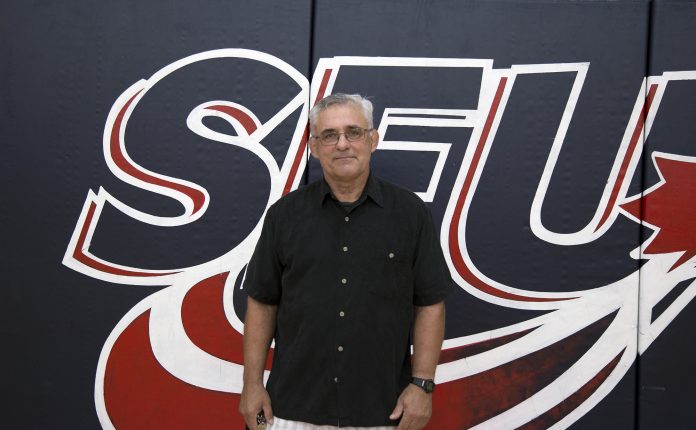
SFU wrestling team head coach Mike Jones has retired after 41 years of coaching at the university. Since coming to SFU in 1976, he has become a legendary figure in the sport of wrestling.

Jones has coached male and female Olympic champions from both Canada and the United States. One of his students, Daniel Igali, became Canada’s first wrestling gold medalist in 2000 and Carol Huynh won gold in the 2008 Olympics, the first female gold medal for Canada in the sport of wrestling.

He also coached USA’s Helen Maroulis who earned the first Olympic gold medal for the US women’s wrestling team in 2016. Inducted into the BC Sports Hall of Fame in 2011, Jones is described on the organization’s website as “Canada’s greatest wrestling coach of all-time.”

The wrestling great announced his plans to retire earlier this year, following the national championships.

When Jones first came to SFU from Lebanon, Oregon he was only 25 years old. He did not believe at the time that he would be staying for long. In fact, he joked to his wife Donna not to unpack their bags because they probably were not going to stay.

Like many coaches “especially coming out of the [National Collegiate Athletic Association] division in the United States, I kinda thought that I would be moving back that way after a few years [of] experience,” he said.  

What convinced him to stay? “I think it was probably the freedom,” Jones said. “[SFU] wanted a good program on the university level, the national level, and eventually the international level so it was pretty much an empty canvas. You could kinda develop the program the way that you thought was necessary and was needed and that had become very enjoyable.”

He credits his success to his philosophy to get “the best people around you that you possibly can, and that means the athletes, but that also means coaches and [he] was blessed to have some outstanding people step up to assist and help coach.”

“The thing that I think I’m most proud of is [. . .] that there was good talent and good athletes everywhere, and if you develop a good system that would allow [the athletes] to go from A to Z, then you could have success at whatever level that talent should reach,” Jones noted.  

According to Jones, the biggest feat he achieved was successfully challenging the culture and the mindset of athletes who did not believe that they were able to compete, and win, on an international level. He said that when he first started, the mindset among the athletes was that “[they] were pretty happy just to go.”

Jones said he was sure that this shift in confidence would be realized in the wrestling team. When “one of [the team’s] biggest benefactors, and probably the father of wrestling in BC, a guy by the name of  Paul Nemeth kept asking me if Canada would ever have a world champion, I kept saying ‘before the millennium,’” he said.  

His prediction came true. Canada had, at that point, a couple silvers and bronzes, but when the year 1999 came along, it was the last shot at gold. SFU’s own Daniel Igali pulled through with a gold medal at the world championship that year, just the sort of breakthrough that Canada needed. He continued on to capture Canada’s first wrestling gold medal at the 2000 Olympics in Sydney.

“What’s interesting about that is that the very next chance that we had at the world championships, Canada had their second one. So, it’s kinda like once you break that barrier, then it can be done,” Jones reflected.

In 2004, the women had their first chance to compete when women’s wrestling became an Olympic event. Jones said that the main difference with coaching women was that “we kinda started at the beginning [of the sport], so it was a completely different world than on the guys side. [Coaching these women] was fun, and different, and very enjoyable.”

According to current varsity team member Payten Smith, “Mike Jones will always be known for his workouts, his life lessons, and his crude comments.”

Aliocha Perriard-Abdoh is a former wrestling student of Mike Jones.

SFSS shows Highland Pub, Higher Grounds to potential operators

0

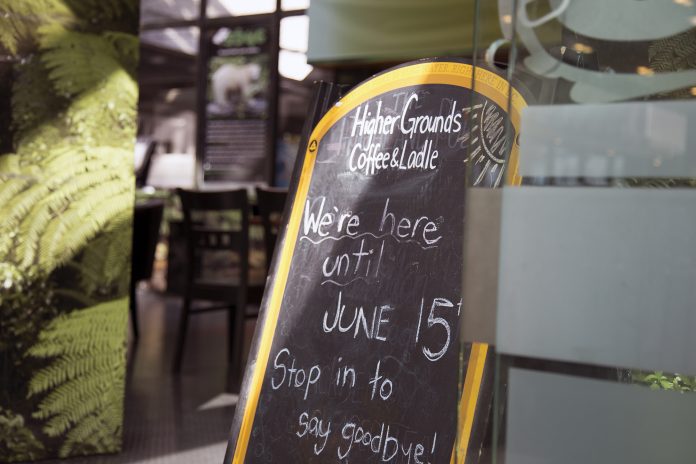
The Simon Fraser Student Society (SFSS) has launched tours of the Highland Pub and the Higher Grounds Coffee Shop in hopes that a new operator can open the space in time for next semester. The site tours took place last week with more scheduled for this month, according to SFSS President Hangue Kim.

The society announced last month that it is considering leasing the space to another food and beverage operator.

“There’s been a number of operators that have visited the space,” Kim told The Peak. “We’ve reached out to the operators as well, people that we think will be suitable for that space.”

In April, the outgoing SFSS board notified students that it would be permanently shutting down all of its food and beverage options effective June 15 due to ongoing financial losses. The Highland Pub and the Ladle were closed prior to the start of the summer semester.

“We didn’t want to see that space — especially that big space within the pub and the coffee shop and the Ladle — not being put to good use,” Kim explained. “I think what we’ve seen is that the best use of the space is some type of food and beverage service for students.”

The SFSS is looking for operators that have experience in the food and beverage industry in addition to experience working with students and a compelling vision to enhance the social experience on campus, Kim noted.

“We’re really interested in their vision on how they’re going to be working with students, but the broader SFU community as well, because it is that central space and we want to make sure that we set up these companies for success, not failure,” he said.

Student opposition

Many students have voiced their opposition to the closure and some have expressed concerns with the plan to lease the space to a new operator.

“Our opinion is that the previous board didn’t go about making the decision in a reasonable way; we don’t like the lack of consultation and the closed session,” explained Kiko Blake, an executive with Save the Highland, a student club formed following the announcement of the closure last semester.

“Our position on what should be done with the space is that what the students want is what should be done.”

Save the Highland member Corbett Gildersleve told The Peak that he is concerned that leasing the space to another operator might not work.

“Any company that comes in, they’re going to have the exact same problems as the SFSS had,” Gildersleve added. “There’s a lot of finer details that I’m concerned about [that] don’t go away just because we have somebody else taking over the space.”

Save the Highland has been gathering student feedback, including input on what students want to see done with the space, which it plans to present to the SFSS board.

“The closure, this announcement felt way too quick. And my [sic] worry also about [. . .] already looking for people to take over the space is [that it is] a little hasty as well,” Gildersleve said, adding that he feels more information should be released and students need to be consulted.

“If people are frustrated enough to actually organize, that should tell you something,” he said.

Society evaluates options

“We’re still open to the ideas of different uses of the space,” Kim noted. “It really depends on the level of commitment that we see from all these other organizations.”

He explained that the SFSS has looked at different scenarios for using the space and is waiting on proposals from operators to see if they align with the society’s goals.

The decision to scope out potential lessees was not made as quickly as it may seem, Kim said in response to the concerns raised by students.

“In the past year, there were definitely some evaluations on the uses of the space done internally,” he said. “I think it’s the right decision to make at this time. We’ve heard that students are looking for some type of social space that is really student-centric on campus and these agreements take time. If we want some [operator] in there by September, we have to take action.”

He also stated that the SFSS has heard the feedback from students that they want to see more consultation from the society.

“I’ve met with a few students that have expressed concerns. We’re willing to work with them and we’re open to listening to students and seeing what ideas they have for the space [. . .] I think it is important to have that student voice in that conversation,” Kim added.

“I don’t know the exact way that we’ll be consulting with students just yet, we are still developing that. Once we’ve come up with the finalized strategy, we’ll definitely be reaching out to students again,” he said.   

Breaking News: there is a spider on your leg

0
Illustration by Phoebe Lim

By: Vincent Justin Mitra

Bystanders were shocked today when a reader of SFU’s campus newspaper, The Peak, continued to read articles despite the presence of a large spider actively crawling up their leg.

“I don’t know how they didn’t notice it,” commented one bystander. “Even just thinking about it makes my arms and legs itchy.”

This sighting coincides with recent reports of several escaped specimens from the newly opened SFU department of spiders, located 200 feet away from where you are now. The department is part of the university’s new and controversial spider major and spider certificate programs.

“Spiders are actually pretty nifty,” said Parker Jameson, dean of spider studies, in defence of the demonic hell-beasts he has chosen to study. “Did you know that 2,000 pounds of spiders can easily consume a 200-pound man?”

The spider, who has yet to be identified, is described by researchers as particularly hairy and “bitey” based on tests meant to replicate university conditions.

The reader, however, appeared to be completely ignorant of the location of the spider on their body or even that there was a spider on them at all. The reader’s only reaction was mild confusion at the shocked and horrified expressions on the staring faces of the witnesses, whom the reader walked past throughout the day.

“It was weird,” commented a passerby who asked to remain anonymous. “They looked right at it and then just went back to reading. It was like they couldn’t see it or something.”

Even if this is true, and the reader was in fact unable to see the spider, it is still unknown how they did not feel the spindly legs and bristly hairs against their bare skin nor the repeated and almost romantic way the spider’s mouthparts would press against the back and sides of the reader’s neck.

At the time of publishing, the spider was unable to be reached for comment.

People are advised to be on the lookout for the spider and to report any sightings to animal control or the Simon Fraser University department of spiders. The spider has been described by witnesses as being approximately five feet and seven inches and was last seen wearing red and blue tights.