Home Blog Page 639

Here’s the lowdown on a lesser-known sexual orientation: asexuality

1
Image courtesy of Caitlyn Sampley via Aggie

Written by: Simran Randhawa

Sex usually is directly associated with romance and intimate relationships, but what if you love someone and you still don’t feel sexual attraction towards them? Experiencing this without understanding it can often lead a person to feel inadequate, rejected, and isolated. To make it worse, there are many myths about asexuality and not enough information to go around.

Well, today is your lucky day. Here’s some of the most essential information regarding asexuality.

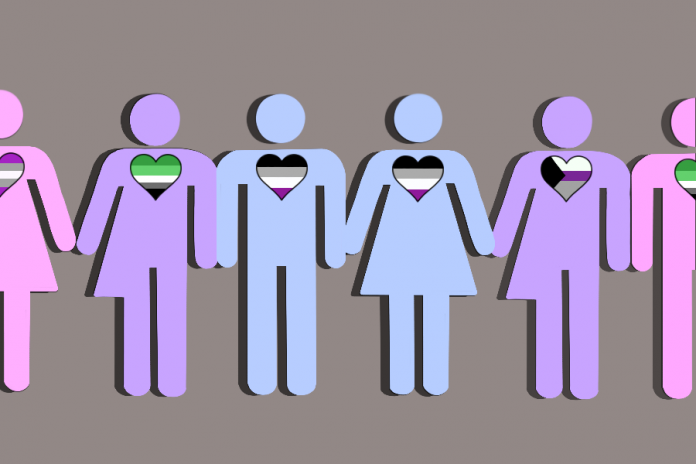
Asexuality, just like other sexualities — and almost everything — is on a spectrum. One end is a complete lack of sexual attraction and the other end is total sexual attraction. There are multiple sexual and romantic identities that are in-between, such as:

Demisexual: sexual attraction contingent on romantic attraction and a connection to the
other person.

Grey-A: the grey area between sexuality and asexuality.

Aromantic: people who experience little to no romantic attraction to others, and can be content with non-romantic partners
or friends.

Being a person who identifies as asexual doesn’t mean that you hate sexual intimacy; it only means that this particular form of intimacy is not necessary for you to have a fulfilling relationship. Just like how people who identify as heterosexual don’t feel sexual attraction towards people of same gender. Your romantic attraction is different than sexual attraction, and is treated as such. You could be asexual and still only feel romantic attraction towards people of the same gender, or of
different genders.

Although many who identify as asexual do not experience sexual attraction, you can be asexual and still experience other forms of attraction. Some commonly mentioned categories include romantic attraction, aesthetic attraction, and sensual attraction. Aesthetic attraction is when you are attracted only to a person’s looks and how they present themselves. You appreciate their beauty. That doesn’t mean you either want to fall in love with them or have sex with them. Sensual attraction is when you have a desire to engage physically with another person while remaining nonsexual. You might want to platonically sniff, hug, kiss, or cuddle them. 

Asexuality is not made up. It is not an excuse to not have
sex with you. This cannot be
said enough.

Asexuality is not the same thing as celibacy. Being celibate is a choice, regardless of whether it’s for religious or personal reasons. Asexuality isn’t a choice; it’s just who you are. If a person on the asexual spectrum feels sexual arousal, it is very specific to
that person and where they are on the spectrum.

Asexuality is also not the same as impotence. Impotency implies that one is unable to perform sexually, and has nothing to do with willingness to do so. Asexual people can perform sexual acts, but would not necessarily want to do so. It does not mean there is something wrong with them or with their significant other, but just that sexual attraction isn’t the defining trait for them. Just because asexual people may not want to have sex with others, doesn’t mean that they don’t masturbate or have sexual fantasies. They can think about others in sexual connotations, but would not want those fantasies to become reality.

Asexuality is not a medical or mental health condition. It’s a sexual orientation, just like heterosexuality and homosexuality — it is just not widely known. The “A” in LGBTQIA doesn’t stand for ally; A is for the people who identify as asexual. But asexuality needs to be just as visible as the other parts of the acronym LGBTQIA, as the lack of information and visibility means that people of this orientation are left to feel like there is something wrong
with them.

In summary, sexuality is different from person to person, and everyone falls on the spectrum between a lack of sexual attraction and complete sexual attraction. Some still feel romantic attraction, and they are capable of sexual intimacy. They just don’t feel the need for it, and their relations aren’t contingent on them. The best way to interact with asexuals is exactly the same as with members of other sexual orientations: just be respectful
and kind.

Just remember, if you are asexual, there is nothing wrong with you — regardless of what others might say.

SFU washroom reviews

0
Illustrated by Cora Fu

Written by: Kitty Cheung

Towers, SFU Residence (2/5 stars)

Ah, dorm life at SFU. While it has become a popular opinion that SFU isn’t much of a party school, the vomit in the sink says otherwise. While I do love the toothbrush conversations that I’ve had with floor-mates while living in residence, I don’t miss the shower drain floods and finicky locks on the stall doors.

Bennett Library, third-floor (3/5 stars)

Relatively clean, but they do get busy throughout the day. Pro-tip while hand-washing: the small raised platform between the two sinks is the optimal spot to place the textbooks you plan on selling later to avoid the germy water of the countertop. Also, the automatic toilets may flush before you are ready to go, so beware of splashies!

Maggie Benston Centre (3/5 stars)

To avoid congestion during the peak washroom-use hours, I recommend the MBC washrooms (if one can actually find them). Washrooms in the AQ, West Mall, and other buildings which hold lectures tend to be busy during the breaks between classes. MBC provides a more secluded option with a large quantity of stalls, so you can be in and out of there quickly without having to potty-dance in line.

Academic Quadrangle, fifth-floor (4/5 stars)

For the fifth floor of the AQ, I recommend the stall closest to the window. As you sit upon your porcelain throne, you have the opportunity to glance outside at the beautiful urban landscaping of the AQ. While these washrooms can get busy, the scenic view is particularly intriguing at this time of year: convocation. You can just feel the desperate energy of graduates taking self-important photos by the pond for what may be the last time. And if you look closely, even the koi are quivering with nervousness under the stone pathway.

Once you get to hand-washing, you are greeted by an infinite number of reflected images of your sorry-ass self due to the double-mirrors facing each other. The natural lighting provided by the large windows also brings out the heavy rings around the eyes from late-night studying — a true sign of hard work for the healthy and hygienic student.

Behind Studio A in SIAT area (women’s) (5/5 stars!!!)

To all self-identified ladies, get ready for your new favourite lounge spot. With its spacious interior design and floor-to-ceiling windows (with translucent patterns to give you that much-needed privacy), this washroom behind Studio A is truly the hidden gem of Surrey campus. Its most striking feature is the luxurious couch in the far corner of the room overlooking Surrey. Yes — a COUCH in the washroom! There, one can lie down, catch up on readings, review lecture notes, eat lunch, watch the sunset, and nap to the relaxing murmur of running water and hand-dryers.

Your queerness is valid whether or not you have figured out your identity

0
Image courtesy of Newscult

Written by: Sam Emerson, SFU Student

With Pride month in full swing, people are showcasing their sexual identities all over social media: bisexuality, asexuality, homosexuality, and every other part of the rainbow. Their multi-coloured flags show that they are out and proud of it.

Over the past few months, I’ve come to realize that I’m also somewhere on the rainbow. I’ve also realized that I have no idea what that means for me. I don’t feel like any of the more well-known labels fit me; this is exacerbated by the fact that I don’t really know what or who I am attracted to.

I have only had one romantic relationship with a man, and I’ve recently realized that I am not straight. But as I am in a committed monogamous relationship, the idea of trying to explore and figure this out is confusing and frustrating. I have no desire to be in an open relationship; I just want to know what to call my sexuality. I’m not straight, but I don’t think I’m bisexual or any of the other sexualities I’ve come across. It feels like there are hundreds of labels, but none of them resonate with me.

This confusion and lack of a label has made me feel very insecure about my sexuality. I feel like an imposter in the LGBTQ+ community. I simply don’t feel “gay enough.” I worry that the legitimacy of my feelings will be called into question, and that until I can label myself, I should keep quiet.

I’m lucky enough to be surrounded by a supportive social network in a city where it is safe for me to go to pride events and seek out LGBTQ+ resources. Yet, I feel unease and dread because I don’t have a straight (or gay) answer for myself concerning my identity and have no idea how to go about getting one.

There are so many stories of people realizing their sexual or gender identities from a very young age, so finding out that I am part of the LGBTQ+ community in my third year of university felt even more confusing. Coming to understand that sexuality is a spectrum and is fluid has helped me recognize that it is OK to change how you feel about your sexuality. Looking back, I would describe my 16-year-old self as aro/ace, my 17-year-old self as straight, and current 20-year-old self as a big ol’ rainbow question mark. Accepting that things change as you explore yourself and the world around you has been a huge hurdle for me.

It’s taken me a long time to realize that the labels don’t matter. If you find a word that you identify with, then use it. If you don’t, that’s OK. LGBTQ+ is a community with dozens of different sexualities and romantic orientations. It doesn’t matter which labels you choose, or if you use them at all.

Pride month is a time for us to be proud of who we are and express ourselves however we want. It is for everyone, regardless of their gender, sexuality, or romantic orientations. So this is to all of you who are confused, questioning, or curious and to those of you who have a label or choose to remain undefined. We are all valid, and we are all allowed to stand with pride.

The Moment is a beautifully written, heart-wrenching woman-loving-woman novel

0
Image courtesy of T. C. Anderson

Written by: Courtney Miller

Don’t let the cover fool you; if you’re expecting a cliché young adult romance, look elsewhere. The Moment is one book that I return to year after year because the way T. C. Anderson weaves words is artistry that deserves revisiting.

     You might mistake this book for a trope-filled storyline, but it’s so much more than that. For starters, it’s told in second person, immediately placing you within the context of the story, forcing you to experience the story as the characters live it.

     It’s also queer. Mia, adopted by rich parents, is a genius with few social skills and no friends. Jessie is superficially everything Mia isn’t: a poor C-average student with one good friend. They get partnered for a science project and their lives change. Jessie shows Mia how to have a childhood and Mia helps Jessie escape a man who purchased her from her mother.

      This is not your average love story. This is a story of class differences, learning to accept help, finding ways to stand on your own, and love that is beautiful and strong in whatever way. It’s about how one girl can impact everyone around her and fall down fighting, only to get right back up and fight some more. It’s about struggle, work, and recognizing that there are beautiful things and people in the world, even when the people closest to you perform the worst betrayals.

     I don’t have enough space to tell you everything I want to about why you should read this book, but I hope you give it a shot. I’m an English major. I’ve read a lot of books. And this might be the best one I’ve ever had the pleasure of discovering and opening my heart to.

     Note: There are some grammatical errors in the Amazon e-book. It’s an independently published book, so be kind. There are some trigger warnings for the novel: physical abuse, rape, child abuse, and other similar themes.

Moments of SFU’s history with the Indigenous community

0
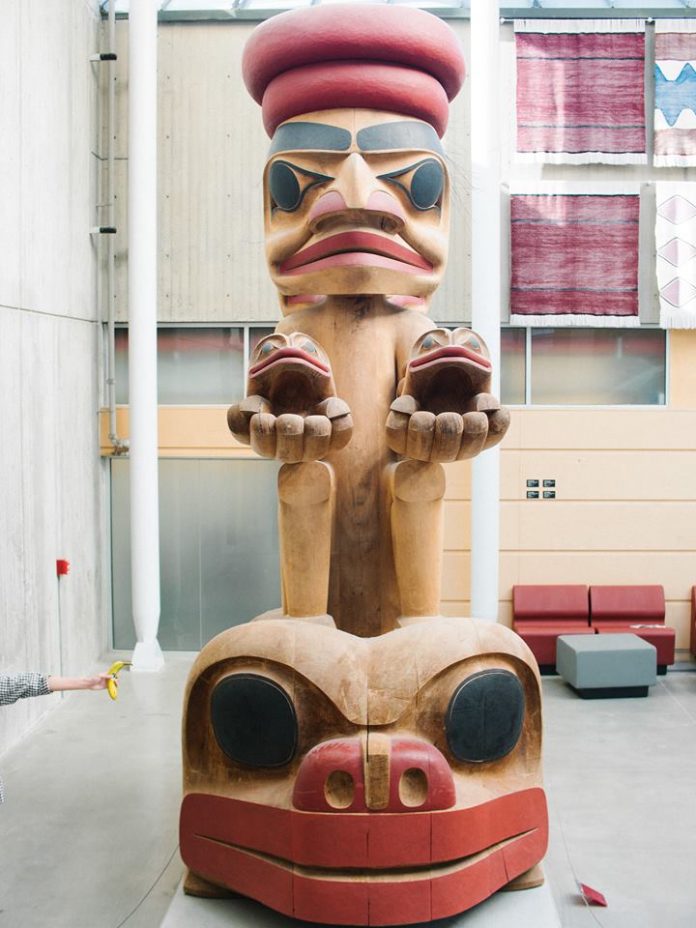
Frog Constellation, courtesy of Chris Ho.

By: Jonathan Pabico, Peak Associate 

In the 1960s, First Nations were never included in discussions to construct SFU on Burnaby Mountain. To this day, relationships between the university and First Nations communities are still imperfect. In 2017, Sarah Guraliuk wrote for The Peak about the reality of authenticating her heritage with “acceptable proof” before accessing financial aid meant for Indigenous students. While the following events are not an exhaustive list, here are some pieces of the past that illustrate the intricate relationship between SFU and the Indigenous Community.

Editor’s note: If you have any questions, concerns, or feedback about this piece, please email The Peak at [email protected]  


Building the university on unceded territory

As you have heard from the land acknowledgements at the start of any university event, SFU’s campuses are located on the unceded territories of xʷməθkʷəy̓əm (Musqueam), Sḵwx̱wú7mesh (Squamish),  Sel̓íl̓witulh (Tsleil-Waututh), and Kwikwəƛ̓ əm (Kwikwetlem) Nations. What’s more, the university is named after an explorer who supposedly discovered the land on which these nations had been living. Within the university’s first five years, SFU students were already campaigning to rename the school “Louis Riel University” in honour of the Métis leader of the 1860s (a proposition which eventually lost support and never took off).  


Opening the ISCH

The Indigenous Student Cultural House (ISCH) was created by the Indigenous Student Centre and SFU Residence and Housing on the Burnaby campus to provide a community space for Indigenous students. Since its inception in September 2016, the ISCH has provided a supportive environment for Indigenous students to live on campus, and made possible opportunities to partake in drum making, beading, and other cultural art forms, as well as develop leadership skills. Students can learn more about the program and eligibility on the ISCH’s website.


The First Nation Studies’ small size

SFU’s Senate expressed concerns about the First Nations studies’ shockingly small 3.5 member faculty during a meeting in early February 2018. The Senate was surprised not only by FNS’s smaller staff, but also by the fact that FNS received no support to develop further following FNS’s status update as a department. SFU Senate reached a shared consensus of increasing Indigenous faculty for FNS, especially since FNS’s low numbers hindered their chances of implementing a graduate program for their department and expanding their Indigenous presence at the school.

Back in 2012, First Nations Studies (FNS) was finally recognized by the SFU Senate as a department. According to associate professor Eldon Yellowhorn, FNS had to steadily grow and expand before becoming a department. Starting only with First Nations Studies courses, FNS eventually created other programs, such as joint majors, eventually garnering much student interest. The hope was to one day create a Graduate Studies program.

Other than educating catering to their own students, FNS plays an important part in public education. In 2015, Dr Marianne Ignace gave a lecture at the SFU Vancouver campus about how First Nations dialects have become endangered languages and about their effects on society — historically, culturally, socially, and even cognitively. As part of SFU’s President’s Faculty Lecture Series, Ignace’s lecture elaborated on the importance of understanding how deeply rooted they are within our own complex world.


First Nations Students’ Association educational and cultural activities

The First Nations Students’ Association has been active since the 1990s, offering personal, academic and cultural support to Indigenous students as well as education to the larger SFU community. They have a common room in the Rotunda.

In February 2018, the First Nations Student Association organized a march on Burnaby campus to pay respects to Canada’s 4000 missing and murdered Indigenous women and girls. During this march, many members of the SFU Community united in solidarity, congregating at the AQ and the Convocation Mall to hold a solemn vigil. In addition, the First Nations Student Association expressed how touched they were at the impressive turnout of community members that came to support the march, and disappointment that prayer ties hung around campus as an offering to the missing and murdered women were moved by the campus’ population. The march itself brought attention to issues about injustices against Indigenous women and girls that remain a growing concern today.

The First Nations Student Association also hosts Indigenous Day at Convocation Mall: an annual event started in 2013. Last year, the event not only gave Indigenous students the chance to assert their presence within the SFU Community, but also gave the opportunity for non-Indigenous students to enjoy the festivities and educate themselves. Many artists honoured the event with performances celebrating Indigenous heritage and traditions.

In 2013, FNSA organized a peaceful protest at Convocation Mall for the Idle No More Movement. The event was organized thanks to other partners within the SFU community such as SFPIRG and guest speakers. Idle No More is a mass movement within Canada, born in Saskatchewan, educating and recruiting support in regards to neocolonialism and the sociopolitical landscape faced by Indigenous people. The peaceful protest became so impactful to the community that it drew attention from Global TV News and other local media outlets.


Cancelling the Aboriginal University Transition Program

In April 2017, SFU cancelled the Aboriginal University Transition Program, which was designed to help Indigenous students adapt to university, citing low enrollment numbers. However, many faculty and staff advocated for the program by organizing a petition consisting of an overwhelming 885 signatures. Despite the school bringing back this program, SFU received much backlash from staff and other community members, especially since the school failed to consult Indigenous students regarding the change, and the program itself remains imperfect.

It was revived as the Aboriginal University Preparation Program, under the care of the Faculty of Arts and Social Science. The program is still imperfect: costs still remain a prevalent concern, affecting Indigenous students’ choices and ability to enroll in this transition initiative, as well as some Indigenous students’ lingering wariness about attending a Canadian institution period given the interwoven histories of residential schools, colonialism, and the education system.


2017 Witnessing Ceremony : Keeping SFU accountable to the Walk this Path with Us report

Convocation Mall became the venue for a Kwis Ns7eyx̱, or witnessing ceremony led by elders of the Coast Salish First Nations. This event was organized to make public SFU’s promise to honour the Aboriginal Reconciliation Council, or ARC’s, Walk this Path With Us report public, and keep the university accountable.

The ARC report outlines 33 calls to action that will overlook the use of $9 million in funding for community spaces and other necessities for Indigenous students at SFU. Some of these calls include: acknowledging that SFU stands on unceded territories through art and signage, investing in safe and culturally appropriate spaces as well as ceremonial spaces, providing funds for teachers who seek to indigenize their courses, and being mindful of repatriation and culturally appropriate ways to acquire Indigenous items for ceremonial or aesthetic purposes.  


Plans to include Indigenous studies course as a graduation requirement

2016 saw the SFSS and various First Nations groups, such as the Office of Aboriginal Affairs, develop plans to implement an Indigenous Studies course as a new graduation requirement. The course was among three potential avenues to incorporate Indigenous Studies into the school’s curriculum, aiming to be finalized for the upcoming Fall 2018 semester. With the course endorsed by the SFSS (whose board of directors voted unanimously on the subject), it represents a step forward to reconciliation.


Using Summer camps to empower Indigenous youth

In 2014, SFU and the Vancouver Aboriginal Friendship Centre (VAFC) collaborated together to provide Indigenous youth with a week-long experience at SFU Summer Camp. During this time, participants were able to have fun exploring university life, partaking in sports, mini-courses, hikes, and other activities. Aside from Summer Camp, SFU also organized other community events, such as the Math Catcher project that used Indigenous culture to help Indigenous children learn math.

With files from The Peak, SFU News, and more.

SFU students and alumnus create app for locating halal eateries

0
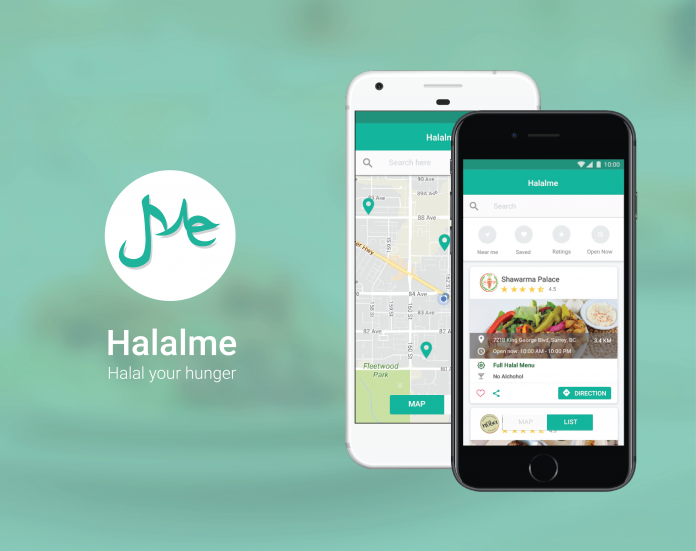
(Photo courtesy of HalalMe)
Written by: Amal Javed Abdullah, Staff Writer


SFU student Mostafa Azarbar has co-created an app for locating and organizing halal food services in Metro Vancouver with two SFU students and others. HalalMe, a mobile app launched in early June, helps people who consume halal food locate eateries and restaurants that serve halal food products. Each restaurant is manually verified as halal by someone on the team, and the app has explanations for if non-halal products such as alcohol or pork are served.

     The purpose of the app is to make halal food more accessible for the halal food consumer. “If I’m ever traveling in a [new] city, the moment I open the app, with the tap of a finger, I can find a restaurant. It really connects halal food suppliers to halal consumers. With the population of Muslims growing in Canada, there is a high demand for this,” Azarbar explained.

     Azarbar, who is also the president and founder of SFU’s Tech Entrepreneurs club, was approached by friend and fellow SFU student Abdurakhman Smazov last March about creating the phone app. In an interview with The Peak, Azarbar said that they began to explore the market by doing surveys. “[We said,] let’s ask everyone we know in the Muslim community of BC what they think. We also created a mock landing page to gather emails, and we got over 300. That’s when we realized there was a need for it, so we thought to proceed with the project.”

     HalalMe’s greatest challenge was finding dedicated individuals who were as passionate about the project as Azarbar and Smazov were. “We wanted to find people who had the same passion to help the community, [people who] cared about halal food,” Azarbar told us. After a long search, the team was completed by Wardatul Ferdous, as a designer; Sofwan Naing, to work on marketing and branding; and Muhannad Abwah as lead developer. Azarbar and Smazov focused on business and customer discovery.

     The HalalMe team chose to launch the app during Ramadan, a month where Muslims abstain from food and water from dawn to dusk. Azarbar says that while it might seem contradictory to launch a food app at a time where the target market cannot eat, the HalalMe team saw it as a strategic move.

     “Yes, people are fasting, but it’s also the time people go out and break the fast with their friends and family,” Azarbar explained. “It’s the month where it’s the best feeling to break your fast together with friends [. . .] for people like us who are busy with midterms or have work, we don’t have time to cook, we’re exhausted, so you try out different restaurants.”

     The team’s long-term goals are to get the word out, get more users, and get more halal restaurants onto the app. The team wants to use the feedback from users and implement them into the next version of the app, eventually expanding to other cities in North America.

     HalalMe was one of the top six finalists for the venture prize hosted by Venture Connection. While the project is currently self-financed, they are looking for investors to back them up with funding.

     The HalalMe app is available for download on iOS and Android, and can be found on Facebook and Instagram at @halalmeofficial.

Reviews for Tinder profiles

0
Image by Chris Ho

Written by: Supreet Kaur

There is a trend on dating apps like Tinder, and we all know it. While the profiles of men lie barren and lonely, women’s profiles fill up with messages, sincere and otherwise. Their recipients, like me, have forgotten them long ago, and left many of them entirely unseen. What if I were to review these profiles of these poor men who never receive replies? I’d surely provide them with a lesson on how to build or not build your Tinder profile.

Fitness Freak Jeremy — I get it, you have abs. It’s nice. It also probably gets you views and girls swooning over you. You know what else is nice? To know you have a personality besides gymming. Wouldn’t it be nice to know you read on your porch on a quiet Sunday afternoon?

Six-figure CEO Klaus — Now, I don’t know if it’s true or not, but we have a lot of young Zuckerbergs on Tinder, looking for true love. Go Klaus! You have, in a young age, accomplished so much. But are you aiming for a mention of your salary to a genuine human being that doesn’t care about your money? Zuckerberg or not, boo Klaus.

Architect Stefan — Is cute, loves dogs (oooh!), and has ticks in all the right boxes. Architect, outdoorsy, traveller, art lover. Girls must like Architect Stefans. Does he have a Damon Salvatore in the brother department as well?  Don’t know. I’ll text you, Stefan. Either way, this is the way to do a profile right.

Farm Boy Ethan — There’s Starboy, and then, there’s farm boy. And I quote: “life is like fishing u just need to find someone that likes your hook.” Someone does have their life sorted. I don’t know if there is a double meaning in there and I’m not sure if I want to know. Farm Boy Ethan, maybe that’s enough for you. But for me, there are more things in life than “finding someone who likes your hook,” like college, grades, family, art, music . . .

Businss Anilist Sam — There is no greater turn off for some ladies than bad grammar or spelling. Dot your i’s and cross your t’s and you might impress a girl more than a shirtless picture would. Some girls might not care about little things like these, but to others, it might matter enough to be the difference between “thanks” and “no thanks.” I didn’t even read past the first two lines, Sam.

Your inner monologue as you write a test

0
Illustrated by Marissa Ouyang

Written by: Amal Javed Abdullah

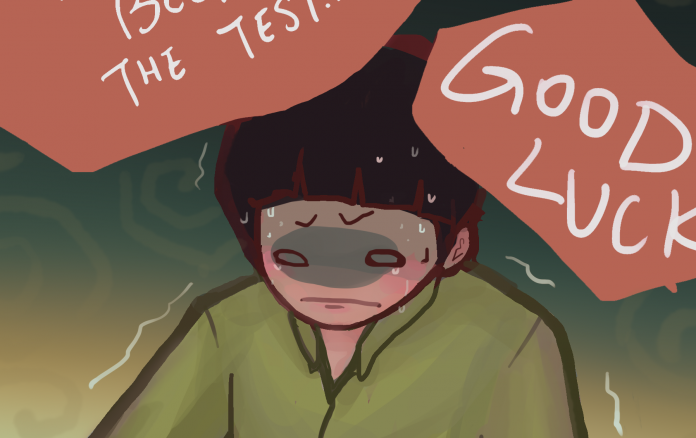
“You may now begin the test. Good luck.”

You flip over the test. Name, check. Student ID, check. Did you spell your name correctly? Should there be two As or three? And why does your last name look so long in comparison to your first? Who cares?

Flip. Page one. Multiple choice: the two-faced deceiver. You always think this cat’s in the bag, but don’t let it trick you. It will leap at you and scratch out your eyeballs when you realize that none of the answers you know match the options listed. The art of MCQs is to figure out the best time to employ the timeless decision-making method of “eeny, meeny, miny, moe.” The farther into the semester, the earlier you use it. You go through all of them and tick off whichever sounds remotely close to the snippets you heard between naps during lecture. Remember to circle in the Scantrons completely. Check, check, check. Done.

Flip. Flip. Short Answer. You read the first question, and your hopes plummet as low as the number on your bank statement. “That’s it,” you think, “I’m done for.” It’s not too late to run away and join the circus. Big red lips and wonky wigs would suit your facial shape.

But okay. Fine. You decide to do it anyway. You can’t just leave it blank. You BS something, some random, obscure, and vague fact that you desperately hope will get you half marks. Quarter marks. One-eighth marks? Anything? Moving on. The next question is better, because you remember hearing about this when that annoying dude wouldn’t shut up about it that one day you showed up to tutorial. Relief floods you. Maybe you won’t have to beg on the streets after all. “Mama,” you think, “I’m gonna make it.”

Flip. Essay questions. You’re okay, you think, you’re doing okay. You got this. You read the options. Ohhh boy, oh buddy. Might as well apply for that job at McDonald’s now. The scent of artery-clogging fried fats is always in style when you’re broke. Might as well BS this one too. You deliberate making a note at the bottom to your prof hoping she’ll give you pity marks. She won’t, but say goodbye to your self-respect anyways. Did you have any to lose in the first place?

Done. You get up and hand in your paper at the front, shoving your ID in the TAs face. Time to go home, empty your mind of all things useful and vegetate with Netflix before your next exam.

Hunt for the Best: Coffee

0
Geron Malbas / The Peak

Written and photographed by: Geron Malbas

Nemesis Coffee

Location: 302 West Hastings Street

Walking time from SFU Harbour Centre: Three minutes

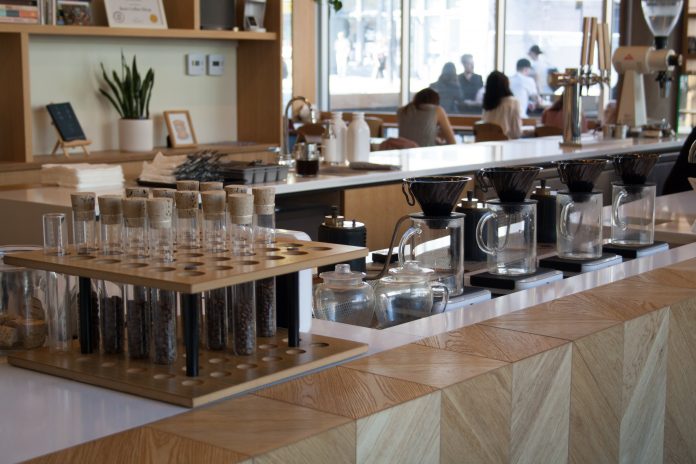
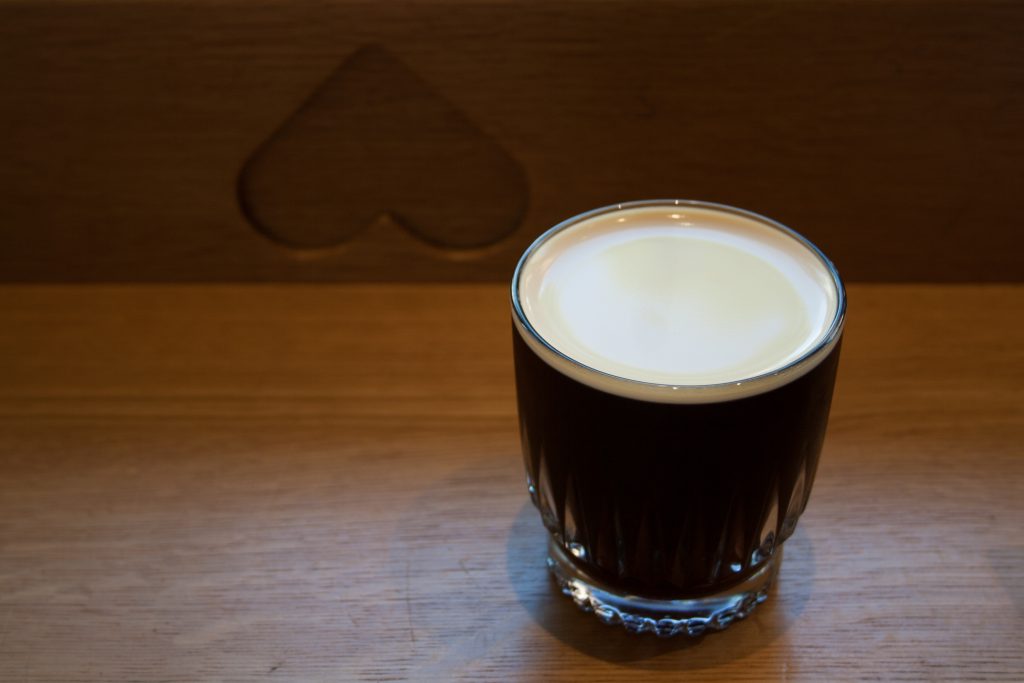
The Coffee: As one of the newest contenders on the Vancouver coffee scene, Nemesis has fallen right into my heart as my favourite place to go for a quick pick-me-up. Since it’s the summer season, I opted for a nitro cold brew coffee for $4.50, which basically means that I got a really fancy iced coffee. What’s great about Nemesis’ take on it is that it’s on-tap, so they don’t add any ice to it to dilute the flavour. Cold-brewing the coffee with nitrogen actually makes it so the coffee is naturally sweet, so I tasted a very nutty, syrupy, chocolatey cup.

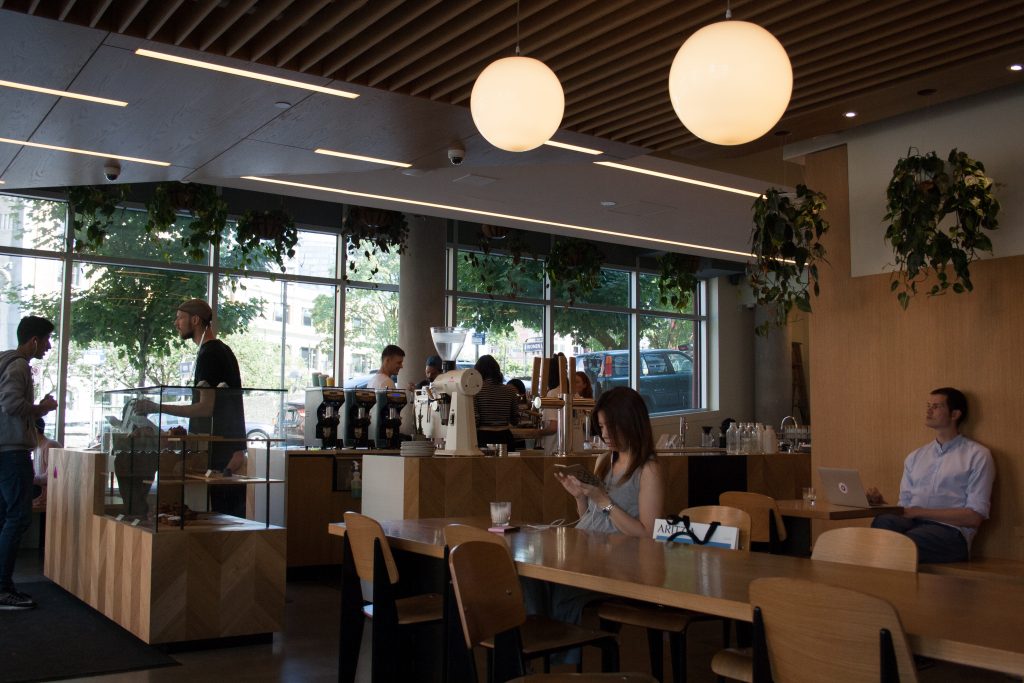
     As an added bonus to my coffee experience, the whole atmosphere of the place is so cool and welcoming, almost as if I’m hanging out at a friend’s place for a quick snack. The staff are very aware of the people that come through their doors, and more than likely will be thrilled to just get to know a little bit about you if you strike up a conversation.

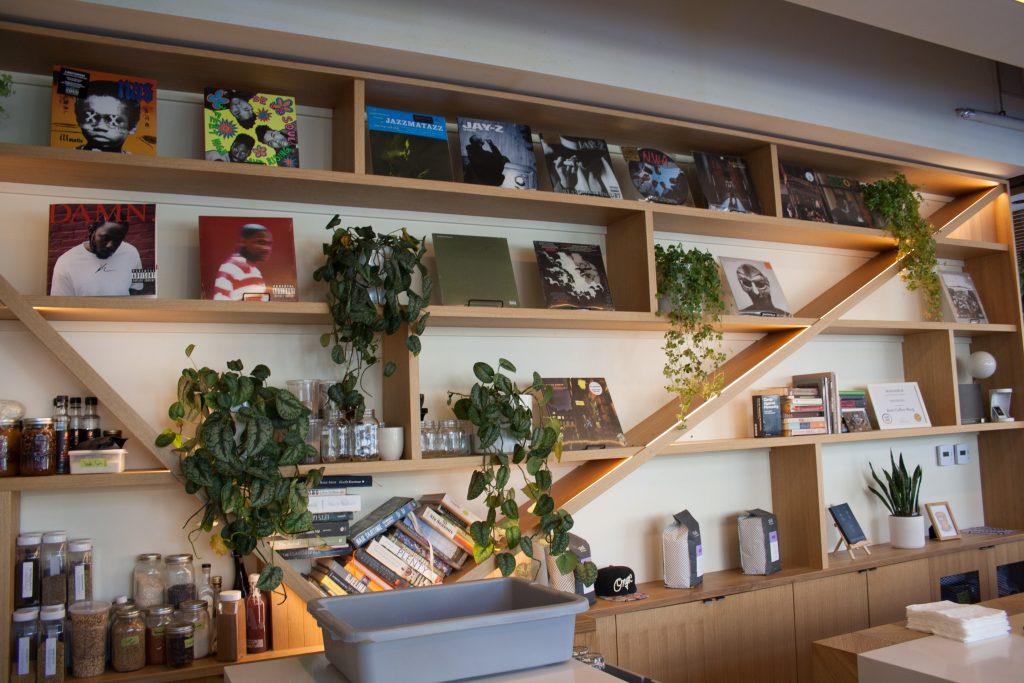
     In terms of decor, the wood seats and counters present a modern look, with one wall even displaying vinyls from musical artists like Kendrick Lamar, Jay-Z, and MF Doom. Catch me chilling in this cool cafe sipping on some cold brew coffee all summer.

Rating: 5/5 Coffee Mugs

Timbertrain

Location: 311 West Cordova Street

Walking time from SFU Harbour Centre: Two minutes

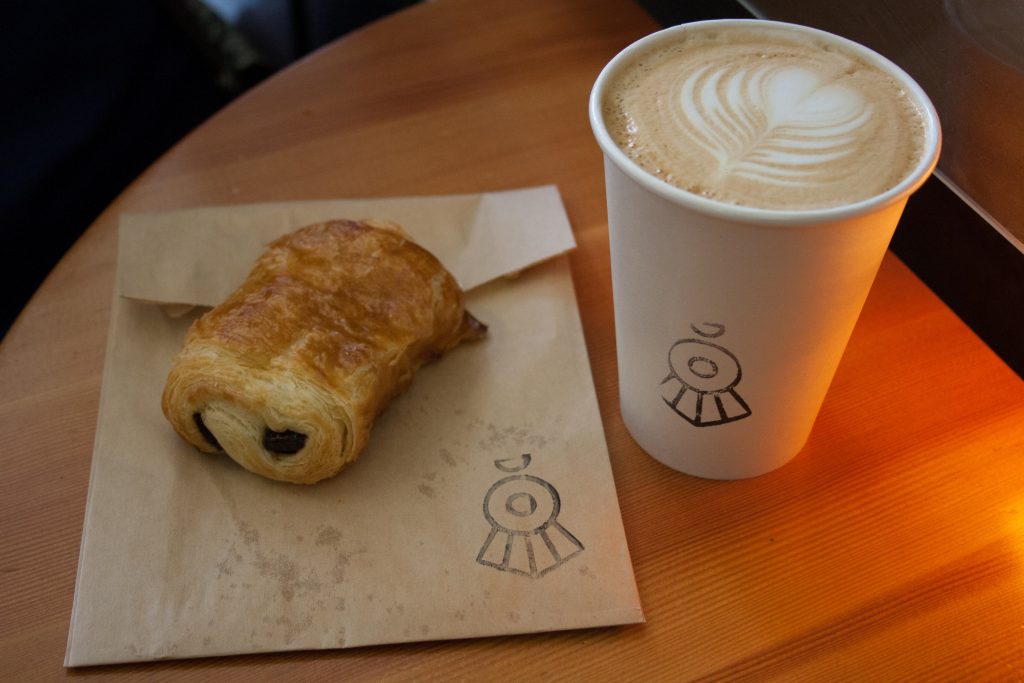
The Coffee: Fun fact: the cafe is supposed to resemble the cabin of a train, hence the name. I wanted to spice up my coffee experience and opt for a latte at $4.50, since it was a little chilly the morning I went here. Paired with a pain au chocolat for an additional $4, my latte was made to be delightfully smooth to drink due to the expert espresso shot and steamed milk the barista made.

     The thing about good coffee is that it is very dependent on the bean and the barista’s skill, and Timbertrain’s staff are extremely well-trained to ensure my coffee consumption is met with endless happiness. They roast and serve their own beans, which solidifies my understanding that this shop really knows exactly what they are doing when it comes to making coffee. Much like the other cafes on this list, they are also equipped with different brewing methods to make coffee. In fact, they have their very own pour-over device that is made specifically for the shop.

     While I did find my pain au chocolat a little lacking in comparison to others I’ve had, I scarfed both it and the drink so quickly because they were just that good together. One thing I don’t really enjoy about the space is that there is very limited seating, and being in Gastown means numerous guests filling up the space to a point where it’s quite crowded. However, if you find you are wanting something on the go, the coffee here will never disappoint you.

Rating:  4/5 Coffee Mugs

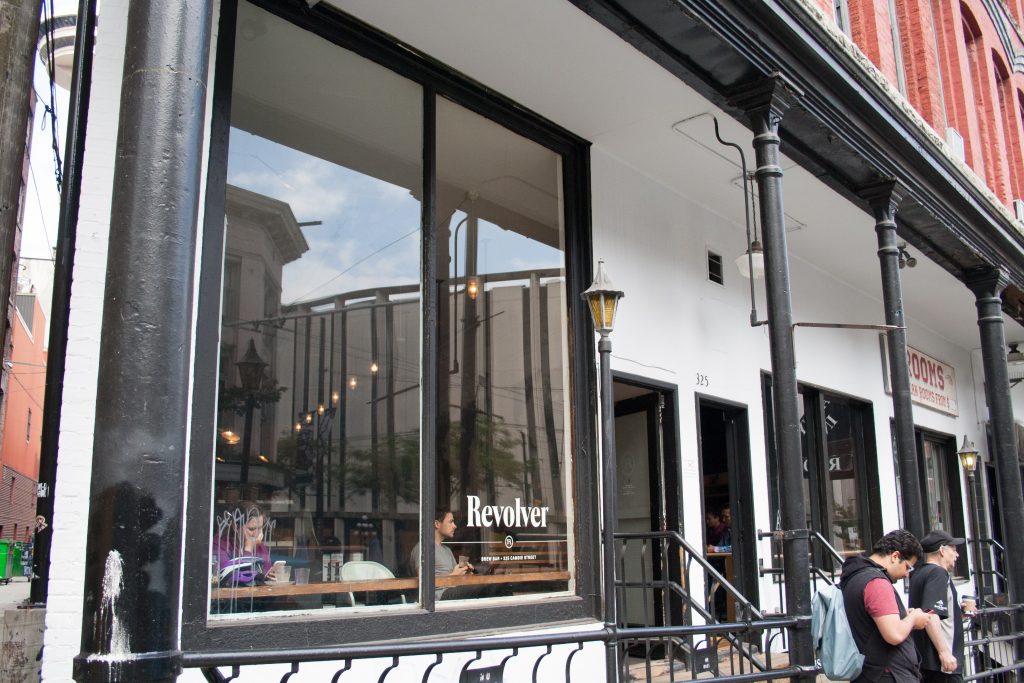
Revolver

Location: 325 Cambie Street

Walking time from SFU Harbour Centre: Three minutes

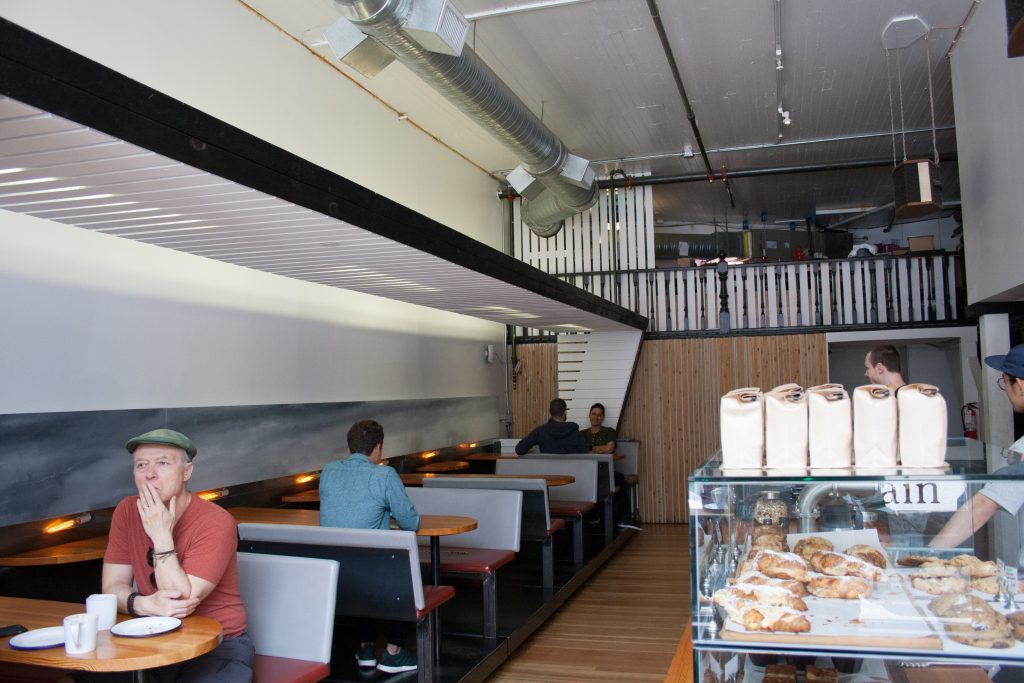
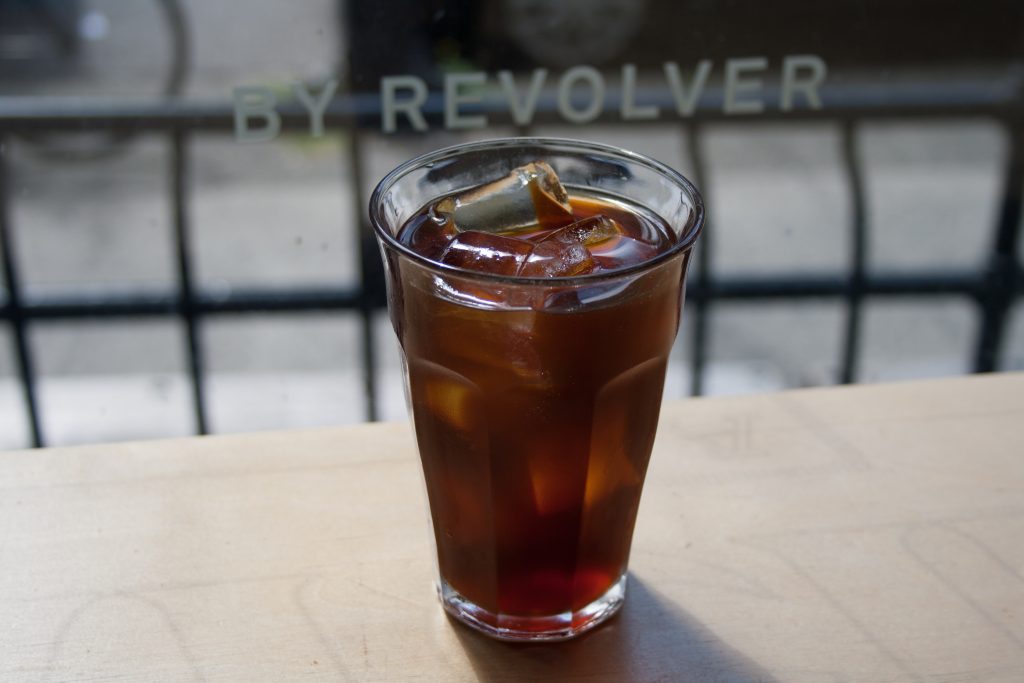
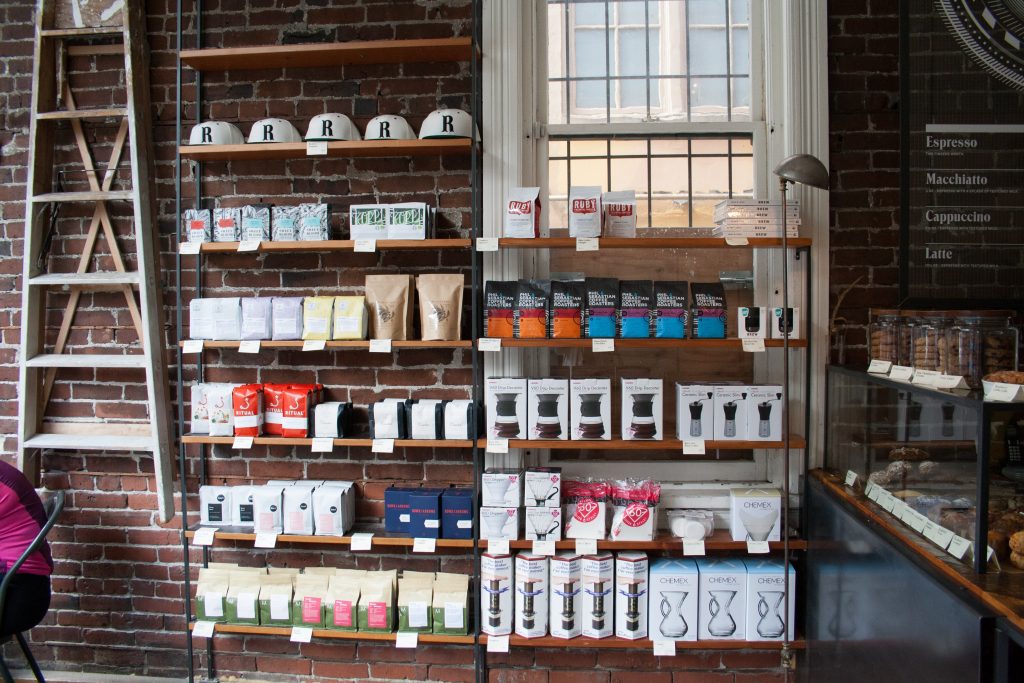
The Coffee: If you have ever ventured through Gastown, you have passed by this hipster paradise. Revolver is a veteran when it comes to making amazing coffee, and I definitely had the usual great experience this time around. Once again, I got a nitro cold brew for $4.50. Instead of being poured from a tap, my cold-brew was poured from a pre-made batch, diluted with ice, which made it extra refreshing. What I love about this place is that they have a revolving selection of coffee that is curated by their team each month. This way, I get to enjoy different roasted beans from other roasters around the world, which provides different flavour profiles.

     Once I got my coffee from the bar, I hopped on over to Archive, their adjacent meeting room, to read a book in a respectful, productive environment. While I was expecting a less flavourful cup, I actually found tasted almost exactly the same as my cup from Nemesis. My only gripe is having a large amount of ice in my cold-brew, as it makes me feel like I don’t get my money’s worth. Even though the space is much narrower than other cafes, it’s always had a place in my heart as the spot that introduced me to the world of craft coffee, and likewise, it has rightfully earned its spot on this list.

Rating: 4/5 Coffee Mugs

Honourable Mentions:

  • Buro for being 30 seconds away
  • Prado Cafe for being open a little later than the other cafes listed
  • Quantum Coffee for having a really cool space
Revolver
Nemesis