Home Blog Page 640

Vancouver’s drug problem is a student problem too: What you need to know

0
Illustration courtesy of Freepik

By: Victoria Lopatka

It is no secret that some university and college students use drugs. A study conducted at UBC found that one in 30 university students have experimented with study drugs while enrolled. When asked about their own study drug use in a previous Peak feature, students at SFU recounted that Adderall and similar prescription medications are “very popular” among them and their peers. A larger study examining rates of drug use by Canadian undergraduates found that 47.5% of the 7800 candidates had used drugs, study and illicit alike, during their lifetime.


A city-wide issue

In July of 2016, BC saw 482 overdose deaths, 60% of which involved fentanyl, according to the BC Coroners Service. In the first seven months of 2017 alone, the number increased to 876 suspected drug overdoses, with 81% linked to fentanyl.

Lisa Lapointe, B.C.’s chief coroner, describes a pattern in drug use during an interview with The Globe and Mail last September: “We saw an increase in the spring, and then August, September, the numbers looked not too bad, October started to increase, November and December were the worst months we had ever seen,” she said. “It’s being ingested knowingly by some individuals who prefer fentanyl. But it’s also contained in substances that the user has no idea fentanyl is in.”

In an op-ed for The Globe And Mail written in April this year, Dorothy Bakker, an associated clinical professor at McMaster University and a mother who lost her son, Stephen, to a fentanyl overdose, expressed her belief that many users like her son “trust” their dealers. The reality is, though, that fentanyl is often cut into street drugs.

Misconceptions surrounding fentanyl lead the public to believe it is only found in drugs like heroin and methamphetamine, but prosecutors warn that cocaine users are at risk, too. This is especially problematic for post-secondary students who use cocaine, as they may not think they need to be concerned about or prepared for a fentanyl overdose.

The problem is becoming more and more common: in a five-month long study in Vancouver’s Downtown Eastside, UBC researchers followed and tested the drugs of a large group of residents. At the beginning, 45% of the opioid users within their group tested positive for fentanyl. At the end of the five-month study period, 100% of users had trace amounts of fentanyl in their systems.

A 2017 report by the Vancouver Police Department notes that fentanyl has been found in every type of illicit drug, excluding marijuana. The deaths of unsuspecting users cross a variety of demographics, social classes, and backgrounds: this problem isn’t only a Downtown Eastside issue. As Darrell Reid, Vancouver Fire and Rescue Services chief, explained to The Georgia Straight in a January article on the exacerbated drug-overdose problem in Vancouver, “We want to make sure that everyone understands, this has become a city-wide problem.”

Harm-reduction initiatives in the city, including making drug-testing equipment and take-home naloxone kits available, and the establishment of overdose-prevention sites with trained staff members have been implemented and are making progress. A new study reported by The Vancouver Sun documented the effect of increased naloxone availability in B.C. on the number of fentanyl-related overdose deaths in 2016: “The study estimates that the Take Home Naloxone program prevented 226 deaths in 2016 and that one in 10 uses of naloxone kits prevented an overdose death.”

Surgeon General Jerome Adams likens naloxone kits to other live-saving interventions, like the use of CPR and EpiPens. “It’s easy to use, it’s lifesaving, and it’s available throughout the country fairly easily,” Adams told Stat News, encouraging the families of those at risk of overdose to carry kits with them.


A campus problem

Study after study consistently reflects that youths use drugs and alcohol more than any other demographic. But why? University and college students may turn to drinking and doing drugs for a multitude of reasons, including social stress, academic stress, a heavy course load, to self-medicate, and curiosity. The Peak reached out to multiple employees of SFU Health and Counselling about unhealthy substance use in students, where it begins, and how one can open conversation around it in healthy, constructive manner.

Britt Phillip and Ruth Vandenberg, mental health nurses at SFU, added that academic pressures, a family history of substance use, isolation, peer pressure, and a lack of information can make students more susceptible to risky substance use.

“We have approached substance use by way of focusing on social connectedness, which is a known preventative factor,” says Rosie Dhaliwal, health promotion specialist. “Many of [our outreach programs] focus on ‘bring a friend, make a friend’. Our projects within the Healthy Campus Community Initiative also link to social connectedness.” 

SFU itself does not offer specific resources for substance abuse or naloxone kits on campus. However, nurses Phillip and Vandenberg mention a multitude of online resources students can find with Fraser Health and Vancouver Coastal Health. Martin Mroz, director of health services, says, “We are very supportive of students evaluating their situations and deciding to get a [naloxone] kit from the many pharmacies and public health locations that offer them.” Mroz also recommends the site TowardTheHeart.com, where students can find the closest naloxone-distributor to them.

Even before the fentanyl crisis was declared and recognized as a crisis in April 2016, UBC’s Student Health Services (SHS) was distributing naloxone kits for free. In theory, this was a fantastic idea, but they faced a big problem: students didn’t want the kits. After 18 months of naloxone kits being readily available on campus, only 63 kits were actually taken. Since kits are for those at risk of a drug overdose or of witnessing an overdose, owning one comes with a huge, and unwanted, stigma.


A problem that hits close to home

Coming to terms with and addressing the unhealthy drug use of a loved one can be confusing, difficult, and emotional for families and friend groups.   

SFU Health and Counselling shares a few physical and behavioural signs that somebody is struggling with substance use issues, which include lateness or absenteeism, borrowing money, uncharacteristic moods or mood swings, puncture marks on the body, constricted pupils, red or bloodshot eyes, and being in the possession of drug-related paraphernalia. With regards to having a conversation about drug use, the staff at Health and Counselling stress the importance of being compassionate and recommend listening rather than trying to jump into advice-giving right away: that way, you avoid sounding preachy or superior. They share the importance of being non-judgemental, of encouraging action and following-up instead of corralling, and of making sure you don’t rush the conversation.

Dhaliwal shares some resources with me that outline key things to remember when discussing someone’s drug use with them, including reminding the person of their inclusion in supportive communities and groups, acknowledging the trauma or pain that may be leading them to drugs, and doing your best to reduce the stigma they may be facing.

Richard Saitz, addiction expert and professor of community health sciences at Boston University, states in an interview with Addiction.com the best way to reduce and eradicate stigma around addiction is to change the language we use to describe it. “Changing our language is a fundamental and inexpensive way to decrease stigma. In turn, this may lead to more people seeking help, achieving remission, and ultimately reducing disability, mortality, and economic burden.”

Some of the words and phrases we use often to describe these issues are actually very stigmatizing and negative. Keeping in mind that the stigma around drug use is only worsening an already horrific crisis by preventing people from seeking treatment and making people not want to get naloxone kits, here are some word replacements to integrate into your vocabulary:

  • Drug abuse — Unhealthy use
  • Drug misuse — Harmful and risky substance use
  • Addict — Individual with a substance use disorder
  • Staying clean — Maintaining recovery
  • Bingeing — Heavy use


How to stay safe when clean drugs are sparse

Whether you’re using drugs or someone close to you is, it’s important to know how to be safe. Youths who use drugs may feel invincible to the constant threat of overdose and death, thinking “I’m safe, that would never happen to me.” Unfortunately, a lack of clean drugs in Vancouver means the threat is very real. It’s one of those situations where the only safe way to do drugs is not to do them at all. If you are going to use drugs, though, especially those that could be contaminated, it’s important to try your best to be safe – or as safe as you can be.

Here are some useful tips, from both online resources and an interview with SFU Health & Counselling:

  • Educate yourself on drug use, effects, and risk.
  • Never use alone
  • Go slowly, with low doses
  • Don’t mix different drugs, or mix drugs with alcohol
  • Carry a naloxone kit and know how to use it in case of an emergency
  • Know the signs of an overdose (see below), and what to do in case one happens
  • Stay hydrated
  • Let someone know where you are and when you should be home/finished
  • If you’re worried about yourself or someone else, seek help immediately
  • Consider using drugs at a safe-injection site, where your drugs can be tested for fentanyl
  • Trust your instinct: if something doesn’t feel right, take a step back to consider the situation. Ask questions about what you’re being offered. Don’t accept drugs from someone who you don’t know or don’t trust


Here are some signs of an overdose:

  • Severe sleepiness, struggling to stay awake, or “nodding off”
  • Inability to walk or talk
  • Slowing breathing
  • A pale or blue complexion
  • Skin cold to the touch
  • Unresponsiveness to physical or verbal stimulation
  • Limp body


Keep in mind Canada’s new Good Samaritan Law, enforced since 2017, which protects individuals seeking emergency help (like calling 911) during an overdose crisis from charges of possessing illegal substances or breaching any conditions regarding to drug use (i.e. parole).


Vancouver is being described as a “nightmare,” a “war zone,” and an “overdose bloodbath,” facing an overdose crisis that competes with some of the most-affected U.S. cities, the worst we’ve seen in decades. It is an incredibly dangerous time to be a youth experimenting with drugs, and an incredibly crucial time to be looking out for yourself, your friends, and your family.
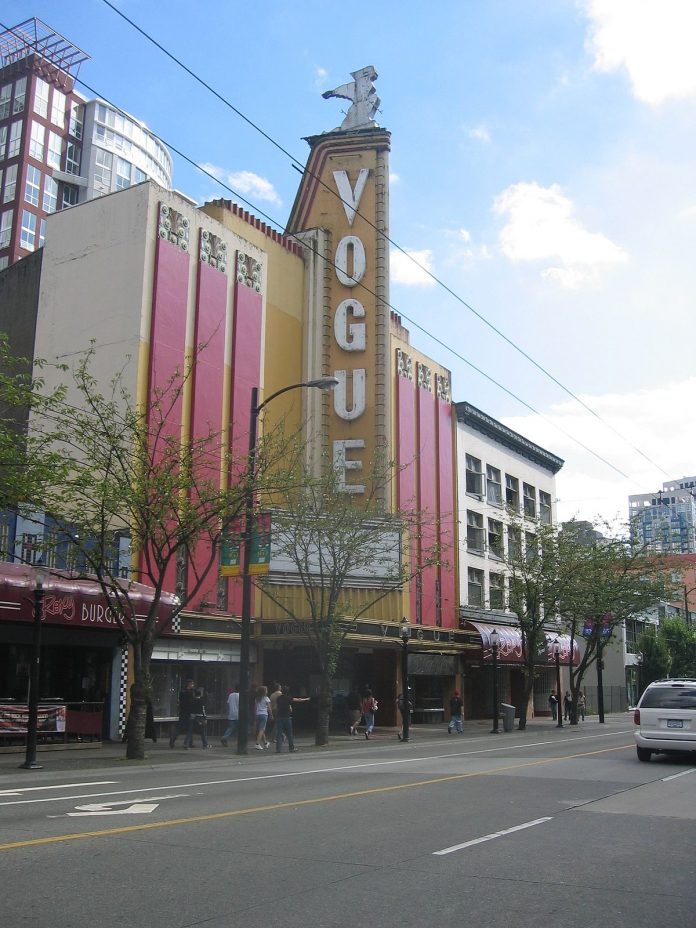

At the Vogue Theatre

1
Photo courtesy of Arnold C

Written by: Eva Zhu

Ambience: A-

The Vogue Theatre is one of those theatres that looks really comfortable and homely, like you’ve walked into a lecture hall you’ve been in a hundred times. Waiting in line for the venue to open was a breeze, thanks to the other respectful concert-goers (unlike the loud high schoolers from the Neck Deep concert I attended at the Vogue in February) and the balmy spring weather. Unfortunately, the Vogue did not open the doors at 6 p.m. as scheduled, but waiting in 18 C weather for another half-hour wasn’t the worst.

     The theatre was decorated in shades of deep red, yellow, and wood-toned colours, which added to the cozy aesthetic. The lower level housed the bar and the Wonder Years merch table. There were lineups for both, which caused a bit of congestion for people who wanted to use the upstairs bathrooms or check out the other bands’ merch tables. Kudos to the merch guys, though; they dished it out fast.

     Speaking of the upstairs bathrooms, they were very clean and quite large. Seven people did not have to line up behind one sink to check their sweaty selves after the show.

     Before the concert started, my boyfriend went to buy some water. I handed him a $5 bill hoping to get at least $3 in change. NOPE. A small bottle of water cost $3.50. I was a little salty.

Accessibility: C+

The Vogue had two or three wheelchair-accessible ramps leading to the seating and stage area which led all the way to the floor area/pit. A wheelchair user could either sit in the front row and fold up their chair or park their wheelchair along the sides of the room.

     What I didn’t like was that — as far as I could see — there were no wheelchair-accessible bathrooms on the lower floor. There were also no visible elevators going to the upper level. What does the Vogue expect wheelchair users to do? Hold it in for close to four hours?

Music: A

Worriers, a queer melodic punk band from Brooklyn, opened the concert. They put on one hell of a show, even though I could barely hear the vocals over the lead guitar. The guitarist was super cute and she played guitar better than I ever could. Worriers not only makes amazing music, but are  also fighters for LGBTQ+ rights, which makes them my new favourite band. Go listen to their album Survival Pop!

     The next act was Tiny Moving Parts, an emo and math rock family trio of two brothers and a cousin. Holy shit, their stage presence was out of this world! Dylan Mattheisen (lead guitar and vocals) used the stage to his advantage and jumped tirelessly from one end to the other while keeping perfect pitch and playing guitar like a god. I’d like to find out if he’s even human. After the show, my boyfriend bought a vinyl record of their new album Swell and I gave Dylan a hug.

     Next came Tigers Jaw, and they didn’t have much of a stage presence at all. Their songs were very plain and I felt like I’d heard their sound a million times before. The hype Tiny Moving Parts instilled in me was gone by their third song. Thankfully, they did play a couple of catchy songs at the end that partially redeemed them, so it wasn’t a total waste of my time.

     Lastly, Philly pop punk band The Wonder Years came on stage and slammed into a 20-song set that knocked everybody’s socks off (even if they weren’t wearing any). The entire crowd got hyped as fuck listening to Dan “Soupy” Campbell’s voice do every single song, old and new, justice. Their set felt emotional and overwhelming in the best way possible, like feeling the soaring crescendo of a symphony orchestra.

     There was a slight hiccup in the middle of their set when security failed to notice an incoming crowd-surfer, but Dan showed just how much his band loves their fans by jumping into the pit to catch the surfer before getting back up on stage, finishing the song, and giving the security guards a good lecture afterwards. I mean, which dumbass predicted that no one would crowd surf at a pop punk concert? Other than that small incident, though, watching The Wonder Years play their hearts out on stage made the tickets worth every penny.

Overall: A-

Other than the wheelchair-unfriendly bathrooms, the security mishap, and Tigers Jaw being super boring, this was a fantastic concert in a beautiful venue with bands who really knew how to put on a show!

Environmental impacts — in the past and now

0
(Chris Ho / The Peak)
Written by: Trevor Steele, Peak Associate


Agriculture’s impact on earth’s environment

UBC researchers, in collaboration with researchers from a number of universities including SFU, have revealed the significance of agriculture’s effect on Earth’s environment in a new study published in the journal Science Advances.

     The researchers examined how the rise of agricultural activity in the Bronze Age in Ireland affected Earth’s nitrogen cycle. They saw how, as deforestation and agricultural activity rose, notable shifts emerged in soil and plants’ nitrogen makeup. Eric Guiry, a post-doctoral fellow at UBC, suggests that this “was the turning point at which humans first began to cause environmental change.”

     While the study was conducted exclusively in Ireland, the researchers believe that their findings may be echoed wherever people have modified land for the purpose of agriculture.


BC seagrass not as beneficial to the environment

A new study from SFU and Parks Canada researchers, published in the science journal PLOS One, has found that seagrasses in northern regions store much less carbon than seagrasses in other parts of the world.

     Seagrasses are found in coastal regions throughout much of the world, and are the sole type of marine flowering plants in existence. The plants draw carbon dioxide out of the atmosphere through photosynthesis. Because of this ability to store carbon, seagrasses are considered an important tool in slowing climate change.

     The researchers set out to measure how much carbon was stored in seagrass meadows on the west coast of Vancouver Island. They found that the amount of carbon stored in Clayoquot Sound on Vancouver Island was much lower than the amount stored in seagrass meadows in tropical regions — the Vancouver Island region has less than 10% of what many other regions have been believed to contain.

     The team of SFU researchers, led by resource and environmental master’s students Victoria Postlethwaite and Aimee McGowan, pointed to the species of seagrass, low-light conditions, low temperatures, nutrients, and water conditions as reasons for the disparity. They concluded that a more regional focus was needed to effectively reduce climate change.  

Meghan Parker’s comic book thesis is informative and adorable

0
Image courtesy of Meghan Parker

Written by: Natasha Tar

Meghan Parker, an SFU grad student, did something really cool when she created her thesis Art Teacher in Process: An Illustrated Exploration of Art, Education, and What Matters. She realized that writing about art wouldn’t work as well as making art about art, and so she made her thesis into a comic book. The comic follows Parker as herself, a high school art teacher who contemplates how she teaches and what she can learn from her students. The best part is, despite it being a thesis, it’s pretty fun to read!

     The art style Parker uses is simple, cute, and clever. One of my favourite panels depicts a bunch of snails in a nude life drawing class with a slug as the model. The style is effective in matching with her textual content, and in many places it reminds me of Scott McCloud’s famous work Understanding Comics. Parker even says in Art Teacher in Process, “[R]eading Understanding Comics was a turning point for me.” Her inspiration from it reflects a lot in her work, and her thesis could even pass as a kid’s/young adult’s version of the book. However, aside from analyzing comics as a form, Parker also focuses on education and how to improve it. On top of that, Parker puts a lot of herself in the story, and makes it more autobiographical.

     I also love that the comic is almost 100% handmade. Today it’s nearly impossible to do something like that without it being seen as a little trashy or cheap. However, I’d say that Parker’s comic reflects more depth through its form, as Parker uses a variety of mediums such as paints and pencil crayons to detail further what’s going on in panels. Sometimes the handwriting can get sloppy and the mix of mediums can get out of hand, but Parker addresses this on the second page of the comic, and that she admits to the flaws makes me admire her even more.

     Art Teacher in Process really is an amazing work, and I’m extra impressed by the fact that it probably took 100x longer to make than a written thesis while getting twice as much criticism for being a comic. It’s an enjoyable read for anyone who likes comics and wants to learn more about them and the experience of a high school teacher.

Want to read Meghan Parker’s comic book thesis? Here it is!

Want to read more about Meghan? Check out our news coverage.

Honest reviews of the provinces and territories of The Great White North

0
Image courtesy of Financial Post

Written by: Amal Javed Abdullah

Newfoundland
Likely the friendliest province in the country. Despite being bigger than PEI, you wouldn’t know it by living there. I know three different people who live in three totally different parts of Newfoundland and are unrelated to each other in every way, but still know each other because of how tiny it seems.

PEI
Home of Anne of Green Gables, romantic Atlantic landscapes, and vast, rolling farm fields. Probably the most almost-deads and newly-weds kind of province in this country.

Nova Scotia
I’ve been to Nova Scotia once. I learned that Scotia Bank was named after it. That was the most interesting thing about it. Moving swiftly on.

New Brunswick
NB is the only officially bilingual province, which means you can prove your lack of understanding of life in not one but two languages. Is je suis failing everything et je ne sais pas what is going on grammatically correct?

Quebec
Ah yes, Quebec, the rebellious teen who’s been trying run away from home for the past 40 years because they’re not accepted for who they are. Thanks, English Canada, for causing yet another minority group to feel like trash in their own home. Quebec is where you go if you want to flaunt your broken (read: shattered, disintegrated) French you learned in high school. Je ne sais pas is your very, very good friend in this province.

Ontario
Ontario, you get enough attention as is . . . how about we skip you for this round? No offense, bud — oh, whoops, you’ve already taken it.

Manitoba
I know that Winnipeg is the most populated city in Manitoba, but does civilization exist outside of it? Probably not. It’s mostly where the Canadian polar bear and moose stereotypes are real.

Saskatchewan
Also known as the province whose name the rest of the world cannot ever pronounce, we loved it as kids because it was the easiest to draw and easiest to colour in.

Alberta
Alberta, Alberta, you and your oil problems. Did you know James Gosling, the father of the Java programming language, is from here? Cool thing. You learn something new everyday.

BC
Voted Best Province in the Country by BC residents for 151 years straight, B.C is home of vegans, made-up health food (unicorn hair smoothie with extra pixie dust, anyone?), and ridiculously expensive everything. We go around and tell everyone about how we live in BC and love it. All the time.

Yukon
Was the capital of this territory Whiteknife or Yellowhorse? Maybe the horse was purple and the knife was green? Does anybody live up there who can tell us? Hello? Anybody?

Northwest Territories
Low-key, Kanye and Kim named their kid after this territory. That’s the most attention it’s ever gotten.

Nunavut
The one you could never remember how to spell on geography tests in elementary school. This one’s our baby, though. I used to tell the younger kids I was older than Nunavut to prove my wisdom and maturity. I sometimes still do. Maybe I’m the baby.

Album Reviews

0

Written by: Youeal Abera and Neil MacAlister

God’s Favorite Customer by Father John Misty

According to Josh Tillman, the man behind the Father John Misty moniker, God’s Favorite Customer is his first album since 2012’s Fear Fun that isn’t a concept album. Arguably, however, this new album is very much built around a cohesive concept: Tillman himself. Such self-indulgence makes sense, coming from an artist often deemed the most self-absorbed man in indie rock, and perhaps that’s why God’s Favorite Customer feels like such a perfect addition to the Father John Misty canon.

     The album was reportedly conceived after Tillman secluded himself in a hotel for two months in order to work through issues of depression and mental health, and these struggles find themselves addressed throughout the album, depicted with either wry humour (“Mr. Tillman”) or tender eloquence (“Please Don’t Die”).

     It’s the most personal Misty album since his opus I Love You, Honeybear, but where that album dealt specifically with Tillman’s struggles with intimacy, God’s Favorite Customer instead offers short snapshots into various aspects of his current life, from his romantic and artistic relationship with his wife on “The Songwriter” to his upbringing and his drift from religion on the title track. It’s an album that grows on you with time, offering a brief sojourn into the self-centred yet brilliant mind of one of indie rock’s most enigmatic voices. – NM

Kids See Ghosts by Kids See Ghosts (Kanye West and Kid Cudi)

It’s fairly remarkable that West can really go three-for-three with weekly albums, but he may have outdone himself with Kids See Ghosts. Unlike ye — his rambling, troubled solo album concocted in just a few weeks — West’s joint album with Kid Cudi has been in the works since late last year, and the time spent is palpable.

     Kids See Ghosts is a carefully constructed, immaculately written exploration of depression and perseverance that’s immediately reminiscent of Cudi’s career-defining debut album. With the same seven-track runtime as the rest of the Wyoming Sessions, Kids See Ghosts is a brief yet dynamic exploration of persistence in the face of overwhelming darkness, soundtracked beautifully by everyone from Bon Iver to André 3000.

     In October 2016, Kid Cudi checked himself into rehab for “suicidal urges,” but promised to return “stronger, better. Reborn.” This statement proved prophetic for his and West’s new album: the standout track, fittingly titled “Reborn,” combats dark thoughts with hopeful energy.

     The final track, “Cudi Montage,” features Ye and Cudi addressing their darkest thoughts over a Kurt Cobain guitar sample, accompanied by cries to “stay strong” and closed out by West’s repeated prayer “lord shine your light on me, save me, please.” This is pure inspiration music, and a true return to form by two remarkable artists in need of such a comeback. – NM

Die Lit by Playboi Carti

Since the summer of 2017, Playboi Carti has attained considerable success. He created one of that summer’s biggest anthems with the release of his single “Magnolia.” Even queen Beyoncé posted a video of herself dancing to his record on Instagram. However, with the recent release of his debut studio album Die Lit, it looks like Carti will be having another successful, exciting year.

     The album offers what Carti is known for: fun, party-bumping tracks that everyone can Milly Rock to.

     It opens with the trackLong Time (Intro),” which finds Carti rapping about the long road he travelled in order to reach the place of success and financial comfort he now enjoys. Die Lit also dons big features from the likes of Travis Scott (“Love Hurts”), Lil Uzi Vert (“Shoota”), and in particular, Nicki Minaj (“Poke It Out”), who spits the most dexterous guest feature on the entire album.

     Although some state that hip hop is in a place where newer rappers all sound the same, there’s a distinct element in the persona and art of Playboi Carti. It’s difficult to label what this defining element is, but it will be great to see what his bright future and career will bring us next. – YA

Tranquility Base Hotel & Casino by Arctic Monkeys

There’s something intriguing about Arctic Monkeys, as well as the art that they make. Their work seems to bring listeners on a nuanced, mystifying journey that is different from what you’ll find elsewhere. With their latest release, Tranquility Base Hotel & Casino, such is still the case.

     The album opens with the track “Star Treatment,” and the combination of the band’s calming instrumentals with the serenading, distinctive voice of Alex Turner works to relax the listeners into bliss.

     Some bands allow their lyricism to take a back seat to their instrumentals, but as proven with this record, it’s the lyrics of the Arctic Monkeys that paint the picture for listeners.

     From “One Point Perspective” to “Four out of Five” to “The Ultracheese,” I can confidently say that this latest release from Arctic Monkeys is best appreciated with a clear state of consciousness.

     Perhaps one of the best decisions I’ve made this year is choosing to listen to Tranquility Base Hotel & Casino on a warm, late spring day, sprawled out in the backyard without a care in the world. – YA

30 pictures in 30 days challenge

0
June 13

By: Alannah Wallace

May 11

May 11 – Renaissance frappes keeping me alive, pictured against the classic concrete hallways of SFU.

May 12

May 12 – Dogs, robe, PJs, and slippers. That’s all you need to get work done.

May 13

May 13 – Fuelling up for the week, and definitely not forgetting the Skittles.

May 14

May 14 – Tapping my card, not my wallet!

May 15

May 15 – Construction in the Education building.

May 16

May 16 – An SFU student’s second home: the library.

May 17

May 17 – The gloomy 145 bus line-ups

May 18

May 18 – Trying to get my readings done on the way to some much needed May long-weekend camping.

May 19

May 19 – Going for a dip at Stave Lake!

May 20

May 20 – Beautiful view from right in front of the campsite.

May 21

May 21 – When you need a caffeine boost but find rice in your frappe. Back at it on a Monday after a weekend of camping.

May 22

May 22 – One 15-hour day of studying paid off!

May 23

May 23 – A meeting with The Educational Review, a student-run journal here on campus.

May 24

May 24 – A view of the SkyTrain on the way to campus.

May 25

May 25 – Ugh.

May 26

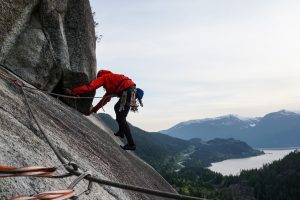
May 26 – Weekends are for climbing in Squamish!

May 27

May 27 – Climbing on a route called Skypilot (and ignoring all my readings for the week to come).

May 28

May 28 – My companion, the robe.

May 29

May 29 – Picked up some study snacks for today.

May 30

May 30 – Dominic’s practice defense for his PhD!

May 31

May 31 – The line-up for the 145 bus at Production Station.

June 1

June 1 – A surprise party in the lab for Dominic after his defense, and for his supervisor, who just had a baby!

June 2

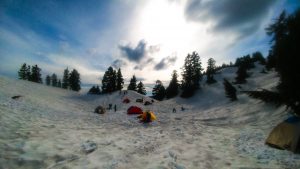
June 2 – Ignoring my readings again by taking an alpine skills course.

June 3

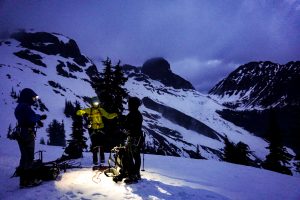
June 3 – Setting up our rope team for glacier travel at 4 a.m. in the Pemberton backcountry!

June 4

June 4 – Back to stacks of paperwork for my Research Assistant gig.

June 5

June 5 – Never-ending construction in the Education building.

June 6

June 6 – An angry Snapchat sent to my friends . . . I should start paying for parking.

June 7

June 7 – Study session: yes, the wine is necessary. Also, please note the parking tickets on the wall.

June 12

June 12 – Convocation week!

June 13

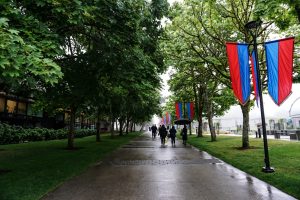
June 13 – A classic rainy SFU convocation.


EnregistrerEnregistrer

EnregistrerEnregistrer

EnregistrerEnregistrer

EnregistrerEnregistrer

World News Beat

0
Written by: Nathaniel Tok, Peak Associate & Amneet Mann. News Editor


Pope introduces plans for reform in the Vatican

Pope Francis informed Reuters during an interview of his plans to reform the Catholic Church. These plans include having a cardinal take charge of the Office of Papal Charities. This change will raise awareness for the organization which takes care of the poor, as the Pope believed that a big part of his job was in charitable works. The Pope is also looking at reforming the ranks of cardinal advisors and the Catholic Church’s accounting and human resource department in Italy, taking measures to make the departments more transparent. He hopes that these reforms will draw new ideas into the Church. – NT

With files from Reuters.


Chinese government places an upper limit on the pay of film and TV stars

In an official announcement, the Chinese government introduced a new pay cap for Chinese actors and actresses. According to the new regulation, no more than 40% of production costs can be allocated towards cast salaries and lead actors cannot obtain over 70% of that subset. The purpose of the pay cap is reportedly to reduce tax evasion, which occurs due to a convention known as “yin yang contracts”: actors and actresses sign two contracts, and then only submit the lower-paying contract for tax purposes. In addition to combating tax evasion, reducing “money worship” and “youth blindly chasing celebrities” were other justifications put forth for this new regulation. – AM

With files from BBC News.


South Sudan government in talks with rebel leader

The leader of South Sudan met with his counterpart of the rebel faction, according to the Ethiopian government. Ethiopian prime minister Abiy Ahmed brought President Salva Kiir and rebel leader Dr. Rieck Machar together for a dinner, allowing the leaders to meet for the first time since 2016. Ethiopia plays a vital regional role in the South Sudan peace talks. A 2015 peace deal and a ceasefire in December — both past attempts from the two entities at reaching a mutual understanding — had previously fallen apart. According to their government, Ethiopia has taken it upon itself to be the mediator of these talks in the face of the South Sudanese civil war, which has continued for five years and has seen tens of thousands dead and more than 3 million refugees. – NT

With files from Reuters.


Violence in Nicaragua sees more dead

Two months of protests have seen nearly 200 casualties, the most recent of which occurred a few days ago as the government fought protestors to regain control of Masaya. Following failed talks between the government and the opposition, forces loyal to president Daniel Ortega then fought for control of the city. Throughout the protests, the city of Masaya has been characterized by protestors as a symbol of resistance against the government. The protests originally began after the government reduced pensions and social security, and the opposition is now also calling for the end of Ortega’s government. – NT

With files from BBC News.


Incredibles 2 makes for an incredible sequel

0
Image courtesy of Walt Disney Pictures and Pixar Animation Studios

Written by: Youeal Abera

In 2004, Walt Disney Pictures released a superhero family film that had an impact on the animation world, but it wasn’t the characters’ abnormalities that garnered the film such astounding critical and commercial success. Rather, it was the way the family showed they were just like us that catapulted The Incredibles into being a global phenomenon.

     Fast forward 14 years (yes, you read that correctly), and the Incredibles have jumped back onto the big screen in the new summer blockbuster Incredibles 2. In Pixar’s latest instalment, we watch as Mr. Incredible, Elastigirl, Violet, Dash, and Jack-Jack continue to search for new ways to balance their superpowers with the everyday perils of life as a family.

     The film starts off where we left the Incredibles back in ’04, fighting the Underminer. As the film progresses, Elastigirl gets recruited by two individuals working to sway the general public to once again perceive superheroes in a positive light. Meanwhile, Mr. Incredible is just as busy at home, tending to his three children. Mr. Incredible soon realizes that helping Violet with her first date, assisting Dash with his math homework, and discovering that Jack-Jack has an array of superpowers is way more difficult than he anticipated. Towards the end of the movie, however, the children take the spotlight when they have to help their parents out of a tight spot, just like in the first movie.

     Admittedly, Incredibles 2 exceeds its already amazing predecessor, and I believe this can be attributed to three things.

     Firstly, Jack-Jack is hilarious. Whether it’s with his one-on-one duel with the neighbourhood raccoon or his interesting play-date with Edna, Jack-Jack manages to steal the entire show.

     Secondly, the writing of the film is impeccable. The nuances of each character’s personality in combination with the outlandish scenarios they’re all placed within provide the film with a unique humour that sets it apart from other Walt Disney/Pixar films.

     Lastly, the Incredibles once again show us that it doesn’t matter if an entire family is blessed with awesome, nature-defying abilities — every family experiences the same trials and tribulations. Kids grow up, thus making it more difficult for parents to connect with them. First dates are awkward, first heartbreaks are almost unbearable, and math is difficult, especially when they keep changing it! However, in spite of these vexations, if a family sticks together then any problem is conquerable — with or without superpowers. It’s this theme that makes the Incredibles’ family so relatable to audiences, and in turn makes it such a hit.

     Whether you see Incredibles 2 with your family, significant other, friends, or even just by yourself, you’ll be sure to have an incredible time. Although, as a warning for those who watched the first film as a child, you may be overwhelmed by a profound sense of nostalgia.

Canada finally entering its early 20s

0
Illustrated by Cora Fu

By: Aaron Richardson

Many modern Canadian historians have been spending time critically analyzing the country’s behaviour over the last couple of years. Their work has helped develop the theory that Canada has finally left her teenage years, and is now entering her early 20s.

“We’re looking forward to some exciting times ahead,” said Gilbert Otta, one of the leading historians behind this controversial theory. “This is the time when a country will really come into its own and find itself. Until now, Canada has been subsisting on a pretty scarce personality, with hockey, maple syrup, and not being American making up the majority of Canada’s personality.”

Canada had a rough time in her teenage years, making her fair share of mistakes. Among the most prominent was the tragedy of residential schools. But now she’s at an age where she can start to put all that behind her. She plans to do everything she can to ignore the continuing repercussions that her past self’s actions have on our society, and pretend like they never even happened. If there is one thing she’s good at, it’s pretending racism doesn’t exist.

Historians first began speculating about this theory when Canada began her relationship with local Hot Dude, Justin Trudeau. After a long-term relationship with the human equivalent of an old wrinkly hot water bottle, Stephen Harper, Canada went on the rebound with the hottest dude she could find.

Since that time, the theory has received even greater support. The NDP finally electing the first non-white dude, Jagmeet Singh, shows that Canada is finally ready to try new things.

“The legalization of marijuana was a dead giveaway,” said Otta. “There’s nothing like experimenting with drugs to show that [the country has] reached college age.”

As expected with any rebound boyfriend, the country’s relationship with Trudeau has recently fallen on some hard times. While at first Trudeau made it seem like he would work towards giving Canada her fair say in their relationship, he quickly decided that he and his staff knew what was best. But the breaking point between Canada and Trudeau came when he decided to build a pipeline in her backyard. “It’s not that he plans to build it that bothers me,” said Canada. “It’s that he didn’t care what I had to say. It seems like he just doesn’t listen sometimes, you know? All I want is enough respect for him to consult me. Is that too much to ask?” This was the last straw for Canada, and it has made her question the long-term potential of this relationship.

Experts are still unsure what kind of relationship Canada will pursue next. Some believe that Canada will return to the safety she felt with Harper by dating the human equivalent of a younger and less wrinkly hot water bottle, Andrew Sheer. Others believe that Trudeau deserves a second chance. Regardless, the coming times seem to be very promising, and experts are keeping their eye open for behaviour that may indicate that Canada is finally developing a personality of her own.