Home Blog Page 616

SFU students and faculty targeted by email scams

0
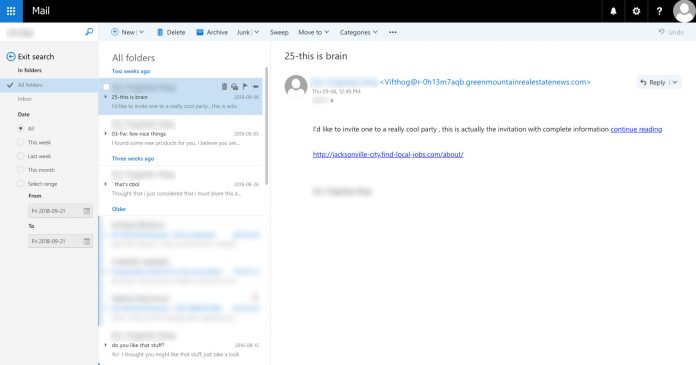
(Screenshot from SFU Mail)

Written by: Michelle Gomez, Staff Writer


SFU students and faculty have expressed concern over a variety of scam emails received in the past few months, sent from what appear to be SFU email accounts. The emails range from promoting weight loss plans to linking users to “interesting” articles.

The Peak asked Steve Hillman, an IT architect at SFU IT department, about these emails and about what SFU students can do to better protect themselves.


How do these scams work?

Hillman explained that email messages that may target SFU accounts can be grouped into categories based on the information they contain and ask for from users.

Spam emails are messages that contain unwanted advertisements, while scams are emails that either offer or ask for money. Phishing emails aim to trick users into disclosing information or credentials. They often mimic websites to convince users to enter private information, such as banking information, usernames, and passwords.

Malware or viruses can be transmitted via messages that “either contain a malicious payload (an attachment that contains a virus) or, more commonly now, contain a URL that points to a website that is infected with malware.”


How do scammers obtain my email address?

Scammers have many ways of obtaining students’ email addresses, including breaking into vulnerable third-party websites and extracting email addresses, infecting computers with malware to collect the emails stored there, or guessing by using common names and noting which ones result in valid email addresses.


What is SFU IT Services doing to prevent this?

Hillman explained that SFU IT Services takes a number of steps in order to protect students and faculty against the detrimental scams. “[We run] commercial anti-spam/virus firewall servers on the perimeter of our network that help to block most of this unwanted email,” he wrote.

While IT Services ensure that these servers are as up to date as possible, it is often difficult to keep up with the attackers that “are continually looking for ways to circumvent the firewalls.” Despite these difficulties, Hillman noted that the department blocks as many as a million messages a day using this technique.

In cases where some messages get past these firewall systems, Hillman explained that the last defence is the user. For this, IT Services aims to educate the university community on cybersecurity.

He explained that October is Cybersecurity Awareness month, during which IT Services will be advertising good computer security habits around campus.


How can students recognize these emails as spam and protect themselves?

Hillman advised that users should be suspicious in cases where they don’t recognize the sender, weren’t expecting the email, are asked to click on a link to an unfamiliar site, or are asked to enter in any credentials.

Users should ensure that their computers’ operating systems are up-to-date. Hillman also noted that is important to backup one’s computer often or keep a copy of important documents so they can be backed up if the computer needs to be wiped due to an attack.

Because it is difficult to detect malware when it has infected a computer, Hillman noted that there should be an emphasis on preventative rather than curative measures. If a user suspect that they have already entered a username or password into an illegitimate website, IT Services recommends they change your password and watch their account for suspicious activity. You can also run virus or malware scanners that can better detect malicious software on your computer.


More information about cybersecurity can be found on SFU IT Service’s website.

What If: The Tim Hortons Express returned

0
Photo courtesy of the Peak archives

Written by: Gabrielle McLaren, Features Editor

I have 10 minutes between two classes, and the chances that I will collapse into a pile of limbs, loose-leaf papers, and textbooks are worryingly high. I need a familiarly branded coffee as I run from West Mall Centre to the far side of the AQ. There should be no problem, because the Tim Hortons is there. But this campus is so full of people who need their caffeinated bean-juice and cream-cheese-via-bagels to feel joy and keep going that all three line-ups are snaking across the cafeteria.

But wait, I don’t want a bagel, sandwich, or a blissfully delicious all-day breakfast menu item! I just want my coffee, and maybe a muffin if I’m feeling it, and then I’ll be on my way. And since everybody else wants potato wedges and iced lemonades and BLTs, the line for the express is blissfully short. I stumble down the stairs, fill my own cup of coffee like a grown-up, bag my muffin because that’s right, I deserve it, go chat with the lovely older employee who always runs the Tim Hortons Express (and who I genuinely hope is doing well), tap my debit card, and prance off to class fully reinvigorated.

There are dreams that cannot be, and there are storms we cannot weather. So what actually happens now that the express is closed is that I see the lines, gasp, and walk to class disappointed, uncaffeinated, and as incomplete as the Student Union Building. Because fuck no, I won’t be patronizing West Mall Express or whatever the sad little not-Tim-Hortons-Express stand in WMC is called.

Women’s volleyball fall just shy of No. 7 ranked Western Washington University

0
The Clan are now 3–4 in the GNAC. (Photo courtesy of SFU Athletics)

On Tuesday night, the Clan hosted the No. 7 ranked team in the nation: Western Washington University. The Vikings came into Burnaby as the only undefeated team in the GNAC. While they left still undefeated, the Clan put up quite the fight against such a strong team. Certainly, the support from the “Red Night” crowd helped the team as they almost pulled off a major upset.  

Things didn’t start off so well, however, as Western Washington won the first set by a score of 25–19. While the Clan played well in the set, the Vikings showed off why they are such a highly touted team, rarely making mistakes and playing a very efficient brand of volleyball. Given that SFU have typically started off strong and struggled in later sets in their recent home games, this did not bode well for the team.

Things changed in the second set though, as SFU came back to play some of their best volleyball so far this season. With the crowd in full support of the team, they were able to pull off a huge 25–19 set win. One fifth of the points came from kills from Tessa May, who dominated in the middle for the entirety of the set.

The Clan kept the momentum going into the third set, and set the crowd into a frenzy in their 25–23 set win. This time it was Kirsten Pinkney who came up big in the set, leading the team with eight kills. Things were neck-to-neck for the entirety of the set, but Pinkney and May came up huge to close out the set win with kills for points 24 and 25.

As the teams headed into the fourth set, however, adjustments made by Western Washington allowed the visiting time to slow down SFU and eventually win the set — and the match. This is what head coach Gina Schmidt told The Peak via email about the matter:

“WWU made some changes in the fourth and fifth sets and I think we could have done a better job of adjusting a bit quicker. They brought in their other middle in the fourth set and she got some timely kills for them.”  

With the adjustments, the Vikings would dominate the rest of the way, winning the fourth set 25–14 and the fifth set 15–8.

Despite this, there were a lot of positives to take away from the game, as said Schmidt.

I think there are a lot of positives to take away from the game. Overall, we out-hit and out-dug WWU statistically. They are currently ranked #7 in the country and we showed we can hang right with them.”

With the loss, the Clan are now 3–4 in GNAC play this season, and 6–7 overall. Although this is not the ideal start, the team will still surely be in playoff contention by the end of the season. “We’ve been playing a lot of good volleyball this season and I think if we continue to work on our consistency we’ll get the results we’re looking for,” said Schmidt.

Peak player of the game: Kirsten Pinkney

Pinkney was vital in the Clan’s attack in this one, and the team was at its best when she was on. She led SFU with 20 kills and 21 total points.

What’s next:

The Clan will wrap up their home stand when they play Montana State University Billings on Friday night. The game starts at 7 p.m.

The allegations are true! SFU has a student government

0
Image courtesy of sfss.ca

Written by: Zoe Vedova

The SFSS exposes itself to the student body, and no one is enjoying the sight

Burnaby, B.C. — A trembling first-year clings to the embrace of their second-year friend, the sleeve of their freshly purchased SFU crewneck soaked in tears. The semblance of comfort is chilled by the daunting revelations that Simon Fraser University has what it claims to be, a well-established Student Society.

“It’s a lot to take in all at once, you know?” The second-year confided to reporters that afternoon. “Sixteen directors,” they mused, denying themselves terror. “I can’t even name sixteen other people enrolled here. Like, I totally knew that student governments out there, but to think my own university had an entire policy-crafting sect rife with incomprehensible administrative turmoil, lording over $750 of my tuition each semester, is unimaginable.”  

When the news broke across multiple reputable meme pages that SFU’s student-led system of governance was crumbling due to disorganized infighting and alleged real fighting, SFU immediately launched its most formidable counter-attack: disinterest.

One student revealed how many initially attempted to deal with the shocking meme-formatted reports. “I guess I just thought, ‘Hey, if I treat this like the knockoff Game of Thrones bullshit it is, maybe it’ll go away?’” A forlorn expression weighed down a nonchalant shrug. “I guess I was wrong.”

Holding back enraged screams was no simple task for an unnamed third-year criminology student as she accepted the reality that not only does SFU have a student president, but he might actually be impeached.

“Those quasi-political freaks better keep their mundane feuds to themselves!” Forgoing diplomacy, she embarked upon the “anger” stage in the cycle of grief while sitting at the lower bus loop, awaiting the 144. “Do those lukewarm Machiavellians even care I’m now burdened with the knowledge that I, personally, am partially responsible for this current debacle because I never paid attention to their weird little board meetings in the past?” She proceeded to jam her headphones into her ears and watch a full episode of Netflix’s, Nailed It, on their Samsung Galaxy to diffuse any residual guilt.

“SFU students are surprisingly resilient,” commented a suburban trauma counsellor who was called in to assess the situation. “In fact, it took a whole team of Vancouver Apathy specialists to even realize the unprecedented level of shellshock the student body was experiencing. Half-hidden anxiety, despondent fatigue, and general confusion are so naturally ingrained in SFU’s everyday culture, the plethora of telltale signs of suffering were completely masked.”

Despite specialists, counsellors, and dank memes, it’s uncertain what the lasting effect of SFSS’s emergence into the conscious awareness of the student body will be. “One thing is clear,” the counsellor noted at press time, “these poor kids are not ready to learn the SFSS has a budget of over two million dollars. Can you believe it? Holy fuck, two million! But no, seriously, god, it would literally destroy them.”


Adulting 101: Managing your Moola

0
Illustration credit, Tiffany Chan

By: Amal Javed Abdullah, Staff Writer

The school year has restarted, and we’re back to being broke. Managing money can be a tough step into adulthood, and the difficult learning curve combined with the importance of getting it right can put enormous pressure on students. In this edition of Adulting 101, we’ll discuss the pros and cons of different lifestyles you can lead that’ll affect your bank account, and some tips and tricks on how to manage your money as a poor, broke, or near-broke student.

Means of Income

There are three top means of income for students. It’s important to assess and perhaps even reassess every so often which type of lifestyle has worked best for you in the past, and which you think might be a more attractive option to try out if you have the financial freedom to do so. Understanding your means of income is the first step to managing your money.

  1. Part-time work: If you have a part-time job while in school full-time, you’re consistently receiving smaller amounts of money over a longer period of time.
    1. Pros: Your revenue is more consistent. Additionally, you also have smaller amounts of money that you’re spending as you earn, so you can’t be tempted to use up all your savings at once.
    2. Cons: Working with school is time-consuming. It can be hard to balance your job with other aspects of your life, such as your coursework, social life, volunteering, etc…
  2. Saved money: This means you have a larger amount of money saved up in your account, whether it be from summer earnings, scholarships, grants, or money from your parents.
    1. Pros: More time to focus on school and other things you enjoy doing.
    2. Cons: You have a limited amount, so you need to budget well to make sure it’s being allocated in the right places
  3. Loaned money: You’ve taken a student loan either from a bank or the government, and you will need to pay it off after you graduate.
    1. Pros: You don’t have to work for this income and can focus on other things
    2. Cons: Paying it all back, along with the interest rate, after graduating is . . . well, we all know how rough it can be.

Some universal tips apply to all struggling students that I’ve learned over the years. These are for those of us who don’t have as much disposable income as we’d like; we’re still trying to figure out ways to spend well on our bigger expenses so we have enough to spend on things we enjoy.

  1. Budget all your expenses. Everything should have an allocated budget, from the expenses required for survival (such as groceries, transportation, tuition, books, and rent) to lighter things (like your social life and eating out). Make sure you’re sticking to it, even when it’s hard to do. Writing things out by hand, on an Excel spreadsheet, or with a budgeting app can be really helpful. Keeping track of your expenses can also help you be more mindful about spending. On a similar note, be aware of how much money you have and how much you’ll be spending, and plan ahead of time. If you see that you’ve already used up half of your paycheque and you have a while until your next one, or the money you’ve saved up from your summer job might be running low soon, start looking for ways to patch up holes in your bank account early. This can mean taking on part-time work, applying for more bursaries next term, or anything else.
  2. Save ahead for hidden expenses. If your car breaks down or your phone cracks and you need replacements, you should have a sufficient amount put aside to carry you through.
  3. Try looking out for things on sale. If you can find something that you need that’s worth $25 for a $5 price, that’s a great deal. Take the chance while you have it, and buy it! At the same time, don’t get carried away when you see sales. If you see a useless, albeit cool, contraption on the internet for $200 from $500, then you haven’t saved $300, you’ve wasted $200.
  4. If you find something on sale that you buy and use repeatedly, like toothpaste, then buy it in bulk. It’ll last you a while, and you’ll have saved money in the long run. This is true of most things: try buying the bigger packaged items. Often, they cost comparatively less to the smaller packages because they have a greater quantity for an overall lower price. You’ll be paying more upfront, but you’ll also be getting more product for less.
  5. Try looking for cheaper alternatives that might be a little less convenient, but will serve the purpose just as well. For example, when grocery shopping, don’t buy already-cut fruit from the fridges, buy whole fruits from the produce section, which you can take home and cut up yourself. It’s a little more work, but if you’re struggling to save money, it’ll help in the long run. Ditch the brand-name food, and price-shop between stores.
  6. Remember, the small things add up. You may think that maybe $10 here or $15 there isn’t a lot, but you’d be surprised to see how much they add up to when you spend these seemingly small amounts consistently.
  7. I learned a tip about impulsive spending, which is when you really want to buy something, but you don’t need it: if you’re at the mall and you pick up something you really think you need and cannot live without, tell yourself you’ll buy it, but in a day or two. If, after a couple of days when that immediate hot impulse has died down and you still feel strongly about buying it, then go back and get it. At that point, you know that it’ll be a worthy purchase that’ll make you happy, and not just something you saw and bought on impulse.  
  8. When you get your paycheque, it can be tempting to go on a shopping spree, or spend it all on a night out, but you need to resist the temptation. The saying “don’t spend what you don’t have” applies to your future self as well. If going on a spending spree, ask yourself if you’re doing it at the expense of a broke you eating straight out of a pot of ramen noodles tomorrow.

Remember, it’s all about creating a healthy financial lifestyle for yourself that you enjoy living. You want to save on the bigger things so that you have enough money to spend on things you enjoy. If you spend impulsively outside your budget on sprees, partying, and eating out when you really don’t have the money for it, then you need to reevaluate your financial habits.

When You’re Running Short On Cash

Staying In: Lilyhammer

0

By: Maxwell Gawlick

Best For: Fans of “problem characters”; Gangster sympathizers; Comedic drama-philes


      Lilyhammer is your next best binge. The story centres around Frank Tagliano, an infamous New York mobster turned confidential informant. Tagliano enters witness protection and begins a new life in the small town of Lillehammer, Norway. However, he finds it difficult to turn over a new leaf and leave his gangster tendencies behind, so he starts corrupting the pleasant town.

        With three fantastic seasons of 40–50-minute episodes, the show has enough content to make it worth your while, but is short enough to finish in a weekend or two. Starring Steven Van Zandt, Lilyhammer almost felt like an unofficial sequel to The Sopranos.

      Lilyhammer employs a balance of humour and dark storytelling. This balance makes it easy to consume quickly; it isn’t heavy enough to bring you down, nor light enough to get boring or repetitive. It has plenty of twists that keep you thinking, but it isn’t so action-packed that you can’t relax while watching it. The characters are loveable, hate-able, and sometimes both. The writing and direction are stellar — it feels like you’re there with Tagliano, in the biting cold of Norway. It’s the perfect show to binge, but you’ll definitely want to grab a blanket, and maybe some cocoa.

       Lilyhammer is available on Netflix and Prime Video.

Food Fantasy is fantastic but frustrating

0
Photo courtesy of IGN

By: Michelle Chiang


     With stunning graphics and anthropomorphized food items, Food Fantasy is a mobile game that is both fun and engaging. It combines aspects of two common gaming genres, RPG and restaurant management, into one game, making for a unique experience.

     The player begins as an entrepreneur looking to start their own restaurant. However, the player also doubles as a Cooking Attendant, a protector of the world who uses “Food Souls” — the anthropomorphized versions of various dishes — in order to battle monsters.

     It is unexpectedly pretty amusing sending out Peking Duck to do my bidding in battle, aided by fellow Food Souls, Black Tea and Milk. The characters are where the game really shines. Each Food Soul is voiced by a different voice actor (whose credits are given right on the character page). The voice acting brings these personalities to life, and the player can switch between English and Japanese voices.

     The gameplay isn’t tough, and involves more grinding than any real strategy, but it has an addicting quality all the same. The day I downloaded Food Fantasy, I spent five straight hours on it in one sitting. At any given moment, you can clear four separate dungeons, collect tips, fight PVP battles, and train familiars. Other features include joinings guilds, cleaning up disasters (read: monsters), and even more. All of this magic mischief is going on while you’re trying to manage a steady flow of food for the customers of your restaurant, by the way.

     However, Food Fantasy’s major shortcoming is that its navigation is tough and non-intuitive. All the controls are clustered on the main page along the top and bottom of the screen in tiny little boxes. The game also doesn’t bother explaining how to use many of the functions in the game — their so-called “guides” are next to useless. In a game where there are half a million things to do, knowing what to do and how to do it is pretty important, but ultimately, this game has no explanation on how to accomplish any of those tasks. If I hadn’t had a friend beside me who was explaining how to play, I might’ve just given up halfway through.

     But if you can get over that hump, then Food Fantasy becomes a great way to kill time. It’s not the most challenging of games, but it doesn’t need to be in order for you to have fun.

     Food Fantasy is available for download on both iOS and Android.


TransLink should be able to keep offensive ads off their vehicles

0
Photo by Maxwell Gawlick / The Peak

Written by: Michelle Gomez, Staff Writer

Unquestionably, the ongoing debate on the morality and legality of abortions has been controversial throughout its history. But most recently, news of a B.C. court overturning TransLink’s decision to deny advertising space to an anti-abortion group opens a door a discussion on free speech.

The originally-rejected advertisement came from the Canadian Centre for Bio-Ethical Reform, an Alberta-based anti-abortion advocacy group. According to Global News, “the proposed ad contained images of a growing fetus at seven weeks and at 16 weeks, and then a red circle on a white background containing the word ‘gone’ along with text that read: ‘Abortion Kills Children.’”

When TransLink refused to display the ad last year, theier decision was upheld in the British Columbia Supreme Court. However just this week, judges from the BC Court of Appeal overturned this, stating that “TransLink didn’t provide any meaningful reasons for its decision to reject the ads.”

To put this issue in context, Canada is one of the rare countries with no restrictions on abortion. In 1969, Pierre Trudeau’s government decriminalized abortion under the condition that “a committee of doctors decides that continuing the pregnancy may endanger the mother’s life or health.” After the legal case of R v Morganteler in 1988, Canada removed all laws restricting abortion. Since then, it is treated like any other medical procedure.

Going back to TransLink though, keep in mind that the court’s decision was not about whether abortion is moral or not — it was about whether TransLink has the right to deny advertising space to certain groups based on their beliefs. Rather than a matter of abortion, it is a matter of freedom of speech.

Before anything else, it should be acknowledged that there is at least some legitimacy behind the court’s decision. If public service companies like TransLink were able to pick and chose their advertisements according to their beliefs, then a large amount of power would be in the hands of those who control these enterprises.

That being said, TransLink should have control over what they advertise on their vehicles. Reading through TransLink’s advertising policy, I noticed two points of interest.

“No advertisement will be accepted which TransLink, in the exercise of its sole discretion, considers to be of questionable taste or in any way offensive in the style, content or method of presentation.”

Whether you approve of abortion or not, it is safe to say that an anti-abortion ad on a public transit vehicle is of questionable taste and could certainly be considered offensive. Furthermore, this article points out that these matters are decided “in the exercise of [TransLink’s] sole discretion,” simply meaning that TransLink gets to decide what goes and what stays.

“All advertisements shall be of a moral and reputable character.”

Legislation that permits abortion generally does nothing but benefit women’s health, and Translink should be free to reject ads that would argue against them.  Our abortion legislation is a long-standing decision in Canadian law, and ads like this just discourage women from exercising their rights regarding safety and independence. An ad that aims to make people question this could be reasonably viewed as having questionable moral character.

With these things in mind, an ad like this is nothing but disturbing and distasteful. More than that, it discourages and may distress women who need or have had an abortion, despite them exercising their legal right. TransLink’s initial refusal to accept this ad is an acknowledgement of these things, and their discretion can ensure that public transit is a safe space for everyone. The court’s demand for TransLink to accept this is unfair, and antithetical to our legal system’s current stance.

Clubbing at SFU

0
Illustrated by Marissa Ouyang

Written by: Nathaniel Tok

With Clubs Days having just ended, the newly minted SFU Student Amusement Department (SAD) has worked with the equally new SFSS (Simon Fraser Student Shenanigans) to come up with a list of new clubs based on the feedback from a survey of the SFU student population.

Inaugural Director of SFU SAD, Alan Furfundzies, said “We created ads for the newly developed clubs with recently SFU anointed club exclusives and we think that students will be very receptive.” The ads are listed below.

SFU Snow Shoveling Club

Looking to make a real difference to the SFU community but have a busy schedule? If you’ve been at SFU for the last couple of years, then you know that “Winter is Coming” are not just the Stark words; they’re SFU’s words as well. The Snow Shoveling Club will help clear roads and sidewalks so that students can continue coming for class in the deep of winter no matter how much they wish not to. The best part is that you get to be with a club and do nothing until the snowstorm hits! Talk about minimal commitment.  

Coffee Appreciation Club

Love coffee but too lazy to brew it at home and can’t afford anything more than the smallest size at your local cafe? The Coffee Appreciation Club has got you covered! For a small fee of all the money you have in your bank account at the time you join, the Coffee Appreciative Club will provide you one cup of coffee every year for a semester! You can be certain the coffee is ethically sourced since we’ll be using incoming secondary school kids to find the beans, and getting first-years to grind the beans and brew the coffee. Come join today!

Raccoon Therapy Club

After the wild success of puppy therapy at SFU campuses, we can see that the limited amount of days for puppy therapy is not enough. At the Raccoon Therapy Club we believe we can use local SFU raccoons to provide similar levels of de-stressing for students because like dogs, raccoons are inquisitive, furry, cute and have big eyes and personalities! The best part is that they’ll be available whenever you want, not just on days leading up to exam week.  So join today if you want to work with and study these wonderful creatures and help SFU students relax!

SFU Boredom Club

Bored between midterms and finals or just want to participate in organized procrastinating? The SFU Boredom Club will head over to UBC every Friday after “midterm season” to crash club and social events there and take up study space at their libraries to show our dominance because we’re just so bored. Why head home to rest when you can show UBC kids their true place in the world?  

SFSS AGM delayed by smoke bomb

0
(Adam Madojemu / The Peak)

Written by Amneet Mann, News Editor


The Leslie and Gordon Diamond Family Auditorium was reported to be filled with smoke 10 minutes before the SFSS annual general meeting (AGM) was scheduled to begin there today.

According to vice-president student services Samer Rihani, the SFSS directors were informed by campus security that someone had dropped a smoke bomb inside of the auditorium.

Campus security and the fire department had been called to the scene to help clear the smoke.

Rihani noted that the SFSS had reached out to SFU’s Meetings, Events and Conference Services and had alternate spaces booked for the event.

“Our main mode is just to let people know that regardless of this, regardless of if we can get into there or not, we’re still going to have the meeting happen,” said Rihani.

SFSS president Jas Randhawa commented that he didn’t know what was going on or how the event would proceed. “I walked up and someone told me there’s smoke,” he said.

As of 12:35pm, vice-president university relations Jackson Freedman announced that the fire department was currently attempting to air out the auditorium and that the AGM was expected to begin in 15 to 20 minutes.

“We’re hoping that by the time it hits 1 p.m. we can still be ready on time,” said Rihani.

The Peak will follow up with more information as the story develops.