Home Blog Page 615

SFU Residence and Housing serves students’ needs amid housing crisis in Vancouver

0
SFU aims to increase on-campus residence capacity with its Housing Master Plan. (Azat Bayandin/The Peak)

Written by Amal Javed Abdullah, Staff Writer


While the housing crisis in Metro Vancouver is seeing on-campus dorms fill up and pushing students to look for housing elsewhere, SFU Residence and Housing is taking steps to provide more extensive housing for its students.

“A student may be more affected in the current rental environment that exists in British Columbia and particularly, the Lower Mainland, in terms of affordability as they may not have that extra added disposable income that someone who is working might have,” noted Leon Kalligerakis, marketing and communications coordinator at SFU Residence and Housing, in an email interview with The Peak.

In order to increase on-campus housing spaces, the Housing Master Plan was approved by SFU in 2015. The plan details the construction of new buildings and renovations to existing buildings which have been approved through consultation processes with stakeholders of the university such as students, staff, and university executives.

According to Kalligerakis, the first phase of the plan will be completed in fall 2020 and will provide two new buildings and an additional 482 rooms. 360 more rooms will become available by fall 2022.

Along with the housing options available on Burnaby campus, SFU also offers housing for 68 students in the Charles Chang Innovation Center in Vancouver, which was opened in 2016. The majority of residents are graduate students.

For off-campus housing, SFU Residence and Housing has partnered with places4students.com, an online resource that brands lists off-campus housing listings in partnerships with over 160 post-secondary schools throughout North America. The website links schools, students, and landlords in order to provide housing options for students to live off-campus.

Kalligerakis advised students to be cautious of the information they receive with regards to housing options. “Students should always focus on the sites and partners that both SFU and FIC partner with to help make an informed decision. Because there are a lot of different options out there, we cannot guarantee the authenticity of any organization, advertisement, or option that we have not partnered with,” he wrote.

Kalligerakis noted a number of benefits of on-campus housing for students, such as the meal plan and a community shaped by the student residents.

SFU Residence and Housing provides on-campus housing options for students, currently offering 1668 beds. In order to live on residence, a student must either be enrolled at SFU or FIC and be taking a minimum of nine credits. While there is a wait list, it “changes considerably depending on the date you ask,” wrote Kalligerakis.

Mishaa Khan, an international SFU student studying behavioural neuroscience, said she chose on-campus housing as it serves her needs as a student well. However, Khan noted it is difficult to get in because of the surge of students that apply every semester, especially in the fall. As she has seen friends have to move off-campus due to late housing applications, she always makes sure to apply as soon as applications open.

Khan noted that she chose residence over other off-campus housing options because it is convenient, allowing her to avoid commute times up and down the mountain for classes. As well, on-campus housing also provides an avenue for her to get to know other students. “Residence Life does a good job in creating a welcome atmosphere and it helped me integrate better into society as an international student,” said Khan.

Additionally, living on residence at SFU makes Khan feel safe due to the additional staff resources give an added sense of security. “Campus public safety and community advisors are only a call away and they often walk around, making sure everything is fine,” she noted.

Balqees Jama is another student living on residence who also opts for on-campus housing because of the convenience. “I leave campus once a week to do some things I need, but everything I need is generally here. I have my friends, job, and school in the same place. I’m on the 24/7 meal plan which saves me lots of time while allowing me to be social,” she said.

Like Khan, Jama felt that the the on-campus housing options are competitive and hard to get into.

“SFU has a first-come first-serve system, so I have learned to wait for the clock to go from 11:59 p.m. to midnight just so I can guarantee that I will get a spot.” – Balqees Jama, SFU student and on-campus housing resident

Jama also echoes Khan’s sentiments about feeling safe on residence: “I felt so secure that I did not even look for places to stay off-campus. [. . .] I feel so safe on campus that I don’t mind studying in an academic building alone until 2 a.m..”


With files from CBC News.
#1 ranked SFU men’s soccer now 9-0-0 with victory over Concordia

0
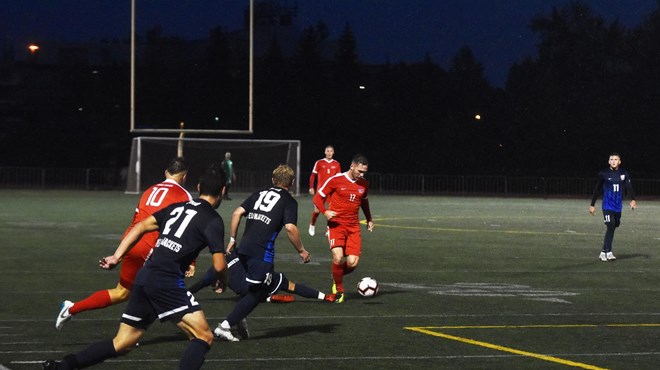
Connor Glennon now has eight goals this season. (Photo courtesy of SFU Athletics)

By: Victor Gouchee

On Tuesday, the SFU Men’s Soccer team moved up the national rankings to take over the #1 spot across the entirety of NCAA DII. For the last two seasons, the Clan have been ranked as high as #3 nationally, but after starting the season 8–0–0 and outscoring their opponents 31–3 in those eight games, it is great to see SFU get the credit they deserve and be rewarded as the best team in the NCAA this season.

Fast forward to Thursday, September 27, as the clan looked to continue their winning streak as they hosted the Concordia Cavaliers on Terry Fox Field. A rare non-raining contest saw the Clan, who are atop the Great North Athletic Conference (GNAC) standings, face off against the Cavaliers who are in third place. Concordia has proven to be difficult in the past for the clan, as they are a team who is always well disciplined and look to pounce on the counterattack.

On Thursday, the Cavaliers’ game plan seemed to be no different. The first 30 minutes were quite hectic, neither team maintaining possession for extended periods of time and no concrete chances for either team, but most of the action took place in Concordia’s half. Despite a lack of clear-cut chances, the Clan were still able to keep Cavalier goalkeeper Grant Alcorn very busy on the day.

At the half, it was locked at 0–0, with SFU settling into a groove in the last 15 minutes, but Concordia yet again proving to be a disciplined wall on top of their own 18-yard box and something that the Clan found tough to break down. As the second half began, it kicked off right as the first half ended, SFU dominating possession around Concordia’s box.

This time, however, it only took sophomore forward Connor Glennon six minutes to score his eighth goal of the season for SFU. The goal came after extended pressure from SFU and the ball popped out to Glennon inside the box who was able to connect on the volley and blast it into the far corner to give SFU the 1–0 lead in the 52nd minute.

The Clan were determined to add an insurance marker, but the Cavaliers goalkeeper was not to give in so easily. Making a number of solid saves, and luckily seeing a beautiful curling effort from junior Rahid Rahiem bounce off the post, Alcorn would go on to put in a man-of-the-match performance to hold the lethal Clan attack to just the lone goal on the night while making 13 saves. Thanks to strong defensive performances from Michael North, Florian Langenegger, Joost Mangert and Eric De Graaf, goalkeeper Luciano Transolini would only be called into action once, making the save and preserving his sixth clean sheet of the season for SFU.

A 1–0 victory Thursday saw SFU extend their record to 9–0–0 overall and 3–0–0 in GNAC play.

Peak player of the game: Connor Glennon

The obvious choice, Glennon’s effort was the main difference in order to keep the Clan at a perfect record. With him, Matteo Polisi and Mamadi Camara as attacking options, it was always unlikely that SFU would be kept off the scoresheet.

What’s next:

The Clan heads back on the road next week as they visit Nampa, ID to face Northwest Nazarene on Thursday, October 4 and then Seattle Pacific on Saturday, October 6. SFU faces the Cavaliers again, this time in Portland on October 11 before returning home on October 14 to host their border rivals from Western Washington, that game kicking off at 7 p.m. on Terry Fox Field.

Recap of the SFSS AGM

0

Created by Melissa Campos

Board Shorts

0
Irene Lo / The Peak

Written by Amneet Mann, News Editor


Board changes signatory for banking resolutions

In light of the impeachment of the former Simon Fraser Student Society (SFSS) president Jas Randhawa, the board appointed vice-president student services Samer Rihani as one of the signatories on behalf of the student society in banking matters.

The other signatory is SFSS CEO Martin Wyant and, in the absence of Wyant, Build SFU general manager Marc Fontaine.


Financing regarding SUB provided

Vice-president Matthew Chow elaborated on the long-term and short-term loans the society has taken out to finance the Student Union Building (SUB).

He noted that the society is currently using three different types of loans for the project. For the duration of the construction, the society is engaged in a short-term construction loan, which they use to pay off the invoices they receive from the university every few months.

Once construction is completed, the society will switch over to a long-term loan on August 1 which will last for 25 years. The long-term loan will be used to pay off the short-term loan, which will also provide an interest rate swap for the society in the interest of saving the society money.

According to Chow, the long-term loan “helps our interest rate and it prevents us from paying too much [. . .] you don’t want to pay three years worth of loans in that period of time, you want to spread it out over 25 years.”

Chow noted that the society has currently borrowed $17 million to finance the SUB project, and project to borrow approximately $38 million it total by the end of the project. The SFSS has originally projected to borrow $43.3 million but due to the construction delay, they have received “a bit more leeway in terms of levy collection for the project itself.”


Publicization of board meeting times, agenda, and open-session items discussed

The Peak’s news editor, Amneet Mann, brought forward concerns regarding how board meeting times, agendas, and open-session attachments were not posted online or made available to the SFSS membership prior to the meetings themselves.

“[It] make[s] it a little bit difficult for the membership to come and engage when they don’t know that these meetings are happening or when they’re happening,” she said. Mann noted that, while SFSS by-laws 9(2) and 10(3) mandated that faculty student unions and department student unions hold “general meetings that are open to all of its members and gives it members notice of those meetings,” there was no analogous by-law for the SFSS board of directors meetings.

Vice-president university relations Jackson Freedman noted that a policy change at the level of a standard operating procedure would be possible to communicate board meeting times and agenda more broadly and with a more advanced notice.

He mentioned that the board was looking into the possibility of a recording feature for board meetings such as a live stream for students to watch.

Wyant noted that previous boards had set a regular biweekly time for meetings to take place, which was a possibility that this board could consider.


Structure of advocacy committee discussed

Vice-president external relations Jasdeep Gill raised concerns regarding the current function of student representatives on the SFSS advocacy committee.

She noted that the research done by student representatives often did not meet the standards of the province or other student unions and that so far, the board had been relying on staff members to do reputable research for the society. “We’ve been a lot more successful in getting research that’s actually reputable,” she said.

With the research roles being transferred to staff, Gill identified that student representatives did not have a significant role on the committee anymore, and suggested that the Advocacy Committee be put on hold on the fall term while the board discussed potential new roles for student representatives to have on that committee.


Board discusses bringing back Committee of Continuity

Applied sciences representative Kia Mirsalehi noted that this committee has been created the previous year by himself, Chow, and Randhawa. The purpose of the committee was to establish ongoing contact between current and previous board members to achieve continuity in terms of board initiatives and processes.

Chow noted that this committee had the potential to become a new advisory board for the SFSS. “We as board members are just students, we don’t have any formal training [ . . . ] and we all know our documentation is not the best so [it would help] if we could have a little bit of contextual understanding,” said Chow.

Long story short: The best SFU experience goes beyond the lecture hall

0
Image credit Tiffany Chan

By: Youeal Abera, Staff Writer 

I vividly remember navigating campus on the first day of my undergraduate career — running from class to class, frantic to find out which building I was expected to be in . . . Truth be told, I still catch myself viscerally experiencing the embarrassment and angst of showing up to lecture half an hour late, sweaty, and having the entire hall turn to see yet another hopeless first-year. It was a crazy first month, yet I was convinced I was going to do it all alone.

Weird, right? If there was ever a time to make friends and establish connections with other human beings, it was the beginning of my undergraduate program. But I didn’t do that. I didn’t care about any of the clubs that were tabling in Convocation Mall. I wasn’t interested in trying out for the sports teams. Not only did I lack the desire to be a part of the SFSS, but I didn’t even know what its acronym stood for!

As a teen, my three objectives while attending Simon Fraser University were: get into the courses required for my program, achieve good grades, and graduate. Like the corny antagonist on every competitive reality TV show, my mantra was: “I’m not here to make any friends. I’m here to win.”

Admittedly, that mantra didn’t get me very far. For the first two years of my undergrad, I would eat lunch by myself at the spare tables on the sixth floor of the AQ. Before class, I’d do my readings near the window at the library’s computer lab. After class, I’d get on the first available 145 bus, earphones in and eyes shut.

I willingly subjected myself to these mannerisms, keeping my distance from others in my attempt to remain focused on my goals. I didn’t feel alone, nor did I feel like I was missing out on anything particularly estimable. I got the grades I wanted, and I seemed to be content with that.

Yet I also felt cheated. As a kid, I always knew university would require refined discipline and hours of meticulous work. But I also knew that post-secondary school was a place where you could search your talents and ascertain where you wanted to go after you received your degree. By secluding myself from the numerous clubs and extracurricular resources that SFU provided, I realized that I was missing out on some excellent education administered outside of the classroom.

Shortly after I came to this divinatory realization (realistically, I was enlightened by a very passive-aggressive text from my mother), I came across a Facebook post a friend had made about writing their first piece for SFU’s The Peak.

After feeling slightly embarrassed in grasping that it was not, in fact, some pretentious hiking club at SFU, I decided to navigate The Peak’s website and browse through its content. I discovered that I too could get in touch with editors and have my own writing published in The Peak, too.

So, I started writing.

As much as I love The Peak, I’d like to clarify that this is not, in fact, a detailed advertisement for SFU’s main news-source. Rather, my motive in sharing my experience with The Peak is to ardently encourage any SFU student to take a leap of faith and join an extracurricular club or activity.

What started as movie and album reviews soon developed into heavier pieces that tackled national affairs and the global political climate. I became familiar with a number of talented editors. From what I gathered, many on The Peak’s staff seemed to share similar interests.

Whether it was taste in music, opinions on film, or even the experiences we lived on campus, I discovered that I had a lot in common with the writers and editors of The Peak. I had found my people, and as it turned out, they were just a minute away from the isolated areas I regularly inhabited on campus.

These periodic writing submissions soon lead to a job at The Peak when, after applying this past summer.  Now, I get the privilege of attending pitch meetings, closely communicating with editors, receiving regular feedback on one of my biggest passions, and hanging around an office. I’ve grown to vehemently appreciate everyone I work with, and consequently, I’ve found a home away from the perilous stress of lecture halls and tutorials. Cheesy, cliché, corny maybe, but true.

Sure, your student workload is already enough to leave you exceptionally busy throughout the semester. However, if you take the time to see what SFU has to offer, and if you take initiative in applying yourself to a particular group, you may just find that the most indelible experiences and invaluable lessons are waiting outside the classroom.

Fashion trends from the 70s that will be sure to come back in style

0
Image courtesy of shellypalmer.com

Written by: Tiffany Chang

Platform shoes:

The legal equivalent to stilts and one of the most popular trends of the 70s!  These could definitely make a huge comeback. If everyone were to wear platforms again, it’ll be for dual purposes – to appear taller, and to compete over who can walk around without wobbling or making those annoyingly loud “clomping” noises.

The latter will be tricky, especially for us SFU students. We already hold way more than our fair share of noise pollution with all the construction going on at the Burnaby campus. The workers operating jackhammers while building a structure that’s going to cost every student’s tuition money for the next thousand years have already caused partial damage to my ears. But the shoes seem fun. I guess we’ll see.

The-ever-so-colourful wonders of tie-dye:

The pieces of clothing we always need to be extra careful with when throwing into the wash! Though, I must admit, tie-dye can be cool . . . when done properly. But, I must warn you. If you plan on making a DIY tie-dye shirt, make sure to do it properly. “Why are you stating the obvious?” you might ask.

Well, I’ll tell you a story: When I was six years of age, I went to a summer camp, where one of the activities was tie-dying our own shirts. One of the staff members helped me and I thought: “Mine is going to turn out great!”

But lo and behold, it looked like everyone at camp spilled grape juice, lemonade, and limeade in random places all over my shirt. The colours were in small blotches and it looked absolutely horrible. I can’t stress this enough.

Feeling slightly unsure? Please re-watch a YouTube tutorial or ask someone who’s done this before. Or just stick to buying one. Yeah.

Funky bell-bottom pants: Probably the coolest trend. If these aren’t going to be one of the next trends to come back, then there’s a serious issue. Whether they’re a simple denim or shiny polyester, bell-bottoms are, without a doubt, the bomb! Plus, one of the greatest things that could happen, which and might even make up for the fact that the Fall Kick-off was cancelled, is having a school disco!

Seven-Minute Majors: Find out what SFU students like about their majors (Part Two)

0
Image courtesy of Youth Change

By: Melanie Hiepler, Nicky Magas, Aaron Richardson (Humour Editor), Nicky Magas, Zach Siddiqui (Copy Editor), Henry Tran (Peak Associate), and Hillary Ta

Behavioural neurosciences

Behavioural neuroscience (BNS) is a unique combination of psychology and biomedical physiology courses. You learn about human physiology and anatomy at an advanced level, whilst developing the ability to communicate with others.

One of my favourite classes is PSYC 381, Behavioural Endocrinology, because prior to taking this course, I didn’t know that hormones played such an important role in your life. As it turns out, hormones regulate how much urine you secrete, how fast your heart beats, and even your immune system’s performance.

One of the benefits that I have gained from this major is lab experience; I got to work with mice over the summer and conduct some behavioural tests on them. It was cool being able to perform the experiments that I read about in my textbook — thanks Dr. Watson! (Read more about behavioural neurosciences online.)

One of the things that I dislike about this major is that some courses are only offered once a year, so if you miss one course, it can really delay your graduation date. For example, BPK 426, Functional Human Neuroanatomy, is only offered once a year and it’s a required course for BNS majors. Another thing that I dislike about BNS is that there aren’t too many “neuroscience” courses offered at SFU per se, which is a tad disappointing. – Henry T

Communication

When I first considered communication (which boils down to studying how people communicate with one another), I thought it sounded completely boring, but it turned out to be so much more accessible and engaging than predicted. Semiotics, media, culture, policy . . . all of these concepts, packed to the max, are things you’ll study in this major, but you’ll often be doing so in ways that connect directly to your day-to-day life.

Sometimes you’re looking at Marshall McLuhan and how his soul cried “THE MEDIUM IS THE MESSAGE” out into the sad content-focused, form-ignorant universe. Other times you’re looking at an advertisement showcasing a couple going on vacation only to learn about the secret implications that they’re about to have an orgy with their dalmations in the basement of another family’s summer home. It really just depends.

Oh, and also? The communication professors are some of the best. It pays to be taught by people whose entire careers are based around the communication of information . . . I’ve also never had a communication course where I’ve found the course policies to be unreasonable. The learning environment is consistently optimal. Take it from me, you won’t regret checking out some of the classes from this subject. – Zach S


Environmental sciences

If you are looking for a science degree that allows you to explore a little bit of everything while learning about our world, environmental science (EVSC) sounds like the place for you!

The true beauty of this program is its variety. With four concentrations to choose from (applied biology, environmental earth systems, envirometrics, and water science), you have the flexibility to enter a stream that offers you your preferred mix of courses. In fact, there are only five designated environmental science (EVSC) courses for students in the program, which are unique opportunities for environmental science students to meet, collaborate, and problem-solve while drawing from their diverse course backgrounds.

Think that this program is just about trees or only for established environmentalists? Think again! The EVSC program is about understanding our world and its natural processes as they relate to each other and us. Whether you care about the availability of clean water and air, the future of sustainable cities, or the question of how to better communicate science to the public, you are bound to be exposed to plenty of interesting topics throughout your studies. (Read more about environmental sciences online!)

Finally, there are a host of potential careers paths that are available to graduates with our unique educational background. Co-op opportunities are a fantastic way to make connections and gain experience. On top of that, EVSC students are a friendly bunch, so if this program sounds like it may appeal to you, what could you possibly have to lose by giving it a try? – Hillary T


Cognitive science

Cognitive science is an interdisciplinary study of the brain and the mind. Besides the core cognitive science classes, you take classes in psychology, philosophy, computer science, and linguistics. Each of these fields offers a unique and insightful perspective on how the brain works, and the fascinating different ways to think about it.

With cognitive science at SFU, you are free to design your own way through the program. You take the first introductory classes in all of the streams, and then focus on three streams in the higher level classes. It’s a flexible degree with fascinating content, with many streams to choose from depending on what you’re interested in: artificially intelligent machines, how humans and animals communicate meaning and information through language, human behaviour, the philosophical underpinnings of intelligence and consciousness . . . (Read more about cognitive science online.)

The cognitive science classes take all of these different perspectives and put them together into a coherent picture of the brain and the mind. It’s a degree that challenges you and makes you think at every turn. Because of how broad it is, you learn a wide variety of skills.

Whether you’re reading and writing philosophical essays, dissecting empirical papers, or working with problem sets of foreign languages to writing code, this degree helps you develop a wide variety of important skills from start to finish. – Aaron R


Sociology

The thing that fascinates me the most about being a student of sociology is that everybody already has a decent understanding of how society operates. Coming together and challenging those built-in assumptions and biases (and even being made to recognize that we have them) is an eye opening experience.

What’s more, when an incorrect assumption is identified, uncovering why and how it formed historically, politically, culturally, et cetera really begins to show you how little we are the unique, free-thinking individuals we perceive ourselves to be. Becoming a student of sociology gives you the theoretical tools to understand not only how society affects you and vice versa, but how it pushes and pulls other people with experiences different from your own. It’s a world-expanding field of study, as we tend to get so wrapped up in our own lives and ways of living that we can easily forget that other people are affected by different socio-historical circumstances.

But by far the best thing about being a sociology major is that there is almost nothing you cannot study. If it has a social component at any level, it’s fair game. Sports, graffiti, video games, memes, medicine, you name it. Any personal interest can be transformed into an object of sociological study. This department even has a bunch of interesting courses that allow students to examine elements of pop culture. It’s hard not to be engaged in your studies when the things you’re studying are intrinsically fun. – Nicky M


World Literature

World literature (WL) is all about reading and cross-cultural connections. We read stuff of all peoples, all places, and all times: expect everything from ancient Persian and Chinese epics to 20th century Argentinian short stories and contemporary Japanese manga.

I love that world lit is interdisciplinary: depending on what you’re reading and how you’re analyzing it, there’s a lot of room for creativity and bringing in history, sociology, translation studies, gender studies, geography, and even biology. Literary analysis isn’t a pointless exercise in labelling metaphors and highlighting symbols, like we all did in high school English; it’s about asking questions of a text to puzzle out what makes that text tick in a particular culture.

Expect to write a lot in WL. Also expect to be challenged in your thinking. WL teaches me to think critically about my world, making me more self-aware and helping me question things I take for granted. Bonus: employers look for critical-thinking skills. (Don’t ever let anyone tell you that an Arts degree is a waste of time.)

As for the faculty: they’re great. WL is a small program, so you’re guaranteed small classes and profs will actually know your name. These profs have high expectations of their students, but they are committed to helping you meet those expectations. (Read more about world literature online.)

I strongly advise going to their office hours. WL 200 is the gateway to all upper-division classes, as this is where you’ll begin to learn some of the theoretical frameworks that will help you down the road. WL 300 builds off WL 200, so don’t take them at the same time! Finally, for the theatre-lovers among us, I highly recommend WL 320 with Dr. Mark Deggan – this class is about how literature overlaps with performance, so expect lots of theatre talk! – Melanie H

Men’s soccer’s Kyle Jones talks season-ending ACL tear injury

0
Kyle Jones played a key role in two GNAC championships for SFU men's soccer. (Azat Bay / The Peak)

By: Victor Gouchee

Year: Senior

Hometown: Port Moody, British Columbia

Major: General Studies (Education), Minor in Curriculum and Instruction

Favourite soccer player of all time: Ryan Giggs

Kyle Jones has been a prominent player for the men’s soccer team over the last three seasons, and ever since he arrived at Burnaby Mountain, he has made the centre of the pitch his. His role as a central midfielder is crucial to the Clan, as it allows him to serve as the link between the defence and the attackers.

During the off-season, Kyle played for the Calgary Foothills in the Professional Development League (PDL), a North American league for developing young players between their university seasons and pushing them toward professional leagues. The Foothills team are always competitive, visiting the national final just two seasons prior. This last summer saw Calgary go one step further and win the PDL Championship!

The upcoming 2018 season with SFU would have been Jones’ last year of eligibility for the Clan team, and a year he would have wanted to make as memorable as possible, perhaps by winning a national title, this time in the NCAA. Unfortunately, things won’t go according to plan for Jones.

Before the end of the PDL regular season, Jones tore his ACL, forcing him out of contention for the eventual title-winning Foothills lineup. Of course, an ACL injury means a long spell on the sidelines and therefore Kyle will not be playing for SFU in what would be his senior year.

The Peak: How was your PDL season playing out prior to the injury?

Kyle Jones: It was going pretty well. We had a strong team so training was competitive and professional. I was actually playing quite well [during] the game I [hurt] my knee so that was unlucky.

P: Were you looking forward to the SFU season after the PDL season?

K: Of course. Starting the year with a trip to Norway would have anyone buzzing for the season, but a few weeks before I was meant to come back home to train, I did it [the injury] and I didn’t actually get to go.

P: How did the injury happen?

K: Just an unfortunate turn chasing back and it was gone.

P: What were the first few days like following the injury?

K: Because I was able to walk and swelling was minimal, I was hopeful that it would just be a bad hyperextension, but I kind of knew it was worse than that. I mean, I’m allowed to dream, aren’t I?

P: Why did you have to leave, or how did you come to the decision to leave the Foothills before the end of the season?

K: In June, I had spoken with Schneids [Clint Schneider, SFU Men’s Soccer Head Coach] about the Norway trip. Since we [Calgary Foothills] were projected to go far from the beginning of the season, originally the plan was to meet SFU in Norway right from where we’d end up in the playoffs. However far we made it in the playoffs, I’d meet [the SFU team] in Norway right from where the finals were. That plan didn’t pan out, and he wanted me back to train before we went. So a couple of days later I booked a flight back for the end of July where I’d have missed at least the semifinals of the PDL. I spent about two to three weeks post-injury in Calgary getting my MRI, getting physio, working out, etc. It wasn’t really my choice since I never want to leave a team early, but I understand why I needed to be back. However, since nothing could be done for me after my injury, I’m glad I could have come home early.

P: How did you feel before the surgery?

K: I was at a standstill for about two months, so I was excited that I could start getting better. Surgery was just step one in my long process of recovering.

P: How did you feel after the surgery?

K: Even [now] after my surgery, I’m still excited. I may be looking too far forward at this point, but I want to get back and play.

P: What is your timeline to come back and what’re you doing to get there?

K: On average, it takes seven to nine months to fully recover, but there [are] a lot of little goals to reach like getting back to jogging, then sport-specific training, then training with the team again, then slowly getting back into playing games.

P: How do you feel about how the team has started the season, and what are your expectations for the guys for the rest of the season?

K: It’s an unreal start. I hope this momentum keeps going forward as the semester goes forward. It’s hard to be as focussed on the sports aspect so much come midterm season, but the team looks much more mature this season, and hopefully we can handle it and not let the high standard we’ve set dip.

Political Corner: Doug Ford’s Better Local Government Act harms Toronto’s upcoming election

0
Photo by Alex Tétreault / National Observer

Written by: Kelly Grounds, SFU Student

This past week, Prime Minister Justin Trudeau disagreed and distanced himself from Ontario premier Doug Ford’s use of the notwithstanding clause of the Charter of Rights and Freedoms to proceed in his campaign to pass the Better Local Government Act (BLGA). The goal of this act is to shrink the city council significantly, from 44 members to just 25, in order to cut government costs and increase the speed of legislation.

By using the notwithstanding clause, Ford is able to override a judge’s ruling that his act goes against the Charter. He is also going against public opinion and 25 members of parliament as he pursues said act.

Ford’s reasoning for this change is inherently flawed. Passing legislation is based on a city’s priorities, the available funding, the council’s autonomy, and more. Of these, the council’s autonomy is most affected, as there are fewer voices and advocates to vote in. The primary benefit of this new act is faster voting and greater process efficiency, but that may come at a severe cost of poorer legislation quality.

Furthermore, not only would Ford’s act undermine judicial independence, it also could undermine Toronto’s upcoming elections. The act could undermine the candidates’ freedom of expression but more importantly, by cutting the size of the city council, it will increase the remaining seats’ constituencies and redraw electoral lines in the middle of a major election.

This change would likely catch voters off-guard when they reach the polls, and could seriously damage the effectiveness of Toronto’s city council. Both of these could be incredibly damaging to the process and public perceptions of democracy.

Summaries for classic books I’ve totally read and completely understand

0
Illustrated by Emma Wu

Written by: Natasha Tar

As an English major, I’ve definitely read tons of “literary classics,” also known as “shitty old books written by racist dead guys.” Since you’ll all be forced to read them one day, or pretend you’ve read them to look competent, I’ve compiled a nifty list of summaries for all the big ones. You’re welcome.

The Catcher in the Rye by J. D. Salinger
A really angsty kid stomps around New York for three days and then gets pneumonia.

A Tale of Two Cities by Charles Dickens
A long-distance relationship in England between a woman with a large forehead (thanks, Queen Elizabeth I) and a man with ten-inch sideburns. Since texting doesn’t exist, the lovers use plague-carrying rats to deliver their letters. This kills almost everyone, but don’t worry, a fire later kills everyone else.

The Road by Cormac McCarthy
I never finished this book, unfortunately. I took a shot every time the sentence “they walked down the road” came up, and got alcohol poisoning after the first chapter.

The Prince by Niccolò Machiavelli
God, is this one depressing. Long story short: people don’t actually drop out of classes the first few weeks into a new semester. Your professor is 100% slaughtering them to maintain social control.

Les Misérables by Victor Hugo
Don’t worry about this one, it’s in French so no one can read it anyway.

Moby Dick by Herman Melville
The title should explain itself. A ship captain with Small Penis Syndrome puts all his energy and desire into killing a whale and taking its genitals as his own.

Zen and the Art of Motorcycle Maintenance by Robert M. Pirsig
A cautionary tale to people who meditate at the wheel.

Jane Eyre by Charlotte Brontë
700 out of the book’s 800 pages are detailed descriptions of curtains. The rest is about a narcissist who locks his wife in the attic and hits on a girl who is 20 years younger than him. Spoiler alert: a burning house falls on him so he ends up looking like Mad-Eye Moody.

Pride and Prejudice by Jane Austen
A bunch of sisters try to get laid to please their mother.

The Scarlet Letter by Nathaniel Hawthorne
Someone fucks a random guy, and the townspeople get a little too feisty with a paintbrush.

Skinny Legs and All by Tom Robbins
A bean can receives a life-threatening injury on its way to Jerusalem, so a stick and seashell try to save its life. There’s a part where a French vibrator talks to panties. Humans are involved in this story, but they’re secondary characters.

Beowulf by unknown oral storyteller
After a king builds his castle in monster territory, a glorified pest control guy must put down a young man-eating monster. And then the monster’s angry mother. And then a dragon. Then he dies.

Waiting for Godot by Samuel Beckett
Two guys wait for Godot.

The Secret Garden by Frances Hodgson Burnett
This one’s definitely anti-vaxxer propaganda. Two sick kids become friends, and through the power of Fresh Air™, they make a full recovery.

Animal Farm by George Orwell
A bunch of animals decide to become communists, E-I-E-I-O.

Lord of the Flies by William Golding
Ms. Baker let the kindergartens eat too much sugar at lunchtime, so they murdered each other and burned other kids alive in a forest without remorse.