Home Blog Page 617

SFSS president impeached

7
(Azat Bayandin / The Peak)

Written by Amneet Mann, News Editor


Jas Randhawa has been impeached from his position as president of the Simon Fraser Student Society (SFSS) after the membership voted on the matter in this year’s annual general meeting (AGM).

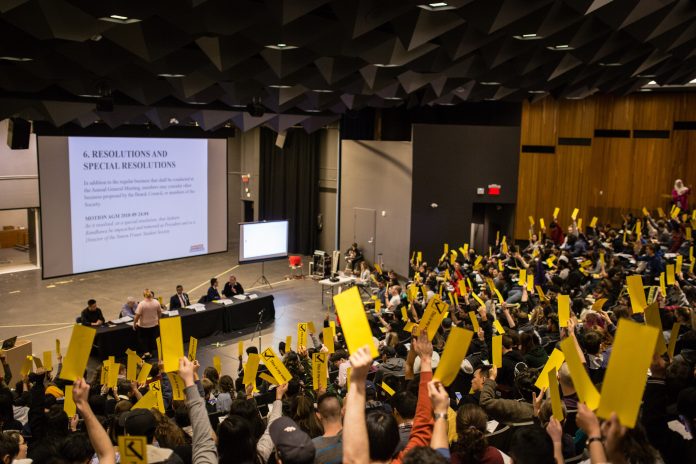
As a special resolution in this year’s AGM, the students voted on the motion to impeach by raising voting cards, with a two-thirds majority in favour of impeaching Randhawa as president. The chairperson determined the majority decision by eye, and the number of votes for or against the motion were not counted. The adoption of the motion was met with applause from the attendees of the meeting.

According to SFSS vice-president university relations Jackson Freedman, a decision regarding a by-election following the impeachment has not yet been made by the board of directors, as there are still enough executive members on board for quorum. If the board decides that there are enough members remaining on board to complete the year, the next election will be held on schedule in March.

As per SFSS by-law 4(2), the president’s impeachment has deferred his “rights, duties, and obligations” to SFSS vice-president student services Samer Rihani.

Preceding the vote on the special resolution, 109 attendees voted in favour of using anonymous ballot cards during the special resolution motion and 276 voted in favour of using voting cards.

Leading up to the voting, students stepped up to the microphones stationed at the front of the auditorium to speak for or against the motion.

“We’re here to vote on something that I never wanted to to participate in during my time at the SFSS,” said Freedman. He referred to the unanimous endorsement of Randhawa’s impeachment “a historical event in the SFSS.”

A student who introduced herself to the audience as Jaspreet spoke against the motion, stating that there was a lack of information available to voters. “[Randhawa] is the only one who bothered to reach out to students. [ . . . ] I strongly disagree with that motion [sic] because I feel like there’s a lot we are unaware of,” she said.

SFSS business representative Jessica Nguyen spoke about her perspective on how Randhawa handled the sexual misconduct allegations made by her, SFSS vice-president external relations Jasdeep Gill, and a third board member against former at-large representative Wareez Ola Giwa.

“[Randhawa] completely disregarded my safety, my feelings, and the sensitivity about this case,” said Nguyen. Directing her comments towards Randhawa, Nguyen spoke: “You did not do your due diligence in ensuring our safety and respecting our wishes.”

Randhawa was the last to speak before students voted to call the question on the motion. “With myself being gone, I can assure you that you’ll continue to have a CEO who neglects student groups on campus, have directors who continue making decisions such as having SFU students pay almost $20,000 to send empty busses to UBC events after cancelled Fall Kick-off,” he said.

Randhawa claimed that there “[were] no real grounds for impeachment.”

The veritable vexations of Mark Knight’s cartoon

0
You decide for yourself if you think it has to do with gender or race. (Photo courtesy of @theheraldsun via Twitter)

By: Youeal Abera

On Saturday, September 8, the tennis world was in awe of Serena Williams during her epic match against Naomi Osaka at the 2018 US Open. Although she lost, Serena lent inspiration to all when, after losing to her opponent, she told the 23,771-member crowd to stop booing Osaka, and proceeded to embrace the new winner. For those who know Serena, and the incomparable legacy she has built for herself, these actions of grace and honorability should come as no surprise.

However, what was a surprise was the racist image that Mark Knight, cartoonist for the Herald Sun, created and shared with the world on his Twitter account. Days after the match, Knight tweeted an image of Serena who, drawn with exaggerated lips and other racist features, is shown stomping on her tennis racket.

In addition to the baby pacifier flung on the court near Serena, the cartoon depicts Osaka asking the chair umpire, “Can you just let her win?”

What’s even more aggravating about Knight’s sectarian image is how it represents Osaka. The cartoonist drew Osaka, who is of Haitian and Hawaiian descent, as a skinny, blonde white woman. In contrast, Williams, who is of African-American heritage, was drawn as a large, angry, and menacing individual.

The racism strewn within Knight’s image is quite apparent. Serena, a darker-toned Black woman, is depicted as the villain. While Williams stood up for herself in the US Open match, Knight’s concocted image panders to the problematic fallacy that Black women are overly aggressive, loud-mouthed individuals who are unable to control their emotions.

Knight’s portrayal of Osaka is equally damaging. Osaka, although light-skinned, is still Afrocentric due to her Haitian roots. Nevertheless, Knight’s cartoon presents Osaka as a white woman, an innocent being victimized by the “aggressive” behavior of the big, bad Serena. Even in the absence of critical analysis, Knight’s image clearly reinforces the old narrative that lighter-skinned women are generally more diplomatic and feminine, whereas women with darker complexions are uncivilized, lacking the propensity to act graciously.

Mark Knight’s cartoon is inarguably problematic, both for Williams’ racist portrayal and the agent of colorism present in his illustration of Osaka. However, it’s also unfortunate that Williams and Osaka, both talented athletes who can attribute their success to hard work and great skill, now have their legendary US Open match tainted with this disgusting cartoon.

This match is significant for Osaka and Williams, albeit for very different reasons. For Osaka, this US Open Match serves as the day where she was able to play and win against her childhood hero. For Williams, this was a match where her courage and tenacity inspired women from all around the world as she stood up for herself against the chair umpire’s questionable calls.

Sure, Williams may have won if the chair umpire had refrained from making these calls: however, through the sportsmanship and solidarity she expressed towards Osaka, Williams was still a champion when the match ended.

What people tend to forget is that when artists draw and distribute such racist images online, portraying people’s likenesses without their knowledge or permission, it drags the individuals involved into an interminable negative experience.

It’s a terrible shame that because of Mark Knight, Williams and Osaka, after their legendary tennis match, have unwillingly become part of a racist illustration that will live on the internet forever. Just like Knight’s racism, the robbing of Williams’ and Osaka’s agency, through the drawing of this cartoon, is truly disheartening.

SFU works to finalize its cannabis policy

0
(Shutterstock)

Written by: Srijani Datta, Assistant News Editor


With one month remaining until B.C. legalizes cannabis, its universities are working to put together their own policies on marijuana.

Kwantlen Polytechnic University (KPU) has already indicated that their campuses are unlikely to allow the use of cannabis. Although the institution’s policy is yet to be finalized, KPU vice provost for students Jane Fee has commented to CBC News that “the idea will be that you shouldn’t be in class or you shouldn’t be at work if you are impaired in some way, either by alcohol or by cannabis or some other illegal drug.”

SFU’s communications associate Justin Wong wrote to The Peak that SFU is also still working to finalize its policy on cannabis use in its campuses.

“Like other post-secondary education institutions in British Columbia, we are currently awaiting direction from the provincial government on legislative changes regarding cannabis for the province,” wrote Wong.

He echoed the same sentiment as Fee, stressing that SFU is concerned about the use of any substance that may impair the ability of members of the SFU community to learn, study, teach, conduct research, or work.

“The safety of all members of the university community as well as visitors to our campuses is a major priority for SFU when developing any policies related to cannabis,” he commented.

Currently, GP 16 and GP 17 are SFU’s official policies regarding tobacco and university-wide safety. Wong told The Peak that SFU is currently considering how cannabis could or should be integrated with both policies.

Giving an indication of what SFU’s policy will be focused on, Wong wrote that “the university is particularly focused on considering how recreational cannabis has the potential to create unsafe conditions and occupational hazards. Any policy developed will not only comply with the new legislative changes on cannabis but will also prioritize a safe working environment and university experience for students, staff and faculty members.”

According to Wong, SFU has been involved in discussions with other universities across the province, sharing issues, concerns, and ideas as they work on drafting their policies. He mentioned that SFU is confident that its cannabis policy would be similar to those of the other post-secondary institutions in B.C.


With files from CBC News.

Hunt for the best: Bubble Tea

0

By: Natasha Tar, Peak Associate


Bubble 88

Location: 10209 King George Boulevard

Walking time from SFU Surrey campus: Three minutes

Hours: Sunday–Thursday 10:30 a.m. – 12 a.m. / Friday–Saturday 10:30 a.m. – 1 a.m.

Price: $2.95–5.45 depending on flavour and topping choice


I definitely didn’t expect a restaurant atmosphere. However, once my friend and I were seated with water and extensive menus in front of us, I started to appreciate how laidback it was. Bubble 88 was quite empty when we went around 3:30 p.m., and a nearby board told me that they have a happy hour from Monday to Thursday, 2:30 p.m.–5:30 p.m. and 9 p.m. – 11 p.m. for buy one, get one 50% off bubble tea.

       The restaurant is simply cool, and has tasteful decor. From 100+ drink options, we decided on a large taro “smoothie” with pearls (smoothie here meaning milk was added to a slush) that totaled to $5. It was served in a tall glass, and the flavour itself was very light and sweet. The pearls were small but there were enough to fill half the glass, soft and slightly sour. The straw was way too short and didn’t reach the bottom of the glass, so if you’re feeling dangerous, feel free to take the leftover pearls like a shot.

      Overall, it’s a solid bang for your buck, but if you want to grab something and go, this isn’t your scene. Also, this restaurant is cash-only.

Writer’s note: there’s also a boba place nearby called Tutti Frutti, but unfortunately I didn’t have the time, funds, or space to review it.

Rating: 4/5 bobas


T&T Supermarket

Location: Within Central City Shopping Centre, attached to the SFU Surrey Campus

Walking time from SFU Surrey campus: One minute

Hours: 9 a.m. – 9 p.m.

Price: $3.15


      It made my heart smile to encounter bubble tea at such a beautiful, low price. If you haven’t been in a T&T before, think grocery store centred around Asian foods. The bubble tea is located close to the entrance in a cooling fridge.

      My friend and I arrived at around 4 p.m., so there weren’t many choices left. We settled for a regular-sized half-sugar original milk tea with pearls, and lined up in the express lane. Service was fast and friendly, and you get your straw at check-out. The tea was very milky without much flavour depth, but the taste lingered in your mouth. I found half-sugar to be the perfect amount of sweetness for this one, and the pearls were mid-sized, soft, and bland.

     This is a good place for a cheap, refreshing, and mediocre boba. But beware: trying to find T&T in this maze-mall is a struggle. Hint: it’s on the mall’s lower level by Maxim’s.

Rating: 3/5 bobas


Big Orange

Location: Within Central City Shopping Centre, attached to the SFU Surrey Campus

Walking time from SFU Surrey campus: One minute

Hours: 10 a.m. – 7 p.m.

Price: $4.75 for a liquid drink, $5.25 for a slush drink (but I paid $4.90 for a taro slush with pearls, so I’m not sure what’s going on there.)


       I was excited about this stop on my bubble tea tour because Big Orange’s mascots (an orange and mango) are adorable. They also offer bobas with some interesting flavours like almond coffee. I was tempted to get one of their ice cream bubble teas, but for the sake of consistency, I ordered a taro slush with pearls. The service was quick and friendly, and the pearls are shaken throughout the drink for you.

       Unfortunately, other than the pearls being perfect, that’s where the good stuff ends. My first sip brought with it a huge chunk of ice, one of many I was to encounter. The drink itself was way, way too sweet. It tasted like milk and icing sugar, the flavour of taro completely drowned out. There was a thin layer of slush at the top of the drink, but the rest was a watery, saccharine mess. It was probably the worst bubble tea I’ve ever had. Do yourself a favour, and go to the T&T that’s just a few steps away for your boba.

Rating: 1.5/5 bobas

Writer’s note: Coco will soon be opening in the Central City Shopping Centre, providing yet another bubble tea option.


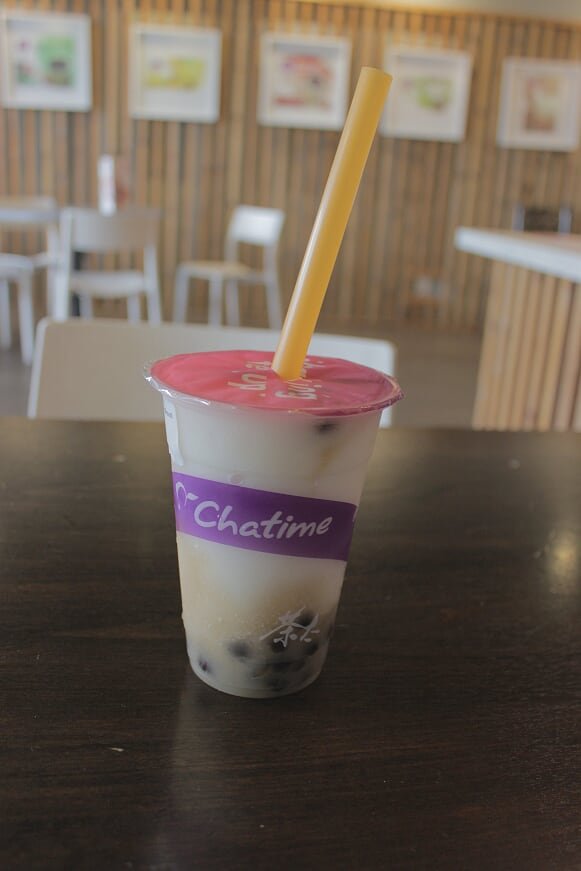
Chatime

Location: 10255 King George Boulevard

Walking time from SFU Surrey campus: Six minutes

Hours: Sunday – Thursday 12 p.m. – 11 p.m. / Friday – Saturday 12 p.m. – 12 a.m.

Price: $4.80 and up with a $0.50 add-on for pearls


      I hated Chatime the first time I went, and I was unimpressed the second time, but third time’s the charm. I hope you’ll forgive this weary writer for moving away from the beaten milk tea/taro slush path, but I was getting sick of the flavours. Chatime was quiet and comfortable, and service was fast but slightly awkward. The menu is extensive and you get to choose the amount of ice and sweetness in your drink.

      I dropped $5.55 on a regular lemon yoghurt smoothie with half-sugar, less ice, and pearls. It was delicious and near-perfect. It was on the sweet side, but the lemon flavour shone through. The slush was thick, and while there was a bit too many pearls for the (admittedly small) regular boba, they were sweet and frosted. My biggest complaint would be the price, though the quality is mostly worth the splurge.

Rating: 4.5/5 bobas

ICBC is unfairly milking young drivers with their high insurance rates

0
Photo courtesy of Auto Trader

Written by: Melissa Campos, Multimedia Assistant

With living expenses at an all-time high, it’s always frustrating to see necessities increase in price. The most recent candidate for this is car insurance: the Insurance Corporation of British Columbia (ICBC)  announced last month that they will add themselves to that list of budget stresses by raising their insurance prices yet again. But this time around, they’re making sure that young drivers pay the heavier price.

If approved by the British Columbia Utilities Commission, car insurance rates for some B.C. residents will rise again in September 2019. ICBC claims that their reasoning is that the current system is not adequately balanced between those drivers who pose greater risk on the road and those who don’t .

Under the proposed model, a combination of crash history and driving experience will play a major role in determining whether a driver is high-risk or not, which will affect the cost of their insurance premiums. ICBC estimates that insurance will decrease for low-risk drivers and increase for high-risk drivers.

ICBC claims that young, inexperienced drivers are the highest risk, and that right now our premiums are “significantly discounted” compared to the risk we pose. I recently paid just over $3,000 to re-insure my car for another year; I find it hilarious that ICBC regards that as a “significant discount” when I haven’t had an accident – or even a driving citation – in the three years I’ve owned my car.

While ICBC claims that this proposal is meant to ensure fairness among drivers, they also admit on their website that “more crashes, more claims, and higher costs are putting significant external pressure on ICBC’s insurance rates.” The company has released several startling statistics on their website about young drivers that support their case, such as “one in six young drivers could get in a crash”. Yeah, and it could also hail tomorrow.

Besides that vague statistic, ICBC released a report detailing the kinds of accidents that occurred in 2016. In that year, 37,000 out of the 330,000 accidents that occurred involved youth between the age of 16 and 21. Young drivers in this age group currently account for an average of seven percent of drivers on the road.  ICBC also admits that the rates of “youth injuries and deaths from vehicle crashes” are dropping, though they claim they are still “unacceptably high.”

I’ll admit that young drivers can present a risk on the road. Inexperience, driving without due care, overestimation of ability, thrill-seeking and risk-taking attitudes, and distracted driving are all factors specific to teens that can lead them to drive dangerously. But this is not representative of all young drivers, and the statistics certainly don’t defend a right for ICBC to be gouging our wallets.

What’s causing ICBC to go broke is not us, but rather their own poor spending habits. In an article ICBC published titled Why we need changes to insurance, ICBC reveals that “injury claims payouts are a main cause of [their] soaring costs”. The average settlement for minor injury costs has increased by 265% since 2000, rising from $8220 to $30,038 (2016). $16,500 of that new average is estimated for pain and suffering.

This is a ludicrous amount of money for minor injuries. Sure, if you’re hurt, you should get something for sure, but this seems exorbitant.

I also believe that the payout system makes people way too keen to exploit it. Just a couple of months ago, a pedestrian jumped onto the car of a family friend of mine, claimed that the driver — who was stopped at a light — had hit him, and ICBC gave him money for it. People have every reason to find creative ways to abuse a system like this, as it’s both too easy and too lucrative not to.

We also see this in vehicle repairs. It used to be that ICBC would either provide or require estimates that assess the damages of cars involved in an accident and determine what it should cost to fix the vehicles, restricting the amount that mechanics could charge.  Now, damage assessment is generally unregulated. Although ICBC says that they may require an estimate before getting the car fixed, I have never seen this enforced amongst my friends and family who have been in accidents. In many cases ICBC is simply reimbursing bills sent directly in to them from mechanics. This allows mechanics to charge a mint, because insurance payouts are not accurately limited. While ICBC is increasing premiums for young drivers, mechanics are laughing their way to the bank.

There are several options that ICBC could explore that don’t involve unfairly punishing a full demographic of drivers. They could bring back in-person adjusters and estimators who can assess the damage on the vehicle before sending it to a repair shop, rather than having employees just look over the case from a distance like they do now. They could cap payouts for pain and suffering on minor injury claims. They could even just investigate incidents more thoroughly in order to reduce the number of fake claims that are reported. This could be made easier by offering an insurance discount to drivers who have an active dashcam in their vehicles so to capture more incidents on film to help determine fault.

If ICBC still wants to claim that incidents involving young drivers are costing the company a lot of money, they should punish those who really pose the risk. They can take accidents and driving violations into consideration when determining premiums if need be, but they shouldn’t just generalize and punish the good young drivers who drive diligently on the road. It’s not fair to the young drivers who pose less of a threat than dangerous drivers from other age demographics.

Our accidents are not what’re causing ICBC’s bank to crash. Their ticket out of debt is to revisit their own management and practices, not to harm innocent and good drivers just beginning to pay them.

Canada’s Newest Parties

0
Image couresy of icanparty.ca

Written by: Trevor Roberts

The next Canadian federal election is scheduled to occur no later than October 13 of next year, and if 2015 taught us anything, it’s that the campaign could easily start any day now. Whether you are a first-time voter, have grown disillusioned over time, or just prefer to pay attention to the much more interesting American political theatre, you may be unaware of several new political parties that have been founded over the past several years. These are a few looking to make a strong push for 2019.


The Sexy Party

Founded after the success of Justin Trudeau against “your weird uncle” Stephen Harper and “your other weird uncle” Thomas Mulcair in 2015, the Sexy Party are firmly committed to giving Canadians what they want: ridiculously attractive politicians. The SP, as it is known on social media, are committed to rebranding Canada’s international image and investing heavily in the country’s already thriving export of entertainers, celebrities, and hot Ryans. The party is looking to field a slate of candidates with the largest Instagram following in electoral history, but only time will tell how that converts into votes on election day.


The Block Ontario

Tired of all the attention that Quebec gets for having its own separatist party, the BO wishes to reestablish Ontario as Canada’s indisputably best and most important province. The party advocates for Ontarian pride and sovereignty, with the plan being that they will declare independence and then annex the remaining provinces of Canada into a single province of Greater Ontario (in which the current province will be known as Greatest Ontario). The party has also expressed interest in funding studies to provide evidence that Ontarians are smarter, stronger, and more attractive than those living in other provinces.


Anti-Marijuana Party

It is yet to be seen how legal recreational marijuana will affect Canadian society; despite this, one party has already made up its mind. The party’s primary mission is to launch a referendum into marijuana recriminalization. Although there is currently no precedent for a legally binding referendum to have a minimum voting age of 55, as the party is calling for, it’s a strategy they are putting a lot of faith into. For those of you on the opposite side of the spectrum, you may find the newly founded Cocaine Party a bit more appealing.


Vancouver Theatre this September

0
Photo courtesy of Bard on the Beach

By: Winona Young, Zoe Vedova, Gabrielle McClaren


F*ck Tinder: A Love Story

Photo courtesy of David Rodwin

F*ck Tinder is a one man show that centers around David Rodwin’s autobiographical foray into finding love on Tinder as a middle-aged romantic — it is as depressing and as hilarious as you’d think, but even more heart-wrenching.


     The play starts off with some tale-as-old-as-time romance — an impromptu breakup. What follows is a crash course on Rowin’s romantic life after he moves cities, and more importantly, downloads the hell out of Tinder. Rowin onstage is sheer charisma with a spotlight; even though he remains onstage alone for a total of 90 minutes, keeping your attention on him isn’t hard at all. Admittedly, Rowin’s humour was initially a little simple to start, poking fun at easy targets about Tinder like fumbling with texting etiquette or throwing in “relatable” convo mishaps. But towards the end, Rowin had the audience laughing about his shenanigans with terrifying date details such as babies brought on, impromptu sexting, polyamorous lovers, and so much more.

     By far, what surprised me most about Rowin’s performance was Rowin’s earnest journey towards love itself. I personally thought I would be crying more with laughter than crying out of empathy for Rowin’s truly poignant stories. I remember looking to my friend half-way through the performance, and as Rowin described in loving, careful detail the woman he just met, my friend’s eyes welled up with tears. It’s clear Rowin was a masterful storyteller, and even though he branded his story as a tragic one meant for comedy, it’s clear he is skilled at telling both sorts of story.

     I’ll admit — I was skeptical walking into the stage room for this show. With a title as in-your-face as “F*ck Tinder,” with a run time of an hour and a half with only one man onstage, I didn’t have the highest expectations. But the gem that that is “F*ck Tinder” was as rare as actually finding love on Tinder; completely unexpected, and looked so, so much better than their pictures. – WY


Poly Queer Love Ballad

Photo courtesy of Anais West

     Red Gate Revenue opened their doors (and their gender-neutral bathrooms) to a dark, rainy, Vancouver night; a flood of hipsters, hippies, and sprightly queer people of all ages flowed through the lobby. My girlfriend and I weaved through the current of undercuts, man buns, and musty sweaters saved for special occasions into the packed theatre. With no prior knowledge of the play, I had no idea what kind of theatrical experience I was heading into

     Poly Queer Love Ballad, a play conceptualized by actresses Sara Vickruck and Anais West, was brought to life by the hands of their 100% female production crew, and is the well deserving winner of this year’s Fringe New Play prize.

     I spent the next hour and 15 minutes clinging to my armrests, taking a lightning bolt of emotion straight to the chest. The play starred two women, three costume changes, one guitar, and one surprise accordion — the performance was intimate, boldly objective, and confoundingly original.


It opened with a catchy song. Engaging guitar riffs, and bright lyrics introduced the audience to Gabby and Nina — Gabby, a monogamous, songwriting lesbian with an affinity for denim vests, and Nina, a polyamorous bisexual slam poetess. The two quickly fall for one another at Vancouver’s own Café Deux Soleils. They’re immediately entangled in relationship turmoil, attempting to balance differing sexual principles around their desire to be together.

     The components of the play were calculatedly comfortable. The dialogue was witty and sparse, while still expressing the complexities of being in love — exposing the compromises and agreements people may make when infatuated. Each transition to song or poem felt natural, and helped both expand and solidify the world onstage.

     The message about accepting yourself goes beyond coming out to affirm that the process extends through your entire life, evolving as you grow and meet new people. Their message was so incredible to see demonstrated so unpretentiously. The play ran for seventy-five minutes making the onstage relationship slightly rushed, but the unexpected story twists kept the audience laughing and crying for the entire show. – ZV


Macbeth

Photo courtesy of Bard on the Beach

     I read Macbeth in grade 11 and loved it to bits and pieces, so when my friend produced two tickets to see Bard on the Beach’s production, I was immediately onboard. In the car on the way there, she gushed about the production she’d seen already, and we talked about our first encounters with Shakespeare. I mentioned a literary theory my eleventh grade English teacher had said: that the Macbeths had lost a child prior to the events of the play, thus shaping Lady Macbeth’s cruelty and Macbeth’s passivity. My friend went quiet.

     As it turns out, Bard’s production took this story and ran with it, exploring the ways that this grief and a couple’s desperate attempts to fill the void left by a child’s death give the play a completely different tone. The plot didn’t change in any way, nor did the words. But my gosh, did they take on different meanings and life.

     The brutality of Lady Macbeth (Moya O’Connell) and her pivotal descent into madness makes so much sense, not to mention that O’Connell was a powerhouse, and impossible to look away from. Macbeth’s (Ben Carlson’s) fragility, his compliance in playing Lady Macbeth’s game, his grief in Act V, and his obsession with Banquo and MacDuff’s legacy finally made sense to me. Andrew Wheeler made me care for MacDuff in a way I never really had before — his performance was revealing on the ways MacDuff acts out in paternal protection and grieving, and even mirrors Macbeth in interesting ways.

     With this fresh production under the night sky, featuring  actors who let the story consume them whole, was the kind of show Shakespeare would have wanted. The three witches also deserve a shoutout for being a) the three witches, and b) so unsettling yet fun to watch.

     A week after seeing the play, my stomach still twists, but the production was fantastic on so many levels. The set design was amazing, made almost entirely out of wood, and so intelligently designed. I particularly liked the way that it enabled the final battle to look full, dynamic, and absolutely enormous. What’s more, the palace gates and balcony frame this little piece of sky which got darker and darker as the play went on, and got darker and darker itself which was wicked cool.

     The costumes were just beautiful, so much so I sometimes lost bits of dialogue by getting fixated on the subtle tartan, the belts and buckles on someone’s clothes. The use of drums and bagpipes were also a good and unique reminder of setting, without being so frequent and overbearing that the whole Scotland shtick got irritating.

      Overall, I would tell you to see this performance, but alas poor Yorick, I went on closing night. So instead, I recommend that you take the time to go to Bard on the Beach next summer. You will not regret it. – GM

In this week’s SFYou: Giovanni and Travis talk SOCA

2
Image courtesy of Travis Friday and Giovanni Hosang

By: Anindita Gupta, Peak Associate 

Correction notice: One paragraph was removed due to concerns expressed by an external organization who had previously been mentioned in the piece.

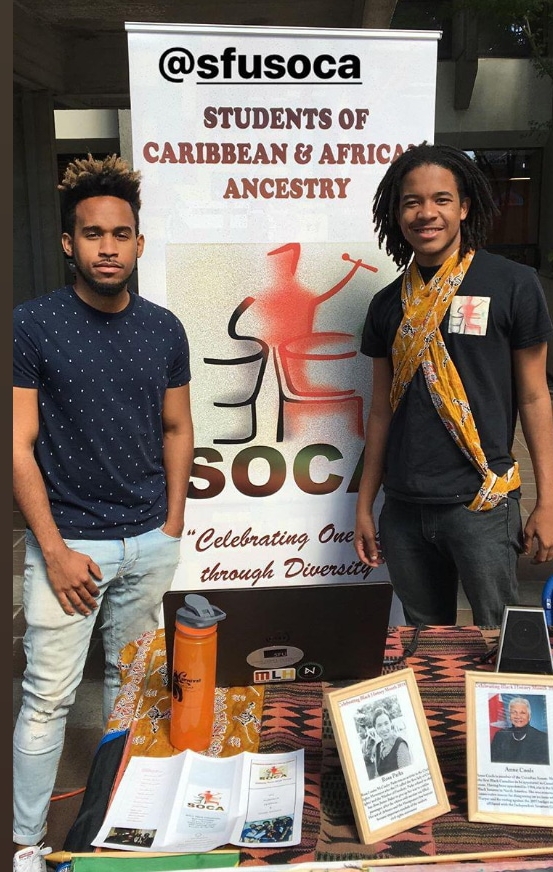
The Rotunda has been home to numerous equity groups over the years. SOCA, Students of Caribbean and African Ancestry, is just one amongst many.

Having been located in a cozy corner of the Rotunda since 1997, they, like the other Rotunda groups, are being told to vacate the premises by December 14, in light of the SFSS soon surrendering the Rotunda in favour of the Student Union Building .

The president and vice-president of SOCA spoke to The Peak about how they began their journey with SOCA, what SOCA is about, how important the space of SOCA is, and finally, how an eviction notice from the SFSS has left them stumped.


Meet Giovanni and Travis

SOCA’s president is Giovanni Hosang, a third-year student of Jamaican descent studying computer science. Accompanying him on the executive team is SOCA’s vice president, Travis Friday, who hails from Grenada and is a fourth-year computer engineering student. But what they really want to talk about is SOCA itself.

They began their journey as executive members of this association in the spring of 2016, but evoked SOCA’s long-standing history at SFU. Originally founded in 1994 as the Black Students Association, the group changed its name multiple times. After cycling through titles such as Association for Students of African Descent and African-Caribbean Heritage Students Association, they ultimately landed upon their current title.

Their current paradigm is that of a club, but they are more than just that.

“We serve as a safe space for Black students and allies who wish to learn more of what the Black experience is,” says Hosang. For him SOCA is: “A resource centre, a culture hub, as well as just a safe space. We have been located in the Rotunda since 1997, just trying to make persons feel at home, feel as if they belong, and provide the support we got when we came here.”

Hosang recalls getting involved with SOCA when a past executive heard him speaking to his mother on the phone, using local Jamaican terms and slang.

“I have a thick Jamaican accent, as you can hear,” he says. “She got us to involve [ourselves] with the group and I volunteered ever since, and ended up being executive a year after.” Friday started at approximately the same time, and recalls a big meeting in the Highland Pub where the executives at the time explained to him what SOCA was and where it came from.

“They looked at us like we’re young and vibrant and we can definitely carry the torch and we’re definitely interested in that too, so we’re just grateful to have the opportunity and we went forward with it,” Friday says.

After the SFSS voiced their intention not to provide space to this group in the new Students Union Building (SUB), the group has taken to its members and supporters to make their voices heard to the executives of the SFSS. With at least 400 members, SOCA executives are certain that they will find themselves a space in the new SUB and that the SFSS will see the need for it.


What’s the need for a real office space, you ask?

SOCA is about inclusion, representation, social justice, and community building, Friday explains. These four organizational values are important to provide a safe space for students of a minority.

“There’s something about the Black experience that makes it necessary to have a community; the fact that you don’t feel as if you belong here, the institutional pressures that are with you . . . you are connecting with people who have similar experiences, so you can share without condemnation, without judgement from the outside society, per se,” Hosang says.

Here is where they meet others who would understand and relate to some of the difficulties they may be facing. Hosang jokes that at the start of every semester, the most common sentiment amongst them is “oh crap, I’m the only Black guy in class!”

Jokes aside, their space in the Rotunda provides a home on campus for Black students to feel comfortable in their own skin. It is a space where other members are the support mechanism away from oppression and marginalization, where complex conversations are had, and where people are educated on various engaging topics.

Their current space in the Rotunda is a place where Black students are welcome to share with each other any positive or negative experiences they may have faced at work, during class, or any other aspect of life. Their space is also very well used; it is the ground to various serious discussions, meetings, conferences, and historically relevant movie marathons, such as their recent Nelson Mandela movie marathon.

Marathons such as these are often followed by serious discussion topics; in this case, Nelson and Winnie Mandela, and the political condition of South Africa. They have had conversations with engaging individuals, such as their previous president, Lama Mugabo, about the Rwandan genocide, the housing crisis for the community in Vancouver and the U.S.A.

I was unaware of the intellectual events SOCA hosts — I had only ever seen posters advertising beach parties and carnivals — but SOCA holds some very serious discussions on their regular Discussion Wednesdays.

Some of their other, more community-intensive events include conferences around women in politics, cultural diaspora nights, and many other discussion events where intensive discussions are had around pressing sociopolitical injustices and issues.

Aside from this, SOCA knows how to throw fun events, like their “Catch Ah Vyb”’ icebreaker (a talent night), and the Final Fete they hold at the end of every semester! But, even their “fun” events have a deep-rooted history and “an element of seriousness,” Hosang says, holding significance to the history and struggle of African and Caribbean peoples.

For example, J’ouvert is a festival that originated from Grenada, where you paint yourself in colours mixed in oil — which ties back to how slaves would cover themselves in camouflage, to hide from their masters. SOCA also engages in fundraising, one example being in the wake of the 2012 earthquake in Haiti.  


The threat of eviction

Even though they are active and engaged in the SFU community, SOCA received an eviction notice on April 9 of this year. Shocked with the notice, they arranged meetings with the SFSS to discuss the situation and look for solutions, but to no avail. According to its president, SOCA is now preparing “emotionally for this fight, to get ready and push back, to enable us to continue having our space.”

The members of SOCA feel that SFSS needs to take action and be more attentive towards the equity-seeking groups and communities of SFU.  

“The SFSS needs to sort out the internal drama specifically with each other,” Hosang said. “And also, stuff like this should not be so political, because one, you should see the need for a group like this and a space like this, so it doesn’t have to go to that breadth. SFSS should take leadership in recognizing that equity-seeking groups [should be] housed in the new students union building.”

The SFSS must mend their tainted relationships with these groups, hear their concerns and voices, and see the need to provide spaces to them in the new Students Union Building. Now, SOCA is looking to their followers, their members, and all the students of SFU to sign their petition to save SOCA from losing space entirely.

“Go to the SFSS! Talk to them about the issues and ensure that they understand that as a minority group on campus, we need specific allocations and protections from the institutional frameworks that render us invisible,” urges Hosang.

However negative their experience with the SFSS has been thus far, SOCA believes that they will be able to strike a chord with them, repair the relationship, and get themselves a new space where they can continue to act as the safe space they have been for the past 24 years.

Students should be especially concerned about the loss of SOCA, regardless of ancestry, because of what this eviction would signal. As Hosang puts it, “There’s something that happens with Black communities all around the world, and this is where new developments render communities of colour homeless. It’s just a pity, the same thing happened here in Vancouver when the viaduct ran through Hogan’s Alley . . . We have to fight back!”


Editor’s note: Since the time of this interview, SOCA has participated in an SFSS board meeting in which various Rotunda groups voiced their concerns regarding space in the Student Union Building. The SFSS highlighted the complexity of room allocation, and stood by the shared space model that had been discussed in the past. Hosang called the SFSS’ attitude towards space a “textbook example of institutionalized racism,” and called on this year’s board to act now. Because construction on the SUB is ongoing, the SFSS has expressed that they may be willing to renegotiate the subleases of the Rotunda groups.

Out on Campus closed until early October

0
The closure, announced on August 22, is due to a shortage of department staff. (Chris Ho / The Peak)

Written by: Michelle Gomez, Staff Writer


Simon Fraser Student Society’s (SFSS) Out on Campus, the university’s LGBTQ+ education, advocacy, and resource centre, is temporarily closed. According to SFSS CEO Martin Wyant in an email interview with The Peak, the space will reopen in the beginning of October.

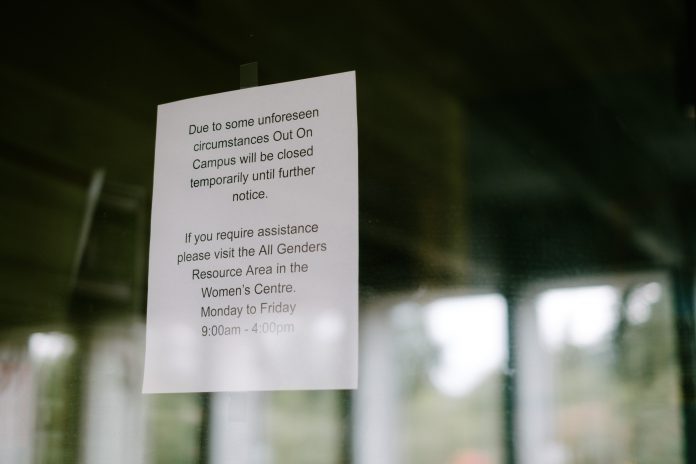
On August 22, the SFSS Out on Campus Facebook page announced that “due to some unforeseen circumstances the Out On Campus space will be temporarily closed until further notice.”

Wyant explained that the department’s coordinator Dani McNeil-Willmott is on temporary leave, and the space will reopen when they return.

Any emails sent to McNeil-Willmott indicate that the coordinator will return on October 4, and to direct all inquiries to the Women’s Center coordinator in the interim.

Out on Campus is a designated safe space on campus that is open for anyone to use, regardless or orientation or identity. They offer a physical space for students, a library of queer-related books, safe sex and menstrual supplies, workshops and events, and other support resources.

According to Wyant, the Women’s Centre is open to all students, including those who would typically use Out on Campus.

While the 24/7 lounge area in the Women’s Centre is only open to self-identified women, they have an all-genders resource area where the coordinator “has training to provide resources, support, and referrals to folks who normally visit Out on Campus,” including those who do not identify as a woman. Furthermore, Wyant noted that “the Women’s Centre has a strict rule in their space to not permit any sort of gender policing.”

Students can come to the Women’s Center for safe sex supplies, menstrual supplies, snacks, or just for a place to study or rest. They are also equipped to provide support and referrals.

Out on Campus was most recently closed in February of this year. Wyant explained that, during this time, the department was hiring a new coordinator.

He explained that it typically takes “upwards of six weeks to fill vacant positions at the SFSS.” However, he noted that the Women’s Centre and Out on Campus — which are both SFSS organizations  — work closely together to support each other during temporary closures due to vacation, staff leaves, or during recruiting processes.

Wyant noted that the SFSS hopes to fill positions for both a Women’s Centre assistant and an Out on Campus assistant to provide more support to students. “It can be challenging to maintain these services during vacation periods, sick leave, and while we are recruiting to fill roles that have been vacated,” Wyant wrote.

He noted that the SFSS will review new strategies to deal with closures over the next few months.

What Grinds Our Gears: WiFi Conectivity

0
Photo from Getty Images

Written by: Nathaniel Tok, SFU Student

As a university student, nothing sucks more than losing your Internet connection. As much as the SFU community hates Canvas and SFU Mail, we can’t even start to complain about them until the Internet actually connects . . . nor can we hand in the assignment we’ve finished five minutes before the deadline.

The nonsensical problems that Wi-Fi can have are bizarre. My laptop was able to securely connect to my home WiFi, but my phone refused to connect for no clear reason. The phone could still connect problem-free to SFU’s Wi-Fi though, meaning my router had it out for me. I was stumped for two days before turning the router off and on again, which somehow fixed the whole thing. I still don’t know why it occurred the way it did.

We depend on the Internet for so much: communication, research, entertainment, how-to guides, etc. We depend on it so much that it’s mind blowing how much of it is actually beyond our control and how little we actually understand about it. When one of the most important things in our lives fails, it’s maddening that we can’t do much beyond turning it on and off again.