Home Blog Page 605

Men’s golf wraps up fall season at Otter Invitational

0
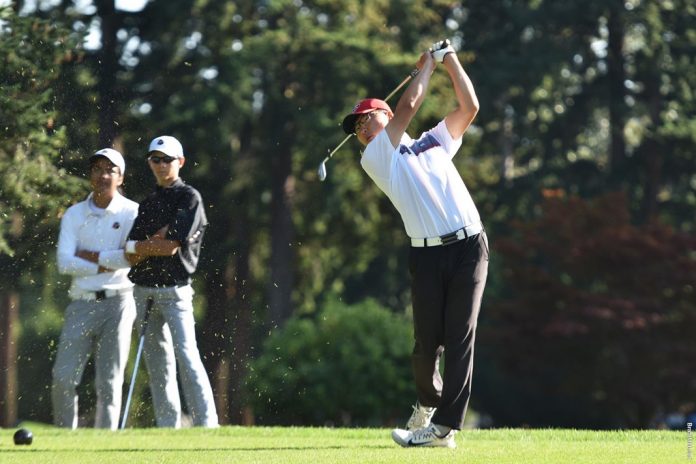
It's time to look forward to the Spring season. (Photo courtesy of SFU Athletics)

On Monday and Tuesday, the men’s golf team completed the fall portion of their season at the Otter Invitational, held at California State University, Monterey Bay. While the team would’ve hoped to finish higher than 10th, a tough start to the tournament hurt their chances. Despite this, they rebounded nicely.

The Clan struggled through rounds one and two, shooting 300 and 302 over the rounds. This put the team at 26 over par as they headed into the third and final round, far from the top-tier teams in the tournament.

However, SFU turned things around in a big way shooting 293 in the final round. Out of all the teams in the tournament, SFU achieved the second lowest score of the round. They only trailed Lynn University, who shot a 288 in round three and finished the tournament as the only team under par (–3).

As has become expected, Isaac Lee led all SFU golfers in the tournament, and finished sixth out of the 92 golfers at the Invitational. He shot rounds of 74, 71, and 71, putting him at even par over the tournament. This is the third straight tournament in which Lee has led the Clan.

“Isaac once again delivered a very impressive performance, especially for a freshman on a golf course that he had never seen before,” said head coach Matthew Steinbach to SFU Athletics after the tournament.  

While the 10th-place finish may not have been the ideal ending to the fall season for SFU, the final round was encouraging. This was Steinbach’s take on the tournament to SFU Athletics:

“We were a bit disappointed with our performance on Day 1 as the course got the best of us but we finished on a strong note. We knew we had our work cut out for us, we didn’t climb as many spots as we’d hoped, but still, it was a good way to end the semester. We’ll take advantage of the coming months to improve and elevate various aspects of our game so we are prepared for the all-important second half of the season.”

We will look forward to men’s golf returning in the spring semester.

The negative public stance on Syrian refugees reveals a loss in Canadian values

0
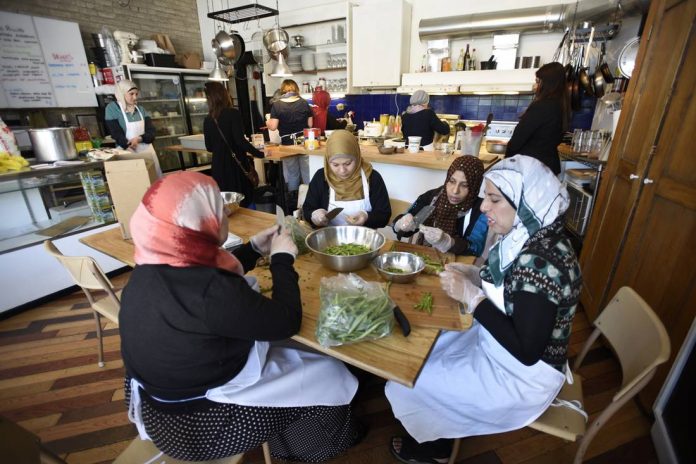
Photo by Fred Lum / The Globe and Mail

Written by: Matt Holowko, SFU Student

Three years ago, Canada welcomed refugees from Syria. I couldn’t help but feel proud and patriotic at the thought of this: we were kind, open-minded, and nicer than our neighbours to the south.

Three years is not a long time in the big picture, though. In 2018, the climate has changed fast.

More and more, the stories we see about Syrian-Canadians overlook all the positive things about them, instead focusing on the rare, extreme cases of atrocious, criminal behaviour. That sensationalism makes those scarce cases appear to be far more common than they really are.

This was very much embodied by the coverage of a Syrian refugee in New Brunswick who allegedly beat his wife for half an hour with a hockey stick, and claimed “he was not aware of the law” in Canada. More recently, in B.C., another Syrian refugee was arrested for murder in early September, causing many Syrians to fear that a broad brush would be painted across all Syrians.

Immediately after, many of these sorts of stories were commented on or shared by people who called them proof that Syrian refugees were some sort of security and screening issue — an inherent threat needing our vigilance.

Stories like this keep starting never-ending arguments that don’t need to exist in the first place. Should we pay benefits to newcomers? Is this a problem with Syrians or a few random individuals? I feel the answer to both these questions is “yes.”

But when we circulate these stories of violence, telling and spreading them with such fervor, we encourage people to bear all sorts of negative attitudes towards Canada’s refugee response — a response that should make us feel proud, not ashamed or angry.

Those negative attitudes towards Syrian refugees certainly aren’t new, but they’re absolutely increasing as these stories get shared and discussed. From the time Trudeau announced that Canada would be taking in Syrian refugees, some questions were raised in light of his warm welcome.

In 2017, a public poll was conducted by Angus Reid Institute, a Canadian public interest research group, on how people feel about refugees in Canada. Of responders, 41% said the number of refugees is too high, and only 11% think Canada should increase our refugee acceptance.

While Syrian refugees still face certain challenges, I feel proud that Canada can be a place of safety for so many people. But even as some people look for safety here, others have an unfortunate attraction to violent news stories, and the result is that more weight is given to negative attitudes towards refugees.

Mohammed Alsaleh, a member of the Syrian-Canadian Council of BC, was overcome with sadness and anger at the news of who the accused was, with concerns that his community will be affected by the actions of this one individual. Alsaleh took part in a public vigil, held the day the accused appeared in Provincial Court, to support justice for the victim. Alsaleh expressed that the Syrian community will be there “with a message of unity, hope, and humanity.” While seeing people fight for these values is fantastic, seeing such an opposition to them is depressing.

In early 1950, my grandfather on my dad’s side had newly immigrated to Canada, coming from eastern Europe after witnessing famine, war, and many displaced persons camps. He arrived in Canada much like the Syrians did: with uncertainty, fear, and a sense of loss from leaving his homeland.

Even then, some people were wary of this well-dressed man who loved to write and tell his tales of triumph over the evils of war. I remember he shared how grateful he was to finally become a Canadian citizen. Maybe this is why I feel an affinity for new immigrants.

When I think about Canada, I think about people accepting diversity, and accepting others’ rights to live as they choose, without prejudice. I would like to think that the majority of Canadians share these values, but I fear that my faith in this is waning. Many still hang onto this endeavor of Trudeau and Canada to accept Syrian refugees, trying to help those in need. I want to believe in that, too.

Student experiences medical emergency on Burnaby campus during class

3
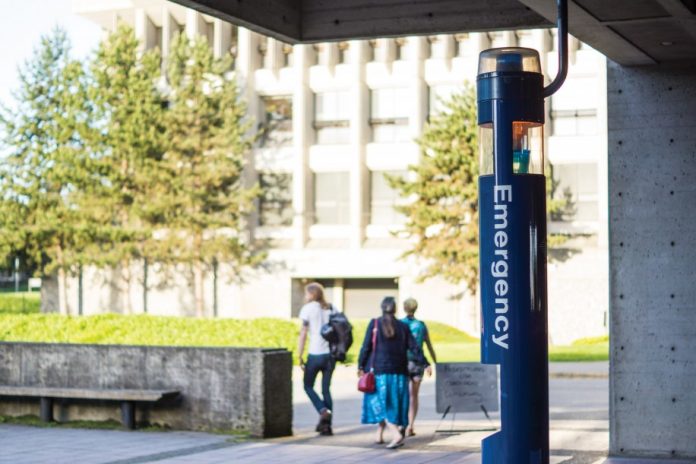
(Anderson Wang / The Peak)

Written by: Amneet Mann, News Editor


On the evening of Wednesday, October 17, a student entered medical distress, prompting emergency personnel to be called to campus.

A faculty member and exam assistant notified Campus Public Safety after noticing the situation, according to Wan Yee Lok, SFU Communications and Marketing communications associate.

Lok informed The Peak via email that Campus Public Safety arrived at the scene in six minutes and called 911. They stated that the personnel from Campus Public Safety, who were equipped with an AED, began performing first aid on the student in distress while the other students in the class were evacuated from the classroom to another classroom.

The BC Ambulance and Burnaby Fire Department began managing the student’s treatment once they arrived at the scene. The RCMP was also present.

“Recognizing that this situation may have been difficult for the students in the classroom, Health & Counselling Services was alerted that evening and has resources available to provide supports to all involved,” wrote Lok. According to Lok, “the RCMP is in the process of contacting next of kin.”

Lok’s statement  did not provide any further details on the incident.

On October 20, a post on Reddit in the r/simonfraser subreddit was posted speaking to the incident. The post claimed that the students, who were in the middle of writing an exam when the incident occurred, were made to continue writing the exam in another room. The original post also claimed that the student who experienced medical distress passed away.

The Peak is conducting an ongoing investigation into this incident.


If you or someone you know was present or knows additional information regarding this incident, please reach out to [email protected].

UN IPCC report highlights effects of 1.5°C increase in average global temperatures

0
The report was commissioned during the Paris 2015 climate talks to explore the benefits of limiting warming to 1.5°C. (David Nunuk/Getty Images)

Written by: Nathaniel Tok, Peak Associate


The United Nations (UN) Intergovernmental Panel on Climate Change (IPCC) recently released a special report titled Global Warming of 1.5°C, detailing what effects an average global warming of 1.5°C above pre-industrial levels will have on the world.

According to an IPCC press release, the report referenced over 6,000 scientific reports and had 91 authors and 133 contributing authors from over 40 countries. Kirsten Zickfeld, climate scientist and SFU associate geography professor, was one of the lead authors of the report.

The IPCC report was commissioned during the climate change convention held in Paris in 2015 to examine the science behind what possible outcomes might result if the average global temperature was limited to a 1.5°C increase.

“Prior to the report, there was a lot of talk and science around the 2°C limit but not a lot about the 1.5°C limit,” said Zickfeld in an email interview with The Peak. Nations signed onto a 2°C limit on warming in 1992 at the Rio Earth Summit.

The report states that keeping the temperature increase at the 1.5°C limit is still possible. However, it also highlights the effects of the current 1°C increase in the world. Zickfeld noted that such effects include rising sea levels, increased coastal flooding, mass coral death in the Great Barrier Reef, and higher-frequency, higher-intensity cases of heavy rainfall and heatwaves, such as the recent heatwaves in Europe.

The report emphasizes how maintaining the average global temperature increase within 1.5°C instead of 2°C will allow humanity and ecosystems to evade the worst effects of climate change, which are projected to include severe heatwaves, risks of food shortages from crop yield deficits, and total loss of coral systems. The 0.5°C difference is believed to have a vast impact on human and ecological health.

For some ecosystems and people. It’s a life or death situation,” wrote Zickfeld.

As detailed by the IPCC report, swift action is necessary to limit temperature increases to 1.5°C, and the next few years are crucial. The urgency of the report was noted by Catherine McKenna, Canada’s Minister of Environment and Climate Change, who said in an interview with The Canadian Press that, based on Canada’s current trajectory, the country will not meet the 1.5°C goal unless changes are implemented.

“We all know we need to do more,” she said. “Every country in the world needs to take action, and then we need to be more ambitious about the action we are willing to take.”

“What countries committed to under the Paris agreement is insufficient to limit warming to 1.5 degrees,” commented Zickfeld, noting that, despite the pledges provided by the countries, the world is projected to experience three-degree warming by 2100.

The IPCC report has also provided outlines of how to achieve the 1.5°C limit. It states that by 2030, emissions will need to be cut by at least 45%. Wide-ranging changes would also need to be made to the economy and energy sector; countries would need to switch from fossil fuels towards renewable energy, work on reforestation, and possibly look at ways to remove atmospheric carbon dioxide.

Above all, the report is to remind governments of how essential it is that we tackle the problem of climate change is for human and ecological health. “The report laid out a roadmap giving measures for how to stay under the 1.5°C limit. It’s now up to politicians to take on this information and act,” Zickfeld noted.


With files from The Star, The Economist, and The Guardian.


SFSS forgets to make room for themselves in the SUB

0
Illustrated by Reslus

Written by: Aaron Richardson

BREAKING NEWS: Throughout the construction of the new Student Union Building (SUB) on SFU’s Burnaby campus by the SFSS, it has come to light that many students groups currently housed by the SFSS are having their leases terminated, and simultaneously being refused space in the SUB. Many of these groups have raised concerns about the important roles they play for the university campus, and the impact that taking away their space will have on the campus.

Recently, another student group, one whose positive impact on the student body is still to be determined, has discovered that they will not be given space in the SUB — the SFSS.

It appears that during the planning stages for the SUB, the SFSS board of directors forgot to make sure there was space for their own offices. The primary concern was making sure to include a space where students could spend their hours on campus catching up on the sleep they missed the night before. Surveys conducted prior to construction of the building showed that students overwhelmingly supported the construction of a room in which they could nap.*

As a result, the SFSS board forgot to find a space for themselves and their employees in the new building. Once this came to light, the SFSS entered into negotiations with the SFSS to try to find a space in the building. Unfortunately, reporters from The Peak were not allowed in the room during the discussion, so there is no record of what occurred during the negotiations. However, students near the SFSS’s MBC offices could hear the sounds of screaming and what one could only assume was a full-on brawl amongst the board of directors.

Thankfully, the SFSS board of directors are outstandingly capable at fighting amongst themselves, and a resolution to the negotiations was reached shortly after the conflict began. It was decided that they would take over the rooms dedicated for the “Club Centre” that was intended to offer a communal space for many of the clubs on campus to use together.

Due to the amount of space needed by the SFSS, they have decided to remove any representation of student clubs or organizations at all in the building. This was done in hopes of “treating all students organizations fairly and equally” — not letting any organizations have space is equality, right?


*The actual item on the survey that received overwhelming support was “another place to fuck that isn’t the avocado.” It is unclear whether this specific wording was ignored, or if the SFSS board of directors were also looking for a good place to fuck on campus.

Sustainability-focused student-led program launches on SFU Burnaby campus

1
(Photo courtesy of Tumblershare)

Written by: Srijani Datta, Assistant News Editor


A group of SFU students are working to make SFU more sustainable through a new program called TumblerShare.

TumblerShare is a student-led sustainability program at SFU’s Burnaby campus, encouraging students and staff “to lead a more ecologically friendly lifestyle by reducing the number of disposable beverage cups used on campus,” as stated on the TumblerShare registration form.

The initiative is based on a membership system, and it is currently available only at the Renaissance Coffee in the applied science building. Those who apply for TumblerShare will be given a membership card after they make a deposit of $15.

Whenever a cardholder wants a coffee or tea, they can submit their membership card at the Renaissance café, and in exchange, they receive a reusable container for their hot beverages. Once done, the user can bring the reusable mug back to Renaissance to get it washed and collect back their membership card. Members also get 15 cents off their coffee purchase when using the card, and earn a free coffee for every nine coffees bought.

The card may be returned to get the deposit back at the end of the term. The cost of the beverages are not included in the price of the membership card.

According to the TumblerShare registration form, 2.6 million single-use beverage containers end up in Vancouver landfills every week.

“Most disposable coffee cups are recyclable, but they still cost energy. TumblerShare would help cut down on that energy consumption,” explained Corrina Tang, the marketing coordinator of the program in an interview with The Peak.

“We are already reducing the use of straws all over the city. This is the next step forward,” she added.

According to the registration form, the program is presently supported by the Women’s Centre and Embark, while Renaissance has offered to help them with the initiative free of charge. When asked why Renaissance was chosen, Tang mentioned that not only does Renaissance support local growers and suppliers, but that they also seemed really enthusiastic about the initiative.

Discussing student response, Tang stated that so far, the feedback has been encouraging; they have received approximately 45 sign-ups during Club Days at the beginning of this term alone. The only people who seem disinterested in the program are those who already bring their own tumblers, laughed Tang.

Tang noted that she and her teammates would like to reach out to other outlets of Renaissance on campus provided the program does well, so that the program can be more frequently accessible by members.

Tang and her team can be reached every Tuesday by the Renaissance Coffee in the applied science department, from 11 a.m. to 4 p.m.

The Secret Lizard Love Affair

0
Illustrated by Marissa Ouyang

Written by: Jessica Parsons

Rose Blossom is no ordinary girl. By day, she works at her local stuffed animal hospital. By night, her body transforms into a fully functioning rocket ship and she travels the galaxies.

When her engine gets rusty on a trip around the Chocolate-Milky Way, Rose Blossom crashes on the dangerous planet of Squeesh and must fight for her life. With her trusty sidekick, Fred, a cowardly vampire-bear by her side, Rose Blossom is captured by a local gang of lizard people, and she must try to trick them into fixing her engine so she can escape Squeesh . . . but she never expected one of the lizard men to fix her heart along the way.

With Rose Blossom’s choice of her heart or her engine ahead of her, she sets off across the planet to find the psychic mole-rats to aid in her decision and accidently lands herself in a political conspiracy. Thank goodness for her specialized training in throwing bowler hats! Using her FBI summer camp training, Rose Blossom helps the psychic mole-rats bring down their evil overlord, who curses her as he dies so that she may never leave planet Squeesh.

With her hopes of getting home dashed, Rose Blossom sneaks back into the lizard lair to free Fred and finally confront her feelings for her captor only to find the entire population turned into vampire lizards. The new king, Fred, still upset with Rose Blossom for leaving him in captivity to go on a soul journey, curses her to never set foot on Squeesh again. With her engine repaired, Rose Blossom takes to the skies with a broken heart, forced to fly in the atmosphere, never leaving and never returning, for eternity.

The book the critics are calling “the most confusing piece of ‘literature’ I have ever read”  and “the reason I can no longer take commercial flights,” The Secret Lizard Love Affair is a tale of space adventures, love, and lizards in an action-packed 666 pages.

Seattle Pacific University snaps SFU’s unbeaten run in 3–2 OT heartbreaker

0
Six seniors played their last game on Terry Fox Field on Thursday. (Photo courtesy of SFU Athletics)

By: Sebastian Barreto

Thursday night at Terry Fox Field saw the SFU women’s soccer team take on Seattle Pacific University. Thursday also marked Senior Day, where SFU celebrated their senior athletes’ final home game. Senior team members Jenna-Lee Baxter, Allyson Dickson, Christina Dickson, Tanis Cuthbert, Katelyn Erhardsen, and captain Samantha Donald will say goodbye after the conclusion of this campaign.

Perhaps the emotion of the pre-game ceremony affected SFU’s concentration, as the team unusually conceded an early goal. The SPU falcons launched a ball over the top of SFU’s defensive line, and Julia Devere latched onto the ball and fired it into the net before Nicole Anderson or her defenders could react.

SPU continued to pile on pressure, pinning SFU in their defensive third for large chunks of the opening 30 minutes. SPU’s pressure paid off just before the 30-minute mark when they doubled their advantage, as Makena Reitz picked up the ball on the left wing and sent a piledriver across the face of the goal. Anderson leapt athletically, but the ball spun beyond her and nestled into the top corner.

“We had been standing for 20 minutes and [there are] always high emotions and it’s hard to regain focus right away,” coach Hamel commented post-game on her team’s slow start. “Obviously, that is something your opponent knows. They come out ready to go and they pounced, and we were in shambles a bit here. Emotions of senior day are very tough, and it took a bit of time, but they got into the rhythm, we knew once we got into our rhythm we could play with them.”

That is exactly what her squad did; Hamel’s team settled and began pushing play up the pitch. Now on the front foot, SFU were applying pressure and creating the chances. A loose clearance came to freshman Kayla Goncalves at the top of the penalty box in the 38th minute. Instead of trying her luck from distance, Goncalves picked out a perfect pass to fellow freshman Katie MacEwan, who used the pace on the ball to guide her shot past the keeper. MacEwan’s first tally of the season was the catalyst for SFU to snatch a second.

Goncalves added a second assist from left back in the final seconds of the first half as she swung a cross into the box. Claire Barielles caused chaos as she challenged the keeper and rose for the ball. Barielles tipped the ball past the keeper and into the path of Jenna-Lee Baxter who nudged the ball beyond the line with three seconds to spare. The crowd rose into hectic cheers as SFU pulled level just seconds before the half.

Coach Hamel discussed her team’s resilient performance, stating, “I’m really proud of the effort. This is their fourth game in eight days, for our fourth game in eight days they did an exceptional job and to go 2-0 down like they did and have to grind was amazing.”

Back on level terms, SFU began the second half with wind in their sails as they dominated possession and field position. However, they were unable to find the important go-ahead goal. Shifting gears down the field, SFU were unlucky enough not to score, even with numerous shots on target and a scramble on SPU’s goal line.

SFU defenders Emma Lobo and Allyson Dickson put hard defensive shifts in throughout the evening. Both shone in the second half with expertly timed sliding challenges and important interventions stifling SPU’s attacks.

After 90 minutes, the score line remained 2–2 as the squads prepared for overtime. Unfortunately for SFU, a well-taken strike by SPU striker Kasey Reeve flew in beyond Nicole Anderson only two minutes into the extra frame.

“This is a heartbreaker, but there are a lot of positives here tonight. I thought they didn’t have a lot of opportunities in the second half; we came out well. One break and that’s the way it goes sometimes,” said Hamel.

“There is still a lot of soccer left to play, and if the girls play like this, they see that they can stay with everybody and their confidence grows.”

The Clan are now 9–4–1 overall and 7–2–1 in conference play.

What’s next:

Coach Hamel’s squad will travel to Idaho and then Montana to dust off their conference games before heading to Concordia University to take part in the GNAC Championships.

Peak Player of the Game: Allyson Dickson

Dickson had an impressive evening. Energetically driving down the left flank and defending well, Dickson stood out from her teammates. One sublime sliding challenge in front of the home support capped off her evening.


Queer students deserve better than what the SFSS is providing

0
Photo by Chris Ho / The Peak

Written by: Gabrielle McLaren, Features Editor

When I left high school, every breath felt fresher and every step felt stronger. Most students experience this power, but to queer students this can be even more valued. For us, coming to university can mean finding ourselves in an open, inclusive environment for the first time, depending on your home situation and just how spectacularly high school has failed you. Universities have historically been sites of queer activism and pride, and this was known to us in high school. It gets better, in its glorious simplicity, translated to “here is how.”

Out on Campus (OOC) is SFU’s pride centre. It provides LGBTQ2+ students with services like peer support, crisis referrals, safe-sex supplies, a queer-oriented library, and a safe space where queer students can socialize and feel supported.

OOC is managed by the SFSS, and running such services on campus is a typical responsibility for Canadian student societies to take on. Judging by OOC’s common and ongoing closures, though, the SFSS clearly hasn’t made the department’s well-being a priority.

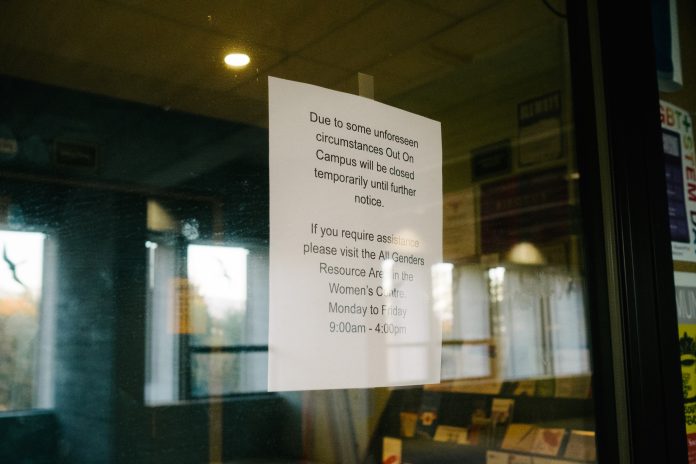
Since the start of the fall term, a sign on OOC’s door has informed students that the service is “temporarily out of business” on account of “unforeseen circumstances,” and directed all queries (pun intended) to the Women’s Centre’s all-genders resource area. At the SFSS’s annual general meeting (AGM), students were told that the OOC coordinator was on temporary leave.

But on October 4, everybody on the OOC mailing list learned that the SFSS is looking to hire a new coordinator. Posters have since cropped up across campus to advertise the vacancy.

Before anything else, I want to thank OOC’s last coordinator, Dani, for the time they spent at SFU, and the initiatives and energy they brought with them up the mountain. I wish them well on their next adventure. Their reasons for leaving are private, and they aren’t obligated to share.

What concerns me is that Dani is the second OOC coordinator to part ways with the SFSS this year, and their departure is most likely a sign of a systemic issue. When Dani’s predecessor, Kyle, left in February, OOC closed for a month before Dani was hired. Combined with the past few weeks of inactivity, OOC was essentially closed for three of the last 10 months.

Despite this, the SFSS board of directors seems to feel that the SFSS has enabled great success from OOC, going as far as to call both it and the Women’s Centre “incredibly vital resources” at the AGM. But do you really get to call a service you’re supposed to offer “vital” when your students have had to go without it time and time again?

If, as the SFSS continues to say, OOC serves to make sure that “the campus as a whole is committed to honouring the needs of our most marginalized students,” then closing the centre for nearly three months sends one clear message about how committed the SFSS actually is to the community, advocacy, education, and support that OOC is meant to give queer students.

I understand that keeping OOC running has logistical issues, as The Peak has reported in the past after interviews with SFSS CEO Martin Wyant. It takes time to fill vacant positions, and keeping up services can be hard during vacation leaves, sick leaves, and so on. But when the SFSS commits to providing a service to its membership, they have to have a contingency plan to make that service reliable.

There are several approaches the SFSS could take to keep it actively open. Things like a temp pool that can take leadership roles through while in-between coordinators, or maintaining more volunteers that can be mobilized to keep the space open while the job is open. At the very least, the SFSS could be more transparent with the student body about the space’s fate. But the SFSS is doing nothing close to any of these; they’re just quietly searching for a new coordinator, and delegating its specialized support to the Women’s Centre.

With services like Out on Campus where students go for emotional support, community, acceptance, and validation, they might not be getting elsewhere. The fact that the SFSS is treating Out on Campus like a bonus (rather than a vital service that needs to be highly prioritized) demonstrates their complete lack of understanding of what Out on Campus really is and really does. It shows a complete disregard for its importance, and for the queer students who need it.

As for the SFSS’ suggestion that queer students should direct themselves to the Women’s Centre, it’s as if they think all issues regarding “gender stuff” fit in one convenient basket. There’s certainly much support that the Women’s Centre is able to provide to queer students in this time during OOC’s closure. But I’m still disappointed that they have to when it’s not their primary purpose, and I’m curious as to what additional support their coordinator receives so that they can better assist queer students.

Regardless of their effectiveness as a replacement, the implication that self-identified women and queer students have the same needs is insulting to us all. Each of those has different needs, and so of course they require different respective support services. While mine and some other queer students’ identities intersect with both the Women’s Centre and OOC, this is certainly not the case for much of Out on Campus’ collective. Many of them will still feel they don’t have a support service where they feel welcome.

Allyship with the queer community takes many forms, but whatever they do, the SFSS must be active. This isn’t a question of whether the SFSS says they support queer students: it’s a question of whether they’re actually doing it.

Considering how quickly it seems OOC has gone through coordinators lately, I have to wonder why it is that enthusiastic coordinators with big plans and experience inevitably leave. There is no shortage of folks who want to work in advocacy, education and support within the LGBTQ2+ community, so I can’t help but question the SFSS’s commitment and effort.

I spent so much of my first semester at SFU sunk in a soft couch in OOC. I hammered out shitty first-year papers, learned about my world and community, and even discussed what a trans retelling of Romeo and Juliet would look like (answer: badass). Most importantly though, I knew that this was a comfortable, safe, and welcoming place on campus whenever I needed it. It pains me beyond belief that there are first-years at SFU who haven’t had that experience.

Join the club: Sign away with SFU ASL

0
Image courtesy of Lifeprint

By: Gabrielle McLaren, Features Editor 

I don’t think a lot of clubs on campus can credit Switched at Birth for their genesis, but SFU ASL can.

That’s how club founder Bianca Verjee got interested in the world, culture, and language of American Sign Language (ASL), as she told The Peak. Switched at Birth features a Deaf protagonist and a cast of Deaf actors, all of whom sign on screen. Afte she got into the show, Verjee was inspired to start taking ASL classes through UBC’ Extended Learning program, and has since moved on to more advanced classes with Vancouver Community College’s ASL and Deaf Studies.

ASL was first adapted from Old French Sign Language by American educators to better serve the needs of local Deaf communities. Over time, ASL speakers from those communities have further adapted the language to make it more natural, resulting in the ASL of today.

There are five parameters for a sign in ASL: handshape, orientation, location, movement and non-manual expression (for example, the shape of your eyebrow changes to indicate that you are asking a question). It’s as different from English as French or Japanese, and comes with its own unique cultural context, etiquette, and history. Verjee had brought a few books on ASL with her to the club meeting that I could flip through before we began.

The SFU ASL Club started because I wanted people to practice ASL with, but it has become so much more than that,” Werjee writes. “In addition to being a place for those interested, learning, or fluent in ASL to practice and socialize, the club has become a vessel for fostering a love of American Sign Language, and educating our community about Deaf culture, the Deaf community, and Deaf issues,”

This is the club’s sixth term since Verjee founded it in 2016, and the club currently boasts a whopping 200 members on their mailing list. She thinks that students are drawn to ASL because it is so unlike any other language, or because they recognize the importance of communicating with Deaf acquaintances, community members, customers at work.

As for Verjee herself? “I like how it makes me see things differently, how it provides an instant connection with other signers, and most of all, the intrinsic enjoyment of it signing is really fun!”

The latest SFU ASL meeting that I attended centred around a unique theme: “See the Music.”

Students filtered into our room in West Mall Center as their classes ended, and the meeting kicked off with a series of videos on how ASL interpreters go about interpreting music for the Deaf community. As it turns out: really well. Interpreter Amber Galloway Gallego, whose work you can sample on her YouTube channel, uses height and elements of her facial expression like the shape of her mouth to evoke the pitch and speed of music. Interpreting music in ASL even applies to beatboxing (definitely worth a watch).  

Following the videos, we went through a round of introductions to break the ice. Then we learned how to say our majors in ASL, thanks to Verjee’s previous knowledge, some crowdsourcing in the class, and an online sign dictionary.

Every SFU ASL meeting I’ve been to has featured some thematic vocabulary lesson, and today we focused on activities swimming, biking, knitting, listening to music . . . After our lesson, we had a quick recap, and then out came the bingo sheets! Verjee would sign words in front of the class, and if the written form was on your sheet, you checked away until you had an X.

On the line was the winner’s choice between a Starbucks gift card, an SFU Bookstore gift card, and an adorable pocket-sized ASL dictionary. I’m not going to lie; I was a bit salty to find myself two squares short of victory although watching the two runner-ups, who yelled “bingo!” simultaneously, duel for the win was entertaining too.

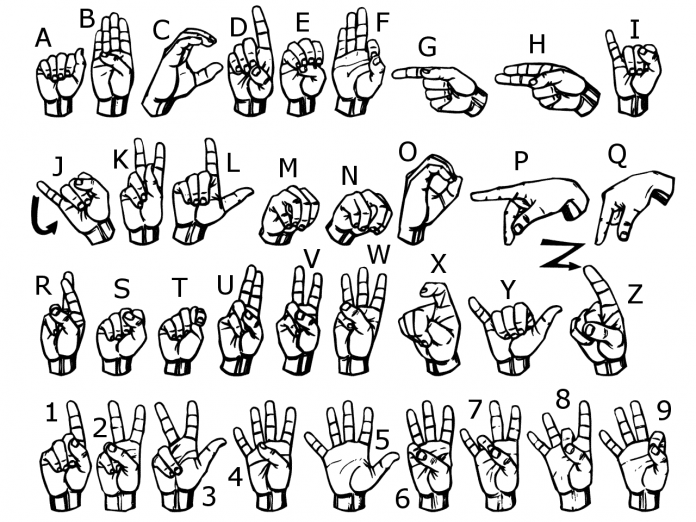
Next, there was a classic SFU ASL game: everybody stands in a circle, and a pack of index cards with four-letter words circulates around. You don’t see the word that you’re holding up, and club members have to make you guess it through gestures and related signs, without giving away the word itself. When you’ve guessed it right, you pass the pack along after fingerspelling the word. Fingerspelling, in ASL, is essentially spelling out a word by using the signs for the letters of the alphabet.

While gesturing and inventing actions is inherently different from ASL, the game trains your brain to think of handshapes, movements, and facial expressions as words and concepts. Occasionally, once we guess a word, we learn the sign for it. And rest assured: during the game, a few handouts picturing the alphabet are circulating to make sure everybody’s on the same page.

This has always been my takeaway from SFU ASL: some club members like Verjee have been learning ASL for years, some are taking night classes concurrently, and others joined the club without any prior experience or knowledge about ASL. And that’s okay. It’s actually one of the things that Verjee likes about ASL: “It’s a great way to make friends because of that instant connection when you both sign.”

If you’re interested in signing up, the club’s next event will be on October 25, when they will screen A Quiet Place for their Halloween event.

The date will be posted in the FB group, but the specific time and location will be emailed to members. Anyone can become a member by signing up on the SFSS’ website,” Verjee said.

While SFU ASL is wonderful, it’s important to keep in mind that formal training with a certified ASL instructor has no match — just like how wouldn’t learn Dutch from Google Translate or your friend Dave. Even so, I would still recommend joining the club. It’s fun and relaxed, and you walk away every week with a better perspective on the Deaf community, and with practical language skills.

Additionally: the club is always evolving and growing under Verjee’s leadership.

“I have yet to meet any Deaf students at SFU,” Verjee said. “I would love to chat with them, get their input, and, if they’re interested, I’d love for them to participate in the club as an executive, or even just as a member.”