Home Blog Page 544

What Black history month means in Vancouver

0
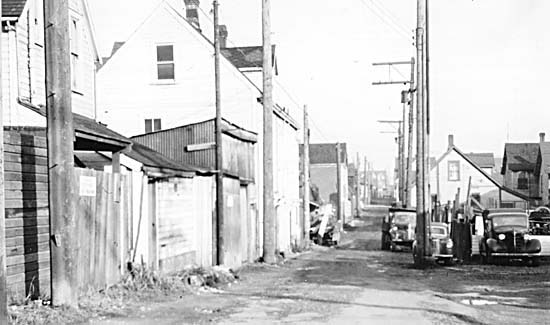
Hogan's Alley, image courtesy of the City of Vancouver archives

By: Youeal Abera, Staff writer 

As February rolls around each year, I always look forward to a month of acknowledging and celebrating the Black community’s achievements. Black History Month is a time to reflect on the sacrifices our ancestors made in the past so that we could define excellence today. It’s a time where we commemorate how far we’ve come as a community, and how far we still need to go.

Growing up Black in Vancouver is an interesting experience, especially when celebrating Black History Month. According to statistics conducted by the 2016 Canadian consensus, African-Canadians comprise 1.2% of the Vancouver area’s population. I’ve found that celebrating Black History Month in a city with such a small Black population can feel particularly isolating.

As a Black student at SFU, these feelings of cultural isolation are way worse. With a limited Black population on campus, it’s difficult to even ascertain where you can celebrate Black History or who you can celebrate it with.

One option to find a Black community on campus is the African Students Association (ASA). They’re a club that works to centralize the voices of African students and bring awareness to the social, political, economic, and historical issues that derive from the African continent. The ASA does their best to utilize events and resources to make students who have recently moved to Canada feel as close to home as possible.

Every two weeks, ASA facilitates nights of discussion where African students can engage in conversations regarding sexuality, mental health, and career expectations. This past February, ASA teamed up with the Global Student Centre to host a Black History Month event that celebrated African literature. However in spite of its resources and efforts, ASA faces a number of limitations. For example, as a fairly new group, ASA has stated that they often have minimal access to funding. Resultantly, they are forced to pay for large events themselves and, can be forced to wait long periods of time to be reimbursed by the SFSS.

SOCA (Students of Caribbean and African Ancestry) is another cultural resource centre available for SFU’s Black students. Giovanni HoSang, the current president of SOCA, works hard to acquire resources and services for SFU’s Black student population. However, SOCA has faced a number of ongoing frustrations on campus, specifically regarding issues of space. The resource centre for Black students has historically faced threats of displacement, most recently as part of the larger crisis on space in the new Student Union Building. This in turn communicates to SFU’s Black student body that their community is not prioritized by the SFSS.

These acts of displacement and erasure at SFU are eerily reminiscent of what’s transpired within Vancouver’s larger Black community. Hogan’s Alley was once the heart of the city’s thriving Black community. Located in the Strathcona area, Hogan’s Alley was once a place where Black Vancouverites could find refuge from housing discrimination in other parts of the city, dine at exciting restaurants like Vie’s Chicken and Steaks (where music icon Jimi Hendrix’ grandmother Nora Hendrix was a cook!) and enjoy the familiarity of people who share cultural backgrounds. Hogan’s Alley was truly a place where Vancouver’s African-Canadians could celebrate their Blackness away from the hostility of the city’s historical anti-black racism, which presented itself in many ways including an active branch of the KKK in the early twentieth century.

As years progressed, the city of Vancouver made a number of attempts to rezone the Strathcona area. Additionally, newspapers in Vancouver began depicting Hogan’s Alley as a place where deviant activity was rampant. As a result of the community’s  rezoning  and negative depictions,  house owners in Hogan’s Alley struggled to enhance their homes or procure mortgages.

Towards the end of the 1960’s, the city started to build a freeway that cut directly through Hogan’s Alley. Even though the construction of the freeway eventually ceased, its production ended up creating the Georgia viaduct. In the process of the freeway’s construction, Hogan’s Alley was annexed and, consequently, many houses in the community were decimated.

This act of gentrification was detrimental for the community. As Vancouver decided to build new infrastructure in Hogan’s Alley, and as the city began to tear down homes, members of the Black community became instantly displaced. These community members lost their homes, integral common resources, and even the identities they made in Vancouver. The displacement and erasure of Hogan’s Alley communicated to Vancouver’s African Canadians that their community’s well-being and unity was not a priority for the city. As a result of this, Vancouver no longer has a thriving community where its Black citizens could immerse themselves.

Although these instances of Black erasure are fairly discouraging, it’s important for Vancouver’s Black citizens and SFU’s Black students to acknowledge and appreciate that there’s still an ample amount of Black history to celebrate! Just this month, SFU’s library provided access to a number of books and movies that celebrate Canadian Black history.

On February 28th, SFU’s Global Student Centre (GSC) offered students with a separate event that celebrated Black History Month. The GSC  provided guests with games, music, and snacks from the African continent.

Another exciting moment this past February was when SFU lecturer Chantal Gibson released a book that centralizes Black Canadian women. How She Read, a collection of poetry written by Gibson, also works to destructure the colonizing effects of the English language. As a result of her publication, Gibson was included in CBC’s lists of “20 works of Canadian poetry to watch in 2019” and “6 Black Canadian writers to watch in 2019.”

The history of Vancouver also carries a number of inspirational Black figures who made significant and admirable accomplishments.

Emery Barnes, a professional football player and member of the U.S. Olympic Track and Field team of 1952, emigrated to Canada in 1957. He was elected into the Legislative Assembly of British Columbia in 1972, and in 1994 he became the first speaker in the province elected via secret ballot.

In 1972, feminist and community leader Rosemary Brown was elected into British Columbia’s provincial legislature, becoming the first African-Canadian woman to ever be a part of a parliamentary body in Canada. Bonus: she also taught women’s studies at SFU and was an officer of the Order of Canada.

Harry Jerome, legendary track and field athlete, also once called Vancouver home. From 1960 to 1967, Jerome was titled “the fastest man on the planet” five separate times. Today, you can find Jerome’s statue along the seawall in Stanley Park.

So yes, living in Vancouver can be a challenging experience for Black individuals. Every year, as Black History Month arrives, it can be frustrating to realize that the availability of Black spaces and resources in this city is restricted. Nevertheless, it’s important to remember that Vancouver has a rich and comprehensive history of individuals who defined Black excellence.

While the number of individuals within Vancouver’s Black community may be small, there is great strength and resilience in the legacies of our parents. By looking at what our community leaders accomplished in the city, we can always be reminded of the profound power that stems from our existence in Vancouver.
SFU hockey take three of four points but fall out of contention for second place

0
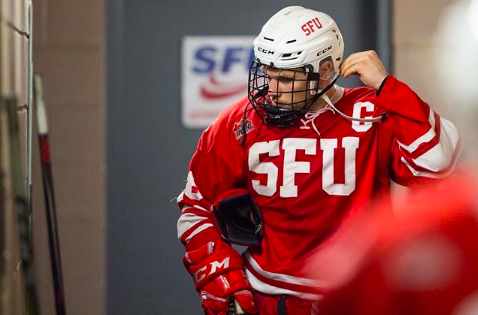
SFU captain Mathew Berry-Lamontagna tied the BCIHL record for games played over the weekend. (Photo courtesy of SFU hockey.)

By: Dylan Webb

A couple of weeks ago, the SFU men’s hockey team knew they had an opportunity to take advantage of multiple games in hand to leapfrog their rivals in the standings and build momentum as playoffs quickly approached. After a weekend series at home against the visiting UVIC Vikes, the Clan have played out most of their games in hand.

Unfortunately, a nail-biting shoot-out loss to the Vikes on the back end of the weekend double-header has ensured the Clan will play at least the first round, and possibly the second, on the road.

Now, with only two games remaining in their regular-season schedule, the Clan face only two possibilities for their first-round playoff matchup: either a showdown with their geographical rival and league leading Trinity Western University Spartans or a visit to the hostile confines of the Castlegar recreation center for a series against the Selkirk Saints.

On Friday night, the Clan rode a stellar performance from netminder Michael Lenko to a 4–0 shutout victory over the Vikes. While goaltending was a significant factor in the win, the team was also able to penetrate into scoring areas relatively effectively, especially in the second half of the game, and also maintained strong defensive zone play.

Scoring in the win were forwards Jaret Babych, Kyle Bergh, and Cole Plotnikoff, all in the second period, with captain Matthew Berry-Lamontagna tallying the opening goal in the first. The victory momentarily kept the Clan’s hopes of a second-place finish — and home ice advantage in the first round of the playoffs — alive, as the team would have needed to win their remaining three games, with the final two against Selkirk needing to be in regulation time.

Disappointingly, the Clan were unable to repeat their strong performance the following evening and would see their hopes for favourable playoff positioning fade away. The focus now turns to building momentum for a first round series on the road.

On Saturday night, SFU fell 3–2 in a shootout for just the fourth win of the season for the visiting Vikes. Again, the game was an extremely tight checking for the first half of the game, but this time, the trend continued for the duration of the contest. This time around, the Clan could only muster limited offense with goals from forwards Ian Mackey and Mitch Ledyard.

After an intense third period that saw multiple penalties handed out and a huge amount of special teams play, the game moved to three-on-three overtime. Somewhat surprisingly, given the wide open nature of the new overtime format, this decided nothing. A shootout followed in which the Clan, opting to shoot first, were unable to beat UVIC netminder Zack Wear on any of their three attempts. This meant that a single goal on two attempts by the Vikes was enough to secure the win.

Starting both games for the Clan over the weekend, Michael Lenko arguably had one of the best weekends of play in his BCIHL rookie season. With a shutout on Friday night, Lenko followed it up by giving his team a chance to win again with 28 saves on 30 shots on Saturday plus one save on two attempts in the shootout. As playoffs are now just two weekends away, the Clan will count on Lenko to continue to strengthen his play throughout the rest of this season, into the postseason and in years to come (Lenko is playing his first year for SFU hockey.)  

Discussing the team’s performance over the weekend, coach Mark Coletta lamented the inconsistencies in the club’s execution throughout the crucial stretch of games the Clan is on the verge of completing.

“At times, we are competing hard, using our team speed to set the tone and carry the play while at other times we are sitting back, not fighting for pucks and letting the other team dictate the pace of play,” he said following the shootout loss on Saturday night. Building on this, Coletta noted that the team has all the pieces it needs to make a playoff run but that “it will be up to the team as a whole to find a way to consistently play at its best over the next month.”

What’s next:

SFU will play their remaining two games of the regular season on Friday, March 1 and Saturday, March 2 at home at the Bill Copeland Sports Centre before moving into the first round of the BCIHL playoffs the following weekend. Both games will have a 7 p.m puck drop.

The visiting Selkirk Saints will arrive with their playoff seed already clinched and only their first-round opponent left to be determined. The Saints will face the VIU (Vancouver Island University) Mariners in the first round of the playoffs if they defeat the Clan in regulation time in either game this coming weekend. On the other hand, the Clan will only secure a first-round playoff series in Castlegar against the Saints if they are able to take at least three of a possible four points over the weekend.

Otherwise, the Clan will open up the playoffs on the road in Langley against the league leading TWU Spartans. As the spring semester enters the home stretch and the BCIHL regular season winds down, it is clear that regardless of concerns over playoff positioning, it is now or never for the Clan as they look to put everything together and build momentum in time for a run at the BCIHL championship.

SFU men’s basketball pull off clutch victory against WWU

0
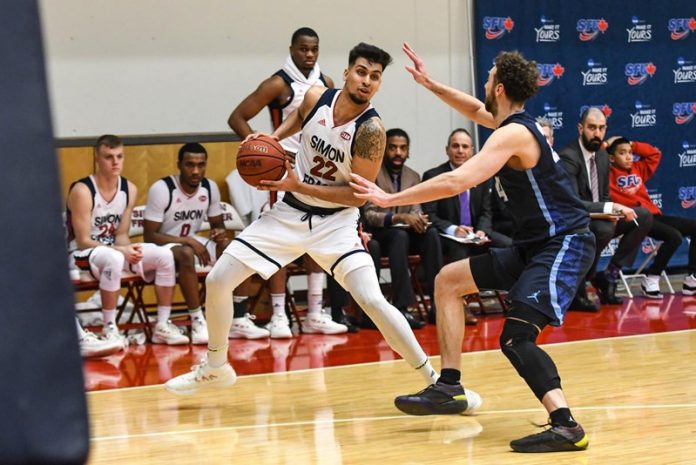
Singh filled in beautifully for Julian Roche. who was unable to play. (Photo courtesy of SFU Athletics)

The SFU men’s basketball team kept their winning ways going on Tuesday night as they hosted Western Washington University, coming up with another huge win to position themselves for a playoff spot. Coming into the game, the Clan and the Vikings were tied for fifth place in the conference. With the win, SFU now has sole position of the spot and have a great chance of playing in the GNAC postseason.

The win was huge for standings purposes, but it was also huge when you consider the adversity that SFU were under. Missing starting centre Julian Roche, the leading scorer and rebounder on the team, it was clear that somebody had to step up to lead the team. That man would be Jasdeep Singh, who led the team with a season high 31 points, seven rebounds and two blocks in a game high 39 minutes.

After the game, head coach Steve Hanson told The Peak, Adversity hits every team and you have to be ready. Julian brings rebounding, communication and scoring every night and the rest of our team had to bring a little more of that tonight. I think we did that.”

He added, “Jas had some pressure tonight with his front court partner out. He had to play tough, stay out of fouls trouble and be efficient. He did that plus more. We’re proud of his performance.”

The team’s were neck-and-neck the entire game, and finished the first half with a score of 36–34 in favour of the home team. The Vikings held a slight lead for the majority of the second half, but clutch play down the stretch would eventually help the Clan prevail with the win.

Tyler Payne did his best to give Western Washington the win, scoring each of his team’s final 11 points, but was unable to single-handedly defeat SFU. He was countered by two three-pointers by Singh down the stretch and a three from Othniel Spence, as well as a couple free throw makes by Bongani Moyo and Michael Hannan. With seven seconds left and a three-point lead for the Clan, Payne attempted to tie the game with a three. He missed, and Singh grabbed the rebound to end the contest with a score of 76–73.

“It was a tough battle the entire game,” said Hanson, “What we expected this time of year with two teams battling for a playoff spot.”

The win gives the Clan a 9–9 GNAC record on the season, and more importantly, sole position of fifth place in the conference. The top six teams qualify for the GNAC Championships, but SFU’s position in the postseason is far from guaranteed. Three teams behind SFU in the standings have eight or more wins, meaning that the next two home games are very important to ensure that the Clan make the postseason.

The team is definitely playing their best basketball of the season so far, winning six of their last seven GNAC games. That being said, Hanson believes the team has room to grow, saying, “I don’t think we are peaking but we are playing tough and smart basketball. We had to play that way to be in this position.”

Peak player of the game: Jasdeep Singh

Singh had to step up on Tuesday night with Roche out, and he did that and more. His 31 points were a season high, and he played big for team missing their starting centre, grabbing seven rebounds and blocking two shots. He also did a great job of avoiding foul trouble, playing a game high 39 minutes (he only rested one minute!) while also playing strong defence. His two threes down the stretch were key in SFU’s ability to grab the win, it what was the most important game of the season thus far.

What a performance.

What’s next:

The Clan have two more games this season, both at home, and both later this week. They will host the 4–14 Concordia University Cavaliers on Thursday, before taking on the 12–6 Western Oregon University Wolves on Saturday. Both games are at 7 p.m, and both have huge playoff implications for the SFU men’s basketball team.

Reading breaks aren’t a vacation

0
Illustration by Alice Zhang/The Peak

Written by: Gene Cole, Opinions Editor

During the past week, I’ve spent an unnecessarily large amount of time writing apology notes to a classmate over a group presentation, because I’d yet to finish my section of the PowerPoint in time due to some other assignments. While I’d be panicking on any other week of school, reading break was thankfully here to save me. Without the time required to travel to and attend my lectures, I could finally recover from everything I was behind in.

But to those people who reserve reading break for a big trip, I feel like you may be misusing this time a bit. The amount of work we have to do as post-secondary students is massive, and a week out of class is often just enough to keep us from drowning in stress and textbooks.

SFU’s learning commons recommends that students spend two to three hours per week studying outside of lectures for each credit we’re taking that semester. This can add up to at least 18 hours for full-time students — and at least 30 hours with a maximum course load — to be working on our own time to learn and practice, which becomes more difficult when you have a job, family responsibilities, or long travel times to campus cutting into your schedule. Reading break gives us a time to allocate our hours more freely, and be as constructive as we can on our own clocks.

Sometimes, this reorganization means you put a little extra time into the newly empty spots where your classes usually are. Now, you can fill up your “lecture blocks” with better constructive learning time. If you aren’t as behind as I usually am, it means you get a bunch of extra free time by just maintaining your normal study schedule, and you can at least relax a bit. We’re in school to succeed, and reading break is a tool for achieving that.

This isn’t to say you shouldn’t travel if you think you can afford it, or if you need to for the sake of family. If you can somehow get ahead of your work enough to take that time away, then power to you. But given how much time you need to put into school to begin with, you’re either going to be packing a lot of extra work into a short period of time before you leave — something the SFU Learning Commons also recommends against — or putting yourself way behind. Alternately, you could maybe plan to do some work while you’re on your trip, but the last thing you want to do is go back to a hotel room to work on a research paper.

I realize how preppy and paranoid I sound, and it’s definitely still important to make some free time to relax. After all, I would be lying if I said I hadn’t used some parts of this week to visit friends and cross things off my Netflix list. But this is a week for reading, not from reading. Take a safer bet and buy your plane tickets after finals.

Political Corner: Doug Ford’s suspended MPP is disappointing and embarrassing to have happen in a Canadian government

0
Photo by Chris Young/The Canadian Press

Written by: Gene Cole, Opinions Editor

On February 20, 2019, Ontario Premier Doug Ford suspended MPP Randy Hillier from his Tory caucus. This was in response to his behaviour while answering questions from parents of children with autism at Queen’s Park regarding changes to Ontario’s Autism Plan (OAP), which he ended by saying “yada yada yada.” Following his suspension, and an apology to the parents by Ford for Hillier’s behaviour, Hillier tried to explain he directed the phrase towards NDP MPP Monique Taylor, who he accused of taking advantage of these parents. But it doesn’t change how dismissive and offensive it came across to the parents.

Something this informal amidst such a serious issue is nothing short of embarrassing and disappointing to see in a Canadian government when handling concerned Canadian parents. The changes to the OAP to spread funding to more families, but many parents are concerned because they seems unlikely to solve the problems with the past OAP, namely decreasing the waitlist for families to receive financial assistance to seek effective therapy for their children. Those parents at Queen’s Park that day had valid and serious concern for the care of their family, and deserved a little more formality than “yada yada yada.”

This isn’t to say politicians need to be exclusively robotic and official, but it shouldn’t be this difficult to read the room. In America, senator Alexandria Ocasio-Cortez has gained a lot of popularity for having a more blunt and approachable tone in her political career, recently even starting a serious speech in Congress about political corruption with “let’s play a game.”  

The difference between her and Hillier is that Hillier didn’t take caution or consideration with how he was speaking, to ensure it was a space where something would be welcome and fine to use less formal tone and language. Instead, by using a phrase like “yada yada yada” to concerned parents, he belittles a serious issue in a way that someone with political authority and power should rarely — if ever — be doing.

Album Reviews

0

By: Ahad Gahani and Youeal Abera 


thank u, next by Ariana Grande

Ariana Grande released her new album thank u, next (2019), a short six months after Sweetener (2018). Much, however, has happened since, including her break up with fiancé Pete Davidson and the tragic passing of ex Mac Miller, both of whom she appears to be referencing in “ghostin.” She also namedrops both in the titular track “thank u, next.” In “imagine,” Grande’s vocals, especially her whistle notes, are a standout.

The album is a blend of pop, R&B, and trap. From the very first listen, it sounds nothing like Sweetener. It’s also her most personal and cohesive album to date, one that primarily deals with heartbreak, self-empowerment and growth. It goes to show that Grande is one of not many pop stars who could pull off two distinct, hit albums in the span of six months. Standouts include “NASA,” “bloodline,” and the chart-topping “7 rings.” – AG


Head Above Water by Avril Lavigne

Head Above Water (2019), Avril Lavigne’s first album in 5 years, details the singer’s personal struggles in recent years, including her battle with Lyme disease. It’s apparent from the lyrical content and the production that she’s headed in a very different direction than past hits such as “Girlfriend” and “Sk8er Boi,” albeit not the most exciting one. In the titular track, a pop-rock piano ballad, she details her relationship with God.

“Dumb Blonde,” a song about female empowerment that features rapper Nicki Minaj in an unlikely pairing, gives the album some much needed energy. Other highlights on the album include “Tell Me It’s Over” and “Birdie.” However, tracks such as “Warrior” and “Bigger Wow” are weak and prevent the album from amounting to much. Head Above Water is bland and lacks personality, and in a year that is bound to have some big releases, it is likely to be forgotten. – AG

Nicki Minaj’s “Barbie” tracks

On February 2, Nicki Minaj hosted the 11th episode of her wildly successful radio show, Queen Radio. Throughout the duration of the show, Nicki premiered two new freestyles titled “Barbie Drip” (a take on Lil Baby & Gunna’s “Drip Too Hard”) and “Barbie Goin’ Bad” (a remix to Meek Mill and Drake’s “Goin’ Bad”). Then, on February 6, Nicki dropped a new freestyle titled Bust Down Barbiana (an ode to Blueface’s Thotiana). With the consistent releases of hard-hitting freestyles, fans and music critics were treated to a reminder of just how in tune Nicki Minaj is with hip-hop culture.

Whether it’s a guest-feature or a deep-cut on an album, Nicki’s pen is always something to notice. Her intelligent flow and witty wordplay are especially discernable when she’s having fun on a remix, a truth discovered in her three recent freestyles. Nicki’s skills were particularly evident in Bust Down Barbiana as she rapped lines like “I been a bad bitch, cockiana/ And I’m still winnin’, Pacquiana . . . killin’ everybody beat/ Thank you, next, Ariana.”

With the sounds of these recent freestyles, Nicki’s upcoming album is sure to keep showing the power of her pen. – YA


SFU men’s basketball pull off two clutch victories on Alaska road trip

0
The Clan now have three huge home games in the last week of the season. (Photo courtesy of SFU Athletics)

On Thursday and Saturday last week, the Clan played two of their most important games of the season in Alaska. Facing off against the University of Alaska and the University of Alaska Anchorage, the Clan won both games by five or less points. With the wins, their playoff hopes live on as they go into an exciting three-game home stand to end the season this week.

Game one:

SFU got off to a good start on Thursday, taking on the two-win University of Alaska Nanooks. They won the game 71–66, helped by clutch play down the stretch in the fourth quarter.

In the first half, the Nanooks got off to a seven-point lead in the first five minutes. Despite this, an 11–0 run by the Clan at the end of the first half got the away team on top. After this, the teams went into the break with SFU up 44–36.

The University of Alaska got back into the game in the second half, despite the Clan going up by as much as 15 points. With 1:41 left in the game, the Nanooks were up by one point, with SFU wanting to do everything possible to avoid a comeback win.

Point guard Michael Provenzano stepped up to the plate, delivering a clutch three-point shot with 1:12 left to put the Clan up by two. He then hit two big free throws to stretch the lead to four with 24 seconds left. After strong defense from SFU on the ensuing Alaska possession forcing a miss, Othniel Spence put the team up by five, 71–66.

Spence led the team with 17 points, with Julian Roche (15), Wilfried Balata (13) and Provenzano (10) joining him in double-digits.

Game two:

Coming off an exciting win, the Clan managed to top themselves with their win on Saturday over the Seawolves.

This time, it was SFU completing the second half comeback, coming back from 10 points in the second half to force overtime. Spence came up clutch at the end of regulation, hitting an and-one three pointer to put the Clan up 61–60 with nine seconds left. Shortly after, however, he fouled Alaska’s Tobin Karlberg while he was attempting a last-second game winner. Hitting only one of two free throws, the game went into overtime.

Amazingly, SFU won the overtime period despite not hitting one field goal in the frame. All six points for the Clan came from the free throw line, with Balata going 4–4 from the line and Provenzano hitting both of his attempts. With this, the team pulled off a thrilling 67–63 comeback overtime win.

Balata led the team with 18 points in this one, with Jasdeep Singh (15), Provenzano (11) and Roche (11) also scoring double-digit points.

What’s next:

The team has a huge home stand this week to end the season, playing Western Washington University on Tuesday, Concordia University on Thursday, and Western Oregon on Saturday. All games will be in the West Gym on Burnaby Mountain.

If the season ended today, the SFU men’s basketball team would be granted one of the six playoff spots available in the GNAC, as they are 8–9 and tied for fifth spot in the conference. Their game against Western Washington on Tuesday will be their biggest game of the season, as both teams have the same record and are fighting for the final two playoff spots. Both Alaska Anchorage and Montana State University Billings sit right behind the teams with 8–10 records.  

This should be fun.

SFU women’s basketball split two-game road trip

0
Tayler Drynan had a 14 point, 10 assist double-double in the win on Saturday night. (Photo courtesy of SFU Athletics)

By: Brandon Braich

After finishing their home schedule, the SFU women’s basketball team set out on the road to play out the remaining season. The playoff-bound SFU faced Northwest Nazarene (24–1) and Central Washington (16–9) this weekend as the Clan looked to continue their four-game winning streak.

Game one:

On Thursday, Simon Fraser walked into the home of the number seven ranked Nighthawks, a team they had delivered their only loss to, but could not repeat the effort, losing 84–61. SFU struggled to shoot all night, shooting 42% from the field and 21% from 3. Sophie Swant and Jessica Jones lead the way with 11 points, but it was a tough night shooting for Swant, who finished 4–16.

The game started optimistically as a basket by Ozioma Nwabuko (4 points) gave SFU an early 7–5 lead. But the Nighthawks Mckenna Walker answered with a three to take back a lead NNU would never relinquish.

Nwabuko hit another lay up and Kendal Sands came off the bench and hit a three, but that was the extent of SFU’s scoring as they went into the second quarter down 22–12.

SFU chipped away at the lead in the second, as a three by Jessica Jones brought the score to 30–23 with five minutes remaining in the half. SFU’s increased aggression lead to nine free throw attempts in the quarter, but despite hitting them all SFU could not draw closer as the half ended 39–29.

It was in the third quarter that the floodgates opened, as the Nighthawks poured in 27 points as the Clan’s defense was helpless to stop NNU’s attack. Danielle Jardine led the way for NNU, finishing with 15 points on 6–9 shooting. It was a balanced attack for the Nighthawks however, with each active player recording a field goal.

The lone bright spot for SFU was their showing at the charity stripe, shooting 16–17 from the line. While SFU’s three-point attack was shut down, the game was won in the paint with the Nighthawks outscoring SFU 44–14.

Game two:

After the tough loss, SFU turned their attention to Central Washington, the team just below them in the standings. With seeding implications on the line, SFU stood tall beating the Wildcats 83–73.

SFU bounced back from their cold shooting night, shooting a blistering 53% from the field and 56% from three. Jones led the way with 23 points and 7 rebounds, she was a sharpshooter from deep hitting 5–11 from behind the arc. Sophie Swant also had a strong game finishing with 21 points and six assists.

The first quarter was a back and forth affair, with both teams responding to each run. After a turnover lead to a lay up for the Wildcats’ Kaelie Flores, SFU found themselves down 18–13 early. Tayler Drynan answered with one of SFU’s 13 three-pointers, closing the gap, and a layup by Jones would tie the game at 20 all. Sienna Lenz (six points) hit a lay up before the buzzer to tie the game 24 heading into the second quarter.

Swant hit a couple of early threes to push momentum SFU’s way, and back-to-back three-pointers by Jones halfway through the quarter gave the Clan a 39–29 lead. The Wildcats, led by Flores, tried to chip away, but a late three by Swant gave SFU a 47–37 lead at halftime. Jones did most of her damage in the first half, finishing with 17 of the 47 points SFU scored.

The Wildcats came out strong in the third, and a three-pointer by Alexis Pana shrunk the SFU lead to five. With momentum turning, it was Swant again who answered in the fourth, starting the quarter with a jumper and then a deep three extending the lead to 70–60. The Clan never allowed the Wildcats to get close again, calmly finishing off the victory.

What’s Next:

SFU closes out the regular season this week with their final two games of the year. On Tuesday they will head to Western Washington (9–9), before ending the season against Montana State University Billings.

SFU’s SOCA discusses the significance of Black spaces

0

Written by: Youeal Abera

On Saturday, February 16, SFU’s Students of Caribbean and African Ancestry (SOCA) facilitated a panel discussion titled Black Spaces Matter at the Burnaby campus.

The event is part of SOCA’s Black History Month, which aims to educate SFU students, faculty, and staff, about the accomplishments and history of the African-Canadian community. The month of February was officially recognized as Black History Month by the Simon Fraser Student Society earlier this year.

With the incentive of having discourse on the significance of Black communities having access to and possession of their own communal spaces, the event aimed to also highlight the similarities between the displacement African-Canadian communities have felt in the city of Vancouver as well as SFU.

In an interview with The Peak, Giovanni HoSang, president of SOCA, provided insight on the parallels in displacement between SFU’s SOCA and Hogan’s Valley (a former Afrocentric community that was once readily accessible to Vancouver’s African-Canadian citizens). HoSang explained that the panel discussion included conversation on “the historic displacement of Black Communities in Vancouver such as Hogans Alley in the 70s, [and how it] has stark similarities with the current eviction of the SFU Students of Caribbean and African Ancestry, our decades-long home and comfort-place on campus.”

HoSang further elaborated on the recurring struggle SOCA has had in maintaining its existence at SFU. “Previous presidents had to fight to get the space, then subsequently had to fight to keep it on different occasions, raising the importance of building solidarity and strong numbers as institutional racism is constantly showing up in very subtle forms.”

Those who also led the panel discussion shared their knowledge on the issue of displacement within Black communities. Dr. Joy Walcott-Francis, who was president of SOCA in 2010-2012, and in 2015-2016,  talked about the issue of Vancouver being portrayed as a diverse, “racism-free” city.

Walcott-Francis articulated that although Vancouver may appear as a diverse city, the issues of racism and anti-Blackness are still present.

“Yes — Vancouver is a multicultural city. We can see that [ . . . ] but for me, that’s pretty much where it ends. It’s about what we can’t see. In terms of diversity and celebrating the diversity — and for persons who are of different ethnicities — not all of these ethnic groups feel or share the same experiences that they’re also celebrated,” said Walcott-Francis.

Lama Mugabo, president of SOCA in 1997-1998, stated in the discussion that these Black spaces are essential in helping Afrocentric individuals combat the forms of racism and anti-Blackness in Vancouver.

“I must admit that being together in a room talking about the future of the Black community and the issues that come up in the media or everyday in our lives has been huge,” Mugabo noted.

“Undoubtedly, spaces where we meet and are able to organize and talk allow us to really flourish.”

When asked about potential solutions that could help cease acts of displacement for both SOCA and other Black spaces in Vancouver, HoSang told The Peak about the importance of Black representation on the decision making teams of institutions and organizations.

“We need proper representation at the decision making tables, fighting on a number of fronts [so that] Black professors and Black student representation are in the decision-making bodies of the institution. [We need to] make sure that decisions about us have us at the table.”

HoSang also shared with The Peak that the notion of allyship can significantly assist disenfranchised communities in times of erasure and displacement.

“[It’s important to] keep building allyship and solidarity with multiple people to ensure that voices are heard and that we push on the decision makers to centre the voices of Black and Indigenous voices, which often get left behind in discourse,” he concluded.