Home Blog Page 543

Andrew Petter won’t be seeking a third term as SFU’s president

1
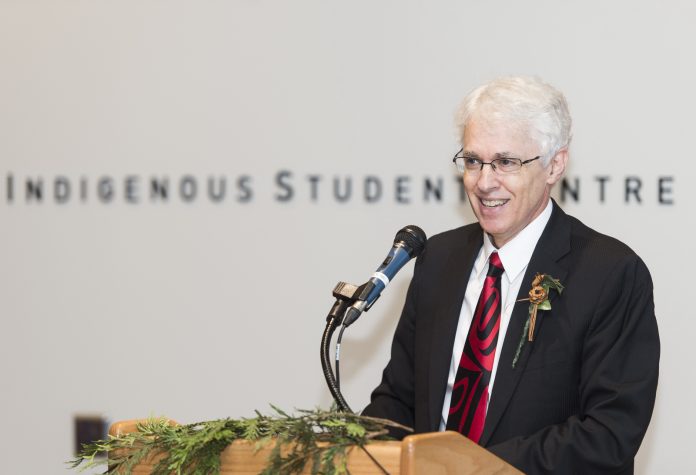
Petter’s words last year have been proven to be hollow. Photo courtesy of Greg Ehlers

In December 2018, Fiona Robin, chair of the SFU Board of Governors, announced that Andrew Petter will be stepping down from his role as the institution’s president and vice-chancellor at the end of August 2020. Recently, The Peak had the opportunity to sit down with president Petter and discuss his soon-to-be 10-year tenure at SFU, what he plans on doing for the remainder of his term, and his decision to resign.

Petter started his term at SFU on September 1, 2010, and prior to becoming SFU’s ninth president, he was a NDP cabinet minister. Since then, he has helped champion multiple initiatives on campus such as creating the co-curricular record that enables students to record and be recognized for their volunteer activities, maintaining SFU’s status as one of Canada’s leading comprehensive universities in the last 10 years, establishing the Aboriginal Reconciliation Council to facilitate reconciliation between Indigenous and non-Indigenous individuals on campus, as well as increasing co-op and research opportunities for SFU students.   

“I hope [all of that] has helped to enrich the student experience because I’m a big believer — as important as it is for students to learn in the classroom or in the lab — but also for them to gain understanding outside the classroom,” said Petter.

When asked why he won’t be renewing his term, Petter said: “One of the really great things about universities is that we get new students every year and that’s one form of renewal. But we need renewal in terms of leadership as well: new ideas, people who can come in with new perspectives [and] add values.”

“I feel I had that opportunity and I helped along with others to move the university forward. After 10 years I think it’s a good time to turn over the reins to someone else to help the university take that next big leap forward,” he continued.

At the moment, a presidential term at SFU lasts for five years and the average length of a university president’s tenure in Canada right now is around six years, according to President Petter.

In addition, in January 2019, Petter was named to the Order of Canada — along with 102 other inductees across the nation — for his significant contributions to humanity and society at the municipal and national level.

“What makes me feel really good about the Order of Canada was when I read the top line reason for giving me [the award] and it was for the work that I’ve done to help connect the university with the community,” shared Petter.

“I take some comfort from the fact that the award I got is not an award for individual achievement but rather an award for the collective effort that we as the university have shown and an affirmation that that effort has been appreciated not only here but across the country.”

“I would say with some pride that SFU is very much seen as a leader now nationally and even internationally for the efforts we’ve made to show how you can more fully engage communities and by doing so benefit the university,” he further added.

When asked what he will be doing for the remainder of his term, Petter shared: “We have started work on the first phase of a major residence expansion that will add over 400 new units for single undergraduate students. I’m hoping we can break ground on phase two as well, make it over 800. There is [also] work to expand the Indigenous Student Centre.”

In addition, the president is hopeful that the university will deliver the commitment to develop a First Peoples’ house on the Burnaby campus.

“That’s been a long time goal to have a place that will complement the Indigenous Student Centre by providing a cultural space where not only Indigenous people can gather but [other students] can gather and appreciate the value of Indigenous culture and knowledge on this campus,” he said.  

He also mentioned that he would like to see significant headway for a rental housing facility in lot 21 in UniverCity that will be primarily reserved for graduate students and students with families.

In terms of initiating the search for the next SFU president, Angela Wilson, SFU’s senior director, media relations and public affairs, shared that the process will take approximately 12–15 months and it has already started since the beginning of January 2019.

“The Board of Governors has established the Presidential Search Committee (as per University Policy B 10.06), and has charged that committee with conducting the search,” said Wilson in an email interview with The Peak.

The search committee will be consulting SFU students, faculty, and staff about the presidential position description, such as what qualities, leadership and personal qualities they would like the ideal candidate to possess and the opportunities to have input will be broadly advertised, she further added.

When asked what Petter will be doing once his term finishes, he said “I will have a bit of an administrative leave which will allow me to think through a little bit of what the future may hold for me [ . . . ] While I will step down from my role as President, I will not be stepping down in my capacity as a professor of public policy and I may well end up doing some teaching.”

“I’m certainly not going to disconnect myself from SFU. I love this university [ . . . ] I applied to be the president of this university because I thought this university was different; it had an energy, a culture, a vibrancy that was different than traditional universities. I believe in this university [ . . . ] my heart will still be with SFU,” he concluded.

With files from SFU News and The Georgia Straight

SFU men’s basketball lose season finale to WOU, still make playoffs

0
Michael Provenzano and company will now prepare for their playoff matchup against Northwest Nazarene. (Photo courtesy of SFU Athletics)

The GNAC regular season went down to the wire last night in spectacular fashion, with multiple playoff spots going down to the final game of the season. In the thick of things were SFU, who went into Saturday tied with two other teams for the fifth seed in the conference. With a win, or a loss from either Western Washington University or Montana State University, the Clan would be in the postseason for the first time in their conference history.

Western Oregon University stood in SFU’s way, however, and did not make it easy for the Clan. In front of a thunderous crowd, SFU were unable to keep up to their opponents (the fourth seed in the GNAC), eventually losing by a score of 68–56.

The fans were treated to some great moments though. Despite going down 18–6 early, SFU bounced back in a big way, going a 12–0 scoring run to tie the game up in the first half. WOU regained momentum, however, and led the Clan 29–23 at the half.

In the second half, Othniel Spence did everything he could to bring his team to victory. He scored 12 of the first 17 second half points for SFU, single-handedly managing to keep his team in the game. Once he started to cool down, however, the Clan were no longer able to keep up. Despite SFU fouling down the stretch, WOU coasted to victory.

Clan fans will have to thank Concordia University for their efforts against Western Washington University. Beating the Vikings 79–70, the Cavaliers win gave SFU sixth place in the conference, good for the final playoff spot.  

It is the first time that the Clan will compete in the GNAC postseason, and is a testament to a strong second half from the team. Despite losing their final two games of the regular season, SFU had won six of seven previous to that, including wins over the nationally ranked Saint Martin’s University Saints and Northwest Nazarene Nighthawks. Wins like that show that SFU is able to beat anyone when they are on, and they should be a dangerous team in the postseason.

It was also Seniors Night, with Jordan Muir-Keung, Bongani Moyo, and Bowen Bakken suiting up for their final time on Burnaby Mountain.

What’s next:

The Clan will face off against Northwest Nazarene in their first-ever GNAC postseason game on Thursday, March 7 at Western Washington University. In their two meetings against the Nighthawks this season, the Clan are 1–1, with the home team winning each game. In their last meeting, SFU won a 78–77 thriller on Burnaby Mountain back at the beginning of February.

The winner will face off against Seattle Pacific University, the number-two seed in the GNAC.

Staying In: Umbrella Academy

0
Image courtesy of Christos Kalohoridis:Netflix

By: Gene Cole, Opinions Editor

Best for: Superhero fans, dysfunctional family fans, time travellers


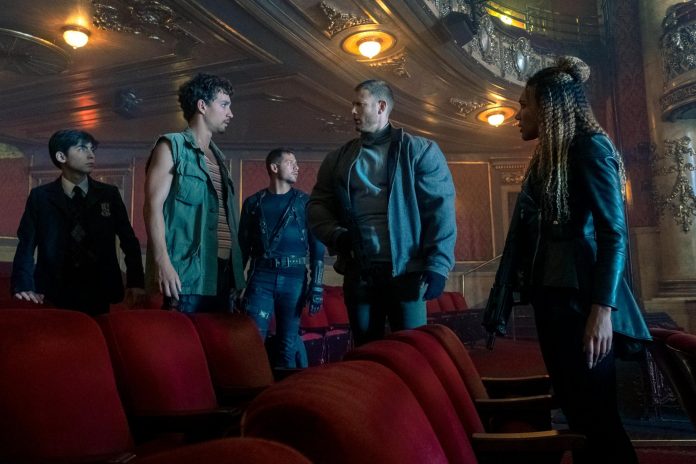
Umbrella Academy is like superhero fanfiction with the polish of a Disney-Marvel film. Complete with time travel, family drama, romance, mystery, and a CGI talking monkey who acts as a father figure, it may seem like it’s trying to do a lot of things at once. But through clever writing and a compatible cast, Umbrella Academy handles them all brilliantly. It takes after serious superhero shows like Marvel’s Daredevil and Runaways, but with a sense of humour and self-awareness like that of Arrested Development but more serious.

The show is about seven children with superpowers, all adopted by an adventurous billionaire father and all — except for Ellen Page’s character Vanya — trained to be superheroes. The story takes place around 10–15 years after they’ve moved out, reunited by their father’s passing and the return of their sibling who went missing as a child. From there, the siblings have to work together to save the world from an oncoming apocalypse, and come to terms with their terrible childhoods.

Despite its seemingly-complex plot and large list of characters, it ends up being surprisingly easy to follow thanks to its focus on dialogue and character chemistry, rather than the rules of its science fiction. The show dives into serious themes of parental abuse and self-esteem, but the siblings don’t hesitate to talk casually. They poke fun at each other and make the dialogue constantly fun and snappy. More than that, it uses its superhero setting to tell a story about a family learning to understand and relate to each other better.

If you want a little more fun and family in your serious superhero drama, Umbrella Academy is absolutely worth digging into.

Available on: Netflix

Alita: Battle Angel ascends to impressive heights of success

0
Image courtesy of Twentieth Century Fox

By: Jonathan Pabico, Peak Associate


Prepare for battle, sci-fi fans! Robert Rodriguez delivers a thrilling and epic film with Alita: Battle Angel.

Rodriguez layers the story with immersive visuals; the film’s ruined cityscapes are fitting metaphors for not only the characters’ strife, their dangerous environment . He also provides a western genre undertone for the movie’s world that, plus the film’s action, captures the story’s grim realities about the brutal costs of a lawless society that thrives on violence and injustice.

Despite a slow start, the film compensates with its stylized action sequences. Smoothly edited and run in slow motion, the story’s battles are exciting to watch. The most fun and exhilarating being the motor ball scenes (which is a deadlier version of roller derby). Pairing a fast-paced soundtrack with captivating wide shots, the motor ball sequences perfectly demonstrate Alita as a fierce warrior worthy of being the film’s namesake.

Among the narrative’s cast, newcomer Rosa Salazar provides a powerful performance as the young cyborg Alita. Salazar portrays her character as a lost and innocent teenager, but also as a strong heroine determined to understand her true self. Her portrayal further instils Alita with a child-like curiosity that shapes her into a more heartwarming character, helped by James Cameron and Laeta Kalogridis’ moving screenplay. She evokes an innocence that beautifully humanizes her role through close-ups backed by remarkable CGI. Moreover, her character also addresses philosophical themes about memory and artificial intelligence. Although they are deeply similar to subjects explored in Ghost in the Shell (2017), these themes are encapsulated by the film’s central message about what it means for youth to learn and grow in the world.

In addition to the film’s successes, Christoph Waltz as Dr. Dyson Ido has a touching father-daughter relationship with Salazar’s character. Still, their bond is abrupt and rushed in some scenes due to the movie spending more time developing a cliché love story between Alita and her boyfriend Hugo (Keean Johnson). The narrative’s love story subsequently deviates too much from the main story arc.

Aside from Waltz, Mahershala Ali is entertaining as the main villain. His stoic persona provides commentary about the corruption of power and its damaging effects on society. However, Ali could have had more screen time to establish a substantial presence. He is sadly reduced to brief walk-ons that are as abrupt as Ido and Alita’s relationship development.

Whether you are a fan of the manga series or just looking for a thrilling sci-fi film to watch over the weekend, Alita: Battle Angel has a relatable, easily-followed story that is widely accessible to all moviegoers. Despite its shortcomings, the movie honours its source material with a powerful lead, memorable action sequences, and sophisticated themes, rivalled only by a riveting narrative.


Metro Exodus is a lot of fun, but isn’t without its problems

0
Image courtesy of Microsoft

By: Maxwell Gawlick, Peak Associate


Artyom, Anna, and friends from the Order flee Moscow on the bullet-riddled Aurora locomotive, seeking a new life from the oppressive metro they once called home. Players explore life above ground in Metro Exodus, the newest instalment in the Metro series based on the books by Dmitry Glukhovsky. Exodus follows Artyom, a survivor from a nuclear fallout caused by “the War,” as he and his allies travel across the irradiated, war-stricken wasteland of Russia by train.

At first, I wasn’t too impressed with Exodus. The opening felt rushed; rather than hooking the player with an exciting action scene like the previous games, I was thrown into the middle of the story.  

I started Exodus on the highest difficulty, because it’s my favourite way to experience the previous games, however, it seems to be “fake difficulty,” and I found myself being easily discovered by enemies and immediately killed without a chance to react. I realised damage taken was increased and damage dealt was decreased, with few other changes.

I encountered many bugs, from random invisible walls to missing textures to graphical issues. The load times were also horrendous. Perhaps it’s because my console is old, but I was waiting minutes for Exodus to load. The controls felt sluggish — I boosted sensitivity to the max and it still felt like I was piloting a freighter.

After a day or so, I restarted on the second-highest difficulty and came at it from a different perspective. I recognized I played older titles on PC and was currently playing Exodus on PS4 and decided to consider Metro Exodus as a standalone game, at least with regard to mechanics.

With that mindset, I enjoyed the game a lot more. The new limited open-world style of Exodus worked well, allowing you to approach situations from multiple angles while maintaining the grounded, clear directionality of the previous titles. There are optional objectives scattered about the world that encourage you to explore in exchange for resources or upgrades. Players can expend these resources in a new immersive, logical, and rewarding crafting system that presents difficult decisions in choosing what to invest in. The game is challenging and difficult but completely playable.


Though I’ve only gotten about halfway through so far, I’m enjoying the story. It’s predictable and less interesting than the previous titles, but I’m having fun regardless. In Metro 2033 and Last Light, you make several moral choices which impact the ending of the game. Exodus provides more choices to make, including optional and hidden ones, which impact the whole game. Enemies in my current area know I will spare them if they surrender and that I do not kill innocents, and their behaviour has changed accordingly.

Despite loving the previous games, I found myself disappointed with my first impression of Metro Exodus. There are small problems that should have been polished out by a couple more months in development, but overall, I will continue to enjoy the game. While I would recommend it to any fan of the previous Metro titles, S.T.A.L.K.E.R. games, or anyone who likes the post-apocalyptic survival genre, I suggest waiting for the price to drop to get your money’s worth.

Due to a controversial, last-minute licensing change, Metro Exodus is no longer available on Steam. It is available on PS4 or XBox One. It is currently $79.99.


SFU men’s basketball fall to Concordia University 84–72

0
This sets up an exciting season finale for the Clan. (Photo courtesy of SFU Athletics)

By: Brandon Braich

On Thursday night, the SFU men’s basketball team faced off against Concordia University, looking to extend their their game winning streak and move closer to clinching a playoff berth.

In front of a crowd of 575, the visitors stunned SFU, dealing the Clan a 84–72 loss. SFU, lead by Wilfried Balata (30 points, 16 rebounds), mounted a desperate comeback but fell short, dealing a blow to SFU’s playoff hopes.

The game started with a back-and-forth affair, with the Cavaliers jumping to an early lead, but after a three-pointer by Balata, SFU found themselves up 14–10. SFU’s lead did not last long as Concordia responded with a 10–0 run of their own, with all of their points coming inside the paint. This was a regular theme through the night, as Concordia finished with 46 points in the paint and 51% shooting.

SFU went into the half trailing 36–31.

The game looked like it was getting out of hand early as a four-point play by Tyler Wells put the Cavaliers up 42–33. Concordia followed that possession with an and-one by Hunter Sweet, extending the lead to 15.

With momentum shifting, the Cavaliers came down on the fast break once again looking for a basket but a big charge drawn by Michael Provenzano put life back in the SFU squad.

An energized SFU team began to lock down on defense, whittling the deficit to seven with 14 minutes left. A big three by Othniel Spence (17 points) made it a 48–44 game. With inspired defense forcing a big stop, SFU was able to find Spence again who knocked down another one of his five threes in the game to bring SFU within one.

But once again Concordia had an answer, with Dominique Bradley hitting back to back and-ones to pull Concordia back to a double digit lead.

It was then Jasdeep Singh came to life, fresh off of a season high the game before. Battling foul trouble, Singh went scoreless in the first half, but erupted for 17 in the final frame, keeping SFU within striking distance. After Singh hit a three to pull SFU within six, it began to feel like a comeback was in the works. Cody Starr, however, hit a tough contested three over Michael Hannan to push the lead back to 9.

The teams traded baskets as SFU was unable to get the critical stops in the final possessions. Eventually, SFU would lose by a score of 84–72.

What’s Next:

SFU is still in position to clinch a playoff berth, and it all comes down to a huge game on Saturday against Western Oregon University. The game will tip-off at 7 p.m in the West Gym. It is the final game of the regular season.

The Amish Project sheds light on the power of radical forgiveness

0
Image courtesy of Julia Siedlanowska

By: Yelin Gemma Lee


The Amish Project is a play that takes on the difficult and often controversial of being an art piece about a criminal of the the Nickel Mines shooting. While fictional, it is a deeply moving play based on how the Amish families were affected by it in Pennsylvania 13 years ago. Instead of anger, the Amish families shocked the world when they chose the challenging path of radical forgiveness to heal as a unified community.

The play focuses on the ripple effect that this forgiveness had in the lives of all that were affected — including the family of the shooter. The Amish Project by Jessica Dickey was originally written as a one-woman show, but it has now been evolved by director Angela Konrad into a dynamic all-women cast of four actresses playing seven characters.

The set consists of pastel sheets in various sizes and layers draped on clothing lines, along with five chairs — a minimalist concept to draw focus onto the character’s dialogue and the simplicity of the Amish lifestyle. Scenes of different characters’ stories come together slowly and purposefully along with the play’s message of how forgiveness and grace helps bridge the disconnection that happens in the face of trauma, violence, and grief.

A big part of this play and its most powerful scenes is the repetition of phrases and first-person narratives is. The play is neither violent nor graphic, acknowledging the event of the shooting through the repetition of the phrase “Man enters Amish schoolhouse and opens fire.”

The sound effects of the play were very minimal, and I loved that it displayed the power of words to convey the severity of a trauma without having to reenact the experience onstage. The acting was incredible, and had to be as the play was stripped down and entirely driven and carried by the acting itself.

The play humanizes Eddie, the shooter, by giving him a full character and by giving us a fluffy backstory on how he met his wife and how normal he was in his daily life. I found this aspect of The Amish Project, where artistic space was made for the perpetrator of the violence that traumatized a community, to be rather unsettling and uncomfortable to watch.

The Amish community is placed in the position of the othered in this script through the absence of the Amish people being given characters. The play focuses on the perspectives of witnesses from outside the Amish community’s perspective with only the whimsical characters of the two Amish schoolgirls to give us that first-hand cultural perspective. With the knowledge that Jessica Dickey did not interview any of the individuals involved in the actual incident, I think it was an appropriate call, but it was still strange to see that the Amish were othered in their own story.

The Amish Project asks the question “How could the Amish forgive such a thing?”.  The answer seems to be that the way that the Amish could best heal as a community was to abide by the teachings of their faith in the most difficult of times. The play seemed to intend a “live by example” kind of message in how to react to other tragedies of violence through mentions of many tragic stories similar to this shooting.

Although I strongly disagree that passiveness and forgiveness is the most effective way towards reconciliation and the healing of a community, I was able to look past my clashing beliefs and see the play for what it was. The Amish were able to extend immense compassion that helped heal themselves and the family of the shooter. Overall it was an intense, interesting, thought-provoking production to watch and unlike anything I’ve ever seen before.

For more information about future shows from the Dark Glass Theatre company, please visit www.darkglasstheatre.com.

Political Corner: The People’s Party of Canada’s unexpected success in the Burnaby South by-election is concerning

0
Image courtesy of the People's Party of Canada

Written by: Gabrielle McLaren, Features Editor

Three by-elections to fill seats in the House of Commons took place on February 25, the closest of which was in the riding of Burnaby South. It was an incredibly important race for the New Democratic Party (NDP) as Jagmeet Singh was running, aiming to solidify his claim as a capable and legitimate party leader (the fact that only the Green Party respected the tradition of not running candidates against party leaders seeking seats in the House is telling in this regard). Ultimately, Singh won with around 39% of the vote, a comfortable margin given that the Liberals only tailed him with 26% of votes.

Or, at least, it seems that way until you realise the Liberals got that close with a substitute candidate, Richard Lee, following Karen Wang’s removal. And that, as political analysts have pointed out, Burnaby South the NDP’s for the taking given the pipeline debacle.

The real shocker for me was how well the People’s Party of Canada (PPC) did. The PPC was only founded in 2018, after MP Maxime Bernier dramatically left the Conservative party (essentially because it wasn’t conservative enough). Since then, the party has been hailed as a far-right and populist one. Yet somehow they clinched 10.6% (rounded up to 11%) of the vote in Burnaby South — with a politically inexperienced and controversial candidate at that.  

This is a surprisingly strong performance for a new party, especially when compared with the 22.6% of the vote that the much more established Conservatives walked away with. Not only that, but Bernier’s controversial party was definitely staying out of its comfort zone. Bernier’s policies, from his pro-pipeline stance to his anti-immigration platform and concerns over “extreme multiculturalism,” do not fit the profile typically attributed to Burnaby South. After all, Burnaby South is one of the most diverse ridings in Canada, and an urban one too. Though Burnaby South is a new riding created in 2015, Burnaby itself has traditionally been NDP.  

The PPC’s surprising popularity begs some questions about what they may accomplish when running more experienced and savvy candidates, in ridings where their platforms align more readily with voters. What happened, here? Were conservative voters dissatisfied with Scheer and swayed by Bernier? Is this a fluke product of low by-election voter turnout (29.89%)? Did Burnaby South’s political landscape draw a protest vote?

While these questions may not be answerable just now, the Burnaby South by-election results can be paired with larger national signs of popularity, such as the nearly 1 million dollars the PPC has fundraised since its creation. The PPC is now looking less like Maxime Bernier’s personal fantasy, and more like an actual party that needs to be taken seriously and watched in the general October election.

You can’t take United We Roll seriously when it serves as a platform for hate and climate change denial

0
Image via the Globe and Mail

Written by: Gabrielle McLaren, Features Editor

The Sparknotes version of United We Roll’s story is that a convoy of trucks traveled from Red Deer to Ottawa in the hopes of raising concerns over Alberta’s economic development with Prime Minister Justin Trudeau. They essentially wanted him to ditch two environmental laws getting in the way of constructing oil pipelines, and also for him to take a stronger stance regarding the Trans Mountain Pipeline (despite the Liberals being under fire for being too supportive of it). They came, they saw, and then went home on February 20.

Before I go on, I want to acknowledge the massive moral problems with the United We Roll convoy: Namely, that the convoy itself is a beacon of xenophobia, Islamophobia, racism, and all manners of hatred. This was greatly due to its past and lingering affiliations with the nationalistic Yellow Vests Canada, whose Facebook page is rife with hate towards visible minorities. Despite what Conservative leader Andrew Scheer may say, supporting the convey can’t be done without supporting these attitudes by default, given the crowds of protesters sporting yellow vests, “Make Canada Great Again” hats, and chanting against migration. Organizers have done little to divorce themselves from this or clean up the movement.

While the convoy’s leader claimed that they were “100 per cent, unequivocally” successful, there were still internal and external concerns that the convoy’s message got lost somewhere amongst all those racial slurs. While I’m far from qualified to talk about racism other than to say “don’t be that way” (which Indigenous protesters and other anti-fascism activists did much better than I could), I think that one of the convoy’s messages was loud and clear, particularly the part that said “fuck climate change.”

The problem with United We Roll is that they make one point while ignoring twelve others. Alberta’s economy does hinge on oil production, and the province shouldn’t be allowed to suffer economically because of it. But in the process, United We Roll ignores the environmental consequences of that status quo. Should Alberta be allowed to fizzle in that environmental crisis that scientists are giving us a 10-year-or-so ETA for along with the rest of us instead?

United We Roll isn’t acknowledging any complexities and — in the same way that it’s become a cesspool of hate speech — it’s become a platform for anti-science climate change deniers. A good example of this is Mark Friesen, a Yellow Vest Canada organizer who checks both the racism box and the climate change denial one (because, according to him, climate change is a scam that anyways wouldn’t affect Canadians given how many trees there are in the country).

While speaking at the United We Roll rally, Scheer — who has a rocky relationship with the issue of climate change — told the crowd: “I am sick and tired of watching people, you know, chaining themselves to trees and laying down in front of bulldozers trying to block Canadian energy from reaching markets.”

Not only does that statement generalize and belittle environmental activists, but it also mischaracterizes them as wanting no energy and no economic growth, while really, the call is for sustainability and innovation. Worth noting is that Indigenous activists have also made the incredibly strong point that pro-pipeline activism and anti-environmentalism slip into colonialism and anti-Indigeneity.

The political right has a lot to figure out right now, but recognizing that energy, economic growth, and environmentalism are not inherently incompatible is urgent. In 2018, Georgetown, Texas became the largest American city to be powered entirely by renewable energy under a Republican governor who recognized that “it’s good for our citizens,” thus becoming the largest American city to be powered entirely by renewable energy.  Leaders like Hillary Clinton have offered plans and platforms to help workers and economies dependent on coal transition to sustainable green energy, and NGOs have also made reeducation efforts, meaning there are ways for conservatives to progress without hurting their constituents.

These things are possible. They just require the kind of willingness to change, openness, and education that the United We Roll movement didn’t have.  

8 things to make on the Burnaby campus’ fire pits

0
Image courtesy of SFU

By: Gabrielle McLaren, Features editor 

It’s so cold and snowy that students on the Burnaby campus have been congregating at the fire pits like moths drawn towards a light. While there are always happy students there ready to provide you with marshmallows and roasting sticks, if the cold is going to keep this up, we as a school need to level up and make the most of these fire pits.

As a note though: we’re going to limit this list to items that you can make without disrupting other fire-goers. This means that the camping cooking category of “wrapping things in tin foil and sticking them on the coals” is out. Additionally, we’re going to stay away from fresh meat in this article because salmonella is an embarrassing way to die, which rules out the school of “wrap things in bacon and cook that on a fire,” delicious as it might be. However, you still have plenty of good ideas. Trust me, I was a girl guide.


1) Elevate your marshmallows to s’mores

Nesters is so close that there’s no reason not to grab graham crackers and some chocolate — Jersey’s Milk chocolate bars are awesome for s’mores. If you’re looking for a life hack: pick up Celebrations cookies and get your cookies and your chocolate squares all in one. Fair warning, though: my friend who did this was quickly forced to share his goods with other strangers. Some other s’mores hacks include sticking your cooked marshmallow in an Oreo, or throwing a Reese’s Cup into your s’more.


2) Spider weenies

I mentioned that I was a girl guide leader, yes? Well, the kids would actively chant for these. You’re going to want to get a package of wieners, sausages, or veggie sausages. With a knife, slide the ends of the sausage four ways. Do not chop the end of the sausage off: simply slice it halfway once and then twice so you have four “legs” on each end of your sausage. This way when you cook your sausage, the ends will curl up. The name of this old favourite should be pretty self-explanatory now.  


3) Roasting fruits

Does your mother sound worried about you on the phone? Does it worry you that university students as a population still deal with scurvy? Well, stick some fruits on a kebab and roast them over the fire! Pineapple is delicious when it’s all nice and warm and roasted. Peaches and apples are also good choices, but the opportunities are as endless as the produce section, really. You can also follow-up with some creativity: will you dip your roasted fruits in caramel or Nutella? Will you get around to roasting peppers, zucchinis, carrots, corn cobs, and other vegetables? Are you going to go down the route of kebabs, here? You are the master of your own fate, friend.


4) Pigs in a blanket

Pillsbury crescent dough is going to be our friend in this list. Impale your hotdog on your roasting stick. Then, break off a square of crescent dough and stretch it out so that you can wrap it around your hotdog. No need to be pretty with this one; it doesn’t have to be even, you can leave some of the hotdog exposed, etc. Once your dough starts to brown, test it for doughiness and cook. Once you’re satisfied with this, you get to worry about what kind of condiment to dip it in. Ketchup, mustard, mayo, relish, chipotle mayo… Keep in mind that while The Peak doesn’t endorse stealing condiments from the food places around campus, you already probably do.


5) Cinnamon buns

Go find a package of frozen biscuits, and wrap it around the end of your campfire stick — make sure that the dough isn’t wrapping over itself, so that you have an easier and more even cook. Once the dough starts expanding (and be patient on this one, a mouthful of raw dough will ruin your life), remove your creation from the fire and slather it in butter, brown sugar, and cinnamon.


6) A grilled cheese

This is easier to make once you’ve found a nice V-shaped branch to balance a sandwich on in the wilderness, but you should be able to replicate this on Burnaby Mountain. All you really need to do is assemble your grilled cheese (throw in some cold cuts or tomatoes or pesto if you’re feeling frisky), and balance it over the fire. Pro-tip: if you pound out your bread beforehand, it takes less time for the cheese to get all melty, which is what the end goal here is anyways.

If you’re trying to get creative, a strategically folded and impaled burrito is also a possibility when armed with patience, some tortillas, and whatever filling your heart desires (again, if you’re being meaty about this, use pre-cooked). I’m also going to put it out there for any vegan chefs that peanut butter is delicious when melty, so echoing this sandwich principle with peanut butter and bananas isn’t a bad idea either.


7) Potato spirals

You  might have seen these at fairs, and now is your chance to make them on your own instead of spending $7 on them. This one is going to take a little more handiness: you’re going to want to peel a potato, and use a knife to cut it into a spiral. If you’re lazy: just cut them into slices and them impale that. If you’re feeling up to it, this YouTube tutorial will show you the proper technique. Once you’ve roasted up your spiral potato, the world is yours. Sour cream, green onions, and those bacon bits made for Cesar salads can bring you to instant baked-potato level. Ketchup and mayo will make this just like fries. Cheese can bring you to nowhere but happiness.


8) Pockets of goodness

I don’t know what these are called, but we make these on the fire pit in my aunt’s backyard every summer, and they’re absolutely delightful. We’ve found no name for them other than the very apt description you see above. What you’re going to want to do is get a package of Pillsbury crescent dough. Unroll a dough square, and stuff it with marshmallows, chocolate chips, and a chopped banana. The ratio is flexible on this one. Wrap up your little pouch of delight, and stick it on the roasting stick. Physics may or may not be on your side on this one, so make sure that you’re really solid before roasting that until the dough starts to brown.